Home Blog Page 586

India to host Maritime Information Sharing Workshop from November 3-5

NEW DELHI : The global maritime security community is set to converge in Gurugram, India, as the Information Fusion Centre – Indian Ocean Region (IFC-IOR) hosts the third edition of its flagship event – Maritime Information Sharing Workshop (MISW 2025) from 03 – 05 Nov 2025. Under the compelling theme, “Enhancing Real-Time Coordination and Information Sharing Across the Indian Ocean Region,” MISW 2025 is poised to be a pivotal international platform dedicated to fortifying the collaborative framework essential for safeguarding the world’s most vital sea lanes.

Anchoring Regional Collaboration through MISW

In line with India’s vision of ‘Mutual and Holistic Advancement for Security and Growth Across Regions (MAHASAGAR),’ IFC-IOR conducts a series of workshops and training programs, of which the Maritime Information Sharing Workshop (MISW) is the flagship event. The inaugural edition of MISW was conducted in 2019. Since its inception in 2019, MISW has matured into a premier operational forum, convening working-level professionals from across the globe to exchange best practices, strengthen interoperability and foster trust-based information sharing. More than a dialogue platform, MISW catalyses coordinated responses to transnational maritime threats such as piracy and armed robbery, drug smuggling, irregular human migration, and other incidents that disrupt global maritime commerce. By bridging operational expertise with strategic foresight, MISW reinforces the Indian Ocean Region’s collective resilience and advances a future of secure, stable, and sustainable seas.

From Dialogue to Action: MISW 2025 Charts a New Course

MISW 25, scheduled 03 – 05 Nov 2025, marks a significant stride in fostering engagement with partner nations and regional constructs. The workshop’s theme, “Enhancing Real-Time Coordination and Information Sharing Across the Indian Ocean Region,” encapsulates the shared vision of participating nations. MISW 25 moves beyond foundational dialogue to focus on the operational application of maritime security information and technology in countering evolving non-traditional threats. With tailored sessions for regional constructs and a culminating table top exercise at IFC-IOR, the workshop reinforces India’s commitment to MAHASAGAR and commitment towards shaping a secure, resilient, and cooperative maritime future. The workshop will be inaugurated by Vice Admiral Tarun Sobti, the Deputy Chief of Naval Staff (DCNS), and will feature a keynote address by Mr. Sushil Mansing Khopde, IPS, Additional Director General of DG Shipping. This workshop will bring together maritime security practitioners from 30 countries of the Indian Ocean Rim Association (IORA), the Djibouti Code of Conduct/ Jeddah Amendment (DCoC/JA) and the Bay of Bengal Initiative for Multi-Sectoral Technical and Economic Cooperation (BIMSTEC)

Setting the Course: Dialogue, Innovation, and Action

MISW 25 features thematic sessions tailored for BIMSTEC, IORA and DCoC/JA participants, with contributions from UNODC, ReCAAP ISC, RMIFC, IFC, Singapore, RCoC and leading shipping companies. Panel discussions will chart the roadmap for a resilient maritime information ecosystem, while India’s role in establishing National Maritime Information Sharing Centres (NMISCs) will be spotlighted. The workshop culminates in a high-fidelity Table Top Exercise (TTX), simulating real-world maritime threats and fostering syndicate-based contingency planning. Delegates will engage in collaborative response frameworks, reinforcing the value of shared situational awareness and coordinated action.

The Indian Ocean: A Global Economic Lifeline

The Indian Ocean Region (IOR) is the bedrock of global commerce, through which a majority of the world’s oil and container traffic flows. Its significance extends far beyond geographical boundaries, serving as a hub of economic activities, a bridge between continents and a stage for geopolitical dynamics. Maritime security is not merely crucial for economic stability but is vital for geopolitical equilibrium. Recognising this critical need, the IFC-IOR was inaugurated on 22 Dec 2018, with a mission to enhance maritime safety and security in the region. IFC-IOR, presently headed by Captain Sachin Kumar Singh, is a unique Centre which hosts ILOs from 15 countries and actively collaborates with 57 other maritime security constructs and 25 partner countries towards ensuring a peaceful, stable, and prosperous IOR.

MISW 2025 is a testament to the IFC-IOR’s commitment to building a cohesive, transparent, and resilient maritime information ecosystem. The outcomes of this workshop will play a significant role in charting the future roadmap for strengthening the IOR Maritime Information Ecosystem for a safer, peaceful, and more prosperous global ocean.
DFCCIL conducts trial train run on JNPT-Vaitarna stretch as it nears final commissioning

MUMBAI : The Dedicated Freight Corridor Corporation of India Limited (DFCCIL) has achieved another major milestone towards the commissioning of its final stretch between Jawaharlal Nehru Port Trust (JNPT) and Vaitarna in Maharashtra, an official statement said.

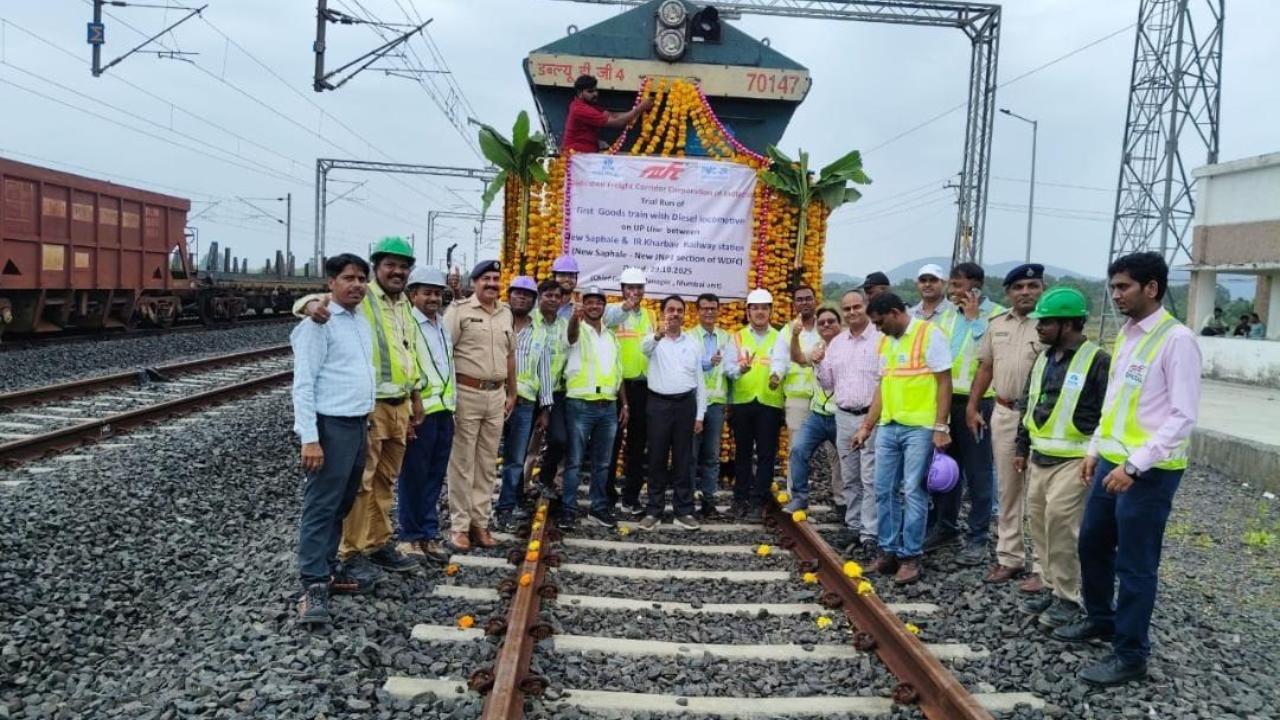
It said that on 29 October 2025, DFCCIL successfully conducted a trial run of a goods train hauled by a diesel locomotive from New Saphale (DFCCIL) at chainage 107.0 to Kharbao Station (Indian Railways) at chainage 67.0, a distance of around 40 kilometres.

This was the first train movement on the newly built track of the JNPT-Vaitarna section under the Chief General Manager (Mumbai) Unit.

The trial run was virtually flagged off by Praveen Kumar, Managing Director, DFCCIL, in the presence of Board members and senior officials from the Corporate Office.

The statement said that the achievement showcases the strong partnership between DFCCIL and Indian Railways in creating a faster, safer, and more efficient freight network across India.

The remaining stretch between Kharbao and JNPT is progressing rapidly and will be completed as per schedule. Key works such as the dismantling of the Shil Phata Road Over Bridge (ROB) and the completion of the Kalamboli Rail Flyover (RFO) are under way.

Senior DFCCIL officials said that after these works are completed in coordination with the state government, the project will reach its final stage. Once operational, the JNPT–Vaitarna section will link JNPT to the Dedicated Freight Corridor, providing seamless freight movement, improving logistics and supply chain efficiency, and easing road and rail congestion in the Mumbai region.

The section is also expected to enhance trade competitiveness and strengthen the ‘Make in India’ initiative through better connectivity and faster freight transport.

GeM organises awareness session on ‘Compliance with law of the land in public procurement through GeM Portal’

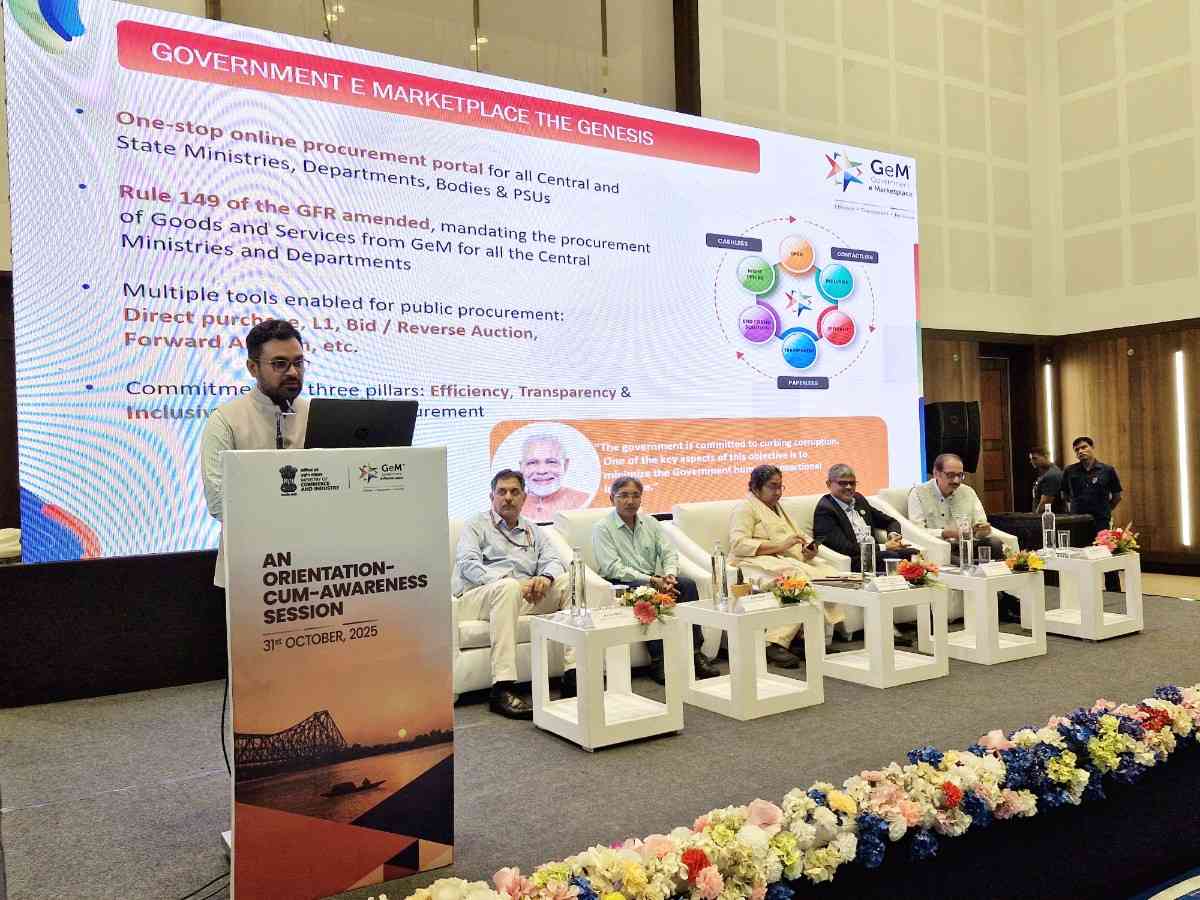
KOLKATA : The Government e Marketplace (GeM), under the Ministry of Commerce and Industry, Government of India, organised an Orientation-cum-Awareness Session on “Compliance with Law of the Land in Public Procurement through GeM Portal” at the Biswa Bangla Convention Centre, Newtown, Kolkata.

The event, aimed to sensitise government buyers and stakeholders on the key legal and procedural compliances to be adhered to while hiring manpower service on GeM.

Smt. Dola Sen, Member of Parliament (Rajya Sabha) and Chairperson, Department Related Parliamentary Standing Committee on Commerce, graced the occasion as Chief Guest. Her insightful address highlighted the importance of strengthening accountability and compliance in public procurement to ensure transparency, efficiency and inclusivity.

The session featured discussions on, The compliance of Law of the Land provisions for manpower service contracts on the GeM., Various applicable Labour Laws and Acts in the Service Level Agreement (SLA) in the bids and contracts for Manpower Outsourcing Services issued at GeM portal, Mandatory Buyer Undertaking during Bid Creation ensuring adherence to the Minimum Wages Act. and Declaration in bid documents reaffirming compliance with all applicable laws and regulations.

Through such initiatives, GeM continues to strengthen the culture of transparency, accountability and statutory compliance in public procurement. The platform remains committed to enabling a fair, inclusive, and responsible procurement ecosystem aligned with the principles of good governance.

India’s exports to US saw sharp fall across sectors faced with Trump tariffs: Report

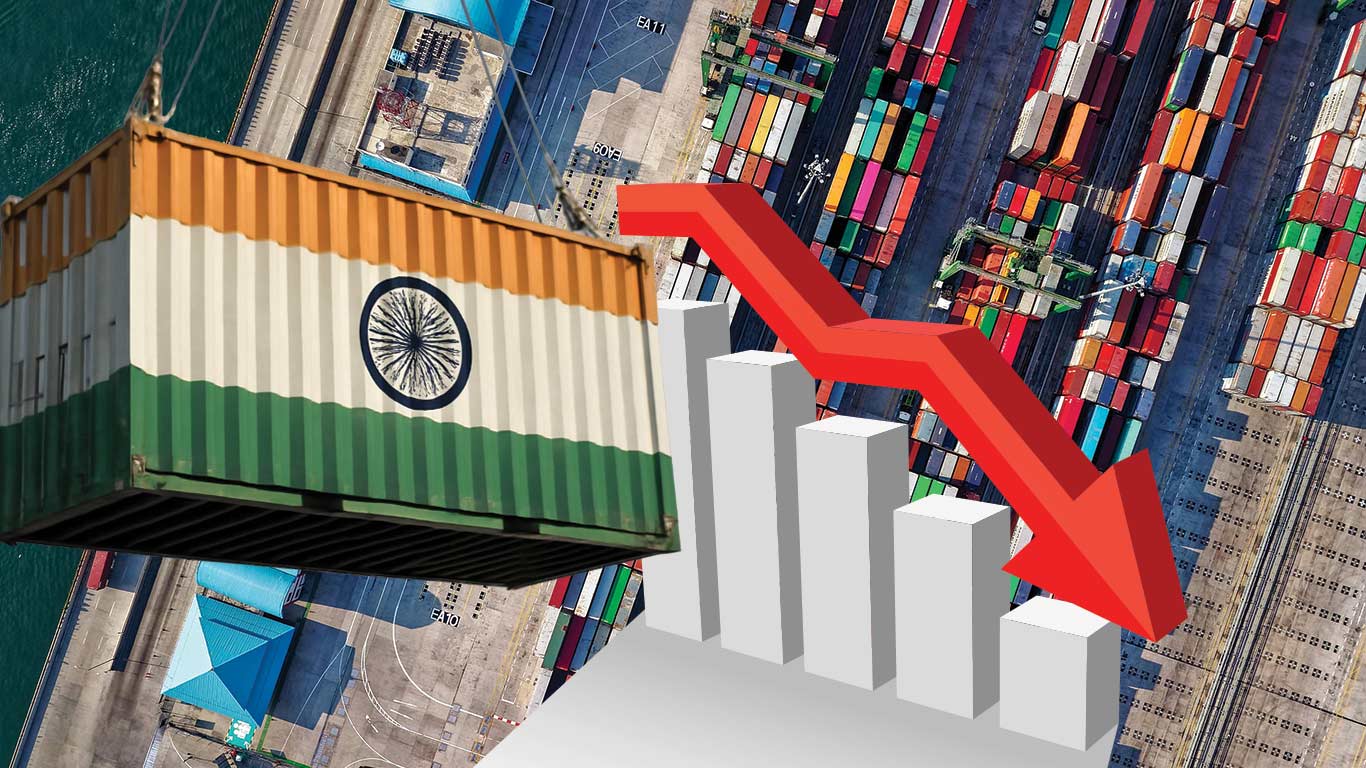
NEW DELHI: India’s exports to the US slid across sectors for the fourth consecutive month, driving a 37.5 per cent decline during May-September 2025, according to an analysis by India-based trade think tank Global Trade Research Initiative (GTRI).

India’s exports to its largest market, the United States, are reeling under the weight of steep US tariff hikes.

Between May and September 2025, exports plunged by 37.5 per cent, from USD 8.8 billion to USD 5.5 billion, marking one of the sharpest short-term collapses in years, GTRI said in a note Sunday.

The GTRI analysis compared export performance between May and September 2025 to assess the immediate fallout of US tariffs imposed from April 2 onward.

These duties began at 10 per cent, rose to 25 per cent on August 7, and reached 50 per cent by late August for India.

Tariff-free products–accounting for nearly one-third of India’s total shipments–saw the steepest contraction, falling 47 per cent from USD 3.4 billion in May to USD 1.8 billion in September, GTRI analysis found.

“Smartphones and pharmaceuticals were the biggest casualties,” it said.

Smartphone exports, which had surged 197 per cent between April-September 2024 and the same period in 2025, crashed 58 per cent from USD 2.29 billion in May to USD 884.6 million in September.

Shipments fell month after month–USD 2.0 billion in June, USD 1.52 billion in July, USD 964.8 million in August, and finally USD 884.6 million in September, it added. “The reasons for decline are not known and need examination.”

Pharmaceutical product exports slipped 15.7 per cent, from USD 745.6 million to USD 628.3 million.

Industrial metals and auto parts–subject to uniform tariffs for all countries–registered a milder 16.7 per cent decline, from USD 0.6 billion to USD 0.5 billion. Aluminium exports dropped 37 per cent, copper 25 per cent, auto parts 12 per cent, and iron and steel 8 per cent.

“Because all global suppliers faced similar duties, the dip appears linked more to a slowdown in US industrial activity than to any loss in Indian competitiveness,” GTRI said.

The labour-intensive sectors such as textiles, gems and jewellery, chemicals, agri-foods, and machinery account for nearly 60 per cent of India’s US exports and suffered a 33 per cent decline–from USD 4.8 billion in May to USD 3.2 billion in September, GTRI found in its analysis.

Gems and jewellery exports collapsed 59.5 per cent, from USD 500.2 million to USD 202.8 million, battering units in Surat and Mumbai as Thailand and Vietnam captured lost US orders, GTRI claimed.

Exports of solar panels plunged 60.8 per cent, from USD 202.6 million to USD 79.4 million, eroding India’s renewable-energy export edge.

“With China facing only 30 per cent tariffs and Vietnam 20 percent, India’s competitiveness has sharply deteriorated,” GTRI said.

Chemical, marine and seafood, textiles, agri and processed foods also declined, GTRI said.

“Exporters are urging the government to respond swiftly. Priority measures include enhanced interest-equalisation support to lower financing costs, faster duty remission to ease liquidity pressure, and emergency credit lines for MSME exporters,” GTRI noted.

Without urgent intervention, according to GTRI, India risks losing market share to Vietnam, Mexico, and China–even in sectors where it previously held a strong position.

“The latest data make one point clear: tariffs have not only squeezed India’s trade margins but also exposed structural vulnerabilities across key export industries,” GTRI concluded.

Source: ANI

India’s coffee exports hit USD 1.8 billion in FY25, continues four-year growth streak

NEW DELHI: India’s coffee exports have continued their strong upward trajectory, maintaining their billion-dollar streak for the fourth consecutive financial year, according to the Department of Commerce under the Ministry of Commerce and Industry.

During the financial year 2024-25, India’s coffee exports reached USD 1.80 billion, marking a 40.2 per cent growth over the USD 1.28 billion achieved in FY 2023-24, the department said in a X post, attached with it an infographic.

India’s coffee exports have grown significantly due to increasing global demand for its rich and unique flavours, the Commerce Ministry said in a statement in early 2025.

Approximately three-fourths of India’s coffee production consists of Arabica and Robusta beans. These are primarily exported as unroasted beans. However, there is a growing demand for value-added products, such as roasted and instant coffee, which further fuels the export boom.

India’s coffee is primarily grown in the ecologically rich Western and Eastern Ghats, areas famous for their biodiversity. Karnataka leads in production, followed by Kerala and Tamil Nadu.

India is now the seventh-largest coffee producer globally, with exports reaching $1.29 billion in FY 2023-24, almost double the $719.42 million in 2020-21, according to the Commerce Ministry.

Prime Minister Shri Narendra Modi‘s latest monthly radio programme, ‘Mann ki Baat’, on Sunday, among other things, featured discussions about the increasing popularity of Indian coffee among global beverage lovers and how people in India are taking up coffee plantations as a means of livelihood.

Joining the thread from where he had left off last year, discussing Araku coffee from Andhra Pradesh in a similar monthly Mann ki Baat episode, PM Modi last week commended the Koraput coffee of Odisha.

Indian coffee is becoming very popular all over the world, the prime minister said, listing out several places in India where coffee plantations are in abundance.

“Be it Chikmagalur, Coorg and Hassan in Karnataka; the areas of Pulney, Shevaroy, Nilgiri and Annamalai in Tamil Nadu; the Biligiri region on the Karnataka-Tamil Nadu border; or the areas of Wayanad, Travancore and Malabar in Kerala – the diversity of Indian coffee is truly remarkable,” the prime minister had said.

The Prime Minister said the mentions of coffee in Mann ki Baat stemmed from many people from Odisha sharing their feelings with him about Koraput coffee.

“They wrote to me saying that Koraput coffee should also be discussed in ‘Mann Ki Baat’.”Prime Minister Modi said he was told that Koraput coffee tastes amazing, and not only that; besides the taste, coffee cultivation is also benefiting people.”

There are people in Koraput who are cultivating coffee through their sheer passion. They were doing well in the corporate world… but they loved coffee so much that they entered this field and are now successfully working in it. There are also many women whose lives have been pleasantly transformed by coffee,” he said, lauding the people of Koraput. North-East states are also progressing in coffee cultivation, he further said.

In summary, he concluded that these efforts are further strengthening Indian coffee’s identity worldwide.
“India’s coffee is coffee at its finest. It is brewed in India and loved by the World,” the prime minister said, in a way, phrasing what coffee lovers tend to say as they sip Indian coffee.

Over the centuries, the cultivation of coffee in India has evolved from a humble practice to a thriving industry, with the country’s coffee now widely loved across the globe.

Source: ANI

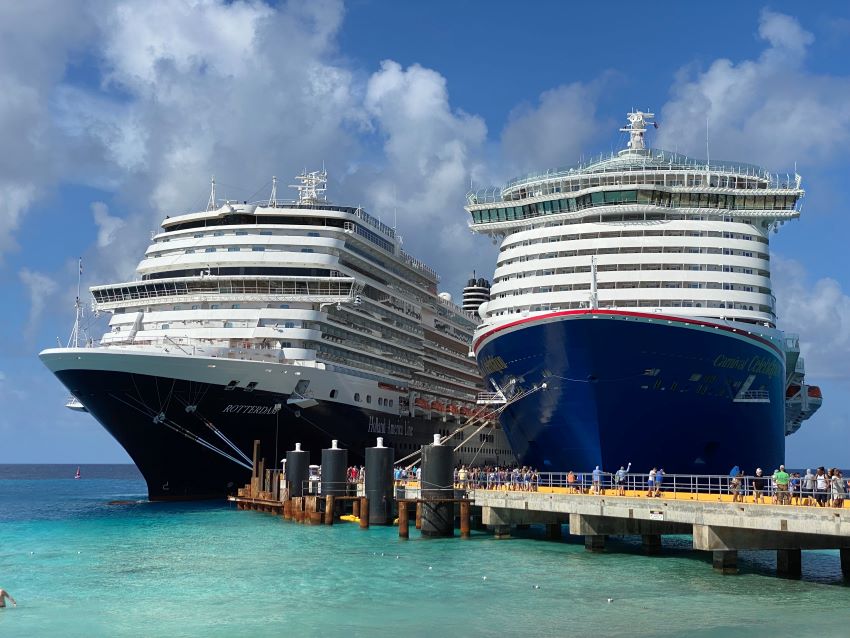
India plans group e-visas for cruise passengers to ease entry process at ports

NEW DELHI : India may offer group e-visas to cruise ship passengers from mid-2026 to smoothen the entry process at sea ports.

This is among the various initiatives under consideration as India aims to double cruise passenger traffic to one million by 2029. Other measures include simplified customs procedures, new itineraries and standard operating procedures to attract cruise liners.

Addressing an industry session at the recent India Maritime Week, joint director (Bureau of Immigration) Anoop Krishna said the contours of group cruise passenger visa are being defined. Global best practices are being studied to tailor-make the solution for India.

“The contours of the group cruise passenger visa are being defined. The goal is to create a seamless, tech-enabled entry experience for cruise passengers while maintaining security standards,” Krishna said.

The proposed system will allow cruise operators to apply for group e-visas collectively on behalf of their passengers, thereby reducing time and administrative burden at port arrival points. This will be complemented by digital pre-clearance mechanisms, similar to those used in major international cruise hubs, enabling faster turnaround times for cruise ships calling at Indian ports.

Officials said the initiative is part of a larger roadmap to make Indian ports more cruise-friendly and globally competitive. Among other measures being explored are:

Simplified customs and immigration procedures for cruise passengers and crew.

Development of new domestic and international cruise itineraries, connecting destinations along India’s west and east coasts.

Upgradation of port infrastructure, including dedicated cruise terminals, passenger lounges, and transport connectivity.

Standard Operating Procedures (SOPs) to streamline coordination between port authorities, immigration, and tourism agencies.

Industry experts have welcomed the move, noting that cumbersome entry formalities have been a key deterrent to cruise lines adding India to their itineraries. The group e-visa system, they say, could significantly enhance India’s appeal in the global cruise circuit.

India currently handles around 500,000 cruise passengers annually, both domestic and international, across major ports such as Mumbai, Cochin, Mormugao, Chennai, and Vizag. With several new terminals under development and growing interest from global cruise operators, the introduction of a group e-visa is expected to act as a major enabler for the sector’s next phase of growth.

Officials also hinted that the new e-visa framework could later be extended to river and coastal cruises, further integrating India’s tourism and maritime infrastructure.

As India’s maritime sector aligns with the government’s “Dekho Apna Desh” and “Atithi Devo Bhava” initiatives, the group e-visa policy represents a major step toward creating a smooth, secure, and tourist-friendly entry ecosystem for global cruise travelers.

Source : BL

COSCO Shipping announces $1.75 billion fleet expansion plan

SHANGHAI : COSCO Shipping has announced a substantial $1.75 billion newbuilding initiative, aimed at enhancing and modernizing its fleet with the addition of 29 new vessels. This ambitious program includes 23 kamsarmax bulk carriers and six very large crude carriers (VLCCs), all set to be constructed in domestic shipyards, with deliveries scheduled between 2027 and 2028. The strategic investment marks a significant step in COSCO’s ongoing efforts to refresh its operations across critical maritime sectors.

Details of the Newbuilding Program
The newbuilding program will see construction take place at two prominent Chinese shipyards. COSCO Shipping Heavy Industry (Dalian) is contracted to build the 87,000 deadweight ton (dwt) bulk carriers, under agreements valued at approximately RMB7.34 billion ($1.03 billion). Meanwhile, Dalian Shipbuilding Industry Corp (DSIC) will construct the six VLCCs, which have a total worth of RMB5.09 billion ($715 million).

Upon completion, the kamsarmax bulk carriers will be leased on 20-year bareboat charters to COSCO Shipping Bulk. The VLCCs, designed to be compatible with methanol and LNG fuel, will enter into long-term leases with COSCO Shipping Energy Transportation. Deliveries of these vessels are slated to commence in April 2027 and continue into late 2028.

This latest investment aligns with COSCO’s broader strategy to modernize and decarbonize its fleet, focusing on dual-fuel designs and sustainable operating frameworks. The announcement follows a series of earlier orders this year, which included 10 newcastlemax bulkers and four asphalt carriers, also set to be built at various shipyards, with long-term charter agreements facilitated through different COSCO subsidiaries.

Strategic Expansion and Future Plans
COSCO’s recent orders are part of a larger expansion strategy unveiled last year, which has led to the commitment of multiple vessel types across various Chinese shipyards. This includes additional newcastlemax and kamsarmax vessels, as well as plans for up to 30 ships in the multipurpose segment. The ongoing investments highlight COSCO’s focus on enhancing its operational capabilities and positioning within the competitive shipping industry.

As COSCO continues to invest in fleet renewal and efficiency, the company’s vision reflects a growing trend in the maritime sector towards sustainability and modernization. With these new vessels, COSCO aims to not only meet current market demands but also to lead the way in environmentally responsible shipping practices.

Source : Nautical Voice

Wallem Group reaches a century in Hong Kong

HONG KONG : Wallem Group, a leading global maritime partner, is celebrating the centenary of moving its headquarters to Hong Kong.

The celebrations will be marked by a special event on 12 November 2025 in the presence of Guest of Honour Hong Kong Finance Secretary, commemorating 100 years since the relocation – 22 years after Norwegian shipbroker and agent Haakon Wallem formed Wallem & Co. in 1903.

By 1925, Haakon had earned the nickname ‘Typhoon Wallem’, reflecting his energy and business acumen and his deployment of both to support Chinese shipowners.

In the 100 years since, shipping has been buffeted by wars, piracy, economic crises, terrorism, environmental and safety emergencies, and adapted to new regulatory agendas, digital revolutions, and a global pandemic.

Hong Kong has remained Wallem’s home throughout, during a century of radically changing trade patterns, containerisation and globalisation. Home, too, to the world’s fourth largest ship register and a top ten global container port, Hong Kong recently benefited from a new favourable maritime tax regime.

v Wallem Group reaches a century in Hong Kong

“Wallem’s enduring commitment to Hong Kong reflects the critical role it plays as a hub for international shipping and the global centre of gravity for ship management itself,” says John Rowley, CEO, Wallem Group. “It also offers a deep pool of talent to drive success across every aspect of our activities as we look ahead with confidence based on a strategy for sustainable growth that places clients and the business opportunities they seek at its heart.”

Since 2006, Wallem has been owned by Tom Steckmest, great grandson of Haakon Wallem, and Nigel Hill, the current Chairman. Both emphasise that their goal was and is to develop the best ship management group in terms of quality and service with a growing client base to match.

Nigel Hill comments: “Wallem sees ship management as a very personalised service, offered so that each vessel meets the highest standards of quality, safety and sustainability whilst ensuring cost-effectiveness. Achieving this requires an equal partnership with the shipowner to make the best use of Wallem’s management and technical expertise. Hong Kong is Wallem’s home, and we believe that Wallem’s independence remains the key to our ship management’s future success.”

Wallem’s other divisions – Agency, Marine services, Crewing, IT and Commercial – support the core ship management service, and technology is required to do the same. Key emphases are always maintained on safety and the welfare of seafarers.

Further celebrating its maritime heritage, Wallem has published an updated edition of Typhoon Wallem, the history first released in 2003 to commemorate 100 years since the company’s foundation. Anthony Hardy’s original text has been combined with new chapters from maritime historian, Stephanie Zarach, detailing the challenges and changes that have occurred since.

About Wallem
Wallem Group is a leading provider of technology driven maritime solutions, offering services supporting the complete lifecycle of a vessel from newbuilding supervision to end-of-life recycling guidance. Wallem’s extensive portfolio includes asset management, crewing, training, ship management, safety and compliance management and agency services.

As one of the largest and most experienced solutions providers globally, Wallem offers world-class support to shipowners by bringing its customer-centric and transparent approach to all aspects of fleet operation. Wallem combines technology and forward-thinking to deliver on safety, technical, and commercial performance without compromise. Wallem believes in collaboration to foster innovation in meeting future needs.

Wallem operates globally with a shore-based team of 700 people and 5,000 highly qualified seafarers, serving nearly all vessel segments.

Gender equality and decarbonization highlighted by IMO at WISTA International Conference

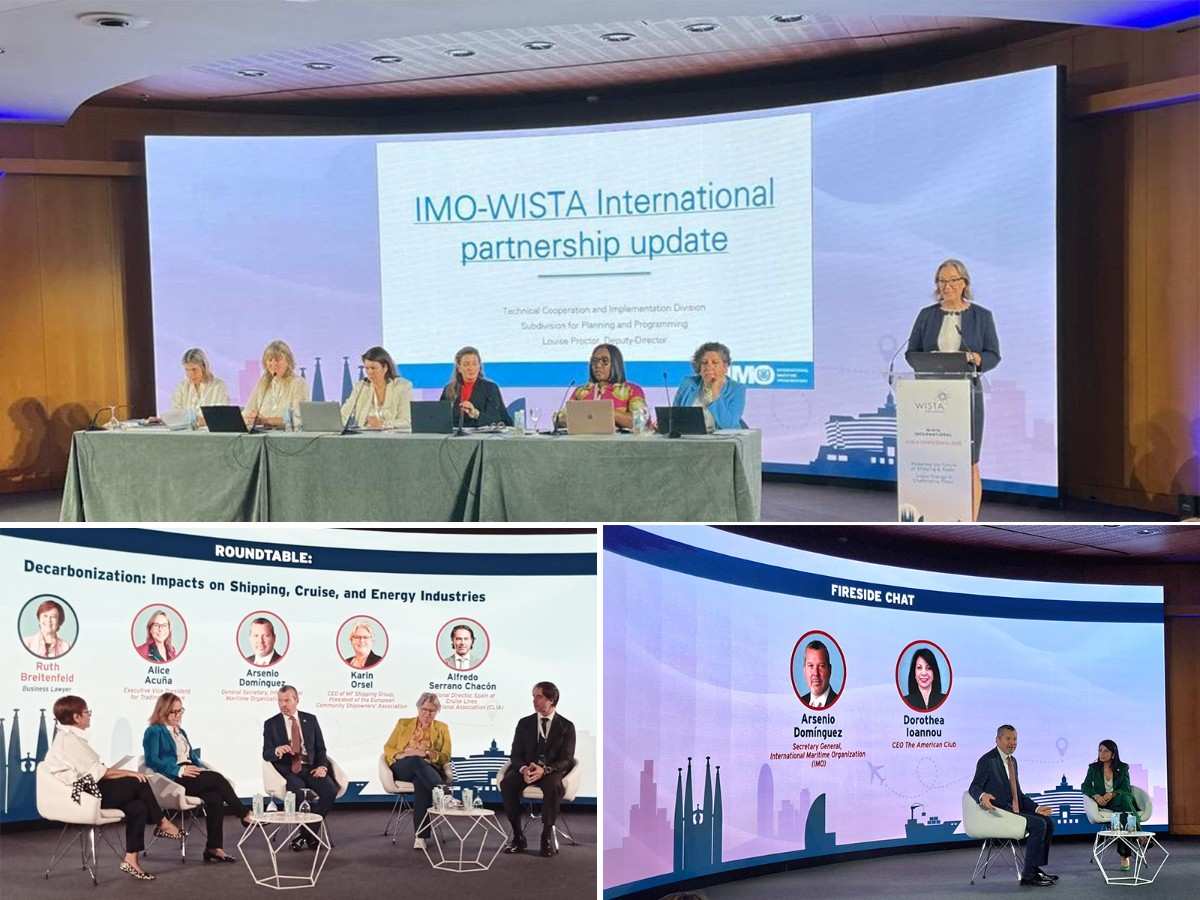
LONDON: IMO participated in the WISTA International Annual General Meeting and Conference held in Barcelona, Spain (20-24 October), under the theme “Powering the Future of Shipping & Trade: Global Energy in Challenging Times”.

Gender equality was a central focus throughout the conference, reflecting IMO’s ongoing cooperation with WISTA International to promote diversity and leadership opportunities across the maritime industry.

IMO Secretary-General Arsenio Domínguez took part in two key sessions: a roundtable on Decarbonization: Impacts on Shipping, Cruise, and Energy Industries, and a closing fireside chat with the CEO of The American Club, Ms. Dorothea Ioanno. He emphasized the importance of collaboration among governments, shipowners and innovators to advance the maritime sector’s transition toward low-and zero-carbon fuels. The conversation highlighted the importance of seafarer well-being and addressing seafarer criminalization, the challenges of recruitment and gender balance, and the role of the IMO in promoting gender equality.

IMO Deputy Director for Planning and Programming, Ms. Louise Proctor, in a session on “IMO-WISTA International partnership update”, stressed that data-driven initiatives are key to designing effective policies that promote inclusivity and leadership opportunities. “This partnership is about action, not just awareness,” she said. “Together, we are building an ocean of opportunity for women in maritime.”

The second IMO-WISTA Women in Maritime Survey provides the first global dataset on women’s participation in both public and private maritime sectors. The survey, published in May 2025, shows that women currently account for just under 19% of the total workforce, representing 176,820 individuals in 2024, up from 151,979 in 2021. Women make up 19% of the workforce in national maritime authorities and 16% in the private sector workforce (excluding seafarers). At sea, however, women remain vastly underrepresented, comprising only 1% of seafarers of the respondees. Meanwhile, 5% of students pursuing seafaring degrees are women, highlighting that more women are entering maritime education than are transitioning into seafaring careers.

The next IMO-WISTA Women in Maritime Survey will be conducted in 2027. Looking ahead to this next edition, the goal remains clear: to raise the bar for gender equality, transparency and opportunity across the global maritime community. Ms. Proctor encouraged widespread participation in the forthcoming survey across the public and private sectors to provide a comparable dataset that helps us identify gaps, measure progress, and design initiatives that respond to real needs, not assumptions.

IMO has reinforced its commitment to gender representation through a series of recent initiatives, including the Global Strategy for the IMO Women in Maritime Associations 2024-2029 (approved by the TC Committee in June 2025), the Women’s Leadership and Empowerment (WLE) training course in collaboration with the World Maritime University (WMU) and WISTA International and ongoing programs such as the SMART-C Women programme. Gender matters are a strategic priority in all IMO projects and technical cooperation work.

Sarbananda Sonowal: Strong investment commitments signal trust in India’s Maritime Future

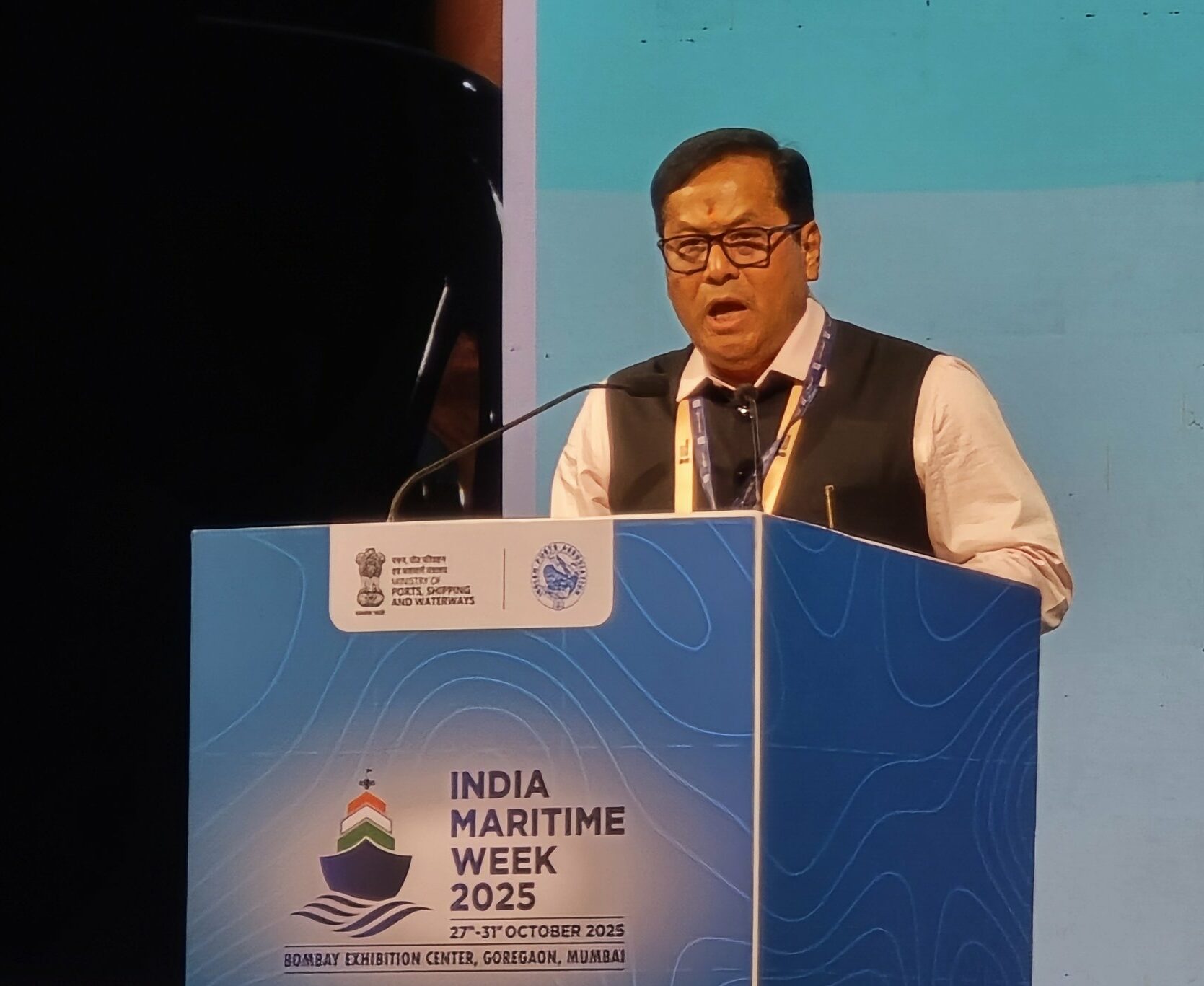
MUMBAI : Union Minister for Ports, Shipping and Waterways Shri Sarbananda Sonowal has hailed the record Rs 12 lakh crore investment commitments at the India Maritime Week 2025 as a landmark achievement, saying that it reflects international confidence in India’s maritime resurgence.

According to the minister, the MoUs that have been signed during the IMW 2025, cover a wide spectrum of collaborations across port development, sustainability, shipbuilding, port-led industrialisation, and trade facilitation.

“The signing of over 600 MoUs demonstrates the unprecedented global confidence in India’s maritime potential,” he said.

Of the total investment value, approximately 30 per cent is directed toward port development and modernisation, 20 per cent for sustainability, another 20 per cent for shipping and shipbuilding, 20 per cent for port-led industrialisation, and the remaining 10 per cent for trade and business knowledge partnerships.

A surge of 41% surge from GMIS 2023 (Global Maritime Summit India) underscores India’s growing leadership in sustainable port-led development and its emergence as a key driver of the global blue economy,” Sonowal said, adding that, “it is the direct result of Prime Minister Shri Narendra Modi’s visionary leadership, which has transformed India’s maritime sector into a beacon of global confidence and opportunity.”

The investment commitments during the GMIS 2023 were to the tune of Rs 8.5 lakh crore.

Sonowal shared that PM Modi has dedicated a set of transformative maritime initiatives to the nation, marking a major milestone in the country’s journey towards becoming a global leader in the maritime sector under the ‘Maritime Amrit Kaal Vision (MAKV),’ 2047.

He has said that PM had addressed the ‘Maritime Leaders Conclave’ and the ‘Global Maritime CEO Forum’, bringing together global maritime visionaries, industry leaders, and policymakers to chart the course for a sustainable and future-ready maritime ecosystem.

According to the Union Minister, the global maritime CEO forum brought together an impressive lineup of industry leaders, representing some of the world’s foremost maritime corporations.

In-depth discussions were held regarding sustainable maritime growth, resilient global supply chains, and green shipping initiatives, he added.

“All participating CEOs commended the Government of India’s transformative policy reforms and pledged to deepen collaboration through new investments, technology partnerships, and joint innovation initiatives in the Indian maritime sector,” the minister has said.

With participation from more than 85 countries and 400+ exhibitors, including industry leaders from leading maritime nations, it underscores the event’s growing stature as a global platform for collaboration and innovation, he added.

Delegations and companies from Sweden, Germany, Switzerland, the Netherlands, the UAE, Norway, Denmark, Singapore, Finland, the United Kingdom, France, and Japan showcased cutting-edge technologies and sustainable maritime solutions during the IMW.