Home Blog Page 602

BIMCO to develop standard clause addressing Chinese port fees

LONDON: BIMCO has initiated the development of a clause specifically addressing the new fees introduced on 14 October 2025 for US-related ships calling at ports in China.

The Chinese Ministry of Transport announced on 10 October this year that new “Special Port Fees” would be imposed on ships arriving at Chinese ports if they are US-built or flagged or owned or operated by US entities, subject to certain exceptions.

“Our industry is navigating escalating geopolitical uncertainty and trade restrictions. To help reduce the contractual uncertainty, we are developing a new clause addressing the Chinese fees, just as we responded to the need for a clause addressing the United States Trade Representative’s fees on Chinese-related ships earlier this year,” says BIMCO Secretary General & CEO, David Loosley.

In July 2025, BIMCO’s Documentary Committee adopted a standard clause aimed at addressing the USTR’s decision to impose fees on Chinese-related ships calling US ports.

Recognising the urgent need for clarity, a BIMCO subcommittee comprising legal and commercial experts has been formed to work on the new clause and the BIMCO Documentary Committee has prioritised the drafting.

“Following the development of our USTR Clause for Time Charter Parties, we are now receiving enquiries for a clause addressing the new Chinese port fees. To respond quickly, our expedited procedure will be applied which enables the Documentary Committee to act with urgency,” says Stinne Taiger Ivø, Deputy Secretary General & Director of Contracts at BIMCO.
Source: BIMCO

U-Freight Group expands pharma and medical logistics capabilities with strategic partnership and major contract win

HONG KONG: The U-Freight Group (UFL), a global leader in freight forwarding and logistics, is significantly strengthening its presence in the pharmaceutical and medical logistics sector through a deepened strategic partnership and a major new contract win in China.

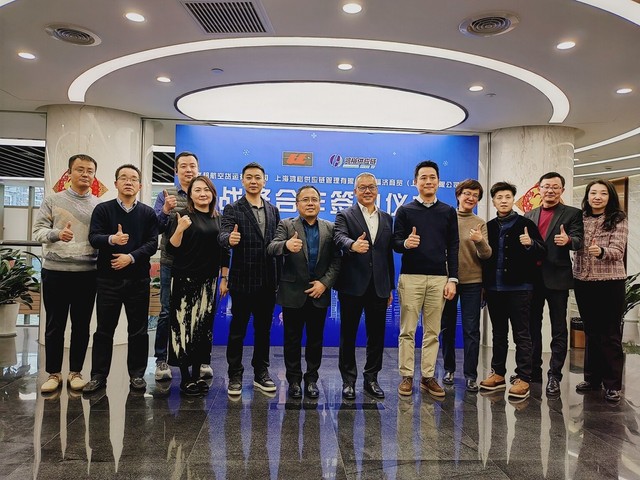
A year after signing a strategic cooperation agreement with Shanghai Hongyu Supply Chain Management Co (HYSC), U-Freight is now providing logistics fulfilment services for a new B2B e-commerce platform, recently launched by Fuji Trading, a subsidiary of HYSC. 

The fujihealthcare.cn platform is a B2B e-commerce initiative in China dedicated exclusively to the medical industry, offering a comprehensive suite of services including overseas procurement, international transportation, customs clearance, CIQ inspection, warehousing, order processing, payment collection, and final delivery.

U-Freight Group CEO Simon Wong commented: “We are excited to build on our strategic partnership with HYSC through the innovative B2B e-commerce platform. As one of the first of its kind in China for the medical sector, this initiative presents a strong competitive advantage for our logistics operations and opens up new opportunities in high-value healthcare supply chains.”

In a further boost to its capabilities in the sector, U-Freight has also secured a major logistics contract from one of China’s leading medical organisations. The agreement covers the transport of temperature-sensitive pharmaceutical reefer containers from multiple European locations to designated ports across China.

The project, set to commence shortly, underscores U-Freight’s expertise in cold-chain logistics and its ability to deliver compliant, efficient, and reliable services within the demanding pharmaceutical segment. The scope includes end-to-end management of complex, temperature-controlled shipments, all conducted under strict adherence to international quality and safety standards.

Simon Wong added: “Winning this significant contract reaffirms our position as a trusted partner in global pharmaceutical logistics. It marks a key milestone for U-Freight and highlights our ability to manage sophisticated cross-continental cold-chain operations, while maintaining the highest standards of service and compliance.”

These developments reinforce U-Freight Group’s long-term commitment to expanding its footprint in the pharmaceutical and healthcare logistics industry, with strategic partnerships and high-value contracts paving the way for sustained growth and innovation.

IMO : New publications supports global action on underwater noise from shipping

LONDON : Awareness of underwater radiated noise (URN) from shipping has grown significantly in recent years. This type of noise – emitted by ships includes propeller cavitation, engine machinery, and hull movement – can travel long distances and affect marine life.

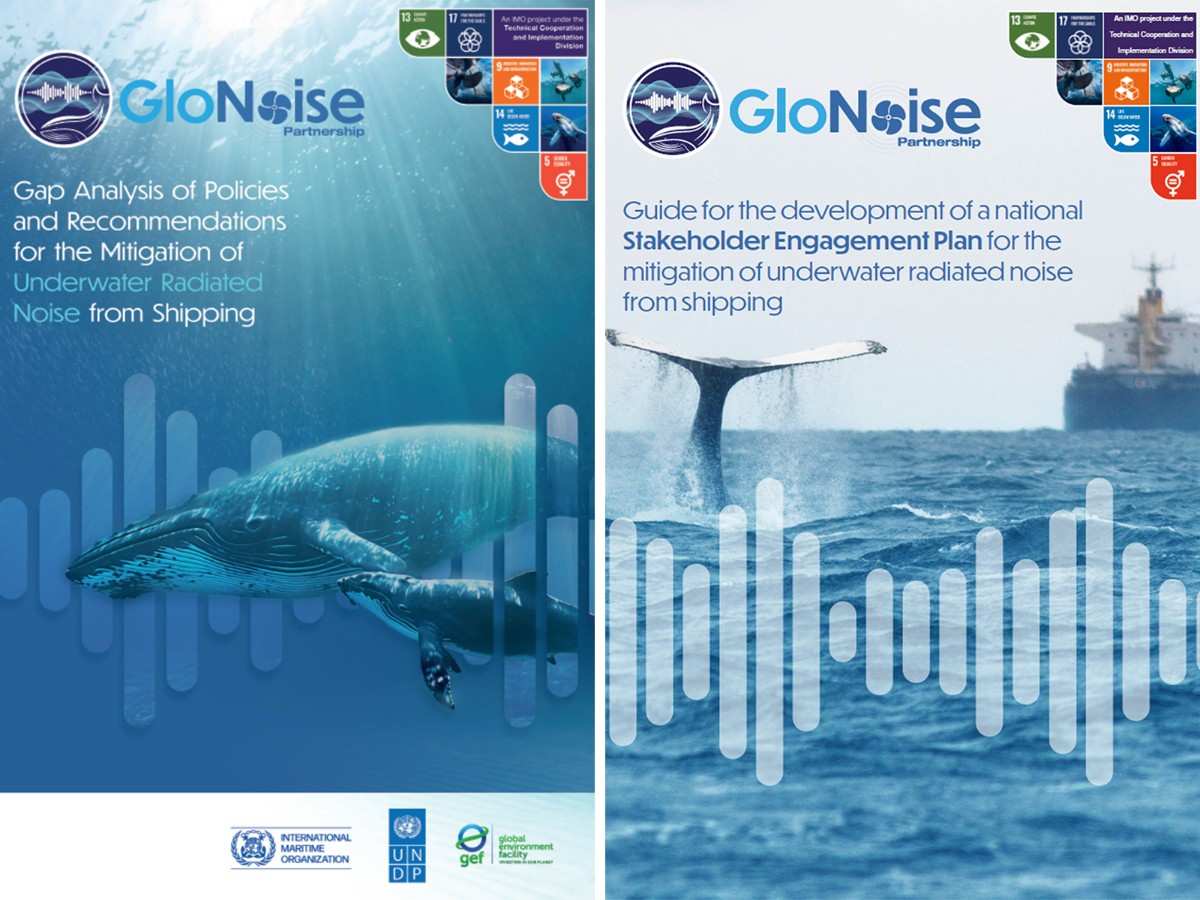
The GEF-UNDP-IMO GloNoise Partnership has issued two publications to equip Member States and stakeholders to take practical steps to reduce URN from ships. The new resources, analyse current policy frameworks and provide a structured process for national engagement in line with IMO guidance.

They are intended for use by administrations, port and shipping stakeholders, research institutions and community partners that are working to protect marine life while enabling safe and efficient maritime transport

The Gap Analysis of Policies and Recommendations for the Mitigation of Underwater Radiated Noise from Shipping reviews international and regional instruments and examines how national frameworks are applied within the Lead Pilot Countries. It identifies opportunities which contribute to the mitigation of URN and suggests options that can inform future consideration by IMO and Member States.

The Guide for the Development of a National Stakeholder Engagement Plan for the Mitigation of Underwater Radiated Noise from Shipping, offers a practical process for countries that wish to design and implement stakeholder engagement plans as an initial step toward national measures.

ClassNK issues Technology Qualification (TQ) for ‘SAS-IBS’ developed by Samsung Heavy Industries

TOKYO: ClassNK has issued a Technology Qualification (TQ)*1 for ‘SAS-IBS’, one of the components of the ‘Samsung Autonomous Navigation Assistance System (SAS)’*2 developed by Samsung Heavy Industries Co., Ltd., and a certificate handover ceremony was held in KORMARINE 2025.

Technologies related to maritime autonomous surface ships (MASS) are being actively developed to reduce human error, ease crew workloads, and address labor shortages. To support the implementation of such technologies, ClassNK has published its ‘Guidelines for Technology Qualification’*3, which enable the safety assessment of novel technologies not covered by existing regulations.

‘SAS’ developed by Samsung Heavy Industries is an Autonomous Navigation System (ANS) including the functions of situational awareness for recognizing own vessel and its surrounding environment, planning actions for collision and grounding avoidance, and performing vessel track control through an autopilot. ‘SAS-IBS’ is software designed to assess the risk of collisions and grounding with surrounding vessels and other obstacles, create safe paths to avoid such risks, and provide alert management functions based on its operational design domain*4.

ClassNK examined ‘SAS-IBS’, based on its ‘Guidelines for Technology Qualification’, including novelty evaluation, risk assessment, simulation testing, and qualification validation. Upon confirming that core functions for achieving autonomous navigation meet the requirements, ClassNK issued the statement.

ClassNK will continue supporting the implementation of automated/autonomous operation technologies by setting standards and technical verification.

Samsung Heavy Industries Website
https://www.samsungshi.com/En/Default.aspx

*1 Technology Qualification (TQ)
For technologies based on new concepts and designs that cannot be addressed by existing rules and standards, through the identification of risks and issues associated with the novelty of the technology and the review of the safety measures responding to them, ClassNK confirms that the concerned technology functions reliably within a defined scope, and issue a technology qualification. The qualification indicates that the new technology has been verified to be as acceptably safe as the technologies designed under existing rules and standards.

ClassNK issues Approval in Principle (AiP) for ‘SROC’ developed by Samsung Heavy Industries

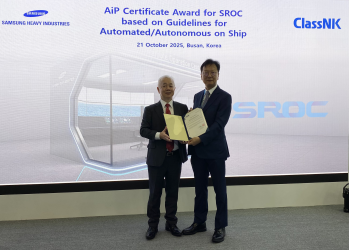
TOKYO: ClassNK has issued an Approval in Principle (AiP) for ‘Samsung Remote Operation Center (SROC)’, a shore-based remote monitoring system developed by Samsung Heavy Industries Co., Ltd., and a certificate handover ceremony was held in KORMARINE 2025. 

ClassNK is involved in various demonstration projects and continuously works to develop necessary safety standards, in order to support the development and implementation of automated/autonomous operation technologies from a safety perspective. Based on these experiences, ClassNK released its ‘Guidelines for Automated/Autonomous Operation of ships’ which comprehensively summarizes the requirements for each stage of conceptual design, design development, installation, and maintenance during the operation of automated/autonomous operation technologies. This guidelines also set out the requirement of the specific safety requirements for remote operation systems and their specific safety evaluation methods.

For the concept design of ‘SROC’, ClassNK conducted its safety review based on the requirements of ‘Guidelines for Automated/Autonomous Operation on ships’ and examined the risk assessment through HAZID involving relevant stakeholders. Having confirmed its compliance with the requirements, ClassNK issued the AiP. 

ClassNK will continue to improve the environment for the use of automated/autonomous operation technologies by providing standards for advanced initiatives and technological verification. 

Samsung Heavy Industries Website 
https://www.samsungshi.com/En/Default.aspx 

Ports to power India’s $30 trillion vision: Sonowal outlines ₹80 lakh crore maritime investment roadmap by 2047

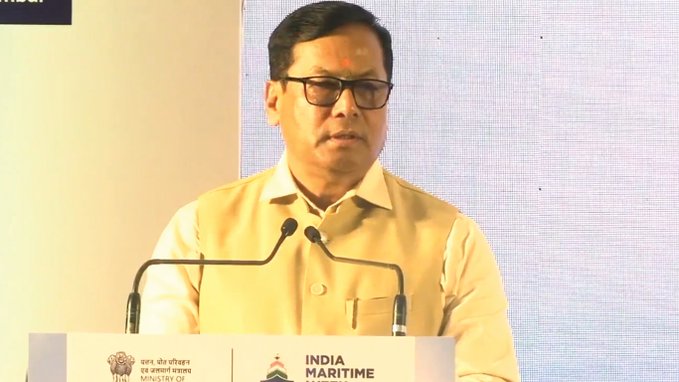
NEW DELHI : Union Minister for Ports, Shipping and Waterways Shri Sarbananda Sonowal has said that India’s ports are emerging as the engine of Viksit Bharat, driving the nation’s transformation into a $30 trillion economy by 2047.

Speaking on the ongoing maritime development initiatives under the leadership of Hon’ble Prime Minister Shri Narendra Modi, the Minister highlighted that the sector is witnessing an unprecedented scale of growth and modernization.

“Our ports are not just gateways for trade — they are engines of India’s economic transformation. Under the visionary leadership of PM Modi, we are witnessing a maritime revolution that will define India’s growth for decades,” said Sonowal.

Indias ports are emerging as the engine of Viksit Bharat 1 1 Ports to power India’s $30 trillion vision: Sonowal outlines ₹80 lakh crore maritime investment roadmap by 2047

He noted that port revenues have doubled, capital expenditure has tripled, and a clear roadmap has been charted for ₹80 lakh crore investment and 1.5 crore employment opportunities by 2047.

The Ministry of Ports, Shipping and Waterways is implementing a series of reforms under the Maritime India Vision 2030 and Amrit Kaal Maritime Vision 2047, focusing on port-led industrialization, green shipping, coastal connectivity, and digital transformation.

Sonowal emphasized that ongoing initiatives like Sagarmala, Harit Sagar, and National Maritime Development Programme are creating a strong foundation for sustainable growth, positioning India as a global maritime leader.

He added that India’s ports are playing a crucial role in enabling logistics efficiency, trade competitiveness, and job creation, with private and public investments accelerating across coastal regions.

Samudra Suddhih Rastrasya Vriddhih : DG Shipping marking a historic milestone in India’s maritime journey

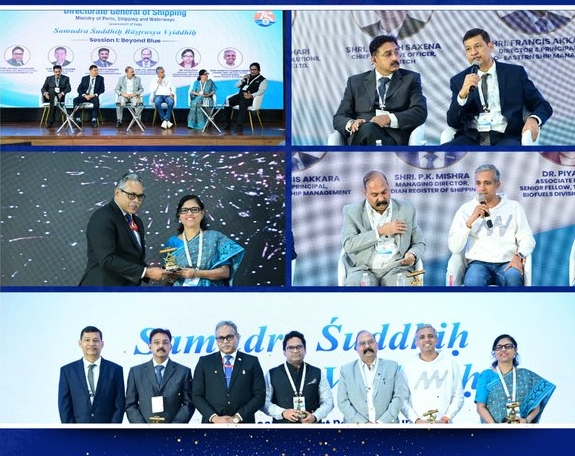
MUMBAI : The Commemorative Conference on the Occasion of Celebrating 75 Years of the Directorate General of Shipping set sail with a grand inauguration uniting global dignitaries, policymakers, and industry pioneers to chart India’s course toward a greener, cleaner, and more sustainable maritime future.

ShyamJagannathanDGS Samudra Suddhih Rastrasya Vriddhih : DG Shipping marking a historic milestone in India’s maritime journey

Session 1 of the Commemorative Conference on 75 Years of the Directorate General of Shipping set the course for India’s green maritime revolution.

From zero-emission shipping to digital innovations and eco-friendly ports, leaders shared insights shaping the future wake of our oceans.

Deendayal Port Authority looks to build smaller ships

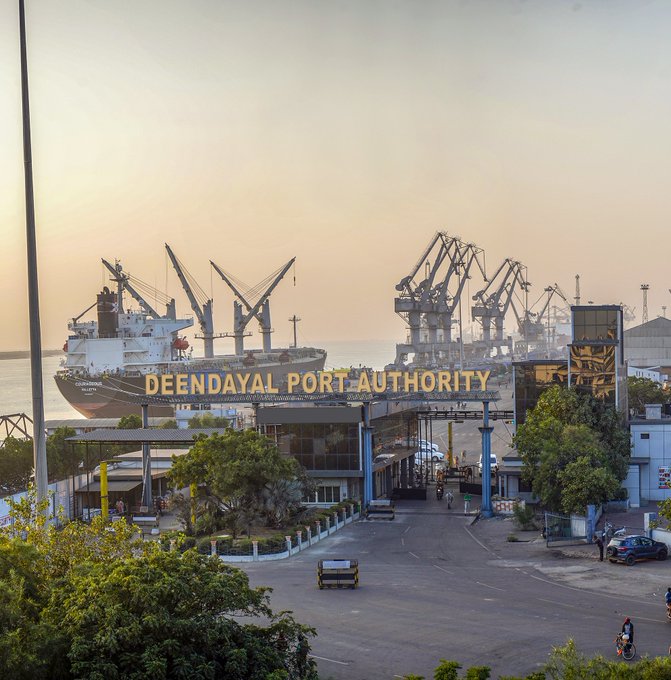
GANDHIDHAM : For nearly a year, Deendayal Port Authority (DPA), which operates Deendayal port (earlier Kandla Port) in Gujarat, has been pursuing an ambitious plan to convert over 2,000 acres of coastal land into a world-class shipbuilding cluster.

Originally aimed at building very large crude carriers (VLCCs), the project hit a wall after lacklustre response from industry forced DPA to scrap its tender. Now, the port is shifting focus to market-aligned vessel sizes — panamax (65,000–80,000 dead weight tonne) and handymax (40,000–60,000 DWT).

“The project will be developed by DPA through the selection of a technology partner. For this, we are in the process of engaging a consultant who will study and suggest the terms and conditions for engagement with the partner. The inputs from the consultant and shipbuilders will also be used to restructure the tender,” Sushil Kumar Singh, Chairman, DPA, told businessline.

Apart from the incentives that will flow to its future partner from the Centre, the DPA is keen to assist with its own incentives, including land with waterfront, environmental clearance and investing a portion of the equity needed for the project. “We are no longer targeting to build VLCCs (ships with up to 3,20,000 DWT), as we discovered through the earlier tender that there were few takers for it. So we are targeting to explore the market for panamax or handymax vessels. That will also reduce the requirement for land and waterfront,” Singh added.

Revised model
A tender floated to attract developers last December drew just one bid — not enough to move forward under government procurement norms. DPA had to put the brakes on what was envisioned as a booster dose for the region’s maritime economy. The idea was bold: leverage Kandla’s strategic location and deep-draught port facilities to build a modern shipbuilding cluster that could host shipyards, dry docks, repair facilities and a network of supporting industries. The project site in Kutch district was intended to draw in private investment and technical expertise — potentially adding to Gujarat’s prowess as a commercial and defence shipbuilding hub.

Yet industry interest didn’t materialise as hoped. Experts say the muted response could be due to concerns around capital intensity, policy uncertainty and global overcapacity in shipbuilding, especially in a market dominated by East Asian giants like China and South Korea.

With the tender shelved, the DPA is reportedly revisiting its strategy. A revised model — with more flexible terms, government incentives or phased development — is in the works to rekindle interest.

Four-pronged strategy
This revised strategy will include the new incentives proclaimed by the Indian government in September 2025, laying out a ₹69,725 crore comprehensive strategy to transform the country into a global hub for shipbuilding and ship repair. The first of this four-pillar approach is a Shipbuilding Financial Assistance Scheme (SBFAS), which has been extended until March 31, 2036, with a corpus of ₹24,736 crore, along with a ₹4,001 crore shipbreaking credit note and tax exemptions for shipbuilding inputs.

Secondly, a ₹25,000 crore Maritime Development Fund (MDF) has been established — ₹20,000 crore for a maritime investment fund and ₹5,000 crore for an interest incentivisation fund — to ensure long-term, affordable financing for shipbuilding and repair activities.

Thirdly, under the Shipbuilding Development Scheme (SbDS), ₹19,989 crore has been allocated to enhance India’s shipbuilding capacity to 4.5 million gross tonnage annually, through new and upgraded shipyards, development of shipyard clusters and the establishment of the India Ship Technology Centre, under the Indian Maritime University, for design, training and R&D.

The fourth pillar focuses on institutional, legal, policy and tax reforms, along with skill development, enhancement of technical capability and green practices in shipbuilding and shipbreaking. A National Shipbuilding Mission will oversee implementation.

The revised tender is expected to take about three months. For now, the ambitious shipbuilding project remains adrift, waiting for the tides of investment to turn.

Source : Businessline

Paradip Port charts strong growth path under P. L. Haranadh’s leadership

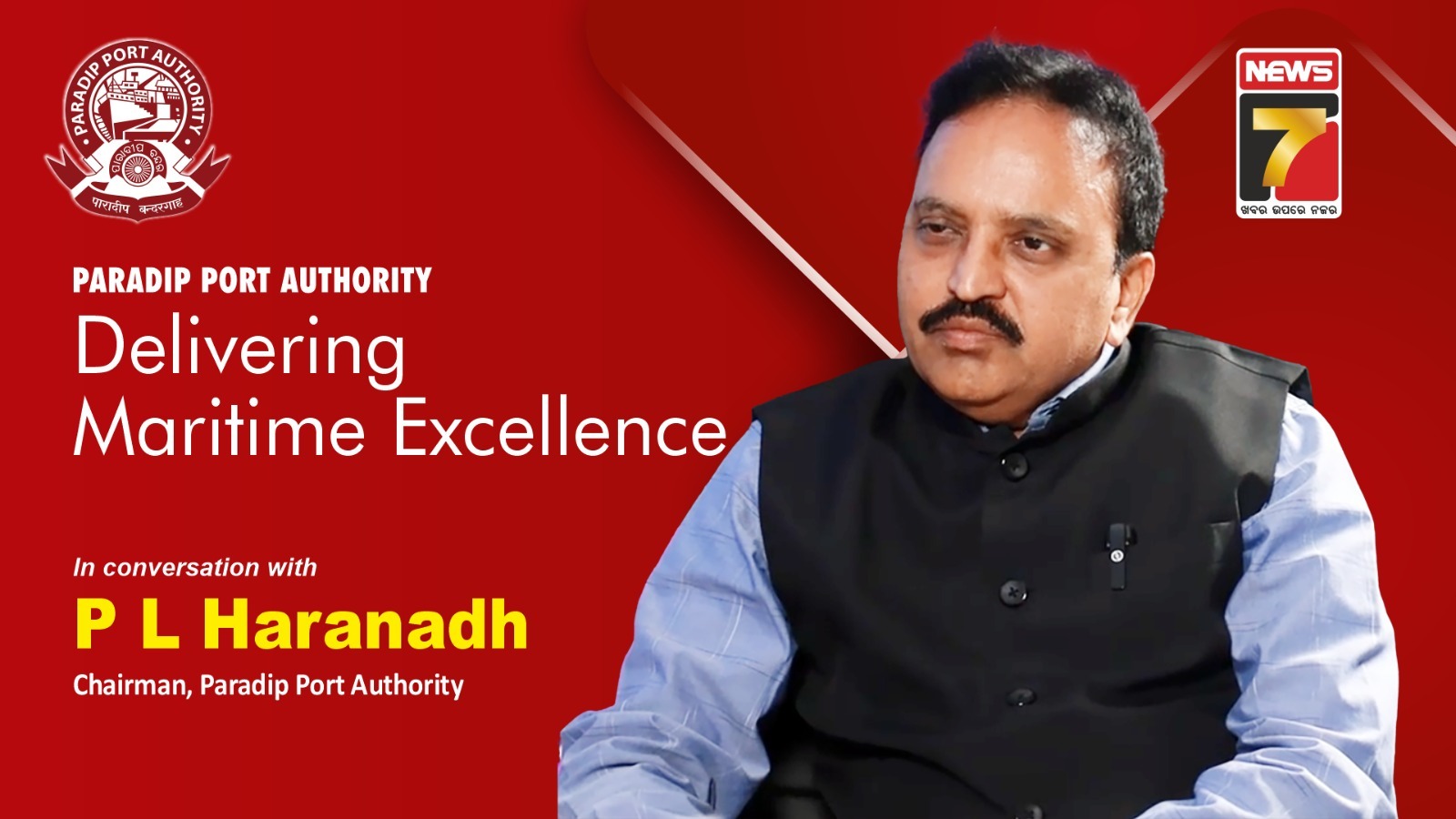
PARADIP : Paradip Port Authority continues its journey of growth and excellence under the leadership of Shri P. L. Haranadh. At the recent press meet covered by Times Conversations, News7 Odisha, and OTV, he shared key insights on port performance, infrastructure expansion, and future plans that are driving Paradip Port to remain India’s leading maritime hub.

G31BAgjWMAA3c0C Paradip Port charts strong growth path under P. L. Haranadh’s leadership

He noted that Paradip Port has consistently maintained its position among the top-performing major ports in India, driven by efficient cargo handling, infrastructure modernization, and improved connectivity. The port has also achieved remarkable growth in cargo throughput, supported by enhanced mechanization and digital transformation initiatives.

Outlining the future roadmap, Shri Haranadh emphasized the port’s ongoing capacity augmentation projects, including deep-draft berths, multimodal logistics connectivity, and sustainability-driven operations aligned with the Government of India’s Maritime Vision 2047.

He further mentioned that PPA is focusing on green port initiatives, renewable energy adoption, and coastal community development as part of its holistic growth strategy.

With continued infrastructure investments, innovation, and a focus on ease of doing business, Paradip Port is set to play a pivotal role in India’s maritime growth story, contributing significantly to trade, employment, and economic development in the eastern region.

Kamarajar Port welcomes Japanese delegation to strengthen maritime collaboration

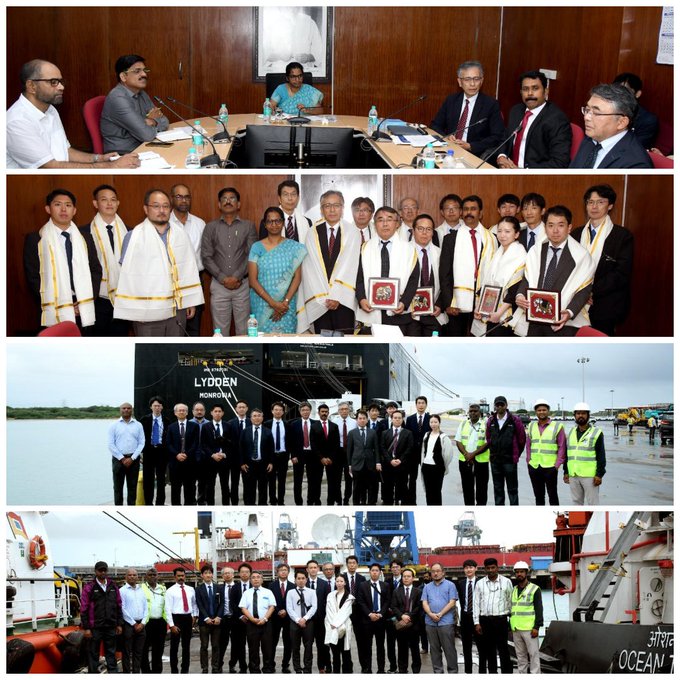
CHENNAI : Kamarajar Port. (KPL) a major port and a Company of Chennai Port Authority welcomes Japanese delegation to strengthen maritime collaboration. A 15 member Japanese delegation comprising officials from the Ports in Japan, led by Dr. Masahiko Furuichi, Secretary General, The International Association of Ports and Harbours (IAPH), Tokyo visited Kamarajar Port on Tuesday, 21st October to promote maritime trade development and exchange best practices. The officials visited various Terminals to see the infrastructure facilities available at KPL.

Managing Director, KPL gave a presentation to the visiting delegates explaining the port operations, future projects, digital initiatives and discussed about trade development of mutual interest.