Home Blog Page 63

India named ‘Guest of Honour Country’ at Global Food Summit 2026 in Abu Dhabi; APEDA showcases agri-food export potential

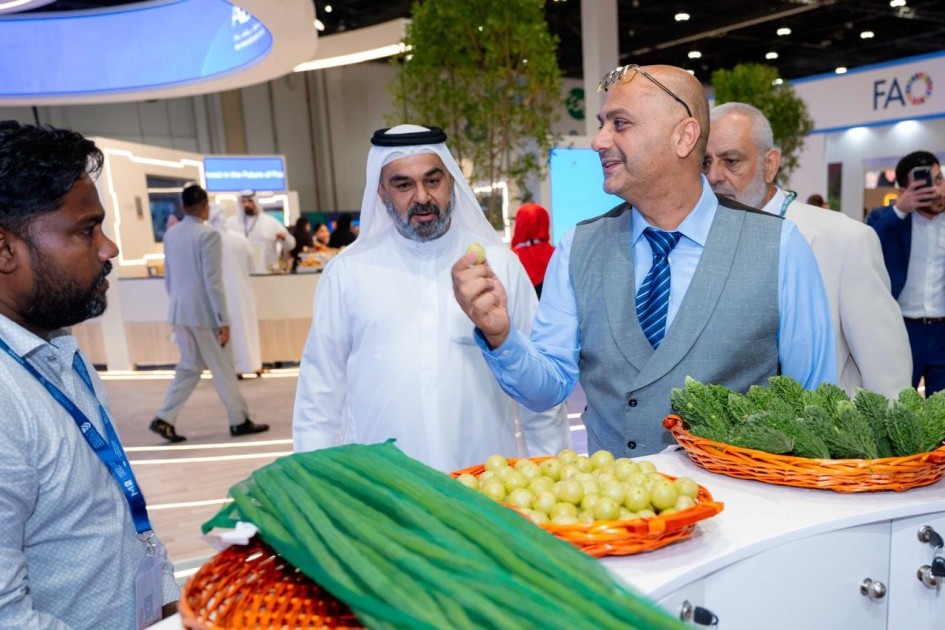
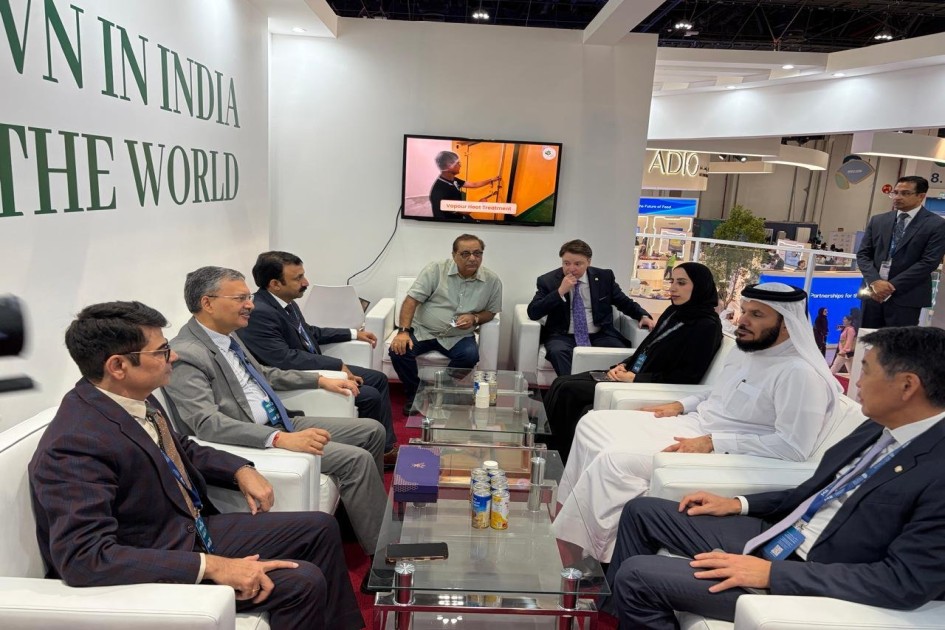
ABU DHABI : India has been accorded the privilege of being the Guest of Honour Country at the Global Food Summit 2026, held at the Abu Dhabi National Exhibition Centre (ADNEC), Abu Dhabi. The recognition reflects the strengthening India–UAE partnership and India’s growing presence in the global food and agriculture ecosystem.

The summit provided an important platform to showcase India’s diverse agricultural produce, food processing capabilities and expanding agri-food export sector to international stakeholders, creating opportunities for deeper engagement and trade partnerships.

The Agricultural and Processed Food Products Export Development Authority (APEDA) took the lead in presenting India’s agri-food export strengths through the APEDA Pavilion, bringing together the diversity of Indian agricultural products and the capabilities of the country’s food processing and export industries. The pavilion highlighted India’s potential as a reliable supplier to international markets and a partner in strengthening global food trade.

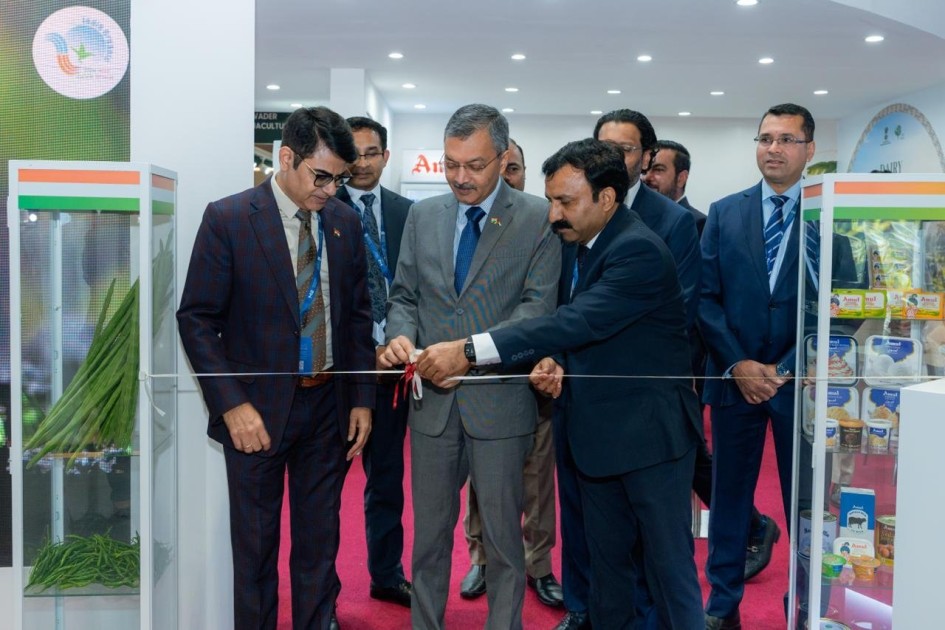
The APEDA Pavilion was inaugurated by H.E. Dr. Deepak Mittal, Ambassador of India to the UAE. The pavilion was also visited by H.E. Dr. Thani bin Ahmed Al Zeyoudi and H.H. Sheikh Hamdan bin Mohamed bin Zayed Al Nahyan, reflecting the importance of the event and the strong bilateral engagement between India and the UAE.

Their visits underscored the opportunities for enhanced cooperation in food and agriculture, including greater market access, trade development and collaboration across the agri-food value chain.

India’s participation as the Guest of Honour Country highlights the breadth of its agricultural production and the growing capabilities of its food processing and export sectors. Through APEDA’s participation, India seeks to strengthen the international visibility of its agri-food products and foster new business opportunities with global buyers and industry stakeholders.

The Global Food Summit 2026 also serves as a platform to deepen commercial engagement and explore partnerships that can contribute to resilient food supply chains and stronger international agricultural trade.

India’s participation reinforces the shared commitment of India and the UAE to expanding economic cooperation and exploring new avenues for collaboration in food security, agriculture and agri-food trade.

15th Meeting of ASEAN-India Trade in Goods Agreement (AITIGA) Joint Committee held during 6-9 October 2026

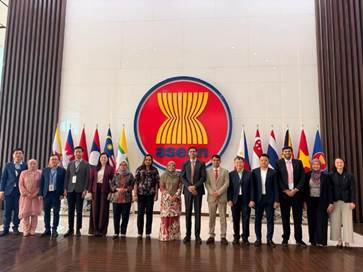
NEW DELHI : ASEAN hosted the 15th AITIGA Joint Committee and related meetings to review the progress and negotiations of the ASEAN-India Trade in Goods Agreement (AITIGA) at the ASEAN Secretariat, Jakarta, Indonesia, during 6th to 9th October 2026 along with other sub-committee meetings. The event was conducted in a hybrid format. The meeting was co-chaired by Shri Nitin Kumar Yadav, Additional Secretary, Department of Commerce, Ministry of Commerce and Industry, India, and Ms. Mastura Ahmad Mustafa, Deputy Secretary General (Trade), Ministry of Investment, Trade & Industry, Malaysia. The meeting saw participation from delegates representing ASEAN countries, including Brunei, Cambodia, Indonesia, Lao PDR, Malaysia, Myanmar, Philippines, Singapore, Thailand, and Viet Nam.

Three out of eight Sub-Committees (SCs) under the AITIGA JC also held hybrid meetings on the sidelines of the 15th AITIGA JC, namely the Sub-Committee on Legal and Institutional Issues (SC-LII), the Sub-Committee on National Treatment on Market Access (SC-NTMA), and the Sub-Committee on Rules of Origin (SC-ROO). The meetings provided a valuable forum to deepen collaboration, enhance mutual understanding, and sustain constructive dialogue between both sides.

The Joint Committee (JC) directed all Sub-Committees to expedite pending chapters under the AITIGA Review, establishing firm, time-bound deliverables and urging close coordination to ensure measurable progress. Concluding on a productive note, India and ASEAN reaffirmed their shared commitment to a balanced, constructive, and forward-looking Agreement. Both sides underscored their shared commitment to resolve outstanding policy issues, deepen economic integration, and modernize the Agreement into a mutually beneficial framework that strengthens bilateral trade.

The next meeting of the AITIGA Joint Committee will be held in January 2027 in India in hybrid mode to review the progress made by the Sub-Committees and provide further guidance for the timely conclusion of the negotiations.

Blue Dart expands Delivery Reach into Deeper Pockets through India post Partnership

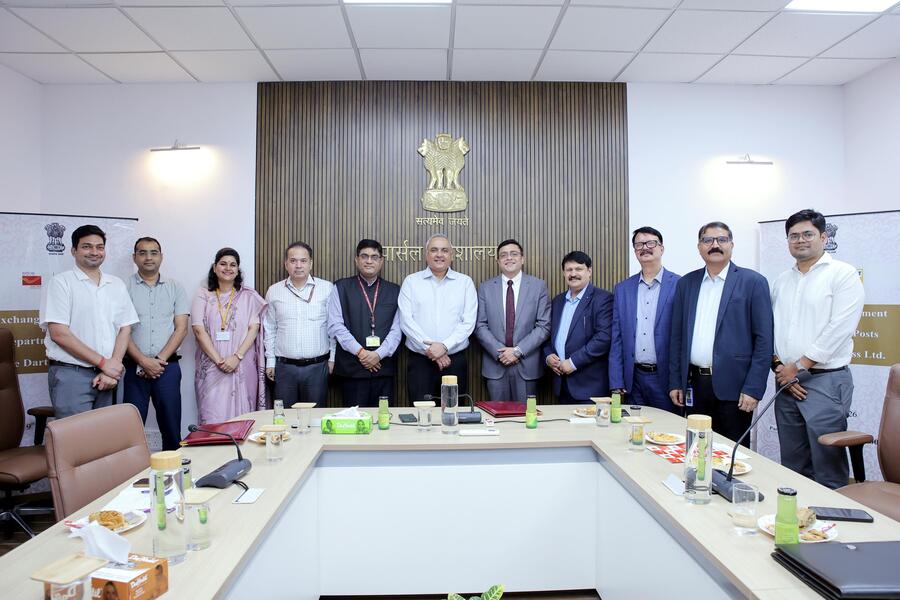
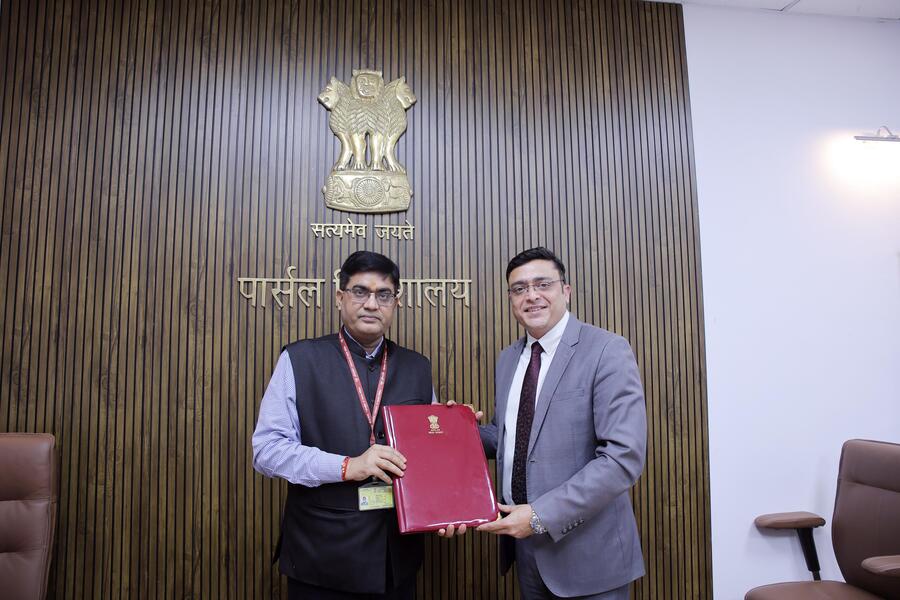
MUMBAI: Blue Dart Express Limited, South Asia’s premier express air and integrated transportation and distribution company, has signed a Memorandum of Understanding (MoU) with India Post to further extend its delivery reach. Building on Blue Dart’s extensive national network, the collaboration will strengthen last-mile connectivity for businesses and customers across Tier III and Tier IV towns and remote locations. The expanded coverage will be introduced in a phased manner.

The collaboration brings together Blue Dart’s express logistics capabilities and India Post’s extensive postal network to provide customers with access to a wider range of markets. Shipments to these additional locations will be delivered through India Post’s network, complementing Blue Dart’s infrastructure. The partnership creates a scalable model for extending market coverage through the complementary strengths of both organisations and the efficient use of existing infrastructure.

Commenting on the partnership, Shri Harpreet Singh, Member (Operations), Department of Posts, “On World Post Day, this partnership bodes well for both organisations. The Department of Posts is committed to this partnership and looks forward to it. The Department has strong last-mile connectivity, and we will offer all possible support to make this partnership stronger. We look forward to a much broader and constantly evolving partnership ahead.”

Highlighting the strategic significance of the collaboration, Balfour Manuel, Managing Director, Blue Dart, said: “With a legacy spanning over 42 years, Blue Dart has grown alongside Indian businesses, building a trusted national network that supports the country’s commerce. As the economy expands and customer expectations evolve, this strategic partnership has an important role to play in strengthening parcel delivery. Our collaboration with India Post builds on this foundation, combining the strengths of two established institutions to support businesses in reaching more customers across smaller towns and remote locations across the country.”

Speaking on the opportunities for customers, Dipanjan Banerjee, Chief Commercial Officer, Blue Dart, said: “For SMEs, e-commerce sellers and enterprises, reaching customers beyond established markets is an increasingly important driver of growth. Across Bharat’s smaller towns, demand for greater product choice creates opportunities that businesses need dependable logistics to realise. Our collaboration with India Post strengthens our delivery reach across Tier III and Tier IV towns, enabling customers to enter new markets, deepen their presence and serve locations that were previously harder to reach.”

The MoU builds on the longstanding relationship between the two organisations and their shared focus on customer service. The expanded coverage will offer greater delivery accessibility and convenience, supporting the growing participation of smaller towns and remote communities in India’s commerce.

Chittagong Port Authority (CPA) and DP World sign 15-year concession for new mooring container terminal

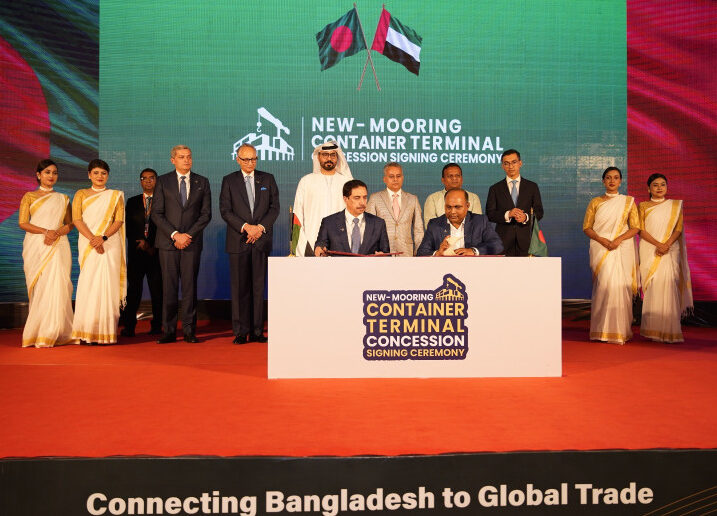
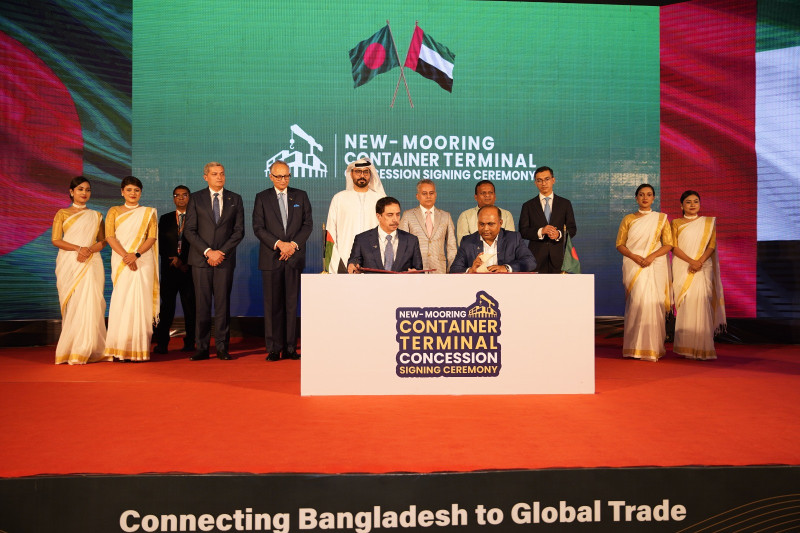
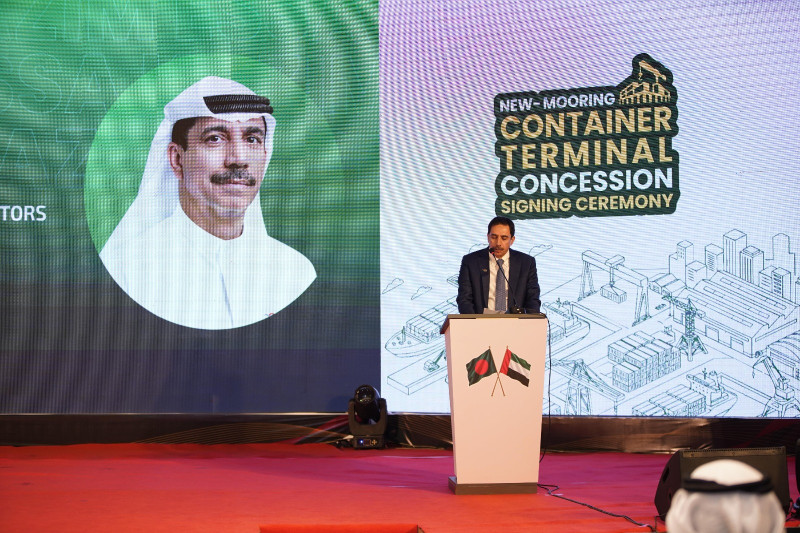
DHAKA: The Chittagong Port Authority (CPA) and DP World have signed a 15-year concession agreement for the operation and maintenance of the New Mooring Container Terminal (NCT) including Overflow Container Yard (NCT OCY) at Chittagong Port under a Public-Private Partnership (PPP) framework. The partnership is expected to enhance terminal performance, strengthen Bangladesh’s trade and logistics capabilities, and improve connectivity with regional and global markets.

The agreement was signed by Rear Admiral S. M. Moniruzzaman, Chairman of the Chittagong Port Authority, and His Excellency Essa Kazim, Executive Chairman of DP World; in the presence of Shaikh Rabiul Alam, Minister of Shipping of the People’s Republic of Bangladesh; Invest Bangladesh Chairman Ashik Chowdhury, Yuvraj Narayan, Group Chief Executive Officer of DP World; Rizwan Soomar, Chief Executive Officer and Managing Director of DP World’s Subcontinent, Central Asia, Levant and Egypt region, and other senior government and business leaders.

The New Mooring Container Terminal will remain under the ownership of the Chittagong Port Authority, with DP World responsible for its operation, and maintenance under the 15-year concession. The partnership will enable Bangladesh to leverage DP World’s global expertise, operational capabilities and technology to enhance terminal performance, improve supply chain efficiency and support the country’s growing trade and logistics requirements.

The collaboration builds on the 2019 Memorandum of Understanding between the Government of Dubai and the Public-Private Partnership Authority under the Prime Minister’s Office of the People’s Republic of Bangladesh, aimed at advancing strategic infrastructure development through Public-Private Partnership initiatives across the country.

Rear Admiral S. M. Moniruzzaman, Chairman of the Chittagong Port Authority, said: “This partnership reflects our commitment to strengthening Bangladesh’s maritime and trade infrastructure through the Public-Private Partnership framework. The New Mooring Container Terminal plays a critical role in supporting the country’s trade and logistics ecosystem, and this agreement will enhance operational performance, ease logistics constraints, and strengthen connectivity with international markets. By supporting domestic industry and facilitating more efficient trade flows, the partnership will strengthen Bangladesh’s position in regional and global supply chains while creating a stronger platform for investment and long-term economic growth.”

His Excellency Essa Kazim, Executive Chairman of DP World, said: “We thank the Government of Bangladesh and the Chittagong Port Authority for awarding this concession on the Public Private Partnership model. Bangladesh is an increasingly important trading and manufacturing economy, and we are committed to supporting its continued development. Through this partnership, DP World will connect the New Mooring Container Terminal to our global network of ports, logistics infrastructure and supply chain services, helping create more seamless links between Bangladesh and international markets. By combining our operational expertise, technology and end-to-end logistics capabilities, we aim to support trade, attract investment and create new opportunities for businesses across the country.”

Ashik Chowdhury, Chairman of Invest Bangladesh, said: “Our objective is to move trade at global speed. Bringing DP World into New Mooring Container Terminal is an important step in that direction. We at Invest Bangladesh are pleased to have supported this major port PPP. We want faster operations, stronger connectivity and higher standards at one of our most important trade gateways. For Bangladesh, it means a port system better equipped for the scale of trade we want to build.”

DP World is a leading provider of integrated logistics and supply chain solutions, with a global network of more than 60 ports and terminals handling nearly 10% of global container traffic. Its capabilities span Ports and Terminals, Marine Services, Logistics and Technology, connecting businesses and markets across global supply chains.

Development plan includes upgrades to the terminal’s civil and equipment infrastructure, deployment of digital solutions and operational enhancements designed to improve cargo handling efficiency and support growing trade volumes. Working closely with the Chittagong Port Authority, DP World will focus on key operational areas including berth planning, yard management equipment utilisation, preventive maintenance, safety and sustainability.

The partnership is expected to support local workforce development, skills development and the introduction of international operating practices. It will also create opportunities for local businesses and workers to participate more actively in regional and global supply chains.

MSC and ONE Take Over Vessel Sharing Agreement for Ipanema Service as Hapag-Lloyd quit

GENEVA: MSC Mediterranean Shipping Company existing Vessel Sharing Agreement (VSA) on the Ipanema Service – operated by MSC, ONE and Hapag-Lloyd – will be coming to an end in its current configuration. However, MSC and ONE remain committed to the service and will jointly operate the weekly sailing, maintaining fast and reliable connections from a broad range of Asian origins to the East Coast of South America.

The first sailing under the new agreement will depart Shanghai on 03 April 2027. As part of the new cooperation without Hapag Lloyd, MSC will deploy additional vessels, further strengthening our presence on one of the most reliable, stable and successful services in the trade and enhancing our ability to support customers’ growing needs.

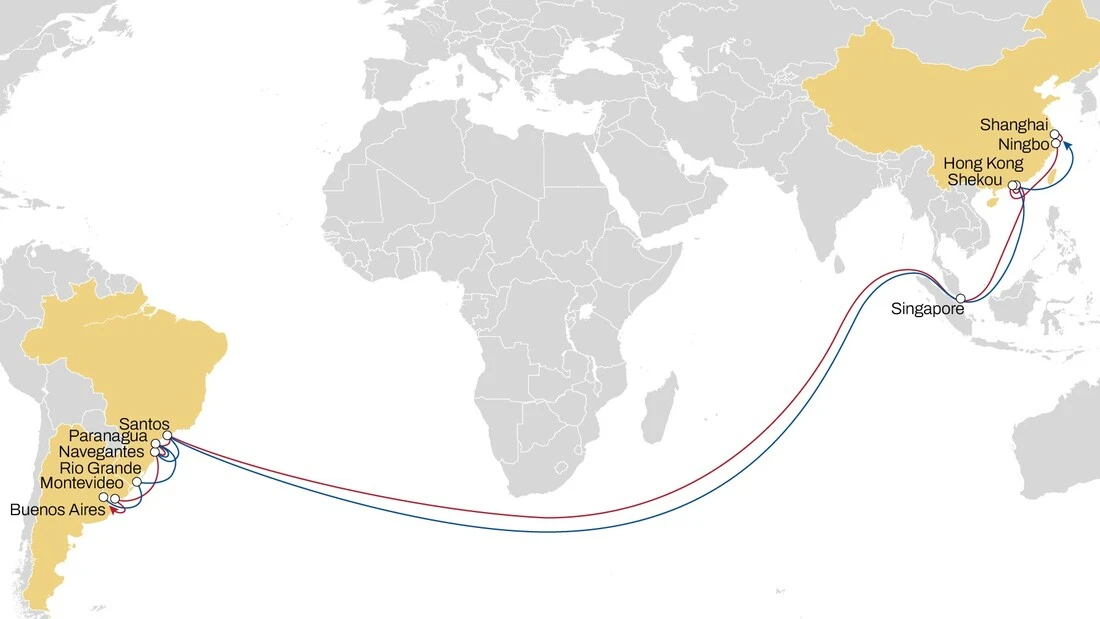
With direct calls at the key South Brazilian gateways of Santos, Paranaguá and Navegantes, as well as the River Plate ports of Montevideo and Buenos Aires, the Ipanema Service will continue to offer competitive transit times and strong coverage across the trade. The full rotation will be as follows:

Shanghai – Ningbo – Shekou – Hong Kong – Singapore – Santos – Paranaguá – Navegantes – Montevideo – Buenos Aires – Rio Grande – Paranaguá – Navegantes – Santos – Singapore – Hong Kong – Shanghai.

Ozan Durak named YLP Global Winner at the 2026 FIATA World Congress

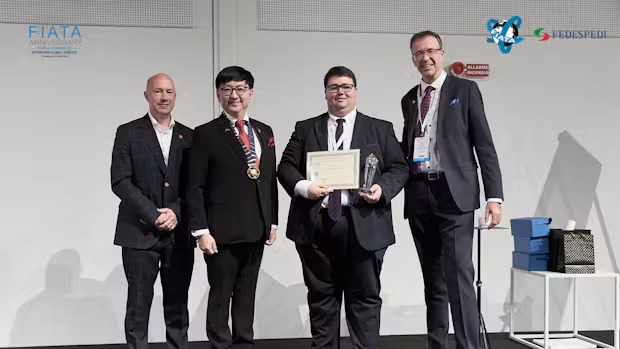
MILAN: FIATA the International Federation of Freight Forwarders Associations, in partnership with TT Club, is pleased to announce the 2026 Global Winner of the FIATA Young Logistics Professionals (YLP) Award, presented during the 2026 FIATA World Congress in Milan, Italy, during the 100th years of FIATA.

Now in its latest edition, the YLP Award continues to provide a platform for emerging logistics professionals to demonstrate their expertise, analytical thinking and ability to address real world challenges facing the freight forwarding industry. The competition brings together leading young professionals from FIATA’s regions, who present their dissertations and practical case studies before an international jury of industry experts. The 2026 FIATA World Congress brought together the three YLP Regional Winners and FIATA’s international logistics community, giving the finalists a platform to share their dissertations cases with industry leaders and peers.

Ozan Durak, representing the Region Europe, has been awarded the title of 2026 YLP Global Winner. Nominated by the Turkish Forwarding and Logistics Association, UTIKAD, his dissertation, “The Energy Nexus: Orchestrating the Green Transition via the Middle Corridor & Smart Logistics”, examines two complex logistics operations: the multimodal import of prototype solid state battery cells from Shenzhen to Gemlik via the Trans Caspian International Transport Route, and the export of two 85 tonne oversized reactors from Central Anatolia to Saudi Arabia for the NEOM Green Hydrogen Project. Through these contrasting cases, Ozan demonstrates how freight forwarders can move beyond traditional transactional roles to proactively manage routing, risk, carbon performance and contingency planning.

Commenting on the achievement, Prof Dr Thomas Sim, FIATA President, congratulated and highlighted the importance of investing in the next generation of logistics professionals: “The YLP Award showcases the talent, creativity and fresh perspectives of the next generation of logistics professionals. I warmly congratulate this year’s Global Winner and all the finalists for their impressive work and valuable contribution to the future of our industry.”

Mike Yarwood, Managing Director for Loss Prevention at TT Club, said: “On behalf of TT Club, I want to congratulate Ozan Durak on this outstanding achievement. In the centenary year of FIATA, it is particularly fitting to celebrate young professionals whose ideas will carry our industry forward. We are proud to support the FIATA Young Logistics Professionals Award, and the standard of this year’s finalists was exceptional.”

The 2026 YLP Award highlighted the diverse challenges facing the global logistics sector, with the finalists showcasing innovative approaches to supply chain resilience, digitalisation, sustainability and operational efficiency.

Organised by FIATA in partnership with TT Club, the YLP Award recognises emerging talent and promotes professional excellence, supporting the next generation of freight forwarding professionals and the future of the industry.

For more information about the YLP Award, please visit FIATA’s dedicated webpage, or contact us at training@fiata.org.

FIATA launches practical user handbook on multimodal transport corridors, with the Middle Corridor as first case study

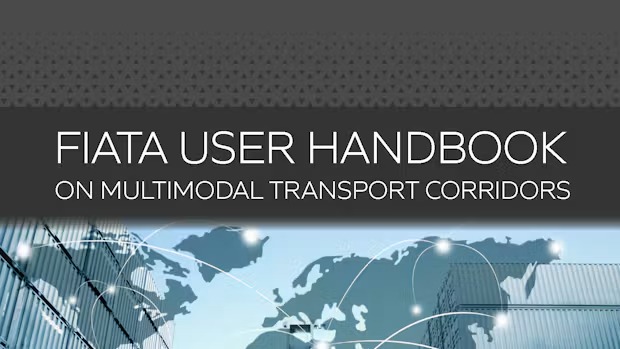
MILAN : FIATA has published the User Handbook on Multimodal Transport Corridors, a first-of-its-kind practical reference designed specifically for freight forwarders assessing, planning and operating transport flows along multimodal corridors. The first edition inaugurates a broader FIATA series on multimodal transport corridors and applies FIATA’s corridor assessment framework to the Middle Corridor, also known as the Trans-Caspian International Transport Route (TITR), connecting Asia and Europe via Central Asia, the Caspian Sea, the South Caucasus and Türkiye.

As geopolitical developments and disruptions to strategic trade routes reshape supply chains, transport corridors are increasingly viewed as important solutions for flexibility and resilience. Yet much of the discussion around corridors remains focused on infrastructure, policy and investment. The FIATA User Handbook fills a critical gap by bringing the freight forwarder perspective to the forefront, enabling logistics professionals to evaluate a corridor based on the operational factors that ultimately determine whether cargo moves efficiently, predictably and competitively.

Crucially, the Handbook examines questions that freight forwarders need answered when deciding whether to use a corridor, such as capacity availability, transit time reliability, documentary requirements, operational bottlenecks, resilience to disruption, and available alternatives when conditions change.

The Handbook introduces FIATA’s corridor assessment framework, built around three operational dimensions: infrastructure and network capability, corridor service performance, and trade facilitation and regulatory environment, complemented by an assessment of resilience. The framework translates complex corridor characteristics into practical operational considerations for shipment planning, risk management and customer decision-making. Applied to the Middle Corridor, the framework translates complex corridor characteristics into practical operational considerations for freight forwarders and their customers.

“Freight forwarders are the ones who transform corridors on a map into functioning supply chains. The first of its kind, this Handbook provides a practical, user-focused reference that helps logistics professionals to evaluate and use multimodal transport corridors from an operational perspective. By combining route information, regulatory considerations, practical checklists and performance analysis in a single resource, it offers a perspective that is often missing from traditional corridor studies. The approach contributes to FIATA’s broader objective to establish a methodology that can support freight forwarders across corridors worldwide and contribute to more informed discussions on multimodal connectivity and corridor development.”
Dr Stéphane Graber, FIATA Director General

The publication draws on consultations with FIATA Members and international organisations involved in corridor development, combining operational experience with broader corridor insights. The Handbook reinforces FIATA’s role as the global voice of freight forwarding and logistics services, ensuring that the operational experience and expertise of freight forwarders are reflected in discussions on corridor development, connectivity and supply chain resilience.

This first edition marks the beginning of a broader FIATA initiative to examine multimodal transport corridors from the perspective of freight forwarders. By applying a common methodology across different routes, FIATA aims to build a global body of practical knowledge on multimodal corridors and provide freight forwarders, policymakers and other stakeholders with a deeper understanding of corridor performance from the perspective of those responsible for moving cargo. Future editions may cover additional corridors, using the same practical methodology, creating a growing reference library for informed logistics, transport and supply chain decision-making.

FIATA launches 2026 Market Report and the FIATA Forever: A Leadership Legacy book as it marks centenary in Milan

MILAN : As geopolitical disruption continues to reshape global trade routes, FIATA, the global voice of freight logistics, is calling for stronger, more connected and adaptable supply chains, with freight forwarders playing a central role in helping businesses navigate an increasingly uncertain trading environment.

The call comes as FIATA marks its centenary during the 2026 FIATA World Congress in Milan, bringing together freight forwarding and logistics professionals, industry leaders, policymakers and international stakeholders under the theme Empowering Global Logistics.

The disruption affecting the Strait of Hormuz has highlighted the vulnerability of critical trade routes and the need for supply chains to have viable alternatives. For freight forwarders, this means coordinating alternative routes, transport modes, gateways and supply chain partners to keep goods moving when established routes are disrupted.

This is reinforced by the findings for the 2026 FIATA Market Report: Global Trends and Insights, based on responses from 111 freight forwarding and logistics professionals across 46 territories and all four FIATA Regions. The report points to a logistics sector adapting to a more uncertain and interconnected operating environment. Geopolitical tensions rank among the most significant factors expected to influence the industry in the years ahead, while digitalisation continues to reshape how supply chains are planned, managed and connected. Across regions, respondents highlighted the growing importance of resilience, connectivity, regulatory efficiency and data-driven operations.

The findings also underline a growing focus on trade corridor diversification and multimodal connectivity. As supply chains face increasing disruption risks, freight forwarders are seeking to develop alternative routing options, strengthen regional and interregional connections, and improve operational visibility across transport modes and borders.

Together, these trends reflect a broader evolution in logistics: from optimising individual transport movements to building resilient, connected and adaptable supply chain networks capable of responding to disruption while maintaining the flow of trade.

“The 2026 FIATA Market Report provides a valuable picture of the factors shaping the freight forwarding and logistics industry across different regions. The findings highlight the importance of infrastructure, technology, regulatory efficiency and connectivity, while also showing how the priorities of the industry vary across FIATA’s Regions. These insights provide a useful basis for understanding where investment and development are needed to support the continued growth of the logistics sector.” Prof Dr Thomas Sim, FIATA President

From disruption to resilience

The current disruption in the Strait of Hormuz illustrates why resilience has become a strategic priority for global supply chains. Maintaining the flow of trade increasingly depends on the ability to anticipate disruptions, adapt operations and coordinate alternative solutions across transport modes, corridors and jurisdictions.

The 2026 FIATA Market Report highlights that resilience is supported not only by physical infrastructure, but also by digital connectivity, efficient border procedures, interoperable data exchange and enabling regulatory frameworks. Together, these elements help create the conditions for more reliable and adaptable supply chains.

For freight forwarders, this reinforces an evolution in their role from arranging transportation towards orchestrating increasingly complex supply chains. By connecting transport modes, corridors, technologies and stakeholders, freight forwarders can help businesses respond to disruption while maintaining the flow of international trade.

“The findings of the 2026 FIATA Market Report show that the challenges facing logistics are increasingly interconnected. Geopolitical uncertainty, digitalisation, infrastructure, regulatory complexity and changing trade flows are all shaping the environment in which freight forwarders operate. The message from our global membership is clear: resilience requires more than additional capacity. It requires connected infrastructure, interoperable digital systems, effective regulation and stronger cooperation across the supply chain.”
Dr Stéphane Graber, FIATA Director General

A century of leadership, lessons and a look ahead

FIATA’s centenary is also being marked through the launch of FIATA Forever: A Leadership Legacy, a special publication documenting a century of leadership, transformation and evolution within the global freight forwarding community.

The book brings together contributions from FIATA President Prof Dr Thomas Sim, 16 living FIATA Past Presidents, FIATA Director General Dr Stéphane Graber and 12 young professionals representing the new generation of logistics voices.

Through personal reflections and perspectives from across generations of FIATA leadership, FIATA Forever traces the Federation’s development alongside the major changes that have shaped international trade and logistics. It looks at how the freight forwarding profession has evolved through periods of technological change, geopolitical disruption and transformation in global trade.

The publication also creates a link between FIATA’s history and its future. The experiences of past leaders provide lessons for the next generation, while the contributions from younger professionals offer perspectives on the opportunities and challenges ahead.

Presented during the FIATA World Congress in Milan as part of the Federation’s centenary celebrations, FIATA Forever reflects FIATA’s continuing role in bringing together the experience of its established leadership with the ideas and ambitions of the next generation.

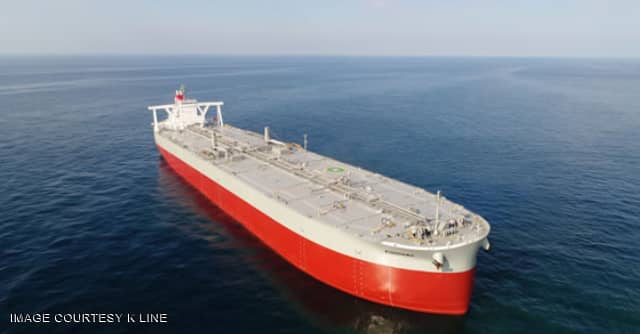
Global VLCC spot earnings rise to $805,000/Day: Clarksons

LONDON: Clarksons Research, the data and analytics arm of the Clarksons Group, continue to track and monitor shipping activity and markets impacted by the Middle East conflict, with energy shipping markets experiencing unprecedented conditions.  

Summarising their latest weekly recap issued on Friday at 18.00 pm GMT 9th October, Steve Gordon, Global Head of Clarksons Research commented:

  • Crude tanker markets reach fresh all-time highs, with VLCCs averaging $805,000/day globally and freight rates now $20-45/bbl, with USG-China now $37.5/bbl (2025: $5/bbl).
  • Fresh all-time highs for LPG freight with VLGCs at $209,000/day US-Japan supported by long-haul US to Asia volumes and returning volumes ex-ME Gulf. 
  • Further attacks on vessels this week, with at least 10 ships of 1.0m GT damaged in the Middle East in October so far.
  • Strong levels of Middle Eastern crude still leaving Gulf region despite some small-scale recent easing; 10m bpd (15m bpd across 2025) appears to have crossed Hormuz in recent days, ~80% of which appears to have been “shuttled” across Hormuz via STS in Gulf of Oman while total Middle Eastern crude flows stand at 16m bpd, ~90% of “normal” and LPG flows out of Gulf now >50% of “normal”.
  • Despite recent recovery in flows, a cumulative ~2 billion bbl of crude have not transited Hormuz, albeit a range of mitigating factors (e.g. higher Atlantic supply, Yanbu exports) have limited “net” loss to ~1 billion bbl (there has also been 0.25 bn bbl stock draw since conflict started).
  • Energy shipping markets at unprecedented levels with cargo volumes rising and additional vessels required due to waiting times for STS transfer, long-haul Red Sea oil flows – we estimate the current situation is boosting crude tanker demand by >13% today.

More detail from Clarksons Research, including the full update and underlying data, is available on request. 

Clarksons Research, the data and analytics arm of Clarksons, are the market leaders in the provision of independent data and intelligence around shipping, trade, offshore and the maritime energy transition. Millions of data points are processed and analysed each day to provide trusted and insightful intelligence to thousands of stakeholders across maritime. Better data for better decisions.

IMO adopts frameworks to assess marine geoengineering research activities

LONDON: The International Maritime Organization has adopted new guidance aimed at ensuring marine geoengineering research avoids unacceptable impacts, amid growing interest in climate change mitigation technologies. 

Marine geoengineering involves methods to increase the ocean’s capacity to absorb carbon dioxide from the atmosphere or store carbon for long periods. However, their potential impacts on marine ecosystems are not yet fully understood. 

Meeting at IMO Headquarters in London, Parties to the 1972 Convention on the Prevention of Marine Pollution by Dumping of Wastes and Other Matter (London Convention) and 1996 Protocol to the Convention (London Protocol), adopted a resolution establishing assessment frameworks for ocean fertilization, ocean alkalinity enhancement and ocean sinking biomass. 

The frameworks will help governments determine, on a case-by-case basis, whether proposed activities constitute legitimate scientific research and whether they can proceed without unacceptable risks to the marine environment. 

Welcoming the achievement, IMO Secretary-General Mr. Arsenio Dominguez said: 

“At a time when marine geoengineering is attracting increasing scientific, commercial and public attention, they provide regulators and researchers with rigorous and transparent tools for assessing proposed activities and protecting the marine environment.” 

A precautionary approach to marine geoengineering 

The frameworks provide a common structure for a precautionary approach for the following three marine geoengineering methods:  

  • Ocean fertilization: Stimulating primary productivity in the ocean by adding nutrients to seawater to encourage phytoplankton growth, which absorbs carbon dioxide from the atmosphere; 
  • Ocean alkalinity enhancement: Adding alkaline substances to seawater to increase the ocean’s capacity to absorb atmospheric carbon dioxide and counteract ocean acidification. 
  • Ocean sinking of biomass: Deliberately placing biological material, such as marine or terrestrial plant matter, into the ocean to store carbon. 

Each framework covers initial screening, environmental assessment, risk management, decision-making and post-project review. Assessments can be revisited as new information becomes available. 

Under the frameworks, all proposals must demonstrate a legitimate scientific purpose, thoroughly assess environmental risks, ensure proper stakeholder consultation and peer review, and include rigorous monitoring and transparent reporting. 

The Parties emphasized that scientific knowledge remains limited, and that research should proceed cautiously, with environmental protection as the top priority. Further scientific research is needed before any activities beyond the research stage can be considered.  

The adoption of these frameworks reaffirms the essential role of the London Convention and London Protocol in responding to new and rapidly evolving human activities in the ocean. 

Other key decisions 

The Parties also approved guidance on the end-of-life management of fibreglass reinforced (FRP) vessels and alternatives to at-sea disposal developed in cooperation with UNEP. They agreed on intersessional work to consider the relationship between the London Convention and London Protocol and the Agreement on Marine Biological Diversity of Areas beyond National Jurisdiction (BBNJ Agreement). 

The 48th Consultative Meeting of Contracting Parties to the London Convention and the 21st Meeting of Contracting Parties to the London Protocol (LC 48/LP 21) took place at IMO Headquarters in London from 5 to 9 October 2026, chaired by Ms. Radia Razack (South Africa).