Home Blog Page 62

Yemen fighting expands as Houthis attack Saudi Airport again

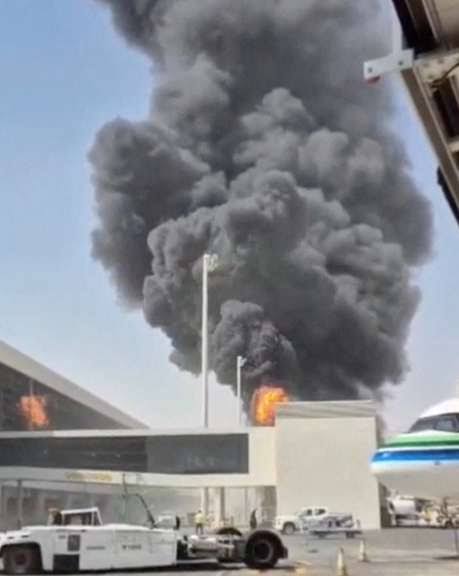
RIYADH: Saudi Arabia has said it will “firmly” retaliate against an attack on Riyadh’s international airport on Saturday in which at least 12 people were killed, as Yemen’s Houthis claimed a new attack on Saudi’s main air hub on Sunday which resulted in fresh injuries.

The Saudi General Authority of Civil Aviation said the attack on Sunday evening targeted King Khalid International Airport and had “resulted in injuries”, without elaborating. A ⁠Saudi-led coalition fighting the Iran-aligned group earlier said an “unidentified ⁠projectile” struck a passenger terminal at the airport, causing a fire, adding that Saudi air defences also intercepted a missile.

The coalition on Sunday described the attack the previous day as a “full-fledged war crime”.

It comes amid escalating fighting between the Houthis and Saudi-backed Yemeni government forces following the collapse of a United Nations-brokered ceasefire largely in place since 2022.

The fighting has raised fears of a wider regional confrontation, with Trump suggesting the US could join Saudi military operations against the Houthis.

Dania Thafer, executive director at the Gulf International Forum, said Saudi Arabia will likely hit back at the Houthis “pretty hard”.

“I still think that the Saudis probably want de-escalation. They don’t want long-term escalation, but the Houthis are making it very difficult by not only being a threat to Saudi national security but also a threat to international maritime security,” Thafer said. “So this battle is much bigger than just a tit-for-tat.”

World Bank raises China 2026 GDP growth forecast to 4.5% on high-tech exports

BEIJING: China’s economic growth forecast for 2026 has been raised, as strong high-tech exports partly offset continued weakness in domestic consumption and investment.

  • AI-related exports support growth; China vulnerable to downside risk
  • Property downturn continues to restrain consumption, investment
  • Ageing population, weak domestic demand to weigh on growth trajectory

  • The World Bank expects China’s gross domestic product (GDP) to grow by 4.5% in 2026, up from 4.2% in its June forecast, the organization said in its October 2026 East Asia and Pacific Economic Update published on 6 October.

China’s GDP growth is projected to moderate to 4.3% in 2027 and 4.2% in 2028, the organization said.

China is also part of the developing East Asia and the Pacific (EAP) region, whose GDP growth forecast was raised to 4.5% from 4.2% in 2026 by the World Bank in the same report.

DOMESTIC GROWTH LOSES MOMENTUM

China’s GDP growth slowed to 4.3% year on year in the second quarter of 2026 from 5.0% in the first quarter, marking its weakest quarterly expansion since the fourth quarter of 2022, the World Bank said.Retail sales contracted by an average of 4.0% year on year in April-July, partly as the effects of government subsidies for consumer goods, which began in March 2024, were fading, according to the report.

The World Bank said weak consumption prevented companies from fully passing higher costs on to consumers. In April-July, consumer price inflation averaged 1.0% year on year.

Investment growth also slowed as higher energy costs affected energy-intensive sectors, although the impact of the energy shock was partly mitigated by the drawdown of China’s oil reserves, alongside its high share of renewable energy, as well as temporary limits on gasoline price increases, the World Bank said.

Consumption and investment are expected to be constrained by a soft labor market, the continuing property-sector adjustment, and low corporate profitability in some sectors, it said.

Over the medium term, an ageing population, high debt, and diminishing returns on capital are expected to weigh on China’s growth trajectory, according to the World Bank.

HIGH-TECH EXPORTS PROVIDE SUPPORT

China’s exports rose by 21.1% year on year in April-July as shipments of high-tech products – including goods related to artificial intelligence (AI), electric vehicles, and green industries – surged, the World Bank said.

Weak domestic demand limited import growth outside technology-related inputs, which helped China record a current-account surplus equivalent to 3.7% of GDP in the second quarter, according to the report.

The World Bank said China was the largest supplier of AI-related goods among the major east Asian economies included in its analysis, exporting $785 billion of such products from May 2025 to April 2026.

Intermediate inputs, which are used to manufacture finished products, accounted for nearly three quarters of China’s AI-related exports, with much of the material supplied to other southeast Asian countries, it added.

PROPERTY CORRECTION REMAINS A DRAG

China’s prolonged property-market correction continued to weigh on domestic demand and local government finances, with real estate investment falling by 18% year on year in the first half of 2026 while housing sales were about two-fifths of their peak levels, the World Bank said.

Real house prices remained around 23% below their 2021 peak, while declining land-lease revenue weakened local government finances and prompted reductions in capital expenditure, the organization added.

China’s consolidated fiscal deficit narrowed to 3.2% of GDP in the first seven months of 2026 from 4.0% a year earlier amid the government reducing capital spending, the World Bank said.

The prolonged property-sector adjustment is expected to continue weighing on consumption and investment, it said.

RELIANCE ON AI TRADE PRESENTS RISK

The World Bank identified a possible reversal in global AI-related activity as a downside risk to east Asian growth, which could affect upstream suppliers such as China indirectly through weaker demand from the manufacturers they supply.

Rapid growth in global AI investment has been supported by abundant liquidity but could slow following a tightening in financial conditions, the World Bank said.

Investment could also weaken if corporate cash flows failed to meet expectations or if greater competition reduced expected profitability, it added.

Source: ICIS

Sagarmanthan 2026: India strengthens maritime and connectivity ties with Saudi Arabia, Belgium and Bhutan

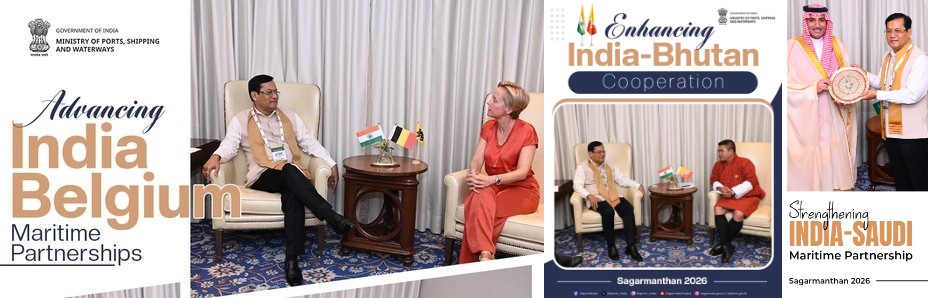
NEW DELHI: Union Minister for Ports, Shipping and Waterways Shri Sarbananda Sonowal held a series of bilateral meetings with senior representatives from Saudi Arabia, Belgium and Bhutan on the second day of Sagarmanthan: The Great Oceans Dialogue 2026 in New Delhi, reaffirming India’s commitment to strengthening international maritime cooperation, port connectivity, infrastructure development and regional partnerships.

The meetings provided an opportunity to explore avenues for enhanced bilateral engagement in maritime transport, trade, infrastructure and sustainable economic development.

HUKjH78bYAApVLv edited Sagarmanthan 2026: India strengthens maritime and connectivity ties with Saudi Arabia, Belgium and Bhutan

India–Belgium: Strengthening Port and Maritime Cooperation

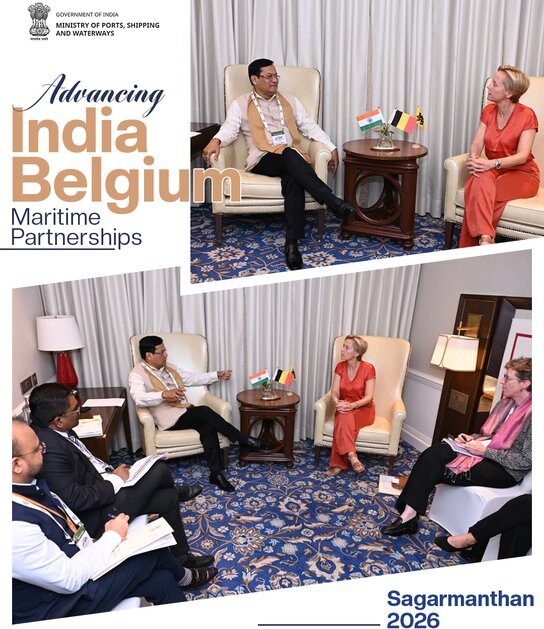
Shri Sarbananda Sonowal held a bilateral meeting with H.E. Ms. Annick De Ridder, Flemish Minister of Mobility, Public Works, Ports and Sport of Belgium. The discussions provided an opportunity to explore areas of mutual interest in port development, maritime connectivity, transport infrastructure and cooperation between India and Belgium’s maritime sector.

The engagement highlighted the importance of international partnerships in promoting efficient port operations, strengthening trade links and advancing sustainable maritime development.

HUJxszvawAA 5XO 1 edited Sagarmanthan 2026: India strengthens maritime and connectivity ties with Saudi Arabia, Belgium and Bhutan

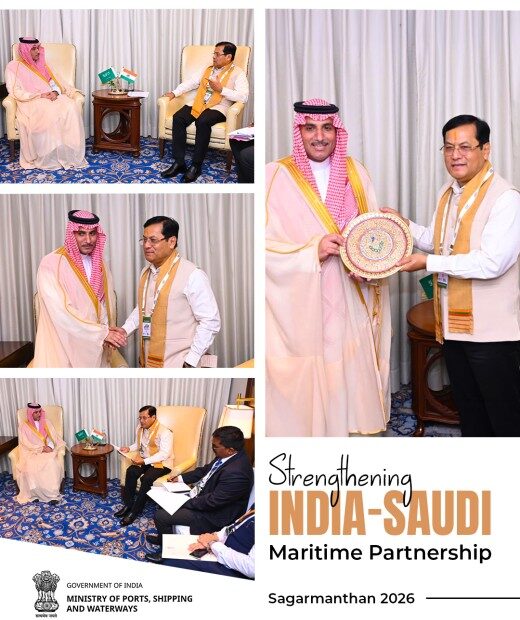
India–Saudi Arabia: Expanding Maritime Connectivity and Trade

The Union Minister also met Eng. Suliman Almazroua, President of the Saudi Ports Authority, to discuss ways to strengthen India–Saudi Arabia maritime cooperation.

The meeting focused on enhancing port connectivity, facilitating trade and exploring opportunities for collaboration in the maritime sector and blue economy. The engagement reflects the importance of closer cooperation between the two countries in strengthening maritime links and supporting growing trade and economic relations.

HUHCSlVa4AA4MCA edited Sagarmanthan 2026: India strengthens maritime and connectivity ties with Saudi Arabia, Belgium and Bhutan

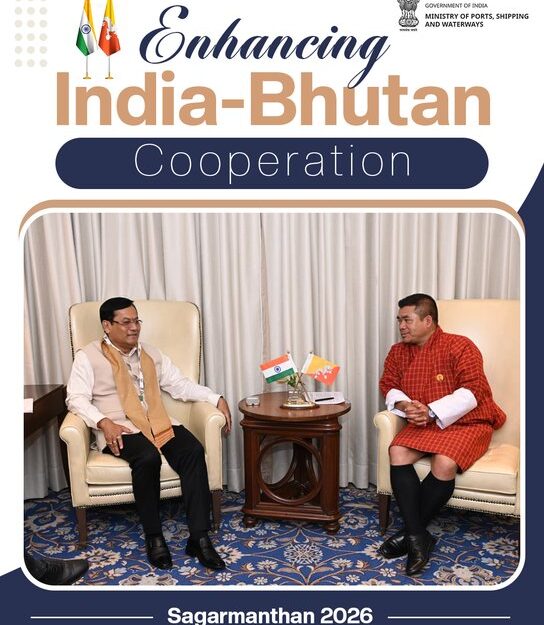
India–Bhutan: Advancing Infrastructure and Regional Connectivity

In another bilateral engagement, Shri Sarbananda Sonowal met Lyonpo Chandra Bahadur Gurung, Minister of Infrastructure and Transport of Bhutan.

The discussions focused on strengthening India–Bhutan cooperation in infrastructure, connectivity and transport, while exploring opportunities for deeper regional collaboration. The meeting underscored the shared commitment of both countries to promoting sustainable development, improving connectivity and advancing mutual growth and prosperity.

Sagarmanthan 2026: A Platform for Global Maritime Partnerships

The bilateral engagements on the sidelines of Sagarmanthan 2026 underline India’s growing focus on international cooperation to advance its maritime ambitions. By engaging with key partners across different regions, India continues to explore opportunities to strengthen port-led development, improve transport connectivity, facilitate international trade and promote sustainable growth across the maritime sector.

Sagarmanthan: The Great Oceans Dialogue 2026 brings together policymakers, maritime leaders and industry stakeholders to deliberate on emerging opportunities and challenges shaping the global ocean economy.

Sagarmanthan 2026: Two Strategic MoUs signed to Advance Shipbuilding, Cruise Tourism and Inland Waterways in India

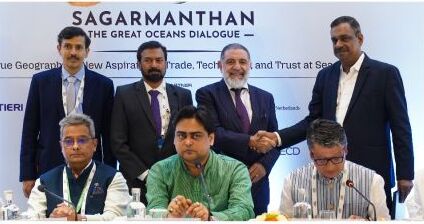
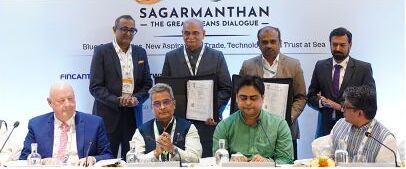
NEW DELHI: India’s maritime sector is set to receive a fresh impetus through strategic collaborations aimed at strengthening shipbuilding, fostering technological innovation and expanding cruise tourism and inland waterway development. Two significant Memoranda of Understanding (MoUs) were exchanged on the sidelines of Sagarmanthan 2026 – The Great Oceans Dialogue, in the presence of Shri Shantanu Thakur, Hon’ble Minister of State for Ports, Shipping and Waterways.

The agreements bring together key players from India’s shipbuilding industry, international maritime technology and river cruise tourism, reflecting the growing emphasis on partnerships to enhance the country’s maritime capabilities and unlock new growth opportunities.

MoUs at Sagarmanthan 2026 2 Sagarmanthan 2026: Two Strategic MoUs signed to Advance Shipbuilding, Cruise Tourism and Inland Waterways in India

The two MoUs include an agreement between Cochin Shipyard Limited (CSL) and Everllence SE, Germany, and another between Hooghly Cochin Shipyard Limited (HCSL) and Heritage River Journeys. These collaborations are expected to support innovation, strengthen industry capabilities and contribute to the expansion of India’s shipbuilding, cruise tourism and inland waterways sectors.

Strengthening International Maritime Cooperation

The MoU between Cochin Shipyard Limited and Germany-based Everllence SE represents an important step towards promoting cooperation between Indian shipbuilding capabilities and international maritime technology expertise. Such partnerships can help advance technological innovation, encourage knowledge exchange and support the development of a competitive and future-ready shipbuilding ecosystem.

As India continues to focus on expanding its domestic shipbuilding capacity and strengthening its position in the global maritime industry, international collaborations are expected to play an important role in facilitating technology development and enhancing industrial capabilities.

Advancing River Cruise Tourism and Inland Waterways

The agreement between Hooghly Cochin Shipyard Limited and Heritage River Journeys highlights the growing scope for collaboration between shipbuilding and river cruise tourism. The partnership is expected to support opportunities associated with cruise vessels, river-based tourism and the development of inland waterways.

With increasing attention on harnessing India’s extensive river network for passenger transportation, tourism and economic activity, such collaborations can contribute to the development of a more integrated inland waterways ecosystem.

Sagarmanthan 2026: A Platform for Maritime Partnerships

The exchange of the two MoUs underscores the importance of Sagarmanthan 2026 as a platform for bringing together stakeholders from government, industry and international maritime institutions to explore strategic partnerships and advance the sector’s development.

India’s maritime growth agenda increasingly encompasses modern shipbuilding, technological advancement, cruise tourism, inland water transport and enhanced industrial cooperation. Partnerships such as these can help translate these priorities into practical opportunities for innovation, investment and capacity building.

The MoUs exchanged in the presence of Minister of State Shri Shantanu Thakur reaffirm the significance of collaborative efforts in building a stronger, more innovative and globally competitive Indian maritime sector.

As India pursues its broader maritime development ambitions, cooperation between domestic shipyards, international technology partners and tourism operators is expected to remain an important driver of sustainable growth across the maritime value chain.

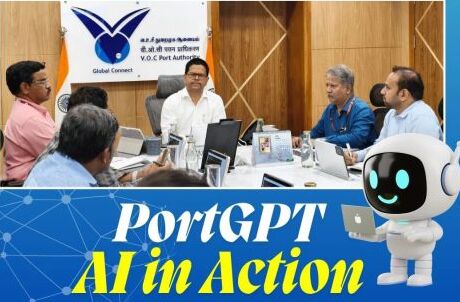
V.O. Chidambaranar Port Authority pioneers large-scale generative AI Deployment with PortGPT

Chairperson Susanta Kumar Purohit Reviews Implementation and Adoption of AI-Powered Platform to Strengthen Operational Efficiency and Technology-Driven Governance

TUTICORIN : V.O. Chidambaranar Port Authority (VOC Port) is advancing its digital transformation journey with the deployment of PortGPT, a Generative Artificial Intelligence (AI) platform, positioning itself at the forefront of technology adoption in India’s maritime sector. According to the Port Authority, VOC Port is the first major port to deploy Generative AI at scale, marking a significant step towards building a smarter, more efficient and future-ready port ecosystem.

As part of the ongoing initiative, Shri Susanta Kumar Purohit, IRSEE, Chairperson, V.O. Chidambaranar Port Authority, led a comprehensive review of PortGPT in the presence of all Heads of Departments. The review focused on assessing the platform’s implementation, adoption and utilisation across various departments, with particular emphasis on leveraging advanced AI capabilities to enhance operational efficiency and strengthen technology-driven governance.

The review underscores the Port Authority’s commitment to integrating emerging digital technologies into its administrative and operational framework. By encouraging the adoption of Generative AI across departments, VOC Port aims to strengthen institutional capabilities, streamline workflows and support more efficient decision-making.

PortGPT: Advancing Digital Transformation in Port Operations

The deployment of PortGPT reflects the growing role of Artificial Intelligence in transforming the maritime and logistics sectors. Generative AI platforms can support a range of organisational functions, including information retrieval, document assistance, knowledge management and workflow support, subject to their specific capabilities and implementation.

At VOC Port, the focus on reviewing PortGPT’s adoption across departments highlights the importance of ensuring that advanced technology delivers practical value in day-to-day operations. Continued assessment of its implementation and utilisation will be essential to strengthening user adoption and aligning the platform with the Port Authority’s operational priorities.

Building a Smarter, Future-Ready Maritime Gateway

The initiative reinforces VOC Port’s broader vision of embracing digital innovation to improve efficiency, modernise governance and prepare for the evolving demands of the maritime industry. As ports increasingly explore AI-enabled solutions, the integration of such technologies is emerging as an important component of efforts to improve productivity, information accessibility and organisational responsiveness.

With PortGPT, V.O. Chidambaranar Port Authority is taking a significant step towards embedding Generative AI into its institutional framework. The initiative reflects the Port Authority’s continued emphasis on innovation and technology-led development as it works towards establishing a smarter, more connected and future-ready maritime gateway for India.

APM Terminals Pipavav records fastest-ever DS in/out train turnaround in 115 minutes

PIPAVAV: APM Terminals Pipavav has achieved a significant operational milestone, with Train GR36 completing its DS In/Out operation in just 1 hour and 55 minutes (115 minutes), marking the fastest turnaround recorded for this operation at the terminal.

The train operation handled a total of 312 TEUs (Twenty-foot Equivalent Units), comprising 120 inbound TEUs and 192 outbound TEUs. The achievement highlights the terminal’s continued focus on operational efficiency, optimised cargo handling and reliable rail logistics services.

The record turnaround reflects the coordinated efforts of the operations team and other stakeholders involved in ensuring the smooth execution of the train movement. Efficient rail operations play an important role in strengthening port connectivity, facilitating seamless cargo movement and supporting integrated logistics operations.

APM Terminals Pipavav appreciated the Operations Team and everyone involved in achieving this milestone, reaffirming its commitment to service excellence, operational reliability and continuous improvement.

The achievement further underscores the importance of efficient rail-linked port operations in enhancing supply chain performance and delivering greater value to customers and logistics partners.

Indian crew of 22 safe after drone attack on Panama-flagged oil tanker at Sharjah Anchorage: Sonowal

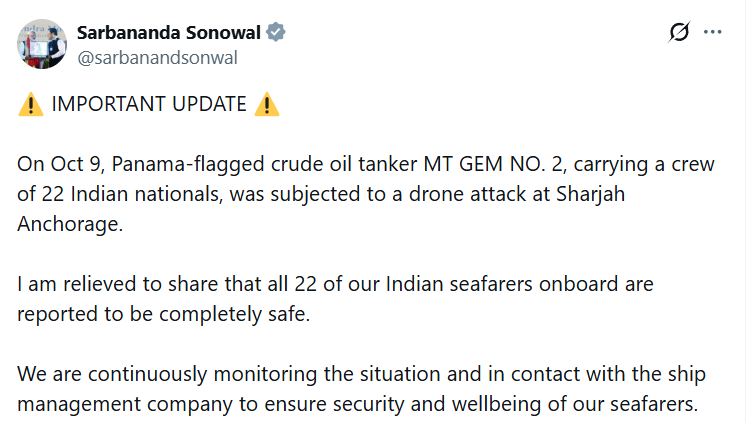
NEW DELHI: Union Minister of Ports and Shipping Shri Sarbananda Sonowal on Saturday said all 22 Indian seafarers onboard Panama-flagged crude oil tanker MT GEM NO. 2 were safe after the vessel was subjected to a drone attack at Sharjah Anchorage on October 9.

In a post shared on X, Sonowal said the situation was being continuously monitored and that authorities were in contact with the ship management company to ensure the security and well-being of the Indian crew.

Sonowal Tweet Indian crew of 22 safe after drone attack on Panama-flagged oil tanker at Sharjah Anchorage: Sonowal

“On Oct 9, Panama-flagged crude oil tanker MT GEM NO. 2, carrying a crew of 22 Indian nationals, was subjected to a drone attack at Sharjah Anchorage. I am relieved to share that all 22 of our Indian seafarers onboard are reported to be completely safe,” Sonowal said.

“We are continuously monitoring the situation and in contact with the ship management company to ensure security and wellbeing of our seafarers,” he added.

Sharjah Anchorage is located in the Arabian Gulf in the Dubai area of the United Arab Emirates, according to MarineTraffic.

The incident comes amid concerns over a series of attacks on commercial vessels and seafarers in the Gulf region and the Black Sea, prompting India and other countries to call for stronger international cooperation to safeguard maritime trade and crew members.

On Friday, the Ministry of External Affairs (MEA) highlighted the objectives of the newly formed Group of Friends on Safety and Security of Shipping and Seafarers (GoF on S4), an initiative aimed at bringing maritime stakeholders together to strengthen international cooperation and place the safety of seafarers and commercial shipping at the centre of global discussions.

MEA spokesperson Randhir Jaiswal said the group seeks to coordinate countries involved in commercial shipping and the maritime industry, as well as those with significant seafaring communities.

“The idea is to get them together so that we can bring the issue of safety of seafarers and the issue of safety of commercial shipping at the centre of global discourse and discussion, and we can enhance international cooperation so as to ensure that commercial shipping is not impacted, they are not attacked, and the seafarers are safe and secure,” Jaiswal said.

He said the group’s first meeting was held in New York, co-chaired by External Affairs Minister S Jaishankar and Liberian Foreign Minister Sara Beysolow Nyanti, with 25 countries participating.

India and Liberia, as co-chairs of the group, on Thursday strongly condemned attacks on commercial vessels and seafarers in the Gulf region and its vicinity, as well as the Black Sea.

“These actions that disrupt maritime trade and cost innocent lives are simply indefensible. We call for an immediate cessation of such attacks in the interest of peace and stability in the region,” the joint statement said.

The two countries also expressed condolences to the families of seafarers who lost their lives and wished those injured a speedy recovery.
India and Liberia launched the group last month on the sidelines of the 81st United Nations General Assembly to improve coordination, prevent further attacks and safeguard the rights and security of seafarers.

Jaishankar had said that India, as a major source of seafarers, had joined hands with Liberia, which hosts the world’s largest shipping registry by tonnage, to address growing concerns over attacks on commercial shipping and merchant mariners.

“Put simply, these attacks must stop,” he said.

Source: ANI

AP, Maharashtra explore maritime cooperation

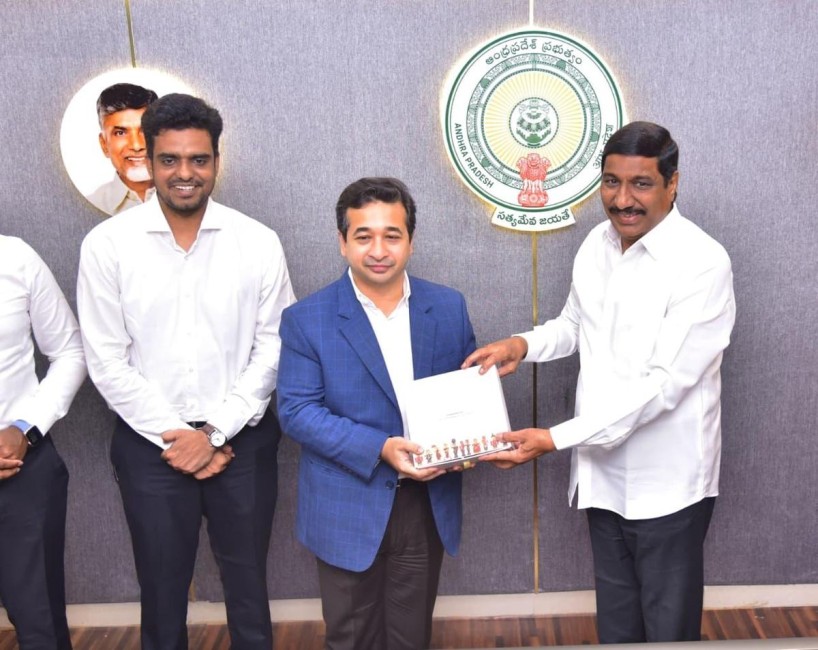
VIJAYWADA : Andhra Pradesh and Maharashtra would aim at better cooperation in ports, shipbuilding, fishing harbours and logistics, with Maharashtra’s Ports and Fisheries Minister Shri Nitesh Rane expressing interest in adopting some of AP’s maritime practices.

Rane met AP Roads, Infrastructure and Investments Minister Shri B.C. Janardhan Reddy at the Secretariat here on Thursday. Officials of the two maritime boards participated in the meeting.

AP officials presented details of Greenfield ports, fishing harbours, fish-landing centres, port-led industrial development, PPP projects and the state’s new maritime policy. They explained measures to attract investments, expand industries, strengthen logistics and create jobs.

Rane appreciated AP’s plan to develop three Greenfield ports under the landlord model, with the Maritime Board developing infrastructure and private agencies operating the facilities. He said the model could increase private participation and generate revenue, with the ports expected to yield 12–15 per cent revenue in future.

Janardhan Reddy said the government was developing AP as a maritime, port and logistics hub under Chief Minister Shri Chandrababu Naidu. Each Greenfield port involves an estimated investment of around `4,500 crore, with completion targeted by 2027. Port-based industrial clusters, warehouses, logistics facilities and ancillary industries are also planned.

He said shipbuilding was being promoted at Duggarajapatnam, Machilipatnam and Kakinada. Mazagon Dock Shipbuilders and Goa Shipyard have entered MoUs to anchor projects at Duggarajapatnam and Machilipatnam respectively, while a Kakinada proposal is progressing.

The state is also focusing on skill training for youth for jobs in shipbuilding, marine engineering, logistics and allied sectors.

AP’s model of developing fishing harbours through the maritime board, rather than the fisheries department, also drew Maharashtra’s interest. Infrastructure is provided for fishermen without a profit motive, with operations proposed to be handed over to experienced private agencies.

Janardhan Reddy said approvals had been secured for the Vijayawada-Amaravati water metro and nine locations had been identified for seaplane services. A Srisailam-Vijayawada seaplane trial run had already been conducted.

Multimodal logistics parks are being planned to connect Rayalaseema with ports, railways, national highways and inland waterways for faster movement of horticulture and other farm produce.

The Centre has also been requested to allot around 20,000 acres of coastal salt land as a future maritime land bank.

Officials said a minister-led task force had been formed to expedite infrastructure projects by resolving land acquisition, approval and coordination issues. The two ministers agreed to exchange best practices and technical expertise and explore investments, stressing greater cooperation among coastal states.

TIDCO invites proposals to select consultant for setting up multi-modal logistics hub in Tiruchi

CHENNAI: The Tamil Nadu Industrial Development Corporation Limited (TIDCO) has floated a tender to select a consultant to prepare a Detailed Feasibility Report and Project Structuring Options for developing the proposed Multi-Modal Logistics Hub (MMLH) in Tiruchi.

The floating of the tender comes in the wake of Chief Minister C. Joseph Vijay’s announcement under Rule 110 in the Assembly that TIDCO will conduct a study and prepare a project report, based on which a MMLH will be established in the Tiruchi. He had subsequently written to Union Finance Minister Shri Nirmal Sitharaman outlining the government’s intent.

The TIDCO, in its Request for Proposal (RPF), pointed out that Tiruchi, located centrally in Tamil Nadu, and its adjoining districts, have significant industrial and agricultural output, with a large number of major manufacturing industries, MSMEs, and agro-processing units.

The region is broadly equidistant from the key gateway ports of Chennai, Kamarajar, Kattupalli, V.O. Chidambaranar (Thoothukudi), Cochin, and Vizhinjam. An inland container depot / dry port in the region is expected to reduce logistics cost and time for the region’s industry and strengthen its export ecosystem.

The MMLH will comprise an inland container depot / dry port with Customs facilities, container handling yard, rail siding, warehousing, cold chain, and temperature-controlled facilities, truck terminal, cargo consolidation, and distribution hubs and supporting infrastructure.

As per the RPF, the site for the MMLH is yet to be finalised. A land parcel of minimum 30 acres, with scope for future expansion to include value-added services, shall be identified and suggested by the consultant and approved by TIDCO, it said.

The consultant will be tasked with preparing the comprehensive Detailed Feasibility Report for the MMLH covering cargo demand assessment, facility configuration, and capacity, concept master layout, road and rail connectivity, statutory and Customs requirements, capital and operating cost estimates, and financial and economic viability.

The consultant will analyse the project structuring options for the MMLH, including Joint Venture and Public-Private Partnership, and recommend the most suitable option, and prepare a financial model and an implementation framework.

According to the TIDCO tender notice, there will be pre-bid meeting on October 23 and the November 13 will be the last date for submission of proposals.

Durai Vaiko, Tiruchi MP, who had been lobbying for the cause, expressed happiness over the floating of the tender. “The MMLH would give a big push to the economic and industrial development of not only Tiruchi district but also the central region of Tamil Nadu,” he said.

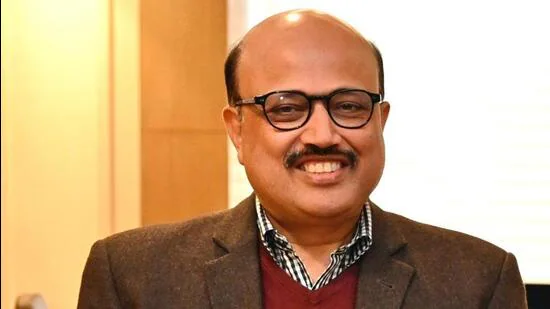
Rajesh Agrawal highlights need for rigorous legal thinking at CTIL’s 9th Anniversary Celebration

NEW DELHI : Commerce Secretary Shri Rajesh Agrawal, in his video address at the 9th Anniversary Celebration of Centre for Trade and Investment Law (CTIL), held at the Prime Minister’s Museum and Library in New Delhi, on 7 October 2026, said that established rules were being questioned, while emerging issues such as sustainability-linked trade measures and digital trade were reshaping the global trade agenda. He noted that rigorous legal thinking was more important than ever and that CTIL, as a leading institution in the field, was well placed to contribute to it.

Commerce Secretary Shri Rajesh Agrawal, congratulated CTIL on completing nine years and noted that the Centre had earned the trust of the Government, industry and the wider trade law community through its sustained and rigorous work. He recalled CTIL’s contributions to the Department of Commerce through legal analysis and specialised support in free trade agreement negotiations, dispute settlement and institutional memory building.

India needs institutions like CTIL that do more than follow developments in international economic law and are capable of shaping them, noted Justice P. S. Narasimha, Judge, Supreme Court of India.

Justice Narasimha observed that international investment law has evolved from an initial focus on the protection of foreign investment towards greater recognition of the regulatory freedom of States. He noted that the field is now entering a phase in which questions of institutionalisation, legitimacy and the long-term balance between investment and public power have assumed greater significance. He underscored the need for a durable international investment law framework that balances investment protection with the regulatory authority of States.

Head, CTIL, Indian Institute of Foreign Trade (IIFT), and WTO India Chair, Prof. James J. Nedumpara, highlighted that CTIL was established to strengthen India’s trade capacity as a broader element of economic statecraft. He noted that CTIL had provided more than 4,000 legal opinions, participated in negotiations concerning nearly 10 free trade agreements, and contributed to WTO negotiations, submissions, notifications and dispute settlement.

Additional Secretary, Ministry of Commerce and Industry, Shri Yashvir Singh, delivered the Special Address and highlighted CTIL’s contributions to India’s major trade engagements, including support for major free trade agreements and engagements such as the G20 and BRICS over the past several years. He also highlighted CTIL’s work in WTO negotiations, notifications and dispute settlement, along with its contributions to India’s economic diplomacy and the development of human capital in international economic law.

Vice Chancellor, IIFT, Dr. K. Rangarajan, in his address, recalled the evolution of specialised trade-policy institutions at IIFT. He highlighted CTIL’s growing role in providing timely expertise for international trade negotiations and policy interventions.

Joint Secretary, Ministry of Commerce and Industry, Smt. Kapil Chaudhary, highlighted CTIL’s expanding research in emerging areas, including critical minerals, semiconductors, artificial intelligence, supply chains, climate and sustainability. She also emphasised the need for institutional knowledge management and greater capacity building within the Department of Commerce.

On the occasion, the ninth anniversary issue of the CTIL Magazine, titled “The Emerging Sustainability Landscape: Responding to Shifting Winds”, was released. The magazine examines the future opportunities and challenges that developing countries may face as they seek to participate in the evolving intersection of trade and sustainability. A special anniversary edition of Investment Law Compass, CTIL’s monthly newsletter on developments in investment law and policy, was also launched.