Home Blog Page 64

Focus on information security: REINTJES achieves ISO/IEC-27001 certification

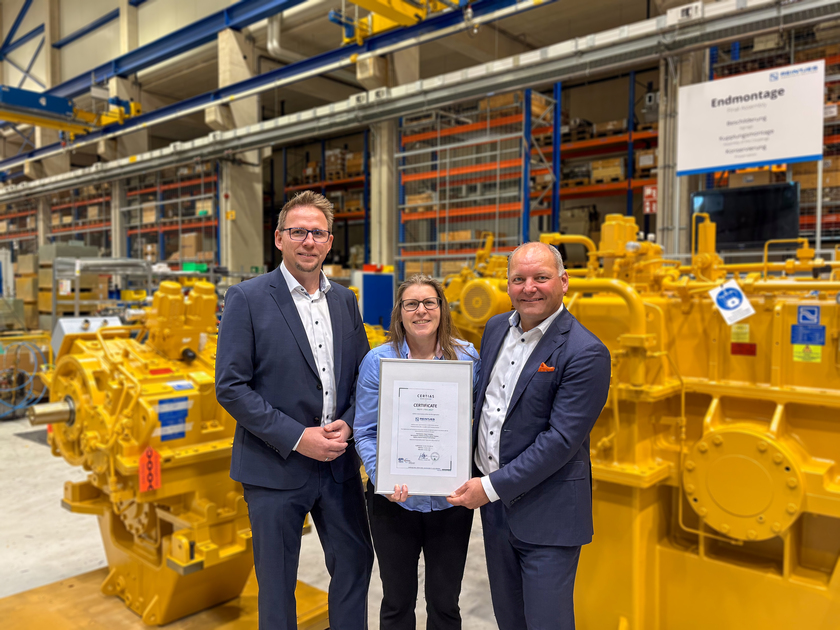
HAMBURG: REINTJES GmbH has been certified to ISO/IEC 27001:2022. Whilst this may sound rather technical, it has a very real and serious purpose: information security.

“We are living in rather turbulent times and are facing various crises worldwide. That is why it is important to protect our company, as well as our staff, customers and partners, as effectively as possible,” says REINTJES Managing Director Klaus Deleroi, emphasising the importance of this.

The company spent around a year preparing for the certification, which involved a great deal of work. Around ten staff members from various departments formed part of the project team. Over the past few months, they have reviewed existing processes and initiated changes.

Security affects the whole company

One reason for the certification is customer requirements. Added to this are legal requirements. Above all, however, the issue of information security has become significantly more important in recent years. And this is not just about IT.

For example, REINTJES has, amongst other things, fundamentally revised its own access controls and scrutinised the entire area of physical security in great detail. The ‘clean desk’ principle now plays an even greater role too. At the same time, all staff have received comprehensive training on information security.

The ISO/IEC 27001 standard provides the framework for an information security management system. To comply with this, organisations must, amongst other things, address potential risks and establish appropriate processes. These are assessed as part of the certification process. This assessment was carried out by CERTIAS GmbH.

“I was impressed by the relatively short time it took REINTJES to achieve tangible results. Information security is not viewed in this company as a mere formality, but as a shared responsibility,” notes Jens Hoppe, Head of the CERTIAS Certification Body.

Nadine Weber, Vice President Quality at REINTJES, shares this view and adds: “We want to bring this certification to life.”

Cochin Shipyard gets order to build 40 ships from US, Germany, Norway, other nations : Sarbananda Sonowal

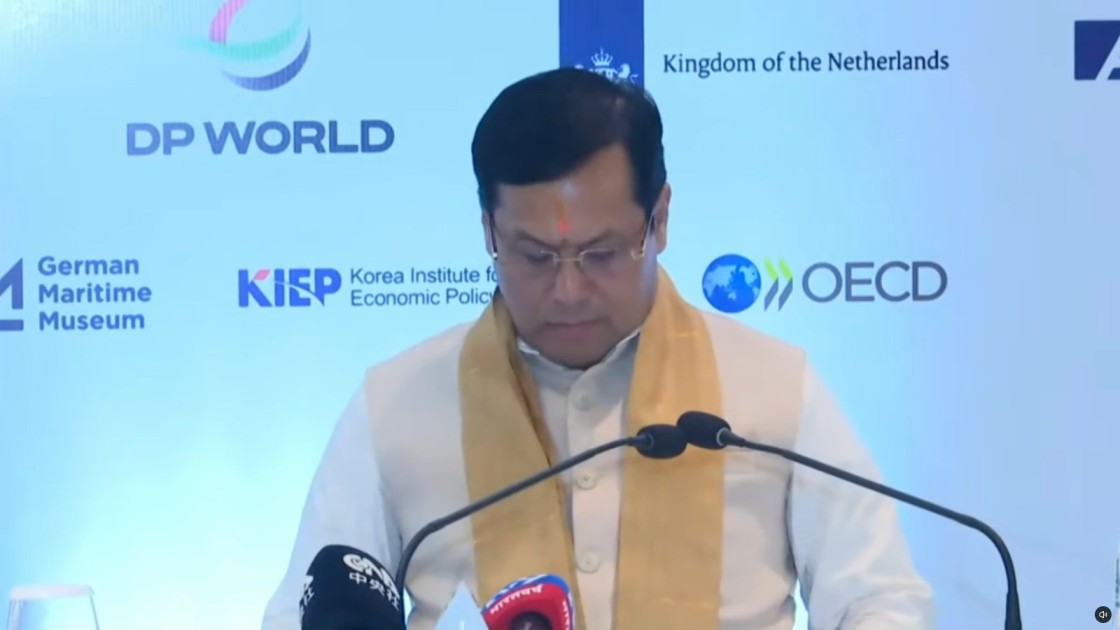
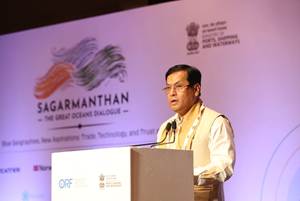
NEW DELHI: State-owned Cochin Shipyard has received orders to build over 40 ships from the US, Germany, Norway and other countries, Shipping Minister Shri Sarbananda Sonowal said on Thursday. Addressing a press conference here, Sonowal said the Ministry of Ports, Shipping and Waterways is creating a comfortable ecosystem for shipbuilding.

A senior shipping ministry official said that some Russian entities have also shown interest in building ships in India, in collaboration with Indian shipyards, including Cochin Shipyard. The minister said Indian shipbuilders are earning credibility globally.

“That is the reason why we are getting this number of orders, and this reflects how India could generate confidence about its quality production, about its capacity building,” he added.

Responding to a question, Sonowal said during the second day of the 3rd ‘Sagarmanthan – The Ocean Dialogue’, he met a Myanmar minister, who informed him that coastal shipping in Myanmar is successfully running.

“So, that is why this Sittwe Port in Myanmar is very successfully operating,” he said.

The minister also said Belgium has expressed its willingness to work with India to promote shipbuilding.

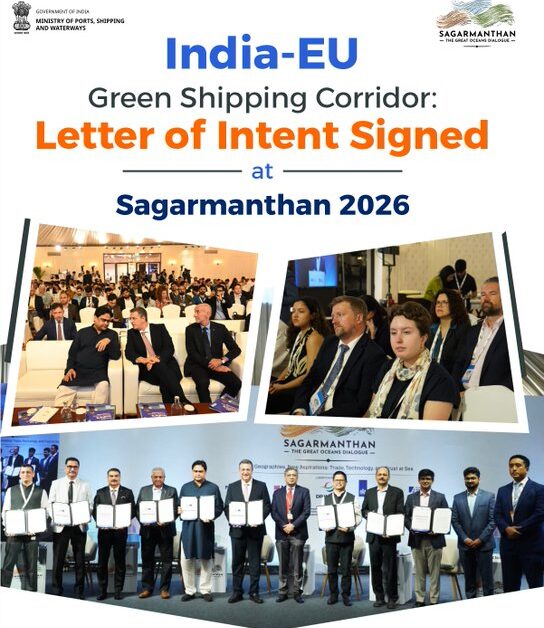
India and EU sign LoI for Green Shipping Corridor Coalition at Sagarmanthan 2026

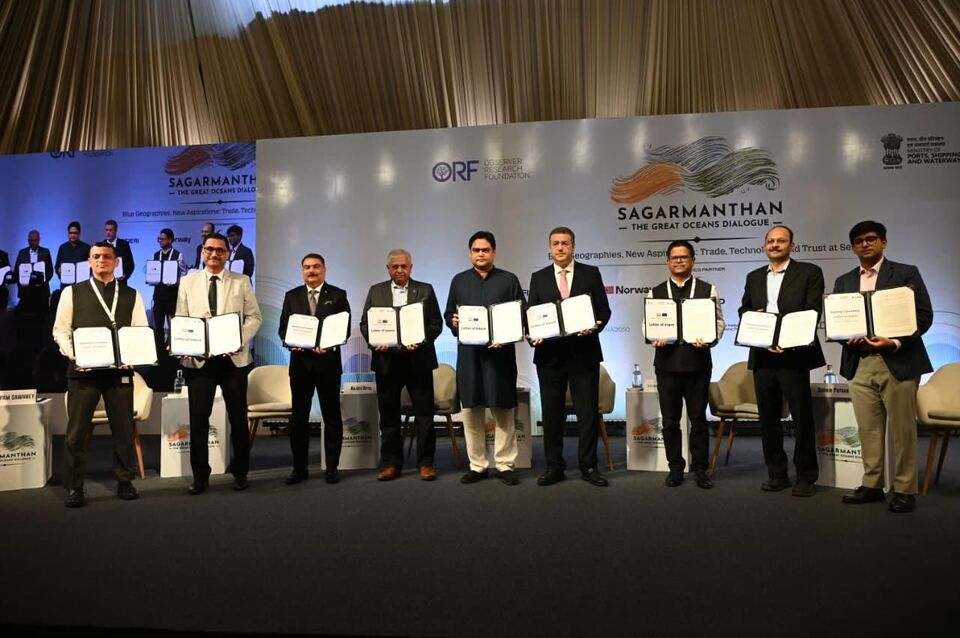
NEW DELHI: India and the European Union (EU) have signed a Letter of Intent (LoI) for the India–EU Green Shipping Corridor Coalition at Sagarmanthan 2026: The Great Oceans Dialogue, marking a significant step towards strengthening sustainable maritime connectivity and accelerating the transition to cleaner shipping.

The initiative aims to connect India’s growing potential for green fuel production with Europe’s emerging demand for sustainable marine fuels, with a particular focus on green ammonia and green methanol. It seeks to bring together government bodies, ports, shipping companies and industry stakeholders to develop commercially viable pathways for low-emission maritime trade.

The LoI was signed in the presence of Shri Shantanu Thakur, Union Minister of State for Ports, Shipping and Waterways, and Mr Apostolos Tzitzikostas, European Commissioner for Sustainable Transport and Tourism, underscoring the commitment of both sides to advancing practical cooperation in maritime decarbonisation.

Building a Green Maritime Trade Network

The India–EU Green Shipping Corridor Coalition is designed to help translate the shared ambition for sustainable shipping into practical implementation. Its work will focus on assessing green fuel supply and demand, evaluating port and transport infrastructure requirements, and identifying commercial opportunities for linking Indian fuel producers with European receiving ports and industrial buyers.

The Rocky Mountain Institute (RMI) will serve as the technical partner, while industry stakeholders, including V.O. Chidambaranar Port Authority, are expected to contribute to the development of the initiative. The coalition will help identify investment opportunities, strengthen partnerships and assess the conditions required to establish a scalable green shipping corridor.

Green Ammonia and Methanol at the Centre of the Transition

Green ammonia and green methanol are emerging as important alternative fuels in efforts to reduce the environmental footprint of shipping. Their wider adoption will depend on reliable production, competitive pricing, appropriate storage and bunkering infrastructure, and the availability of vessels and supply chains capable of using these fuels safely and efficiently.

By linking India’s renewable-energy and green-fuel production capabilities with European demand, the proposed corridor could create new opportunities for clean-energy trade while supporting the maritime industry’s longer-term decarbonisation objectives.

The initiative also provides a platform for closer collaboration between ports, fuel producers, shipowners, technology providers and investors to address the infrastructure and commercial challenges associated with the transition to low-emission shipping.

Sagarmanthan 2026: Advancing Global Maritime Cooperation

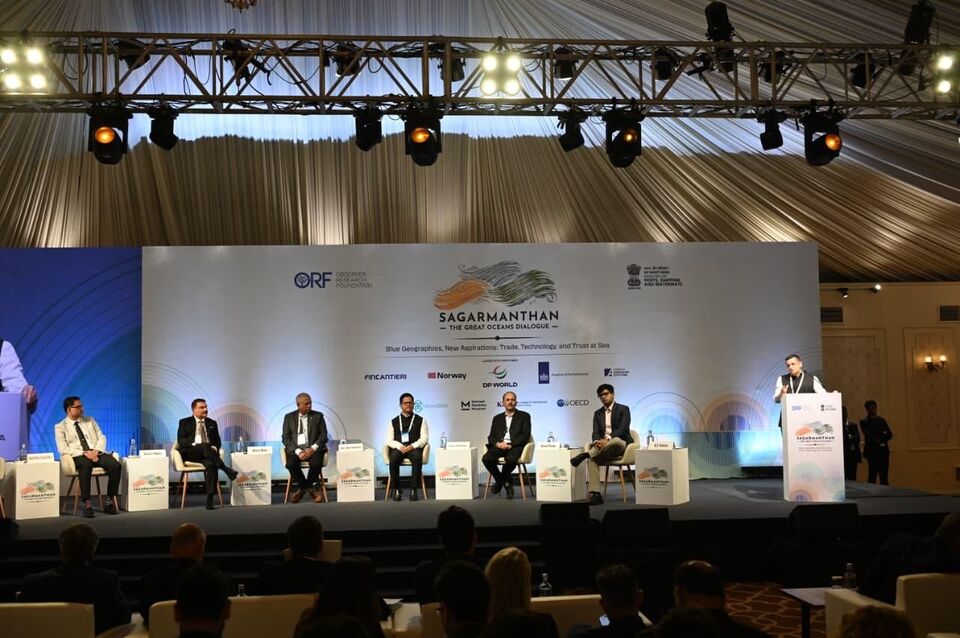
The announcement forms part of the broader discussions at the third edition of Sagarmanthan 2026, organised by the Ministry of Ports, Shipping and Waterways (MoPSW), Government of India, in partnership with the Observer Research Foundation (ORF), from 7 to 9 October 2026 in New Delhi.
The dialogue brings together policymakers, maritime industry leaders, port authorities, financial institutions and international partners to explore the future of maritime trade, connectivity, sustainability and the ocean economy. The India–EU Green Shipping Corridor Coalition reflects the event’s emphasis on turning international dialogue into practical partnerships and implementable solutions.

The signing of the LoI marks an important step towards developing stronger India–EU cooperation in green maritime trade. As the initiative progresses from assessment to implementation, it has the potential to support cleaner shipping routes, stimulate investment in green-fuel infrastructure and strengthen India’s role in the emerging global market for sustainable marine fuels.

Sarbananda Sonowal puts global partnerships, youth & women at the heart of India’s maritime future

NEW DELHI: Union Minister of Ports, Shipping and Waterways (MoPSW), Shri Sarbananda Sonowal held bilateral meetings with Saudi Arabia, Belgium and Bhutan on Day 2 of Sagarmanthan: The Great Oceans Dialogue 2026, carrying India’s maritime partnerships across the Gulf, Europe and the neighbourhood. He also placed young people and women at the centre of India’s maritime journey.

image001 20261008200103 165633 Sarbananda Sonowal puts global partnerships, youth & women at the heart of India's maritime future

With a delegation from the Saudi Ports Authority (Mawani), Sarbananda Sonowal discussed Saudi participation in Indian port projects such as Vadhavan and Galathea Bay. The two sides also discussed cooperation in shipbuilding, seafarer training and resilient supply chains. Saudi Arabia expressed their interest to invest in India’s port projects and in the Maritime Development Fund (MDF).

With Flemish Minister for Mobility, Public Works, Ports and Sport, Annick De Ridder, Sonowal proposed exploring a green shipping corridor linking Indian ports with Antwerp-Bruges. Both sides discussed green fuels, smart port technology, and dredging. VOC Port has signed an agreement with Port of Antwerp Port for training in capacity building in green shipping, and green fuel.

With Lyonpo Chandra Bahadur Gurung, Minister of Infrastructure and Transport of Bhutan, Sonowal highlighted National Waterway-2 and the Jogighopa terminal as Bhutan’s gateway to global trade. The ministers discussed the potential of the Manas and Sankosh rivers, and the connectivity with the national waterways for improved cargo movement. Both the ministers discussed maritime training for Bhutanese youth at the Centre of Excellence in Dibrugarh which is being developed.

“Our talks with Saudi Arabia, Belgium and Bhutan show how India’s maritime partnerships are growing across regions,” said Sarbananda Sonowal. “With Saudi Arabia, we are exploring investment in ports, shipbuilding and resilient supply chains. With Belgium, we are working towards a green shipping corridor and smarter ports. With Bhutan, we are opening the Brahmaputra as a gateway for our neighbour to reach global markets and build skills for its youth. Under the leadership of our visionary Prime Minister Shri Narendra Modi, India is a trusted partner for a connected, green and prosperous maritime future.”

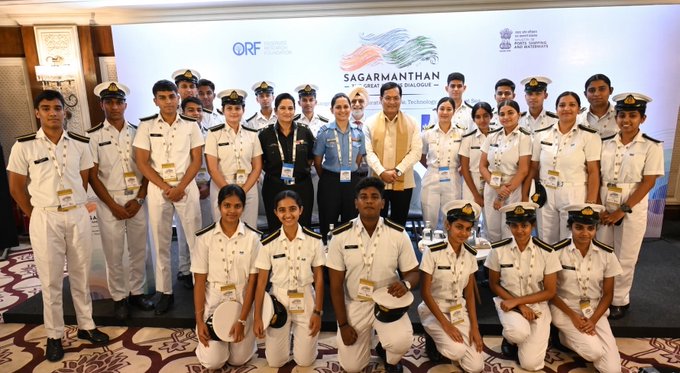
At The Future is Blue: The Next Maritime Generation and Ocean Changemakers: Women, Youth and India’s Maritime Journey, Sarbananda Sonowal heard from young Indians and women about their aspirations for the sector. The session had the participation of an all-women tri-service sailing expedition which inspired the women cadets.

Indian seafarers have grown from 1.27 lakh to 3.23 lakh in twelve years, taking India from fifth place in 2015 to world’s second-largest supplier of seafarers, with over 12% of the global workforce. Active women seafarers have risen from 1,599 in 2021 to 7,033 in 2025, supported by the Sagar Mein Samman initiative. India aims to raise that share through Mission 20% by 2030. Shipyard–ITI partnerships now provide 150 hours of on-the-job training, and a structured six-month onboard programme for GP Rating and Maritime Catering trainees bridges pre-sea training and life at sea.

“India’s maritime future will be written by the youth,” said Sarbananda Sonowal. “Today, our seafarers are trusted and respected on every ocean, and more women than ever are choosing careers at sea. Under the dynamic leadership of Prime Minister Narendra Modi, we are building the skills, institutions and opportunities so that every young Indian who dreams of the sea can help lead the world’s maritime economy.”

Day 2 also featured plenaries on securing global trade chokepoints, the Global South at the maritime table, AI in maritime, green ports, equity in ocean futures, BRICS+ connectivity and green shipbuilding.

6dab6d2b a329 4230 8f0a c33a064e94a3 20261008212936 b45447 Sarbananda Sonowal puts global partnerships, youth & women at the heart of India's maritime future

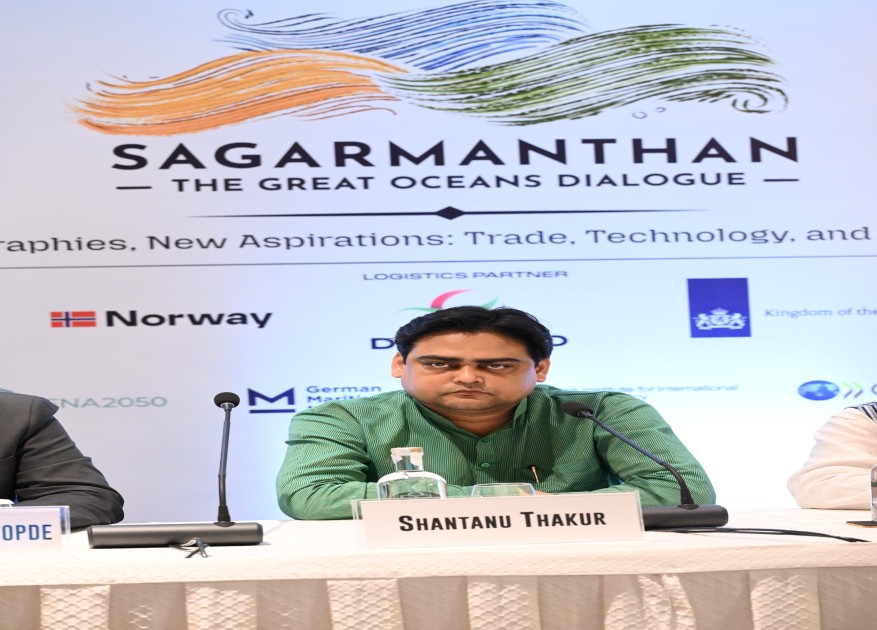
Union Minister of State of MoPSW, Shantanu Thakur held bilateral meetings with Greece, Lithuania, Mozambique and Myanmar on the sidelines of Sagarmanthan 2026. Thakur held a bilateral meeting with Stefanos Gkikas, Deputy Minister of Maritime Affairs and Insular Policy of the Hellenic Republic (Greece), on strengthening India–Greece maritime cooperation. With Lithuania’s Minister of Transport and Communications, Juras Taminskas, the minister proposed a work plan for the MoU between Jawaharlal Nehru Port Authority and the Port of Klaipėda, and discussed direct shipping links and green port cooperation. With Mozambique’s Minister of Transport and Logistics, João Jorge Matlombe, he offered India’s expertise in ports, shipbuilding, ship repair and seafarer training. With Myanmar’s Deputy Minister of Transport, U Tun Lu, he discussed the next phase of Sittwe Port, cross-border inland water trade and maritime safety in the Bay of Bengal.

“From the Baltic to the Bay of Bengal, India is ready to share its strengths in ports, shipbuilding and seafarer skills so that we can grow together with our partners,” said Shantanu Thakur. “Under the visionary leadership of Prime Minister Narendra Modi, India has emerged as a trusted maritime partner for nations across regions. Through cooperation in green shipping, connectivity and capacity building, we are working towards safe, open and prosperous seas for all,” added Thakur.

Addressing a press conference at Sagarmanthan, Union Minister Sarbananda Sonowal said that under Prime Minister Narendra Modi, India has moved from maritime potential to maritime performance. The Union Minister of State Shantanu Thakur along with the Secretary of MoPSW, Vijay Kumar also accompanied the Union Minister during the press conference.

Over the last twelve years, port capacity has risen from 1,561 to 2,817 MTPA, cargo handled from 1,052 to 1,668 million tonnes and inland waterways cargo from 29 to 218 million tonnes, while median container vessel turnaround has fallen from 35 to 23 hours. He noted that Sagarmanthan has grown from 1,700+ delegates from 61 countries in 2024 to participation from more than 70 countries this year, including 10 visiting Ministers, and has produced 100+ publications that strengthen India’s role as Vishwaguru for the global maritime order. Highlighting India’s push to build green hydrogen, ammonia and methanol capacity so that Indian ports become green fuel bunkering hubs, in line with the Net Zero 2070 commitment, he called for turning dialogue into joint research, investment and technology partnerships. “India is ready to work with the world for safer seas, greener shipping and shared prosperity,” Sonowal said.

Paradip Port Authority Highlights Green Shipping Corridors and Maritime Decarbonisation at Sagarmanthan 2026

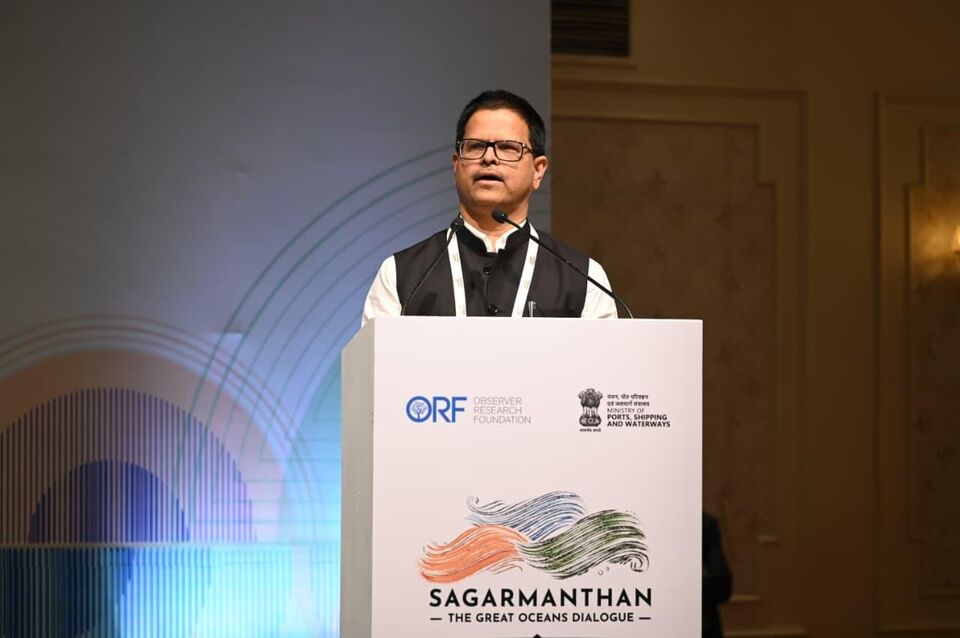
NEW DELHI: Paradip Port Authority (PPA) has reaffirmed its commitment to India’s green maritime ambitions, with its Chairperson, Shri Susanta Kumar Purohit, sharing valuable insights on green shipping corridors, green fuel development and maritime decarbonisation at Sagarmanthan 2026.

The deliberations focused on the growing importance of sustainable practices and innovative solutions in transforming the maritime sector. Discussions highlighted the need to accelerate the development of green shipping corridors, promote the adoption of cleaner marine fuels and strengthen the infrastructure required to support the transition towards low-carbon shipping.

Green shipping corridors are emerging as an important component of global maritime decarbonisation efforts, bringing together ports, shipping companies, fuel suppliers and other stakeholders to facilitate cleaner maritime operations. Their successful development will require coordinated investments, technological innovation and close collaboration across the maritime value chain.

The discussions at Sagarmanthan 2026 also underscored the significance of advancing green fuel ecosystems to support the shipping industry’s evolving energy requirements. Developing sustainable fuel infrastructure, encouraging the adoption of cleaner technologies and strengthening cooperation among industry stakeholders will be essential to building a more environmentally responsible and resilient maritime sector.

For India, the transition towards greener shipping presents opportunities to modernise port infrastructure, encourage innovation and strengthen the country’s position in the evolving global maritime landscape. Ports will play a crucial role in enabling this transformation by supporting sustainable operations, facilitating cleaner fuel availability and contributing to the development of future-ready maritime infrastructure.

Paradip Port Authority’s Commitment to Sustainable Maritime Growth

Paradip Port Authority continues to support India’s efforts to build a sustainable, efficient and environmentally responsible maritime ecosystem. Its participation in discussions on green shipping corridors, alternative fuels and decarbonisation reflects the importance of bringing together policymakers, port authorities and industry stakeholders to advance shared sustainability objectives.

As the maritime industry moves towards a lower-carbon future, sustained collaboration, investment in green technologies and the development of enabling infrastructure will remain critical to achieving long-term decarbonisation goals.

The deliberations at Sagarmanthan 2026 reinforce the need for collective action to shape a greener and more resilient maritime sector, aligning India’s port-led development ambitions with the global transition towards sustainable shipping.

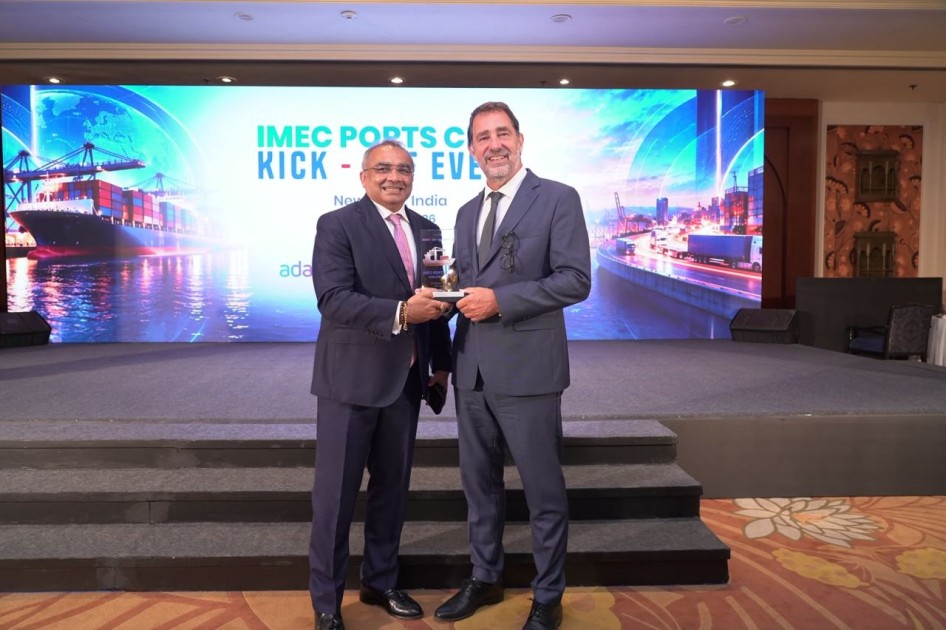
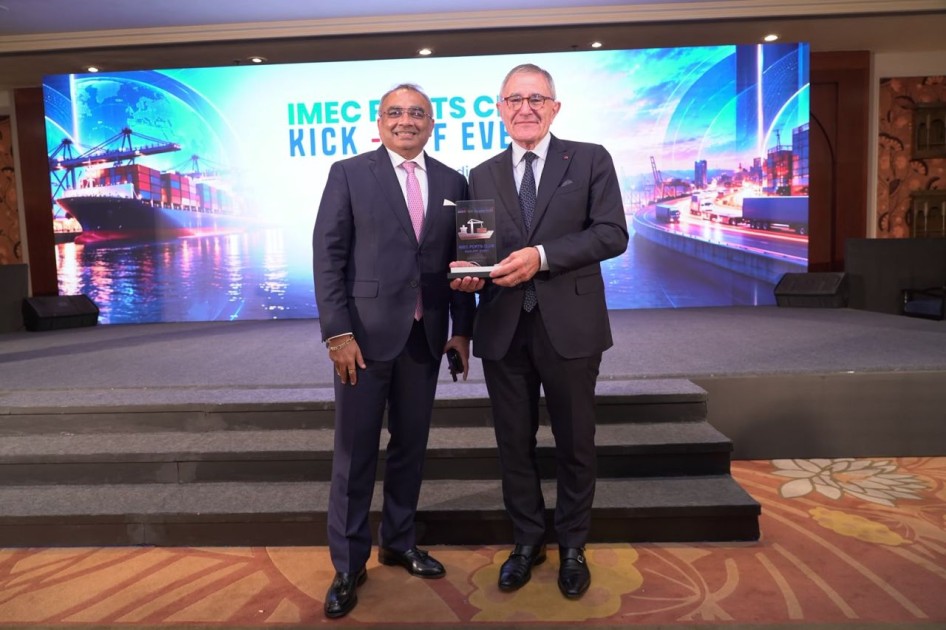
APSEZ and Port of Marseille Fos launch IMEC Ports Club to strengthen trade corridor co-operation

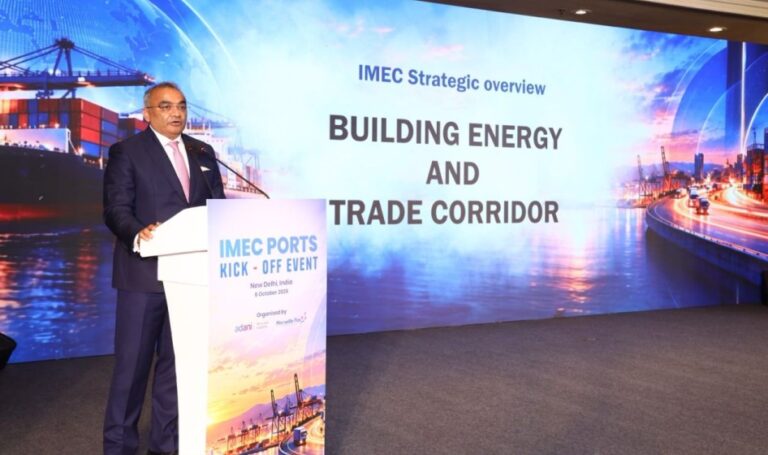
NEW DELHI: Adani Ports and Special Economic Zone Ltd. (APSEZ) and the Port of Marseille Fos, France, jointly hosted the inaugural India–Middle East–Europe Economic Corridor (IMEC) Ports Club Kick-off Event in New Delhi, bringing together port authorities, policymakers, logistics leaders and industry stakeholders to strengthen collaboration along the emerging trade corridor.

The event marked an important step towards building a collaborative framework for improving port connectivity, enhancing supply chain efficiency and facilitating international trade across the IMEC network.

Envisioned as a network of complementary maritime and multimodal routes, IMEC aims to connect markets and facilitate the movement of goods, energy and data across regions. The corridor has the potential to improve logistics efficiency, diversify trade routes and create new opportunities for economic growth. According to the organisers, it could reduce logistics costs by up to 30% and transit times by up to 40%.

A key highlight of the event was the launch of the IMEC Ports Club Declaration, establishing an open platform for cooperation among ports and maritime stakeholders. The initiative focuses on strengthening port connectivity, improving supply chain efficiency, facilitating trade, accelerating the energy transition and decarbonisation, and promoting digital interoperability.

The discussions provided a platform for distinguished speakers and panellists to exchange perspectives on the opportunities and challenges associated with developing the IMEC corridor. Greater coordination among ports, logistics operators, governments and industry participants will be important to translating the corridor’s potential into practical outcomes.

As part of the engagement, a French delegation also visited Mundra Port in Gujarat, operated by Adani Ports and SEZ Ltd. The visit offered the delegation an opportunity to observe the port’s large-scale operations, integrated logistics infrastructure and capabilities in handling international cargo, highlighting the role of modern ports in supporting efficient global trade.

The IMEC Ports Club initiative is expected to encourage continued dialogue and collaboration among participating stakeholders, supporting efforts to develop more resilient, efficient and sustainable supply chains connecting India, the Middle East and Europe.

V.O. Chidambaranar Port Authority Strengthens Global Maritime Partnerships at Sagarmanthan 2026, Focuses on Green Fuels and Decarbonisation

Strategic interactions with Port of Antwerp-Bruges, Mærsk Mc-Kinney Møller Center for Zero Carbon Shipping and Port of Hamburg explore opportunities for sustainable shipping, port energy solutions and maritime cooperation

NEW DELHI: V.O. Chidambaranar Port Authority (VOCPA) has taken forward its international engagement on sustainable maritime development through a series of strategic interactions with leading global port organisations and maritime decarbonisation experts on the sidelines of Sagarmanthan: The Great Oceans Dialogue 2026 in New Delhi.

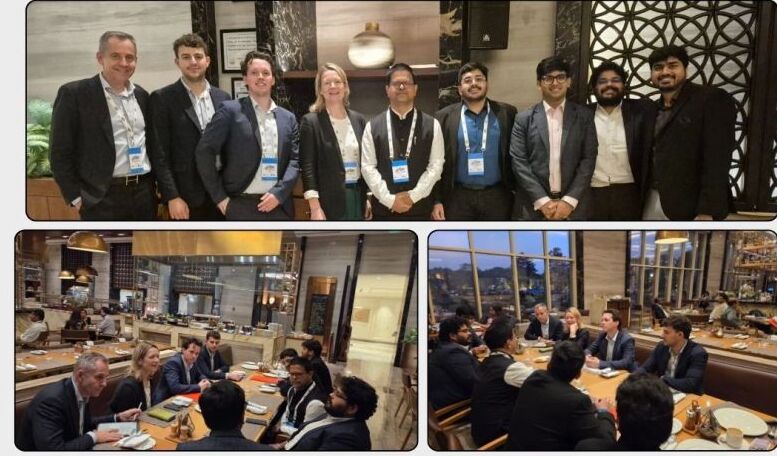
According to three posts shared by V.O. Chidambaranar Port Authority on LinkedIn, Chairperson Shri Susanta Kumar Purohit, IRSEE, held discussions with representatives of the Port of Antwerp-Bruges, the Mærsk Mc-Kinney Møller Center for Zero Carbon Shipping, and the Port of Hamburg, along with representatives of the Deutsche Gesellschaft für Internationale Zusammenarbeit (GIZ). The interactions centred on advancing green fuels, port energy solutions, digitalisation, decarbonisation and sustainable maritime corridors.

The engagements reflect VOCPA’s continued focus on strengthening international cooperation, exchanging knowledge and exploring innovative approaches to support the maritime sector’s transition towards a cleaner and more sustainable future.

Advancing Green Maritime Cooperation with Port of Antwerp-Bruges

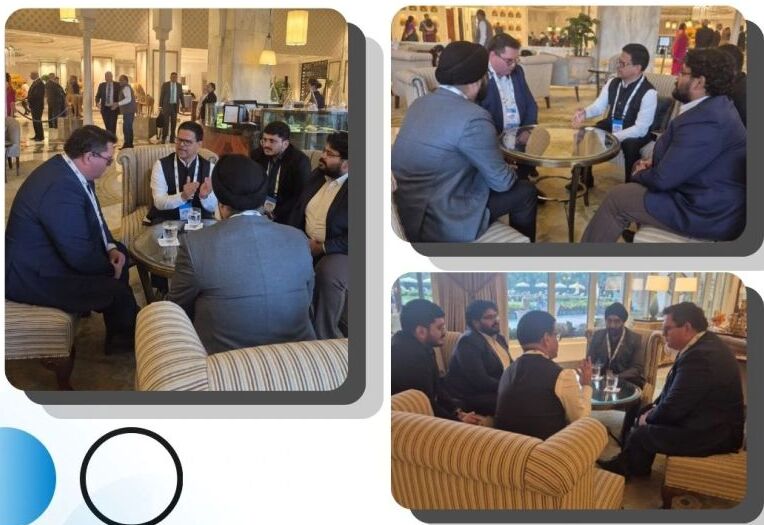
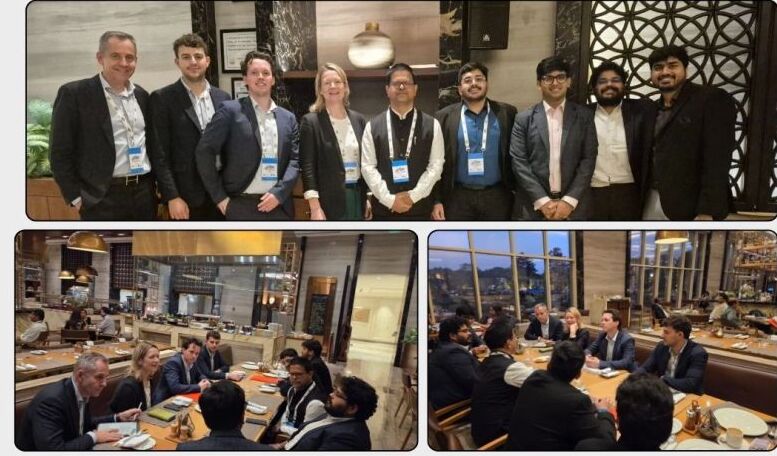
During his interaction with Mr. Kristan Waterschoot, Managing Director, Port of Antwerp-Bruges, and Mr. Daljit Kholi, India Representative, Port of Antwerp-Bruges, Shri Purohit discussed ways to strengthen the ongoing collaboration between the two port organisations.

VOC Port 3 1 V.O. Chidambaranar Port Authority Strengthens Global Maritime Partnerships at Sagarmanthan 2026, Focuses on Green Fuels and Decarbonisation

The discussions covered several areas of mutual interest, including green fuels, methanol bunkering, digitalisation and the development of sustainable maritime corridors. These areas are increasingly important as ports and shipping companies explore alternative marine fuels, improve operational efficiency and work towards reducing greenhouse gas emissions across maritime supply chains.

The engagement provided an opportunity to take forward the existing partnership and explore avenues for deeper cooperation in emerging maritime technologies and sustainable port operations.

Engagement with Global Experts on the Zero-Carbon Shipping Transition

In another significant interaction, the VOCPA Chairperson met representatives of the Mærsk Mc-Kinney Møller Center for Zero Carbon Shipping, a leading organisation focused on accelerating the transition to zero-carbon shipping.

The delegation comprised Ms. Fiona McIlwham, Head of Public Affairs; Mr. Christian Vingtoft, Senior Consultant; Mr. Gonzalo Sanz, Senior Consultant; and Mr. Mark Stark, Energy System Transition Manager.

VOC Port 2 1 1 V.O. Chidambaranar Port Authority Strengthens Global Maritime Partnerships at Sagarmanthan 2026, Focuses on Green Fuels and Decarbonisation

The interaction focused on the evolving global maritime energy transition, opportunities for decarbonisation and the pivotal role of ports in enabling cleaner and more sustainable shipping solutions. The participants exchanged perspectives on emerging technologies, green fuels and the pathways required to accelerate the transition towards a zero-carbon maritime future.

As the shipping industry explores alternative fuels and new energy systems, ports are expected to play an increasingly important role in providing the infrastructure, operational capabilities and collaborative frameworks needed to support their adoption.

Exploring Port Energy Solutions with Hamburg and GIZ

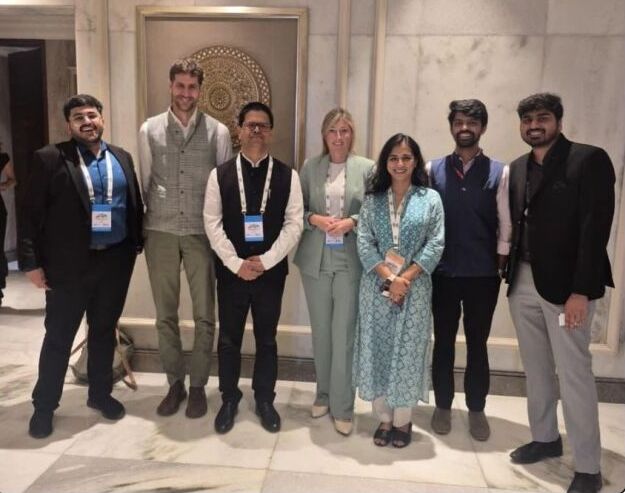
VOCPA also strengthened its engagement with representatives associated with the Port of Hamburg and GIZ India. Shri Purohit interacted with Ms. Linda Hastedt, Port Energy Solutions, Port of Hamburg; Ms. Sameeha Sule, Chief Representative of Hamburg to India; Mr. Georg Jahnsen, Project Manager, GIZ; and Mr. Sarthak Agarwal, Energy Advisor, GIZ India.

VOC Port 1 2 V.O. Chidambaranar Port Authority Strengthens Global Maritime Partnerships at Sagarmanthan 2026, Focuses on Green Fuels and Decarbonisation

The discussions focused on port energy solutions, green fuels, decarbonisation and opportunities to strengthen sustainable maritime practices through international cooperation and knowledge sharing.

The interaction highlighted the importance of collaborative approaches to developing energy-efficient port ecosystems and exploring practical solutions to address the environmental challenges facing the maritime sector. Cooperation among ports, technical experts and international development organisations can help facilitate the exchange of expertise and support the adoption of sustainable practices.

Strengthening India’s Maritime Sustainability Agenda

Taken together, these three engagements underscore the growing importance of international partnerships in advancing the maritime energy transition. From developing green fuel capabilities and sustainable maritime corridors to exploring innovative port energy solutions, collaboration between Indian and international maritime stakeholders can help accelerate progress towards more environmentally responsible shipping and port operations.

For V.O. Chidambaranar Port Authority, the discussions offer opportunities to build on existing relationships, gain insights into international best practices and explore emerging solutions relevant to the future development of sustainable port infrastructure.

As India continues to strengthen its maritime capabilities and pursue greener logistics and shipping systems, such engagements can contribute to knowledge exchange, technology cooperation and the development of a more sustainable maritime ecosystem.

The interactions at Sagarmanthan 2026 reaffirm the importance of coordinated global action in shaping the next phase of maritime development, where energy transition, digital innovation and environmental sustainability will remain central to the competitiveness and resilience of ports and shipping networks worldwide.

DP World re-affirms long-term partnership with India as Executive Chairman H.E. Essa Kazim makes first visit

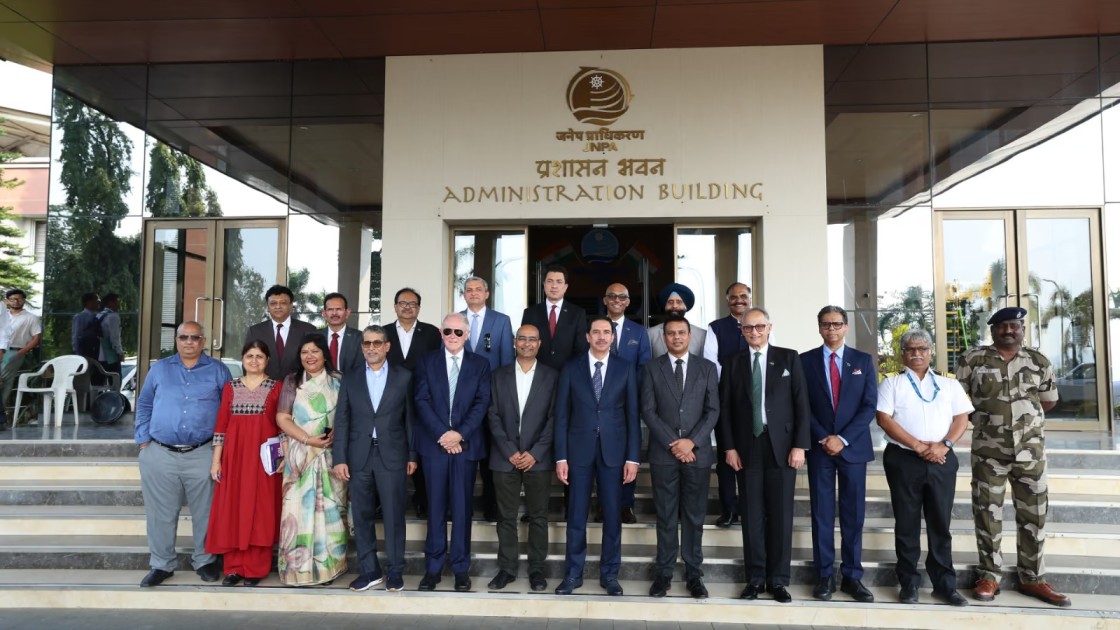
MUMBAI: Executive Chairman H.E. Essa Kazim, Group CEO Mr. Yuvraj Narayan and members of DP World’s Global Board of Directors engage with JNPA leadership to explore opportunities for deeper collaboration and future investment.

Inauguration of Phase 2 of Nhava Sheva Business Park adds one million square feet of warehousing capacity, backed by an investment of approximately ₹500 crore ($52 million), strengthening DP World’s integrated logistics ecosystem in India.

DP World has reaffirmed its long-term commitment to India’s economic growth and global trade ambitions, as H.E. Essa Kazim, Executive Chairman, made his first visit to the country in his new role, accompanied by Mr. Yuvraj Narayan, Group Chief Executive Officer, and members of DP World’s Global Board of Directors.

The visit reflects the strategic importance of India to DP World’s global growth agenda and its commitment to building world-class trade and logistics infrastructure in partnership with the country. As India strengthens its position as a global manufacturing, consumption and export hub, DP World continues to invest in capabilities that connect businesses to international markets, enhance supply chain resilience and support the country’s evolving trade requirements.

A key engagement during the visit was a meeting with Shri Gaurav Dayal, IAS, Chairman of the Jawaharlal Nehru Port Authority (JNPA) and Mr Ravish Kumar, IRTS, Deputy Chairman, reaffirming a partnership spanning nearly three decades. Beginning with the concession agreement for Nhava Sheva International Container Terminal (NSICT), the association has played a role in the development of India’s public-private partnership model in port infrastructure.

The discussions focused on strengthening this longstanding relationship and exploring opportunities for future collaboration, including the development of Vadhavan Port and further investment in the JNPA Special Economic Zone. The engagement underscored the importance of sustained collaboration between the public and private sectors in developing the infrastructure, connectivity and capacity needed to support India’s next phase of trade-led growth.

As part of the visit, H.E. Essa Kazim and Mr. Yuvraj Narayan inaugurated Phase 2 of the Nhava Sheva Business Park (NSBP) in the presence of members of the DP World’s Global Board of Directors. The business park’s first phase spans 44 acres and provides one million square feet of warehousing space. The newly inaugurated second phase covers an additional 42 acres and will add a further one million square feet of warehousing capacity, representing an investment of approximately ₹500 crore ($52 million).

Together, the two phases strengthen DP World’s ability to support the growing and increasingly sophisticated requirements of customers across industries.

Commenting on the visit and the company’s commitment to India, H.E. Essa Kazim, Executive Chairman, DP World, said:

“India is a strategic partner in DP World’s global growth journey, and we see significant opportunities to contribute to the country’s ambitions as a leading global trading nation. Our commitment goes beyond investing in infrastructure; it is about building enduring partnerships, strengthening connectivity and creating integrated supply chain solutions that enable Indian businesses to compete more effectively in global markets. The expansion of Nhava Sheva Business Park reflects our confidence in India’s long-term potential and our continued focus on meeting the evolving needs of our customers. We look forward to deepening our collaboration with government and industry partners to support India’s growth and unlock new opportunities for trade.”

The expansion is part of DP World’s broader vision to develop an integrated logistics ecosystem at Nhava Sheva, connecting port operations with container freight stations, rail, warehousing and Free Trade Warehousing Zone capabilities. By bringing these complementary services together, DP World enables customers to move cargo more efficiently, optimise logistics costs and access end-to-end supply chain solutions through a connected infrastructure network.

The investment reflects a customer-led approach to growth, anticipating changing business needs while providing the capacity, flexibility and connectivity required to serve both domestic and international trade. It also reinforces DP World’s focus on developing infrastructure that creates long-term value for customers and contributes to the wider competitiveness of India’s logistics sector.

The New Maritime Century: Building Resilient Trade Networks for a Changing World

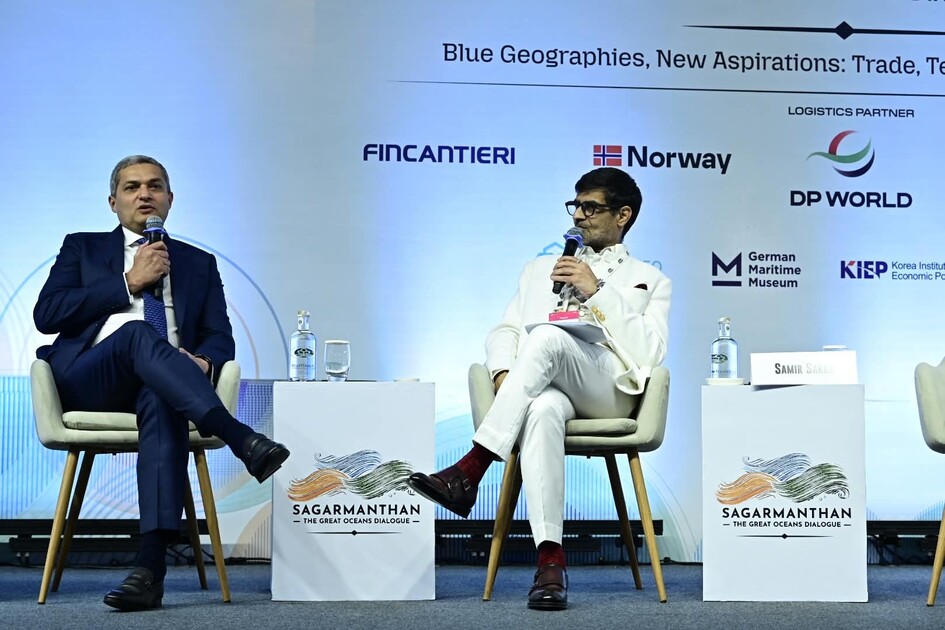
This press note summarises a discussion between Rizwan Soomar, Chief Executive Officer and Managing Director, DP World – Subcontinent, Central Asia, Levant and Egypt, and Samir Saran, President, Observer Research Foundation, at Sagarmanthan 2026: The Great Oceans Dialogue, held on 7 October 2026 in New Delhi.

Global trade is entering an era where resilience and optionality are becoming as important as cost and efficiency. Businesses need logistics networks that can respond to constantly changing global trade environment, switch between routes and modes, and connect production centres with consumers across markets. Recent regional developments have also demonstrated the scale of capacity required to keep global trade moving.

DESIGNING TRADE NETWORKS FOR RESILIENCE DURING UNCERTAINTY

Recent years have shifted supply-chain thinking from a traditional emphasis on “just in time” towards incorporating “just in case” planning. When established trade routes are disrupted, shifting cargo to alternative ports and land routes requires significant additional trucking, port, warehousing and handling capacity. Alternative trade routes therefore need to be made commercially viable and operational ahead of time.

This means added investment into logistics networks during times of relative stability, creating capacity in ports, transport and handling, but also streamlining customs processes, digital systems and cross-border arrangements.

The $8 billion investment into building Vadhvan Port is an example of a project that can add to critical capacity and could be leveraged during shifts in global trade.

INTEGRATED PARTNERSHIPS WILL BUILD THE FUTURE OF GLOBAL TRADE

The next generation of logistics infrastructure will increasingly depend on public-private partnerships. Governments can create enabling policy and infrastructure frameworks, while private operators contribute capital, technology, operational expertise and global networks.

India’s trade growth has rested on two premises: connecting India with India and connecting India to the world. The former presents a huge opportunity, by harnessing the three modes – India’s rail network, coastal shipping and trucking effectively, the cost of logistics can be reduced and which in turn increases the competitiveness of the goods. Connecting ports with railways, highways, inland terminals, warehousing and manufacturing clusters can create integrated trade ecosystems.

FROM MOVING CARGO TO MANAGING COMPLEXITY

The role of logistics companies is expanding beyond moving products from one point to another. Customers increasingly look for providers to manage a larger portion of the supply chain, including warehousing, inventory, customs, distribution, and the associated risk. This becomes particularly important when entering new markets. In Africa, for example, integrated logistics models can connect Indian production with destination-market distribution, helping businesses manage the movement, storage and delivery of goods without independently building every element of a local supply chain. Logistics is consequently becoming a strategic consideration in where and how businesses grow.

CONNECTING INDIA TO NEW MARKETS THROUGH THE UAE

India’s expanding manufacturing and supplier base creates an opportunity for deeper integration with global markets. Combining the UAE’s logistics infrastructure, connectivity and distribution capabilities with India’s manufacturing strengths can create efficient pathways to customers across the GCC, Africa and other markets.

Bharat Mart exemplifies this model. Designed as a trading and distribution platform in Dubai for Indian businesses, including SMEs and MSMEs, it can enable Indian products to be warehoused, showcased and distributed closer to regional customers.

Integrated logistics and distribution networks can therefore help Indian companies reach untapped markets. Digital connections between customs, ports and trade systems can further strengthen these corridors by reducing documentation, improving cargo visibility and enabling more efficient cross-border movement.

AI AS AN OPPORTUNITY TO REIMAGINE LOGISTICS

Artificial intelligence and automation can help redesign processes and help companies to improve productivity and operate at greater scale. The larger opportunity lies in using technology to enable growth.

AI can support optimisation and automation across supply chains, improving efficiency, responsiveness and scalability. Capturing these benefits will require businesses to rethink processes while building the skills and capabilities needed for effective technology adoption.

How ports can become catalysts for the blue economy

By Lara Mouftier, Port Ecosystems Lead at the World Economic Forum Part of Observer Research Foundation’s Sagarmanthan Edit 2026.

  • The ocean supports billions of livelihoods and carries 80% of global trade by volume, yet increasingly faces climate hazards and operational disruption.
  • With the global port infrastructure market forecast to grow by nearly 70% by 2032, port ecosystems are well placed to help mitigate climate risks.
  • Ports can help shape a responsible maritime transition by considering nature and people, with the potential of unlocking $54 billion in business value.

Valued at between $2.6 and $5.1 trillion, the ocean economy supports billions of livelihoods and carries more than 80% of global trade by volume. However, its continued expansion will increasingly intersect with natural ecosystems and local communities.

The global port infrastructure market is forecast to grow by nearly 70%, from $164.5 billion in 2023 to $278.3 billion by 2032.

Asia-Pacific dominates the market, capturing an impressive 45% share. This dominance can be attributed to the presence of major global manufacturing hubs, and ports in developing Asian economies handled 60% of global container port traffic in 2024.

India alone in just 10 years has almost doubled the number of containers passing through its ports, and its strategic Sagarmala project, dating back to the beginning of this growth, provides a strong foundation to support continued expansion of the port ecosystem.

So how can we leverage these trade hubs to become key enablers of the “blue economy”?

How global risks like climate change impact ports

As highlighted in the World Economic Forum’s Global Risks Report 2026, long-term risks to Earth systems, society and the economy are dominated by the impact of climate change, with extreme weather events, biodiversity loss and ecosystem collapse, and critical change to Earth systems ranked among the most severe.

These risks are already playing out in ports, which face a series of climate and nature hazards and growing exposure to operational disruptions. In Europe, port operational challenges linked to climate change rose from 41% in 2018 to 69% in 2025, while in Asia, many major ports are highly exposed to sea-level rise, storms and flooding.

Maritime decarbonisation, both on land and at sea, can help mitigate the impact of risks such as climate change by lowering emissions – the first driver of nature loss.

There are economic benefits too – future-proofing ports to support this transition could unlock more than $54 billion in cumulative value by 2030. But this transition requires action and sustained investment.

Ports face dual challenge of decarbonisation and resilience

The decarbonisation of the maritime industry is being driven in large part by the International Maritime Organisation’s (IMO) target to reach net zero greenhouse gas emissions by 2050. This planned transition to alternative fuels such as green methanol, green ammonia and synthetic e-fuels will require significant infrastructure development and upgrades.

As of 2025, global retrofit capacity was estimated at roughly 465 vessels annually, against a projected peak need of more than 1,000 conversions per year. So new and retrofitted bunkering facilities will be needed, transition-ready vessels must be built and existing fleets upgraded, while shipyard capacity, particularly for retrofits, will need to scale rapidly.

The scale of investment required to meet the IMO 2050 target is estimated at $1-1.4 trillion, with about 87% of that investment directed to land-side infrastructure and 13% to ships.

Nature and people as strategic assets for resilience

A daunting figure but with new fuels come new skills – those needed to handle them safely at sea and ashore, from the ship’s tanks to the terminals that serve them. The transition requires creating safer, more resilient and inclusive jobs and communities, and developing the skills needed to strengthen transition capacity while placing health and safety at the heart of strategy and operations.

The maritime sector already directly employs 30 million people and indirectly benefits 90 million jobs, and the shift to scalable zero emission marine fuels could create up to 4 million jobs across the energy supply chain by 2050.

Ports are key as, onshore, they provide the infrastructure needed to produce, store and bunker alternative fuels, build and retrofit vessels and enable green corridors, while, at sea, their transformation is essential for vessels to access the future fuel mix.

Maritime decarbonisation also presents an opportunity to responsibly deploy infrastructure and transform business models by positioning nature, water and people as strategic assets for resilience, while recognising nature as cost-effective protective infrastructure when incorporated with nature-based solutions, nature-inclusive design, and secure and circular water and waste systems.Shaping the blue future of maritime hubs

Given the long lifespan of port and energy infrastructure, responsible decisions made today will shape the resilience and competitiveness of maritime hubs for decades.

The maritime fuel transition offers an opportunity to upgrade existing infrastructure and develop new greenfield projects using this investment cycle responsibly, while incorporating nature and people as critical infrastructure and factor of resilience across the port ecosystem.

At the same time, organizations will also need to better integrate their nature-positive and net zero strategies as tackling carbon emissions and nature loss are interdependent imperatives. Such considerations will need to be embedded into long-term strategy, day-to-day operations and investment decisions.

WEF’s Regenerative Blue Economy: Pathways to Prosperity report shows that many organizations are already beginning this shift, but scaling it will depend on demonstrating commercial viability, strengthening the business case and moving from individual projects and pilots to more systemic adoption.

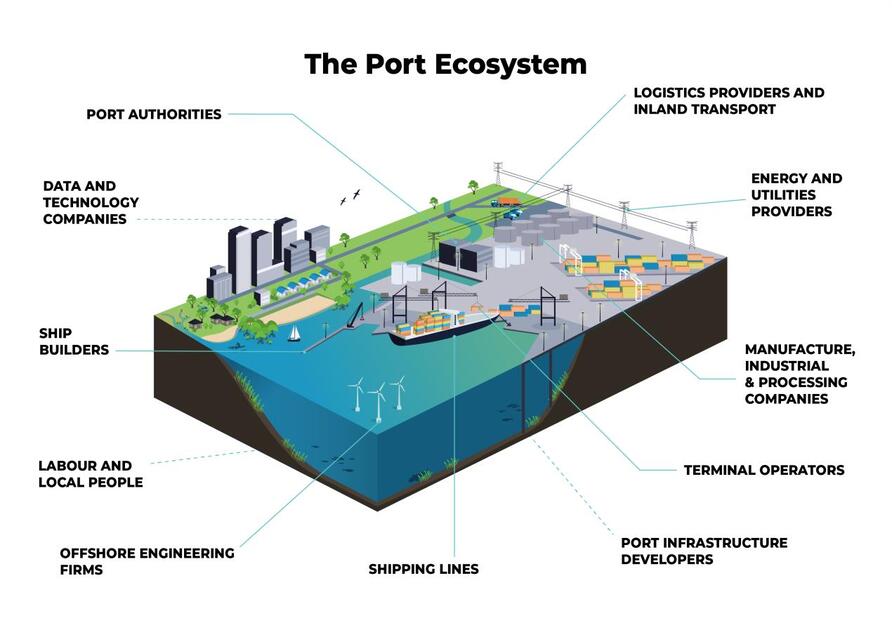
The port ecosystem as a strategic platform

Scaling decarbonisation efforts will also depend on how much companies will be able to collaborate with other stakeholders.

The port ecosystem is highly interdependent, but often institutionally fragmented. As a result, risks can be recognised but not fully owned, investments delayed or duplicated, incentives misaligned, and resilience measures implemented only partially rather than systemically.

ORF Port Ecosystem 1 How ports can become catalysts for the blue economy

Addressing these challenges requires a collaborative, system-wide effort.

Over five years, the Transitioning Industrial Clusters (TIC) initiative has brought together 40-plus active industrial clusters with the aim of developing a shared vision and strengthening collaboration among organizations located in the same industrial area.

Meanwhile, the Accelerating Critical Transformation for the Ocean (ACT Ocean) initiative works across sectors to advance solutions for a healthy ocean and thriving economy and help shape the future of the ocean as a strategic business issue. Accelerating Critical Transformation for Ports (ACT Ports) is the port workstream under these two initiatives.

Together, these World Economic Forum initiatives help drive shared economic growth and job creation, while reducing emissions and supporting environmental stewardship.

They also seek to catalyse collaboration between co-located companies to accelerate new technology deployment, enhance competitiveness and drive sustainable long-term growth, thereby unlocking benefits for nature, people and the economy.

How Asia can lead on the maritime transition

The benefits of maritime decarbonisation are multi-fold but the opportunity is particularly significant in Asia, where the scale and pace of port and industrial growth mean that decisions taken today will shape maritime infrastructure for decades.

Embedding nature, people are resilient and responsible investments decisions from the outset to turn these trade hubs into gateways to the blue economy.

If done successfully, the region will be well placed to lead the next generation of competitive, resilient and sustainable maritime ecosystems – for the benefit of all.

About Accelerating Critical Transformations for Ports (ACT Ports)

Accelerating Critical Transformations for Ports (ACT Ports) supports port-anchored industrial clusters in contributing to a regenerative and safe ocean economy. It will implement integrated strategies and standards on nature and people, and embed these priorities within global, national, and local development agendas. ACT Ports is a workstream under the World Economic Forum’s ACT Ocean and the Transitioning Industrial Clusters initiatives, supported by Lloyd’s Register Foundation.

Source:  Observer Research Foundation