Home Blog Page 630

BIFA announces Steve Backshall as host of the 2025 Freight Service Awards

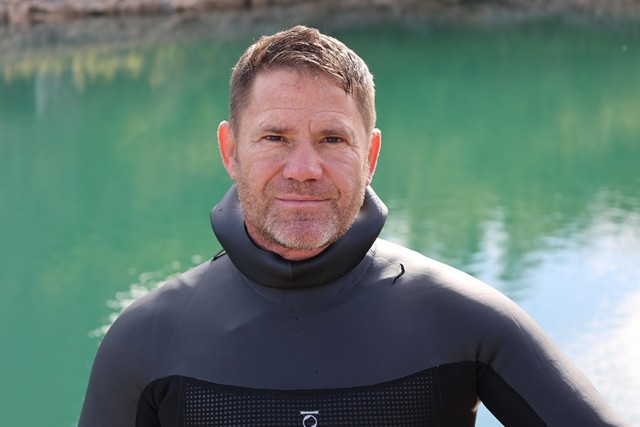
LONDON: The British International Freight Association (BIFA) is thrilled to announce that renowned TV presenter, adventurer, author, and conservationist Steve Backshall will host the 2025 BIFA Freight Service Awards Ceremony, taking place on Thursday 15th January 2026.

The ceremony marks the final stop on an incredible journey for the awards’ finalists — and with Steve Backshall as the expedition leader for the day, the stage is set for an unforgettable event. Entrants shortlisted as finalists will be announced in late October, when tickets for the ceremony will also go on sale.

Best known for his daring expeditions and acclaimed television programmes including the BBC’s Deadly 60 and Expedition with Steve Backshall, Steve has explored some of the most remote and extreme environments on Earth. His deep experience in mountaineering, scuba diving, and kayaking to reach uncharted destinations resonates closely with the freight forwarding industry’s spirit of adventure, innovation, and determination to reach every corner of the globe.

“Just as freight forwarders overcome complex logistical challenges to move goods worldwide, Steve’s career embodies resilience, curiosity, and a passion for reaching the unreachable,” said Steve Parker, director general of BIFA. “We’re excited to have him guide us through the celebration of excellence in our industry.”

During the ceremony, Steve will present certificates to all the finalists and, alongside the category sponsors, award trophies to the winners in recognition of their outstanding achievements across the freight forwarding sector.

With the destination now in sight, anticipation is building for what promises to be an inspiring and celebratory event, bringing together the very best in UK freight forwarding.

Sharon Hammond, BIFA events executive, adds: “The BIFA Freight Service Awards competition is now in its 37th year and is open to all full trading and probationary members.

“But the clock is ticking as entries must be submitted by 11:00 on Wednesday 8th October 2025.

“A maximum number of 3 business categories may be entered in addition to entries to the Apprentice of the Year and Young Freight Forwarder of the Year. However, a company may only enter each business category once.”

Transatlantic rower eyes museum in Central Africa

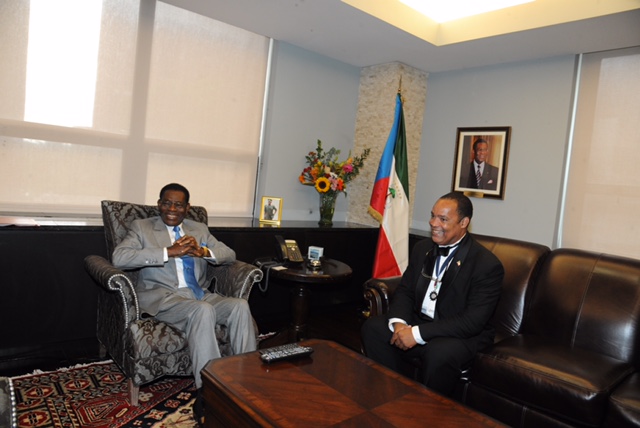
NEW YORK: Twenty-one months triggered the stopwatch to end for Victor Mooney’s pursuit in rowing from Las Palmas, Gran Canaria (Canary Islands) to New York’s Brooklyn Bridge after three failed attempts to cross the high seas. His rowboat, Spirit of Malabo, was sponsored by the Republic of Equatorial Guinea, with the personal support of H.E. Mr. Obiang Nguema Mbasogo, the President. 

Inspired by a single, resonant word from Pope Leo XIV – “Unity” – offered during the Roman Catholic Jubilee Year of Sports – Pilgrims of Hope, Mooney is now channeling that profound guidance into a monumental global initiative. 

GEmooney1 1 Transatlantic rower eyes museum in Central Africa

During the 80th Session of the UN General Assembly, Mooney rallied international support for the proposed Central African Museum of Enslaved Africans in Equatorial Guinea. The West-Central Africa region had the largest forced migration of any ethnicity.

He envisions this institution as a crucial “vital space for remembrance, education, and reconciliation,” aiming to confront a difficult past while fostering healing and understanding. To bring this ambitious vision to fruition, Mooney proposes a strategic funding model, blending private sector investment with support from friendly nations and collaborative partnerships with regional bodies such as the Economic Community of Central African States (ECCAS) and the Central African Economic and Monetary Community (CEMAC). Over 231.1 million people now call this region home.

Among other things, Equatorial Guinea, positioned strategically along the Gulf of Guinea, is a key entry point for commercial container traffic with deep water ports. The country is accelerating the implementation of their economic diversification plan. The Vice President of Equatorial Guinea, H.E. Mr. Teodoro Nguema Obiang Mangue led a high-level delegation for this year’s UN General Assembly in New York with follow up meetings in Houston and Washington, D.C.

MoPSW Welcomes New Secretary, Bids Farewell to Outgoing Leader

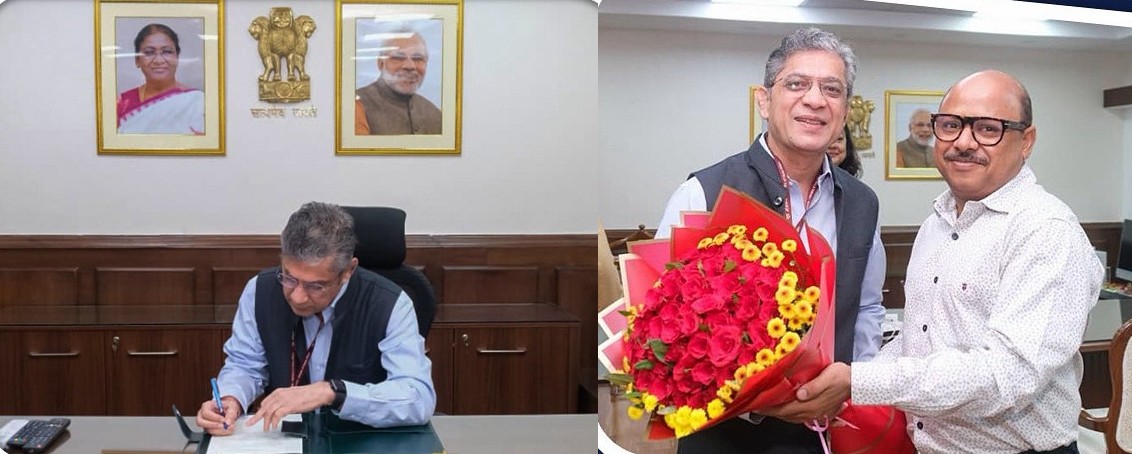
NEW DELHI: The Ministry of Ports, Shipping and Waterways (MoPSW) has announced a leadership transition, warmly welcoming Shri Vijay Kumar (IAS) as the new Secretary. With extensive administrative experience and proven leadership, he is expected to steer the Ministry’s ongoing initiatives and play a pivotal role in strengthening India’s maritime sector.

At the same time, MoPSW bid a fond farewell to Shri T.K. Ramachandran (IAS), who completed his tenure as Secretary. Widely respected for his vision and dedication, Shri Ramachandran guided the Ministry through significant milestones that have left a lasting impact on the country’s maritime growth and global positioning.

Pi7 Image Cropper 56 MoPSW Welcomes New Secretary, Bids Farewell to Outgoing Leader

The Ministry extended its heartfelt gratitude to Shri Ramachandran for his outstanding service and wished him success in his future endeavours, while looking ahead with optimism under the leadership of Shri Vijay Kumar.

Samarth Verma (IAS) appointed as Director in Ministry of Ports, Shipping & Waterways

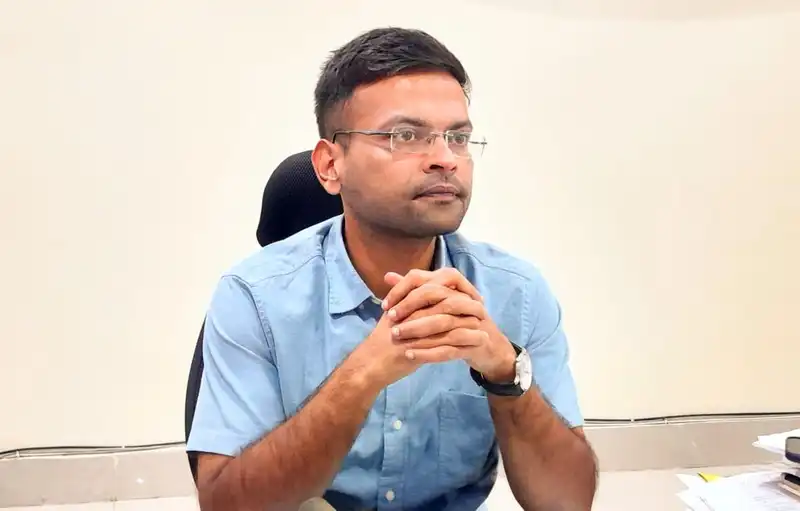
NEW DELHI: The Appointments Committee of the Cabinet (ACC) has approved the appointment of Shri Samarth Verma, Indian Administrative Service (IAS) officer of the 2011 batch from the Odisha cadre, as Director in the Ministry of Ports, Shipping & Waterways, New Delhi.

According to an order issued by the Department of Personnel & Training (DoPT), Verma will serve under the Central Staffing Scheme for a tenure of five years from the date of assumption of charge of the post or until further orders, whichever is earlier.

He has been directed to be relieved of his present responsibilities immediately to enable him to take up the new assignment in the Ministry of Ports, Shipping & Waterways.

Major Natural Gas discovery in Andaman Basin set to transform India’s Maritime landscape

NEW DELHI: India’s maritime sector is poised for a transformative leap following a major natural gas discovery in the Andaman Basin. The Ministry of Ports, Shipping and Waterways (MoPSW) informs that the offshore reserves, with a high methane content of 87%, promise to bolster the country’s clean energy ambitions and expand the scope of maritime logistics.

Officials highlighted that the discovery will serve as a catalyst for port-led economic development, enabling greater LNG transport, fostering the use of green shipping fuels, and opening fresh opportunities in the nation’s Blue Economy framework.

The basin is expected to emerge as a crucial offshore energy hub, providing momentum to India’s strategy of achieving Atmanirbhar (self-reliant) energy security. By reducing dependence on conventional fuels and imports, the reserves will help strengthen the maritime sector’s resilience and position India as a future-ready global player in sustainable shipping.

Industry observers say the development could also accelerate India’s transition toward decarbonisation of its maritime ecosystem while spurring investment in associated infrastructure, including LNG terminals and bunkering facilities.

MoPSW underscored the move as a “significant stride” towards a cleaner, more competitive, and environmentally sustainable Maritime India.

Indian Railways launches First Assured Transit Time Container Train between Delhi and Kolkata

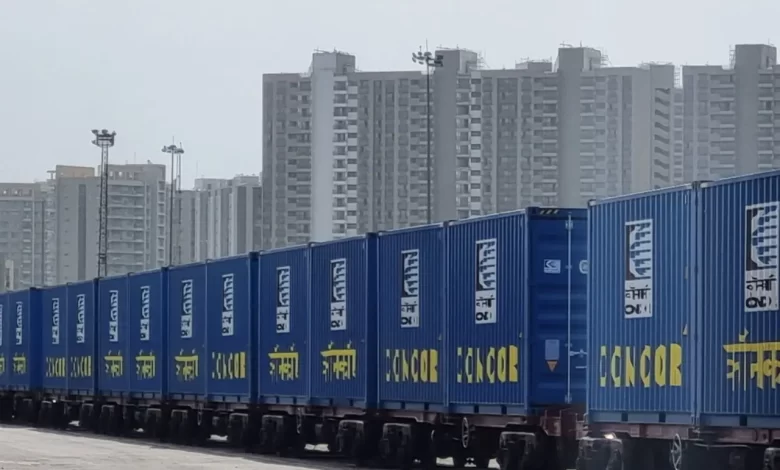
NEW DELHI: Indian Railways launches its first assured transit time container train service on a pilot basis between Delhi and Kolkata. The service will operate from ICD Tughlakabad Terminal, Delhi, to the CTCS Kolkata via Agra and Kanpur terminals of Container Corporation of India Limited- CONCOR. This special service is designed to ensure a guaranteed transit time of 120 hours, marking a significant milestone in the logistics sector.

Indian Railways, in a statement, said it will operate on a bi-weekly schedule, departing every Wednesday and Saturday. This pilot project is expected to provide multiple advantages to customers, including assured and reliable delivery for time-sensitive cargo, a competitive alternative to road transport and priority benefits for early adopters. It also contributes to sustainability by promoting a modal shift from road to rail, reducing the carbon footprint, and supporting India’s commitment to green logistics.

Through this initiative, Indian Railways and CONCOR reaffirm their focus on customer-centric, reliable, and sustainable logistics solutions. The launch of this assured transit train service represents a transformative step towards a more efficient and environmentally responsible supply chain ecosystem.

CJ Darcl Logistics Moves Toward Public Listing; DRHP Filed with SEBI

NEW DELHI: CJ Darcl Logistics, the India arm of South Korea’s logistics powerhouse CJ Logistics, has filed its Draft Red Herring Prospectus (DRHP) with the Securities and Exchange Board of India (SEBI) for a proposed Initial Public Offering, marking a major milestone in the company’s growth and a significant move for India’s logistics sector, subject to receipt of requisite approvals and market conditions.

The IPO comprises a fresh issue of up to 26,470,000 equity shares and an offer for sale of up to 9,905,355 equity shares, as disclosed in the DRHP. The offer will be made via the book-building route with up to 50% reserved for qualified institutional buyers, not less than 15% for non-institutional investors, and not less than 35% for retail investors. ICICI Securities and DAM Capital Advisors are the Book Running Lead Managers, and MUFG Intime India Private Limited is the registrar. The equity shares are proposed to be listed on BSE and NSE.

CJ Darcl Logistics is a subsidiary of CJ Logistics Corporation, one of South Korea’s largest logistics companies by revenue (Source: CRISIL Report). CJ Logistics Corporation, listed on the Korea Exchange, reported consolidated sales of KRW 12,116,761.15 million (approximately USD 8,196.25 million) for the year ended December 31, 2024, and operates across more than 38 countries with a comprehensive suite of logistics services, including contract logistics, freight forwarding, express parcel delivery and supply chain management.

Incorporated in 1986, CJ Darcl Logistics is an integrated logistics service provider offering multimodal logistics and warehousing and distribution solutions to enterprise customers across India and select overseas markets. The company operates an asset-right model supported by a large, tech-enabled partner network. As of March 31, 2025, the company had a pan-India presence across 6,691 locations through 202 branch offices, 6 administrative offices, 14 warehousing facilities and 1 railway stock yard. Its network comprised 9,55,023 partnered fleet through a base of 5,54,781 business partners, alongside 1,178 owned commercial vehicles, 2,403 containers and have taken 483 vehicles on lease. The company owns 1,899 specialized containers we maintained one of the largest inventories of specialised containers in India, which represents one of the largest of such inventories held by any private company in India (Source: CRISIL Report).The company’s warehousing footprint expanded from 0.60 million sq. ft. in FY23 to 1.13 million sq. ft. in FY25.

CJ Darcl Logistics’ service portfolio spans first-mile transportation, storage, handling, last-mile delivery, invoicing on behalf of customers and inventory management within customer systems. The company serves a diversified customer base across metals, minerals, coal, chemicals, FMCG, engineering and construction, automotive and auto ancillary, agriculture and glass. It catered to 2,291, 2,261 and 2,277 customers during FY23, FY24 and FY25, respectively.

Revenue from operations was ₹5,161 crore in FY25 versus ₹4,215.8 crore in FY23, while net profit was ₹93.1 crore in FY25 versus ₹67.7 crore in FY23. In FY25, FY24 and FY23, contracts with a duration of at least one year contributed ₹4,284 crore, ₹3,775 crore and ₹3,230 crore, representing 83.00%, 82.16% and 76.62% of revenue from operations, respectively.

Merchant ship collides with fishing boat off Kochi Coast

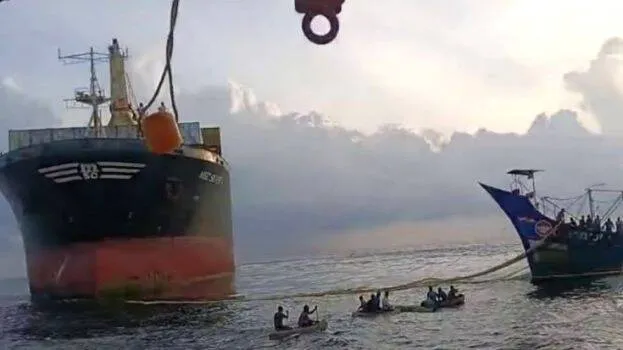
KOCHI : Coastal Police, Fort Kochi, have launched an investigation following a complaint that a merchant ship collided with a fishing boat in the outer sea off Kochi on Wednesday evening.

According to police, the merchant vessel MSC Silver II struck the fishing boat ‘Prathyasha’ around 5.30 pm. A major tragedy was averted as the ship slowed down after other nearby fishing boats alerted its crew.

Fishermen aboard Prathyasha reportedly had to jump into the water as the ship brushed against the side of their boat. The vessel sustained damage, and the fishing nets were destroyed. The boat owners later lodged a complaint with the coastal police.

“We have received the complaint and initiated an investigation. A formal case will be registered only after the facts have been verified. No injuries were reported, and the fishermen are currently assessing the extent of the damage,” said a police source.

Meanwhile, Jackson Pollayil, President of the Kerala Swathanthra Matsya Thozhilali Union, alleged that the ship was sailing in an area where fishing boats operate. “The designated shipping lane is nearly 20 km away from where the accident occurred. Authorities must ensure the safety of fishermen and their boats,” he said.

India and China look to be partners amid US tariff turmoil

SHAGHAI : This summer, as U.S. tariffs scrambled shipping schedules, Chinese Ports in Shanghai, Ningbo, and Qingdao reported days-long logjams. The disruptions forced exporters and shipping lines to explore alternative hubs across Asia – where India is increasingly being noticed.

With a coastline of over 7,500 kilometers (nearly 4,700 miles) and 12 major ports already handling most of its trade, the country is well poised to be an alternative gateway to Asia. Between 2014 and 2024, India nearly doubled its cargo-handling capacity at major ports from 872 million tonnes to 1,630 million, and Delhi is moving swiftly to further expand and modernize its port infrastructure.

Experts note India is not attempting to replace China, but complementing it in global trade. When Prime Minister Shri Narendra Modi visited China for the Shanghai Cooperation Organization summit on Sept. 1, he and Chinese leader Xi Jinping stressed that they are “partners, not rivals,” pledging to work together on resolving border disputes and stabilizing the global economy.

This came as U.S. President Donald Trump imposed 50% tariffs on Indian exports, marking a downturn in bilateral relations. Xu Feihong, China’s envoy to India, said recently that as “the two biggest and very important emerging economies,” China and India should find ways to cooperate. International trade partners, he said, “should complement each other and lead to mutually beneficial win-win cooperation.”

Those words could signal a new chapter in a fraught history. India and China have clashed over their shared Himalayan border, most recently in 2020. They had begun mending their relationship before U.S. President Donald Trump’s second term, but experts say the recent meeting in China is a sign they see value in cultivating a stable relationship as Mr. Trump upends trade relationships with tariffs. At the same time, Mr. Modi is pushing to increase India’s manufacturing and its exports, which experts see as a response to both the unpredictability of its relationship with the United States, and to China’s increasing influence in the Indian Ocean.

Professor Biswajit Dhar, who taught economics at the Jawaharlal Nehru University in New Delhi before serving in several ministries, says this growing distance from the US – the world’s largest economy – is a major loss for Indian businesses, and could hinder its maritime ambitions. But viewing China as a partner, rather than a competitor, could help.

“The ongoing reset in India’s relationship with its northern neighbor would surely see a spurt in trade activities,” he says. “India must seize this opportunity to improve its presence in the Chinese economy.”

What India is doing and where it lags
To be sure, India is far from matching China’s port traffic. India’s total cargo throughput last year was about one-tenth that of its northern neighbor. But it’s aggressively positioning itself as a viable trade hub.

In 2024 alone, Indian ports managed 819 million tonnes of cargo, a 4.45% year-over-year rise. Merchandise exports climbed from $417 billion in 2022 to $451 billion in 2023, reflecting India’s growing trade weight. But the momentum has begun to stall as the fresh U.S. tariffs are already cutting into export orders and slowing cargo movement through India’s ports.

More than a trade hiccup, this exposes a deeper fault line in New Delhi’s strategy – its ambition to project itself as a global economic leader now. For India, the challenge is no longer just expanding trade but sustaining it in a world defined by geopolitical friction and unpredictable economic pressures.

This year, India took a significant step to modernize the country’s maritime laws by replacing the outdated Indian Ports Act of 1908 with The Indian Ports Bill, 2025. It establishes the Maritime State Development Council and State Maritime Boards to improve coordination and management, and mandates better environmental and safety standards, aiming to make India a global maritime leader.

“Global trade needs multiple options,” says Professor Nisha Taneja at the Indian Council for Research on International Economic Relations (ICRIER) in New Delhi. “The current trade routes are getting congested. There is definitely a need to develop more routes to facilitate global trade, and in that sense, India’s infrastructure expansion is very timely.”

This is all part of a broader plan to boost India’s trade ecosystem, say experts. “The vision — increasing manufacturing, reducing vulnerabilities, and expanding exports — is clear,” says Ms. Taneja. “But implementation is slow.”

Financing projects — such as integration of ports, roads, and railways — is a big challenge, she explains, and so is bureaucracy. India’s foreign trade policy does not have a coordinated approach that looks beyond ports and engages different sectors.

“A coherent trade policy must integrate the planning and priorities of multiple ministries — roads, railways, agriculture, and others — especially given how import-dependent our industries are,” says professor Dhar. “Our manufacturing hubs are scattered across the country, which makes connectivity to ports critical.”

Getting a product from a factory in West Bengal to Mumbai, for example, is a logistical marathon, with challenges that begin with navigating congested local roads to reach an inland container depot, where complex paperwork and red tape can cause further delays.

APEDA showcases India’s agri-food strengths as export partner at World Food India 2025

NEW DELHI : The Agricultural and Processed Food Products Export Development Authority (APEDA), under the Ministry of Commerce & Industry participated as the Export Partner in the 4th edition of World Food India (WFI) 2025, held at Bharat Mandapam, Pragati Maidan, New Delhi.

With 142 exhibitors and 120 stalls, APEDA’s pavilion showcased the diversity of India’s agri-food sector, including GI-tagged products, Basmati rice, millets, organic produce, livestock products, and value-added foods. The pavilion also featured dedicated thematic zones such as the GI Gallery, Fresca Zone, Basmati Export Development Foundation stall, and a BHARTI Zone focused on startups and innovation.

As Export Partner, APEDA organized the Reverse Buyer-Seller Meet (RBSM), which attracted more than 530 international buyers from 68 countries, including leading supermarket chains such as Walmart, Nesto, Al Madina, Mustafa Singapore, and Choithram. Over 4,654 curated B2B meetings were held during the event, providing Indian exporters and startups an unprecedented platform to explore new markets, showcase innovative products, and establish long-term business linkages.

APEDA further strengthened global market access by signing a strategic Memorandum of Understanding (MoU) with LuLu Hypermarket LLC on September 25, 2025. The collaboration, under the BHARTI (Bharat’s Hub for Agritech Resilience, Advancement and Incubation for Export Enablement) Initiative, will provide Indian agri-food startups shelf space across 252 LuLu outlets in the GCC, along with product sampling campaigns, consumer engagement, and access to LuLu’s export division for global distribution.

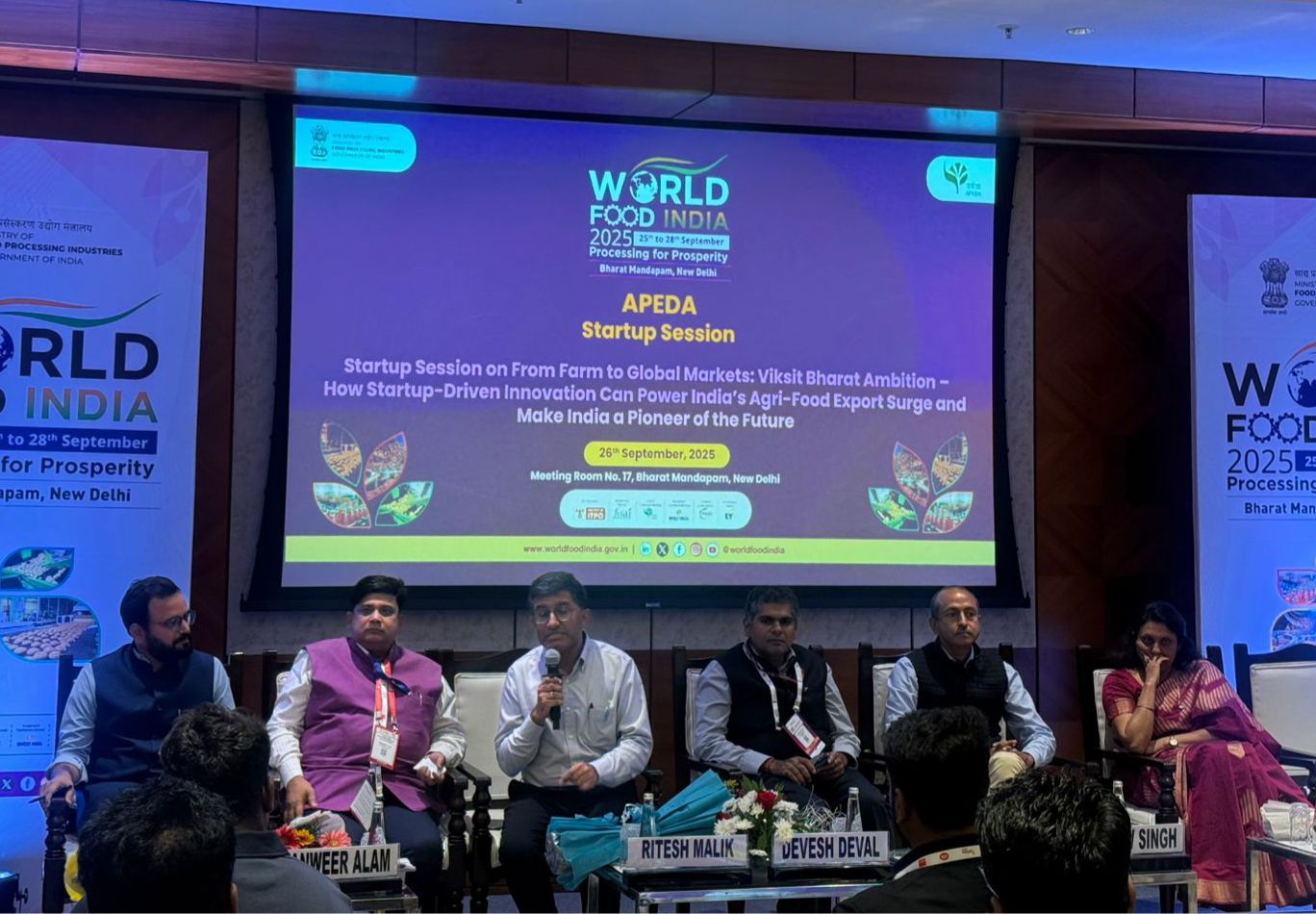
The BHARTI Initiative was another major highlight at WFI 2025, with a dedicated stall and an interactive seminar on “From Farm to Global Markets: Startup-Driven Innovation for Agri-Food Exports.” The session brought together policymakers, industry leaders, and innovators to deliberate on strategies for empowering 100 agri-food ventures through mentorship, branding, technology adoption, and global market intelligence.

Speaking on the occasion, Chairman, APEDA, Shri Abhishek Dev said that World Food India 2025 has been a milestone in showcasing India’s agri-food potential to the world. As Export Partner, APEDA successfully brought together more than 140 exhibitors and over 500 buyers from 68 countries, enabling thousands of business meetings and new opportunities for exporters. The Reverse Buyer-Seller Meet, the MoU with LuLu Hypermarket, and the BHARTI Initiative together reflect APEDA’s commitment to empowering startups, strengthening international partnerships, and building a future-ready, innovation-driven export ecosystem.

Through its active participation at World Food India 2025, APEDA reaffirmed its mission to build a globally competitive agri-food export sector. By combining large-scale buyer engagement, strategic international collaborations, and startup-driven innovation, APEDA continues to position India as a trusted partner in global food trade and a leader in sustainable, innovation-led growth.