Home Blog Page 635

Klaipėda Port moves closer to green hydrogen production with successful electrolyzer tests

KLAIPEDA: Klaipėda Port’s green hydrogen project is moving quickly toward completion. Recently, a key milestone was reached when the main component of the future hydrogen station – the electrolyzer – successfully passed factory tests in Italy.

“Successfully completing the factory tests of the green hydrogen electrolyzer is a major step forward for Klaipėda Port in its plans to produce, use and supply clean fuels. This milestone brings us much closer to finishing a unique project in the region and reducing our environmental footprint. The Port Authority and its partners have ensured the core systems of the green hydrogen base work flawlessly, allowing the project to stay on track. The equipment will be shipped to Klaipėda Port for installation and on-site testing. We plan to begin producing clean fuels next year,” says Algis Latakas, General Director of Klaipėda State Seaport Authority.

The green hydrogen production and supply station, which will start operating at Klaipėda Port next year, will house a polymer electrolyte membrane (PEM) type electrolyzer. When operating at full capacity, about 127 tonnes of green hydrogen will be produced annually, part of which will be used to power the first vessel in the country driven by green hydrogen, currently nearing completion.

The electrolyzer intended for Klaipėda is being manufactured at the “IMI Remosa” plant in Cagliari, Italy.

Klaipėda Port will become the first in Lithuania and among the Baltic States to produce and supply green hydrogen. The decision to undertake such an ambitious project was made taking into account global sustainability trends, environmental challenges, and the aim to promote energy transformation and development, as well as to contribute to solving greenhouse gas emission problems.

The company Gevalda, which won the public tender announced by the Klaipėda Port Authority, is expected to complete construction by the end of the year. Once the site is finished, the installation and testing of hydrogen equipment will follow. All construction and installation works are scheduled for completion by February next year.

The project is being implemented under the Economic Recovery and Resilience Plan Next Generation Lithuania, funded by the European Union’s NextGenerationEU recovery and resilience facility. The total estimated cost of the hydrogen production and refueling station is approximately €12 million, with around €6 million financed by EU funds.

Sarbananda Sonowal reviews India Maritime Week 2025 preparations, launches digital maritime repositories

NEW DELHI: Union Minister of Ports, Shipping and Waterways (MoPSW) Sarbananda Sonowal chaired a high-level review meeting to assess preparations for the upcoming India Maritime Week (IMW) 2025, scheduled to be held from 27 to 31 October.

The meeting brought together senior ministry officials, chairpersons of major ports, and heads of subsidiary organisations to ensure the event delivers on its goal of positioning India as a global hub for maritime dialogue and collaboration. IMW 2025 aims to serve as a premier platform for international maritime leaders, policymakers, and industry stakeholders to forge partnerships and shape the future of the sector.

Marking the occasion, the Minister unveiled two key digital initiatives—Sagar Vidhan Kosh and Sagar Gyan Kosh—online repositories designed to strengthen knowledge sharing and policy frameworks within the maritime domain.

Sonowal emphasised that the government is committed to enhancing India’s maritime capabilities and facilitating sustainable growth through innovation, investment, and international cooperation. IMW 2025 is expected to feature global participation, high-level policy discussions, and industry showcases that reflect India’s growing role in global shipping and port-led development.

MoU Exchange Secures Over ₹66,000 Crore Investment, Boosts Atmanirbhar Shipbuilding

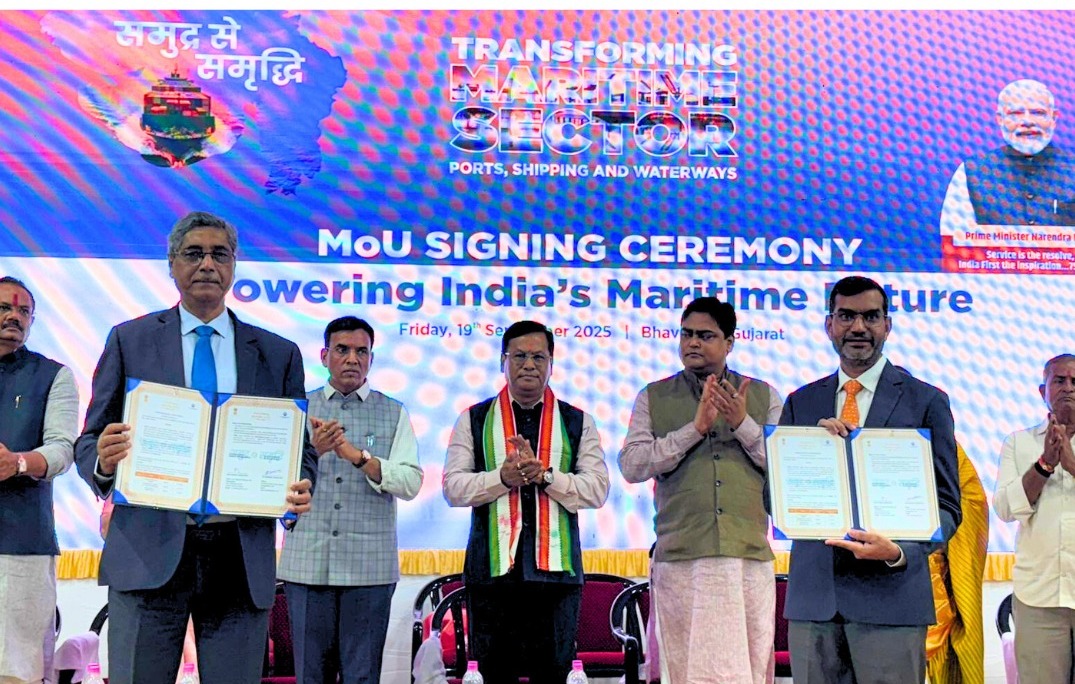
BHAVNAGAR: A historic chapter in India’s maritime journey was written in Bhavnagar on 19th September 2025, when a MoU Exchange Ceremony took place on the eve of the “Samudra Se Samriddhi – Transforming India’s Maritime Sector” event addressed by Prime Minister Shri Narendra Modi in which a number of projects pertaining to the maritime sector were launched. The MOU’s were signed on 18th September, 2025 in the presence of  Shri Sarbananda Sonowal – Union Minister of Ports, Shipping and Waterways, Dr Mansukh Mandaviya – Union Minister of Labour & Employment, Youth Affairs & Sports, and Shri Shantanu Thakur – Minister of State for Ports, Shipping and Waterways. As many as twenty-seven Memorandum of Understanding (MoUs) were exchanged between public and private sector stakeholders in the maritime sector, State Governments, and international partners. Together, these agreements carry an investment and development potential of over ₹66,000 crore and represent a significant collaborative commitment towards the growth of India’s maritime and shipbuilding sector.

The MoU ceremony showcased India’s integrated vision for maritime growth , covering new port infrastructure, shipping, shipbuilding clusters, global shipyard partnerships, financing mechanisms, innovative maritime investment, sustainable projects such as water metros and green tugs, as well as heritage-linked initiatives like the lighthouse museum. With their collective industrial, socio-economic, and strategic impact, these projects are set to re-position India as a leading global maritime and shipbuilding hub in the next decade, advancing the national resolve of an Atmanirbhar Bharat.

“Under the visionary leadership of Prime Minister Shri Narendra Modi , India’s maritime sector is undergoing a historic transformation. These initiatives reflect our commitment to building a strong, self-reliant and globally recognised maritime ecosystem. With ports, shipbuilding and sustainable projects advancing at this pace, we are steering India closer to the goal of Viksit Bharat by 2047,” said Shri Sarbananda Sonowal.

The most prominent of these agreements pertained to port development and capacity augmentation. A landmark MoU was signed between Paradip Port Authority, Visakhapatnam Port Authority, Sagarmala Finance Corporation Limited, and the Government of Odisha for the development of a new port at Bahuda, with a capacity of 150 million tonnes per annum proposed to be developed on more than 6,700 acres of coastal salt land that have been designated for maritime use, this project is expected to attract an investment of around ₹21,500 crore. It will act as an anchor for port-led industrialisation, logistics parks, and manufacturing clusters across Odisha and northern Andhra Pradesh. The Port is expected to provide direct and indirect employment opportunities to nearly 25,000 people while catalysing new waves of industrial and infrastructure development in eastern India.

Simultaneously, attention was also directed towards sustainable transport solutions, with the signing of an MoU between the Inland Waterways Authority of India and the Government of Bihar for a Water Metro Project in Patna. Valued at approximately ₹908 crore, this collaboration proposes to deploy energy-efficient electric ferries, develop modernised terminals, and integrate urban waterways with multimodal systems of public transport. Ten strategically identified terminal points along four potential routes in Patna will reconfigure how citizens travel across the river city, while the project will stand as a pilot for similar initiatives in other Indian cities.

 Shri Sonowal said. “These MoUs are a testament to India’s maritime resurgence. By fostering collaboration between states, industries and global partners, we are unlocking a new era of shipbuilding and port-led growth. This is not only about infrastructure, it is about creating jobs, empowering communities and establishing India as a leading maritime nation in the world.”

On the shipping front, a significant step towards India’s energy independence was unveiled through the MoU between the Shipping Corporation of India and the Oil PSUs—IOCL, BPCL, and HPCL—for the creation of a Vessel Owning Joint Venture Company. This is the first in a series of steps that will pool vessel demand from energy PSUs, thereby reducing reliance on foreign shipping fleets. It will also ensure long-term charter contracts for Indian-built ships, supported by SCI’s regulatory and operational expertise. The MoU aims to secure India’s vital crude oil and product transportation chains while scaling up demand for Indian shipbuilders in tandem with the Government’s Atmanirbhar Bharat programme.

Another category of MoUs at the ceremony pertained to shipbuilding and its allied clusters. In a move that could fundamentally alter the global perception of India’s shipbuilding capacity, the Ministry facilitated MoUs between major ports under MoPSW, GOI and the State Governments of Andhra Pradesh, Odisha, Gujarat, Maharashtra and Tamil Nadu for initiating the setting up of Shipbuilding clusters. These will be enabled through SPVs with joint investments from centre and states, supported by land transfer at nominal cost, tax incentives, and enabling policy measures. Each cluster will not only house state-of-the-art shipyards but also R&D centres, small industry linkages, ancillary units, specialised training facilities, and logistics corridors. The effort is targeted to position India amongst the world’s top five global shipbuilding nations by the 100th year of independence in 2047. Moreover, these clusters are designed as green innovation hubs, encouraging carbon-neutral shipbuilding and environmentally friendly marine engineering solutions.

The ceremony also witnessed many Indian Industry Collaborations with international players. A marquee MoU was signed between Cochin Shipyard Limited and HD Korea Shipbuilding & Offshore Engineering, signifying a long-term strategic partnership for building large commercial vessels in India. With CSL’s new 310-metre Dry Dock facility — inaugurated by the Prime Minister in January 2024 & now operational. The partnership will help India construct large carriers such as Suezmax oil tankers, container ships, and bulk carriers with a capacity of up to six ships annually. To feed this facility, CSL announced plans for an 80-acre Block Fabrication Facility (BFF) in Kochi, involving an investment of around ₹3,700 crore and a throughput potential of 1,20,000 metric tonnes of steel fabrication annually. The plant will create approximately 2,000 direct jobs and several times more indirect employment in allied industries, especially MSMEs and supply chains.

CSL also signed an MoU with SIPCOT and Guidance Tamil Nadu for the creation of a shipbuilding complex worth ₹15,000 crore in the state. The facility will have a unique capacity to manufacture one million GT of ships annually and will generate employment for around 8,000 people directly and over 40,000 indirectly. Mazagon Dock Shipbuilders Limited entered into a parallel MoU with Guidance Tamil Nadu to set up another large greenfield yard in Thoothukudi.

An equally significant step towards domestic manufacturing efficiency was the MoU signed between the Shipyard Association of India and the Indian Steel Association, which aims to prioritise usage of domestically produced steel in shipyards. This linkage between steel producers and shipbuilders aligns with the Government’s push for industrial integration and import substitution, ensuring that India’s maritime growth translates directly into demand pull for Indian manufacturing sectors.

The Gujarat Maritime Board capitalised on Bhavnagar’s historic shipbuilding tradition by signing multiple agreements with private partners including Act Infra Ports, Modest Infrastructure, Chowgule and Company, and SWAN Defence. These MoUs, with a total investment exceeding ₹13,600 crore, outline mega facilities for comprehensive shipbuilding, ship repair, offshore infrastructure and recycling yards spread across the Gulf of Kutch, Nava Ratanpara, Pipavav and other sites. The integrated approach is expected to generate significant employment while embedding Gujarat firmly on the global maritime map, further transforming the state into one of India’s prime shipbuilding centres. To reinforce combined capacities further east, Garden Reach Shipbuilders & Engineers signed agreements with IPRCL, SCI, SMPK and Modest Shipyard for new ventures in greenfield facilities, tug development, and ship repair, particularly in Gujarat and West Bengal.

Complementing these massive infrastructure plans was a suite of MoUs that addressed the critical challenge of sustainable financing for the maritime industry. The Sagarmala Finance Corporation Limited signed agreements with financial institutions such as Neo Fund, NaBFID, IIFCL, and Climate Fund Managers, paving the way for dynamic investments into the maritime sector. These MoUs will help mobilise equity, co-investment, and innovative debt instruments for green shipbuilding, fleet modernisation, and maritime logistics projects. By bringing in global climate-aligned fund managers alongside domestic development finance institutions, the initiative ensures that India can access both international and domestic capital pools while creating a competitive, diversified financing ecosystem. SMFCL further signed an agreement with SWAN Shipyard for possible future financing.

Further underscoring India’s maritime heritage and its role in cultural-economic development, an MoU was signed between the Directorate General of Lighthouses and Lightships and Indian Port Rail & Roadways Corporation Ltd. for the setting up of the world’s tallest lighthouse museums at a height of 77 metres at the National Maritime Heritage Complex in Lothal, Gujarat. With an investment of ₹266 crore, the project represents a fusion of heritage preservation, tourism development, and modern architecture, ensuring that India’s maritime traditions receive global recognition while simultaneously driving domestic and international tourist inflows.

Combined, these MoUs present a narrative of India’s emerging position in the global maritime trade and industry. With commitments of over ₹66,000 crore, the projects span high-capacity ports, green mobility, tourism, energy, shipping security, shipbuilding ecosystems, and robust financial capital frameworks. Together, they are expected to generate more than 1.5 lakh direct and indirect jobs across multiple states, while raising India’s contribution to global shipping, trade, and shipbuilding value chains.

Indian Ports Act, 2025 replaces outdated provisions of the Indian Ports Act, with modern & contemporary regulations

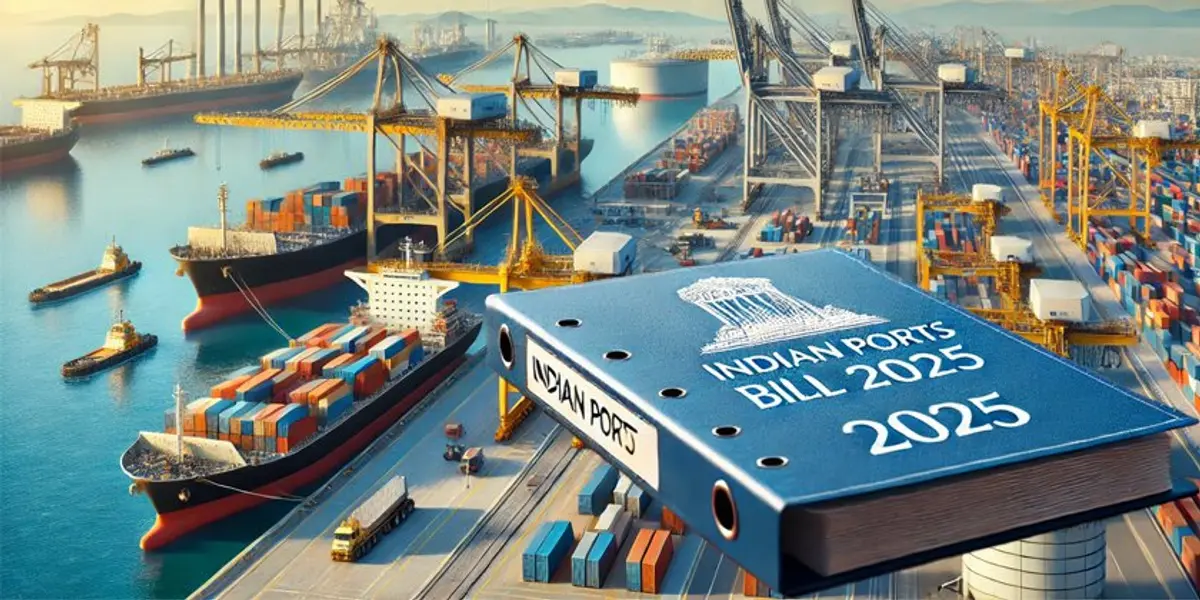
NEW DELHI : The Indian Ports Act, 2025 replaces outdated provisions of the Indian Ports Act, 1908, with modern & contemporary regulations.
• The Act establishes Maritime State Development Council (MSDC) as a statutory
consultative body to coordinate between Centre and coastal States.
• The legislation mandates Global Green Norms, Disaster Readiness for Indian Ports.
• It simplifies port procedures & digitalise operations to enhance Ease of Doing
Business (EODB).

Ports have long served as the silent engines of India’s economic momentum. As India grows, the
strategic relevance of its maritime infrastructure has never been greater. Beyond logistics, ports are catalysts for industrial corridors, employment generation, and urban renewal.

The Indian Ports Act, 2025 passed by Parliament in August, 2025 marks a transformative milestone in India’s maritime governance – replacing the century-old Indian Ports Act of 1908 with a forward-looking, integrated framework tailored to the demands of a modern economy. The legislation reflects the Government’s vision to position ports not merely as transit points, but as engines of growth, employment, and strategic connectivity. By consolidating port laws and empowering States, the act fosters cooperative federalism and structured development across coastal states. It aims to unlock the full potential of India’s 7,500 km coastline, streamline port administration, and align domestic practices with global maritime
standards. As India charts its course toward becoming a global maritime leader, the Indian Ports
Act, 2025 stands as a foundational reform – anchoring efficiency, sustainability, and inclusive
progress at the heart of port-led development.

Ports play a vital role in India’s development by facilitating trade, supporting industrial growth, and enabling regional connectivity. They serve as strategic gateways for imports and exports, contributing significantly, to national logistics and supply chains. The Ports in the country handle around 95% of EXIM
Cargo by volume and 70% by value. India hosts 12 major ports and 200+ non-major (minor) ports across its coastline. The major ports operate under the administrative purview of the Ministry of Shipping, while non-major ports fall under the jurisdiction of respective State Maritime Boards or State Governments. All major ports are fully operational; among the non-major ports, around 65 handle cargo, while the remainder function as designated “Port Limits” primarily serving fishing vessels and small passengers ferries across creeks and inland waterways.

Over the past decade, India’s maritime sector has undergone a remarkable transformation,
emerging as a key driver of economic connectivity and logistics efficiency. Major ports have
significantly scaled up their handling capacity and operational performance to match
international standards. This momentum has strengthened domestic trade routes as well as elevated India’s global standing. The sector’s evolution underscores the strategic importance of
ports in shaping India’s future as a maritime power.

In light of these developments, the recently enacted Indian Ports Act, 2025 marks a pivotal
reform by replacing colonial-era legislation with a modern framework that promotes integrated
development, strengthens Centre-State coordination, aligning India’s port governance with global
best practices, and boosting India’s strategic maritime capabilities.

The Indian Ports Act, 2025 introduces a modern regulatory framework to enhance governance,
transparency, and sustainability across India’s port ecosystem. It empowers statutory bodies,
streamlines dispute resolution, and strengthens tariff regulation and environmental safeguards to
align with global maritime standards.

These measures will be transforming India’s maritime sector by streamlining legal frameworks,
promoting coordinated port development, and enhancing business efficiency. Institutional reforms
will empower states and foster strategic planning through dedicated bodies like State Maritime
Boards and the Maritime State Development Council. Digitalisation plays a key role in improving
port operations, with initiatives like the Maritime Single Window and Advanced Vessel Traffic
Systems helping to boost efficiency, ease congestion, and lower operational costs.

The Indian Ports Act, 2025 emerges as a timely and transformative step toward modernizing and
unifying port laws, boost development, and make business easier. It sets up strong governance
bodies at the state and national levels, ensures safety and sustainability at ports, and aligns India
with global standards. It also introduces systems to resolve disputes efficiently.

The passage of the Indian Ports Act, 2025 marks a defining moment in India’s maritime journey—
ushering in a future-ready framework that replaces colonial-era legislation with a modern,
transparent, and growth-oriented approach. The Act reflects a strategic shift toward integrated
port development, cooperative federalism, and global competitiveness. It strengthens institutional
capacity, streamlines governance, and embeds sustainability at the heart of maritime operations.

DG Shipping celebrated ‘World Maritime Day 2025’

MUMBAI : Directorate General of Shipping celebrated ‘World Maritime Day 2025, ‘the celebrations commenced with a Guard of Honour by the cadets of The Shipping Corporation of India, Maritime Training Institute (MTI), Powai for Shri Sameer Kumar Khare, IAS (Retd.), Chairperson, National Shipping Board, who graced the occasion as Chief Guest. The cadets showcased discipline, precision, and pride, reflecting the dedication and spirit of India’s maritime workforce. This ceremonial welcome set a dignified tone for the day as we gathered to honour our oceans, our obligations, and our opportunities.

Pi7 Image Cropper 47 DG Shipping celebrated 'World Maritime Day 2025'

The celebrations began with the Lighting of the Lamp by the dignitaries, including Shri Sameer Kumar Khare, IAS (Retd.), Chairperson, National Shipping Board, and Shri Sushil Mansing Khopade, Additional Director General of Shipping & Chairman, NMDC (Central) Committee. This ceremonial act marked the official inauguration of World Maritime Day 2025, symbolizing knowledge, positivity, and the collective commitment of India’s maritime community towards our oceans, obligations, and opportunities.

Pi7 Image Cropper 48 DG Shipping celebrated 'World Maritime Day 2025'
Shri Sameer Kumar Khare, IAS (Retired), Chairperson, National Shipping Board addresses gathering

Shri Sameer Kumar Khare, IAS (Retired), Chairperson, National Shipping Board, addressed the gathering, highlighting the pivotal role of India’s maritime sector in national growth, trade, and sustainability. His address emphasized strategic initiatives, governance, and the importance of nurturing a skilled and responsible maritime workforce, inspiring all stakeholders to contribute towards a robust and future-ready maritime ecosystem.

Pi7 Image Cropper 49 DG Shipping celebrated 'World Maritime Day 2025'
Shri Sushil Mansingh Khopde, IPS, Additional Director General of Shipping, addressed gathering

Shri Sushil Mansingh Khopde, IPS, Additional Director General of Shipping, addressed the gathering, sharing his vision and insights on India’s maritime sector. Highlighting key initiatives, policies, and the role of governance in strengthening safety, efficiency, and sustainability, his address underscored the Directorate General of Shipping’s commitment to a disciplined, responsible, and forward-looking maritime community.

Closing the Celebrations with Gratitude

Dr. Sudhir S. Kohakade, Deputy Director General of Shipping & Member Secretary, National Maritime Day Celebrations (Central) Committee, delivered the Vote of Thanks, expressing appreciation to all dignitaries, officials, cadets, and participants. His remarks highlighted the collective efforts behind the event and reinforced the shared commitment of India’s maritime community towards safety, sustainability, and excellence in the sector.

Reforms to cushion economy against adverse effects of trade disruptions; external shocks need vigilance : FinMin

NEW DELHI : The government’s reform agenda will cushion the economy against the adverse effects of trade disruptions, the Finance Ministry said on Friday, as it pitched for vigilance against external shocks and global market volatility.

Terming GST rationalisation as the “third leg of the tripod of tax reform” after the cut in corporate tax rate and personal I-T, the Finance Ministry’s Monthly Economic Review said the GST rate cuts will help lower inflation over the next year and also bring a further upside bias to the country’s growth prospects.

Three global rating agencies have upgraded India’s sovereign credit ratings so far in FY26 on the back of strong growth, macroeconomic stability, and fiscal discipline over the previous few years, it added.

However, the recent US imposition of a one-time fee of USD 100,000 for all future H-1B visas caused disruptions, the impact of which, particularly on the growth of future remittances and service trade surpluses, will need close monitoring if the restrictions persist.

“This is not the time to drop our guard. Uncertainties and risks persist. “The Union government’s reform agenda is expected to cushion the economy against the adverse effects of trade disruptions. Regulatory reform and infrastructure development will be key to sustaining momentum,” the report said. It also called upon states to pursue state-level deregulation, thereby putting India’s economy on a higher growth trajectory.

“Speed of decision-making and attention to detail in execution are more critical than ever at all levels of the government – Union, States and local. Commitment to and delivering on fiscal targets is critical to make available the stimulus of lower cost of capital to all segments of society,” the ministry said.

The ministry said if tariff uncertainties persist, there will be an impact on export sectors with spillover risk to domestic employment, income and consumption. Newer markets will take time to mature and contribute to export growth as established markets have. Further, the decision by the US government to impose a fee on new H1B visa-seekers is a reminder of the risks of trade uncertainties affecting the hitherto unaffected services sector.

“For now, the risks appear manageable, but they are there. “The near-term outlook, therefore, is characterised by steady, reform-driven growth rooted in macroeconomic discipline and adaptive economic diplomacy, with ongoing vigilance warranted against external shocks and global market volatility,” the ministry said in its report. The report said that despite trade and tariff-related headwinds, India’s external sector has remained resilient.

India’s economic outlook remains broadly optimistic despite a turbulent international environment marked by geopolitical uncertainties and shifting trade dynamics, it said, adding that domestic components of demand have played a key role in supporting growth in the April-September period and are expected to remain so in the next half-year as well.

Indian economy grew 7.8 per cent in the April-June quarter, much faster than the RBI’s estimate of 6.5 per cent. The RBI expects FY26 growth to be at 6.5 per cent, while the Finance Ministry’s Economic Survey pegs growth at 6.3-6.8 per cent.

The Monthly Economic Review report further said, recognising the need to strengthen domestic growth drivers amid these heightened external-sector risks, the government has announced a rationalisation of the GST regime.

“This move is expected to lower the tax burden on consumers, boost consumption, and provide a cushion against tariff impacts. Additionally, it is likely to improve demand visibility for firms, enabling them to expand investment in additional capacities. Additionally, the revision in GST rates may lead to a one-time reduction in inflation over the next year,” the report added.

Effective September 22, Goods and Services Tax (GST) are levied in 2 slabs of 5 and 18 per cent, besides a 40 per cent tax only on ultra-luxury items. Earlier, GST was a 4-tier structure of 5, 12, 18 and 28 per cent, and a compensation cess was levied on luxury and sin goods.

Source : PTI

ESL achieves landmark Full-Rake Rail Movement from Ahmedabad to Mundra

AHMEDABAD: ESL has marked a significant milestone in India’s logistics sector by successfully booking and loading an entire rail corridor from ICD Ahmedabad (Virochannagar Adani ICD) to Mundra Port on 24 September, 2025, comprising a full rake of 50 x 40’ high-cube containers under the ESL banner. The cargo was loaded aboard ESL KABIR 02535E at Mundra.

The achievement was celebrated with a ceremonial flag-off led by Managing Director Mr. Allwyn D’Souza and General Manager – Sales India Mr. Sachin Mayekar, joined by General Manager – Operations & Container Control Mr. Selvaraj Fernando and Senior Manager – EQ Logistics Mr. Deepak Rawool whose support added immense value to this milestone event.

ESL credited the success to the strategic planning of Zonal Head (Gujarat) Mr. Hardik Jadeja and the precise execution by Assistant Manager – Sales Mr. Kuldeepsinh Rathod and team, underscoring the company’s growing capability in end-to-end rail logistics.

Acknowledging the collaborative effort, ESL expressed appreciation to Adani Group for their support and extended special thanks to long-term partners Shreenathji Worldwide Private Limited and Balaji Logistics Services for their trust and partnership.

“With this milestone, we reaffirm our commitment to redefining logistics efficiency and reliability. At ESL, we don’t just move cargo — we move boundaries,” the company stated.

Kerala HC cuts security amount to ₹1,227.62cr for release of MSC vessel

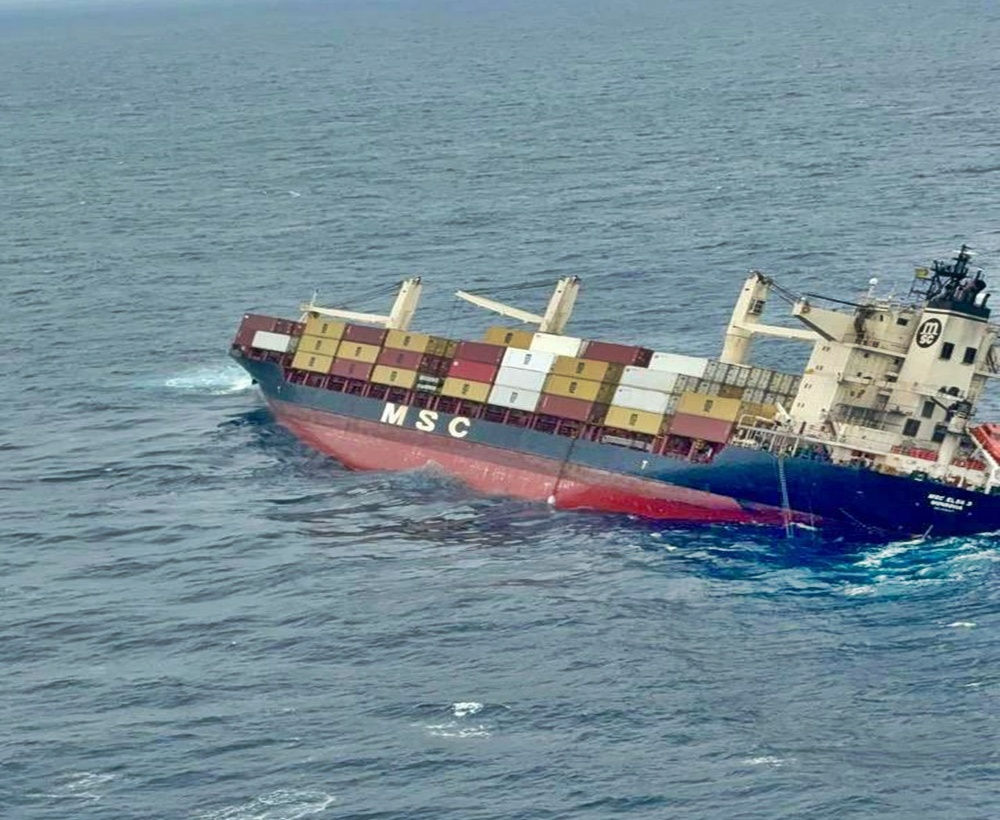
KOCHI : The Kerala High Court on Thursday lowered the security deposit required from the owners of MSC ELSA III, the vessel that sank off the state’s coast, causing extensive pollution, for the release of its sister ship, MSC AKITETA II. The amount has been reduced to ₹1,227.62 crore.

Earlier, on July 7, the court had directed that MSC AKITETA be detained until its owner, the Mediterranean Shipping Company (MSC), furnished ₹9,531 crore as security. On Thursday, Justice M A Abdul Hakhim revised this figure to ₹1,227.62 crore.

The court clarified that the state government is entitled to seek a higher security amount in future, “on obtaining further materials” to justify such an increase. It also noted that the government “has every right to seek the arrest of any other sister vessel of the sunken vessel in this suit itself to demand additional security on furnishing supporting materials for the increase.” The ruling came on a petition by the Kerala government, which has demanded damages of ₹9,531 crore following the sinking of MSC ELSA III and the severe ecological damage that ensued.

The government’s claim comprises three components — ₹8,626.12 crore as compensation for harm caused to the marine ecosystem, coastline and related state interests, ₹378.48 crore towards expenses incurred to prevent, mitigate or remove such damage, and ₹526.51 crore for economic losses suffered by fishermen.

MSC ELSA III capsized and went under off the Kerala coast on May 25, allegedly leaking oil and cargo that devastated marine life, damaged the shoreline, and disrupted the livelihoods of thousands of fishermen. According to the state’s Environment Department, which filed the suit, the vessel was carrying 643 cargo containers, and the destruction it caused was immense.

India sends fresh aid to quake-hit Afghanistan, relief reaches Kabul via Chabahar

NEW DELHI : India said a fresh humanitarian aid to quake-hit Afghanistan has reached Kabul via the Chabahar Port. Afghanistan was struck by a 6.0 magnitude earthquake on August 31, claiming more than 2,000 and displacing 23,000 people.

The Ministry of External Affairs, in a post on X, said, “In continuation of India’s humanitarian assistance to Afghanistan in the wake of recent earthquake, three container loads of supplies of relief material arrived in Kabul via Chabahar and were handed over to Afghan authorities.”

The consignment contains food items, water purifiers, protein powder, tin sheets, sleeping bags, hygiene kits, water storage tanks, gen sets, family tents, blankets, essential medicines and other medical supplies, MEA spokesperson Randhir Jaiswal said in the post.

Prime Minister Shri Narendra Modi condoled the loss of lives in Afghanistan and said that India will provide “all possible humanitarian aid” to Afghanistan to deal with the humanitarian challenge that is being faced by the Afghans.

“Deeply saddened by the loss of lives due to the earthquake in Afghanistan. Our thoughts and prayers are with the bereaved families in this difficult hour, and we wish a speedy recovery to the injured. India stands ready to provide all possible humanitarian aid and relief to those affected,” said Mr. Modi in a message.

Ministry of MSME celebrates ‘MSME Seva Parv-2025: Virasat se Vikas’ from 28th-30th    September 2025 at Varanasi, Uttar Pradesh

NEW DELHI: The Ministry of Micro, Small and Medium Enterprises (MSME) celebrating MSME Seva Parv-2025: Virasat se Vikas during 28th-30th September 2025 at Rudraksh International Cooperation & Convention Centre, Varanasi, Uttar Pradesh. The event aims to bring together communities, institutions, and individuals in a collective movement of seva, cultural pride, and enhancing awareness of our heritage.

MSME Seva Parv 2025 presided by Shri Jitan Ram Manjhi, Union Minister of MSME, Government of India and conveyed his best wishes on the occasion of Seva-Parv 2025. He highlighted the vital role of micro, small and medium enterprises in India, emphasizing that this sector is among the largest contributors to job creation. Shri Manjhi also underscored various initiatives such as the National SC-ST Hub, PM Vishwakarma, the Udyam Registration Portal, and the Udyam Assist Portal.

Sushri Shobha Karandlaje Minister of State for MSME 1 Ministry of MSME celebrates ‘MSME Seva Parv-2025: Virasat se Vikas’ from 28th-30th    September 2025 at Varanasi, Uttar Pradesh

Sushri Shobha Karandlaje, Minister of State for MSME, Government of India, graced the occasion as Guest of Honour, on 28th September 2025. She highlighted the initiatives of the Ministry of MSME, including PM Vishwakarma, PMEGP, and Udyam Registration, and emphasized how entrepreneurs are contributing to building a Viksit Bharat.

Shri Manoj Kumar, Chairman Khadi & Village Industries Commission (KVIC), Shri Nand Gopal Gupta, Cabinet Minister Industrial Development, Government of Uttar Pradesh, Shri Ashok Kumar Tewari, Mayor, Varanasi will also grace the event. Several senior officials of the Ministry of MSME, Government of India will be part of the event.

Over 1500 beneficiaries of MSME schemes, including PM Vishwakarma, Khadi and Gramodyog Yojana, Prime Minister’s Employment Generation Programme (PMEGP), National SC/ST Hub Scheme, etc. are expected to participate in the event. Exhibition-cum-sale of products made by local artisans and craftspeople will be organized from 28th to 30th September 2025. Further, Swachhata Karyakram is scheduled on 28th September at 7.00 AM @ Namo Ghat, to encourage community service and Swachhata.

The Seva Parv 2025 will also feature the exchange of MoU between KVIC & NSIC on marketing, along with the distribution of Loan certificates to PMV beneficiaries, distribution of Margin Money subsidy to PMEGP beneficiaries and distribution of toolkits to GVY beneficiaries.

As a part of the event, Mahila Paricharcha Session was also organised today where women Entrepreneurs and wSHGs interacted with the Minister of State for MSME Sushri Shobha Karandlaje and also shared their experiences.

The Prime Minister Shri Narendra Modi launched the PM Vishwakarma Scheme on September 17, 2023 to provide end-to-end support to traditional artisans and craftspeople in 18 trades with the aim of transforming them to successful entrepreneurs. The Scheme provides benefits to Vishwakarma’s with Recognition, Skill Upgradation, Toolkit Incentive, Credit Support, Incentive for Digital Transaction and Marketing Support.

Within a span of two years, PM Vishwakarma has successfully registered 30 lakh beneficiaries after three stages verification, which is a 100 % registration target for the Scheme. More than 23 Lakh Vishwakarmas have been provided basic skill training through NSDC by the Ministry of Skill Development and Entrepreneurship. 5 Lakh Vishwakarmas were provided loan support of upto Rs. 1 lakh at a subsidized interest rate of 5% amounting to Rs. 4,331 Crore. Further, India Post has delivered 8.33 Lakh toolkits at their doorsteps.

Further, for inclusive growth, the ‘National SC-ST Hub (NSSH) Scheme’ was launched by the Prime Minister in October 2016 with the objective of augmenting the capacity of SC-ST entrepreneurs and to empower them to participate in public procurement process to fulfil the mandated target of 4% public procurement from SC-ST MSEs. Several initiatives have been undertaken to boost entrepreneurship amongst SC/STs in skilling/capacity building, market linkages, finance facilitation, tender bid participation, etc. More than 1.5 lakh SC/STs have benefitted from this scheme. There has been a 36 times increase in public procurement from SC/ST owned MSEs.

The Khadi Sector has shown a significant growth in the last 3 years, with 47% increase in Khadi production, which has led to 41.45% growth in Khadi sales. Prime Minister’s Employment Generation Programme (PMEGP) provides financial assistance for setting up self-employment ventures, creating sustainable jobs in both rural and urban areas. Under PMEGP, a Subsidy of ₹28,533.21 crore has been provided to 10.61 lakh units and 86.50 lakh jobs have been created.