Home Blog Page 650

Fast Patrol vessel ICGS Adamya commissioned into ICG at Paradip Port

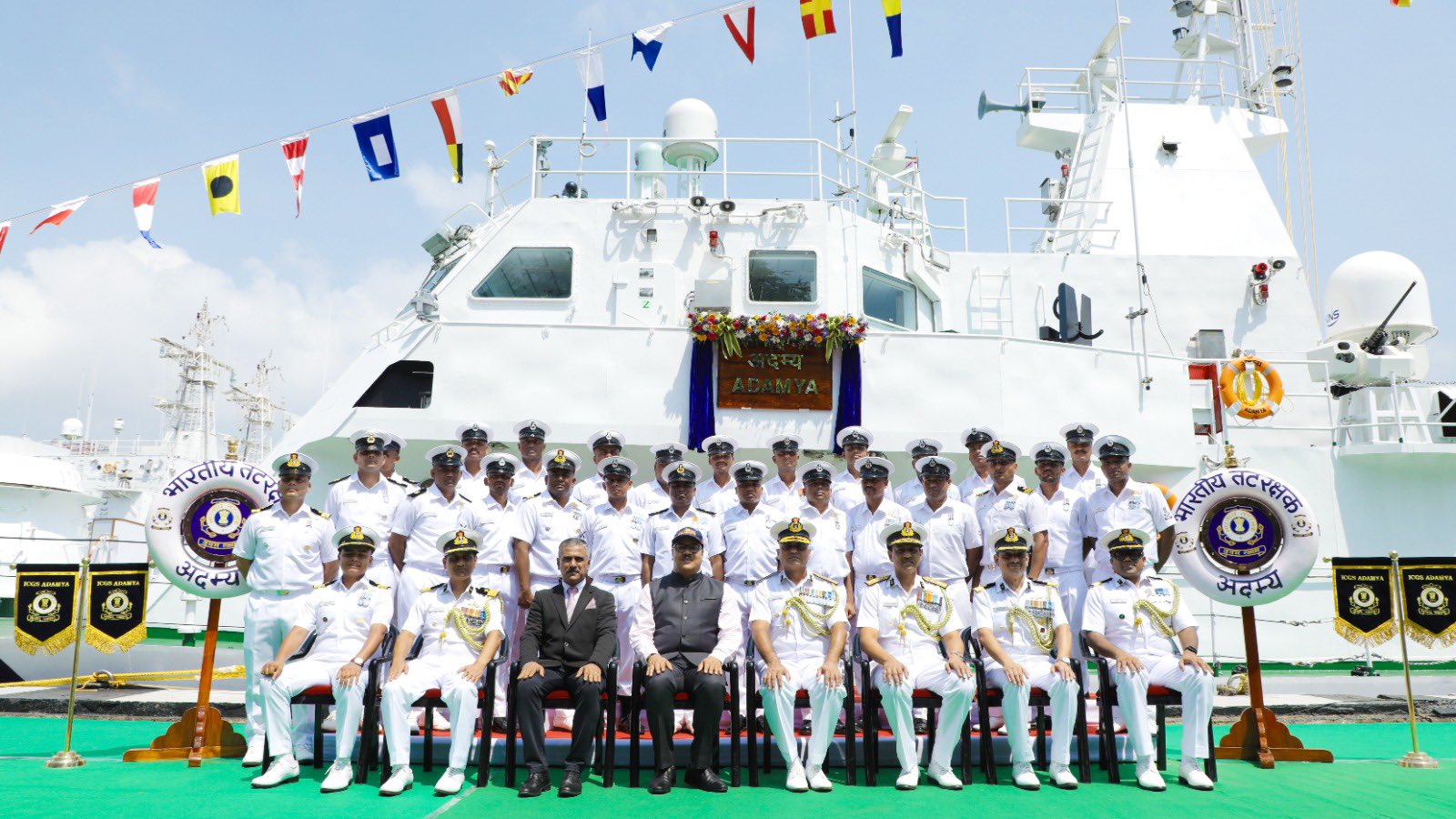
PARADIP : Indian Coast Guard Ship (ICGS) ‘Adamya’, the first ship of the eight in series Adamya-class Fast Patrol Vessels (FPVs) was commissioned at Paradip Port, Odisha on September 19, 2025. The 51 meters FPV has been designed and built indigenously by Goa Shipyard Limited and is a befitting example of ‘Aatmanirbhar Bharat’ with over 60% indigenous content leading to strengthening of India’s Maritime might.

Fast Patrol Vessel ICGS Adamya Commissioned into ICG at Paradip Port Fast Patrol vessel ICGS Adamya commissioned into ICG at Paradip Port

ICGS Adamya was commissioned by Joint Secretary (AF & Policy), Ministry of Defence Shri Satyajit Mohanty, in the presence of Chief of Staff, Headquarters Eastern Seaboard Inspector General Yoginder Dhaka and other senior dignitaries of the central & state government.

The ship will be based at Paradip, Odisha, under operational and administrative control of Commander, ICG Region (North East) through Commander, ICG District Headquarters No. 7 (Odisha). ‘Adamya’ meaning ‘indomitable’ is a projection of ICG’s will and commitment in ensuring safe, secure, and clean seas towards the maritime interest of the Nation. ICGS Adamya with five officers and 34 personnel will be deployed for surveillance of maritime zones and undertaking other duties as enshrined in the ICG charter to safeguard the maritime interests of India.

The vessel displaces approx. 320 tons and is propelled by two 3000 KW diesel engines to attain a maximum speed of 28 Knots along with an endurance of 1500 nm at economical speed. ICGS Adamya is the first ship fitted with indigenously developed two Controllable Pitch Propellers and gearboxes offering superior manoeuvrability, operational flexibility and enhanced performance at sea. Its weaponry includes a 30 mm CRN 91 gun and two 12.7 mm stabilized remote controlled machine guns, all supported by fire control systems. The vessel also features an Integrated Bridge System, Integrated Platform Management System, Automated Power Management System and augmenting operational efficiency & automation.
Royal visit marks official reopening of Lloyd’s Register’s historic London headquarters

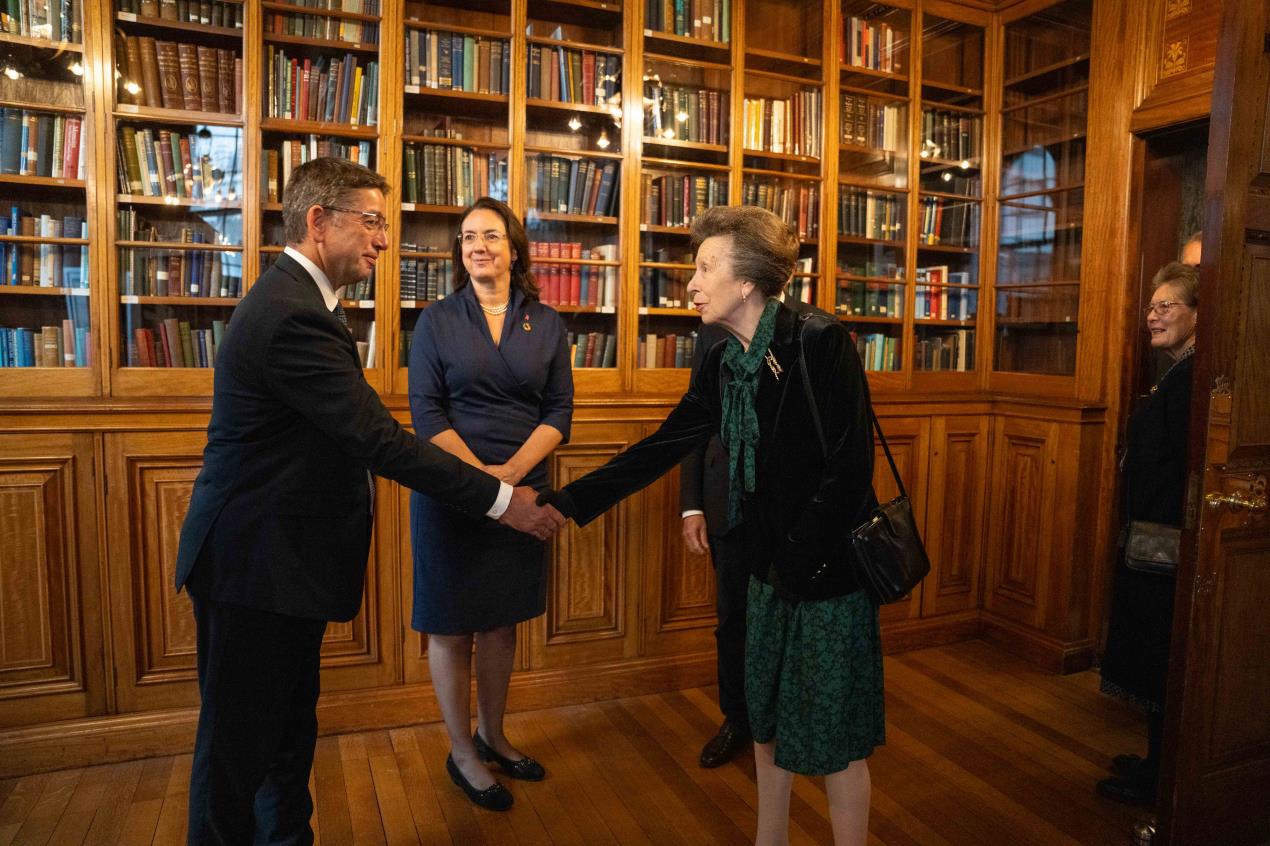
LONDON: Her Royal Highness The Princess Royal has officially reopened Lloyd’s Register’s Grade II* listed headquarters in central London following an extensive refurbishment.

The reopening of the building, now officially renamed the Lloyd’s Register Building, took place during London International Shipping Week, marking a significant milestone in the building’s history and its future as a modern hub for maritime innovation and collaboration.

Originally opened in 1901, the building has undergone a restoration to preserve its architectural heritage and will once again serve as the London headquarters for Lloyd’s Register Group and Lloyd’s Register Foundation, providing a modernised workspace for colleagues, clients, and partners.

During the visit, The Princess Royal had the opportunity to explore the broader themes of maritime heritage and innovation.

The Princess Royal also had a tour of the historic building and was introduced to SHE SEES – a powerful initiative that reimagines maritime history through the lens of women. The project highlights untold stories through striking portraits and collaborative storytelling, offering a fresh perspective on the sector’s past, present, and future.

Lloyd’s Register has a long association with the Royal Family. HRH The Prince of Wales, Albert Edward, visited in 1904 and HRH The Late Duke of Edinburgh, Prince Philip, was the first person to be elected Honorary Member of the General Committee of Lloyd’s Register of Shipping. A formal painting of him is displayed in the General Committee room.

Nick Brown, CEO of Lloyd’s Register, said: “We were honoured to welcome Her Royal Highness The Princess Royal to officially reopen our historic London headquarters. The reopening of our building is more than a return to a historic home; it is a statement of our commitment to shaping the future of maritime. This building will be a hub where heritage meets innovation, a place where our colleagues, clients and partners can collaborate to tackle the industry’s greatest challenges and opportunities.”

Ruth Boumphrey, Chief Executive of Lloyd’s Register Foundation, said: “Her Royal Highness The Princess Royal’s visit marks a wonderful moment in celebrating our building’s rich maritime heritage and long history, while highlighting the vital work the Foundation is doing to help the global community focus on tackling the world’s most pressing safety and risk challenges.”

To close the visit, The Princess Royal rang the bell and unveiled a plaque to mark the reopening. In addition, she was presented with a copy of the rigging and profile plan for the Royal Yacht Britannia, as produced by John Brown & Co, c1952, plus a copy of the SHE SEES book.

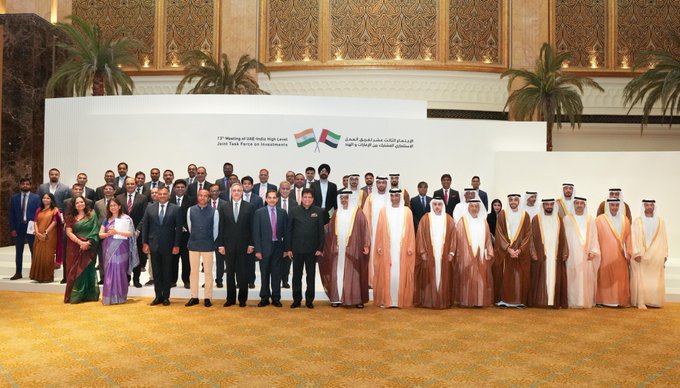
13th Meeting of the India-UAE High Level Joint Task Force on Investments

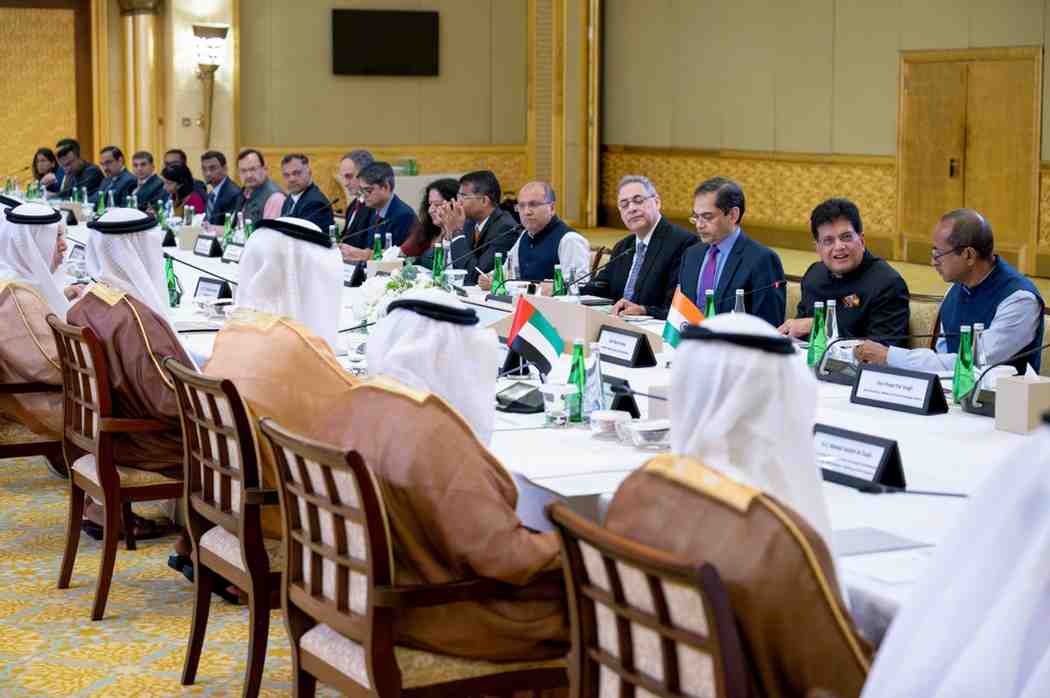
13thmeetingJTF 1 13th Meeting of the India-UAE High Level Joint Task Force on Investments

ABU DHABI : His Highness Sheikh Hamed bin Zayed Al Nahyan, Managing Director of the Abu Dhabi Investment Authority (“ADIA”), and Shri Piyush Goyal, Minister of Commerce & Industry, Government of India, Co-Chaired the latest meeting of the India-UAE High Level Joint Task Force on Investments (“Joint Task Force”) in Abu Dhabi on Thursday.

The meeting was attended by senior officials from relevant government authorities, investment entities and companies from both countries. The UAE delegation included H.E. Dr. Thani bin Ahmed Al Zeyoudi, UAE Minister of Foreign Trade, H.E. Ahmed Jassim Al Zaabi, Chairman of Abu Dhabi Department of Economic Development, Chairman of Abu Dhabi Chamber and Chairman of UAE Chambers, H.E. Dr. Abdulnasser Alshaali, UAE Ambassador to India, and H.E. Younis Haji Al Khouri, Under Secretary of UAE Ministry of Finance. The Indian delegation included Ambassador of India to the UAE, H.E. Sunjay Sudhir, and senior representatives from various Government of India departments/organizations such as Department for Promotion of Industry and Internal Trade (DPIIT), Ministry of External Affairs, Ministry of Food Processing Industry, Ministry of Ports, Shipping & Waterways, Ministry of Health & Family Welfare, Department of Commerce, Department of Economic Affairs, Department of Revenue, Reserve Bank of India, National Payments Corporation of India (NPCI), Department of Space, and Invest India.

The Joint Task Force was established in 2013 as a key forum for strengthening economic ties between India and the UAE. Since its formation, it has provided an effective mechanism to discuss and promote opportunities and prospects for further investments in India and the UAE, while acting as a forum to resolve issues and challenges faced by investors of the two countries, seeking to bring these matters to a mutually beneficial conclusion.

This latest meeting considered a range of trade and investment topics, including ongoing initiatives to enhance bilateral investment flows and new areas of joint cooperation.

The Co-Chairs recognised the positive momentum of bilateral trade which continues to build following the implementation of the India-UAE Comprehensive Economic Partnership Agreement (CEPA) in May 2022. In the first half of 2025, bilateral non-oil trade reached nearly US$38 billion, representing a 34% increase compared to the first half of 2024 and a significant step towards the UAE’s 2030 trade targets. By facilitating market access and private-sector collaboration, the India-UAE CEPA serves as a cornerstone of the UAE and India’s economic alliance and a model for constructive cooperation in a complex and rapidly evolving global trading landscape.

The Joint Task Force reviewed the positive progress of several joint investment projects, including the Bharat Mart, a 2.7 million square feet complex located in Jebal Ali Free Zone in the UAE. Designed to enable Indian manufacturers and exporters to showcase their products to the world, this landmark project reflects the economic synergies between the two nations.

The two sides considered the potential for various areas of future cooperation, including opportunities in the maritime and space sectors in India.

Ongoing strategic initiatives between the Central Banks of India and the UAE to enable bilateral trade in local currencies, the integration of payment systems in the two countries and cooperation on Central Bank Digital Currencies were also discussed, with both sides commending the strong progress made to date while reiterating their commitment to finalising their implementation in the near future.

The Joint Task Force reviewed a number of current issues and challenges faced by investors of the two countries, and the Co-Chairs directed their teams to work together, in collaboration with the relevant government entities, to resolve them in a timely and mutually acceptable manner.

At the conclusion of the meeting, His Highness Sheikh Hamed bin Zayed Al Nahyan, Managing Director of the Abu Dhabi Investment Authority (“ADIA”) and Co-Chair of the Joint Task Force, said:

“The trade and investment relationship between the UAE and India continues to grow at an impressive rate, anchored by the dual principles of shared goals and joint success. Today’s Joint Task Force meeting included positive progress updates on a number of important initiatives and also raised new areas for future cooperation. Through the ongoing commitment of the Joint Task Force delegations, this forum will continue to play a key role in broadening and deepening the economic partnership between the UAE and India.”

Shri Piyush Goyal, Minister of Commerce & Industry, Government of India, said: “India has been on a remarkable journey as the world’s fastest growing large economy and is committed to inclusive, sustainable, and resilient growth. UAE is an important partner in India’s growth story. The partnership stands on the pillars of innovation, investment and sustainable development and it will witness great transformation under the visionary leadership of both sides.”

India and UAE look to finalise bilateral trade in local currencies soon

ABU DHABI : India and the United Arab Emirates (UAE) are moving closer to finalising mechanisms for bilateral trade settlement in local currencies. The issue featured prominently at the 13th Meeting of the India-UAE High-Level Joint Task Force on Investments (JTF) in Abu Dhabi, co-chaired by Commerce and Industry Minister Shri Piyush Goyal and Sheikh Hamed bin Zayed Al Nahyan, Managing Director of the Abu Dhabi Investment Authority (ADIA).

Both sides reviewed ongoing strategic initiatives between their central banks covering local currency trade, payment system integration, and cooperation on Central Bank Digital Currencies. Commending the progress made so far, they reiterated their commitment to implement these measures in the near future.

The co-chairs also noted the positive momentum in bilateral trade, which has accelerated since the India-UAE Comprehensive Economic Partnership Agreement (CEPA) came into effect in May 2022.

In the first half of 2025, bilateral non-oil trade touched nearly $38 billion, up 34% year-on-year, marking significant progress towards the UAE’s 2030 trade targets. CEPA, the release said, continues to serve as a cornerstone of the economic alliance and a model for constructive cooperation.

The JTF also reviewed joint investment projects, including Bharat Mart — a 2.7 million sq. ft. complex in Jebel Ali Free Zone that will allow Indian exporters to showcase their products globally. Discussions further explored opportunities in emerging areas such as India’s maritime and space sectors.

Established in 2013, the JTF serves as a key forum to resolve investor concerns and advance investment opportunities between the two nations. The latest meeting addressed a wide range of issues to enhance trade and investment flows while identifying new avenues of collaboration.

“India has been on a remarkable journey as the world’s fastest-growing large economy and is committed to inclusive, sustainable, and resilient growth. UAE is an important partner in India’s growth story,” Goyal said after the meeting.

Sheikh Hamed bin Zayed Al Nahyan added: “The trade and investment relationship between the UAE and India continues to grow at an impressive rate, anchored by the dual principles of shared goals and joint success.”

The UAE delegation included its Minister of Foreign Trade, the Chairman of the Abu Dhabi Department of Economic Development, the Chairman of Abu Dhabi Chamber and UAE Chambers, and the UAE Ambassador to India.

The Indian side was represented by Ambassador Sunjay Sudhir and senior officials from ministries and agencies including DPIIT, the Ministries of External Affairs, Commerce, Food Processing, Ports and Shipping, and Health, along with the Department of Economic Affairs, Department of Revenue, the Reserve Bank of India, NPCI, the Department of Space, and Invest India.

Harnessing strengths, driving change: India’s sustainable, innovative, and independent trade trajectory- CII Global Trade Scenario Summit

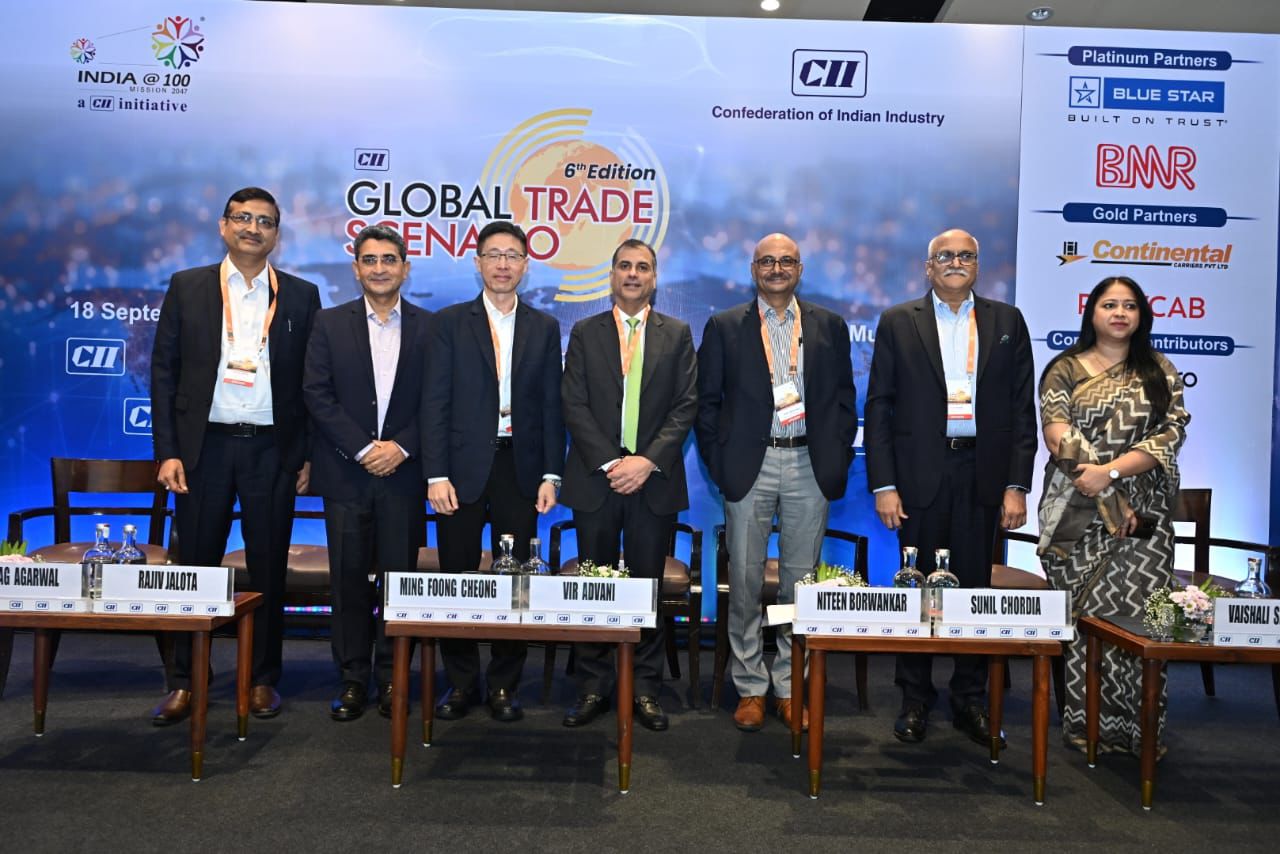
MUMBAI : The 6th Edition of the Global Trade Scenario convened here under the theme “Navigating Shifts, Defining the Future,” bringing together policymakers, diplomats, and industry leaders to chart India’s evolving role in global commerce.

The inaugural session featured Shri Rajiv Jalota (IAS), Advisor, Indian Ports Association; Shri Niteen Borwankar, CEO, SEZ, Jawaharlal Nehru Port Authority (JNPA); and Mr Ming Foong Cheong, Consul General of Singapore, alongside senior representatives from the United Kingdom, Australia, and India Inc.

Diplomatic Perspectives on Trade

Mr Ming Foong Cheong, Consul General of Singapore, underscored growing cooperation with India in digitalisation, sustainability, connectivity, advanced manufacturing, and biotechnology. Praising India’s autonomous foreign policy, he said: “In an increasingly interconnected world, India’s role in global trade is more important than ever. With its large internal market, green resources, and digital prowess, India is positioned to drive the future of trade and integration.”

Mr Mark Birrell, Trade Counsellor, British Deputy High Commission, highlighted progress on the India–UK FTA, calling it a breakthrough for small businesses and digital trade, with “an ambitious chapter on financial services.”

Ms Zoe Woodlee, Acting Deputy Consul General, Australian Consulate-General, said India’s ability to scale FTAs and collaborate on critical minerals is pivotal, while the Comprehensive Economic Cooperation Agreement (CECA) aims to strengthen supply chains. She noted a planned Centre of Excellence (CoE) to train youth.

Ports, Logistics and Maritime Growth

Shri Rajiv Jalota (IAS) pointed out that 80% of world trade by volume moves by sea and maritime trade is set to grow 2.4% annually until 2029. He stressed India’s focus on diversifying routes via the India-Middle East-Europe Economic Corridor (IMEC) and the International North-South Transport Corridor (INSTC).
He cautioned that global competitiveness now depends on green compliance, urging ports to transform into energy and data hubs with scalable green bunkering and shore power.

Shri Niteen Borwankar, CEO, JNPA, said:
“Reducing logistics costs hinges on strong collaboration, world-class infrastructure, and enabling policies. When industries and ports work seamlessly together, efficiency transforms from aspiration into natural competitiveness.”He identified infrastructure, logistics, and digitalisation as the three growth drivers.

Industry & Economic Voices

Mr Debopam Chaudhuri, Chief Economist, Piramal Enterprises, emphasized FTAs as a strategic tool for capital inflow and workforce absorption, calling for greater expansion of trade agreements.

Ms Ipsita Dasgupta, Sr VP & MD, HP India, Bangladesh & Sri Lanka, said:
“India’s trade future depends on how quickly we align today’s strengths with tomorrow’s opportunities, bringing together diverse voices to shape a resilient and inclusive path ahead.”

Mr Vir Advani, Chairman, Blue Star Ltd, urged industries to remain connected and collaborative in shaping a resilient global future.

Mr Anurag Agarwal highlighted innovation and sustainability as twin engines to “unlock opportunities that benefit businesses and the global economy.”

Mr Sunil Chordia, Chairman & MD, Rajratan Group, stressed the need for resilient supply chains and policies addressing climate change, resource scarcity, and technological disruption.

India’s exports likely to grow 6% this Year: Piyush Goyal

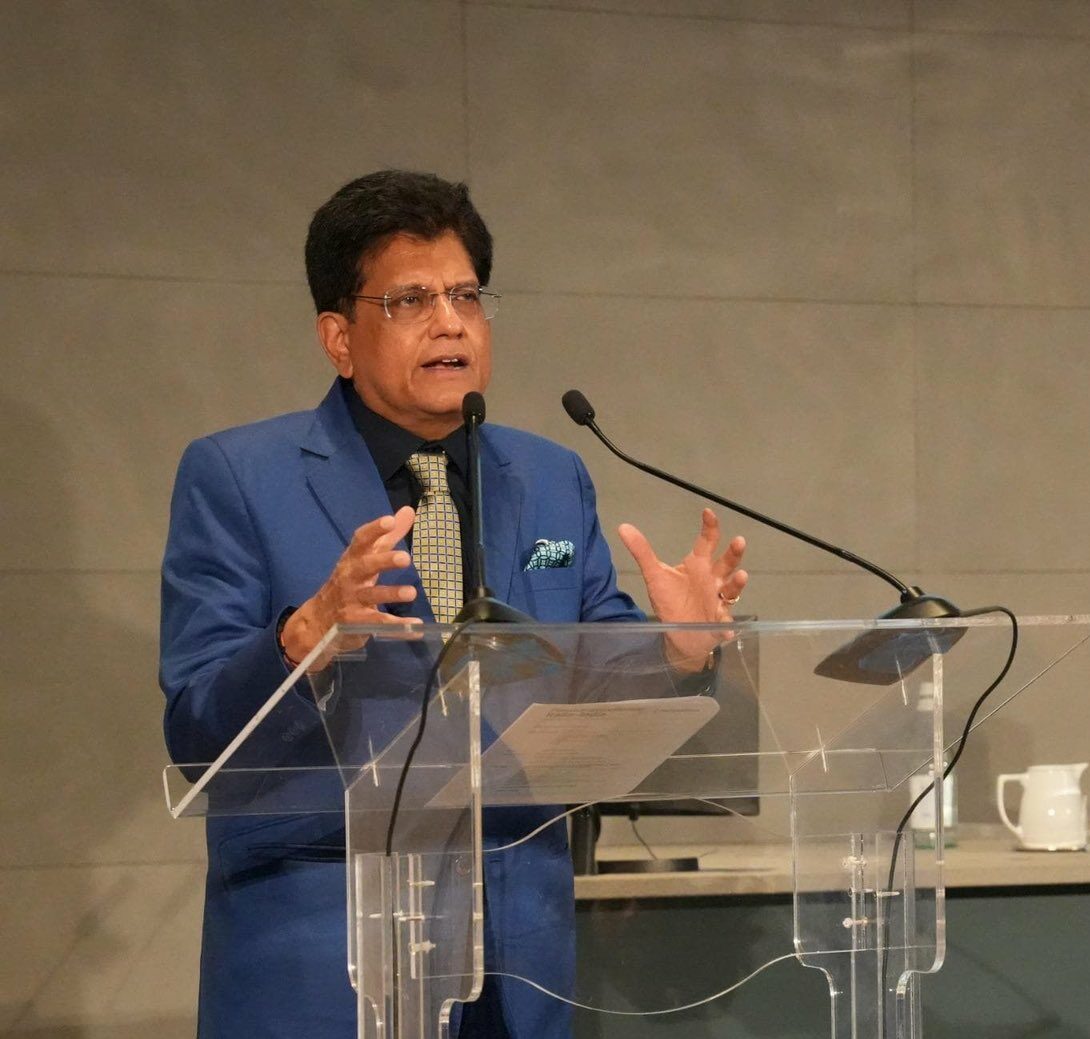
NEW DELHI : Union Commerce Minister Shri Piyush Goyal on Wednesday expressed confidence that India’s exports would grow by around 6 per cent this year compared to the corresponding period in 2024.

Underscoring the country’s strong performance in global trade despite challenges, the minister said discussions on free trade agreements (FTAs) were advancing with several countries.

“India’s exports would grow by around 6 per cent this year compared to the corresponding period last year. I believe we will end the year on a positive note,” Goyal told reporters here, adding that discussions on free trade agreements (FTAs) were advancing with several countries.

“India’s growing strength and the fact that we will be moving in the Amritkal from a USD 4 trillion economy to a USD 30 trillion-plus economy clearly show that India is the place to do business. The world would like to work closer with India,” he added.

The minister emphasised that India’s domestic momentum and external engagements were reinforcing each other.

“We have recently come out with the lowest unemployment data at 5.1 per cent,” he said. Addressing the issue of unemployment, the commerce minister said India is a land of opportunities.

“It may be very attractive to keep saying that there is unemployment. However, when I met Larsen and Toubro, they told me they were unable to complete projects on time because they do not get enough workers. In fact, L&T’s IT company is also looking for people,” the minister said.

He said India is the fastest-growing large economy, and the infrastructure thrust and consumer demand expected from GST 2.0 will give another boost to investment, job creation, and expansion of trade and industry.

Goyal said several countries were actively pursuing FTAs with India.

“With the European Union, we had good discussions in the last round. Their two commissioners of agriculture and trade visited Delhi, and the discussions made rapid progress. We may have another virtual or physical round soon. EU President Ursula von der Leyen and Prime Minister Narendra Modi guided us to complete the negotiations by year-end, and we are continuing to work towards that goal,” he said.

Citing the successful free trade pact with the UAE, the minister said it was the world’s fastest FTA.

“We negotiated, finalised, and signed it in 88 days. Ever since, our exports to the UAE have been growing rapidly. Over 25 lakh Indians live there. I am going for a high-level task force investment dialogue and will meet several investors. Textiles, marine, leather, and pharmaceuticals are particular areas where we are looking for trade expansion and diversification”, he added.

He noted that the UAE was a “gateway for the African region, the Gulf, and Eastern Europe” and a crucial trading partner for India.

“There is a lot of investment interest from the UAE into India. I am very confident that this partnership will only strengthen further,” Goyal added.

The minister added that similar discussions were underway with Peru, Chile, New Zealand, Oman and others.

“It is an ongoing process. Many countries want to start discussions on FTAs because India has immense potential,” he said

US penal tariff on Indian imports likely to be withdrawn after November 30 : CEA V Anantha Nageswaran

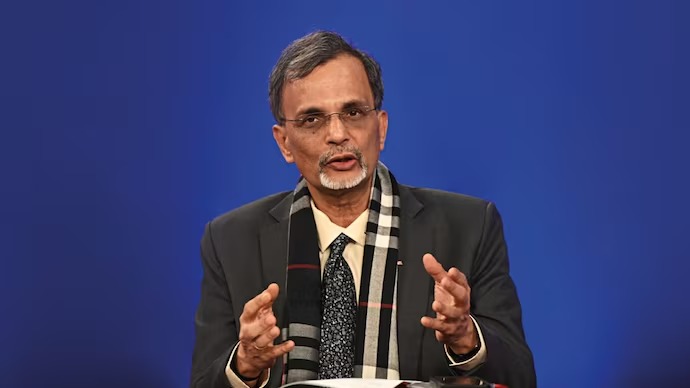
KOLKATA : Chief Economic Adviser (CEA) V Anantha Nageswaran on Thursday expressed confidence that the penal tariff imposed on certain imports may be withdrawn after November 30, raising hopes of a potential easing of trade restrictions amid ongoing discussions.

Speaking at an event organised by the Merchants’ Chamber of Commerce & Industry in Kolkata, Anantha Nageswaran said, “All of us are already at work, and I will take some time to talk about the tariff here. Yes, the original reciprocal tariff of 25 per cent plus the penal tariff of 25 per cent both were not anticipated. I still believe that geopolitical circumstances may have led to the second 25 per cent tariff, but considering recent developments in the last couple of weeks and so on, I do believe that and I have no particular reason to say so it is my intuition that I do believe the penal tariff will not be there after November 30.”

The CEA further added, “I do believe that there will be a resolution in the next couple of months on the penal tariff and hopefully on the reciprocal tariffs,” while pointing to the continued trade talks between India and the U.S.

Highlighting India’s growing trade strength, Nageswaran noted that the country’s exports have touched $850 billion annually and are on course to hit $1 trillion, representing 25 per cent of GDP — a sign of a healthy and open economy.

The United States had imposed the reciprocal tariffs under the International Emergency Economic Powers Act (IEEPA), invoked by US President Donald Trump. India was initially hit with 25 per cent duties, which were later raised to 50 per cent. These tariffs came into effect on Wednesday and apply to all Indian imports into the U.S. unless specifically exempt.

While most products face the higher duty, the U.S. tariff schedule excludes key categories such as iron and steel, aluminium, passenger vehicles (sedans, SUVs, minivans, vans, and trucks), auto parts, semi-finished copper products, and certain copper derivatives.

According to the Global Trade Research Initiative (GTRI), around 30.2 per cent of India’s exports to the U.S., valued at USD 27.6 billion, will continue to enter duty-free despite the higher tariff regime.

Quote on 3rd Anniversary of National Logistics Policy by Rizwan Soomar

MUMBAI: The Department for Promotion of Industry and Internal Trade (DPIIT), Ministry of Commerce and Industry, recently marked the third anniversary of the National Logistics Policy (NLP), launched by Prime Minister Shri Narendra Modi on 17th September 2022. Over these three years, the NLP has driven transformative reforms across the logistics ecosystem. Below is a comment from Rizwan Soomar, Chair, FICCI Committee on Logistics and CEO & MD India Subcontinent, Middle East and North Africa, DP World highlighting its impact on the logistics industry. 

“In just three years, the transformative power of the National Logistics Policy has reshaped India’s logistics sector — boosting efficiency, lowering costs, and driving seamless multimodal connectivity. By building a future-ready logistics ecosystem, the NLP has positioned the country as a trusted link in global supply chains. The tenets of the NLP have helped unlock new opportunities for innovation and collaboration, strengthening India’s position in global supply chains. We are proud to partner in realizing India’s vision of creating world-class logistics infrastructure that supports trade-led economic growth” Rizwan Soomar,  Chair, FICCI Committee on Logistics and CEO & MD (India Subcontinent, Middle East and North Africa), DP World

Gateway Distriparks launches Garhi–Mundra Rail Service

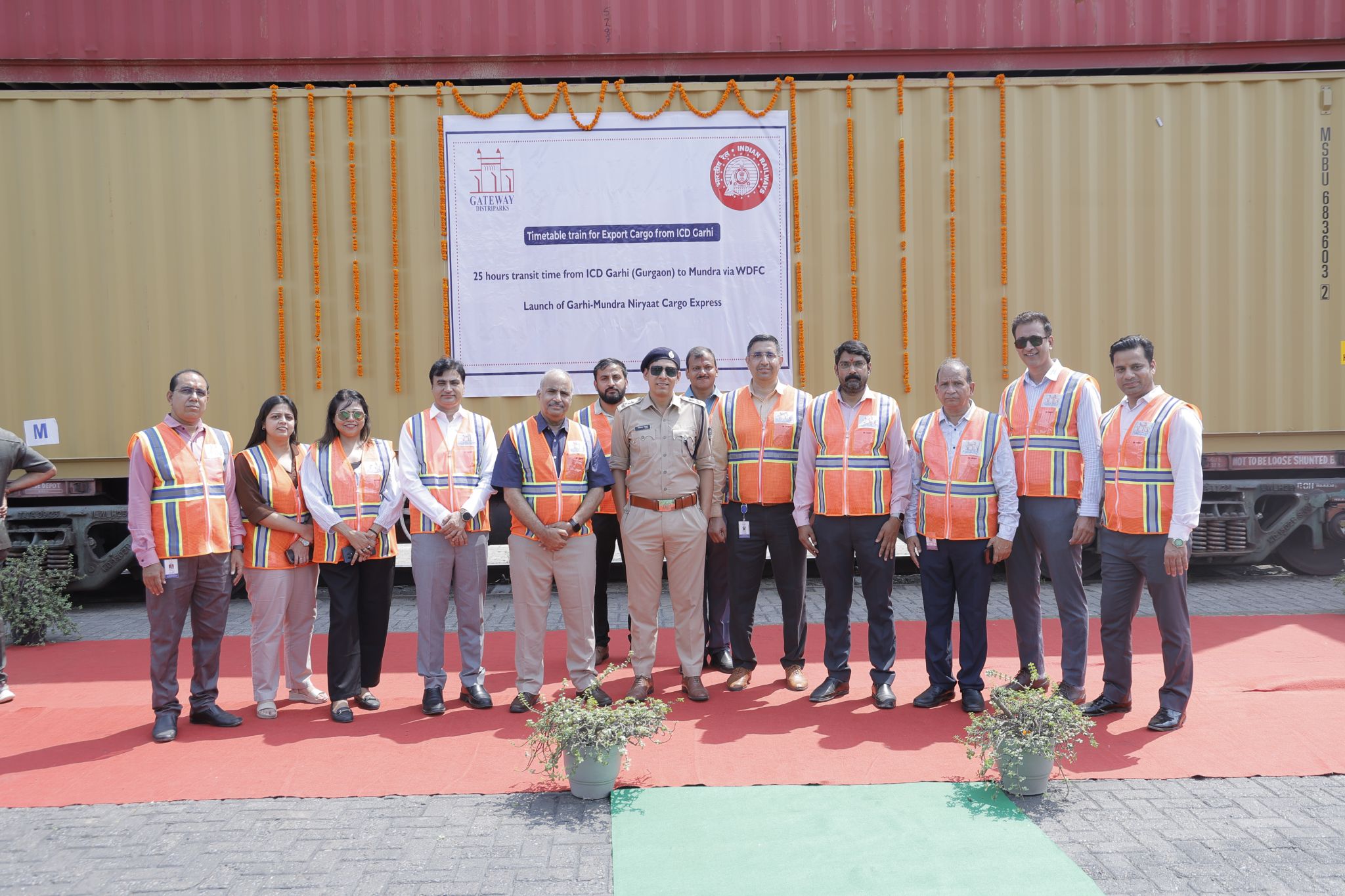
GURGAON: Gateway Distriparks Limited has announced the launch of a pioneering rail service by Indian Railways, the “Garhi–Mundra Niryaat Cargo Express,” providing a scheduled, time-tabled freight connection between ICD Garhi (Gurgaon) and Mundra Port with an impressive 25-hour transit time, informs a communique.

Touted as the first service of its kind, the new express train is designed to strengthen India’s export infrastructure and address the growing needs of exporters in the Delhi–NCR region. The initiative ensures:

  • Assured and reliable transit times for exporters
  • Faster turnaround for time-sensitive cargo
  • Seamless connectivity between the hinterland and Mundra Port

Gateway Distriparks hailed the service as a major step forward in enhancing logistics efficiency and reducing supply chain delays. “This initiative demonstrates our commitment to supporting the evolving requirements of our customers in Delhi-NCR,” the company said in a statement.

The company also extended a heartfelt appreciation to Indian Railways for enabling the project and facilitating trade through this strategic and time-bound service.

Industry observers believe the Garhi–Mundra Niryaat Cargo Express will not only cut down transit times but also set a benchmark for dependable, scheduled rail freight services across India’s export corridors.

Chabahar Port at risk? US revokes sanction exemption on Iran

WASHINGTON : The United States has revoked the sanctions exception related to the Chabahar Port and imposed fresh sanctions targeting Iran’s financial networks. The move comes as part of the US’s broader strategy to apply maximum pressure on Iran, particularly in regard to its support for terrorism and regional proxies.

The US State Department announced on Tuesday that it had designated an international illicit financial network, including several individuals and entities based in Hong Kong and the United Arab Emirates, which have been involved in facilitating the sale of Iranian oil.

These transactions have funded Iran’s Islamic Revolutionary Guard Corps Qods Force (IRGC-QF) and its Ministry of Defense and Armed Forces Logistics (MODAFL), entities known for supporting regional terrorist groups and advancing weapon systems that threaten US forces and allies.

“The United States remains committed to disrupting illicit funding streams financing Iran’s malign activities. As long as Iran devotes its illicit revenues to funding attacks on the United States and our allies, supporting terrorism around the world, and pursuing other destabilizing actions, we will continue to use all the tools at our disposal to hold the regime accountable,” the statement from the US State Department stated.

Furthermore, the US has revoked the 2018 sanctions exception granted under the Iran Freedom and Counter-Proliferation Act (IFCA) for Afghanistan reconstruction assistance and economic development, effective September 29, 2025.

“Once the revocation is effective, persons who operate the Chabahar Port or engage in other activities described in IFCA may expose themselves to sanctions under IFCA,” the State Department said.

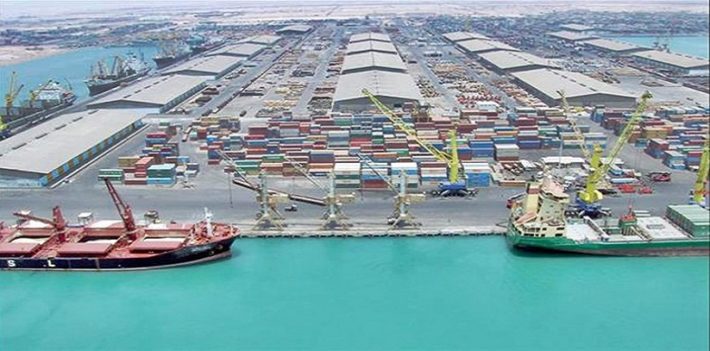
The Chabahar Port, located in southeastern Iran, has been a key focal point in India-Iran relations. India has been developing the port as a strategic gateway for trade with Afghanistan and Central Asia, with a view to bypassing Pakistan’s transport network.

The Chabahar Port development has been viewed as a critical infrastructure for Afghanistan’s economic development and India’s influence in the region.

Source : BT