Home Blog Page 655

Quote on 3rd year of National Logistics Policy by Ketan Kulkarni, MD & CEO, Allcargo Gati Limited and GESCPL

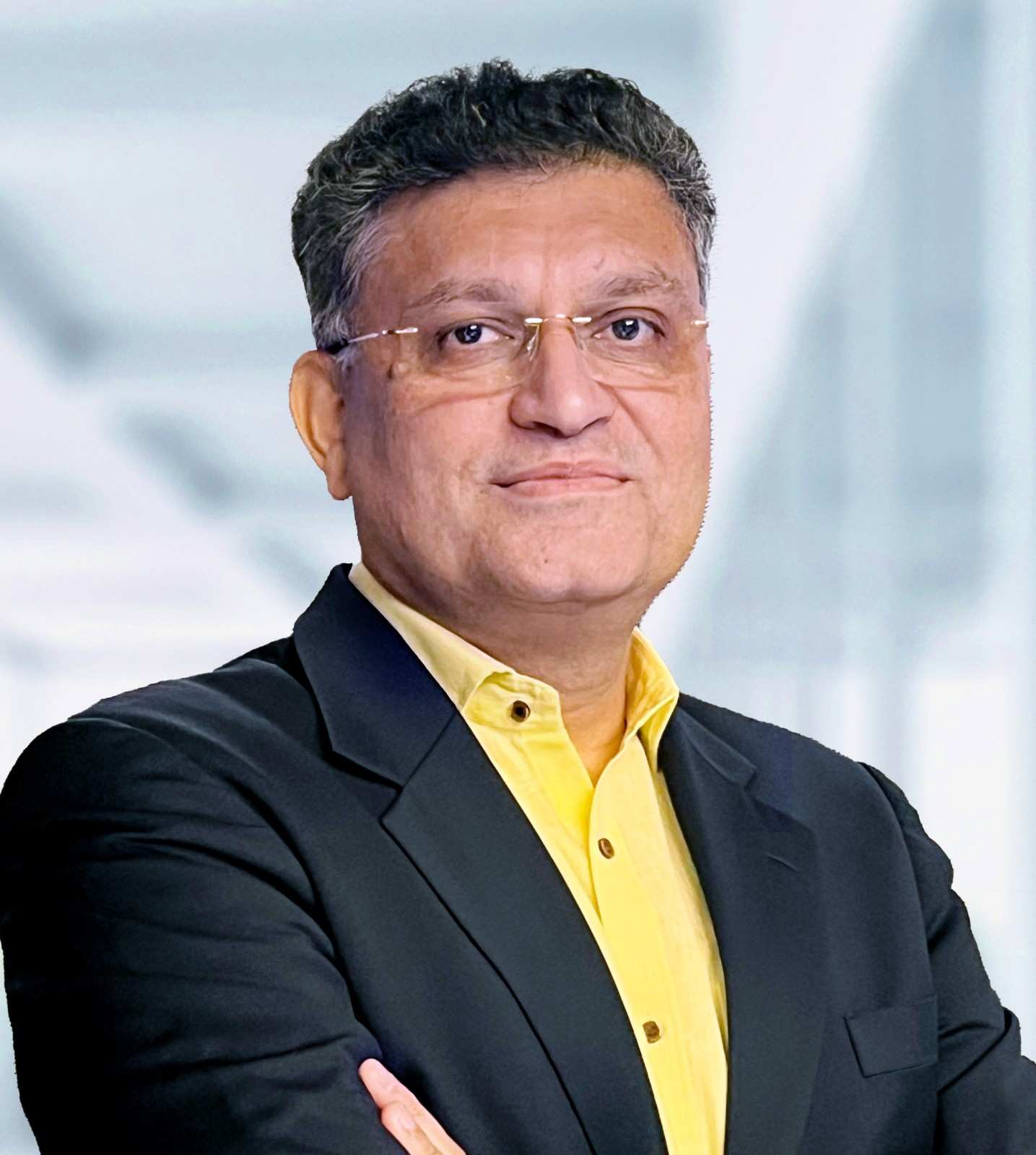
MUMBAI: 17th September 2025 marks the third year since the National Logistics Policy was introduced. Below is the Quote on 3rd year of National Logistics Policy by Mr. Ketan Kulkarni, Managing Director & Chief Executive Officer – Allcargo Gati Limited and GESCPL

“In just three years, the National Logistics Policy (NLP) has emerged as a powerful catalyst for transformation, reshaping India’s logistics sector into one that is more cost-efficient, transparent, and globally competitive. With logistics costs expected to approach single digits projected at around 9% of GDP by the end of 2025 and the facilitation of seamless multimodal transport, the policy is fostering a supply chain ecosystem that is faster, greener, and better connected.

Crucially, the NLP has laid the groundwork for digital transformation in logistics, creating an enabling environment that allows platforms like the Open Network for Digital Commerce (ONDC) to integrate with logistics service providers and bring innovative technology solutions to smaller businesses. Coupled with the recent GST rate reduction and initiatives such as ‘Atmanirbhar Bharat’, these reforms are driving enhanced regional connectivity, expanding trade opportunities, and stimulating economic activity nationwide.

With strengthened infrastructure, streamlined processes, and robust policy support, we are positioned to deliver greater efficiency, speed, and reliability. At Allcargo Group, our unwavering commitment to sustainability is complemented by a strong emphasis on digital adoption. Our active participation in ONDC has further accelerated this journey, allowing us to broaden access, empower SMEs, and align closely with the NLP’s vision of a more inclusive, technology-driven logistics ecosystem.

By meeting evolving logistics demands, we are also building long-term resilience for the future. The NLP has firmly set India on the path to becoming a global logistics hub, and we are proud to be active contributors to this transformative journey.”

Seven of 12 major state-run ports use indigenous vessel tracking software: Official

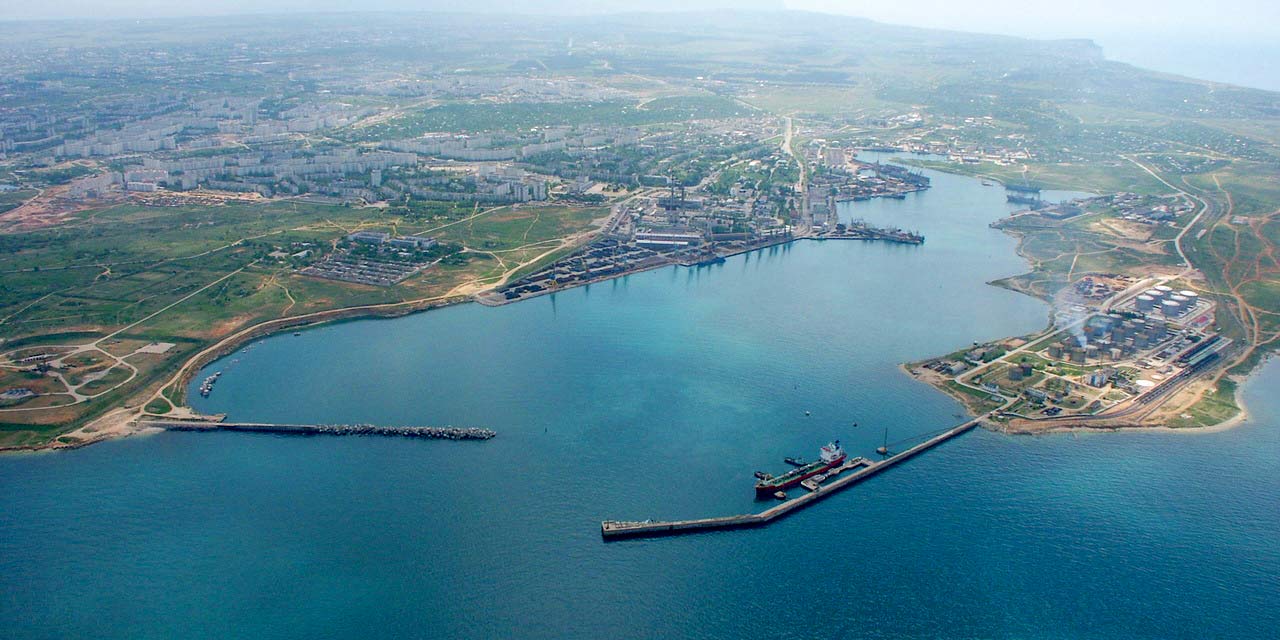
PANAJI : Seven out of 12 major state-run ports in the country have shifted to an indigenously developed vessel tracking and management system, a top official has said.

“We are liberating the major ports of foreign software. All the major ports in India have been using vessel traffic management software from foreign countries, mostly European. But today we have an indigenously-developed software developed by NTCPWC (National Technology Centre for Ports Waterways and Coasts), that is the technology arm of the Ministry of Ports along with IIT Madras. They have already developed an indigenous software. This committee is proud to say that seven out of 12 major ports are working on this indigenous software,” Goa’s Mormugao Port Chairman N Vinodkumar, who heads ministry’s NAVIC cell on ‘communications’, said at an event on September 12.

Vinodkumar said the mandate of this committee was to bring the latest advanced technologies into major ports and transform the major ports into smart ports.

“Private ports are also using this indigenous software. The Vizhinjam port, which is a private port, is using this indigenous software and we are sure that more private ports in India will be migrating to this software,” he added at the event.

Source : Hindustan Times

DP World Mundra boosts Capacity and Sustainability with New Quay Crane and Electric RTG Cranes

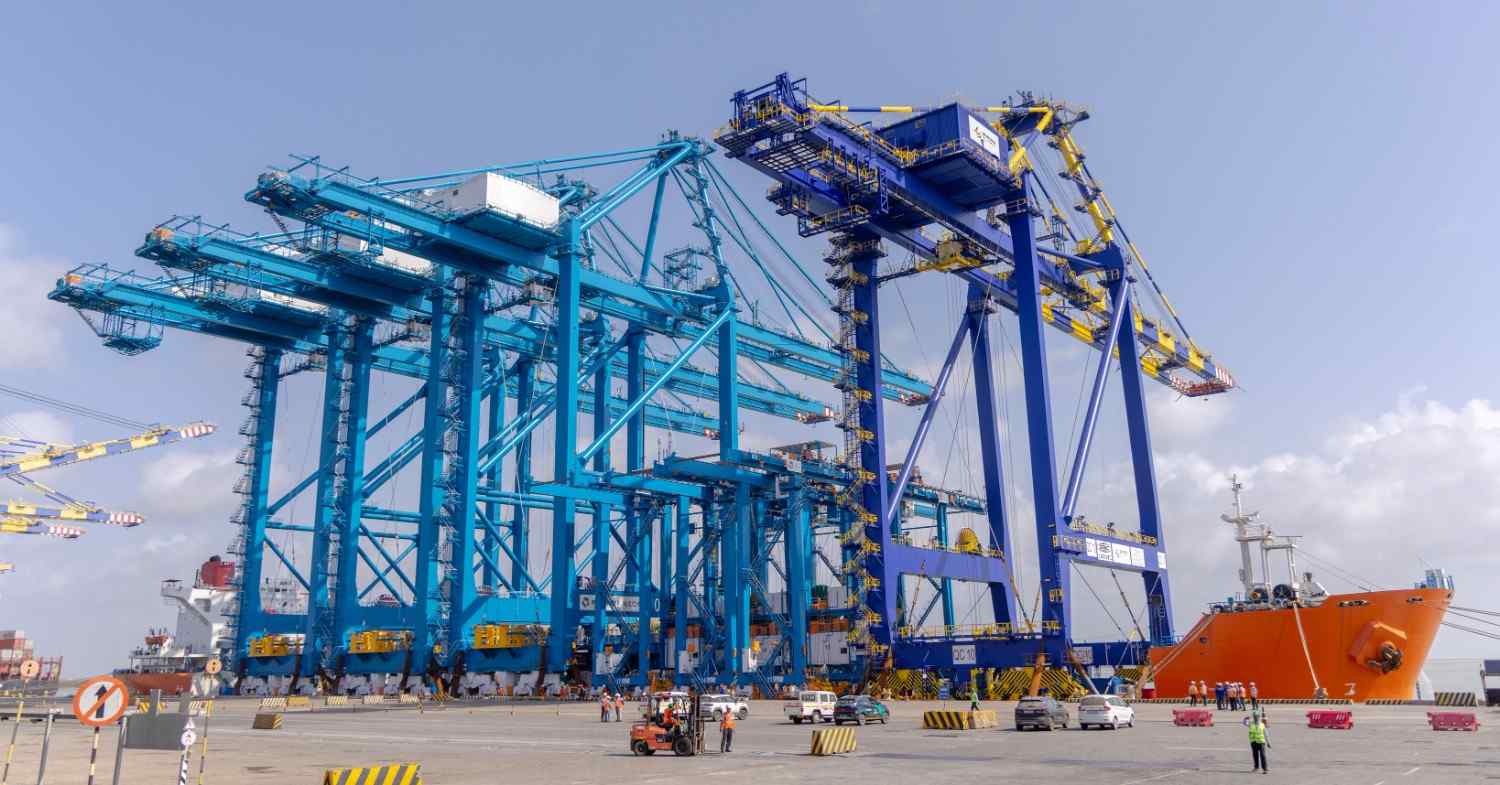
MUNDRA: DP World has expanded the capabilities at Mundra International Container Terminal (MICT) in Gujarat with the arrival of a new state-of-the-art Quay Crane and three new electric Rubber-Tyre Gantry Cranes (e-RTGCs).  Together, the investments enhance Mundra’s ability to handle the next generation of container vessels while advancing the termina’s sustainability journey.

The new Quay Crane can handle vessels 22 rows across, enabling Mundra to serve the some of the world’s largest container ships with greater efficiency and reliability.  With advanced features including predictive maintenance planning, wider CCTV coverage to enhance operators’ situational awareness and energy-efficient drive systems,the crane will improve safety, precision and productivity. 

With this addition, DP World Mundra now operates eight quay cranes, boosting its capability to deliver faster vessel turnarounds and enhancing service consistency as handling capacity rises to 1.56 million TEUs by 2027.

At the same time, the three new electric RTGCs expand the terminal’s fleet to 31 units, cutting emissions by 18.9% (Scope 1 & 2) and reducing noise levels. The investment aligns with India’s Harit Sagar (green port) guidelines, which call for 50% electrification of port equipment by 2030 and 90% by 2047 at major ports.

Ravinder Johal, Chief Operating Officer – Ports & Terminals, Operations & Commercial, Middle East, North Africa & India Subcontinent, DP World, said: “The arrival of our new quay crane and electric RTGCs at DP World Mundra marks a pivotal step in our growth and sustainability journey. These upgrades enable us to serve larger vessels with greater efficiency while advancing our decarbonization efforts in line with India’s Harit Sagar vision. By combining world-class technology with sustainable practices, we are reinforcing Gujarat’s role as a vital trade gateway and supporting India’s ambition to be a global leader in sustainable trade.”

DP World is accelerating electrification across its operations in Mundra with electric light motor vehicles (E-LMVs), forklifts, and upcoming electric internal transfer vehicles (e-ITVs). The terminal has also achieved Zero Waste to Landfill’ certification by the National Productivity Council (NPC) of India. Also, DP World Mundra is sourcing renewable power through International Renewable Energy Certificates (IRECs).  

These initiatives contribute to DP World’s global commitment to reducing Scope 1 emissions by 42% and Scope 3 emissions by 28% by 2030 (from a 2022 baseline) and net zero carbon emissions across its value chain by 2050.

With direct links to the Far East, Southeast Asia, Middle East, East and West Africa, US East Coast and the Mediterranean, DP World Mundra continues to play a key role in supporting Gujarat’s ambition of becoming a global trade powerhouse in the subcontinent.

India and US had positive meeting on next steps in bilateral trade negotiations

NEW DELHI : A team of officials from the office of United States Trade Representative led by Chief Negotiator, India US Bilateral Trade Agreement negotiations Mr.Brendan Lynch visited India on September 16, 2025. They held discussions with officials from Department of Commerce, led by Special Secretary, Department of Commerce on India-US trade ties including on the India-US Bilateral Trade Agreement.

Assistant US Trade Representative Brendan Lynch had a positive meeting with his counterpart, Ministry of Commerce and Industry Special Secretary Rajesh Agrawal, on Tuesday to discuss next steps in bilateral trade negotiations, with the two sides deciding to intensify efforts to achieve early conclusion of a mutually beneficial Trade Agreement.

Acknowledging the enduring importance of bilateral trade between India and the U.S., the discussions were positive and forward looking covering various aspects of the trade deal. It was decided to intensify efforts to achieve early conclusion of a mutually beneficial Trade Agreement.

Ministry of Commerce and Industry said in a statement that a team of officials from the office of the United States Trade Representative, led by Chief Negotiator, India-US Bilateral Trade Agreement negotiations, Brendan Lynch visited India on September 16, 2025.

“They held discussions with officials from the Department of Commerce, led by the Special Secretary, Department of Commerce on India-US trade ties, including on the India-US Bilateral Trade Agreement,” it said.

“Acknowledging the enduring importance of bilateral trade between India and the U.S., the discussions were positive and forward-looking, covering various aspects of the trade deal. It was decided to intensify efforts to achieve early conclusion of a mutually beneficial Trade Agreement,” the statement added.

A US Embassy Spokesperson said Brendan Lynch had a positive meeting in Delhi with Ministry of Commerce and Industry Special Secretary Rajesh Agrawal today to discuss next steps in bilateral trade negotiations.

Sources said the Chief Negotiators of both the countries decided to continue the trade talks in a virtual mode.

India and the United States have earlier held five rounds of negotiations for a trade deal. The proposed last round of talks with US in August was postponed.

Over the past few months, India and the US have been negotiating for an interim trade deal.US President Donald Trump announced 25 per cent tariffs on Indian goods in July, even as there were hopes of an interim India-US trade deal that would have otherwise helped avoid elevated tariffs. A few days later, he imposed another 25 per cent tariff, taking the total to 50 per cent, citing India’s continued imports of Russian oil. The 50 per cent tariffs came into effect on August 27.

India has reservations over the US demand for opening up the agricultural and dairy sectors. Agriculture and dairy are critical and sensitive sectors for India as they provide livelihood to a large section of people.India and the US initiated talks for a just, balanced, and mutually beneficial Bilateral Trade Agreement (BTA) in March this year, aiming to complete the first stage of the Agreement by October-November 2025.

Source : ANI

India pushes for tariff cuts on textiles, leather, and gems in EU trade talks

NEW DELHI : India is pushing for tariff reductions on labour-intensive exports such as textiles, leather and gems and jewellery as part of the talks for a free trade agreement with the European Union (EU), a government official said.

The EU imposes an average tariff of 15-25 percent on Indian gems and jewellery exports, while leather products can attract a duty of high as 17 percent and for textiles it is at 10-12 percent.

“India is interested in labour-intensive products like textiles, leather, gems and jewellery, we are pushing for it (tariff cuts). That is why talks take time because we have to converge to get the best deal mutually,” this official said.

On the other hand, the 27-nation bloc is keen to secure reductions in tariff rates on automobiles and wines. “EU has 27 countries and each and every country has a different concern, like auto is a major concern for some of their large countries, while wine is also a concern for other large countries in the bloc,” the official said.

India currently levies a 150 percent tariff on wines from the European bloc, while the import duty on completely built-up (CBU) passenger vehicles is 110 percent for cars costing over $40,000, and 70 percent for cars costing up to $40,000.

In 2023-2024, the EU exported $416 million worth of wines to India. Its automobile and auto parts exports exceeded $2 billion, including $416 million in fully built-up (CBU) vehicles.

Most EU car exports to India come in completely knocked-down (CKD) form, attracting a 15 percent tariff for local assembly and sale. Such exports to India, including auto components, totalled over $1.4 billion.

India and EU held the 13th round of talks for the proposed trade deal from 8-12 September in which significant convergences were achieved in many areas, the commerce ministry said on September 15.

The next round of talks will be held in Brussels from October 6-10 as both sides aim to conclude negotiations at the earliest.

In February 2025, India and the EU decided to ramp up talks for the proposed free trade agreement, targeting to close it by the end of 2025 to tide over ongoing disruptions from volatile trade policies.

The EU is India’s largest trading partner, accounting for 12.2 percent of Indian trade, ahead of the US (10.8 percent) and China (10.5 percent). The 27-nation bloc is the second-largest destination for Indian exports after the United States.

Andhra Pradesh fast-tracks Machilipatnam Port construction, operations likely to begin by October 2026

VISAKHAPATNAM : Andhra Pradesh Special Chief Secretary for Roads, Transport and Buildings, MT Krishnababu, has reportedly asserted that the long-awaited Machilipatnam Port will become operational by October 2026, with construction works now being accelerated, reported according to a release.

During a site inspection on Saturday (13 September), Krishnababu, accompanied by senior officials, reviewed progress on key components of the project, including the north and south breakwaters, dredging, berths, approach roads, administrative buildings, and warehouse facilities.

He underlined the determination of Chief Minister Shri Nara Chandrababu Naidu to fast-track the project, which is being developed at a cost of Rs 5,500 crore.

“The port will cater to the needs of Andhra Pradesh and serve the neighbouring Telangana. As part of the plan, a total of 16 berths are being constructed, with four berths planned to be completed in the first phase to start operations, while construction of the remaining berths will continue. Currently, about 50 per cent of the work has been completed,” he was quoted as saying by TNIE.

To strengthen connectivity, Krishnababu noted that detailed project reports (DPRs) have already been prepared for developing national highways and rail transport routes connecting the port, including the Hyderabad route.

These transport corridors are expected to enhance the port’s efficiency once operational.

In addition to the port inspection, the Special Chief Secretary also visited the Gilakaladindi fishing harbour, where he instructed officials to accelerate construction works to benefit local fishing communities.

India eyeing Bangladesh’s top spot with perks for recycling dying ships

NEW DELHI : India is planning ₹4,000 crore ($454 million) in incentives to bolster its shipbreaking industry, people familiar with the matter said, as it seeks to claw back market share from sector leader Bangladesh and neighboring Pakistan.

The government will spread these monetary benefits over ten years starting 2026 and the cabinet of federal ministers is likely to approve the proposal by the end of September, said the people, who did not want to be identified as the information is not public.

Incentives will include a credit note worth about 40% of the ship’s scrap value for owners bringing their obsolete vessels to India. The promissory note, valid for three years, can be used to purchase ships built in the country, the people said. India will also allow the ship owners to combine multiple credit notes in a single transaction or sell them, they said.

The financial stimulus is aimed at reinforcing India’s standing in the global ship recycling market. The country accounted for a third of ships dismantled throughout the world in 2023, next only to the 46% share of Bangladesh, data compiled by the India government showed.

India’s shipping ministry and the government’s Press Information Bureau did not immediately respond to emails seeking comments on these proposed incentives.

Asia’s third largest economy is home to the world’s biggest graveyard for ships at Alang on its western coast, which gets 98% of the business coming to India’s shores. However, neighboring south Asian nations Bangladesh and Pakistan have been eating into India’s share of the business of dismantling ships that relies on abundant and cheap labour.

Still, business is on an upswing in recent months after years of recession caused by a decline in scrapping of oil tankers following Russia’s invasion of Ukraine. Geopolitical upheavals in the recent past forced rerouting of all types of vessels and pushed up the freight rates. That also encouraged shipowners to extend the lifespan of their end-of-life ships for as long as they could.

Additionally, India is considering a shipbreaking facility on its east coast to wean away business from Bangladesh, the people said.

Prime Minister Shri Narendra Modi’s government is also set to approve this month a ₹2500 crore maritime development fund to encourage shipbuilding in India as it seeks to reduce dependence on foreign-built vessels, the people said. The fund was announced in February as part of the federal budget for the year ending March 2026.

Source : Bloomberg

DG Shipping bars seafarers from sailing over CoC authenticity; livelihood at risk

MADURAI : Seafarers in the southern region of Tamil Nadu are struggling to make ends meet as new regulations imposed by the Director General of Shipping rendered several thousands of them jobless.

V Anandan Morais, President of the Seafarers Association and Chief Engineer, said a circular issued by the DG Shipping in July restricting the employment of seafarers holding Certificates of Competency (CoC) from countries that don’t have Mutual Recognition Agreements (MRAs) with India, came as a shock to the seafaring community.

Only eleven countries, including Malaysia, the UAE, South Korea, Sweden, the UK, Iran, Singapore, Australia, New Zealand, Canada, and Ireland, are covered under the circular as per MRAs.

Further, citing complaints about the authenticity of CoCs from some maritime authorities in the circular, several qualified seafarers, who possess legitimately acquired certifications, have been restricted.

An aggrieved seafarer, E Thennavan, who’s employed as ‘Third Engineer’, told on Sunday that he had been jobless for three months now and there’s no other source of income to cover his daily expenses. The seafarer of Punnaikayal, a coastal hamlet in Thoothukudi, expressed concern over managing his kids’ education expenses and loan payments.

Livio Fernandez, another seafarer (Chief Engineer), said it’s unfortunate that the employees were directed not to report to duty on very short notice, citing the authenticity of certificates. He wondered how certificates approved by the Indian Maritime Authority can be declared invalid.

Earlier, the Association approached the High Court of Bombay in view of the circular, which barred every seafarer holding CoCs from Honduras, Panama, and other countries from sailing.

They filed a petition before the High Court last month seeking to quash and set aside the circular issued by the DG Shipping, dated 18th July 2025, and sought a direction to the DG Shipping to restore the recognition of all foreign-issued CoCs and Certificate of Proficiency lawfully obtained by Indian seafarers before the operative date.

Morais said the representatives of the Association met Kanimozhi Karunanidhi, Thoothukudi MP, and sought her intervention for an immediate solution, citing that the future of around 20,000 Indian seafarers, including 2,000 in south Tamil Nadu, remains uncertain.

CII Shipbuilding Vision 2037 Report launched at Sustainable Shipbuilding Summit 2025

GOA: India’s shipbuilding ambitions received a major push as the CII Shipbuilding Vision 2037 Executive Summary Report was launched at the CII Conference on Sustainable Shipbuilding 2025 held in Goa. The report charts a roadmap to position Goa as a green, smart, and export-driven shipbuilding hub, with India targeting a leap from the 20th to the 10th position globally by 2037.

According to the study, India’s shipbuilding industry is projected to grow from INR 2,865 crore in FY24 to INR 64,058 crore by FY37, registering a remarkable 27% CAGR. Anchored by Goa’s legacy shipyards and an ecosystem of SMEs, the state is set to drive India’s rise as a global hub for specialized, sustainable vessels.

image 10 2 edited CII Shipbuilding Vision 2037 Report launched at Sustainable Shipbuilding Summit 2025

Shri Shantanu Thakur, Hon’ble Minister of State for Ports, Shipping & Waterways, Government of India, outlined India’s roadmap towards maritime leadership.

India has seen a 320% growth in inland waterway cargo since 2014, accelerated port modernization, and the creation of a Maritime Development Fund to finance green technologies and shipyard expansion. With a forthcoming National Shipbuilding Policy, India is aiming for a 5% global shipbuilding market share by 2030. Innovation, digitalization, and talent development will anchor our journey to become a global leader in sustainable shipbuilding aligned with the Maritime Amrit Kaal Vision 2047.

CII Shipbuilding Conference Goa Minister Subhash CII Shipbuilding Vision 2037 Report launched at Sustainable Shipbuilding Summit 2025

Shri Subhash Phal Dessai Hon’ble Minister of Social Welfare, River Navigation, Archives and Archaeology, Government of Goa, stressed the need to shift from “volume to value” in shipbuilding.

We must now move from volume to value—creating smart ships with IoT and AI navigation, and meeting the growing global demand for high-value vessels. Self-reliance in shipbuilding means developing indigenous technologies, vessels, and talent pools to serve global markets.

Industry leaders reinforced the sector’s momentum.

CII Shipbuilding Conference Goa Arjun Chowgule CII Shipbuilding Vision 2037 Report launched at Sustainable Shipbuilding Summit 2025

“India’s shipbuilding industry has grown from \$90 million in 2022 to \$1.12 billion in 2025 — a clear signal that we are ready to claim our place in the global maritime value chain. With the right focus on innovation, sustainability, and skill development, India can emerge as a shipbuilding nation of global significance.”* ~ Arjun Chowgule, Chairman, CII Goa State Council

CII Shipbuilding Conference Goa 2 CII Shipbuilding Vision 2037 Report launched at Sustainable Shipbuilding Summit 2025

“The world is seeking reliable and sustainable shipbuilding partners beyond the traditional players, and this is India’s opportunity. With Goa’s strong tradition, skilled workforce, and innovation potential, we can position India as a global hub for sustainable shipbuilding.”~ Swati Salgaocar, Past Chairperson, CII Western Region

With government support, industry commitment, and global collaborations, the summit reinforced that Goa will anchor India’s shipbuilding ambitions, driving the nation towards its Maritime Amrit Kaal Vision 2047.

Israel issues evacuation warning for Hodeidah, says will attack Yemen Port city in next few hours

YEMEN : The Israeli military has issued an evacuation order for the Hodeidah Port in Yemen on Tuesday, while warning that it will be attacking the area in upcoming hours, Reuters reported.

Israel Defense Forces (IDF) spokesperson Col. Avichay Adraee urged residents in the port city to evacuate ahead of the attack. “Urgent Warning to Everyone Present at the Port of Hodeidah in Yemen…The Defense Army will attack in the coming hours in the area specified on the map in light of the military activities carried out by the terrorist Houthi regime there,” Adraee said in a post on X.

“For your safety, we urge all those present at the Port of Hodeidah and the ships anchored there to evacuate the area immediately,” the IDF spokesman said, adding that anyone who chose to stay back in the area would “put their life in danger”.

This comes days after Israel carried out heavy airstrikes in Yemen, killing dozens, in response to the Houthi rebels’ drone attack which struck an Israeli airport.

The Israeli strikes in Yemen on September 10 killed at least 46 people, wounding more than 160 others, with most of the casualties being in the country’s Capital Sanaa, according to the Houthi-run health ministry.

In Sanaa, a military headquarters and a fuel station were among the sites hit, the health ministry stated. Al-Masirah, a Houthi-controlled satellite news channel, had also reported that neighbouring houses near the military building were also damaged.

This would be the latest in a series of airstrikes carried out by Israel, with the one on August 30 leading to the deaths of the Houthi prime minister and other top officials. This was a major escalation in the nearly 2-year-old conflict between Israel and the Iran-backed militant group, and the first such which targeted senior officials in Yemen.

Source : Reuters