Home Blog Page 66

Thordon Bearings adds production plant to meet growing demand

BURLINGTON: Thordon Bearings has opened a new manufacturing facility as part of its strategic response to robust growth across all business segments and rising demand for its sustainable bearings and seals.

The third plant provides ample additional space for Thordon to manufacture complementary non-bearing equipment, boost production output, minimise lead times and develop future products.

THORDON 1 Thordon Bearings adds production plant to meet growing demand

Located at 3180 Mainway, Burlington, just steps from Thordon’s head office at 3225 Mainway, Plant 3 will primarily focus on producing high-performance TG100 water-lubricated mechanical seals and water quality packages for the marine and hydropower markets. The new facility will also house Thordon’s New Product Development team and operations for its sister company, Marsh Brothers Aviation.

Anna Galoni, Chair and CEO of Thordon Bearings, commented: “Alongside our commitments to innovation and quality, we continue to invest in growth. Creating additional production space has allowed Thordon and MBA to optimise layouts for assembly, machining and office areas, improving throughput, productivity and efficiency. This expanded facility strengthens our ability to meet the lead times our distributors and customers expect as we service growing demand.”

The new facility primarily provides additional space for operations, freeing up capacity at 3225 Mainway for manufacturing and workforce growth. This added capacity will support both the business demand and the significant personnel growth at Thordon. The company’s workforce has grown by 32% since the end of 2023, with new positions added across management, sales and production at both the head office and the new plant. Thordon expects its workforce to continue growing as it brings new talent on board.

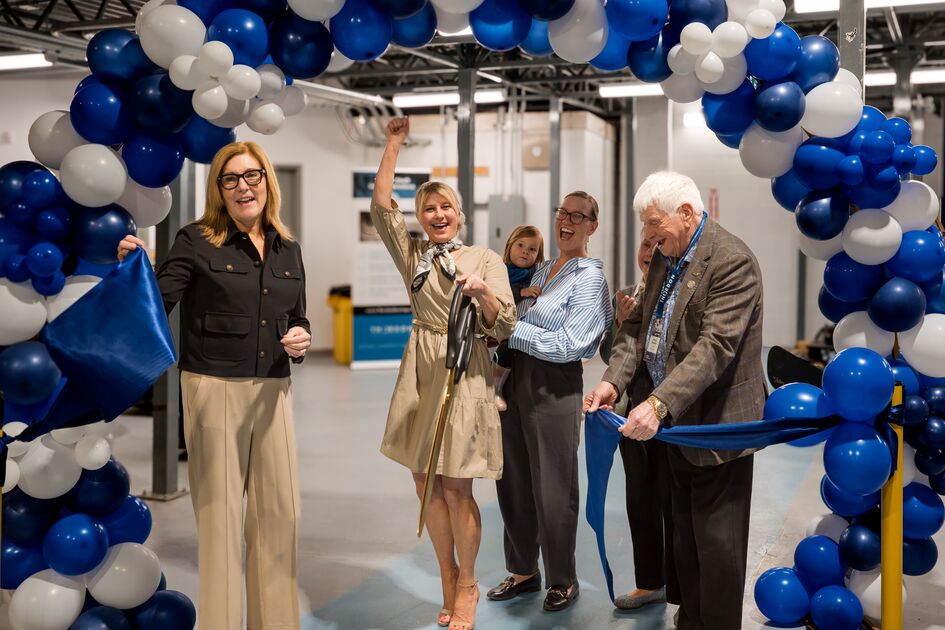
Plant 3 marked its opening with a ribbon-cutting ceremony attended by Government of Canada MP Karina Gould, Government of Ontario MPP Natalie Pierre and Terry Caddo, President and CEO of the Burlington Chamber of Commerce.

“Burlington continues to offer us a skilled workforce, strong government support and a great quality of life, while serving as a central hub for our global customers,” Anna Galoni added. “The proximity of Plant 3 to our main facility also strengthens inter-team collaboration and maintains the close-knit family environment our employees value.”

PM Modi welcomes global leaders to the thought leadership conference, cites port growth & new maritime laws

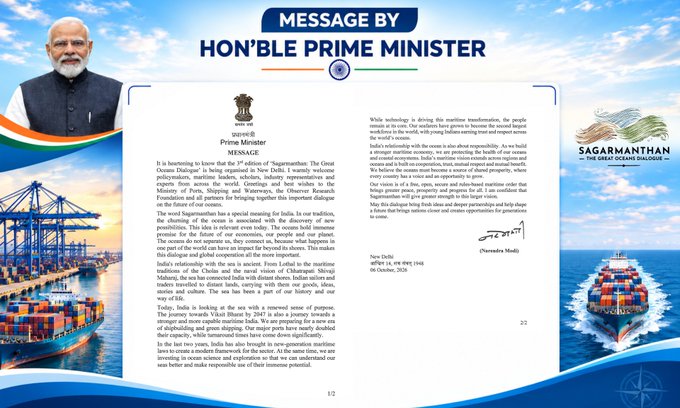
NEW DELHI: Prime Minister Shri Narendra Modi welcomed policymakers, maritime leaders and experts from around the world to the third edition of Sagarmanthan: The Great Oceans Dialogue on Tuesday, calling for a “free, open, secure and rules-based maritime order” that brings peace and prosperity to all nations.

“Our vision is of a free, open, secure and rules-based maritime order that brings greater peace, prosperity and progress for all. I am confident that Sagarmanthan will give greater strength to this larger vision,” PM Modi said in a written message to the conference, which the Ministry of Ports, Shipping and Waterways (MoPSW) and the Observer Research Foundation (ORF) are organising in New Delhi.

PM Modi said what happens in one part of the world can affect places far beyond its shores, making global dialogue and cooperation on the oceans more important than ever. The name Sagarmanthan, which means “churning of the ocean,” holds special meaning in Indian tradition, where the churning is linked to the discovery of new possibilities, Modi said. He said the oceans hold “immense promise” for the world’s economies, people and planet.

“India’s relationship with the ocean is also about responsibility. As we build a stronger maritime economy, we are protecting the health of our oceans and coastal ecosystems. India’s maritime vision extends across regions and oceans and is built on cooperation, trust, mutual respect and mutual benefit. We believe the oceans must become a source of shared prosperity, where every country has a voice and an opportunity to grow,” wrote Prime Minister.

Modi traced India’s seafaring history from the ancient port city of Lothal to the Chola dynasty and the naval vision of Maratha ruler Chhatrapati Shivaji Maharaj. Indian sailors and traders carried goods, ideas, stories and culture to distant lands, he said. PM Modi linked the country’s maritime ambitions to Viksit Bharat, the government’s goal of making India a developed nation by 2047.

PM Modi said India’s major ports have nearly doubled their capacity while turnaround times have dropped significantly. “India is looking at the sea with a renewed sense of purpose. The journey towards Viksit Bharat by 2047 is also a journey towards a stronger and more capable maritime India. We are preparing for a new era of shipbuilding and green shipping. Our major ports have nearly doubled their capacity, while turnaround times have come down significantly,” said PM Modi.

The government is also investing in ocean science and exploration to better understand the country’s seas and use them responsibly.

“India has also brought in new-generation maritime laws to create a modern framework for the sector. At the same time, we are investing in ocean science and exploration so that we can understand our seas better and make responsible use of their immense potential,” added PM Modi.

Modi said Indian seafarers now form the second-largest maritime workforce in the world, with young Indians earning respect across the world’s oceans. He said India is protecting ocean health and coastal ecosystems as it builds a stronger maritime economy. India’s maritime vision rests on cooperation, trust, mutual respect and mutual benefit, he said.

“We believe the oceans must become a source of shared prosperity, where every country has a voice and an opportunity to grow,” PM Modi said. He expressed confidence that Sagarmanthan would strengthen that vision and said he hoped the dialogue would bring fresh ideas, deeper partnerships and opportunities for generations to come.

Sagarmanthan 2026 opens as India charts the course for a trusted, rules-based Global Maritime Order

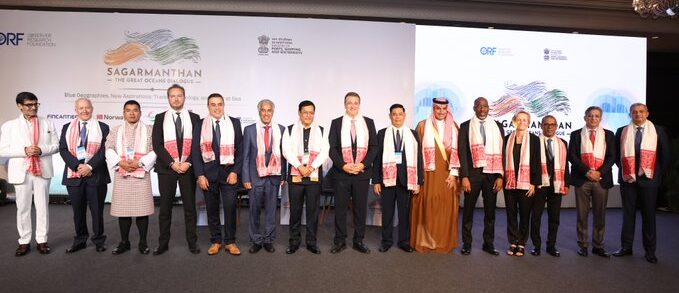
NEW DELHI: The third edition of Sagarmanthan: The Great Oceans Dialogue 2026 opened on October 7 with India calling for stronger international cooperation to build a free, open, secure and rules-based global maritime order.

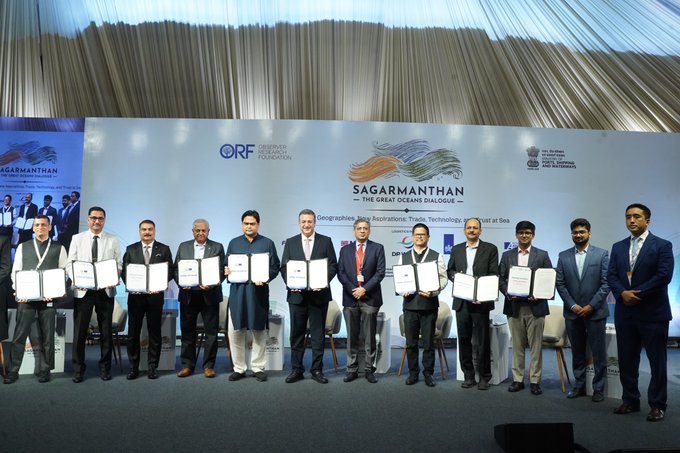
Organised by the Ministry of Ports, Shipping and Waterways (MoPSW) in partnership with the Observer Research Foundation (ORF), the two-day dialogue brought together ministers, maritime leaders, naval representatives, port authorities, shipbuilders, financial institutions, international organisations and experts from across the world.

In his message to the gathering, Prime Minister Shri Narendra Modi emphasised that oceans connect nations rather than separate them and called for greater international cooperation to ensure that the seas remain a source of peace, prosperity and progress.

Launched in New Delhi in 2024 and subsequently held in Mumbai in 2025 as part of India Maritime Week, Sagarmanthan has emerged as an annual platform bringing together policymakers, industry leaders, scholars and multilateral organisations to discuss the blue economy, ports, shipping, maritime logistics and coastal livelihoods.

The dialogue comes amid mounting pressures on the maritime domain, as trade, energy, food and critical minerals move through waters increasingly affected by geopolitical tensions, climate stress and technological disruption, with emerging economies and small island developing states bearing a disproportionate share of the costs of such instability.
The 2026 edition will feature high-level plenaries, ministerial and leadership addresses, fireside conversations, technical sessions, ministerial engagements and studio sessions.

Ministers attending the event include Annick De Ridder, Flemish Minister of Mobility, Public Works, Ports and Sport, Belgium; Apostolos Tzitzikostas, Commissioner for Sustainable Transport and Tourism, European Commission; Arvin Boolell, Minister of Agro-Industry, Food Security, Blue Economy and Fisheries, Mauritius; Chandra Bahadur Gurung, Minister of Infrastructure and Transport, Bhutan; João Jorge Matlombe, Minister of Transport and Logistics, Mozambique; Juras Taminskas, Minister of Transport and Communications, Lithuania; Stefanos Gkikas, Deputy Minister of Maritime Affairs and Insular Policy, Greece; U Tun Lu, Deputy Minister of Transport, Myanmar; and Astrid Bergmål, State Secretary, Ministry of Foreign Affairs, Norway.

Former heads of state and government and former ministers, including former Australian Prime Minister Kevin Rudd, former Tunisian Prime Minister Mehdi Jomaa and former Maldives President Mohamed Nasheed, will also participate in the deliberations.

sagarmanthan 2026 Sagarmanthan 2026 opens as India charts the course for a trusted, rules-based Global Maritime Order

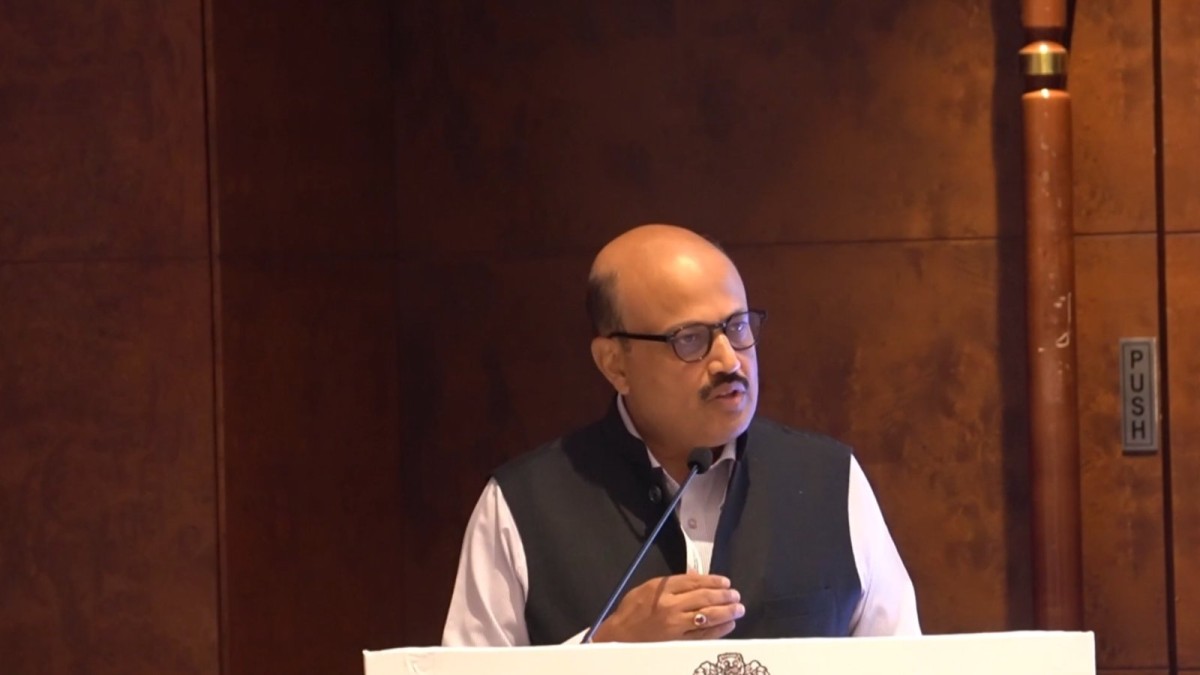
The Government of India will be represented by Ports, Shipping and Waterways Minister Sarbananda Sonowal, Minister of State Shri Shantanu Thakur and Secretary Vijay Kumar. Chief of the Naval Staff Admiral Krishna Swaminathan will also participate.

Union Minister of State for Ports, Shipping and Waterways Shantanu Thakur also addressed the opening proceedings, highlighting India’s progress in port-led development and the country’s efforts to strengthen its maritime capabilities through infrastructure development and new-generation maritime legislation.

The discussions at Sagarmanthan 2026 reinforced India’s growing engagement with international maritime partners at a time when the global shipping industry is undergoing significant structural, technological and geopolitical changes.

With Maritime Amrit Kaal Vision 2047 providing the long-term framework for India’s maritime development, the dialogue positioned the country as a partner in building a more connected, sustainable and resilient global maritime ecosystem.

The Sagarmanthan 2026 dialogue will continue with further ministerial and expert-level discussions on the future of oceans, shipping, trade, technology and maritime cooperation.

The conference will centre on five thematic pillars: “Steady Straits: Safeguarding Flows in a Fractured World”; “Blue Breakthroughs: Greening Ships and Shipbuilding”; “Complex Seas: Managing Trade, Connectivity, and Turbulence”; “Ocean Societies: Communities, Cultures, and Livelihoods”; and “The Heart of the Deal: Linking Harbour Cities to the Hinterland.”

According to a press release, the dialogue is guided by the conviction that oceans can help bridge a fractured world and that cooperation at sea can contribute to a more stable and inclusive global future. The dialogue also aligns with India’s Maritime Amrit Kaal Vision 2047, which places ports, shipping and the blue economy at the centre of the country’s long-term growth.

For its third edition, Sagarmanthan has DP World as its logistics partner, along with Konrad Adenauer Stiftung, the Korea Institute for International Economic Policy and Fincantieri. The event is also being held in partnership with the governments of the Netherlands and Norway through their respective foreign ministries, with the OECD, German Maritime Museum and MENA2050 serving as knowledge partners.

Kandla Forum 2026 brings global hydrogen leaders of Hydrogen Council and Maritime Leaders to DPA, Kandla; Focus on turning green ambitions into projects

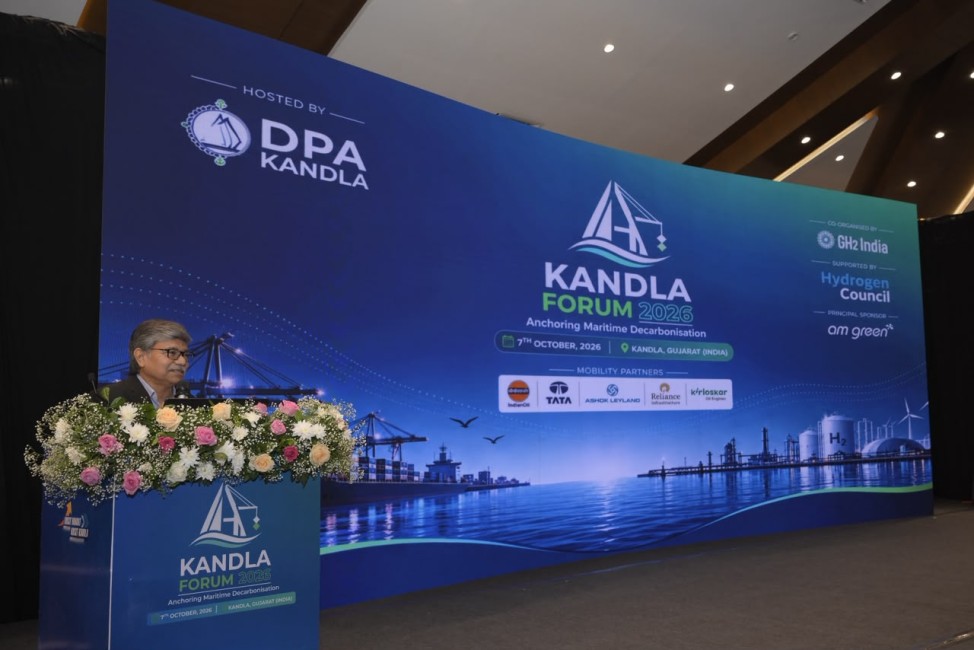
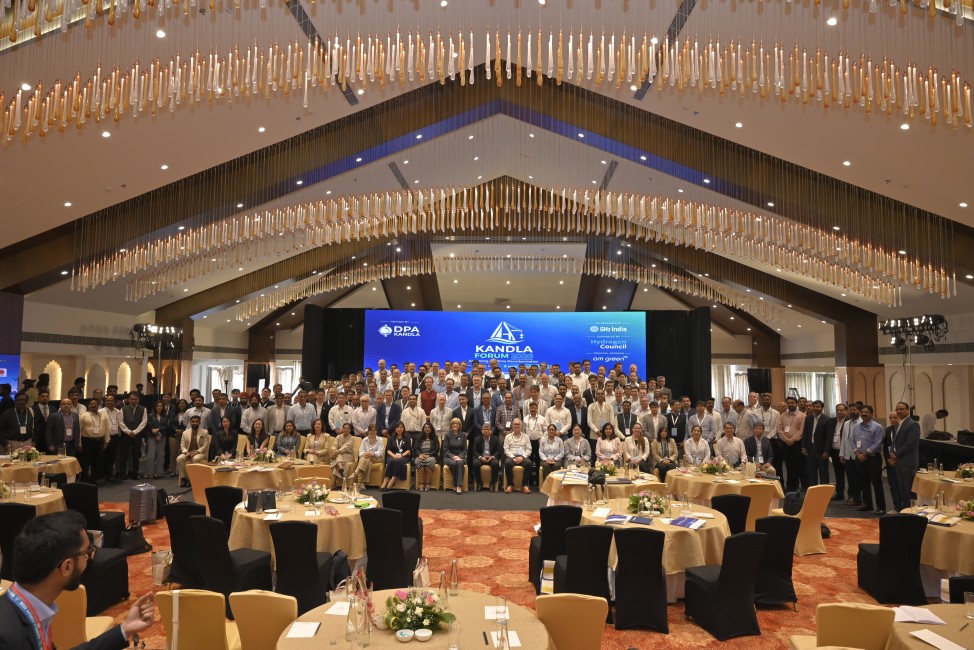
GANDHIDHAM: Deendayal Port Authority, Kandla hosted the Kandla Forum 2026 – “Anchoring Maritime Decarbonisation”, knowledge sharing and technology transfer, bringing together leading global and Indian stakeholders from the hydrogen, clean energy, shipping, shipbuilding, engineering, technology and financial sectors.

Under the visionary leadership of Hon’ble Prime Minister Shri Narendra Modi Ji, Deendayal Port Authority, Kandla is actively advancing India’s commitment towards achieving Net Zero by 2070. Through its growing green hydrogen and clean-fuel ecosystem, DPA is positioning Kandla as an emerging hub for green energy, sustainable shipping and maritime decarbonisation.

The Forum emerged as a significant platform for direct engagement between global industry leaders and Deendayal Port Authority, with discussions centred on accelerating investments, technology partnerships and development of a robust green fuels and maritime decarbonisation ecosystem at Kandla. The Forum was specifically conceived to connect companies capable of developing the green-energy value chain with the Port leadership and enable focused, on-ground engagement.

The Forum witnessed participation from a high-level international delegation comprising more than 200 senior executives representing 62 Hydrogen Council member companies, spanning electrolyser and equipment manufacturers, energy and industrial gas majors, engineering and EPC companies, mobility manufacturers, shipping and maritime organisations, classification entities and project finance institutions. They were joined by Indian manufacturers, developers and offtakers, shipping and shipbuilding companies, financial institutions and other stakeholders, bringing together around 200 senior leaders.

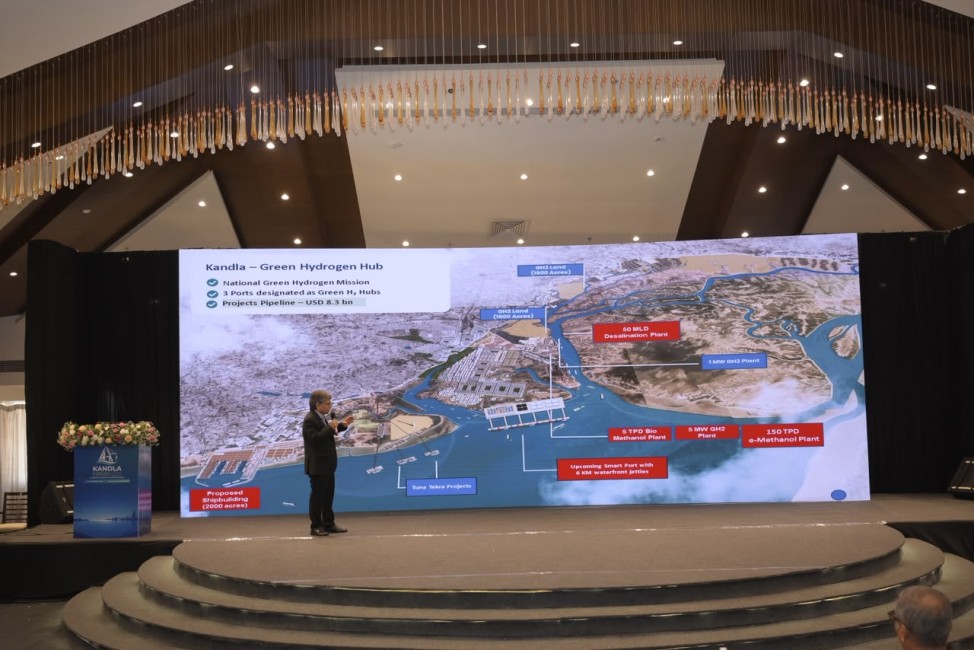
Shri Sushil Kumar Singh, IRSME, Chairman, Deendayal Port Authority, Kandla, led an extensive interaction with the global industry delegation on Kandla’s green hydrogen and derivative infrastructure and its emerging role in the maritime energy transition.

During his presentation, Chairman DPA outlined DPA’s existing and planned green-energy infrastructure, including the Port’s position with regard to power, water and land availability, green hydrogen and derivative facilities, methanol bunkering and opportunities for investment, joint ventures and deployment of new technologies.

He invited global industry leaders to engage closely with Kandla and become partners in its green transformation, emphasising the need to take industry–port interaction beyond dialogue and towards tangible collaborations and projects.

The discussions highlighted Kandla’s growing credentials in the green-energy sector. DPA has a 1 MW green hydrogen plant in operation, with further green hydrogen facilities under development. The Port has also completed India’s first methanol bunkering trial, while land, power and water are being positioned to support green hydrogen and derivative production. Kandla is also an anchor port in India–Europe green shipping corridor studies.

A defining feature of the Kandla Forum was its interaction-driven format. Instead of being limited to conventional conference deliberations, the programme facilitated sector-wise discussions directly with the DPA leadership.

Focused exchanges were held across key areas including electrolysers, gasifiers and equipment; green ammonia, methanol and e-fuels; power, water and land; engineering and EPC; maritime bunkering, shipbuilding, green-fuel-based engines and ship repair; and financing and risk.

The interactions enabled participating companies to discuss their technologies and business propositions while gaining a clearer understanding of the opportunities available at Kandla for investment, joint ventures, technology deployment and industrial development.

As part of the Forum, the delegates also visited Deendayal Port, Kandla, providing them an opportunity to witness Kandla’s infrastructure and development potential first-hand.

The visit covered the upcoming e-Methanol facility at Kandla; along with India’s First Mega Watt Scale Indigenous Green Hydrogen Plant at Oil Jetty, Kandla and Cargo Jetty area. Focused sessions were also held with DPA leadership on green shipbuilding and ship repair, and methanol bunkering, providing the industry delegation with an on-ground perspective of the Port’s plans and opportunities.

A technology exhibition was also organised at Administrative Office Building, Gandhidham, alongside the Forum; further showcased solutions and technologies from participating companies, enabling closer interaction between technology providers, industry leaders and the Port ecosystem.

The Forum concluded with a strong emphasis on taking forward expressions of interest and converting the interactions into concrete partnerships. One of the principal outcomes envisaged through the Forum is continued engagement between DPA and participating companies in areas where the Port is open to investment, joint ventures and new technologies.

The successful hosting of Kandla Forum 2026 marks another important step in Deendayal Port Authority’s journey towards positioning Kandla as an emerging hub for green fuels, green shipping, shipbuilding and maritime decarbonisation, while creating a platform where global expertise, technology and investment can converge with India’s growing green maritime ambitions.

DPA crosses 100 Million Tonnes Milestone, 51 days ahead of schedule

DPA Kandla achieves its fastest-ever 100 MMT cargo handling milestone, reaffirming its position as one of India’s leading mega ports

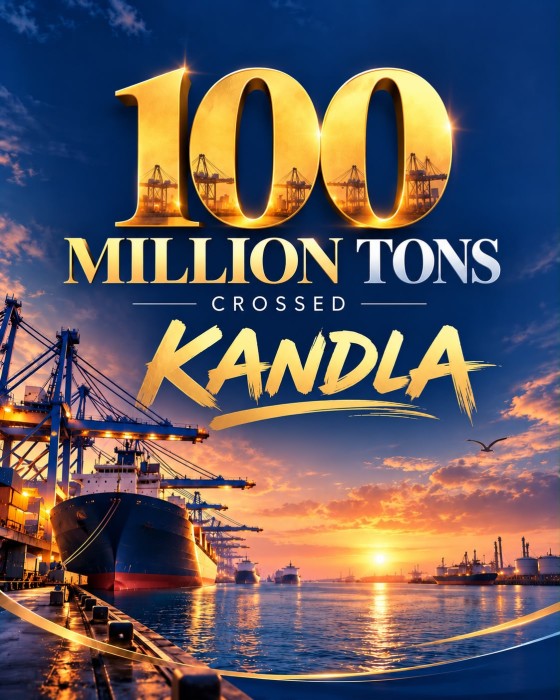
GANDHIDHAM : The Deendayal Port Authority (DPA), Kandla, has achieved a major operational milestone by crossing 100 Million Tonnes (MMT) of cargo throughput on 6 October 2026.

The landmark achievement has been recorded 51 days ahead of the corresponding milestone achieved in FY 2025–26, making it the fastest-ever 100 MMT milestone for Kandla Port and highlighting the sustained growth in cargo handling and operational performance at the port.

The achievement reflects DPA Kandla’s continued momentum, supported by efficient cargo handling operations, robust port infrastructure, improved productivity and the coordinated efforts of the port community and stakeholders. The 100 MMT milestone further strengthens Kandla’s position as a strategically important gateway for India’s maritime trade. Located on the Gulf of Kutch, the port serves a diverse cargo base and plays a significant role in supporting the industrial and commercial requirements of the hinterland.

The accelerated pace of cargo handling also underscores the port’s growing capacity to facilitate large volumes of EXIM and coastal cargo, while contributing to the efficiency and competitiveness of India’s logistics and supply-chain ecosystem.

The achievement comes as DPA continues to focus on operational excellence, infrastructure development, capacity enhancement and customer-oriented port services to meet the evolving requirements of trade and industry. Crossing 100 MMT well ahead of schedule marks another significant chapter in Kandla’s growth journey and reinforces its stature as a major maritime gateway and one of India’s mega ports.

With 100 MMT and counting, Deendayal Port Authority continues to build on its strong operational momentum and contribute to India’s expanding maritime and logistics landscape.

Piyush Goyal holds meetings with leading U.S. companies in New York to Strengthen India–U.S. Trade and Investment Ties

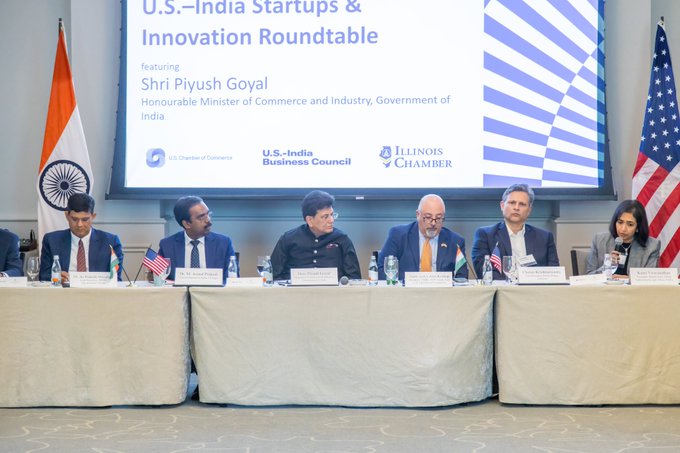
NEW YORK: Union Minister of Commerce and Industry Shri Piyush Goyal held a series of meetings with several senior leaders of leading U.S. companies in New York this week to discuss opportunities for strengthening India–U.S. trade and to invite top US companies to explore investment opportunities in India.

Shri Goyal met President & COO of Blackstone Mr. Jonathan Gray, and Chairman of Blackstone’s International Private Equity business Mr. Prakash Melwani. Discussions focused on expanding Blackstone’s investments and partnerships in India across key sectors.

The Minister met Chairman & CEO of Neuberger Berman Mr. George Walker, and senior members of its leadership team. Discussions covered opportunities to deepen investment linkages and strengthen engagement in financial and wealth management services.

Shri Goyal met President & CEO of The Estée Lauder Companies Mr. Stéphane de La Faverie. They discussed growth opportunities in India, including through increased manufacturing and sourcing, and India’s growing beauty and personal care market.

In his meeting with Chairman and CEO of IBM Mr. Arvind Krishna, discussions focused on further strengthening IBM’s engagement in India and expanding collaboration in AI, cloud infrastructure, quantum computing and other emerging technologies.

In his meeting with President and CEO of MetLife Mr. Michel A. Khalaf, discussions focused on the company’s growth opportunities in India and the expanding insurance and financial services sector.

The Minister met Chairman & CEO of General Atlantic Mr. William E. Ford, and discussed opportunities to further deepen the company’s investment and business engagement with India.

Shri Goyal also met Non-Executive Chairman of AIA Group Mr. Mark Tucker. Discussions focused on AIA’s engagement in India and opportunities in the insurance and financial services sectors, including in the context of India’s vision of ‘Insurance for All by 2047’.

The meetings provided an opportunity to discuss India’s growth prospects and investment opportunities across financial services, manufacturing, energy, technology, AI and other sectors, and ways to further strengthen India–U.S. economic and commercial ties.

Commerce Secretary calls for greater utilisation of India-EFTA TEPA opportunities

NEW DELHI : Commerce Secretary Shri Rajesh Agrawal delivered the keynote address to Export Promotion Councils, industry associations and exporters, as well as representatives of business from the EFTA States, at the Outreach Event for Major Exporters to promote utilisation of opportunities under the India-European Free Trade Association (EFTA) Trade and Economic Partnership Agreement (TEPA) in New Delhi, on Wednesday. The event formed part of the 2nd India-EFTA Prosperity Summit 2026 and was organised by the Department of Commerce.

TEPA entered into force on 1 October 2025. Shri Agrawal said that leaders from all four EFTA States — Iceland, Liechtenstein, Norway and Switzerland — are in New Delhi to mark the first year of the Agreement and to guide the way forward.

Shri Agrawal said that India and the EFTA States have opened their markets to each other. EFTA’s commitments cover 92.2 per cent of its tariff lines, accounting for 99.6 per cent of India’s exports, with full coverage of non-agricultural products. India’s commitments cover 82.7 per cent of tariff lines, accounting for 95.3 per cent of EFTA exports.

The Commerce Secretary said that the Agreement is not only about tariffs. Its most important element for business is predictability. Tariffs will remain stable for the foreseeable future, with no surprises. Businesses can therefore make investments, build supply chains and plan for the future with confidence. He urged Indian companies to partner with businesses in the EFTA States and build value chains together, from inputs to final products, for greater reliability on both sides.

Shri Agrawal said that the EFTA States are high-income markets that demand quality and value it. “If you are able to create quality products in this market, then you are ready for any other market,” he said. Quality earned in these markets will be appreciated and valued in every market.

He said that agriculture also has a large export opportunity in these high-consumption markets, where duties on many products have come down to zero. Exporters should identify these products and build long-term supply to the EFTA States.

The Commerce Secretary said that the EFTA States together import goods and services worth over half a trillion US dollars a year and this provides an important market for India’s exports.

Shri Agrawal called on the Export Promotion Councils, industry associations and State Governments to take the opportunities of the Agreement to businesses in every part of the country, so that they understand what a free trade agreement offers. He asked them to prepare an action plan with each partner country for each market for the next five years, setting out how India will grow in each market and the non-tariff issues to be addressed.

“The idea is not that businesses in EFTA countries only see India as an extension of their market. The idea is also that businesses in India should see the market of EFTA countries as an extension of their market,” he said.

The Commerce Secretary said that a key feature that sets TEPA apart from other agreements is its investment commitment. Under Article 7.1 of the Agreement, “the EFTA States shall aim to increase foreign direct investment from investors of the EFTA States into India by 50 billion (US dollars) within 10 years from the entry into force of this Agreement and an additional 50 billion (US dollars) in the succeeding 5 years”, and “shall aim to facilitate the generation of 1 million jobs within 15 years in India”.

Shri Agrawal said that India is a growing market with investment opportunities across sectors, and that deeper business partnerships on both sides can take investment beyond this level.

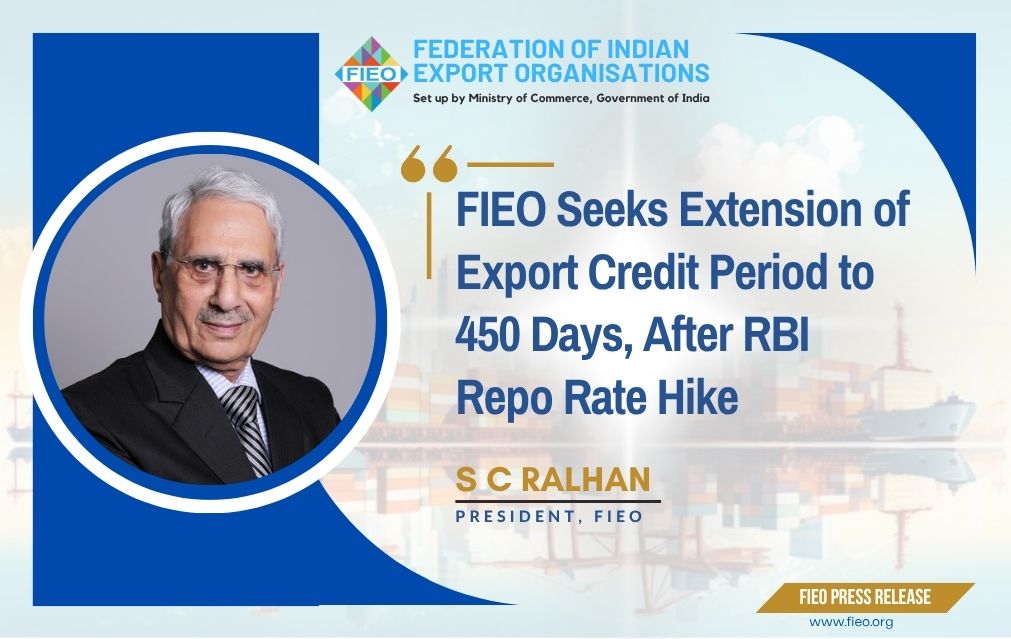
FIEO seeks extension of Export Credit Period to 450 Days, after RBI Repo Rate hike

NEW DELHI: FIEO has said that the Reserve Bank of India’s decision to raise the policy repo rate by 25 basis points to 5.50 per cent and change its monetary policy stance to calibrated tightening is understandable in view of emerging inflationary pressures. However, the Federation cautioned that higher borrowing costs could increase the financial burden on exporters, particularly MSMEs, at a time when global trade is facing heightened uncertainty.

FIEO President Mr S C Ralhan said that the RBI’s decision to raise the repo rate by 25 basis points is understandable against the backdrop of rising inflationary pressures and the need to maintain price stability. At the same time, the Indian economy has demonstrated considerable resilience, with GDP growth at 7.8 per cent in Q1:2026-27 and merchandise as well as services exports maintaining strong momentum. It is therefore important that monetary tightening does constrain the working capital availability of export-oriented businesses, particularly MSMEs. He added, “Exporters are currently operating in an exceptionally uncertain global environment. Geopolitical tensions, volatile energy prices, supply-chain disruptions, longer transit times and delays in payments are extending the export working-capital cycle. Higher interest costs in such circumstances can adversely affect the competitiveness of Indian exporters, especially those operating on thin margins”.

Mr Ralhan urged the RBI to provide greater flexibility in export finance by extending the period of pre-shipment and post-shipment export credit from the existing 270 days to 450 days because of longer shipping and transit periods, logistics disruptions and delayed realisation of export proceeds. Such an extension would provide much-needed breathing space to exporters and enable them to honour their international commitments without facing undue financial stress.

FIEO further suggested that targeted liquidity support and adequate availability of affordable export credit should accompany the calibrated tightening stance. This would help exporters absorb elevated input and financing costs while maintaining production, fulfilling overseas orders and exploring new markets.

FIEO noted that the RBI has projected real GDP growth at 7.1 per cent for 2026-27, while recognising continuing global headwinds arising from geopolitical tensions, energy-price volatility and tighter global financial conditions. The central bank has also projected CPI inflation at 5.2 per cent for 2026-27, with inflationary pressures expected from food, energy and other commodity prices.

Mr. Ralhan added that India’s resilient growth trajectory provides a strong foundation for expanding our global trade footprint. Bilateral trade agreements, buoyant services exports and the recovery in merchandise exports can provide further impetus to the economy. However, maintaining export competitiveness will require continued access to affordable finance and appropriate policy support, particularly for MSMEs.

NICDC engages WB Govt. and Industry to advance industrial development

KOLKATA : The National Industrial Corridor Development Corporation (NICDC) has stepped up engagement with the Government of West Bengal and industry stakeholders to advance the development of investment-ready industrial ecosystems and strengthen the state’s manufacturing and logistics potential.

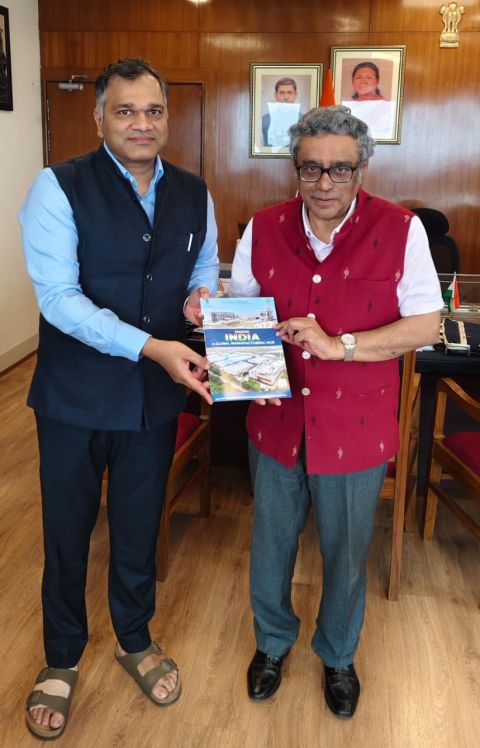
Shri Rajat Kumar Saini, IAS, CEO & MD, NICDC, met the Hon’ble Finance Minister, Government of West Bengal, and briefed him on the National Industrial Corridor Development Programme (NICDP) and NICDC’s ongoing efforts to develop world-class, investment-ready industrial regions across the country.

During the interaction, Shri Saini also apprised the Minister about the BHAVYA Scheme, which seeks to facilitate the development of investment-ready industrial infrastructure through a structured partnership framework.

A key focus of the discussions was the proposed Durgapur Industrial Node under the East Coast Industrial Corridor (ECIC). The proposed industrial node has the potential to leverage West Bengal’s established industrial base, strategic location and logistics connectivity to attract new investments, strengthen manufacturing value chains and create employment opportunities.

Shri Saini subsequently met the Chief Secretary, Government of West Bengal, and discussed the BHAVYA Scheme as well as the proposed Durgapur Industrial Node, reinforcing the importance of close coordination between NICDC and the State Government for accelerating industrial development.

As part of the engagement with the industry, Shri Saini also interacted with industry representatives at Panagarh Industrial Park to understand their requirements and assess the on-ground business environment. The discussions covered key areas including industrial infrastructure, utilities, logistics, local support systems and measures to further improve the ease of doing business for investors and industrial enterprises.

The interactions underline NICDC’s focus on adopting a collaborative approach involving Central and State Governments, industry and other stakeholders to create globally competitive industrial ecosystems. With strategic industrial nodes, improved connectivity and investment-ready infrastructure, initiatives such as the proposed Durgapur Industrial Node are expected to contribute to manufacturing growth, employment generation, supply-chain development and regional economic activity.

NICDC reiterated its commitment to working closely with State Governments and industry stakeholders to accelerate industrial development and support the broader national vision of Viksit Bharat.

CONCOR places ₹87.15 crore order for 12 rakes of BLSS Wagons

NEW DELHI : The Container Corporation of India Limited (CONCOR) has placed a significant order valued at ₹87.15 crore, including GST, for the supply of 12 rakes of BLSS wagons along with BVCM Brake Vans, strengthening its rail freight equipment capacity.

The contract has been awarded to the Chief Workshop Manager, Golden Rock Workshop, Southern Railway, Tiruchirapalli, a domestic supplier under the Indian Railways network.

Under the order, Golden Rock Workshop will supply 12 rakes of BLSS wagons, along with BVCM Brake Vans, to CONCOR. The procurement is expected to support the company’s continuing focus on strengthening its rail-based container transportation capabilities.

Key details of the order

Order Value: ₹87.15 crore, including GST

Quantity: 12 rakes of BLSS wagons along with BVCM Brake Vans

Supplier: Chief Workshop Manager, Golden Rock Workshop, Southern Railway, Tiruchirapalli

Supplier Category: Domestic entity

Free Supply Items: Certain items will be supplied by CONCOR separately and are excluded from the stated order value.

The latest procurement reflects CONCOR’s continued focus on expanding and upgrading its rolling-stock resources to support efficient and reliable rail-based logistics and container movement across the country.

As India’s leading rail-linked logistics operator, CONCOR continues to strengthen its multimodal transportation capabilities, with rail infrastructure and equipment remaining central to its container logistics network.