Home Blog Page 67

India Logistics Growth Index rises to 57.0 in September 2026 — highest in the series: World Research Institute

WASHINGTON D.C.: India’s Logistics Growth Index, published on Wednesday by the World Research Institute (WRI), registered 57.0 in September 2026, +1.7 on 55.3 in August 2026, signalling expansion in the economy’s logistics-sector activity (50 = no change).

Key figures

  • India Logistics Growth Index: 57.0 (September 2026), prior 55.3, change +1.7
  • Rank: 3rd of 42 economies; 3rd of 16 in Asia-Pacific
  • Second-largest rise of the 42 economies this month.
  • Asia-Pacific Logistics Index: 52.3
  • World Logistics Index: 51.6
  • Highest reading in the published series.
  • Next release: 7 November 2026, 09:00 UTC

Changes and ranks are calculated from unrounded readings, so a change can differ by 0.1 from the difference of the rounded figures shown, and economies with the same rounded reading can hold different ranks.

WRI’s assessment

India’s Logistics Growth Index advanced to 57.0 in September, a 1.7-point gain propelled by robust festive-season demand and accelerated business volume. All ten sub-indices registered expansion, with transportation and warehousing leading the upward momentum as pre-positioning of goods and expanded fulfillment networks supported freight movement.

“The festive season drove India’s reading higher in September: port cargo grew strongly, warehouse demand reached multi-year highs and logistics hiring expanded sharply to meet seasonal needs.”— Stephen Poh, Principal Economist, World Research Institute.

About the Logistics Growth Index

The India Logistics Growth Index (LGI™) is one of 42 country readings in the World Research Institute’s monthly Logistics Index family — a GDP-weighted diffusion index of logistics-sector activity across 42 economies, four regions and a World reading. A reading above 50 signals expansion and below 50 contraction. The World and regional Logistics Index readings are published openly at intelligence.worldresearch.org/lgi; country reports are available to subscribers, to accredited journalists via press access, and any reader may claim one complimentary country edition. Methodology: /methodology.

Source: World Research Institute

Attacks on tankers in Hormuz hit highest of any week since start of Iran war, sources say

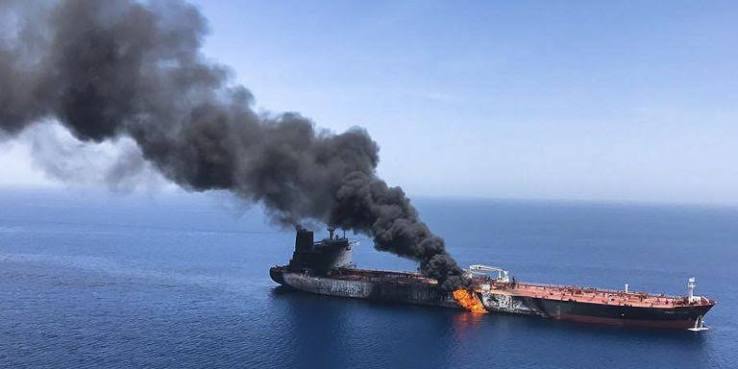
LONDON: Attacks on tankers sailing through the Strait of Hormuz hit their highest last week of any week since the ​Iran war began, according to maritime security sources tracking incidents, amid ‌a bigger export push by Gulf producers.

Attacks, attempted attacks and harassment activity including drone overflights, surveillance and hailing using VHF radio by Iran’s Revolutionary Guards have persisted ​in the strait, the US Navy-led Joint Maritime Information Center (JMIC) said ​in a note on Sunday.

“These actions continue to demonstrate Iran’s ⁠intent to assert presence along key transit lanes and maintain pressure ​on transiting vessels,” the JMIC said.

In the week of September 28-October 5, there ​had been at least 12 attacks on oil, liquefied natural gas and liquefied petroleum gas tankers around the Strait of Hormuz, according to data from three maritime security ​sources who analysed incidents based on information received from the area.

That ​was the highest number of attacks in a single week since the US war with ‌Iran ⁠began on February 28, the sources said.

Separate data collated by the UN’s shipping agency, the International Maritime Organization (IMO), showed nine incidents involving vessels in the same week.

The UN body tends to take longer to verify and ​officially record incidents, ​maritime sources say.

The ⁠closest week in terms of comparable incidents was the week of July 13 when there were eight incidents, ​separate IMO data showed.
Gulf oil exporters topped pre-war levels for ​about half ⁠of September, shipping data showed on Monday, though attacks on tankers and logistical constraints cloud the outlook for sustained higher flows.

India’s foreign ministry said on ⁠Tuesday that ​12 crew members were injured after an unknown ​projectile struck Panama-flagged oil tanker On Peace while it was passing through the Strait of ​Hormuz.

India condemns attack on ship carrying Indian crew in Black Sea

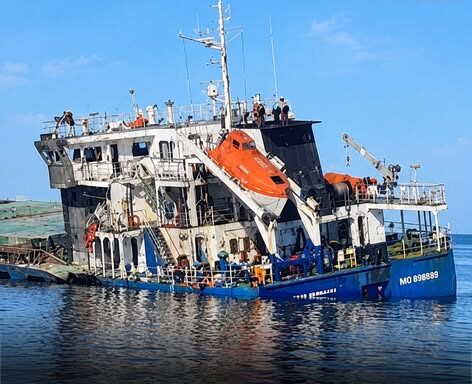
OMAN: A cargo ship carrying three Indian nationals among its crew was hit by Russian drones in the Black Sea, killing two seafarers and injuring one of the Indian crew members. The MV Royad Mammadov caught fire in the attack and later sank, while 11 crew members were rescued by Romanian authorities.

India has now strongly condemned the attack, calling the targeting of commercial shipping and seafarers a matter of “grave concern”. The Ministry of External Affairs (MEA) said all three Indian nationals who were part of the ship’s crew are safe. One of them was injured and is receiving medical attention in Romania.

New Delhi also warned about the wider consequences of attacks on merchant vessels operating through international waterways.

“The targeting of traffic in international waterways is severely undermining global commerce and welfare of people across the world. We continue to call for dialogue and diplomacy to bring an end to the ongoing conflicts,” the MEA said in a statement.

INDIAN CREW MEMBERS SAFE

The Indian Embassy in Bucharest confirmed that all three Indian nationals aboard the vessel were safe. The embassy said one of them had been injured and was receiving medical treatment.

Indian Ambassador to Romania Manoj Mohapatra also spoke to the three crew members at Constana County Hospital and contacted the hospital’s chief physician, according to the Indian mission. The embassy said it remained in contact with Romanian authorities and hospital officials and was providing support to the affected sailors.

Romanian authorities rescued 11 crew members from the vessel after a fire broke out. Two people were killed in the incident, according to Romanian authorities. The ship eventually sank in the Black Sea, about 30 nautical miles south of Sfantu Gheorghe, according to reports.

The vessel was outside Romania’s territorial waters but within the country’s exclusive economic zone when the incident occurred.

ZELENSKYY BLAMES RUSSIAN DRONES

Ukraine has blamed Russia for the attack.

Ukrainian President Volodymyr Zelenskyy said two Russian drones struck the civilian vessel while it was carrying corn through the Black Sea. He described the ship as Turkish-owned and said Azerbaijani and Indian nationals were among its crew.

“A horrific strike by two Russian drones on a civilian vessel in neutral waters carrying corn and owned by Turkey. Azerbaijani and Indian citizens were on board,” Zelenskyy wrote on X.

He also confirmed the death of the ship’s captain.

SHIP WAS CARRYING CORN TO ITALY

The MV Royad Mammadov was carrying corn and was headed towards Ravenna in Italy. The vessel was flying the flag of St Kitts and Nevis and had previously called at the Ukrainian port of Izmail, according to vessel-tracking information and reports.

Its route highlights the importance of commercial shipping through the western Black Sea. Izmail, located on the Danube near the Romanian border, has become an important outlet for Ukrainian goods during the war, particularly as the conflict has made maritime trade routes more difficult and dangerous.

For India, the incident is not simply another casualty of the Russia-Ukraine war. New Delhi has repeatedly raised concerns over attacks on merchant vessels and the safety of seafarers caught in conflicts far from their home countries.

US CENTCOM rejects Iran’s claim of Hormuz closure, says 20 million barrels of crude moving through

WASHINGTON: The US Central Command (CENTCOM) on Wednesday (local time) rejected Iran’s claim that the Strait of Hormuz is closed, saying commercial and energy traffic continues to move through the strategic waterway.

“CLAIM: Earlier today, a general from Iran’s Islamic Revolutionary Guard Corps claimed in media reports that ‘the Strait of Hormuz is closed’ and his country has ‘full control over it.’ This is FALSE,” CENTCOM said in a post on X.

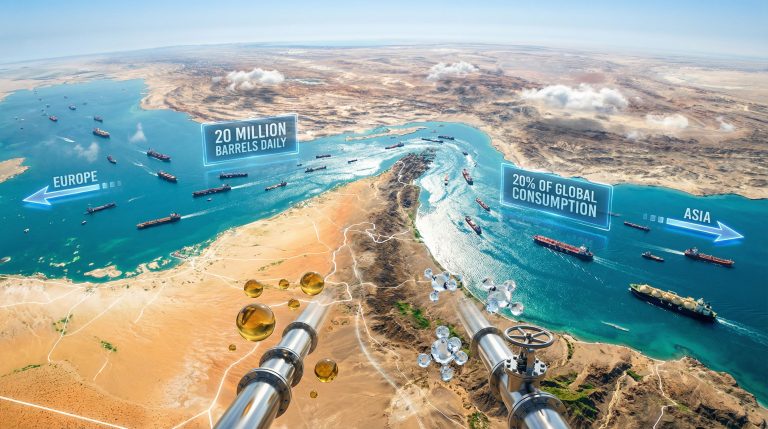
“FACT: Traffic is flowing through the Strait of Hormuz right now carrying commercial goods and energy supplies, including 20 million barrels of crude oil. The United States and regional partners clearly control the strait,” it added.

The rebuke came in response to comments by Mohammadreza Naqdi, an adviser to the commander of Iran’s Islamic Revolutionary Guard Corps (IRGC), who reiterated Tehran’s position on the strategic waterway in comments to semi-official Fars news agency on Wednesday, Al Jazeera reported.

Naqdi also said that transit routes deemed illegal by Iran would soon be closed.

Meanwhile, Iranian Foreign Ministry spokesperson Esmaeil Baghaei said Tehran has “clearly and firmly” set out its conditions for ending the war on all fronts and restoring security to the Gulf and the Strait of Hormuz.

According to Iranian state broadcaster IRIB, Baghaei said Iran would also deliver its response to proposals from the US side through mediators, Al Jazeera reported.

Baghaei also said that Iran and Oman had reached an understanding on safe passage of vessels through the Strait of Hormuz and would soon present the agreement to the relevant international body.

“The consultation process between Iran and Oman has been carried out well, and the two sides, in addition to agreeing on the geographical coordinates of safe routes to and from the Strait of Hormuz, have also reached an understanding on how to reflect the issue at the relevant international authority level, which, God willing, will be done soon,” Baghaei was quoted by the official IRNA news agency as saying, as reported by Al Jazeera.

The development comes amid heightened tensions over the Strait of Hormuz during the ongoing conflict between the US and Iran.

Earlier, US President Donald Trump on Wednesday said the war with Iran will end “very quickly” and claimed that oil prices will “come tumbling down”, while asserting that the US had taken away Iran’s nuclear power.

“It is a war from the standpoint of what we have to do. We have to get rid of the nuclear weapons for Iran. We have taken away their nuclear power. If they had nuclear power, you would have had problems like you have never had before,” Trump told reporters while departing Washington for a San Antonio Republican campaign rally.

“Their whole country right now is wiped out. It will be over very quickly, and when it does, oil prices will come tumbling down,” he added.
Meanwhile, Iranian government spokesperson Fatemeh Mohajerani rejected Trump’s claims that Iran’s oil minister resigned due to pressure from the US war, describing the claim as “a futile effort to hide his own failures”,
Al Jazeera reported.

Mohajerani said the oil minister’s resignation was “not a sign of weakness”, but an example of flexibility within a stable political system.
Iranian Foreign Minister Abbas Araghchi has meanwhile said that while Iran remains determined to defend itself, officials are serious about using diplomacy to secure the country’s interests and national security.

Araghchi said Iran’s delegation to the United Nations General Assembly in New York used the visit to present a seven-day proposed peace plan to the US to reopen the Strait of Hormuz, Al Jazeera reported, citing his Telegram channel.

Trump rejected the Iranian proposal a day after it was presented late last month, while US officials issued a counterproposal seeking to revive negotiations to end the war.

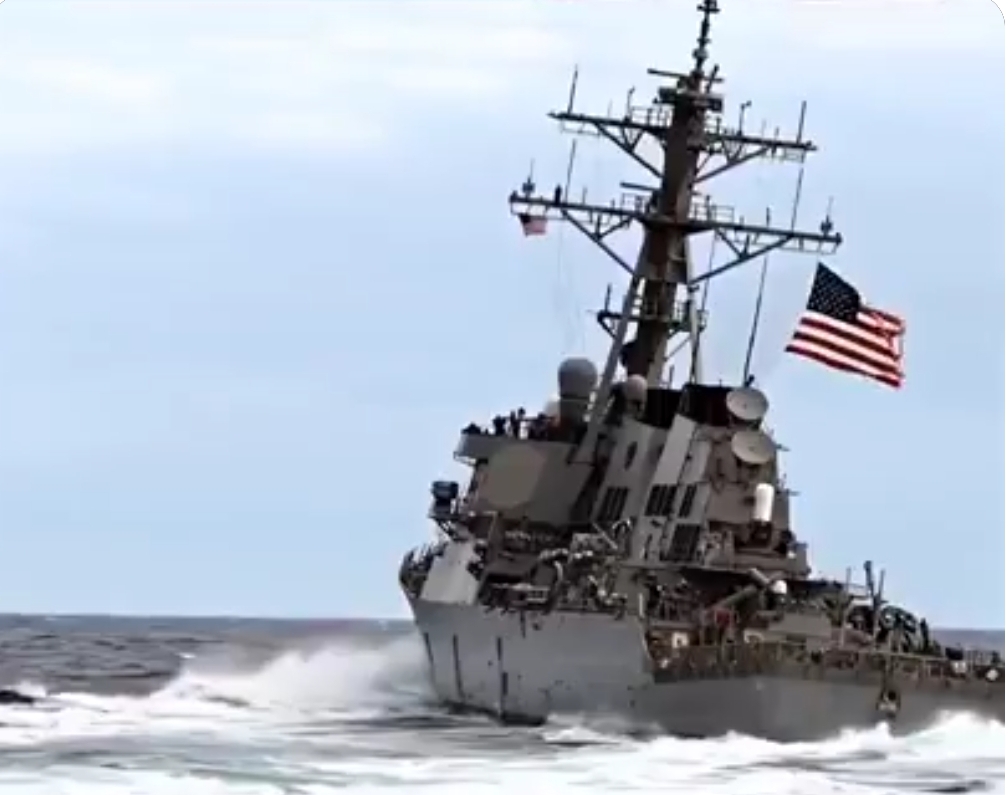
Trump on Tuesday also reiterated his claims about US control over maritime traffic through the Strait of Hormuz, saying the waterway “belongs to the United States Navy and the United States”, while describing the US naval presence there as an effective blockade against Iran.

Speaking at Sparrows Point in Maryland, Trump said the US Navy was enforcing what he called “one of the most effective and impenetrable blockades in history”.

“Nobody’s ever seen a blockade like that, with no ships—zero—getting in,” Trump said, adding that oil shipments from outside Iran had recovered to levels “almost higher than they’ve ever been.”

Trump also described how vessels attempting to pass through the waterway were being dealt with.

“Every once in a while, they’ll do a run, and they’ll either hit the cabin—if it’s got oil, they’ll hit the cabin, or they’ll hit the rudder. If it doesn’t have oil, we just sink the ship,” he said.

“In other words, the Hormuz Strait belongs to the United States Navy and the United States of America. That’s where it belongs, and that’s where it is right now,” Trump said.

During the same event, Trump said the US would remain the world’s leading naval power and claimed that Iran’s military had been severely weakened.

“We’re doing extremely well in the Islamic Republic of Iran, very well. They have no military. It’s shot; the whole place is shot. And they were the evil one. They were the bully of the Middle East. They’re not so much the bully anymore, but we have to finish up. And it’s only a question of which way do we want to do it, the nice way or the not-so-nice way? And pretty soon you’ll find out,” Trump said.

Referring to the US actions in the Strait of Hormuz, Trump said he called the maritime measures a “wall of steel” rather than a blockade.
Trump has also said the US Navy was ensuring that Iran would not obtain a nuclear weapon.

He has repeatedly claimed control over the Strait of Hormuz amid the ongoing conflict with Iran, asserting that the US Navy has restricted maritime traffic through the strategic waterway for Iranian vessels and ports.


Iranian official says ‘illegal routes’ in Strait of Hormuz to soon be blocked

DUBAI : Transit routes in the Strait of Hormuz deemed illegal by Iran will soon be closed, an adviser to ​the Revolutionary Guards’ Commander told the semi-official Fars News ‌Agency on Wednesday, referring to the southern pathway hugging Oman’s coast.

Mohammadreza Naqdi said these “few routes” had been created by blasting and damaging some of the rocky ​passages in the strategic waterway and were used by “small ​boats smuggling oil and transferring it to tankers”, challenging the narrative ⁠that Gulf oil exports are regaining pre-war levels.

“The Strait of Hormuz is ​closed, and the armed forces of the Islamic Republic of Iran ​have full control over it. This situation will continue until Iran’s legitimate demands are met,” he added. A seven-day moving average for crude exports from the ​region was 18.3 million barrels per day on September 30, provisional ​data from Kpler showed, with volumes topping pre-war levels on 14 days in ‌September.

That included Gulf oil sent via Hormuz, the Red Sea, and from terminals and ship-to-ship transfers in the Gulf of Oman.

The IRGC has consistently denied that seaborne crude flows in the ​strait are rebounding ​thanks to US ⁠Navy help, with another IRGC adviser Majid Mirahmadi saying on Thursday that a daily average of ​10 ships transit the waterway against an average of ​125 ⁠before the war which started on February 28, when the US and Israel killed Supreme Leader Ayatollah Ali Khamenei in a Tehran airstrike.

Despite ​growing oil flows in September, Iranian attacks ​on tankers and logistical constraints have persisted and call into question whether higher flows ​can be sustained durably.

Source: Reuters

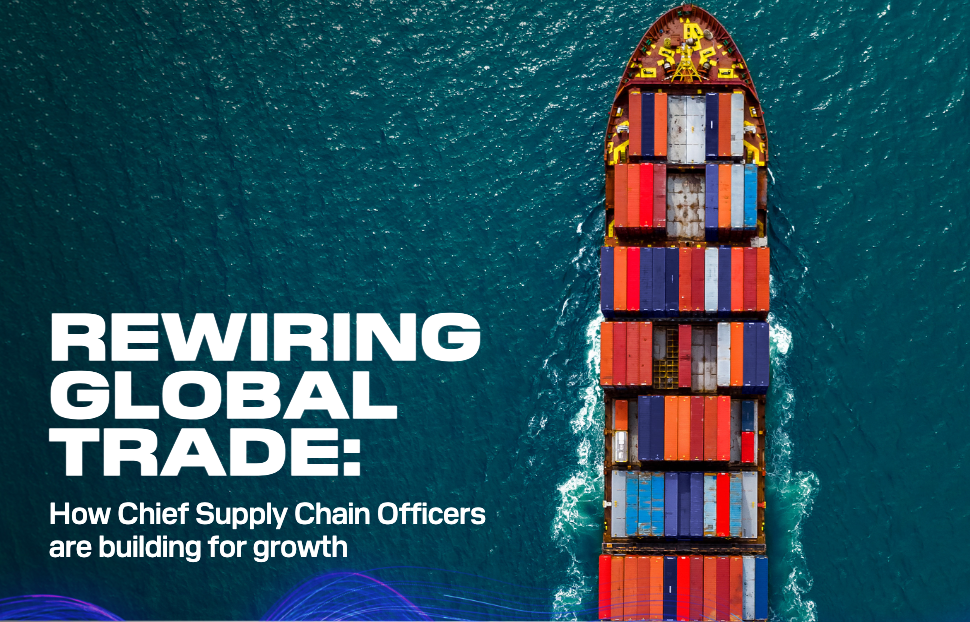
DP World Research: Supply Chain Chiefs Shift from Cost to Choice

DUBAI: Supply chain leaders are redesigning their networks around greater choice and flexibility, as resilience increasingly becomes a source of competitive advantage and growth, according to new research from DP World’s Global Trade Observatory. 

The Chief Supply Chain Officer (CSCO) Pulse Report, based on a survey in August of 103 CSCOs across 14 markets and nine industries, finds that 84% say resilience and optionality have overtaken cost reduction as the primary drivers of supply-chain strategy.

The shift is already changing how businesses design their networks. 71% plan to diversify their supplier base over the next 12 months, with CSCOs also considering changes across inventory, production locations and sourcing as they seek to preserve room to manoeuvre when conditions change.

The report describes this shift as a move from optimisation to optionality: away from designing supply chains primarily around cost and efficiency, towards creating viable alternatives that businesses can call upon as trade rules, tariffs, demand and geopolitical conditions change.

Yuvraj Narayan, Group CEO of DP World, said: “Global trade is not standing still, and neither are the supply chains that underpin it. Businesses are responding to uncertainty not by retreating from growth, but by creating more choices about where they source, how they move goods and how they reach customers.

“The role of the Chief Supply Chain Officer is changing with that environment. Supply-chain decisions increasingly shape where a business can grow, how quickly it can enter new markets and how effectively it can respond when circumstances change. The opportunity is to build networks that combine efficiency with flexibility – giving businesses the options, visibility and connectivity they need to keep growing through uncertainty.”

SUPPLY CHAIN MOVES TO THE HEART OF GROWTH

The report finds that this changing operating model is being accompanied by a broader transformation in the role of supply-chain leadership.

93% of CSCOs say their role in driving business growth has become more central over the past three years, while the research shows supply-chain leaders increasingly contributing to decisions around market entry, investment and risk.

Optionality is also moving beyond protection against disruption to become a tool for growth. 86% say access to alternative and multimodal trade routes is becoming a competitive advantage, giving businesses greater ability to adapt how goods move as conditions change and new opportunities emerge.

The CSCO Pulse Report 2026 explores three major shifts shaping the future of supply-chain leadership: the CSCO’s expanding role as an enabler of business growth; the move from optimisation towards greater optionality; and the capabilities – including digital integration, visibility and lower-carbon supply chains – expected to become increasingly important for future growth.

The full report is available here.

Mawani, SGP launch TOS at Saudi Multipurpose Terminals to boost Cargo-Handling Efficiency

DAMMAM: The Saudi Ports Authority (Mawani) announced that Saudi Global Ports (SGP) has launched a Terminal Operating System (TOS) at its multipurpose terminals at King Abdulaziz Port in Dammam to boost cargo-handling efficiency and service reliability for customers.

The new system provides operations teams with accurate operational data to support cargo planning and the smooth flow of goods, improve equipment allocation, and identify potential delays at an early stage. It also reduces reliance on manual processes, improving coordination and enabling faster responses to changing operational requirements.

Rob Harrison, Group CEO of SGP, said: “Efficient ports help businesses reach markets and grow with confidence. This investment strengthens our ability to support customers’ supply chains as trade and industrial activity develop. It also supports Saudi Vision 2030’s ambition to position the Kingdom as a global logistics hub by improving the performance of the ports serving its economy.”

Ricky Yong, CEO of SGP Multipurpose Terminals, said: “Better planning at the terminal helps customers keep their cargo moving. The dedicated TOS will help us prepare for cargo movements, coordinate equipment and respond more quickly to customer requirements. Our focus is on turning these capabilities into efficient cargo handling and dependable service.”

The system will help port facilities deliver more consistent and efficient services while supporting continued growth in cargo-handling volumes. This will strengthen the readiness of Saudi ports, enhance their global competitiveness, and reinforce their central role in serving the national economy in line with Saudi Vision 2030.

LR strengthens Middle East naval presence with Hossam Edris appointment

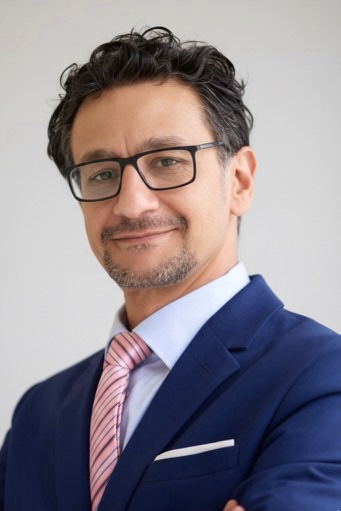
DUBAI: Lloyd’s Register (LR) has appointed Hossam Edris as Naval Business Director for the Middle East, strengthening its capability to support naval and defence programmes across one of the world’s fastest-growing maritime defence markets.

Based in Dubai, Edris will lead LR’s naval and defence business development activities across the region, working closely with government and industry stakeholders as they modernise fleets, strengthen sovereign defence capabilities and adopt advanced maritime technologies.

His appointment further enhances LR’s ability to support navies and defence organisations in addressing evolving operational, assurance and technology challenges while enabling the safe adoption of innovation across the maritime defence sector.

Edris brings more than 20 years of international experience across the aerospace, defence, aviation and technology sectors. Most recently, he managed International Defense Programs at Bombardier Defense, where he led complex defence programmes for customers worldwide, overseeing programme delivery, business performance, customer engagement and strategic growth initiatives.

David Lloyd, Vice President, Naval and Government Business, LR, said: “The Middle East is one of the most dynamic naval markets in the world, with governments investing heavily in new fleet capabilities, defence shipbuilding and maritime security.

“As these programmes grow in scale and complexity, the need for trusted independent assurance becomes increasingly important. Hossam’s appointment strengthens our ability to support naval authorities, shipyards and defence partners with the technical expertise and confidence they need to deliver successful programmes. His understanding of both the regional landscape and the wider defence sector makes him exceptionally well placed to lead our growth in the Middle East.”

Hossam Edris, Naval Business Director, Middle East, LR, said: “The Middle East is undertaking some of the most ambitious naval and maritime defence programmes anywhere in the world. Governments across the region are investing in fleet renewal, domestic shipbuilding capability and advanced technologies to strengthen operational readiness and long-term resilience.

“LR has a strong reputation for independent assurance and technical excellence, and I look forward to working closely with customers across the region to help them manage technical complexity, reduce programme risk and deliver capability with confidence.”

“K” LINE’s LNG Carriers Puteri Johor and Puteri Kedah Receive MPA Green Ship Award

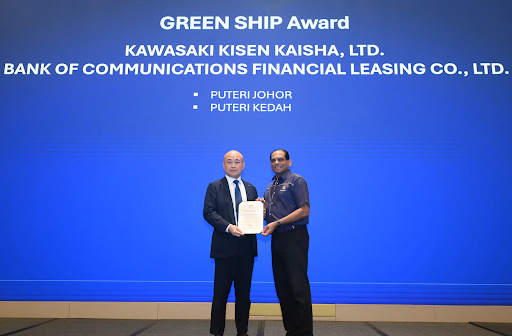
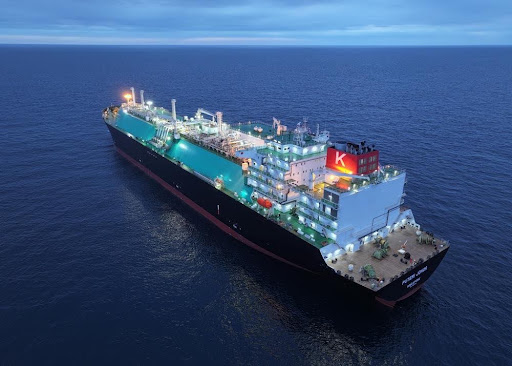
SINGAPORE: Kawasaki Kisen Kaisha, Ltd. (“K” LINE) Group owns, through joint venture companies, and operates the LNG carriers Puteri Johor and Puteri Kedah. The two vessels, together with their registered owner, Bank of Communications Financial Leasing Co., Ltd., have received the Green Ship Award under the Green Ship Programme administered by the Maritime and Port Authority of Singapore (MPA). The award was presented at the Singapore Registry of Ships Forum 2026 held on October 2, 2026.

Puteri Johor K Line “K” LINE's LNG Carriers Puteri Johor and Puteri Kedah Receive MPA Green Ship Award

The Green Ship Award is presented to vessels and shipowners that have contributed to reducing environmental impact and promoting sustainable maritime transportation in the shipping industry. The two award-winning vessels are equipped with highly environmentally efficient X-DF main engines and embody the “K” LINE Group’s initiatives to reduce environmental impact. 

Under its long-term environmental guidelines, “K” LINE Environmental Vision 2050 – Blue Seas for the Future -,* “K” LINE Group has set the goal of achieving net-zero GHG emissions by 2050. The “K” LINE Group will continue to promote the development of an environmentally responsible fleet and initiatives to reduce greenhouse gas emissions, while contributing to the resolution of social issues through the provision of sustainable maritime transportation services. 

* “K” LINE Environmental Vision 2050 – Blue Seas for the Future – (Released on November 4, 2021): 
https://www.kline.co.jp/en/sustainability/environment/management.html

“K” LINE holds Opening Ceremony for New Consolidated Office in Singapore

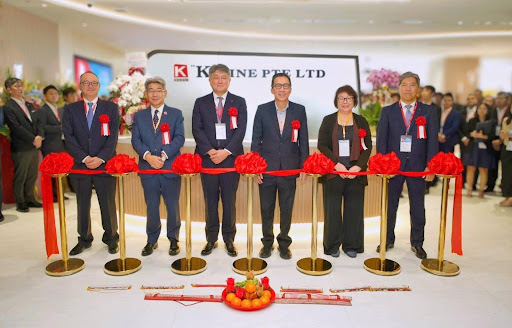
SINGAPORE: Kawasaki Kisen Kaisha, Ltd. (“K” LINE) held an opening ceremony for its new office in Singapore for three of its Singapore- based companies, “K” LINE PTE LTD. (KLPL), K LINE MARINE & ENERGY PTE. LTD. (KME), and K MARINE SHIP MANAGEMENT PTE. LTD. (KMSM). 

To strengthen its business foundation in Singapore and enhance collaboration among Group companies, the Group has consolidated the offices of KLPL, KME and KMSM at Keppel South Central in Singapore’s Central Business District. The companies had previously operated from separate locations across the city.

By bringing together functions related to ship ownership, ship management, and commercial and business operations, the Group aims to maximize its collective strengths and deliver higher value-added services to its customers. 

The ceremony was attended by approximately 280 people from Japan and Singapore, including distinguished guests Mr. Hiroshi Ishikawa, the Ambassador Extraordinary and Plenipotentiary of Japan to Singapore and Mr. Loh Khum Yean, the Chairman of the Maritime and Port Authority of Singapore (MPA), as well as government officials, maritime industry representatives, customers, business partners and colleagues from related companies. They celebrated the opening of the new office with a ribbon-cutting ceremony and other events. In his address at the ceremony, President & CEO Takenori Igarashi expressed his expectation that the new office would become a place where colleagues across different businesses and functions come together, create new value, and help shape the future of the “K” LINE Group in Singapore and across the wider region.

Singapore is one of the world’s leading maritime and logistics hubs, offering not only world-class port infrastructure but also a highly developed ecosystem of maritime services, finance, and legal expertise. It serves as a strategic gateway connecting Southeast Asia with global markets and is a key hub for the “K” LINE Group’s business operations.

The “K” LINE Group will continue to strengthen collaboration among its Group companies while providing high value-added services founded on safety, environmental stewardship, and quality. Through these efforts, the Group aims to achieve sustainable growth and enhance its corporate value.