Home Blog Page 65

AITWA Delegation meets DGP Maharashtra

aitwa 2logo AITWA Delegation meets DGP Maharashtra

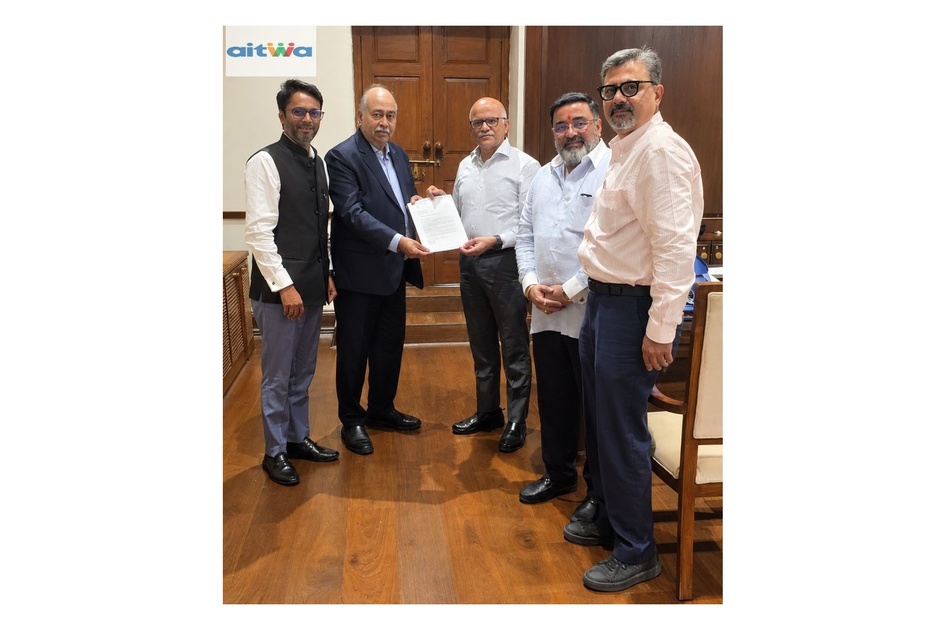
MUMBAI: On Thursday, 8th October 2026, AITWA Team, led by National President Shri Ashok Goyal ji, along with General Secretary Shri Abhishek Gupta ji, AITWA Action Group members from Mumbai – Shri Jitendra Parikh ji and Shri Girish Limda ji met Director General of Police Maharashtra Shri Sadanand Date ji.

The delegation met to express AITWA’s sincere gratitude for the prompt support and effective intervention by the Maharashtra Police in a recent theft matter reported last month in Malegaon, where 90% material was recovered within 48 hours by the Police authorities. We acknowledged their support and requested for similar such support for registering FIRs.

If any such unavoidable situation occurs, AITWA team shall be able to take up the matter in Maharashtra in the right manner, for quick response as per his guidance.

AITWA remains committed to working closely with the authorities for the welfare, safety and security of the transport fraternity.

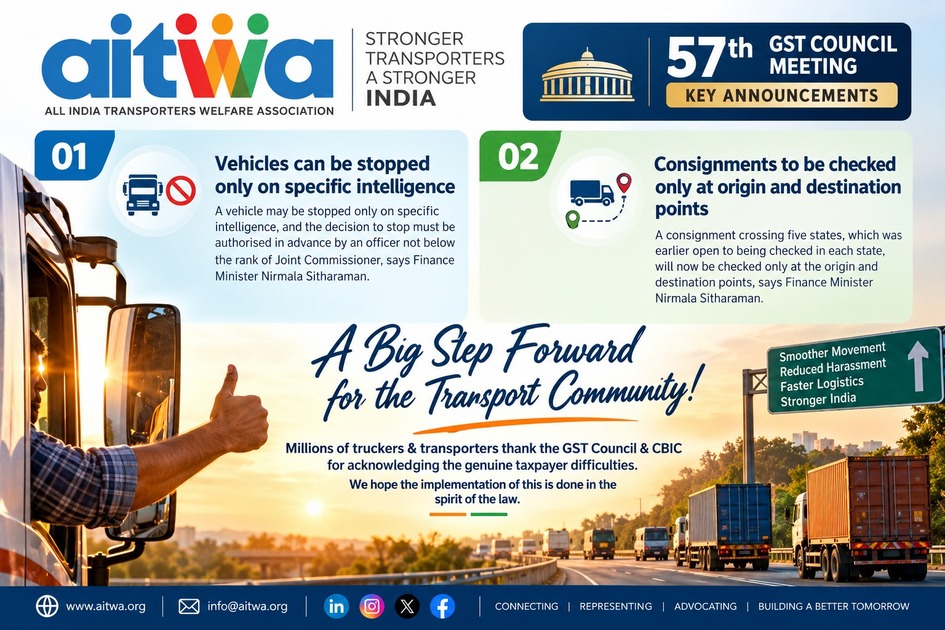
AITWA welcomes major GST Relief for Transporters; calls 57th GST Council decision a significant step towards EoDB

MUMBAI: The All India Transporters Welfare Association (AITWA) has welcomed the key decisions announced at the 57th GST Council meeting to make the inspection of goods in transit more targeted and reduce unnecessary intervention on vehicles and consignments.

Under the new approach, vehicles will be stopped only on the basis of specific intelligence, with prior authorisation by an officer not below the rank of Joint Commissioner. Further, consignments moving across multiple states will be subject to checks primarily at the origin and destination points, rather than being repeatedly checked during transit.

AITWA said these measures address a long-standing concern of the road transport industry and will significantly reduce unnecessary stoppages, delays and uncertainty during the movement of genuine consignments.

AITWA has been fighting for this reform for years

AITWA has consistently raised the issue of excessive transit checks and disproportionate penalties under the GST regime with the Government and tax authorities.

In 2021, AITWA had supported the call for a Bharat Bandh and Chakka Jam on 26 February, with the transport industry specifically demanding relief from impractical E-Way Bill provisions and the harsh consequences under Section 129 of the CGST Act.

Detention of goods for E-Way Bill-related issues could result in penalties running into lakhs of rupees, with the applicable penalty being linked to 200% of the tax payable.

For genuine taxpayers and transporters, even inadvertent documentation errors, delays or circumstances beyond their control could therefore create a disproportionate financial burden. The statutory provision today continues to provide for a penalty of 200% of the tax payable in specified cases.

A major step towards reducing transit-related harassment

AITWA believes the latest decision can fundamentally change the experience of compliant taxpayers and transporters on Indian highways.

With checks becoming intelligence-led rather than routine or repetitive, legitimate consignments should be able to move with greater predictability. Importantly, when an issue does arise, taxpayers and their representatives will have a better opportunity to reach the vehicle and explain the documentation and transaction, rather than facing repeated intervention at multiple points during an inter-state journey.

Mr. Abhishek Gupta, General Secretary, AITWA, said: “AITWA has been fighting this battle for years. We have repeatedly highlighted that a genuine transaction should not become a victim of procedural complications or disproportionate penalties. Error vs Evasion was our representation always. Section 129, particularly the 200% penalty provision, created enormous anxiety and financial exposure for transporters and taxpayers even where there was no intention to evade tax.”

Mr. Ashok Goyal, National President, AITWA, said: “The decision of the GST Council to move towards intelligence-based intervention and restrict unnecessary checks during transit is therefore a very significant relief for the transport community. It will reduce transit disruptions, improve logistics efficiency and strengthen the principle of trust-based taxation.”

“AITWA sincerely appreciates the intervention and efforts of the CBIC, the Policy Wing and the GST Council for listening to the industry’s concerns and acting on issues that we have been consistently raising. Millions of truckers, transporters and genuine taxpayers welcome this step.”

AITWA further said that effective implementation in the spirit of the decision will be critical. The Association hopes that the new framework will bring greater consistency across states, minimise discretionary stoppages and ensure that enforcement remains focused on genuine cases of tax evasion rather than compliant movement of goods.

AITWA looks forward to working constructively with CBIC, the GST Council and state tax administrations to ensure that this important reform translates into a smoother, faster and more transparent movement of goods across India. Further bottlenecks may also be removed in due course with continued dialogue.

India confident of achieving USD 1 trillion export target, sustaining over 7% growth: Piyush Goyal

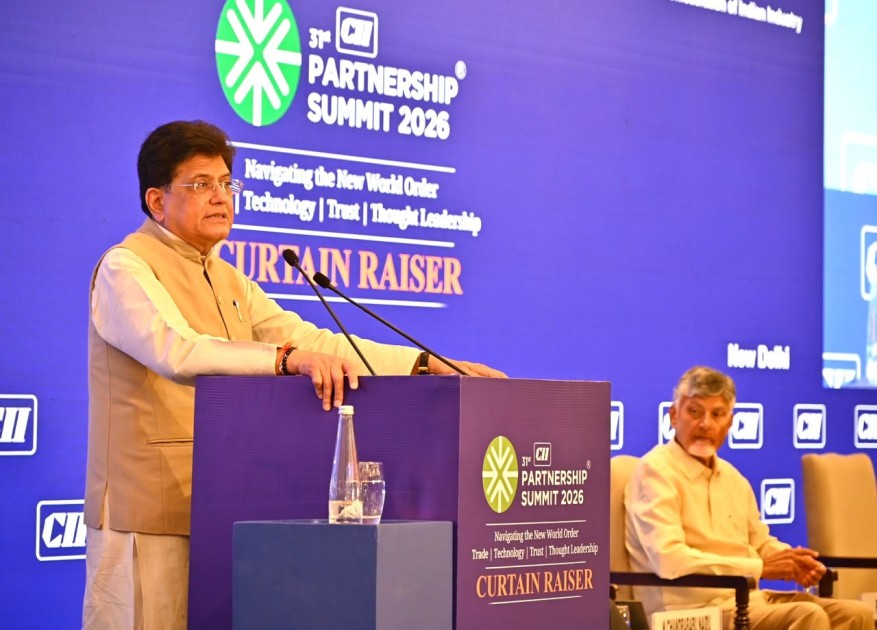
NEW DELHI: Union Minister of Commerce and Industry Shri Piyush Goyal on Thursday said that “India began building bridges when the world was building walls” while addressing the curtain raiser of the 31st CII Partnership Summit in New Delhi. He noted that India recorded USD 863 billion in exports last year and has set itself the target of achieving USD 1 trillion in exports in the current year. This would represent nearly 16 per cent growth in a year when international trade is expected to grow by only around 2.5 to 3 per cent, while the global economy remains vulnerable to shocks and global growth is expected to fall below 3 per cent.

Shri Goyal expressed confidence that India would achieve the USD 1 trillion export target, noting that the target has been set not merely by the government but by the people and businesses of India, including 63 million MSMEs, large and small industries, global capability centres and around 250,000 startups. He also said that the Reserve Bank of India had once again raised its growth projections for the current year and expressed confidence that India would continue to grow at over 7 per cent and remain the fastest-growing large economy.

The Minister attended the curtain raiser along with Chief Minister of Andhra Pradesh Shri Chandrababu Naidu. The Partnership Summit will be held in Visakhapatnam on 12th and 13th November.

Urging countries to participate in the Summit, Shri Goyal said the event would provide an opportunity to look at the India story through the lens of growth, opportunity and partnership. He urged the distinguished guests to ensure that their countries send strong delegations to Visakhapatnam and participate in the various programmes, panels, discussions and formal and informal networking opportunities offered by the Partnership Summit.

He urged CII to establish FTA utilisation desks across every State Council to help MSMEs effectively use Free Trade Agreements, understand new market access opportunities and rules of origin, join delegations, participate in exhibitions and conferences, and showcase their products, technologies and offerings to global markets.

The Minister also highlighted the milestone of Prime Minister Shri Narendra Modi completing 25 years as head of government, beginning with his tenure as Chief Minister of Gujarat from 7th October 2001 and continuing as Prime Minister of India since 26th May 2014. He described this as 25 years of uninterrupted public service and an unblemished track record aimed at making India a truly powerful nation, restoring the glory India had once enjoyed and making India a developed nation by 2047.

Shri Goyal said the collective commitment of 1.4 billion Indians is being taken forward by the Prime Minister towards the mission of making India a developed nation by 2047 and fulfilling the dreams and aspirations of every child born in the country.

Recalling a shloka from Chapter 3, Verse 21 of the Bhagavad Gita, Shri Goyal said, “Whatever a great leader does, others follow. Whatever standard he sets, the world pursues.” He said the country is proud of the 25 years of seva, or service, led from the front by the Prime Minister.

He highlighted the Prime Minister’s focus on reaching the last mile in welfare and good governance, referring to the Jyotigram Yojana in Gujarat, which he said was the first effort at that point of time to take electricity to every home and every farm and ensure 24-hour uninterrupted power for industry to promote industrialisation.

Shri Goyal also referred to the JAM trinity of Jan Dhan, Aadhaar and Mobile, through which India strengthened the connect between people and government, and to Digital India, which enabled digital technology and digital connectivity across the length and breadth of India.

Referring to the 10th edition of the India Mobile Congress, Shri Goyal said Prime Minister Shri Narendra Modi had recalled that the Digital India movement had resulted in savings of over Rs. 5 lakh crore, or over USD 55 billion, for the nation over the last 12 years.

The Minister said that the Prime Minister has consistently chosen reform over the easy path. He cited the introduction of GST to bring different tax systems across the country under one umbrella and the integration of regional power grids into one national grid as examples of this approach.

He said that despite the challenges posed by COVID-19 and the two wars with which the world is grappling, India has continued to remain the world’s fastest-growing large economy. He said Prime Minister Modi has understood the value of technology and demonstrated how technology can serve people at large, with the adoption of modern technology serving as the mainstay and backbone of his work over the last 25 years.

Shri Goyal said that India had earlier been defensive in its approach and hesitant to engage with the developed world, including being unwilling to open up the automobile sector and the country to new technologies. Today, he said, India engages with the world with the self-confidence of a nation on the move, bringing to the table technology, talent, competitiveness and greater market access for its goods and services.

He assured that every free trade agreement and other agreement entered into by India protects sensitive sectors, particularly Indian agriculture, fishermen and MSMEs, while opening up opportunities for exports of agricultural products, fisheries and marine products, high-precision items, engineering products and electronic products made by MSMEs. These agreements also open investment opportunities for countries and companies to come to India and participate in the growth of the world’s largest market.

Shri Goyal said India’s economy, currently around USD 4 trillion, has the potential to grow to USD 30 trillion by 2047. He highlighted India’s youthful and aspirational population and its desire for a better quality of life for itself and its families.

On technology, the Minister said India does not shy away from new-age technologies and adopts the best-of-class global technology developments. He said the country has moved beyond concerns that new technologies could lead to job losses and now has the courage of conviction that these technologies will create new opportunities for India’s talented youth.

He said India would leverage new technologies to offer its talent and skills to the world, improve efficiency and productivity, make Indian goods and services more competitive globally, and create opportunities for youth in areas including cyber security and applications built around emerging technologies. He expressed confidence that Indian industry and the people of India would leverage technological upgradation to the advantage of 1.4 billion Indians by opening newer opportunities in jobs, business and entrepreneurship.

The Minister emphasised that trust is a defining element of India’s engagement with the world. He said that during the COVID-19 pandemic, when the global economy was severely disrupted, India met every international commitment on time, whether relating to the supply of merchandise or provision of services. Even during the strictest lockdowns, export-oriented units continued serving customers while following social protocols and precautions, while broadband services were moved into people’s homes to ensure that services were not affected. Service Level Agreements signed with global companies were also respected and met.

Recalling the 2022 G20 Summit in Rome, Shri Goyal said global leaders had complimented Prime Minister Shri Narendra Modi by describing India as a trusted partner of the globe. He also noted that India had recently seen credit rating upgrades from several credit rating agencies.

The Minister said Indian industry is focused on remaining ahead through cutting-edge technology, progressing on carbon mitigation towards sustainability goals and benefiting from labour reforms that enable industry to prosper while providing Indian labour with social security, good salaries, wages and amenities for a better lifestyle. He said the government is continuously working on ease of doing business measures, good governance and dialogue between industry and government to meet the aspirations and needs of industry and the exacting global standards that India is now willing to adopt and engage with.

Referring to the theme of the Partnership Summit, Shri Goyal said it closely resonates with the five T’s he had highlighted at the 2025 Summit in Visakhapatnam: Technology, Trust, Trade, Talent and Tradition. He said these five T’s reflect great partnerships and that trade, technology, trust and thought leadership are becoming defining features and core elements of India’s growth story.

Shri Goyal also highlighted the significance of the Partnership Summit as an occasion to celebrate India’s achievements, present India’s growth story to the world and build bridges with countries and delegations from around the world.

The Minister said India would stand by its friends through testing and difficult times, reflecting the Indian ethos of “Vasudhaiva Kutumbakam”, under which the world is viewed as one family.

Shri Goyal also complimented Andhra Pradesh Chief Minister Shri Nara Chandrababu Naidu for technology-driven development and governance in Andhra Pradesh. He described Andhra Pradesh as the “sunrise state” of the country and said that when the Central and State Governments work together as partners, the people progress and there is greater prosperity for the people of Andhra Pradesh.

Shri Goyal said Google’s first AI hub is coming up in Visakhapatnam, where the Partnership Summit will be held, while Amaravati is becoming a quantum valley. He said Shri Chandrababu Naidu continues to focus on ease of doing business to promote investments and growth in Andhra Pradesh and the well-being and welfare of every person in the State.

He described this as “Team India at its best”, with the Centre and State working together, the Central Government opening global markets through free trade agreements and other opportunities, and Andhra Pradesh converting these opportunities into factories, data centres and jobs. He said Andhra Pradesh and its people have made India proud through their achievements at home and across the world. Referring to the discussion on AI, quantum computing and the growing influence of technology, he highlighted the contribution of people from Andhra Pradesh across the world in their chosen professions and their abilities in numbers and science, technology and mathematics.

Shri Goyal concluded by saying that India today is aspirational, Indian business is confident and the country is commanding global respect. He said the commitment of 1.4 billion people drives India and expressed confidence that the 31st edition of the Partnership Summit would be another milestone in India’s and Indian industry’s growth story as the country powers towards becoming a USD 30 trillion developed nation.

WTO raises merchandise trade growth forecast to 3.9% as AI boom offsets hit from Middle East

GENEVA : The World Trade Organization is sharply increasing its forecast for merchandise trade growth worldwide this year, more than doubling its earlier prediction to 3.9% as booming AI investments offset a hit from the war in the Middle East.

The Geneva-based trade body says global trade chugged along at a hearty pace, as supply chains adapted and AI-related spending poured in to provide “a powerful boost to goods trade.”

The revised forecast marks a big jump from an initial WTO forecast in this spring for 1.9% growth for merchandise trade. The figure excludes services trade. The trade body forecast growth next year of 4.1%, up from 2.9% predicted in March.

“The revision reflects evidence that global supply chains adapted to disruptions in energy and fertilizer markets, while strong investment in AI-related infrastructure boosted trade in AI-enabling goods,” WTO said. Trade of oil and gas and fertilizer through the Persian Gulf was shaken after the U.S.-Israeli war against Iran began in February.

WTO said merchandise trade grew 3.5% in the first half of the year, powered by the artificial intelligence market.

“Demand for AI-enabling goods such as semiconductors and servers accounted for 47% of global merchandise trade growth in the first half of 2026, and trade in these products rose by 67% year-on-year, accelerating from the already rapid expansion seen in 2024 and 2025,” WTO said.

Robert Steiger, its Chief Economist, said WTO teams — like most forecasters — have been “surprised” at the strength of the AI investment boom. They anticipated that strong growth in AI-enabling goods like electronics and computers would moderate over time because of already-high growth last year and “market saturation” eventually.

“This actually has not happened. Trade in AI-enabling goods grew 16% in value terms in 2024. It grew 31% in value terms in 2025, and it grew an astonishing 67% in the first half of 2026,” he told reporters at WTO headquarters.

Liquefied natural gas exports from the Middle East fell by 47% in the first half of the year, while crude oil exports dropped by nearly a quarter, WTO said. But shipments from other suppliers helped limit the decline to roughly 1% for LNG and about 6% for crude.

WTO said it expects global GDP to grow 2.6% this year and 2.9% in 2027, even though it predicted that the Middle East conflict will continue to weigh on trade through higher energy prices and transport route disruptions.

Maersk raises UK, Ireland inland emergency fuel surcharge due to Middle East conflict

COPENHAGEN: Danish shipping group ​Maersk, said on Thursday ​it was increasing its emergency ⁠fuel surcharge (EFS) on inland transportation ​in the UK and Ireland ​due to the ongoing conflict in the Middle East.

Oil prices rose on ​Thursday on worries about ​supply from the Middle East region amid ‌an ⁠increase in attacks on shipping in the Gulf and the Strait of Hormuz, while ​the US ​cut ⁠output as a hurricane menaced offshore production.

Maersk said ​in a statement it ​was ⁠increasing its EFS to 20% as of October 12, and ⁠that ​it would continue ​to review the surcharge regularly.

ICG conducts 12th National Maritime SAREX-2026 off Paradip coast

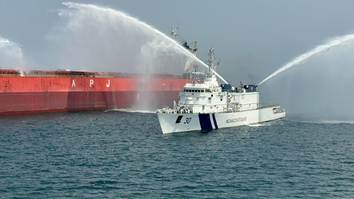
PARADIP: The Indian Coast Guard conducted the 12th National Maritime Search and Rescue Exercise (SAREX-2026) off Paradip, Odisha, under the aegis of the National Maritime Search and Rescue Board (NMSARB) on October 08, 2026. Under the theme “Leveraging Technology to Strengthen SAR Preparedness and Maritime Safety”, the exercise brought together maritime and aeronautical agencies to demonstrate operational readiness, interoperability and coordinated response to mass rescue operations at sea.

The exercise was reviewed by Director General Paramesh Sivamani, DG, ICG and witnessed participation from Coast Guard, Navy, Air Force, Shipping Corporation of India, Directorate General of Shipping, Fisheries, Customs, Marine Police, Paradip Port Authority, and Odisha State Administration. 32 observers from 30 countries also participated in the exercise, marking a significant step towards strengthening international cooperation in maritime Search and Rescue. Their participation facilitated exchange of best practices, enhanced global interoperability and reaffirmed India’s role as a dependable maritime Search and Rescue partner in the region.

The assets deployed included 15 Coast Guard ships, three Dornier aircraft, three Advance Light Helicopters, one Chetak helicopter, IAF C-130J and Mi-17 aircraft, two Indian Navy ships, along with civil and state resources and shore-based support units. The sea drill simulated a Mass Rescue Operation following a concurrent aeronautical and maritime distress emergency. As part of the scenario, a passenger aircraft carrying 228 persons ditched at sea near Paradip Port, with the fuselage impacting the container vessel MV Zumba, resulting in structural damage and fire. The exercise involved activation of the Incident Command Post, firefighting operations, helicopter evacuations, deployment of life rafts and air-droppable life rafts, Jason Cradle and Gemini recovery, rescue basket operations and scramble net procedures. The exercise also included a demonstration of Remotely Operated Vehicle (ROV) capability.

SAREX-2026 reaffirmed the collective resolve of India and its international partners to build a faster, technology-enabled and seamlessly coordinated Search and Rescue framework, in line with the vision of SAGAR and the spirit of MAHASAGAR. The exercise reinforced the principle that every distress call must receive a coordinated response and every effort must be made to save lives at sea.

Bangladesh’s Port deal with UAE-based DP World sparks protests in Dhaka, Chattogram

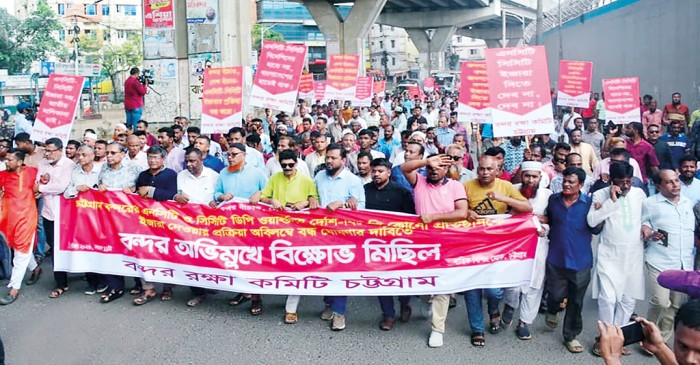
CHATTOGRAM: Bangladesh faced protests in Dhaka and Chattogram on Thursday after the government signed an agreement handing over the operation of a major container terminal at the country’s main seaport to UAE-based DP World.

Dock workers, labour unions and left-leaning political groups have opposed the agreement, raising concerns over the possible impact on jobs, government revenue and foreign-exchange earnings. Some activists and economists have also questioned the decision to hand over a profitable facility that has so far been operated domestically.

The 15-year concession covers the operation and maintenance of the New Mooring Container Terminal (NCT) and its Overflow Container Yard (OCY) at Chattogram Port, which handles the bulk of Bangladesh’s international trade.

In Dhaka, police in riot gear were deployed as protesters gathered outside the Investment Development Authority office, where the agreement was signed. Activists alleged that police used batons to disperse them and said several people, including Bangladesh Communist Party (CPB) President Sajjad Zahir Chandan, were injured.

Police rejected the allegation, saying officers had to physically remove protesters who were lying beneath vehicles carrying ministers, lawmakers and other VIPs arriving for the signing ceremony.

In Chattogram, dock workers staged sit-ins and blocked roads near the port’s administrative building. Riot police and port security personnel were deployed around the facilities.

”The government has already signed the agreement, so there is little left to say. But we want to give the government more time,” said Humayun Kabir, coordinator of the Bandar Rokkha Sangram Parishad (Action Council for Port Protection).

Kabir said workers wanted the government to create an opportunity for discussions on the agreement by Sunday.

”If no such opportunity is created,” dock workers would observe a hunger strike on Monday from 11 am to 1 pm, when they would announce their next programme, he said.

Under the agreement, DP World would operate and maintain Bangladesh’s busiest New Mooring Container Terminal (NCT) and its Overflow Container Yard (OCY).

The government has defended the deal, saying a global operator such as DP World would bring modern technology, reduce corruption at the port, shorten ship waiting times, attract foreign investment and improve the skills of local professionals.

”Modern equipment, digital systems, international operating standards and global logistics connections will make NCT more competitive,” Shipping Minister Sheikh Rabiul Alam said at the signing ceremony.

State-run BSS news agency reported that DP World would make an upfront payment of about USD 49 million for operating the NCT, which handles more than 40 per cent of the port’s container traffic.

The company would also invest more than USD 81 million over the first 10 years to modernise the terminal, BSS said.

The agreement was signed despite opposition from labour unions and political groups.

During Muhammad Yunus’ interim government, Bangladesh signed a 30-year concession in November last year with Danish shipping group APM Terminals to operate another container terminal at Chattogram. The move to lease the NCT was also initiated during the interim administration, prompting dock workers to stage a hunger strike in protest.

Source: First Post

“K” LINE – LNG bunkering vessel “Kaguya” achieves its 200th LNG Bunkering Operation

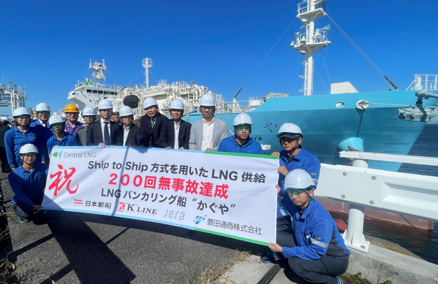
TOKYO: On September 30, 2026 the LNG Bunkering Vessel “Kaguya”*1 achieved a cumulative total of  200th safe ship-to-ship*2 LNG bunkering operations*3 in Mikawa Bay in Japan. Kaguya is owned and operated by joint venture companies*4 in which Kawasaki Kisen Kaisha, Ltd. (“K” LINE) has invested.

“K” LINE has operated an LNG bunkering business for LNG-fueled vessels in the Chubu region through joint venture companies since October 2020.

Through this business, the joint venture companies have established a stable LNG fuel supply chain system in the Chubu region for LNG-fueled vessels, including “K” LINE’s LNG-fueled car carrier CENTURY HIGHWAY GREEN.*5 ,while continuing to expand its LNG bunkering services.

“K” LINE will continue to contribute to the decarbonization of the shipping industry and the reduction of environmental load by providing safe and reliable LNG bunkering services.

*1 This is the first LNG bunkering vessel operating in Japan, began operating in October 2020. The vessel’s name was inspired by the Tale of the Bamboo Cutter, which is considered the oldest story in Japan. It also reflects the companies’ hopes that the LNG bunkering market will grow tall and endure like bamboo.

*2 Ship-to-Ship Bunkering is a method of bunkering in which an LNG bunkering vessel comes alongside an LNG-fueled vessel to supply LNG. This can be done at various locations, such as along quays or piers or when ships are at anchor.

*3 It is expected that LNG fuel’s sulfur oxide (SOx) and particulate matter (PM) emissions will be approximately 100% less than for heavy oil fuels, and it is expected that nitrogen oxide

(NOx) and carbon dioxide (CO2) emissions will be reduced up to 80% and approximately 30%, respectively. LNG shows promise as a marine fuel replacing heavy oil to respond to increasingly stringent international regulations on marine emissions.

*4 Central LNG Shipping Japan Corporation and Central LNG Marine Fuel Japan Corporation are joint venture companies jointly established by “K” LINE, JERA Global Energy Solutions Pte Ltd., Nippon Yusen Kabushiki Kaisha and Toyota Tsusho Corporation.
https://central-lng.com/en/

*5 CENTURY HIGHWAY GREEN is an LNG-fueled car carrier delivered on March 12, 2021. It continues to reduce greenhouse gas (GHG) emissions by using LNG fuel. 
https://www.kline.co.jp/en/news/car/car-20210312.html

Rosatom takes full control of Transport Conglomerate Delo Group in $900M Buyout

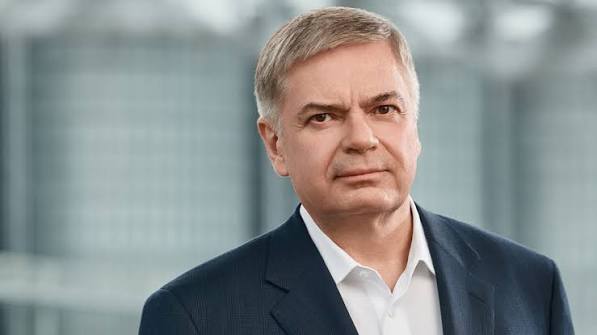
MOSCOW: Russian state nuclear corporation Rosatom has completed its acquisition of founder Sergei Shishkarev’s remaining 51% stake in transport conglomerate Delo, both parties announced Wednesday.

Neither party disclosed the amount Rosatom paid, though Shishkarev has valued his stake in Delo at 77 billion rubles ($900.3 million).

“From this moment, we begin the final consolidation of all Rosatom logistics assets, which will result in the creation of the largest national logistics company,” Rosatom CEO Alexei Likhachev said in a statement.

Likhachev said the deal brought Rosatom’s market share in Russia’s container handling market to 50% and rail container transport to 44%.

He boasted that Rosatom’s logistics arm operates in all Russian maritime basins, owns the country’s largest container fleet and owns port facilities in major cities.

In his statement, Shishkarev cited “insurmountable disagreements” leading to the buyout seven years after Rosatom first bought a stake in Delo in 2019 as part of plans to capitalize on Arctic shipping routes.

Shishkarev, who founded Delo 33 years ago, vowed to remain in the logistics sector and pledged to pay a “significant portion” of the buyout money toward state security.

Russia’s federal budget unveiled recently showed record corporate donations of 471.5 billion rubles ($5.5 billion) in 2026 to help offset surging wartime military spending.

Likhachev said Rosatom’s strategic goal was to “strengthen our country’s transport sovereignty, ensure sustainable international transport and develop the Northern Sea Route, and with it, the Trans-Arctic transport corridor.”

Battery-Powered Ships Sail Past the 2,000-Vessel Milestone

BERGEN: The maritime industry’s decarbonization transition has reached another historic milestone, with the global fleet of battery-powered commercial vessels officially surpassing the 2,000-ship mark.

Data collected on the Maritime Battery Forum (MBF) Ship Registry confirms that 2,000+ commercial ships have been delivered with battery installations or are currently on order. Overall, this fleet represents a massive 2.4 GWh of installed maritime battery capacity, the same electricity to power 240k European homes for the entire day in.

“Reaching 2,000+ ships marks a significant moment for marine electrification,” says Syb ten Cate Hoedemaker, Managing Director of the Maritime Battery Forum. “For years, pure electric applications were primarily limited to small ferries operating on short routes. Thanks to advancements in battery pricing and technology, we are passing a crucial tipping point. It now makes clear economic sense to build larger, fully electric ships, and installations scaling up to 100 MWh per vessel are expected to become a reality soon. This milestone proves the technology is ready to scale.”

The data show that 68% of these vessels operate as hybrids, utilizing a battery in combination with another energy source such as a diesel engine or hydrogen fuel cell. Plug-in hybrid vessels represent 13% of the fleet and 18% are purely electric. Over recent years, the average installed capacity has steadily grown to approximately 1.5 MWh per ship. 

While passenger vessels account for the largest segment at 570 ships, the register demonstrates that every type of commercial vessel is now available in a battery-powered configuration. The milestone fleet encompasses a highly diverse profile, including 313 offshore vessels, 265 cargo vessels, 219 fishing vessels, and 149 workboats, alongside hundreds of specialized vessels (145), yachts (116), tugs (83), and cruise ships (83), proving that scalable energy storage can adapt to varied operational requirements across the sector.

Led by Norway, Europe operates most of the documented battery-powered fleet. However, the true global total is substantially larger, as the register currently tracks only 267 ships in China despite the country’s actual fleet being significantly greater. 

While these technological milestones are highly encouraging, the Maritime Battery Forum recognizes that market momentum alone cannot fully decarbonize global shipping. To bridge this gap, the sector urgently needs the Net-Zero Framework (NZF), a landmark policy up to adoption at the UN’s International Maritime Organization (IMO) this December. The Framework aims at cutting global shipping’s emissions while generating billions for green financial investments.

“The incredible growth of maritime battery installations proves that zero-emission technologies are available today, but market momentum alone isn’t enough,” states Madadh MacLaine, Secretary-General of the Zero Emissions Ship Technology Association (ZESTAs). “Regulatory pressure and ambitious global frameworks are essential to scaling up these technologies even further. Only a strong global fuel standard and pricing mechanism can drive the global uptake of zero-emission fuels and technologies, including batteries.”

Securing a strong NZF this winter is vital to incentivizing the rapid, widespread adoption of truly clean technologies in international shipping, ensuring the maritime sector stays firmly on course to meet its climate targets.