Home Blog Page 68

Panama Canal expects more than 220 Transits during the 2026-2027 Cruise Season

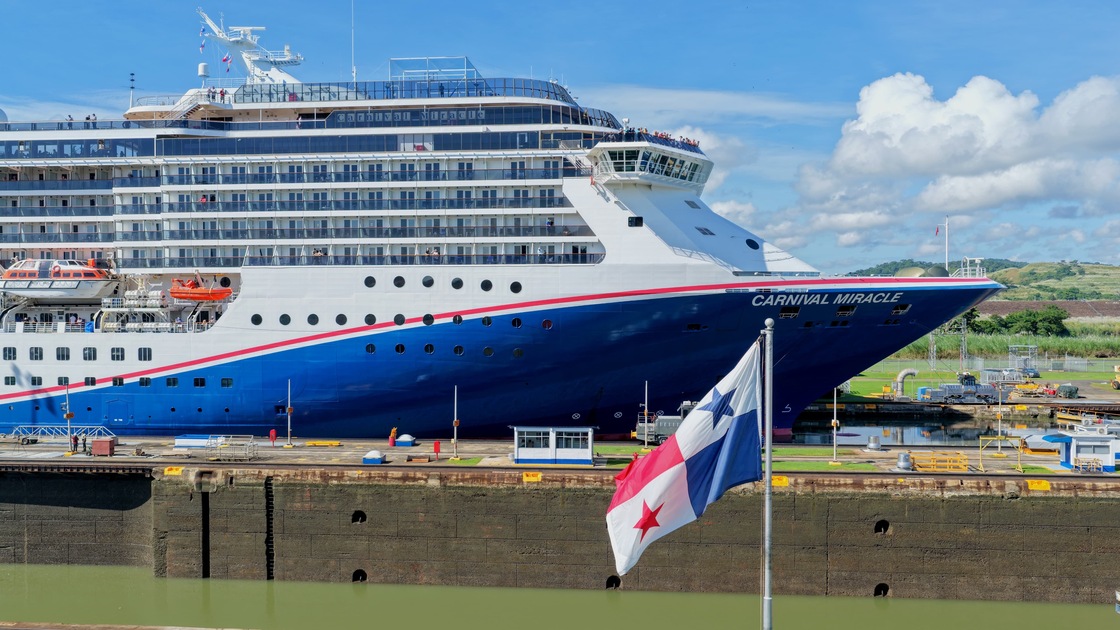
PANAMA CITY: The ship, the Carnival Miracle, opened the Panama Canal’s 2026-2027 cruise season on Wednesday, marking the start of more than 220 transits scheduled for this period.

The ship began her northbound passage through the Miraflores Locks, from the Pacific side to the Atlantic, as part of a 16-day repositioning voyage from Seattle, Washington.

This season affirms that the Panama Canal continues as an appealing strategic route for the cruise industry and reinforces its role for itineraries that connect tourism markets across North America, the Caribbean, and along the Pacific coast.

According to Albano G. Aguilar, Market Analysis and Forecasting Specialist at the Corporate Affairs Office, cruise transits are projected to perform favorably during the fiscal year. This outlook reflects the industry’s sustained expansion, growing global passenger demand, and the optimism of major cruise lines about their future operations.

In 2027, global passenger demand is projected to grow by 5.0%, while the global fleet is set to increase by 16 vessels to a total of 490 ships.

Throughout the season, cruise lines such as Norwegian Cruise Line, Carnival Cruise Line, and Royal Caribbean Cruises will operate itineraries that include both full and partial transits of the Panama Canal. Smaller vessels are also expected to visit, including Le Bellot, the Star Legend, the National Geographic Quest, and the Wind Star.

Five cruise ships will make their first Panama Canal transit this season: L’Austral, Le Laperouse, the Seven Seas Prestige, the Spirit of Adventure, and the Explora III. In addition, 39 Neopanamax transits are expected including three of the largest ships, at 177,882 tons: the Star Princess, the Norwegian Bliss, and the Norwegian Joy.

With this schedule, the Panama Canal begins a new cruise season with positive expectations and a diverse range of transits, from large Neopanamax ships to smaller vessels geared toward specialized tourism experiences. The Panama Canal cruise season runs from October to May each year.

Cabinet approves new logistics authority, commitment of Rs.10,000 Crore towards establishments of the SME Growth Fund

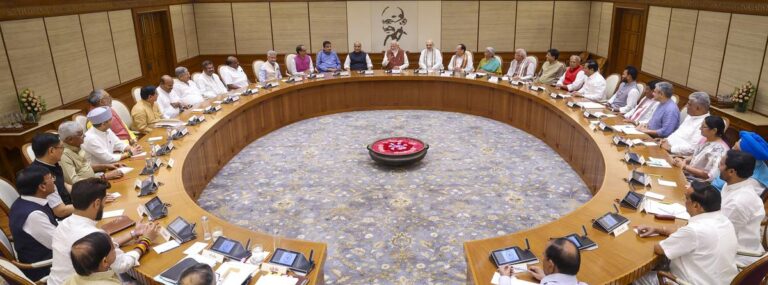
NEW DELHI : The Union Cabinet, chaired by Prime Minister Shri Narendra Modi, on Tuesday approved the Government of India’s commitment of Rs.10,000 crore towards the establishment of the SME Growth Fund (SGF) aimed at catalysing growth-oriented capital for India’s Small and Medium Enterprises (SMEs) and enabling the emergence of champion Indian enterprises across manufacturing, services, technology, innovation-driven sectors, and strategic value chains as per Para 28 of Union Budget 2026-27. This was in part of the holistic set of announcements that were made in Union Budget 2026-27 focussing on providing equity, liquidity and professional support for the MSME ecosystem as a whole.

There are existing funds which provide equity support but majority of them focus on early-stage enterprises and cover majorly Micro enterprises. A structural gap exists for equity growth capital for Small and Medium Enterprises.

The landmark initiative reflects the Government’s commitment towards realizing the vision of Viksit Bharat 2047 by strengthening India’s entrepreneurship ecosystem, deepening the domestic capital market for growth-stage enterprises, and creating a new generation of Indian companies capable of competing at the global level.

SMEs constitute the backbone of the Indian economy, contributing significantly to employment generation, exports, manufacturing output, and innovation. While various initiatives have enhanced access to credit for SMEs, a gap remains in the availability of long-term risk capital required by enterprises seeking to scale, innovate, expand internationally, adopt advanced technologies, undertake acquisitions, and transform into industry leaders. The SME Growth Fund is designed to address this critical financing gap by providing patient growth equity capital to high-potential SMEs with demonstrated business viability and scalability.

The Fund is envisioned as a transformational instrument to support enterprises at critical inflection points in their growth journey. Majority allocation from SGF will be made towards small and medium manufacturing focused enterprises. Fund will also consider SME’s operating in industrial clusters in Tier II and Tier III cities

By providing long-term capital, the initiative will enable Indian SMEs to scale operations, invest in technology and manufacturing capacity, expand into international markets, integrate into global value chains, and undertake strategic investments. The Government expects the Fund to accelerate the emergence of a strong pipeline of Indian companies with the scale, innovation capability, and competitiveness required to become champions in their respective sectors.

The Government’s commitment to the SME Growth Fund complements its ongoing efforts to strengthen the SME sector through reforms, digitalization initiatives, credit support mechanisms, ease of doing business measures, public procurement reforms, startup promotion initiatives, and production-linked incentive programmes.

Under the initiative, the Government of India will provide an aggregate commitment of Rs.10,000 crore to the Alternative Investment Fund (AIF) established under the SGF framework. By enabling manufacturing enterprises to expand capacity, adopt advanced technologies and achieve greater scale, the SGF is expected to improve scale, productivity, and strengthen export competitiveness. Investments across industrial clusters, including those in Tier-II and Tier-III cities, will support balanced regional industrial development, reinforce local supply chains and generate high-quality employment opportunities.

With this initiative, the Government reaffirms its commitment to empowering India’s entrepreneurs and fostering a new generation of competitive enterprises. By catalysing investment in high-growth SMEs, the Fund will help create champions, drive innovation-led industrialization, and generate quality employment opportunities across the country. The initiative will serve as a key pillar in advancing the vision of Viksit Bharat @ 2047.

Cabinet approves setting up of Integrated Transport & Logistics Authority

NEW DELHI : The Union Cabinet, chaired by Prime Minister Shri Narendra Modi, on Tuesday approved the setting up of a Special Purpose Vehicle (SPV), namely, Integrated Transport & Logistics Authority (ITLA) to strengthen research, planning, appraisal, monitoring and impact assessment within the broad domains of Transportation and Logistics.

The approval seeks to address the long-standing challenges arising from fragmented planning and implementation across multiple transport-related Ministries and agencies. By fostering greater coordination and multi-modal integration, ITLA is expected to enhance the efficiency, sustainability and effectiveness of transport infrastructure development in India.

ITLA will have following key roles and responsibilities:

National Apex Institution: ITLA will function as the apex body for integrated transport and logistics planning, research, project appraisal and monitoring, policy support and data analytics.
Long-Term National Transport Master Plan: ITLA will prepare a comprehensive National Transport Master Plan with a planning horizon of ten years or more, covering roads, railways, ports and shipping, civil aviation, inland waterways, coastal shipping, urban mobility and logistics.
Integrated Planning Framework: ITLA will evaluate short-term sectoral plans (5 years or so) and annual plans of transport Ministries to ensure consistency and alignment with the National Transport Master Plan and promote multi-modal infrastructure development.
Technical Appraisal of Major Projects: ITLA will undertake technical appraisal of infrastructure projects of Government of India, costing Rs.500 crore or more. Financial appraisal will continue to be carried out through the existing financial appraisal mechanisms.
Monitoring and Impact Assessment: ITLA will monitor implementation of transport & infrastructure projects above Rs.500 crore and provide a coordinated mechanism for issue resolution and will undertake post-implementation impact assessment of these projects.
National Transport Data Repository (NTDR): ITLA will build a unified transport data repository by obtaining relevant transport and logistics datasets from multiple sources, including GSTN e-way bill, FASTag, Vahan, GPS-based systems, urban traffic management systems and other relevant databases and carry out data analytics (e.g. Freight Flow/O-D analytics) for planning, monitoring and impact assessment.
Advise and assist for review and updation of National Logistics Policy (2022)
Capacity building, training, and skilling in the logistics sector.
Promote Research & Innovations in transport and logistics sectors.

Establishment of the ITLA will play a pivotal role in realizing India’s Vision 2047 by strengthening multimodal connectivity, improving infrastructure efficiency, reducing logistics costs, and enhancing India’s global logistics competitiveness. The ITLA will build institutional capacity for research, planning, big data integration, project monitoring, and evaluation, while supporting capacity building and adoption of international best practices.

India Strengthens Global Maritime Knowledge Linkages with CP Srivastava Chair at WMU

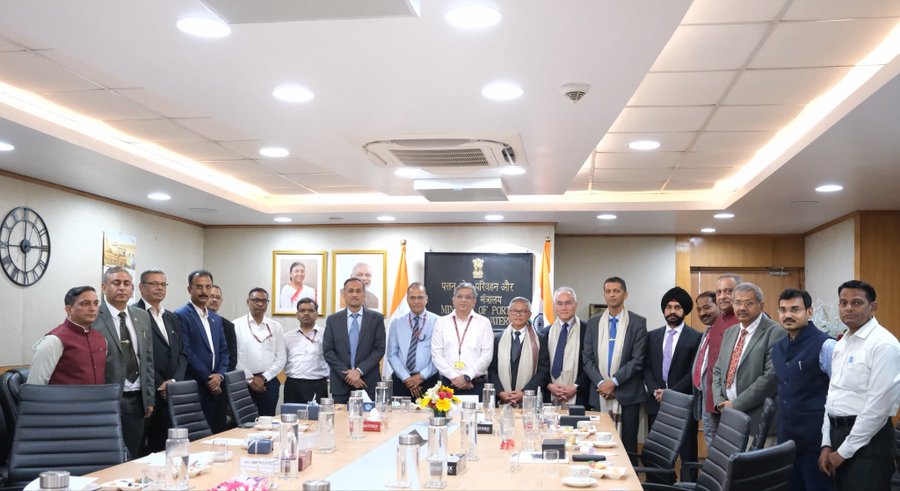
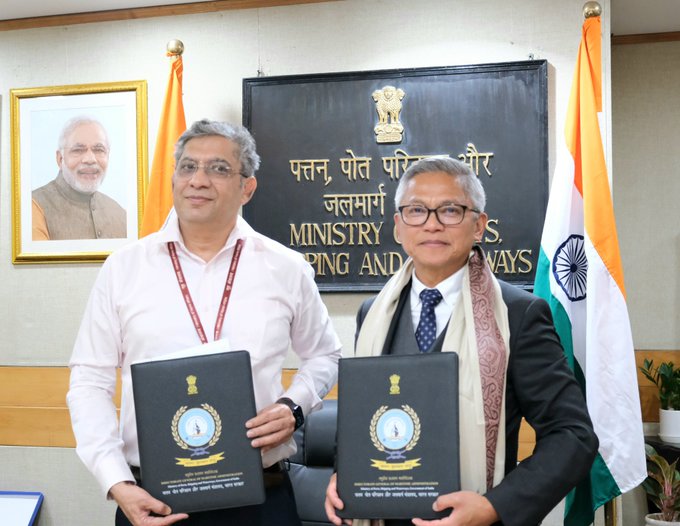
MALMÖ, SWEDEN : India is set to deepen its engagement with global maritime education and research with the establishment of the CP Srivastava Chair in Shipping and Port Management at the World Maritime University (WMU), Malmö.

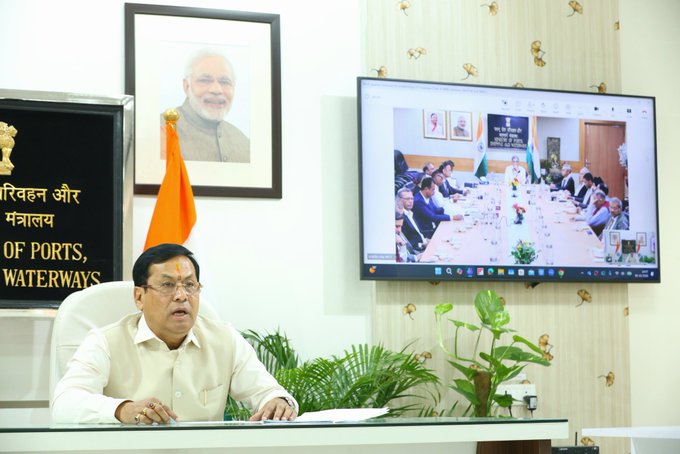
Union Minister for Ports, Shipping and Waterways Shri Sarbananda Sonowal virtually joined the Memorandum of Agreement (MoA) signing ceremony for the establishment of the Chair, describing the initiative as an important step towards transforming global maritime knowledge and expertise into capabilities that can contribute to India’s long-term maritime development. The Chair has been established in tribute to Dr. Chandrika Prasad Srivastava, one of India’s distinguished maritime leaders and a pioneering figure in international maritime affairs. Dr. Srivastava was the founding father of the World Maritime University and served as the Secretary-General of the International Maritime Organization (IMO) for the longest tenure in the organisation’s history.

The establishment of the CP Srivastava Chair is expected to strengthen academic collaboration, research and knowledge exchange in key areas of the maritime sector, including green shipping, maritime safety, sustainable maritime development and modern port management.

The initiative comes at a time when the global maritime industry is undergoing a major transformation driven by decarbonisation, digitalisation, technological innovation and the need for more efficient and resilient port infrastructure. The Chair can provide a platform for advanced research, policy-oriented studies and international cooperation addressing these emerging challenges. Shri Sonowal said the initiative reflects India’s growing role in the global maritime ecosystem and its commitment to developing a future-ready maritime sector.

Under the visionary leadership of Prime Minister Shri Narendra Modi, the initiative is expected to help translate international knowledge, research and best practices into Indian capabilities, skills and institutional capacity. The focus on green shipping, maritime safety and modern port management will support India’s broader ambition of building a competitive, sustainable and globally integrated maritime economy.

The CP Srivastava Chair also represents a lasting tribute to the legacy of a distinguished Indian maritime statesman whose contributions helped shape the international maritime education and governance landscape. By linking India’s maritime priorities with the global academic and research ecosystem, the initiative is poised to contribute to innovation, human-resource development, sustainable shipping and efficient port management, while supporting the country’s long-term maritime growth objectives.

India reaffirms commitment to Green Shipping Corridors at Global Gateway Regional Workshop

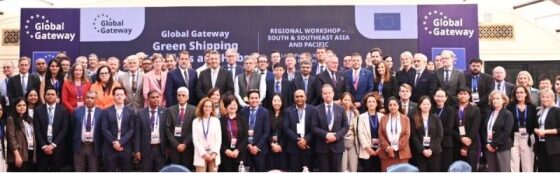
NEW DELHI : India reaffirmed its commitment to advancing green and sustainable maritime transport as Shri Vijay Kumar, Secretary, Ministry of Ports, Shipping and Waterways (MoPSW), delivered the opening remarks at the Global Gateway Green Shipping Corridors and Hubs (GGGSCH) Regional Workshop for Asia, Southeast Asia and the Pacific here in New Delhi.

Shri Vijay Kumar addressed the opening session alongside Mr. Apostolos Tzitzikostas, European Commissioner for Sustainable Transport and Tourism, highlighting the importance of stronger international cooperation in accelerating the transition towards greener and more resilient shipping.

The regional workshop brought together policymakers, industry leaders and international partners to deliberate on key areas including the development of green shipping corridors, clean energy solutions and sustainable maritime transport.

The platform provided an opportunity for participating countries and stakeholders to exchange perspectives, explore collaborative approaches and strengthen partnerships aimed at supporting the decarbonisation of the maritime sector.

With the global shipping industry undergoing a significant transition towards cleaner fuels and low-emission technologies, green shipping corridors are emerging as an important mechanism for connecting ports, shipping lines, energy providers and other stakeholders in building sustainable maritime ecosystems.

The workshop also underscored the growing importance of international collaboration, innovation and clean-energy infrastructure in achieving long-term maritime sustainability. India’s participation reflects its continued focus on strengthening global partnerships and supporting the development of a greener, cleaner and more resilient maritime future for the region and the wider global shipping community.

Indian shipyards must win foreign orders and deliver ships on time : Rajnath Singh

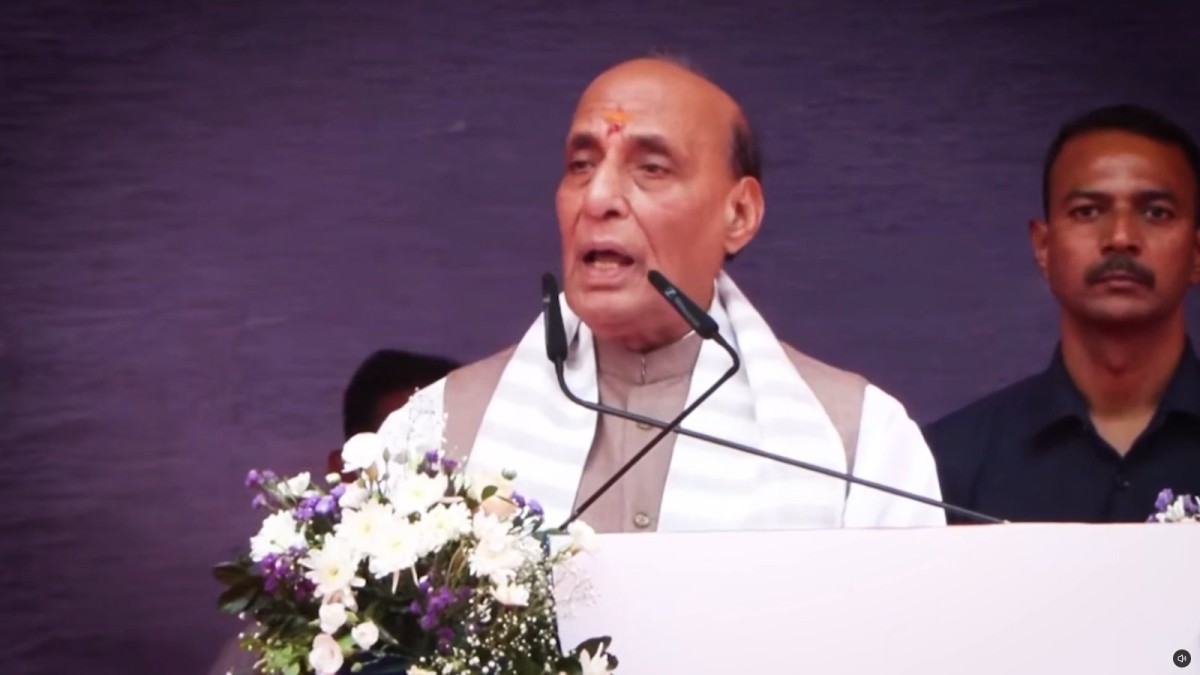
VISAKHAPATNAM: Defence Minister Shri Rajnath Singh on Tuesday (October 6, 2026) said Indian shipyards must move beyond building for the country’s own needs and compete for orders from friendly foreign nations. The goal, he said at the launch of the Indian Navy’s first indigenous Fleet Support Ship at Hindustan Shipyard Limited (HSL) in Visakhapatnam, was to make India a major maritime power.

He called for transforming Visakhapatnam into an integrated maritime industrial hub. Pointing to the city’s strategic advantages (the Eastern Naval Command, the Naval Dockyard, HSL and the Visakhapatnam Port), the Minister said India’s growing maritime power could not rely on the Navy or shipyards in isolation. He proposed a national framework involving the Navy, public sector undertakings, the Defence Research and Development Organisation (DRDO), academia, industry bodies, MSMEs and startups.

“The objective should be to develop a complete shipbuilding ecosystem around HSL, supported by logistics, port infrastructure, research, technology, and skilled manpower. Visakhapatnam is emerging as an ideal place, transforming as the country’s premier maritime industrial hub. The State government is also supporting well in reaching this goal,” he said.

Indian shipyards should also build a strong global footprint in ship repair, maintenance and advanced maritime engineering services, the Minister said.

The Fleet Support Ship Surya is the first of five in the series. Mr. Singh also laid the keel for the fifth ship (FSS-5) and inaugurated HSL’s newly modernised Slipway-4 and a 300-tonne Goliath crane.

“The launch is a symbol of what we have accomplished. The keel laying is a symbol of our resolve, and the new Slipway is a symbol of our growing capabilities,” he said. “If we talk about making India a major maritime power today, we are not beginning a new chapter. We are moving forward to once again strengthen the glorious heritage that India established centuries ago.”

The five ships are being built at HSL under a ₹19,000-crore contract with 82% indigenous content. Surya displaces about 43,500 tonnes and can refuel and resupply several warships at sea at once.

“I take great pride in the fact that, because of your valour and dedication, our Navy is counted among the most powerful naval forces in the world. I am also pleased and proud that the Indian Navy’s presence and strength are strongly felt across the Indo-Pacific region,” Mr. Singh told naval personnel.

Operational update: Port traffic flow normalised at JNPA following cargo growth and vessel bunching

MUMBAI : Jawaharlal Nehru Port Authority (JNPA) continues to record substantial growth in container cargo throughput across all terminals. In recent days, the port experienced a sharp surge in export cargo arrival due to simultaneous bunching of container vessels, where export cargo for more than 15 vessels arrived at the terminal gates around the same time. This concentrated movement occurred during the weekend period of Friday (02.10.2026) and Saturday (03.10.2026), leading to temporary queues and slight delays in the entry and exit of container trailers.

Taking immediate cognizance, JNPA and the terminal operators initiated timely interventions and instituted extra precautionary measures in close coordination with all stakeholders, including Container Freight Stations (CFSs) and local traffic authorities. Consequently, the congestion was effectively resolved, and traffic movement returned to normal starting Sunday morning (04.10.2026). At present, there no congestion across all terminal gates, and traffic is moving smoothly.

Key Operational Highlights & Performance Metrics:
High Vessel-Side Handling & Volume Surge: Driven by robust EXIM demand, total daily quay-side handling scaled up to 35,307 TEUs on 04 October and 32,972 TEUs on 05 October, operating significantly higher than the standard daily port average benchmark. Over 16 to 17 container vessels were simultaneously berthed and handled across terminals during peak weekend operations.

Gate Movement Variations: During peak cargo ingress on Friday (02.10.2026) and Saturday (03.10.2026), total terminal gate movements reached high volumes of 21,796 TEUs (18,391 trucks) and 20,684 TEUs (17,535 trucks) per day, respectively. Through enhanced gate automation and additional deployment, throughput stabilized to 19,294 TEUs (16,332 trucks) on 04 October and 16,972 TEUs (15,045 trucks) on 05 October, bringing overall average truck turnaround time down to a brisk 1.47 hours port-wide.

Yard Occupancy & Enhanced Evacuation: Overall yard inventory dropped from a peak of 120,173 TEUs (66.89% occupancy) on 02 October to 94,519 TEUs (52.61% occupancy) by 06 October, ensuring ample yard capacity across all terminals.

Coordinated Clearance with CFS Operators: Through proactive coordination between terminals and CFS operators for rapid import evacuation, total CFS import pendency was brought down from 22,622 TEUs on 04 October to 15,770 TEUs by the morning of 06 October, de-clogging approach lanes and sustaining seamless logistics flow.

Port operations and terminal gates continue to function seamlessly. With 24/7 real-time monitoring in place, JNPA assures all trade stakeholders and transporters that approach corridors and entry gates remain completely clear and free-flowing.


About Jawaharlal Nehru Port Authority (JNPA):

The Jawaharlal Nehru Port Authority (JNPA) is one of India’s premier container-handling ports and a key gateway for the country’s EXIM trade. JNPA currently operates five container terminals — NSFT, NSICT, NSIGT, BMCT and APMT. The port also has a shallow water berth for general cargo, operated by NSDT. Its liquid cargo facilities include a terminal managed by the BPCL-IOCL consortium and an additional liquid cargo terminal developed by JNPA and operated by M/s JSW-JNPT Liquid Terminal Pvt. Ltd. The port’s coastal berth further strengthens maritime connectivity with other Indian ports and supports the growth of coastal cargo and container movement.

Spread across 277 hectares, JNPA also operates a strategically located multi-product Special Economic Zone (SEZ) equipped with modern infrastructure and facilities to support export-oriented industries and promote trade and investment.

Looking ahead, JNPA is developing the Vadhvan Port, an all-weather, deep-draft, greenfield port in Maharashtra and the 13th Major Port of India.

VOC Port highlights role of ports in India’s Hydrogen Economy at Hydrogen Council Business Forum 2026

MUMBAI : The V.O. Chidambaranar Port Authority (VOC Port) participated in the Hydrogen Council Business Forum 2026, being held from 6–8 October 2026 at JW Marriott Sahar, Mumbai, bringing together leading stakeholders from the global and Indian hydrogen, energy and maritime sectors. As part of the forum, Shri Susanta Kumar Purohit, IRSEE, Chairperson, V.O. Chidambaranar Port Authority and Paradip Port Authority, participated as a panelist in the session titled “Hydrogen Hubs & Ports” held on 6 October.

The session was moderated by Nishaanth Balashanmugam, CEO and Director, GH2 India, and featured Captain Prashant S. Widge, Executive Director – Maritime, India & Indonesia, Smart Freight Centre, and Shri J. Senthil Kumar, Principal Officer, Mercantile Marine Department, Kochi, among other industry stakeholders.
The discussion focused on the evolving role of ports as hydrogen hubs, covering critical aspects such as infrastructure development, logistics, energy transition and the integration of hydrogen into the maritime ecosystem.

With their strategic infrastructure, connectivity and proximity to energy-intensive industries, ports are well positioned to support the emerging hydrogen value chain. They can play a key role in facilitating the production, storage, handling, transportation and export of green hydrogen and its derivatives.

The participation of VOC Port at the forum underlines the growing importance of Indian ports in the country’s clean-energy transition and highlights the sector’s potential to contribute to the development of a robust hydrogen ecosystem and sustainable maritime economy.

Key Takeaways

  • VOC Port participated in the Hydrogen Council Business Forum 2026 in Mumbai.
  • Shri Susanta Kumar Purohit, IRSEE, Chairperson of VOC Port and Paradip Port Authority, joined the “Hydrogen Hubs & Ports” panel.
  • The session examined the transformation of ports into strategic hydrogen hubs.
  • Discussions covered infrastructure, logistics, clean energy and maritime applications.
  • Ports can support the hydrogen value chain from production and storage to movement and export.
  • The forum highlighted the strategic role of ports in India’s energy transition and green maritime future.

NSFT crosses 1 million TEU milestone, celebrates teamwork behind operational achievement

Nhava Sheva Freeport Terminal marks a major landmark in its operational journey, recognising the collective contribution of its workforce and stakeholders

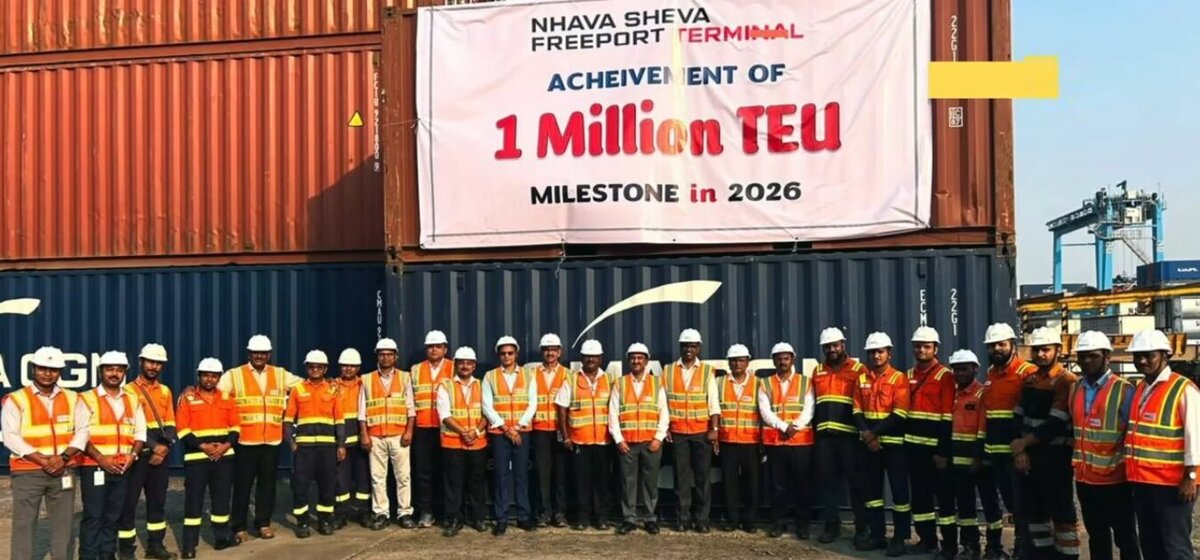
NAVI MUMBAI: Nhava Sheva Freeport Terminal (NSFT) has achieved a significant operational milestone by crossing the 1 million TEU mark, highlighting the terminal’s continued operational progress and the coordinated efforts of its teams across functions.

Announcing the achievement through a post on LinkedIn, Nhava Sheva Freeport Terminal described the milestone as much more than a number, stating that it reflects the dedication, discipline and coordinated efforts of every team member who contributes to keeping the terminal’s operations moving efficiently.

The milestone represents the collective contribution of teams working across operations, engineering, planning and support functions. According to NSFT, every function and every individual contribution has played a role in reaching the landmark figure.

A Milestone Built on Teamwork

Container terminal operations depend on close coordination between multiple operational and support functions, and NSFT’s 1-million-TEU achievement reflects this integrated approach.

From frontline operational activities and engineering support to planning and other critical functions, the milestone has been achieved through the combined efforts of Team NSFT, working together to maintain the terminal’s operational performance.

Recognising the contribution of its wider ecosystem, NSFT also thanked its team members and all stakeholders for being part of the journey.

“Celebrating 1 Million TEUs at NSFT!” the terminal stated in its LinkedIn communication, while acknowledging the commitment and collaborative efforts that made the achievement possible.

Looking Ahead to the Next Million

For NSFT, the 1-million-TEU milestone marks an important chapter in its operational journey while also setting the stage for future growth.

The terminal concluded its message on an ambitious note, expressing its aspiration to move towards “the next million—and many more milestones ahead.”

The achievement therefore stands not merely as a throughput figure, but as a recognition of the people, processes and partnerships that support container terminal operations. As NSFT looks ahead, the milestone provides another platform for its teams and stakeholders to build on the progress achieved so far.

IFSCA and ADB Join Forces to Bridge MSME Trade Finance Gap through GIFT IFSC

High-Level Workshop Explores GIFT IFSC’s Role in Unlocking Competitive Trade Finance for Indian MSME Exporters and Advancing the Viksit Bharat@2047 Vision

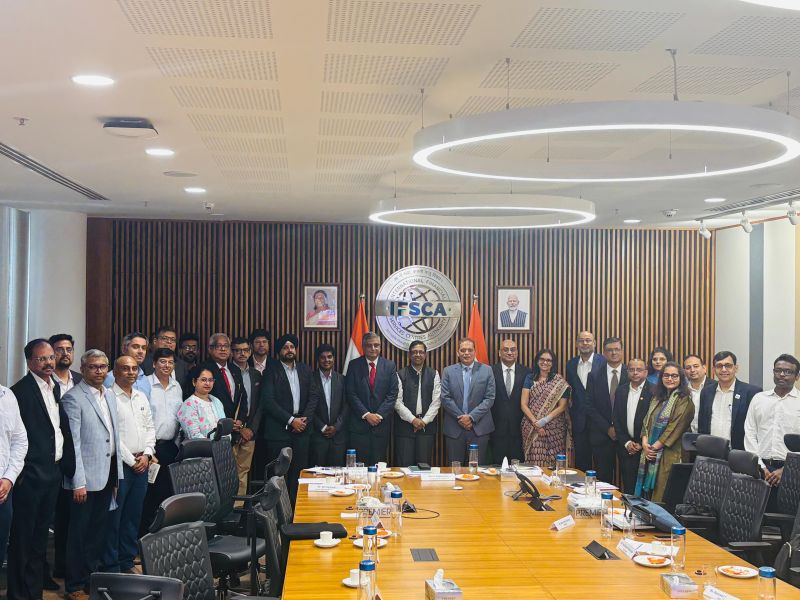
GANDHINAGAR: The International Financial Services Centres Authority (IFSCA), in collaboration with the Asian Development Bank (ADB), convened a high-level workshop on October 1, 2026, at IFSCA Tower, GIFT City, to explore new avenues for strengthening access to trade finance for India’s Micro, Small and Medium Enterprises (MSMEs).

The workshop, titled “Unlocking Trade Finance for MSMEs – The Role of GIFT IFSC in Viksit Bharat@2047,” brought together key stakeholders from India’s trade finance, credit guarantee, export insurance, banking and financial services ecosystem to deliberate on ways to bridge the financing gap faced by MSME exporters.

The initiative assumes particular significance as Indian MSMEs continue to play a crucial role in strengthening the country’s export competitiveness and integrating domestic businesses with global value chains. Access to affordable, competitive and timely trade finance remains an important enabler for MSMEs seeking to expand their international footprint.

The workshop saw participation from leading institutions and industry stakeholders, including CGTMSE-India, National Credit Guarantee Trustee Company Ltd. (NCGTC), ECGC Limited, India Exim Bank, Small Industries Development Bank of India (SIDBI), IFSC Banking Units, International Trade Finance Services (ITFS) platforms, factoring companies, insurers and industry associations.

Competitive Trade Finance Key to Export Competitiveness

A key message emerging from the discussions was the importance of competitive export finance in enhancing the ability of Indian MSMEs to compete in international markets.

For smaller exporters, financing constraints can affect their ability to accept larger orders, manage working-capital requirements, offer competitive payment terms and withstand longer international trade cycles. Strengthening the availability of trade finance, therefore, can have a direct impact on the scalability and global competitiveness of MSME businesses.

The workshop highlighted the potential of factoring and ITFS platforms to unlock working capital and provide greater liquidity to MSME exporters. By enabling businesses to convert receivables into immediate liquidity, such mechanisms can help address one of the most persistent challenges faced by smaller enterprises engaged in international trade.

Risk-Sharing Mechanisms Can Crowd-In Capital

The deliberations also underlined the importance of creating an enabling risk-sharing ecosystem involving credit guarantees, export insurance, risk-sharing arrangements and blended finance.

Such mechanisms can help reduce perceived risks for lenders and investors while encouraging greater participation of private capital in financing MSME trade. A coordinated approach involving financial institutions, insurers, guarantee providers and international financing institutions could potentially expand the pool of capital available to India’s smaller exporters.

The participation of institutions such as ECGC, Exim Bank, SIDBI and CGTMSE, alongside financial institutions operating through GIFT IFSC, reflects the importance of collaboration across different segments of the trade-finance ecosystem.

GIFT IFSC Emerging as a Global Gateway

A major theme of the workshop was the potential of GIFT IFSC to emerge as a global gateway connecting Indian MSMEs with international sources of trade finance.

With its international financial ecosystem and growing presence of banking and financial services institutions, GIFT IFSC can play an important role in facilitating cross-border financing solutions for Indian businesses.

The workshop explored how the international financial architecture available through GIFT IFSC could be leveraged to provide MSMEs with wider access to global capital, innovative financing structures and internationally oriented trade-finance solutions.

Exploring New Avenues Through Niryat Protsahan

The discussions also explored opportunities to extend initiatives such as Niryat Protsahan through GIFT IFSC, potentially creating additional avenues for supporting Indian exporters and strengthening their access to international financial resources.

The integration of such initiatives with the broader GIFT IFSC ecosystem could contribute to developing a more connected and efficient trade-finance framework, particularly for MSMEs that may otherwise face difficulties accessing international financing.

Strengthening the Foundation for Viksit Bharat@2047

The workshop ultimately reaffirmed the shared commitment of participating institutions towards building a globally integrated, accessible and resilient trade-finance ecosystem for Indian MSMEs.

As India advances towards the vision of Viksit Bharat@2047, improving the availability of trade finance for MSMEs will be critical to expanding exports, creating employment, strengthening domestic enterprises and enabling Indian businesses to participate more effectively in global value chains.

The IFSCA-ADB initiative at GIFT IFSC represents an important step towards bringing together regulators, financial institutions, insurers, guarantee providers, technology platforms and industry bodies to address the structural challenges surrounding MSME trade finance.

With GIFT IFSC positioned at the intersection of India’s domestic economy and global financial markets, the workshop highlighted its growing potential to become a strategic gateway for international trade finance and a catalyst for India’s next phase of export-led MSME growth.