Home Blog Page 69

Blue Dart and NCRTC Sign MoU to Explore Express Parcel Movement on the Delhi-Meerut Namo Bharat Corridor

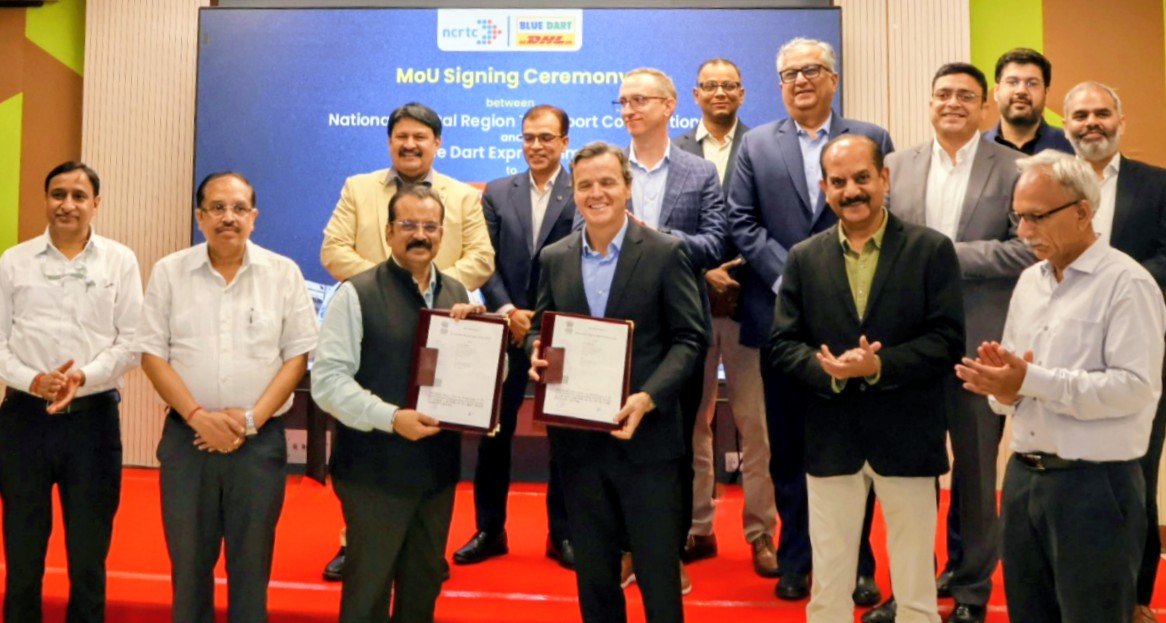
MUMBAI: Blue Dart Express Limited, South Asia’s premier express air and integrated transportation and distribution company, has signed a Memorandum of Understanding (MoU) with the National Capital Region Transport Corporation (NCRTC) to explore the movement of express parcels on the Delhi–Ghaziabad–Meerut Namo Bharat corridor.

The collaboration will examine how Blue Dart’s pickup and delivery network can move express parcels utilizing the transformational regional rail connectivity to serve businesses and customers across the National Capital Region. As part of the MoU, the two organisations will assess operational requirements, parcel volumes, station facilities, service standards and commercial arrangements to arrive at a feasible solution.

The 82 km Namo Bharat corridor connects Delhi, Ghaziabad and Meerut. Its Sarai Kale Khan station is seamlessly connected to Hazrat Nizamuddin railway station and the inter-state bus terminal, while the Anand Vihar station also has been connected to the Anand Vihar railway station and two inter-state bus terminals. Such multi-modal connectivity makes the corridor relevant to the movement of shipments between established transport hubs and the businesses they serve. The proposed approach would set-up an optimal link between the semi-high-speed regional rail movement with Blue Dart’s existing pickup and delivery services, subject to operational feasibility and arrangements agreed by both organisations.

On the partnership, Shri Shalabh Goel, Managing Director, NCRTC, stated, “Namo Bharat is a strategic intervention to transform the regional connectivity across the National Capital Region and help reduce vehicular congestion and air pollution. In a short span of time, this service has gained popularity among the people and is enabling easy access to jobs, education, healthcare and affordable housing. Our collaboration with Blue Dart gives us an opportunity to explore how this new-age infrastructure could also serve the freight ecosystem with the convenience and benefit of the people at the centre.”

Pablo Ciano, CEO, DHL eCommerce Division, said, “India is a significant growth market for DHL eCommerce, and Blue Dart’s service quality and network are central to how we serve its customers. As businesses grow and supply chains evolve, we need to keep looking at how new-age infrastructure can strengthen that network. This collaboration with NCRTC is an opportunity to explore how the transformational regional rail connectivity could add value for customers in the National Capital Region.”

Balfour Manuel, Managing Director, Blue Dart Express Ltd., said, “For our customers, reliability depends on how well every part of a shipment’s journey works together. This MoU gives us the opportunity to examine how Namo Bharat’s semi-high-speed regional connectivity could be integrated with Blue Dart’s pickup and delivery capabilities. We will work with NCRTC to identify where this approach could add value for businesses while supporting our efforts to develop more sustainable logistics solutions.”

The collaboration forms part of Blue Dart’s continued work to strengthen its integrated transportation network and explore solutions that respond to evolving customer needs.
Crown Worldwide Group inaugurates New Facility in Delhi NCR, bringing “One Crown” approach to Life in India

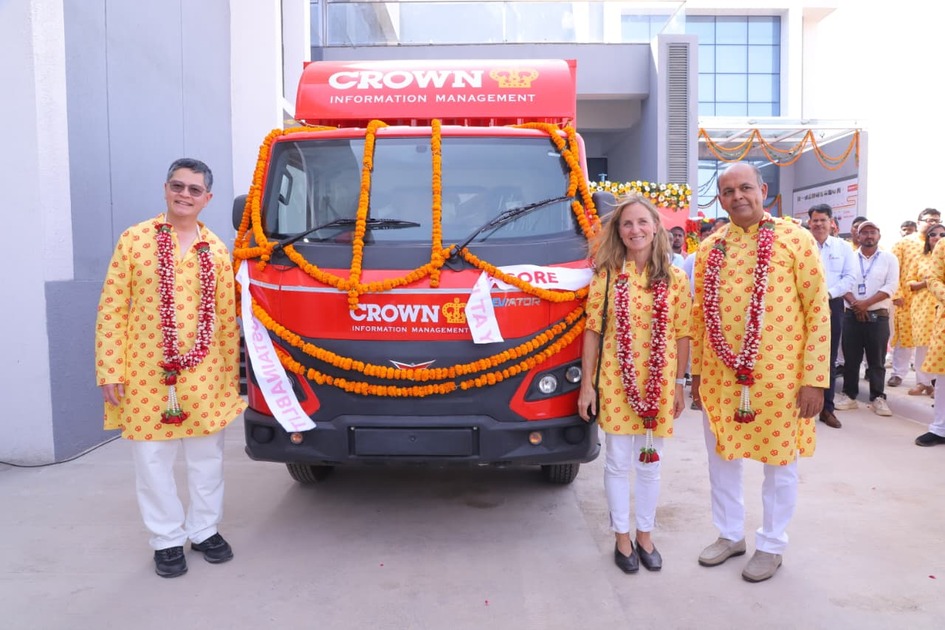
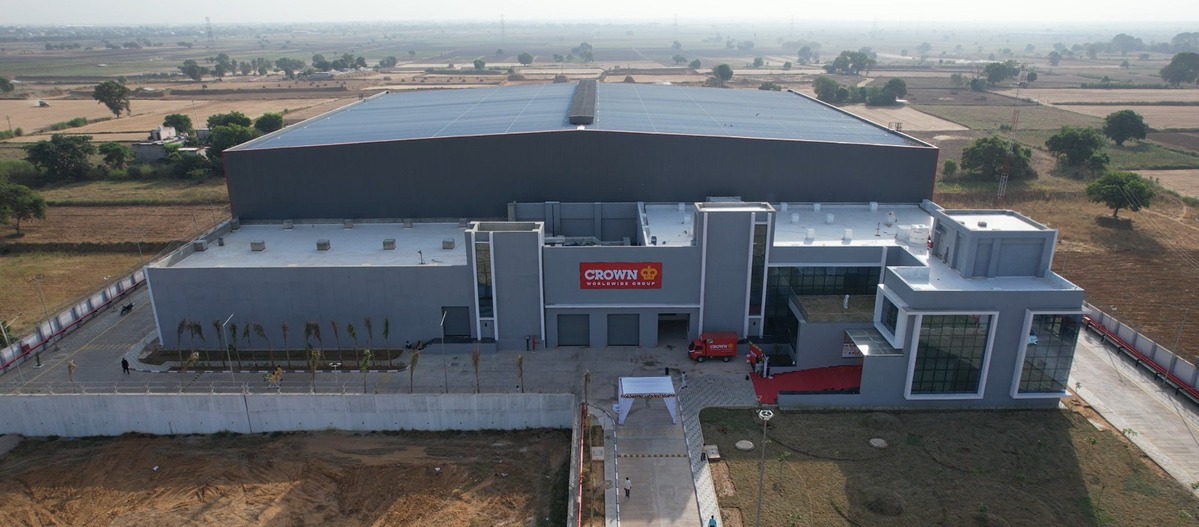
NEW DELHI: Crown Worldwide Group, a global provider of records and information management, workspace, relocation and logistics solutions, has inaugurated its new Delhi NCR facility in Siwari. Spread across a 7.5-acre site, the 135,000 sq. ft. facility marks a significant step in Crown’s investment in the future of integrated business services in India. It is a physical expression of “One Crown”, the approach that brings Crown’s diverse capabilities together to create greater value for customers, employees and partners.

For more than six decades, Crown has supported organisations and individuals with the movement, storage, protection and utilisation of critical assets, information and workplaces. Many customers know Crown for a specific service or business line. One Crown builds on that starting point by bringing together the expertise of Crown’s businesses, including Crown Information Management, Crown Workspace, Crown Relocations, Crown Logistics, Crown World Mobility, Crown Fine Art and exXtra. This helps customers see how the Group can support additional challenges and opportunities. The guiding idea is simple: “One conversation. Multiple possibilities.”

CrownWorldwideGroup Delhi NCR Facility 1 1 Crown Worldwide Group inaugurates New Facility in Delhi NCR, bringing "One Crown" approach to Life in India

For customers, this means access to broader expertise and solutions through one trusted partner, alongside consistency in quality, governance and customer experience. For Crown, it creates greater opportunities for collaboration, shared expertise and innovation across its businesses.

“What sets Crown apart is not any one business, but the value we create for customers by bringing our businesses together. In a world of relentless change and uncertainty, we help clients navigate complexity through experienced teams, specialized logistics and secure, company-owned facilities like this one,” said Jennifer Harvey, Group CEO, Crown Worldwide Group. “Our purpose is to make it simpler to live, work and do business anywhere in the world, and this investment demonstrates that commitment. India is central to our future, and we are delighted to support a growing number of India-headquartered multinational companies.”

The Delhi NCR facility puts this approach into practice by bringing multiple Crown operations together in one location. The site includes an 82,000 sq. ft. warehouse with capacity for up to 900,000 cartons and is Green Building certified, with 20 percent dedicated to green coverage. Having these operations together gives customers greater visibility into the breadth of Crown’s services and creates room for closer collaboration across the Group. A company planning an office relocation, for example, may first approach Crown for workplace transition. Through a One Crown conversation, it can also access information management for digitising and storing records, relocation support for employees, logistics for specialised equipment, or storage for surplus assets. The customer may choose one service or several, but the wider range of support becomes easier to access.

“Every customer relationship in India begins with a specific need and a team that understands it,” said Srinivas Krishnan, Regional Managing Director, South Asia, Crown Worldwide Group. “What One Crown adds is the ability to bring in colleagues from across Crown as those needs grow and change. This facility gives our teams the setting to do that well.”

The facility reflects Crown’s long-term investment in India and strengthens its ability to support customers across Delhi NCR and North India. One of the country’s largest economic and commercial centres, Delhi NCR is home to multinational corporations, government organisations, technology companies, manufacturers and professional services firms. Its strategic location, connectivity and concentration of enterprise customers make it an important market within Crown’s broader India growth strategy. Across the market, customer expectations are evolving, with greater demand for end-to-end solutions, stronger information security and governance, and support across both digital and physical assets.

The Delhi NCR facility marks a step forward in how Crown’s businesses work together to meet these expectations. Planned for future expansion, it gives Crown a foundation for deeper customer engagement and an expanded range of services across North India and beyond.

About Crown Worldwide Group

Crown Worldwide Group is a privately owned logistics company founded in 1965 and headquartered in Hong Kong, committed to making it simpler to live, work and do business anywhere in the world. In India, Crown operates an expanding network of facilities supporting its information management, relocation, workspace and logistics businesses. In India, Crown operates a network of 36 warehouses and facilities, including owned facilities in Mumbai, Chennai, Bengaluru, Coimbatore and Delhi.  The Group manages a broad portfolio of complementary brands, including Crown Workspace, Crown World Mobility, Crown Relocations, Crown Information Management, Crown Fine Art, Crown Logistics, Crown Wine Cellars and exXtra.

FIATA launches e-Learning Handbook to support Training Providers in the Move to Digital Delivery

MILAN: FIATA, the International Federation of Freight Forwarders Associations, has published its new e-Learning Handbook, a comprehensive guide for FIATA Association Members delivering the FIATA Diploma who wish to develop or strengthen their online training offer.

Digital learning opens new opportunities to reach more learners, offer greater flexibility and keep pace with a fast-changing industry. Making that shift successfully, however, requires more than choosing a platform. The handbook accompanies associations through each stage of the process: understanding their learners, transforming existing content, selecting the right tools and delivery approach, working with external partners, launching and running a digital course, and measuring its impact over time.

The handbook was developed under the leadership of the FIATA Logistics Institute (FLI), FIATA’s body dedicated to training and education. Drawing on its role in setting and safeguarding the standards of the FIATA Diploma, the FLI has brought together practical experience from across the FIATA network to produce a resource that reflects the realities faced by training providers in different regions.

Built around practical checklists, tools and examples, the handbook is designed to be used flexibly, so that each association can adapt it to its own context, resources and market needs, while continuing to meet the FIATA Minimum Standards.

The handbook does not set out a single model for all. Classroom, blended and online formats all remain valid ways to deliver the FIATA Diploma, and the choice of approach rests with each Association Member. FIATA’s aim is to support those who decide to move online, so that they can do so with confidence and with quality at the centre.

“Digital learning can widen access to knowledge, create greater flexibility and help prepare our industry for the skills of tomorrow. With this handbook, we want to support our Association Members in making that transition with confidence, while keeping quality, consistency and FIATA’s training standards at the core,” said Alperen Güler, Chair of the FIATA Logistics Institute.

The e-Learning Handbook is available to FIATA Association Members on the FIATA Member Area or via the FIATA website for non-members.

HD Hyundai delivers world’s first “Lashing-Free” container ship

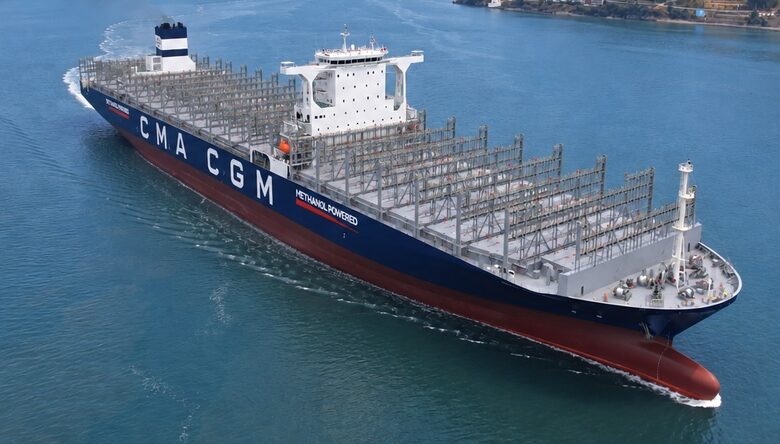
SEOUL: HD Hyundai has delivered the world’s first “Lashing-Free” container ship, introducing a new concept that eliminates the need for workers to manually secure containers on board.

HD Hyundai announced on Tuesday, October 6, that it recently delivered a 13,000-TEU container ship for a French shipping company, with its hybrid-type Lashing-Free technology partially applied.HD Hyundai Heavy Industries independently developed and validated all key components of the Lashing-Free technology, while HD Hyundai Samho was responsible for the detailed design and construction of the vessel incorporating the system.

The Lashing-Free container ship removes the need for manual container lashing, which has traditionally been carried out by workers using lashing equipment on large container vessels. It also incorporates technologies designed to prevent cargo loss and maximize logistics efficiency.

The vessel extends the cell guides, which support containers stacked vertically in alignment inside the cargo hold, all the way above deck.

With conventional large hatch covers, however, the extended cell guides would be obstructed, preventing them from reaching above deck. To overcome this structural limitation, HD Hyundai Heavy Industries developed a standardized portable bench that can be installed between the cell guides.

The portable bench is built to the same dimensions as a 40-foot container, allowing it to be handled using the same port cranes used to load and unload containers. The technology is expected to play a key role in accelerating automation and unmanned operations across the broader logistics network connecting land and sea, including container terminals.

HD Hyundai Heavy Industries has also developed a Twistlock Rooting System, which securely fastens containers stowed outside the cell guide area to the vessel’s structure.

As a result, the Lashing-Free container ship can carry over 10% additional cargo weight on deck compared with conventional vessels of the same type. The system also provides stable support for containers even in rough seas and strong winds, helping prevent cargo loss, enhance maritime safety and reduce the risk of marine pollution.

Sea trials conducted by HD Hyundai in September showed that the Lashing-Free system significantly reduces vibration during operation compared with conventional designs using hatch covers and lashing bridges. The company is also developing a next-generation version of the technology incorporating weathertight features.

“We plan to expand the application of this new container transportation technology to small- and medium-sized vessels,” said Hongryeul Ryu, Senior Executive Vice President and Chief Technology Officer at HD Hyundai Heavy Industries. “By continuing to develop differentiated technologies that deliver tangible value to customers in areas such as safety, loading efficiency and automation, we aim to further strengthen our ability to secure new orders.”

Meanwhile, HD Hyundai Heavy Industries’ Lashing-Free technology was introduced as a representative Korean technology related to “measures to prevent the loss of containers at sea” at the 10th session of the International Maritime Organization’s Sub-Committee on Carriage of Cargoes and Containers (CCC) in 2024. The technology has secured multiple intellectual property registrations in Korea and overseas and was also selected as a recipient of this year’s IR52 Jang Young-shil Award.

Portable Bench: A structural component that supports the load of containers stowed on deck and transfers it to the vessel’s structure.

Twistlock Rooting System: A container securing technology developed by HD Hyundai Heavy Industries that firmly fastens containers to the vessel’s structure as if they were rooted in place. Compared with conventional lashing methods, it increases the allowable cargo weight while improving operational stability and reducing the risk of cargo loss.

DP World and MOL advance automotive logistics partnership at Jebel Ali Port

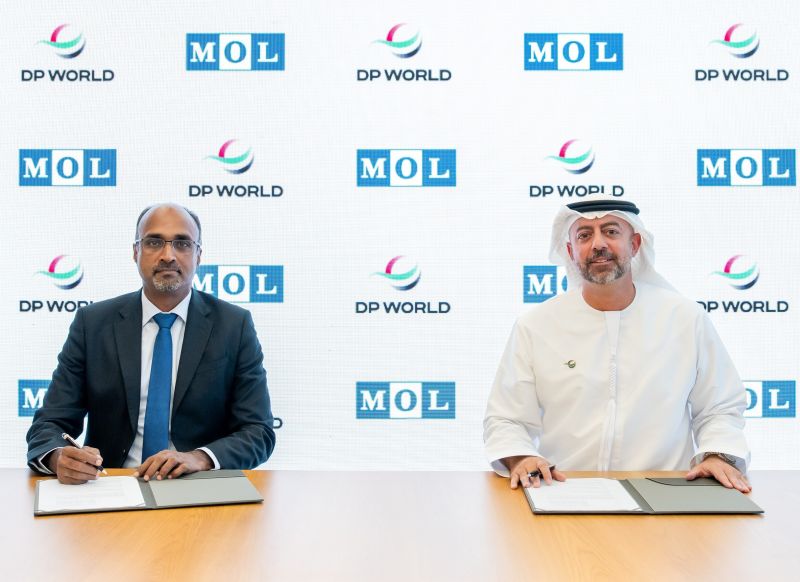
DUBAI : DP World and Mitsui O.S.K. Lines (MOL) have taken the next step in strengthening their long-standing partnership with the signing of a term sheet outlining the framework for a proposed new automotive logistics and processing facility at Jebel Ali Port.

The proposed development is aimed at enhancing the efficiency and capacity of automotive logistics through one of the region’s most important maritime gateways. The planned facility would bring together vehicle storage, pre-delivery inspection (PDI) and a range of other value-added services within a single port-side location.

The integrated facility is expected to provide automotive manufacturers and logistics operators with greater flexibility and efficiency while supporting the movement of vehicles from major manufacturing centres in Asia to rapidly growing automotive markets across the Middle East and Africa.

Jebel Ali Port, a key gateway for regional and international trade, handled nearly 1.1 million vehicles in 2025, highlighting its growing importance in the automotive logistics sector. The proposed facility would further strengthen the port’s role in supporting the region’s expanding vehicle trade and associated supply chains.

By combining vehicle handling, storage and processing capabilities at the port, the development could help streamline cargo flows, reduce logistical complexities and enhance the overall customer experience for automotive stakeholders.

The proposed project also reflects the broader growth of automotive trade across the Middle East and Africa, where demand for efficient vehicle logistics infrastructure is increasing alongside expanding consumer markets and international trade links.

The term sheet marks an important milestone in the discussions between DP World and MOL, building on their established relationship and creating a framework for further collaboration in automotive logistics.

Both companies are expected to continue discussions on the proposed development as they work towards advancing the project and supporting the long-term growth of automotive trade through Jebel Ali Port.

The initiative underlines the strategic importance of integrated port-based logistics solutions in strengthening regional supply chains and positioning Jebel Ali as a key hub for the global automotive industry.

Q3 2026 Shipping Market Review: Record ClarkSea Index

LONDON: Clarksons Research, the data and intelligence arm of the Clarksons Group, have reported an all-time high for their cross-market “barometer” of shipping rates, the ClarkSea Index. Reviewing third quarter developments across the shipping markets, Steve Gordon, Global Head of Clarksons Research, commented:

  • ClarkSea Index reaches record levels, averaging $46,384/day over the quarter
  • Exceptional, disruption-driven rate environments across crude tankers (VLCCs averaging $671,000/day with some routes reaching $1.6m/day by early October) and LPG
  • Strong charter conditions across product tankers, containers, bulkers and car carrier
  • Active flow of newbuild orders, increasing overall orderbook backlog by 25% y-o-y in CGT terms
  • Elevated S&P prices, particularly in the crude sector with all-time highs reported

See below for more details, and visit Shipping Intelligence Network for the full report and underlying data.

Driven by exceptionally elevated, disruption-driven rate environments in crude and LPG and supported by strong market conditions across container, car carrier and bulkers, our cross-segment shipping market “barometer”, the ClarkSea Index, has hit an all-time high (Q3: $46,384/day). Strong newbuild flow continued to build orderbook backlog and asset prices in crude tankers “surged”.

The ClarkSea Index reached its highest ever quarterly level ($46,384/day vs $44,222/day of Q2-2008 and 2x the 10 year trend) and highest individual week ($66,000/day). Developments in the Middle East have been the principal driver, with shipping providing the logistical flexibility needed to move significantly increased volumes of oil ‘to market’. The quarter has ended with an estimated 12m bpd of crude (pre-conflict 15m bpd, lows of <2m bpd in Q2 2026) transiting Hormuz, mainly by a “shuttling” fleet from within the Middle East Gulf to the Gulf of Oman where oil is then transferred (via STS operations that take several days) to additional tankers for onward delivery to Asian markets. There have also been changes in logistics at Yanbu, with flows to Asia largely re-routed to avoid the Houthi threat by using “shuttles” to SUMED pipeline and then routing via Cape of Good Hope (attacks on pipeline to Yanbu now paused some of this flow) and more long-haul Brazilian exports (les s US volumes). This combination of improved volumes plus additional “inefficiencies” and distances has pushed VLCC earnings to exceptional levels (>$600,000/day, Q3 avg $277,995/day, some routes now over $1.6m/day) whilst demand for ships for the “shuttle” operations also helped S&P prices “surge” to all-time highs (15 yr old VLCC price > newbuild, resale VLCC index at record $240m). Operational risk is high, with over 100 vessel attacks now reported in the Gulf, c.10 in the Red Sea this year and >200 in the Black Sea. Aside from the Middle East many (geo-political) disruption themes (e.g. Russia sanctions, tariff uncertainty, Panama restrictions) continue and the global economy reported some resilient data points but also building risks.

The unprecedented strength in the VLCC market has filtered down into Suezmax (Q3 avg a record $228,262/day) and Aframax ($119,189/day). The product tanker market has been more modest by comparison but still averaged $31,157/day for MRs and firmed to $60,000/day by quarter end. Aside from developments in the Middle East (what does “normalisation” look like? Is some lingering disruption and / or “stop-start” volumes a realistic scenario for next year?), inventory re-stocking should provide tanker demand support in the coming years, as might pipeline alternatives long-term. In LPG carriers, cargo volume loss has been more than offset by higher tonne-mile demand from long-haul US-Asia trade (notably via the Cape with Panama congested), with VLGC earnings averaging a record $154,853/day. LNG short-term rates softened through Aug-Sep (<$40,000/day) as more US LNG was shipped shorter-haul to Europe where gas inventories are very low heading into winter. Longer term p rospects are better with plenty of volumes arriving through 2030 (watch developments with Qatar for downside risks). Bulkcarrier markets have firmed, basis more “traditional” supply-demand factors, led by Capesize (peaking at >$50,000/day, avg $33,100/day) with Guinea volumes growing and Chinese import demand firm. Container shipping markets remain strong; charter rates edged higher (+12% ytd) while freight rates are generally firm and elevated on the Transpacific; ‘resilient’ global container trade growth (+5%) combined with logistical disruption and congestion (e.g. from Middle East conflict, Panama, port bottlenecks) are supportive despite a gradual return to Red Sea (>160 containerships have “returned”). Car carrier rates have risen (now $95,000/day) amid rapid Chinese car export growth. Offshore oil and gas vessel markets have edged up (index +5% ytd), with energy security potentially a supportive longer-term trend.

Global fleet growth is picking up (2026 (f): +5%). With the exceptional market cashflow, newbuild investment may reach a new record tonnage level this year, and the orderbook has grown by 25% y-o-y (now similar levels to the previous 2008 high (~225m CGT, albeit equal to 23% of fleet vs 52% in 2008). Shipyard output is increasing and may reach a new high in both 2027 (64m CGT) and 2028 (69m CGT) and lead times are long (~3.5 yrs). Shipyard capacity in China continues to ramp up (now >65% of orderbook) and we are monitoring further expansion plans closely (plus smaller developments elsewhere e.g. India). Recycling remains very limited, though fleet renewal requirements from an ageing fleet remains an underlying trend, with potential for demolition to offer a “release valve” ahead when needed. Initial projections suggest acceleration in global fleet growth in 2027-28 to 6% p.a., with strong expansion expected in container (2027/28 growth forecast at 9% / 12%) an d LPG (16% / 8%) and a pick-up in tanker (6% / 7%). The global decarbonisation consensus is stalled, but green investments remain an underlying trend (Energy Saving Technologies now fitted on ~50% of global fleet tonnage).

The short-term market outlook appears very strong, boosted by exceptional crude tanker markets, and developments in the Middle East will continue to dominate the agenda. Calibrating-long term future requirements for shipping demand is increasingly “tricky”, with significant complexities against the evolving geopolitical backdrop. Fleet growth and orderbook in some sectors are now more material. An exceptional cash position with significant opportunity and risk ahead.

Underlying data and full report available on request.

Shipping Intelligence Network (SIN) is Clarkson Research’s market leading digital platform and the most comprehensive source of data on shipping and trade. The system provides immediate access to uniquely powerful data and analysis tracking and projecting market supply / demand, freight, vessel earnings, vessel values and macro-economic data around trade flows and global economic developments.

Clarksons Research, the data and analytics arm of Clarksons, are the market leaders in the provision of independent data and intelligence around shipping, trade, offshore and the maritime energy transition. Millions of data points are processed and analysed each day to provide trusted and insightful intelligence to thousands of stakeholders across maritime. Better data for better decisions.

MacGregor to equip four additional Skywalker-class CSOVs with motion-compensated cranes and gangways

The order builds on the proven performance, reliability and safety of MacGregor’s motion-compensated cranes and gangways.

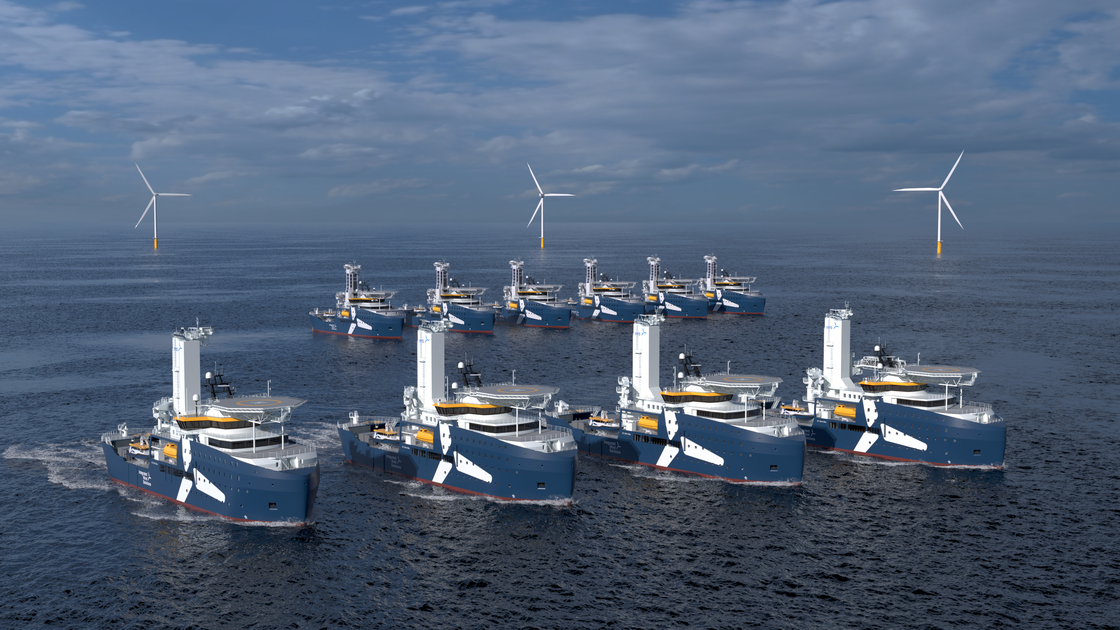
SINGAPORE: MacGregor has won an order from Nantong Rainbow Offshore & Engineering Equipment Co., Ltd to equip four Commissioning Service Operation Vessels (CSOVs) with three-dimensional motion-compensated cranes and Horizon gangway systems. The order is booked into MacGregor’s fourth-quarter 2026 order intake.

The CSOVs are due for delivery from the yard to Integrated Wind Solutions ASA subsidiary IWS Fleet during 2029 and 2030.

“The selection of MacGregor’s motion-compensated cranes and gangway systems reflects the strong technical fit between the equipment and the operational requirements of these CSOVs. Their proven performance and reliability, combined with MacGregor’s offshore expertise, make them a valuable partner for this project. We are pleased to collaborate with MacGregor in delivering high-quality vessels for offshore wind operations,” said Ms Shanshan Xu, SCM Director, Nantong Rainbow Offshore & Engineering Equipment Co., Ltd.

“Our motion-compensated cranes and gangway systems are integral to the performance, safety and reliability that have encouraged strong uptake of the Skywalker class. This repeat order reflects our team’s competence and the close collaboration we have built with our partners,” said Lucie Addicks, Executive Vice President, Offshore Solutions, MacGregor.

Following delivery, all equipment will be supported by MacGregor’s global service network to ensure continued operation and uptime during critical offshore activities.

LR awards Approval in Principle to GasEntec for one of the industry’s highest-capacity FSRU concepts

The design combines high send-out capacity with multi-mode regasification technology, placing the concept among the highest-capacity FSRU designs currently under development.

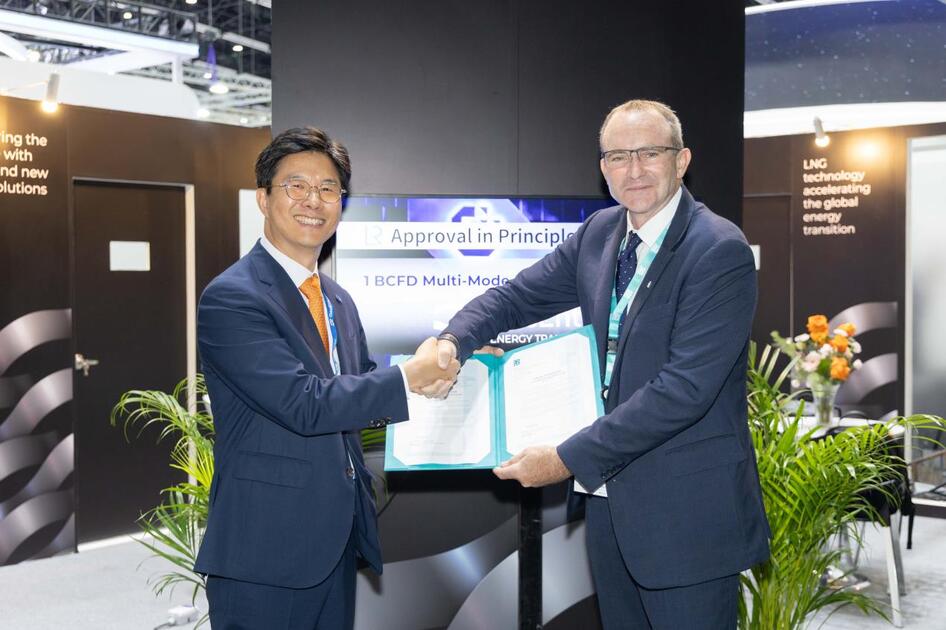
LONDON: Lloyd’s Register (LR) has awarded Approval in Principle (AiP) to GasEntec for a liquefied natural gas (LNG) floating storage and regasification unit (FSRU) capable of delivering up to one billion cubic feet of gas per day.

The approval follows LR’s independent assessment of the design’s technical and safety fundamentals and was presented during Gastech 2026 in Bangkok.

A key feature of the design is its multi-mode regasification system, which can operate in open, closed and combined-loop modes. This gives operators greater flexibility to adapt to different environmental conditions, regulatory requirements and project needs, while supporting reliable gas delivery across a range of operating environments.

The concept is designed around a modular architecture that can be configured to suit different capacities, pressures and operational requirements. Once delivered, the design would be among the world’s largest FSRUs by send-out capacity and one of the most operationally flexible.

GasEntec said it will use its first LR AiP to advance the FSRU design towards execution and support projects for FSRU owners and developers.

Jose Navarro, Global Gas Technology Director, Lloyd’s Register, said: “As developers look to bring LNG import capacity online quickly, operators need solutions that can perform reliably across different climates, weather conditions and regulatory environments. This design combines very high send-out capacity with operational flexibility, helping to address some of the key challenges facing future FSRU projects.”

Sean Van der Post, Global Offshore Business Director, Lloyd’s Register, said: “As countries seek secure and flexible routes to LNG supply, concepts such as this reflect how FSRU development is evolving beyond capacity alone, with greater emphasis on flexibility, adaptability and long-term operational resilience.

“By independently assessing new designs at an early stage, we help give developers, investors and operators confidence as they progress projects from concept towards deployment.”

“This FSRU delivers a common modular platform that can be configured for different capacities, pressures and operating conditions, enabling efficient project specific engineering and faster deployment,” said TG Kim, Co-Chief Operating Officer, at GasEntec. “As energy demand accelerates around the world, from grid growth to AI data center driven power needs, the constraint isn’t supply; it’s how quickly and reliably you can get gas to where it’s needed.”

ClassNK grants Innovation Endorsement for Products & Solutions to ‘Freshness Keeping Catalyst’ developed by Nikki-Universal

TOKYO: ClassNK has granted its Innovation Endorsement for Products & Solutions to ‘Freshness Keeping Catalyst’, a product that removes ethylene gas emitted by fruits and vegetables, developed by Nikki-Universal Co., Ltd., and distributed by Sojitz Machinery Corporation.

‘Freshness Keeping Catalyst ClassNK 1 ClassNK grants Innovation Endorsement for Products & Solutions to 'Freshness Keeping Catalyst' developed by Nikki-Universal

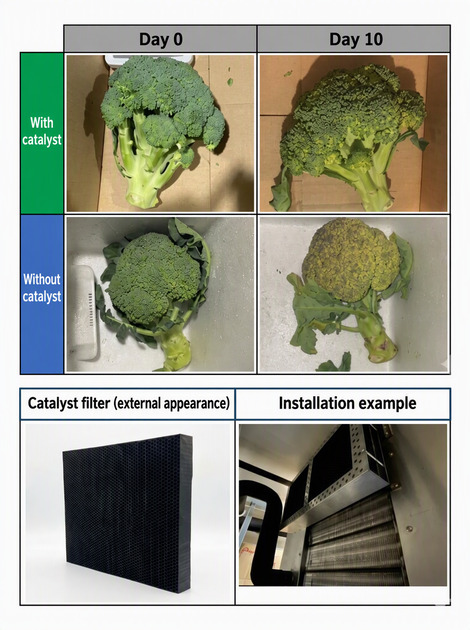
Through the certification process, ClassNK confirmed that the product, when installed in refrigerated storerooms on board vessels, has the functionality to preserve the freshness of fruits and vegetables, thereby helping to secure food supplies for crew members and reduce food loss.

ClassNK has confirmed that the ‘ELW’ notation (FP)*- Freshness Preservation, which indicates ships with excellent living enviroments, can be applied to ClassNK-registered vessels equipped with the product. This enables companies to demonstrate their commitment to improving onboard working conditions.

In order to promote the spread and development of innovative technologies, ClassNK has offered Innovation Endorsement for Products & Solutions. ClassNK supports the deployment of products and services through third-party certification for equipment and software technology with innovative functions. For more information, please visit this page.

– Product name:

Freshness Keeping Catalyst

– Scope of Certification:

1. Catalyst for removal of ethylene gas which accelerates the aging of fruits and vegetables

2. Function for maintaining the freshness of fruits and vegetables

3. Freshness‑keeping effect by installing the catalyst within the air‑circulation path and ventilation system

– Comparison With and Without the Product

“India’s first FTA with any economic bloc in Europe”: PM Modi highlights $100 bn investment goal in meet with Swiss Prez Parmelin

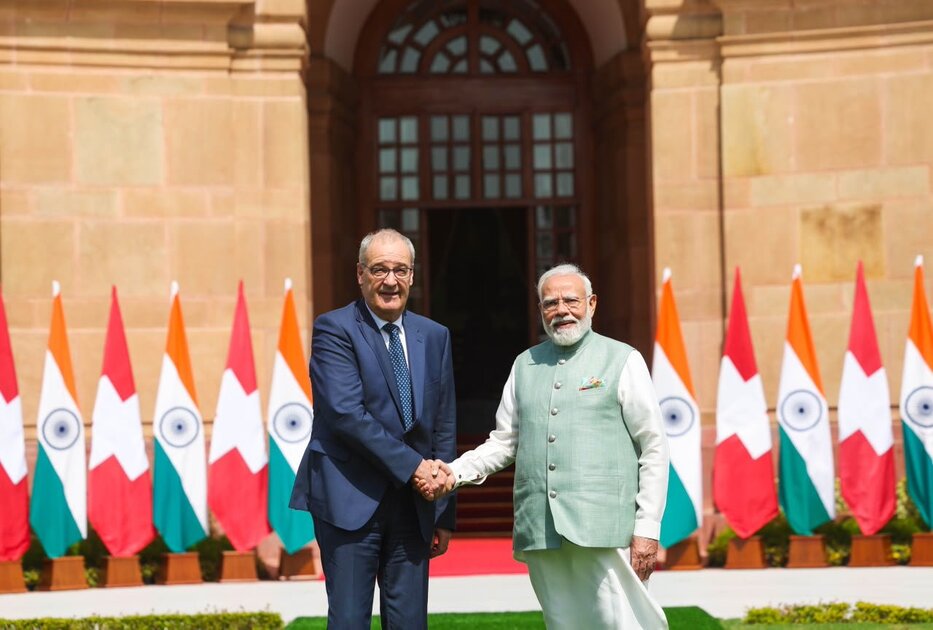
NEW DELHI: India and the Swiss Confederation on Monday exchanged several Memoranda of Understanding (MoUs) in the presence of Prime Minister Shri Narendra Modi and President of the Swiss Confederation Guy Parmelin at Hyderabad House in the national capital.

Delivering a joint press statement following delegation-level talks, Prime Minister Modi highlighted the growing momentum in bilateral relations, particularly following the implementation of the historic Trade and Economic Partnership Agreement (TEPA) between India and the European Free Trade Association (EFTA).

“First of all, I appreciate his commitment to India-Switzerland relations. In October last year, with his personal support, we implemented a historic trade and economic partnership agreement between India and the European Free Trade Association. This is India’s first FTA with any economic bloc in Europe,” PM Modi said.

“This is also an ambitious blueprint of investment, innovation, jobs and mutual prosperity. With this, we will realise 100 billion dollars investment and 10 lakh direct jobs in India in the next 15 years,” the Prime Minister added.

Underlining steps taken to expand commercial engagements, PM Modi further said, “We have taken several important decisions to enhance market access for India’s exports in Switzerland, and to further facilitate investment between the two countries. This will increase the export of India’s agriculture, pharma, textile, and engineering goods to Switzerland. At the same time, we will attract new Swiss investment in India’s important sectors such as biotech, life sciences, banking, insurance, food processing, and sustainability.”

The Prime Minister also highlighted the signing of key agreements aimed at facilitating cross-border movement for young professionals and scholars, terming interpersonal connections the foundation of the bilateral partnership.

“People-to-people ties are the greatest strength of our partnership. With the Migration and Mobility Partnership Agreement and Young Professionals Agreement signed today, many new opportunities will open up in Switzerland for Indian students, researchers, professionals, and youth,” PM Modi said.

Having touched down in India on Monday to undertake a three-day State visit at the invitation of Prime Minister Modi, the Swiss leader’s high-level itinerary centres on enhancing bilateral collaboration across commerce, investment, scientific advancement, technological innovation and workforce mobility. The Ministry of External Affairs (MEA) noted that President Parmelin is travelling alongside a prominent delegation consisting of senior officials and corporate executives, marking his maiden State visit to India and his second journey to the nation this year, following his participation in the AI Impact Summit in New Delhi in February 2026.

During the course of the visit, President Parmelin will likewise meet with President Droupadi Murmu, who is slated to host a ceremonial banquet in his honour. The diplomatic engagement acquires distinct prominence given that President Parmelin is set to attend the second India-EFTA Prosperity Summit on October 7, signalling the inaugural anniversary of the operationalisation of TEPA.

Emphasising Switzerland’s critical standing as an economic collaborator, the MEA noted that among EFTA member states, Switzerland functions as India’s primary trade and investment partner, underscoring the enduring connections linking both nations and the necessity of maintaining consistent high-level dialogues.

“India and Switzerland share longstanding friendly relations. This visit will further strengthen bilateral relations, building upon the regular high-level exchanges and deepening cooperation in new areas of mutual interest,” the MEA stated.

The diplomatic undertaking transpires against a background of continuous high-level interactions between New Delhi and Bern, noting that the most recent State visit executed by an Indian President to Switzerland occurred in 2019, whereas Prime Minister Modi undertook official journeys to Switzerland in 2016 and 2018.