Home Blog Page 702

MoPSW Secretary flags off MV Homi Bhabha to boost IWT

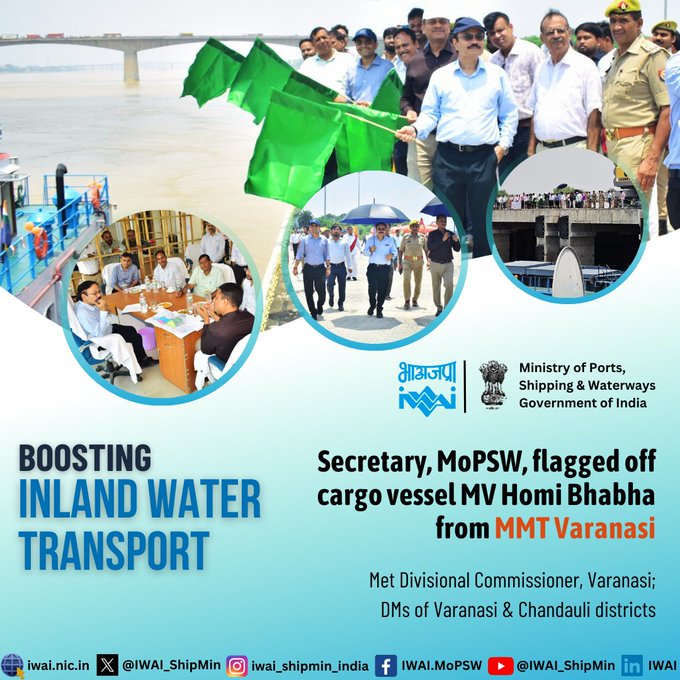
VARANASI : Secretary, MoPSW, Shri T K Ramachandran flagged off MV Homi Bhabha carrying 300 tonnes of cargo from MMT Varanasi. Divisional commissioner S. Rajalingam, Varanasi district magistrate Satyendra Kumar, Chandauli district magistrate Chandra Mohan Garg, and other senior officials. Director of the Multi-Modal Terminal Sanjeev Kumar and deputy director R.C. Pandey were also present. He also reviewed the progress of MMLP project.

In a major push to inland waterway connectivity, a cargo vessel carrying cement and putty from Katni, Madhya Pradesh, was flagged off from Varanasi to Sahibganj terminal under the National Waterway-I project. The consignment, loaded with the help of a German crane, will be transported onward to Siliguri, Malda Town, and Krishnanagar in West Bengal by road.

Officials of the Inland Waterways Authority of India (IWAI) said the initiative marks a significant milestone in strengthening the water transport system, with far-reaching benefits for trade and entrepreneurs in the region.

Since 2014, under the leadership of Prime Minister Shri Narendra Modi, work on the Varanasi-Haldia National Waterway-I has gained momentum. In November 2018, the Prime Minister inaugurated IWAI’s multi-modal terminal at Ramnagar by flagging off the first cargo vessel, a move aimed at reducing logistics costs and enhancing industrial competitiveness.

The latest consignment underscores the government’s commitment to promoting eco-friendly transport, reducing road congestion, and empowering local industries while contributing to regional economic development.

SMP Kolkata inaugurates first PPP terminal at Khidderpore Docks

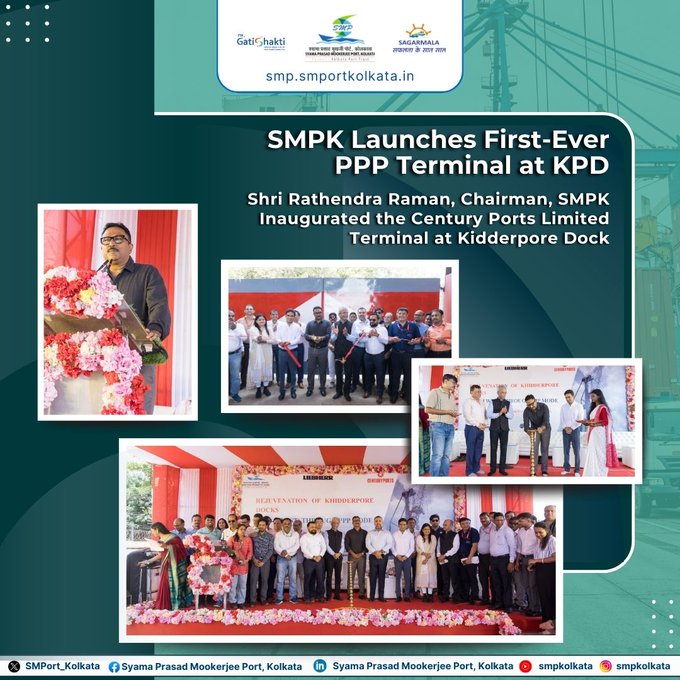
KOLKATA : The Syama Prasad Mookerjee Port, Kolkata on Saturday (August 16, 2025) inaugurated its first public-private partnership (PPP) terminal at Khidderpore Docks, marking a shift in the transformation of the historic dock system. The Century Ports Ltd Terminal, built at a cost of ₹190 crore, was formally commissioned by the SMP, Kolkata.

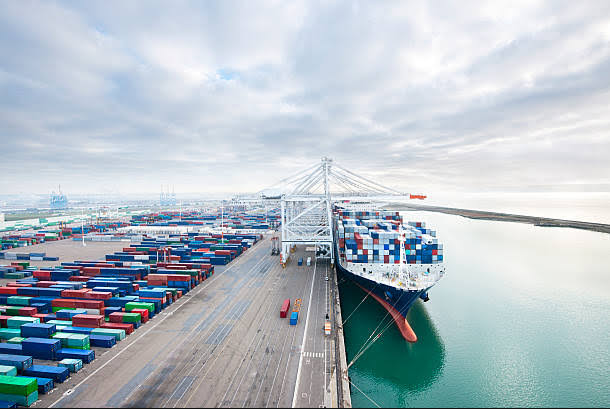
Equipped with a mobile harbour crane, a barge unloader, modern yard equipment and an advanced terminal operating system (TOS), the facility has an initial handling capacity of 1.65 lakh TEUs (twenty-foot equivalent units) of containers and 3.3 lakh tonnes of other cargo.

The Kolkata Port on Saturday (August 16, 2025) inaugurated its first public-private partnership (PPP) terminal at Khidderpore Docks, marking a shift in the transformation of the historic dock system.

The Century Ports Ltd Terminal, built at a cost of ₹190 crore, was formally commissioned by the Syama Prasad Mookerjee Port, Kolkata (SMPK).

Equipped with a mobile harbour crane, a barge unloader, modern yard equipment and an advanced terminal operating system (TOS), the facility has an initial handling capacity of 1.65 lakh TEUs (twenty-foot equivalent units) of containers and 3.3 lakh tonnes of other cargo.

Advertisement
“The inauguration of our first PPP terminal at Khidderpore Docks paves the way for increased cargo handling and encourages the modernisation of other berths at the dock. It is the result of relentless effort, collaboration and vision,” Chairman Rathendra Raman said.

The concession agreement for the project, signed in 2022 for a 30-year period, is expected to boost cargo movement with integrated connectivity to road, rail and inland waterways.

SMPK said it has a pipeline of over ₹4,000-crore PPP projects scheduled to become operational at Kolkata and Haldia docks within the next year.

Kolkata Port signs Rs 343.58 cr deal for Haldia berth mechanisation

KOLKATA : The Syama Prasad Mookerjee Port, Kolkata (SMPK) on Thursday awarded a Rs 343.58 crore public-private partnership (PPP) project to Ganges Bulk Terminal Pvt. Ltd. (GBTPL) for the mechanisation of berth No. 5 at Haldia Dock Complex, aiming to improve cargo handling efficiency, officials said.

The project, to be implemented on a Design, Build, Finance, Operate and Transfer (DBFOT) basis, will equip the berth to handle 5 million metric tonnes of dry bulk cargo annually, they added.

It is targeted for completion by December 2027, SMPK said in a statement. GBTPL will invest Rs 343.58 crore, while the government will provide Rs 22.30 crore through internal and extra budgetary resources, the riverine port said.

SMPK Chairman Rathendra Raman said it will improve operational capabilities, and strengthen eastern India’s role in maritime trade.

According to port authorities, the mechanisation will reduce vessel turnaround time, increase throughput, and deliver long-term economic benefits for the region’s port sector.

Maharashtra to set up 6 shipyard clusters, eyes ₹6,600-cr investments and 40,000 jobs

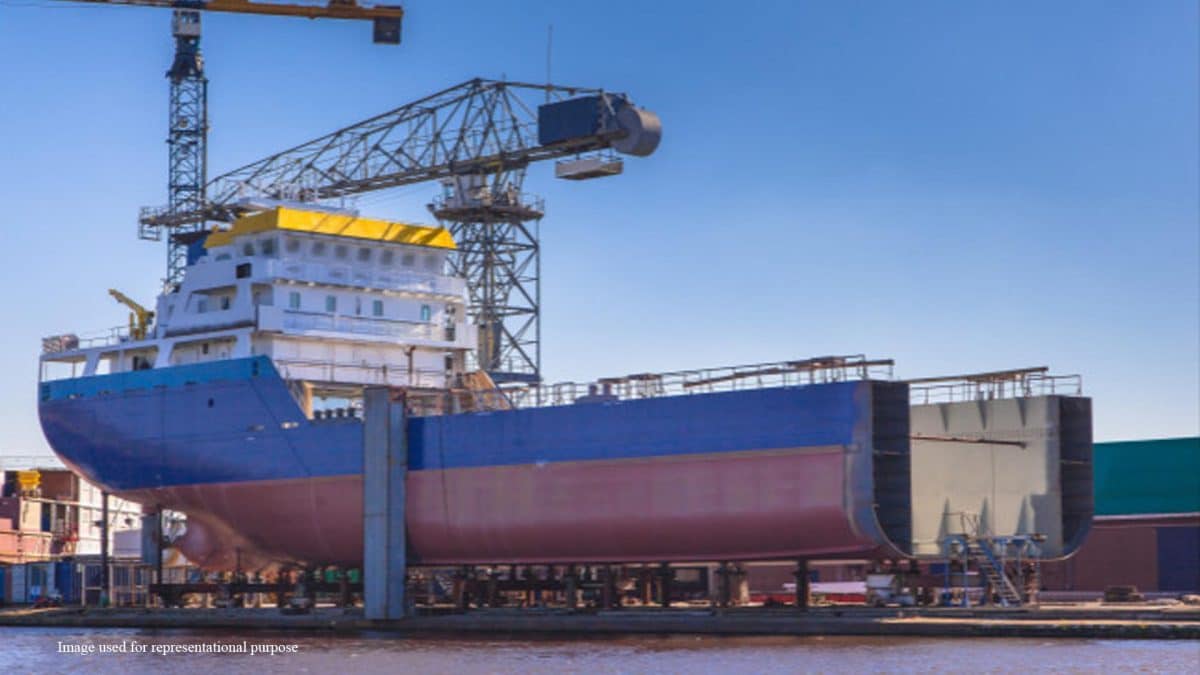
MUMBAI : Maharashtra is setting sail on an ambitious plan to boost its maritime sector by developing large-scale marine shipyard clusters along its coastline. The proposed hubs will cater to shipbuilding, repair, recycling, and allied services, and are expected to attract over ₹6,600 crore in investments and create 40,000 jobs by 2030.

The Maharashtra Maritime Board (MMB), the nodal agency for the sector, has shortlisted six potential coastal locations, with three sites—Nandgaon in Palghar, Dighi in Raigad, and Vijaydurg in Sindhudurg—being evaluated for the first cluster. A consultant will soon be appointed to conduct a detailed techno-economic feasibility study and prepare a Detailed Project Report (DPR), officials said.

“Through a preliminary assessment, we have identified six potential coastal locations. The consultant will help us determine the most feasible site among the three shortlisted. Based on the findings, we will develop the basic infrastructure and invite private players in shipbuilding and allied industries to set up operations,” said Pradeep P, CEO of MMB.

The proposed shipyard at Nandgaon will be the largest, spread across 2,666 acres—including 2,444 acres of land and 225 acres of intertidal zone. The Dighi yard is planned over 2,550 acres, while the Vijaydurg facility will require 1,371 acres.

The consultant’s mandate will include market and financial analysis, site evaluation, engineering design, and environmental and social impact assessments. The study will also identify potential risks and recommend measures to mitigate them.

A senior official from the state fisheries and port department said the government want the consultant to “incorporate global best practices, comply with national and international standards, and deliver a framework that can attract investments, generate employment, promote indigenous shipbuilding, and position Maharashtra as a maritime hub of global significance.” They have also floated tender for appointing the consultant. The initiative follows the state cabinet’s approval in April of the Shipbuilding, Ship Repair and Ship Recycling Policy, 2025—the first of its kind in Maharashtra. The policy offers a capital subsidy of 15% of project cost, up to ₹1 crore for skill development per project, and up to ₹25 crore for research and development. It also assures assistance in permits, approvals, and land allocation on concessional terms with 30-year renewable leases.

Officials said the government’s phased approach will begin with one shipyard cluster. Expansion to other identified sites will be decided based on industry response.

India’s exports rise 7.3% to $37.24 Billion in July, imports up by 8.6% YoY

NEW DELHI : India’s overall trade deficit (merchandise and services combined) widened to USD 11.72 billion in July 2025, up from USD 10.10 billion in the same month last year, driven by a sharper rise in imports than exports, according to the data released by the Commerce & Industry Ministry.

The data shows that the overall exports stood at USD 68.25 billion in July 2025, marking a growth from the same month of the previous year at USD 65.31 billion.

On the other hand, imports of the country grew at a faster pace, reaching USD 79.99 billion compared with USD 75.41 billion a year earlier.

The deficit figures come amid the uncertain global trade conditions and announcements of 50 per cent reciprocal tariffs announced by US President Donald Trump.

Commenting on the trade figures, Commerce Secretary Sunil Barthwal said, “Despite uncertain global policy environment, exports both merchandise as well as services estimates in July as well as in the financial year 2025-26 from April to July, period for both July as well as for April to July period have grown substantially and much higher than the global export growth.”

“So for both July month as well as for the month for the period of April to July, India’s exports have done very well now. The major drivers of these merchandise exports growth for July month include engineering goods, electronic goods, gems and jewelry, drugs and pharmaceuticals and organic and inorganic chemicals,” he added.

The widening gap between exports and imports underscores continued demand for imported goods and services, even as India’s outbound shipments show resilience despite global economic uncertainties.

Major drivers of merchandise exports growth in July 2025 include Engineering Goods, Electronic Goods, Gems & Jewellery, Drugs & Pharmaceuticals and Organic & Inorganic Chemicals

Engineering Goods exports increased by 13.75% from US$ 9.17 Billion in July 2024 to US$ 10.43 Billion in July 2025.

Electronic Goods exports increased by 33.89% from US$ 2.81 Billion in July 2024 to US$ 3.77 Billion in July 2025.

Gems & Jewellery exports increased by 28.95% from US$ 1.85 Billion in July 2024 to US$ 2.39 Billion in July 2025.

Drugs & Pharmaceuticals exports increased by 14.06% from US$ 2.33 Billion in July 2024 to US$ 2.66 Billion in July 2025.

Organic & Inorganic Chemicals exports increased by 7.19% from US$ 2.30 Billion in July 2024 to US$ 2.47 Billion in July 2025.

In June, India’s overall trade deficit had narrowed significantly to USD 3.51 billion, down from USD 7.30 billion in June 2024, as exports outpaced imports on a year-on-year basis.

The country’s trade deficit in May had also narrowed to USD 6.62 billion from USD 9.35 billion in the same month last year.

In May 2025, India’s overall exports, merchandise and services combined, were reported at USD 71.12 billion, marking a 2.77 per cent rise on a yearly basis. The total exports in May 2024 were pegged at USD 69.20 billion.

Among various steps the government took to increase exports include the Production Linked Incentive (PLI) scheme in 14 sectors, including electronic goods, telecom, EV battery, to name a few.

The production-linked incentive (PLI) scheme of the government has helped India’s export growth and made Indian manufacturers globally competitive, attracted investments, enhanced exports, integrated India into the global supply chain and reduced dependency on imports.

The government has set a target of USD 1 trillion of exports in the current financial year 2025-26.

The free trade agreements (FTA) signed and under negotiation with various countries are likely to boost exports. The most recent FTA was signed with the United Kingdom and the UAE.

India’s export sector continued to exhibit positive growth momentum in July 2025, amid trade disruptions and tariff war: FIEO President

NEW DELHI : The Federation of Indian Export Organisations (FIEO) applauds the encouraging trade figures for July 2025, reflecting resilience and steady recovery in India’s export sector despite persistent global uncertainties, trade disruptions and above all tariff war, said Mr S C Ralhan, President, FIEO.

FIEO President added that India’s total exports for July 2025 are estimated at US$ 68.27 Billion, marking a positive growth of 4.52% over US$ 65.32 Billion in July 2024. While cumulative exports (April–July 2025) reached US$ 277.63 Billion, up from US$ 263.83 Billion in the same period last year—an increase of 5.23%. Merchandise Exports (July 2025) rose to US$ 37.24 Billion, compared to US$ 34.71 Billion in July 2024, registering a growth of 7.3%. While merchandise imports (July 2025) stood at US$ 64.59 Billion, up from US$ 59.48 Billion, reflecting an 8.59% increase. Total Imports (Merchandise & Services Combined) reached US$ 79.99 Billion, with a growth of 6.07% over July 2024.

FIEO Chief reiterated expressed optimism over the latest figures, stating that the July trade data indicates that Indian exporters continue to demonstrate remarkable resilience and adaptability amid an evolving global trade environment. The steady growth in merchandise exports, particularly in high-value sectors like engineering, electronics, pharmaceuticals, and gems & jewellery, showcases India’s rising export competitiveness. He added that the front loading of exports to avoid high reciprocal tariff in US may also have pushed exports numbers. 

He further added that while the numbers are encouraging, we must remain cautious given global uncertainties, including geopolitical tensions and tariff-related challenges. FIEO urges the government to extend continued support to exporters, especially MSMEs, through faster access to trade finance, targeted incentives, and trade facilitation reforms to sustain this positive momentum, especially looking at the tariff war like situation” he added. President FIEO urged the Government to extend the required support to exports to US till India-US BTA is concluded and put into operation. 

FIEO President reiterated the need for continued focus on strengthening the manufacturing ecosystem, enhancing logistics infrastructure, diversifying export markets and boosting R&D and innovation for high-value exports. He further added that the Federation remains committed to supporting exporters in navigating challenges and achieving India’s ambitious export targets.

Ministry of MSME takes various steps for promotion and development of MSME sector

NEW DELHI : Ministry of MSME has taken various steps for the promotion and development of MSME sector. Some of these are detailed below.

Udyam Registration for MSMEs, for Ease of Doing Business w.e.f. 1.7.2020.

Launch of Udyam Assist Platform (UAP) to bring the Informal Micro Enterprises (IMEs) under the formal ambit for availing the benefit under Priority Sector Lending (PSL).

Inclusion of Retail and Wholesale traders as MSMEs w.e.f. 2.7.2021.

Credit Guarantee Scheme revamped with required infusion of funds of Rs. 9,000 crore to facilitate additional credit of Rs. 2 lakh crore for MSEs and expand employment opportunities.

Launch of ‘PM Vishwakarma’ Scheme on 17.09.2023 to provide end to end holistic benefits to the traditional artisans and crafts people engaged in18 trades.

Self Reliant India (SRI) Fund has been set up to infuse Rs. 50,000 crore as equity funding in those MSMEs, which have the potential and viability to grow and become large units.

Collateral free loan up to a limit of Rs. 10 crore (w.e.f. 01.04.2025) to MSEs with guarantee coverage up to 90%, for various category of loan are provided through Credit Guarantee Fund Trust for Micro and Small Enterprises (CGTMSE) under Credit Guarantee Scheme.

The Trade Receivables Discounting System (TReDS) has been set up to facilitate the financing of trade receivables of MSMEs from corporates and other buyers, including government departments and public sector undertakings (PSUs) through multiple financiers electronically to solve the problem of delayed payment to MSMEs.

Enhancement of maximum project cost from Rs. 25 lakh to Rs. 50 lakh for manufacturing sector and from Rs. 10 lakh to Rs. 20 lakh for service sector under Prime Minister’s Employment Generation programme (PMEGP) thus enhancing the scope of the scheme.

The total number of MSMEs registered on the Udyam Registration Portal and Udyam Assist Platform in All India from 01.07.2020 to 31.07.2025 was 6.63 Crore.

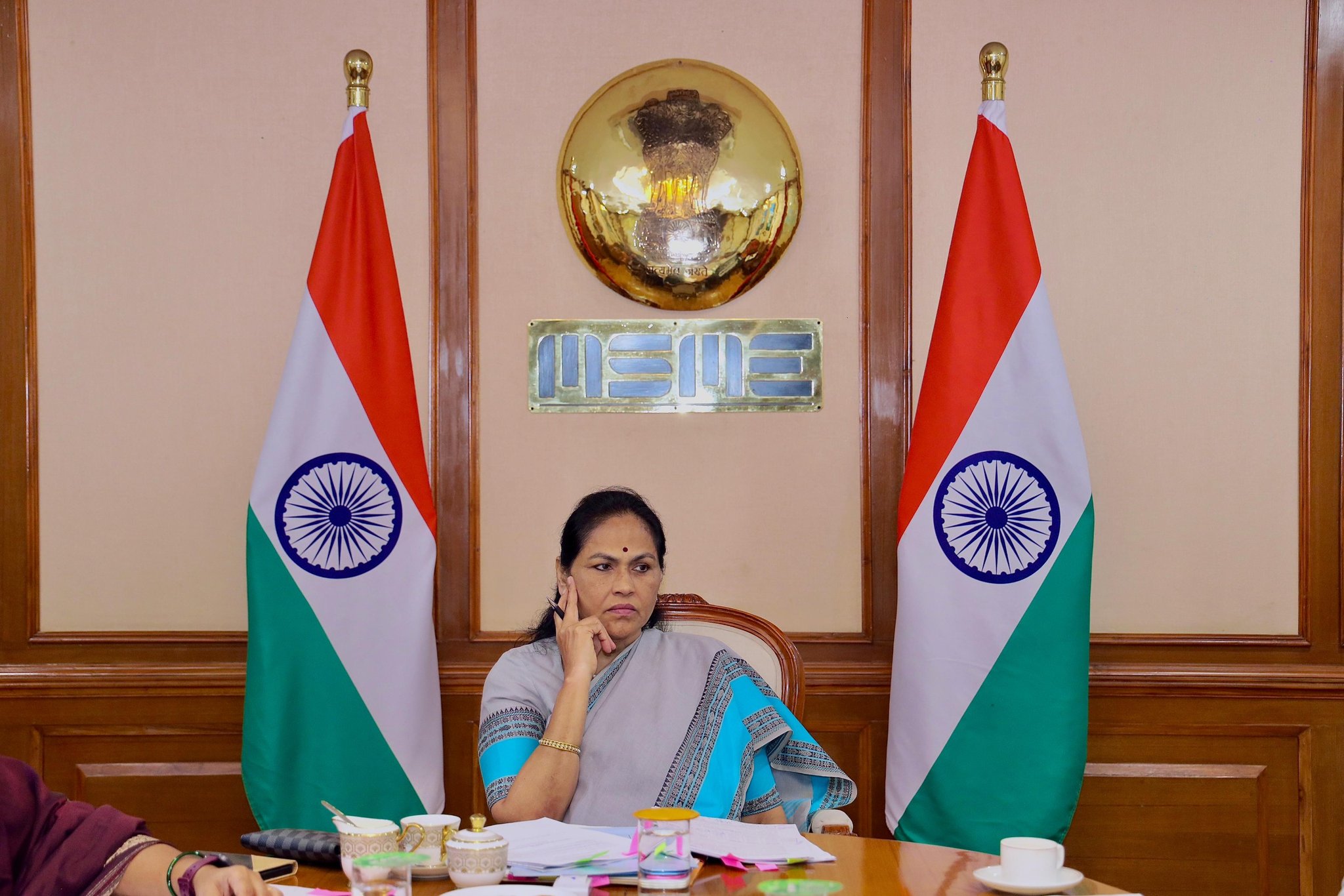
This information was given by the Minister of State for Micro, Small and Medium Enterprises Sushri Shobha Karandlaje in a written reply in Rajya Sabha on Monday.

DP World reports strong H1 2025 results: Revenue up 20.4%, container volume rises 6.7%

DUBAI: DP World announced strong financial and operational results for the first half of 2025, underlining the resilience of its integrated global trade platform amid ongoing geopolitical and economic uncertainty. 

Revenue grew by 20.4% year-on-year to $11,244 million, driven by strong performance across Ports & Terminals and recent acquisitions. Adjusted EBITDA rose 21.4% to $3,033 million, while container volumes increased 5.6% on a like-for-like basis, reaching 45.4 million TEU (twenty-foot equivalent units) across the global portfolio.

Commenting on the results, DP World Group Chairman and CEO, Sultan Ahmed bin Sulayem, said: “We are pleased to report strong first-half results, with both revenue and EBITDA growing by over 20%. Ongoing geopolitical tensions, the continued closure of the Red Sea route, and rising uncertainty around global trade tariffs have caused significant disruption across the industry. Despite these challenges, our strategy of delivering integrated end-to-end solutions and operating critical infrastructure in key markets has allowed us to continue supporting cargo owners to move their freight and to deliver a strong set of results.”

DP World continues to invest in strategic growth markets, with $1.08 billion in capital expenditure during the first half of the year. The full-year capex target of $2.5 billion will support expansion in Jebel Ali Port, Drydocks World, Tuna Tekra (India), London Gateway (UK), and Dakar (Senegal), along with DP World Logistics and P&O Maritime Logistics. These investments are focused on enhancing terminal capacity, supply chain integration, and digital capabilities to support long-term trade resilience.

Across terminals where DP World has operational control, the company handled 27.4 million TEU, an increase of 7.5% year-on-year.

Yuvraj Narayan, Group Deputy CEO & CFO, commented: “This performance was underpinned by continued momentum in Ports & Terminals and Marine Services, supported by strong cash generation and a disciplined balance sheet. We remain well-positioned to fund strategic growth, maintain our credit strength, and respond to evolving market conditions.”

Through Unifeeder, DP World offers efficient and sustainable multimodal transport solutions that ensure connectivity for global shipping lines and cargo owners. This has been particularly important amid recent disruptions to global supply chains, where our extensive network has played a crucial role in helping customers maintain cargo flows and delivery reliability.

DP World’s freight forwarding platform now spans approximately 300 locations and covers more than 90% of global trade lanes.

“We continue to enhance our logistics capabilities, allowing us to serve customers seamlessly across the world’s major trade lanes. Recent bolt-on acquisitions have expanded our offerings and introduced specialized capabilities aligned with the evolving needs of cargo owners. These investments address supply chain inefficiencies and strengthen connectivity across key corridors, enabling us to deliver more resilient, efficient, and tailored solutions,” the chairman said.

Despite ongoing macroeconomic headwinds and continued pressure on key shipping corridors, DP World expects to deliver a strong full-year EBITDA performance, supported by sustained throughput growth, operational leverage in Ports & Terminals, strengthening balance sheet, and strategic capex and global integration.

“Looking ahead, we remain optimistic about the medium- to long-term outlook for global trade and logistics. As supply chains evolve, DP World is well-positioned to lead the industry in delivering efficient, resilient, and sustainable trade solutions that create long-term value,” added Sultan Ahmed bin Sulayem.

Allcargo Logistics strengthens its consultative Logistics Business with New Sales Leadership

MUMBAI : Allcargo Logistics Limited, a part of the Allcargo Group, has announced the appointment of Karan Vir Puri as the head of sales to drive the growth of its Consultative Logistics (CL) business under Allcargo Supply Chain Private Limited (ASCPL).

Allcargo Logistics’ Consultative Logistics division specialises in delivering customised end-to-end logistics solutions across sectors such as automotive, chemicals, food and pharmaceuticals, e-commerce and retail solutions. With the help of advanced technology platforms like Warehouse Management Systems (WMS) and Transportation Management Systems (TMS), the CL business ensures operational efficiency, real-time visibility, and scalable solutions catering to diverse industry needs.

In this new leadership Karan Vir Puri will lead the sales strategy, steer market expansion, and drive 3PL business development while strengthening customer relationships and aligning initiatives with the company’s long-term growth vision.

Welcoming Mr. Puri to the organisation, Mr. Ketan Kulkarni, Managing Director, Allcargo Supply Chain Pvt. Limited, said, “Karan’s deep expertise in the B2B landscape will be pivotal in accelerating our Consultative Logistics division growth. His proven leadership in driving sales, expanding market reach, and strengthening customer relationships aligns perfectly with our vision to enhance operational efficiency, craft customised solutions, and capture emerging opportunities. We are confident his addition to the team will advance our position as a trusted partner in complex logistics while reinforcing our Group’s mission and values.”

Mr. Puri brings over two decades of experience in supply chain management, logistics, e-commerce, and express distribution, with a proven track record of business growth and strategic transformation.

Commenting on the appointment, Mr. Karan Vir Puri, Sales Head, Consultative Logistics, Allcargo Supply Chain Pvt. Limited said, “I am thrilled to join Allcargo Logistics’ Consultative Logistics division at such a fundamental stage in its growth journey. With our strong technology backbone, sector-focused expertise, and customer-first approach, I look forward to driving strategic expansion, deepening client partnerships and delivering innovative, high-impact solutions that create lasting value.”

Allcargo Supply Chain currently operates 7.5 million sq. ft. of space across more than 80 sites pan India and is pursuing further expansion in major metro cities. Serving diverse industry verticals, the company harnesses technology-integrated processes, robust infrastructure, and an agile approach to help businesses scale seamlessly, manage seasonal surges, and uphold the highest safety and quality standards.

4th Meeting of India-Singapore Joint Working Group on Trade & Investment (JWGTI) held in New Delhi

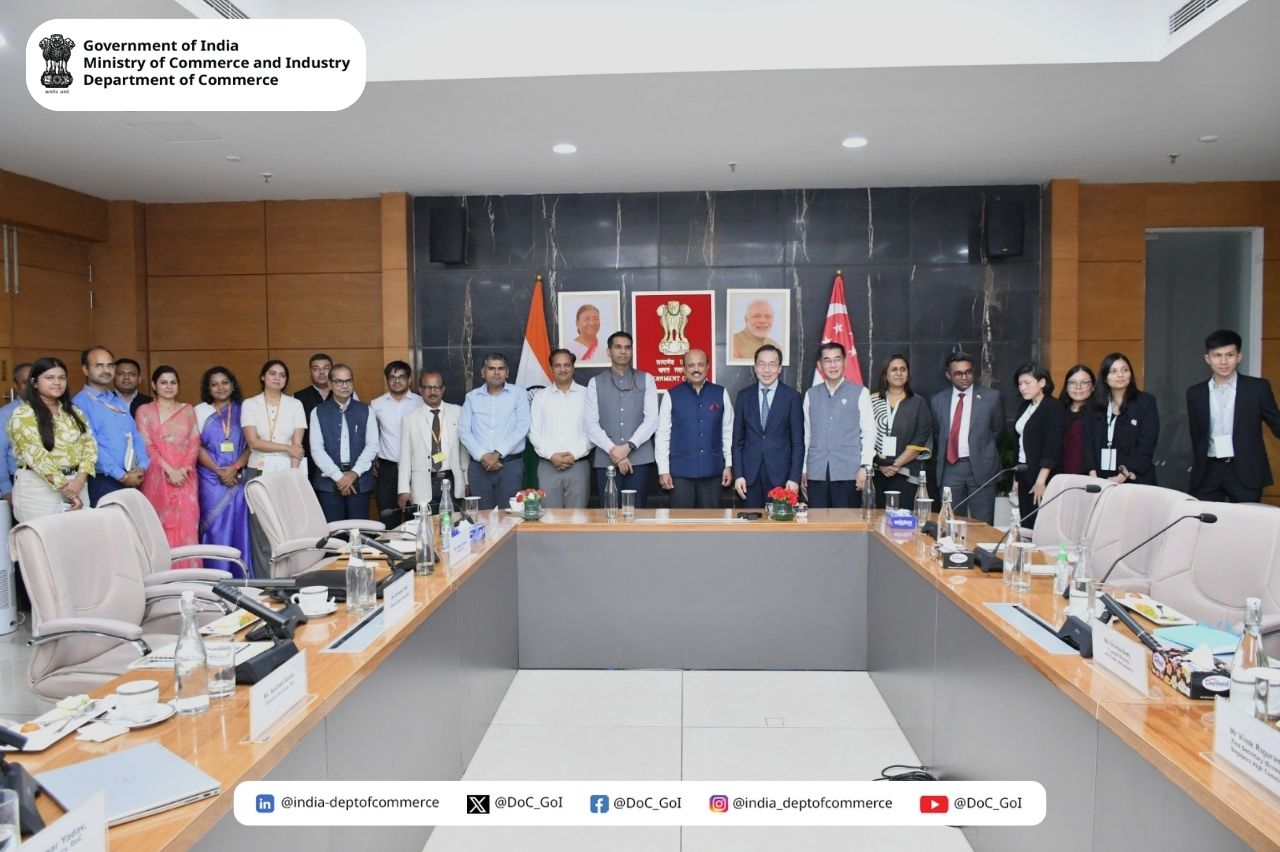
NEW DELHI : The 4th Meeting of the India–Singapore Joint Working Group on Trade & Investment (JWGTI) was hosted by India at Vanijya Bhawan, New Delhi, on 14th August 2025. The meeting was co-chaired by Special Secretary, Department of Commerce, Ministry of Commerce and Industry, Shri Rajesh Agrawal and Permanent Secretary, Ministry of Trade and Industry, Singapore, Dr. Beh Swan Gin. The meeting followed the 3rd India–Singapore Ministerial Roundtable (ISMR) held a day earlier.

Discussions during the JWGTI focused on deepening bilateral trade and investment ties, identifying priority sectors for greater alignment, improving logistics and supply chains, streamlining regulatory frameworks, and exploring ways to facilitate cross-border trade.

Shri Rajesh Agrawal noted that the India–Singapore relationship has evolved well beyond traditional trade. While the two countries already enjoy robust engagement in trade and investment, there remain ample opportunities for further cooperation.

The year 2025 marks the 60th anniversary of the establishment of diplomatic relations between India and Singapore, as well as the 20th anniversary of the Comprehensive Economic Cooperation Agreement (CECA). The CECA, signed in 2005, was the first comprehensive trade agreement India entered into with any partner and Singapore’s first such pact with a South Asian country.

Singapore is India’s largest trading partner within ASEAN, with total bilateral trade of USD 34.26 billion during 2024–25. It is also India’s second-largest source of Foreign Direct Investment (FDI), with equity inflows of USD 163.85 billion (INR 11,24,509.65 crore) between April 2000 and July 2024, accounting for about 24% of India’s cumulative inflows.

The meeting reviewed ongoing collaboration in areas such as the semiconductor sector and digitalisation of trade, and explored potential partnerships in skills development, capacity building, and other emerging sectors for mutual benefit. Both sides agreed on the importance of more frequent engagements to translate these opportunities into concrete outcomes.