Home Blog Page 713

Vizhinjam Seaport phase two expansion likely next month

THIRUVANANTHAPURAM : The Vizhinjam Seaport that was dedicated to the nation early May will likely see the kick-off of its Phase two expansion next month. Phase two, expected to be completed by 2028, targets increasing the port’s container capacity to some 4.5 million TEU a year and will add a break-bulk berth, a tanker berth and a bunkering facility on an extended 4-km-long breakwater.

Vizhinjam port, which has handled nearly 1 million TEUs after starting commercial operations in December 2024, now has an 800-m long container ship jetty capable of handling one container mother ship and two feeder vessels at a time, reported The Hindu.

Phase 2 will increase the length of the container berth to 2000-m long and hold three mother ships and several feeder vessels at the same time.

While Phase 1, costing a little less than ₹9,000 crore, saw the financial participation of the Kerala and the Union governments including through viability gap funding for the project, the finance for Phase 2, costing ₹10,000 crore, will be entirely raised by the Adani Ports & SEZ Ltd (APSEZ), the ports and logistics company of the Adani Group.

Port Ecosystem Development

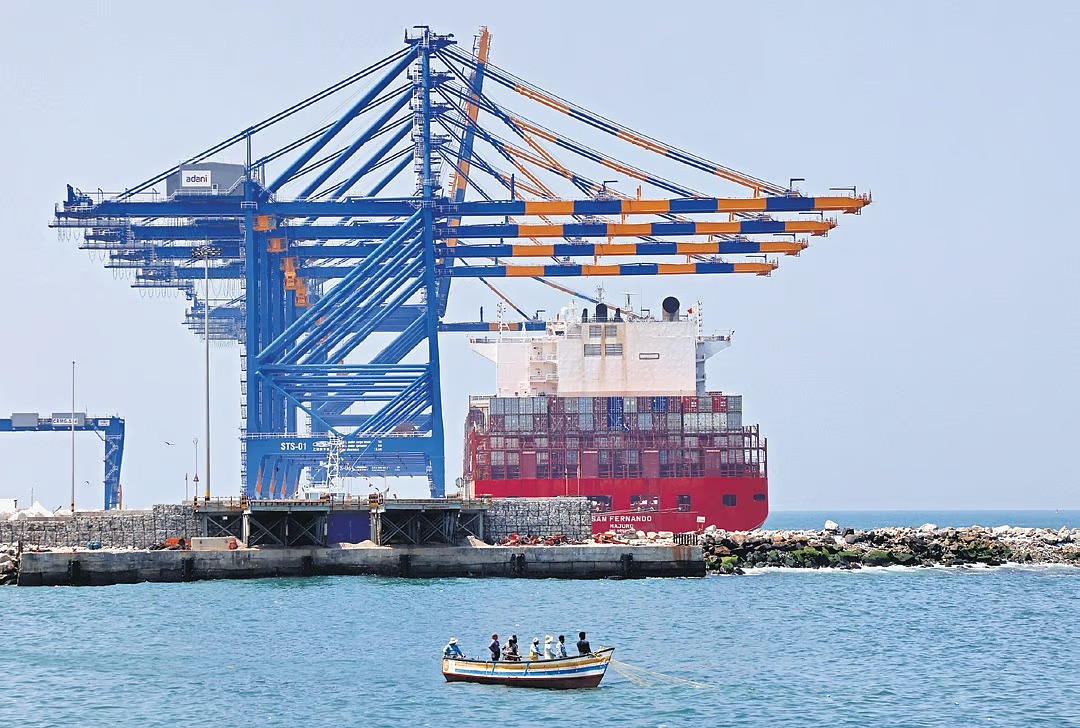
In 2015, the Kerala government had signed an agreement with Adani Ports & SEZ Ltd (APSEZ) to further expand the capacity of the Vizhinjam International Deepwater Seaport at Thiruvananthapuram. Adani has a 40-year concession to build, operate and transfer the port, with a provision for a 20-year extension. The port commenced trial operations in July 2024, receiving its first mothership, the San Fernando.

The Kerala government is accelerating port-related industrialisation to engage consultants to develop 200 acres near Vizhinjam for logistics, warehousing and manufacturing clusters, supported by NH-66 and a proposed ₹360 cr cloverleaf interchange.

Meanwhile, the Kerala Maritime Board has proposed transferring over five acres of its prime land adjacent to Vizhinjam Inspection Bungalow on Harbour Road to state government for development of container yards, freight station, oil storage facilities or warehouses. These moves aim to support the emerging port ecosystem to match infrastructure growth with the port’s capacity surge.
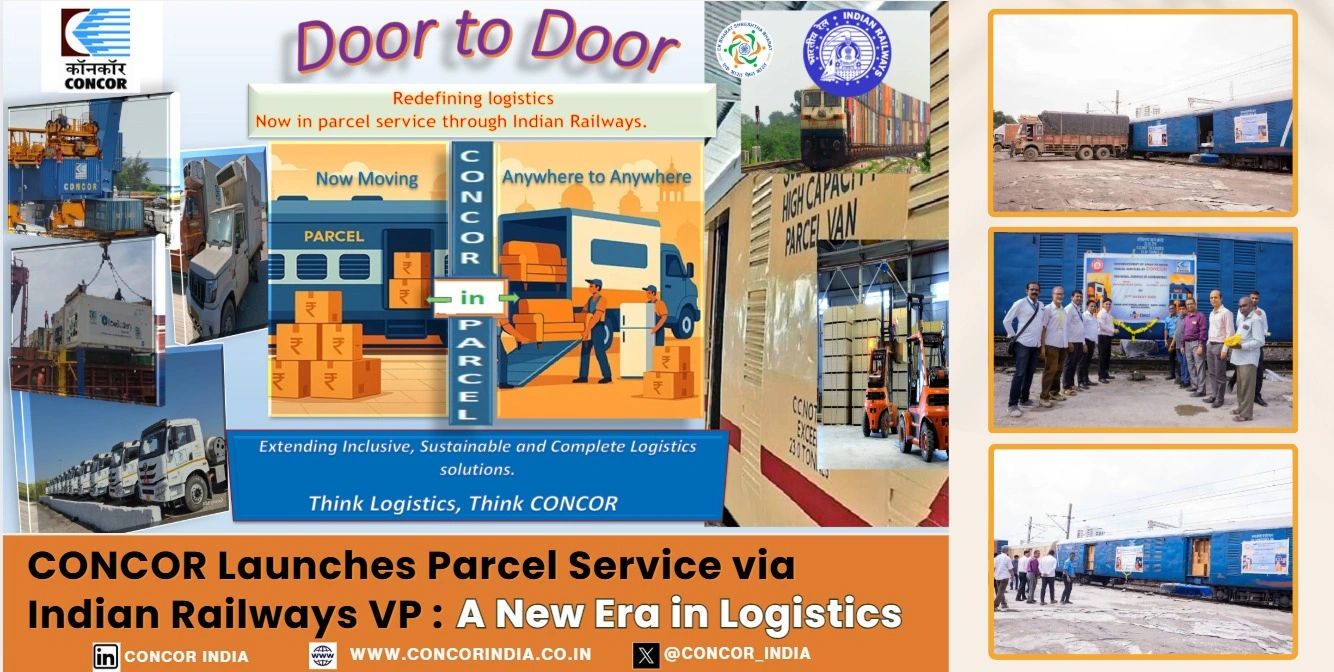
CONCOR launches End to End Parcel Service in collaboration with Indian Railways: A New Era in Logistics

NEW DELHI : In a landmark initiative to transform long-haul logistics, CONCOR has launched its dedicated End to End Parcel Service through Indian Railways’ Parcel Van (VP), with the inaugural run from BIRD (Mumbai) to SGYT (Kolkata) on 07/08/2025.

This service leverages the speed, reliability, and reach of Indian Railways under the JPP-RCS time table, ensuring fixed transit schedules, cost-efficiency, and timely delivery. With real-time tracking, advance booking, and doorstep pickup & delivery, CONCOR is bridging the gap between rail and road for small to mid-sized shipments, e-commerce, and MSMEs.

It offers a cost-effective end-to-end logistics solution with cargo picked up and delivered at customers’ doorsteps—making rail a highly attractive and sustainable alternative to road transport.

A major initiative in promoting ease of doing business and enhancing supply chain efficiency.

DG Shipping leads Dialogue on Safer, Sustainable Green Ship Recycling in India

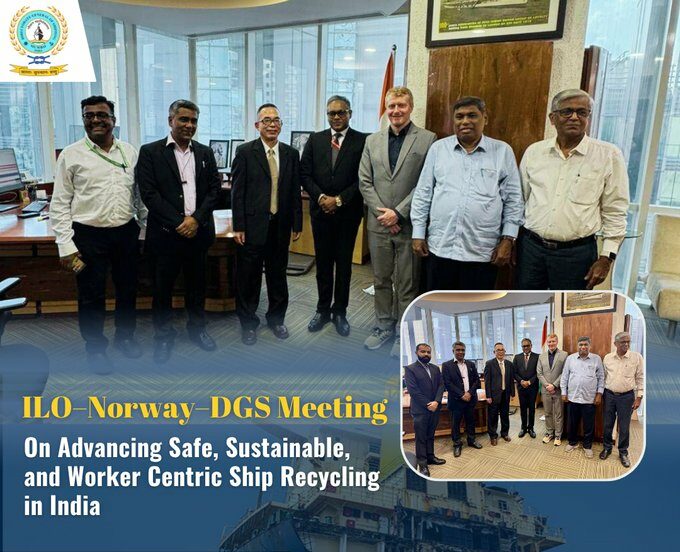
MUMBAI : The Directorate General of Shipping convened a high-level meeting on August 5th to chart a forward-looking course for India’s ship recycling sector, with a sharp focus on sustainability, safety, and worker welfare.

The delegation included Mr. Satoshi Sasaki, Deputy Director, International Labour Organization (ILO); Mr. Fredrik Bjerke Abdelmaguid, Consul / Deputy Head of Mission, Royal Norwegian Consulate General, Mumbai; Mr. Vidyadhar Rane, General Secretary, ASSRGWA; and Mr. Vikas Nalawade, Treasurer, ASSRGWA.

While discussions were anchored around the upcoming Norway-India Collaborative Workshop on Occupational Safety and Health (OSH)—scheduled for August 21–22 in Bhavnagar—they expanded into broader strategies shaping the future of ship recycling in India.

Key priorities outlined included:

  • Implementing the Hong Kong Convention in sync with ISO standards
  • Modernizing Alang’s infrastructure and integrating advanced Occupational Health & Safety frameworks
  • Leveraging the Ferrous Scrap Development Fund (FSDF) for facility upgrades and workforce welfare
  • Enhancing technical safety, life-saving apparatus availability, and structured worker training
  • Shifting from commercial-centric to responsible, safe recycling practices
  • Drafting a five-year roadmap balancing environmental goals with worker well-being
  • Establishing global-standard SOPs for operational excellence
  • Setting up the Maritime Knowledge Centre (MKC) in collaboration with Ganpat University

The meeting reaffirmed India’s commitment to building a ship recycling industry that is green, compliant, safe, and globally respected, setting benchmarks in both environmental stewardship and human-centric operations.

India sets up high-level panel to fix export bottlenecks as US tariff war heats up

NEW INDIA : The government has formed a high-level committee to assess how customs duties, export incentives, GST and export clearance procedures are impacting India’s outbound shipments in the middle of a difficult global trade environment, Economic Times reported.

The panel includes senior officials from the ministries of commerce and industry, finance, and representatives from trade bodies. It will propose measures to simplify documentation, customs processes, port clearances and logistics, officials told Economic Times.

“The committee will look at export-related tax structure and customs clearances for all geographies and see where all easing can be done,” one official said.

Exports at seven-month low

India’s goods exports in June slipped 0.05 percent year-on-year to $35.14 billion, the lowest in seven months, while imports fell 3.71 percent to $53.92 billion. The trade deficit stood at $18.78 billion compared with $20.84 billion in June last year.

The committee will not only address tax and clearance issues faced by domestic manufacturers, but will also identify global best practices and recommend reforms to streamline export processes, Economic Times noted.

Backdrop: US ramps up tariffs

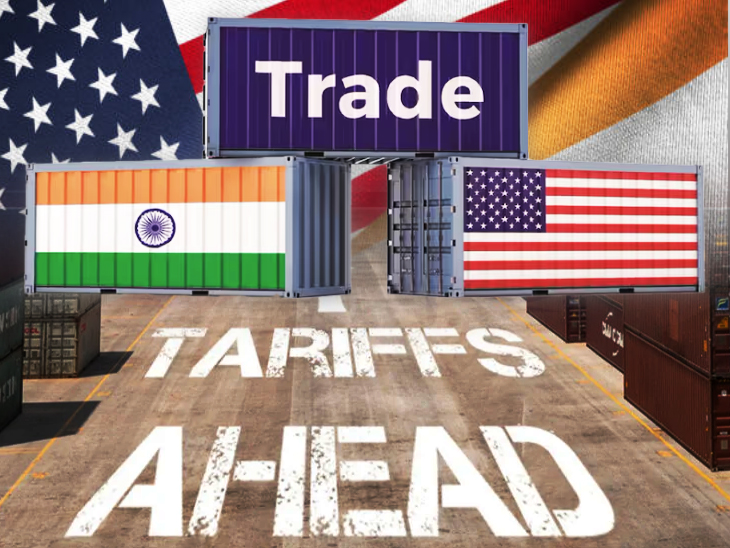
The move comes as the US has slapped a 50 percent tariff on imports from India, the steepest on any country and on par with Brazil. Trump signed the executive order on Wednesday, doubling the existing 25 percent duty to 50 percent. The first phase came into effect Thursday, and the additional 25 percent will apply from August 27.

Trade tensions have been rising after talks between the two countries stalled, with the US seeking greater market access and criticising India’s Russian oil purchases.

India’s three-pronged response

According to Economic Times, New Delhi is working on a three-part plan to counter the US tariff hike:

Tailor-made schemes under the proposed Export Promotion Mission to support affected sectors
Diversion of goods to other geographies to offset the loss of US orders
Redirecting low-order products to meet domestic demand
The commerce and industry ministry has also urged exporters to promote homegrown brands to withstand the steep US duties.

Rs 20,000 crore long-term shield

By September, the government aims to roll out a Rs 20,000 crore long-term strategy under the Export Promotion Mission to protect exporters from global trade volatility. The plan will focus on improving access to export credit and tackling non-tariff barriers in overseas markets, Economic Times said.

US Tariff impact: Exporters face upto 15% spike in sea-freight, scramble to beat US Tariff deadline

MUMBAI : Freight rates to the US have seen a marginal 5–10% spike as Indian exporters rush to ship urgent orders ahead of the expected 50% tariff hike, according to Dushyant Mulani, Chairman of the Federation of Freight Forwarders’ Associations.

With sea shipments unable to beat the tariff deadline, given the 40–45 day transit time to the US, many exporters are switching to air freight for critical orders. “Only if an exporter opts for air freight can the cargo arrive in time by paying the 25% duty,” said Ajay Sahai, Director General, Federation of Indian Export Organisations (FIEO).

Pharmaceuticals and electronics, which form a large part of India’s export basket, have not yet been hit, offering some short-term relief. But exporters are concerned the disruption could persist. “The situation will remain dynamic for 6–12 months,” Mulani said, adding that several sea and air ports are being closely monitored.

Pankaj Chadha, Chairman of the Engineering Export Promotion Council (EEPC), said freight costs to the US have already risen sharply in recent weeks. East Coast rates from India are now in the range of $2,400–$2,600, while West Coast rates stand at $2,100–$2,300. For instance, Mumbai–Savannah freight for a 20-foot container has climbed from $1,700 to $2,000, reflecting a $500 jump. Chadha noted that sea freight to the US has increased by around 15%, adding to exporters’ cost pressures as some race to ship goods before the higher 50% US tariff takes effect.

Exporters are now weighing alternate markets if the tariff issue prolongs. The government, meanwhile, is taking stock through diplomatic channels and is expected to announce long-term initiatives within a week. “The government is building up support for exporters,” Mulani said.

India plans tariffs response to US over steel, aluminium levy

NEW DELHI : India may slap tariff countermeasures on select American commodities, a retaliation to Washington’s move to impose a steep 50% duty in June on steel, aluminium and their derivatives from India, people aware of the matter have said.

To be sure, the levies on steel and aluminium have played out as a parallel trade dispute at the World Trade Organization, but its timing would make it the first Indian retaliation since Trump’s July 31 announcement of the 25% tariff on all Indian goods entering the US when trade talks failed to reach a breakthrough and his subsequent penalties over Russian oil purchases announced on August 6.

According to people aware of the matter, India has prepared legal grounds for the retaliatory action on steel and aluminium under World Trade Organization rules after the US rejected New Delhi’s request for consultations over what India considers WTO-non-compliant safeguard measures disguised as national security actions. “Washington is unwilling to address New Delhi’s concerns through talks, which leaves India with little option other than to retaliate,” one person said.

The steel and aluminium dispute dates back to February when the Trump administration imposed 25% tariffs on the metals, later doubling them to 50% in June. New Delhi intimated the WTO about the dispute and India’s rights to take proportionate action on May 9 after at least $7.6 billion worth of Indian exports to the US were affected by the duties.

“The US is unjustly acting against India’s economic interests even as the two countries are negotiating a bilateral trade agreement. India reserves the right to respond to unilateral and unreasonable actions of the US,” a second person said, adding that the beginning of the retaliation could be made with a “proportional response to the US imposition of 50% tariff on Indian steel, aluminium and their derivatives”.

America exports over $45 billion worth of merchandise to the Indian market, while India – prior to the Trump administration’s wide variety of tariffs –exported $86 billion worth merchandise to US.

How this balance changes is uncertain. Between February — when President Trump and Prime Minister Shri Narendra Modi resolved to expand bilateral trade to $500 billion and launch comprehensive trade negotiations — and the last two weeks, when Trump announced Indian exports will be slapped with 50% levy from August 28, the journey has been turbulent. The trade talks stalled, primarily over US seeking unfettered market access to economically sensitive sectors that New Delhi steadfastly refused, before appearing to be beset by the controversy around Russian oil purchases. “These unilateral, unjustified and unreasonable actions of the Trump administration raise doubt about its intent to have a fair, balanced and mutually beneficial bilateral trade agreement,” another person said. The escalating tariffs have effectively undermined bilateral trade negotiations, with India arguing that arm-twisting tactics make fair negotiations impossible.

According to one of the people cited above, what has affected the retaliation calculus was Trump’s comments on Thursday, when he rejected stepping up trade negotiations with India. “No, not until we get it resolved,” the president said at the Oval Office when asked about increased trade talks.

The broader trade relationship includes America’s $13.62 billion in energy exports to India in 2024-25, plus significant trade in electronics, chemicals, and other goods, highlighting the scale of economic interdependence between the two countries.

The US also maintains a services trade surplus with India of $102 million in 2024, with total bilateral services trade reaching $83.4 billion. US services exports to India totalled $41.8 billion, up 15.9% from 2023, while imports reached $41.6 billion, up 15.4%.

Source : Hindustan Times

GRSE begins FY26 with impressive Q1 Results – Revenue and PAT See Notable Increase

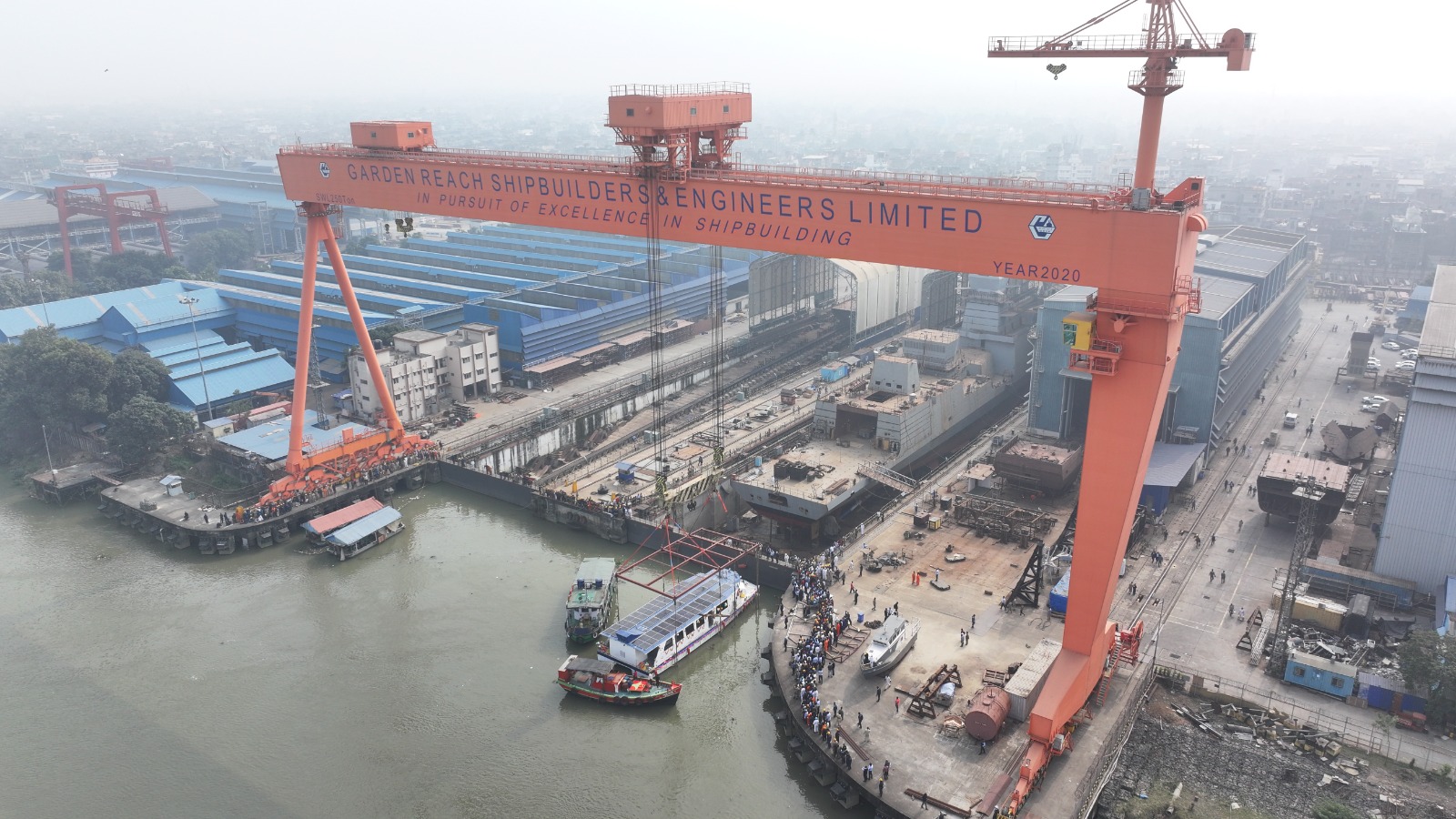
KOLKATA : Garden Reach Shipbuilders & Engineers Limited (GRSE), has announced its financial results for the first quarter ended June 30th 2025.

Highlights of Financial Performance Q1 FY26

•Total Income for the Q1FY26 stood at Rs. 1382 Crore against Rs. 1084 Crore in Q1FY25 with growth of 28% (Y-o-Y).

•Revenue from Operation has increased to Rs. 1310 Crore in Q1FY26 from Rs. 1010 Crore in Q1FY25, registering a growth of 30% (Y-o-Y).

•The Earnings before Interest, Tax, Depreciation and Amortization stands at Rs. 184 Crore in Q1FY26, as against Rs 130 Crore in Q1FY25, with an increase of 42%.

•Profit Before Tax (PBT) is Rs. 167 Crore for Q1FY26 as compared to Rs 115 Crore in Q1FY25, registering a growth of 45 % (Y-o-Y).

•Profit After Tax (PAT) is Rs. 120 Crore in Q1FY26 as against Rs. 87 Crore in Q1FY25, registering a growth of 38% (Y-o-Y).

•Earnings per share (EPS) for Q1FY26 is Rs. 10.49, against Rs. 7.61 in Q1FY25.

Commenting on the results, Cmde PR Hari, IN (Retd), Chairman and Managing Director, Garden Reach Shipbuilders & Engineers Limited said, “We have started FY26 on the right note with strong Q1 results. Considering the production maturity levels of the ongoing projects, we are confident of maintaining the growth momentum”.

DFCCIL delivers Record-Breaking Performance in July

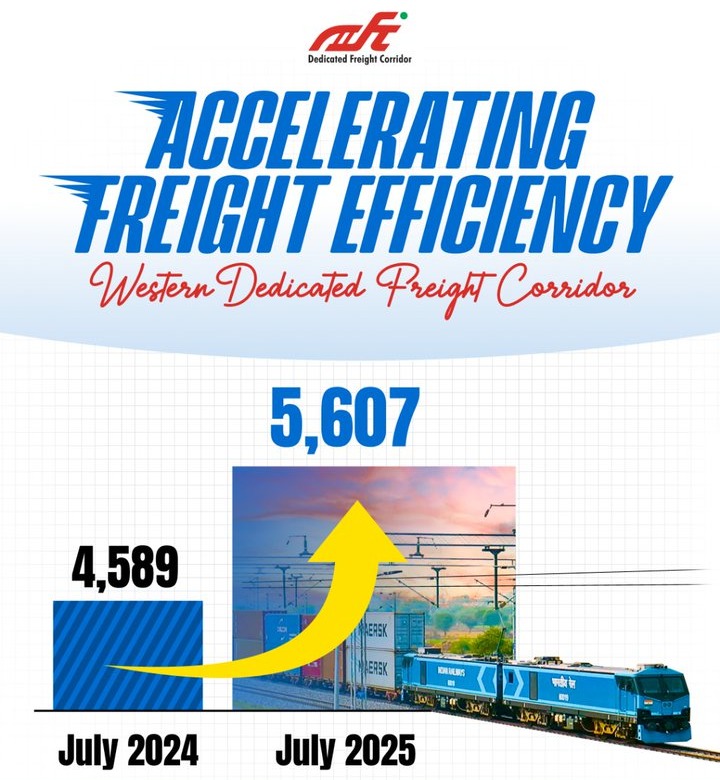
NEW DELHI : In a major boost to India’s freight movement, the Western Dedicated Freight Corridor (WDFC) witnessed a 22% increase in the total number of trains operated in July, rising from 4,589 in July 2024 to 5,607 in July 2025.

The growth reflects DFCCIL’s commitment to accelerating freight efficiency through innovative services, smart cargo handling, and seamless multimodal connectivity. With faster turnaround times, high-speed cargo trains, and modern Gati Shakti terminals, DFCCIL continues to redefine logistics excellence in India.

UP Govt to soon decide developer for multimodal logistics park in Greater Noida

NOIDA : The Uttar Pradesh Government will soon finalise a developer to set up the 174-acre multimodal logistics park in Greater Noida.

Greater Noida Industrial Development Authority recently invited bids for the project, with an aim to attract over Rs 1,200 crore in investment, create at least 5,000 jobs, and speed up freight movement.

Adani Ports and Special Economic Zone Ltd, Super Handlers and Empezar Logistics have made their bids, and a high-powered committee is going to look at their proposals and take a call after that.

“Three companies have submitted their bid for developing a multimodal logistics park at Greater Noida. A high-powered committee headed by the Chief Secretary will soon evaluate the proposal and take a call accordingly,” Uttar Pradesh Minister for Industrial Development, Export Promotion, NRI, and Investment Promotion, Shri Nand Gopal Gupta Nandi said.

The objective is to make Uttar Pradesh the most preferred investment destination in the country, and towards this end, the government is formulating investor-friendly policies, he added.

“The development of a multimodal logistics park in Greater Noida is a quest in that direction. With the upcoming Jewar Airport in its proximity, the multimodal logistics park may play an important role in the economic development of the region and would lead to thousands of employment generation, both direct and indirect,” he pointed out.

The proposed logistics park will have proximity to Noida International Airport and easy access to Eastern and Western Dedicated Freight Corridors.

It is also close to the Concor-operated dry port that handles container storage and processing. Other salient features of the park include cargo handling yards, warehousing facilities, a skill development centre, and other logistics services for the cargo terminal process.

According to the ‘Scheme for Allotment of Plot for Development of Multi-Modal Logistic Park at Greater Noida’, a minimum of Rs 1,200 crore investment is envisaged for the development, excluding the cost of land.

The allotment of 174.12 acres of contiguous land at Kappa 2 will be made on a leasehold basis for 90 years from the date of execution of the lease deed.

TVS SCS reports Q1 PAT of ₹71.16 Cr

CHENNAI : TVS Supply Chain Solutions Limited , a global supply chain solutions provider and one of the largest and fastest growing integrated supply chain solutions providers in India, announced its consolidated unaudited financial results for the quarter ended 30th June 2025.

The consolidated revenue for the quarter was at ₹2,592.31 Cr, compared to ₹2,539.39 Cr in Q1 FY25, marking a growth of 2.1% on a Y-o-Y basis. The Company reported a net profit of ₹71.16 Cr in Q1 FY26 against ₹7.47 Cr in the same quarter last year. Its adjusted EBITDA, on a sequential basis, was at ₹172.01 Cr in Q1 FY26 as against ₹156.41 Cr in Q4 FY25, a growth of 10.0%.  The PBT before exceptional items and share of profit from Joint Venture was reported as ₹17.53 Cr in Q1 FY26 as compared to ₹12.76 Cr in Q1 FY25 marking a growth of 37.4%.

The share of profit from TVS ILP, in which TVS SCS holds 25.2% stake, was ₹177.23 Cr in Q1 FY26. This was subsequent to the transfer of 11 Mn Sq. Ft. of warehouse space as part of its InVIT (Infrastructure Investment Trust) listing.

The company has consolidated its Integrated Final Mile (IFM) business into the Integrated Supply Chain Solutions (ISCS) segment across the UK and Europe to further strengthen its end-to-end solutions offering. This strategic move is aimed at meeting growing customer demand for seamless solutions. The unified structure enhances service delivery, sharpens execution, reduces duplication, and supports margin expansion.

The reporting structure will now comprise of ISCS and GFS segments. Below are the business and financial performance of the two operating segments along with the summary of the consolidated financial performance.

Integrated Supply Chain Solutions (‘ISCS’):

Integrated Supply Chain Solutions (‘ISCS’) (Amount in ₹ Cr.)Q1 FY26Q4 FY25*Q1 FY25*Q-o-Q GrowthY-o-Y Growth
ISCS Revenue1,982.901,943.391,905.612.0%4.1%
ISCS Adjusted EBITDA    164.11     162.43    168.751.0%-2.7%
ISCS Adj. EBITDA margin %     8.3%          8.4%         8.9%––

* Refers to prior period figures which are restated according to change in segments

Global Forwarding Solutions (‘GFS’):

Global Forwarding Solutions (‘GFS’) (Amount In ₹ Cr.)Q1 FY26Q4 FY25*Q1 FY25*Q-o-Q GrowthY-o-Y Growth
GFS Revenue609.41555.44633.78  9.7%  -3.8%
GFS Adjusted EBITDA  11.55     5.97   21.0593.4%-45.1%
GFS Adj. EBITDA margin %    1.9%     1.1%      3.3%––

  * Refers to prior period figures which are restated according to change in segments

Summary of Consolidated Financial Performance:

In ₹ CrQ1 FY26Q4 FY25Q1 FY25Q-o-Q GrowthY-o-Y Growth
Revenue from operations2,592.312498.832,539.39         3.7%2.1%
Adjusted EBITDA    172.01   156.41    184.51      10.0%-6.8%
Adj. EBITDA margin %      6.6%      6.3%        7.3%––
Profit before exceptional items, share of profit     17.53   12.03     12.76      45.7%37.4%
PBT as reported   103.47   12.96     13.76   698.4%652.0%
PAT as reported     71.16   -3.92       7.47–852.6%
PAT margin %       2.7%   -0.2%       0.3%––

Commenting on the Q1 FY26 results performance, Ravi Viswanathan, Managing Director, TVS Supply Chain Solutions Ltd. said, “We have entered FY26 with a continued focus on performance excellence, customer-centricity, and long-term value creation. The new unified structure in Europe and the UK is driving operational synergies and enhancing service delivery through deeper customer engagement and sharper execution. Combining this with our focused business development efforts, we are confident that this alignment will position us to better meet evolving customer needs and unlock new growth opportunities.”

R Vaidhyanathan, Global Chief Financial Officer, TVS Supply Chain Solutions Ltd. said, “We began FY26 on a steady note, with improved profit delivery and disciplined execution of our transformation initiatives. Our margin improvement reflects operational discipline across key businesses. Our strategic cost take-out initiatives are tracking well across regions. The restructuring program in the UK and Europe is set to drive a step-change in operating leverage and long-term margin trajectory by redefining our cost baseline. We are confident of delivering progressive improvements in margin profile and bottom-line performance through the course of FY26 and beyond.”