Home Blog Page 714

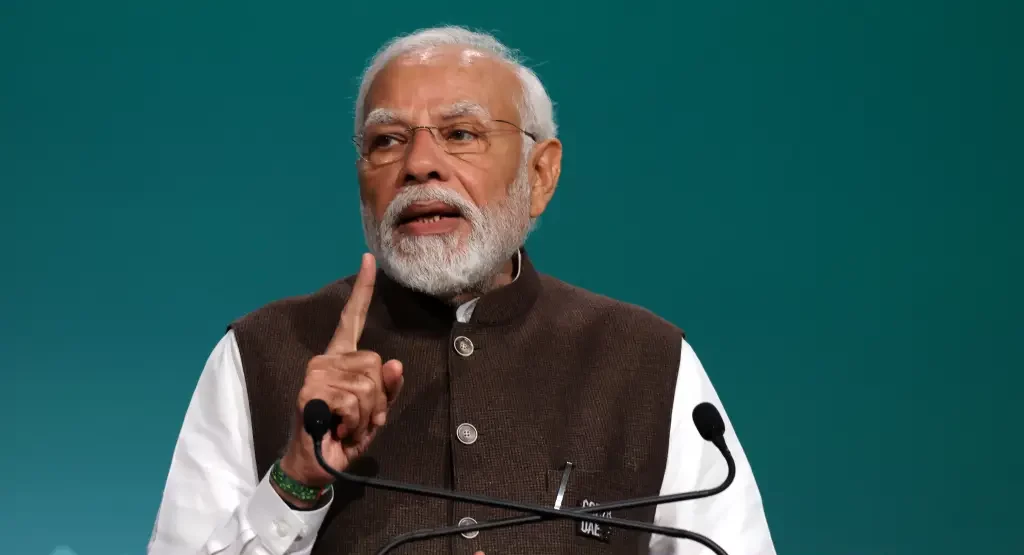
PM Modi’s ‘Vocal for Local’ appeal impresses Businessmen in Surat, aiming to make India World’s third largest Economy

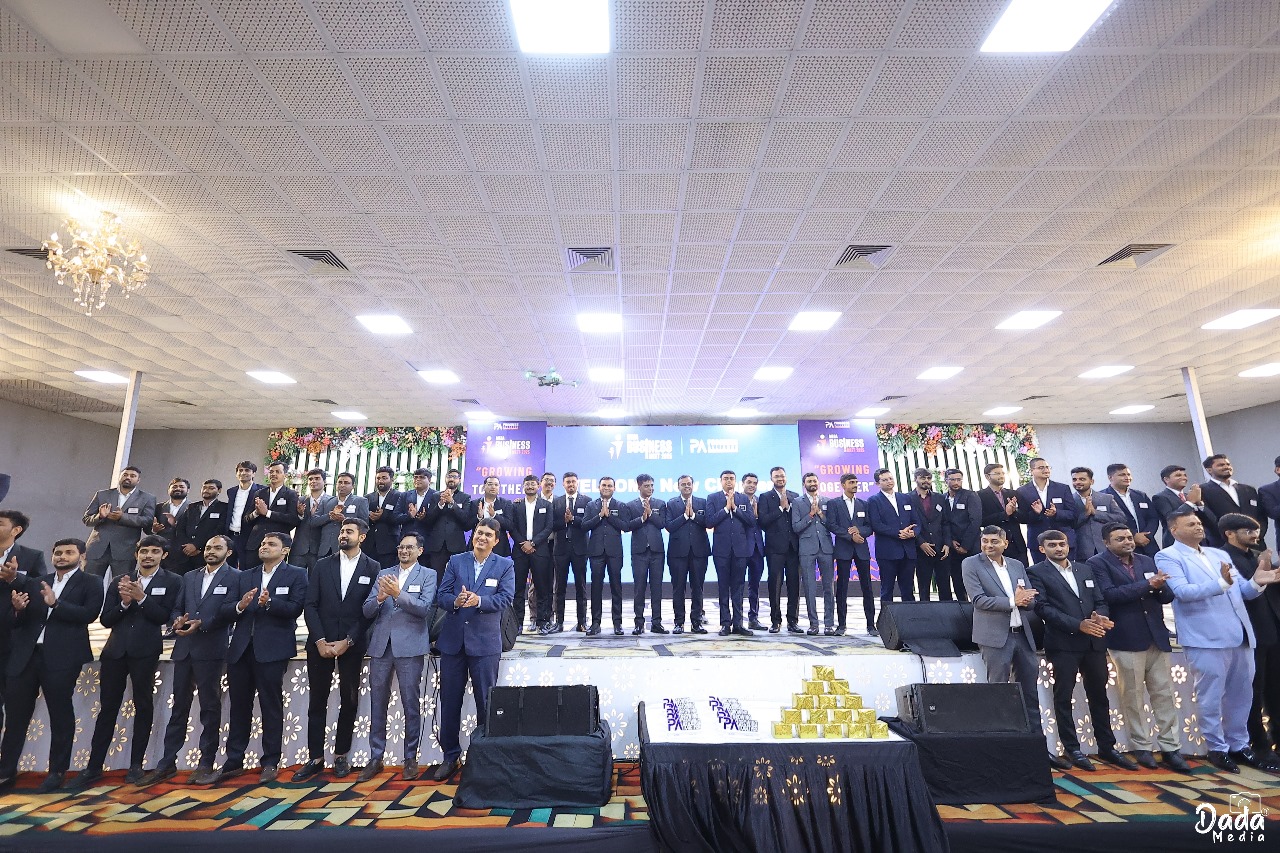
SURAT : As Prime Minister Narendra Modi urged the nation to adopt the ‘Vocal for Local’ initiative, two thousand businessmen doing business in different sectors in Gujarat’s Surat gathered under the ‘Progressive Alliance’, aimed at making India the world’s third-largest economy.

The event comes amid US President Trump’s tariff threat. However, PM Modi has said that citizens also have certain responsibilities and urged everyone to take a pledge for Swadeshi.

Prime Minister defined Swadeshi as anything made with the sweat and effort of an Indian, calling upon the nation to adopt the mantra of “Vocal for Local”.

During the business event, businessmen from different cities of Gujarat, including Surat, brainstormed on how the US tariff will affect MSME and export-based industries and what should be done to deal with it.

The main objective of the event was to strengthen the local economy by giving priority to Indian products under ‘Swadeshi’ empowerment, and to establish strong networking among businessmen.

Kamal Diora, who conducted the event said, “PM Modi’s ‘Swadeshi’ resolution will give us new strength amidst the US tariffs.”

“We are supporting the Prime Minister’s ‘Vocal for Local’, and we discussed making our country’s economy the third-largest economy in the world.” he claimed.

The businessmen who attended the event also seemed determined to take PM Modi’s initiative forward.

Ashish Sukhadia, a Diamond businessman from Surat said, “As an Indian, I fully support ‘Vocal for Local’. We are already doing great as we are the top 4th GDP in the world. If we support this initiative, we will overcome all the challenges. We are also focusing on how we can support each other.”

Amit Koladiya, a textile businessman from Surat said, “So, under ‘Vocal for Local’, we have discussed how we can come up with new products and whatever products we are dealing with, how we can make them in India.”

The ‘Vocal for Local’ movement, which gained traction in India in recent years, encourages citizens and businesses to prioritize locally made products over imports to promote domestic manufacturing, create and boost the local economy.

Blue Dart Express appoints Sagar Patil as Chief Financial Officer

MUMBAI : Blue Dart Express Limited, South Asia’s premier express air and integrated transportation & distribution company, has announced the appointment of Sagar Patil as the Chief Financial Officer of the Company. His appointment was approved by the Board of Directors at the company’s recently convened Board Meeting which was held in Mumbai and will be effective from August 1, 2025.

A Chartered Accountant by qualification, Sagar brings with him over 25 years of extensive experience in the field of Finance. He has been an integral part of the Blue Dart family for over eight years, having held key leadership roles such as Corporate Controller, Head – Corporate Accounts, and most recently, as the Interim CFO of the company. His distinguished career includes significant leadership roles across diverse industries, with tenures at DHL Express India, Burger King India, Shell Lubricants, and Owens Corning India.

Commenting on the appointment, Balfour Manuel, Managing Director, Blue Dart Express, said, “We are delighted to have Sagar take on the role of Chief Financial Officer at Blue Dart. His deep understanding of Blue Dart’s business, combined with strong financial and strategic acumen, positions him well to lead the company’s finance function. I am confident that under his stewardship, our finance function will continue to drive strategic value, enabling sustained growth and excellence for Blue Dart.”

Expressing his gratitude, Sagar Patil, Chief Financial Officer at Blue Dart said, “Blue Dart has played a significant role in my professional journey, and I am deeply grateful for the opportunity presented to me. Having been associated with Blue Dart for many years, it is a moment of great pride to be entrusted with the responsibility of leading the company’s finance function. I look forward to contributing further to the company’s growth by driving robust financial strategies and supporting our continued leadership in the logistics industry.”

Sagar’s appointment underscores Blue Dart’s commitment to strengthening its financial leadership in pursuit of the company’s strategic goals.

About Blue Dart:

Blue Dart Express Ltd., South Asia’s premier express air and integrated transportation & distribution company, offers secure and reliable delivery of consignments to over 56,400+ locations in India. Blue Dart is a provider of choice for its stakeholders due to its customer centric approach and aims to further strengthen this partnership. As part of DHL Group’s DHL eCommerce division, Blue Dart accesses the largest and most comprehensive express and logistics network worldwide, covering over 220 countries and territories, and offers an entire spectrum of distribution services including air express, freight forwarding, supply chain solutions, customs clearance etc.

The Blue Dart team drives market leadership through its motivated people, dedicated air and ground capacity, cutting-edge technology, wide range of innovative, vertical specific products and value-added services to deliver unmatched standards of service quality to its customers. Blue Dart’s market leadership is further validated by its position as the nation’s most innovative and awarded express logistics company for exhibiting reliability, superior brand experience and sustainability which include recognition as one of ‘India’s Best Companies to Work For’ by The Great Place to Work® Institute, India, ranked amongst ‘Best Multinational Workplaces in Asia’ by The Great Place to Work® Institute, Asia, voted a ‘Superbrand’ and ‘Reader’s Digest Most Trusted Brand’, and has achieved the ISO/IEC 27001:2022 certification. It has also been listed as one of Fortune 500’s ‘India’s Largest Corporations’ and Forbes ‘India’s Super 50 Companies’ to name a few. Blue Dart’s Diversity and Inclusion initiatives have also led to it being recognized as one of India’s ‘Best Workplaces for Women’ in 2021 and ‘Best Organisations for Women’ in 2025 for the 4th time by the ET Now. Furthermore, Blue Dart was awarded the ‘Best In-House Legal Team’ award in the logistics category at The Economic Times Global Legal Awards 2024-2025.

Blue Dart fulfils its social responsibility through its Go Programs namely Go Green – Climate Protection, Go Help – Drinking Water, Livelihood, Health, Disaster Management and Go Teach -Education.

Green hydrogen at the Port of Klaipėda: construction work begins

KLAIPEDA : Construction has begun at the Port of Klaipėda on a site dedicated to green hydrogen production and supply. This stage of the project will be completed within a few months, and by next spring, the Port of Klaipėda will become the first in Lithuania and the Baltic States to produce green hydrogen.

“We have reached a very important stage of this ambitious project – one that is now visible not only in documents but also on the ground: construction is underway. We are investing in the future because we see Klaipėda Port as green, competitive, and attractive,” said Algis Latakas, Director General of the Klaipėda State Seaport Authority.

H2vizualizacijanaujausiabelogo Green hydrogen at the Port of Klaipėda: construction work begins

The company Gevalda, which won the public tender announced by the Klaipėda Port Authority, is expected to complete construction by the end of the year. Once the site is finished, the installation and testing of hydrogen equipment will follow. All construction and installation works are scheduled for completion by February next year.

The station is expected to produce 127 tonnes of hydrogen annually, part of which will be used to power the first vessel in the country driven by green hydrogen, currently nearing completion.

The project is being implemented under the Economic Recovery and Resilience Plan Next Generation Lithuania, funded by the European Union’s NextGenerationEU recovery and resilience facility. The total estimated cost of the hydrogen production and refueling station is approximately €12 million, with around €6 million financed by EU funds.

A mixed week for Capesize market : Baltic Exchange

LONDON : Baltic Exchange reported a mixed week for Capesize market on last Friday.

Capesize
The Capesize market experienced a mixed and somewhat volatile week, marked by early weakness followed by a midweek rebound and gradually firmer sentiment, particularly in the Atlantic. In the Pacific, despite steady miner activity on C5, freight rates fluctuated, slipping as low as $9.55, rebounding midweek to $10.40 before easing back to $10.00 and eventually ending the week at $10.60. In contrast, the South Brazil and West Africa to China markets saw steady activity. While early fixtures pointed to softer levels in the low $23s on C3, midweek gains and healthy cargo flow provided support, with standard vessels continuing to command a premium as fixtures climbed to $25.00 by Friday. The North Atlantic was the standout performer, gaining momentum midweek after a quiet start. Both Transatlantic and fronthaul routes firmed on the back of fresh demand and tightening supply, with Transatlantic rates rising from around $25,000 to $30,000 and fronthaul levels reaching the low $50,000s. The BCI 5TC posted a net weekly gain, rebounding from early declines to close at $27,716.

Panamax
After last week’s rather subdued market, it was a more positive week overall for the Panamax sector. Stronger levels of enquiry were seen from the South Atlantic, despite a lack of interest from the North Atlantic, owners remained optimistic throughout the week. The demand from South America was the P6 route achieving in the mid-upper $14,000s. However, limited fresh enquiry from the North Atlantic saw an 83,000-dwt fixing from the United Kingdom via Narvik redelivery Continent at $17,500. With the extra demand from the South Atlantic, gradually better levels were seen for Southeast Asian business, with an 82,000-dwt fixing delivery Tanjung Bin via Indonesia redelivery Japan at $18,000. There was also a reasonable amount of activity from Australasia. An 82,000-dwt fixing delivery China via EC Australia redelivery India at $14,750. Period activity remained a slightly relaxed affair, but an 82,000-dwt open China fixed 3/6 months trading redelivery worldwide in the mid $14,000s.

Ultramax/Supramax
Although it was generally a positive affair overall, the Atlantic could be described as rather positional during the course of the week. Demand returned at pace from the US Gulf drawing owners interest from both the Continent and Western Mediterranean. A 60,000-dwt was heard fixed from the US Gulf for a trip Singapore-Japan at $27,750 while a 58,000-dwt was fixed delivery SW Pass trip to the East Mediterranean at $26,000. By contrast the South Atlantic struggled to gain much traction, with a 63,000-dwt was heard fixed from Santos to Chittagong at $14,000 plus $400,000 ballast bonus. After a relatively slow start from Asia, demand picked up both from Southeast Asia and further north, with a 56,000-dwt fixing delivery South China via Vietnam redelivery Bangladesh at $19,500. Increased demand was also seen in the Indian Ocean, albeit based around South Africa. A 64,000-dwt fixing delivery Port Elizabeth for a trip to China at $21,000 plus $210,000 ballast bonus.

Handysize
The market delivered a mixed performance this week, with only modest movements across both basins. In the Continent and Mediterranean, some fresh demand and increased activity were noted, although rates generally held around last-done levels. For instance, a 32,000-dwt fixed a trip via France redelivery Turkey with scrap at $9,500. The South Atlantic remained relatively soft, with limited information emerging, while the US Gulf retained firm fundamentals, supported by a steady flow of cargo. A 34,000-dwt was fixed delivery SW Pass 16–24 August for redelivery to WC Central America at $15,750. On the Asian front, despite limited fixture reports, the market sentiment maintained a firm tone. A 38,000-dwt fixed delivery Cigading for trip to redelivery Continent at $15,000.

Source: Baltic Exchange

PM Modi takes bold stand on US Tariffs and says He’s “Ready to pay the price”

NEW DELHI : Sending a strong message the day after US President Donald Trump ratcheted up the tariff war against India, Prime Minister Shri Narendra Modi stressed that India will never compromise with the interests of its farmers and fishermen. The Prime Minister said that while he knows he will “have to pay the price”, he was ready to do it for farmers.

Addressing the MS Swaminathan Centenary International Conference at Delhi, the Prime Minister said, “The interest of farmers is our top priority. India will never compromise with the interests of its farmers, livestock holders, and fishermen. And I know that I will have to pay a huge price for this personally, but I am ready. India is ready, for the sake of the country’s farmers, fishermen and livestock holders,” the Prime Minister said, minutes after Trump’s tariffs kicked in.

Paying his respects to MS Swaminathan, the architect of the Green Revolution, the Prime Minister said, “Building on the legacy of food security, the next frontier for our agricultural scientists is ensuring nutritional security for all.”

India exports a wide variety of agricultural products to the US and is one of the sectors set to bear the brunt of Trump’s tariffs.

Donald Trump yesterday announced an extra 25 per cent tariff on Indian exports as ‘penalty’ for New Delhi continuing to import Russian crude oil. Earlier, US had imposed 25 per cent tariffs on Indian exports on July 20.

With the total tariffs on Indian exports to the US rising to 50 per cent, the Ministry of External Affairs responded that the US targeting India over Russian oil imports is “unfair, unjustified, and unreasonable”.

“We have already made clear our position on these issues, including the fact that our imports are based on market factors and done with the overall objective of ensuring the energy security of 1.4 billion people of India. It is therefore extremely unfortunate that the US should choose to impose additional tariffs on India for actions that several other countries are also taking in their own national interest,” it said, stressing that India “will take all actions necessary to protect its national interests”.

Ties between India and the US have been uneasy in the aftermath of Operation Sindoor, India’s counterstrike after the Pahalgam terror attack in Jammu and Kashmir’s Pahalgam that left 26 innocents dead. Trump has repeatedly claimed that he brokered the ceasefire between India and Pakistan, a claim denied by the Narendra Modi government. “We had said from day one that our action was non-escalatory. No leader in the world asked us to stop Operation Sindoor,” Prime Minister Modi said during the Operation Sindoor debate in Parliament. Tariff hikes have followed these claims.

Trump’s tariffs also play out against the backdrop of the pause on talks on an India-US trade deal. Washington DC was pushing for more access to India’s agricultural market, a move New Delhi has resisted to safeguard farmers. 

Sarbananda Sonowal unveils digital transformation initiatives at IT Conclave, 2025

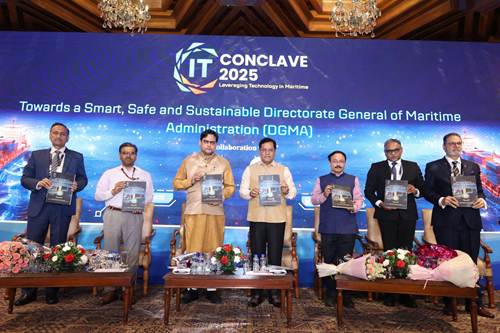
MUMBAI : The Directorate General of Shipping (DGS) under the Ministry of Ports, Shipping & Waterways hosted the “IT Conclave 2025 – Leveraging Technology in Maritime” marking a major step toward modernising India’s maritime governance here on Thursday.

Inaugurated by the Union Minister for Ports, Shipping & Waterways Sarbananda Sonowal, along with Union Minister of State Shantanu Thakur, the conclave showcased a suite of transformative digital initiatives designed to build a smart, secure, and transparent maritime ecosystem. The conclave, jointly organised by the DGS and the Company of Master Mariners of India (CMMI), aligns with the government’s larger vision under “Digital India,” “Maritime India Vision 2030,” and “Amrit Kaal Vision 2047”.

Among the key initiatives launched were the revamped DG Shipping website, Phase-1 rollout of the e-Samudra platform, and the release of a comprehensive digital transformation vision document. The redesigned DG Shipping website is now GIGW 3.0-compliant, featuring a multilingual, mobile-responsive interface to enhance accessibility for seafarers, shipowners, training institutes, and other stakeholders.

The Minister also launched the initial modules under the flagship e-Samudra platform, a cloud-native system that aims to unify more than 60 maritime services under one digital roof. The first phase includes modules for chartering permissions and licenses, streamlining the process for vessel chartering approvals; the Ship Building Financial Assistance (SBFA) module to facilitate access to financial support and incentives; the Multi-Modal Transport Operator (MTO) module enabling digital registration and regulatory compliance; and a Visitor Access Management System to enhance security through automation of access to DGS offices.

“These digital initiatives represent a paradigm shift in maritime governance,” said Union Minister Sarbananda Sonowal. “They reflect our commitment to transparency, efficiency, and innovation, aligned with the national vision for a technology-driven future.”

Sarbananda Sonowal further added, ”Under the visionary leadership of Prime Minister Shri Narendra Modi ji, India’s maritime sector is undergoing a digital renaissance. These pathbreaking initiatives reflect our commitment to harnessing technology for transparency, efficiency, and global competitiveness, as we chart our course towards a Viksit Bharat — a vision of Narendra Modi ji.”

The event also saw the rollout of a pilot AI-based digital examination system at MMD Noida and the unveiling of the “Leveraging Technology in Maritime” vision booklet. The document outlines DGS’s roadmap for digital transformation across the maritime domain, with initiatives such as Learning Management Systems (LMS) and web-based simulation tools aligned with global STCW standards, digital archival solutions for maritime records, ERP solutions for Seafarers’ Provident Fund Organization (SPFO) and Seafarers’ Welfare Fund Society (SWFS), and an Integrated Command & Control Centre for real-time data monitoring. It also includes the development of cybersecurity and data protection frameworks compliant with the Digital Personal Data Protection Act.

“From AI-powered exams to integrated e-Governance platforms, these interventions are transforming how India does shipping — smarter, safer, and future-ready,” added Sarbananda Sonowal.

“With e-Samudra and our other digital platforms, we aim to deliver seamless services, boost ease of doing business, and position India as a global leader in maritime digital governance. Inspired by the Hon’ble Prime Minister’s Digital India mission, we are building a maritime governance system rooted in innovation, speed, and service,” said Shantanu Thakur, Union Minister of State, MoPSW.

Looking ahead, the roadmap envisions deploying emerging technologies like AI, IoT, blockchain, and geospatial tools to power autonomous operations, predictive analytics, and next-gen maritime services by 2030 and beyond. India’s maritime sector is now steering confidently into a digital future—towards a smart, secure, and future-ready blue economy.

“Coastal Shipping Bill, 2025 aims to boost coastal cargo upto 230 million metric tonnes by 2030” : Sarbananda Sonowal

NEW DELHI : In a historic moment towards boosting the Coastal Economy of the country, the Coastal Shipping Bill, 2025 was passed by the Rajya Sabha on Thursday. This historic act is set to unlock the tremendous and vast potential of India’s 11,098 kms long strategic coastline, spanning nine coastal states and four union territories. The bill was proposed for adoption by the Union Minister of Ports, Shipping & Waterways (MoPSW), Shri Sarbananda Sonowal.

The Bill, which was earlier passed by the Lok Sabha on April 3, 2025, seeks to simplify and modernise the legal framework governing coastal shipping, replacing Part XIV of the Merchant Shipping Act, 1958 with a new-age, progressive legislation aligned with global cabotage norms.

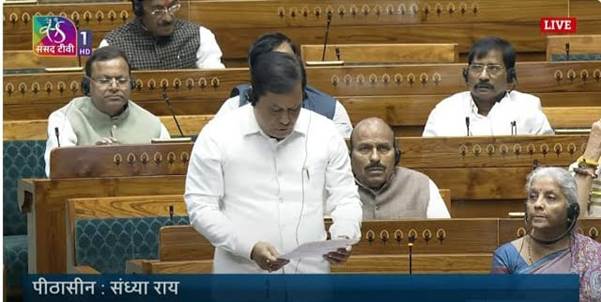
Introducing the Bill in the Rajya Sabha, Union Minister Sarbananda Sonowal stated that the legislation is central to India’s ambition of “increasing its coastal cargo share to 230 million metric tonnes by 2030, while strengthening the maritime sector’s contribution to Aatmanirbhar Bharat and Viksit Bharat.”

“This is not merely a legal reform but a strategic enabler of economic growth, employment, and logistics efficiency. The Bill reduces regulatory burdens, enhances competitiveness of Indian vessels, and aligns with the Prime Minister Shri Narendra Modi ji’s long-term vision to make India a global maritime hub,” the Union Minister said.

The Coastal Shipping Bill, 2025 comprises six chapters and 42 clauses. It introduces a simplified licensing system for coastal shipping and lays down the framework for regulating foreign vessels engaged in coasting trade. Additionally, the Bill mandates the formulation of a National Coastal and Inland Shipping Strategic Plan to guide future infrastructure development and policy direction.

The legislation also provides for the creation of a National Database for Coastal Shipping, enabling real-time access to authentic and regularly updated data. This database will keep potential investors informed about the government’s development plans and policy priorities in the sector, promoting transparency and confidence.

Once implemented, the Bill is expected to significantly enhance supply-chain security by increasing Indian ships’ participation in domestic cargo movement. “Under the visionary leadership of Prime Minister Shri Narendra Modi ji, we are working on a mission mode towards building an Atmanirbhar Bharat. In the same spirit, this bill aims to reduce India’s dependence on foreign vessels, thereby preventing the outflow of foreign exchange. In doing so, it will catalyse local economic development, generate employment opportunities across coastal regions, and strengthen ease of doing business for Indian shipping operators”, Sarbananda Sonowal further added.

“With the passage of the Coastal Shipping Bill, 2025, India takes a decisive step towards building a seamless, efficient, and globally competitive coastal and inland shipping ecosystem. This landmark reform will unlock the immense potential of our coastline, enhance supply chain resilience, and drive economic growth in line with our national vision of Viksit Bharat,” said the Union Minister Sarbananda Sonowal.

With the passage of the Coastal Shipping Act, 2025, the Ministry of Ports, Shipping & Waterways has successfully secured Parliamentary approval for all three critical marine legislations — the Merchant Shipping Bill, 2025, the Carriage of Goods by Sea Bill, 2025, and the Coastal Shipping Act — paving the way for a modern, efficient, and self-reliant maritime ecosystem in line with the vision of Viksit Bharat and Atmanirbhar Bharat.

“Under the visionary leadership of Prime Minister Narendra Modi ji, our ministry has undertaken historic legislative reforms to modernise India’s maritime sector. With the passage of all three landmark bills — the Merchant Shipping Bill, the Carriage of Goods by Sea Bill, and the Coastal Shipping Act — we are laying a strong foundation for a future-ready maritime ecosystem that supports Atmanirbhar Bharat and propels us closer to the goal of Viksit Bharat,” said Union Minister Sarbananda Sonowal.

With the passage of this landmark legislation, India moves a step closer to building an integrated, efficient, and globally competitive coastal and inland shipping ecosystem.

JNPA sets new cargo milestone with Double-Digit Growth in July 2025

MUMBAI : Jawaharlal Nehru Port Authority (JNPA), the country’s premier container gateway, posted a strong performance in July 2025, recording a 12.86% year-on-year increase in total cargo throughput. The port handled 8.51 million tonnes, up from 7.54 million tonnes in July last year, driven by robust container traffic growth and stellar performances from key terminals.

Container volumes surged 10.80% to 668,336 TEUs, compared to 603,217 TEUs in July 2024. The standout performer was Bharat Mumbai Container Terminals Pvt. Ltd. (BMCT), which achieved its highest-ever monthly throughput of 231,104 TEUs, marking a remarkable 36.80% month-on-month jump.

Terminal-wise container throughput – July 2025:

  • BMCT: 231,104 TEUs (+36.80% MoM)
  • APM Terminals (APMT): 189,520 TEUs (+1.95%)
  • Nhava Sheva International Container Terminal (NSICT): 109,977 TEUs (+10.42%)
  • Nhava Sheva India Gateway Terminal (NSIGT): 91,819 TEUs (–5.75%)
  • Nhava Sheva Freeport Terminal (NSFT): 45,227 TEUs (–9.72%)
  • Nhava Sheva Distribution Terminal (NSDT): 689 TEUs (–45.66%)

Rail operations also gained momentum, with 646 container rakes carrying 106,482 TEUs in July 2025, compared to 530 rakes and 84,690 TEUs in the same period last year.

Cumulative Performance – April to July 2025:

  • Total Container Throughput: 2.618 million TEUs (+14.28% YoY)
  • Total Cargo Handled: 32.71 million tonnes (+10.73% YoY)
  • Rail Traffic: 2,410 rakes carrying 390,597 TEUs (up from 2,064 rakes and 327,999 TEUs)

Established in 1989, JNPA operates five container terminals — NSFT, NSICT, NSIGT, BMCT, and APMT — along with a shallow water berth and a 277-hectare multi-product Special Economic Zone. As a statutory body under the Government of India, it plays a pivotal role in advancing India’s maritime trade.

BMCT, operated by PSA International, continues to be a growth engine for JNPA. Its record-breaking July performance has reinforced its position as the port’s leading terminal and a key driver of the overall volume surge.

APM Terminals Pipavav signs landmark contracts to build State-of-the-Art Liquid Jetty at Pipavav Port

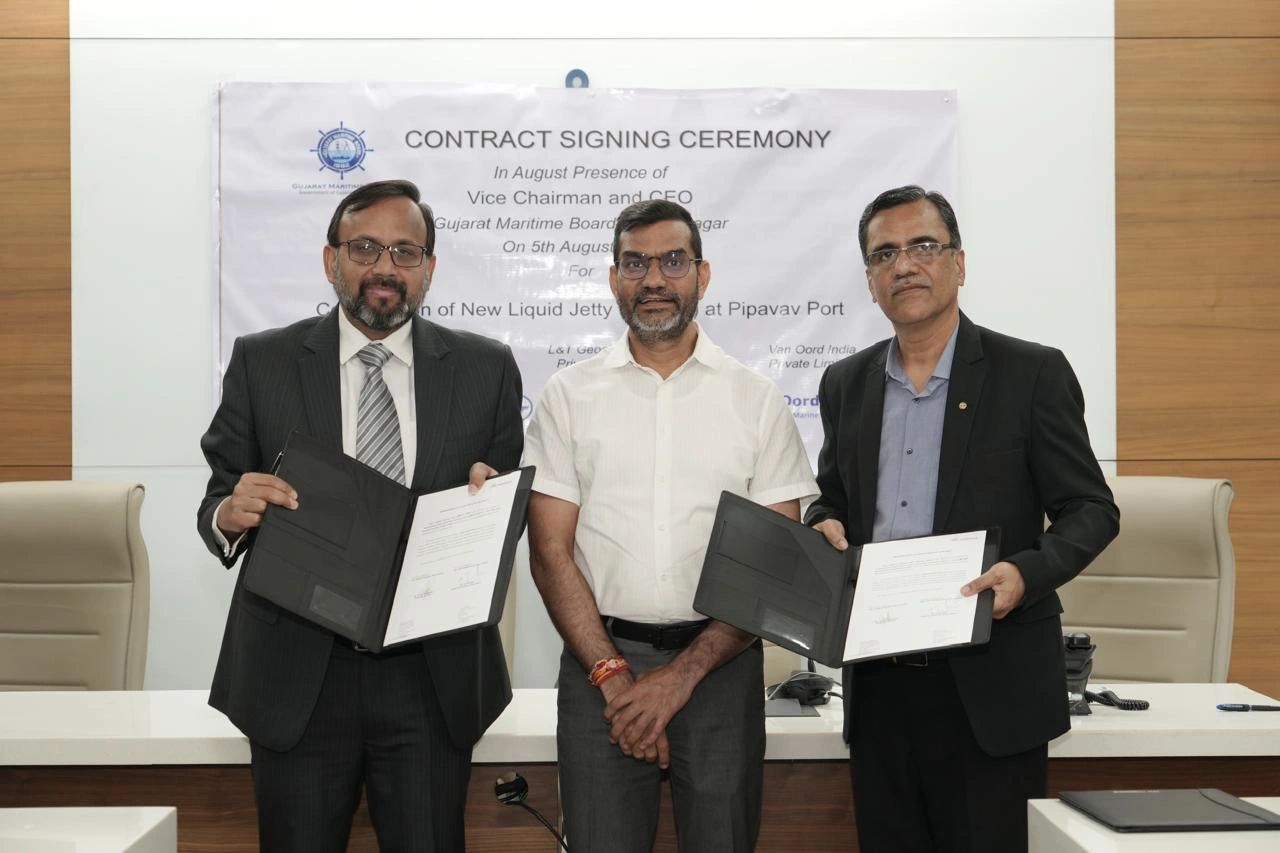
GANDHINAGAR : In a major boost to Gujarat’s maritime infrastructure, APM Terminals Pipavav has signed two significant contracts with L&T GeoStructure and Van Oord India Private Limited for the construction of a new, state-of-the-art liquid jetty at Pipavav Port.

The milestone marks the transformation of commitments made at the Vibrant Gujarat Global Summit 2024 into tangible progress. The project aligns closely with the Government of India’s Maritime India Vision 2030 and the PM Gati Shakti National Master Plan, aiming to enhance port capacity and logistics efficiency.

According to a release, the liquid jetty will substantially expand handling capacity, attract industrial investment, and reinforce Gujarat’s status as a premier maritime gateway. The development is also expected to generate employment, foster regional growth, and create opportunities for local communities in the Pipavav corridor.

Shri Rajkumar Beniwal, Vice Chairman & CEO of the Gujarat Maritime Board, attended the signing ceremony, underscoring the importance of public-private partnerships in advancing India’s self-reliance goals under Atmanirbhar Bharat.

“Our focus is on transforming investment into impact,” said Mr. Girish Aggarwal, Managing Director of APM Terminals Pipavav. “This is more than just a port facility — it’s a long-term legacy of progress for Gujarat and India.”

The collaboration with the Gujarat Maritime Board is set to be a catalyst for economic growth and a strategic step toward strengthening India’s maritime capabilities.

Merchant Shipping Bill will positively impact maritime sector in Mangaluru : Capt. Chowta

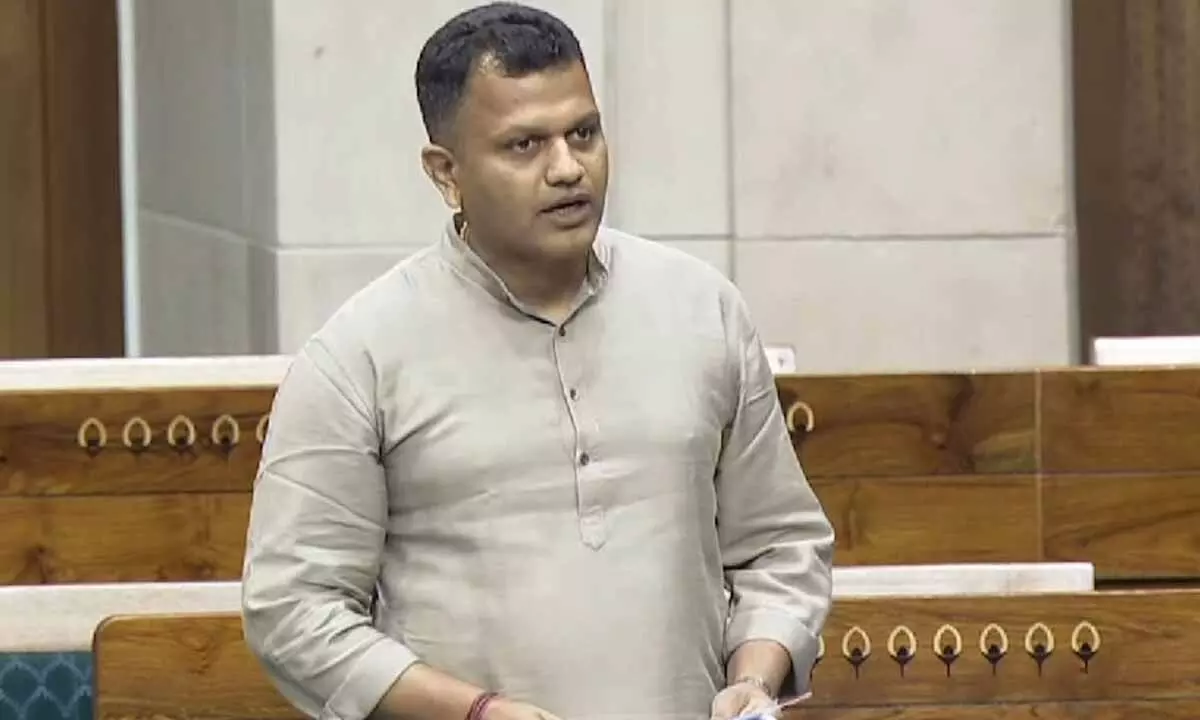
MANGALURU : Capt. Brijesh Chowta, MP for Dakshina Kannada, on Wednesday, said the Merchant Shipping Bill, 2025, will have a positive impact on the maritime sector in general and on that of Mangaluru in particular.

Extending support to the Bill at the Lok Sabha during a debate, Capt. Chowta said the Bill will increase cargo at New Mangalore Port, which handled 46.01 million tonnes in 2024-25. It will attract new investments in shipping, improve welfare for thousands of local seafarers, and strengthen institutions like Mangalore Marine College and Technology, creating high-quality maritime professionals for India’s growing blue economy.

The Merchant Shipping Bill, 2025 — a progressive, future-ready legislation that replaces the outdated Merchant Shipping Act of 1958. The Bill marks a significant step towards aligning India’s maritime legal framework with global standards and strengthening the country’s position as a trusted maritime trade hub.

Introducing the Merchant Shipping Bill, 2025 in the Lok Sabha, the Union Minister, Shri Sarbananda Sonowal said, “This Bill represents a decisive step towards positioning India as a global leader in maritime trade and governance. It is a progressive and advanced legislation, up to date with international maritime conventions and informed by the best practices of leading maritime nations.”

The Bill is part of a series of major legal reforms undertaken over the past 11 years under the leadership of PM Shri Narendra Modi, aimed at enabling robust growth in the shipping and maritime sectors. These reforms have significantly enhanced efficiency, transparency, and global competitiveness. Highlighting the need for an updated framework, the Minister noted that the Merchant Shipping Act, 1958 had become bulky, fragmented, and outdated with 561 sections, failing to address contemporary maritime challenges or fully implement India’s obligations under several key International Maritime Organization (IMO) conventions.