Home Blog Page 769

Oil bunker costs to double by 2035 on IMO rules, says Wartsila

NEW YORK : Oil-based bunker costs will double over the next decade due to the International Maritime Organization’s upcoming regulation on greenhouse gas emissions, Finland-based Wartsila’s CEO Hakan Agnevall told Platts while laying out a low-carbon fuel transition pathway for shipping.

Tasked with regulating cross-border maritime transportation, the UN agency in April voted for two sets of GHG intensity threshold for marine energy over 2028-2035 with punitive financial measures for ship operators failing to kickstart a low-carbon transition.

“It’s a complex framework,” Agnevall said in a recent interview. “The cost for operating on heavy fuel alone will basically double until 2035.”

Based on the IMO rules, which still need to be adopted by member states in October, shipping companies would need to pay $100/mtCO2e for missing the lower threshold and $380/mtCO2e for the higher.

Those who emit less than the lower threshold, generally by burning low-carbon fuels, could also generate carbon credits that can be sold to those who miss the higher threshold by sticking with conventional, oil-based fuels in another way for the latter to comply with the rules.

The regulation is “a major milestone for the whole shipping industry” and could be the world’s first global carbon surcharges on a sector’s emissions, said Agnevall, whose company is one of the world’s largest marine engineering firms.

“The critical thing is to create a level playing field between the fossil fuel and the green fuels … At least short term, it could probably lead to a stronger demand for biofuels.”

May’s average delivered bunker prices for very low sulfur fuel oil, the most common bunker type, were at $504.35/mt in Singapore, compared with $713.84/mtVLSFOe for B24 bioblend with 24% used cooking oil methyl ester and 76% VLSFO, according to the Platts(opens in a new tab) bunker cost calculator.

Data from classification society DNV shows 99% of the global fleet are currently conventional ships that can only burn biodiesel like UCOME and oil-based bunkers, though the proportion is forecast to fall in the coming years, with more ships designed to use alternative fuels hitting the waters.

Pathway
The IMO is expected to tighten the GHG standards for marine fuels further from 2035 for an eventual goal of net-zero shipping toward 2050, and Agnevall is seeing several new marine fuels emerging as plausible compliance options.

Biodiesel, bio-LNG, biomethanol and eMethanol could all become widely available from the early 2030s, before substantial renewable ammonia supplies come to existence in the second half of next decade, according to the CEO.

This means shipowners need to invest in multi-fuel capacities from now to avoid stranded assets, as a ship could be in operation for 25-30 years, Agnevall added.

“None of the green fuels is available in significant quantities. But shipowners still want to, kind of, derisk,” he said, adding, “If you build a vessel today, you know that during the lifetime of the vessel, some of these major [fuel] transitions will happen.”

DNV figures show 8% of the world’s ship order book are capable of being powered by LNG, 5% by methanol, 1.8% by LPG, and 0.5% by ammonia.

New technologies
Wartsila raised its spending on research and development to Eur296 million ($349 million), or 4.6% of net sales, in 2024, compared with a historical average of 3%. Agnevall said most of the expenses were related to decarbonization technologies.

The company was among the first to develop marine propulsion systems for LNG, LPG and methanol. In 2026, the Equinor-chartered, Eidesvik-owned Viking Energy will be retrofitted to be the world’s first ammonia-fueled platform supply ship with Wartsila’s engine.

While low-carbon fuels are expected to get greater adoption in the coming years and decades, Agnevall said oil and gas will remain in the bunker mix “for a considerable time,” and shipowners could use fuel efficiency and carbon capture equipment for decarbonization.

Oil and LNG will account for 56% of the world’s marine fuel consumption in 2050, albeit lower than 98% this year, according to S&P Global Commodity Insights’ Annual Strategic Workbook.

In May, Wartsila began marketing a scrubber system with carbon capture and storage technology, which has a capture rate of 70% and a cost of Eur50-Eur70/mt. This came after such a system was successfully installed on Solvang’s 21,000-cu m ethylene carrier Clipper Eris in February.

Agnevall suggested total CCS costs for shipowners would be higher due to handling and disposal expenses. Value Maritime, another developer of CCS-capable scrubbers backed by Shell, has an affiliate dealing with carbon management, but Agnevall said Wartsila had no plan to step into that area.

“The ecosystem needs to evolve,” he added. “We are a technology provider, and we focus on that.”

Source : PLATTS

Drewry: World Container Index down 5.7% last week

LONDON : For many years, World Container Index has been the go-to, independent, global reference for index-linked contracts. If your organisation is considering index-linked contracts or requires regional visibility/coverage beyond the eight trade lanes provided below, contact our ocean freight cost benchmarking team.

Drewry’s World Container Index decreased 5.7% to $2,812 per 40ft container this week.

Drewry’s detailed assessment for Thursday, 03 Jul 2025

  • Drewry’s WCI Index fell for the third consecutive week, by 5.7% this week. This decline is a direct result of the low demand for US-bound cargo and is a sign that the recent surge in US imports, which occurred after the temporary halt of higher US tariffs, will not have the lasting impact we had initially expected.
  • Freight rates from Shanghai to Los Angeles decreased 15% to $3,180 per 40ft container in the past week, but spot rates are still up a significant 17% compared to eight weeks ago (8 May). Similarly, spot rates from Shanghai to New York dropped 11% this past week to $5,070 per 40ft container, but gained 39% over the last eight weeks. Drewry expects spot rates to continue to decline next week as well due to excess capacity and weak demand.
  • Freight rates from Shanghai to Genoa decreased 9% to $3,751 per 40ft container, while those from Shanghai to Rotterdam increased 8% to $3,468 per 40ft container.
  • However, Drewry’s Container Forecaster expects the supply-demand balance to weaken again in 2H25, which will cause spot rates to decline. The volatility and timing of rate changes will depend on Trump’s future tariffs and on capacity changes related to the introduction of the US penalties on Chinese ships, which are uncertain.
    Source: Drewry

Ship attacked in Red Sea off Yemen with gunfire, rocket-propelled grenades : U.K. maritime agency

YEMEN : A ship came under attack Sunday (July 6, 2025) in the Red Sea off the coast of Yemen by armed men firing guns and launching rocket-propelled grenades, a group overseen by the British military said.

No one immediately claimed responsibility for the attack, which comes as tensions remain high in the West Asia over the Israel-Hamas war and after the Iran-Israel war and airstrikes by the United States targeting Iranian nuclear sites.

The United Kingdom Maritime Trade Operations centre said that an armed security team on the ship had returned fire and that the “situation is ongoing.” “Authorities are investigating,” it said.

Ambrey, a maritime security firm, issued a warning saying that a merchant ship had been “attacked by eight skiffs while transiting northbound in the Red Sea.” It said it believed the attack was ongoing.

The U.S. Navy’s Mideast-based 5th Fleet referred questions to the military’s Central Command, which did not immediately respond to a request for comment.

Yemen’s Houthi rebels have been launching missile and drone attacks against commercial and military ships in the region in what the group’s leadership has described as an effort to end Israel’s offensive against Hamas in the Gaza Strip.

Between November 2023 and January 2025, the Houthis targeted more than 100 merchant vessels with missiles and drones, sinking two of them and killing four sailors. That has greatly reduced the flow of trade through the Red Sea corridor, which typically sees $1 trillion of goods move through it annually.

The Houthis paused attacks in a self-imposed ceasefire until the US launched a broad assault against the rebels in mid-March. That ended weeks later and the Houthis haven’t attacked a vessel, though they have continued occasional missile attacks targeting Israel.

The Houthi rebels have been launching missile and drone attacks against commercial and military ships in the region in what the group’s leadership has described as an effort to end Israel’s offensive against Hamas in the Gaza Strip.

The group’s al-Masirah satellite news channel acknowledged the attack occurred, but offered no other comment on it as it aired a speech by its secretive leader, Abdul Malik al-Houthi.

Meanwhile, a wider, decadelong war in Yemen between the Houthis and the country’s exiled government, backed by a Saudi-led coalition, remains in a stalemate.

Pirates from Somalia also have operated in the region, though typically they’ve sought to capture vessels either to rob or ransom their crews. 

Container Market continues its decline

LONDON : Next Tuesday (Tomorrow) sees the end of the pause in Tariffs on imports to the United States as the world waits to see what will happen. The 90-day pause has certainly seen some lively freight rates as shippers have taken advantage to move their goods tariff free into the US and the liner companies have taken the chance to temporarily charge more for these shipments.

FBX01 (WC) and FBX03 (EC) saw a continued decline in freight rates over the past four weeks, down by $3,444 and $2,089, respectively.

FBX01 (China/East Asia – USA West Coast) ended the week at $2,571/FEU, down $700/FEU from last Friday.

FBX03 (China/East Asia – USA East Coast) is today at $5,001/FEU off by $974 in a week.

FBX rates to the Continent firmed over the week and rates to the Mediterranean softened a tad, with these routes remain far more resilient to price volatility currently.

FBX11 (China/East Asia – North Europe) finished the week at $3,442/FEU, up $471 on last week.

FBX13 (China/East Asia to Mediterranean) rates ended at $3,860/FEU, down $311 on last Friday.

Source: Baltic Exchange

Container Market continues its decline

India does not enter trade deals based on deadline or time pressure, will sign only mutually beneficial pact: Piyush Goyal on Indo-US BTA

NEW DELHI : Union Commerce and Industry Minister Shri Piyush Goyal on Friday emphasised that India will only enter into trade agreements, including the proposed US Bilateral Trade Agreement (BTA), when they serve the country’s national interests and offer mutual benefits.

Speaking on the sidelines of the 16th Toy Biz B2B expo in New Delhi, Goyal made it clear that India’s approach to international trade negotiations remains firm and principled.

“It should be a win-win agreement, and only when India’s interests are safeguarded — national interest will always be supreme — and keeping that in mind, if a good deal is formed, India is always ready to engage with developed countries,” the minister stated.

Goyal emphasised that India negotiates on its own terms.

The minister revealed that India is currently engaged in trade discussions with multiple countries across different continents.

“Discussions are ongoing with various countries — be it the European Union, New Zealand, Oman, the US, Chile, or Peru. Talks about agreements are underway with many nations,” he said.

However, Goyal stressed that the multiplicity of negotiations does not mean India is in a rush to conclude deals. “A Free Trade Agreement is only possible when there is mutual benefit,” he explained.

“India never enters into trade deals based on deadlines or time pressure. A deal is accepted only when it is fully matured, well-negotiated, and in the national interest,” Goyal stated.

This approach reflects India’s confidence in its negotiating position and its commitment to securing favourable terms for its economy and businesses.

At the toy expo, Goyal expressed optimism about the growth potential of India’s toy manufacturing sector, highlighting both domestic and international opportunities.

“I am sure with the high quality goods I am seeing here, they will all be finding good market with the whole gulf region all the 6 countries of the Middle East as they are today finding in nearly 153 countries in the world,” the minister said, praising the quality of Indian toy products.

Goyal announced that the government is preparing additional support measures for the sector. “We will soon be coming out also with the support program and incentive scheme to support the toy industry,” he revealed.

The minister highlighted the enormous domestic market potential for toys in India, noting the country’s demographic advantage. “Considering that we have a market of 1.4 billion Indians who would like to use toys. At every age, there is a demand of toys,” Goyal observed.

He characterized the toy industry as “a growing sector which have eyes on the world,” indicating the government’s confidence in the sector’s export potential alongside domestic consumption.

Tamil Nadu Govt pushing for port automation and sustainability : Sunil Paliwal

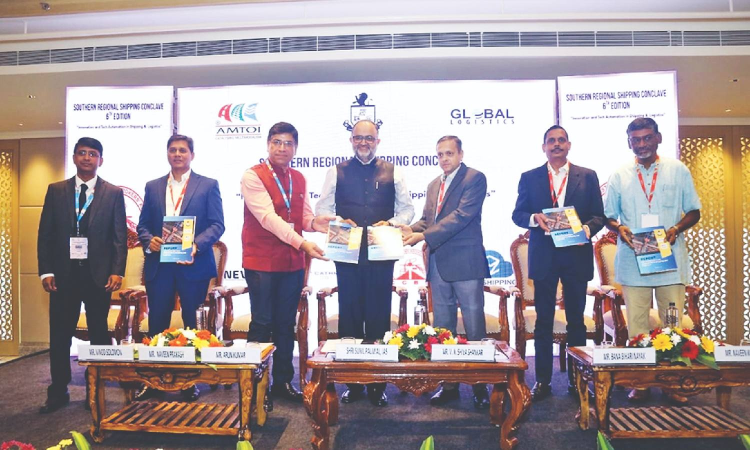
CHENNAI : Mr. Sunil Paliwal, Chairman, Chennai Port Authority, said here on Thursday while speaking at the Sixth edition of the Southern Regional Shipping Conclave that ‘From green tugs to onshore power supply for vessels, a slew of projects is coming up at Chennai and Kamarajar Ports,’ organised by the Southern India Chamber of Commerce and Industry (SICCI) and the Association of Multimodal Transport Operators of India (AMTOI), he said the State was pushing for port automation and sustainability. He noted how green tugs at the ports would lower carbon emissions substantially.

Mr. Paliwal spoke on the adoption of the latest technologies at the ports. “For the first time in the country, we have attempted to provide onshore power to commercial vessels at Kamarajar Port,” he said. He added that a modern parking plaza had been built to decrease congestion at Chennai Port.

“Also, a multi-modal logistics park, an important project that is part of the National Logistics Policy, is coming up, and its first phase will be implemented in February 2026,” he added.

Naveen Prakash, Chair, SICCI supply chain management, and Director, Global Logistics, said the logistics and shipping landscape was undergoing a significant shift. “What was once a largely manufacturing sector is now rapidly transforming, powered by automation, artificial intelligence, block chain, internet of things, and real-time data platforms. This convergence of technology is not only improving cross efficiency and delivery accuracy but also fundamentally redefining the way we think about logistics,” he added.

Bana Bihari Nayak, Managing Director, Tamil Nadu Apex Skill Development Centre for Logistics, said the State government had established the centre to address the critical need of developing human capital for the ever-expanding logistics sector. Over 1.84 lakh individuals have been trained so far through initiatives including the Naan Mudhalvan Scheme, he added.

Source : The Hindu

DP World Cochin achieves record throughput surpassing 81,000 TEUs in June 2025

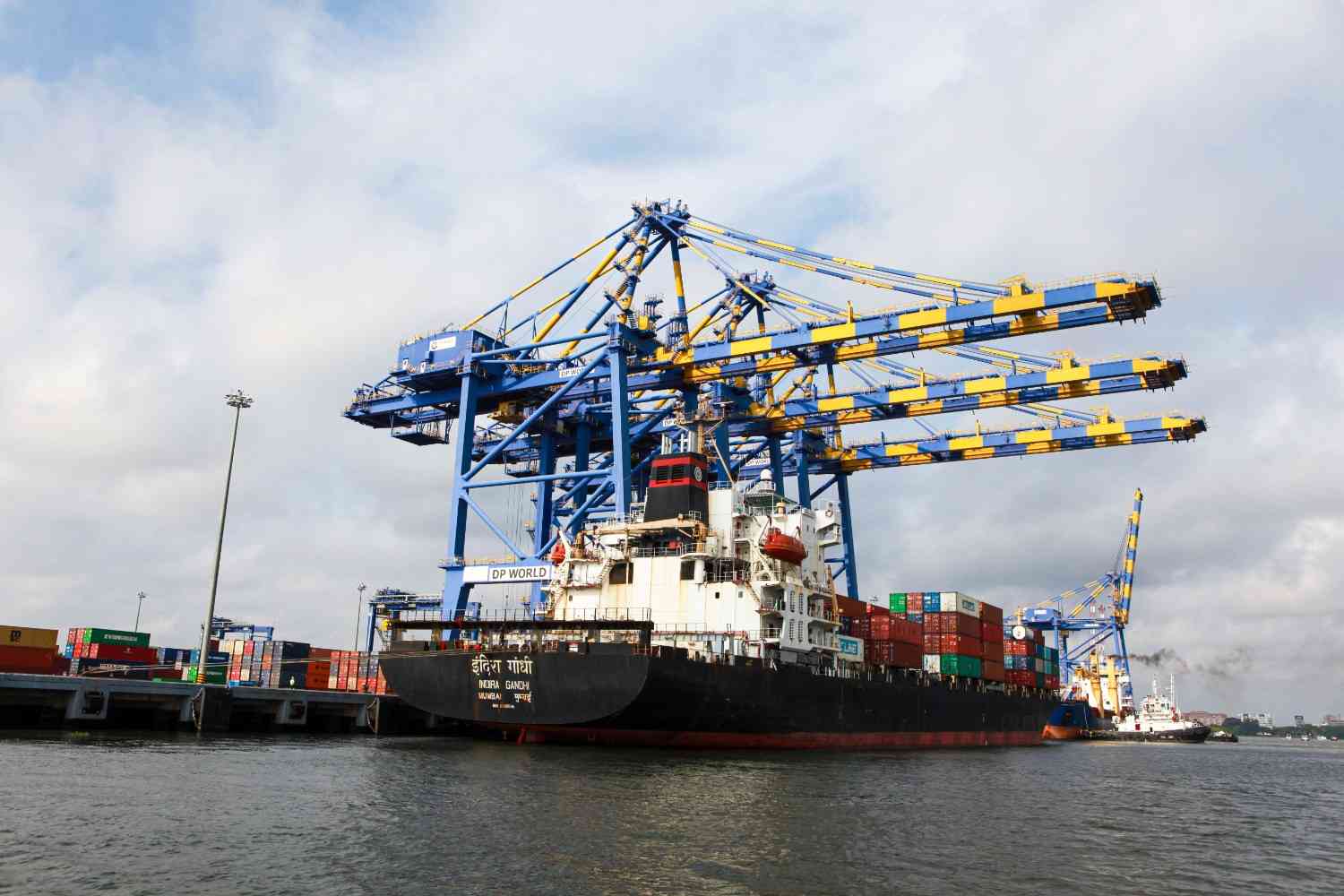
KOCHI : The DP World operated International Container Transshipment Terminal (ICTT) at Cochin achieved a significant milestone by handling over 81,000 TEUs (Twenty-foot Equivalent Units) in June 2025—a 35% increase over May 2025. This growth reflects the terminal’s enhanced throughput capacity and sustained performance efficiency.

In June 2025, DP World Cochin successfully handled 54 vessels, including several mother ships—highlighting the terminal’s operational strength and its critical role in India’s logistics ecosystem. Cochin is directly connected to mainline services linking South East Asia, the Middle East, and the Far East.

Commenting on the successful performance, Dipin Kayyath, Chief Executive Officer – Ports & Terminals – DP World Cochin, said, “Achieving over 81,000 TEU mark in June 2025, reflects the trust our customers place in DP World Cochin and our proficient operations. This milestone reinforces our role as a critical enabler of trade, connecting India to key global markets. We remain committed to expanding our capabilities, driving efficiency, and supporting the growth of sustainable and resilient supply chains.”

The terminal’s power infrastructure has been upgraded from 3 MVA to 5 MVA, ensuring uninterrupted operations even during peak demand periods. The full electrification of yard equipment has significantly reduced the carbon footprint of cargo handling, providing customers with a sustainability-driven competitive advantage.

Cochin’s strategic location offers critical coastal connectivity to ports across India, from Gujarat to Kolkata, and serves as a key transit point for coastal cargo movement between the east and west coasts. Additionally, DP World-developed Kerala’s first Free Trade Warehousing Zone (FTWZ)—India’s only such facility co-located within a major port—which continues to serve as a vital enabler of EXIM trade and regional economic growth.

DP World Cochin remains committed to setting new benchmarks in safety, innovation, and service excellence—delivering future-ready logistics solutions that power trade and strengthen India’s supply chain ecosystem.

Adani Krishnapatnam Port handles 5.85 MMT of cargo in June, sets record for second consecutive month

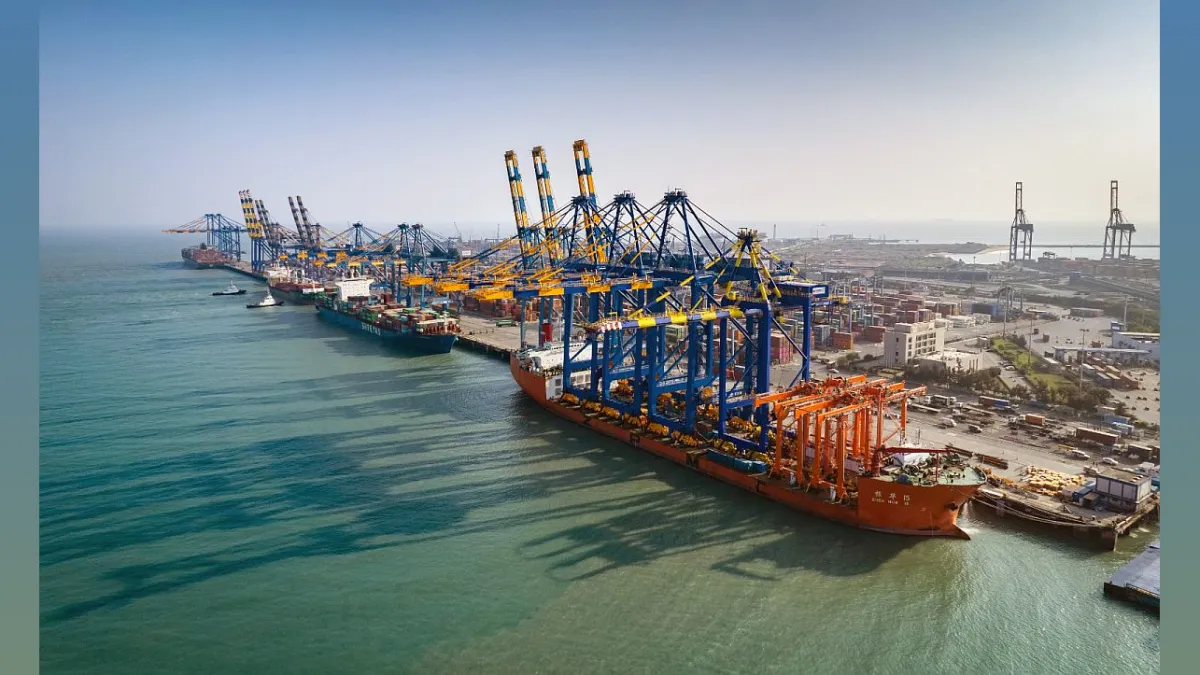
NELLORE : Adani Krishnapatnam Port Limited (AKPL) on Friday (July 4, 2025) announced that it has recorded its highest-ever monthly cargo volume of 5.85 million metric tonnes (MMT) in June 2025 surpassing its previous record of 5.74 MMT in May 2025. This marks the second consecutive month of record-breaking performance.

Jagdish Patel, CEO, AKPL, said, “This milestone is a testament to the relentless efforts, seamless coordination, and unwavering dedication of every team member. Heartfelt thanks to our teams, vendor partners, and valued customers for making this possible. It is a moment of great pride — only the second time since the port’s inception that such a volume has been achieved.”

The milestone has been dedicated to AKPL’s ground teams, whose performance, commitment, and teamwork continue to drive the port’s operational efficiency and growth trajectory. With this performance, the company further cements its position as one among the leading logistics and cargo hubs on the eastern coast of India, playing a crucial role in the nation’s growing maritime economy.

Govt mandates One Towing Vessel at all Major and Non-major Ports in India handling over 10 MMT Cargo annually, to bolster maritime safety

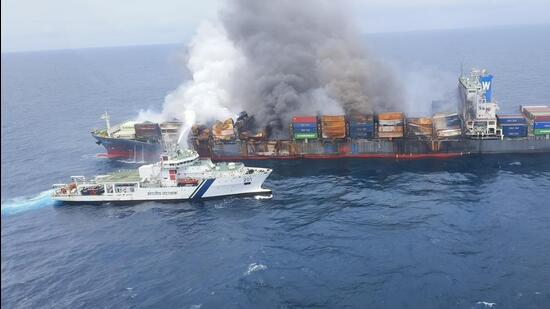
NEW DELHI : The Indian government has proposed a rule requiring all Major or Non-major Ports that handle over 10 million metric tonnes (MMT) of cargo annually to station at least one emergency towing vessel on-site in a decisive step to bolster maritime safety. This directive, issued by the Directorate General of Shipping, comes in the wake of recent maritime mishaps and is aimed at ensuring swift response during port-level emergencies, including oil spills, ship grounding, and firefighting needs.

The proposed regulation is designed to improve India’s maritime emergency preparedness, particularly in high-volume cargo ports where risks of incidents like collisions, groundings, or oil spills are elevated. Senior authorities emphasised that equipping ports with a dedicated towing vessel enhances response time and mitigates potential damages to marine ecosystems and infrastructure. The rule applies to both public and private ports handling 10 MMT or more annually, which covers a significant portion of India’s shipping landscape. These towing vessels must remain on standby 24×7 and be capable of handling multipurpose emergency functions such as towing disabled vessels, controlling marine fires, or assisting in anchoring operations during rough weather. The plan also seeks to align Indian port protocols with international maritime safety standards, particularly as cargo volumes and ship sizes increase. Port authorities are expected to comply with the mandate within a defined timeframe, following a structured implementation framework monitored by maritime regulators.

The initiative reflects a broader national effort to modernise port infrastructure and reinforce disaster mitigation capabilities. Experts believe this move will reduce dependency on ad-hoc third-party responses and improve port self-reliance during crisis situations. Ports with existing emergency management systems are being encouraged to integrate these towing vessels into their Standard Operating Procedures (SOPs), supported by staff training, digital monitoring systems, and incident readiness audits. Authorities are also expected to issue technical standards regarding tug specifications, including horsepower, operational speed, and fire suppression equipment. Environmental and safety advocates have welcomed the step as long overdue, particularly in light of India’s rising coastal traffic and offshore energy operations. In the long run, the policy could help build public trust, attract international shipping lines, and minimise insurance liabilities. With climate-induced disasters and vessel incidents on the rise, mandatory emergency vessels at every 10 MMT port are being viewed as a baseline requirement for resilient maritime logistics.

By mandating at least one towing vessel at all high-volume ports, India is addressing a critical gap in its maritime emergency response strategy. This policy aims to ensure faster reaction during accidents, contain marine pollution, and protect vital infrastructure. Port authorities across the country must now align operations with the new safety norm, ensuring compliance through timely procurement and deployment. The initiative not only enhances safety but also projects India as a responsible maritime nation embracing global best practices. As maritime trade intensifies, such forward-thinking measures will be key to sustainable port management and national security.

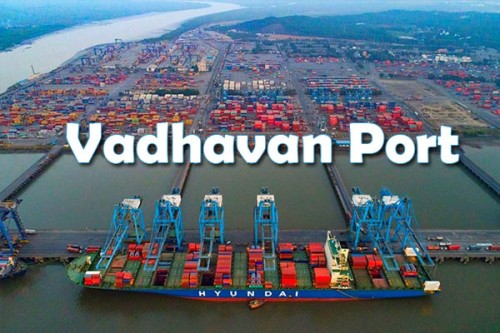
Locals demand priority in jobs at Vadhvan Port, want higher pay against land acquisition

PALGHAR: (Jul 3) Local residents demanded higher compensation for their land to be acquired for the proposed Vadhvan Port in Maharashtra’s Palghar district and also sought priority in jobs at the mega project.

They put up these demands during a meeting held at the Sub-Divisional Officer’s office at Dahanu in the district on Wednesday, days after protests by a section of villagers against the technical survey at the site, claiming the project would snatch their livelihoods.

The deputy district collector informed attendees to answer, that the Jawaharlal Nehru Port Authority (JNPA), the nodal agency for the port, got ready to prioritise local employment and that all concerns would be forwarded to the government.

The district administration reiterated its commitment to addressing public concerns regarding the port’s development.

The ₹76,200 crore all-weather greenfield deep draft major port at Vadhvan was approved by the Union Cabinet in 2024. It will be constructed by Vadhvan Port Project Limited, a special purpose vehicle (SPV) jointly formed by JNPA and the Maharashtra Maritime Board (MMB), with a 74:26 shareholding ratio.

The meeting was organised by the district administration to address concerns surrounding the ambitious project and to “provide proper information” to the agitators about it, an official statement said.

Source : PTI