Home Blog Page 797

Piyush Goyal reviews progress of NICDC-led Industrial Nodes in Andhra Pradesh

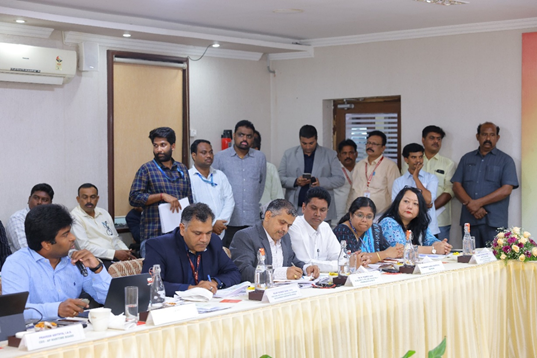
GUNTUR : Union Minister of Commerce & Industry, Shri Piyush Goyal, chaired a high-level review meeting on 15th June 2025 at the Tobacco Board, Guntur, to assess the progress of NICDC-led industrial nodes in Andhra Pradesh under various industrial corridors.

The review focused on the development of three major nodes in the state—Krishnapatnam Industrial Area under the Chennai–Bengaluru Industrial Corridor (CBIC), Orvakal Industrial Area under the Hyderabad–Bengaluru Industrial Corridor (HBIC), and Kopparthy Industrial Area under the Visakhapatnam–Chennai Industrial Corridor (VCIC).

Shri Goyal directed officials to focus on attracting anchor investors and startups by building innovation-friendly ecosystems within each industrial node. He stressed the need to establish dedicated incubators to nurture early-stage enterprises and facilitate a robust startup ecosystem.

The Minister also instructed officials to earmark zones within each node for MSMEs and startups, offering subsidized rates and equipped with state-of-the-art infrastructure and technological support.

Highlighting the need for global partnerships, Shri Goyal advocated for organizing country-specific investment conclaves to attract targeted foreign investments. He further called for the creation of a centralized dashboard to enable real-time monitoring of project progress and urged the adoption of advanced testing and quality control mechanisms to ensure world-class infrastructure.

Reaffirming the Government of India’s commitment to transforming Andhra Pradesh into a symbol of industrial excellence and innovation, the Minister said the state is poised to become “Swarnandhra Pradesh”—a beacon of inclusive and sustainable industrial growth.

The meeting was attended by Member of Parliament (Guntur) Dr. Chandra Sekhar Pemmasani; Minister of State for Rural Development & Communications, Shri T.G. Bharath; Minister of Industries & Commerce, Government of Andhra Pradesh, Dr. N. Yuvaraj; Secretary of Industries, Government of Andhra Pradesh, Shri Rajat Kumar Saini; CEO & MD, NICDC, Shri Abhishikth Kishore; Managing Director, APIIC, and senior officials from NICDC, APICDC, and other stakeholder agencies.

The session began with detailed presentations on all three NICDC nodes by the Vice Chairman & Managing Director, APIIC, followed by an overview of Andhra Pradesh’s industrial roadmap under the ambitious “Swarna Andhra 2047” framework presented by the Secretary, Industries.

CEO & MD, NICDC Shri Rajat Kumar Saini, emphasized the importance of fast-tracking land acquisition, timely execution of external infrastructure by the State Government, and ensuring quality standards throughout project implementation.

Andhra Pradesh: India’s Emerging Industrial Powerhouse

Andhra Pradesh is the only state in the country to host industrial nodes under three separate Industrial Corridors. With integrated planning, robust infrastructure, and strong institutional backing, these projects mark a new era of industrialization in the state and the nation:

  • Krishnapatnam Node (2,006 acres): Investment potential of approx. ₹10,500 crore with employment generation of 1 lakh jobs.
  • Orvakal Node (2,621 acres): Projected investment of ₹12,000 crore and employment for approx. 45,000 people.
  • Kopparthy Node (2,596 acres): Expected to attract ₹8,800 crore with job creation for approx. 54,000 individuals.

About NICDC

The National Industrial Corridor Development Corporation (NICDC) is an initiative of the Government of India under the Ministry of Commerce & Industry. It is dedicated to developing next-generation industrial smart cities aimed at boosting manufacturing, attracting investments, generating employment, and enhancing India’s global economic competitiveness.

NICDC ensures seamless multimodal connectivity, plug-and-play infrastructure, and sustainable urbanization through its flagship corridors: Delhi–Mumbai Industrial Corridor (DMIC), Amritsar–Kolkata Industrial Corridor (AKIC), Chennai–Bengaluru Industrial Corridor (CBIC), East Coast Economic Corridor (ECEC), and Bengaluru–Mumbai Industrial Corridor (BMIC).

Ahmedabad speeds up industrial development backed by infrastructure boost

AHMEDABAD : Prime Minister Shri Narendra Modi conducted a high-level review of projects in Dholera and Lothal, reaffirming the Centre’s commitment to building smart industrial corridors and sustainable maritime heritage hubs. The visit highlighted a strategic vision to establish Gujarat as a key centre for green industrialisation, advanced logistics, and knowledge-driven tourism. Central to the visit was the under-construction Ahmedabad–Dholera Greenfield Expressway, a crucial link in India’s industrial freight network being developed by the National Highways Authority of India (NHAI).

According the news that, once completed, the expressway would reduce travel time between Ahmedabad and Dholera to just 45 minutes. The Principal Secretary stressed the importance of timely execution with internationally benchmarked engineering standards to facilitate seamless regional integration.A critical aspect of the review was the Dholera International Airport, designed to handle cargo and passenger traffic for the upcoming Dholera Special Investment Region (DSIR). With cargo operations expected to begin by October 2025, the airport is integral to supporting the region’s positioning as a future-ready logistics and manufacturing hub. Emphasis was placed on aligning air, rail, and road connectivity to create an efficient supply chain backbone for domestic and export-oriented industries.

The review also included the Tata Electronics’ semiconductor fabrication plant in Dholera, a cornerstone of India’s semiconductor mission. The unit is poised to manufacture chips used in mobile devices, consumer electronics, and automotive applications, positioning Dholera as a global node in chip production. The Principal Secretary visited adjoining urban infrastructure projects—including educational institutions, hospitals, and housing—developed by Dholera Industrial City Development Limited (DICDL), calling for enhanced user-centric design and community participation.

A strategic review meeting followed, involving top officials from NHAI, Airports Authority of India, Indian Railways, and other key agencies, where ongoing projects such as the Bhimnath–Dholera Freight Rail Link and the Ahmedabad–Dholera Semi-High-Speed Rail Line were reviewed. The Principal Secretary reiterated the need for skilled workforce development and integrated planning to ensure Dholera’s emergence as a global-standard industrial city.

At Lothal, the Principal Secretary assessed progress on the National Maritime Heritage Complex (NMHC), a flagship cultural and educational initiative under the Ministry of Ports, Shipping and Waterways. The complex aims to celebrate India’s ancient maritime legacy, from the Harappan era to modern times. In the review meeting with senior ministry and archaeology officials, he emphasised research-based curation, environmental sustainability, and international academic collaboration.Particular focus was placed on the completion of Phase I-A, which includes six major galleries. He directed that this phase be ready by August 2025. Environmental sustainability measures—such as native species plantation and advanced water management systems—were also reviewed to ensure the complex aligns with India’s green development goals.

The review demonstrates a cohesive push towards integrating industrial expansion with sustainable infrastructure, historic preservation, and inclusive urban planning. With clear directives for adherence to timelines, quality standards, and stakeholder engagement, the Centre’s approach underscores a long-term commitment to economic resilience rooted in environmental and cultural consciousness.

India to export 150 locomotives to Africa worth over ₹3,000 crore

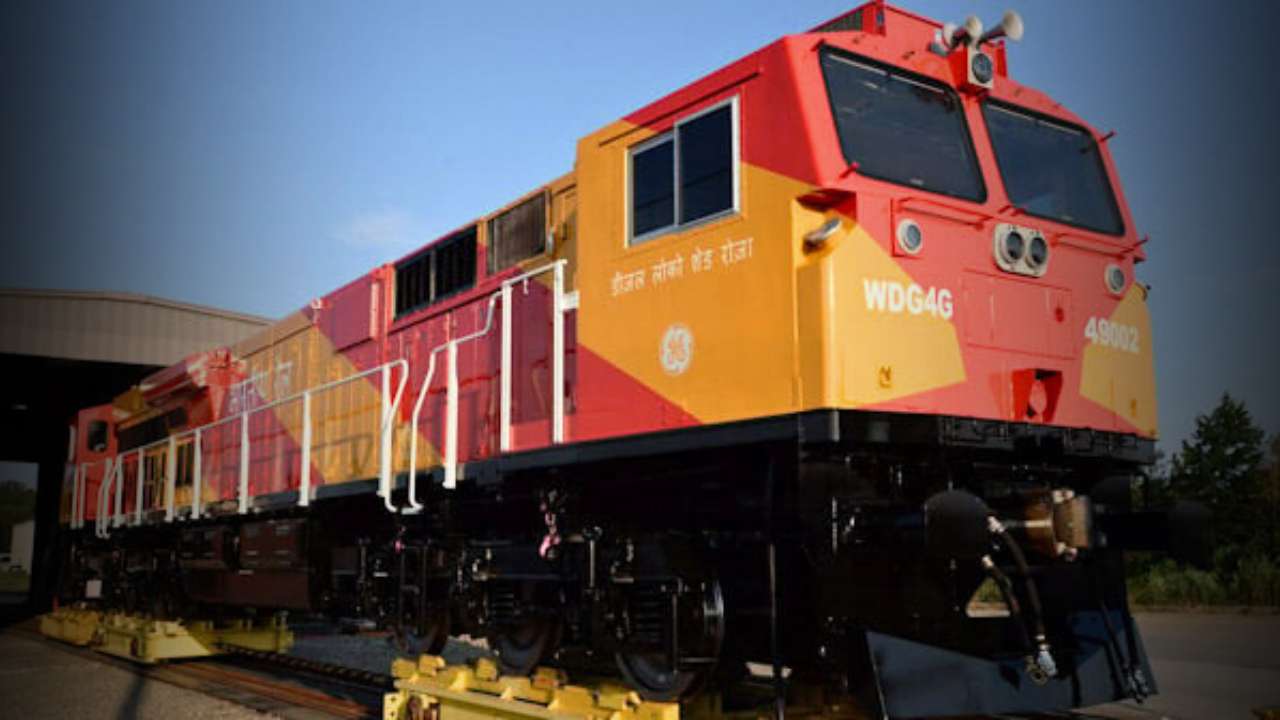
NEW DELHI : India will supply 150 locomotives worth more than ₹3,000 crore to the African country of Guinea, the Ministry of Railways stated on Monday (June 16, 2025).

The Make-in-India locomotives are meant for use at the Simandou iron ore project site in the country, a spokesperson of Indian Railways said. “The Railway Locomotive factory in Marhowrah, Bihar, will supply 150 Evolution Series ES43ACmi locomotives. Thirty-seven locomotives will be exported in the current financial year, while 82 locomotives will be exported in the next financial year. Another 31 locomotives will be exported in the third year,” the spokesperson said.

All these locomotives will have an air-conditioned cab (driver’s compartment). “Each loco will have a single cab, and two locomotives together will carry the load of 100 wagons with maximum permissible speed,” the spokesperson further said.

India will supply 150 locomotives worth more than ₹3,000 crore to the African country of Guinea, the Ministry of Railways stated on Monday (June 16, 2025).

The Make-in-India locomotives are meant for use at the Simandou iron ore project site in the country, a spokesperson of Indian Railways said. “The Railway Locomotive factory in Marhowrah, Bihar, will supply 150 Evolution Series ES43ACmi locomotives. Thirty-seven locomotives will be exported in the current financial year, while 82 locomotives will be exported in the next financial year. Another 31 locomotives will be exported in the third year,” the spokesperson said.

All these locomotives will have an air-conditioned cab (driver’s compartment). “Each loco will have a single cab, and two locomotives together will carry the load of 100 wagons with maximum permissible speed,” the spokesperson further said.

Three types of tracks, broad gauge, standard gauge and cape gauge, have been laid in Marhowrah Locomotive premises for manufacturing these locomotives. “The project was secured via global competitive bidding,” the spokesperson added.

The 4,500-HP locomotives are equipped with alternating current (AC) propulsion, regenerative braking, microprocessor-based controls, and modular architecture.

“These locomotives are built with best-in-class emission standards, fire-detection systems, and ergonomic crew cabins with modern amenities like a refrigerator, microwave, and waterless toilet system,” the spokesperson said.

They are also fitted with Distributed Power Wireless Control System, or DPWCS, for synchronised operations and superior freight handling.

The Marhowrah Factory of Bihar directly employs 285 people, and a further 1215 people are getting indirect employment, the spokesperson added.

India’s iPhone exports jump 57% y-o-y to 20.4 million units in January-May 2025

NEW DELHI : Apple’s contract manufacturers in India exported over 20.4 million iPhones from January to May 2025, a steep 57 per cent jump from the same 5-month period in 2024, data from global research firm Canalys (now Omdia) sourced by businessline shows.

Interestingly, despite President Donald Trump’s calls to Apple to keep production in the US, 77 per cent of these units exported from India were to the US. The share of units exported to the US as of May 2025 is 77 per cent, up from 54 per cent during the same period in 2024

This increase in iPhone exports to the US is, however, eating into India’s exports to other markets. Exports to other markets like the Netherlands, Czech Republic, the UK and Italy are declining as US rises, as per Omdia.

NON-US MARKETS HIT

The increase in iPhone exports to the US is, however, eat­ing into India’s ship­ments to other mar­kets. Exports to other mar­kets such as the Neth­er­lands, the Czech Repub­lic, the UK and Italy are declin­ing as the US share con­tin­ues to grow, as per Omdia. India is help­ing serve Apple’s US con­sumer needs at a time when iPhone ship­ments from China have been impacted by the tar­iffi ten­sions. Omdia data revealed that China sent around 0.9 mil­lion units of iPhones in April 2025, com­pared to 3.7 mil­lion in April 2024.

Tata ramp­ing up its con­tract man­u­fac­tur­ing work for Apple has been a key con­trib­utor to the ship­ments surge from India.

“While Fox­conn still leads with 52 per cent of total iPhone exports so far this year, Tata has rap­idly emerged as a force in Apple’s India strategy,” San­yam Chaur­asia, Senior Ana­lyst Mobil­ity, Cana­lys, said. “Its (Tata’s) share jumped from 13 per cent in 2024 to 37 per cent YTD, ship­ping over 7.5 mil­lion iPhones in just five months,” he added.

TATAS, A FORCE

Chaur­asia high­lights that besides its own EMS expan­sion in Hosur, Tata’s move to gain con­trol of Wis­tron’s facil­ity in Karnataka have helped add to its exports. “Tata is now a cred­ible second pil­lar along­side Fox­conn in Apple’s India-based man­u­fac­tur­ing base,” he said.

“From cas­ing to com­pon­ent integ­ra­tion, Tata’s ver­tical play reduces depend­en­cies and speeds up out­put,” he added.

Ana­lysts track­ing Apple’s sup­ply chain note that with the pro­duc­tion of iPhone Pro and Pro Max mod­els also mov­ing to India, the levels of work­force pre­pared­ness here is now com­plete, but it will still be a chal­lenge for Indian vendors to scale to grow­ing demand. Fur­ther, China also remains deeply entrenched in Apple’s man­u­fac­tur­ing eco­sys­tem and is home to over 200 key sup­pli­ers.

‘MAKE IN US’ UNVIABLE

Sanc­hit Vir Gogia, CEO, Grey­hound Research, believes that des­pite the polit­ical rhet­oric in the US and renewed pres­sure on Apple to reshore man­u­fac­tur­ing, large-scale US pro­duc­tion of iPhones is “eco­nom­ic­ally and oper­a­tion­ally infeas­ible in the near term.” India’s scal­able pro­duc­tion base, rising domestic mar­ket, policy sup­port, and the geo­pol­it­ical neut­ral­ity required for longterm plan­ning work to its advant­age, he adds.

Amid trade war with US, China’s export to India surged 12% in May 2025: GTRI

NEW DELHI : Amid tariff war with US, China increases its exports to other countries like India, European Union (EU), and the Association of Southeast Asian Nations (ASEAN) as per the May trade data, stated a report by the Global Trade Research Initiative (GTRI).

The report highlighted that China’s latest trade data for May 2025 shows a significant shift in its export destinations, with a sharp decline in shipments to the United States.

As per the report, while China’s overall exports rose modestly by 4.6 per cent, from USD 302.1 billion in May 2024 to USD 316.2 billion in May 2025, its exports to the U.S. fell drastically by 34.5 per cent, from USD 44 billion to USD 28.8 billion during the same period.

This steep drop in trade with the U.S. is being offset by increased exports to other regions. Exports to the EU rose by 12 per cent to USD 49.5 billion, to ASEAN by 15 per cent to USD 58.4 billion, and to India by 12.4 per cent to USD 11.13 billion.

This redirection in trade indicates how global supply chains are quickly adapting amid rising geopolitical and economic tensions. The report also warned countries to be cautious of any aggressive export push that could lead to the dumping of goods.

GTRI said, “A dramatic decline in China’s shipments to the U.S. is being partially offset by increased exports to other markets. Countries should watch out for any incidence of export push by dumping”.

India’s own trade numbers confirm this shift. Although India’s total merchandise imports slightly declined by 1.8 per cent year-on-year, from USD 61.7 billion in May 2024 to USD 60.6 billion in May 2025, the fall was mainly due to lower imports of oil and gold.

If petroleum, gold, and diamonds are excluded, imports rose by 12 per cent, from USD 36.8 billion to USD 41.2 billion.

Two major categories led this import growth: electronics, which rose 27.5 per cent to USD 9.1 billion, and machinery and computers, which increased by 22 per cent to USD 5 billion.

A significant part of these imports came from China, as India’s combined imports from China and Hong Kong surged by 22.4 per cent to USD 12 billion from USD 9.8 billion last year.

On the export side, India’s shipments to the U.S. grew by 17.3 per cent to USD 8.8 billion in May 2025, with smartphones playing a major role in this rise.

The data reflects ongoing trade tensions between the U.S. and China, which may continue unless a tariff agreement is reached.

For India, the global environment remains uncertain due to rising conflicts in the Middle East, involving Iran, Israel, Hamas, and the Houthis, which could disrupt key shipping routes and oil supplies.

Amid these global shifts, the report outlined that India should remain cautious, focus on balanced trade agreements, and improve the ease of doing business to strengthen its trade position.

US-China Trade war sends India’s electronics imports soaring 27.5% in May, raises dumping risks

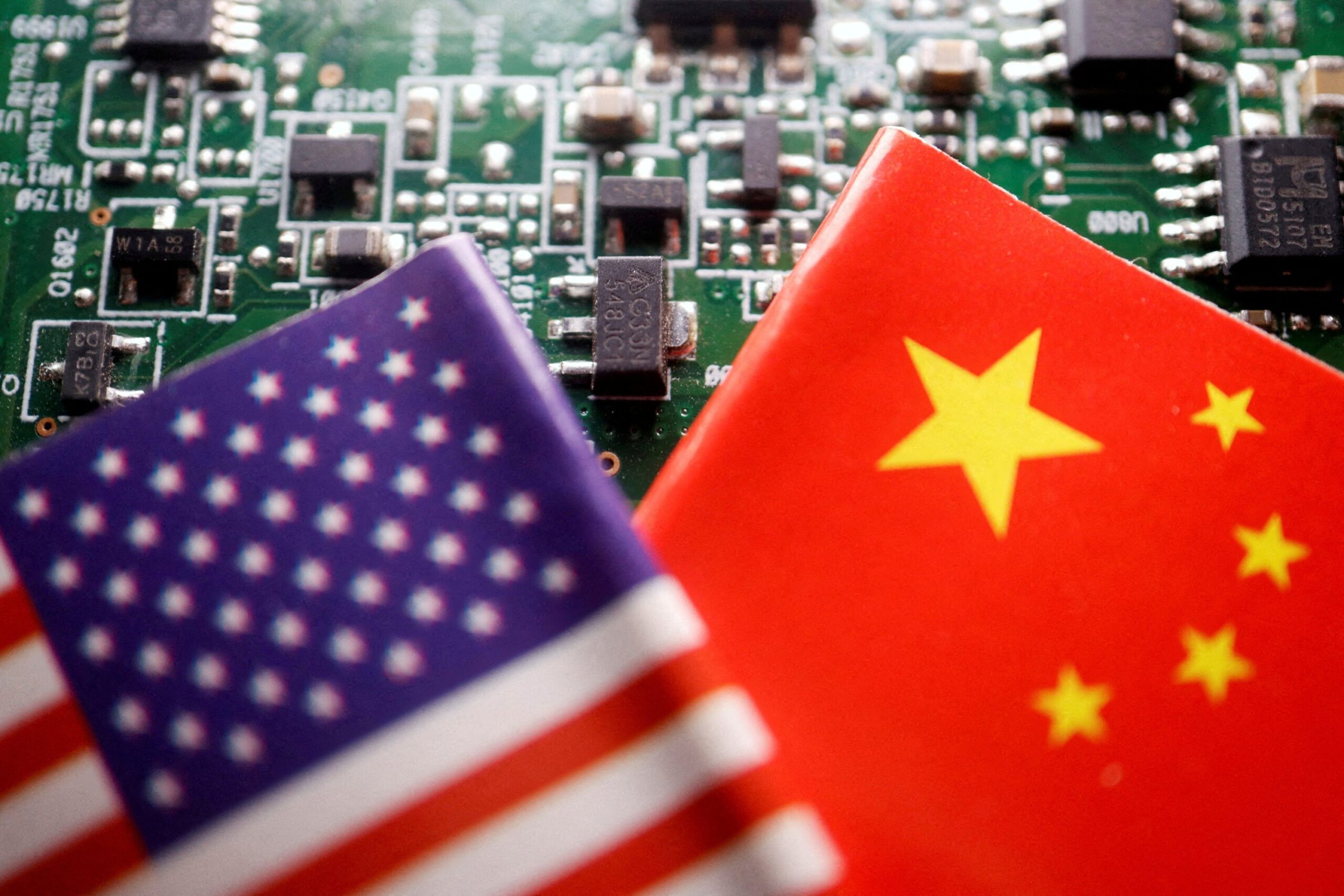
NEW DELHI : A stark drop in Chinese exports to the US in May 2025 — down 34.5% year-on-year — signals a deepening of the US-China trade war and a rapid realignment of global trade routes. As per fresh data from China Customs and India’s Commerce Ministry, the shift is already influencing trade patterns across Asia and beyond.

While China’s overall exports rose modestly by 4.6% to $316.2 billion, its shipments to the US fell from $44 billion to $28.8 billion. To counterbalance this, China ramped up exports to the EU, ASEAN and India. Shipments to India alone climbed 12.4% to $11.13 billion, raising the risk of potential dumping as Beijing looks for alternative markets.

India’s trade profile reflects this churn. Overall merchandise imports dropped slightly to $60.6 billion, but non-oil, non-gold imports surged by 12% to $41.2 billion. GST data underscores this, with IGST collections on imports jumping 72.9% — from ₹24,510 crore in May 2024 to ₹42,370 crore this year.

Two sectors stood out: electronics imports rose 27.5% to $9.1 billion, and machinery/computers increased 22% to $5 billion. India’s imports from China and Hong Kong together surged 22.4% to $12 billion.

On the export front, India gained from the trade war fallout, with shipments to the US rising 17.3% to $8.8 billion, aided by stronger smartphone exports.

But amid global instability — rising Middle East tensions and creeping protectionism — India’s trade outlook remains uncertain. “India must tread carefully,” the GTRI brief warns, urging balanced trade deals and stronger domestic reforms to safeguard economic resilience.

As tensions mount between the US and China, tariff negotiations remain a critical flashpoint in the unfolding trade war under Donald Trump’s administration. Washington’s aggressive tariff hikes have triggered sharp retaliations from Beijing, pushing both sides into a protracted economic standoff.

While talks have occasionally resumed, progress remains uncertain, hampered by strategic mistrust and competing geopolitical interests. The collapse in bilateral trade — exemplified by a 34.5% drop in China’s exports to the US in May 2025 — adds pressure for a breakthrough. However, any resolution hinges on whether the two governments can align on tariff rollbacks and enforcement mechanisms without appearing to concede politically.

Oil spill from MSC Elsa 3 continues to pose threat to marine ecosystem

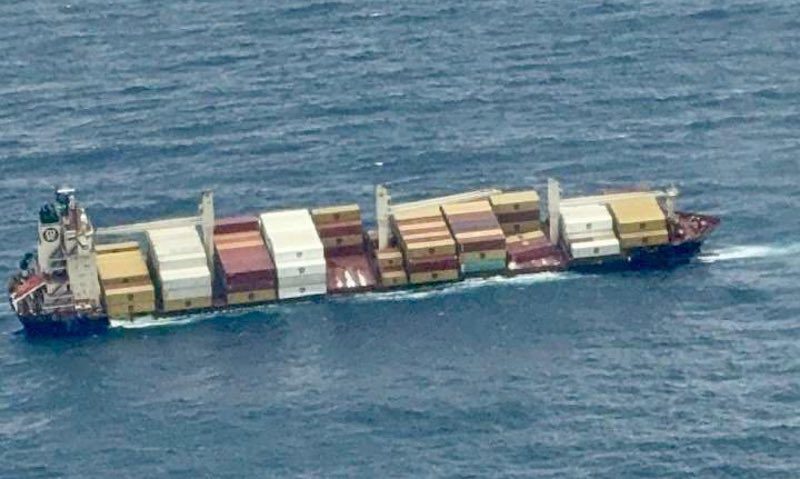
KOCHI : The prospect of oil spill from the container vessel MSC Elsa 3, operated by Mediterranean Shipping Company (MSC), which sank off the Kochi coast on the night of May 24 while en route from Vizhinjam Port to Kochi, continues to be a threat to the marine ecosystem as the plan for extracting oil from the ship remains uncertain.

“We observed, with the help of satellite images, that the oil slick from the ship measured approximately 9.3 km long in the sea with a visible silver/metallic reflection on June 1, and by June 9, the slick still had a length of about 2.3 km,” according to Avinash Chanchal, Deputy Program Director, Greenpeace South Asia.

According to the latest report submitted by the Directorate General of Shipping (DGS), though significant progress has been made in capping the fuel oil tanks and stabilising the wreckage, the critical oil extraction phase is pending and is dependent on weather conditions. Any further delay could push the extraction timeline dangerously close to the peak monsoon season, increasing environmental risks and limiting salvage windows.

The salvage operations have been going on under the supervision of the DGS, with coordination involving agencies including the Indian Coast Guard, State Disaster Management Authorities, shipowners, salvors, and other stakeholders. The salvors have submitted an updated oil recovery plan from the ship with an estimated time of around 24–26 days, which too is subject to weather conditions.

The offshore weather continues to present challenges. As per the latest weather forecast dated June 15, winds of 20-25 knots from the southwest persist over the southeast Arabian Sea, with poor visibility over the next 3–5 days. The DGS has directed the salvors to submit both optimistic and realistic deadlines accounting for prevailing monsoon conditions.

According to environmentalists, the shipping company must comply with its obligation to urgently remove the remainder of the oil left in the MSC Elsa 3 tanks — out of over 450 tonnes — to avoid further damage to the region’s unique marine environment and local economy. Besides, actual damage to ecosystems and local livelihoods must be duly compensated by the MSC.

The Kerala State Disaster Management Authority (KSDMA) made clear that the oil slick from the ship has been capped successfully recently by the salvors, other than minor leaks. However, the dedicated oil extraction from the ship could be completed in July, considering the prevailing weather conditions, said KSDMA sources.

IFSCA headquarters in Gift City to shift to new premises around Diwali

GANDHINAGAR : The headquarters of International Financial Services Authority (IFSCA) — the unified regulator at Gift City in Gujarat — is expected to relocate to a permanent address around the festival of Diwali this year.

“Our new office will be ready by October this year. Of the total 27 floors, we will be occupying about 6-7 floors. The rest will be rented out. We will be releasing a Request for Proposal for leasing out office spaces in the next 10 days. The civil works are complete. Currently, work related to facade and internal fittings are in progress,” a senior IFSCA official told the .

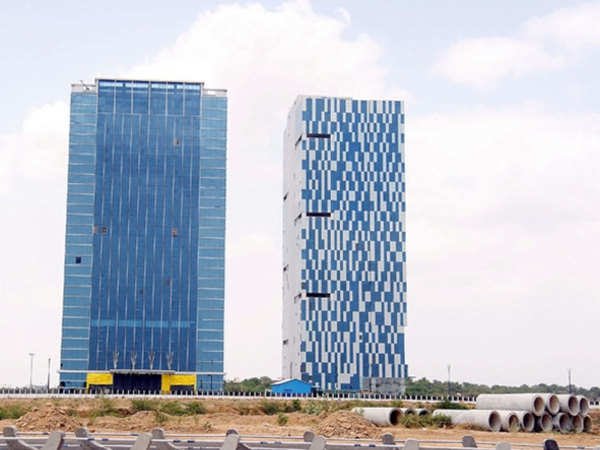
IFSCA, which employs more than 230 persons, currently operates out of a private office building — Pragya Tower 1 — in Gift Special Economic Zone (SEZ). The authority plans to shift to IFSCA Towers, a 106-meter high structure which is currently taking shape at the north-entrance gates of Gift SEZ. This IFSCA Tower has a built-up area of more than three lakh square feet and will be an iconic platinum-rated green building. Prime Minister Narendra Modi had laid the foundations of this structure in July 2022. It was targeted to be completed by 2024 at an estimated cost of ₹200 crore. Once ready, more than 1.6 lakh of office space in this structure will be leased out.

Offering views of the Sabarmati riverfront — currently under construction — on one side, and views of the Gift City on the other, this commercial tower has been designed to house flexible combinations of large, medium and small office spaces. The central conference centres and multipurpose halls are expected to occupy a couple of floors in this tower, separating the tenant offices from the IFSCA office floors. The top two floors might have penthouses with facilities such as offices for the IFSCA chairman and support staff and board rooms.

PSA Singapore signs MoU with Hainan Harbor & Shipping to boost China-Southeast Asia trade ties

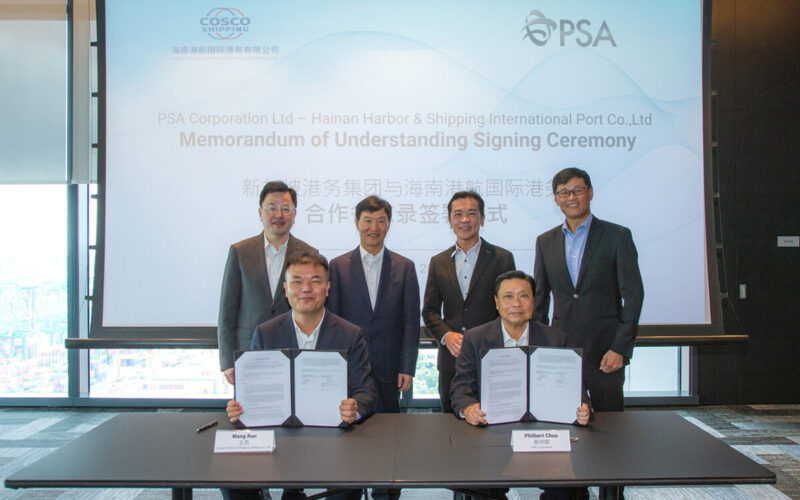
SINGAPORE : PSA Singapore and Hainan Harbor & Shipping International Port Co., Ltd. have signed a Memorandum of Understanding (MoU) to strengthen port-to-port connectivity and develop integrated logistics solutions. The agreement aims to support increasing regional cargo flows and enhance supply chain resilience.

The partnership seeks to improve operational collaboration between Singapore and Yangpu, facilitating trade between South China and Southeast Asia.

The MoU outlines plans to explore joint operational initiatives, improve trade connectivity, and support long-term logistics development on Hainan Island.

Nelson Quek, Regional CEO Southeast Asia of PSA International, said: “In advancing our Node-to-Network strategy, we are pleased to partner with YPICT through this strategic collaboration.

“By combining PSA’s extensive global network with YPICT’s pivotal location in South China, we are well-positioned to unlock new opportunities for trade flows between South China and the greater economic regions in Southeast Asia.”

Wang Ran, Chairman of Hainan Harbor & Shipping Holding Co., Ltd., stated: “Through close collaboration with PSA, we aim to further enhance trade flows between China and Southeast Asia regions, strengthening both partners’ port connectivity and operational excellence.

“This partnership will drive the development of Yangpu Port and align with the trade economic growth objectives of Hainan free trade port.”

Recently, PSA Singapore reported that a quay crane collapsed during delivery at Tuas Port, with no injuries reported and port operations remaining unaffected.

Ocean Network Express strengthens global capacity as latest newbuilding, ONE Singapore, joins fleet

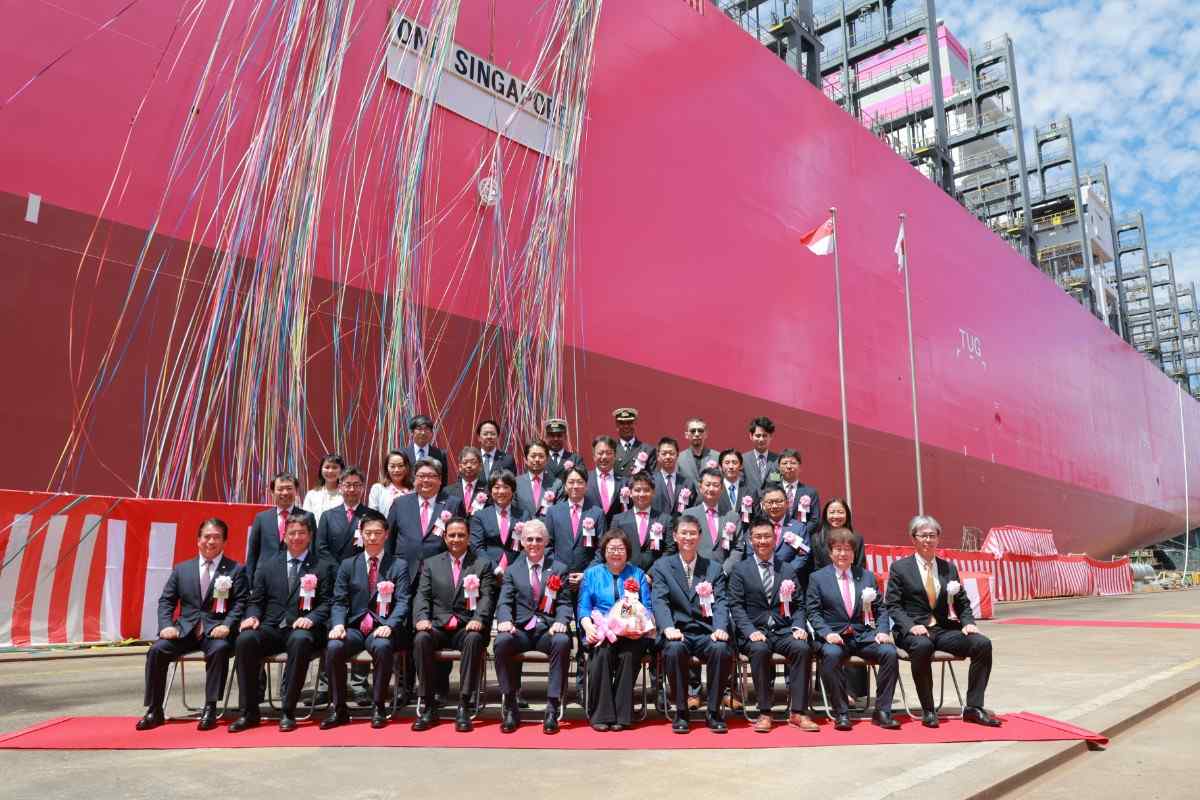
SINGAPORE : Ocean Network Express (“ONE”) announced today (June 17, 2025) the naming of ONE Singapore, the sixth vessel in a series of 20 ammonia/methanol ready container vessels. The naming ceremony took place at the Hiroshima Shipyard of Imabari Shipbuilding Co. Ltd. in Japan, marking another milestone in ONE’s fleet expansion program.

The 13,900 TEU vessel, which is methanol and ammonia-ready, is another demonstration of ONE’s commitment to sustainable shipping practices. Following the successful integration of ONE Sparkle – ONE’s first owned newbuilding – and subsequent sister vessels, ONE Singapore will strengthen the company’s service offerings on the trade lanes where she will be deployed.

Says Jeremy Nixon, CEO, “Today’s naming of ONE Singapore signifies further progress in our fleet expansion strategy. This vessel, carrying the name of our global headquarters city, symbolizes our strong connection to Singapore’s vibrant maritime ecosystem. As we deploy this vessel into service, we continue to build upon ONE’s strong commitment to Singapore, in its prime position as the leading global international maritime centre.”

Since establishing its global headquarters in Singapore in 2017, ONE has become an integral part of Singapore’s maritime community. The company’s headquarters serves as the command center for its global network operations.

ONE Singapore represents the continued execution of ONE’s strategy to build a more sustainable and efficient fleet. She is classed LR and Singapore flagged.