Home Blog Page 8

Piyush Goyal co-chairs 23rd Session of India–Italy Joint Commission for Economic Cooperation in Rome

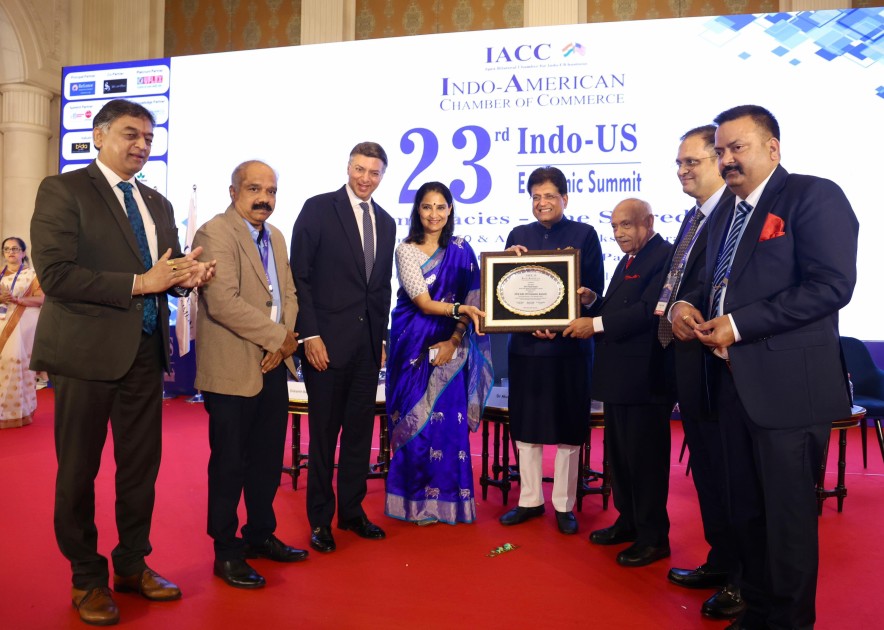
ROME : Union Minister of Commerce and Industry Shri Piyush Goyal co-chaired the 23rd Session of the India–Italy Joint Commission for Economic Cooperation (JCEC) with H.E. Mr. Antonio Tajani, Deputy Prime Minister and Minister of Foreign Affairs and International Cooperation of Italy, in Rome on 18 November 2026. The Ministers reviewed the progress of bilateral economic and commercial cooperation and discussed measures to expand trade, investment and industrial partnerships. They reaffirmed their commitment to strengthening the India–Italy Special Strategic Partnership, building on the Joint Strategic Action Plan 2025–2029 and the outcomes of the visit of Prime Minister Shri Narendra Modi to Italy in May 2026.

The discussions covered cooperation in automotive and aerospace, Industry 4.0, agriculture and agri-technology, connectivity and energy, critical minerals, science and innovation, culture and tourism, skills development and entrepreneurship. Both sides highlighted the complementarities between India’s growing manufacturing capabilities and skilled workforce and Italy’s strengths in advanced manufacturing, engineering, machinery and technology. They encouraged greater industry participation, joint ventures, technology partnerships and integration into global value chains.

The Ministers also welcomed the successful conclusion of negotiations on the India–EU Free Trade Agreement and discussed its potential to expand market access, increase trade and investment flows and strengthen supply chains. In this context, they reaffirmed the shared target of achieving €20 billion in bilateral trade by 2029 and emphasised the need to diversify trade and scale up investments.

During his visit, Shri Piyush Goyal also held one-to-one meetings with CEOs and senior leaders of leading Italian companies, including Walter Tosto S.p.A., Nordimpianti System, Atitech, Magaldi Group and Bracco Group, on 17 November 2026. The discussions focused on investment, manufacturing and technology partnership opportunities in India.

The Minister also addressed the India–Italy Business and Innovation Forum in Rome, which brought together senior government leaders, industry associations and Italian companies, along with around 80 Indian business delegates, including 12 startups. Ahead of the Forum, Shri Goyal interacted with the Indian business delegation on opportunities for Indian businesses in Italy and the wider European market, including those arising from the India–EU Free Trade Agreement.

Three sectoral roundtables were organised as part of the Forum to explore opportunities arising from the complementary strengths of the two economies. The pharmaceuticals and chemicals roundtable identified partnership opportunities in pharmaceutical manufacturing, active pharmaceutical ingredients (APIs), specialty chemicals, biotechnology and joint research and development. The industrial machinery and agri-food roundtable highlighted opportunities in automation, technology transfer, food-processing machinery, cold-chain infrastructure and packaging, aimed at reducing post-harvest losses and enhancing value addition. The automotive roundtable explored collaboration in electric and next-generation mobility, components, research and innovation, and sustainable manufacturing. Across the roundtables, participants emphasised joint ventures, investment partnerships and technology sharing as key means of translating discussions into tangible business outcomes.

The Innovation Forum was opened by Mr. Mauro Battocchi, Director General for Growth and Export Promotion, Ministry of Foreign Affairs and International Cooperation of Italy, and Ms. Vani Rao, Ambassador of India to Italy. Shri Piyush Goyal participated throughout the Forum and interacted with Indian and Italian delegates, encouraging both sides to explore avenues for collaboration and synergy in areas such as sustainability and technology and to build on the complementary strengths of the two innovation ecosystems.

At the Plenary Session, business associations presented the outcomes of the Business Forum, followed by addresses by H.E. Mr. Antonio Tajani and Shri Piyush Goyal. The sessions highlighted the strong complementarities between the two economies and underscored the shared commitment of India and Italy to deepen their economic partnership.

During his bilateral meeting with H.E. Mr. Antonio Tajani, the two Ministers reviewed the entire gamut of bilateral economic and commercial relations and discussed ways to further strengthen trade, investment and industrial cooperation. They reaffirmed their commitment to translating the vision of the two Prime Ministers into tangible outcomes through sustained engagement and closer business partnerships.

The visit provided fresh momentum to the India–Italy Special Strategic Partnership and reinforced the shared commitment to expanding bilateral trade, investment and business collaboration.
CONCOR launches weekly container train service from Kanpur to Mundra Port to boost EXIM connectivity

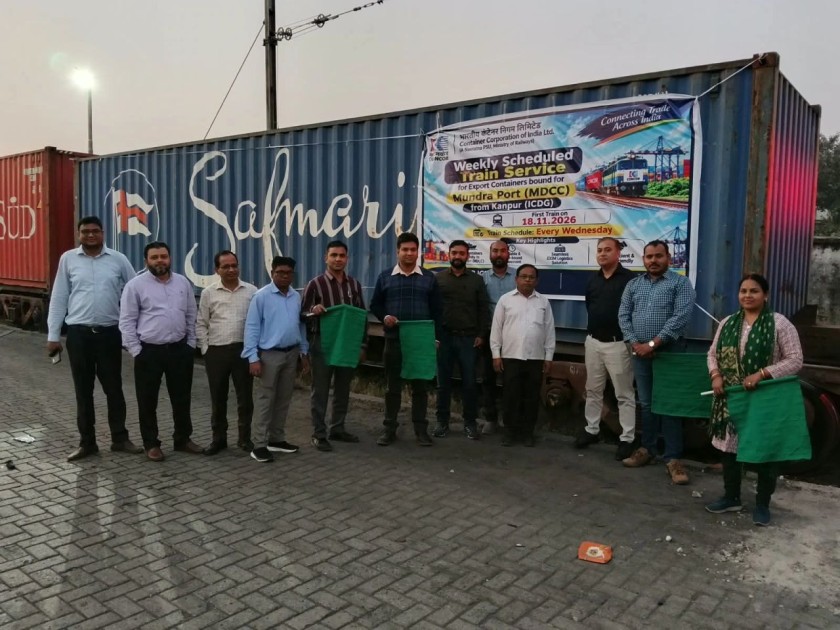
NEW DELHI : The Container Corporation of India Limited (CONCOR) has successfully launched a scheduled weekly container train service connecting Inland Container Depot (ICD) JRY, Kanpur, with Mundra Port (MDCC), Gujarat, marking an important step towards strengthening rail-based export logistics and improving port connectivity for exporters in Uttar Pradesh and neighbouring regions.

The inaugural service was launched on November 18, 2026, with regular departures scheduled every Wednesday. The new service will provide exporters, freight forwarders and logistics stakeholders in and around Kanpur with an additional and dependable rail transportation option for moving export containers to Mundra, one of India’s major container gateways on the western coast.

Strengthening Hinterland Connectivity with Major Seaports

The introduction of the weekly scheduled service is expected to improve connectivity between Kanpur’s industrial and manufacturing base and international shipping networks accessible through Mundra Port.

With a fixed weekly departure schedule, exporters will have greater predictability in planning container movement, factory dispatches, cargo consolidation and onward vessel connections. The service is also expected to provide greater flexibility in selecting shipping routes and managing export logistics requirements.

The new rail link will facilitate the movement of containerised export cargo from the Kanpur region to Mundra, supporting smoother integration between inland transportation and maritime shipping operations.

Enhancing EXIM Logistics Efficiency

The scheduled train service is expected to offer several advantages to the export-import (EXIM) trade, including improved cargo planning, additional port-routing options and better coordination between inland container depots and port terminals.

By strengthening rail-based container transportation, CONCOR aims to support efficient cargo evacuation, improve hinterland connectivity and provide exporters with an integrated logistics solution for accessing international markets.

Mundra Port’s extensive container-handling infrastructure and connectivity with international shipping services make it an important gateway for exporters from northern and western India. The new Kanpur–Mundra connection further strengthens the movement of export cargo from the country’s inland production centres to global trade routes.

CONCOR’s Commitment to India’s Trade and Logistics Growth

As a Navratna Central Public Sector Enterprise under the Ministry of Railways, CONCOR continues to expand its multimodal logistics network by connecting inland markets, industrial centres and major seaports through rail-based container transportation.

The launch of the weekly Kanpur–Mundra service reflects CONCOR’s continued focus on developing customer-oriented logistics solutions, improving supply-chain efficiency and supporting India’s growing international trade requirements.

The initiative is expected to benefit exporters and logistics operators by providing an additional scheduled rail connection to a major maritime gateway, further strengthening the integration of India’s domestic logistics infrastructure with global shipping networks.

With the introduction of this weekly service, CONCOR continues to reinforce its role in connecting India’s hinterland with international markets through efficient, reliable and integrated rail logistics solutions.

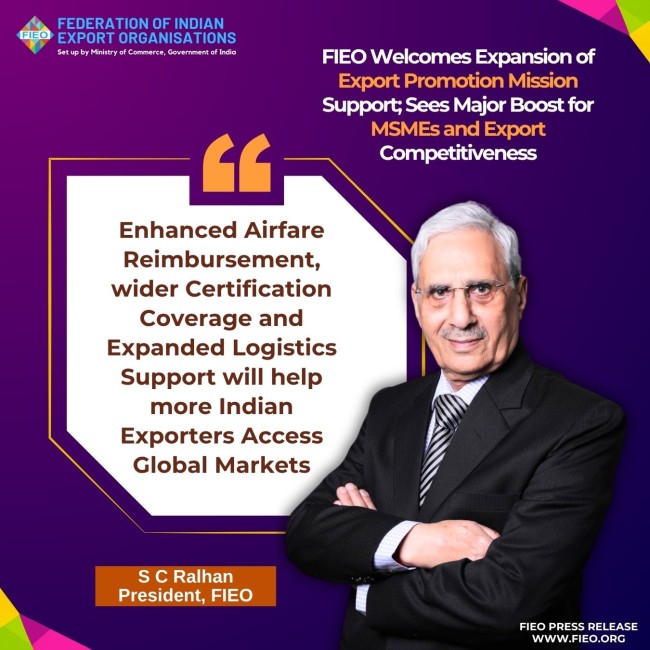
FIEO welcomes expansion of Export Promotion Mission support; sees major boost for MSMEs and export competitiveness

NEW DELHI : The Federation of Indian Export Organisations (FIEO) has welcomed the Department of Commerce’s amendments to the guidelines of key interventions under the Niryat Disha sub-scheme of the Export Promotion Mission (EPM), describing them as a significant step towards making export promotion support more inclusive, accessible and responsive to the evolving needs of Indian exporters. The amendments, announced on November 17, 2026, cover Market Access Support (MAS), Trade Regulations, Accreditation & Compliance Enablement (TRACE), and Logistics Interventions for Freight and Transport (LIFT). The revised provisions are expected to particularly benefit Micro, Small and Medium Enterprises (MSMEs), first-time exporters and businesses operating from regions with relatively low export intensity.

Welcoming the amendments, Mr S C Ralhan, President, FIEO, said, “The amendments to the Export Promotion Mission are timely and progressive, as they address three critical requirements of Indian exporters — access to international markets, affordability of quality certifications and the high cost of logistics. By widening the eligibility criteria and enhancing the quantum and scope of assistance, the Government has taken an important step towards ensuring that more MSMEs and emerging exporters can participate in global trade.”

Commenting on the changes under Market Access Support (MAS), Mr Ralhan said, “Increasing the eligible export turnover threshold for airfare reimbursement from ₹75 lakh to ₹50 crore is a major enabling measure. The enhanced reimbursement of up to 95% for Micro and Small Exporters and up to 80% for other eligible exporters will substantially reduce the financial burden of participating in international trade fairs, Buyer-Seller Meets and trade delegations. The reduction in the mandatory Export Promotion Council membership period from six months to three months will further facilitate the participation of new and emerging exporters.”

Under the TRACE intervention, the expansion of the list of eligible certificates from 462 to 600 is expected to improve access to quality and compliance-related assistance. FIEO believes this will help MSMEs meet international standards and technical requirements, strengthen product acceptance and improve their ability to compete in regulated overseas markets. Mr Ralhan observed, “Access to internationally recognised certifications and conformity assessments is increasingly essential for exporters to enter and sustain their presence in global markets. Expanding the eligible certification list to 600 will provide wider coverage and help MSMEs overcome a significant cost barrier. This is particularly important as quality, safety, traceability and sustainability requirements are becoming increasingly important in international trade.”

FIEO also welcomed the expanded coverage under the LIFT intervention, which seeks to address freight and transportation disadvantages faced by exporters in low export-intensity areas. The expansion of coverage from 13 States/UTs to 34 States/UTs, inclusion of Land Customs Stations (LCSs) and Integrated Check Posts (ICPs), and addition of waterways to the eligible transport modes are expected to improve logistics access for exporters across the country. The extension of air freight support to Jammu & Kashmir and Ladakh, reduction of the minimum distance criterion from 200 km to 100 km, and coverage of all exportable merchandise items, except those on the specified negative list, further strengthen the intervention.

Appreciating these measures, FIEO Chief added, “Logistics costs and geographical disadvantages have long affected the competitiveness of exporters, particularly MSMEs located in remote, landlocked and low export-intensity regions. The expanded geographical coverage, inclusion of additional transport modes and wider eligibility of exportable products will help create a more level playing field. These measures can also encourage the development of new export hubs and bring more districts and enterprises into India’s export growth story.”

FIEO believes that these measures will strengthen India’s export ecosystem by encouraging greater participation in international trade events, improving access to global quality standards and reducing logistics-related disadvantages. Such targeted interventions will be particularly significant in advancing the country’s ambition of achieving higher export growth, diversifying export markets and integrating more Indian MSMEs into global value chains. The amendments reaffirm the Government’s commitment to making export promotion more broad-based and accessible, supporting the larger national vision of Viksit Bharat 2047 through a stronger, more competitive and globally integrated export sector.

GMU and O.P. Jindal Global University sign MoU to strengthen academic and research collaboration

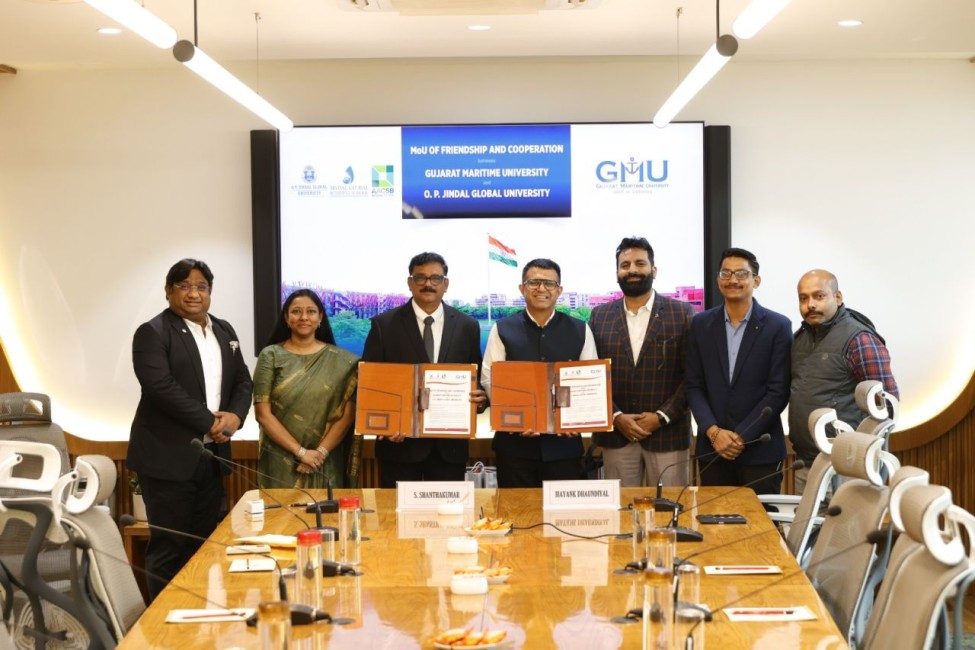
SONIPAT : Gujarat Maritime University (GMU) and O.P. Jindal Global University (JGU) have signed a Memorandum of Understanding (MoU) on November 18, 2026, at the O.P. Jindal Global University campus in Sonipat, Haryana, marking an important step towards strengthening academic cooperation and institutional collaboration between the two universities.

The partnership aims to establish a framework for meaningful academic engagement, promote knowledge sharing, encourage joint research initiatives and create new opportunities for faculty and student exchanges. The collaboration is also expected to facilitate the exchange of academic expertise, research capabilities and institutional best practices, contributing to the development of a stronger higher education ecosystem.

The initiative brings together the academic strengths of both institutions, opening avenues for interdisciplinary learning and research across areas of mutual interest, including maritime studies, law, business management and related fields. It is expected to encourage collaborative academic programmes, intellectual engagement and research-oriented initiatives that address emerging industry and policy requirements.

The collaboration was facilitated under the leadership and guidance of Prof. C. Raj Kumar, Founding Vice Chancellor, O.P. Jindal Global University, and Prof. (Dr.) Sanjeevi Shanthakumar, Provost, Gujarat Maritime University and Director, Gujarat National Law University.

Several senior academic and administrative representatives from both institutions played an important role in supporting the initiative. The representatives included Prof. Dabiru Sridhar Patnaik, Registrar, O.P. Jindal Global University; Prof. Dr. Nitesh Bansal, Chief Compliance Officer, O.P. Jindal Global University; Prof. Dr. Mayank Dhaundiyal, Dean, Jindal Global Business School; Prof. (Dr.) Tanuja Kaushik, Dean, Academic Affairs, Gujarat Maritime University; and Prof. Dr. Ashish Dwivedi, Jindal Global Business School.

Strengthening India’s Maritime Education and Research Ecosystem

The MoU assumes particular significance in the context of India’s growing maritime ambitions and the increasing need for specialised academic capabilities, interdisciplinary research and skilled professionals across the maritime and shipping sectors.

Stronger collaboration between maritime-focused institutions and leading universities can help bridge the gap between academic learning, industry requirements, legal frameworks and emerging business opportunities. Such partnerships can also contribute to developing future-ready professionals equipped to address the evolving challenges of the global maritime industry.

The agreement marks a new chapter in the institutional relationship between Gujarat Maritime University and O.P. Jindal Global University, with both institutions looking forward to building a productive and enduring partnership through academic cooperation, research excellence and knowledge exchange.

Cochin Shipyard lays keel for first 70-tonne Bollard Pull Tug for Polestar Maritime

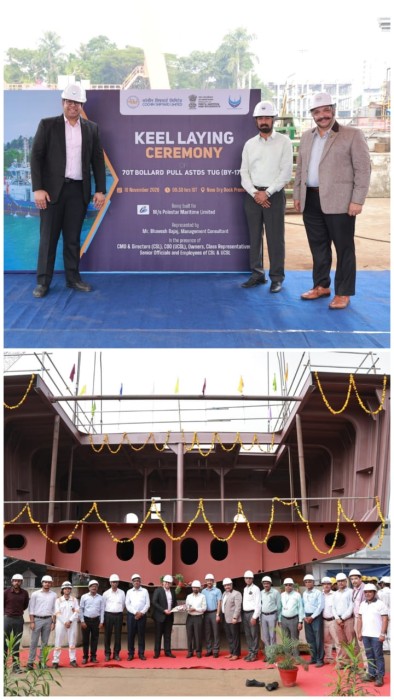
KOCHI : Cochin Shipyard Limited (CSL) has laid the keel for the first of two ASTDS 70T Bollard Pull Tugs being constructed for Polestar Maritime Limited, marking an important milestone in the company’s ongoing shipbuilding programme and India’s efforts to strengthen indigenous capabilities in specialised harbour vessels.

The keel-laying ceremony was held at CSL’s shipyard in Kochi in the presence of senior officials from both organisations. The keel was laid by Shri Bhavesh Bajaj of Polestar Maritime Limited.

The vessels are being designed by Robert Allan Ltd., Canada, a globally recognised naval architecture and marine engineering company specialising in tug design. The 70-tonne bollard pull capability is intended to provide substantial towing and manoeuvring assistance for large commercial vessels operating in ports and harbour areas.

The ceremony was attended by Shri Jose V.J., Chairman and Managing Director, Cochin Shipyard Limited; Dr. Harikrishnan S., Director (Operations); and Shri Rajesh Gopalakrishnan, Director (Technical), along with senior officials, employees of CSL and its subsidiary Udupi Cochin Shipyard Limited (UCSL), and representatives of the Indian Register of Shipping (IRS).

Strengthening India’s Tug-Building Capabilities

The construction of these two specialised tugs highlights CSL’s capabilities in delivering advanced marine support vessels for domestic maritime operators. Modern high-bollard-pull tugs play a critical role in assisting large vessels during berthing and unberthing operations, harbour manoeuvring, towing and other port-related activities.

The project also reflects the growing collaboration between Indian shipbuilders, domestic maritime operators and international naval architecture specialists in developing technologically advanced vessels.

The keel-laying milestone marks the commencement of the next major phase of construction, taking the first tug closer to completion and eventual delivery.

With increasing vessel sizes, expanding port infrastructure and rising maritime trade volumes, the demand for capable and efficient harbour support vessels is expected to remain important for India’s growing maritime sector. The project further reinforces Cochin Shipyard’s contribution to strengthening the country’s indigenous shipbuilding ecosystem.

DFCCIL holds meeting with Austrian Rail Companies to explore advanced railway technologies

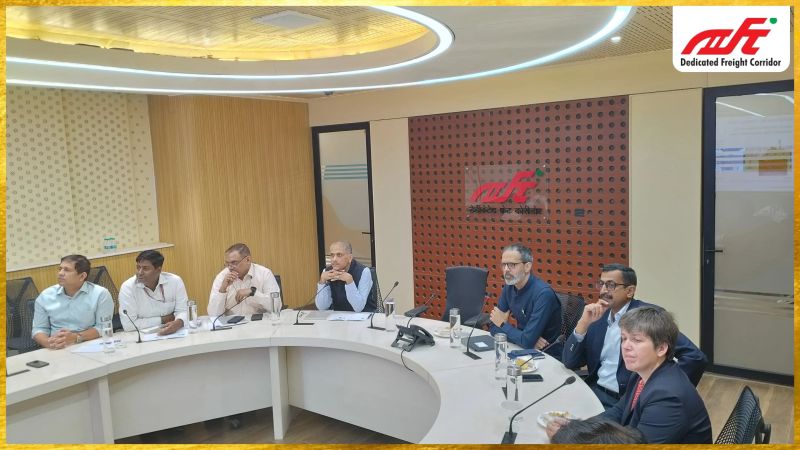
NEW DELHI : Dedicated Freight Corridor Corporation of India Limited (DFCCIL) hosted a delegation of Austrian railway companies at its Corporate Office to discuss the organisation’s current and future infrastructure requirements and explore opportunities for adopting advanced technologies and innovative solutions across India’s Dedicated Freight Corridor (DFC) network.

The discussions focused on showcasing the latest technological developments and specialised solutions offered by participating Austrian companies, particularly in areas relevant to railway infrastructure development, freight operations, modernisation and operational efficiency. The interaction also provided a platform to explore potential technological collaborations and identify solutions that could support DFCCIL’s evolving requirements.

During the meeting, Shri Anurag Sharma, Director (Infrastructure); Shri Pawan Kumar Rai, Director (Project Planning); and Shri B. Mugunthan, Director (Finance), participated in the deliberations along with other senior officials of DFCCIL.

The engagement provided an opportunity for both sides to exchange technical expertise, understand emerging industry solutions and discuss their potential applications in strengthening India’s dedicated freight transportation infrastructure.

With the continued expansion and modernisation of the Dedicated Freight Corridor network, the adoption of advanced railway technologies and international best practices is expected to play an important role in improving freight efficiency, enhancing operational reliability and strengthening India’s logistics ecosystem.

The interaction reflects DFCCIL’s continued efforts to engage with global technology providers and explore innovative solutions to support the development of a modern, efficient and technologically advanced freight rail network in India.

TCI Express commits ₹500 crore towards infrastructure expansion over the next five years

NEW DELHI : TCI Express Ltd. India’s leading express distribution company, announced a significant step towards accelerating its next phase of growth, TCI Express has also committed an investment of ₹500 crore over the next five years towards infrastructure development, automation, network optimisation and expansion of its high-growth business verticals.

Building on the back of a strong Q2 FY 2027 results, which recorded a 29.4% YoY growth in domestic Air Express, a 51.6% growth in E-commerce express and a steady growth of 9.4% YoY in Surface Express, clearly showcased that these three verticals are going to pave the way for future growth roadmap. The brand has already invested INR 500 cr. in the last seven years and now intends to direct the new investment to the high performing verticals, decoupling their network and increasing the workforce

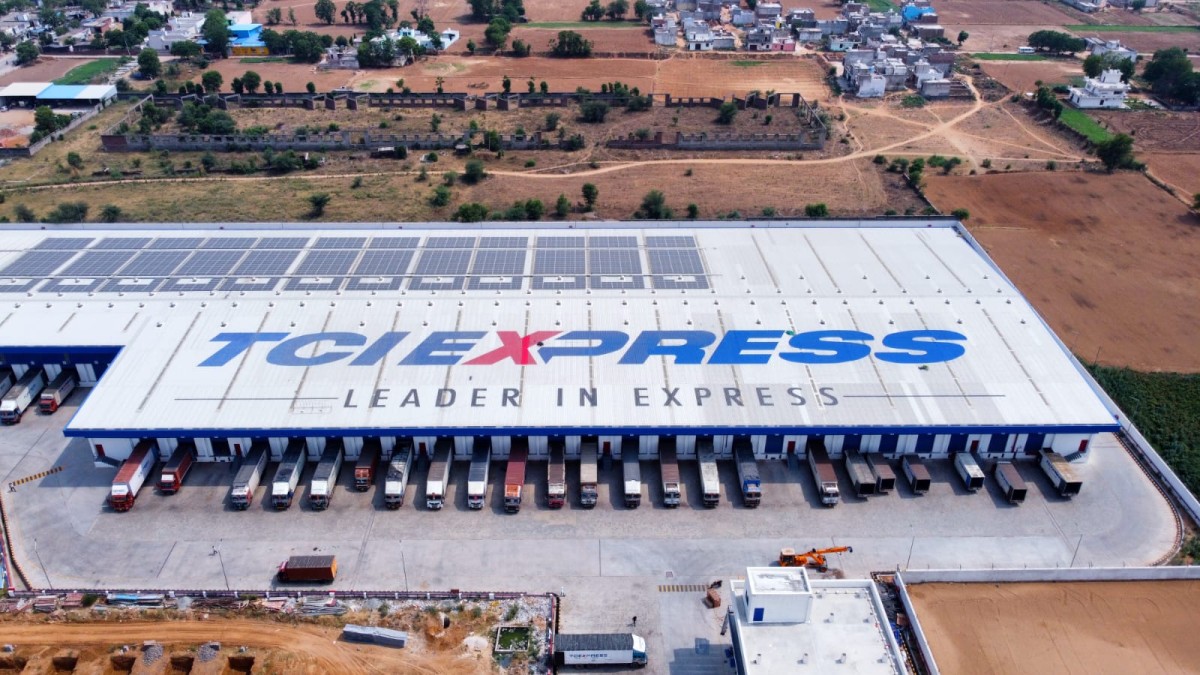
Furthermore, TCI Express also announced the start of three fully owned sorting centers in Ahmedabad, Lucknow and Kolkata, further strengthening its nationwide logistics infrastructure. These additions will expand the company’s network of fully owned sorting centers and take its total footprint to 28 centers.

Commenting on the developments, Mr. Chander Agarwal, Managing Director, TCI Express, said: “At TCI Express, continuous evolution and innovation are central to our growth philosophy. As India’s leading express distribution company, we recognize our responsibility to build logistics infrastructure that supports the country’s rapidly evolving economic and consumption landscape.

We are witnessing strong growth momentum across our business verticals, particularly Domestic Air Express and E-commerce Express, which have emerged as key growth drivers in FY2027. Our next phase of expansion will focus on strengthening the capabilities of individual verticals, enhancing operational efficiencies and building a more agile and scalable network. The ₹500 crore investment commitment over the next five years reflects our confidence in the long-term growth potential of India’s express logistics industry and our ambition to further strengthen TCI Express’s market leadership”.

The three new sorting centers, strategically located in Ahmedabad, Lucknow and Kolkata, will collectively cover approximately four lakh sq. ft. of area, significantly enhancing the company’s shipment processing capacity and operational reach. In line with its continued focus on technology-led operations, the Ahmedabad and Kolkata facilities will be fully automated. With these additions, TCI Express will have four fully automated sorting centers across its network, strengthening throughput, operational efficiency and service reliability. The expansion is also expected to generate significant employment opportunities across these regions.

Through these strategic investments, TCI Express aims to build a future-ready logistics ecosystem, enhance service capabilities and reinforce its position as one of India’s leading players in the organized express logistics sector.

About TCI Express Limited:
TCI EXPRESS LIMITED is India’s fastest and most trusted express delivery company, specialising in multimodal transportation through Surface, Rail, and Air. TCI EXPRESS holds a significant position in the B2B express distribution segment in India with more than 15% market share and is listed among the top 500 companies by market capitalisation.
Established in 1996 as TCI XPS, a division of the Transport Corporation of India (TCI), it became an independent entity in 2016 following its demerger and subsequent listing on major Indian stock exchanges (NSE & BSE). The company maintains debt-free status, a healthy balance sheet, and a consistent record of profitability. It employs over 3,000 personnel and is committed to sustainable and transparent business practices.

TCI EXPRESS serves an extensive customer base of 2.25 lakh with an expansive operational network of more than 1,000 branches, covering 50,000 pickup points and 60,000+ delivery locations across 29,000 PIN codes in India, while extending its services to over 200 countries worldwide.

India invites fresh applications for duty-free import of 2.15 lakh tonnes of raw sugar

NEW DELHI : The Government of India has invited fresh applications for the allocation of 215,043.859 metric tonnes (approximately 2.15 lakh tonnes) of raw sugar imports at zero customs duty, providing another opportunity for domestic sugar mills and refiners to access overseas supplies and strengthen domestic availability.

The Directorate General of Foreign Trade (DGFT), under the Ministry of Commerce and Industry, issued Public Notice No. 41/2026-27 on November 18, 2026, announcing the fresh application window under the Tariff Rate Quota (TRQ) scheme.

The available quantity comprises 187,550 metric tonnes that remained unallocated from the original import quota and an additional 27,493.859 metric tonnes surrendered by previously selected applicants.

Fresh Allocation Under the 10-Lakh-Tonne Import Quota

The fresh allocation is part of the government’s original decision, announced on August 20, 2026, to permit the duty-free import of one million tonnes of raw sugar. The initiative was introduced to improve domestic sugar availability, support refining operations and help moderate domestic market prices.

However, a portion of the original quota remained unutilised, prompting the government to invite fresh applications for the remaining quantity.

Eligible Indian sugar mills and refiners with their own functional processing facilities can apply for the allocation through the DGFT’s online Import Management System under the Tariff Rate Quota (TRQ) category.

Key Application Details

Under the latest public notice, eligible applicants must submit their applications online by November 27, 2026. The existing eligibility conditions, documentation requirements and other provisions specified in the earlier public notices dated August 20 and August 24, 2026, will continue to apply.

The overall validity of the TRQ import arrangement has also been extended until December 31, 2026, providing additional time for the import process to be completed.

Boost to Domestic Sugar Availability and Refining Capacity

The duty-free import initiative is aimed at supplementing domestic sugar supplies through overseas procurement while enabling Indian refiners to process imported raw sugar into white and refined sugar.

The additional allocation is expected to provide greater flexibility to domestic sugar manufacturers and refiners in sourcing raw materials from international markets. It also reflects the government’s efforts to maintain a balance between domestic production, market demand and price stability.

Potential Opportunities for Shipping and Port Logistics

The fresh import window could create additional cargo-handling opportunities for India’s maritime and logistics sector. Raw sugar imports generally require bulk transportation, port handling, warehousing and onward movement to domestic refining facilities.

Ports equipped with bulk cargo-handling infrastructure, along with shipping companies, stevedores, customs brokers and inland logistics operators, could benefit from additional cargo movements, depending on the extent of quota utilisation.

The actual volume of imports will depend on the allocation uptake by eligible applicants, international raw sugar prices, freight costs and shipment schedules.

The government’s latest move is expected to provide another opportunity for domestic refiners to source overseas raw sugar while supporting the broader objective of maintaining adequate supplies in the Indian market.

Centre expands export promotion support, raises benefits for MSMEs and small exporters

NEW DELHI : The Government of India has significantly expanded export promotion support for micro, small and medium enterprises (MSMEs) and small exporters by relaxing eligibility conditions and increasing financial assistance for overseas market development, quality certifications and logistics expenses.

The Ministry of Commerce and Industry has introduced revised guidelines under the Export Promotion Mission (EPM), widening access to financial assistance for exporters seeking to strengthen their international presence, participate in global trade events and improve their competitiveness in overseas markets.

Under the revised provisions, companies with an annual export turnover of up to ₹50 crore in the preceding financial year will now be eligible to claim airfare reimbursement for executives participating in buyer-seller meets, international trade fairs and overseas trade delegations. This represents a substantial expansion from the earlier eligibility ceiling of ₹75 lakh.

Airfare Reimbursement Increased to 95%

A key feature of the revised guidelines is the enhancement of airfare reimbursement for eligible exporters. Micro and small exporters can now receive reimbursement of up to 95% of eligible airfare expenses, while other eligible exporters can claim up to 80%.

The minimum membership period with Export Promotion Councils required to qualify for these benefits has also been reduced from six months to three months, making the scheme more accessible to businesses seeking to explore international markets.

Quality Certification Support Expanded to 600 Certificates

The government has also strengthened the Trade Regulations, Accreditation & Compliance Enablement (TRACE) component of the Niryat Disha sub-scheme.

Under the revised provisions, the number of quality, safety and technical certifications eligible for reimbursement has been increased from 462 to 600. The expansion is expected to help Indian MSMEs meet international regulatory requirements, obtain recognised certifications and improve acceptance of their products in global markets.

Logistics Support Extended Across All States and Union Territories

Under the Logistics Interventions for Freight and Transport (LIFT) component, the government has expanded the geographical coverage of freight assistance from 13 states to all states and Union Territories.

Eligible MSME exporters can claim reimbursement of up to 30% of pre-tax inland freight costs, subject to a maximum of ₹20 lakh per Importer Exporter Code (IEC) per financial year, for transporting export goods to ports and transit hubs.

The revised guidelines have also expanded the eligible locations to include Land Customs Stations (LCS) and Integrated Check Posts (ICPs), alongside existing logistics hubs.

Furthermore, inland freight support now covers waterways in addition to road, rail and air transportation, providing exporters with greater flexibility in choosing cost-effective logistics solutions.

Air Freight Assistance Extended to More Regions

The government has extended air freight support, previously available only to the North Eastern Region, to Jammu and Kashmir and Ladakh.

The minimum distance requirement between the origin and destination points for claiming assistance has also been reduced from 200 km to 100 km. The support now covers all exportable merchandise, except products included in the prescribed negative list.

These changes are expected to improve export connectivity for businesses located in geographically remote and logistics-constrained regions.

₹25,060-Crore Export Promotion Mission to Drive Global Competitiveness

The latest amendments form part of the broader Export Promotion Mission, for which the Cabinet Committee on Economic Affairs approved a total financial outlay of ₹25,060 crore over five years through 2030-31.

The mission aims to address key challenges faced by Indian exporters through improved market access, trade facilitation, regulatory compliance and logistics support.

The revised measures come at a significant time as India pursues its ambition of increasing merchandise exports to US$1 trillion by 2030-31. With MSMEs contributing nearly 49% of India’s total exports, widening access to export assistance is expected to play an important role in strengthening the country’s export ecosystem.

Boost to India’s Export Growth and Global Market Presence

The expanded support framework is expected to benefit a wider group of Indian businesses, particularly smaller manufacturers and first-time exporters, by reducing the financial burden associated with international market development, product certification and transportation.

The initiative also aligns with India’s efforts to diversify export destinations, maximise opportunities under its trade agreements with countries and regions including Australia, the United Kingdom and the European Union, and strengthen the global competitiveness of Indian products.

By lowering the cost of exporting and improving access to international markets, the government aims to create a more inclusive and competitive export ecosystem while supporting India’s long-term ambition of becoming a major global trading hub.

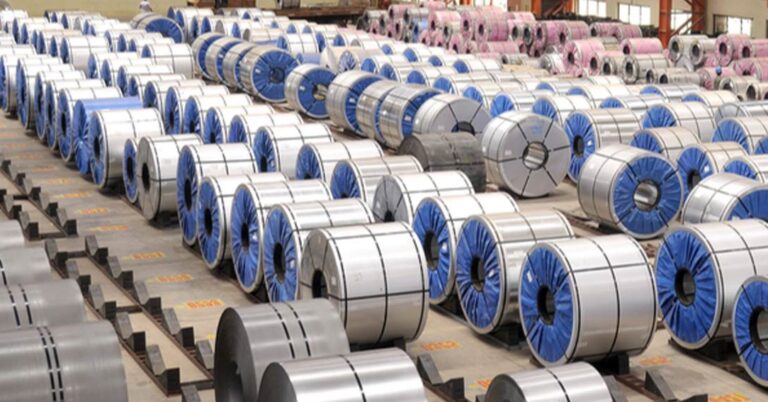
Chinese steel imports remain a threat to Indian industry : Tata Steel CEO

NEW DELHI : Chinese steel imports remain a threat to India’s steel industry, Tata Steel ​CEO T V Narendran said on Wednesday, ​adding that producers were continuing talks with the ‌government on measures to protect the sector.

“We should make sure that Indian industry which is investing significant capital in building capacity, should not be unfairly impacted,” Narendran told reporters on the sidelines of an event in New Delhi.

India’s steel ministry is unlikely to seek fresh curbs on cheap imports in the near term, Reuters reported in October, ‌despite domestic steelmakers’ calls for stronger protection. China accounted for nearly a third of India’s finished steel imports in the first half of the fiscal year.

Tata Steel expects to reach an annual production capacity of 40 million metric tons between 2033 and 2035, ​building on planned capacity expansion through the end of the decade.

Iron ‌ore costs are rising in India, while Tata Steel continues to source most of its ​coking ‌coal imports from Australia and smaller volumes from Indonesia, Narendran ‌said.

The company has no plans to invest in overseas coking coal mines, he added. Separately, Narendran ‌said Tata ​Steel had ​sought financial assistance from the Dutch government, with discussions still underway.