Home Blog Page 803

Network Planning Group under PM’s Gatishakti evaluates infrastructure projects to boost efficiency

NEW DELHI : The Ministry of Commerce & Industry on Friday at the 95th meeting of the Network Planning Group (NPG) convened to evaluate infrastructure projects in the Metro Rail and Roads, Transport & Highways and Logistics Parks in order to boost logistics efficiency, reduce travel times, and deliver significant socio-economic benefits across regions.

In the meeting, the NPG evaluated five projects with an aim to have conformity to the PM GatiShakti principles of integrated multimodal infrastructure, last-mile connectivity to economic and social nodes and intermodal coordination.

The initiatives involve the Ahmedabad Metro Rail Project Phase-2A. The Ministry of Housing and Urban Affairs (MoHUA) has proposed plans to extend the Ahmedabad Metro by 6.032 km to provide direct connectivity to Sardar Vallabhbhai Patel International Airport from Koteshwar Metro Station (excluding).

Secondly, construction of 8-lane access-controlled Highways of NH 248S for Connectivity to the proposed Vadhavan port. The Ministry of Road Transport and Highways (MoRTH) has proposed the plans for the construction of an 8-lane access-controlled highway along NH-248S to improve connectivity to the upcoming Vadhavan Port in Maharashtra.

Additionally, the initiative also involves the construction of Four Lane Elevated Road in the Jodhpur city portion from Mahamandir to Akhaliya Chouraha. The Ministry of Road Transport and Highways has proposed the plans for the construction of a 4-lane elevated corridor in Jodhpur city, extending from Mahamandir to Akhaliya Chouraha. Strategically aligned along NH-62 and NH-125, the project aims to alleviate traffic congestion and enhance urban mobility across one of Rajasthan’s busiest city corridors.
Fourthly, the Ministry of Road Transport and Highways (MoRTH) has proposed to develop a Multi-Modal Logistics Park (MMLP) at Parkibanda village in Manoharabad Mandal, Medak district, Telangana.

Lastly, the Ministry of Road Transport and Highways (MoRTH) has proposed to develop a Multi-Modal Logistics Park (MMLP) at Jaitiya village, located in Fatuah Taluka of Patna district, Bihar. Spread over 106.19 acres (42.97 hectares), the proposed facility is projected to handle 5.43 million metric tonnes (MMT) of cargo annually by 2071, and is poised to become a major logistics hub for the region.

Israel-Iran war leaves India’s tea export­ers wor­ried

NEW DELHI : Indian tea exporters got worried as Israel on Friday launched strikes across Iran, India’s second most important market for the brew.

India’s orthodox tea production and exports have largely been dependent on Iran — largely an orthodox tea market.

Israel attacked Iran’s capital Tehran early Friday, launching large-scale strikes targeting its nuclear facilities. Raising the potential for an all-out war between the two bitter rivals in the Middle East, Iran launched drones toward Israeli territory.

“Iran is still the second most important market after Iraq for us. The country takes the bulk of the orthodox tea production. So, our orthodox tea production and exports are largely dependent on the demands from Iran. Obviously, today’s development is a matter of concern. We have to wait and watch and see how the situation develops,” Indian Tea Exporters Association (ITEA) Chairman Anshuman Kanoria said.

Per Tea Board India data, exports of the brew stood at 69.22 million kg (mkg) during January-March this year, posting a 2.5 per cent year-on-year growth. Exporters said tea shipments to Iran were witnessing a steady growth this year.

Notably, buoyed by higher demands from mostly Iraq and Iran, India’s overall tea export registered close to 10 per cent y-o-y growth at 254.67 mkg in 2024 compared to 231.69 mkg in 2023.

“The latest development will surely have an impact on our exports to Iran, no doubt about that. And, if the US puts fresh sanctions on Iran, probably everything would be gone,” said Dipak Shah, Chairman, South India Tea Exporters Association.

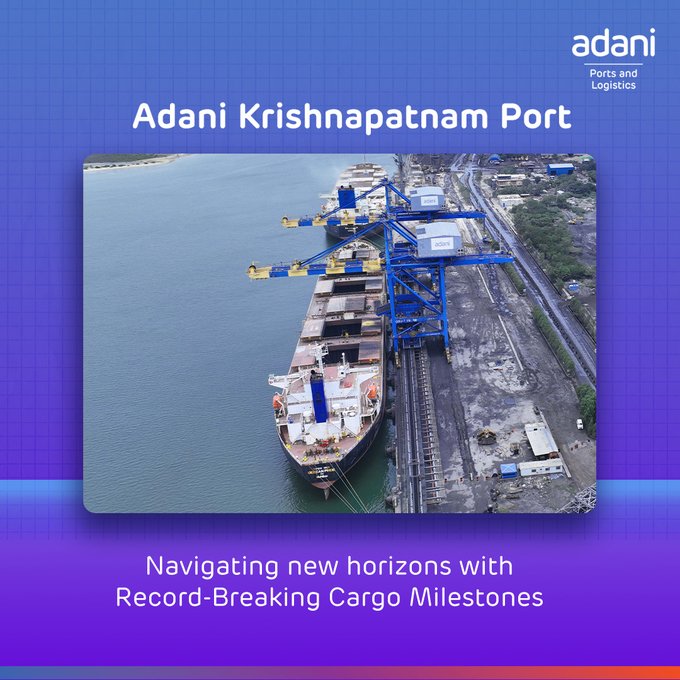
Adani Krishnapatnam Port sets monthly record of highest ever dry cargo volume

NELLORE : Adani Krishnapatnam Port Limited (AKPL) has set a new monthly record by handling 5.74 million metric tonnes (MMT) of dry cargo—the highest in its history.
The port also achieved its highest single-day road dispatch of 55,958 metric tonnes, reflecting strong infrastructure and efficient cargo evacuation.

AKPL noted that it aims to continue improving operational performance and service delivery.

Adani Krishnapatnam Port Management commented: “These achievements reaffirm our commitment to being a premier gateway for trade and a key contributor to India’s economic growth.”

In December 2024, Adani Gangavaram Port launched two Economic Grab Ship Cranes, marking a significant milestone as the first in India.

Four months later, Adani Ports and Special Economic Zone Ltd. announced the commencement of operations at the Colombo West International Terminal (CWIT), located at the Port of Colombo.

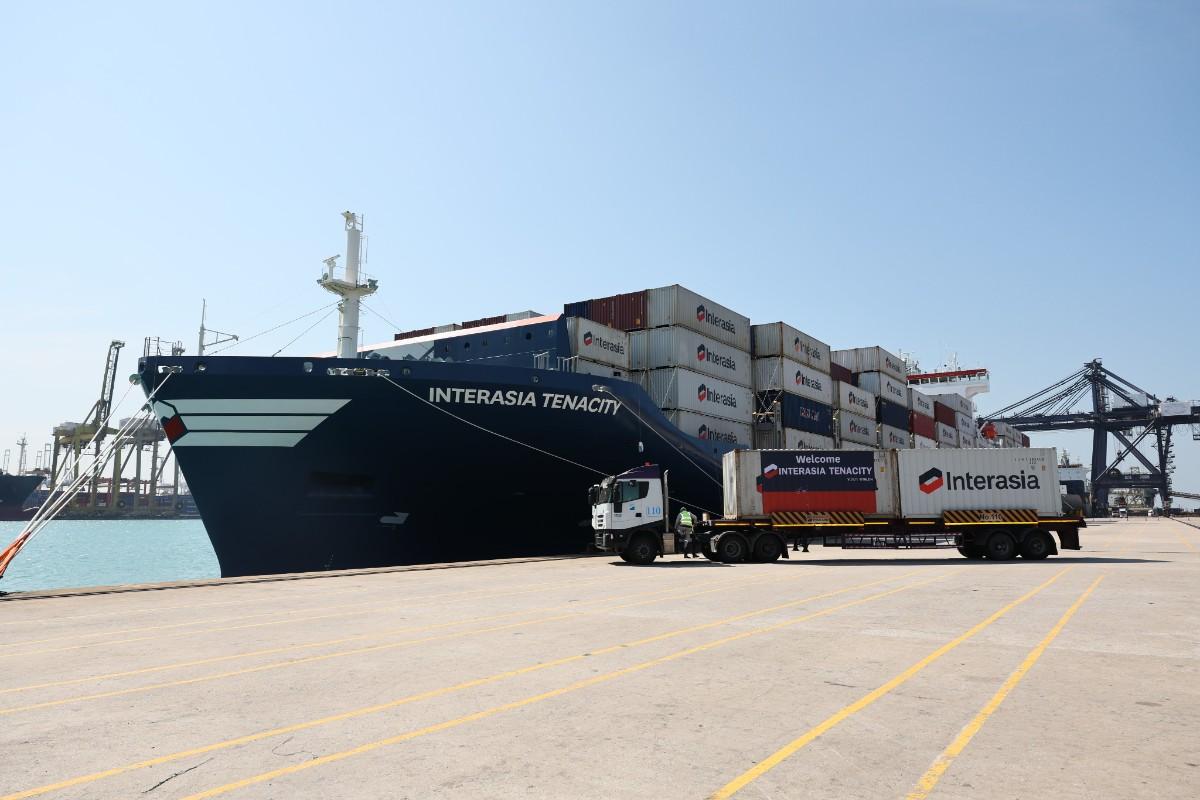
Another Container Ship ‘MV Interasia Tenacity’ catches fire, Blaze under control, Vessel continues voyage

MUMBAI : A fire broke out aboard the Singapore-flagged container ship MV Interasia Tenacity near Mumbai’s coast on Thursday morning while it was en route to Nhava Sheva port. The fire, reported around 8:40 am, was confined to a single container on the deck. The vessel’s crew brought the situation under control, and no further assistance was required, the Indian Coast Guard confirmed.

The ship, MV Interasia Tenacity operated by Taiwan based Interasia Line with a capacity of 3055 TEUs was carrying 1,387 containers with 21 Filipino crew members, had departed Port Klang, Malaysia, on June 8 and is expected to arrive at Nhava Sheva late Friday night.

Upon receiving a distress call over marine radio, the Coast Guard deployed offshore patrol vessel ICGS Sachet for firefighting support and launched an aircraft for aerial surveillance. The vessel is now sailing under close watch of the Coast Guard and Indian Navy.

ADB approves USD 109.97 Million loan to Gujarat for skill development programmes

NEW DELHI : The Asian Development Bank (ADB) on Friday approved a loan of USD 109.97 million in order to support the Government of Gujarat’s vision of becoming a global industrial hub through a stronger, more future-ready workforce.

The loan will be utilised for the Gujarat Skills Development Program. The program is led by the state’s Labour, Skill Development and Employment Department in collaboration with Kaushalya: The Skill University (KSU), with an aim to equip the state’s workforce with industry-aligned, advanced skills that boost job readiness in high-growth sectors.

This program will be focusing on seven high-priority industries such as logistics, automotive, manufacturing, information technology, renewable energy, healthcare, and agri-tech.
Additionally, the Gujarat Skills Development Program is aligned with the National Education Policy 2020 and Gujarat’s Skills Development Plan (2025-2030).

“Realising Gujarat’s aspiration to emerge as a globally competitive and innovative industrial hub hinges on cultivating a workforce proficient in advanced and emerging technologies,” said ADB Principal Social Sector Specialist Uzma Hoque.

“This program is a transformative effort to modernise the TVET ecosystem by integrating technologies such as artificial intelligence, aligning training with evolving industry needs, and fostering inclusive, employment-focused, future-ready talent,” Uzma added.

This program will support increased participation of women and socioeconomically disadvantaged groups in engineering and frontier technology trades.

By 2030, it aims to graduate at least 60,000 students with advanced skills, increase female enrollment in engineering disciplines, and provide 175,000 disadvantaged individuals with training that enhances their employment prospects.

CoPA & OIL sign MoU for offshore oil exploration support base at Kochi

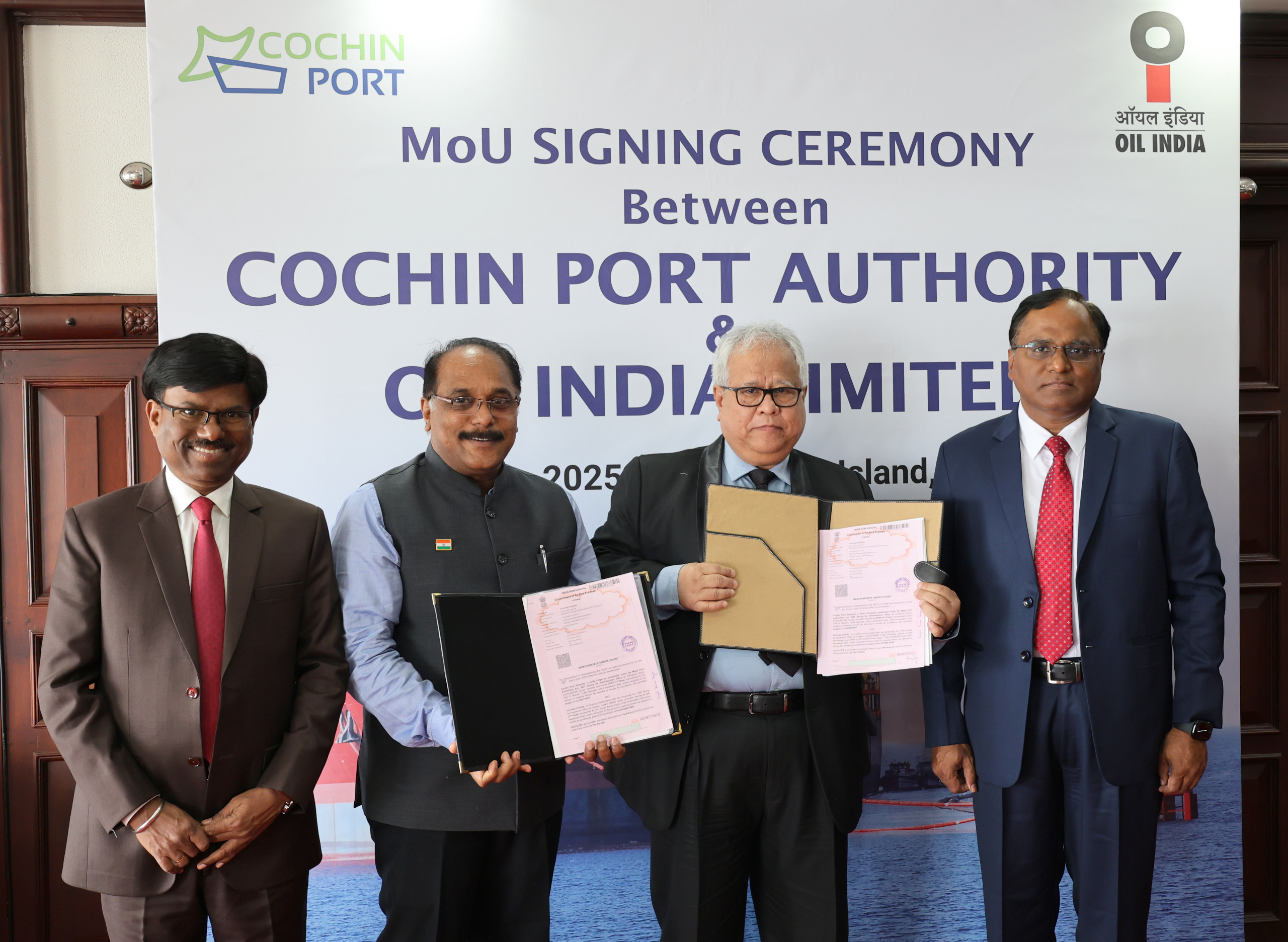
KOCHI : The Cochin Port Authority (CoPA) and Oil India Limited (OIL) signed a memorandum of understanding (MoU) for supporting offshore oil exploration of OIL in the Kerala-Konkan Basin.

The MoU was signed in the presence of B. Kasiviswanathan, Chairperson, CoPA and Ranjit Rath, Chairperson and Managing Director, OIL, by Vipin R. Menoth, traffic manager, CoPA, and Sanjib Kumar Gogoi, CGM, OIL. The agreement will provide critical logistical support for OIL’s upcoming drilling operations, scheduled to commence later this year.

GtPjhFpWIAAZ2kl CoPA & OIL sign MoU for offshore oil exploration support base at Kochi

The shore base facility will come up at the port, with provisions for a warehouse, a dry bulk handling plant, and an exclusive jetty, and will support offshore vessels operating round the clock. The project aims to streamline offshore support operations by offering berthing, refuelling, dry bulk transfer, potable water, and shore power facilities for OIL’s vessels, according to a communication.

Blue Dart and DHL eCommerce releases E-Commerce Trends Report 2025: AI and Social Media reshaping online shopping in India

• Delivery remains the No. 1 conversion killer: 80% of Indian shoppers abandon their carts when preferred delivery options are missing
• A shift in sustainability: 59% of Indian shoppers drop out due to sustainability concerns
• Social commerce takes center stage: 90% of Indian consumers expect to shop primarily through social media by 2030 — bypassing traditional websites entirely
• AI becomes essential: 89% of Indian shoppers want AI-driven shopping tools — from virtual try-ons to voice search — to guide their decisions

MUMBAI : Blue Dart Express Limited, a part of DHL eCommerce and South Asia’s premier express air and integrated transportation & distribution company, has announced the release of the E-Commerce Trends Report 2025, drawing on insights from online shoppers across India. This year’s study spans eight chapters, featuring six shopper types and four generational segments, all highlighting how evolving consumer expectations are reshaping the future of online retail. While the report covers everything from cross-border purchasing to shoppers’ views on sale days like Black Friday, four findings stand out in particular: the way AI and social commerce are transforming online shopping, the essential role that delivery plays in cart conversion, and sustainability shaping loyalty.
“In India, consumer expectations are undergoing a profound transformation. Speed, flexibility, and frictionless experiences are at the core of customer loyalty. Shoppers expect real-time updates, quick delivery, and hassle-free returns. Despite significant advancements in digital shopping, it’s the fundamentals of delivery and returns that continue to define the customer journey. Convenience, choice, and control are non-negotiable as many Indian consumers abandon their purchase if their preferred delivery option isn’t available. As we look ahead, businesses must embrace a future shaped by innovation, transparency, and purpose-led strategies where technology not only enables convenience but also champions sustainability, accessibility, and deeper consumer engagement.” said Balfour Manuel, Managing Director at Blue Dart.
Shopping powered by AI: Smarter Journeys, Higher Expectations
Advancements in generative AI are ushering in the next industrial revolution. But how will AI impact online shopping? Blue Dart and DHL’s latest e-commerce trend report reveals that AI is one of the most highly anticipated and demanded innovations among consumers, with 89% of shoppers in India wanting retailers to offer AI-powered shopping features. Virtual try-ons, AI-powered shopping assistants, and voice-enabled product search top the list of features consumers actively want to use. Shopping via voice commands is already on the rise, with 64% of Indian shoppers making purchases hands-free. As digital expectations rise, so does the demand for intuitive, tech-enabled shopping journeys that blend utility with delight.

Social Commerce Becomes the New E-Commerce
The traditional e-commerce website is increasingly being replaced — or bypassed — by social platforms. Consumers are turning to apps like Instagram and Facebook not just for discovery, but for purchase. 84% Indian shoppers say they have already made a purchase via social media, and 90% expects these platforms to become their primary shopping destination by 2030.

The power of influence also plays a critical role: 93% of Indian shoppers say viral trends and social buzz influence their buying decisions. Instagram (70%), Facebook (69%) and YouTube (66%) in particular are driving change in India, with online shoppers primarily reporting that they buy through these apps. Additionally, over 50% expect to buy even more via these platforms in the next five years. This shift signals a major transformation in how and where brands need to engage with their audiences, and calls for seamless, mobile-native experiences built for in-app conversion.

Delivery and Returns: The Ultimate Conversion Drivers
While new technologies continue to transform the digital shopping experience, it’s the fundamentals of delivery and returns that remain the biggest drivers of cart abandonment. Shoppers aren’t willing to compromise when it comes to convenience, flexibility, and control. In fact, 80% of Indian consumers say they will abandon their purchase if their preferred delivery option isn’t available. Just as critically, 81% will leave if the return process doesn’t match their expectations. Trust also plays a major role, with 54% of Indian shoppers reporting that they will not buy from a retailer if they don’t trust the delivery and returns provider. These expectations emphasize the importance of transparent, customer-centric logistics strategies — not just as an operational concern, but as a core part of the conversion funnel.

Sustainability and the Circular Economy: From Buzzword to Bottom-Line Impact
Sustainability has evolved from a brand differentiator into a core consumer demand. In India, 82% of shoppers now consider sustainability when making online purchases. This goes beyond packaging or shipping — 59% shoppers have actively abandoned their carts due to sustainability concerns.

Indian consumers are also embracing more circular models of consumption, with 52% opting for pre-owned or refurbished goods, motivated by both environmental values and cost efficiency. Additionally, 81% of Indian shoppers express willingness to participate in recycling or buy-back programs offered by retailers. These behaviors point to a growing expectation that brands will not only reduce their footprint, but actively empower consumers to shop more sustainably.

As we look towards 2030, these insights provide a clear roadmap for retailers aiming to capture the attention of today’s diverse shopper demographics. By embracing technology, prioritizing sustainability, and understanding the evolving preferences of consumers, businesses can transform challenges into opportunities.

US steel tariffs on home appliances alarm Samsung and LG

SEOUL : The Trump administration’s expansion of steel tariffs to include household appliances with steel components has raised significant concerns for South Korean electronics giants Samsung Electronics and LG Electronics, according to reports by Korea Herald.

The US Department of Commerce announced on Thursday that a 50 per cent steel duty will apply to “steel-derivative products” starting June 23. This includes a wide range of appliances such as refrigerator-freezers, dryers, washing machines, dishwashers, freezers, cooking stoves, ranges, ovens, food waste disposals, and welded wire racks.

The tariffs will be calculated based on the value of the steel content in each imported item, meaning higher steel content will result in higher duties.

This decision follows a week after President Trump increased tariffs on imported steel and aluminium to 50 per cent, up from the initial 25 per cent announced in March.

The new tariffs are expected to heavily impact Samsung and LG, as they sell a substantial volume of home appliances in the U.S. market.

Although both companies have U.S. manufacturing facilities (Samsung in Newberry, South Carolina, and LG in Clarksville, Tennessee, both established during Trump’s first term in response to his tariff policies), a significant portion of their appliances sold in the U.S. are manufactured overseas, including in South Korea and Mexico. Much of the steel used is also sourced internationally.

Both Samsung and LG are considering shifting some production in Mexico from their U.S. plants in light of these escalated tariffs.

Analysts warn that these tariffs could increase production costs, which companies may be forced to pass on to consumers through higher prices.

With Samsung and LG collectively holding approximately 40 percent of the U.S. home appliance market, according to Traqline, price increases could undermine their competitiveness and reduce sales in the crucial US market.

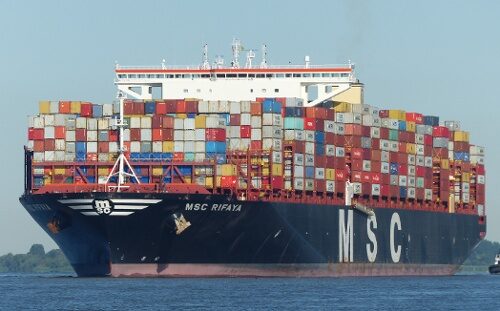
The largest container ship ever arrives at the Port of Durban

DURBAN : The largest container ship to ever dock at the Port of Durban has done so in a historic accomplishment. Unexpectedly, the 399.99-meter MSC Rifaya showed up to perform urgent repairs. In a statement released on Tuesday, state-owned ports and logistics firm Transnet said the accomplishment highlights the port’s infrastructure and capacity to handle big ships, enhancing its standing as a significant participant in the world’s marine sector.

With a capacity of 19 437 TEUs (twenty-foot equivalent units), the MSC Riyafa arrived thanks to a meticulously planned four-tug operation that ensured the ship was navigated safely. According to the logistics company, the accomplishment shows its capacity and preparedness to manage the growing demand for large vessels as well as its dedication to constantly enhancing its services and infrastructure to satisfy the changing demands of the marine sector.

Maritime war risk premium could rise if Israel-Iran conflict escalates

LONDON : Maritime war risk premium in the Middle East could increase if the Israel-Iran conflict escalates following the latest Israeli attacks, market participants said June 13.

“It all depends on how sustained the conflict is. More than a year ago, there was a barrage of [Israel-Iran] air attacks for a short while, which did not sustain,” a chartering executive in Tokyo said.

The additional war risk premium is currently around 0.05%-0.07% of a ship’s hull and machinery value for spending seven days in the Persian Gulf and has remained largely unchanged for the past 18 months, chartering sources in East Asia said.

One charterer said naphtha importers in North Asia are already paying up to $50,000 per voyage from the Persian Gulf due to the region’s designation as a high-risk area by a consortium of maritime insurers for the past six years.

The HRA designation followed a series of attacks on oil tankers. In June 2019, the LR2 tanker Front Altair was attacked while transiting the Gulf of Oman.

Since then, incidents in the region have been few and far between, but due to risk perceptions, the AWRP has remained a significant source of revenue for maritime insurers.

However, sources said insurers offer hefty discounts through bundled packages for owners with sizeable fleets — either by allowing transits longer than seven days or by combining the transit periods of two or more ships in the same fleet to lower costs.

“Discounts or no discounts, overall delivered cost can now increase,” a VLCC broker said, noting that these expenses are passed on to charterers, meaning any retaliation by Iran would drive up cargo costs, insurance charges and freight rates.

Tanker freight rates have slumped so far in June, with the Platts-assessed benchmark LR2 Persian Gulf-North Asia route down $3.50 on June 13. Platts is part of S&P Global Commodity Insights.

Market participants anticipate further downside following Israel’s latest strike on Iran. Meanwhile, earnings for dirty tankers have been so abysmal that some operators have switched to transporting clean cargoes.

A common refrain among Asian shipping market participants is that geopolitics may rescue owners by supporting freight rates, but at the cost of increased risks to their assets and crew.

Red Sea

The latest escalation of conflict in the Middle East comes just as owners were being encouraged to increase cargo shipments through the Suez Canal to signal easing tensions.

Several distillate cargoes from Sikka — a port on India’s west coast — have transited the Suez Canal to save voyage time despite high delivery costs. Some owners in the Mediterranean, such as those of Greek and Persian Gulf origin, regularly route cargoes through the Red Sea, earning a significant freight premium while charterers also cover the AWRP, sources said.

If the conflict in the Persian Gulf escalates further, it could also dampen efforts to restore normalcy in the Red Sea, sources added.

Although voyages for refined products from the Persian Gulf to Europe via the Red Sea are up to two weeks shorter than those around the Cape of Good Hope, freight rates remain similar because many owners avoid the Red Sea due to perceived risks.

Until recently, the AWRP in the Red Sea was around 0.4%-0.5% of the H&M value for a seven-day transit, sources said.

A fixed charge of $150,000 — paid by charterers in addition to freight — applies when cargoes are moved on LR tankers along Persian Gulf-Africa route, covering costs like deploying armed guards.

Naphtha deliveries on the Red Sea-North Asia LR1 route currently command a w20 premium over Persian Gulf loadings, down from w120 last year, according to Platts data.

Meanwhile, the premium for Red Sea-Singapore gasoline trade on MR tankers has fallen to w130 from w110 since the end of 2024, the data showed.

Over the same period, the hefty $600,000 premium for crossing from the Red Sea into the Persian Gulf versus the Red Sea-Europe route has reversed into a discount of a similar amount, according to the data.

A shift in the premium is likely if freight rates for Persian Gulf and Red Sea loadings rise, a tanker broker who tracks such deals said.

Source : Platts