Home Blog Page 807

Centre reduces Basic Custom duty (BCD) on major imported Crude edible Oils from 20% to 10%

NEW DELHI : Centre has reduced the Basic Customs Duty (BCD) on crude edible oils namely crude sunflower, soyabean, and palm oils has been reduced from 20% to 10% resulting in the import duty differential between crude and refined edible oils from 8.75% to 19.25%.

This adjustment aims to address the escalating edible oil prices resulting from the September 2024 duty hike and concurrent increases in international market prices. An advisory has been issued to edible oil associations and industry stakeholders to ensure that the full benefit of the reduced duty is passed on to consumers.

19.25% duty differential between crude and refined oils helps to encourage domestic refining capacity utilization and reduce imports of refined oils.

Import duty on edible oils is one of the important factors that impacted landed cost of edible oils and thereby domestic prices. By lowering the import duty on crude oils, the government aims to reduce the landed cost and retail prices of edible oils, providing relief to consumers and helping to cool overall inflation. The reduced duty will also encourage domestic refining and maintain fair compensation for farmers.

The revised duty structure will discourage the import of refined Palmolein and redirect demand towards Crude Edible Oils Especially Crude Palm Oil, thereby strengthening and revitalizing the domestic refining sector. This significant policy intervention not only ensures a level playing field for domestic refiners but also contributes to the stabilization of edible oil prices for Indian consumers.

A meeting with leading Edible Oil Industry Associations and industry was held under the Chairmanship of Secretary, Department of Food and Public Distribution, Government of India, and advisory was issued to them to pass on the benefits from this duty reduction on to consumers. Industry stakeholders are expected to adjust the Price to Distributors (PTD) and the Maximum Retail Price (MRP) in accordance with the lower landed costs with immediate effect. The Associations have been requested   to advise their members to implement immediate price reductions and share the updated brand-wise MRP sheets with the Department on a weekly basis. DFPD shared the format with edible oil industry for sharing the reduced MRP and PTD data.

The timely transmission of this benefit to the supply chain is imperative to ensure that consumers experience a corresponding decrease in retail prices.

This decision comes after a detailed review of the sharp rise in edible oil prices following last year’s duty hike. The increase led to significant inflationary pressure on consumers, with retail edible oil prices soaring and contributing to rising food inflation.

Simplilearn partners with SP Jain School of Global Management to launch Digital Supply Chain Management Certification

BENGALURU : Simplilearn, a global leader in digital upskilling, announced its strategic partnership with SP Jain School of Global Management to offer the Digital Supply Chain Management Certification. This industry-aligned program equips professionals with cutting-edge skills to navigate the rapidly evolving landscape of digital supply chains, addressing the growing market demand for experts who can leverage emerging technologies to optimize operations. The program combines theoretical foundations with practical applications, enabling learners to implement AI-driven automation, real-time analytics, and cloud-based solutions in global supply chain ecosystems.

The digital supply chain market size was valued at USD 5.4 billion in 2023 and is predicted to reach USD 12.8 billion by 2030 with a CAGR of 13.0% from 2024-2030. This surge is fueled by increasing globalization and the need for advanced technologies to manage complex, interconnected logistics networks. As businesses digitize their supply chains to gain real-time visibility, operational efficiency, and resilience, the demand for skilled professionals with expertise in digital logistics and intelligent supply chain systems is accelerating. This evolving landscape highlights the critical need for upskilling through specialized programs. The Digital Supply Chain Management Certification equips professionals with industry-relevant capabilities, including integrating AI, IoT, and data-driven decision-making into supply chain processes, preparing them to meet the rising expectations of modern enterprises.

This six-month intensive certification delivers a comprehensive educational experience through 80+ hours of live instructor-led training from industry experts, five exclusive industry sessions, and academia across multiple modules. The program’s distinctive feature is its integration of theoretical foundations with practical applications through 25+ industry case studies and capstone projects. Learners will gain hands-on experience with leading industry tools such as Frepple, Oddo, and Openboxes, ensuring they develop both strategic insight and technical proficiency essential for today’s competitive business landscape.

Speaking about the program, Mr. Kashyap Dalal, Co-founder and CEO of Simplilearn, said, “The supply chain industry is experiencing an unprecedented digital transformation, creating immense opportunities for professionals with the right skill set. Our collaboration with SP Jain School of Global Management to launch the Digital Supply Chain Management Certification reflects our commitment to bridging the critical skills gap in this rapidly evolving field. By combining SP Jain’s academic excellence with Simplilearn’s digital expertise, we’ve created a program that equips professionals with theoretical knowledge and practical skills to implement AI-driven automation, data analytics, and cloud solutions within their organizations.”

The program is designed for professionals with 3+ years of experience in supply chain or a bachelor’s degree holder, with a preference for candidates skilled in MS Excel and basic statistics/analytics. The program welcomes applicants from both programming and non-programming backgrounds.

Regarding the partnership with Simplilearn, SP Jain School of Global Management said, “We are delighted to partner with Simplilearn for this Digital Supply Chain Management Certification. As businesses navigate increasingly complex global supply chains, the demand for professionals who can leverage digital technologies to enhance efficiency, reduce costs, and optimize decision-making continues to grow exponentially.”

Upon successful completion, learners will receive certificates from SP Jain School of Global Management and Simplilearn, positioning them for accelerated career growth in digital supply chain management.

About SP Jain School of Global Management

SP Jain School of Global Management is an Australian business school that provides modern, relevant, and practical global business education with campuses in the dynamic business hubs of Dubai, Mumbai, Singapore, and Sydney. SP Jain is renowned for offering multi-city undergraduate and postgraduate programs. For its flagship Global MBA program, the School has been ranked by reputed international publications such as Forbes, Times Higher Education—Wall Street Journal, The Economist, and Financial Times. Globally intelligent and culturally agile, an SP Jain graduate is empowered with the skills and confidence to drive decisions and take on the global challenges of the 21st century.

About Simplilearn

Founded in 2010 and based in Plano, Texas, and Bangalore, India, Simplilearn, a Blackstone portfolio company, is a global leader in digital upskilling, enabling learners across the globe and offering access to world-class training to individuals and businesses worldwide. Simplilearn offers 1,500+ live classes each month across 150+ countries, impacting over 8 million learners globally. The programs are designed and delivered with world-renowned universities, top corporations, and leading industry bodies via live online classes featuring top industry practitioners, sought-after trainers, and global leaders. From college students and early career professionals to managers, executives, small businesses, and big corporations, Simplilearn’s role-based, skill-focused, industry-recognized, and globally relevant training programs are ideal upskilling solutions for diverse career or business goals.

Panama Canal sets new record for Container Ship Traffic in 2025

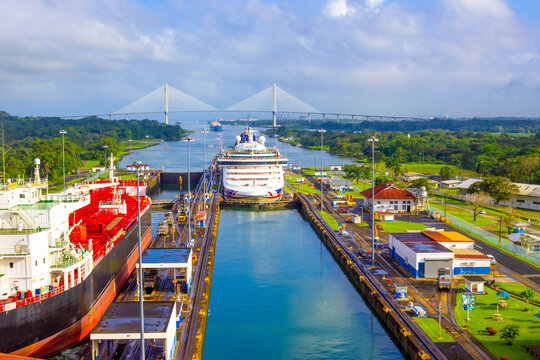
PANAMA CITY : Container ship traffic through the Panama Canal reached a new milestone in the first five months of 2025, with 1,200 transits recorded in both directions, according to data from Alphaliner.

This marks a 10.2% increase compared to the same period in 2024 and a 4.1% rise over the previous record set in 2022.

The growth has been largely fueled by a sharp increase in Neo Sub-Panamax vessel activity—ships with capacities between 7,500 and 10,000 TEUs—which made up more than 25% of all container ship transits since January, reflecting a year-on-year surge of 30.2%.

The increase follows a challenging period for the Panama Canal, which faced severe drought conditions in 2023, leading to significant restrictions and a backlog of 154 vessels by August 2023, with wait times averaging 21 days.

The Panama Canal Authority (ACP) implemented water conservation measures, reducing daily transits and prioritizing bookings for larger vessels to optimize water usage.

By November 2024, the ACP reported a financial windfall of $400 million to $450 million in the fourth quarter, attributed to a fully booked system that increased average vessel size, allowing more containers to pass with fewer transits. Improved water levels in 2025, particularly at Gatun and Alajuela Lakes, have supported the rebound, enabling the canal to operate at near-normal capacity.

In contrast, the Suez Canal has seen a significant decline in container ship traffic, with transits of vessels larger than 4,000 TEU becoming rare and Sub-Panamax segment crossings dropping below 100 in May 2025, the lowest since July 2024.

In early 2025, U.S. President Donald Trump threatened to “take back” the Panama Canal, citing concerns over Chinese influence. This coincided with a $19 billion deal involving Mediterranean Shipping Company (MSC) and BlackRock to acquire two key Panama Canal ports, Balboa and Cristobal, from Hong Kong-based CK Hutchison. The deal, part of a larger $23 billion offer for 45 ports worldwide, remains under review and has drawn criticism from China for potential antitrust issues.

Panama Canal Authority (ACP) is a Panamanian government agency established in 1997 to manage, operate, and maintain the Panama Canal following its transfer from U.S. control in 1999. The ACP oversees canal operations, including lock maintenance, water management, and transit scheduling. It generates significant revenue, with projections of over $6 billion annually by 2025, driven by global trade demand.

New analysis is a wakeup call for shipping industry’s leaders to get serious on voluntary climate standards, as time is running out

LONDON : A new study by UCL Energy Institute Shipping and Oceans Research Group, Wageningen University & Research, and University of East Anglia, revealed that private voluntary standards, such as the Poseidon Principles and Climate Bonds Initiative, in the shipping sector are becoming more ambitious, transparent, and reliable but still fall short on ambition and transparency, needed to meaningfully support the shipping sector’s decarbonisation in a crucial phase.

Published in the Marine Policy journal, the study titled “Revisiting the Role of Private Voluntary Standards in Decarbonising Shipping,” analysed five post-2018 private sector standards – Poseidon Principles for Finance, Poseidon Principles for Marine Insurance, Sea Cargo Charter, Science Based Targets Initiative for Shipping, and the Climate Bonds Initiative. Using content analysis and interviews, the study found notable improvements compared to earlier initiatives. However, no single initiative scored highly on the three evaluation criteria – ambition, transparency and reliability, thereby limiting their overall effectiveness as enablers of the transition, a finding that is common across many voluntary private standards in other sectors analysed in the paper.

Dr Nishatabbas Rehmatulla, Principal Research Fellow at the UCL Energy Institute, lead author of the study warning: “Private standards are an essential tool during the ‘emergence phase’ of shipping’s transition but they must move beyond minimum compliance to truly lead. The analysis should serve as a wakeup call for the standards and their participants to step up their efforts to realise their relevance and true transformative potential in a quickly closing window of shipping’s transition that will soon be followed by a regulatory driven diffusion phase.”

Improvement in ambition but not leading the charge: Newer standards show improved ambition compared to pre-2018 efforts, with stronger commitments and broader emissions scopes, for example many include all relevant GHG emissions (CO2, N2O, CH4) on a well-to-wake basis (emissions from fuel production and use) but these mostly mirror rather than exceed IMO targets, falling short of the Paris Agreement’s 1.5°C pathway which requires steeper reductions sooner. This shows that these initiatives are still failing to respond to wider calls for improvement, for example from the UN’s High-Level Expert Group on the Net-Zero Emissions Commitments of Non-State Entities guidance on integrity. Interviews shed some light on why such a gap exists, which includes the trade-off between ambition and number of participants or coverage of emissions, the latter often prioritised in some standards to create ‘safety in numbers’. The gap widens further when comparing stated ambitions to actual action – content analysis reveals a significant gap between participants’ stated ambitions and their actual performance.

Lack of granular transparency limits the transformative potential: Relative to many older initiatives (pre-2018),many of the new standards show improved transparency, for example through the public disclosure of aggregated climate alignment scores by participating financial institutions, marine insurers, and charterers. However a major gap remains, as no private standard publishes individual data for vessels and aggregated emissions at the company level, despite having the capability, limiting comprehensive understanding, accountability and the ability of non-participants to use their published data to make informed commercial choices. Generally, this means these standards are failing to plug the gap in regulations such as the IMO Data Collection System (DCS) or EU Monitoring Reporting and Verification (MRV).

Room for improvement in reliability of the standards: Newer standards predominantly use more reliable metrics like the Annual Efficiency Ratio (AER) and Energy Efficiency Operational Indicator (EEOI) for estimating emissions from operations, moving away from less reliable design-based metrics. Many leverage data from the IMO DCS or EU MRV, which involve third-party verification, although the stringency of verification varies between the two, but some standards also allow or rely on self-reported data. While improved, some initiatives still primarily use AER, which is a less reliable emissions metric than EEOI, as it doesn’t account for actual cargo carried.

Dr Judith van Leeuwen, Associate Professor at Wageningen University, said: “The urgency for the maritime industry to decarbonize is greater than ever. Voluntary standard initiatives are an important means to get together proactive leaders within the maritime supply chain that seek to overcome major technological, financial, and political obstacles in transforming maritime transport to a climate-neutral future. This study is therefore very timely and underscores the role of voluntary standard initiatives and what they need to do to make most impact.”

Interviews revealed the key drivers and motivations for improvement across the criteria. These included customer or stakeholder value chain pressure e.g. investors, to be more environmentally friendly and demonstrate action on overarching climate commitments, and the need for a shared reporting methodology. The involvement of neutral facilitators like the Global Maritime Forum, diverse stakeholders including financial actors, charterers, and ship owners, plus academic input has helped improve standards’ ambition and build trust. While it is challenging to attribute improvements to any single factor, the research suggests that landscape changes combined with clear policy intentions, can be a catalyst for private sector action and standards.

These findings come at a time when the Climate Action in Shipping report by UCL Energy Institute Shipping and Oceans Research Group is already showing the sector is ‘off track’ to meet its 5% zero-emission fuel target by 2030, particularly in ‘finance’ and ‘demand’ themes. With the Revised IMO GHG strategy and the policy measures recently approved in IMO’s Net Zero Framework, set for entry into force in 2027, private standards that are only in line with IMO compliance, will struggle to remain relevant without reform and improvement. For meaningful impact, private standards must rapidly improve in areas where they’ve fallen short – especially in setting higher ambition levels and enhancing transparency to stimulate greater responsibility and effectiveness in mitigating climate risk.

Link to full report: Marine Policy, Volume 179, 2025, DOI: 10.1016/j.marpol.2025.106707

About UCL Energy Institute

The UCL Energy Institute hosts a world leading research group which aims to accelerate the transition to an equitable and sustainable energy and trade system within the context of the ocean. The research group’s multi-disciplinary work on the shipping and ocean system leverages advanced data analytics, cutting-edge modelling, and rigorous research methods, providing crucial insights for decision-makers in both policy and industry. The group focuses on three core areas: analysing big data to understand drivers of historical emissions and wider environmental impacts, developing models and frameworks to explore energy and trade transition to a zero emissions future, and conducting social science research to examine the policy and commercial structures that enable the decarbonisation of the shipping sector. For more information visit www.shippingandoceans.com

UK forwarders agree to support Ethiopia’s logistics sector

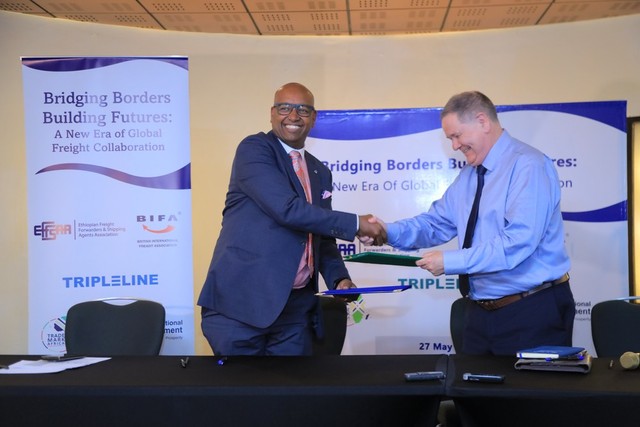
ADDIS ABABA : The British International Freight Association (BIFA) has signed a Memorandum of Understanding (MoU) with the Ethiopian Freight Forwarders and Shipping Agents Association (EFFSAA) aimed at helping to modern and enhance the competitiveness of Ethiopia’s freight forwarding and logistics sector. 

The signing ceremony took place at the Hilton Hotel in Addis Ababa and marked a significant milestone in international cooperation for logistics development in Ethiopia.

The MoU outlines a strategic partnership between BIFA and EFFSAA.

Key areas of collaboration include the development of EFFSAA’s institutional capacity and value as a trade association; providing advisory support on technical and commercial matters for both the public and private sector; implementation of specialised training programmes for EFFSAA members; as well as facilitating the exchange of resources and knowledge between the two associations and their members.

Recently, senior representatives from BIFA visited Ethiopia to meet with key public and private stakeholders. Their visit culminated in an official signing ceremony attended by high-level government officials, development partners, and industry stakeholders, who underscored the critical role this partnership will play in addressing Ethiopia’s logistics challenges and aligning the sector with global best practices.

Dawit Woubishet, EFFSAA’s president said: “EFFSAA’s mission is to build a globally competitive logistics sector that supports Ethiopia’s economic growth by improving workforce skills, encouraging innovation, and creating international linkages.

“The agreement will help Ethiopia’s logistics sector gain valuable experience from a well-established and well-respected trade association, that also has a leading role within the global body for freight forwarding associations, FIATA.”

Steve Parker, BIFA director general says: “I am pleased that recognition of BIFA’s expertise in numerous areas has led to this MoU, which will see both parties working together on the transformation that is taking place in the Ethiopian logistics sector.

“The agreement will help and benefit Ethiopians in the sector, and hopefully lead to some new lines of business for members of both trade associations.”

Baltic Index rebounds to Seven-Month Peak on Higher Rates across Vessel Segments

LONDON : The Baltic Exchange’s Dry Bulk Sea Freight index, which tracks rates for vessels transporting dry commodities, rebounded to its highest level in nearly seven months on higher rates across vessel segments.

The main index, which monitors rates for capesize, panamax and supramax shipping vessels, was up 58 points, or 3.5%, at 1,738, its highest since November 18.

The capesize index rose 140 points, or 4.7%, to 3,096, a near seven-month high.

Average daily earnings for capesize vessels, which typically transport 150,000-ton cargoes such as iron ore and coal, climbed $1,160 to $25,679.

Iron ore futures prices rebounded, as signs of progress in trade talks between the world’s two largest economies bolstered sentiment, although early uncertainty over a final agreement and softening steel demand capped further gains.

President Donald Trump announced that the U.S. deal with China is done, with Beijing to supply magnets and rare earth minerals while the U.S. will allow Chinese students in its colleges and universities.

The panamax index firmed 37 points, or 2.9%, to 1,337, its highest level since May 12.

Average daily earnings for panamax vessels, which usually carry 60,000-70,000 tons of coal or grain, added $338 to $12,036.

Among smaller vessels, the supramax index snapped a six-session losing streak, gaining 3 points to 922.

Source: Reuters

JNPA posts 17% surge in Container Traffic, Marks Foundation Day with Sustainability, Community Initiatives

NAVI MUMBAI : Jawaharlal Nehru Port Authority (JNPA), India’s largest container gateway, reported a robust 16.97% year-on-year growth in container traffic for May 2025, underscoring the port’s growing role in global and domestic supply chains.

The strong performance came as JNPA marked its 36th Foundation Day on May 26, 2025, celebrating more than three decades of operations at the forefront of India’s maritime logistics sector.

As port marked its 36th Foundation Day. Officials and employees gathered for a ceremonial pooja to commemorate the occasion, reflecting on more than three decades of operations and future aspirations.

In addition to operational milestones, JNPA also reinforced its commitment to environmental sustainability and community engagement. In alignment with World Environment Day, the port launched a mega tree plantation drive across its premises and organized a Harit Yoga session to promote health and environmental consciousness among the port community.

Community engagement remained front and center during the week. The port hosted its 4th edition of the Mega Blood Donation Camp, held at the JNPA Special Economic Zone (SEZ). The initiative, organized in collaboration with NSBPPL (DP World), SEEPZ SEZ, and Lions Club Millennium, witnessed strong participation from port employees, terminal operators, and local stakeholders — reflecting JNPA’s continued focus on corporate social responsibility.

Drift and oil spill advisory issued after fire on container ship off Kerala coast

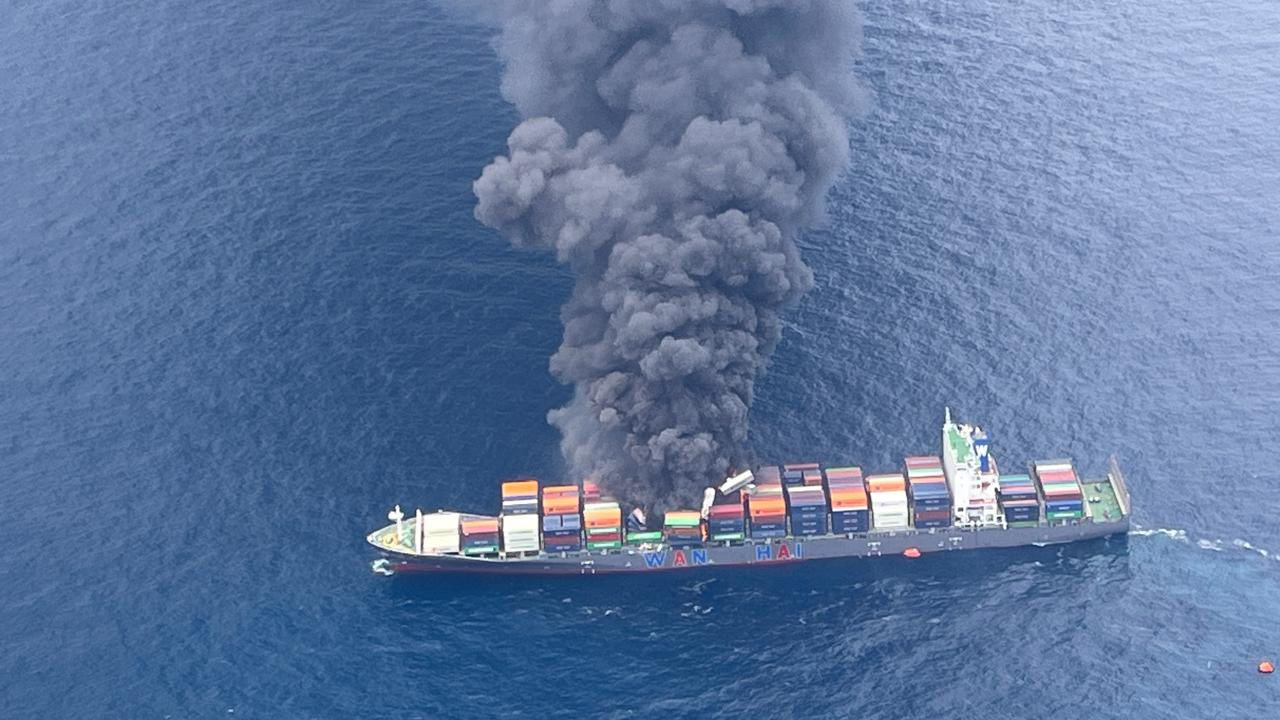
KOCHI : The Indian National Centre for Ocean Information Services (INCOIS) has issued advisories warning of drifting containers and a potential oil spill following a major fire on the Singapore-flagged cargo vessel Wan Hai 503.

The ship caught fire off the Kerala coast on 9 June.

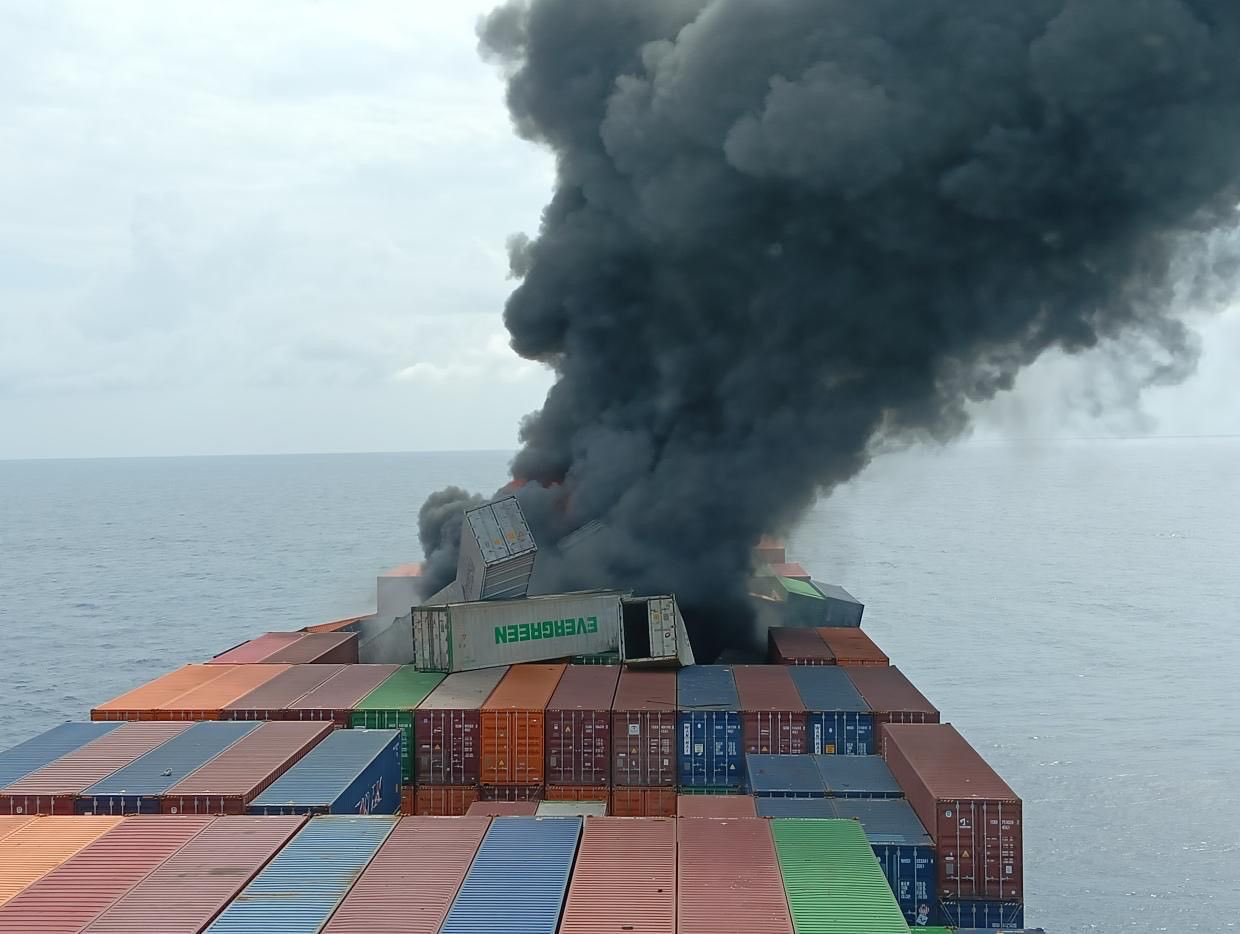
The ship, which was en route to Nhava Sheva, Mumbai from Colombo, experienced an explosion in one of its containers, sparking a massive onboard fire while sailing roughly 70 nautical miles off Kozhikode. The vessel is currently adrift.

In response, INCOIS activated its Search and Rescue Aid Tool (SARAT) to track possible drift patterns of containers, debris, or people who may have gone overboard.

According to the latest simulations, there is a 70–80 per cent probability that drifting objects may move south-southeastward from the incident site over the next three days.

“Simulations show that the containers are likely to continue to drift in the ocean for the next three days and might take longer to reach the beach. However, caution is advised about a few containers beaching between Kozhikode and Kochi. The situation is closely monitored and updated drift directions will be provided,” INCOIS said in a statement.

Local authorities have been urged to step up coastal surveillance and prepare communities for possible navigational or shoreline hazards, it said.

In parallel, INCOIS also ran its Oil Spill Trajectory System, which models the movement of a hypothetical 100-ton bunker oil spill from the vessel.

Though the exact quantity of any spillage is still unknown, forecast simulations suggest the oil would drift parallel to the coastline from June 10 through June 13, with continuous monitoring underway.

“At approximately 1600 hours on 12 June, the spill is projected to maintain this trajectory. By 1600 hours on 13 June, the pollutant is expected to have progressed further in parallel direction along the coast,” it said.

The advisory includes visual projections of potential oil movement, showing both floating and beached oil particles.

Source : PTI

Insurers may have to shell out money for cargo involved in 2 ship mishaps

MUMBAI : The two recent ship accidents off the Kerala coast in the last weeks are expected to impact cargo insurance providers. While Indian cargo insurers had some exposure, the vessels involved were container ships carrying goods for multiple owners, which is likely to limit the impact on soft cargo premium rates. However, the vessel owners are expected to face higher costs, with increases anticipated in both hull insurance and protection & indemnity (P&I) premiums.

Both vessels were smaller sized feeder vessels bringing import cargo containers to India, insurance officials said. Indian insurance market may have potential exposure under the marine cargo segment, GIC Re Chairman and MD Ramaswamy Narayanan said.

“On both these vessels the Indian cargo Insurers had exposure but since these were container vessels carrying cargo for multiple owners the likely impact on soft cargo premium rates will be minimal. However, for the vessel owners their hull insurance and P&I premiums will go up,” said Gaurav Agarwal, Vice President, Marine Speciality, Prudent Insurance Brokers. A clear picture of the value of cargo in both the ships are not known.

Indian insurers reported a gross premium underwritten of Rs 5,535 crore in FY2025 in the marine insurance segment. Of this, Rs 3,940 crore was for marine cargo insurance.

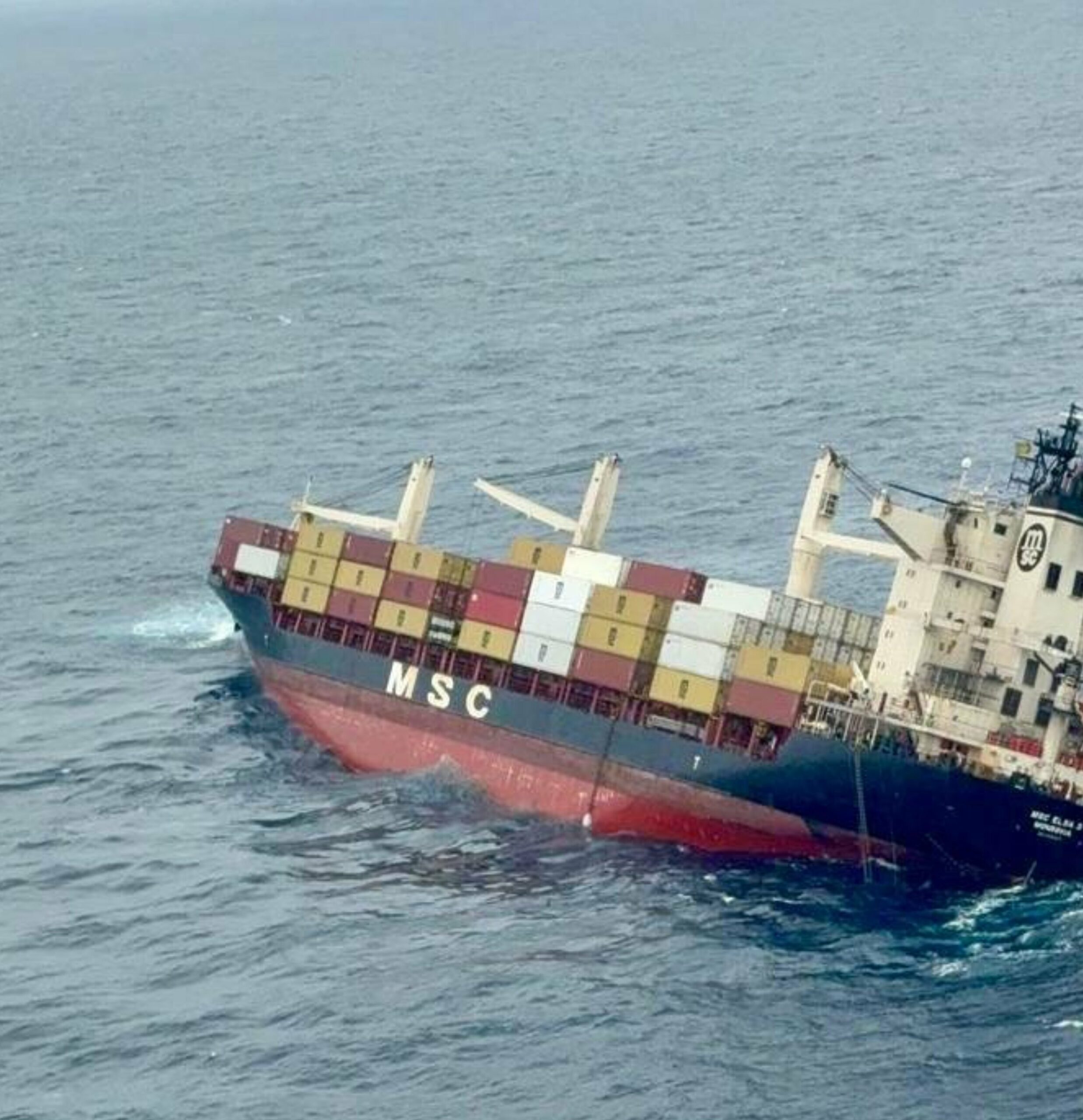
“The first vessel MV Elsa 3 sank due to flooding in her holds and the latest one MV Wan Hai is still on fire with 18 crew members rescued and 4 missing, here the possible cause is dangerous cargo which caught fire which eventually spread due to high winds e.g. lithium batteries for EV’s or hazardous chemicals,” Agarwal said.

However, Indian insurers are unlikely to have any exposure in hull insurance — physical structure of the ships and machinery — of the two ships.

There are three areas of insurance applicable to a cargo vessel — cargo insurance for insuring cargo, hull & machinery for insuring the vessel hull and equipment and protection & indemnity (P&I) which covers all possible liabilities which can happen on account of operating a vessel like pollution caused by oil spill. “We are expecting no major impact on cargo premiums and on the shipping industry,” Agarwal said.

According to GIC Re Chairman, as the vessel in question is foreign flagged, its hull and P&I insurance are not underwritten by Indian insurers. “However, Indian insurance market may have potential exposure under the marine cargo segment. GIC Re, as a reinsurer, does not directly influence primary insurance rates, particularly in cargo lines that are not predominantly reinsurance driven. The impact on direct insurance pricing will be determined by the respective primary insurers,” Narayanan said.

Hari Radhakrishnan, an expert with Insurance Brokers Association of India (IBAI) said the two events are disparate. “One is a capsizing and the other is fire on board. Fires on container ships are not uncommon. The capsized ship reportedly sank due to ballast problem coupled with its structural age. To put the events in perspective, there are, at an average around 2700 shipping casualties and incidents each year. So, a couple of incidents near the Kerala coast does not indicate any pattern of higher casualty incidence or higher risk for ships passing through the shipping corridor, which has the potential of impacting marine premiums,” he said.

MV Wan Hai 503, which caught fire between Beypore and Azhikkal ports, off Kerala coast on Monday, was carrying was sailing from Colombo to Mumbai.

MSC ELSA 3, a Liberian container ship, sank off the Kochi coast on May 25 due to flooding, triggering a major environmental threat. The vessel sank with 640 containers, including 13 with dangerous cargo and 12 with calcium carbide. It was also carrying 84.44 MT of diesel and 367.1 MT of furnace oil.

Marine insurance provides coverage for goods, ships, and other transport means against risks like damage, theft, or loss during transit. The policyholder pays a premium based on the value of the shipment and the associated risks. In the case of a covered incident, the insured files a claim, and the insurer compensates for the loss or damage as per the policy terms. Marine insurance can be customized to include coverage for specific routes, cargo types, or additional risks like piracy. This ensures businesses safeguard their financial interests during domestic or international trade.

Source : Indian Express

China thanks India for rescuing crew onboard Singapore-flagged vessel after it caught fire off Kerala coast

KOCHI : Chinese Embassy in India spokesperson Yu Jing on Tuesday expressed gratitude to the Indian Navy and the Mumbai Coast Guard for their prompt and professional rescue of its crew members onboard the Singapore-flagged container ship MV Wan Hai 503, which encountered an onboard explosion and fire 44 nautical miles off Kerala’s Azhikkal.

Chinese and Taiwanese crew members were among onboard MV Wan Hai, Jing said. Chinese Foreign Ministry spokesperson wished for successful search operations and speedy recovery for injured crew members.

She made the statement in response to the post shared by the Indian Coast Guard on X, which mentioned that the Indian Coast Guard responded to the fire incident on the Singapore-flagged MV Wan Hai 503.

Blast onboard Singapore-flagged vessel
Four crew members were reported missing and five injured after an explosion under deck was reported onboard MV WAN HAI 503 while it was on passage from Colombo to Nhava Sheva. Indian Coast Guard ships have been deployed for firefighting and rescue operations.

According to the Indian Coast Guard, four crew members were reported missing following the explosion on Monday, and five others sustained injuries. The vessel was carrying containerised cargo and had a total crew of 22 onboard. CGDO on task was diverted for assessment.

According to the Indian Navy, the vessel carried 22 crew members, including eight Chinese, six Taiwanese, five Myanmarese, and three Indonesian nationals. Following the explosion and escalation of the fire, the crew abandoned the ship. The MV reported an internal container explosion and a major fire onboard.

Quick response by the Indian Coast Guard
Indian Coast Guard units were immediately diverted for assessment and assistance. ICGS Rajdoot off New Mangalore, ICGS Arnvesh off Kochi, and ICGS Sachet off Agatti have been diverted for assistance. In a post on X, the Indian Coast Guard said an ICG aircraft assessed the scene and dropped an air-droppable.

“Quick response by India Coast Guard after explosion on Singapore-flagged MV WAN HAI 503, 130 NM NW of Kerala coast. ICG aircraft assessed the scene & dropped air-droppable. 04 ICG ships diverted for rescue,” Indian Coast Guard posted on X.

Fires and explosions have been reported from mid-ships to the container bay ahead of the accommodation block. The forward-bay fire is under control, but thick smoke continues to be observed.

The vessel is listing approximately 10-15 degrees to port, and additional containers have been reported overboard. Indian Coast Guard ships Samudra Prahari and Sachet are conducting fire-fighting operations and boundary cooling, while ICG ship Samarth and salvors are being deployed from Kochi. Further updates will follow, the Coast Guard PRO added.