Home Blog Page 810

Shantanu Thakur visits Haldia Dock Complex, inspected upcoming projects aimed at enhancing port infrastructure

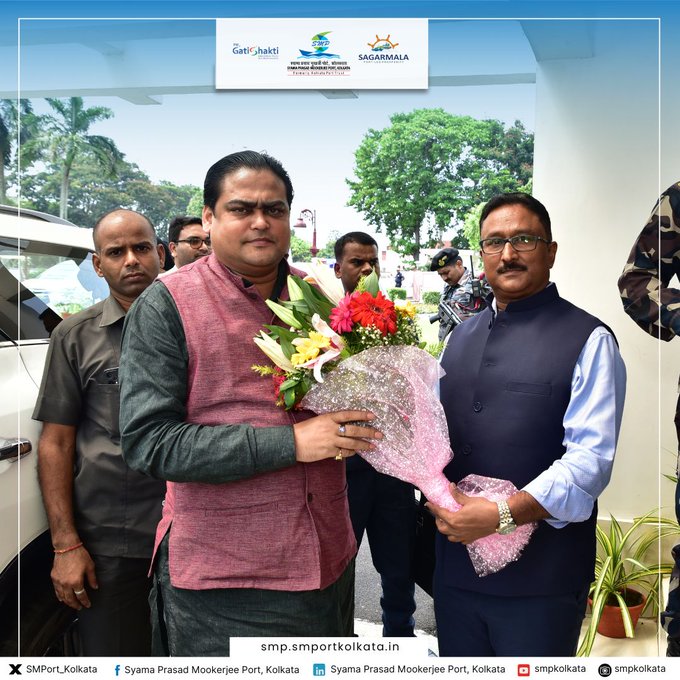
KOLKATA : Hon’ble Minister of State Shipping, Port and Waterways Shri Shantanu Thakur visited Haldia Dock Complex (HDC) of SMP Kolkata. The Minister was warmly welcomed by the Chairman of Syama Prasad Mukerjee Port Kolkata, Shri Rathendra Raman at Haldia Dock Complex of SM Port_Kolkata on Monday June 9, 2025

The Minister taken a close look at bulk cargo operations and key development projects. Hon’ble Minister also inspected upcoming projects aimed at enhancing port infrastructure and efficiency. Hon’ble Minister was joined by Chairman Shri R Raman, Deputy Chairman Shri Rahi Samrat and other senior officials.

Piyush Goyal commences official visit to Switzerland and Sweden to Strengthen Economic and Trade Partnerships

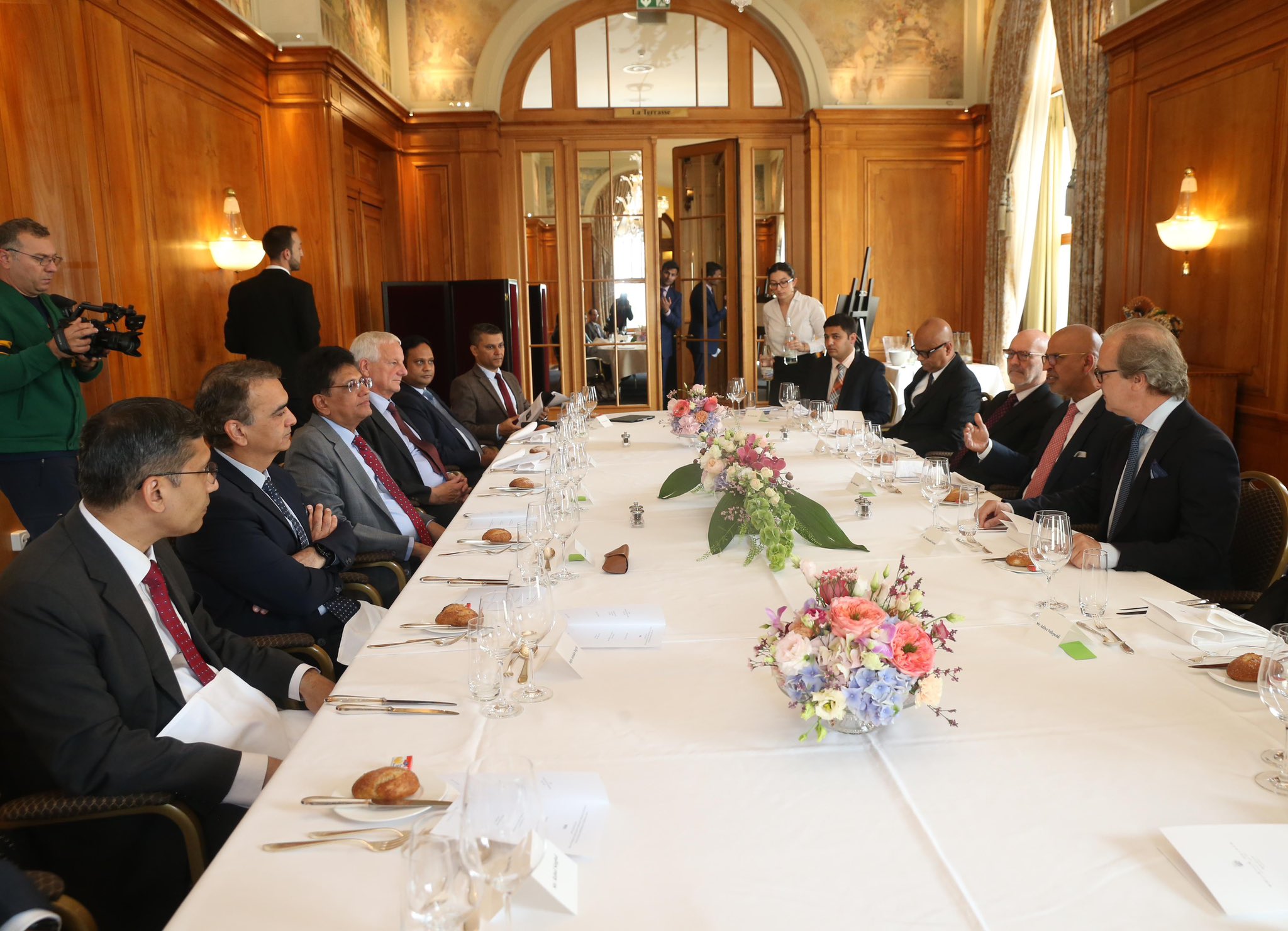
NEW DELHI : Union Minister of Commerce and Industry, Shri Piyush Goyal, commenced his official visit to Switzerland on 9th June 2025, as part of his ongoing visit to Switzerland and Sweden from 9–13 June 2025. This visit underscores India’s steadfast commitment to deepening strategic and economic partnerships with key European nations, advancing robust trade and investment ties, and supporting a shared vision for resilient global growth.

The visit marks a key milestone in enhancing India’s engagement with two of Europe’s most innovative economies. Minister Goyal’s meetings are designed to facilitate high-impact interactions with senior government officials, industry leaders, and business associations in both countries.

GtAYPNEXMAARpcg Piyush Goyal commences official visit to Switzerland and Sweden to Strengthen Economic and Trade Partnerships

The visit commenced in Switzerland today, where the Minister will engage with global CEOs and prominent industry leaders to explore opportunities for strengthening bilateral trade and investment.The itinerary includes focused sectoral meetings with prominent Swiss industry leaders in areas such as Pharma and Life Sciences, and Precision Engineering/Machine Tools/High-tech Manufacturing. The Minister will also connect with the ICAI Zurich Chapter and interact with Indian media. A significant highlight will be meeting with Federal Councillor Guy Parmelin fostering strong trade and diplomatic ties.

A significant component of the high-level visit to Switzerland will include a series of one-on-one meetings with leading Swiss companies. Indian industry representatives will also participate in these crucial engagements, fostering direct dialogue and exploring specific collaboration opportunities. The day will also feature participation in the Swissmem Industry Day and a Business Round Table with the Swiss Mechanical and Electrical (MEM) Industry, where deliberations will focus on the potential and opportunities arising from the India-EFTA Trade and Economic Partnership Agreement (TEPA).

In Sweden, the Minister will co-chair the 21st Session of the Indo-Swedish Joint Commission for Economic, Industrial and Scientific Cooperation (JCEISC) with H.E. Benjamin Dousa, Minister for International Development Cooperation and Foreign Trade

During his visit the Minister is also scheduled to hold bilateral meetings with Mr. Benjamin Dousa, Minister for Foreign Trade, and Mr. Håkan Jevrell, State Secretary to the Minister of Development Cooperation and Foreign Trade. These deliberations are aimed to reinforce the existing robust economic relationship and identify new opportunities for growth, aligning with India’s long-term economic objectives and global partnerships.

Key engagements will involve an India – Sweden Business Leaders’ Round Table and one-on-one meetings with leading Swedish companies. These discussions will cover a wide range of industries where Sweden excels, including advanced manufacturing, innovation, green technologies, and sustainable solutions. Companies like Ericsson, Volvo Group, IKEA, Sandvik, Alfa Laval, and SAAB are among those with a significant presence or interest in enhancing ties with India.

Minister Goyal will also engage with the Indian diaspora and address media interactions, further strengthening the people-to-people connections and communicating the vision for the India-Sweden partnership.

This visit reflects the deepening alignment of strategic priorities between India and its European partners, aiming to translate high-level commitments into sustainable economic partnerships that foster innovation, resilience, and shared growth.

Indian roads will be similar like America in 2 Years : Nitin Gadkari

NEW DELHI : Union Minister of Road, Transport and Highways Shri Nitin Gadkari asserted on Monday that Indian road infrastructure will be comparable to America’s in another two years, backing his argument that his government has ramped up spending on roads and highways over the past decade.

“The question is not about the facelift, it has already changed. You have just watched the news reel, the main picture is yet to start. The projects in the pipeline are progressing rapidly. In another two years, you will be able to see that Indian road infrastructure will be similar to that of America,” Shri Gadkari told in an interview, on being asked when the face of Indian roads can completely change.

“Some people from America met me and said our infrastructure is better than America,” he supplemented. The Minister said that the good roads laid out by his government have reduced logistics costs in India, adding that it will further improve export competitiveness.

“If we raise our exports, it will improve our agricultural sector, manufacturing, and services, among all other sectors,” he said. The minister said the main concern in India was the high logistics cost–16 per cent, against China’s 8 per cent and the US and European countries’ 12 per cent.

“Our roads were not good, our ports were not good. Traffic congestion raised costs,” he said. With improved roads, Mr Gadkari said the BJP-led government brought down the logistics costs to 9 per cent.

“This reduced cost will make us export competitive,” he reiterated.

Speaking of works in the offing, the minister said 25 greenfield expressways, a 3,000 km port connectivity highway, and Rs 1 lakh crore worth of roads connecting religious tourism circuits are underway.

India to collaborate with Central Asian countries for exploration of rare earth, critical minerals

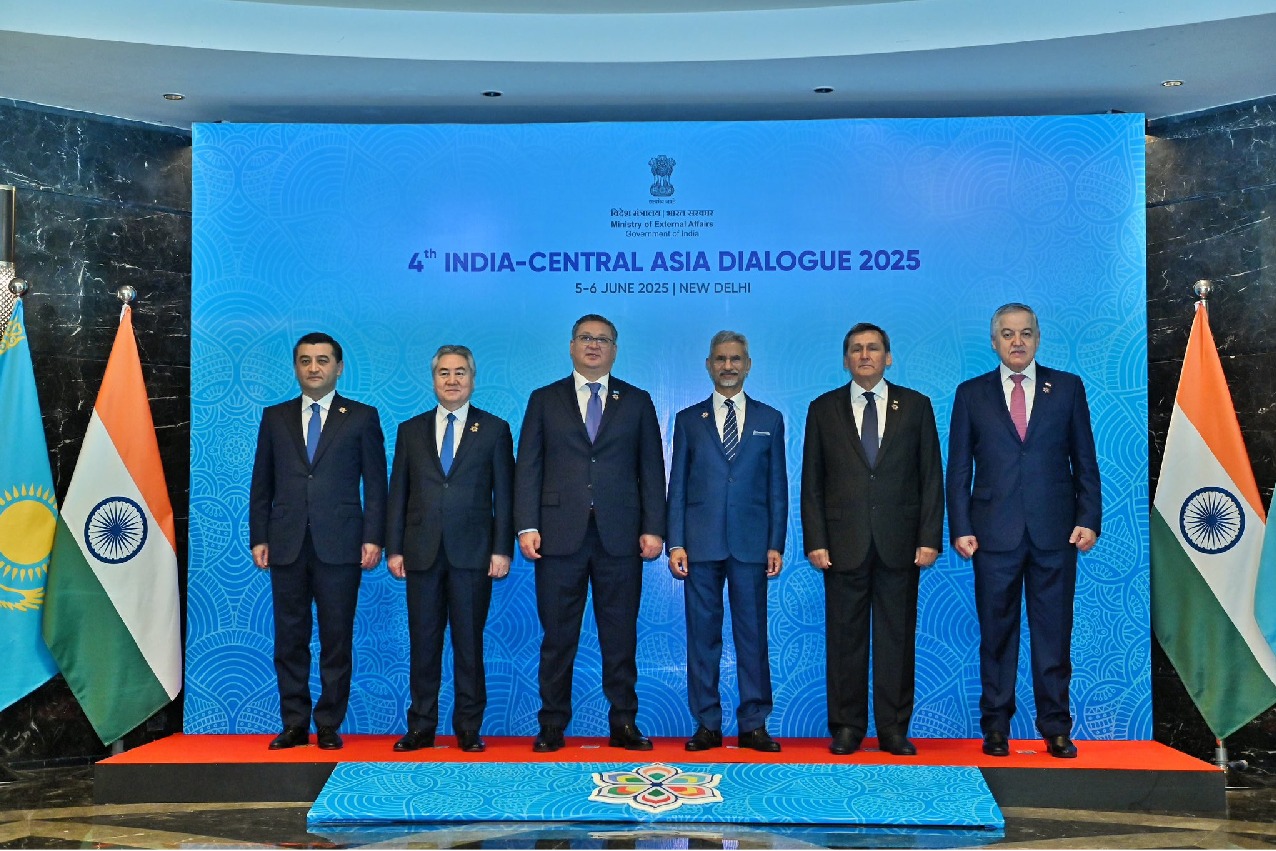
NEW DELHI : India and Central Asian countries have expressed interest in joint exploration of rare earth and critical minerals at the recently held 4th India-Central Asia Dialogue recently held in New Delhi.

The renewed expression of interest in collaboration in rare earths and critical minerals comes as China has restricted its exports of some key industrial inputs.

According to a joint statement by India and Central Asian countries — Kazakhstan, Kyrgyzstan, Tajikistan, Turkmenistan and, Uzbekistan -they appreciated the outcomes of the first India-Central Asia Rare Earth Forum held in September 2024 in New Delhi, as they called upon the relevant authorities to hold the second India-Central Asia Rare Earth Forum meeting at the earliest convenience.

The foreign ministers of these countries, including India, also encouraged the exchange of delegations to explore new areas of cooperation in critical minerals.

China produces around 90 per cent of the world’s rare earths and only a few alternatives exist.

The EV companies of India is already facing heat with China’s supply restrictions on the rare earth metals, according to a report by Jefferies.

A recent Jefferies report highlighted that several Indian companies are struggling to import magnets from China, which are crucial components in the production of EV motors.

The report warned that once the current stock of these magnets runs out, motor production could be severely affected, putting the entire supply chain at risk.

The Federation of Automobile Dealers Association (FADA), too, has echoed the sentiment. In its monthly vehicle data released on Friday, the FADA said, “Global supply-chain headwinds (rare-earth constraints in EV components, geopolitical tensions) may limit urban consumer sentiment and exert cost pressure.”

On April 4, China imposed export controls on six heavy rare earth elements (REEs) and rare earth magnets. The country cited reasons such as national security and international obligations such as non-proliferation.

Although these curbs do not completely ban auto sector exports, companies must now seek prior government approval before shipping these materials out of China. This adds uncertainty and delay to the supply process.

According to a recent Reuters report, India is discussing with various companies to build long-term stockpiles of rare earth magnets. As part of this plan, the Indian government is likely to offer fiscal incentives to promote domestic production of these crucial components.

Nirmala Sitharaman chairs 6th Meeting of the Governing Council of National Investment and Infrastructure Fund (NIIF) in New Delhi

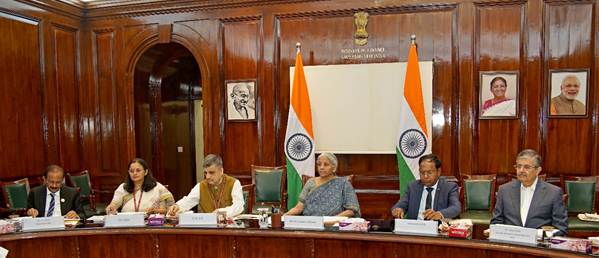
NEW DELHI : Union Minister for Finance and Corporate Affairs, Smt. Nirmala Sitharaman chaired the 6th meeting of the Governing Council (GC) of the National Investment and Infrastructure Fund Limited (NIIF) in New Delhi on Monday 9th June.

The GC appreciated NIIF’s evolution as a sovereign-linked asset manager and acknowledged the efforts made over the years to build strong partnerships with marquee investors, including, prominent sovereign wealth funds such as Abu Dhabi Investment Authority (ADIA) and Temasek; pension funds such as Australian Super, Ontario Teachers’ Pension Plan, Canada Pension Plan Investment Board (CPPIB); Multilateral Development Banks such as Asian Infrastructure Investment Bank (AIIB), Asian Development Bank (ADB) and New Development Bank (NDB): and strategic government counterparts such as the Japan Bank for International Cooperation (JBIC).

image002LLXS Nirmala Sitharaman chairs 6th Meeting of the Governing Council of National Investment and Infrastructure Fund (NIIF) in New Delhi

Recognising NIIF’s growing role in mobilising capital into infrastructure and other key sectors of the Indian economy in line with the national priorities, the GC appreciated NIIFs performance and took note of the expansion in its Assets Under Management which has increased to more than ₹30,000 crore while catalysing capital of ₹11,7000 crore.

The GC was presented with an update on NIIF’s overall strategy, progress, the investment status, sector focus, performance and way forward across its four active funds:

Fund for infrastructure (Master Fund)
The fund of funds (Private Markets Fund)
Fund for climate and sustainability as well as India Japan corridor (the India Japan Fund), and
The fund with focus in growth equity (Strategic Opportunities Fund).
The GC appreciated that both Master Fund and Private Markets Fund are already 100% committed and that a part of Master Fund investments have gone into creation of greenfield assets in areas such as ports and logistics, airports, and data centres.

The GC took note of progress on NIIF’s upcoming Private Markets Fund II which has a target corpus of $1 billion, and appreciated the fact that PMF II has successfully onboarded private investors — in line with the earlier GC guidance and is set for its first closing shortly. The GC was also informed about the proposed bilateral Fund currently under discussion with USA. Guidance was also provided on aspects related to strategy, successful fund raising, timely operationalisation and effective deployment.

The GC advised NIIF to leverage its sovereign backed design and emphasised the need to professionally showcase its role and performance on the global stage and within the international investor community. The team at NIIF was advised to have a proactive approach to fund raising and the need to explore diversified sources of financing. The GC expressed its confidence for an enhanced role of NIIF going forward and advised for the meeting to be held annually.

The Governing Council meeting was also attended by Shri Ajay Seth, Finance Secretary and Secretary, Department of Economic Affairs (DEA); Shri M. Nagaraju, Secretary, Department of Financial Services (DFS); Ms. Anuradha Thakur, OSD (DEA), Shri C.S. Setty, Chairman, State Bank of India; and Shri Uday Kotak, Founder and Director, Kotak Mahindra Bank.

Finland opens Honorary Consulate in Gujarat

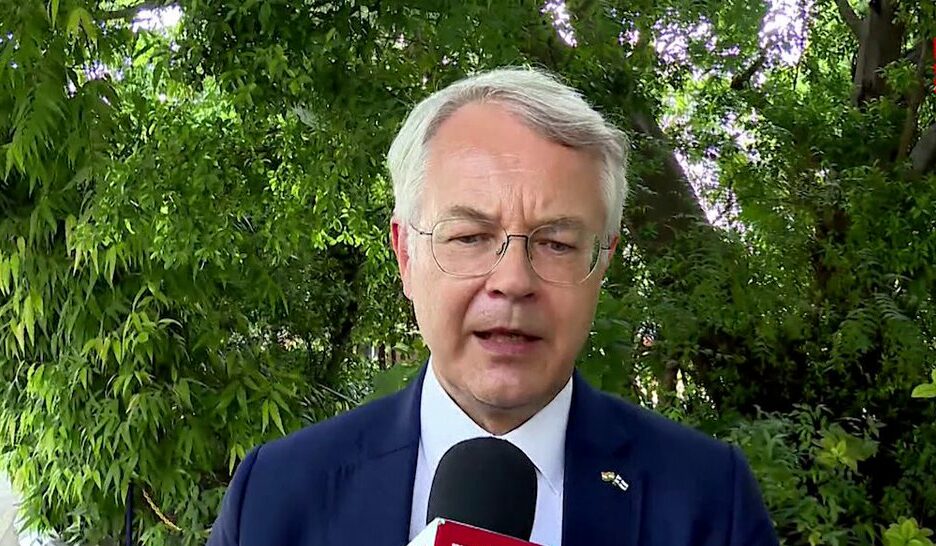
AHMEDABAD : Unveiling Finland’s new Honorary Consulate in Gujarat, Kimmo Lahdevirta, the Ambassador of Finland to India on Monday said the State with its “world-class infrastructure, business-friendly environment and innovation-oriented institutions,” offers an ideal environment for collaborations with Finnish companies to flourish.

“In Gujarat, our cooperation has focused on energy, but today, Finnish companies are engaged across multiple sectors, including clean energy, circular economy, skilling, smart infrastructure and sustainable design. The decision to open our Honorary Consulate here is a reflection of the deepening Finnish–Indian partnership and growing business interest. Finnish companies are contributing to the State’s growth and development goals through world-class technologies, sustainable solutions and investments,” stated Lahdevirta who was in Ahmedabad for the inauguration of the consulate.

“I could not be happier to announce that the consulate will be led by Kulin Lalbhai, a prominent business leader known for driving sustainable business solutions across sectors. Lalbhai’s personal leadership as well as his family business Arvind Group’s operations and values reflect our shared commitment to long-term and innovation-driven growth in Gujarat and beyond. I am certain that Lalbhai will be an excellent flag bearer for Finnish–Gujarati ties to flourish and grow,” the official said in a statement.

Lahdevirta said the opening of this consulate also reflects the long-standing cultural connections between Finland and Gujarat. “One example is the work of Finnish designer Helena Perheentupa at the National Institute of Design in Ahmedabad, which helped lay the foundation for collaboration in textile design between our societies. Finland has a shared interest with Gujarat even in sustainable urban design,” he added. Earlier today the Ambassador of Finland presented Lalbhai with a Moomin plush toy – a symbol of Finland’s culture and values.

UP Govt to invest ₹125 cr in flatted factory project to support MSMEs

LUCKNOW : The Uttar Pradesh government is set to construct a flatted factory in Greater Noida with an investment of ₹125 crore. The project aims to support the MSME sector and is part of the state’s plan to achieve a ₹1 trillion economy target.

According to an official statement, the project aligns with the state’s strategy to develop as an industrial centre by promoting micro, small and medium enterprises (MSMEs) alongside heavy industries.

Flatted factory

A flatted factory is a multi-storey industrial building designed to house several manufacturing units within a single structure. Each unit functions independently and is used for activities such as production, assembly and storage.

This type of facility is especially suited for MSMEs, offering ready-to-use industrial spaces in areas where land availability is limited. Flatted factories are equipped with essential infrastructure such as power supply, water, lifts, HVAC systems and fire safety features, enabling efficient operations within a compact footprint.

The Yamuna Expressway Industrial Development Authority (YEIDA) has prepared the plan for the flatted factory, which will be located in Sector 28 of Greater Noida, Gautam Buddha Nagar, Uttar Pradesh.

Operational details of the flatted factory

The total estimated investment for the project is ₹125 crore. The flatted factory will span an area of over 38,665 square metres.

The statement noted that preparatory work, including the master plan and related documentation, is in progress. Construction is scheduled to be completed within two years.

The facility is also expected to contribute to investment inflow, regional economic activity and employment creation, particularly for youth, the statement said.

Govt eases SEZ rules for semiconductor, electronics manufacturing; Micron, Aequs get nod

NEW DELHI : The Government, on Monday, notified key reforms in Special Economic Zone (SEZ) rules to promote investment in semiconductor and electronics component manufacturing. The changes aim to support sectors that are capital-intensive, import-dependent, and have long gestation periods before becoming profitable.

The revised rules, notified by the Department of Commerce on June 3, 2025, include amendments to Rules 5, 7, 18, and 53 of the SEZ Rules, 2006. Under the amended Rule 5, SEZs set up exclusively for semiconductor or electronics component manufacturing will now require a minimum contiguous land area of only 10 hectares, down from 50 hectares earlier.

Amendment to Rule 7 allows the Board of Approval to relax the requirement for SEZ land to be encumbrance-free if it is mortgaged or leased to the central or state government or their authorised agencies.

As per the amended Rule 53, the value of goods received and supplied on a free-of-cost basis will now be included in Net Foreign Exchange (NFE) calculations, using applicable customs valuation rules.

Changes to Rule 18 will allow SEZ units in semiconductor and electronics component manufacturing to supply to the Domestic Tariff Area (DTA) after paying the required duties.

Following the notification, the Board of Approval has cleared two SEZ proposals. Micron Semiconductor Technology India Pvt Ltd (MSTI) will set up a facility in Sanand, Gujarat, over 37.64 hectares with an investment of ₹13,000 crore.

Hubballi Durable Goods Cluster Private Ltd (Aequs Group) will establish an SEZ in Dharwad, Karnataka, across 11.55 hectares, investing ₹100 crore to manufacture electronics components.

Maersk brings home latest eco-friendly 2,080 TEU boxship from Japan

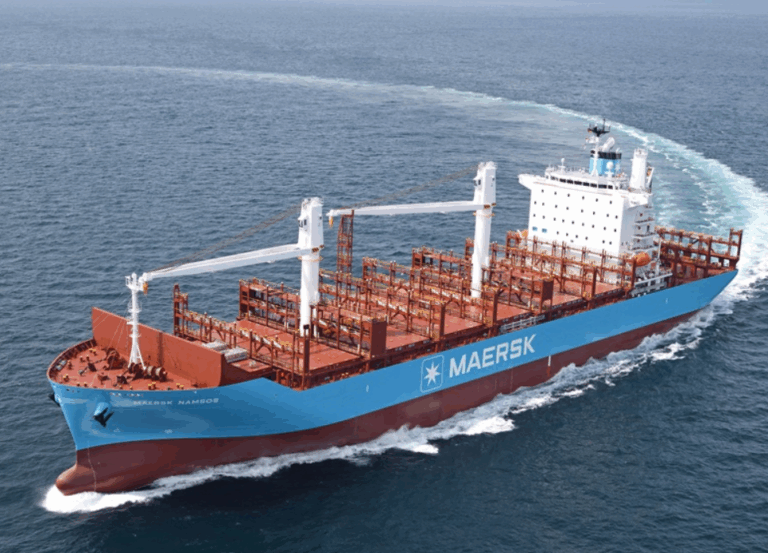
COPENHAGEN : Danish shipping giant A.P. Møller – Maersk has taken delivery of its latest environmentally friendly 2,080 TEU containership, which was constructed by Japan’s Imabari Shipbuilding.

As disclosed, the 25,723 GT Maersk Namsos was handed over during a ceremony held in the city of Imabari on June 5. The newbuild features a length of 171.93 meters, a width of 32.2 meters, and a depth of 16.8 meters.

Now that it has joined its owner’s fleet, the boxship is set to transport various types of cargo, the shipbuilder has shared, including hazardous products that are subject to the International Maritime Transport of Dangerous Goods (IMDG) code.

Forging ahead with fleet renewal Maersk books 20 new dual fuel ships 768x350 1 Maersk brings home latest eco-friendly 2,080 TEU boxship from Japan

Per Imabari Shipbuilding, the Panama-flagged unit’s propulsion and environmental performance have been ‘enhanced’ through several measures, including energy-saving devices near the propeller, a ‘high-efficiency’ propeller design, and low-friction hull paint that minimizes resistance in seawater.

As a result, the vessel’s Energy Efficiency Design Index (EEDI)—which measures carbon dioxide (CO₂) emissions per ton-mile—is projected to meet the latest environmental regulatory requirements.

To comply with nitrogen oxide (NOx) Tier III regulations aimed at reducing air pollution, the main engine was reportedly fitted with an exhaust gas recirculation (EGR) system, while the generator was equipped with a selective catalytic reduction (SCR) system.

Forging ahead with the efforts to own a sustainable fleet, Maersk added several brand-new ships to its roster this year. As an example, in the last leg of January, the maritime transportation player welcomed the 5,920 TEU Maersk Fukuoka, which was also constructed by Imabari Shipbuilding, and the 12,00 TEU methanol-ready Maersk Eunapolis, built by Japan Marine United Corporation (JMU).

At the end of March this year, JMU held a delivery ceremony for the 12,800 boxship christened Maersk el Bosque, which will also be able to run on methanol. The company welcomed another newbuild that can run on this sustainable fuel at the beginning of June this year: the HD Hyundai Heavy Industries (HD HHI)-built Axel Maersk.

Within the next several years, Maersk is expected to take delivery of dozens of new vessels, including the 20 dual-fuel ships that were booked in early December last year. Namely, Maersk had expressed intentions to commission 50-60 units, combining both owned and chartered vessels.

On December 2, the company signed contracts with three yards for 20 owned ships and finalized the charter contracts across several tonnage providers. As Offshore Energy reported earlier, China’s Yangzijiang Shipbuilding would construct two 9,000 TEU and six 17,000 TEU vessels, the country’s New Times Shipbuilding would work on six 15,000 TEU units, while South Korea’s Hanwha Ocean would build the remaining six.

As divulged, all of the containerships are set to be fitted with dual-fuel engines that can run on liquefied natural gas (LNG). The first batch of handovers is planned for 2028, while the last delivery is scheduled for 2030.

Drewry: Port Throughput Index Up 3.4%

LONDON : The Drewry Container Port Throughput Indices are a series of calendar adjusted volume growth/decline indices based on monthly throughput data for a sample of over 340 ports worldwide, representing over 80% of global volumes. The base point for the indices is January 2019 = 100.

Drewry has developed a nowcasting model that uses vessel capacity and terminal duration data (derived from our proprietary AIS model) to make short-term predictions of port throughput.

Drewry’s latest assessment
• Drewry’s Global Container Port Throughput Index increased 3.4% MoM and 6.6% YoY in March to reach an all-time high of 119.9 points. Meanwhile, the rolling 12-month average growth rate for global port handling remained steady at 6.4%.
• For 1Q25, North America recorded the most growth in throughput, up 9.0% YoY, closely followed by the Middle East & South Asia region at 8.3% and Greater China at 7.7%. Oceania remains the only region reporting a decline, with 1Q25 throughput falling 4.5% YoY.
• The Greater China Container Port Throughput Index increased 8.4% MoM to 122.6 points in March, up 8.7% YoY, while the 12-month average growth rate in Greater China rose to 6.3%. There has been a strong start to the year across many of the largest ports with 1Q25 throughput at Shenzhen rising over 17% YoY, and volumes Ningbo up by more than 10%. Container throughput at Qingdao and Guangzhou grew by 7.4% and 7.0%, respectively, and Shanghai rounds out the Top 5 with 6.1% YoY growth.
• The North American Container Port Throughput Index rose just 1.0% MoM in March to 118.0 points, but was up by a significant 12.9% YoY suggesting front-loading of cargo to avoid tariffs. The rolling 12-month average growth rate decreased slightly to 10.2%. Volumes at major USWC ports have been robust in 1Q25 with throughput at Los Angeles rising 8.7% and at Long Beach surging 26.6% YoY. Seattle saw a 19% increase, while Oakland experienced a 6.3% YoY rise in 1Q25 volumes.
• The Middle East and South Asia Container Port Throughput Index increased 0.7% in March, up 7.7% YoY, while the 12-month rolling average growth rate rose to 4.7%. Ports in the Gulf have seen volumes growing strongly with 1Q25 throughput at Jebel Ali up 10% YoY, Saudi’s Dammam port up 18.4% and Qatar’s Hamad port up 6.4%. Indian port volumes have likewise had a good first quarter – Mundra’s throughput increased 11.6% YoY, Jawaharlal Nehru Port’s rose 14.4% and Chennai’s 16.2%.