
Home Blog Page 825

Odisha Govt. invites Global Investors for Non-Major Ports and Maritime Infrastructure

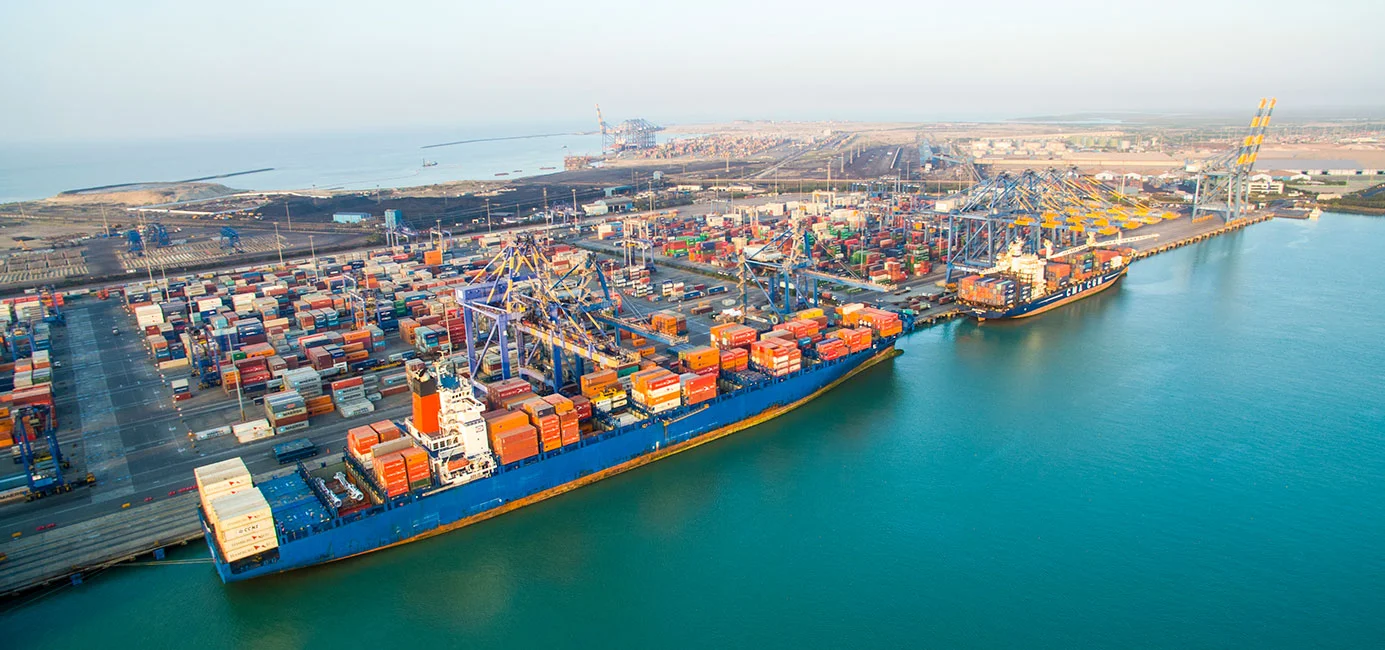
BHUBANESWAR : Odisha Government has taken a strategic step to transform its maritime sector by inviting Expressions of Interest (EOI) from global investors for the development of Non-Major Ports, Cruise Terminals, Multi-purpose Harbours, Shipbuilding and Repair Facilities, and Container Terminals at designated port locations.

The initiative, spearheaded by the Odisha Maritime Board, is part of a larger vision to enhance cargo handling capacity, maritime tourism, and regional trade, generating employment and industrial growth through Public-Private Partnership (PPP) models.

With a 574.71 km long coastline, Odisha offers eight key locations—Bichitrapur, Bahabalpur, Chandipur, Inchuri, Chudamani, Baliharachandi, Palur, and Bahuda Muhan—for phased development. These sites have undergone traffic projections, environmental impact assessments, and connectivity planning to ensure a structured and sustainable approach to infrastructure expansion.

Smt. Usha Padhee, IAS, Principal Secretary of the Commerce & Transport Department, stated: “This initiative highlights our commitment to building a world-class maritime ecosystem that enhances cargo handling, maritime tourism, and economic opportunities through private sector involvement.”

The detailed EOI document is available for download from the official website of the department. By fostering innovation, sustainability, and private sector participation, Odisha aims to position itself as a premier maritime hub in India.

MSC Elsa-3 capsized due to improper container loading : IMO

THIRUVANANTHAPURAM : The sinking of the Liberian-flagged container ship MSC Elsa-3 off the Kerala coast on May 25 has raised urgent questions about maritime safety and environmental risks.

Captain Naveen Singhal, a Singapore-based Marine and Management Consultant and an empanelled specialist with the International Maritime Organisation (IMO), has attributed the disaster to improper container loading practices.

“The vessel had some stability issues. It had begun listing to its starboard on Saturday. One of the things could be that maybe some of the container lashings. There’s a very common practice where declared container loads are incorrect. What is stated in the cargo manifest may actually not be so—there may be actually much more than that. This incorrect weight declaration is an old story,” Captain Singhal explained.

He highlighted that shippers sometimes under-declare container weights to reduce freight costs, a practice that can have catastrophic consequences. “If you have a top-heavy load, obviously it’s going to create problems and lead to capsizing situations. This is a problem that’s not just in Asian countries, it’s an international problem. This problem is there in Europe and the US and it’s not easy to handle this,” he said.. Captain Singhal pointed out that while cranes (gantries) can weigh containers as they are loaded, the sheer speed of operations—often a container a minute—makes it difficult to verify every load.
“All this needs to eventually be fully automated, wherein the incorrect calculations, incorrect weight declared in containers is captured right at the time when it’s lifted in the gantry so that it sends an alarm and the ship staff knows, but that system doesn’t exist today,” he noted.

THE ENVIRONMETAL FALLOUT
As for the environmental fallout, Captain Singhal said, “The vessel has sunk in deep waters. It was carrying calcium carbide and calcium carbide has a reaction with water, but now that the vessel is sunk, so whatever reaction will be there will be deep, but it’s likely that it generates some acetylene gas. So even if it does generate, it’ll just bubble up over the surface.”

He added, “About six to eight containers have been washed ashore of which a few have landed on the coast and the 13 of them supposedly contain hazardous cargo. Now what is the nature of this hazardous cargo also has different grades. So what the nature of this hazardous cargo is still not known.”

Regarding liability and response, Captain Singhal clarified, “All of this will be handled by the Protection and Indemnity insurance (P&I insurance) provided by a P&I club. The hull and machinery is covered by the marine insurance company, cargo cover for cargo owners. The P&I club covers the open-ended risks which traditional insurers are loath to insure. This includes third-party damage to cargo—environmental damage caused by oil spills and pollution.”
“The nodal agency to coordinate this entire operation will be the Director General of Shipping. The DG Shipping has offices all over the coast and Cochin is the one which will be monitoring closely the entire operations post the incident. It is in India’s Exclusive Economic Zone or EEZ. To that extent, the government of India has a role in monitoring and calling for an investigation to be conducted by the flag state, Liberia,” he added.

The incident underscores the urgent need for stricter oversight and technological upgrades in global shipping to prevent similar disasters in the future.

Source : India Today

Swan Energy Limited reports record-breaking income and profitability for FY25

MUMBAI : Swan Energy Limited, a diversified Indian conglomerate with operations spanning textiles, real estate, oil & gas, shipbuilding and heavy fabrication, has announced its audited financial results for the fiscal year ended March 31, 2025. 

Key Consolidated Financial Highlights for FY25: 

  • Total income grew by 35% to ₹ 6,884 crore in FY25 as against ₹ 5,100 crore in FY24 
  • EBITDA increased by 90% to ₹ 1,804 crore in FY25 compared to ₹ 951 crore in FY24 
  • EBITDA margin stood at 26.2% in FY25 as compared to 18.6% in FY24 
  • Profit after tax witnessed a growth of 49% to ₹ 874 crore in FY25 compared to ₹ 586 crore in FY24 

Comparative table showcasing Topline, EBITDA, PAT and margin expansion in the last 3 years as follows: 

(₹ in Crore) 

Particular Mar-23 Mar-24 Mar-25 
Total Income 1,449 5,100 6,884 
EBITDA 242 951 1,804 
EBITDA Margin 16.7% 18.6% 26.2% 
PAT  (61) 586 874 

Factors contributing to the business milestones: 

Significant debt reduction following successful QIP 

  • Swan Energy Limited successfully raised approximately ₹3,320 crore through a Qualified Institutions Placement (QIP) at an issue price of ₹670 per share. The proceeds from this capital raise have been strategically allocated towards significant debt reduction initiatives across the group, substantially strengthening the company’s financial position, enhancing its operational flexibility and supporting its long-term strategic objectives. 

Revitalization and commencement of operations at India’s largest shipyard – Swan Defence and Heavy Industries Limited (SDHI) 

  • Swan Energy Limited has achieved significant milestones in revitalizing India’s largest shipyard acquired through the National Company Law Tribunal (NCLT) process. Swan Energy’s step- down subsidiary Swan Defence and Heavy Industries Limited (SDHI) [BSE: 533107 | NSE: SWANDEF], formerly known as Reliance Naval and Engineering Limited, has transformed the shipyard into a fully operational, modern facility through focused investments, infrastructure enhancements, and a strong leadership team.  
  • The shipyard has restarted operations during the financial year and successfully delivered three refits for the Indian Coast Guard (ICG) ahead of schedule, showcasing the strong execution capabilities of the new management.  
  • Further, SDHI has built business synergies with major domestic and global shipbuilding players through strategic Memorandums of Understanding (MoUs) to unlock growth opportunities.  

Flagship residential project in Bengaluru receives OC; over 90 percent units sold  

  • Swan Energy Limited’s wholly owned subsidiary Cardinal Energy and Infrastructure Pvt. Ltd. (CEIPL), has achieved a major milestone, with its flagship residential project, Cardinal One, located in Yeshwanthpur, Bengaluru, receiving Occupation Certificate (OC). Over 90 percent of the 120 ultra-private 3 and 4 BHK apartments have been sold, signifying customers’ confidence in the company’s commitment to deliver premium living spaces.  
  • In alignment with our strategic vision, we are actively exploring opportunities to monetize our existing land bank on an opportunistic basis, ensuring optimal value creation for our stakeholders. We have also successfully sold our Mangalore land last year. 

Strategic sale of FSRU & near completion of onshore LNG terminal to drive New Energy business 

  • In a significant development in the LNG infrastructure portfolio, Swan Energy Limited’s subsidiary, Triumph Offshore Pvt. Ltd. (TOPL) sold its Floating Storage and Regasification Unit (FSRU) ‘Vasant-1’ for approximately $399 million. This strategic decision was influenced by the global LNG market volatility, notably the surge in prices following the Russia-Ukraine conflict, which impacted the viability of FSRU operations.  
  • The onshore LNG terminal at Jafrabad, Gujarat, is now nearing completion. Having secured long-term regasification agreements totaling 4.5 MMTPA with leading public sector undertakings, including GSPC, BPCL, IOCL, and ONGC, the company anticipates that the stabilization of LNG prices in the near future will enable commencement of operations, positioning Swan Energy as a key player in India’s new energy sector. 

Commenting on the FY25 performance, Mr. Nikhil Merchant, Managing Director of Swan Energy Limited, said,  “It is with immense pride and gratitude that I present to you Swan Energy Limited’s performance for the fiscal year 2024–25. This year stands as a testament to our unwavering commitment, strategic foresight, and the collective efforts of our dedicated team. We have achieved our highest ever revenue and profitability, marking a significant milestone in our journey. This accomplishment reflects the strength of our diversified business model and our ability to adapt and thrive in a dynamic economic landscape. Our financial health has been fortified through substantial debt reduction, positioning us on a robust foundation for sustainable growth. This prudent financial management underscores our commitment to creating long-term value for our stakeholders. We have successfully completed the restoration of our shipyard facilities. With a skilled and experienced team in place, we are poised to embark on new projects and anticipate our inaugural contract soon. The success of our residential project Cardinal One in Bengaluru has demonstrated customers’ confidence in our company’s commitment to deliver premium living spaces.  In the LNG sector, we are witnessing favorable market dynamics that align with our strategic objectives. The progress on our LNG project at Jafrabad is encouraging, and we are optimistic about commencing operations and strengthening the New Energy business soon. As we move forward, the groundwork laid across our business verticals equips us to capitalize on emerging opportunities. We are committed to delivering excellence and driving innovation, ensuring that Swan Energy continues to be a beacon of resilience and growth.” 

1st round of India-Chile CEPA negotiation concludes in New Delhi

NEW DELHI : In furtherance of the commitment made during the high-level dialogue between India and Chile, the Terms of Reference for negotiating the India-Chile Comprehensive Economic Partnership Agreement (CEPA) were signed on 8th May, 2025. The first round of negotiations commenced on 26th May, 2025, with the Opening Ceremony inaugurated by Commerce Secretary, Shri Sunil Barthwal in the presence of Ambassador of Chile to India H.E. Juan Angulo.

During the inauguration, Shri Barthwal emphasized that the agreement will pave the way for a deeper economic partnership and the creation of strengthened global value chains between the two countries.

The next round of negotiations is expected in July/August 2025 and will be preceded by intersessional discussions through virtual conferences to address outstanding issues in advance of the upcoming meeting.

The launch of the CEPA negotiations was welcomed by both nations during the State Visit of the President of Chile, H.E. Gabriel Boric Font, to India in April 2025 and his meeting with the Hon’ble Prime Minister of India, Shri Narendra Modi. President Boric conveyed that India is a priority partner for Chile in the global economy and highlighted the need to explore strategies for enhanced and diversified trade between the two countries.

Both leaders welcomed the initiation of negotiations towards a balanced, ambitious, comprehensive, and mutually beneficial CEPA aimed at achieving deeper economic integration.

The Chilean negotiating team, comprising 17 delegates, was led by Chief Negotiator Mr. Pablo Urria, Director for Asia & Oceanic at the Secretariat of International Economic Relations, Ministry of Foreign Affairs of Chile. The Indian delegation was headed by Chief Negotiator Shri Vimal Anand, Joint Secretary, Department of Commerce.

Discussions during the round were held across 17 thematic tracks including: Trade in Goods, Trade in Services, Movement of Natural Persons, Rules of Origin, Sanitary and Phytosanitary Measures, Technical Barriers to Trade, Customs Procedures and Trade Facilitation, Initial Provisions and General Definitions, Core and Institutional Provisions, Final Provisions, Transparency, Dispute Settlement, Economic Cooperation, MSMEs, Women’s Economic Empowerment, Critical and Strategic Minerals Trade & Sustainable Development, Global Value Chains, Investment Promotion & Cooperation, and Intellectual Property Rights.

The CEPA aims to unlock the full potential of the trade and commercial relationship between India and Chile, boosting employment, bilateral trade, and economic growth. The modalities of negotiation will emerge through stakeholder consultations and industry feedback. Both sides are committed to a gainful and explorative approach to ensure a successful and meaningful agreement.

India-UK FTA to push Gem & Jewellery exports from USD 400 million to USD 1 billion: GJEPC

NEW DELHI : The proposed India-UK Free Trade Agreement (FTA), currently in final negotiation stages, is positioned to substantially enhance Indian gem and jewellery exports through the elimination of 99 percent of tariffs on Indian goods.

The Gem and Jewellery Export Promotion Council (GJEPC) projects jewellery exports to the United Kingdom will increase from the current USD 400 million to USD 1 billion, with total gem and jewellery exports anticipated to reach USD 2.5 billion within two years of the agreement’s execution.

These projections reflect substantial growth potential in high-value product categories that have traditionally faced tariff barriers.

Industry leaders identify gold and diamond jewellery as primary growth drivers in the UK market.

Kirit Bhansali, Chairman, GJEPC, noted that gold and diamond-studded jewellery are expected to benefit from strong consumer demand and established market preferences, while opportunities also exist in silver jewellery and coloured gemstones segments to diversify export portfolios and capitalise on emerging market trends.

The agreement presents particular opportunities for emerging brands and start-ups seeking market entry.

Companies preparing for UK market entry are conducting comprehensive market analysis to ensure effective adaptation to local conditions.

Despite industry optimism, stakeholders have identified operational challenges that may impact the long-term benefits of the trade agreement.

India’s jewellery exports to the UK reached USD 941 million in 2024, yet meeting UK hallmarking standards and managing documentation requirements present challenges, particularly for new market entrants unfamiliar with regulatory frameworks.

The implementation of effective support infrastructure is viewed as critical for enabling smaller exporters and new entrants to navigate regulatory requirements, establish distribution networks, and compete effectively in the UK market while maintaining compliance with local standards and consumer expectations.

Kuehne+Nagel appoints new head of sales

kuehne nagel logo blue Kuehne+Nagel appoints new head of sales

SCHINDELLEGI : Kuehne+Nagel (K+N) has appointed Shirley Sharma Paterson as global head of sales, effective 1 August.

She will report directly to the firm’s chief executive, Stefan Paul, “leveraging her extensive experience and proven track record in achieving business growth”, the forwarder said in a press release.

Paterson joins K+N with more than 25 years of experience in the supply chain industry.

She has held several senior leadership roles, most recently serving as the head of Schenker’s flagship partner customer engagement programme and senior vice president, global vertical market technology at DB Schenker.

“We warmly welcome Shirley Sharma Paterson to Kuehne+Nagel. Her extensive customer network in the global supply chain industry will be invaluable as we continue to strengthen our global sales organisation to deliver the best-in-class, customer-focused supply chain solutions,” said Paul.

Maersk and Hapag-Lloyd launch new Transpacific Service

COPENHAGEN : A.P. Moller-Maersk (Maersk) and Hapag-Lloyd have launched a new Transpacific Service, TP9, under the Gemini Cooperation. According to Maersk, this service offers a direct connection from East China and North East Asia to Long Beach, connecting Busan and Long Beach with a transit time of 14 days, and a competitive direct Xiamen product into Long Beach in 18 days.

The new service expands the existing Transpacific portfolio and is expected to enhance supply chain resilience for customers by offering greater flexibility and improved reliability.

The rotation on this service will be as follows: Xiamen – Busan – Long Beach – Xiamen.

CMA CGM launches first 100% electric river barge with NIKE in Vietnam

  • CMA CGM pioneers low-carbon inland waterway transport in Asia.
  • A zero-emissions logistics solution adopted by NIKE.
  • A flagship project reflecting CMA CGM’s Net Zero Carbon ambition. 

MARSEILLE : CMA CGM, a global player in maritime, land, air, and logistics solutions, announces a major step forward in the decarbonization of river transport in Southeast Asia: the launch of the first fully electric container barge in Vietnam, supported by the construction of a solar-powered charging station at the Cai Mep Port, the country’s main container gateway near Ho Chi Minh City. 

 As part of this initiative, CMA CGM has signed an agreement with its long-standing partner Gemadept, a key logistics and port operator in Vietnam, to establish a joint venture named Green River Transportation, which will operate the electric barge. The new entity will manage river transport services in the Mekong Delta, reinforcing both partners’ commitment to sustainable logistics. 

A breakthrough in green and operational innovation 

The electric barge was jointly designed by CMA CGM’s CMA Ships and R&D teams. It will be powered by a dedicated charging station connected to a new solar farm located on the Gemalink terminal at Cai Mep. The facility is expected to generate up to 1 GWh of green electricity per year. This new zero-emission solution will reduce CO₂ emissions by 778 tons per year on the 180 km route between Binh Duong Province and Bà Rịa-Vũng Tàu, in southern Vietnam. 

With this combination of electric barge, solar farm, and on-site charging station, CMA CGM is providing NIKE with a tailored, efficient, and emissions-free logistics solution. 

NIKE: the first partner to adopt the electric barge solution
NIKE, a long-time customer of CMA CGM, is the first partner to commit to using the electric barge for its logistics flows between its Vietnam-based manufacturing sites and the Gemalink container terminal.

This low-carbon logistics model is designed to be replicated with other customers and in additional countries, especially where inland waterways play a key role in supply chains.

The electric barge is scheduled to enter service in early 2026.

A strong local footprint in Vietnam
Present in Vietnam since 1989, CMA CGM is a key logistics player in the country, with 5 offices, 29 weekly maritime services, and over 550 employees. This project supports the Group’s ambition to strengthen infrastructure sustainably and contribute to local job creation.

A milestone on the road to Net Zero Carbon
This initiative is fully aligned with CMA CGM’s global strategy to reach Net Zero Carbon by 2050, through a combination of low-carbon technologies, alternative fuels, and now zero-emissions river logistics solutions.

Photo site web CMA CGM launches first 100% electric river barge with NIKE in Vietnam

Hapag-Lloyd strengthens Africa presence with New Organizational Setup

HAMBURG : Hapag-Lloyd announced a strategic restructuring of their Africa organizational setup across the continent. The changes align with the company’s Strategy 2030 and its commitment to growing Africa as a key focus market. The company’s current Area setup will change from two to four Areas, with the intention of securing a broader and stronger presence in Africa. The new Area setup will be supported by the existing Quality Service Center (QSC) in Mauritius.

As part of this transformation, the former Area West Africa has been divided into two new Areas:

  • Area West Africa (WAF): Encompassing countries from Mauritania to Benin, with its headquarters in Accra, Ghana. The Area will be led by Thomas Elling as Area Managing Director, succeeding Vishal Bundhun.
  • Area Central Africa (CAF): Covering countries from Nigeria to Angola, with its headquarters in Lagos, Nigeria. The Area will be led by Caroline Aubert-Adewuyi as Area Managing Director, succeeding Vishal Bundhun.

In parallel, the former Area South Africa will also be split into two separate Areas:

  • Area South Africa (SAF): Encompassing countries from Namibia to Mozambique, with its headquarters in Durban, South Africa. The Area will continue to be led by Rogelio Busto as Area Managing Director.
  • Area East Africa (EAF): Covering countries from Tanzania to Sudan, with its headquarters in Nairobi, Kenya. The Area will be led by Rogelio Busto as Interim Area Managing Director until a permanent appointment has been made.

To provide enhanced strategic oversight and close coordination, now and in the future, a new Sub-Region Africa has been established, based in Dubai, UAE. All Areas as well as our Quality Service Center (QSC) in Port Louis, Mauritius, under Senior Director Ramcy Castelino, will report directly to Jesper Kanstrup, new Sub-Regional Managing Director. Sub-Region Africa will remain part of Region Middle East (which covers Middle East, Indian Sub-Continent, and Africa).

“This is a customer-first transformation. Our goal is to be fast, more agile and more responsive to local market realities.” said Lars Sorensen, Senior Managing Director of Region Middle East. “This new structure reflects our commitment to Africa as a key growth market and enables us to better serve our customers by empowering local leadership, leveraging local expertise and strengthening our regional support.”

The new setup also reinforces Hapag-Lloyd’s recognition of Africa’s growing role in global trade and positions the company to deliver long-term, sustainable value for customers across the continent.

Bold steps toward sustainability: Klaipėda Port begins green hydrogen journey

KLAIPEDA : Klaipėda Port is moving toward its goal of becoming the first in Lithuania and the Baltic States to produce and supply green hydrogen for vessels, various types of port equipment, and private transportation. Construction works will begin soon – a construction permit has been received.

“Klaipėda Port has set an ambitious goal – to become the first in Lithuania and the Baltic region operating a green hydrogen production station. Being the first means stepping into uncharted territory. That is not always easy, but it is undoubtedly worth it. By choosing the green path, Klaipėda Port demonstrates its commitment to the European Union’s and Lithuania’s obligations and is taking bold steps forward: next year, we plan to start producing green hydrogen, and a green hydrogen-powered vessel is already being built,” says Algis Latakas, Director General of the Klaipėda State Seaport Authority.

The construction tender procedure announced by the Klaipėda State Seaport Authority is nearly finished. Construction works are planned to start in June. A specialized site will be developed, with new engineering networks built or existing ones reconstructed (electricity, water supply, domestic and stormwater drainage, hydrogen pipelines, communication lines).

The hydrogen plant will be installed in a standard 40-foot sea container. The planned electricity demand for the hydrogen production equipment in Klaipėda Port is 2.25 MW. The infrastructure will be adapted to supply hydrogen to vessels as well as to vehicles, trucks, and buses.

The station is expected to produce 127 tons of hydrogen annually. Alongside preparations for production, plans are underway for how this fuel will be utilized.

Last year, Klaipėda State Seaport Authority signed a memorandum with the Klaipėda Port stevedoring company “Bega.” According to the agreement, the parties committed to explore the use of green hydrogen in equipment operating within the terminal.

At the end of last year, a cooperation agreement was also signed with LTG Group, committing to explore the use of green hydrogen in railway transport, participate in EU-funded projects, and pool resources and expertise to develop a green hydrogen supply chain.

The project is being implemented under the Economic Recovery and Resilience Plan “Next Generation Lithuania,” funded by the European Union’s NextGenerationEU recovery and resilience facility. The total estimated cost of the hydrogen production and refueling station project is approximately €12 million, with around €6 million financed by EU funds.