Home Blog Page 841

Baltic Index falls to near one-week low

LONDON : The Baltic Exchange’s Dry Bulk Sea Freight index, which measures shipping rates for vessels transporting dry bulk commodities, fell on Wednesday to a near one-week low due to weaker rates for capesize and panamax vessel segments.

The main index, which monitors rates for capesize, panamax and supramax shipping vessels, lost 3 points, or 0.2%, to 1,337, its lowest since May 15.

The capesize index was down 8 points, or 0.4%, at 1,855.

Average daily earnings for capesize vessels, which typically transport 150,000-ton cargoes such as iron ore and coal, lost $71 to $15,383.

Iron ore futures prices inched up amid resilient near-term demand for the steel-making ingredient, though gains were limited by subdued economic data from top consumer China.

The panamax index receded 8 points, or 0.6%, to 1,286.

Average daily earnings for panamax vessels, which usually carry 60,000-70,000 tons of coal or grain, declined by $74 to $11,572.

Among smaller vessels, the supramax index was up 6 points at 988.

Source: Reuters

SEATREK embarks on a New Chapter with Seasoned Industry STALWARTS

SINGAPORE : SeaTrek, a dynamic and fast-growing dry bulk operator, announced a strengthened management team as it embarks on its next phase of growth. The company has appointed Rob Aarvold as Global Chief Executive Officer, alongside Anthony Diamante as Director of Business Development and Derivatives, and Bryan Swindoll as Director of Commercial. These key appointments reflect SeaTrek’s ambition to scale its global presence, enhance its service offering, and deepen its customer-first approach with a management team steeped in maritime and trading expertise.

Rob, a seasoned leader in the maritime sector, brings broad experience across liner, multi-purpose, and bulk shipping. He possesses a deep understanding of unitised and geared shipping and with a proven track record in growing bulk businesses will be instrumental in guiding SeaTrek’s future success.

Asifur Chowdhury Founder and Executive Director SeaTrek SEATREK embarks on a New Chapter with Seasoned Industry STALWARTS
Asifur Chowdhury, Founder and Executive Director of SeaTrek,

Founded over two decades ago by Asifur Chowdhury, SeaTrek has grown from a proud, family-owned business into an agile global operator. Asifur, a second-generation shipping entrepreneur, established SeaTrek to build upon a legacy shaped by his father, Sanaullah Chowdhury, Bangladesh’s first ocean-going vessel owner and the founder of Atlas Shipping. Under Asifur’s leadership, SeaTrek has remained grounded in integrity, customer commitment, and adaptability, with headquarters in Singapore and regional offices in Dubai and Miami.

With Rob at the helm, SeaTrek is advancing its customer-centric, cargo-led approach, strengthening its focus across bulk commodity segments such as grain, fertilisers, and steel products to add to SeaTrek’s strong legacy in cementitious commodities. Rob will be supported by a highly experienced executive team. Anthony Diamante, appointed Director of Business Development and Derivatives, brings a robust background in commodities and freight logistics. A co-founder of Quadra Commodities SA and an early mover in freight derivatives, Anthony has held senior roles at ExxonMobil, Swire Bulk, and the Australian Wheat Board. His cross-sector expertise in energy, agriculture, and maritime financial products will enable SeaTrek to deliver bespoke supply-chain solutions to clients.

Bryan Swindoll, Director of Commercial, leads SeaTrek’s trading strategy with deep expertise in both the commercial and operational aspects of maritime freight. With a background in Economics, Bryan has held roles across operators, grain houses, and ship owners, managing large trading positions built across a wide range of commodities. Bryan’s expertise and network in the Atlantic market will be key for the cross-basin trading strategy.

Together, the management team will expand SeaTrek’s freight proposition to help clients navigate the complex and on occasion evolving trading environments and changing regulations.

Rob Aarvold, Global CEO of SeaTrek, said: “I am honoured to lead SeaTrek during this pivotal phase of its development. With a strong heritage and an outstanding team, we are ready to grow SeaTrek into a modern, resilient dry bulk operator that puts customers at the heart of everything we focus on day-to-day. We are committed to delivering reliable, efficient freight solutions that meet the evolving demands of global trade.”

Asifur Chowdhury, Founder and Executive Director of SeaTrek, commented: “This marks an important new chapter for SeaTrek, one led by respected industry professionals who share our values and bring decades of related experience. Their collective insight and energy will reinforce the Seatrek mantra that has been central to our success over the past 25 years and ultimately drive meaningful and sustainable growth.”

With a refreshed management team and a renewed focus on service and innovation, SeaTrek is entering its next phase with confidence and momentum, ready to offer integrated, forward-thinking solutions to clients around the world.

SeaTrek Boilerplate

Founded in 1999, SeaTrek is a dynamic dry bulk operator headquartered in Singapore, with regional offices in the United Arab Emirates and the United States of America. Operating from a global platform, SeaTrek delivers client-focused solutions tailored to the evolving demands of the shipping industry. Core offerings include bulk shipping services, specialised expertise in project cargo and parcelling, and a range of value-added services that go beyond traditional freight solutions.

Indian Govt. plans to spend $10 billion on homebuilt oil tanker fleet

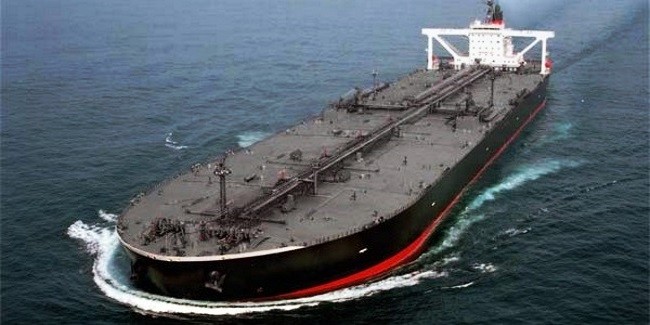
NEW DELHI : Indian Government is planning to spend 850 billion rupees ($10 billion) to purchase 112 crude carriers through 2040, people familiar with the matter said, as the world’s third-biggest importer of oil seeks to have its own fleet to secure supplies.

State-owned oil companies currently operate an aging fleet that’s mostly on-charter from global companies and the shipping and petroleum ministries want to change that, said the people, who asked not to be identified citing rules. The plan’s first phase involves purchasing 79 ships, of which 30 of them would be medium-range vessels, they said.

The purchase order for 10 tankers should come out as early as this month, the people said. Only ships built locally — even if there’s foreign collaboration — will be considered for purchase, they said.

Despite the global push for transition to cleaner sources of energy, India’s crude oil refining capacity is set to expand — to 450 million tons by the end of the decade from about 250 million tons now — on the back of growing domestic and overseas demand for oil products. For a nation that relies on imports for the bulk of its crude oil needs, it’s imperative to have sufficient shipping capacity of its own to carry out its energy trade.

India targets to raise the share of locally built oil tankers in its fleet to 7% by 2030 from 5% at present, the people said. The idea is to eventually increase it to 69% by 2047 — the deadline the country has set for becoming a developed nation.

The shipping and petroleum ministries and the government’s Press Information Bureau didn’t immediately respond to emailed requests for comments.

Prime Minister Shri Narendra Modi’s government this year announced a 250 billion-rupee fund to support the country’s maritime sector, with one of its goals being to eventually reduce reliance on foreign-built vessels and bolster indigenous shipbuilding capacity.

India is also planning to add shipping capacity for transporting coal, fertilizer and steel, the people said. The idea is to replace most of it with India-built ships going ahead.

Lacking Scale

India’s ship building industry is still nascent and lacks scale in the absence of sufficient captive demand for ships, the people said. The economies of scale will follow once global shipbuilding companies come to India and build for the world, they said.

While the MT Maharshi Parashuram is the largest India-built oil tanker at 238-meters long and a deadweight tonnage of 93,332 metric tons, it dwarfs in comparison to China’s Minsheng Financial Leasing-owned Oceania — a supertanker measuring 380 meters long and boasting a deadweight tonnage of 441,584 metric tons.

The Indian government’s intent is to provide demand side stimulus for ship building companies, the people said, adding the country is inviting shipbuilders from Japan and South Korea to build ships with the promise of incentives.

South Korea’s HD Hyundai Heavy Industries Co. is in discussions with India’s state-owned Cochin Shipyard Ltd. for a new facility in the southwestern Indian coastal city of Kochi, local media reported. India has also held talks with Korean shipbuilders Samsung Heavy Industries Co. and Japan’s Nippon Yusen KK, also known as NYK Line, a local official had said earlier.

“It is a good move from energy security point of view since the dependence on China for a lot of these services is high,” according to Rajiv Jalota, a former chairman of government-owned Mumbai Port Trust. “The world needs to develop alternatives.”

Govt allots quota for 180 tonne of gold imports from UAE

NEW DELHI ; The Government of India allotted quota for 180 tonne of gold imports from the UAE at a concessional duty under the Comprehensive Economic Partnership Agreement (CEPA) on Monday, with a traders’ association claiming that around 1,400 applications were rejected.

The Directorate General of Foreign Trade (DGFT) received a record number of applications seeking 25 times more than the available quota for gold imports for 2025-26 from the United Arab Emirates (UAE). Under the CEPA, gold can be imported with a 5% duty. 

According to traders, the concessional import facility usually draws a larger number of applications, but the number reached 2,960 this time — a rise of 253% year-on-year.

They claimed that the authorities took into account a condition of an average annual turnover of above `25 crore over the previous three financial years  while allotting the import quota to traders. “DGFT ignored its public notice issued in June 2023, which had dropped the condition of turnover above Rs 25 crore in the past three years,” Surendra Mehta, national secretary, Indian Bullion and Jewellers Association, said. Consequently, 1,400 applications were turned down, he added.

Mehta said that only one application from each applicant was considered, and priority was given to those who used 80% of the CEPA quota in FY25. 

Scheduled commercial banks are allowed to directly import gold as nominated agencies, and hence a separate quota allocation for them was not considered. Since its introduction in 2022, the concessional import programme has gained popularity. Market sources, however, claim that a large number of applications this time were submitted by people who had not previously dealt in gold.

Dun & Bradstreet India unveils strategic insights for Indian Exporters amid Global Trade shifts

MUMBAI : Dun & Bradstreet India, a leading provider of business decisioning data and analytics, has released a new report titled ‘Navigating the Fault Lines of Global Trade: An Indian Perspective,’ offering a comprehensive analysis of the shifting trade landscape and its implications for Indian exporters.

As global trade tensions intensify and the United States recalibrates its economic engagement, the report reveals that the trade environment has changed significantly. Indian businesses need to be ready to mitigate rising risks while seizing newly emerging export opportunities.

Key Highlights of the Report:

  • Trade Reset in Motion: Recent U.S. tariff actions mark a significant shift in global trade strategy, impacting a wide range of trading partners including India through broad, cross-border measures
  • Margins Under Pressure: Of India’s 3,934 product lines exported to the U.S., over 3,100 now face a 10% flat tariff, and 343 are hit with a 25% rate. Sectors like iron & steel, machinery, textiles, and chemicals are the most exposed.
  • Opportunities Taking Shape: The report identifies 360 high-potential products where India is well-positioned to strengthen its presence in the U.S. market. Big opportunities lie in specialty chemicals, pharma inputs, home textiles, and industrial components.
  • Smart Product Strategy: Products are mapped into four zones–Sweet Spots, High Risk-High Reward, Margin Traps, and Non-Core to help businesses focus where it matters most.

“This marks an important shift in the global trade landscape,” said Arun Singh, Global Chief Economist, Dun & Bradstreet. “India is at a point where thoughtful, strategic steps can help turn current global changes into long-term success. As supply chains diversify and trade policies evolve, Indian exporters have a chance to strengthen their role in key sectors. To fully leverage this shift, India must adopt forward-looking strategies that balance risk management with market expansion, especially in margin-sensitive industries like specialty chemicals, pharmaceuticals, textiles, and advanced manufacturing inputs.”
The report can be downloaded for free from the website of Dun & Bradstreet India (https://bsmedia.business-standard.comwww.dnb.co.in/)

About Dun & Bradstreet:
Dun & Bradstreet, a leading global provider of business decisioning data and analytics, enables companies around the world to improve their business performance. Dun & Bradstreet’s Data Cloud fuels solutions and delivers insights that empower customers to accelerate revenue, lower cost, mitigate risk and transform their businesses. Since 1841, companies of every size have relied on Dun & Bradstreet to help them manage risk and reveal opportunity. For more information on Dun & Bradstreet, please visit www.dnb.com.
Dun & Bradstreet Information Services India Private Limited is headquartered in Mumbai and provides clients with data-driven products and technology-driven platforms to help them take faster and more accurate decisions in domains of finance, risk, compliance, information technology and marketing. Working towards Government of India’s vision of creating an Atmanirbhar Bharat (Self-Reliant India) by supporting the Make in India initiative, Dun & Bradstreet India has a special focus on helping entrepreneurs enhance their visibility, increase their credibility, expand access to global markets, and identify potential customers & suppliers, while managing risk and opportunity.
India is also the home to Dun & Bradstreet Technology & Corporate Services LLP, which is the Global Capabilities Center (GCC) of Dun & Bradstreet supporting global technology delivery using cutting-edge technology. Located at Hyderabad, the GCC has a highly skilled workforce of over 500 employees, and focuses on enhanced productivity, economies of scale, consistent delivery processes and lower operating expenses.

Source : PTI

India’s manufacturing opportunity amid global trade uncertainty : S&P Global

NEW DELHI : India remains the world’s fastest-growing large economy despite a slowdown in real GDP growth in fiscal 2024-25. It has moderate dependence on external trade for growth, which cushions it somewhat from ongoing shifts in global trade and tariff policies, though it is not immune to the rising trade protectionism.

While manufacturing value added accounts for a modest 17.2% of the country’s real gross domestic product (GDP), the government has implemented targeted policy interventions to build domestic manufacturing capacity and strengthen India’s role in global supply chains.

High-frequency HSBC Purchasing Managers’ Index® (PMI) data — compiled by S&P Global Market Intelligence — highlights the domestic manufacturing sector’s resilience to recent global headwinds compared with other major economies.

An analysis of S&P Global Market Intelligence’s Strategic Opportunity Index® (SOI) over time indicates that India has made notable progress in enhancing its competitiveness and making its manufacturing sector more attractive to investors.

Beyond the near-term impact, therefore, India can benefit from the increasing trade protectionism, which may catalyze supply- chain diversification.

Rewiring of global trade is a silver lining for India’s manufacturing sector

India is not immune to the ongoing shift in global trade and tariff policies towards protectionism despite a moderate dependence on external trade for growth. 

The country faces higher tariffs on exports to the United States (US), its largest export partner. The broader spillovers of heightened global trade and financial uncertainty may be more damaging to its growth in the near term. Private corporate investment may be particularly vulnerable to prolonged policy uncertainty. 

Beyond the initial negative impact, however, S&P Global Market Intelligence notes that increasing trade protectionism may catalyze supply-chain diversification, benefiting India. The threat of higher US tariffs on several Asian economies, including mainland China, Vietnam, Taiwan, Thailand and Bangladesh, could be leveraged to India’s advantage to accelerate its manufacturing growth and increase its share in global exports.

Manufacturing value added accounts for a modest 17.2% of India’s real GDP (latest government estimate for fiscal 2024-25), against the government target of 25%.  

India’s share in global manufacturing exports has remained largely flat over the past decade, reaching only 1.8% in 2024. In contrast, its share in global service exports increased from 2.9% in 2014 to 4.3% in 2024. 

Further, the country’s share in global foreign direct investment (FDI) inflows has declined after a post-pandemic spike, from a high of 6.5% for FY2020-21 down to 2.1% in FY2023-24.  

That said, the government has implemented targeted policy interventions to build domestic manufacturing capacity and strengthen India’s role in global supply chains. In particular, the Production Linked Incentive schemes introduced since March 2020 have contributed to growth and boosted exports in several manufacturing segments, including electronics, pharmaceuticals and automobiles. Notably, mobile phone exports, valued at zero in 2016, soared to $20.4 billion in 2024, growing 44% from 2023 alone, after Apple shifted part of its mobile phone manufacturing from China to India. 

The private sector also remains optimistic about growth opportunities in India’s manufacturing sector. High-frequency HSBC PMI® data — compiled by S&P Global Market Intelligence — highlights the domestic manufacturing sector’s resilience to recent global headwinds compared with other major economies. The country’s headline manufacturing PMI readings over the past 12 months substantially exceeded global averages, supported by buoyant demand, increased hiring and inventory buildup.  

Market competitiveness insights from SOI

An analysis of S&P Global Market Intelligence’s SOI® over time indicates that India has made notable progress in enhancing its competitiveness and making its manufacturing sector more attractive to investors.  

Measuring India’s strategic opportunity over time
The SOI measures a market’s potential to generate opportunity for enterprise and looks at the broad drivers of competitiveness over time. When available data over the past 10 years is considered, compared with other markets in the G20, India’s SOI momentum scores indicate notable improvement in policy favorability (89.9 out of 100), market potential (80.1 out of 100) and logistics efficiency (90.6 out of 100). These scores measure how much improvement markets have made towards setting policy direction that supports new enterprise, the market’s openness and attractiveness to business activity, and the effectiveness and reliability of the logistics and supply-chain infrastructure, respectively. Nevertheless, there is significant opportunity for continued improvement in logistics efficiency, considering the country’s SOI score in 2024 (49.3 out of 100). For additional analysis of India’s logistics efficiency, refer to ‘Make In India’ Manufacturing Push Hinges on Logistics Investments, Volume 3, India Look Forward journal.

That said, India continues to lag in the resource availability momentum score (69.4 out of 100), which looks at the cost and availability of two key inputs: labor and finance. This is primarily due to the relatively low score of the labor component (50 out of 100), as the availability of labor with the required skills for value-added manufacturing remains a significant challenge that hinders India’s competitiveness. The targeted skill development initiatives (e.g., for semiconductors and solar photovoltaic cell manufacturing) underway may take some time to translate into an improvement in the score.

In contrast, with a score of 89.6 out of 100, finance emerges as an area of strength for India’s competitiveness. The score reflects the improved financial position of lenders over the past seven years, following regulatory measures to improve banks’ asset quality and the recapitalization of public sector banks. However, much of the financing resources have gone to household lending and the services sector (their share of total loans rose 5 and 3 percentage points, respectively, between 2021 and 2025), with manufacturing’s share of total loans falling from 12.7% to 11.1% over the same period.

There are tentative signs of faster manufacturing lending growth in early 2025, at roughly the same pace as total loans. Although the uncertainty stemming from US trade policies will likely reduce the appetite for loans, growth in the manufacturing sector is expected to be supported by high finance resource availability following the inclusion of Indian government bonds in global indices in 2024.

Source : S&P Global

CMA CGM revenue hits $13.3 billion in Q1 2025

MARSEILLE : The CMA CGM Board has reviewed its Q1 2025 results, reporting robust performance driven by key investments.

Revenue stood at $13.3 billion in the first quarter of 2025, driven mostly by the Group’s maritime shipping business.

EBITDA totalled $3.1 billion, 29.1 per cent higher than in the first quarter of 2024. EBITDA margin came in at 23.3 per cent, up 3.1 points.

In Q1 2025, CMA CGM carried 5.8 million TEUs, a 4.2 per cent increase year-on-year (YoY), driven by sustained global trade and freight demand.

Maritime shipping revenue rose 11.5 per cent YoY to $8.8 billion.

EBITDA reached $2.5 billion, up 30 per cent, with a margin of 28.9 per cent — an increase of 4.1 points. Average revenue per TEU rose 7.1 per cent to $1,498.

Rodolphe Saadé, Chairman and Chief Executive Officer of the CMA CGM Group, said: “In an unstable geopolitical context marked by unprecedented trade tensions, the Group delivered solid performance in the first quarter, driven by the strength of our shipping activity and our long-term investments, particularly in terminals.

“While the outlook for the rest of the year remains uncertain, our direction is clear: control our costs, strengthen our positions in growth markets, and enhance our commercial agility, notably by leveraging artificial intelligence, to meet our customers’ expectations”.

Towards Sustainable Cement Logistics: CONCOR & J.K. Cement Dialogue

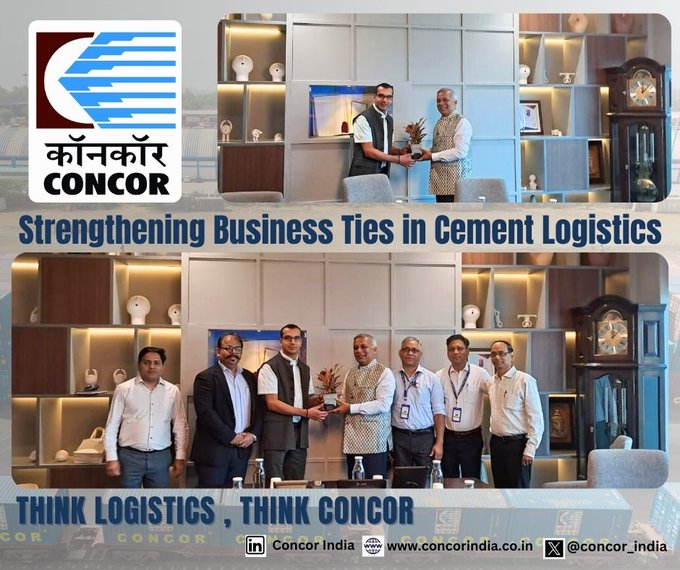
NEW DELHI : Shri Sanjay Swarup, Chairman & Managing Director, Container Corporation of India Ltd.(CONCOR) met Shri Madhavkrishna Singhania, Joint Managing Director & CEO, J.K. Cement Limited, along with senior officers of CONCOR.

Shri Swarup apprised him of various customer-centric initiatives of CONCOR, such as the procurement of tank containers for bulk cement movement and the deployment of LNG-powered trailers for end-to-end logistics solutions.

Both companies expressed a desire to establish a long-term business relationship.

Unifeeder and PlanatEarth launch Hybrid Marine Ambulance and Dispensary for Island Communities in Kerala

ERNAKULUM : Unifeeder, a DP World company, in partnership with Kerala-based NGO PlanatEarth, has launched a hybrid Marine Ambulance and Dispensary for the island communities of Kadamakkudy Panchayath, located in the Vypin Constituency of Ernakulam District.

This community-driven initiative introduces a specially designed medical boat that will provide outpatient consultations, emergency care and essential medications. It will serve over 17,000 residents living across 14 remote islands with limited or no road access. Operating six days a week, the boat will navigate the region’s waterways to deliver vital medical services directly to these underserved island communities.

C.M. Muraleedharan, Regional Director, Unifeeder India said, “This Marine Ambulance and Dispensary is a reflection of our commitment to the welfare of the communities in which we operate. We’re proud to partner with PlanatEarth to ensure that the people of Kadamakkudy’s island communities can access timely and life-saving healthcare, right at their doorstep.”

Kisna Yadav, Chief Legal Officer, Unifeeder, commented, “At Unifeeder, we believe connectivity goes beyond cargo – it’s about connecting communities to opportunity and care. This initiative exemplifies that belief.”

The hybrid boat, powered by a 40HP electric/solar engine, is outfitted with a consultation room, a laboratory, a mobile pharmacy and essential medical infrastructure including a defibrillator, suction unit and oxygen supply. Medical services will be provided by a four-member team comprising a doctor, nurse, pharmacist and attender. The service will follow a weekly schedule for each island and operate via a dedicated helpline.

This community initiative of Unifeeder is aligned to the  Government’s National Rural Health Mission which aims to provide accessible, affordable, and quality health care to the rural population, especially for vulnerable groups.

Allcargo Gati revamps Bike Express for hassle-free Bike transportation across India

MUMBAI : Allcargo Gati Limited, (formerly Gati Limited), India’s premier Express Distribution and Supply Chain Management company, has revised the pricing for its popular Bike Express Service, in efforts to reinforce its commitment to service excellence. The new rates are effective immediately, and all bookings will now be accepted solely on a pre-paid basis, aimed at ensuring smoother customer experience.

Bike Express is a purpose-built bike transportation service designed for working professionals, students relocating to new cities, tourists, and biking enthusiasts seeking safe and hassle-free mobility solutions. Expanding its reach, the service now caters to challenging and iconic destinations like Leh, providing adventure riders with reliable transport options for their expeditions. It offers a wide range of value-added features including doorstep pickup and delivery, secure transportation via containerized vehicles, consignment tracking, last-mile connectivity, and 24/7 customer support.

Commenting on this development, Mr. Mayank Dwivedi, National Head Sales & Marketing Allcargo Gati Limited, said, “Bike Express is India’s trusted comprehensive two-wheeler transportation service, especially among biking enthusiasts heading to iconic routes and across challenging terrains. With our latest pricing revision and move to a fully pre-paid model, we’re reinforcing our promise of transparency, convenience, and consistent service delivery. Every Bike Express shipment includes complimentary doorstep pickup and delivery, secure containerized transport, consignment tracking, and 24/7 customer support. We also offer our specially designed Labh Box — at no extra cost— to safely transport bike accessories and helmets, ensuring customers can ride off without worrying. Bike Express continues to set the benchmark in two-wheeler logistics through a blend of innovation, customer focus and service excellence”

With a clear focus on uniform service delivery and customer convenience, the initiative aligns with the company’s goal of enhancing operational efficiency. Trusted by thousands during relocation seasons and travel expeditions, Bike Express remains a go-to choice for customers seeking reliable, timely, and efficient two-wheeler transport across India.