Home Blog Page 842

KSH Integrated Logistics launches 30,000 Sq. Ft. Multi-Client Warehousing Facility in Indore

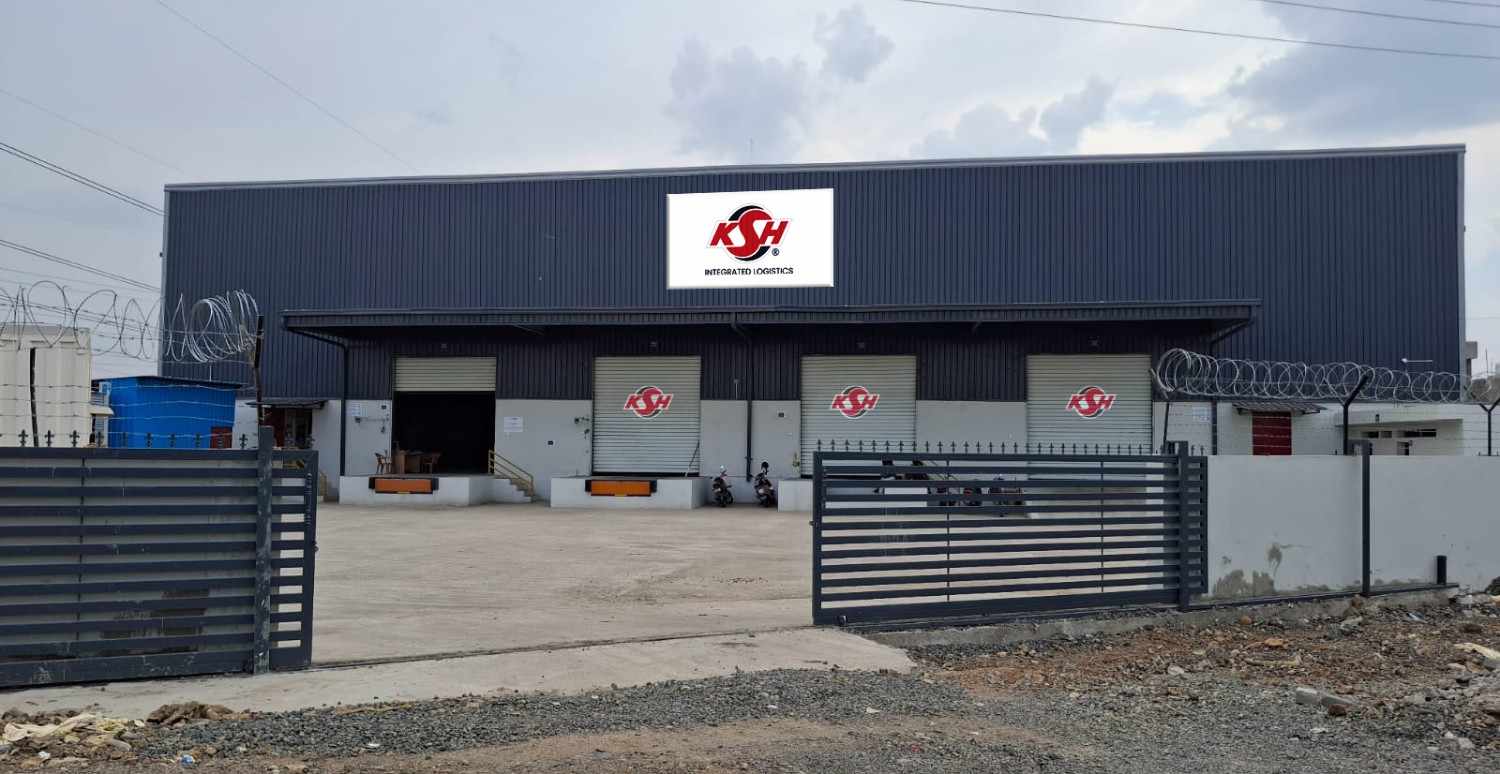
INDORE : KSH Integrated Logistics, one of India’s leading providers of integrated supply chain solutions, announces its latest multi-client warehouse in Indore, Madhya Pradesh. Spanning 30,000 sq. ft., the facility is strategically located in Pithampur, a key industrial cluster, catering to the growing demand for organised warehousing and distribution services in Central India.

This launch marks a significant milestone in KSH’s growth strategy, extending its multi-client warehousing capabilities to one of India’s most connected regions.  The facility is designed to support immediate operational deployment for a wide range of industries, including automotive, industrial, OEM supply chains and many more.

Advanced Services and Infrastructure
The Indore facility offers comprehensive warehousing solutions, such as ground and racked storage, warehouse management, value added services and last-mile delivery services. Integrated with robust Warehouse Management Systems (WMS) and Transport Management Systems (TMS), the warehouse ensures operational transparency, inventory control, and seamless transport execution.

The facility is built to high safety and compliance standards, featuring fire hydrants, fire sprinklers, and beam detectors – an advanced safety setup that is still rare in many regional warehouses.

Strategic Central India Advantage with Customer-Centric Solutions

Indore’s geographic location near the centre of India provides unmatched access to major industrial and consumption hubs across the country. With strong connectivity through national highways, rail networks, and upcoming industrial corridors, KSH Integrated Logistics’ new warehouse strengthens its ability to serve customers across North, West, and Central India with greater efficiency and cost-effectiveness. Backed by deep expertise in warehouse management services , KSH offers a strong understanding of OEM requirements and delivers tailored logistics solutions. The plug-and-play nature of the facility enables rapid go-to-market operations, giving businesses the flexibility and scalability needed to support dynamic growth.

Commenting on the launch, Vinay Patil, CEO at KSH Integrated Logistics, said: “Our expansion into Indore is part of our larger vision to build a future-ready, pan-India warehousing and distribution network that helps customers scale with confidence. Indore’s strategic location, growing industrial base, and proximity to key markets make it a high-potential logistics hub. This facility reflects our commitment to investing in Grade A infrastructure, advanced technology, and customer-focused solutions. As we continue our expansion across India, our goal is to create smart, efficient supply chain ecosystems that meet the evolving needs of OEMs and industrial clients.”

Uber to launch B2B Logistics Service in India

NEW DELHI : Uber reportedly plans to launch a B2B logistics service in India. The company will do so “soon” in partnership with an Indian government-backed nonprofit, the Open Network for Digital Commerce (ONDC), TechCrunch reported Monday (May 19). Uber did not disclose a timeline, according to the report.

The ONDC aims to expand digital commerce in India and make it easier for small businesses to go online, according to the report. The partnership with Uber will enable businesses on the ONDC network to access on-demand logistics through Uber, first for food deliveries and then later for eCommerce, grocery, pharmacy and healthcare logistics, per the report.

Uber’s offering in India will be similar to the Uber Direct service launched in the United States in 2020, although it will be limited to businesses on the ONDC network, according to the report.

When the company began rolling out Uber Direct in select cities in April 2020, Uber said this delivery option would provide on-demand and scheduled last-mile delivery services of everything from groceries and convenience store items to over-the-counter medications and packages.

In September, the company integrated Uber Freight with Uber Direct, saying the combination would bring together one of North America’s largest logistics networks with one of the region’s largest same-day delivery courier networks.

In another collaboration in India, ONDC said in a Monday post on LinkedIn that the Uber app now enables customers to book tickets for the Delhi Metro, the country’s largest urban transit system, directly on the app, in an offering powered by the ONDC network.

“This marks a major step forward in making public transport truly interoperable and commuter-first,” ONDC said in the post. “No extra apps. No added hassle. Just open your Uber app, tap Metro Tickets, and ride.”

The ONDC was launched in India in 2022 to help create a “robust digital public infrastructure” that would help the expansion of digital commerce in the country and provide a level playing field.

In its first year, ONDC scaled up to include more than 45 network participants and 25,000 retail orders per day across more than 400 cities.

Seafood exports in India surge despite global uncertainties

NEW DELHI : India’s seafood exports have recorded a robust growth of 17.81 per cent in April this year to $0.58 billion as the country continues to play a key role of the fourth largest producer of marine products in the international market, according to figures compiled by the Commerce and Industry Ministry.

The country exported 16.85 lakh metric tonnes of marine products in the financial year ended March 31, 2025, which represents an over 60 per cent jump. In value terms, the exports grew to $7.2 billion from $5.4 billion in FY15.

The momentum is continuing into 2025-26, despite fears over tariff hikes announced by the US, which is the largest market for Indian exports. Meanwhile, India and the US are close to concluding a bilateral trade aimed at increasing the flow of exports and imports between the two countries.

India now exports seafood to 130 countries, up from 105 in 2014-15, reflecting the expanding reach of the country’s marine products. Frozen shrimp is the largest exported marine product, contributing over 40 per cent of the total quantity and 66.12 per cent of the total export value, with the US and China as the largest markets.

India’s export competitiveness and higher price realisation are fuelled by the Centre’s Pradhan Mantri Matsya Sampada Yojana (PMMSY) scheme, which supports a basket of interventions along the fisheries value chain, including quality fish production, expansion, diversification and intensification of brackish water aquaculture, promotion of export-oriented species.

Infusion of technology, robust disease management and traceability, training and capacity building, creation of modern post-harvest infrastructure with seamless cold chain, development of modern fishing harbours and fish landing centres also form part of the scheme that has given a big boost to seafood production and exports in the country, a senior official said.

The Centre is now aiming to achieve an export turnover of $18 billion (Rs 1.57 lakh crore) by 2030. The target has been set in the Vision Document -2030 for India’s seafood exports that has been formulated by the Marine Products Export Development Authority (MPEDA), which functions under the Ministry of Commerce and Industry, the statement said.

MPEDA plays a key role in overseeing the seafood export from the country. The Department of Fisheries is implementing the flagship PMMSY scheme with an investment of Rs 20,050 crore in the fisheries sector for five years with effect from the FY 2020-21 to FY 2024-25 across all States and UTs, which has led to a jump in exports.

India notifies port restriction move on Bangladeshi exports

NEW DELHI : The port restriction on import of certain goods from Bangladesh to India has been notified in the Gazette of India. The official gazette notification was issued on Monday and published recently. India has imposed restrictions on the entry of Bangladeshi ready-made garments (RMG) and other products through its northeastern land ports — Assam, Meghalaya, Tripura, Mizoram — and Fulbari and Changrabandha in West Bengal, weeks after controversial remarks made by Bangladesh’s interim chief advisor Muhammad Yunus about the India’s northeastern region, during his visit to China.

During a speech in China, Bangladesh’s Chief Adviser Yunus had described India’s northeastern states as a “landlocked region with no access to the ocean.” This comment has sparked diplomatic friction, with Indian officials viewing it as undermining the region’s connectivity and status.

The new restrictions will, slapped on May 17 and came into effect immediately, forced Bangladesh to reroute exports — including Ready-Made garments (RMG), plastics, melamine, furniture, juices, carbonated drinks, bakery items, confectionery, and processed foods — through Kolkata port in West Bengal or Nhava Sheva port in Maharashtra, sharply increasing logistics costs. With 93 per cent of Bangladesh’s exports to India previously moving through these land routes, the impact on its ready made garments sector — which exports nearly USD 740 million worth of garments to India annually — could be severe.

The move is expected to disrupt Bangladesh’s garment industry, raising costs and limiting market access, while creating new opportunities for Indian manufacturers. India’s restrictions on imports from Bangladesh via land ports will impact goods worth USD 770 million, accounting for nearly 42 per cent of total bilateral imports, according to the Global Trade Research Initiative (GTRI) report, a trade-focused research group.

The May 17 directive makes clear that imports of essential items like fish, LPG, edible oil, and crushed stone remain unaffected. Goods transiting through India from Bangladesh to Nepal and Bhutan are also exempt.

The Indian government has imposed land port restrictions on certain Bangladeshi exports to the northeastern states, a move that sources say is aimed at restoring “equality in the relationship”.
The sources further said that while India had hitherto allowed all exports from Bangladesh without restrictions, the transit and market access to India’s northeast region had been restricted by Bangladesh. The sources further said that the relationship with Bangladesh will now be on “reciprocal terms”.
India limiting imports from Bangladesh to only two seaports, according to the sources, is a reciprocal measure to Bangladesh — which had imposed similar trade restrictions on Indian yarn and rice, besides selectively enhancing inspection on all Indian goods exported to Bangladesh.

The sources further noted that Bangladesh needs to realise that “it cannot cherry pick terms of bilateral trade solely for its benefit or assume North East is a captive market for its exports, while denying it market access and transit.”

Source : ANI

AP targets big returns from Shipyards and Ports

AMRAVATI : For Andhra Pradesh, the buzzword for faster economic growth is, of late, port-led development, going by the string of investments in developing port and coastal infrastructure.

The State, which has been in dire need of job creation and faster economic growth to counter the loss of economic resources and urban infrastructure since its bifurcation in 2014, is on a mission to spur development through mega investments in port infrastructure.

According to Chief Minister N Chandrababu Naidu, the government is adopting a multi-pronged strategy to use the blue economic infrastructure as a catalyst for growth, including port construction and upgradation, development of economic hubs around ports, and fishing harbours every 50 km along the State’s 974-km coastline.

Special purpose vehicle
A new area of focus is shipbuilding and ship repair services, along with the construction of greenfield ports. Preparations are underway to set up a shipbuilding and repair cluster at Dugarajapatnam, in Nellore district, at an investment of ₹3,500 crore.

Based on an initial feasibility report, the 2,000-acre project is proposed to be developed through collaboration between the central and State governments. Nearly 1,000 acres will be allocated for core shipbuilding units and the rest for ancillary industries. The proposed greenfield port integrated with a shipbuilding and repair hub would have four dry docks, outfitting jetties, and a ship-lift facility.

The State government is considering floating a special purpose vehicle (SPV) to attract global shipbuilding companies and an estimated ₹26,000 crore investment, apart from generating 5,000 direct and 30,000 indirect jobs.

Policy push
The new maritime policy of Andhra Pradesh aims to develop a ‘global shipyard model’ in the State; the Department of Ports is working on the modalities.

The government anticipates a growth in vessel traffic to the State over the next two to three years, as three state-of-the-art ports become operational at Machilipatnam, Mulapeta (formerly Bhavanapadu) and Ramayapatnam, at an investment of ₹16,000 crore.

Nine new fishing harbours are being developed across the State, including at Uppada, Visakhapatnam, Odarevu, and Kothapatnam, at a cost of ₹350 crore each.

Busiest US Seaport unlikely to see tariff-related cargo boom, CEO says

LOS ANGELES : The head of the busiest U.S. Port of Los Angeles does not expect imports to soar after last week’s tariff truce between Washington and Beijing that temporarily lowered the duty to 30% from 145%.

“You won’t see a deluge of freight here at the Port of Los Angeles,” Gene Seroka, executive director of the port that is also No. 1 for trade with China, said in a briefing on Monday.

“What we’ll see is a little bit of an uptick in bookings in Asia,” Seroka said of reservations on cargo ships headed for the port.

That rise likely will be linked to importers scooping up cargo that was manufactured before the U.S. imposed the 145% tariffs last month, rather than to new orders that may not be ready when the 90-day reprieve closes, he said.

The Port of Los Angeles and the adjacent Port of Long Beach handle 31% of U.S. sea trade and are a barometer for U.S. economic activity. They handle everything from incoming toys, apparel and auto parts to outgoing raw cotton and pet and animal feed.

The coming volume uptick follows a sharp drop in bookings after the United States imposed on April 9 the 145% import duties on China – its largest marine trading partner.

It takes a few weeks for the effects to show up at U.S. ports, so May imports reflect the escalation to 145% tariffs.

During the first 15 days of this month, 74 container ships arrived at the ports of Los Angeles and Long Beach, 11 fewer than usual, according to data from Marine Exchange of Southern California.

“The May volume drop is likely to be substantial when we close the books on this month,” said Seroka, who declined to make a specific forecast.

Port of Long Beach CEO Mario Cordero said on Thursday he expected a more than a 10% drop-off in imports in May.

Consumers drive retail demand that accounts for nearly half of container shipping volume.

IMO-WISTA Women in Maritime Survey 2024 – Report

MAIDSTONE, KENT (UK) : WISTA International are pleased to share the findings from the IMO-WISTA Women in Maritime Survey 2024.

The second Women in Maritime survey, jointly published by the International Maritime Organization (IMO) and the Women’s International Shipping & Trading Association (WISTA), provides new insights into gender diversity within the industry.

The report presents data on the proportion and distribution of women working in the maritime sector from IMO Member States and the private sector.

Key findings from the report, which has provided new insights into gender diversity within the maritime industry, included:

  • A larger number of women are working in maritime across the public and private sectors: 176,820 women in 2024 compared to 151,979 in 2021
  • However, the latest dataset shows that women account for just under 19% of the total workforce sampled, compared to a share of 26% in the catchment group reported in 2021.
  • Of the sample group, women account for 19% of the workforce of national maritime authorities in Member States, and only 16% of the surveyed private sector workforce (excluding seafarers).
  • At sea, women remain vastly underrepresented, accounting for just 1% of the total number of seafarers employed by surveyed organisations.
  • A total of 1,206 women sit on the boards of surveyed maritime organisations, accounting for 34% of board members.

Please download the full report from the WISTA International website here

Wallem Group sets out best practice guidance for marine biofuels

HONG KONG : Wallem Group, a leading global maritime partner, has published a new whitepaper to ensure ships, ships systems and crews are fully prepared to load, store and use biofuels in everyday vessel operations.

‘Marine Biofuels: Adoption, use, and best practice’ recognises the contribution that biofuels can make to maritime decarbonisation, while also offering comprehensive guidance on the precautions owners and crew need to consider before and during use.

Biofuels have established a market position among owners seeking to reduce greenhouse gas emissions at a time when alternatives such as Renewable Fuel of Biological Origin (RFNBO), zero-carbon hydrogen, ammonia, or e-methanol remain unavailable. Permissible biofuel well-to-wake emissions intensity has been defined by the International Maritime Organization (IMO) as at least 65% of Marine Gas Oil (MGO).

However, with a lower calorific value than fossil fuels, biofuels also present adoption challenges that require close attention from procurement, technical and vessel operating personnel, notes Abhijit Ghosh, Head of Maritime Technology and Innovation, Ship Management, Wallem Group.

The whitepaper examines the regulatory landscape surrounding marine biofuels, but also the specifics of IMO compliance, and the transparency needed to use fuels that  vary batch to batch. It explains how these blends of Fatty Acid Methyl Ester (FAME) and residual or distillate fuels impact storage tanks, fuel systems, machinery, and crew training, also reflecting on the need for additional insurance cover.

Based on experience, Wallem has particular recommendations for owners on the assurances they need from equipment suppliers before introducing biofuels. It also explores the consequences for biofuel users of improper blending, acidity, biodegradation and microbial growth, fouling, waxing and clogging. The publication provides best practice recommendations for testing, materials selection, segregation, temperature control, tank cleaning and fuel line flushing. For long-term biofuel use, Wallem recommends that engines are retrofitted with hardened fuel pumps and corrosion-resistant coatings.

The whitepaper also considers crew training gaps and offers recommendations for monitoring, measuring, and checking biofuel use to ensure that personnel, systems, and the ship remain safe.

“The combination of a centralised digital system for real-time tracking and analysis of biofuel consumption and a skilled and well-trained crew can be transformative for enabling the future-ready maritime fleet”, says Ghosh.

To download Wallem’s White Paper ‘Marine Biofuels: Adoption, use, and best practice’ click HERE

Marlink SOC report finds maritime users facing increasingly sophisticated cyber threats

OSLO : Marlink, a leader in managed services for business-critical IT solutions, has published its Security Operations Centre (SOC) report for the second half of 2024.

The report finds that cybercriminals targeting maritime have streamlined their tactics, enhanced their operational efficiency and adopted emerging technologies to expand their attack capabilities.

In the six months to December 2024, Marlink’s global network of SOCs monitored 1,998 merchant and leisure vessels, and recorded:

  • 9 billion security events and 39 billion firewall events;
  • 718,000 alerts and 10,700 malware incidents detected;
  • 50 managed major incidents.

One of the most significant developments has been an increase in the adoption of generative artificial intelligence (genAI). Off-the-shelf large language models (LLMs) have become a critical tool for hackers, allowing them to accelerate malware development, automate phishing campaigns and refine social engineering tactics.

This has led to a surge in AI-assisted cyberattacks. Some actors have leveraged genAI to assist in developing malicious scripts and exploits designed to specifically target CVEs (known cyber security vulnerabilities).

The cybercriminal ecosystem has become more organised, with access brokers thriving. The sale of network access has doubled in the past year, as cybercriminals increasingly turned to access broker services to gain entry into corporate environments.

The increasing complexity of these cyber threats reinforces the urgent need for stronger security postures and improved cyber hygiene. Marlink operates a global network of Security Operations Centres for both IT and OT solutions through its dedicated Marlink Cyber operation.

“H2 2024 saw a marked evolution in cyber threats,as malicious actors adopted increasingly efficient,structured, and business-like approaches to cybercrime, putting additional pressure on the maritime industry,” said Nicolas Furge, President, Marlink Cyber. “Looking ahead to 2025, the cyber security landscape is expected to become increasingly complex and challenging, increasing the pressure on users to improve protection of assets and people.”

Foreship enables world-first dual chemistry battery system to boost zero-emission power for Wasaline

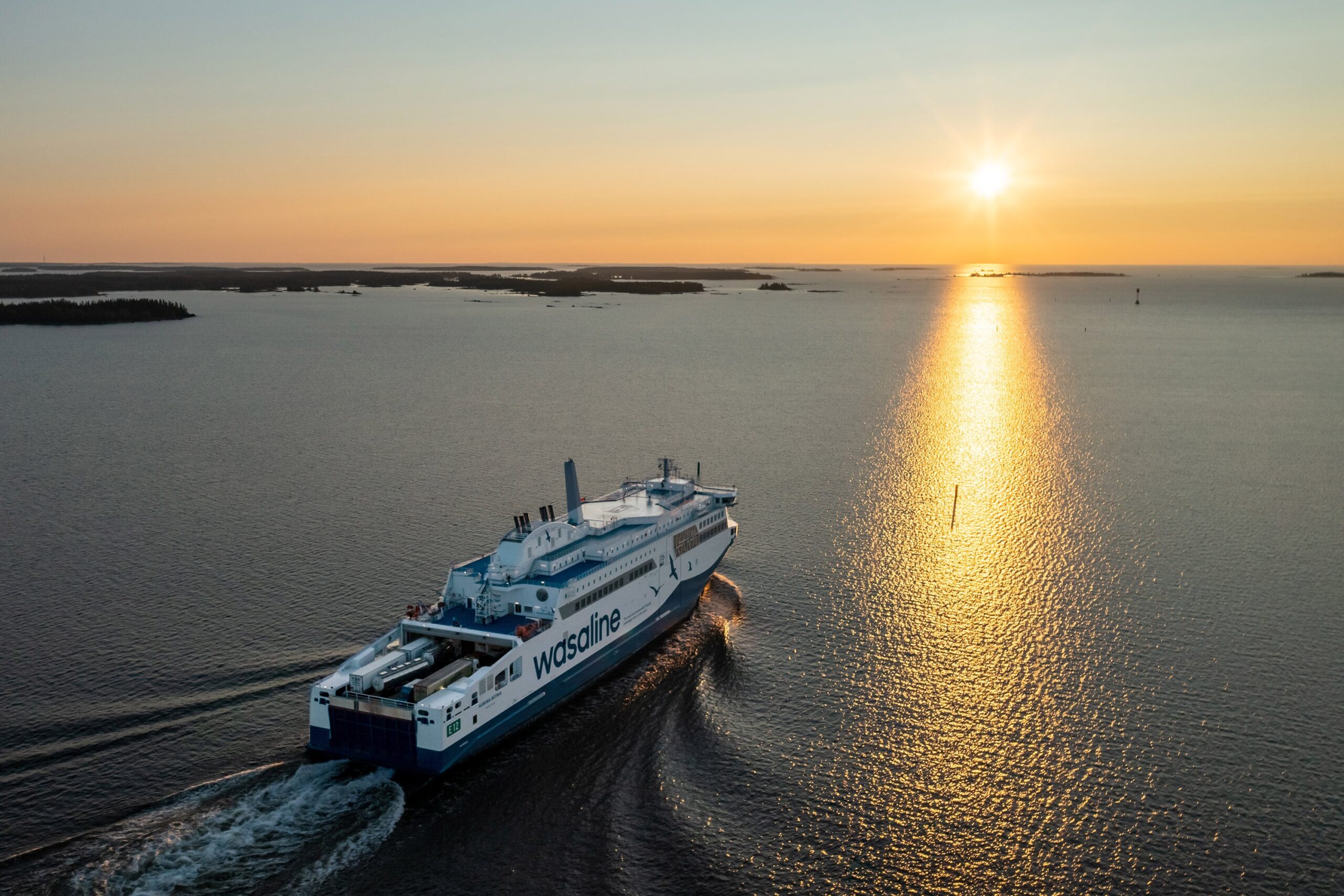
HELSINKI : Naval architecture and engineering consultancy Foreship is supporting Wasaline in delivering a breakthrough battery upgrade on MV Aurora Botnia that will see the ferry’s energy storage capacity increase nearly sixfold. The world-first retrofit will combine two battery chemistries in a hybrid solution that is expected to cut annual CO₂ emissions by up to 23%.

Building on a long-standing relationship with Wasaline that began during the vessel’s initial design phase, Foreship provided comprehensive technical and strategic support for the retrofit. The work included an extensive feasibility study covering technical impact evaluation, emissions modelling and cost analysis, later followed by supplier evaluation, classification design, engineering support, and implementation assistance.

“This is one of the most technically ambitious hybrid conversions yet attempted on a ro-pax ferry,” said Joonatan Haukilehto, Head of New Technologies at Foreship. “By integrating high-power NMC batteries with energy dense LFP batteries, we have enabled Aurora Botnia to draw on the unique strengths of both battery chemistries. All of this has been achieved without requiring major changes to the vessel’s electrical infrastructure. To our knowledge, it is the first time this dual-battery approach has been realized in a maritime retrofit.”

The upgrade increases the vessel’s total battery capacity from 2.2 MWh to 12.6 MWh. Scheduled for commissioning in early 2026, and recharged by renewable shore electricity during port stays, the enlarged battery setup will supply up to 20% of the vessel’s total energy demand. This will deliver enhanced energy efficiency throughout its 1,000-plus annual voyages by enabling the LNG-fueled powerplant to operate continuously at its highest efficiency, while using the minimum number of generating sets. Quayside power use is already zero emissions, thanks to the shore power infrastructure at both ports of call.

Foreship supported Wasaline in optimizing the retrofit for commercial and regulatory impacts. Using emissions modelling aligned with the EU Emissions Trading System and FuelEU Maritime, the consultancy demonstrated how the combination of the new battery capacity with existing LNG and bio-LNG fuel use could enable compliance through to the 2040s. It also creates opportunities for Wasaline to sell surplus emission allowances.

“From the beginning, Aurora Botnia was built to evolve, and Foreship has been with us at every step of that journey,” said Peter Ståhlberg, Managing Director of Wasaline. “This latest upgrade represents a significant leap toward our 2030 climate goals. By integrating advanced battery solutions and maximizing our use of clean shore power, we are proving that sustainable ferry transport is wholly viable. Foreship’s deep expertise and responsive support have been instrumental in making that a reality.”

Foreship expects to provide ongoing assistance during the detail engineering, installation, and commissioning phases, including technical oversight, site supervision, and functional integration support. The company’s work on Aurora Botnia builds upon more than a decade of pioneering battery and hybrid system design for ferries, cruise ships, and specialized vessels, with over 60 battery system projects completed.

“This project demonstrates what is possible when owners take a strategic approach to compliance and decarbonization,” said Lauri Haavisto, CEO, Foreship Group Ltd. “With careful planning and the right partner, retrofit does not mean compromise. It can unlock lasting competitive advantage.”