Home Blog Page 843

Strategic Marine delivers First of Two 27M Crew Transfer Vessels to Taiwan for Ventus Marine Ltd

SINGAPORE : Strategic Marine, a global leader in aluminium shipbuilding, is proud to announce the successful delivery of the first 27m Z-Bow Crew Transfer Vessel (CTV) to Taiwan as part of a contract with Ventus Marine Co., Ltd for two state-of-the-art vessels. This milestone marks Strategic Marine’s continued commitment to supporting the offshore wind industry with innovative and high-performance vessel solutions.

The vessels, designed in collaboration with renowned naval architects BMT Limited, incorporate cutting-edge marine engineering and technology. They are tailored to excel in the demanding environments of offshore wind operations, with features including CPP propulsions, bow thrusters and Active Fender System to enhance performance, efficiency, and manoeuvrability.

Mr. Chan Eng Yew, Chief Executive Officer of Strategic Marine, stated: “We are delighted to deliver the first two 27m Z-Bow Crew Transfer Vessels to Taiwan as part of this significant contract with Ventus Marine. These vessels reflect our commitment to innovation, quality, and meeting the growing demands of the offshore wind industry. We look forward to continuing our collaboration with Ventus Marine to support offshore operations in both Asia and Europe.”

This delivery which is part of the 4 CTV orders by PSA Marine’s entities in Taiwan and Europe, highlights Strategic Marine’s ability to deliver advanced vessels tailored to regional and operational requirements. The remaining three vessels are scheduled for delivery in 2025.

Marcura and Sedna Partner to Simplify Maritime Workflows

DUBAI : Marcura and Sedna announced a partnership giving chartering and operations teams direct access to Marcura’s ClaimsHub from inside Sedna’ email platform Stream. Integration with PortLog is planned for the next phase of the rollout. Together, these tools will help shared customers reduce system switching, speed up decisions, and minimise operational risk.

Chartering and operations teams spend much of their day in email, reviewing instructions, managing documents, and responding to fast-moving events. However, the systems they rely on to act often sit outside the inbox, forcing them to switch platforms and manually move documents from one system to another just to keep things moving. It is slow, repetitive, and prone to error.

Sedna is built to solve that exact problem. By connecting directly to the tools teams already use, it turns email into a workspace where structured data, decisions, and workflows live side by side. This means fewer clicks, fewer missed steps, and faster action where it matters most.

With Marcura’s ClaimsHub and AI console already accessible from within Sedna, and PortLog due to follow soon, users can manage key processes and access voyage-critical information without ever leaving their inbox.

Key benefits of the integration between Sedna and Marcura include:

Claims handled faster: Operations teams can now send documents like Statements of Fact directly from Sedna into ClaimsHub. Processed results return to Sedna, removing unnecessary downloads and manual transfers.

AI-powered document workflows: Users can push charter party documents from Sedna to Marcura’s AI Console, streamlining tasks including handover generation from chartering to operations and running ‘check before fixing’ to flag missing or ambiguous clauses. These outputs flow back into Sedna, helping teams issue accurate voyage instructions without disrupting their workflow.

Voyage planning simplified: Chartering and operations teams will soon be able to access turnaround times, port costs, and restrictions right from their inbox helping them plan more confidently and avoid delays.

Dylan Ray Mace, VP of Sales & Partnerships, Marcura, said: “Maritime teams are already buried in email. They’re under pressure and moving fast; the last thing they need is to jump between systems just to process a claim or check port data. This integration brings critical tools and information to where it’s most needed. It means fewer clicks, less friction, and faster decisions. It’s simple, and that’s exactly the point.”

Bill Dobie, Founder and CEO, Sedna, added: “This partnership brings together two platforms that understand how people actually work, removing friction, saving time, and helping teams act faster with the right information in front of them.”

ClassNK releases new features for GHG Emissions Management Tool ‘ClassNK ZETA’

TOKYO : ClassNK has released new features related to FuelEU Maritime*1 and EU-ETS*2 for its GHG emissions management tool, ‘ClassNK ZETA’. Additionally, with the integration with NAPA, its “NAPA Fleet Intelligence” is available on ClassNK ZETA.

ClassNK ZETA is a tool for visualizing GHG emissions / CII ratings of ships and supporting management of EU-ETS /FuelEU Maritime and is used for over 5,500 ships. The details of new features are as follows:

  • FuelEU Maritime – Pool optimization
    Depending on each ship’s current compliance surplus or deficit, it recommends the optimized combination of banking, borrowing, and pooling to optimize compliance costs —making it easier to explore the best path toward FuelEU Maritime compliance.
6763d375 6fed 1373 ad01 b0628da0a9a9 ClassNK releases new features for GHG Emissions Management Tool ‘ClassNK ZETA’
  • EU-ETS – EU Allowances (EUA) purchase inquiries
    For EU-ETS obligations, users can send EUA purchase inquiries directly to the companies (ITOCHU Corporation and MITSUI & CO., LTD.) that support the purchase of EUAs. Users can use this feature to efficiently purchase EUAs.
57bfc04c 85b8 4431 712a 213b24ebcd7c ClassNK releases new features for GHG Emissions Management Tool ‘ClassNK ZETA’

ClassNK ZETA has also been upgraded into an open platform with enhanced third-party integrations. As the first step, ‘NAPA Fleet Intelligence’*3 provided by NAPA is now available on ClassNK ZETA. This enables users to utilize ‘NAPA Fleet Intelligence’ directly using data in ClassNK ZETA.

0d151dee 758d ec17 866d 4af9957898e5 ClassNK releases new features for GHG Emissions Management Tool ‘ClassNK ZETA’

These new features will be presented at Bariship, to be held from 22 to 24 May.

ClassNK will continue to strive to enhance tools to support GHG emissions management, including ClassNK ZETA as part of the ‘ClassNK Transition Support Services,’ which support our customers’ smooth transition to zero-emission.

Detailed information and application for use are available on the following page.
https://www.classnk.or.jp/hp/en/info_service/ghg/nk-zeta.html

*1 ‘FAQs on the FuelEU Maritime’ is available from the following link:
FAQs on the FuelEU Maritime (3rd Edition)
*2 ‘FAQs on the EU-ETS for Shipping’ is available from the following link:
FAQs on the EU-ETS for Shipping (Edition 2.1)
*3 For more information on NAPA Fleet Intelligence, refer to the following link:
https://www.napa.fi/software-and-services/ship-operations/napa-fleet-intelligence/

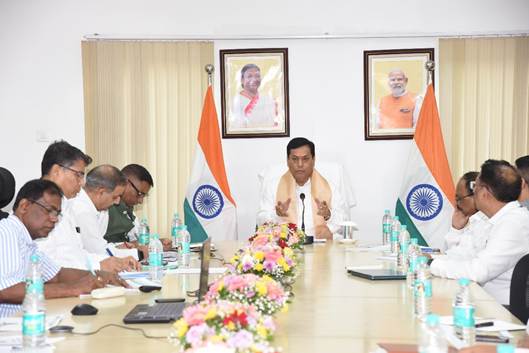
Sarbananda Sonowal reviews Inland Waterways Infra Projects in Assam & Northeast

NEW DELHI : Union Minister of Ports, Shipping and Waterways (MoPSW), Shri Sarbananda Sonowal, on Monday reviewed the ongoing projects in Assam and the Northeast with senior officials from the Ministry of Ports, Shipping and Waterways (MoPSW), the Inland Waterways Authority of India (IWAI), Public Works Department (PWD), Indian Port Rail and Ropeway Corporation Limited (IPRCL) and Cochin Shipyard Limited (CSL). The minister underscored the need to complete the projects on time in line with the broader vision of Prime Minister Shri Narendra Modi’s Viksit Bharat. “Northeast is the topmost priority for PM Narendra Modi ji, our work in the region must sync with the vision of Viksit Bharat,” asserted Sarbananda Sonowal at the meeting.

Speaking after the meeting, the Union Minister said, “As per the vision of Hon’ble Prime Minister Shri Narendra Modi ji, we are developing robust waterway infrastructure in Assam and the Northeast with projects worth ₹1,000 crore on the anvil, targeted for completion by 2026. In last two years, more than ₹1,000 crore has been invested, with ₹300 crore worth of projects already completed. Following my review of ongoing works in the region, we are on track to complete the remaining ₹700 crore projects by the end of 2025. These efforts aim to boost cargo and passenger movement, improve last-mile connectivity, promote economic growth in the Northeast, and align with the broader vision of Atmanirbhar Bharat through sustainable and inclusive transport solutions.”

The Union Government is actively developing key infrastructure projects along NW2 (Brahmaputra) and NW16 (Barak), including the construction of passenger vessels of various capacities, terminal facilities, and capacity-building initiatives. Union Minister Shri Sarbananda Sonowal also reviewed progress on the proposed Inland Water Transport (IWT) project at Doyang Lake, and assessed the potential of Noune and Shilloi Lakes in Nagaland for water sports and tourism. Feasibility studies for IWT development on the Tiawng and Chhimtuipui rivers in Mizoram, as well as on Umiam Lake and the Ummgot River (NW106) in Meghalaya, were also reviewed.

Speaking at the event, Union Minister Shri Sarbananda Sonowal said, “Under Prime Minister Narendra Modi’s visionary leadership, India is steadily moving towards the goal of Viksit Bharat. Assam and the Northeast are central to this progress, with inland waterways playing a vital role. Since 2014, the Modi government has revived this once-neglected mode of transport, especially through the Brahmaputra (NW2) and Barak (NW16) rivers. Schemes like Jalvahak are encouraging businesses to adopt this economical, efficient, and eco-friendly mode, reducing pressure on road and rail, and positioning Assam as a key driver in India’s journey towards a self-reliant economy by 2047.”

Reviewing multiple projects ranging from new infrastructure development for capacity enhancement on national waterways to scaling up with skill development initiatives for youth of Assam and the Northeast in the maritime sector, Union Minister Sarbananda Sonowal emphasised the urgency and the need for optimum utilisation of funds.

Adding further, Shri Sarbananda Sonowal said, “Under the visionary leadership of Prime Minister Shri Narendra Modi ji, the government is building new avenues for the youth of Assam and the Northeast to participate in India’s maritime growth. Through institutions like the Maritime Skill Development Centre in Guwahati and the Centre of Excellence for Inland Water Transport in Dibrugarh, we are training a future-ready workforce equipped for inland and global maritime opportunities. These efforts are part of a larger push to skill, empower and employ our youth in logistics, cargo handling, vessel operations and more—especially as we expand infrastructure on NW2 and NW16. The Northeast is not just a gateway to Southeast Asia, but a key contributor to India’s journey towards becoming a global maritime leader and achieving Viksit Bharat by 2047.”

To further enhance cruise tourism and cargo handling capacity across National Waterways 2 (Brahmaputra) and 16 (Barak), over ₹1,500 crore have been earmarked for key projects scheduled to be completed by 2027-28. These include construction of modern jetties equipped with onshore facilities at Silghat, Bishwanath Ghat, Neamati Ghat, and Guijan. Additionally, a new building for the Regional Office of the Mercantile Marine Department (MSDC), along with a guest house and office space for ITAT, will be constructed at Fancy Bazar in Guwahati.

Shri Sonowal also noted progress on the proposed Water Metro services in Guwahati and Dhubri, with a ₹315 crore investment and two electric catamarans being built by Cochin Shipyard Ltd. A ₹100 crore cruise terminal in Guwahati and a Regional Centre of Excellence (RCoE) in Dibrugarh worth ₹120 crore are also in the pipeline.

Infrastructure along Brahmaputra (NW2) includes five riverine lighthouses at key locations, fairway development between Pandu and Bogibeel with ₹150 crore, and procurement of two cutter suction dredgers. The IWAI is implementing ₹1,010 crore worth of projects across NW2 and NW16, including terminals at Bogibeel and Jogighopa, and a ₹208 crore ship repair facility at Pandu.

On Barak River (NW16), Shri Sonowal reaffirmed that survey and dredging equipment, and floating terminals at Karimganj and Badarpur projects reflect the Modi Government’s commitment to making the Northeast a hub of India’s maritime future.

To ensure consistent navigability along the Brahmaputra, the Dredging Corporation of India (DCI) has been entrusted with maintaining a minimum assured draft of 2.5 meter from the Bangladesh border to Pandu under NW-2 until 2026-27. For this effort, an additional ₹191 crore has been sanctioned. These measures are a part of the Union Government’s broader initiative to integrate Northeast India into the country’s maritime growth trajectory, aligning with the vision of a Viksit Bharat by 2047.

The review meeting was attended by senior officials from the MoPSW, the IWAI, the CSL and IPRCL among others.

India signs 13 MoUs with Maldives to enhance ferry services under Indian grant assistance

MALE : India has signed 13 MoUs with the Maldives for enhancing ferry services in the island nation with an MVR 100 million grant, expanding maritime connectivity and uplifting community livelihoods.

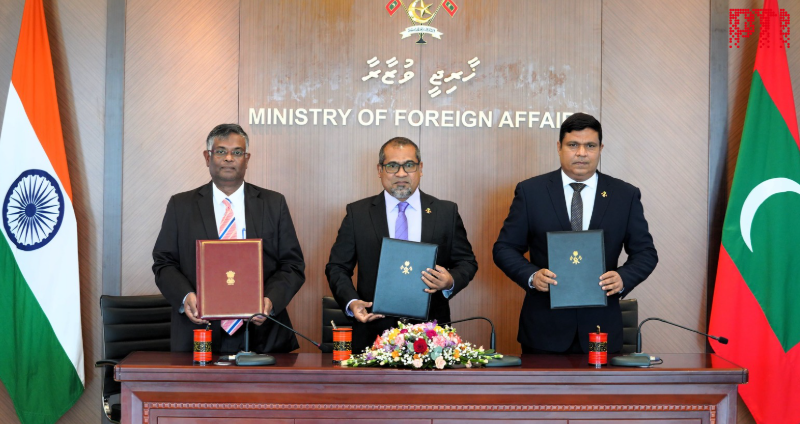
The MoUs signed on Sunday are for projects to be implemented under the Indian grant assistance scheme—High Impact Community Development Project (HICDP) Phase III. The signing ceremony took place at the Ministry of Foreign Affairs, marking another milestone in the ever-strengthening partnership between the two countries, the Maldives’ Ministry of Foreign Affairs said in a statement.

The 13 projects launched under this phase amount to a total grant of MVR 100 million (about Rs 55,28,47,552), primarily aimed at enhancing ferry services in the Maldives, expanding connectivity, and uplifting community livelihoods, it said.

“On May 18, India and the Maldives signed 13 MoUs for enhancing ferry services in the Maldives with an MVR 100 mn grant under HICDP III. India is happy to partner with GoM in enhancing maritime connectivity, a lifeline for the people of the Maldives,” the High Commission of India in the Maldives posted on X.

The MoUs were signed by Abdulla Khaleel, Minister of Foreign Affairs, on behalf of the Maldivian government, and G Balasubramanian, the High Commissioner of India to the Maldives. Mohamed Ameen, Minister of Transport and Civil Aviation, signed on behalf of the implementing agency.

During the ceremony, Khaleel emphasised that India’s assistance has always been meaningful, purposeful, and aligned with the needs of the Maldivian people, reflecting the enduring bond between the two countries.

He highlighted that the projects launched are more than just infrastructural developments—they are lifelines to communities, designed to address local needs and bring lasting socio-economic benefits.

He further expressed confidence that the successful implementation of these projects would pave the way for even greater cooperation and shared progress, underscoring the spirit of friendship that defines Maldives-India relations.

“Pleased to launch 13 new projects today under India’s grant assistance for High Impact Community Development Project (HICDP) Phase III. These projects go beyond infrastructure. They are lifelines for communities, creating pathways to opportunities, solving local challenges, and supporting lasting socio-economic progress. I thank the Government and people of India for the generous support,” Khaleel posted on X.

Ameen, speaking on the project, highlighted the rapid progress in establishing a nationwide high-speed ferry network, now connecting 81 islands across 9 atolls.

He noted that the MoUs signed today with India will further expand these services, reinforcing the strong bilateral ties between the two countries. Although initially scheduled for completion in 2027, the project is now expected to be finalised by the end of this year.

Both ministers expressed gratitude to the Government of India for its generous support, highlighting its transformative impact on Maldivian communities.

The announcement of Phase III of the HICDP scheme was made during the state visit to India by President Mohamed Muizzu last October.

“This milestone supports President Dr @MMuizzu’s vision to strengthen our national transport network by year-end. Grateful for India’s continued support,” Ameen posted on X.

Source : PTI

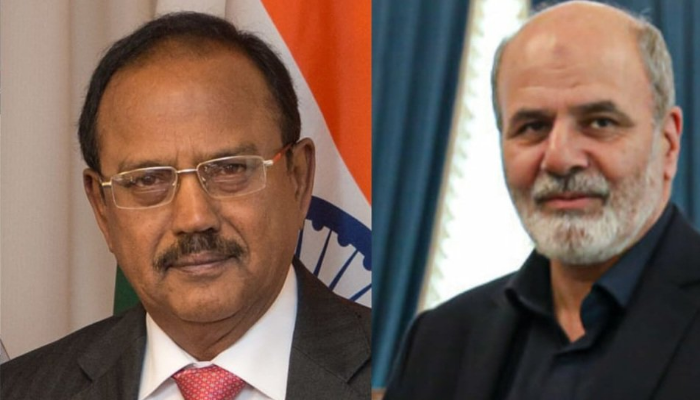
NSA Doval discuss regional situation & Chabahar project with Iranian counterpart Ali Akbar Ahmadin

NEW DELHI : National Security Advisor Ajit Doval on Sunday held a phone conversation with his Iranian counterpart Ali Akbar Ahmadian with a focus on regional situation and the Chabahar Port project.

An Iranian readout said Doval talked about Iran’s “constructive role” in the region and expressed India’s interest in further expanding cooperation in the development of Chabahar Port and the International North-South Transport Corridor (INSTC).

It is understood that the recent military confrontation between India and Pakistan also figured in the talks.

“During the call, Doval emphasised Iran’s constructive role in the region and expressed India’s interest in expanding bilateral cooperation — particularly in the development of Chabahar Port and the International North-South Transport Corridor,” the readout said. He also thanked Iran for its continued assistance and support, it noted.

“Ahmadian affirmed that Iran and India, as two ancient civilizations, share deep-rooted ties and vast potential for political and economic collaboration,” the readout said.

It said Ahmadian, the Secretary of the Supreme National Security Council of Iran, stressed the need to swiftly implement strategic projects and reiterated that bilateral cooperation serves the broader interests of regional peace and stability.

Located in the Sistan-Balochistan province on the energy-rich Iran’s southern coast, the Chabahar port is being developed by India and Iran to boost connectivity and trade ties.

The INSTC is a 7,200-km-long multi-mode transport project for moving freight among India, Iran, Afghanistan, Armenia, Azerbaijan, Russia, Central Asia and Europe. India has been supporting the project.

Source : PTI

DG Shipping hails Indian Maritime Startup, Navguide Solutions

MUMBAI : Directorate General of Shipping proudly highlights the remarkable work of Navguide Solutions, a pioneering Indian maritime startup that is transforming the way seafarers learn, grow, and thrive at sea. Rooted in empathy and driven by innovation, Navguide Solutions is redefining maritime competency development through practical, tech-enabled, and seafarer-centric solutions. From their flagship ClassNK-approved Guide2Inspections.

App to immersive micro learning videos and gamified mentorship models, Navguide empowers thousands of seafarers worldwide to build real, job-ready skills—confidently, independently, and in sync with evolving global benchmarks like SIRE 2.0 and Rightship. Their tools—developed in India, presented at the IMO, and now used across continents—are addressing the critical gap in structured onboard learning, restoring dignity and structure to skill development at sea. Over the past four years, Navguide Solutions has received global recognition for their contributions:

  • ClassNK approval under training and certification systems
  • Acknowledged by ITF, presented twice at IMO HTW sessions (2024 & 2025)
  • Endorsed by INTERTANKO for their impact on SIRE 2.0 readiness
  • Adopted by major shipping firms including Kuwait Oil Tanker Company, Mitsui OSK Lines, and others
  • Partnered with leading training bodies such as Mintra, Seably, ISF, Ocean Technologies Group, and more
  • Backed by a prestigious Global Advisory Board of industry leaders
  • Acknowledged by NorthStandard P&I Club for helping reduce detentions and claims (Read more)
  • Finalists at The Captain’s Table, Hong Kong

International Stage Presence: Navguide has shared its insights and processes at global forums including BIMCO, INTERTANKO Vetting Forum, CMMI, Safety4Sea, EZAME, FOSMA, Maritime Trainers Guild, HK Shipowners’ Association, and more. Their thought leadership is regularly featured in the Nautical Institute’s Seaways Magazine (on SIRE 2.0) and Sailor Today (on Rightship Inspections).

Founder Capt. Debashis Basu has been recognized with:

  • CMMI Founders’ Innovation Award 2025
  • Maritime Personality of the Week by Lloyd’s Maritime Institute (April 2025)

Navguide Solutions is not just an Indian success story—it’s a global movement towards smarter, kinder, and more effective maritime training. A true testament to India’s growing leadership in maritime innovation.

Allcargo Gati delivers 110 bps increase in EBITDA margin over FY24

MUMBAI : Allcargo Gati Limited (formerly Gati Limited) one of India’s leading premier Express Distribution and Supply Chain Management company, has reported its audited financial results for the quarter and Financial Year ended March 31, 2025. 

Financial Highlights for Express Business

Express business is housed under Gati Express and Supply Chain Pvt. Ltd. (GESCPL), formerly known as Gati KWE (GKEPL).

Particulars (in ₹ Crs)Q4FY25Q4FY24Y-o-YQ3FY25Q-O-QFY25FY24Y-o-Y
Revenue385 355 9%392 -2%151014792%
Gross Margin89 93 -5%98 -10%3843645%
EBITDA12 15 -17%22 -44%725434%

Commenting on the results Mr. Ketan Kulkarni, Managing Director and Chief Executive Officer of Gati Express and Supply Chain Pvt. Limited said:

“We are pleased to report strong FY25 results, marking a significant improvement over the same period last year. Our EBITDA margin has expanded impressively by 34% in FY25, compared to FY24. Gross margins improved by 5%, while revenue grew by 2% year-on-year, driven by focused sales growth initiatives and sustained operational efficiencies.

We continue to build on our momentum by onboarding several marquee customers, reinforcing our position as a preferred partner in the express logistics and supply chain space. 

In line with our digital-first approach, our key milestone this year has been the successful implementation of cutting-edge tools like the HubEye and Gate Scan apps to enhance operational visibility and hub efficiency. Migration of our ERP platform to an Oracle-based system will significantly modernize our IT infrastructure. Additionally, our newly launched, state-of-the-art AllcargoGati website offers a seamless digital experience for customers, partners, and stakeholders. The new revised tariff strategies would lead to enhancement of gross margins.

With a leaner organizational structure, we are well-positioned for accelerated growth and execution in the next Financial Year.”

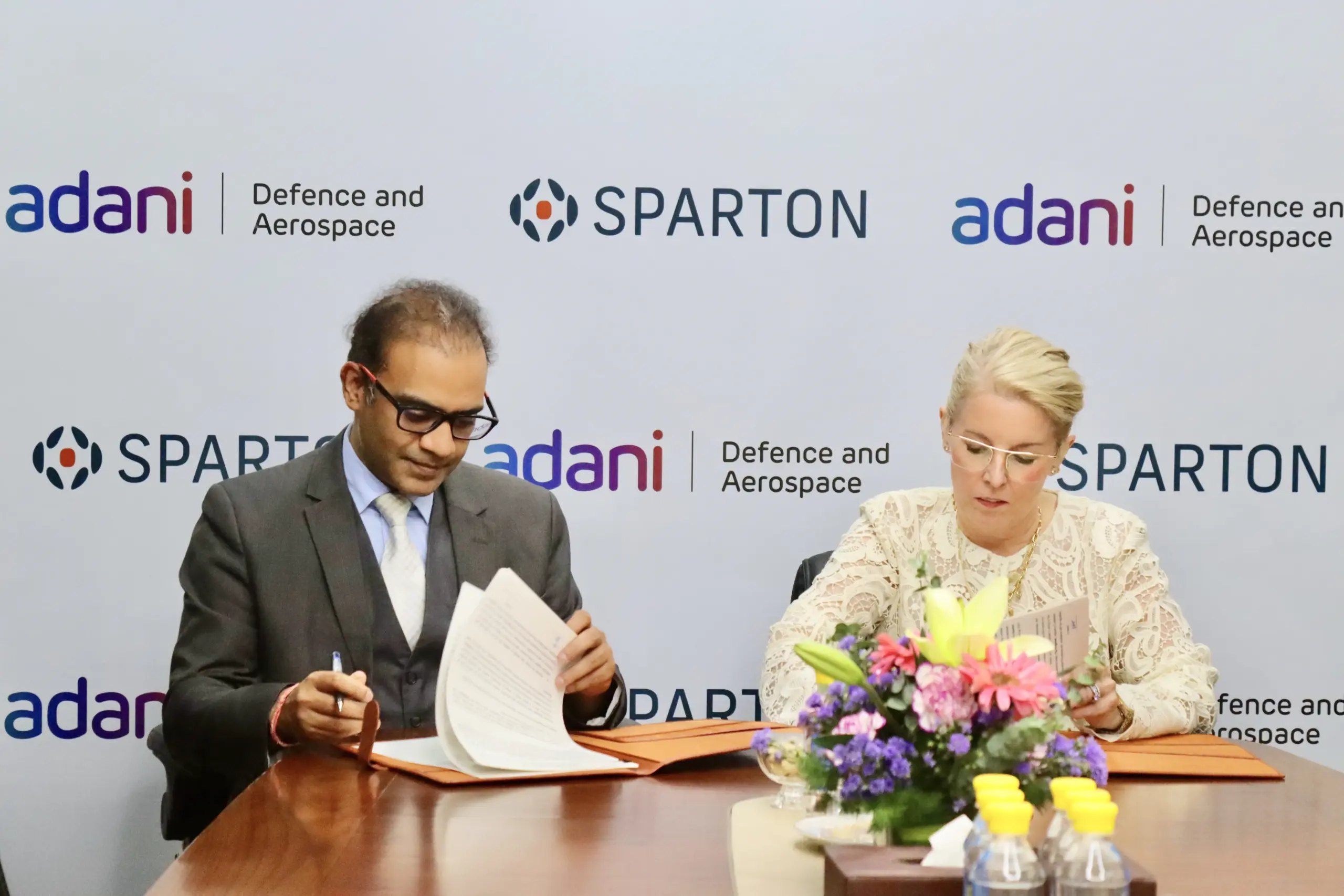
Adani Defence & Aerospace and Sparton enter Strategic Partnership to Indigenise Anti-Submarine Warfare Solutions (Sonobuoys) for India

AHMEDABAD : Adani Defence & Aerospace, a leading player in India’s defence and aerospace ecosystem, has signed a binding collaboration agreement with Sparton (DeLeon Springs LLC), a group company of Elbit Systems and a leading provider of advanced Anti-submarine warfare systems. This partnership marks a significant step toward localizing the assembly of complex electronic systems and advanced Anti-Submarine Warfare (ASW) solutions for the Indian and global markets.

With this collaboration, Adani Defence & Aerospace becomes the first private sector company in India to offer indigenized sonobuoy solutions, underscoring its commitment to bolstering the nation’s self-reliance. The partnership will combine Sparton’s pioneering ASW technology with Adani Defence’s established expertise in development, manufacturing, and sustenance for the Indian Navy.

Sonobuoys are mission-critical platforms for enhancing Undersea Domain Awareness (UDA), providing an effective means to detect, locate, and track submarines and other underwater threats. Playing a key role in anti-submarine warfare (ASW) and other naval operations, they support in maintaining naval security and in protecting naval carrier strike groups.

For decades, India has been importing this critical naval capability from global markets, increasing our dependency on foreign OEMs. Aligned with the ‘Aatmanirbhar Bharat’ and ‘Make in India’ initiative, Sparton’s ongoing relationship with the Indian Navy, will now facilitate Adani Defence to indigenise the delivery of these solutions that are made in India, for India.

Jeet Adani, Vice President of Adani Enterprises, remarked, “In an increasingly volatile maritime environment, strengthening India’s undersea warfare capabilities is not merely a strategic priority but an imperative for safeguarding sovereignty and national interests. The Indian Navy requires integrated, mission- ready ISR and anti-submarine warfare capabilities, including critical systems like sonobuoys, that are indigenously developed, swiftly deployable, and globally competitive. Through this partnership with Sparton, Adani Defence & Aerospace becomes the first private company in India to offer indigenised sonobuoy solutions, enabling access to advanced technologies while fostering a future-ready, self-reliant defence ecosystem. This initiative reflects our Group’s vision of empowering India’s armed forces with world-class capabilities that are designed, developed, and delivered in India, for India and the world.”

Ashish Rajvanshi, CEO, Adani Defence & Aerospace, said: “For decades, India has been dependent on imports for such critical technology. This partnership to bring world-class sonobuoy technology and integrating it with India’s defence ecosystem, is a step towards building self-reliant capabilities in this critical domain.”

Donnelly Bohan, President and CEO, Sparton DeLeon Springs LLC, added: “Sparton has a long legacy for problem solving, advanced engineering and manufacturing of America’s best maritime defense solutions. We are proud to partner with Adani Defence & Aerospace to bring our proven anti-submarine warfare (ASW) technologies to India. This partnership will enable us to localize assemblage, create high-technology skill sets, and deliver reliable ASW solutions tailored to the India Navy’s needs.”

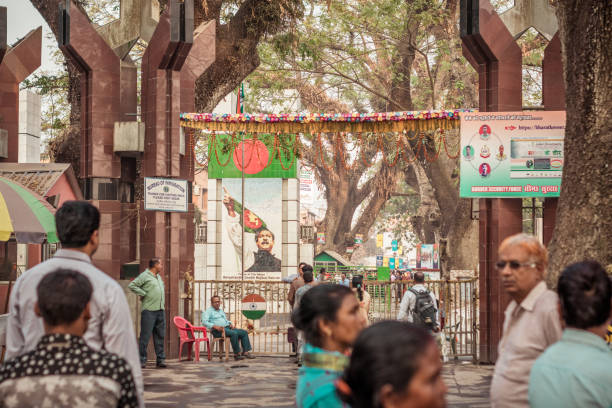
Bangladesh is damaging itself’: Top trade expert says India’s land port curbs are just a teaser

NEW DELHI : India’s recent move to restrict Bangladeshi exports through land ports is a “calibrated” and “disproportionately lower-level” response to Dhaka’s increasing trade curbs on Indian goods, Ajay Srivastava, founder of the Global Trade Research Initiative (GTRI), said on Monday.

In an exclusive interview Siddharth Zarabi, Srivastava warned that Bangladesh is “inflicting damage on themselves” and that “they cannot do anything to India”.

“Bangladesh used to be a great garment exporting country. They were adding other products like leather into their kitty. Somehow, since the last power shake-up, religious elements have taken up and they have taken a hardline approach against India,” Srivastava said. “Without any provocation, Bangladesh has prohibited imports of many things from India. As a response, India took a calibrated approach. We did not prohibit any imports from them. We wanted to give them a teaser. We said they cannot come through land route. And if you want to ship, ship through sea route. Everything can come, nothing is stopped.”

India’s reciprocatory move on banning several imports from Bangladesh will hit the neighbouring country with a $770 million bill amounting to nearly 42% of bilateral imports, as per an analysis by GTRI.

“Last year, we imported $660 million worth of garments from them. Most of it are big brands you hear — H&M, Zara. They make in Bangladesh and then export all over the world. Many of them end up in our malls also. The Indian government has imposed port restrictions, meaning they cannot come through land ports — they have to come through sea route only. The figure is absolutely correct,” Srivastava said when asked whether India’s move will cost Bangladesh $770 million.

India has long maintained unilateral zero-duty market access for Bangladeshi goods, owing to its earlier status as a Least Developed Country (LDC). But Srivastava noted the status needs revisiting. “Bangladesh has graduated from LDC. That needs to be reviewed by India and other countries. Bangladesh is under a lot of pressure because they will be losing all the tariff benefits they were getting from India, Europe, and America. It is a real pain for them. They are inflicting damage on themselves, they cannot do anything to India.”

He dismissed concerns of large-scale illegal re-routing of Chinese goods via Bangladesh but acknowledged limited instances may exist. “Legally, it is not allowed,” he said when asked whether Bangladesh was increasingly becoming a trans-shipment hub for Chinese goods into India. “They (Bangladesh) buy fabric from China, turn it into garments, and export to India. This trans-shipment may be happening at a very small scale.”

Bilateral relations between New Delhi and Dhaka have strained under pro-China Muhammad Yunus. The relationship plummeted further after he, during his China visit, made a controversial statement about India’s Northeastern states. “The eastern part of India, known as the Seven Sisters, is landlocked. They have no access to the ocean. We are the only guardians of the ocean in this region. This opens up huge possibilities,” Yunus said, addressing Chinese officials in Beijing.

Meanwhile, officials in the Indian government said that New Delhi’s trade policy shift aims to ensure fairness in bilateral trade. India had previously allowed Bangladesh to export through all land and sea ports while Bangladesh continued to block Indian exports, especially to the Northeast, a move New Delhi saw as both discriminatory and politically motivated.

Last Saturday, India decided to allow ready-made garments from Bangladesh only through Kolkata and Nhava Sheva seaports, while barring imports of a range of consumer items through land transit posts in the Northeast.

Besides ready-made garments (RMG), plastics, wooden furniture, carbonated drinks, processed food items, fruit-flavoured drinks, cotton, and cotton yarn waste will not be allowed to enter India through land customs stations and check posts in Meghalaya, Assam, Tripura, and Mizoram, and Phulbari & Changrabandha in West Bengal. The new restrictions for Bangladeshi consumer goods were imposed five weeks after New Delhi ended a nearly five-year-old arrangement for transshipment of Bangladeshi export cargo to third countries via Indian airports and ports.

“Restricting imports of ready-made garments from Bangladesh through only two seaports is a reciprocal measure to Bangladesh imposing similar trade restrictions on Indian yarn and rice as well as selectively enhancing inspection on all Indian goods exported to Bangladesh,” a source told.
Source : PTI