Home Blog Page 846

DGFT imposes Port restriction on import of certain goods from Bangladesh to India

NEW DELHI : The Directorate General of Foreign Trade (DGFT), Ministry of Commerce and Industry, has issued a notification imposing port restrictions on the import of certain goods such as Readymade garments, processed food items etc., from Bangladesh to India. However, such said port restriction will not apply to Bangladesh goods transiting through India but destined for Nepal and Bhutan.

The directive, issued via Notification No.  07/2025-26 dated 17th May 2025, detailing following port restrictions has come into effect immediately.

  1. Import of All kinds of Ready Made Garments from Bangladesh shall not be allowed from any land port, however, it is allowed only through Nhava Sheva and Kolkata seaports.
  2. Import of Fruit/ Fruit flavoured and Carbonated Drinks; Processed food items; Cotton and Cotton Yarn Waste; Plastic and PVC finished goods, except pigments, dyes, plasticisers and granules that form input for own industries; and Wooden Furniture, shall not be allowed through any Land Customs Stations (LCSs)/ Integrated Check Posts (ICPs) in Assam, Meghalaya, Tripura and Mizoram; and LCS Changrabandha and  Fulbari,  in West Bengal.
  3. The port restrictions do not apply to the import of Fish, LPG, Edible Oil, and Crushed stone from Bangladesh

The detailed notification is available on the DGFT website at https://dgft.gov.in.

AITWA engages with the Additional Chief Secretary, Sanjay Sethi on parking policy

MUMBAI : A meeting of all stakeholders was called by the Shri Sanjay Sethi, IAS, Additional Chief Secretary (Transport), Govt. of Maharashtra, on Friday, 16th May 2025.

Team AITWA, led by President Mr. Ashok Goyal, attended the meeting which was regarding the Proposed Proof of Parking and Congestion Management.

Though the problem is very pressing, the solutions are limited in an island city like Mumbai.

AITWA suggested the Singapore style of charging a congestion surcharge during peak hours for entering commercial hubs.

Mr. Goyal emphasized the need to strengthen the public transport system, as even after the introduction of the metro, the first mile and last mile transit system is missing.

“Since the BEST fleet is dwindling, private bus operators who run on contract carriage for pick up and drop off office staff should be allowed to ply, as these vehicles are idle during the daytime, and they also face parking issues as no parking facility is available for them”, he said.

“The need to add more public parking at strategic locations also needs to be looked at” said Mr. Abhishek A Gupta. General Secretary AITWA

NICDC secures approval for ₹5,942 Cr MMLH in Dadri

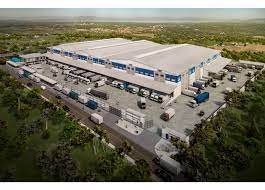
NEW DELHI : The National Industrial Corridor Development Corporation Ltd (NICDC) has secured approval from a key government panel to develop a ₹5,942 crore Multi Modal Logistics Hub in Dadri, Greater Noida, using private sector funds.

Spread across 334 hectares, the hub will feature mechanised warehouses, advanced storage facilities, and automated systems for handling container, bulk, and break-bulk cargo. It will also provide value-added services such as cross-docking, customisation, stacking, and labelling.

Planned in three phases, the facility will have the capacity to manage 1.44 million TEUs, 7.8 million tonnes of non-containerised cargo, 3 million sq ft of warehousing, and 0.3 million sq ft of cold storage.

Delhivery Q4 net profit hikes 190% QoQ to Rs 72.6 Cr

NEW DELHI : Delhivery reported a net profit of Rs 72.6 crore for the fourth quarter of FY25. This showed a significant jump from the Rs 68.5 crore net loss reported in the corresponding quarter of the previous financial year. On a sequential basis, the company’s net profit rose 190 percent from the Rs 25 crore reported in the third quarter of FY25.

Delhivery’s revenue from operations meanwhile gained nearly 6 percent on-year to Rs 2,192 crore in Q4 FY25. However, it fell over 7.8 percent from the Rs 2,378 crore revenue reported in Q4 FY25.

The firm’s EBITDA grew over 100 percent on-year to Rs 119 crore, while EBITDA margin improved to 5.4 percent during the quarter under review.

For the entire financial year 2025, Delhivery reported a net profit of Rs 162 crore, marking a significant improvement from the Rs 249 crore loss reported in FY24. Notably, this makes FY25 the first year of PAT profitability for the company.

They added that its EBITDA nearly tripled to Rs 376 crore in FY25 from the Rs 127 crore reported for FY24. EBITDA margin for the entire financial year meanwhile stood at 4.2 percent.

“We continue to deliver steady performance in our core transportation businesses. Our ongoing measures to improve profitability are visible in Q4 numbers and we expect continued momentum on this front as growth picks up in FY26,” said Sahil Barua, MD & Chief Executive Officer of Delhivery.

Speaking about its acquisition of Ecom Express, Delhivery said that the deal is subject to regulatory approvals. The company’s board had approved the acquisition of the rival firm in April this year, for a total purchase consideration not exceeding Rs 1,407 crore. Ecom will become a subsidiary of the company after the completion of the transaction.

Delhivery shares closed with marginal gains at Rs 322 apiece on May 16.

Indian ban leaves 36 trucks loaded with apparel stranded at Benapole Port

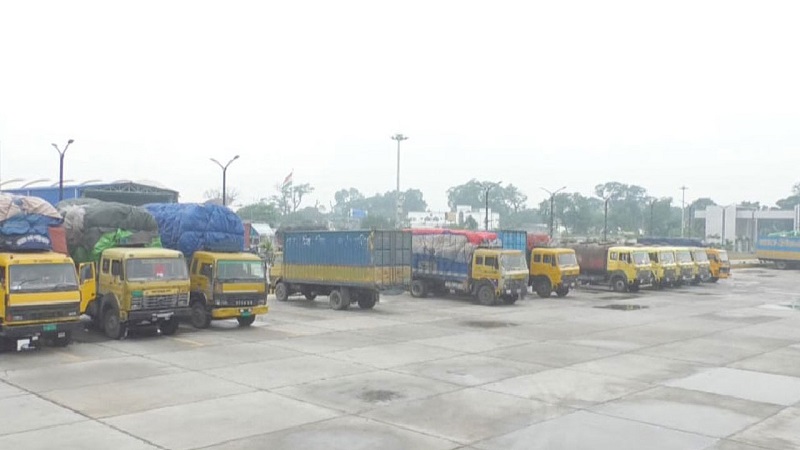
DHAKA : A fresh restriction by India on importing readymade garments via land ports has stalled cross-border consignments since Sunday morning, leaving 36 Bangladeshi trucks loaded with export-bound apparel stranded at Benapole land port.

The situation has raised concerns among exporters about the fate of the shipment, with some firms now trying to redirect their goods toward Chittagong port, reports Bangla Tribune.

The Indian authorities imposed the restriction on garment imports via land routes late on Saturday night.

Exporters said the Indian government has banned nearly seven categories of products—including processed food and apparel—from entering through land ports.

The move is expected to cause losses to Bangladesh’s apparel factories, they added.

Compared to Benapole, shipping via Chittagong port will double transportation costs and delay deliveries, which may result in order cancellations, they said.

This latest restriction comes just a month after Bangladesh imposed a ban on importing Indian yarns through land routes.

India’s Ministry of Commerce said the new restriction takes immediate effect.

According to the National Board of Revenue (NBR), Bangladesh exported products worth Tk17,659 crore to India in the 2022–23 fiscal year and Tk17,425 crore in 2023–24.

In the first half of the current fiscal year, the export value stood at Tk11,577 crore.

India remains one of the key markets for Bangladesh’s garments, with annual exports hovering around $700 million—93% of which are sent via land ports, according to the NBR.

Business leaders say the new ban will deliver a major blow to this sector.

On Saturday night, India’s Directorate General of Foreign Trade issued a circular prohibiting the import of seven types of products—including processed food and garments—via land ports.

As per the notice, such goods can now only be imported through Kolkata by sea.

Kartik Chakraborty, general secretary of the Petrapole Clearing and Forwarding Agents Staff Welfare Association, told Bangla Tribune: “India has imposed restrictions on several Bangladeshi goods. Discussions are ongoing with customs officials about allowing goods with existing LCs or TTs, but no final decision has been made.”

Two exporters based in Benapole said the ban has effectively halted garment exports to India via land routes.

“We usually send shipments to Kolkata through Benapole and Bhomra ports, and now that is no longer possible. Waterway transportation is not a viable option due to time and cost,” one of them said.

According to them, transporting a single truck of apparel to Kolkata via Benapole costs roughly Tk6 lakh and delivery is completed within three days.

In contrast, they said, sending the same consignment by sea from Chittagong would cost nearly Tk12 lakh and take 20 to 25 days—likely prompting buyers to cancel orders.

Abdul Latif, customs affairs secretary of the Benapole C&F Agents Association, said: “The land route was much cheaper for exporting these goods. With the new restriction, many exporters will suffer losses since the costs of air and sea shipment are considerably higher.”

Imdadul Haque Lota, general secretary of the association, said: “Every year, Bangladesh exports goods worth Tk10,000–Tk18,000 crore to India. Due to the convenience of transport links, most importers prefer using Benapole. Major exports along this route include food products, jute and jute goods, garments, chemicals, tissue paper, melamine, and fish.”

Mamun Kabir Tarafdar, deputy director (traffic) of the Benapole Land Port Authority, said: “We have not received any official letter yet, but we saw the report in newspapers. Until Saturday, all goods were being exported through the land port. However, since Sunday morning, no processed food or apparel products have been allowed through, even though other items are still crossing. As far as we have learned, about 30–35 trucks are currently stuck here.”


India tightens trade noose: Extends ban on Pakistan-origin goods via third countries after Pahalgam attack

NEW DELHI : India has banned all imports and transit of goods from Pakistan, including those routed through third countries like the UAE. following the Pahalgam terror attack. The Directorate of Revenue Intelligence is intercepting suspicious shipments, even those already in transit before the May 2 order. Pakistani dry fruits and dates are under scrutiny, with India raising concerns with the UAE. The Attari border trade point was shut on April 24, halting ₹3,886 crore in trade. Bilateral trade, once promising, has dwindled to $2 billion, marking a steep decline in economic ties.

India has escalated its crackdown on goods coming from Pakistan, even if they are sent through third countries like the UAE. According to a report by The Indian Express, the Directorate of Revenue Intelligence (DRI) has started imposing a comprehensive transit ban, given the Ministry of Commerce and Industry notification issued on May 2. The decision has been taken in response to the April 22 terrorist attack in Pahalgam, in which 26 civilians were killed.

All the incoming consignments that have suspected Pakistani links have been scrutinized by the Customs officials. Even shipments that were already in the process of transit are also being stalled. A government official stated to The Indian Express that, ”In certain ports, the DRI has taken action, including stopping Pakistani-flagged vessels from docking.” Traders who have been impacted by the sudden curtailment have raised concerns about financial losses. On the other hand, officials mentioned that stringent measures are mandatory to stop the misuse of trade routes.

Products like dry fruits and dates shipments are under scrutiny
There are growing doubts that items like dry fruits and Pakistani dates are being relabelled in the UAE and are being sent to India. Although rules of origin certificates are presented with such shipments, Customs officers have reportedly identified discrepancies during the label checks and physical examination.

India has further taken up the issue with the UAE authorities, who have stated that dates are produced locally. Officials have mentioned that the strong notification now serves as a restraint for the misuse of transit routes.

India has already shut down the Attari integrated check post on April 24 and ended direct trade with Pakistan. The annual bilateral trade had once reached Rs 4,370 crore in 2018-19, it has dropped Rs 2,257 crore by 2022-23. Despite a recovery that was registered in 2023-24, current ongoing tensions have pushed both neighbours apart.

Source : Indian Express

BWCMA suspends trade with Turkey and Azerbaijan

BENGALURU : The Bangalore Wholesale Cloth Merchants’ Association (BWCMA) has announced that it will cease all textile trade with Turkey and Azerbaijan with immediate effect. “This collective action has been taken after careful deliberation and in alignment with our commitment to ethical business practices, national sentiment, and the interests of our trade community. As responsible stakeholders in the textile trade sector, we believe it is essential to take principled stands when necessary,” the statement released by the association on Friday read.

According to the official statement, BWCMA members have agreed to halt all current and future import of textile goods from Turkey and Azerbaijan; cease all ongoing or planned export activities to these nations; refrain from engaging in any indirect trade through intermediaries or third-party countries that may involve textile products originating from or destined for Turkey and Azerbaijan.

The trade suspension will continue until further notice, and any changes will be announced by the Association’s governing body, the letter stated. The association has requested all authorities, trade partners, and logistics providers to cooperate with its members.

Earlier on Saturday, local fruit traders in Ajmer, Rajasthan, announced a boycott of Turkish apples and other imports on Saturday following Turkey’s vocal support for Pakistan.

Speaking to ANI, apple trader Arjun said, “After India-Pakistan tensions, apples and kiwis coming from there are completely banned here. Any other fruit coming from Turkey will also be banned. In place of Turkish apples, people are buying Kashmiri apples. Turkey has supported Pakistan during this, marble and fruit traders have stopped their business with Turkey.”

Meanwhile, local traders in Gwalior have condemned Turkey’s stand during the India-Pakistan tension, calling it betrayal to the nation. They claimed that they would not trade with a country that supported Pakistan, and Turkish apples were boycotted in Gwalior too.

Source : ANI

CEPC demands reciprocal tariffs on Turkey carpets

VARANASI : Carpet Export Promotion Council (CEPC) has demaned Govt to impose reciprocal tariffs on machine-made carpets imported from Turkiye to ensure fair protection for Indian carpets in the domestic market. CEPC also discussed how tariffs imposed by Trump administration on Indian handmade carpets weakened their global competitiveness.

CEPC Director Shri Sanjay Kumar Gupta said, “With demands including imposing reciprocal tariffs on import of Turkiye’s machine-made carpets, a delegation of the council led by its Chairman Kuldeep R Wattal met Minister of State for Commerce Shri Jitin Prasada, in the presence of Bhadohi MP Vinod Bind in New Delhi recently. It was a crucial meeting as many important issues of the carpet industry were pressed.”
“We urged govt to step ahead for imposing reciprocal tariffs on machine-made carpets imported from Turkiye to ensure fair protection for Indian carpets in the domestic market,” said Gupta, adding that the reason behind this demand was ground realities of bilateral carpet trade between India and Turkiye. The basic customs duty on machine-made carpets and other textile floor coverings from Turkiye imported into India is 20%, he said, adding, however, Turkiye imposes a 46% duty on import of Indian carpets.

CEPC members are not only worried because the reciprocal tariff imposed by US President Donald Trump will increase the cost of carpets for American buyers, but other major exporters of carpets, including Turkiye, which have a lower US tariff compared to India, will gain an advantage. Gupta said the cottage industry of carpet weaving generates employment for not only thousands of weavers and artisans but also farmers, who work on looms part-time for weaving.

CEPC also raised the issues of the revival of the interest subvention scheme and highlighted the impracticality of the provision under Section 43B(H) of the Income Tax Act, which mandates payments to MSMEs within 45 days. They also requested the allocation of separate HS codes for handmade and machine-made carpets, which would enhance global transparency and give distinctive recognition to Indian craftsmanship.The delegation included Ashfaque Ahmad Ansari, Umesh Shukla, Sattar Ansari, Aseem Ansari (Bobby), Sadiq Ansari and Shahid Ansari.

CMA CGM reshuffles Global fleet to escape US Port fees on Chinese-built ships

MARSEILLE : One of the world’s leading shipping companies, CMA CGM, has announced plans to reorganise its global fleet to avoid paying new US port fees targeting Chinese-built ships.

These charges are set to begin in October and are part of the US government’s strategy to reduce reliance on Chinese shipbuilding and boost domestic maritime operations.

According to CMA CGM’s Chief Financial Officer, the company has sufficient ship capacity to adjust operations and avoid the upcoming fees. Out of CMA CGM’s fleet of about 670 ships, less than half are built in China.

The US port fee system includes a detailed structure that places the highest fees on Chinese companies using ships made in China. The measure is an added burden for global shipping firms already dealing with the consequences of ongoing US tariffs.

However, the CFO stated that after backlash from the shipping industry, Washington made some adjustments to the plan, making the new fee setup less harmful than initially expected.

The changes will affect all shipping companies with China-built ships, including Chinese giant COSCO. While the financial executive acknowledged that all players would have to adapt, he did not comment on whether this would impact the Ocean Alliance-the world’s largest operational agreement between shipping companies in which both COSCO and CMA CGM are key partners.

CMA CGM, currently the third largest container shipping company in the world, was recently praised by the US government after announcing a $20 billion investment plan in the United States.

In its first-quarter results, the company reported a 4.2% year-on-year growth in maritime shipping volumes. This rise was largely due to a shipping rush ahead of the US tariff announcement on April 2, which also helped increase the group’s sales and profits during the period.

The group, which is controlled by the French-Lebanese Saade Family, is also involved in logistics and has been expanding its presence in the media sector.

Like many others in the industry, CMA CGM also faced a slowdown in trade between China and the US after the tariff escalation in April. It experienced cancellations of nearly the two countries scheduled for May.

However, the company reported a rebound in demand this week following a temporary agreement between the US and China to reduce tariffs. Despite the recent recovery, the company refrained from giving a full-year forecast for container shipping volume growth. The finance director pointed to continued uncertainty due to the unpredictable nature of the ongoing US-China trade tensions.

Source : Reuters

PSA to hire 2,500 more staff as Singapore’s ports on track to break cargo-handling record

SINGAPORE : The Republic could beat its own cargo-handling record for the second consecutive year as US tariffs send businesses rerouting their shipments, and the nation’s largest port operator intends to increase its headcount by some 2,500 employees this year.

Singapore handled 14.2 million twenty-foot equivalent units (TEUs) – a measure of cargo capacity – from January to April this year, representing a 6.1 per cent year-on-year jump over the same period in 2024.

The fresh figures were revealed by Transport Minister Chee Hong Tat at a media doorstop during a visit to PSA’s Pasir Panjang Terminal recently.

“Container has remained strong despite what’s happening around the world with greater turbulence, uncertainty and shifts in global supply chains,” said Chee, who added that this is something he hopes can continue.

When asked about the factors driving the year-on-year growth, the minister replied: “In the near term, because of the pause in higher tariff rates, there is actually a boost in terms of companies trying to do some front-loading and catching up, trying to make full use of this 90-day window. In the near term, certainly there is some growth due to that.”

South-east Asia earlier faced levies ranging from a baseline 10 per cent to as high as 49 per cent, until US President Donald Trump on Apr 9 announced a 90-day pause on these reciprocal taxes.