Home Blog Page 847

Xeneta Weekly Ocean Container Shipping Market Update -16.5.25

OSLO : “The US-China announcement on the temporary lowering of tariffs fired the starting gun for shippers to rush as many imports as they can during the 90-day window of opportunity.

“There is no time to waste for these shippers and the rush of cargo will put upward pressure on spot rates on Transpacific trades., however it is important to understand market dynamics following sudden shocks such as the US-China tariff announcement.

“A deeper dive into data shows shippers paying prices towards the market mid-high for rates agreed post the US-China announcement, while legacy agreements struck before 12 May will continue to keep a lid on the bubbling market averages for a short time.

“Spot rates will peak and then flatten as carriers redeploy capacity to match demand, then rates will begin to slide again just as we saw in Q1. This is expected to happen over the next two to four weeks.” commented Peter Sand, Xeneta Chief Analyst.

Data highlights

  • Average spot rates:
    • Far East to US West Coast: USD 2722 per FEU (40ft container)
    • Far East to US East Coast: USD 3883 per FEU
    • Far East to North Europe: USD 1988 per FEU
    • Far East to Mediterranean: USD 3152 per FEU
    • North Europe to US East Coast: USD 2110 per FEU
  • Market mid-high spot rates
    • Far East to US West Coast: USD 3012 per FEU
    • Far East to US East Coast: USD 4050 per FEU
    • Far East to North Europe: USD 2174 per FEU
    • Far East to Mediterranean: USD 3436 per FEU
    • North Europe to US East Coast: USD 2325 per FEU

      Note: The Xeneta mid-high is the spot rates paid by shippers in the 75th percentile of the market.
  • Delta between market average and mid-high shows the different rates being paid by shippers, ie, those shippers negotiating rates on Transpacific trades post the US-China announcement of a 90-day lowering in tariffs are paying higher rates towards the market mid-high.
     

Container Market looking for more positivity

LONDON : The liner industry woke up to positive news last week, that the US and China have come to an agreement to significantly lower their tariffs against each other for a period of 90 days whilst they continue to talk.

The US will lower tariffs from 145% to 30%, while China’s retaliatory tariffs on US goods will drop to 10% from 125%.

This news should have a positive impact for the liner industry as shippers will likely now restart importing goods from China with haste, in case after the 90 days expire the higher tariffs return, so we could see more instability to come in mid Q3, just prior to peak season.

Liner companies that had suspended some services, would be expected to resume normal loop programmes in the next couple of weeks.

Consequently, transpacific container rates on FBX01 (China/East Asia – USA West Coast) have creeped up this week, ending the week at $2,718/FEU $307 higher than last Friday. FBX02 (USA West Coast – China/East Asia) rates were flat over the week finishing at $438/FEU. FBX03 (China/East Asia – USA East Coast) also saw a week-on-week increase of $354 finishing the week at $3,784/FEU. FBX11 (China/East Asia – North Europe) rates increased $173/FEU, finishing the week at $2,578/FEU. FBX12 (North Europe – China / East Asia) increased to $452/FEU. FBX13 (China/East Asia – Mediterranean) increased by $73 ending the week at $3,009/FEU.

Source: Baltic Exchange

DCSA completes standards-based interoperable eBL transaction, marking major industry milestone

AMSTERDAM : Digital Container Shipping Association (DCSA) announces a first successful standards-based, interoperable electronic Bill of Lading (eBL) transaction. This milestone achievement was made possible through collaboration with leading eBL solution providers and marks a significant advancement toward secure, scalable, and truly paperless global trade.

Despite the availability of digital alternatives for years, eBL adoption has remained constrained by platform fragmentation. The industry’s digital transformation has been hindered by siloed eBL platforms requiring all transaction participants to use the same solution provider. This approach has prevented the widespread adoption needed to capture the estimated $6.5 billion in direct cost savings and $40 billion in increased trade that eBLs can deliver, according to McKinsey & Company research.

This successful interoperable eBL transaction represents a breakthrough in addressing these challenges, powered by DCSA’s interoperability framework with three essential components:

Platform Interoperability (PINT) API – Standardised integration enabling transfer of DCSA-compliant eBLs between solution providers.

Legal Framework – Multilateral agreement governing the relationships between eBL solution providers and their users in a standardised format.

Control Tracking Registry (CTR) – Secure log tracking which platform controls each eBL, building trust essential for global trade.

Commenting on the successful transaction, John Kim, Senior Manager Digital at HMM, said: “We recognise the value of interoperability between eBL solution providers to achieve DCSA’s ‘100% eBL by 2030’ goal. It was an incredible experience to participate in this interoperability pilot as a carrier and see eBL being sent to our shipper, Suzano, on two different platforms in real time.”

“Suzano’s participation in one of the first standards-based interoperable eBL transactions reflects our commitment to innovation and operational excellence,” remarked Targe Bock, COO Suzano Europe. “This achievement shows how collaboration can unlock real value and drive efficiencies across the supply chain.”

Bojan Čekrlić, CEO of CargoX, said: “Global trade needs multiple parties to work, and the digitalisation of trade needs those parties to share data and documentation easily. Concerns around what is truly interoperable and what changes must be made to existing systems have held back adoption of innovations such as eBL. With interoperable eBL, we’ve overcome that obstacle.”

Alejandro Pernías, President and CEO at EdoxOnline, commented: “This fully interoperable eBL live transaction demonstrates that title-data can seamlessly be transferred digitally across multiple platforms, streamlining trade execution without relying on a single eBL provider. We remain committed to driving eBL adoption to help the international trade community harness the benefits of going paperless.”

Meanwhile, more IGP&I approved eBL solution providers are updating their legal frameworks and implementing the interoperability components. Enigio and CargoX are preparing an interoperable transaction with HMM and a Fortune 500 shipper in Q2. WaveBL and TradeGo are preparing their first interoperable transaction with DCSA member-carrier ONE and a large freight forwarder. All other eBL solution providers are preparing for implementation or are welcome to join.

“The foundation for the digital exchange of shipping documentation and data is in place,” said Niels Nuyens, Chief Product Officer at DCSA. “With DCSA standards and interoperability protocols ready, seamless eBL exchange is no longer a myth, it’s a reality. The time to act is now: adopt eBLs and help drive the future of digital trade.”

These developments reflect years of collaboration between DCSA, member-carriers, shippers and eBL providers, all driven by one common goal: 100% eBL adoption by 2030. What began as an industry ambition has transformed into tangible progress, opening the door to a new era where global trade documentation moves at the speed of business, not paper.

Piyush Goyal’s US visit to provide political weight to over 2 months of BTA talks: Govt sources

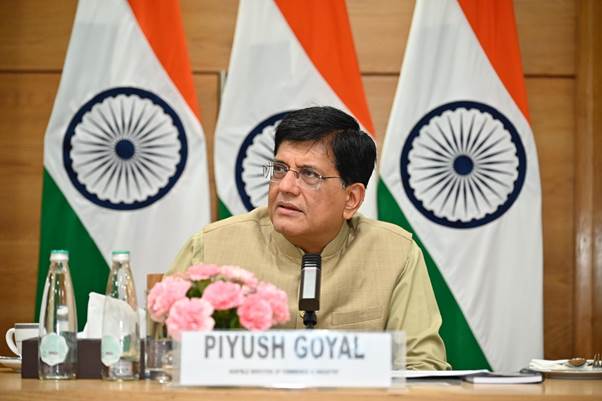
NEW DELHI : Commerce and Industry Minister Shri Piyush Goyal is on his way to visit United States to meet the US Commerce Secretary Howard Lutnick, followed by the USTR (US Trade Representative) Jamieson Greer. While the Minister will be in the US till 20th May, India’s negotiating team led by Chief negotiator Rajesh Agrawal will negotiate with its American counterparts from 19th to 22nd May.

Government sources have described Goyal’s visit as an assessment of two months of talks for a potential Bilateral Trade Agreement (BTA), to provide a political steer to negotiations amidst multiple FTA (Free Trade Agreement) negotiations by both the countries.

Goyal is slated to meet Lutnick followed by the USTR (US Trade Representative) Jamieson Greer, with the meetings aimed at review and assessment of the developments till now.

These meetings will be followed by discussions between the negotiating teams. It may be noted that any early achievements will depend on the decisions and consensus in the Minister-level meetings. This is Piyush Goyal’s 2nd visit to the US since both sides had expressed an interest in signing a BTA.

Both India and the US aim to benefit from the 90-day pause in the imposition of tariffs. The US has already suspended the additional 26% tariffs on India till 9th July, keeping only the 10% baseline tariff for now.

Both countries have already finalised the terms of reference covering 19 chapters for a proposed BTA. The 19 chapters cover tariffs, goods, non-tariff barriers, customs facilitation, rules of origin and regulatory issues. India’s proposal to impose retaliatory tariffs on American products over tariffs on Steel and Aluminium may also figure in the BTA talks.

However, the proposal at the WTO for retaliatory tariffs on Steel and Aluminium is not binding, and it is up to India whether it will apply tariffs. While India reserves the right to impose retaliatory tariffs on Steel and Aluminium products after 30 days, there have been instances even in the past when India has not resorted to levying reciprocal tariffs.

Final Vaitarna–JNPT stretch of WDFC likely to be completed by October

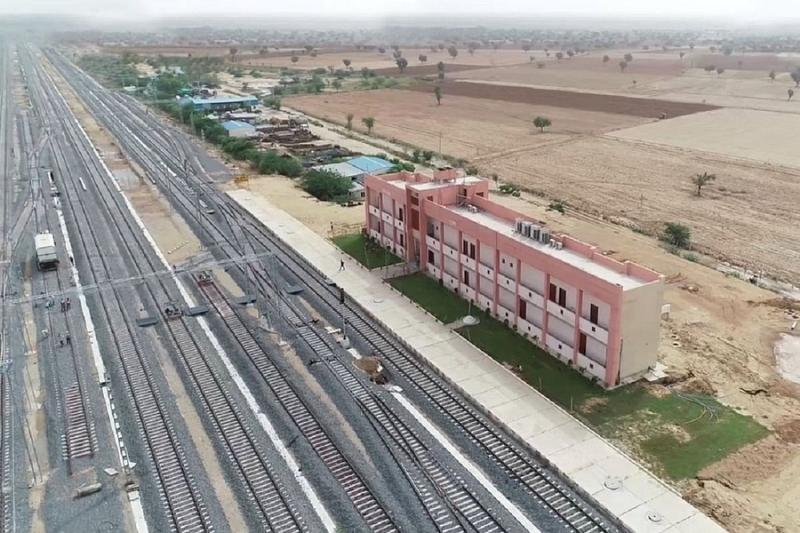
MUMBAI : The Dedicated Freight Corridor Corporation of India (DFCCIL) is eyeing October 2025 to compete the final segment of the Western Dedicated Freight Corridor (WDFC), finishing the massive corridor project ahead of the scheduled December commissioning, Financial Express reported citing a DFCCIL official.

Once the Vaitarna–JNPT section is ready, DFCCIL will have completed the construction of the 1,504-km long WDFC, which runs from Dadri in Uttar Pradesh to JNPT in Navi Mumbai.

The first leg of dedicated freight corridor operations in Maharashtra began on 27 April with a successful speed trial on the 75-km New Umbergaon Road–New Saphale stretch.

“This line is fully ready with track, overhead equipment (OHE) and signalling and telecommunication systems. This line will be operational after the approval from the railway board. On the remaining 32 km stretch, the land has been acquired, and the track linking work is currently under progress,” the official was quoted as saying by FE.

WDFC’s original commissioning was planned for March 2025 but was delayed to December due to executional challenges.

Experts cited in the FE report caution that the monsoon could affect work progress in the final phase of construction.

With EDFC already commissioned in 2024, both corridors are set to decongest freight traffic, cut logistics costs, and enhance operational efficiency.

Though DFCs make up just 4 per cent of Indian Railways’ total network, they are already handling 14 per cent of all freight traffic on rail network.

DFC trains clock average speeds of 55–60 kmph—over twice the 18–20 kmph average of regular Indian Railways freight trains.

While passenger services run at a loss, DFCs are emerging as profitable revenue drivers for Indian Railways.

According to the FE report, DFCCIL MD Praveen Kumar had earlier said that the cost of these two corridors is Rs 1.24 lakh crore, and the financial rate of return is 9 per cent.

WDFC primarily moves container cargo along with imported coal, fertilisers, and foodgrains, while EDFC links northern power plants in UP, Delhi, Haryana, Punjab, and Rajasthan to eastern coal fields.

V.O.C Port leads the way in green power

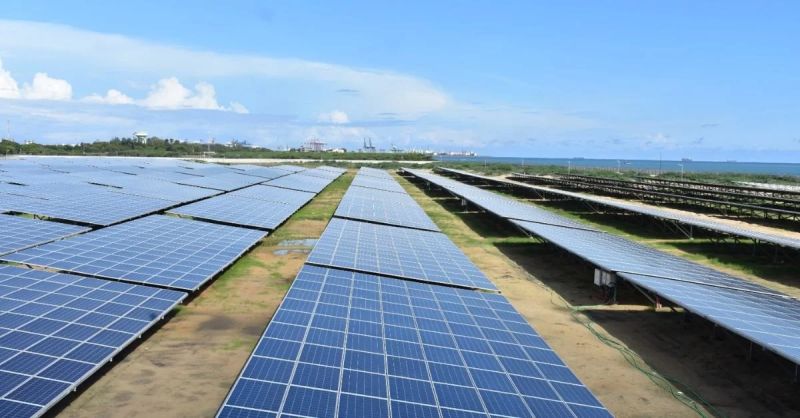
TUTICORIN : V. O. Chidambaranar Port is setting a benchmark in sustainability with ambitious green initiatives, reinforcing its commitment to a cleaner, greener future. As part of its clean energy strategy, the port currently operates a 5 MW ground based solar power plant, a 2 MW wind power plant and 1.04 MW rooftop solar system. In addition to it, construction of a 1 MW ground based solar facility is also underway at the port.

In the financial year 2024-2025, these renewable energy assets collectively generated 12.65 millions units of green power, reducing approximately 10.37 million kilograms of carbon dioxide emission. Notably V. O. C. Port has become the first major port in India to exceed 1 MW in rooftop solar capacity, reinforcing its leadership in renewable energy adoption.

Promoting green mobility, the port has also installed five EV charging stations and deployed 20 electric vehicles within its premises. In a pioneering move, it became the first Indian port to generate green hydrogen as part of a pilot project. To further this vision, 501 acres have been earmarked for the development of green hydrogen manufacturing and storage facilities backed by investment worth ₹41,860 crore from various companies.

As part of green shipping efforts it also offers concessions on port dues for vessels with IAPH-Certified Environmental Ship Index (ESI) scores.

Susanta Kumara Purohit, IRSEE, Chairperson of V. O. C. Port, affirmed that the port is aligned with the Ministry of Ports, Shipping and Waterways “Harit Sagar” green port guidelines and its goal of achieving carbon neutrality through holistic decarbonisation approach.

UP Govt partners with Indian Railways to develop Multi-Modal Logistics Hubs, Enhance Industrial Connectivity

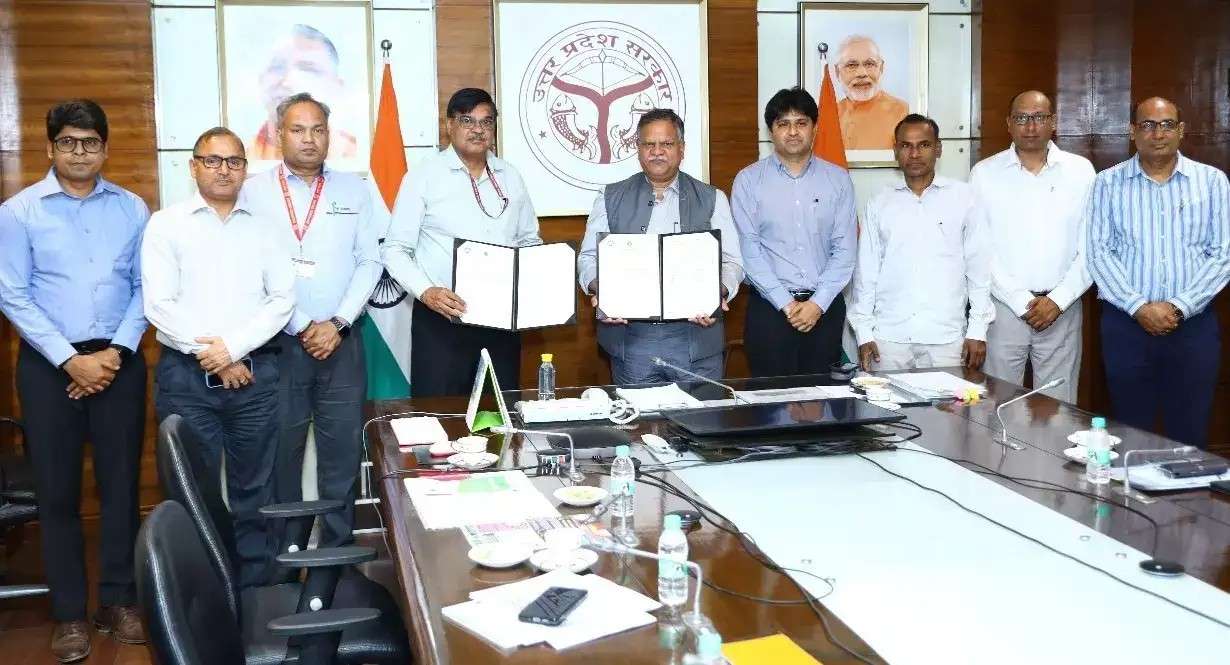
LUCKNOW : To strengthen Uttar Pradesh’s logistics ecosystem and establish it as an industrial powerhouse, Invest UP and Indian Railways signed a Memorandum of Understanding (MoU) on Wednesday at Lok Bhavan. The agreement was signed by Vijay Kiran Anand, CEO of Invest UP, and Rajneesh Kumar Srivastava, Senior Divisional Operations Manager, Lucknow Division.

Chief Secretary Manoj Kumar Singh lauded the development, stating that robust connectivity is vital for industrial growth and efficient market access. He also recommended integrating available Railway land data into the Pradhan Mantri Gati Shakti National Master Plan Portal to simplify investor access to land-related information.

As per the MoU, at least one stage of raw material or finished goods transportation must be carried out via rail. To encourage private investment, the Indian Railways will offer its land to logistics and warehousing investors on a 35-year lease at just 1.5 per cent of the industrial or circle rate.

Invest UP CEO Vijay Kiran Anand highlighted that the state is leveraging its extensive 16,000 km railway network to develop a robust logistics framework. Key developments include a multi-modal logistics hub in Dadri and the country’s first freight village in Varanasi.

The initiative aligns with the Uttar Pradesh Warehousing and Logistics Policy 2022, which mandates a minimum investment of Rs 20 crore for warehouse projects, aiming to attract significant private sector participation.

QCOs have earned industry support because they have helped Indian manufacturers access global markets: Piyush Goyal

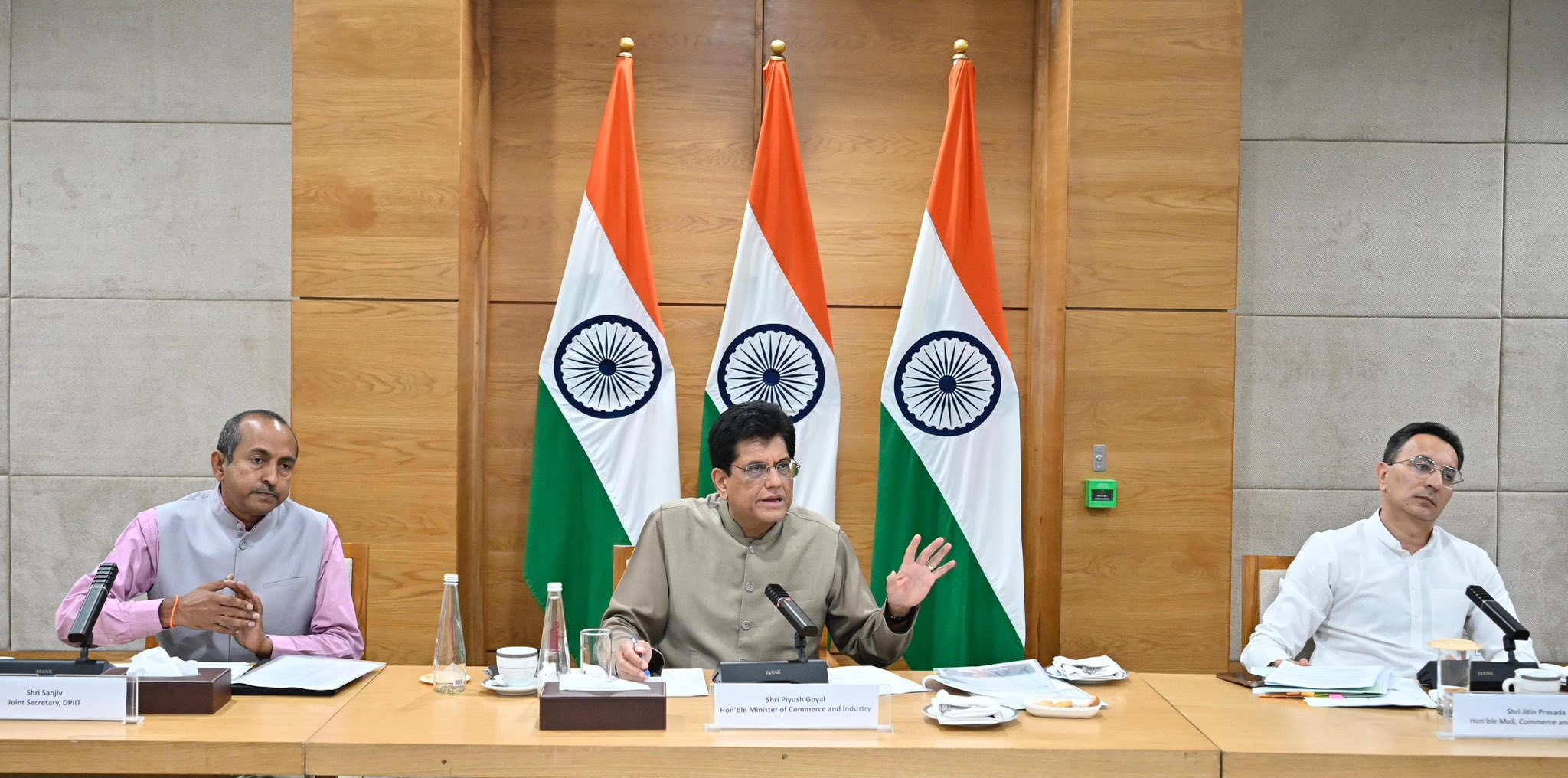
NEW DELHI : Every QCO introduced so far has eventually earned the support of the sectors because they have not only improved product quality but also helped Indian manufacturers access larger markets. The Government is committed to building a system that ensures consumer safety and industry competitiveness. This was stated by Shri Piyush Goyal, while emphasizing on the importance of implementation of QCO for electrical appliances at the Stakeholder Meet convened by DPIIT in New Delhi recently.

The meet discussed the issues being faced by the Industry in the implementation of Horizontal QCO on “Safety of household, commercial and Similar Electrical Appliances” notified by DPIIT on 20th September, 2024.

The industry presented their concerns and highlighted issues faced by them in the implementation of the Horizontal QCO on various electrical appliances on IS 302 (Part1): 2008 as revised vide IS 302 (Part1): 2024/ /IEC 60335-1: 2020. Industry overwhelmingly supported the intent behind QCOs to ensure only high-quality products to be manufactured and sold in India.

However, they requested for notifying QCOs on finished goods first followed by QCOs on components and raw materials, considering the complexity of global supply chains. They also recommended mapping domestic manufacturing capacities and available technologies to align compliance timelines. A phased rollout was also proposed.

Major concerns raised by the Industry inter alia included the following- ambiguity as regards to coverage of DC Supplied Appliances and Battery-Operated appliances; non-availability of product manuals and test labs all 85 appliances included in the illustrative list; lack of certification by domestic manufacturers as well as foreign manufacturers; insufficient time available for getting the BIS certification for domestic as well as foreign manufacturers; addressing the issue of legacy stock and non-acceptance of non-BIS marked products on e-commerce platform.

Hon’ble Commerce and Industry Minister acknowledged concerns raised by the industry and agreed to consider the request to extend the implementation timeline of the QCO, as well as the issue of legacy stock. He requested industry to come up with the proposal for setting up more testing facilities with modern technology in public funded labs, labs in public sector enterprises and labs in State Government institution etc. so that that robust and accessible testing infrastructure will be made available for the industry pan India.

Shri Jitin Prasada, Hon’ble Minister of State for Commerce and Industry mentioned that “the Ministry remains firmly committed to a consultative and collaborative approach in implementing QCOs. Together, let us ensure that ‘Made in India’ globally stands for safety, quality, and trust”.

DPIIT is working towards ensuring sectoral readiness for the QCO and identifying gaps in testing infrastructure to ensure a smooth rollout. DPIIT is closely working with BIS to streamline the testing and certification ecosystem, making it more accessible, efficient, and affordable, particularly for MSMEs.

These initiatives reflect the Government of India’s unwavering commitment to developing world-class products of exceptional quality within the country, aligning with the vision of creating an Aatmanirbhar Bharat” or self-reliant India.

The meeting witnessed the proactive participation of representatives from leading Industry players and Industry Associations like CII, FICCI, ASSOCHAM, CEAMA, RAMA, ICEA, IFMA, SMTA as well as Bureau of Indian Standards (BIS).

IIFT expands Global footprint with first overseas campus in Dubai

DUBAI : The Indian Institute of Foreign Trade (IIFT), an autonomous body under the Ministry of Commerce and Industry, Government of India, has announced the establishment of its first overseas campus in Dubai, United Arab Emirates. This marks a key step in expanding IIFT’s global presence and strengthening India’s engagement in international business education.

This historic development has been made possible with the approvals from the Ministry of Education, and No Objection Certificates from the Ministry of External Affairs, Ministry of Home Affairs, and the University Grants Commission. It marks a proud moment in the globalisation of Indian higher education and aligns with the vision of NEP 2020, which emphasizes the internationalisation of Indian institutions and the creation of global learning hubs.

Union Commerce and Industry Minister Shri Piyush Goyal, expressing his happiness and congratulating IIFT on this landmark achievement, said, “This truly reflects the spirit of the National Education Policy 2020, marking a new chapter in the internationalisation of Indian education and its growing role in shaping thought leadership globally. It is also a testament to the strengthening India-UAE partnership, and this new campus will play a pivotal role in moulding the business leaders of tomorrow.”

Congratulating IIFT on its maiden international expansion, Commerce Secretary Shri Sunil Barthwal said that it’s a turning point in the 62 years of IIFT’s history that the institute is setting up a full-fledged campus in Dubai. It represents India’s emergence as a country that provides world class education especially in the field of International Trade. He commended the institute for consistently aligning its academic and research endeavours in national interest that would contribute significantly to promote exports.

Prof. Rakesh Mohan Joshi, Vice Chancellor (IIFT), reiterated his commitment to transform IIFT into a world class institute and make a mark in its newly upcoming Dubai campus by way of excelling in research, training and research in the area of International Trade. He thanked Ministry of Commerce, Ministry of Education, Ministry of Home Affairs, Ministry of Foreign Affairs, Indian Embassy in UAE, UGC and all those who have extended their consistent support in making IIFT’s Dubai campus a reality. He reaffirmed IIFT’s commitment to advancing India’s academic and economic diplomacy through excellence in education and research.

The upcoming Dubai campus reflects India’s deepening educational collaboration with the UAE and is poised to become a strategic center for nurturing global business leaders equipped with Indian values and international outlook. It will not only serve the dynamic needs of the Indian diaspora and global learners but also strengthen India’s educational footprint in the Gulf region.

With the launch of its Dubai campus, IIFT is poised to carry the Indian legacy of education to new frontiers—grooming leaders who will shape the future of international trade and business.

India expected to maintain firm position on sensitive sectors in key US trade talks

NEW DELHI : With the first round of in-person sectoral talks beginning on May 17, evolving dynamics between India and the United States are likely to shape the course of negotiations for the proposed trade agreement.

Sources say that India’s interest will be prioritised and talks will be measured as the country seeks to protect sensitive items in agriculture as well as sectors like dairy, despite President Donald Trump’s claim that New Delhi has offered to drop tariffs on all US goods.

India has so far offered zero-to-zero tariffs for industrial goods, while the rates on other items are still being negotiated, especially given the sensitivity of the farm and dairy sectors, one of the sources said.

In any trade deal, each side seeks to protect its sensitive sectors—it’s always a matter of bargaining. We’ll aim for a balanced outcome, but our sensitive sectors will be safeguarded,” a senior government official said.

Trump on May 15 said the Indian government has “offered us a deal where basically they are willing to literally charge us no tariff.”

His comments come at a time when there is a growing frustration in India over the US President’s announcement of a ceasefire between India and Pakistan on May 10, following an escalation of hostilities.

The US President claimed that he used trade as a lever to secure a truce, a development denied by Indian officials.

Only a few days later, India, on May 13, made a move to take the US to the WTO public, proposing to impose retaliatory duties in response to American tariffs on steel and aluminium.

This is different from India’s earlier stance of securing exemptions through the trade deal rather than proposing retaliatory tariffs, even as the US levied a 25 percent sectoral duty on steel and aluminium.