Home Blog Page 857

Indian Economy set to clock 6.5 % growth in FY26, backed by boost in private sector investments: CII

NEW DELHI : India’s GDP is projected to grow at 6.5 per cent in the current fiscal and the country’s economy is resilient enough to overcome the short-term impact of geopolitical issues, CII President Sanjiv Puri has said.

In an interview with PTI, he asserted that the country must pursue bilateral trade pacts with key trading partners to protect national interests in the backdrop of increasing trade barriers.

Highlighting that the private investment is picking up across various sectors like energy, transportation, metals, chemicals and hospitality, Puri said the current geopolitical uncertainties could lead to “some cautiousness” in investment.

On the economic growth projection for India, he said, “We are looking at 6.5 per cent. We believe this number can be achieved fundamentally, because the fact is, we are starting with a reasonably good foundation, robust economic foundation.”

Elaborating on the reasons, he said, “In the recent past, interest rates have eased. Inflation is becoming benign. There is this personal income tax concession taking in from the first of April. Investments picked up in public and private space in the latter half of last yer.”

On the high tariffs proposed by US President Donald Trump on several key economies and the trend of rising protectionism globally, Puri acknowledged that “more and more barriers to trade are coming in right now”, suggesting that India should do bilateral trade agreements which are mutually beneficial and in the national interest.

“Therefore, the countries that India is pursuing, and the big ones among them, being the US and EU, are important. We should do whatever we have to do from a national interest perspective, and I think, most important is these bilateral trade agreements.”

He also recommended the creation of a three-tier tariff architecture for certain areas to enhance competitiveness.

The CII president also emphasised the need to focus on the domestic drivers of growth and competitiveness.

He observed that a lot of work needs to be done on agriculture, climate change and adaptation.

“These domestic drivers of growth and competitiveness are where we should really press the pedal hard so these can kind of offset some of the uncertainties. I think further interest rate easing is another expectation,” Puri said.

The rural demand is picking up, while urban has been a little flat, although it also should start moving up in a couple of quarters, he added.

Source : PTI

India-UK FTA: No import duty cut for British wine, limited concession on beer

NEW DELHI : India will not offer any import duty concessions on British wines and is providing only limited duty relief on UK beer under the recently concluded Free Trade Agreement (FTA) with the United Kingdom, a government official confirmed.

Several other sensitive agricultural products, including dairy, apples, cheese, oats, and edible oils, have also been excluded from tariff reductions under the May 6 pact.

“Wine is on the exclusion list, along with several other agricultural products in the trade pact. We are also offering only a limited duty concession on British beer,” the official said.

The deal, which will reduce import duties on British Scotch whisky and cars, also includes duty cuts on Indian exports such as garments and leather products. Under the FTA, India has committed to reducing duties on UK whisky and gin from 150% to 75%, and further to 40% over a ten-year period.

The decision to keep British wines out of the deal is seen as a strategic move, as any concessions could trigger similar demands from the European Union—currently in advanced FTA negotiations with India.

Keywords: India UK FTA, British wine import duty, beer duty concession, agricultural products, EU trade talks, Scotch whisky tariffs, India-UK trade deal.

Allaying concerns of Indian whiskey players, the official said the import duty cuts granted to Scotch whiskey under the pact will not significantly impact the domestic market, as the reduction will be implemented gradually over a 10-year period and the imports are also low.

Though the two countries have announced the conclusion of talks, which started in 2022, it would take over 15 months for the FTA to come into force.

At present, both sides are undertaking legal scrubbing (vetting by lawyers) of the text and after that it will be signed and put in public domain.

”Maybe by August-September, the text would be made public,” another official said.

After signing, the ratification process of the FTA would take another year in the UK’s Parliament and only after that the pact would be ready for implementation.

US, China reach deal to cut trade deficit

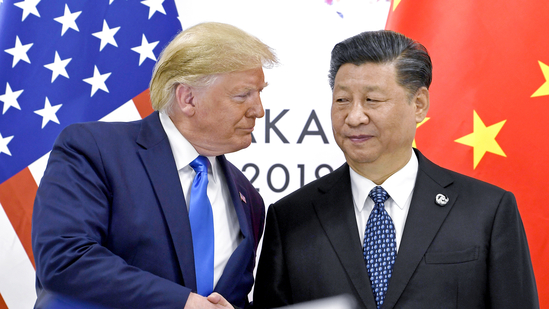
GENEVA : US Treasury Secretary Scott Bessent on Sunday reported “substantial progress” in US talks with China’s top economic officials to de-escalate a damaging trade war, but offered no details of an agreement reached as two days of negotiations wrapped up in Geneva.

Bessent told reporters that details would be announced on Monday and that US President Donald Trump was fully aware of the results of the “productive talks.”

US Trade Representative Jamieson Greer, who participated in the talks with Bessent, Chinese Vice Premier He Lifeng and two Chinese vice ministers, described the conclusion as “a deal we struck with our Chinese partners” that will help reduce the $1.2 trillion US global goods trade deficit.

“And this was, as the Secretary pointed out, a very constructive two days. It’s important to understand how quickly we were able to come to agreement, which reflects that perhaps the differences were not so large as maybe thought,” Greer said, adding that the Chinese officials were “tough negotiators”

The meeting was the first face-to-face interaction between Bessent, Greer and He since the world’s two largest economies imposed tariffs well above 100% on each other’s

Although Bessent has said the bilateral tariffs were too high and needed to come down in a de-escalation move, he did not offer any details of reductions agreed and took no questions from reporters.

Earlier, White House economic adviser Kevin Hassett said the Chinese were “very, very eager” to engage in discussions and rebalance trade relations with the United States.

Hassett also told Fox News that more foreign trade deals could be coming with other countries as soon as this week.

Overnight, Trump gave a positive reading of the talks, saying the two sides had negotiated “a total reset… in a friendly, but constructive, manner.”

“A very good meeting today with China, in Switzerland. Many things discussed, much agreed to,” Trump posted on his Truth Social platform.

“We want to see, for the good of both China and the U.S., an opening up of China to American business. GREAT PROGRESS MADE!!!,” Trump added, without elaborating on the progress.

Speaking on “Sunday Morning Futures” on Fox News with Maria Bartiromo, Hassett said Beijing is eager to re-set trade relations with the United States.

“It looks like the Chinese are very, very eager to play ball and to re-normalize things,” Hassett said.

Hassett also said more trade deal announcements could be imminent following last week’s announcement of an agreement with the United Kingdom. He said he had been briefed by Commerce Secretary Howard Lutnick on two dozen pending deals in development with USTR Greer.

“They all look a little bit like the UK deal but each one is bespoke,” Hassett said.

GATED VILLA

The negotiating teams met at the gated villa of Switzerland’s U.N. ambassador, overlooking Lake Geneva in the leafy suburb of Cologny. Black Mercedes vans with sirens shuttled to and from the venue, which was bathed in bright sunshine.

Neutral Switzerland was chosen as the venue following approaches by Swiss politicians on recent visits to China and the United States.

Washington is seeking to reduce its $295 billion goods trade deficit with Beijing and persuade China to renounce what the United States says is a mercantilist economic model and contribute more to global consumption, a shift that would require politically sensitive domestic reforms.

Adani Group deploys India’s 1st hydrogen-powered truck for mining logistics

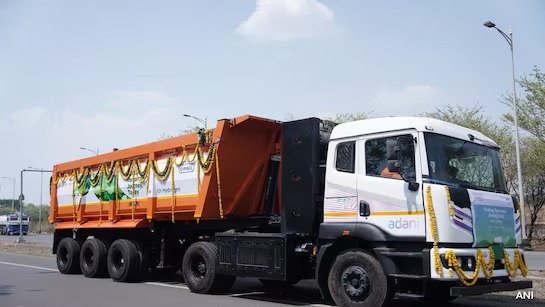
RAIPUR : Adani Enterprises, the flagship company of the Adani Group, has deployed India’s first hydrogen-powered truck for mining logistics in Chhattisgarh, equipped with smart technology and three tanks that can carry 40 tonnes of cargo for 200 kms of range.

Chhattisgarh Chief Minister Shri Vishnu Deo Sai flagged off the first truck in Raipur on Saturday. It will be used to transport coal from the Gare Pelma III Block to the state’s power plant.

The state-owned Chhattisgarh State Power Generation Company Limited has appointed Adani Enterprises as the mine developer and operator for the Gare Pelma III block through a competitive bidding process.

“The launch of India’s first hydrogen-powered truck in Chhattisgarh reflects the state’s commitment to sustainability. Such initiatives will significantly reduce our carbon footprint and set a new standard for industry. Chhattisgarh is not only at the forefront in meeting the country’s electricity demands, but also leads by example in adopting sustainable practices,” said the chief minister.

With an aim to promote cleaner transportation, the Group is developing hydrogen fuel cell battery-operated trucks, equipped with smart technology, for cargo transport in collaboration with an Indian and international energy technology firm, and a major auto manufacturer, according to a statement issued by the company.

The company, in the statement, said that these hydrogen-powered trucks will gradually replace diesel vehicles used in the company’s logistics operations.

“The initiative for hydrogen-powered trucks is a significant step towards Adani Group’s commitment to decarbonisation and responsible mining. We are creating model mines with minimal environmental impact by incorporating autonomous dozer push technologies, solar power, digital initiatives, and tree transplanters to relocate trees. We aim to ensure affordable and reliable electricity for all while pioneering new standards in sustainable mining practices,” said Dr. Vinay Prakash, CEO – Natural Resources, and director- Adani Enterprises.

The project is a joint effort between Adani Natural Resources (ANR) and Adani New Industries Limited (ANIL), both part of Adani Enterprises. ANR will source hydrogen cells from ANIL, which is also involved in green hydrogen, wind turbines, solar modules, and battery manufacturing.

Hydrogen, the most abundant element, produces no harmful emissions. Hydrogen fuel cell vehicles match diesel trucks in range and load capacity ,but emit only water vapour and warm air, with minimal noise.

Since mining mainly uses diesel-powered machinery, switching to cleaner fuels will reduce emissions and noise. It will also help lower India’s crude oil imports and carbon footprint. Notably, ANR is the first in Asia to deploy Dozer Push Semi-Autonomous Technology, boosting both safety and sustainability.

India poised to double ready-made garments market share to 12% in UK in near term: CareEdge

NEW DELHI : India is expected to double its market share from 6 per cent in 2024 to 12 per cent in the UK’s readymade garments (RMG) imports, translating into an incremental annual export opportunity of around USD 1.1-1.2 billion in the near to medium term, according to CareEdge Ratings.

On May 6, India and the UK successfully concluded an ambitious and mutually beneficial Free Trade Agreement (FTA) that will open up massive export opportunities for many labour-intensive sectors in India. The Commerce Ministry said that 99 per cent of Indian exports will benefit from zero duty.

The ready-made garment (RMG) sector accounted for around USD 525 billion in the global textile and RMG trade in 2024. Major markets include the European Union (EU), the United States of America (USA), the UK, Japan, Canada, and South Korea, which accounted for nearly 44 per cent of global imports.
The UK is among the top five RMG markets, with imports of around USD 20 billion in 2024.
Careedge said India currently exports nearly USD 1.2 billion of RMG to the UK out of its total exports of USD 15-16 billion.

The rating agency said countries such as Bangladesh, Turkey, Cambodia, and Italy enjoy duty-free access to the UK market, while Vietnam and Pakistan benefit from lower to zero tariffs.

“The India-UK FTA is a game changer for India’s RMG sector, creating a level-playing field vis-a-vis key competing nations for accessing the nearly USD 20 billion RMG market of the UK, CareEdge said.
According to CareEdge, India now has a clear 12 per cent duty advantage over China, which holds the largest market share in the UK’s RMG imports.

“China has lost its market share in the past few years, and it is expected to continue losing its share in the UK’s RMG market due to its declining competitiveness, backed by rising labour costs and the ‘China Plus One’ sourcing strategy adopted by global apparel brands and retailers,” said the rating agency.

Additionally, socio-political uncertainties in Bangladesh may also lead apparel brands and retailers with a significant presence in the country to diversify their sourcing, benefiting India.

Recovery in overall RMG demand from the UK, with moderating inflation and interest rates, along with India’s increased competitiveness post-duty removal and continued favourable policy regimes in India, such as the PM Mega Integrated Textile Region and Apparel (PM MITRA) park and the Production Linked Incentive (PLI) scheme, is expected to aid the sector in grabbing these additional export opportunities, it added.

Source : ANI

Indian pharma industry showed impressive growth in April 2025, by price led expansion: Report

NEW DELHI : The Indian Pharmaceutical Market continued its upward momentum in April 2025, registering a strong 7.8 per cent year-on-year growth with total sales reaching Rs 19,711 crore, according to a report by Pharmatrack.

The monthly performance added an impressive Rs 1,424 crore in incremental sales, underscoring the sector’s sustained resilience and demand, the report added.

According to the report, the sales growth was primarily driven by price-led expansion, followed by the impact of new product introductions (NIS).

On a Moving Annual Total (MAT) basis, the report added that the industry surged to Rs 2,27,361 Crore, reflecting a year-over-year growth of 8.3 per cent and a healthy 10.3 per cent Compound annual growth rate (CAGR), highlighting the sector’s resilience and long-term growth potential.

Therapeutic segments powering this momentum on April 25 include Cardiac, Neuro/CNS, Blood-Related, Anti-Neoplastics, Ophthalmology/Otology, and Urology, reinforcing the strategic importance of speciality and chronic therapies in driving market expansion.

This performance highlights the industry’s effective pricing strategies to manage cost pressures and sustain topline growth, even as overall volume growth remained modest at 0.4 per cent, added the report.
As per the finding of the report, among therapy areas, Cardiac and Anti-Infectives posted notable volume gains in April.

The report highlights that the cardiac therapy segment shows a strong trend, propelled by sustained demand in chronic disease management, particularly for Anti-Hypertensives, Lipid Lowering agents and Heart Failure therapies.

Meanwhile, Anti-Infectives experienced volume uplift tied to acute care needs, likely influenced by seasonal infections and localised outbreaks.

Going further, the report adds that from a pricing standpoint, Respiratory therapy led with a 6.6 per cent price increase, followed closely by Cardiac and Gastrointestinal therapies, reflecting pricing dynamics in high-demand categories.

Stomatologicals emerged as a standout in new product performance, registering a 7.7 per cent growth, focusing on launches in specialised care areas where competition is relatively low and demand is evolving, the report added.

Source : ANI

Not just tourism, India has $12 billion trade with Turkiye and Azerbaijan   

NEW DELHI : The ongoing tension between India and Pakistan is set to impact the Indians travelling to Turkiye and Azerbaijan, who have expressed support to Pakistan amid tension on the border. Tourism is just one of the $12 billion trade these countries have with India.

According to the Ministry of External Affairs (MEA) data, India’s bilateral trade with Turkiye in FY2023-24 stood at $10.43 billion, with India’s exports to the country was at $6.65 billion and import at $3.78 billion. India was the third largest destination for Azerbaijan’s crude oil in 2023.

“India’s bilateral trade with Azerbaijan has increased substantially from around $50 million in 2005 to $1.435 billion in 2023, with India becoming Azerbaijan’s seventh largest trading partner. During the year, India’s import from Azerbaijan were $1.235 billion and exports were $ 201 million,” according to the official data.

India’s economic engagement with Türkiye has acquired new momentum in recent years with considerable increase in India-Türkiye trade, which crossed $13.80 billion in 2022-23. India’s bilateral trade with Turkiye in FY2023-24 stood at $10.43 billion, with India’s exports to the country was at $6.65 billion and import at $3.78 billion, it said.

“Total FDI from Turkiye to India stood at $227.5 million for the period April 2000-December 2023 and total Indian investment in Turkiye stood at around $200 million for the period August 2000-March 2024,” says DPIIT.

The two countries have seen huge jump in Indian visitors in the past year. According to the data, Azerbaijan received 117,302 tourists from India in 2023, which is nearly double the number of tourist arrivals in 2022 (60,731). In 2024, 243,000 Indian visited the country.

There is a direct flight connectivity between Delhi and Baku, with ten flights a week – 7 operated by Indigo and 3 by Azerbaijan Airlines. India is now the fourth largest source of tourists for Azerbaijan after Russia, Türkiye and Iran. Turkey saw a 20% jump in Indian travellers. As many as 3.3 lakh Indian tourists visited Turkey last year which was 20.7 percent more than 2023 when 2.74 lakh Indians had visited the country.

Several of the hotel and tourism platforms have requested Indians to avoid unnecessary travel to the two countries and some have stopped taking further bookings.

Maersk Asia Pacific Market Update – May 2025

COPENHAGEN : As we move further into 2025, the Asia Pacific logistics landscape continues to be shaped by geopolitical developments, evolving trade policies, and shifting demand patterns. While ocean and air freight volumes remained resilient in early Q1, new tariff regimes and market uncertainty are beginning to reshape customer behaviour and cargo flows. At Maersk, we remain focused on helping our customers navigate these complexities with agility, transparency, and integrated solutions across ocean, air, inland, and Customs. This month’s update provides the latest insights across key transport modes, spotlighting the impact of current policy shifts and outlining how we’re supporting customers in building more flexible, resilient supply chains.

Ocean Market Update
Global Ocean Container Trade Maintained Solid momentum in Q1

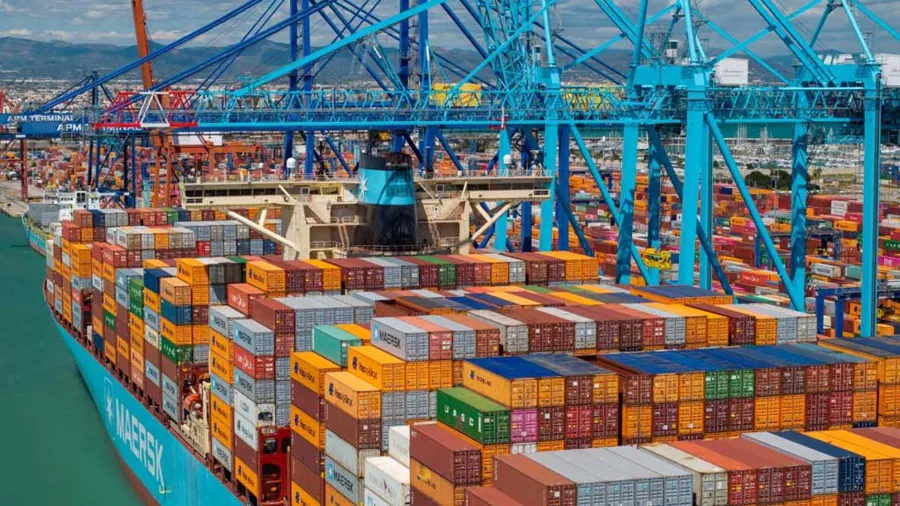
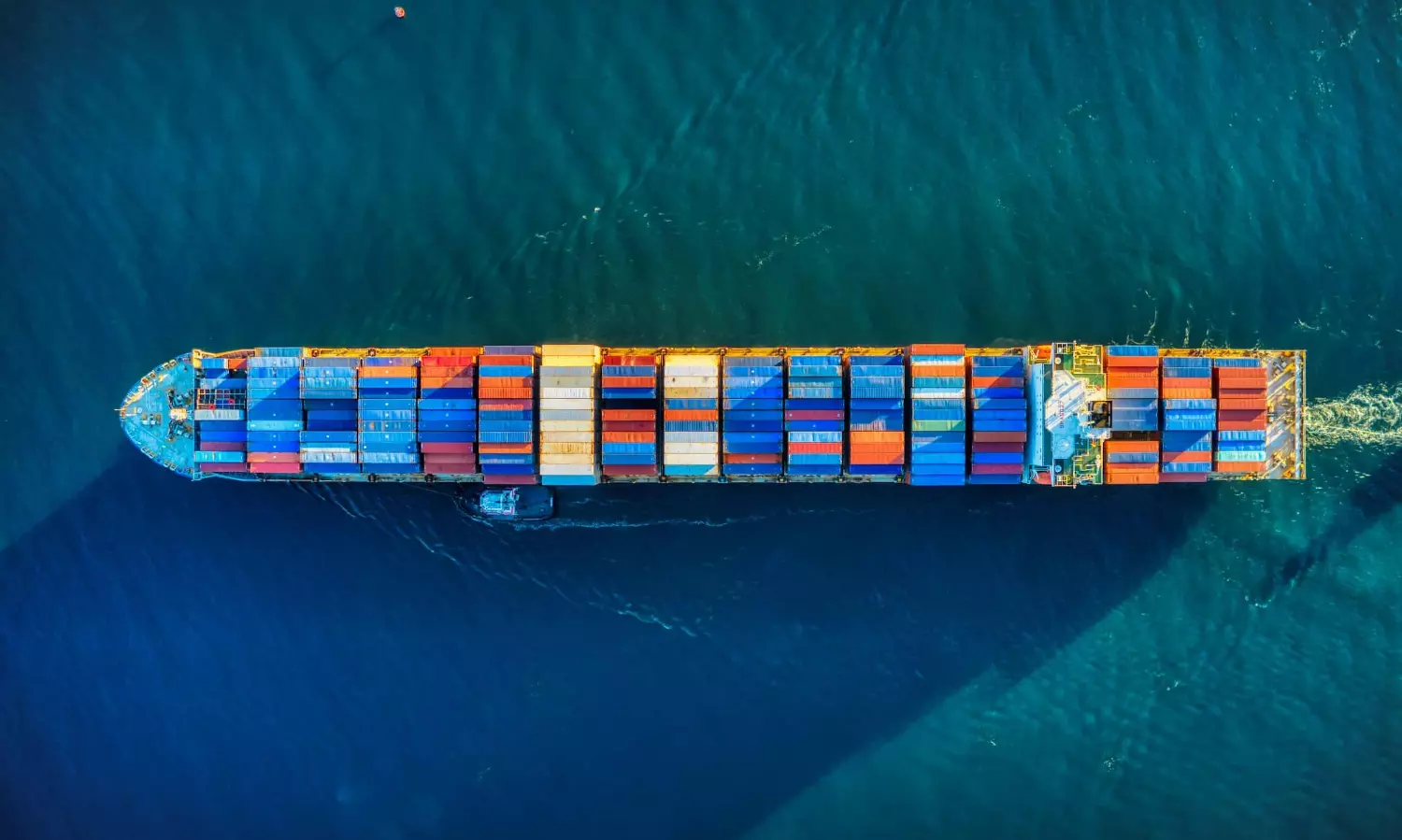
A large container ship rests at the dock, surrounded by cranes and stacks of cargo containers at the port.

Global ocean container trade maintained solid momentum , with volumes growing 4.7% year- on-year between December and February, according to Maersk Strategic Insight. Far East Asia remained a key driver of growth, with sus- tained export activity supporting higher import volumes into Latin America, Europe, and North America. In contrast, imports into Far East Asia declined by 7.4%, reflecting post–Lunar New Year softness and a continued drawdown of existing inventories. Despite seasonal easing in March, export flows from Asia to the U.S. and Europe remained steady, though the overall environment has become more complex.

Amid Shifting Market Dynamics, Maersk remains committed to maintaining a stable and reliable schedule for our customers
The volatility and complexity of the shifting policy landscape places global logistics at the forefront as the effects of trade tensions reinforces the importance of agile and robust supply chains. We are in close contact with our customers navigating a volatile and uncertain business landscape. Many deploy a “wait and see” approach, keeping goods flowing as they work to clarify options to respond and mitigate based on a range of scenarios. Uncertainty remains the key challenge and until there is a clearer picture, we expect customers to be more cautious about their inventory levels and continue exploring ways to build additional flexibility into their supply chains.

Recent months have also seen an increased number of cancelled sailings on the Transpacific trade. According to Sea-Intelligence, the overall deployed capacity on Transpacific routes has already been reduced by 19% as of date and may accelerate further in the coming weeks.

Amid shifting market dynamics, Maersk remains committed to maintaining a stable and reliable schedule for our customers.

In a time of heightened uncertainty, maintaining a predictable and dependable network is critical for our customers’ supply chain planning. Maersk has to date prioritized operating a full sailing program on the Transpacific corridor, while we in some cases sail smaller vessels to release the larger ones for trades with higher demand
Dennis Bøttern Bai, Regional Head of Transpacific and Asia-Latin America for Maersk

Despite the market experiencing adjusted schedules and blanked sailings, Maersk to date has maintained a full sailing schedule across the Transpacific corridor, prioritizing reliability and resilience for customers. Our newly launched East-West network combines mainliner strength with shuttle agility, ensuring consistent and dependable services across Asia Pacific even amid ongoing volatility.

The impact of new tariffs will increasingly shape the outlook for the Intra-Asia market, which experienced strong demand through the first quarter of 2025. These tariffs may affect the movement of raw materials and semi-finished goods destined for re-export to global markets. Maersk is actively monitoring these developments and maintaining flexibility in our network to respond quickly to shifting trade patterns.

Update on Schedule Reliability from Sea-Intelligence
We’ve achieved 90.3% schedule reliability in March, according to Sea-Intelligence – a strong milestone in the phase-in of our East-West Network under the Gemini Cooperation. We’re continuing to improve service reliability and efficiency for our customers.

Here’s what we’ve achieved so far:

Network phase-in: All exports in each respective regions are now running on the new network.
Continued reliability above 90%: We deliver towards our goal of schedule reliability above 90% once our network is fully phased in by June.
Fleet Transition: Around 95% of the 340 vessels have joined the new network, and we’re on track to complete the full phase-in by mid-May 2025.

Update on the USTR Section 301 review
On April 17, 2025, the United States Trade Representative (USTR) concluded its Section 301 investigation into China’s maritime, logistics, and shipbuilding sectors. As a result, the U.S. government will begin phasing in higher fees on Chinese-owned and Chinese-built vessels calling U.S. ports. While the rule takes effect immediately, fees are set at $0 for the first 180 days and will begin increasing from October 14, 2025.

At this time, we do not see a direct cost from this initiative impacting Maersk or our customers. We do not anticipate changes to our U.S. port rotations due to the new fees. Your current service plans remain unchanged.

We are monitoring developments closely and will keep you informed. Thank you for your support of our services and please contact your Maersk representative if you require additional information. We’re here to help you plan ahead.

Container shipping firms cut Asia-US Service as Trump tariffs collapse trade

LOS ANGELES : Major container shipping companies are suspending at least six scheduled weekly routes between China and the United States as President Donald Trump‘s punishing tariffs on the world’s top exporting country collapse trade, maritime consultants said.

The ships on those routes have the combined capacity to deliver 25,682 40-foot containers stuffed with toys, tennis shoes, car parts and things U.S. manufacturers use to produce goods each week – or more than 1.3 million 40-foot containers a year, based on capacity data provided in customer advisories.

The service cuts, coupled with cancellations of individual voyages, come as hulking container ship operators move to mitigate fallout from Trump’s erratic trade policies.
Policy makers, economists, and business owners have become increasingly hungry for information on ocean trade, responsible for 80% of the world’s commerce, because it is a gauge of global economic health.

“This is not the precursor, it is the proof of a drop in economic activity,” Simon Sundboell, CEO of Danish maritime data provider eeSea, said of the container vessel capacity reductions now underway. The route suspensions include scheduled weekly services operated by MSC, Zim and the Ocean Alliance that includes Cosco (601919.SS), opens new tab, Evergreen (2603.TW), opens new tab, CMA-CGM and Orient Overseas Container Line (OOCL) (0316.HK), opens new tab, Sundboell said.

Four of the service cuts affect West Coast ports, one impacts the East Coast and one hits the Gulf Coast, he said. The container shipping companies culling those services either declined to comment or did not immediately respond. Maersk ,opens new tab and Hapag-Lloyd’s, opens new tab Gemini Alliance have not suspended services – even though both partners experienced significant tariff-related China to U.S. booking cuts in April and have swapped out some ships for smaller vessels.

Representatives from the U.S. and China are meeting this weekend in Switzerland after more than two months of stalemate over trade.
BLANKETY BLANK
Global shipping companies use service suspensions and cancellations of individual voyages, known as blank sailings, to shelter profits by ensuring they do not have more ships on the water than are needed by customers. That reduces unnecessary overhead costs and keeps supply and demand in balance, supporting competing off-contract spot rates.

Blank sailings increased significantly after the COVID pandemic upended global trade in 2020 – and are part of why global container ship operators have been enjoying record profits. Major U.S. retailers like Amazon.com, opens new tab and Walmart, opens new tab, which account for nearly half of global container trade, responded to Trump’s 145% tariffs on China last month by pausing or cancelling factory orders after those import duties more than doubled the cost of goods made in China.

Canceled, or blanked, individual voyages on the vital Transpacific route from Asia to North America surged from 9% in week ended March 30 to 24% in week ended May 4, maritime consultancy Drewry said in a podcast earlier this week. Drewry’s data shows blank sailings reduced capacity on the Asia to West Coast North America routes by 20% in April and 12% so far in May.

The cuts hit slightly harder on the North American East Coast, reducing 22% in April and 18% thus far in May, the consultancy said.
MSC, the world’s largest container ship operator, in April canceled 30% of its scheduled Transpacific voyages – more than any other container carrier, said Daniela Ghimp, project manager for ocean freight rate benchmarking at Drewry.

The Premier Alliance, composed of Ocean Network Express (ONE), Hyundai Merchant Marine (HMM) and Yang Ming Marine Transportation, leads so far in May with a 20% blank sailing rate, Ghimp said.
ONE declined comment, while HMM and Yang Ming did not immediately respond. The full effect of Trump’s tariffs will likely be delayed until July, when overall U.S. container import volume could be down 25% or more from the year earlier, said John McCown, senior fellow at the Center for Maritime Strategy.
“Something’s gotta give, and I believe either considerably more capacity will have to be culled, or spot rates will start to crash,” said Alan Murphy, CEO of supply chain adviser Sea-Intelligence.

SHIPPING: Asia-US container rates flat to higher as capacity reduction offers support

LONDON : Rates for shipping containers were stable to higher this week as carriers have reduced capacity by 4-5% along the trade route amid efforts to stop the slide in prices, but capacity could surge and put downward pressure on rates if the Red Sea ceasefire holds.

On 6 May, US President Donald Trump announced that a peace deal had been struck between the US and Houthi rebels, which would bring attacks against shipping to an end in the Red Sea.

Since the start of 2024, traffic through the Suez Canal has collapsed and remains at roughly half pre-Gaza conflict levels.

CONTAINER RATES
Rates from online freight shipping marketplace and platform provider Freightos were flat week on week, and supply chain advisors Drewry showed a 4% increase in rates from Shanghai to New York and a 5% increase from Shanghai to Los Angeles, as shown in the following chart.

Drewry expects rates to be less volatile in the coming week as carriers are reorganizing their capacity to reflect a lower volume of cargo bookings from China.

Judah Levine, head of research at Freightos, said many US importers have paused orders out of China, but shippers (as well as manufacturers) can hold out only so long before consumers will start to see empty shelves or higher prices.

Import cargo at the nation’s major container ports is expected to see its first year-on-year decline in over a year and a half this month as the effect of tariffs increases, according to the Global Port Tracker report released today by the National Retail Federation and Hackett Associates as shown in the following chart.

Alan Murphy, CEO, Sea-Intelligence, said carriers have reduced capacity by 4-5% in April and May on the transpacific trade lane.

“When we look across what was deployed in April and what is scheduled for May combined, blanked capacity accounts for 19% of the total Asia to North America West Coast (NAWC) planned capacity, and 17% of the total Asia to North America East Coast (NAEC) planned capacity, across those two months,” Murphy said.

“But a high level of blank sailings does not automatically translate into a large reduction of capacity year on year, if the originally planned level of capacity, without blank sailings, constituted a large increase in capacity deployment on a year-on-year basis,” Murphy said.

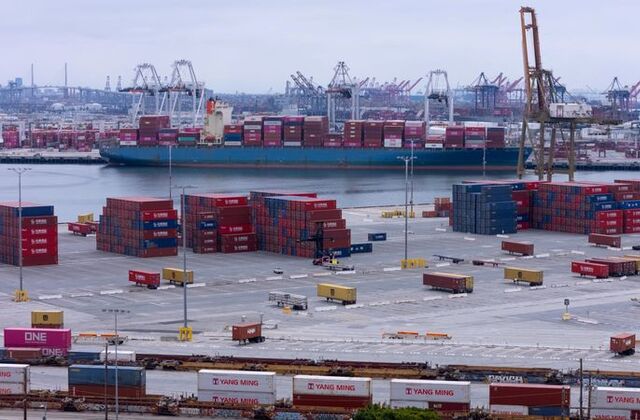
Kip Louttit, executive director of the Marine Exchange of Southern California (MESC), said the ports of Los Angeles and Long Beach are seeing fewer arrivals than normal.

“For example, only 22 arrived the first five days of May, whereas 28.5 arrivals would be normal,” Louttit said. “Only nine are scheduled to arrive in the next three days, whereas 17 in three days would be normal.”

Container ships and costs for shipping containers are relevant to the chemical industry because while most chemicals are liquids and are shipped in tankers, container ships transport polymers, such as polyethylene (PE) and polypropylene (PP), are shipped in pellets. Titanium dioxide (TiO2) is also shipped in containers.

They also transport liquid chemicals in isotanks.

LIQUID TANKER RATES UNCHANGED
US chemical tanker freight rates assessed by ICIS were steady this week with rates remaining unchanged week on week despite continuing to see downward pressure for several trade lanes.

For yet another week, there is downward pressure on rates along the USG-Asia trade lane as charterers are still in wait-and-see mode. Besides contract of affreightment (COA) cargoes, there is very little seen in the market.

The tariffs and uncertainty continue to dampen the spot market, pressuring rates. As a result, owners are sending fewer vessels and therefore keeping rates stable for now due to the lack of available tonnage.

Similarly, rates from the USG to ARA and all other trade lanes also held steady. Although COA volumes are lower there are also fewer spot inquiries available.

Despite the lack of interest, rates remain unchanged as the clean petroleum products (CPP) market continues to remain soft leaving those vessels to participate in the chemical sector and pressuring chemical rates lower.

However, several cargoes of styrene, methanol and caustic soda continue to be seen in the market.

From the USG to Brazil, this trade lane had seen more inquiries, but there is plenty of available space for the balance of May lending downward pressure to spot rates.

This is leaving most owners still trying to fill up prompt partial space to WCSAM and to ECSAM for 2H May. Rates are soft and have lost some ground.

During the past week large parcels of MEG and caustic soda were seen in the market and as well as a CPP cargo further demonstrating the length in the market and weighing down on rates.

Along the USG to India route the spot market is stable and with its usual slow pace. No new cargoes have been heard from the US.

Source : ICIS