Home Blog Page 86

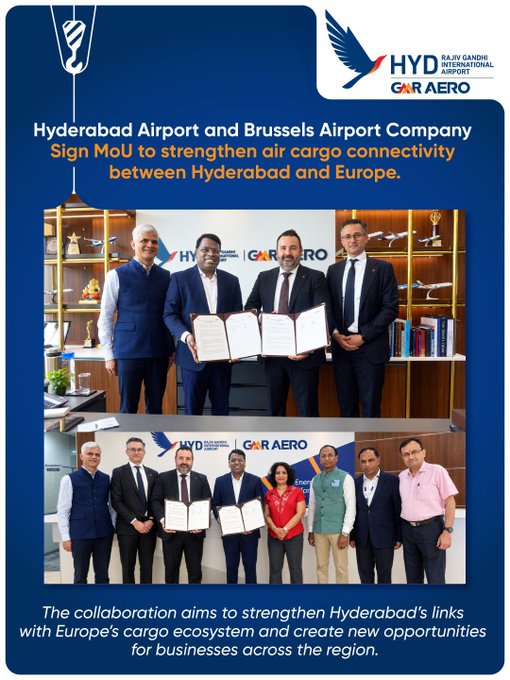
GMR Hyderabad International Airport signs MoU with Brussels Airport to explore new air cargo connectivity with Europe

HYDERABAD : Rajiv Gandhi International Airport (RGIA)– GMR Hyderabad International Airport Ltd. (GHIAL)and Brussels Airport have signed a Memorandum of Understanding (MoU) to strengthen air cargo connectivity between Hyderabad and Europe and explore opportunities for sustained cargo growth.

The partnership will focus on route development, market intelligence, cargo best practices and stakeholder engagement, with the two airports working together to identify opportunities to enhance Hyderabad’s connectivity with key European markets.

As part of the agreement, GHIAL and Brussels Airport will jointly assess market demand and commodity flows and develop business cases for potential Hyderabad-Brussels cargo connectivity. The airports will also engage with airlines, freight forwarders and other stakeholders to explore new cargo services and strengthen trade links between India and Europe.

Kadhir Kadhiravan, CEO, GMR Hyderabad International Airport Limited, said, “Our collaboration with Brussels Airport Company strengthens our ability to connect Hyderabad with the wider European cargo ecosystem and supports our ambition to build a more globally integrated cargo network. By bringing together market expertise, industry partnerships and complementary strengths, we can create new opportunities for businesses in Hyderabad and across the region while strengthening the airport’s role in India’s international trade corridors.”

“As Europe’s preferred pharma and life sciences hub, Brussels Airport has built a strong ecosystem and extensive expertise in pharmaceutical logistics. Combined with Hyderabad’s leading life sciences ecosystem, this creates valuable opportunities for future cooperation and knowledge exchange,” says Arnaud Feist, CEO Brussels Airport.

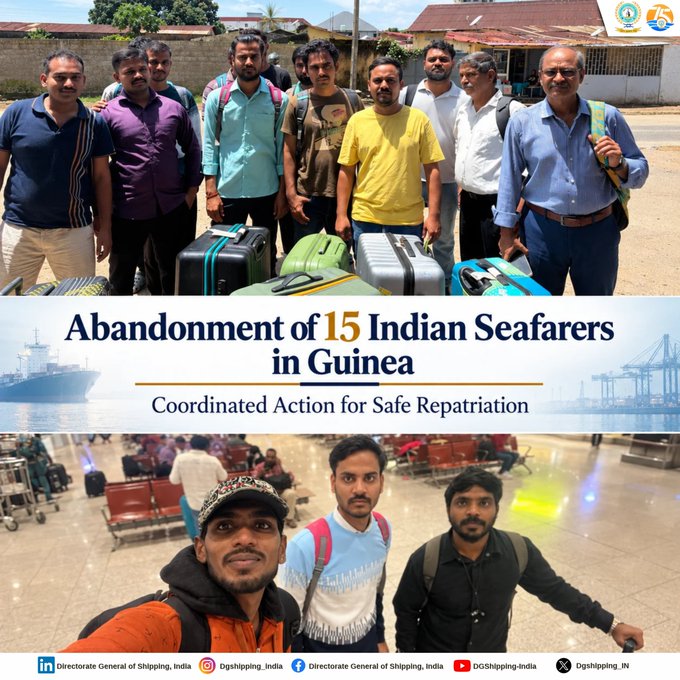
DGMA, SWFS and Indian Embassy facilitate safe repatriation of 15 stranded Indian seafarers from Guinea

NEW DELHI: The Directorate General of Maritime Administration (DGMA) has facilitated timely welfare assistance and repatriation support for 15 Indian seafarers who were stranded at Kamsar Port, Republic of Guinea, following prolonged non-payment of wages while serving onboard MV GOLDY SEVEN (IMO No. 9135731).

Following the disembarkation of the seafarers, immediate assistance was required to meet their essential needs, including food, accommodation, subsistence and arrangements for their return to India.

Upon receiving information about the situation, DGMA promptly intervened to safeguard the welfare, safety and rights of the affected seafarers. DGMA coordinated with the Seafarers Welfare Fund Society (SWFS), Mumbai, and the Embassy of India in Conakry to ensure that the stranded crew received necessary support and assistance for their safe repatriation.

Recognising the immediate humanitarian needs of the seafarers, SWFS extended interim financial assistance under its welfare mandate, with the approval of the SWFS Committee of Management. The assistance was provided in accordance with the applicable rules and procedures and supported the seafarers with essential requirements, including food, accommodation, subsistence and repatriation-related needs.

The Embassy of India in Conakry also played an important role in supporting the affected seafarers by facilitating accommodation, food and the necessary arrangements for their repatriation to India.

The coordinated intervention by DGMA, SWFS and the Embassy of India ensured that the 15 Indian seafarers received timely humanitarian and welfare assistance during a difficult period and were supported towards their safe return home.

The intervention underscores the collective commitment of Indian maritime authorities and welfare institutions to protecting the dignity, safety, welfare and rights of Indian seafarers, including those facing hardship or abandonment in foreign ports.

DGMA and SWFS continue to remain committed to extending timely assistance to Indian seafarers in distress and ensuring that appropriate welfare mechanisms are available to support them, irrespective of where they may be stranded across the globe.

Every Seafarer Matters. Every Safe Return Matters.

India participates in 14th East Asia Summit Economic Ministers’ Meeting and 23rd ASEAN-India Economic Ministers Consultation

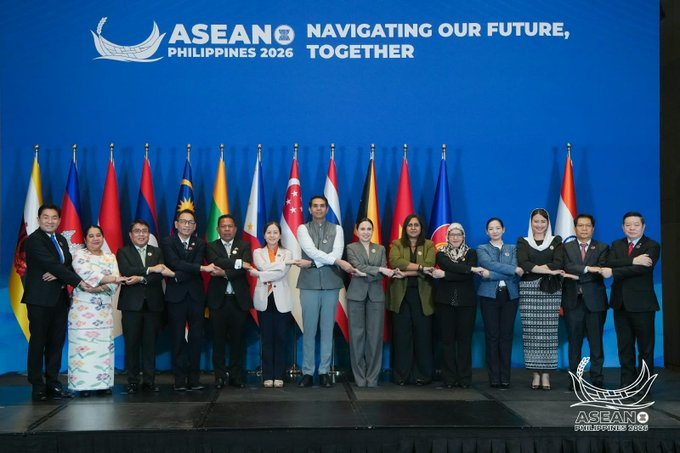
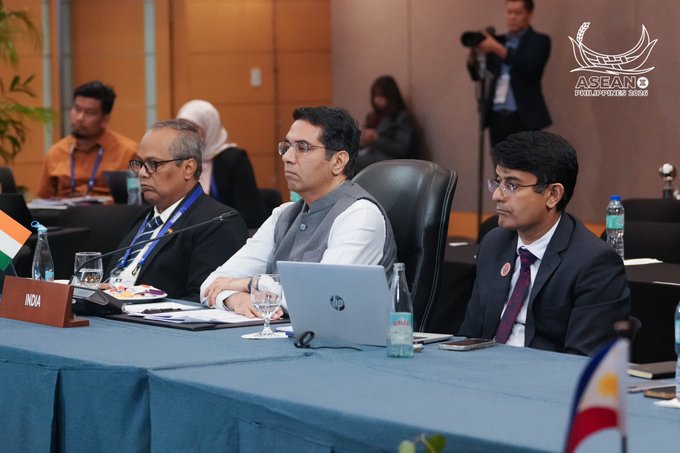
NEW DELHI : The Indian delegation led by Additional Secretary, Department of Commerce, Shri Nitin Kumar Yadav, participated in the 14th East Asia Summit Economic Ministers’ Meeting (EAS-EMM) and the 23rd ASEAN-India Economic Ministers Consultation held in Manila, Philippines.

14th East Asia Summit Economic Ministers Meeting India participates in 14th East Asia Summit Economic Ministers’ Meeting and 23rd ASEAN-India Economic Ministers Consultation

Economic Ministers or their representatives from all 11 ASEAN countries — Brunei, Cambodia, Indonesia, Laos, Malaysia, Myanmar, Philippines, Singapore, Thailand, Timor-Leste and Vietnam — participated in the meetings along with EAS partners, including India, Australia, China, Japan, New Zealand, Korea, Russia and the United States.

The meetings facilitated an exchange of perspectives on prevailing regional and global economic developments. The ASEAN Secretariat provided a briefing on the regional and global economic outlook for 2027, including the anticipated implications for trade and investment flows.

The Economic Research Institute for ASEAN and East Asia (ERIA) also presented its paper, “Powering the EAS Region’s Next Wave of Growth: An Integrated Approach to Energy Security and Industrial Clusters.” The paper outlined an integrated approach to energy security and industrial clusters, bringing together energy infrastructure, digital and industrial demand, and coherent trade and investment policies.

During the ASEAN-India Economic Ministers Consultation, India highlighted its continued commitment to fostering strong trade partnerships and ensuring that regional trade agreements are mutually beneficial. The discussions placed particular focus on the ongoing review of the ASEAN-India Trade in Goods Agreement (AITIGA), which is aimed at facilitating enhanced trade flows and addressing existing trade asymmetries.

In 2025–26, bilateral trade between India and ASEAN reached USD 128.38 billion, with ASEAN accounting for 10.55 per cent of India’s total global trade, underscoring the importance of the partnership.

India reiterated its commitment to ensuring that the outcome of the AITIGA review is mutually beneficial and makes the agreement balanced, more effective, user-friendly and trade facilitative for businesses.

On the sidelines of the meetings, the Indian delegation interacted with Indian businesses operating in the Philippines on 22 September 2026 and discussed the issues faced by them while exporting commodities and services. The delegation also participated in the ASEAN-India Business Forum 2026, organised on 23 September 2026.

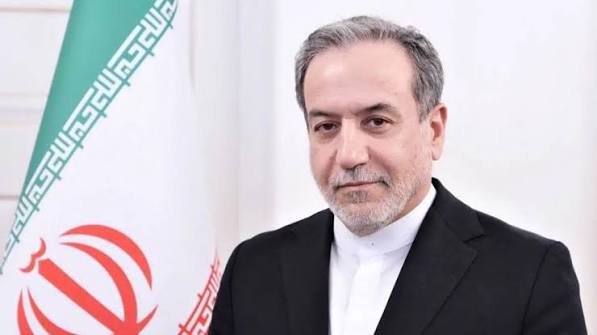
Iran Foreign Minister Araghchi offers seven-day plan to end conflict, open Hormuz and restart peace talks

NEW YORK: Iran’s foreign Minister Syed Abbas Aragchi says that Iran has offered a seven-day plan to end the conflict in West Asia, reported New York Times.

According to the report, the plan would also seek to reopen the Strait of Hormuz and then begin comprehensive talks on Iran’s nuclear program.

Araghchi, told reporters at the United Nations General Assembly that the proposal was similar to the MoU reached between US and Iran in June this year.

“We have introduced a plan to the United States through the intermediators that if certain conditions are met, the Strait of Hormuz would be open on the end of the seventh day and talks would restart…it would be better, if a deal was reached before the U.S. midterm elections,” he was quoted as saying by NYT.

Earlier, in his meeting with German Foreign Minister Johann Wadephul, Araghchi stressed that the Islamic Republic of Iran has conveyed to the American side its reasonable conditions and requirements for advancing diplomacy, emphasizing that restoring security to the region requires an end to US interventionist and aggressive actions against Iran.

The Iranian foreign minister underscored Iran’s commitment to pursuing diplomacy regarding its peaceful nuclear program, stressing that no party can ignore Iran’s good faith in the negotiations, as well as the US and Israeli military aggression against Iran in the midst of the talks, while portraying Iran as responsible for insecurity in the Strait of Hormuz.

Araghchi further criticized European countries, including Germany, for ignoring US violations of international law and acts of bullying. He outlined Tehran’s positions on international developments, stressing that restoring confidence in the United Nations requires all countries to adhere to the principles and purposes of the UN Charter and international law.

Meanwhile, in an interview with Fox News, Iran President Masoud Pezeshkian blamed US President Donald Trump and the American side for the failure to implement the negotiated settlement that both sides had reached at in June this year.

“We did reach an agreement with your president, that agreement was signed, and based on that, we are willing and still wish to move forward. And the framework was agreed upon. We had not closed the Strait of Hormuz; it was open, without any legal justification or framework…They attacked us. They assassinated and martyred our esteemed supreme leader; our scientists are military commanders and government. The problem is that America, instead of conducting dialogue, they descend into the arena by bombing us first, by blocking every pathway. We are ready,” he told Fox News.

The Iranian assertion puts the ball firmly in Donald Trump’s court. While the US President has indulged in rhetoric of threatening annihilation of Iran, he knows that a settlement would be the best way to end a conflict that is now on for seven months.

Source: ANI

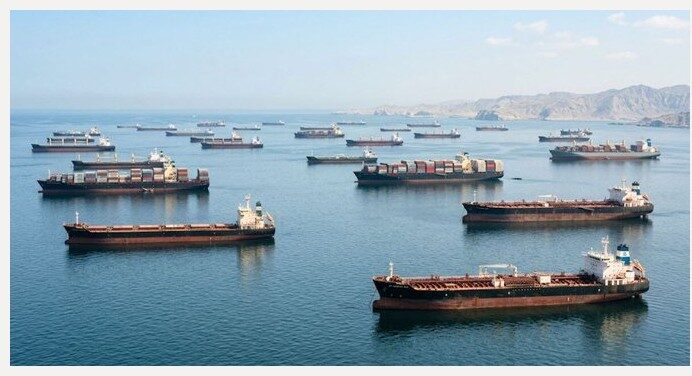
Shipping traffic via Strait of Hormuz stays lower than 10-day average, data shows

SINGAPORE : Ten commodity vessels transited the Strait of Hormuz on Wednesday, up from seven a day earlier and ​below the 10-day moving average of about 17, preliminary ‌shipping data showed on Thursday. Nine vessels entered the strait, including Supramax ships carrying metals, grain and other dry bulk cargoes, as well as ​an empty very large gas carrier. One Supramax carrying ​fertilizer exited, according to the data, as of 0423 ⁠GMT on Thursday.

The figures exclude any vessels that might have ​crossed the strait with their transponders turned off to avoid ​detection.
Before the US-Israeli war on Iran started on February 28, the strait typically handled about 125 large, commercial vessels a day, including tankers, gas ​carriers, bulkers and container vessels, accounting for some 20% of ​the world’s daily crude oil and liquefied natural gas supply.

Iran and the US ‌remain ⁠far apart on how to end the war but diplomacy must continue, a senior Iranian official told Reuters on Wednesday, after Iran’s president told the United Nations General Assembly that Tehran would ​never surrender to ​US pressure.

The ⁠senior Iranian official, speaking on the condition of anonymity, said Tehran was reviewing Washington’s response to ​its peace proposals, which prioritise lifting a US ​naval ⁠blockade on Iranian ports and reopening the Strait of Hormuz.
In the Bab el-Mandeb Strait, 27 commodity vessels on Wednesday transited the ⁠waterway, up ​from 24 a day earlier and ​compared with an average of 26 ships using the strait in the past ​10 days.

Source : Reuters

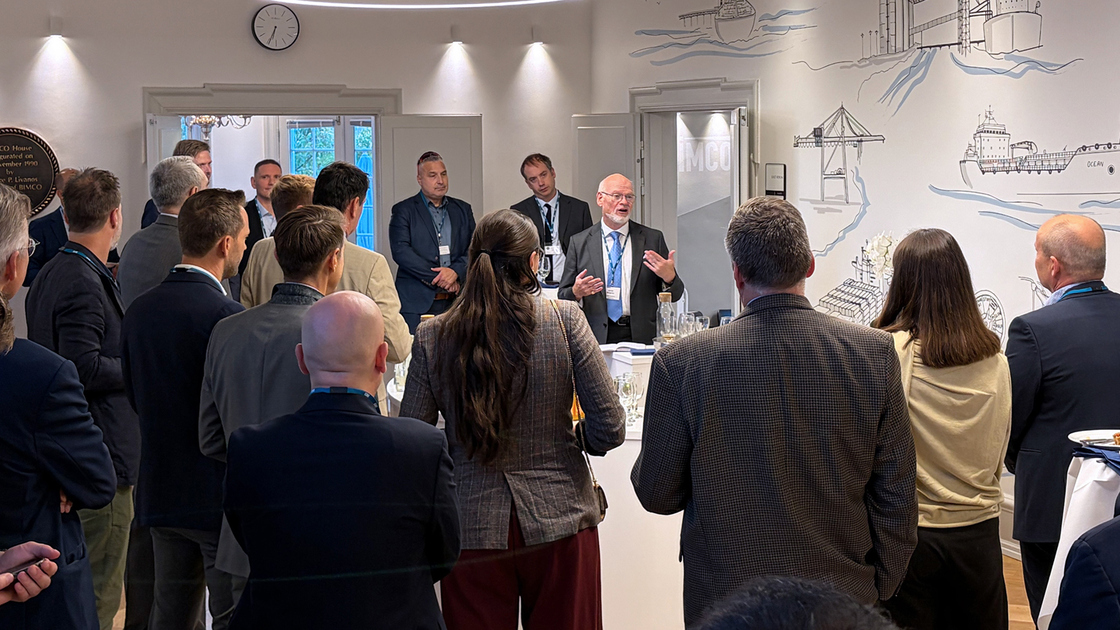
BIMCO Symposium highlights need for global maritime security co-operation

LONDON: Geopolitical tensions, regional conflicts and increasingly sophisticated criminal networks are creating connected security risks for international shipping. At BIMCO’s Maritime Security Symposium 2026, participants agreed that preparedness, trusted information sharing and closer co-operation are essential to protect ships, seafarers and global trade.

The symposium brought together representatives from shipping, governments, navies, international organisations, law enforcement, academia and security providers at BIMCO House just outside Copenhagen on 21-22 September.

Topics included geopolitical competition, the conflict in the Black Sea, maritime drug trafficking, security in the Red Sea and developments around the Strait of Hormuz.

The discussions took place under the Chatham House Rule, allowing participants to speak openly about emerging threats and operational challenges.

A clear message emerged: maritime security risks cannot be assessed in isolation. Events in one region can quickly affect shipping routes, commercial decisions and risk assessments elsewhere.

Geopolitical competition was a central theme. Speakers considered how tensions between major powers are changing the operating environment for international trade and may influence shipping routes, markets and security planning in the years ahead.

Black Sea
In the Black Sea, the continuing conflict has changed trading patterns and increased operational risks. Participants discussed how shipping companies can strengthen resilience, manage risk and maintain commercial operations as conditions change.

Organised crime
The session on maritime drug trafficking highlighted the scale and complexity of organised crime. Criminal networks increasingly divide tasks and buy specialist services from other groups, rather than controlling the entire supply chain. This makes threats harder to identify and disrupt.

Red Sea
In the Red Sea, speakers reviewed the continuing threats from piracy and attacks on commercial shipping. They stressed the value of practical co-operation between the shipping industry and military forces.

Strait of Hormuz
The closing session focused on Iran and the Strait of Hormuz. Participants considered regional security dynamics, the operational pressures on shipping companies and the importance of reliable information when making decisions about vessels in the area.

The symposium showed the value of bringing together people with different expertise and operational experience. Although individual contributions remain confidential, the discussions reinforced a shared view that effective maritime security depends on collaboration, situational awareness and trusted information sharing.

As threats continue to evolve, shipping companies need to stay prepared, test their resilience and maintain strong links with governments, military forces, law enforcement and security specialists.

MACN welcomes its first classification society members: ABS, DNV and RINA

COPENHAGEN: The Maritime Anti-Corruption Network expands its membership to classification societies, strengthening collective action and integrity across the maritime value chain.

At its General Assembly on 30 April 2026, members of the Maritime Anti-Corruption Network (MACN) voted in favor of opening MACN membership to classification societies. Following this decision, MACN is pleased to welcome ABS, DNV, and RINA as the first classification societies to join the network.

Strengthening integrity across the maritime value chain

The maritime industry is facing growing complexity driven by geopolitical developments, changing trade patterns, and evolving vessel ownership and operating structures. These trends underline the importance of maintaining integrity across the maritime value chain and ensuring all relevant actors contribute to practical, coordinated solutions.

Classification societies play an essential role throughout a vessel’s lifecycle, including design, construction, maintenance, surveys, and certification. Their work directly supports safety, compliance, and trust in international shipping, while also placing them close to technical, commercial, and regulatory decisions where integrity risks can arise, particularly in complex or high-risk operating environments.

By opening membership to classification societies, MACN further strengthens representation across different parts of the maritime ecosystem. Their technical expertise, global reach, and influence can help improve information sharing, strengthen collective responses to corruption risks, and support greater consistency in standards and practices across the industry. The expanded membership also reflects the increasingly interconnected nature of global shipping and the need for collaboration across the maritime value chain.

“Classification societies play an essential role in safeguarding standards, safety, and trust across global shipping. Welcoming them into MACN brings vital technical expertise and a wider perspective to our network. Our Collective Action initiatives will be stronger when classification societies stand alongside shipowners, operators, and other maritime stakeholders in addressing corruption risks and advancing integrity across the industry.”

– Cecilia Müller Torbrand, CEO, MACN

ABS, DNV, and RINA become MACN’s first classification society members

The admission of ABS, DNV and RINA marks an important milestone in MACN’s development and puts the General Assembly decision into practice. As three of the world’s leading classification societies, these organisations bring extensive technical expertise, global reach, and deep engagement across the maritime industry.

Their participation broadens the perspectives represented within MACN and strengthens opportunities for collaboration across different parts of the maritime value chain. Through their membership, DNV, ABS and RINA will contribute valuable insights to collective efforts aimed at strengthening integrity, transparency, and fair business practices across maritime trade.

ABS

ABS joins MACN as one of the network’s first classification society members, bringing deep expertise in classification, safety, compliance, and technical advisory services across the global maritime and offshore sectors.

Through participation in MACN, ABS will contribute to collective efforts aimed at strengthening integrity and responsible business practices across maritime trade. Membership will also create opportunities to collaborate with a broad range of industry stakeholders on practical approaches to addressing corruption risks and supporting fair and efficient global trade.

“Trust is fundamental to the efficient functioning of global shipping. At ABS, we see integrity as an important part of maintaining confidence in the systems, standards, and relationships that support international trade. Joining MACN provides an opportunity to engage with industry partners, share expertise, and contribute to efforts that strengthen transparency and responsible business practices across the maritime sector.”

– John McDonald, ABS Chairman and CEO, ABS

DNV

As one of MACN’s first classification society members, DNV brings extensive experience supporting safe, efficient, and sustainable shipping worldwide. Membership provides a platform to collaborate with peers across the maritime value chain, share practical experiences, contribute to collective action initiatives, and help develop industry solutions to corruption challenges.

“Integrity, trust, and transparency are fundamental to a safe and well-functioning maritime industry. By joining MACN, DNV is reinforcing its commitment to working with industry partners to address corruption risks and strengthen responsible business practices across the maritime value chain. We look forward to contributing our experience while learning from other members and supporting practical solutions that benefit the industry as a whole.”

–  Sigrid Wettwer, Group Compliance Director, DNV

RINA

RINA joins MACN as one of the network’s first classification society members, bringing extensive experience in classification, certification, testing, and technical assurance activities across the global maritime sector.

Through participation in MACN, RINA will collaborate with shipowners, operators, cargo interests, ports, and other stakeholders to support collective efforts aimed at strengthening integrity, transparency, and responsible business practices throughout the maritime value chain. Membership also provides an opportunity to contribute technical expertise and practical perspectives to industry initiatives addressing corruption risks and promoting fair and efficient global trade.

“The maritime industry is undergoing significant transformation, creating new opportunities as well as new challenges. Addressing corruption risks and strengthening integrity must be part of that journey. Through membership in MACN, RINA looks forward to collaborating with industry stakeholders, sharing experience, and supporting initiatives that help build a more transparent, resilient, and sustainable maritime sector.”

 – Pino Spadafora, Market Development VP, RINA

A shared commitment to fair and transparent shipping

Opening MACN membership to classification societies supports MACN’s mission to enable fair trade for the benefit of society at large. By engaging organizations that help shape technical standards and oversight in shipping, MACN can further strengthen trust, transparency, and good governance across the industry.

MACN welcomes DNV, ABS and RINA to the network and looks forward to working together to strengthen integrity across the maritime industry.

“For 15 years, MACN has shown that industry collaboration can deliver practical results in some of the world’s most challenging operating environments. The addition of DNV, ABS and RINA strengthens the expertise represented within our network and reflects a shared recognition that integrity is a business issue that requires action across the maritime value chain. As MACN continues to grow, bringing together diverse parts of the industry will be essential to building more transparent, resilient, and efficient global trade.” – Øistein Jensen, Chair of the MACN Board

DHL ramps up battery logistics network worldwide as electrification reshapes automotive and energy supply chains

BONN : DHL is expanding its global battery logistics network to support the rapid growth of the electrified value chain, spanning electric mobility, battery manufacturing, industrial equipment, and energy storage systems. Combining capabilities across DHL Supply Chain, DHL Global Forwarding and DHL Express, the company is building an integrated network of EV (electric vehicle) and Battery Centers of Excellence that connects manufacturing, transportation, warehousing, aftermarket, and battery lifecycle services across key markets worldwide. The network today already connects more than 20 sites globally, with further expansion planned.

Growing demand for specialized battery logistics

Demand for electric vehicles, battery energy storage systems and renewable energy solutions is creating new supply chains that require specialized handling, regulatory expertise and global coordination. As electrification expands beyond passenger vehicles into industrial equipment, mining applications and energy infrastructure, logistics requirements are becoming increasingly complex, with many battery systems weighing over 50 tons. These shifts are driving demand for advanced battery logistics capabilities across all regions, including Europe, Asia-Pacific, the Americas, the Middle East and Africa.  

“Battery logistics is fundamentally different from traditional supply chains,” said Francisco Milián, Head of Inbound to Manufacturing, DHL Supply Chain EMEA and member of the DHL New Energy Board. “Customers need specialized capabilities throughout the entire battery lifecycle, from inbound logistics and manufacturing support to storage, distribution, refurbishment, returns and recycling. By building a connected global network that combines supply chain and transport expertise, we can bring these capabilities closer to production sites, energy projects and end markets while ensuring the safety, compliance and responsiveness that battery supply chains require.” “As electrification accelerates, our customers need to move high-value battery shipments quickly, safely and in full compliance with dangerous goods regulations,” said Christopher Ong, Managing Director Singapore and New Energy Board Member for Express. “Through our Heavy Weight Express service and dangerous goods expertise across our global air and intra-European road networks, DHL Express is helping high-energy battery shippers move time-critical shipments reliably between production sites, customers, and end markets. We continue to invest in the network capacity, compliance expertise, and specialized equipment that this fast-growing segment demands across Europe and around the world.”

New trade corridors emerge as electrification accelerates
The expansion reflects profound structural changes in global trade flows. While a significant share of battery manufacturing capacity and new energy production is concentrated in Asia, demand continues to grow rapidly across Europe and other regions. New giga-factories are emerging around the world, creating demand for logistics solutions spanning capital equipment, raw materials, battery chemicals and finished battery products. Meanwhile, geopolitical uncertainty, energy security concerns and the push for decarbonization are accelerating investment in electrification and renewable energy infrastructure. DHL is helping customers establish resilient battery trade corridors between manufacturing hubs, emerging gigafactory clusters and energy infrastructure projects worldwide.

“The energy transition is creating entirely new trade corridors and supply chain patterns,” said Hendrik Venter, Global CEO, DHL Supply Chain. “Customers are redesigning global supply chains to support electric mobility, energy storage and renewable energy deployment at scale. As manufacturing, consumption and infrastructure investments evolve across regions, companies need logistics partners capable of connecting markets seamlessly. DHL’s global network and cross-divisional expertise enable us to support customers from component manufacturing, transportation, warehousing all the way to aftermarket and circularity solutions.”

These facilities dedicated to battery logistics combine specialized warehousing with technical services such as battery diagnostics, testing, charging, conditioning, repair, reverse logistics, and recycling preparation. In Halle, Germany, DHL recently made 13,000 square meters of battery-ready warehouse space available to support growing customer demand. In Hungary, an additional specialized battery logistics facility is being prepared and is expected to become operational in 2027.

Many locations also integrate transportation, customs and cross-border logistics services, creating end-to-end solutions for battery manufacturers, automotive companies, and energy providers. Battery logistics is also becoming a key enabler of mining electrification and critical mineral value chains, supporting both resource extraction and decarbonization goals.

As battery and energy storage supply chains become more complex, customers increasingly seek a single partner capable of managing multiple stages of the value chain. For example, regulatory requirements are becoming more detailed at national and local levels, making documentation, dangerous goods management and customs compliance and classification critical competitiveness factors.

Supporting large-scale energy storage and infrastructure projects
Beyond battery manufacturing and automotive applications, DHL is increasingly supporting the deployment of utility-scale Battery Energy Storage Systems (BESS), grid infrastructure and renewable energy projects, where specialized project logistics and heavy-lift capabilities are critical. In the first half of 2026, DHL delivered more than 1,100 BESS units worldwide.

“Electrification is creating logistics requirements that range from global battery supply chains to the deployment of grid-scale energy infrastructure. Through DHL Global Forwarding and its DHL Industrial Projects unit, we combine international freight expertise, dangerous goods compliance, project logistics and heavy-lift execution into a single solution. Whether moving battery materials across continents or delivering energy storage systems to remote project sites, we help customers accelerate the energy transition,” said Martyn Lawns, CEO of DHL Industrial Projects and Senior Vice President of Growth for New Energy at DHL Group.

New Energy is one of DHL Group’s designated growth sectors under Strategy 2030. Through its DHL New Energy sector brand, the Group is developing end-to-end logistics solutions across eight segments: wind, solar, EVs and batteries, Battery Energy Storage Systems, EV charging, grid infrastructure, hydrogen and alternative fuels. The Group is investing in capabilities across these segments worldwide. DHL aims to grow its New Energy business to €3 billion by 2030, supported by rising investment in electrification, renewable energy, energy storage, and resilient energy infrastructure.

DHL Express and Singapore Airlines extend Boeing 777 freighter partnership

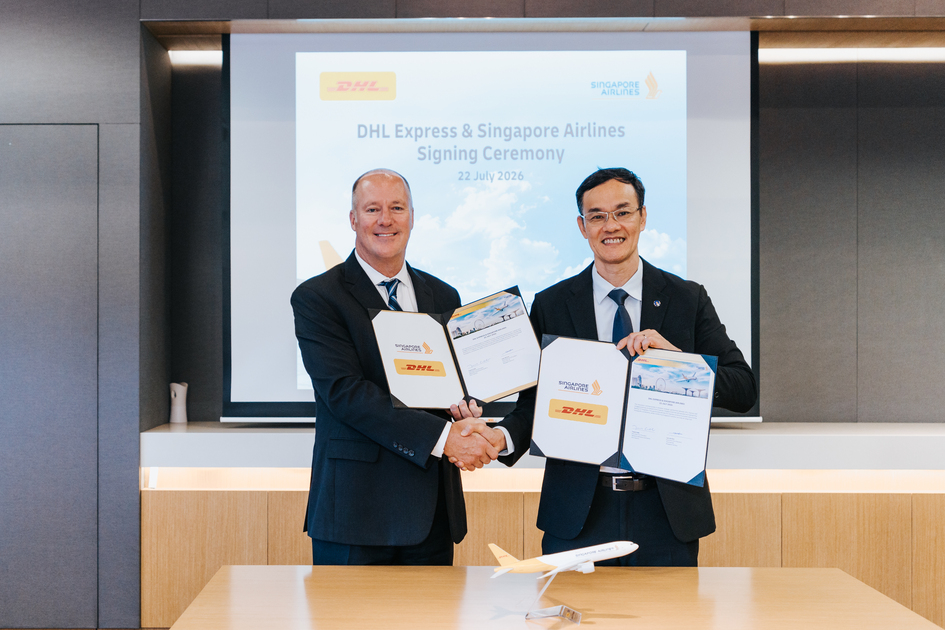
SINGAPORE: DHL Express and Singapore Airlines (SIA) have renewed their crew and maintenance agreement for five Boeing 777 freighters based at Singapore Changi Airport.

Under the agreement, SIA pilots will continue to operate the five freighters, while SIA engineers will oversee their maintenance. These five freighters support DHL’s intercontinental air network, connecting its South Asia Hub in Singapore with key destinations in the United States.

“The renewal of this agreement underlines our commitment to building and investing in the network capacity that keeps global trade moving,” said Travis Cobb, Executive Vice President for Network Operations & Aviation, DHL Express. “These five Boeing 777 freighters have become an integral part of our intercontinental operations, helping our customers move time-definite shipments with speed and reliability. Singapore remains one of the world’s leading air logistics hubs, and together with Singapore Airlines’ proven operational expertise, gives us the strong foundation for enabling international trade and connecting businesses to global markets.”

“The renewal of our agreement with DHL Express reflects the strength and continuity of our partnership, which has supported the movement of express air freight between the Asia-Pacific region and key global markets via Singapore since 2022. This partnership leverages SIA’s operational expertise and DHL Express’ global logistics network to reinforce Singapore’s role as a leading air freight hub, particularly in the e-commerce segment,” said Lee Lik Hsin, Chief Commercial Officer, Singapore Airlines.

The five Boeing 777 freighters, which entered service progressively from 2022, provide reliable air capacity needed to support time-sensitive cross-border trade. Each aircraft can carry up to 102 tons of cargo and is among the world’s largest, longest range, and most capable twin-engine freighters.

With Singapore as the home base for the dual-liveried Boeing 777 freighters, the partnership deepens DHL’s global aviation capabilities while anchoring more long-haul cargo capacity at Changi. It reflects both companies’ confidence in the long-term growth of international trade and the central role of reliable air connectivity in supporting global supply chains.

GEODIS Awarded EcoVadis Gold Medal

PARIS: GEODIS has been awarded the Gold Medal by EcoVadis, recognising the excellence of its approach to Corporate Social Responsibility (CSR). With a score of 84/100 in 2026, up from 72/100 the previous year, the Group has achieved its best result since it began undergoing EcoVadis assessments. This progress places GEODIS in the top 3% of companies assessed worldwide and in the top 1% in its industry sector, road freight transport.

GEODIS has reached a new milestone in the evaluation of its CSR performance by earning the Gold Medal from EcoVadis. For companies undergoing assessmet, EcoVadis provides a detailed evaluation of CSR performance in areas such as Environment, Social and Human Rights, Ethics, and Responsible Procurement. Its evaluation is based on an analysis of implemented policies, deployed actions and their results, as well as supporting evidence such as certifications and reporting.

With an overall score of 84/100, an increase of 12 points year-on-year, GEODIS has recorded its highest EcoVadis score since it began tracking. This progress is reflected in improvements across all four assessed themes, each now scoring at least 80/100:

Environment: 90/100 
Social & Human Rights: 82/100 
Ethics: 80/100 
Sustainable Procurement: 83/100

This overall progress reflects the strengthening and continued rollout of GEODIS’ CSR roadmap. In particular, it reflects the definition and monitoring of quantitative targets, the development of certifications, and the management of action plans across the Group’s various activities.

It also builds on GEODIS’ ongoing commitments to decarbonization as well as GEODIS’ commitments to health, safety, and ethics throughout the entire value chain.

“This new EcoVadis assessment is above all a recognition of the collective progress we have made. The increase in our score across each of the four evaluated themes demonstrates our ability to translate our CSR commitments into objectives, actions, and measurable results. Achieving 84/100, our best ratings to date, encourages us to continue this momentum of continuous improvement and to maintain a high level of rigor in deploying our CSR roadmap, for the benefit of our clients and all our stakeholders,” says Virginie Delcroix, Executive Vice President Group Sustainable Development.

The 2026 EcoVadis assessment places GEODIS among the top 3% of companies assessed worldwide and among the top 1% of companies in its sector. The Gold Medal recognises the level of performance achieved by the Group and the advancement of its CSR approach.