
Home Blog Page 889

Eximbank signs agreement with KOBC to strengthen Maritime Supply Chain

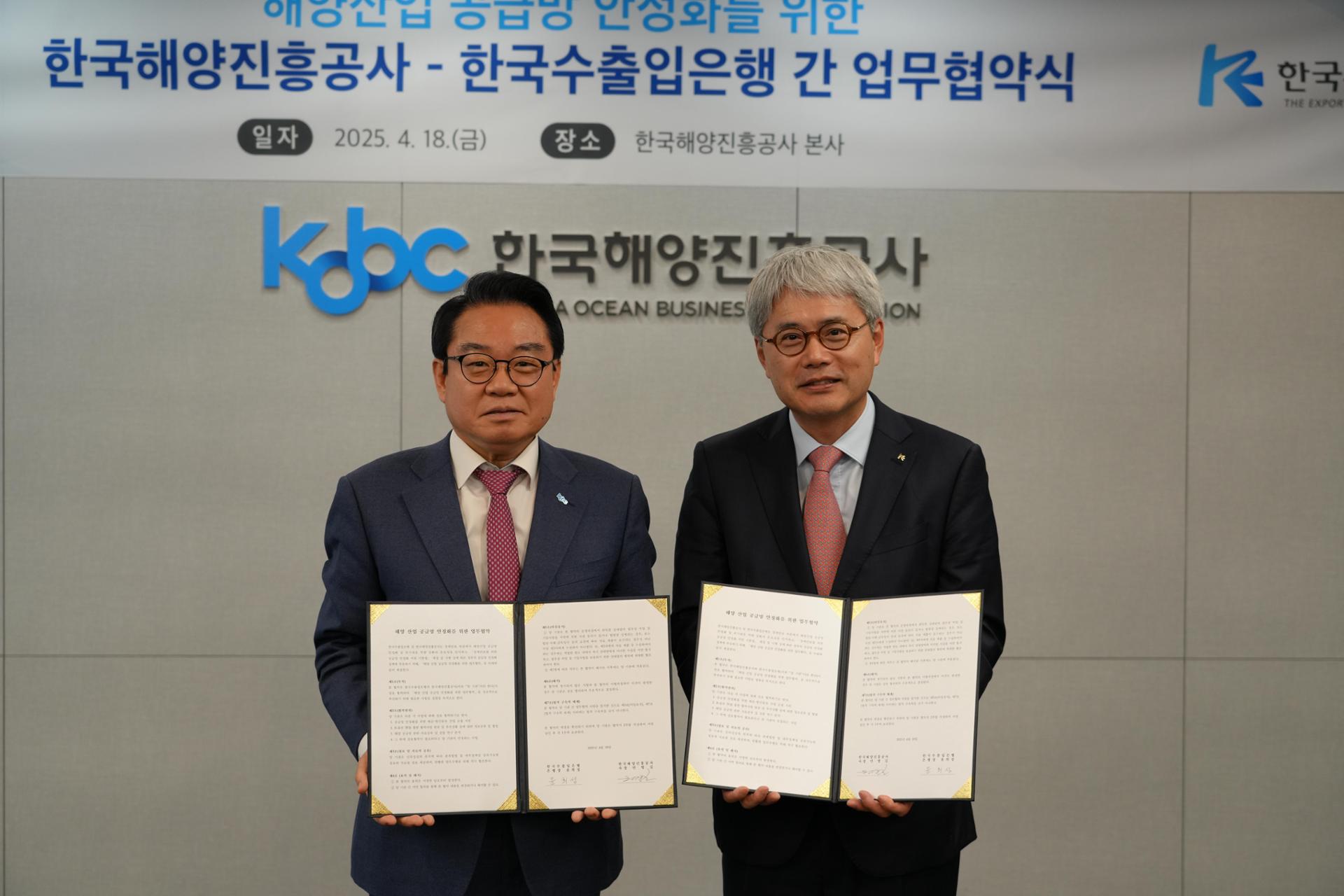
SEOUL : The Export-Import Bank of Korea (Eximbank) announced on Sunday, April 20, 2025, that it has signed a significant business agreement with the Korea Ocean Business Corporation (KOBC) aimed at stabilizing the maritime supply chain. The agreement was finalized on Friday, April 18, 2025, at KOBC’s headquarters in Busan, marking a pivotal step in enhancing the resilience of Korea’s shipping and port logistics industries.

This partnership outlines a collaborative approach to providing financial support specifically tailored for the shipping and port logistics sectors, which have been under increasing pressure due to global supply chain disruptions. The two institutions will work together through a newly formed task force known as “K-Logistics,” which will focus on sharing information, conducting joint research, and exploring potential projects to bolster maritime infrastructure.

Eximbank has committed to prioritizing financial assistance for critical areas such as shipping, logistics, and maintenance, repair, and operational (MRO) services, which are essential for the smooth functioning of vessels. This initiative is backed by a substantial 10 trillion won (approximately $7.02 billion) supply chain stabilization fund approved earlier in February 2025. The MRO sector, in particular, plays a crucial role in ensuring the safety and reliability of maritime transport.

Yoon Hee-sung, President and CEO of Eximbank, expressed optimism about the agreement, stating, “We expect this agreement to serve as a foundation for stabilizing supply chains and strengthening the global competitiveness of Korean companies in the shipping and port logistics sectors.” He further added, “We hope that the exchange of expertise and personnel between the two institutions will contribute to building a robust framework for identifying support projects and expanding financial assistance.”

In a parallel development, the shipping industry is witnessing a transformative collaboration between two maritime giants, Denmark’s Maersk and Germany’s Hapag-Lloyd, through their newly launched “Gemini Cooperation.” This groundbreaking operational partnership aims to reshape sustainable shipping practices globally.

The Gemini Cooperation represents a strategic pooling of resources and fleet integration to create a fast, flexible, and interconnected ocean network with a focus on reliability and sustainability. Ships began phasing into this new network in February 2025, and the entire fleet is expected to be operational under Gemini schedules by June 2025.

With around 340 vessels and a combined capacity of 3.7 million TEUs (twenty-foot equivalent units), the Gemini network is set to significantly improve shipping efficiency. The innovative “hub and spoke” structure of the network allows vessels to bypass congested ports, facilitating quicker cargo movement and minimizing delays that can disrupt global trade.

The shipping industry is vital for international commerce, accounting for approximately 80% of the world’s goods transportation. However, it also faces scrutiny for its environmental impact, contributing about 3% of global carbon pollution. Alarmingly, the industry’s carbon emissions have surged by 20% over the past decade, as highlighted in a recent U.N. report.

The Gemini Cooperation aims to counter these challenges by optimizing shipping routes, which will not only enhance transit times but also reduce congestion and layover durations. This initiative aligns with broader industry trends toward greener practices, as fewer port calls and optimized vessel utilization are expected to lead to reduced emissions.

Moreover, the partnership is committed to exploring the transition to cleaner energy sources, including biofuels, methanol, and hydrogen-powered ships. Currently, a staggering 99% of shipping fuel is derived from oil-based fossil fuels, underscoring the need for a shift towards more sustainable alternatives.

Johan Sigsgaard, Chief Product Officer of Ocean at Maersk, commented on the initiative, stating, “Over the last year, we have carefully planned this to ensure that all our customers experience a smooth transition into the new network. With its innovative design, we believe our customers will benefit from increased reliability, flexibility, and more competitive products.”

As these two significant agreements unfold, the maritime sector is poised for a transformative period that not only focuses on stabilizing supply chains but also emphasizes the importance of sustainability in shipping practices. The collaboration between Eximbank and KOBC, alongside the Gemini Cooperation between Maersk and Hapag-Lloyd, signals a commitment to enhancing the global competitiveness of the shipping industry while addressing pressing environmental challenges.

These initiatives reflect a broader recognition within the maritime community that resilience and sustainability must go hand in hand to navigate the complexities of global trade effectively. As the world continues to grapple with supply chain disruptions and climate change, the actions taken by these organizations may serve as a blueprint for future collaborations aimed at fostering a more robust and environmentally responsible shipping industry.
Container ship service set to begin between Mongla and Chattogram ports

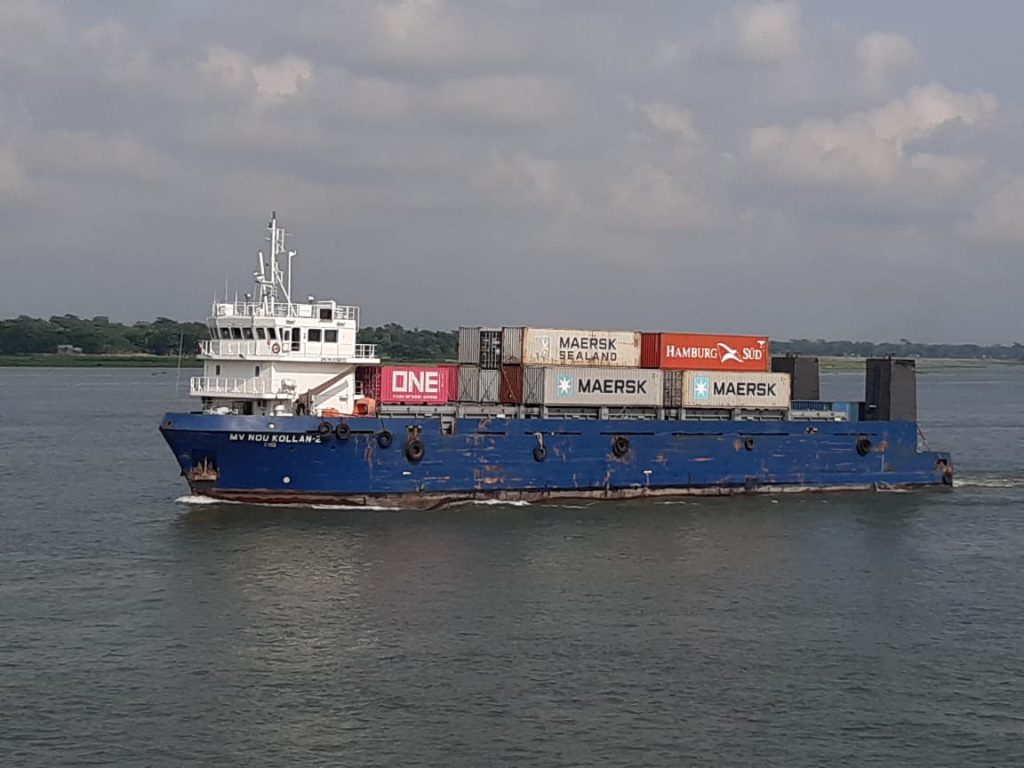
DHAKA : In a significant development aimed at reducing export costs and enhancing trade accessibility in the greater Khulna region, container ships are expected to start operating between Mongla and Chattogram ports on a domestic maritime route from April.

This initiative marks a strategic move to revitalise Mongla Port—Bangladesh’s second seaport—which, after years of grappling with numerous challenges, has now emerged as a profitable and growing hub due to several ongoing development and expansion projects.

The surge in commercial vessel arrivals has not only increased the port’s revenue but also generated new employment opportunities for local workers.

Despite this progress, Mongla Port continues to face a number of challenges, including navigability issues, underutilisation of existing business facilities and high operational costs.

These limitations have restricted container ship movement to roughly one vessel per month, despite the region’s strong export potential for goods such as fish, frozen products, and jute.

Syed Zahid Hossain, President of the Mongla Port Berth and Ship Operator Association, highlighted the core issue affecting operations.

“Container imports through Mongla are minimal,” he said.

“As a result, there’s a shortage of empty containers here. Bringing them in from Chattogram incurs additional charges, making the overall cost of containers higher. If container ships start operating on the Chattogram-Mongla route, both time and export expenses will be significantly reduced,” Zahid Hossain said.

In response to this opportunity, Chattogram-based shipping agent Sea Glory has taken the initiative to operate small container vessels along this domestic route.

Their plan involves transporting empty containers from Chattogram to Mongla, where they will be filled with export goods and sent back via Chattogram for international shipping.

Mainul Hossain, Manager of Sea Glory Shipping, said, “If we are treated as a feeder service, the process becomes more complicated. But if we can operate like the Pangaon model—moving empty containers from Chattogram to Mongla—the procedures become easier and the business more viable.”

He said the company had already conducted a successful trial run in February, transporting 100 TEUs (around 70 containers) along the route. Following this, they plan to officially commence regular container transportation from mid-April.

The containers will primarily carry fish, frozen goods, and jute for export via Chattogram.

Direct transshipment from Mongla remains expensive and time-consuming due to limited container activity. In contrast, using Chattogram as an intermediary promises to be faster and more cost-effective.

Omar Faruk, Secretary of the Chattogram Port Authority, acknowledged the challenges Mongla faces in accommodating larger ships due to draft limitations.

“In such cases, cargo can be rerouted through Chattogram,” he said. “If there is a container shortage in Mongla, we can meet shipping agents’ needs by facilitating exports through Chattogram.”

Captain Rafiqul Islam, Chairman of the Bangladesh Shipping Agents Association in Khulna, emphasised the importance of cooperation between both ports.

“We are unable to export goods regularly due to this shortage. Both ports need to take a flexible approach to resolve this. Though the operation is within the country, importers and those running vessels on this route should be offered special incentives to make the service sustainable,” he said.

Rear Admiral Shaheen Rahman, Chairman of the Mongla Port Authority, added, “Mongla is now more dynamic and promising than ever. Alongside infrastructure development, we are expanding the port’s capacity. Once current projects are completed, they will significantly boost the local economy. We’ve also enhanced all facilities to increase import and export volume.”

The start of container transport operations between Chattogram and Mongla is expected to contribute positively to the national economy, opening up more efficient and affordable trade routes for exporters and importers alike.

Sri Lanka declines land connectivity project with India: Report

COLOMBO : Sri Lanka has declined India’s proposal for the construction of a land connectivity project linking the two countries via road and rail-bridge, stating that it was not yet ready for land connectivity, a media report said.

The proposal was raised by Prime Minister Shri Narendra Modi in his meeting with Sri Lankan President Anura Kumar Dissanayake, when the two met in Colombo earlier this month, the Daily Mirror reported.

The proposal which was mentioned by New Delhi last year in December too during President Dissanayake’s visit was declined, deeming it unfeasible. During their latest meeting in April, the issue was not part of the discussions, the daily said.

Still, on one occasion during the recent bilateral talks, Prime Minister Modi, referred to the importance of land connectivity between the two countries and the many advantages it could bring.

A land bridge connecting the two countries was mooted first during the 2002/2004 government led by Ranil Wickremesinghe as the then Prime Minister. The land connectivity project was also mentioned in a joint statement by PM Wickremesinghe’s visit to New Delhi as the President in 2023.

When he flew out of Sri Lanka on board an Indian Air Force helicopter after the visit, PM Modi observed Ram Setu which connected Sri Lanka and India in ancient times.

The ancient land bridge, said to have been constructed by Lord Ram’s army during their march to Lanka, is celebrated in both India and Sri Lanka for its geological, historical, and mythological significance.

DHL to suspend global shipments of over $800 to US consumers

BEIJING : DHL Express, a division of Germany’s Deutsche Post said it would suspend global business-to-consumer shipments worth over $800 to individuals in the United States from April 21, as U.S. customs regulatory changes have lengthened clearance.

The notice on the company website was not dated, but its metadata showed it was compiled on Saturday.

DHL blamed the halt on new U.S. customs rules which require formal entry processing on all shipments worth over $800. The minimum had been $2,500 until a change on April 5.

DHL said business-to-business shipments would not be suspended but could face delays. Shipments under $800 to either businesses or consumers were not affected by the changes.

The move is a temporary measure, the company said in its statement.

DHL said last week in response to Reuters questions that it would continue to process shipments from Hong Kong to the United States “in accordance with the applicable customs rules and regulations” and would “work with our customers to help them understand and adapt to the changes that are planned for May 2.”

That came after Hongkong Post said last week it had suspended mail services for goods sent by sea to the United States, accusing the U.S. of “bullying” after Washington cancelled tariff-free trade provisions for packages from China and Hong Kong.

China opposes U.S. measures targeting its maritime, logistics, shipbuilding sectors

BEIJING : China has expressed strong opposition to the U.S. measures following its investigation into China’s maritime, logistics and shipbuilding sectors.

China has repeatedly reaffirmed its views on the Section 301 investigation and presented the non-paper on its position, urging the United States to stop blaming China for its domestic industrial problems, said a spokesperson for China’s Ministry of Commerce on Friday.

As a typical act of unilateralism and protectionism, the measures severely harm the legitimate rights and interests of Chinese enterprises, gravely disrupt the stability of global industrial and supply chains, blatantly violate WTO rules, and fundamentally undermine the rules-based multilateral trading system and international economic and trade order, the spokesperson stressed.

China urged the United States to respect the facts and multilateral rules and stop its wrongdoing, the spokesperson said, noting that China will closely monitor U.S. actions and resolutely take necessary measures to safeguard its legitimate rights and interests.

Three Chinese industrial associations have also voiced strong opposition to the restrictive measures imposed by the United States.

The U.S. move will severely undermine the interests of logistics providers, ship and cargo owners, importers and exporters, and consumers in both countries, harming China-U.S. economic and trade exchange, the China Federation of Logistics & Purchasing said in a statement on Saturday.

The move is likely to raise international logistics costs, undermine the stability of global industrial and supply chains, and endanger global economic growth, the federation said.

It urged its members, along with global peers in the logistics, purchasing and supply chain industries, to strengthen cooperation to safeguard the stability and smooth operations of global industrial and supply chains in the face of the challenges posed by U.S. trade protectionism.

Echoing the federation’s remarks, the China Association of the National Shipbuilding Industry said that the U.S. measures are based on false accusations and flawed investigations, calling them an “unjustified attack” on China’s shipbuilding industry and a “blatant violation” of international trade rules.

The association warned that instead of reviving the U.S. shipbuilding industry, such measures will likely drive up international shipping costs and further exacerbate inflationary pressures in the United States – ultimately harming the livelihoods of the American people.

Moreover, the China Shipowners’ Association emphasized the critical role that Chinese shipowners play in maintaining the smooth operations of the global supply chain.

It noted that Chinese shipping companies adhere strictly to international trade norms and have consistently provided stable and reliable logistics services to support global trade, including trade with the United States.

It said that the United States should halt its politically driven investigations and discriminatory measures to avoid bringing further damage to the global maritime, logistics and shipbuilding sectors.

China has expressed strong opposition to the U.S. measures following its investigation into China’s maritime, logistics and shipbuilding sectors.

China has repeatedly reaffirmed its views on the Section 301 investigation and presented the non-paper on its position, urging the United States to stop blaming China for its domestic industrial problems, said a spokesperson for China’s Ministry of Commerce on Friday.

As a typical act of unilateralism and protectionism, the measures severely harm the legitimate rights and interests of Chinese enterprises, gravely disrupt the stability of global industrial and supply chains, blatantly violate WTO rules, and fundamentally undermine the rules-based multilateral trading system and international economic and trade order, the spokesperson stressed.

China urged the United States to respect the facts and multilateral rules and stop its wrongdoing, the spokesperson said, noting that China will closely monitor U.S. actions and resolutely take necessary measures to safeguard its legitimate rights and interests.

Three Chinese industrial associations have also voiced strong opposition to the restrictive measures imposed by the United States.

The U.S. move will severely undermine the interests of logistics providers, ship and cargo owners, importers and exporters, and consumers in both countries, harming China-U.S. economic and trade exchange, the China Federation of Logistics & Purchasing said in a statement on Saturday.

The move is likely to raise international logistics costs, undermine the stability of global industrial and supply chains, and endanger global economic growth, the federation said.

It urged its members, along with global peers in the logistics, purchasing and supply chain industries, to strengthen cooperation to safeguard the stability and smooth operations of global industrial and supply chains in the face of the challenges posed by U.S. trade protectionism.

Echoing the federation’s remarks, the China Association of the National Shipbuilding Industry said that the U.S. measures are based on false accusations and flawed investigations, calling them an “unjustified attack” on China’s shipbuilding industry and a “blatant violation” of international trade rules.

The association warned that instead of reviving the U.S. shipbuilding industry, such measures will likely drive up international shipping costs and further exacerbate inflationary pressures in the United States – ultimately harming the livelihoods of the American people.

Moreover, the China Shipowners’ Association emphasized the critical role that Chinese shipowners play in maintaining the smooth operations of the global supply chain.

It noted that Chinese shipping companies adhere strictly to international trade norms and have consistently provided stable and reliable logistics services to support global trade, including trade with the United States.

It said that the United States should halt its politically driven investigations and discriminatory measures to avoid bringing further damage to the global maritime, logistics and shipbuilding sectors.

Source : CGTN

JD Vance will visit India and meet PM Modi amid US tariff war with China

WASHINGTON : US Vice President JD Vance is scheduled to visit India next week. He will meet with Prime Minister Shri Narendra Modi and travel to New Delhi, Jaipur, and Agra. JD Vance, along with his family, will visit Italy and India from April 18 to April 24.

The Office of the Vice President in a release on Wednesday said, “Vice President JD Van e and the Second Family will travel to Italy and India from April 18 to April 24. The Vice President will discuss shared economic and geopolitical priorities with leaders in each country.” In Rome, Italy, the Vice President will meet with Prime Minister Giorgia Meloni. The Vice President will also meet with Vatican Secretary of State Cardinal Pietro Parolin.

“In India, the Vice President will visit New Delhi, Jaipur, and Agra. The Vice President will hold meetings with Prime Minister Narendra Modi. The Vice President and Second Family will also participate in engagements at cultural sites,” the release said.

The two leaders are scheduled to meet on 21 April, the first day of Vance’s trip, for discussions on economic, trade and geopolitical ties.

“The visit will provide an opportunity for both sides to review the progress in bilateral relations,” India’s foreign ministry said in a statement.

Vance’s first visit to India since taking office comes as the countries work to conclude a trade agreement by fall.

The vice-president will be accompanied by his children and wife Usha Vance whose parents migrated to the US from the southern Indian state of Andhra Pradesh.

The visit comes against the backdrop of an intensifying trade war between the US and China with President Donald Trump placing tariffs of up to 145% on Chinese goods, with levies on some goods possibly reaching 245%. China has hit back with tariffs of 125% on US products.

India was also among the countries which faced 27% US tariffs on 2 April, before a 90-day pause was announced.

Since then, Delhi and Washington have been working towards an early conclusion of trade negotiations.

India has already cut tariffs on a range of goods and is reported to be considering more wide-ranging cuts to stave off Trump’s threats.

Until recently, the United States was India’s largest trading partner, with bilateral trade reaching $190bn (£144bn).

Earlier in February, during his visit to France for the AI Action Summit, PM Modi gifted an eco-friendly wooden alphabet set to Mirabel Rose Vance, daughter of US Vice President Vance. Following his visit to France, PM Modi landed in the United States at the invitation of US President Donald Trump.

WISTA India Conference shines spotlight on sustainable shipping and diversity success

MUMBAI : Sustainable shipping and successes in diversity took centre stage at the inaugural WISTA India ExCo Conference in Mumbai, which coincided with the first WISTA International Mid-Term Meeting to take place in India.

With WISTA International membership exceeding 6,000 this month, the Executive Committee (ExCo) met over two days to discuss topics that included the professional training programmes available to members and the upcoming report following the IMO/WISTA Women in Maritime Survey. Priority was also given to regional reports, while an in-depth review of the equity fund examined strategies to support National WISTA Associations (NWAs) in need.

Entitled Navigating Change: The Future of Sustainable Shipping, the WISTA India ExCo Conference brought together local industry, consulates, maritime leaders and professionals to share insights on how to drive the industry towards greener, more resilient maritime operations.

Addressing the conference, WISTA International President, Elpi Petraki, highlighted the way collaboration and greater diversity could help overcome industry challenges and create a more sustainable future for global shipping.

“A collaborative spirit is essential to make the most of the opportunities that arise from the challenges we face,” said Petraki.

“Shipping brings together people from all around the world and has always included a wide range of cultures, nationalities and ethnicities. Diverse and global by nature, it demands versatility and collaboration every working day. It has taken thousands of years of collaboration to create the global maritime community we enjoy today. Even during trying times, therefore, we must not lose sight of the fact that it will be by working together that women will be most effective in driving the positive changes that benefit our global community.”

WISTA India, Sanjam Gupta, said: “It was an honour to host the first WISTA India ExCo Conference and the WISTA International Executive Committee in Mumbai. The conference provided an excellent opportunity to discuss key elements of the industry’s green transition while also showcasing India’s position as a sustainable shipping leader and many of the women who are driving change and contributing to the country’s swift transition to greener shipping operations.”

In a direct engagement with a key maritime stakeholder in India, the WISTA International ExCo visited the Anglo-Eastern Maritime Academy to discuss the programmes it has in place to support and attract more females to the seafaring profession. In touring the academy’s facilities, delegates made full use of opportunities to speak to many of the female cadets enrolled.

“As a major maritime hub, significant steps have been taken in India to educate the seafaring community about the importance of creating an inclusive and safe working environment onboard,” added Petraki.

“Over 450 cadets graduate from the Anglo-Eastern Maritime Academy each year, and in the last year, the number of female cadets studying there has increased, showing the effort that is being made to create a more diverse and inclusive seafaring profession.”

WISTA 2 WISTA India Conference shines spotlight on sustainable shipping and diversity success

CBIC notifies Dholera as Customs Port in Gujarat

NEW DELHI : The Ministry of Finance, through the Central Board of Indirect Taxes and Customs (CBIC), has issued a notification that officially designates Dholera as a recognized customs port in the State of Gujarat.

As per the notification, Dholera is now authorized for the unloading of imported goods and the loading of export goods, or any class of such goods. This inclusion marks a significant step in enhancing Gujarat’s logistics and customs infrastructure.

As reported earlier, the upcoming Dholera International Airport is set to commence operations by June or July 2025, beginning exclusively with international air cargo services through freighter and passenger aircraft.

As part of that plan, Dholera International Airport Company Limited (DIACL) has already invited tenders from contractors for the operation and management of the international cargo terminal and ground handling services at Dholera Airport for a period of 7 years. DIACL has stated that it intends to commence international air cargo operations in the initial phase from June/July 2025.

VPA achieves twin records in discharge of steam coal

VISAKHAPATNAM : Vizag General Cargo Berth (VGCB), a part of Visakhapatnam Port Authority (VPA), has set a remarkable milestone by achieving twin records in the discharge of Steam Coal. A record-breaking 1,06,190 MT of Steam Coal was discharged in the first 24 hours from MV GINA OLDENDORFF, a cape-size vessel discharged Steam Coal of 1,64,960 MT, said T. Venu Gopal, Secretary, VPA, in a release here on Thursday.

The operation was completed in just 53.5 hours, achieving the fastest-ever discharge rate of 74,001 MT per day at VGCB. The achievement was performed from 1400 hours of April 14 to 2100 hours of April 16, 2025.

The Importers of the Vessel are M/s. JSW & BHUSHAN and the Steamer Agents are M/s. GPR Maritime Agencies. Dr. M. Angamuthu, Chairperson, VPA, commended the Traffic Manager and his team and also congratulated VGCB for their exceptional performance, and efficient cargo handling capabilities.

APSEZ buys Australian terminal in $2.5-billion deal

AHMEDABAD : Adani Ports and SEZ, the country’s biggest private port operator, on Thursday said it has acquired a coal export terminal in Australia from a group company in a $2.4-billion non-cash deal. The move is aimed at strengthening presence in the Asia-Pacific region.

The company has bought Abbot Point Port Holdings (APPH), Singapore, from Carmichael Rail and Port Singapore Holdings Singapore (CRPSHPL), according to a statement.

APPH owns the entities which own and operate the North Queensland Export Terminal, a dedicated export terminal with a current capacity of 50 million tonne per annum (MTPA). The terminal is located at Port of Abbot Point, nearly 25 km north of Bowen in north Queensland on Australia’s east coast.

In 2011, APSEZ had acquired the North Queensland Export Terminal (NQXT) at Abbott Point for $2 billion. Two years later in 2013, the Adani family purchased the asset from APSEZ for the same amount, along with the capital invested, allowing the company to focus on Indian operations.

However, over the last two years, APSEZ has been seeking to dominate maritime routes where Indian trade is expected to increase. “APSEZ will issue 143 million equity shares to CRPSHPL for acquiring 100% interest in APPH. This is based on enterprise value of NQXT of A$3,975 million. As part of the transaction, APSEZ will also assume other non-core assets and liabilities on APPH’s balance sheet, which APSEZ will realise within a few months of the acquisition,” the statement said. APSEZ’s leverage will remain at similar levels after the transaction.

“NQXT’s acquisition is a pivotal step in our international strategy, opening new export markets and securing long-term contracts with valued users,” Ashwani Gupta, whole-time director & CEO, APSEZ, said.

NQXT is poised for robust growth as a high-performing asset driven by increased capacity, upcoming contract renewals in the medium term, and the potential for green hydrogen exports in the long term, Gupta said. He added that they are looking to grow Ebitda to A$400 million within four years.

The acquisition will accelerate APSEZ’s target of doubling its volumes to 1 billion tonne per annum by FY30, with a potential to near-quadruple its volume – from 35 million tonne in FY25 to 120 million tonne –  including potential exports of green hydrogen from Australia, the company said.

This is the fourth overseas acquisition for APSEZ in the past two years. With this, the company now has a portfolio of 19 ports and terminals – 15 domestic and four overseas. A port in Israel and terminals in Tanzania and Sri Lanka are the three other international locations where APSEZ has operations.

Source : FE