Home Blog Page 890

Capt Jagmohan appointed as new CMD of Mazagon Dock Shipbuilders Limited

MUMBAI : The Government on Thursday appointed Captain Jagmohan (Retd) as the new Chairman and Managing Director (CMD) of Mazagon Dock Shipbuilders Limited ( MDL). The appointment was approved by the Appointments Committee of the Cabinet (ACC) on the proposal of the Department of Defence Production.

Capt. Jagmohan is currently serving as Director of Corporate Planning, Projects and Business Development at the Goa Shipyard Limited, and his appointment has been made in relaxation of the eligibility criteria.

According to the release by the ACC, the retired captain will be assuming charge of the post from the date of taking over and will continue until the date of his superannuation on September 30, 2029, or until further orders, whichever is earlier.

“The Appointments Committee of the Cabinet (ACC) has approved the proposal of the Department of Defence Production for appointment of Capt (IN Retd.) Jagmohan, Director (Corporate Planning, Projects and Business Development), Goa Shipyard Limited, in relaxation of the eligibility criteria, to the post of Chairman & Managing Director (CMD), Mazagon Dock Shipbuilders Limited (MDL) in the scale of pay of Rs.2,00,000 3,70,000/- (IDA) for a period with effect from the date of his assumption of charge of the post till the date of his superannuation i.e., 30.09.2029, or until further orders, whichever is earlier,” the release from the ACC stated.

Meanwhile, the ACC also approved the appointment of four senior Indian Revenue Service (IRS) officers as Members of the Central Board of Direct Taxes (CBDT). The newly appointed Members include Pankaj Kumar Mishra, who was serving as Member (Finance) of the Atomic Energy Commission, and Sanjay Bahadur, who held the position of Principal Director General of Income Tax (Training) in Delhi. L Rajasekhar Reddy, who was the Principal Chief Commissioner of Income Tax (TDS) for the Chennai, Tamil Nadu and Puducherry Regions, and G. Aparna Rao, who was functioning as the Principal Chief Commissioner of Income Tax-1 for the Bengaluru, Karnataka and Goa Regions, were also appointed as Members of the CBDT.

All four appointees belong to the 1989 batch of the Indian Revenue Service (Income Tax).

Source : ANI

Mahindra Logistics appoints Sandeep Kulkarni as Head of Fleet Businesses

MUMBAI : Mahindra Logistics Limited has announced a change in its senior management. The Board of Directors, following the recommendation of the Nomination and Remuneration Committee, approved the appointment of Mr. Sandeep Kulkarni as the Senior Management Personnel (SMP) and Head – Fleet Businesses & Purchasing, effective April 17, 2025.

Mr. Kulkarni brings over two decades of experience in the fields of retail, e-commerce, logistics, and supply chain management. His professional background includes leadership roles at companies such as Allcargo Logistics, Tata CLiQ, Jio Mart, Amazon Fresh, and L&T Infotech. Notably, he began his career with the Indian Navy and most recently served as the Chief Operating Officer at Allcargo Logistics. He holds a BE in Electrical Engineering from Mumbai University and has pursued advanced management programs from IIM Lucknow, Nanyang Business School (Singapore), Wharton (USA), and MIT Sloan (USA).

As part of the organizational restructuring, Mahindra Logistics has also informed that Vishal Sharma, currently serving as Vice President – Transportation and Procurement, will cease to be designated as SMP from the same date. However, he will continue in his current role within the company.

Mahindra Logistics Limited (MLL), a subsidiary of the Mahindra Group, is an integrated third-party logistics (3PL) service provider in India. The company offers a range of supply chain and people mobility solutions across various sectors, including automotive, e-commerce, consumer goods, pharmaceuticals, and engineering. Its services include transportation, warehousing, in-factory logistics, and last-mile delivery. These operations are supported by the use of technology and a client-focused approach.

MLL operates using an asset-light business model, relying on a network of partners to maintain scalability and operational flexibility. This model allows the company to adjust to changing client requirements and provide tailored solutions designed to improve logistics operations.

The company has stated its purpose as “Accelerating Commerce, Empowering Communities to Rise,” and has set goals to become a ₹10,000 crore logistics service provider by FY 2026 and to be listed among the top ten logistics companies globally by 2030.

In October 2024, MLL introduced a new brand identity. This update was intended to reflect the company’s future direction and continued focus on operational development and long-term strategy.

In addition to its business functions, the company is involved in corporate social responsibility activities. These include efforts in community development, skill-building programs, and initiatives aimed at environmental sustainability.

Through its logistics offerings, collaborations, and operational practices, Mahindra Logistics contributes to the broader logistics infrastructure in India.

Hindustan Zinc launches digital logistics management system for zinc procurement

The platform ‘Zinc Freight Bazaar’ features live tracking, logistics planner, bidding tool and a host of affiliated logistics service partners.”This…Initiative simplifies the logistics process, empowers customers, and enhances their experience with live tracking, a logistics planner, and a bidding tool, all integrated into a seamless platform,” the company said in a statement.

This platform offers a streamlined, end-to-end digital solution that empowers business teams to procure critical metals with ease.

“As India’s economy continues to expand, the role of zinc in infrastructure development becomes increasingly vital. This platform will empower manufacturers with improved production planning while providing a unified solution for logistics management,” Hindustan Zinc Ltd CEO Arun Misra said.

Hindustan Zinc Ltd is the world’s largest integrated zinc producer and the third-largest silver producer.

India to become World’s 3rd largest economy by 2026: NITI Aayog CEO

NEW DELHI : The Indian Economy will be bigger than Germany and Japan in the next three years, and also it could become the second largest economy by 2047, NITI Aayog CEO B V R Subrahmanyam said on Thursday.

Addressing an event here, Subrahmanyam further said India can become an education hub for the world as the single biggest advantage it has, keeping all other things aside, is its democracy.

“Currently, the Indian economy is the fifth largest in the world. End of next year, we will be the fourth largest. Year after that will be the third largest,” he said.

According to the latest IMF data, size of India economy currently stands at USD 4.3 trillion.

“We will be bigger than Germany and Japan in three years’ time. By 2047, we could be the second largest economy (USD 30 trillion),” he added. Subrahmanyam urged Indian companies, including law firms and accounting firms to aspire to become world leaders.

The NITI Aayog CEO noted that problems faced by middle-income countries are very different from those in a low-income country. “It is nothing about feeding the poor or, you know, clothing the naked. It is about how you become a knowledge economy,” he said.

Subrahmanyam pointed out that the world has never seen a situation where population will shrink.

According to him, Japan is taking 15,000 Indian nurses, Germany is taking 20,000 healthcare workers as they do not have people, and the family systems have broken down there.

“India will be a stable supplier of working age people across the world…this is going to be our single biggest strength,” he said.

DGTR issues final findings in 13 anti-dumping cases mostly against China in March

NEW DELHI : The commerce ministry’s investigation arm Directorate General of Trade Remedies (DGTR) has issued final findings in as many as 13 anti-dumping cases, mostly against China, in March, according to the Commerce Ministry.

The ministry also said that in addition to this, DGTR has started 11 investigations in March.

The final findings have been issued against dumping of products such as vitamin-A palmitate, insoluble sulphur, aluminium foil, plastic processing machines, digital offset printing plates and decor paper.

Out of the 13 cases, 12 are against China. The other countries included in these probes include European Union, Japan, Taiwan, Russia, and Thailand.

DGTR, under the commerce ministry, is the apex authority for administering all trade remedial measures, including antidumping, countervailing duties and safeguard measures. These measures help deal with the rising incidences of unfair trade practices and to provide a level playing field to the domestic industry.

The role of the directorate has become crucial in the backdrop of sweeping tariffs imposed by the US and China on each other, as high import duties are making goods more expensive in both countries. And this would lead to diversion of goods into countries like India.

While the US has imposed 245 per cent against China. In retaliation, Beijing has slapped 125 per cent tariff on goods coming from Washington.

The government has set up an inter-ministerial import surge monitoring group to strictly monitor imports.

In the last fiscal, India’s exports to China contracted 14.5 per cent to $14.25 billion as against $16.66 billion in 2023-24. The imports, however, rose by 11.52 per cent in 2024-25 to $113.45 billion against $101.73 billion in 2023-24.

The trade deficit with China has widened by about 17 per cent to $99.2 billion in the last fiscal from $85.07 billion in 2023-24.

China continued to be the second largest trading partner of India with $127.7 billion two-way commerce in 2024-25 as compared to $118.4 billion in 2023-24.

Centre reportedly planning to introduce E-Commerce export credit card to aid exporters

NEW DELHI : The Centre is developing a plan to assist individuals who have warehouses overseas and satisfy the short-term financial requirements of E-Commerce exporters.

The commerce department has suggested a credit card similar to the Kisan Credit Card, which would reduce exporters’ borrowing costs from the current 15–18 per cent.

According to officials, a note for the approval of the Expenditure Finance Committee is being prepared as the government aims to boost exports, which were flat in FY ’25 at US $ 437.42 billion, 0.08 per cent more than in FY ’24.

The US has discontinued duty-free status for low-value imports from China and Hong Kong, therefore the actions are also appropriate. In 2024 alone, more than 1.4 billion of these packages—worth US $ 64.6 billion—arrived in the US, with China accounting for about 60 per cent of them.

The estimated yearly value of India’s e-commerce exports via courier and postal services is between US $ 1.5-2 billion. The estimated value of direct shipments is US $ 8 billion. According to officials, these programs might run for five to six years.

The strategy also calls for branding campaigns and assistance for businesses that have warehouses overseas, just like China does.

The Reserve Bank of India and the Ministry of Commerce and Industry are also in talks to speed up bank reconciliation under the Export Data Processing and Monitoring System (EDPMS). This requires that all export payments be compared to shipping bills in order to verify payment realisation; however, low-value, frequent shipments, which are common in e-commerce exports, present challenges, according to exporters.

Telangana plans dry port to serve state’s needs for next 100 years

HYDERABAD : The Telangana Government has announced plans to develop a Dry Port designed to meet the logistics and cargo handling needs of the state for the next 100 years.

During a high-level review meeting, Chief Minister Shri A. Revanth Reddy instructed officials to prepare designs for the proposed facility, which will be strategically located near the Regional Ring Road (RRR). The project aims to enhance the state’s trade infrastructure, reduce cargo congestion, and improve freight connectivity.

Officials have been directed to ensure the site selection accommodates long-term expansion, allowing the Dry Port to serve as a central hub for exports, imports, and containerised logistics in the region.

This initiative is part of the broader vision to transform Telangana into a major logistics corridor and aligns with ongoing investments in national highways and industrial corridors.

Govt eases liquor permit rules within the GIFT City

GANDHINAGAR : The Gujarat Government has announced further relaxations in the implementation of prohibition of liquor permits on the GIFT City campus. Now, employees and visitors of various companies working in GIFT City will be allowed to consume alcohol under more liberal rules, officials said.

In a major policy shift, the Gujarat government has amended liquor permit conditions for the GIFT City area, further liberalising rules under the Gujarat Prohibition Act, 1949.

The Home Department, through a notification dated April 15, replaced certain clauses in its earlier December 2023 order, giving more control to companies and employees over liquor access and visitor permits.

Under the revised norms, employees working in GIFT City companies seeking liquor access may now directly submit Form A-1 to an authorised officer, bypassing the previously mandatory ‘Recommending Officer’ role. According to companies, this is a significant relief for employees and visitors.

Once verified, a ‘liquor access permit’ card will be issued and shared with the authorised person and the Superintendent of Prohibition and Excise. These employees can also recommend up to five visitors at a time through Form A-2, but they must accompany the visitors in designated wine and dine areas.

Sources explained that the authorised officer refers to the officer approved by the managing director of GIFT City, while the ‘recommending officer’ refers to the HR head, PRO or responsible officer of a company in the GIFT City area, who is approved by the authorised officer of GIFT City.

The new rules also allow both regular and temporary permit holders to participate in ‘group permits’ within GIFT City.

The most significant change is the official removal of the recommending officer’s role from the framework. All these changes are seen as part of the state’s approach to attract global talent and businesses while maintaining regulatory oversight.

US lays out plans to hit Chinese ships with port fees

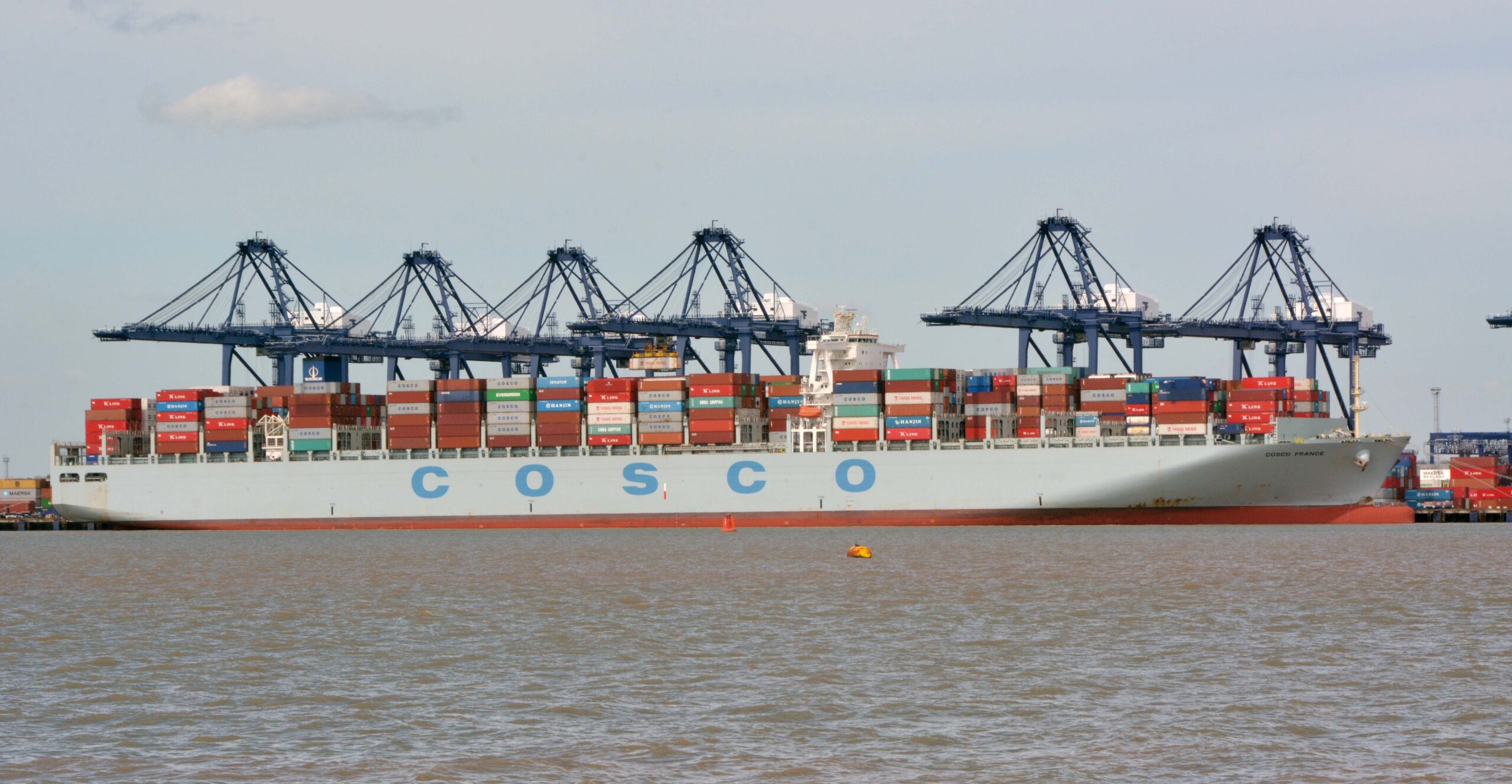
WASHINGTON D.C. : The US has revealed plans to impose port fees on Chinese ships to try to revive shipbuilding in the US and challenge China’s dominance of the industry.

From mid-October, Chinese ship owners and operators will be charged $50 per ton of cargo with the fees increasing each year for the next three years.

There have been concerns that the measures would further disrupt global trade after US President Donald Trump’s raft of tariff policies, but the fee is less severe than originally suggested.

A spokesperson for the Chinese foreign ministry said the fees will raise prices for American consumers and “will not revitalise the US shipbuilding industry”.

The US Trade Representative (USTR) said: “China has largely achieved its dominance goals, severely disadvantaging US companies, workers, and the US economy”.

Fees on Chinese vessel owners and operators of ships built in China will be based on the weight of their cargo, how many containers they carry or the number of vehicles onboard.

For affected bulk vessels, the fee will be based on the weight of their cargo, while the charge for container ships will depend on how many containers a vessel is carrying.

The $50 per ton of cargo will rise by $30 a ton each year for the next three years. Fees on Chinese-built ships will start at $18 a ton or $120 per container and also rise over the next three years.

Non-US built ships carrying cars will be charged $150 per vehicle.

The fee will be applied once per voyage on affected ships and not more than five times a year.

The USTR also decided not to impose fees based on how many Chinese-built ships are in a fleet or based on prospective orders of Chinese ships, as it had originally proposed.

Empty vessels that arrive at US ports to carry bulk exports like coal or grain are exempted.

Vessels that move goods between American ports as well as from those ports to Caribbean islands and US territories are also exempted from rules, as are US and Canadian ships that call at ports in the Great Lakes.

The fees are much lower than a plan floated in February to charge up to $1.5m (£1.1m) for each American port a Chinese ship visits.

The USTR said a second phase of actions will begin in three years to favour US-built ships carrying liquified natural gas (LNG). These restrictions will rise incrementally over the following 22 years.

The announcement came as global trade is already being disrupted by Trump’s trade tariffs, experts have said.

Cargoes originally destined for ports in the US from China are instead being redirected to European ports, a trade group said.

Businesses have warned this will raise prices for US consumers.

Since returning to the White House in January, Trump has imposed taxes of up to 145% on imports from China. Other countries are facing a blanket US tariff of 10% until July.

His administration said this week that when the new tariffs are added on to existing ones, the levies on some Chinese goods could reach 245%.

These tariffs have caused “significant build ups” of ships, especially in the European Union, but also “significant congestion” at UK ports, according to Marco Forgione, director general of the Chartered Institute of Export & International Trade.

More containers are coming to the UK, he said.

“We’ve seen a lot of diversion of ships from China, that were due to head to the US, diverting and coming to the UK and into the EU.”

In the first three months of 2025, Chinese imports into the UK have increased by about 15% and into the EU by about 12%.

“That’s a direct impact of what President Trump is doing,” he said, adding that uncertainty and increased disruption pushes up prices for consumers.

‘More cargo to Europe’

Sanne Manders, President of logistics firm Flexport, said both tariffs and strikes at ports in the Netherlands, Germany and Belgium in the first three months of the year had been “clogging” ports.

Congestion in the UK “is particularly severe in Felixstowe”, while in continental Europe Rotterdam and Barcelona are “also pretty severe”.

“I do believe that if more cargo is going to be routed towards Europe, finding new buyers that will drive up the volumes even further, that could lead to more congestion,” he said – although terminals would be open for more hours per day in the summer due to better weather.

He said shippers were looking for new markets, but that also there may be a surge of goods to the US to try to take advantage of that 90-day window for goods from some countries.

He said in the US, consumers would pay for the tariffs, but European consumers would not see “much impact”.

Companies would also probably start redesigning their supply chains, he said.

Source : BBC

US buyers want Indian exporters to share tariff cost as shipments resume

WASHINGTON D.C. : Despite a 90-day tariff pause, the Indian exporters are still dealing with duty-induced pain. US-based customers are asking Indian manufacturers to bear at least one-third to half the cost of the baseline tariff imposed on all the countries except China, a report by Business Standard said on April 15. This development comes after exporters reported resumption of trade for the existing orders, although the fate of new orders remain in doubt, the newspaper said.

US President Donald Trump, last week, had announced a 90-day break from tariffs for all the countries except on China, which will continue to have duty of 145 percent.

However, all the countries will still have to face a baseline tariff of 10 percent apart from specific levies such as on steel and auto sector. Dileep Baid, the Chairman of the Export Promotion Council for Handicrafts, said most of the buyers in the US are seeking to split the tariff cost equally with the sellers, BS reported.

It was earlier reported that India will start sector-specific trade discussions with the US on April 14, according to a New Delhi official, with the South Asian nation looking to nail down key details within six weeks.

Virtual talks will begin this week, a senior official aware of the developments told Bloomberg News. By end of May, both sides aim to have clarity on the sectors where they have room for concessions, the official added, asking not to be identified in line with protocol. The development was first reported by local Indian media on Monday.