Home Blog Page 89

Port of Klaipėda takes major step towards Southern Port Expansion: Construction Tender launched

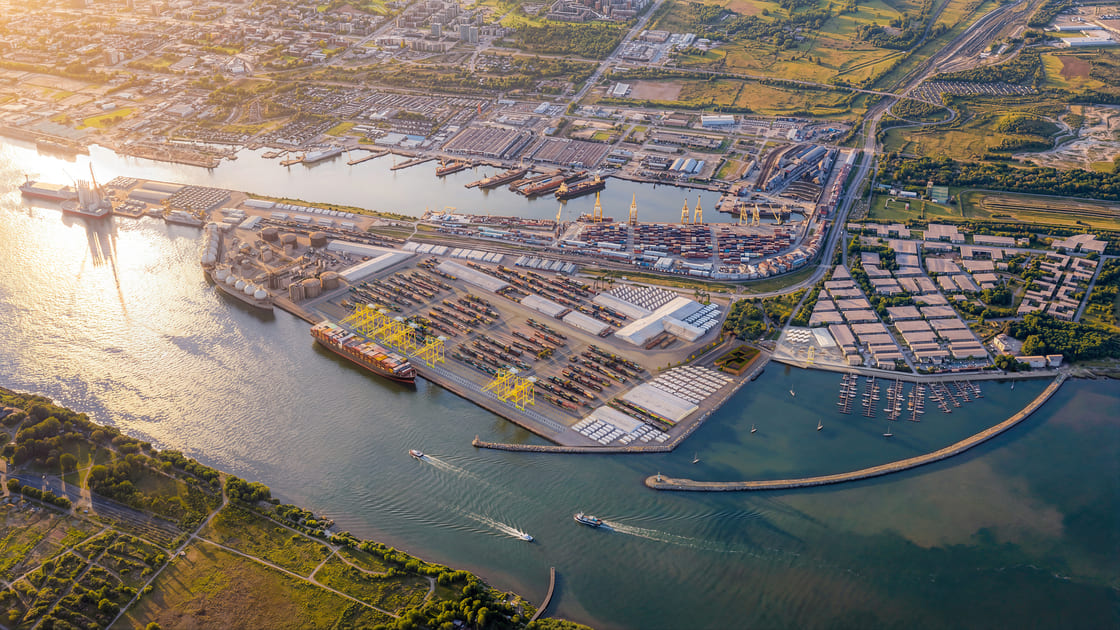
KLAIPEDA: The Klaipėda Port Authority is taking an important step forward in the development of the southern part of the port by launching a tender for construction works. The selected contractor will be responsible for creating 100 hectares of new land in an area that is currently part of the Curonian Lagoon, as well as carrying out other major infrastructure works.

“Contractors who will build the breakwaters are already on site, and we are now taking another major step towards turning this ambitious idea into reality by launching the construction tender for the entire area. This is an important milestone that brings us closer to goals that go far beyond simply building new quays. The development of the southern part of the port will create new opportunities for both the Port of Klaipėda and Lithuania. The new area will attract investors and enable the development of new terminals, bringing new jobs, economic growth and an even stronger transport and logistics sector,” says Algis Latakas, Director General of the Klaipėda State Seaport Authority.

The contractor will be responsible for creating the new land area in the Curonian Lagoon and building a 1,300-metre quay. The works will also include removing a section of the 110 kV Marios–Juodkrantė overhead power line and installing a new underground power cable, carrying out part of the construction work on one of the breakwaters, dredging the port waters, installing stormwater drainage systems, and building a shoreline protection wall near Kiaulės Nugara Island.

The southern port development project will significantly expand the current port area. New terminals will be developed in the 100-hectare area, container handling capacity will be expanded, and the area also offers potential for the marine engineering industry. Once fully developed, the southern part of the port is expected to have the capacity to handle around 30 million tonnes of cargo per year.

The project, which will significantly increase the port’s operating and cargo handling capacity, accounts for the largest share of the investment programme under the Port of Klaipėda’s 2026–2029 Strategic Plan, with nearly EUR 600 million allocated to its implementation. Including future private investment, the total value of the development is expected to exceed EUR 1 billion.

Earlier this month, during a Government meeting held at the Klaipėda Port Authority, the procedure for leasing the new area, or parts of it, through a competitive tender was approved. An international tender to select an operator for the future site will be launched later this year.

LR study points to 200,000m³ LNG carriers as viable next step for global LNG fleet renewal

New analysis finds larger LNG carriers could deliver greater transport efficiency while retaining access to most key LNG terminals worldwide. 

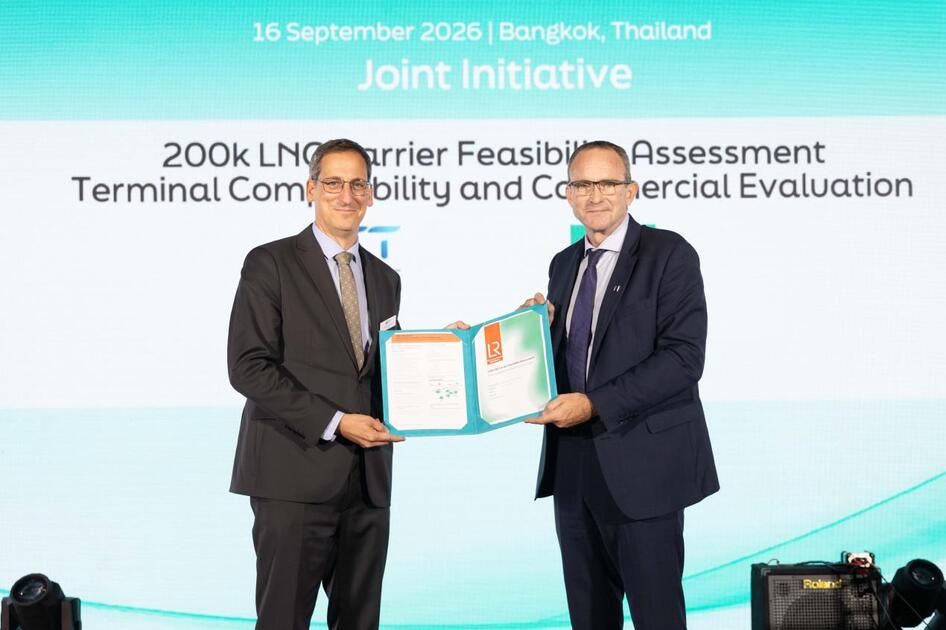
LONDON: Lloyd’s Register (LR) has identified 200,000m³ LNG carriers as a credible next step for global LNG fleet renewal, with new analysis showing that larger vessels could increase cargo capacity and reduce transportation costs without requiring major disruption to existing terminal infrastructure. 

The findings, published in LR Advisory’s terminal compatibility and commercial evaluation report for GTT that was presented at Gastech 2026, assessed representative 200,000m³ LNG carrier designs against existing global LNG infrastructure and modelled their commercial performance across Atlantic and Pacific trading routes. 

The analysis found that 88 LNG terminals worldwide are compatible with 200,000m³ LNG carrier concepts, compared with 97 terminals for a conventional 174,000m³ vessel. Crucially, the accessible network still includes many of the world’s major LNG trading hubs, indicating that larger vessels could be deployed across core trades with only a limited reduction in terminal reach. 

The research found that modern LNG infrastructure across Asia Pacific, Europe, North America and the Middle East is generally well positioned to accommodate 200,000m³ LNG carrier operations.

One of the report’s key findings is that cargo tank configuration has little influence on terminal accessibility. No material difference was identified between three-tank and four-tank concepts. Instead, vessel beam was found to be the most important factor in determining compatibility, alongside draft and displacement.

The findings come as LNG shipping faces pressure to improve transport efficiency while preserving operational flexibility. LR’s research suggests that increasing vessel size could help owners and charterers move more cargo per voyage, reduce the number of sailings required for a given transport volume and support future LNG trade growth. 

Alongside the technical assessment, LR’s commercial evaluation identified benefits for both owners and charterers. Despite the modest reduction in terminal accessibility, the larger vessel provides meaningful economic advantages through increased cargo carrying capacity and improved transportation efficiency.

LR’s modelling points to a potential owner benefit of approximately US$85.5 million over 30 years, alongside material transport savings on representative routes. The report notes that larger vessel concepts may become increasingly relevant as LNG carriers operate at lower average speeds and as owners seek to balance transportation efficiency, fleet renewal and long-term operational flexibility.

Study co-author Sujith Tooneri, Global Head – Newbuild Advisory Services, LR, said: “The industry is entering a period where fleet renewal decisions will shape LNG transportation for decades to come. Our analysis shows that 200,000m³ LNG carriers can retain access to most major LNG terminals while increasing cargo carrying capacity, making them a practical option for owners looking to improve transportation efficiency and support future trade growth.”

Constantinos Chaelis, Global Gas Segment Director, LR, said: “The significance of these findings is that larger LNG carriers do not appear to require a wholesale rethink of terminal infrastructure. Many key LNG hubs are already capable of supporting these vessel concepts, which gives the market a realistic pathway to improve transport efficiency while maintaining broad trading optionality.” 

NorthStandard partners with PntGuard to help Members combat GNSS jamming and spoofing

LONDON: NorthStandard has entered a partnership with SGM Technology to offer its Members the innovative PntGuard™ platform for authenticating ship position signals in real time on preferential terms, to help them overcome incidents of GNSS jamming and spoofing.

The agreement entitles NorthStandard Members to access PntGuard at a 15% discount, in line with the global marine insurer’s commitment to offer groundbreaking Loss Prevention solutions that address emerging operational challenges. PntGuard also joins NorthStandard’s growing GetSET! portfolio of Safety & Efficiency Technologies (SET), which leverage digitalisation to support best practice in maritime operations.

Increasingly prevalent across shipping, GNSS jamming and spoofing compromise safety by interrupting, impairing and even invalidating the information crews rely on for navigation and situational awareness. They also create compliance and claims risks for owners and operators.

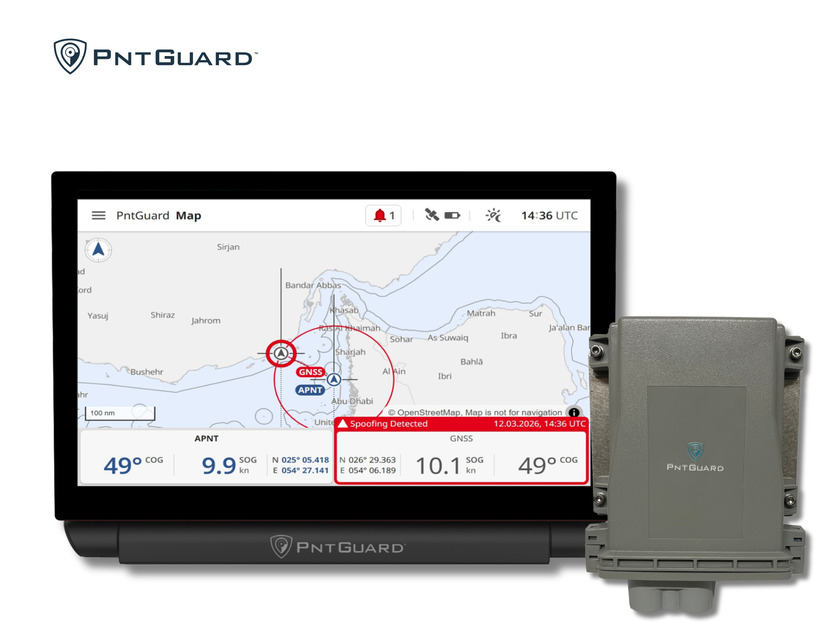
PntGuard is built on NAL Technologies’ (Naltec) assured positioning, navigation and timing (APNT) solution which utilizes Iridium® PNT satellite service, to deliver continuous, authenticated and reliable ship positions independent of GNSS. Proven for improving navigation resilience, the self-contained PntGuard system detects spoofing, overcomes jamming, and keeps vessels safely on track. Naltec’s industry leading APNT technology has been proven by commercial and defence organisations for over 10 years with thousands of devices in the field today.

“NorthStandard’s strategy to assist our members to leverage the capabilities of digitalisation has already brought significant gains for voyage safety and operational decision-making,” said Colin Gillespie, Global Head of Loss Prevention, NorthStandard. “At a time when GNSS integrity is threatened as never before, PntGuard enables early warning of interference events, upholding navigational resilience and situational awareness. Its use will reduce Member exposure to navigation-related incidents.”

“PntGuard reports the true ship position when GNSS fails, which ensures certainty, safety and control for every voyage,” said Alexander Wiik, Chief Commercial Officer, SGM Technology representing PntGuard. “GNSS interference is no longer confined to conflict zones, with spoofing and jamming disrupting commercial shipping globally, sending ships off course and compromising crew safety. That has far-reaching consequences for revenues, compliance and insurance. By comparing the ship’s GNSS feed with a fully authenticated signal, PntGuard gives instant visual and audible alerts when GNSS fails.”

In an era of unprecedented advances in maritime technology, NorthStandard’s GetSET! portfolio offers vessel-based solutions to improve safety and efficiency by enhancing crew skills and situational awareness, as well as ship-shore collaboration. It includes the GlobeView maritime intelligence platform, ECDIS Training Assessment (ETA) continuous professional development, Orca AI’s FleetView situational awareness platform, Shipin’s visual fleet management FleetVision™, and real-time quality Fuel Insights, powered by VPS.

About PntGuard: 

PntGuard is the world’s first commercial Assured Positioning, Navigation and Timing (APNT) security system purpose-built for the maritime industry. The system has been developed specifically for commercial shipping to address the growing threat of GNSS jamming and spoofing, which can compromise navigation, situational awareness, compliance and operational decision-making. 

PntGuard™ has been developed through a collaboration between cross-industry partners NAL Technologies (Naltec), SGM Technology AS and Tschudi Shipping Company. SGM Technology AS, a Norwegian company, holds the exclusive commercial rights to distribute PntGuard within the maritime industry. 

CMC expands collaboration with Lincoln Tech’s WorkforceLinc Division

CHARLESTON: CMC, the largest provider of integrated intermodal solutions in the U.S., and WorkforceLinc the workforce development division of Lincoln Educational Services Corporation (NASDAQ: LINC), are expanding their intermodal technician training program to the Port of Baltimore. WorkforceLinc has been a national leader in specialized technical training for over 80 years, and this expansion marks the continued growth of a partnership centered on building and strengthening the skilled mechanic workforce behind CMC’s port and intermodal operations.

“This expansion reflects our commitment to the technicians who power our operations every day, and our confidence that investing in best-in-class training is what gives us a real edge in the marketplace and allows us to deliver the level of service our customers deserve,” said Michael Wojnowski, SVP, South Region, CMC. “Through our partnership with Lincoln Tech’s WorkforceLinc, we provide structured, hands-on training in the real-world environment of our facilities. Based on our proprietary curriculum, this professional-level training program helps our technicians continuously enhance their skills and maintain the high standards of safety, quality, and performance that define the company.”

Designed exclusively for CMC technicians, this program focuses on intermodal equipment maintenance and is built around a CMC’s proprietary curriculum, which goes beyond industry standards to reflect the company’s rigorous expectations for safety, quality, and technical proficiency. CMC partners with Lincoln Tech to leverage its proven teaching methodologies and training expertise, helping CMC technicians build the depth of knowledge and hands-on readiness needed to perform at their best in the field.

“Since 2024, Lincoln has been proud to support CMC and play a role in increasing the number of skilled, trained technicians working in the vital container maintenance industry,” says Scott Shaw, Lincoln Tech’s President and CEO. “Shipping containers are key to transporting millions of dollars in goods and consumer products around the world every day, and the world needs expertly trained individuals to keep them in top working order. CMC is a leader in that field and Baltimore is of course a key global shipping hub, and we’re excited to expand Lincoln’s collaboration with their organization.”

CMC currently partners with WorkforceLinc in Savannah, GA; Charleston, SC; and Wilmington, NC. The expansion into Baltimore represents the next phase of this collaboration, extending a consistent, hands-on training model to additional locations.

Training is delivered at CMC facilities located on or near port operations using a performance-based approach that emphasizes hands-on application, instructor-led facilitation, and job-aligned skill validation. By training within the operating environment, technicians work with the same equipment and conditions they encounter daily, supporting consistency across regions while remaining aligned with the demands of intermodal equipment maintenance.

Core areas of training include intermodal chassis mechanic instruction, which focuses on inspection, maintenance, and repair of critical chassis systems, as well as container structural repair for both dry and refrigerated containers. These structural repair courses emphasize welding techniques and industry-standard repair practices. CMC and WorkforceLinc have also established a dedicated welding training program at CMC facility in Wilmington, centered on SMAW and GMAW welding techniques performed in multiple positions aligned to real-world repair applications. The program continues year-round, reinforcing welding proficiency for container and structural repair.

Industry representatives also highlighted the importance of continued workforce investment across port operations.

Since launching the program in 2024, CMC and WorkforceLinc have trained more than 90 CMC technicians across multiple port locations. The expansion into Baltimore is expected to further increase access to training and support continued workforce development across key logistics hubs.

As port and intermodal operations continue to evolve, the need for skilled maintenance technicians remains critical. Through this partnership, CMC and WorkforceLinc are working together to deliver scalable, standardized training aligned with operational needs while supporting the long-term development of the workforce.

About CMC

CMC brings together three family-founded companies–MRS-CMC, ITI Intermodal, and Columbia Container Services–as one family and one brand. Operating across 15 states, CMC delivers integrated intermodal solutions, including depot services, container sales, drayage, intermodal equipment refurbishment, refrigerated services, and depot and over-the-road maintenance and repair, supported by the nation’s largest maintenance and repair footprint across both marine and rail networks.

About Lincoln Educational Services Corporation 
Lincoln Educational Services Corporation is a leading provider of diversified career-oriented post-secondary education. Lincoln offers recent high school graduates and working adults career-oriented programs in skilled trades, automotive, health sciences and information technology. Lincoln has provided the workforce with skilled technicians since its inception in 1946.

Lincoln currently operates 22 campuses in 12 states under 3 brands: Lincoln College of Technology, Lincoln Technical Institute and Nashville Auto Diesel College.  

India has strongest growth outlook; 74% economists expect strong or very strong growth: World Economic Forum

NEW DELHI: India has the strongest growth outlook among the geographies covered by the World Economic Forum’s latest survey, with 74 per cent of chief economists expecting strong or very strong growth over the next 12 months, according to the WEF’s September 2026 Chief Economists’ Outlook.

“India continues to have the strongest growth outlook among the geographies covered in the survey,” the report said.

Overall, 98 per cent of chief economists surveyed expect moderate or stronger growth in India over the next 12 months. The share expecting strong or very strong growth has risen to 74 per cent from 52 per cent in May, indicating a sharp improvement in sentiment towards the Indian economy.

The survey placed India marginally ahead of South-East Asia, where 73 per cent of respondents expect strong or very strong growth.
The positive growth outlook is also reflected in expectations for household incomes. Around 62 per cent of chief economists expect inflation-adjusted household incomes in India to increase over the next year, including 7 per cent who expect a significant increase.

India and South-East Asia stand out on this measure, with the report noting that in most other regions, majorities expect real household incomes to either remain unchanged or decline.

Labour-market expectations for India also remain broadly stable. About 70 per cent of respondents expect the unemployment rate to remain unchanged over the next 12 months, while 17 per cent anticipate an increase and 13 per cent expect a decline.

The report said inflation expectations for India have moderated since May, with 55 per cent of chief economists expecting moderate inflation and 45 per cent expecting high inflation over the next 12 months.

Most economists also expect policy settings to remain broadly unchanged, with 67 per cent anticipating no change in monetary policy and 72 per cent expecting fiscal policy to remain broadly stable.

However, India’s strong growth outlook has not translated into an improvement in its relative attractiveness to multinational companies. India fell from second to fourth place in the survey’s ranking of favourable business environments for multinationals, with 40 per cent of respondents including it among their top three destinations, down from 56 per cent in the previous outlook.

Globally, sentiment has also improved. A majority, or 56 per cent, of chief economists expect the world economic outlook to remain unchanged or strengthen over the next 12 months, compared with May when 89 per cent expected conditions to weaken. However, geopolitical conflicts remain the leading source of uncertainty, cited by 97 per cent of respondents.

The WEF survey was conducted between August 4 and 20, 2026, among chief economists from the public and private sectors.

Trump backs India-Middle East-Europe Economic Corridor, says need to shift energy infrastructure away from Iranian checkpoints

NEW YORK: US President Donald Trump on Tuesday (local time) said his administration strongly supports the India-Middle East-Europe Economic Corridor, saying there is a need shift Middle East energy infrastructure away from Iranian checkpoints amid multiple strikes on West Asian countries during the war.

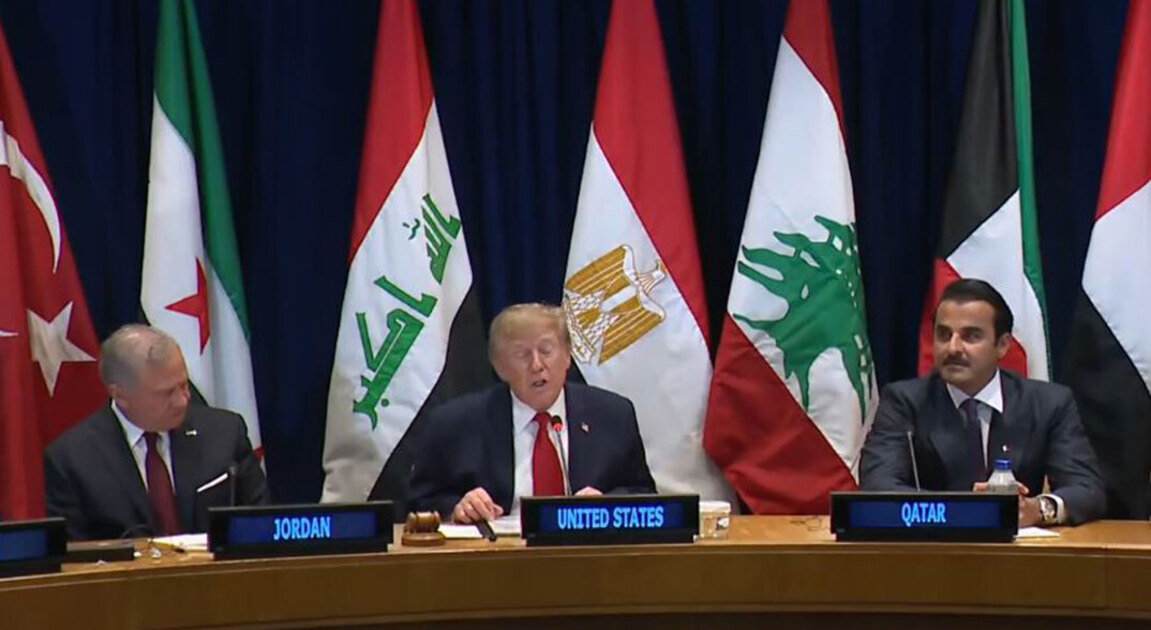
Addressing a meeting with GCC and Arab leaders on the sidelines of the UN General Assembly, Trump said attacks on commercial shipping in neighbouring countries had highlighted the need to shift the region’s energy infrastructure.

“…Iran’s terrorist attacks on commercial shipping in neighboring countries have shown the need to shift Middle East energy infrastructure away from the Iranian checkpoints. That’s why my administration strongly supports the India-Middle East-Europe Economic Corridor and other places in the form of getting oil out, whether it’s pipelines or anything else,” Trump said.

He said the region was close to overcoming longstanding challenges.“Together, we’re on the verge of overcoming challenges that have plagued this region for decades…” he said.

Trump also described the leaders attending the meeting as some of the United States’ closest allies and partners and said their efforts were aimed at making the Middle East safer and more prosperous.

“It’s an honor to be here with some of America’s greatest and closest friends, allies, and partners to continue our effort toward a safer and more prosperous Middle East,” he said.

The India-Middle East-Europe Economic Corridor (IMEC), unveiled in 2023, comprises an Eastern Corridor connecting India to the Gulf region and a Northern Corridor connecting the Gulf region to Europe. It will include a railway and ship-rail transit network, as well as road transport routes.

Further, echoing his earlier remarks at the UN General Assembly, the US President once again warned Iran of annihilation.

“We’ve isolated Iran financially and hopefully they’ll do the right thing fast… There will be a time when it’s too late, and we won’t have the chance of letting them survive as a nation. I would like to see that, and I can tell you that people around this table would like to see it,” he added.

Source: ANI

Piyush Goyal interacts with industry stakeholders on EoDB, FTA opportunities and trade reforms workshop

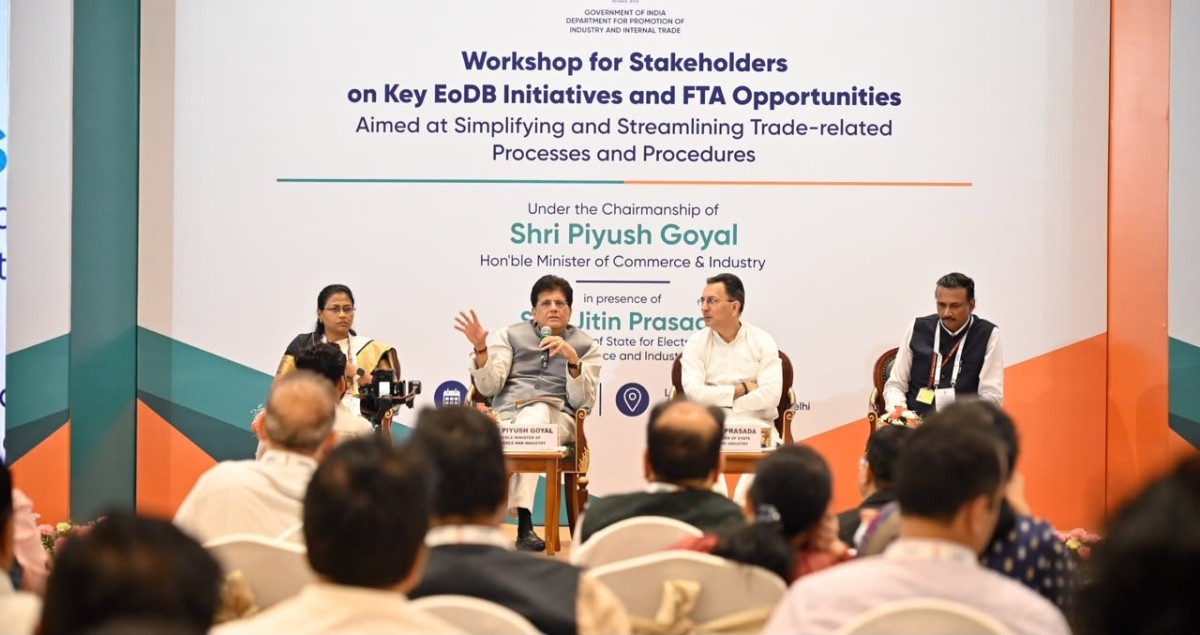
NEW DELHI: The Department for Promotion of Industry and Internal Trade (DPIIT) organised a stakeholder workshop on Ease of Doing Business, Free Trade Agreement opportunities and ongoing trade-related reforms at Bharat Mandapam, New Delhi, on Tuesday, followed by an interactive session with Union Minister of Commerce and Industry Shri Piyush Goyal and Minister of State for Commerce and Industry Shri Jitin Prasada.

During the interaction, Shri Goyal outlined the Government’s approach to strengthening export facilitation through physical and digital mechanisms. He said that instead of establishing separate offices of every department in every location, integrated Commerce and Industry offices are envisaged in major cities to provide businesses with a common point of access to multiple departments and agencies.

He had a frank interaction with industry representatives and directed officials to examine some of the suggestions made by industry.

The interaction was the first such interaction with a regional industry association.

The roller chain and industrial components manufacturing sector highlighted the positive impact of recent policy interventions in strengthening domestic manufacturing. The industry reported that measures including Quality Control Orders (QCOs), Minimum Import Price (MIP) provisions and higher import duties have supported significant growth in the sector, contributing to a 15-fold expansion, fresh investments of approximately ₹500 crore and the generation of around 5,000 new jobs. The industry appreciated these interventions for supporting domestic manufacturing capacity, encouraging investment and creating employment opportunities.

The Minister also announced a proposed network of approximately 1,000 trained local personnel, with knowledge of regional languages, to support exporters and prospective exporters at the district and State levels. These personnel would be trained and subsequently deployed to provide handholding support to businesses, including through industry chambers and regional associations.

Shri Goyal also informed participants about the Trade Connect platform being developed to provide exporters with product-wise and HSN-code-wise information, including destination-country tariffs, FTA opportunities and procedures for availing FTA benefits. The platform is also envisaged to use digital and AI-enabled tools to help businesses identify potential export opportunities and infrastructure gaps.

The workshop brought together representatives from industry associations, trade bodies and sectoral organisations, along with senior officials of DPIIT and the Department of Commerce. Discussions focused on ongoing EoDB reforms, trade facilitation measures, opportunities under India’s FTAs and challenges faced by industry in accessing markets and navigating regulatory and procedural requirements.

Presentations by DPIIT officials covered key initiatives relating to Startup India, Intellectual Property Rights (IPR), investment facilitation, the National Single Window System, industrial infrastructure and reforms relating to the Petroleum and Explosives Safety Organisation (PESO). The presentations highlighted measures relating to simplification and rationalisation of regulatory processes, digitalisation, reduction of compliance burden and improvement in approval and service delivery mechanisms.

A dedicated session on recent FTAs and trade facilitation reforms provided industry with an overview of opportunities and obligations arising from India’s trade agreements. The session also covered ongoing measures relating to digitalisation, documentation and simplification of trade-related processes and procedures.

Representatives from sectors including pharmaceuticals, textiles, man-made fibres, copper, automotive and engineering, air-conditioners and logistics, along with MSMEs and women entrepreneurs, raised issues relating to export competitiveness, trade documentation, regulatory processes, FTA utilisation, logistics, domestic supply chains, standards and testing infrastructure and regulatory certainty.

Industry representatives highlighted the need for greater interoperability between government systems and foreign trade platforms, including digital transmission and verification of Certificates of Origin under FTAs. The proposal to extend such electronic processes to other FTA partners was noted for examination. Industry also highlighted the need for further integration of the export cycle involving the Directorate General of Foreign Trade (DGFT), Customs, banks and other stakeholders.

The interaction also covered logistics and trade-process bottlenecks, including documentation backlogs and concerns relating to sea-freight costs. Sector-specific issues relating to rules of origin and imports, export quality and regulatory processes, import competition, testing and certification infrastructure, and regulatory certainty for MSMEs were also raised.

The importance of quality and adherence to international standards for strengthening India’s export credibility was also emphasised. Industry associations and Export Promotion Councils were encouraged to support awareness and compliance with destination-market standards and assist in identifying instances of fraudulent, substandard or non-compliant manufacturing for appropriate regulatory action.

The interaction reaffirmed the Government’s emphasis on Government–Industry partnership in addressing practical barriers to trade, strengthening domestic manufacturing and supply chains, and facilitating greater participation of Indian enterprises in global markets.

The workshop was part of the Government’s continuing efforts to strengthen the Ease of Doing Business framework, facilitate trade and enable Indian industry to effectively utilise opportunities arising from India’s expanding network of Free Trade Agreements.

Dr. S. Jaishankar calls for Global South co-operation amid conflicts, trade pressures and climate challenges

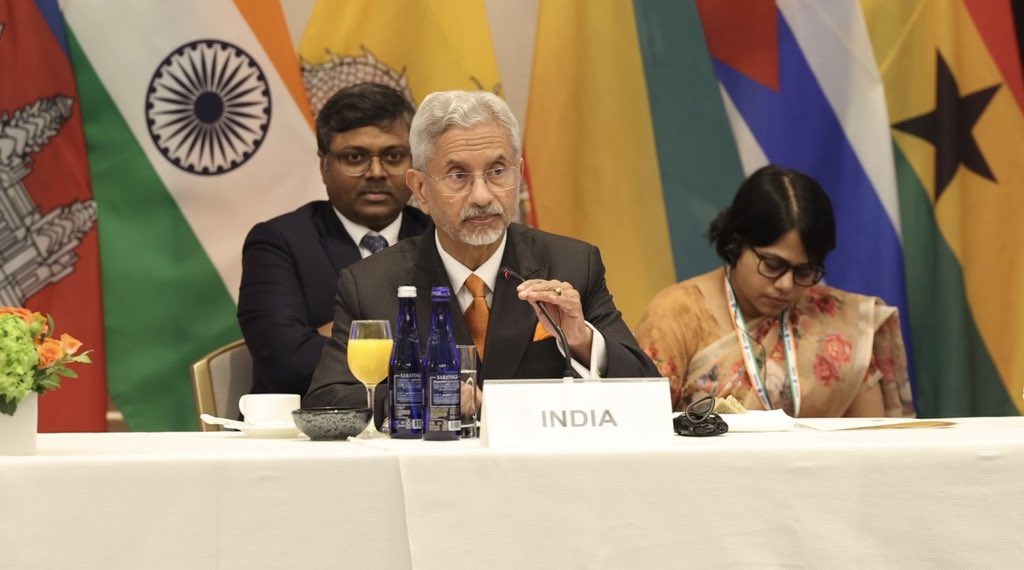
NEW YORK: External Affairs Minister Dr. S Jaishankar on Tuesday (local time) called for greater cooperation among Global South countries to address rising geopolitical tensions, economic challenges, climate shocks and pressures on the multilateral system.

Addressing the meeting of Global South Countries on the sidelines of the 81st UN General Assembly, Jaishankar said the global situation was marked by increasing conflicts, pressure on supply chains and trade, fragmented investment flows, growing debt vulnerabilities and inadequate development finance.

“Assessed a global picture marked by rising conflicts and geopolitical tensions; mounting pressure on supply chains and trade; fragmenting investment flows; growing debt vulnerabilities amid inadequate development finance; intensifying climate shocks; and a multilateral system and international norms under increasing strain,” Jaishankar said in a post on X. He said Global South countries should work together to address key challenges, including supply chain, finance and connectivity bottlenecks.

Jaishankar called for efforts to prevent the manipulation of energy availability and prices, ensure food security by addressing challenges related to grain and fertiliser supplies, and promote fair economic and trade practices.

He also highlighted the need to enhance industrialisation and production capabilities, secure maritime commons, and ensure the safety and security of seafarers and commercial shipping.

The External Affairs Minister further stressed the importance of managing the transformations brought by Artificial Intelligence to prevent divisions and called for greater inclusion in decision-making structures on issues affecting Global South countries.

“We must forge closer economic, technological & environmental cooperation, use existing platforms to highlight our concerns, while striving for Reformed Multilateralism,” Jaishankar said.

Further, Jaishankar met Italy’s Deputy Prime Minister and Foreign Minister Antonio Tajani on the sidelines of the United Nations General Assembly. In a post on X, Jaishankar said their discussions focused on the Gulf situation, the India-Middle East-Europe Economic Corridor (IMEC), and the Ukraine conflict.

“Good to catch up with DPM & FM Antonio Tajani of Italy. Our conversation focused on the Gulf situation, IMEC, and the Ukraine conflict,” Jaishankar said.

Italy, India strengthen strategic partnership; Tajani highlights IMEC, trade goals after meeting Jaishankar

Further, Tajani also said Italy and India were strengthening their strategic partnership through cooperation in areas including defence, security, artificial intelligence, space, critical technologies and energy.

Sharing details of his meeting with Jaishankar, he said the two countries aimed to expand collaboration and increase trade ties.

“In New York I met my dear friend and Indian Foreign Minister Dr S Jaishankar. Italy and India are bound by a special Strategic Partnership, which we are strengthening through ever broader collaboration, from defense and security to artificial intelligence, from space to critical technologies and energy,” Tajani said in a post on X.

He said India was a key country for Italy’s Export Action Plan and expressed the desire to work together towards achieving a trade exchange target of 20 billion euros by 2029.

“We want to work together to achieve the goal of 20 billion euros in trade exchange by 2029, seizing all the opportunities offered by the EU-India Free Trade Agreement and the strategic development of the IMEC corridor,” he said.

Tajani also highlighted the importance of ensuring freedom of navigation for trade routes and connectivity.

“In this framework, we share the importance of ensuring freedom of navigation, essential for the security of trade routes, for connectivity, and for the growth of our economies,” he added.

Source : ANI

APM Terminal Mumbai sets new benchmark with faster Double-Stack rake handling

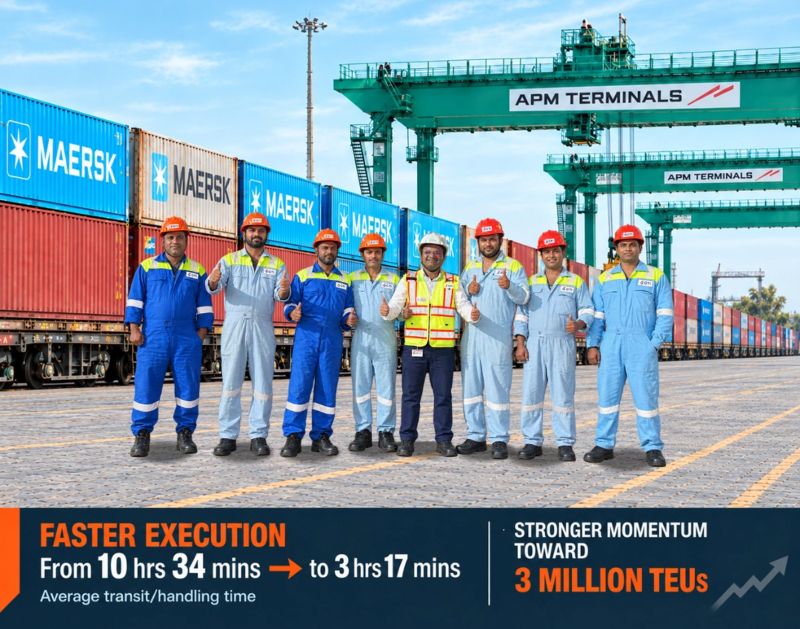
MUMBAI: Gateway Terminals India Pvt. Ltd. (APM Terminal Mumbai) has achieved a significant operational milestone by completing the handling of an ATU Double Stack Rake comprising 90+180 TEUs in just 3 hours and 17 minutes, from arrival to last lift.

The performance marks a substantial improvement over the current DSR average handling time of 10 hours and 34 minutes, highlighting the terminal’s focus on operational efficiency, coordinated execution and faster cargo movement.

The rake was completed in just 2 hours and 37 minutes from Loading Confirmation to Last Lift, further demonstrating the terminal’s ability to streamline operations and reduce turnaround time for rail cargo.

The achievement was enabled by meticulous planning, seamless coordination among operational teams and a strong focus on execution. The faster handling of the double-stack rake supports more efficient utilisation of rail capacity and helps facilitate the movement of larger cargo volumes within shorter timeframes.

For customers and logistics partners, improved rake turnaround can contribute to greater reliability and efficiency across the wider supply chain. Such operational gains also support the industry’s broader objective of increasing the role of rail in efficient and sustainable container transportation.

Gateway Terminals India said the milestone reflects the shared commitment of its teams and partners to continuously improve service delivery and create greater value for customers and stakeholders.

The achievement also reinforces APM Terminal Mumbai‘s focus on setting higher operational benchmarks as it works towards its vision of becoming “India’s Best Container Terminal Operator” for All Stakeholders.

The milestone demonstrates that operational excellence is not only about faster turnaround, but also about moving more cargo efficiently, serving customers better and continuously raising performance standards.

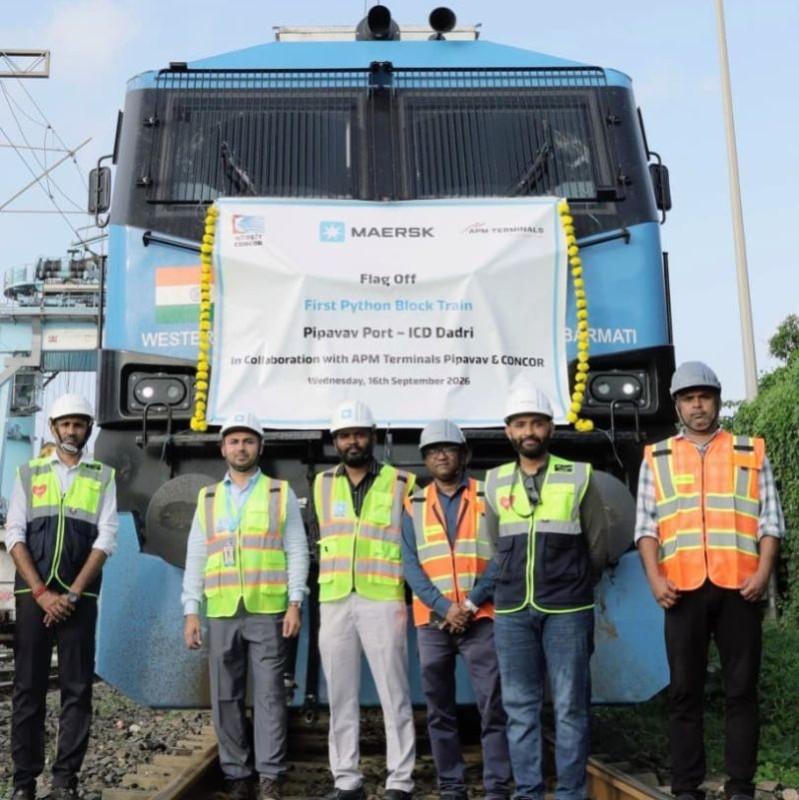
APM Terminals Pipavav flags off first double-stack Python Block Rake to ICD Dadri

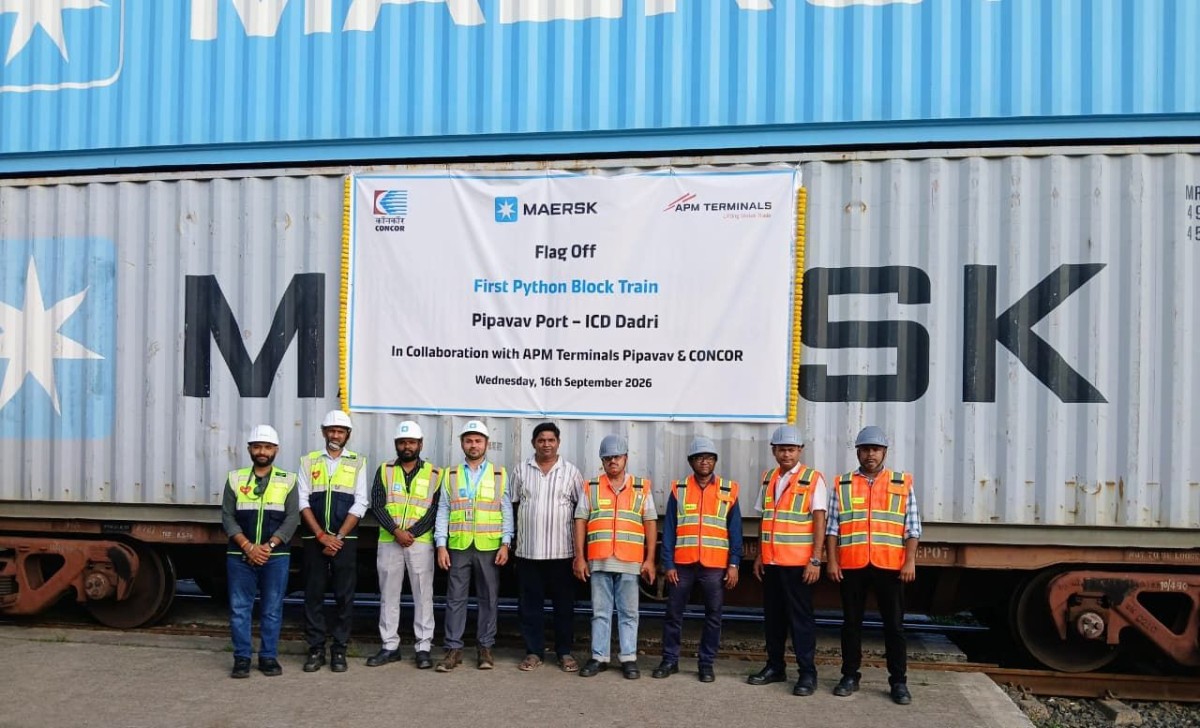
PIPAVAV : APM Terminals Pipavav has achieved a significant milestone in rail logistics with the successful flag-off of its first Double-Stack Python Block Rake to Inland Container Depot (ICD) Dadri, in collaboration with Container Corporation of India Limited (CONCOR) and Maersk India.

MAERSK ICD DADRI APM Terminals Pipavav flags off first double-stack Python Block Rake to ICD Dadri

The inaugural service, flagged off on 16 September 2026, marks the first-ever Python rake planned and executed by a port for a single shipping line, representing a major step forward in high-capacity rail-based container transportation from Pipavav.

The Double-Stack Python configuration substantially enhances the capacity of the weekly import block train operating between Pipavav and Dadri. The inaugural movement carried 338 TEUs over a distance of approximately 1,200 km, enabling a larger volume of containers to move together while supporting more reliable and efficient supply chains.

The upgraded service is designed to provide customers with improved just-in-time cargo availability, while also contributing to more efficient utilisation of rail capacity and streamlined intermodal operations. By consolidating higher volumes into a single movement, the initiative is expected to create additional capacity for future cargo growth towards the Dadri region.

The successful execution of the first-of-its-kind movement required close planning and coordination among APM Terminals Pipavav, Maersk India, CONCOR, Indian Railways and other operational partners. The achievement demonstrates how the expanding Dedicated Freight Corridor (DFC) and Indian Railways infrastructure can be translated into high-capacity, efficient and customer-focused intermodal logistics solutions.

The initiative also reflects the growing role of rail connectivity in strengthening the link between western India’s ports and major inland consumption and production centres. The Double-Stack Python service provides an additional boost to the efficiency and scalability of containerised cargo movement between Pipavav and the northern hinterland.

APM Terminals Pipavav appreciated the contribution of teams across Maersk India, CONCOR, Indian Railways and all partner organisations involved in planning and executing the milestone movement.

The new service strengthens Pipavav’s rail logistics capabilities and provides greater headroom for handling increasing container volumes towards Dadri and the wider northern Indian market.