Home Blog Page 905

India Must Convert Global Challenges into Opportunities with a Spirit of Nationalism: Piyush Goyal

MUMBAI : Union Minister of Commerce & Industry, Shri Piyush Goyal, on Monday said that India is well poised to convert the current global situation into an opportunity, just as it did during the Covid-19 pandemic and in the late 1990s when the Indian IT sector leveraged the Y2K bug crisis to mark its emergence on the global stage.

Addressing the foundation day of FICCI,  in Mumbai, Shri Goyal underscored the need for unity and collaboration among nations and industries to tackle evolving global challenges. “We are all in it together. All well-meaning countries and businesses must address these challenges collectively and convert them into opportunities,” he said.

He emphasized that the collective consciousness of the Indian industry can help drive the country towards self-reliance and sustained growth. “We need to support each other. We need to have a nationalist outlook,” he said, adding that Indian companies must work in the spirit of collaboration and shared purpose.

Referring to Mahatma Gandhi’s 1931 address to FICCI, the Minister said that Indian industry should place nationalism at the heart of its work. “Prime Minister Shri Narendra Modi truly embodies this spirit through his vision of Viksit Bharat, inclusive growth, and delivering the benefits of economic progress to the last person in the queue,” he said.

Shri Goyal urged Indian businesses to support each other, focus on quality, and avoid the pitfalls of short-term gains. He warned against predatory pricing and over-dependence on cheap imports. “Low-cost goods may seem attractive today, but in the long run, they can hurt businesses and economies. This has been evident in several parts of the world where supply chains have collapsed due to over-dependence on a single geography,” he noted.

He pointed out that resilient and diversified supply chains, along with energy and food security, have become global priorities. “More and more developed countries are recognising that this is not just about geopolitics, but about national resilience and self-reliance, especially in critical technologies,” he said.

The Minister stressed that India’s demographic dividend, a 1.4 billion-strong consumer base, and the fastest-growing economy in the world present an unparalleled opportunity. “From a $4 trillion economy today, India is poised to grow to $30-35 trillion in the next 25 years. We have an opportunity of a lifetime,” he declared.

Calling on industry stakeholders to seize this moment, he said, “Be a part of the solution, be a part of this moment in history. If we all come together with determination, India is unstoppable.”

Nirmala Sitharaman to embark on an official visit to United Kingdom and Austria today

NEW DELHI : Union Minister for Finance & Corporate Affairs Smt. Nirmala Sitharaman will embark on an official visit to the United Kingdom and Austria from 8th to 13th April 2025, today. Smt. Sitharaman is also scheduled to attend Ministerial Level Bilateral meetings in both countries.

During the course of the visit, the Union Finance Minister will participate in the 13th Ministerial round of India – UK Economic & Financial Dialogue and engagements with think tanks, investors, business leaders in United Kingdom and Austria.

The 13th round of the India-UK Economic and Financial Dialogue (13th EFD) is scheduled to be held in London, United Kingdom on 9th of April 2025. The 13th EFD dialogue will be co-chaired by the Union Minister for Finance and Corporate Affairs and the UK Chancellor of the Exchequer.

The 13th EFD is a significant bilateral platform between the two countries that offers opportunities for candid engagement at Minister level, officer-level, working groups and between the respective regulatory bodies in various aspects of financial collaboration, including investment matters, financial services, financial regulations, UPI interlinkages, taxation matters and illicit financial flows.

The key priorities of the 13th EFD dialogue for Indian side include cooperation in IFSC GIFT City, investment, insurance and pension sectors, FinTech and Digital economy, and mobilising affordable and sustainable climate finance.

The Union Finance Minister and the Rt. Hon. Chancellor of the Exchequer are also set to announce and launch various reports and new initiatives for further collaborations.

On the sidelines of India-UK 13th EFD, Smt. Sitharaman will engage in bilateral meetings with key dignitaries, participate in investor roundtables and other meetings with heads of key financial institutions and companies.

During the United Kingdom leg of the official visit, the Union Finance Minister will deliver the keynote address at the India-UK Investor Roundtable in presence of Chief Executive Officers of international organisations, including key management personnel from across the UK financial ecosystem covering pension funds, insurance companies, banks, and financial services institutions among others.

Union Finance Minister Smt. Nirmala Sitharaman along with UK Secretary of State for Business and Trade Rt. Hon. Jonathan Reynolds will co-host the Roundtable in partnership with City of London, with top CEOs and senior management of prominent pension funds and asset managers in UK as participants.

During the Austrian leg of the official visit, the Union Finance Minister will hold bilateral meetings with senior Austrian government leaders, including with Mr Markus Marterbauer, Finance Minister, Austria; and H.E. Mr. Christian Stocker, the Federal Chancellor, Austria.

Smt. Sitharaman and Mr. Wolfgang Hattmannsdorfer, Austrian Minister for Economy, Energy and Tourism, will co-chair a session with key Austrian CEOs to apprise them of existing and upcoming opportunities in India for deeper investment collaboration between the two countries.

India unlikely to retaliate against Trump’s 26% tariff on imports : Govt official

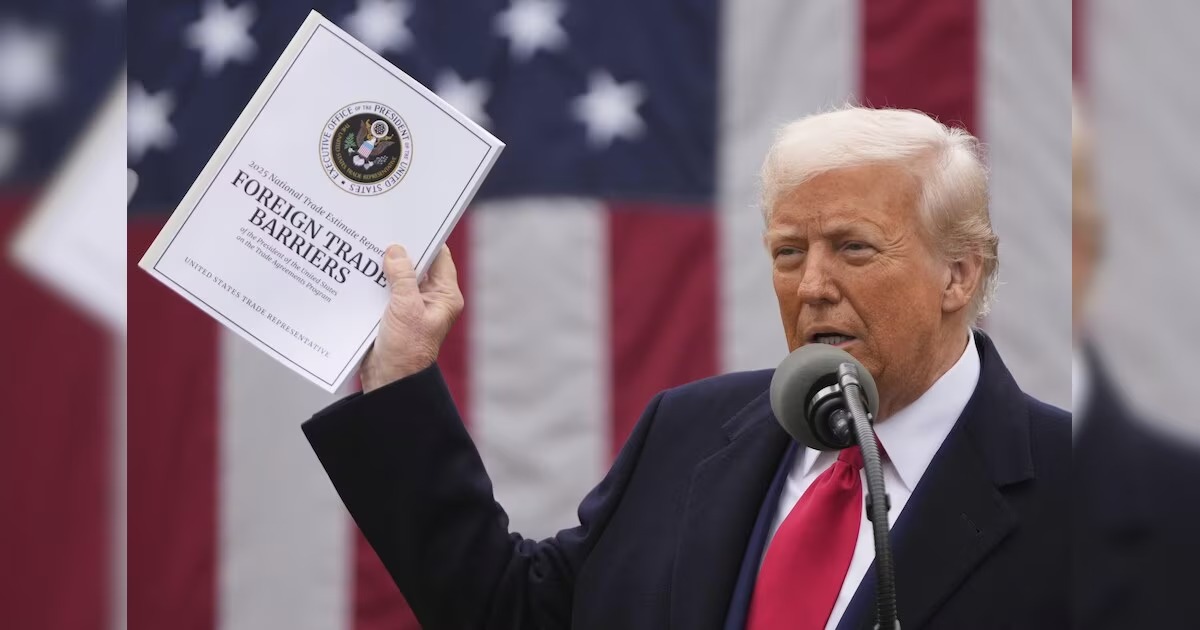
NEW DELHI : India is unlikely to retaliate against US President Donald Trump‘s recent announcement of 26 per cent tariff on its imports, news agency Reuters reported citing a government official.

Citing ongoing talks for a deal between India and the US, the official mentioned that the Centre has looked into a clause of Trump’s tariff order that offers a possible respite to trading partners who  “take significant steps to remedy non-reciprocal trade arrangements”.

Another government official told the news agency that India sees an advantage in being one of the first nations to have started talks with Washington over a trade deal and is better placed that China, Vietnam, and Indonesia.

In a bid to resolve the standoff on tariffs, India and the US agreed in February to secure an early trade deal by autumn of this year. 

Meanwhile, Trump showed no indication of reversing his tariff plans, stressing, “What’s going to happen to the markets, I can’t tell you. But, our country is much stronger.” His firm stance comes amidst a turbulent market environment, with no deal in sight with China until the trade deficit issue is resolved.

Unless we solve that problem, I’m not going to make a deal,” Trump stated.

With the imposition of an additional 34% reciprocal tariff on China, which responded in kind, the White House justified the tariffs as a measure to combat illicit fentanyl exports from China. Trump likened the administration’s approach to taking necessary ‘medicine’ for economic issues, despite the market turmoil.

Trump attributed the current economic challenges to poor trade deals by his predecessor, Joe Biden, claiming, “We have been treated so badly by other countries because we had stupid leadership that allowed this to happen.”

These comments come in the wake of a sharp decline in US markets, marked by a $6.6 trillion loss. S&P 500 E-minis was down 4%, Dow E-minis down by 3.8%, and Nasdaq 100 E-minis falling 4.6% as markets opened on Sunday.

The Dow Jones Industrial Average fell by 2,231 points, marking a 5.5% decline, while the Nasdaq composite saw a 5.8% drop, sinking over 20% below its December record. Amidst this, Trump remains resolute on his tariff strategy.

Asian markets are also expected to react negatively, as the risk of a US recession looms larger with potential rate cuts anticipated by May. Engagements with European and Asian leaders have been noted, with Trump mentioning that “they were dying to make a deal.” 

India a winner in tariff war

NEW DELHI : India has emerged as a winner in the escalating global tariff war unleashed by the US, with lower duties than its competitors, a senior official said Saturday. India also has an early-mover advantage as it has already initiated discussions on the Bilateral Trade Agreement (BTA) that will give a chance to bring down duties on Indian exports to the US down from the current levels, the official added.

The reciprocal tariffs and retaliation by China have created even more space for products like electronics, engineering goods and textiles where India and China compete directly in the US market, the official added. 

While the US has imposed additional 26% duties on Indian imports under the reciprocal tariff plan, the tariffs on China are 34%, Vietnam 46%, Bangladesh 37%, Sri Lanka 40% and Thailand 36%.

India is the only country with which the US is deeply engaged in trade negotiations. Among all trading partners, it is only India to which the US has sent a delegation of trade negotiators.

The government will be reaching to exporters and export promotion councils for their view and issues they might face. “Some exporters have said they see no impact of the reciprocal tariffs; for some others the government may offer support,” said the official.

One of the products where the hit is seen is shrimps, as competitor country Ecuador has got 10% reciprocal tariffs. India’s quality control orders will enable faster clearance of marine exports in the European Union so a new important market will open up, the official said. OCOs on domestic shrimp growing and processing have improved standards of the local industry.

To deal with this blow, the quality clearance to enable marine exports to the European Union has been speeded up so a new important market will open up for the sector. Shrimp exports to the US total around $2.4 billion.

As the world looks for ways to cut their losses from the Trump tariffs, India has been flooded with requests for FTAs. India Is already negotiating seven FTAs. The official said talks with the UK on FTA are progressing very well. The deadline for FTA with EU is 2025- end and for BTA with US the conclusion of first tranche will come by this fall.

Some quarters have expressed concerns that there might be a dumping of products in India as  major trade partners of US face high tariffs. The official said these will be dealt with using existing legal provisions of anti-dumping and other safeguard measures. Because of high tariffs there might be some demand compression but it wouldn’t be much because the difference between import price and retail sale price in the US is big, so some of the tariff hikes may be absorbed by the trade. Trump has also promised tax cuts and decline in prices of energy with a fall in prices of crude will leave more money in the hands of consumers.

The official said while goods exports in 2024-25 are expected to remain flat at around $437 billion last year but will rebound sharply in 2025-26, he added.

Global markets sink as Trump stands firm on tariffs, trade tensions rise

WASHINGTON : Global markets plunged on Monday following last week’s two-day meltdown on Wall Street, and President Donald Trump said he won’t back down on his sweeping new tariffs, which have roiled global trade. Countries are scrambling to figure out how to respond to the tariffs, with China and others retaliating quickly.

Trump’s tariff blitz fulfilled a key campaign promise as he acted without Congress to redraw the rules of the international trading system. It was a move decades in the making for Trump, who has long denounced foreign trade deals as unfair to the US.

The higher rates are set to be collected beginning Wednesday, ushering in a new era of economic uncertainty with no clear end in sight.Here’s the latest: Chinese officials meet business representatives from Tesla and other US companies Chinese government officials met business representatives from Tesla, GE Healthcare and other US companies on Sunday. It called on them to issue reasonable statements and take concrete actions on addressing the issue of tariffs.

The United States in recent days has used all sorts of excuses to announce indiscriminate tariffs on all trading partners, including China, severely harming the rules-based multilateral trade system, said Ling Ji, a vice minister of commerce, at the meeting with 20 US companies.

China’s countermeasures are not only a way to protect the rights and interests of companies, including American ones, but are also to urge the US to return to the right path of the multilateral trading system,” Ling added.

Ling also promised that China would remain open to foreign investment, according to a readout of the meeting from the Ministry of Commerce.

Malaysia wants Southeast Asia to present a united response to tariffs Malaysia’s Trade Minister Zafrul Abdul Aziz said his country wants to forge a united response from Southeast Asia to the sweeping US tariffs.

Malaysia, which is the chair of the Association of Southeast Asian Nations this year, will lead the regional bloc’s special Economic Ministers’ Meeting on April 10 in Kuala Lumpur to discuss the broader implication of the tariff measures on regional trade and investment, Zafrul told a news conference on Monday.

We are looking at the investment flow, macroeconomic stability and ASEAN’s coordinated response to this tariff issue, Zafrul said.

ASEAN leaders will also meet to discuss member states’ strategies and to mitigate potential disruptions to regional supply chain networks.

Pakistan will send a government delegation to Washington Pakistan plans to send a government delegation to Washington this month to discuss how to avoid the 29 per cent tariffs imposed by the US on imports from Pakistan, officials said Monday.

The development came two days after Pakistan’s prime minister asked its finance minister to send him recommendations for resolving the issue.

The US imports around $5 billion worth of textiles and other products from Pakistan, which heavily relies on loans from the International Monetary Fund and others.

The Pakistan Stock Exchange fell rapidly on Monday. The exchange suspended trading for an hour after a 5 per cent drop in its main KSE-30 index.

Mideast markets follow oil prices lower Middle East stock markets tumbled as they struggled with the dual hit of the new US tariffs and a sharp decline in oil prices, squeezing energy-producing nations that rely on those sales to power their economies and government spending.

Benchmark Brent crude is down by nearly 15 per cent over the last five days of trading, with a barrel of oil costing just over $63. That’s down nearly 30 per cent from a year ago, when a barrel cost over $90. 

That cost per barrel is far lower than the estimated break-even price for producers. That’s coupled with the new tariffs, which saw the Gulf Cooperation Council states of Bahrain, Kuwait, Oman, Qatar, Saudi Arabia and the United Arab Emirates hit with 10 per cent tariffs. Other Mideast nations face higher tariffs, like Iraq at 39 per cent and Syria at 41 per cent.

The Dubai Financial Market exchange fell 5 per cent as it opened for the week. The Abu Dhabi Securities Exchange fell 4 per cent.

Developed nations indicate softening stance on non-trade issues

NEW DELHI : Developed countries are indicating that they are ready to proceed with negotiations for proposed free trade agreements (FTAs) without insisting much on the inclusion of non-trade issues like sustainability and climate obligations, according to sources.

They said gradually those countries are suggesting that “let’s start business first, we will look into the rest of the extraneous issues later”.

In a free trade agreement negotiations, trading partners should keep all the options open so that things can move smoothly.

Major countries that used to pressure on issues like sustainability and climate have now gone quiet, one of the sources said. India has always maintained issues like sustainability, labour, and the environment should be addressed in separate forums or international platforms rather than being integrated into trade agreements.

The International Labour Organization (ILO) is there for for labour standards, and the United Nations Framework Convention on Climate Change (UNFCCC) for environmental issues.

Regions like the European Union and the UK have insisted on including such issues in the proposed trade agreements.

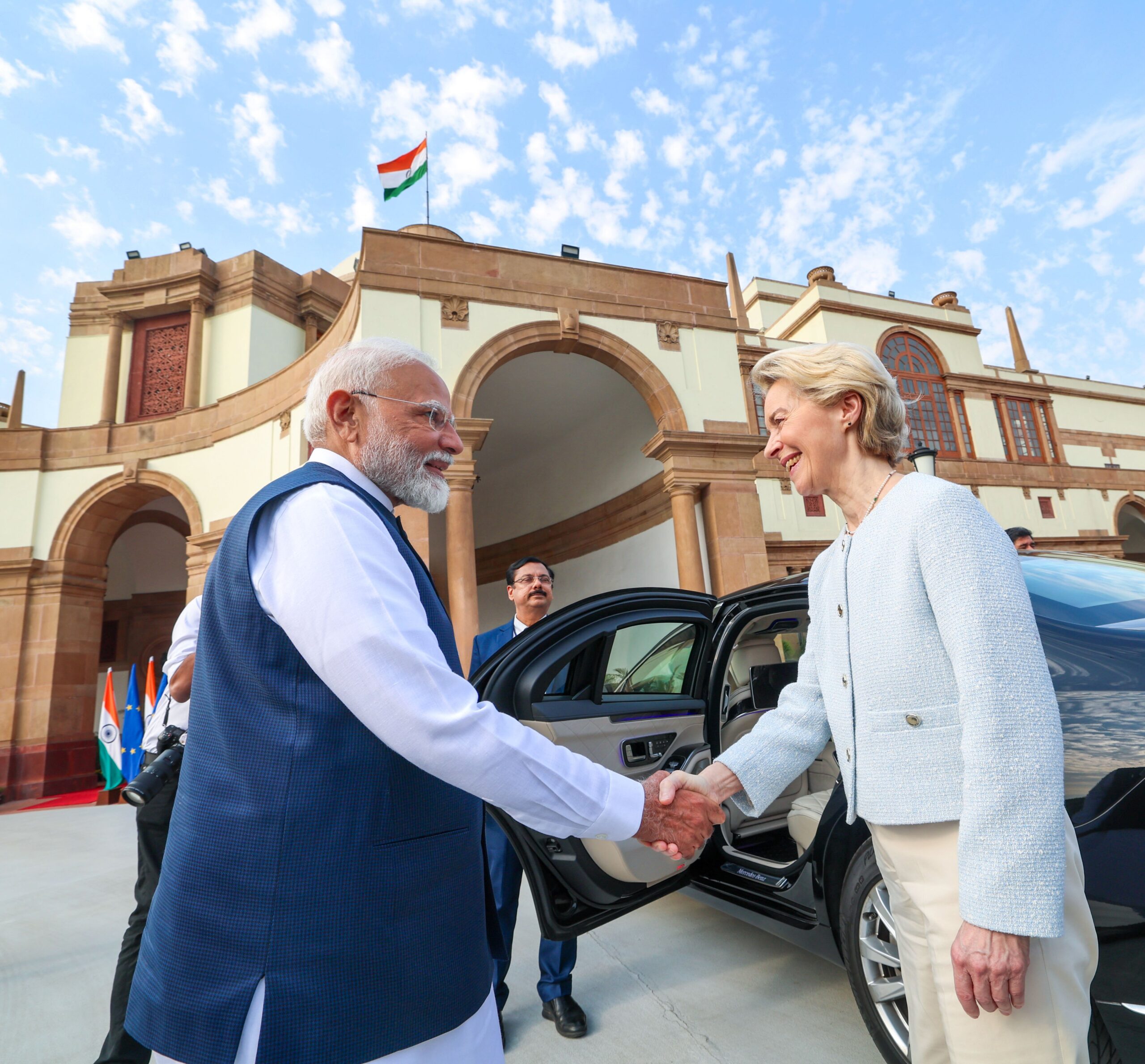
In February, Prime Minister Shri Narendra Modi and European Commission President Ursula von der Leyen agreed to conclude an ambitious India-EU free trade deal by this year.

In such pacts, two trading partners negotiate to either significantly reduce or eliminate imports duties on maximum number of goods traded between them.

After Trump, EU seeks zero tariff from India on car imports, sources say

LONDON : The European Union wants India to eliminate tariffs on car imports under a long-pending trade deal and Prime Minister Shri Narendra Modi’s government is willing to sweeten its current proposal to seal the talks, sources told Reuters.

India is open to the phased reduction of tariffs to 10% from more than 100%, two industry sources and a government official said. That is despite industry lobbying for India to retain at least a 30% tariff even if it starts reducing the levy, and also not tinker with import duties on EVs for four more years to protect domestic players.

The EU’s demands come weeks after U.S. President Donald Trump‘s administration sought a similar elimination of import duties on cars, including EVs, as part of bilateral trade talks with India, piling pressure on domestic carmakers.

Tariff cuts will be a victory for European carmakers such as Volkswagen, Mercedes-Benz and BMW, widening their access to India. It could also be a win for Elon Musk’s Tesla which will begin sales of imported EVs in India this year probably from its Berlin plant.

“EU has come back asking for a better deal and India wants to make a better offer,” said one of the industry sources.

India’s commerce ministry conveyed the EU’s demands and India’s stance to officials from the heavy industries ministry and auto industry representatives in a meeting last week, the three sources said.

The sources, who have knowledge of the talks, spoke on condition of anonymity because the negotiations are ongoing and private.

The European Commission declined to comment on specifics but shared a readout of its last round of talks with India in March.

“For many of the key areas, the EU and India have different approaches, objectives … This translates, in some cases, in different levels of ambition,” Olof Gill, commission spokesperson for trade said in a statement.

India’s commerce ministry and the Society of Indian Automobile Manufacturers (SIAM), which represents major carmakers on the world’s third-largest car market, did not respond to emails seeking comment.

India’s 4 million-unit-a-year car market is one of the most protected in the world and domestic carmakers have argued sharp tariff cuts would wipe out investment in local manufacturing by making imports cheaper.

Companies such as Tata Motors and Mahindra & Mahindra have especially lobbied against lowering import tariffs on EVs, saying it would hurt a sector in which they have invested heavily and in which they plan to pump more money.

Similar to its proposal to the U.S., India’s auto industry has proposed an immediate reduction of tariffs on a limited number of petrol cars to 70% from more than 100% and then carrying out cuts in phases to 30%. On EVs, carmakers want no tariff cuts until 2029 followed by a phased reduction on limited imports to 30%, the sources said.

While it was not immediately clear if India had already made its 10% tariff offer to the EU, analysts expect both sides to be more flexible in negotiations given the threat of a global trade war and recessionary impact of Trump’s hefty tariff increases.

India and the EU have been in trade talks for several years and in February agreed to conclude the deal by the end of the year as they look to soften the impact of tariffs.

Antonio Costa, president of the European Council, said last week on social media platform X that it was time to “decisively advance in negotiations with India”.

“If the EU is now feeling pressure to strike a deal with India we need to see how we can capitalise on that. It’s all about leverage,” said the first industry source.

Source : Reuters

India begin talks with China to resume direct flights

NEW DELHI : India and China have started the process to resume direct flight operations by agreeing to first “streamline procedures” for airline operations, multiple sources told.

There has been no direct air connectivity between India and China since early 2020 following the outbreak of the Covid-19 pandemic. The situation deteriorated after military clashes erupted between the two neighbours in the Galwan Valley of the Ladakh region.

Prior to Covid, airlines from both the sides operated flights to many destinations such as Shanghai, Guangzhou, New Delhi, Mumbai and Kolkata. Flight services have resumed between India and Hong Kong sans mainland China.

China has blocked the Panama Canal Terminals deal: BlackRock Chief says ports ‘will define the future’ 

NEW YORK : The Chairman of one of the largest global investment managers says ports are as critical to future infrastructure of the global economy as data centers and power grids. BlackRock Chairman Laurence Fink, pictured below, in an annual letter to investors said that’s why the company spent 2024 transforming itself into a leader in private markets; the better to get a jump on what it estimates will be a $68 trillion infrastructure boom. “Assets that will define the future-data centers, ports, power grids, the world’s fastest growing private companies-aren’t available to most investors,” Fink wrote.“They’re in private markets, locked behind high walls, with gates that open only for the wealthiest or largest market participants.”

New York-based BlackRock in February announced it was partnering with shipping giant MSC of Geneva to acquire most of the port terminals of CK Hutchison (0000) of Hong Kong in a $23 billion deal that could alter the balance of power in container shipping. But China blocked the sale, which includes terminals at the Panamanian ports of Cristobal and Balboa, near the Panama Canal, saying it planned a formal review. The agreement in principle covers terminals at a network of 43 ports across 23 countries, Fink said.“One in every 20 shipping containers moving around the world passes through these ports each year.”

Fink said deficit spending is choking off infrastructure funding by governments, which will have no recourse but to tap private investment. Between 2024 and 2040, global infrastructure will require investment of $68 trillion, Fink said – $2 trillion just in ports. “Meanwhile, companies won’t rely solely on banks for credit,” he wrote.“Bank lending is constrained. Instead, businesses will go to the markets. The money is already there. In fact, more capital is sitting idle today than at any point in my career. In the U.S. alone, roughly $25 trillion is parked in banks and money market funds.”

ZIM announces New Long-Term Chartering Agreements for Ten 11,500 TEU LNG Dual-Fueled Vessels

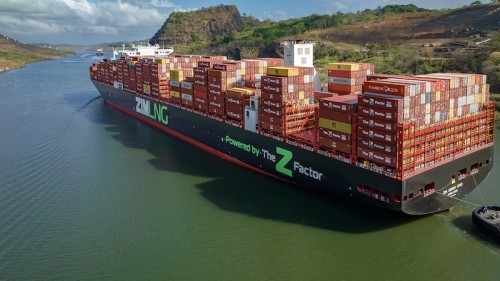
HAIFA : ZIM Integrated Shipping Services Ltd.  announced new agreements for the long-term charter of ten 11,500 TEU liquefied natural gas (LNG) dual-fuel container vessels, with total charter hire consideration of approximately $2.3 billion to serve across ZIM’s various global trades.

Seven of the vessels will be chartered to ZIM by Containers Ventures Holdings Inc., an affiliate of the TMS Group, and three will be chartered to ZIM by a shipping company that is affiliated with Kenon Holdings, Ltd., which was ZIM’s largest shareholder until the end of 2024. The vessels will be constructed at Zhoushan Changhong Shipyard in China, with delivery expected between 2027 and 2028.

Eli Glickman, ZIM President & CEO, stated: “After having received all 46 newbuilds we contracted in 2021 and 2022, which significantly improved the efficiency of our operated capacity, we are pleased to further advance our fleet strategy by securing long-term charters for these 11,500 TEU newbuild LNG dual-fuel containerships. These agreements ensure access to an important vessel segment and further strengthen our core LNG fleet, which is a critical commercial differentiator. Importantly, this versatile capacity is ideally suited for ZIM’s various global trades, enhancing our commercial agility and growth potential.”

Mr. Glickman added: “Expanding our LNG fleet supports ZIM’s decarbonization objectives and solidifies our position as an industry leader in carbon intensity reduction. Operating LNG capacity has proved commercially advantageous for ZIM and we anticipate increased demand for environmentally friendly shipping options, making access to LNG capacity even more beneficial in the future.”

Mr. Glickman concluded, “The addition of these ten LNG dual-fuel vessels will help keep our modernized fleet competitive and support profitable growth over the long term, benefiting our shareholders.”