Home Blog Page 911

Seafarers organizations in Pune to celebrate 62nd National Maritime Day

PUNE : Pune based seafarer organisations including Company of Master Mariners of India (CMMI) , Institute of Marine Engineers India ( IMEI) and Indian Maritime Foundation ( IMF) along with Mahrashtra Master Mariners Association have organised a program to mark National Maritime Day on 5th April 2025 at PYC Gymkhana . Vice Admiral Vinod Pasricha, PVSM AVSM NM, IN (RETD) has consented to be the Chief Guest for the occasion. This information was given at a press conference by Capt Anand Dixit, President Indian Maritime Foundation, Sanjeev Ogle, Chairman, Institute of Marine Engineers India- IME(I), Capt. Milind Phadnis, President CMMI, Capt. Kiran Joshi, Secretary, CMMI.

The Pune event will be centred around the theme of IMO this year which is ‘Our ocean Our Obligation Our Opportunity’.

Senior most seafarers in Pune, Capt. Vijay Barve , CH Eng. Mr. R. D. Bhave , Capt. R Hajarnavis and Capt. Unmesh Abhyankar will be felicitated at the hands of the Chief Guest for their contribution to maritime affairs.

Oceans account for more than 80% world trade It is source for jobs and food for millions of people, and home for countless marine species, and regulator of world climate. The maritime industry plays a crucial role in India’s economy. With over 7,500 km of coastline and 12 major ports, India is a significant player in global shipping and logistics.

Capt. Anand Dixit, President IMF said that the theme reflects the crucial role of oceans in the economy and shipping has the biggest role to play in the conservation of marine environment and resources.

Sanjeev Ogale, Chairman, Institute of Marine Engineers India- IME(I), Pune said that Pune has a strong connect with maritime sector . There are three associations along with four training institutes and about 5000 seafarers in Pune with 1000 of them sailing currently in cargo and passenger ships.

Capt. Sudhir Subhedar, former President & CEO of Indian Coastal conference association and founder member President of CMMI Pune said that apart from port infrastructure, investments in shipbuilding and coastal shipping, sustainability initiatives will be crucial to conserve marine resources, mitigate climate crisis and enable a sustainable future for maritime sector.

Significance of NMD

5th April 1919 marks the day when SS Loyalty (ex 1890 RMS Empress of India ) belonging to Scindia Steam Navigation Ltd, promoted by Walchand Hirachand and Narottam Morarjee sailed from Bombay to UK with passengers. This venture was undertaken in face of hostile policies of the British Government which wanted to protect the business of British shipping.

Despite all odds Scindia Steam Navigation Ltd grew into a shipping company of international repute and gave the much needed impetus to Indian shipping which continued to grow for the next 70 years .

Time has come for the second revival which needs fresh investments, boost to ship building, lower logistics cost, efficient energy consumption and sustainable shipping policies including equitable sea bed / offshore exploration of resources.

Chennai and Kamarajar Ports cross 100 million tonnes of cargo handling

CHENNAI : Chennai Port and its subsidiary Kamarajar Port achieved a milestone in 2024-25 with the total cargo throughput exceeding 100 million tonnes (mt ) for the first time. Both together handled 103.37 mt during the fiscal ending March 31, 2025. The combined income from operations was ₹2,200 crore, Sunil Paliwal, Chairperson for Chennai Port Authority (ChPA) and also the Chairman of Kamarajar Port Ltd (KPL), said.

The Chennai port handled 54.96 mt while the Kamarajar port’s throughput was 48.41 mt . The handling represented a combined year-over-year (y-o-y) increase of 6.7 per cent, which was above the 6 per cent target fixed by the Union Shipping Minister, he told newspersons on Thursday. While the Chennai port recorded a 6.5 per cent growth in cargo handling during the last fiscal, Kamarajar port’s volume was up 6.9 per cent.

For the current fiscal, Paliwal expects the combined cargo volume to grow at around 7 per cent.

For the Chennai port, out of the total cargo handling, contribution from containers was 63.4 per cent followed by liquid bulk (27.7 per cent); dry bulk (5 per cent) and break bulk (4 per cent). In contrast, dry bulk contributed 56.9 per cent of Kamarajar port’s volume followed by container (27.2 per cent); liquid bulk (11.1 per cent) and break bulk (4.8 per cent), he said.

On the financial performance, Paliwal said the ChPA reported a net surplus of ₹81 crore on operating income of ₹1,088 crore with capex at ₹147 crore. During the year, it implemented a wage settlement and consolidation of pension with the total financial implication at ₹325 crore. There was also loan pre-payment and contribution to pension fund to the tune of ₹277 crore during the fiscal, he said.

The KPL reported the highest net profit of ₹546 crore with the company’s networth reaching ₹3,040 crore, he said.

On the ₹1,424 crore multi modal logistics park constructed at Mappedu, Paliwal said the first phase is expected to be ready by February 2026. There is a strong focus on upgrading infrastructure, connectivity, capacity expansion and storage areas, he added.

The project was conceptualised 12 years ago but it did not kick off due to many hurdles, said Paliwal.

In October 2021, an MoU was signed between Tamil Nadu Industrial Development Corporation, National Highways Logistics Management Ltd and the Chennai Port Trust for the project.

Last year, the construction of India’s first Multimodal Logistics Park at Mappedu near Chennai was entrusted to Reliance Industries. It is located 52 km from the Chennai port, 80 km from Ennore Port and 87 km from Kattupalli Port. It will be a focal point of logistics in the southern region. It is estimated to cater to around 7.17 mt of cargo over 45 years.

On the development of the internal road network at Chennai port, Paliwal said in the first phase, the road widening and improvement works will be taken up between 2025 and 2028 at a cost of ₹54 crore.

India will have minimal impact of US tariffs in spite of highest tariff difference of 9%

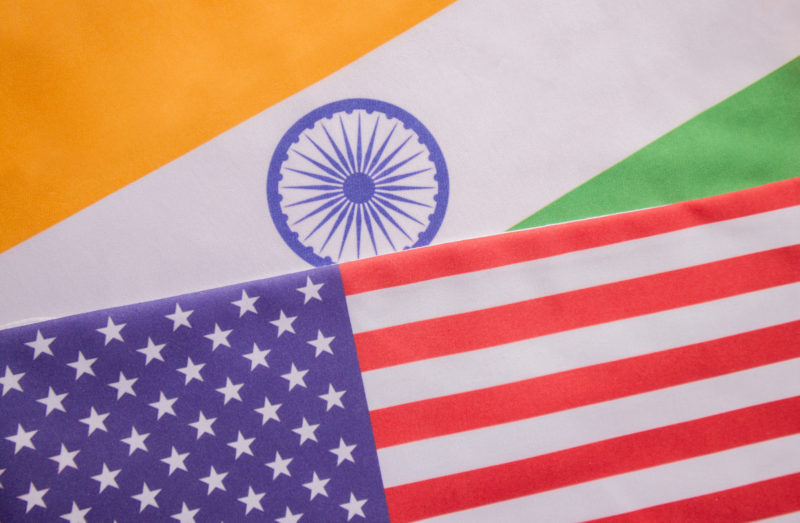
NEW DELHI : US President Donald Trump set to announce reciprocal tariffs later, a report by Motilal Oswal suggests that its impact on India will be minimal. However, it adds that despite India having the highest tariff differential of 9 per cent with the US among major nations, the reciprocal tariff impact will be only on 1.1 per cent of India’s GDP, as India’s exports to US in the six most vulnerable sectors amount to only 1.1 per cent of its GDP.

The report says “With a tariff differential of 9 per cent and assuming that the elasticity of India’s exports to the US with respect to tariffs is -0.5 (implying a 1 per cent rise in the tariff rate would reduce India’s exports to the US by 0.5 per cent), there will be a loss of USD3.6b in exports to the US, which is only 0.1 per cent of India’s GDP (-0.5*9, 4.5 per cent fall in India’s exports to the US).”

The report identified the six most vulnerable items as electrical machinery, gems and jewellery, pharma products, machinery for nuclear reactors, iron and steel, and seafood. These six items sum to USD 42.2 billion, amounting to 52 per cent of the total exports to the US and 1.1 per cent of India’s GDP. Bilateral trade between India and the US was USD 124 billion in the calendar year (CY) 2024. Exports from India to the US reached USD 81 billion, and imports from India to the US amounted to USD 44 billion, resulting in a trade surplus of USD 37 billion for India. The report says items like agriculture and dairy products, which have a higher tariff differential value, constitute only USD 0.5 billion and are vulnerable but less likely to be affected because of low value.

Items like energy commodities, metals and auto in which Indian has a trade deficit with the US, i.e India imports more than it exports, are less vulnerable to the tariffs as imposing higher tariffs on these items will hurt the US more than India. Overall, the report believes that the impact of reciprocal tariffs (assuming full product-level reciprocity) on India will be limited if we compare its impact with nations like Mexico, Canada and China.

“Notably, India faces the largest tariff gap if compared with other major nations. However, the US’ trade deficit with India (or India’s surplus with the US) is only the 10th highest among the US’s trading partners, which might cushion it from specific targeting, in contrast to Mexico, Canada, and China,” adds the report.
India’s top exported items to the US are electronics (15.6 per cent of total exports to the US), gems & jewellery (11.5 per cent), pharma products (11 per cent), machinery for nuclear reactors (8.1 per cent) and refined petroleum products (5.5 per cent).

India’s goods trade surplus with the US has seen a twofold increase in the past decade, rising from USD 9 billion, 0.9 per cent of India’s GDP in CY15 to USD 37 billion, 1.0 per cent of GDP in CY24. The surge in the trade surplus is primarily because of a heightened trade surplus in electronic items after the implementation of a production-linked incentive (PLI) scheme in 2020. Apart from electronic items, higher exports of pharma and textiles have also driven India’s trade surplus with the US over the past decade.

Source : ANI

Indian pharma heaves a sigh of relief, for now; but not medical device makers

NEW DELHI : Indian drugmakers are heaving a sigh of relief, for now, as United States President Donald Trump unveiled his “reciprocal tariff” plans. However, the relief does not extend to medical device makers.

“Pharmaceuticals have been exempted from tariffs. The decision underscores the critical role of cost-effective, life-saving generic medicines in public health, economic stability, and national security,” the Indian Pharmaceutical Alliance said on Thursday, as the full implications of the tariff plan are still being assessed.

The IPA represents close to two dozen top drugmakers from India, including Sun Pharma, Dr. Reddy’s Laboratories, Zydus, Lupin, and Cipla, which have major exports to the US.

The industry platform has been underscoring the Indian pharma industry’s contribution to the US in terms of cost savings for US patients, thanks to less expensive generic drugs. It has also emphasised the role Indian pharma companies can play in keeping supply chains sustainable. Industry estimates peg Indian pharma exports to the US at $8.7 billion in FY 2023-24.

“India and the US share a strong and growing bilateral trade relationship, with a shared vision to double trade to $500 billion under the Mission 500 initiative. Pharmaceuticals remain a cornerstone of this partnership, as India plays a vital role in global and US healthcare by ensuring a steady supply of affordable medicines,” IPA said, highlighting the need to strengthen “medicine supply chain resilience and reinforcing national security by ensuring access to affordable medicines for all.”

India is home to over 700 manufacturing plants approved by the US Food and Drug Administration (USFDA). Indian generic drugs account for over 40 per cent of all generic prescriptions in the US, translating into healthcare savings for US patients. In the run-up to the tariff announcements, top executives from Cipla, Lupin, and Piramal Pharma had indicated that they would also beef up their existing manufacturing in the US, if required.

Medical devices

However, domestic medical device makers are concerned that the 27 per cent tariff on Indian products could pose challenges for them.

“India has been a key supplier of cost-effective, high-quality medical devices to the US, primarily in low-value high volume consumables categories. However, this new tariff may possibly impact Indian medical devices exports and we have to explore windows of opportunities where USA has been seeking to diversify its supply chain dependence on any one nation,” said Rajiv Nath, with Aimed (Association of Indian Medical Device Industry) 

India’s medical device exports to the US stood at $714.38 million in 2023-24, while imports from the US to India were significantly higher at $1,519.94 million, the Association of Indian Medical Device Industry (AiMeD) said, citing data from the Export Promotion Council for Medical Devices.

“While India may seemingly gain a marginal price advantage over China (8 percent) in certain low-risk, high-volume consumables , the real impact may not be significant if our prices were higher than 15 percent and the impact has to be further studied compared to other competing nations,“ observed Himanshu Baid, Managing Director, Poly Medicure. 

The primary obstacle “remains non-tariff barriers rather than tariffs themselves. Regulatory hurdles in the US are steep, with FDA approval costs ranging from $9,280 to over $540,000, whereas US exporters face relatively minimal costs when entering India. Addressing these imbalances through bilateral collaboration is crucial,” he added. 

Nath further pointed out that the high US tariffs protected US-based manufacturers, giving the medical device industry there “an overnight boost to maximize capacity utilization and expansion for capturing a higher market share in their domestic market.”

Between tariffs, non-tariff barriers, and the Buy American policy for government procurement, the US may become “less attractive for marketing and more attractive as an investment proposition in some products,” he observed.

However, in many low-risk, low-priced, high-volume consumables and disposables—where manufacturing in the US has declined to a negligible level and operations have shifted to Mexico, Puerto Rico, Ireland, and other locations—it may take three to five years or even longer for manufacturing capacity to return to the US, he pointed out. 

AP Cabinet approves establishment ArcelorMittal Nippon Steel plant

VIJAYWADA : The Andhra Pradesh State Cabinet has approved the ArcelorMittal Nippon Steel India Limited (AMNSL) proposal to set up a plant with an investment of ₹1.35 lakh crore in two phases to produce 17.8 million tonnes of steel. It has also cleared the company’s proposal to allow it to construct a captive port.

For this purpose as requested by the company, approval has been given for the establishment of a captive port with a 2.9 km waterfront at DL Puram in Anakapalle district. Briefing media persons on the decisions taken by the Cabinet, the Minister for Housing, Information and Public Relations, Kolusu Parthasarathy, said that for the permission to this captive port, Clause Number 30.1.1 (Indian Ports Act-1908) of the Port Concession Agreement relating to Kakinada Gateway Port Limited (KGPL) has been amended.

As per this decision, in the first phase a steel plant with a production capacity of 7.3 million metric tonnes will be established with an investment of Rs 55,964 crore, the Minister said. A target has been set to begin the first phase production by January 2029, he informed. Nearly 20,000 jobs will be provided in the first phase, the Minister said, adding that similarly a target has been set to complete the second phase of the steel plant by 2033 with an investment of Rs 80,000 crore to generate 10.5 million metric tonnes.
Around 33,000 jobs will be created in the second phase, Parthasarathy informed.

For the steel plant to be established in the first phase, a captive port with a capacity of 20.5 million metric tonnes per annum will be set up by January 2029 with Rs 5,816 crore to connect this steel plant with which 1,000 employment opportunities will be crested, he stated. Similarly, the second phase captive port will be established with Rs 5,380 crore by January 2029 to interlink it with the second phase of the steel plant to be set up with a capacity of 10.5 million metric tonnes, the Minister said and stated that 5,000 jobs will be created with this.

The Chief Minister has instructed the officials to ensure that the project is completed within the stipulated time without any hurdles, Parthasarathy said. The Cabinet also gave its nod for the proposal made by the Energy Department for the ratification of the GO issued in March for Government’s guarantee for the HUDCO and AP Power Finance Corporation to obtain Rs 710 crore loan.

This apart, the Cabinet also cleared the implementation of the arbitration award issued on December 8 last year to compensate the loss of Rs 1,735.35 crore to M/s NECL and APGENCO due to the faulty policies adopted by the previous government with regard to the contract of Polavaram Hydro Electric Project, the Minister explained.

The loss of Rs 742 crore for M/s NECL and Rs 986.17 crore will be compensated, he added. The Chief Minister ordered for a detailed inquiry into the proposal made by the Water Resources Department for an additional financial assistance of Rs 44,60,15,795 for building the retaining wall of Vempadu Major of Nagarjunasagar Left Branch canal through the Chintalapudi Lift Irrigation Scheme package No IV.
This apart, the Cabinet also approved for setting up a special purpose vehicle, the ‘Jalaharathi Corporation’, by the Water Resources Department with hundred percent government management under Companies Act-2013 to implement the Polavaram-Banakacherla Link Project works for utilising the waters from Godavari Floods and other projects.

Also, the proposal for appointing necessary directors and other staff members is cleared by the Cabinet.
This project has been proposed to not only make use of all water resources available in the state but also to develop all the regions, particularly to transform Rayalaseema as the land of gems. The cost of this project is estimated to cost Rs 80,000 crore, he noted.

DP World’s London Gateway Logistics Park continues growth with Kent Foods deal

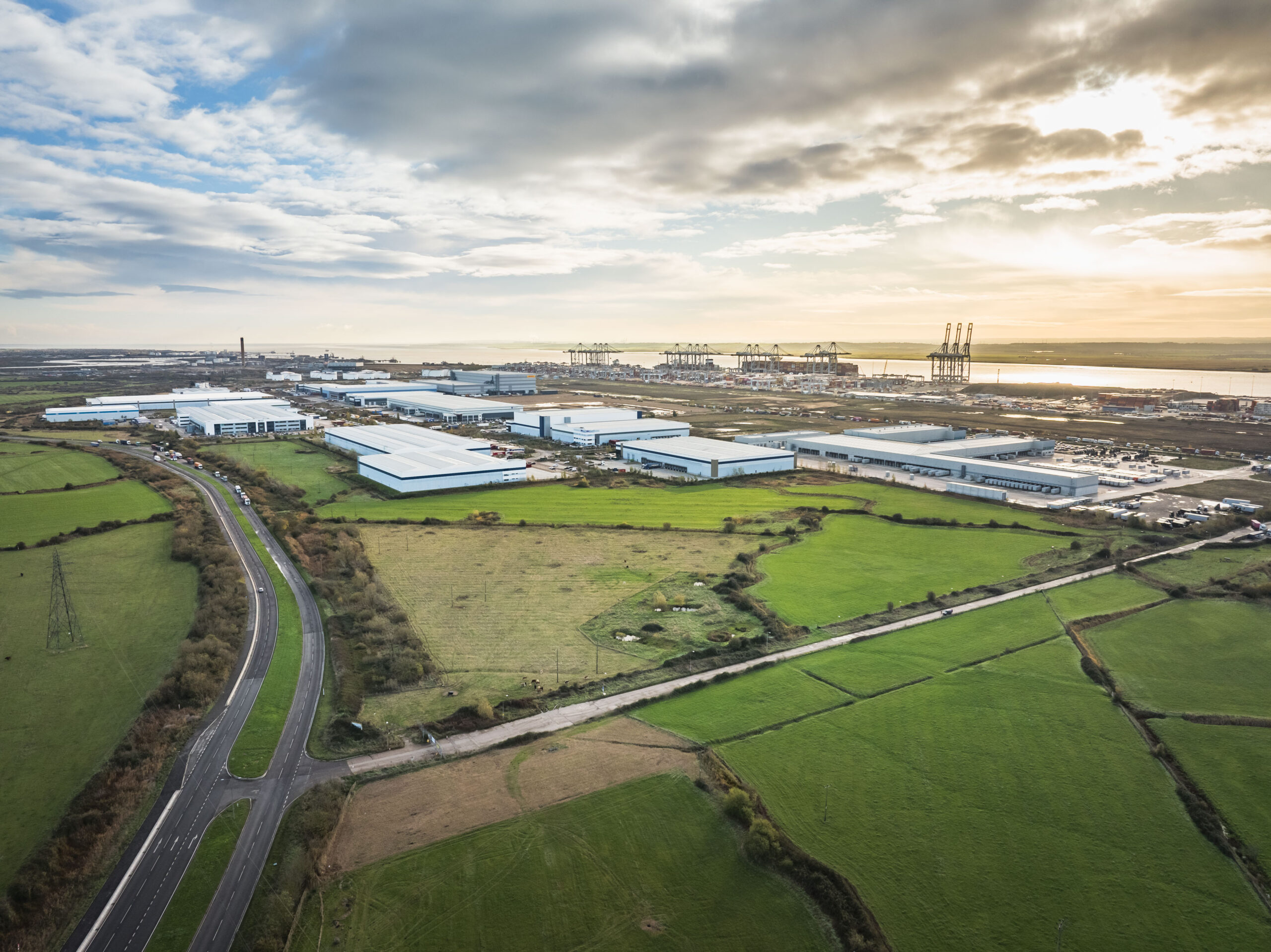
LONDON : DP World and Kent Foods, one of Europe’s leading suppliers of foodstuffs, have signed a deal in excess of £20m to establish a new storage facility at London Gateway Logistics Park. Under the 10-year lease agreement, Kent Foods – a part of The Albex Group – will occupy a 150,000 sq. ft warehouse to store food products arriving at London Gateway’s state-of-the-art container port before being distributed throughout the UK by rail and road. Kent Foods took occupation on 27th February.

Construction was completed last year, and temperature-controlled freezer units have now been installed to accommodate a wide array of goods, including chocolate, sugar and cooking oils. The warehouse has been built to the highest sustainability standards, having been awarded both a BREEAM ‘Outstanding’ and EPC ‘A’ rating. Alan Holland, Chief Executive Officer of London Gateway Logistics Park, said: “We are delighted to welcome Kent Foods as our newest customer to London Gateway Logistics Park, marking yet another key growth milestone for our operations and for DP World in the UK. Kent Foods will be able to leverage the full financial benefits of Thames Freeport and London Gateway’s rail terminal and extensive road links. We are going from strength to strength as customers continue to choose DP World and our well-connected site on the Thames Estuary as the best place to support their supply chain journeys and UK-wide commercial operations.”

Maciej Szczygiel, Managing Director for the South East Region at Albex Logistics, said: “Kent Foods are excited to take entry into their new logistics centre at London Gateway Logistics Park, which will be managed for them by fellow Albex Group member, Albex Logistics South East. The industry-leading facilities at this port-centric location will enable Kent Foods to further improve their service to UK food manufacturers by reducing port-to-production timelines for imported raw materials and speeding up the export of finished foodstuffs around the globe.”

Michael Dalglish, Albex Group Operations Director, added: “Kent Foods and Albex Logistics are fully focused on delivering innovative, sustainable, and efficient solutions for the food industry. This facility at London Gateway is yet another major contribution to this objective.” Located within Thames Freeport, a special economic zone designed to boost trade and investment, Kent Food’s new storage facility will benefit from the hub’s strategic location. The Freeport offers direct access to London and the Southeast consumer market while providing businesses with financial incentives, including employer National Insurance savings and capital allowances on investments.

Global real estate advisor Avison Young represented Kent Foods throughout the acquisition. In addition to its hubs at Southampton and London Gateway, DP World’s end-to-end solutions include logistics, forwarding and European transport capabilities, all seamlessly integrated into the company’s global network. Operating in 78 countries, DP World handles 10 per cent of global containerised trade, driving supply chain efficiency worldwide.

About DP World
DP World is reshaping the future of global trade to improve lives everywhere. Operating across six continents with a team of over 100,000 employees, we combine global infrastructure and local expertise to deliver seamless supply chain solutions.
From Ports and Terminals to Marine Services, Logistics and Technology, we leverage innovation to create better ways to trade, minimizing disruptions from the factory floor to the customer’s door.
DP World has invested more than £5bn into the UK to build a unique network of assets and services to help businesses meet their national and international end-to-end supply chain challenges. Now the UK’s leading port operator with two deep-sea terminals at London Gateway and Southampton, a flourishing contracting logistics business, a dedicated customs clearance technology provider, and a major ferry operator, the diversity and breadth of our supply chain capabilities are unmatched.

Port of Antwerp-Bruges International signs India-focused partnership with ASCELA

NEW DELHI : Port of Antwerp-Bruges International, a maritime-focused consulting subsidiary of the port, has signed a memorandum of understanding with ASCELA, aimed at expanding their cooperation in the Indian market.

Signed during the Belgian Economic Mission to India, the memorandum of understanding is aimed at enhancing the collaboration between the Belgian firm and ASCELA, focusing on the development and growth of the port and logistics sector in India. The partnership is expected to pave the way for joint projects in the areas of port management, operations, logistics efficiency, supply chain, and trade facilitation.

Port of Antwerp-Bruges International is a centre of excellence for port services, providing consultancy, advice and management solutions on port and terminal related projects. The specialist firm is a subsidiary of the Port of Antwerp-Bruges, which is Europe’s second largest port with 300 liner services and 800 destinations.

ASCELA meanwhile is a management consulting firm with a focus on logistics and supply chain solutions, including in port and maritime environments. The consulting firm has around 60 staff across offices in India and the Middle East.

“This partnership will drive collaboration on key consultancy projects in the Indian maritime sector, leveraging our global expertise and ASCELA’s local insights to enhance port operations, logistics, and supply chain efficiency,” stated Port of Antwerp-Bruges International in a communiqué. “The signing of this memorandum of understanding represents the first step in expanding our presence in India’s port sector.”

Nivesh Chaudhary, Managing Director of ASCELA, added: “This partnership with the Port of Antwerp-Bruges International is a significant step towards advancing infrastructure development, and we are optimistic about the future prospects. The logistics and port infrastructure space is rapidly evolving, and we look forward to exploring the opportunities that will arise from this association.”

Development of India’s ports sector

The ties between the two companies comes at a time of major opportunities but also challenges for India’s ports sector. With 13 major ports and over 210 non-major ports, and a handling volume of more than 1.4 billion metric tons of cargo, the sector is of strategic importance for India’s economy, accounting for roughly 70 percent of trade by value and more than 95 percent by volume across the country.

To fuel the further growth of its ports sector and keep it competitive on the international stage, India is charting a course towards robust infrastructure development with a planned $82 billion investment in port projects by 2035.

“ASCELA has long been a key player in the infrastructure space in Indian subcontinent. With the ports sector becoming increasingly critical for global trade, we are keen on driving innovation and efficiency in the industry, and contribute towards strengthened bilateral relations between Belgium and India,” Chaudhary concluded.

India gains tariff edge over rivals in US textile market : ITF

COIMBATORE : The new reciprocal tariff structure announced by the US is aimed at creating a level playing field among trade partners, said Prabhu Dhamodharan, Convenor of the Coimbatore-based Indian Texpreneurs Federation (ITF). This presents a medium to long-term opportunity to boost export volumes, especially in the textiles and apparel sector to the US, he told businessline.

The advantage could grow if trade negotiations lead to zero-duty cotton imports. Under Trump’s tariff plan, Vietnam’s textile exports will face a 46 per cent duty, Bangladesh’s 37 per cent, and China’s 54 per cent. Other key players, including Sri Lanka (44 per cent) and Cambodia (49 per cent), will also be affected. India, in contrast, will face a reciprocal tariff of 27 per cent (according to the White House, after Trump initially stated 26 per cent). This gives India a clear advantage in cost competitiveness, he said

“These duty structures are very high. This may lead to inflation and higher prices, reducing consumer demand. If the situation remains unchanged, India will benefit in the long run,” said Naren Goenka, founder and managing director, Texport Industries. 

According to an industry expert, companies such as Trident, Welspun India, Arvind, KPR Mill, Vardhman Textiles, Page Industries, Raymond, and Alok Industries stand to gain, as revenue from the US market accounts for 20-60 per cent of their earnings. 

A Sakthivel, former chairman of the Apparel Export Promotion Council (AEPC), said that Türkiye and Brazil — facing a 10 per cent tariff — could also emerge as attractive sourcing destinations for US buyers. Some apparel orders might also shift to Italy, Germany, and Spain, where tariffs stand at 20 per cent.

In the past, India, Bangladesh and Vietnam faced similar tariff structures for cotton apparel exports. However, with the recent changes, India now holds a tariff advantage over these competing nations in comparative terms, potentially boosting its competitiveness in the US market for apparel export, he said.

India is well-positioned to expand its market share in the US, driven by this tariff edge. The Ongoing trade negotiations may further enhance India’s position—particularly if India offers zero-duty import of cotton in return for sector-specific benefits in apparel exports. This move could prove to be a game changer for the industry, he said.

Some of the key factors to watch are the response of US consumers, including sentiment and consumption behaviour, will play a crucial role in shaping short-term export trends. There will be some turbulence at the retail level, which can be expected if the tariffs are implemented in full. The way each country retaliates and responds will also influence the next phase of trade dynamics, he said.

ONE launches new “Thailand Vietnam East India 2 (TE2) Service”

SINGAPORE : Ocean Network Express (ONE) is pleased to announce the launch of the new Thailand Vietnam East India 2 (TE2) Service. This service is an enhancement of the existing SVX Service, maintaining connectivity between the Straits area and East India while further strengthening direct transportation from Cat Lai and Laem Chabang to East India. 
This improvement ensures reliable and competitive transit times.

With the introduction of TE2, the transportation network between Southeast Asia and East India will be further expanded. TE2 service will commence operations on April 20, 2025, with the first departure from Cat Lai.

TE2 ONE ONE launches new “Thailand Vietnam East India 2 (TE2) Service”

Xpressbees appoints Uday R. Sharma as Chief Business Officer- B2B, 3PL, and Cross Border

PUNE : Xpressbees, a leading logistics and supply chain solutions provider, is pleased to announce the appointment of Mr. Uday R. Sharma as Chief Business Officer – B2B, 3PL, and Cross Border. Mr. Uday brings nearly 30 years of experience in helping businesses scale-up, leading organizational turnarounds, and P&L management. His expertise spans business development, key account management, and customer relationship management. 

Before joining Xpressbees, Mr. Uday held leadership positions at Allcargo Logistics Limited, Spoton Logistics Private Limited, Safexpress Private Limited, and Aramex India Private Limited. With a strong history of fostering strategic business growth, Uday has effectively led cross-functional teams across multiple industries. 

Commenting on Uday’s appointment, Mr. Amitava Saha, MD & CEO Xpressbees, said, “Uday’s vast experience and strategic vision will be key in scaling our B2B, 3PL, and Cross Border operations. We look forward to his contributions in strengthening Xpressbees’ market presence and driving the company’s next phase of growth.”

Detailing his appointment, Uday R. Sharma, said, “I am happy to take on this role with Xpressbees at such a pivotal stage of its growth. The logistics industry is evolving rapidly, and my role will be to leverage my experience to drive innovation, strengthen partnerships, and enhance customer value at Xpressbees”.

About Xpressbees:

Xpressbees is a leading end-to-end logistics solutions provider, offering a comprehensive range of services across e-commerce, B2B, 3PL, and Cross Border logistics. With a robust network and cutting-edge technology, Xpressbees is committed to delivering seamless and efficient supply chain solutions.