Home Blog Page 94

Kerala moves to strengthen Vizhinjam Logistics Ecosystem with first CFS

THIRUVANANTHAPURAM: Kerala has taken another significant step towards building an integrated, port-led logistics ecosystem with the foundation stone being laid for the Kerala State Integrated Logistics Hub, the State’s first dedicated Container Freight Station (CFS) linked to Vizhinjam International Seaport, on September 16, 2026.

The project is being implemented by Kerala State Industrial Enterprises Limited (KSIE) and is aimed at strengthening the logistics infrastructure supporting the rapidly expanding cargo operations at Vizhinjam. The facility is planned at the Travancore Spinning Mills premises in Balaramapuram, on nearly five acres of land, strategically located close to the port. Recent reports put the project investment at around ₹25 crore, with development planned in four phases.

The new CFS is expected to provide an important inland logistics interface for cargo moving through Vizhinjam International Seaport. It will support activities such as container handling, cargo examination, storage, documentation and customs-related processes, helping bring several logistics functions closer to the port and cargo owners.

Supporting Vizhinjam’s Gateway Role

Vizhinjam has been developed primarily to serve the transshipment and gateway container business, with road and planned rail connectivity forming part of its wider logistics infrastructure. The port project has a natural draft of around 18 metres, scalable to 20 metres, and is being developed with substantial container-handling capacity.

The establishment of a dedicated CFS is therefore expected to complement the port’s growing role by providing supporting infrastructure for cargo originating from and destined for Kerala’s wider industrial and commercial hinterland.

According to reports, the first phase of the CFS is targeted for completion with commercial operations expected around February 2027, subject to the required preparations and regulatory approvals. The facility is expected to initially handle approximately 2,000–2,500 TEUs per month.

Wider Benefits for Exporters and Importers

A dedicated CFS near Vizhinjam can provide an important logistics advantage for businesses by reducing the distance involved in moving containers for port-related processing. It can also support cargo that requires de-stuffing, examination, storage or consolidation, including Less-than-container-load (LCL) shipments, as the port’s EXIM operations expand.

For Kerala’s manufacturing and export sectors, the facility is expected to strengthen the connection between industrial clusters, exporters, transport operators, customs-related services, freight forwarders and global shipping networks.

The initiative could also generate opportunities across the broader logistics value chain, including warehousing, container handling, transportation, freight forwarding, documentation, customs clearance and supply-chain management.

Building a Larger Port-Linked Logistics Network

The CFS forms part of a broader effort to develop port-linked logistics infrastructure using available public-sector land around Vizhinjam. Reports indicate that another facility has been proposed at the Kerala Automobiles Limited (KAL) premises, with space earmarked primarily for an empty-container yard, creating the potential for a wider network of supporting logistics facilities around the port.

The initiative also strengthens KSIE’s role in Kerala’s logistics sector, building on its existing experience in operating container freight and air-cargo facilities.

A Step Towards a More Connected Kerala

The Kerala State Integrated Logistics Hub is expected to play a supporting role as Vizhinjam develops into an important gateway for international and domestic cargo. By bringing logistics services closer to the port, the project aims to facilitate smoother cargo movement, improve supply-chain efficiency and strengthen the link between Kerala’s businesses and international markets.

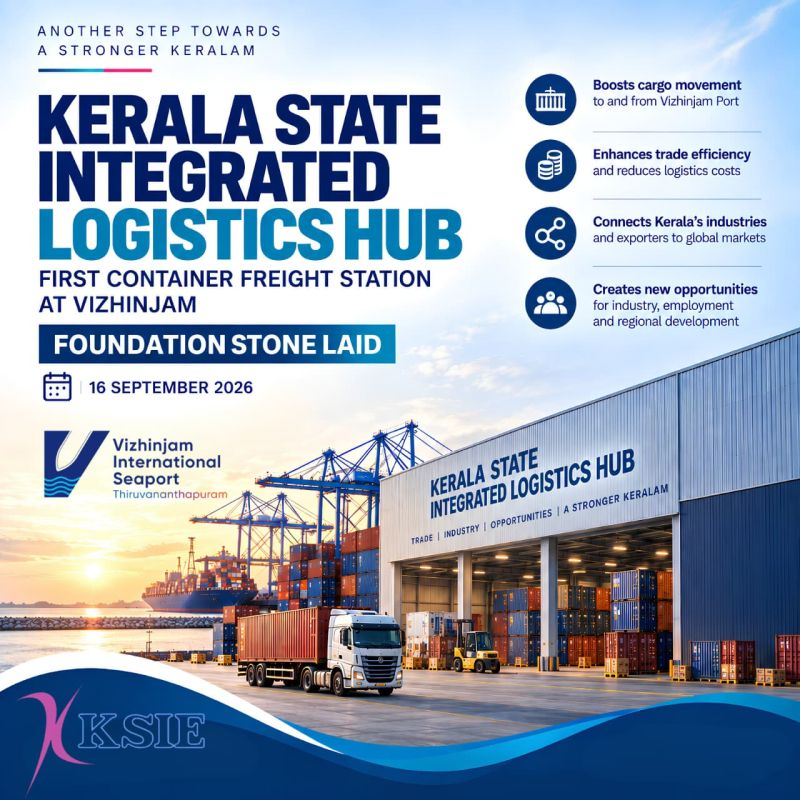
The Kerala State Integrated Logistics Hub, as highlighted in the accompanying Vizhinjam International Seaport graphic, represents a wider vision of “Trade | Industry | Opportunities”—with the project positioned as an infrastructure initiative capable of supporting cargo movement, reducing logistics costs, connecting industries and exporters to global markets, and creating employment and regional development opportunities.

The foundation stone laid on September 16 marks the beginning of another important phase in Kerala’s efforts to build a more integrated, efficient and globally connected logistics ecosystem around Vizhinjam International Seaport.

Key Takeaways
First dedicated CFS linked to Vizhinjam to strengthen port-supporting logistics infrastructure.
₹25-crore project being implemented by KSIE in four phases.
Facility spread across nearly five acres at Travancore Spinning Mills, Balaramapuram.
Initial handling capacity expected at around 2,000–2,500 TEUs per month.
Expected to support container handling, storage, examination, documentation and customs-related activities.
Designed to strengthen connections between Kerala’s industries, exporters, transport and logistics networks and global markets.
Commercial operations are targeted for early 2027, according to recent reports.
Odisha Maritime Board reviews shipbuilding, port infrastructure, cruise projects

BHUBANESWAR: The Odisha Maritime Board has called for coordinated efforts to accelerate the development of the state’s maritime economy through better utilisation of maritime resources, expansion of port infrastructure, shipbuilding, cargo movement and cruise tourism.

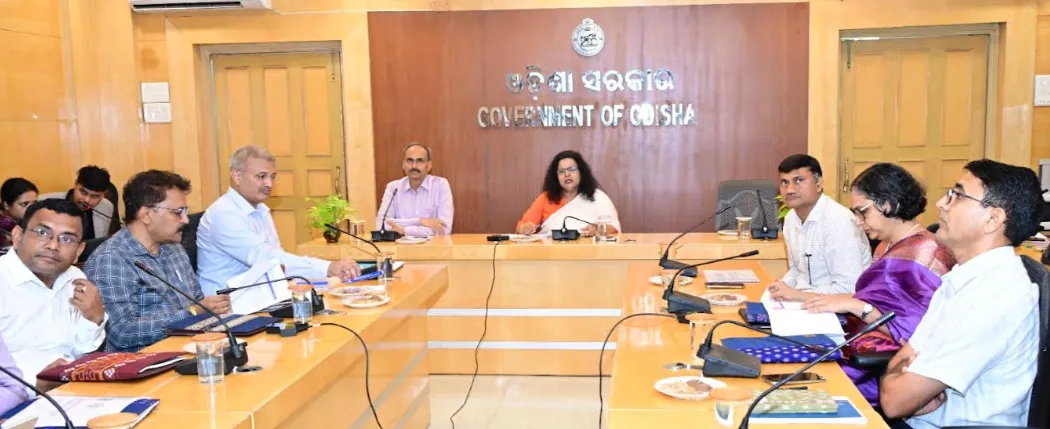
The emphasis was made during a high-level meeting of the Board chaired by Chief Secretary Smt. Anu Garg on Saturday, where the progress of key maritime projects and initiatives for the integrated growth of the sector was reviewed.

The meeting examined a range of areas, including port infrastructure expansion, inland waterway connectivity, port development and strengthening of human resources within the Board.

Odisha has been steadily developing its maritime infrastructure with the objective of increasing cargo-handling capacity, improving connectivity and encouraging greater utilisation of waterways for freight transportation. With its extensive coastline and network of rivers, the state has significant scope for expanding both coastal shipping and inland water transport.

The Board also reviewed initiatives aimed at developing ports and associated infrastructure, with particular attention to enhancing operational efficiency and establishing stronger connectivity between ports, industrial clusters and logistics networks.

Improved integration of ports and waterways is expected to facilitate the movement of bulk and industrial cargo, while providing exporters and businesses with additional and efficient logistics options.

The review is part of Odisha’s wider efforts to build a stronger and more integrated maritime ecosystem, strengthen transport infrastructure and create the capacity required to support the state’s future trade, logistics and maritime growth.

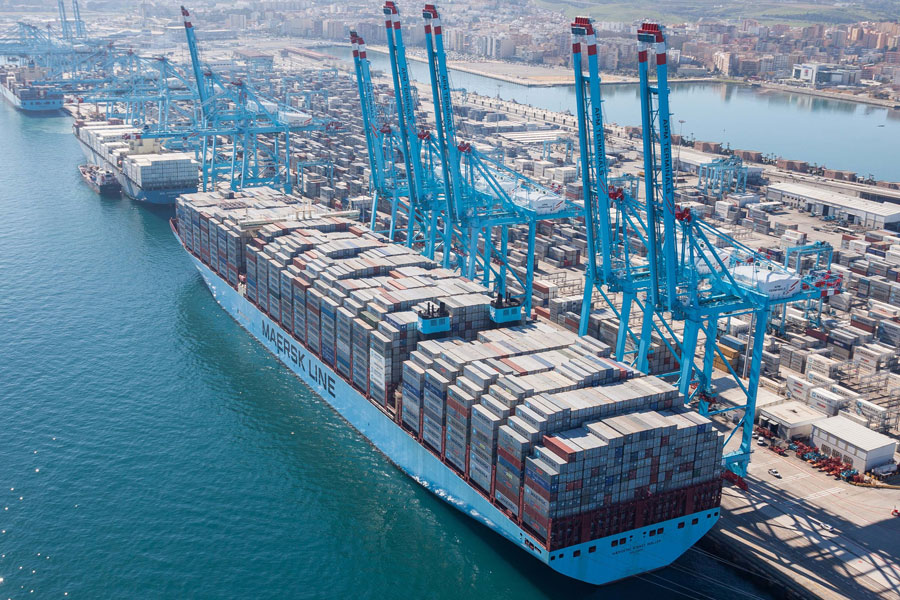
Maersk firms up massive order for 26 large LNG dual-fuel box ships

COPENHAGEN: Danish liner giant Maersk has confirmed a massive newbuilding order for large LNG-fuelled container ships, following intensive market speculation. A Maersk spokesperson said the company has ordered 26 LNG dual-fuel vessels of 18,600 TEU, with deliveries scheduled for 2029 and 2030.

While Maersk did not provide further details on the shipyard or shipyards undertaking the project, shipbroking and market sources pointed to China’s Hengli Heavy Industries as being responsible for the majority of the vessels.

Riviera reported this week that Maersk was in the final stages of concluding a major order with the Chinese shipbuilder for up to 20 vessels in the 18,000-TEU range, along with up to 12 24,000-TEU ships.

Shipbrokers noted that Maersk has not previously cooperated with Hengli.

According to Alphaliner, Maersk operates a fleet of 753 vessels totalling around 4.75M TEU, with a further 93 ships, representing 1.2M TEU, currently under construction.

The company has a market share of almost 14%.

The world’s three largest liner operators have shown an aggressive appetite for large newbuilding orders in recent months, with much of the activity focused on bigger container ships.

MSC has also recently contracted Hengli for a series of 22,000-TEU vessels, while CMA CGM has been linked to advanced discussions with Yangzijiang Shipbuilding for 12 24,000-TEU vessels.

MB Shipbrokers noted in its latest weekly report that container ship newbuilding demand has remained firm across virtually all size segments, with available slots increasingly moving towards 2030. Competition for “early positions” is expected to remain high in the coming weeks.

Potential US tariffs threaten India’s textile, apparel exports after Russia sanctions law: CITI report

NEW DELHI: Potential additional tariffs by the United States following the signing of the Lindsey O. Graham Sanctioning Russia and Iran Act of 2026 could severely impact India’s textile and apparel exports, with industry body Confederation of Indian Textile Industry (CITI) urging the government to engage with Washington urgently to protect exporters.

The US is the single-largest market for India’s textile and apparel exporters, making the sector particularly vulnerable to any additional tariffs, CITI said in a press release.

“Any additional tariffs under this Act will be very difficult to absorb for the MSME-dominated Indian textile and apparel sector already under stress due to several factors, including the continuing turmoil in West Asia. It will severely impact our ability to sell in the United States, our most significant market by a distance,” CITI Chairman Shri Ashwin Chandran said.

Shri Chandran urged the government to engage closely with the US to ensure that Indian exporters are not disadvantaged or rendered uncompetitive in the US market.

A fair, balanced and equitable bilateral trade agreement between India and the US is the urgent need of the hour, he said, noting that the two countries have been negotiating the agreement for some time.

While India’s free trade agreements are expected to open new markets for exporters, CITI said these agreements cannot substitute for the importance of the US market for the textile and apparel sector.

“The FTAs offer a lot of potential, but the gains from those are not automatic for exporters and will take time to materialise,” Shri Chandran said.

India’s overall textile and apparel exports rose 6.39 per cent in US dollar terms in August 2026 from the same period last year, with textile exports increasing 13.03 per cent while apparel exports declined 2.74 per cent.

During April-August 2026, textile exports grew 6.94 per cent, while apparel exports fell 9.10 per cent, leaving cumulative textile and apparel exports marginally lower by 0.24 per cent year-on-year.

CITI said the India-US trade relationship has potential for technology partnerships, supply-chain resilience and greater value-chain complementarities. A balanced and predictable trade framework, it said, could help strengthen bilateral commercial engagement and support the long-term competitiveness of the textile and apparel sectors in both countries.

“India-NZ FTA likely to come into force within a month,” says Trade Minister McClay

WELLINGTON: The India-New Zealand Free Trade Agreement is likely to come into force within the next month, said New Zealand Trade and Investment Minister Todd McClay, as the two countries work on exchanging official notes to begin the process of implementing the pact.

In an interview with ANI, McClay said the agreement, which has cleared the New Zealand Parliament, would provide Indian exporters with duty-free access to the New Zealand market from the first day of implementation.

“We’re very close now. It passed in our Parliament with a significant majority — 93 votes to 26,” McClay said, adding that the two sides were now working on exchanging official notes to kick-start the process for the agreement to enter into force.

“You can expect that within the next month,” he told ANI.

The New Zealand Parliament approved the implementing legislation on September 15, with the official parliamentary record showing 93 votes in favour and 29 against. Royal assent was granted on September 17.

McClay said the agreement would create “a significant opportunity” for Indian exporters, with New Zealand committing to bring tariffs on Indian goods to zero from day one, subject to the agreement’s provisions.

“I think you will see a lot more trade in chemicals and pharmaceuticals, but also in machinery,” he said.

He also pointed to services, particularly information and communications technology, as an area where bilateral trade could expand.

The minister said New Zealand also expected greater access to the Indian market for its food, machinery, services and investment, describing the pact as a “win-win” for both economies.

“India and New Zealand have now made a commitment, and the two governments have said, ‘We trust each other. We will honour these commitments,” McClay said.

The FTA was signed in New Delhi on April 27, 2026, after negotiations between the two countries concluded in nine months. India has secured duty-free access for 100 per cent of its exports to New Zealand under the agreement.

On bilateral trade, McClay said Prime Minister Christopher Luxon and Prime Minister Narendra Modi had set an ambitious target of doubling two-way trade by 2030.

Bilateral trade currently stands at around NZ$4 billion, he said, adding that he believed the two countries could “surpass” the target under the new agreement.

New Zealand’s Ministry of Foreign Affairs and Trade has put the 2030 ambition at NZ$7 billion in two-way trade.

McClay also said the FTA could boost movement of people between the two countries, including students, professionals, tourists and business travellers.

He said New Zealand expected direct flights between India and New Zealand within about a year, which he believed would further strengthen people-to-people ties.

On what finally made the long-pending agreement possible, McClay attributed it to growing political and personal trust between the two sides.

“Fundamentally, it comes down to the friendship that has been formed,” he said, referring to the relationship between Modi and Luxon as well as his own ties with Commerce and Industry Minister Piyush Goyal.

“We decided we wanted to do the highest-quality agreement as quickly as we could… To be able to achieve that in nine months shows just how much trust has developed between our two countries,” McClay said.

Against the backdrop of rising tariffs and uncertainty in global trade, McClay said the India-New Zealand agreement demonstrated the value of predictable trade rules.

“It creates absolute certainty for our businesses, and it sends a signal that two countries like India and New Zealand respect the rules and know that trade rules are important,” he said.

He added that the agreement would create jobs and opportunities in both countries and could serve as an example for other economies.

Source: ANI

Kollam Port set to become satellite facility for Vizhinjam International Seaport, with plans of Cruise Services too

KOLLAM: Kerala is preparing to develop Kollam Port as a satellite facility to Vizhinjam International Seaport. The plan places Kollam among the state’s key port development priorities, alongside Vizhinjam and 18 feeder ports.

The proposed development comes as Kollam Port continues to face infrastructure and operational constraints. Dredging has not been carried out for a long period, limiting the port’s ability to handle vessels.

Minister Bindu Krishna said on Saturday (19 September) that a fresh survey will assess the existing depth, with at least eight metres required for vessels to berth. Dredging will be taken up based on the survey findings.

The state is preparing a detailed project report to determine a development model suited to Kollam’s requirements and potential.

The approach draws on Kerala’s experience with the public-private partnership structure used at Vizhinjam, with similar models also being considered for other non-major ports such as Beypore and Azheekal.

The proposed plans extend beyond cargo infrastructure. A floating dry dock and tourist cruise services are among the projects under consideration, while authorities are also looking to resolve operational issues such as the absence of a dedicated Port Health Officer during shipping activity.

Non-functional high-mast lights and security cameras, along with reports of thefts from fishing boats, have also emerged as immediate issues.

The Centre has also sanctioned Rs 7.24 crore towards a multi-purpose berth and wharf at Kollam under the Sagarmala Programme. The project, with a total estimated cost of Rs 15.15 crore, includes a 101-metre-long and 21-metre-wide wharf along with associated facilities.

The development forms part of Kerala’s broader Rs 400 crore Mission Samudra initiative to strengthen minor ports and position the state as a port-led economy.

Indian Railways clears Rs 133-cr four-lane road over bridge to replace level crossing in Gujarat

NEW DELHI: Road and rail movement on Western Railway’s Udhna-Ukai Songadh section in Gujarat is set for an infrastructure upgrade, with a four-lane Road Over Bridge (ROB) planned to replace an existing level crossing.

The Ministry of Railways announced on its official X account on September 19 that Indian Railways has sanctioned the construction of the four-lane ROB at a cost of around Rs 133 crore. The ministry also highlighted the project’s aim on X, as “Smoother Traffic, Safer Rail Operations”.

As per the official press release issued by the Ministry of Railways, the ROB will replace Level Crossing No.53 at km 62/2-4 on the Udhna-Ukai Songadh section. The total approved cost of the project is Rs 133.2295 crore.

What will change at Level Crossing No.53?
The four-lane ROB will offer a grade-separated crossing, separating road traffic from railway movement at the location. Explaining the expected impact, the Railway Ministry said in its PIB release that construction will “facilitate smoother movement of road traffic”. Thus, it will reduce interference with railway operations.

As per the ministry, the grade-separated infrastructure will also support smoother train operations and result in safer and more efficient railway movement on the Udhna-Ukai Songadh section.

Bridge portion to use Open Web Girder
The railway bridge portion of the ROB will consist of an Open Web Girder (OWG) and is estimated to cost Rs 91.60 crore. Another notable feature is the alignment of the crossing. The location has a 62% skew (sharp angle to the railway line), which the railway said significantly raises the complexity of the project’s design and construction.

The viaduct portion will have a total length of 311.58 metres and is estimated to cost Rs 19.98 crore.

Railway approach to extend 524.32 metres
The Railway Approach (RE) portion will extend for 524.32 metres, with an estimated cost of Rs 10.25 crore, as per the official statement. The Rs 133.2295-crore project will be done on a cost-sharing basis between Indian Railways and state government.

Indian Railways will be providing Rs 66.6147 crore, whereas the state government will need to contribute Rs 66.6148 crore.

What does the project mean for rail operations?
Although the project is related to replacing a road level crossing with an ROB, the Railway Ministry has also underlined its implications for train operations.

As per PIB, reducing interference between road and railway traffic is likely to support smoother railway movement. The ministry stated the project will benefit passengers through enhanced operational efficiency and reliability on the Udhna-Ukai Songadh section.

Railways’ wider infrastructure push
Separately, the Cabinet Committee on Economic Affairs on September 9 sanctioned three railway multitracking projects worth Rs 10,783 crore across five states. The projects are likely to add around 656 km to the Indian Railways network and cover 14 districts. They include Kharagpur-Jharsuguda (Bagdehi) fourth line, Bilaspur (Uslapur)-Pendra Road third line and Katni-Pendra Road fourth line.

Indian Railways approves Rs 990-crore projects in Maharashtra to boost train operations

NEW DELHI : Rail projects in Maharashtra: Indian Railways has approved two infrastructure projects worth Rs 990 crore in Maharashtra. The projects include doubling of an existing railway section and construction of a new rail line. These projects are aimed at increasing rail capacity and improving passenger and freight train operations.

Rs 497 crore Chouk-Karjat doubling project
The Railways has approved the 10.86-km-long doubling of the Chouk-Karjat section of Central Railway at a cost of Rs 497 crore. The section is part of the Panvel-Chouk-Karjat route and currently includes a single-line stretch.

The doubling project will add capacity and help improve the movement of passenger and freight trains. After completion, the project is expected to facilitate five additional passenger trains in each direction every day. It is also expected to support an additional 18.35 million tonnes of freight traffic per year and reduce detention of freight trains.

Rs 493 crore new rail line
The second project involves a 38.21-km new railway line between Mukutban (Adilabad) and Gadchandur at a cost of Rs 493 crore. The line will provide a shorter rail route and improve connectivity to industrial and mining areas in Yavatmal and Chandrapur districts. It is also expected to provide an alternative route to help decongest the existing Wardha-Manikgarh section.

According to the project details, the new line is expected to support two MEMU trains in each direction per day after commissioning. The project is also expected to handle around 6.08 million tonnes of freight traffic annually, including coal, cement, iron and steel, fertilisers and foodgrains.

What the projects mean for train operations
Together, the two projects will add railway capacity in different parts of Maharashtra. The Chouk-Karjat doubling will expand capacity on an existing route, while the Mukutban-Gadchandur line will create an additional rail corridor. Both these projects are expected to support smoother passenger and freight movement and improve the overall utilisation of the railway network.

Iran rules out reopening Strait of Hormuz, returning to talks until US meets Tehran’s conditions

TEHRAN: Iran has ruled out reopening the Strait of Hormuz or returning to the previous framework of negotiations with the United States until Washington meets Tehran’s conditions, Iranian Parliament Speaker Mohammad Bagher Ghalibaf said, as tensions between the two countries continue to escalate.

According to Al Jazeera, Ghalibaf said Iran had conveyed its demands to the United States through intermediaries and would not reconsider its position until Tehran’s conditions were fulfilled.

“Our messages and conditions have been conveyed explicitly to the other side through intermediaries… And until these conditions are met, the inalienable rights of the Iranian nation are recognised, and the Americans fulfil their commitments, there will be no possibility of a return to the previous negotiation framework or to reopen the Strait of Hormuz,” Ghalibaf said.

The Strait of Hormuz has emerged as a major flashpoint in the escalating US-Iran confrontation. The strategic waterway is a crucial route for global energy shipments, and restrictions on maritime traffic have raised concerns over further disruption to international trade and oil supplies.

Ghalibaf’s remarks came after Iran’s central military command warned that any renewed US military action against Tehran would trigger attacks against American bases and interests across the region.

The Khatam al-Anbiya Central Headquarters said in a statement carried by Iran’s state-run IRNA that any US military action would be met with “continuous, effective and painful” attacks.

“Should the United States make any mistake against the Islamic Republic of Iran, all its bases and interests in the region will be targeted in continuous, effective and painful attacks without any limitation or consideration,” the statement said.

The Iranian military command also warned regional countries against supporting any US military operation against Tehran, saying countries that assist Washington would be regarded as participants in the action.

Meanwhile, US Central Command said its forces had redirected 109 commercial vessels as part of efforts to enforce Washington’s naval blockade on Iran.

“A U.S. Sailor stands watch aboard USS John Paul Jones (DDG 53). As of Sept. 20, CENTCOM forces have redirected 109 commercial vessels to ensure total compliance,” CENTCOM said in a post on X.

The US military resumed enforcement of the blockade against maritime traffic entering and leaving Iranian ports on July 14.

US President Donald Trump, meanwhile, warned Tehran of significant consequences if Iran refused to alter its behaviour, while also indicating that he could be open to talks with Iranian President Masoud Pezeshkian during the UN General Assembly in New York.

Iranian security chief Mohsen Rezaei had earlier said Tehran had conveyed its conditions for ending the conflict through Qatari mediation, including an end to hostilities on all fronts, the release of frozen Iranian funds and an end to the naval blockade.

The latest developments come as world leaders gather in New York for the UN General Assembly, where the escalating US-Iran confrontation and wider West Asia tensions are expected to remain key issues of international concern.

Source: ANI

US issues Iran travel warning, urges citizens to leave country amid rising West Asia tensions

WASHINGTON D.C.: The United States has issued a fresh travel warning for Iran, urging American citizens not to travel to the country “for any reason” and asking those already there to leave immediately amid rising tensions and the possibility of further escalation across West Asia.

The US Virtual Embassy in Iran, in a security alert, said the regional security environment remained complex and warned of potential flight cancellations, airspace closures and other travel disruptions.

“Do not travel to Iran for any reason. U.S. citizens should leave Iran now,” the alert said.

The US Mission urged Americans currently in the region to exercise heightened vigilance and closely monitor developments affecting airports, airlines and border crossings.

It also warned that procedures at Iran’s land borders could change with little notice and advised travellers to check the entry requirements of countries they may seek to enter.

The alert comes amid an escalating confrontation involving the United States and Iran, with Washington maintaining military and maritime pressure on Tehran and Iranian officials warning of retaliation against US interests in the region.

The US also cited the activities of Iranian-supported Houthi forces, which have carried out attacks against Saudi Arabia, including civilian airports.

“Iranian-supported Houthis have engaged in hostilities against Saudi Arabia, including civilian airports. This military conflict has the potential to escalate rapidly,” the alert said.

The United States further warned that its diplomatic facilities, including locations outside the Middle East, have previously been targeted and that Iran or groups supportive of Tehran could target US interests, businesses and institutions overseas.

American citizens were advised to enrol in the Department of State’s Smart Traveler Enrollment Program (STEP) to receive security updates and facilitate contact with US diplomatic authorities during emergencies.

The alert also advised citizens to avoid demonstrations, large gatherings and areas with heavy police presence, while maintaining a low profile at locations publicly associated with the United States.

In case of an aerial attack, Americans were instructed to stay away from windows and glass doors, avoid fallen debris and monitor official communications.

The latest warning follows a separate US security alert for Americans and US government personnel in Saudi Arabia. The US Mission in Saudi Arabia recently required government employees to obtain special authorisation for official and personal travel to Taif and Yanbu amid heightened security concerns following Houthi attacks.

Saudi authorities had issued an emergency warning over a “hostile aerial threat” after a ballistic missile was launched towards Riyadh. Saudi-led coalition forces said the missile was intercepted and also reported attempted attacks targeting civilian populations and infrastructure in Bish, Taif, Farasan and Yanbu.

Qatar has condemned the Houthi attacks and expressed solidarity with Saudi Arabia, describing the strikes as a violation of the kingdom’s sovereignty and international law.

The US State Department has separately urged Americans travelling to or through West Asia to remain vigilant as regional tensions raise the risk of sudden flight disruptions, airspace closures and attacks targeting US interests. (ANI)