Home Blog Page 100

APEDA signs MoU with Gulfood Organiser to strengthen global food trade opportunities

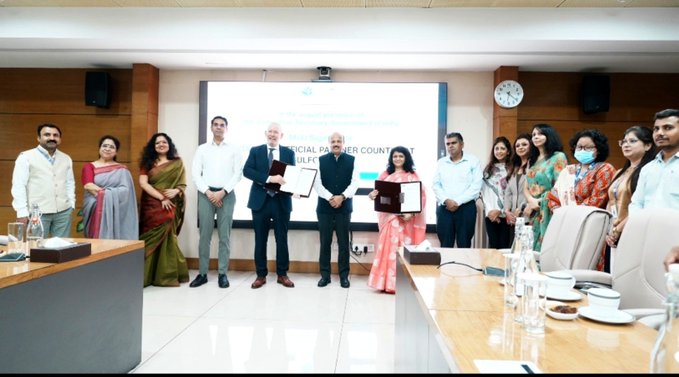
NEW DELHI : India’s participation at Gulfood 2027 received a significant boost with the signing of a Memorandum of Understanding (MoU) between the Agricultural and Processed Food Products Export Development Authority (APEDA) and InD Events Dubai at Vanijya Bhawan, New Delhi, in the presence of Commerce Secretary, Shri Rajesh Agrawal. India will return as the Official Partner Country for Gulfood 2027, marking the second consecutive year of the partnership and building on the visibility and business momentum generated through India’s participation at Gulfood 2026.
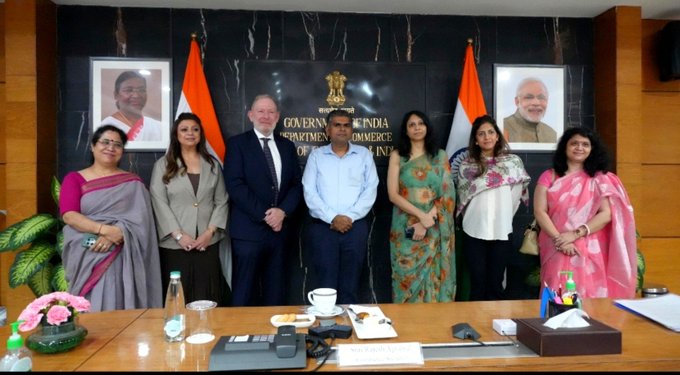
Gulfood 2027 apeda APEDA signs MoU with Gulfood Organiser to strengthen global food trade opportunities

Shri Rajesh Agrawal said that India’s continued status as the Official Partner Country at Gulfood reflects the growing strength and global recognition of the country’s agri-food sector. He said the partnership will provide Indian exporters with an expanded platform to connect with international buyers, strengthen market access and deepen India-UAE trade engagement under CEPA.

Vice President – Exhibitions Department and Growth for Food & Hospitality, InD, Mr. Mark Napier said that India’s strong and diverse food ecosystem, combined with its growing export capabilities, makes its participation an important part of the global food trade platform. He said the organisers look forward to building on the success of 2026 and facilitating deeper connections between Indian exporters and buyers from across the world.

The MoU was signed by Secretary, APEDA, Dr. Saswati Bose and Vice President – Exhibitions Department and Growth for Food & Hospitality, InD, Mr. Mark Napier.

The event was attended by Additional Secretary, Department of Commerce, Government of India, Shri Nitin Kumar Yadav; Economic Advisor, Department of Commerce, Government of India, Smt. Priya P Nair; Chairman, APEDA, Shri Abhishek Dev; Director, Department of Commerce, Smt. Monica Gaur; AVP – Commercial, Exhibitions Department, InD, Ms. Salima; Managing Director, Comnet Exhibitions, Ms. Chandrika Behl; and other senior officers from the Ministry and APEDA. The signing marks an important step towards strengthening India’s presence at Gulfood 2027 and providing greater global visibility to India’s agricultural and processed food products.

The collaboration is expected to enhance international visibility and export opportunities for Indian exporters by providing a stronger platform to showcase India’s diverse agricultural and processed food products to global buyers. Gulfood 2027, scheduled from 15-19 March 2027 in the UAE, is one of the world’s leading food and beverage trade exhibitions, offering a major platform for international business engagement and market exploration.

Building on the momentum of the previous edition, India’s continuation as the Official Partner Country will further strengthen its positioning as a reliable and diversified supplier of agricultural and processed food products. The partnership will also support deeper India-UAE trade engagement under the Comprehensive Economic Partnership Agreement (CEPA), while leveraging Dubai’s strategic position as a gateway to the GCC, wider Middle East and African markets.

India’s participation will focus on showcasing premium, branded, innovative and value-added food products alongside its established commodity strengths under a unified national platform bringing together exporters, FPOs, MSMEs, startups, commodity boards and government institutions. Curated B2B meetings, product showcases, conferences and industry engagements will facilitate connections with international buyers and support new business partnerships and export opportunities.

A key focus will be on widening participation from MSMEs, FPOs, startups and women- and SC/ST-led exporters from across India, enabling emerging businesses and producers to gain greater international visibility and connect with global markets.

The partnership will further strengthen India-UAE trade engagement under CEPA and reinforce the region’s role as a key gateway for Indian food products to the GCC, wider Middle East and African markets.
Western Carriers opens general cargo terminal at Kolkata Dock System

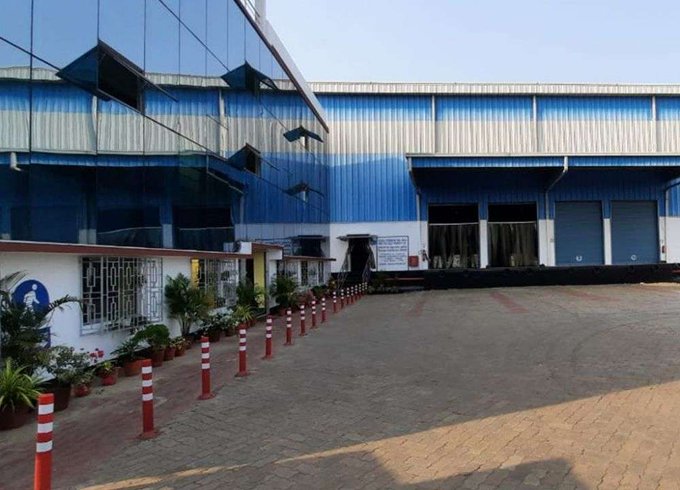
KOLKATA : Western Carriers (India) Limited (WCIL), a multimodal and rail-focused 4PL logistics company, has inaugurated its General Cargo Terminal at the GCD Yard of the Kolkata Dock System under the Syama Prasad Mookerjee Port Authority (SMPA). The new terminal marks Western Carriers’ first operational infrastructure base on India’s east coast and strengthens the company’s presence across the country’s East-West freight corridor. The facility has been developed and will be operated by WCIL under a 15-year agreement with SMPA.

The inauguration ceremony was attended by Shri Rathendra Raman, Chairperson of the Syama Prasad Mookerjee Port Authority. The Kolkata terminal complements WCIL’s existing 42-acre Multimodal Cargo Terminal at Devaliya in Gujarat, expanding the company’s infrastructure presence across key eastern and western trade corridors.

Located within the Kolkata Dock System, the terminal is connected to the Eastern Railway network through the Sealdah and Budge Budge sections. It also benefits from Kolkata’s road, rail and inland-waterway network, enabling the company to support cargo movement through the port across domestic and EXIM segments.

The facility is designed to handle dry bulk, break-bulk and different categories of containers, including 20-foot, 40-foot and specialised containers. Equipment and manpower deployment has been completed, with Phase I becoming operational from the launch.

WCIL expects to begin Phase II development within the next 90 days. The next phase will focus on increasing throughput capacity, improving operational efficiency and expanding service offerings. The company also plans further civil development at the terminal with an initial estimated investment of approximately ₹13.68 crore, based on estimates provided by the Port Authority and subject to revision as the project progresses. The Kolkata facility is expected to increase WCIL’s rail modal share in freight movement through the port while providing customers with greater flexibility in cargo handling and improved integration between road, rail and port-based logistics.

Rajendra Sethia, Chairman and Managing Director of Western Carriers (India) Limited, said, “The inauguration of our General Cargo Terminal at the Kolkata Dock System is an important step in our expansion into Eastern India. Together with our facility in Gujarat, the Kolkata terminal strengthens our rail-linked capabilities across the East-West corridor and provides a platform to support growing cargo volumes and integrated logistics services.” He added that the company will focus on building capacity and improving operations while supporting a more connected logistics ecosystem in Eastern India.

Founded in 1972 as a rail-focused logistics venture, Western Carriers provides integrated 3PL and 4PL solutions combining road, rail, water and air transport with value-added supply chain services. The Kolkata terminal supports the company’s plans to expand its multimodal infrastructure network and strengthen its end-to-end logistics offerings

DP World says Strait of Hormuz ‘will reopen’, stays flexible as it keeps cargo moving

DUBAI: DP World is confident that the Strait of Hormuz will reopen eventually, but in the meantime the shipping and logistics giant is leaning on its operational flexibility to keep cargoes moving, its global head of Economic Zones said on Wednesday.

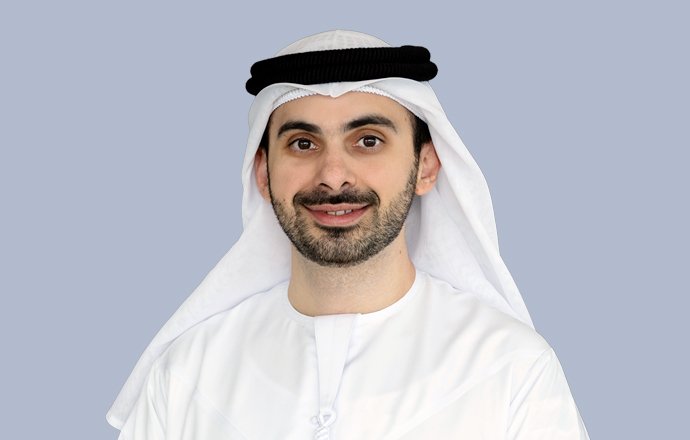
“The Strait will reopen,” Abdulla Al Hashemi, Global Chief Operating Officer, Parks & Economic Zones at DP World said at a closed-door briefing at the Arab Media Summit in Dubai. “When, I don’t know. In what shape or format, I don’t know.”

Hormuz leads into the Arabian Gulf, creating a “natural water path that leads cargo to where it’s supposed to be,” Al Hashemi said.

“There is a population that is in excess of 100 million people, to the best of my estimates, that live up the Strait,” Al Hashemi said. “The Strait has to open for things to go back to normal. We are right now in a much more resilient position here in the UAE, given the geography that we enjoy.”

Last month, DP World reported that revenue rose 13.1 percent in the first half of 2026, compared with the year-ago period, reaching $12.7 billion.

Flexibility lets DP World ‘mitigate the situation’

Excluding Jebel Ali, where vessel traffic has taken a sharp downward turn since conflict flared in Hormuz, DP World handled 6.5 percent more containers than it did in the same period last year.

“We are blessed at DP World because we have a very diverse profile of assets that are spread out across the globe,” he said. “And we have been able to effectively manage our assets around the globe to mitigate the situation.”

DP World has so far this year moved more than 500,000 containers of cargo overland from the country’s east coast to the UAE’s Gulf coast, which is home to the country’s biggest cities including Dubai and Abu Dhabi.

The company operates economic zones in places like Fujairah, which unlike its flagship hub at Jebel Ali is located on the Gulf of Oman on the UAE’s east coast.

“Economic zones are extremely crucial to the ecosystem of DP World,” Al Hashemi said. “We’re not just a port operator. We’re [also] an economic zone, a developer and a manager. We are a maritime company, and we are a logistics company as well.”

DP World is developing two new terminals in Fujairah. Group Chairman Essa Kazim said last month that the new terminals will give cargo owners more flexibility and reinforce the UAE’s position as a critical trade and logistics hub.

Pakistan Warship returns with severe damage after collision with Indian Warship in Arabian Sea

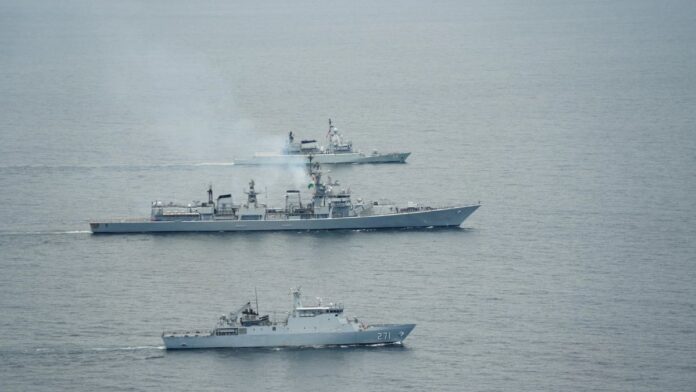
OMAN: Pakistan Navy’s PNS Hunain has returned to harbour after sustaining severe damage following a collision with an Indian Navy warship in the North Arabian Sea, in an incident that has now triggered a formal diplomatic protest from New Delhi.

The Pakistani vessel came dangerously close to an Indian frontline warship on the evening of September 15 while the Indian vessel was on a routine surveillance mission. The Pakistani ship approached at high speed and manoeuvred in an unsafe and unprofessional manner before the two vessels collided. The Pakistani vessel was identified as PNS Hunain, a Yarmook-class corvette.

The incident took place in international waters, around 220 kilometres east of Oman, according to reports citing defence sources.

PNS Hunain subsequently headed back to harbour after suffering severe damage. On the other hand, India’s Ministry of External Affairs has officially said that the incident did not cause any major damage to India’s vessel.

The differing details surrounding the extent of the damage have added to the questions over the circumstances that led to the confrontation between the two naval vessels.

Pakistan naval vessel allegedly approached at high speed

According to details released by India’s Ministry of External Affairs (MEA), an Indian Navy warship was conducting a routine surveillance mission when a Pakistan Navy vessel approached it at high speed. New Delhi described the Pakistani vessel’s movements as “unacceptable and unprofessional”, saying the close-range manoeuvres resulted in a minor collision. The two vessels were later steered away from each other.

The MEA said the incident occurred in international waters, outside the territorial waters of both India and Pakistan. It did not identify either of the ships involved or provide detailed information about the exact sequence of events leading to the collision.

However, sources cited by ANI identified the Pakistani vessel as PNS Hunain, an offshore patrol vessel belonging to the Yarmook class.

WION’s report claimed that the Pakistani naval vessel returned to harbour with severe damage following the incident. The Indian government, meanwhile, has maintained that the collision did not result in any major damage. The precise extent of the damage to either vessel has not been independently established in the information publicly released by the MEA.

India summons Pakistan diplomat over naval conduct

Following the incident, India summoned Pakistan’s Charge d’Affaires Saad Ahmad Warraich and lodged a strong protest over the conduct of the Pakistani naval unit.

The MEA said the actions of the Pakistani vessel were in direct contravention of Article 10 of the 1991 Agreement between India and Pakistan on Advance Notice on Military Exercises, Manoeuvres and Troops Movements.

New Delhi instructed Warraich to convey to the relevant Pakistani authorities that military units must exercise due care and comply with bilateral agreements intended to prevent accidents and maintain operational safety.

India also said its Charge d’Affaires in Islamabad had been directed to raise a similar protest with Pakistan’s Ministry of Foreign Affairs.

The diplomatic response reflects India’s objection to the alleged close-range manoeuvres by the Pakistani vessel. However, the MEA has not publicly released additional operational details, including the distance between the ships immediately before the collision or whether any warning signals were issued.

What does the 1991 India-Pakistan agreement say?

Article 10 of the 1991 agreement requires Indian and Pakistani naval ships and submarines operating in international waters to maintain a minimum distance of three nautical miles from each other.

The provision is intended to reduce the risk of accidents and prevent potentially dangerous encounters between military vessels belonging to the two countries.

The agreement has previously been cited in disputes involving the Indian and Pakistani navies. In 2011, India protested what it described as risky manoeuvres by the Pakistan Navy vessel PNS Babur involving the Indian Navy’s INS Godavari. New Delhi also referred to Article 10 during that episode.

The latest collision has therefore brought renewed attention to the practical enforcement of maritime safety commitments between the two countries, particularly when their naval units operate in proximity in international waters.

Incident adds to India-Pakistan military tensions

The collision comes against the backdrop of heightened tensions between India and Pakistan following the military confrontation in May 2025 and continuing disputes over security, terrorism and military activity.

Although the latest incident has not been described by India as a deliberate attack, New Delhi’s decision to summon Pakistan’s diplomatic representative indicates the seriousness with which it views the alleged conduct of the Pakistani naval vessel.

The episode also highlights the risks associated with close encounters between military ships in strategically important waters. The North Arabian Sea is a key maritime zone linking the Indian Ocean with the Gulf region, and naval activity in the area has broader implications for surveillance, shipping security and regional military operations.

Source : Moneycontrol

Achilles launches Action Plans to drive supplier improvement and strengthen supply chain resilience

MUMBAI: Achilles, a global leader in supply chain risk and performance management, Wednesday announced the launch of Achilles Action Plans, a new module designed to help procurement and supply chain teams turn verified supplier findings into targeted, trackable improvement. 

Once a weakness or a potential risk has been identified, buying organisations need a clear way to decide what should change, communicate the requirement to the supplier and maintain visibility of the response through to completion.

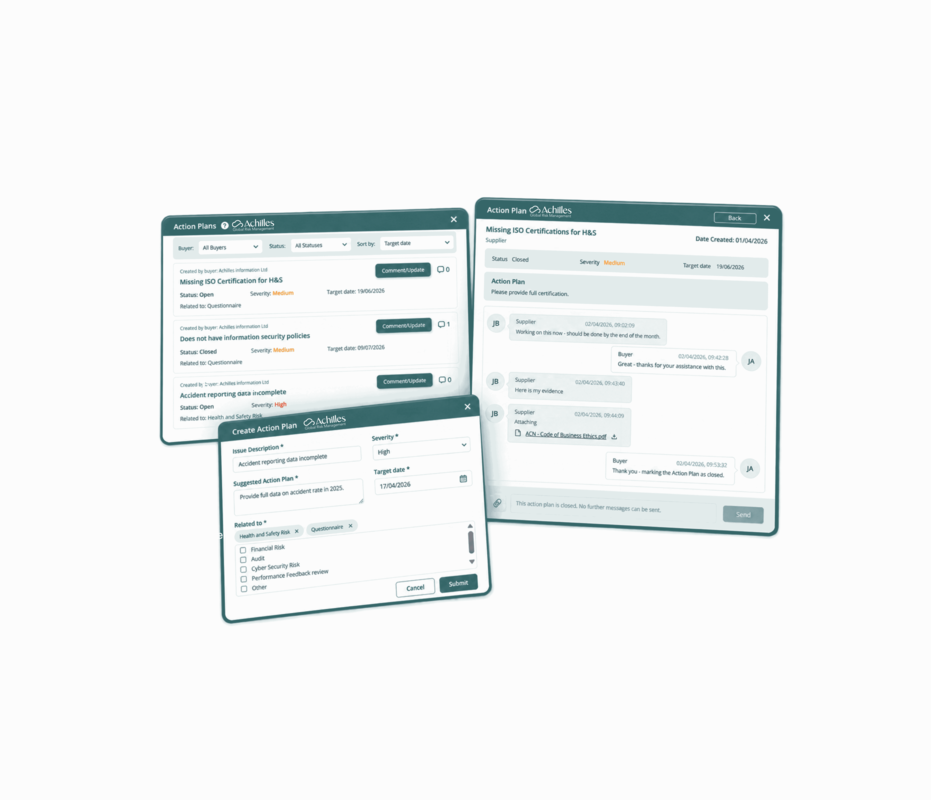
Achilles Action Plans provides a structured way to manage that process. Buyers can create targeted improvement plans in response to risks, weaknesses or performance issues identified through their supplier assurance activities — from health and safety, sustainability and compliance to financial, cyber, insurance and other areas of supplier risk.

Each plan can be tailored to the supplier, the nature and severity of the issue and the buying organisation’s own risk appetite, policies and industry requirements. Buyers can define the improvements required, set actions and timescales, monitor progress and review evidence provided by the supplier, creating a clear record from the initial finding through to remediation.

For suppliers, Action Plans provides clarity about what needs to improve and what their customer expects. Suppliers can respond directly to requested actions, ask questions, raise practical considerations, agree next steps and provide evidence of progress. This creates a more transparent and constructive approach to remediation, helping suppliers demonstrate improvement while enabling buyers to maintain appropriate oversight.

“Identifying supplier risk is important, but the real value comes from what you do with that insight,” said Mark Chamberlain, Chief Product Officer at Achilles. “Action Plans helps organisations close the gap between identifying an issue and addressing it. Buyers can set clear expectations, suppliers can demonstrate the action they have taken, and both have visibility of progress. It turns supplier assurance from a point-in-time assessment into a practical process for reducing risk and improving performance.”

Achilles Action Plans is now available to buying organisations as an addition to their Achilles subscription. Supplier access is enabled automatically when a buyer creates an Action Plan, at no additional cost to the supplier.

Img Achilles Action Plans 1 Achilles launches Action Plans to drive supplier improvement and strengthen supply chain resilience

NTSB urges fleet audits as preventable casualties mount

NEW YORK : America’s top transportation safety agency is urging maritime operators to re-examine their daily operations against recent real-world casualties as familiar hazards continue to drive costly and catastrophic marine accidents.

“It is critical for owners, operators, mariners, and vessel designers to keep in mind the circumstances of accidents aboard similar vessels while reviewing their own operations,” the National Transportation Safety Board (NTSB) states in its Safer Seas Digest 2025, a summary of marine investigations completed last year. “By considering our lessons learned or finding your own lessons learned from the accidents we investigated, it is our hope that mariners can make changes to avoid similar accidents.”

The latest 136-page edition – which has more than tripled in size from the first edition published in 2013 – examines 49 investigations that looked at accidents including capsizings, collisions, contacts with fixed objects, fires, floodings, groundings, and machinery damage. As it did in the previous two editions, the report noted that most of the casualties investigated were preventable.

Among the investigations completed in 2025 and documented in the report are that of the 9,962 teu containership Dali, which suffered a total loss of power while leaving the Port of Baltimore in which led to a direct contact with and subsequent collapse of the Francis Scott Key Bridge in 2024; the Aframax/LR2 class product tanker Hafnia Amessi, which experienced severe hydrodynamic bank effect and shoaling in the Cooper River near Charleston, South Carolina, in 2024; and the 210.92 metre con-ro vessel Grande Costa D’Avorio, which caught fire while being loaded at Port Newark, New Jersey, in 2023.

The latter casualty specifically was called out in the report by NTSB Chairwoman Jennifer Homendy.

“Establishing emergency procedures, continuously reassessing and updating them, and routinely training crews and other personnel on procedures can greatly reduce the impact of an accident,” Homendy said. “Sadly, that is not what happened” in the case of Grande Costa D’Avorio,” she said. “The land-based firefighters who attempted to extinguish the fire lacked both the necessary emergency procedures and training to respond to a vessel fire.”

Those factors resulted in an ineffective response, contributing to the fire’s spread, the death of two firefighters, and injuries to six emergency responders. NTSB issued 11 new recommendations to address the gaps uncovered in the subsequent investigation of the casualty.

Among commonalities that NTSB investigators found in cases completed last year that all mariners should consider include:

Performing maintenance effectively.

Effective voyage planning and management.

Detecting and containing vessel fires.

Assessing the condition of waterfront infrastructure.

Ensuring watertight integrity.

Accounting for bank effect.

Combating fatigue and distraction.

Properly securing and monitoring lithium-ion batteries.

Mitigating the risks of a loss of electrical power.

Planning and training for emergencies.

Operating in strong currents or heavy-weather conditions.

Operating equipment and machinery systems as designed.

DHL Express sees rise in heavyweight shipments in Asia Pacific as businesses circumvent unpredictability

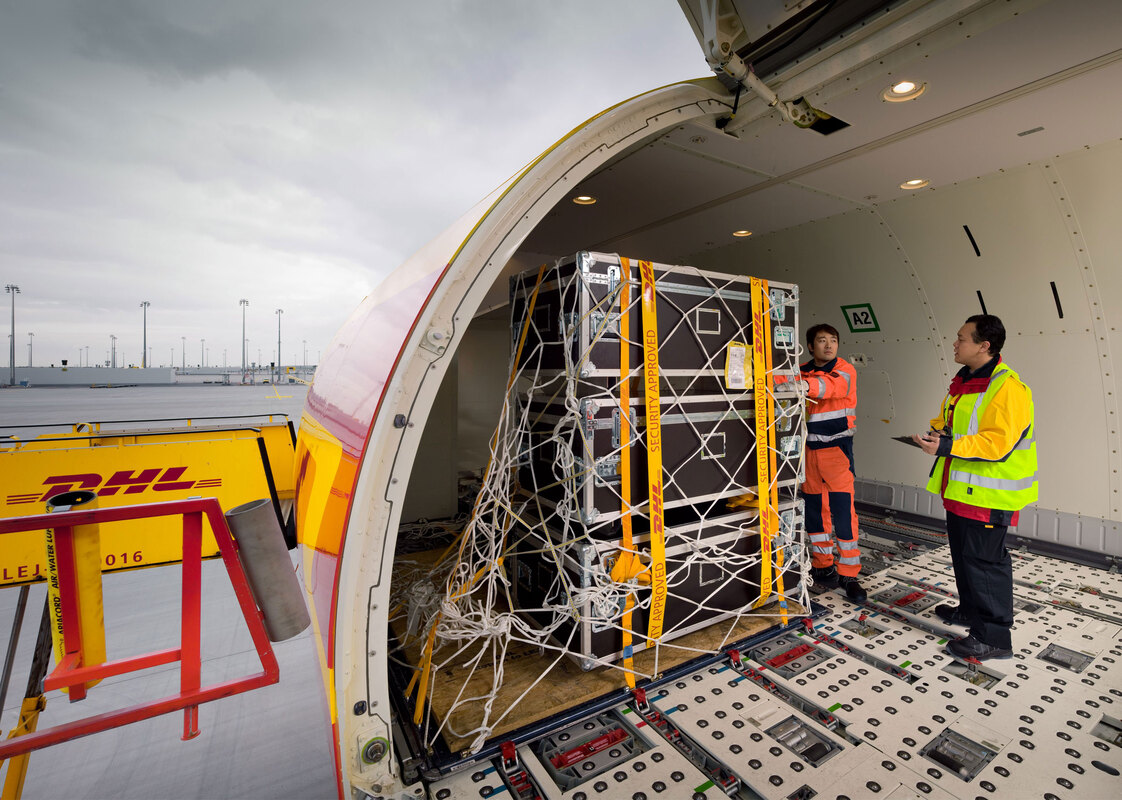
SINGAPORE: Following DHL Express’s introduction of Heavy Weight Express (HWX) this year, DHL Express recorded a 16% growth in its Time Definite International Weight per Day in Asia Pacific (excluding China) between January and July2026. This reflects how DHL’s Smart Industrial Growth Strategy is yielding positive outcomes as businesses are moving heavier, critical components, machinery, and industrial equipment across borders.

The heavyweight market has been gaining traction in recent years. Industry research shows that an estimated 10.2 million tons of heavyweight shipments¹ are being moved in Asia Pacific (excluding China) each year. Many companies have spent years reducing inventory and improving efficiency across their supply chains. However, companies today operate in a far less predictable environment marked by trade disruptions, manufacturing bottlenecks, and fluctuating demand. The rise in heavyweight shipment volumes mirrors a shift in how businesses are managing supply chain risks, as they increasingly turn to express logistics not only to handle sudden shifts in demand but also to have greater agility, certainty and control over timelines.

“Behind the numbers is a simple reality: Businesses are shipping heavy when timing matters and when it’s critical,” said Ken Lee, CEO for Asia Pacific, DHL Express. “As companies continue to navigate a complex landscape where uncertainty has become the norm, speed and reliability have also become part of the business decision. Customers are making deliberate decisions on what they ship through our network. Our Heavy Weight Express solution helps companies avoid downtime, protect working capital and keep operations moving when supply chains don’t go exactly as planned.”

Technology, Engineering & Manufacturing, and Automotive top Asia Pacific’s heavyweight contributors

Across the region, high-value, technology-related cargo, such as computer chips and semiconductors, accounts for the largest share of DHL Express’s heavyweight segment at over 34%, driven by rapid investment in data centers to support the growing demandfor computing capacity, data storage, cloud services, as well as artificial intelligence. This has fueled demand for technology-related shipments, from semiconductors and servers to cooling systems and electrical infrastructure. However, a data center crunch is creating supply chain bottlenecks as demand for semiconductor manufacturing outpaces infrastructure supply. As a result, express logistics services are urgently activated to move critical components quickly and efficiently, helping to keep projects on schedule.

The other main contributors to the heavyweight segment are businesses in engineering & manufacturing as well as the automotive industry.

Automotive is the fastest growing sector

HWX service is also gaining strong momentum in the automotive sector, with its shipment weight increasing at a rate of nearly 20%. As the leading export region for this sector, Asia Pacific is also seeing a surge in Asian automotive brands, particularly Electric Vehicle (EV) manufacturers from China and Southeast Asia. As these brands expand into new markets, they are also moving vehicle parts sourced from different suppliers and manufacturers across borders. This has created the appetite for expedited shipments to keep production running. In this sector, a single late or failed shipment could instantly cost automotive manufacturers millions of dollars.

Asia affirms role as a vital trading hub

In Asia Pacific (excluding China), the fastest growth in heavyweight shipments for the first seven months of the year came from India, the Philippines, Vietnam, Japan and Hong Kong. These markets reflect two of the region’s strongest trade corridors – Southeast Asia’s firm role as a manufacturing and sourcing base, and North Asia’s strategic position as a hub for high-value technology, industrial and automotive supply chains. Additionally, India, the Philippines, and Vietnam are also recognized as key markets of the geographic tailwinds initiative.

“As companies continue to manufacture out of Asia, balancing project timelines and building more resilient and agile supply chains become a priority. To maintain production continuity and ensure certainty, they are consolidating goods into heavier shipments. These non-negotiable conditions are also “urgency drivers” that put us at an advantage to help deliver our customers’ shipments at a definite time,” said Ken Lee, CEO for Asia Pacific, DHL Express.

In recent years, DHL Express has added several new infrastructures across the region, including an expanded global hub in Hong Kong, facilities near Cebu and Manila airports, gateway at Christchurch airport, Hanoi gateway near Noi Bai airport, as well as Delhi gateway, culminating in approximately 1,000 facilities in the Asia Pacific region. This is further supported by a robust aviation network of around 810 flights per day.

¹McKinsey/IHS Markit (2024)

GEODIS opens New Freight Forwarding Office in the Philippines

MANILA (PHILLIPINES): GEODIS opens new Freight Forwarding office in the Philippines strengthening its presence in the country to support customers’ growing supply chain needs. This expansion offers air and ocean freight, project logistics and supply chain management services, providing direct access to GEODIS’s global network as the country attracts record investment in key industries.

GEODIS, a world leader in transport and logistics, has opened this summer its first-owned Freight Forwarding office in the Philippines, establishing a direct local presence to support customers as they expand their operations and supply chains in the country.

Located in Manila, the new office will provide freight forwarding services, including air and ocean freight, project logistics and supply chain optimization. Transitioning from an agent model, GEODIS’ presence will provide the highest standard of customer support with local expertise and accountability. Customers will now get direct access to GEODIS’s international network, gaining greater control, transparency, and enhanced end-to-end visibility over their supply chains.

The development comes as the Philippines attracts new and expanding investment, particularly in the manufacturing, technology and other higher-value industries and strengthens its position in regional and global supply chains.

The Philippine Economic Zone Authority (PEZA) approved PHP151.9 billion in new and expansion projects in the first seven months of 2026, up 67% year-on-year. The projects are expected to generate US$5.9 billion in exports, mainly from manufacturing. Renewable energy is also attracting investment, accounting for nearly all Green Lane-approved investment in the first half of 2026. Philippine trade flows have continued to accelerate in 2026. Total external trade in goods reached a record US$218.68 billion in 2025, up 8.9% year on year.

“The Philippines is becoming an increasingly important market for high-value manufacturing and technology supply chains, and the growth we’re seeing in trade and investment is creating greater demand for reliable international freight capacity and supply chain visibility,” said Eric Martin-Neuville, Regional President & CEO, Asia Pacific & Middle East, GEODIS. “Moving from an agent model to our own operation gives us greater control over the service we provide and puts our people directly alongside our customers as they grow in the market. It also connects businesses in the Philippines more closely with the capabilities and reach of our global network.”

Maple Group expands project logistics capacity with acquisition of Fladderak

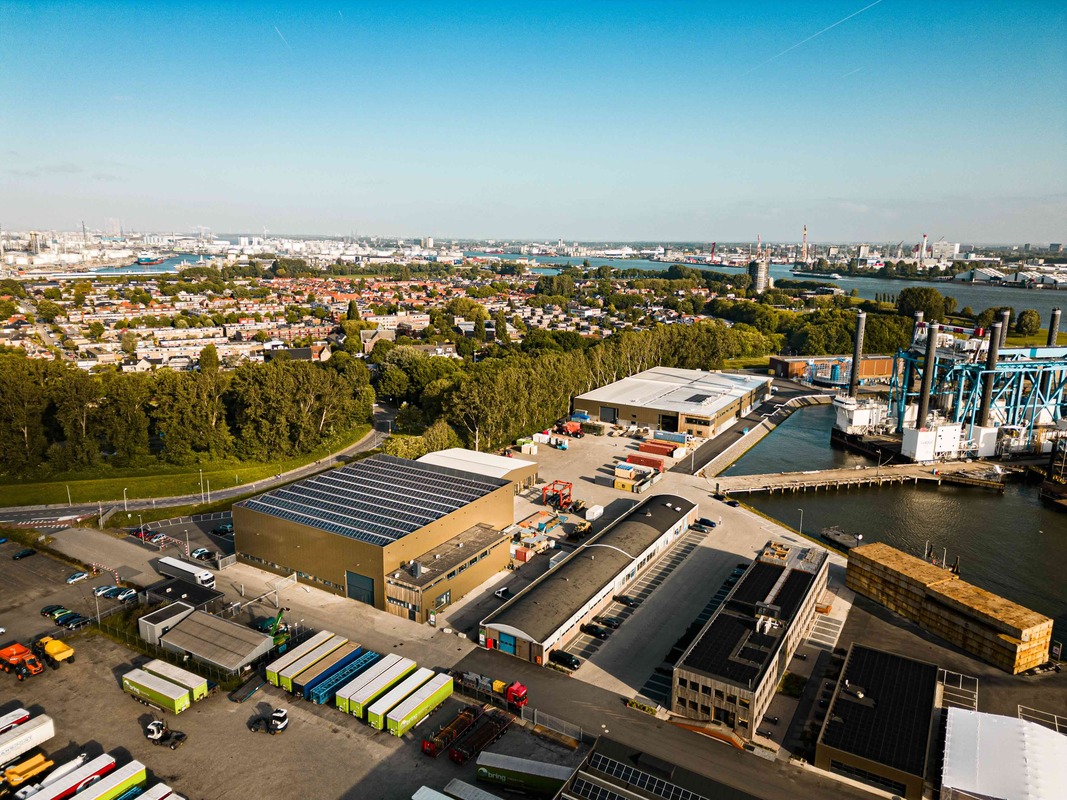
ROTTERDAM/PERNIS (The Netherland): Maple Group has acquired Fladderak Industriële Verpakkingen, expanding its capacity for handling industrial and specialised project cargo. Following the acquisition, the group has more than 40,000 m² of production, storage and handling capacity, including 25,000 m² of covered space, lifting capacity of up to 80 tonnes and a workforce of more than 100 employees.

The global export of machinery, production lines and other industrial goods requires streamlined project logistics. Investments in the energy transition are also creating new flows of heavy and out-of-gauge cargo. Such cargo requires specialist export packing, storage, handling and lashing, as well as careful logistics preparation for international transport.

Fladderak has more than 75 years of experience in industrial packing and logistics services for manufacturers in the Netherlands and internationally. Based in Rotterdam’s Eemhaven, Fladderak operates production and storage facilities with direct access to barge transport. The acquisition therefore adds dedicated capacity for the handling and logistics of export project cargo.

Fladderak’s activities complement Maple Group’s existing Packing, Lashing & Logistics operations. The acquisition enables the group to combine larger export projects with additional storage, handling and quayside capacity in the Port of Rotterdam.

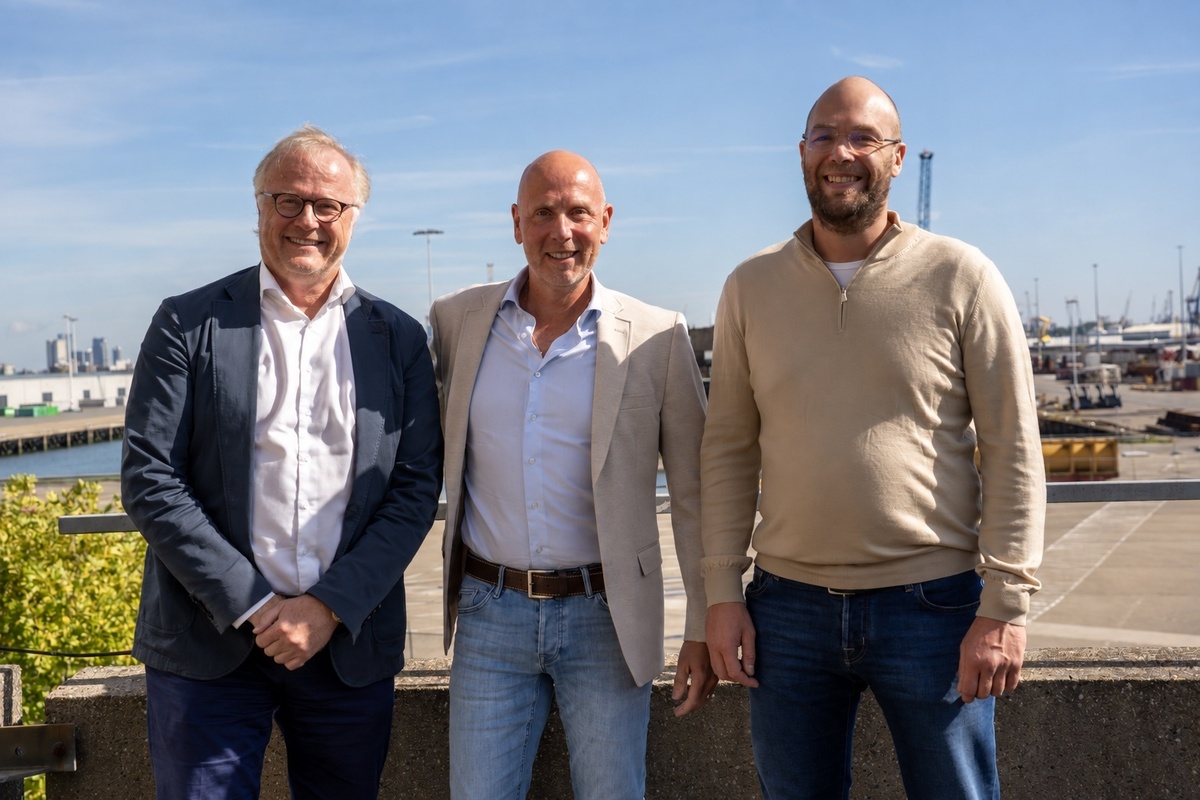
Maarten van Wijngaarden L Rene van der Werff M Rob Fladderak R Maple Group expands project logistics capacity with acquisition of Fladderak
Maarten van Wijngaarden (L) René van der Werff (M) Rob Fladderak (R)

“With Fladderak, we are adding not only capacity, but also extensive experience in managing industrial export projects. From packing machinery and production lines to storage, handling and preparing cargo for international transport. This enables us to provide broader support to customers with complex industrial export projects,” said René van der Werff, Managing Director of Maple Group.

Rob Fladderak, former owner and Managing Director of Fladderak Industriële Verpakkingen, said: “For the long-term interests of the company, I felt the time had come to hand over the reins to a company that can take Fladderak into its next phase of growth and development. I was looking for a company that recognises Fladderak’s potential and has the knowledge, experience and resources to build on it. I found that company in Maple Group.”

Fladderak to continue operating under its own name

For customers and suppliers, little will change in the short term. Fladderak will continue to operate under its existing name and from its current location. Existing contacts and services will also remain unchanged. Maple Group is committed to retaining Fladderak’s employees, expertise and craftsmanship.

World’s first fore-accommodation LNG carrier equipped with MOL’s Wind Challenger receives LR Design Appraisal

LR’s Design Appraisal confirms the technical readiness of HD Hyundai Heavy Industries’ fore-accommodation LNG carrier design featuring MOL’s Wind Challenger hard-sail system.

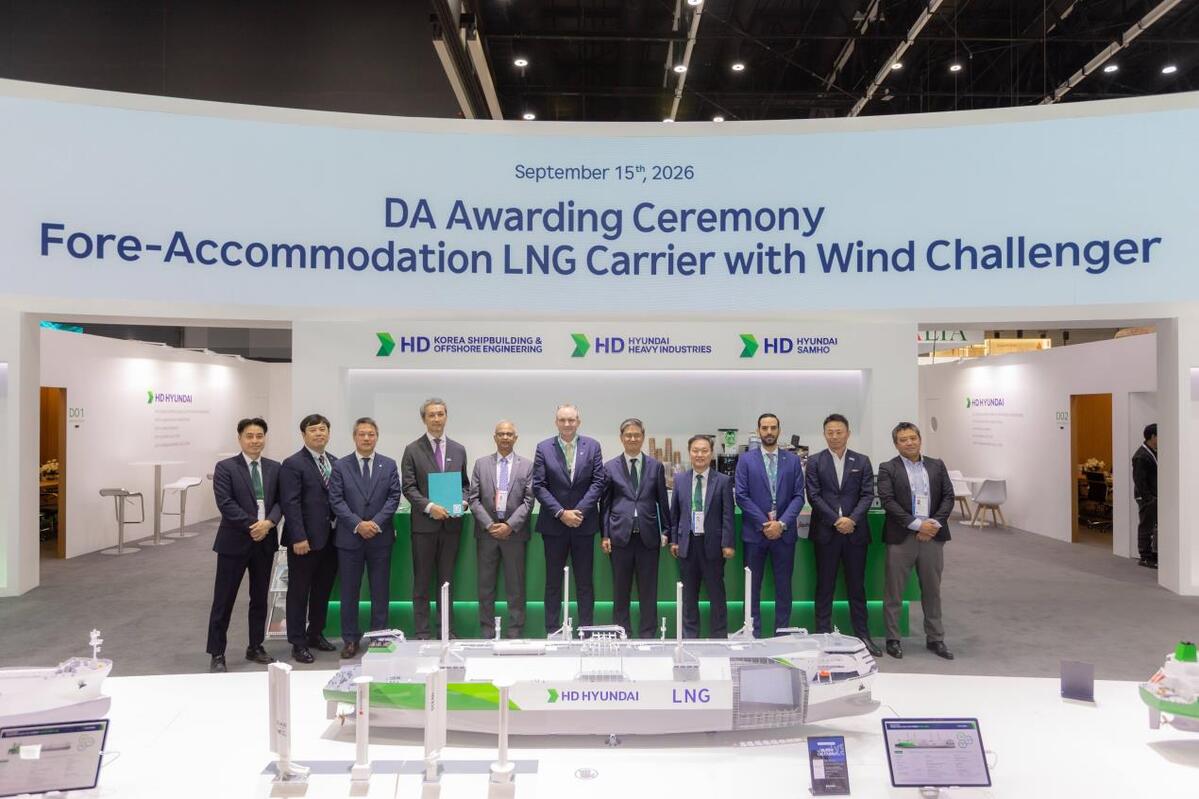
BANGKOK: Lloyd’s Register (LR) has granted Design Appraisal for HD Hyundai Heavy Industries’ (HHI) fore-accommodation LNG carrier design featuring the Wind Challenger wind-assisted propulsion system developed by Mitsui O.S.K. Lines (MOL), confirming compliance with LR’s Wind-Assisted Propulsion Systems (WAPS) notation requirements.

The project was presented during Gastech 2026 in Bangkok.

The Design Appraisal covers what the project partners describe as the world’s first fore-accommodation LNG carrier equipped with the Wind Challenger hard-sail system. It marks the latest milestone in a joint development project involving LR, HHI, MOL and the Republic of the Marshall Islands Maritime Administrator, following Approval in Principle (AiP) awarded by LR at Gastech 2025.

A key feature of the concept is the relocation of the accommodation block and bridge to the bow of the vessel. This arrangement creates a clear mid-to-aft deck area that can accommodate MOL’s Wind Challenger hard-sail system while maintaining operational and navigational requirements. The configuration also allows greater flexibility in the number, size and placement of sails to maximise wind-assisted propulsion performance.

Through the project, the partners assessed key technical areas associated with integrating WAPS onto an LNG carrier, including navigational visibility, hull stability, structural stress from hard sails, and integrated Emergency Shutdown (ESD) systems. A hazard identification (HAZID) study and risk assessments were conducted in accordance with LR’s Risk Based Certification process.

The Design Appraisal confirms that the concept complies with LR’s WAPS notation requirements for the safe and effective application of wind-assisted propulsion systems.

Andy McKeran, Chief Growth Officer, Lloyd’s Register, said: “As LNG carrier designs continue to evolve, the industry needs robust technical frameworks to assess new technologies and configurations. This Design Appraisal demonstrates how collaborative development and independent technical assurance can support the delivery of larger, more capable and operationally efficient vessel concepts.”

Hongryeul Ryu, Executive Vice President & CTO, HHI, said:“Through close collaboration with MOL and Lloyd’s Register, we have advanced the development of a new LNG carrier concept combining a fore-accommodation arrangement with Wind Challenger in a safe, practical and class-compliant manner. Achieving Design Appraisal for compliance with LR WAPS Notation demonstrates the technical maturity of the concept and represents an important step toward future commercial application. HD Hyundai Heavy Industries will continue to develop reliable and sustainable LNG carrier solutions for the next generation of shipping.”

Yoshihiko Sugimoto, Executive Officer & CTO, Mitsui O.S.K. Lines, said: “This Design Appraisal represents an important milestone in advancing the practical application of wind-assisted propulsion for LNG carriers. Through close collaboration with HD Hyundai Heavy Industries and Lloyd’s Register, we have demonstrated that the world’s first fore-accommodation LNG carrier designed to accommodate four Wind Challenger sails can be realized while maintaining safety, operational effectiveness, and regulatory compliance.

“This concept showcases the potential of large-scale wind-assisted propulsion to further reduce greenhouse gas emissions from LNG transportation and marks an important step toward commercial deployment.”

Richard Dias, Deputy Commissioner of Maritime Affairs, Republic of the Marshall Islands Maritime Administrator, added: “The RMI Maritime Administrator is pleased that this project has reached the Design Appraisal phase and looks forward to continuing its collaboration with its project partners. We are delighted that this project will deliver practical solutions while using sound regulatory frameworks to achieve the International Maritime Organization’s (IMO’s) decarbonization targets.”