Home Blog Page 103

ClassNK issues Approval in Principle (AiP) for a 42,000 m³ LCO₂ carrier

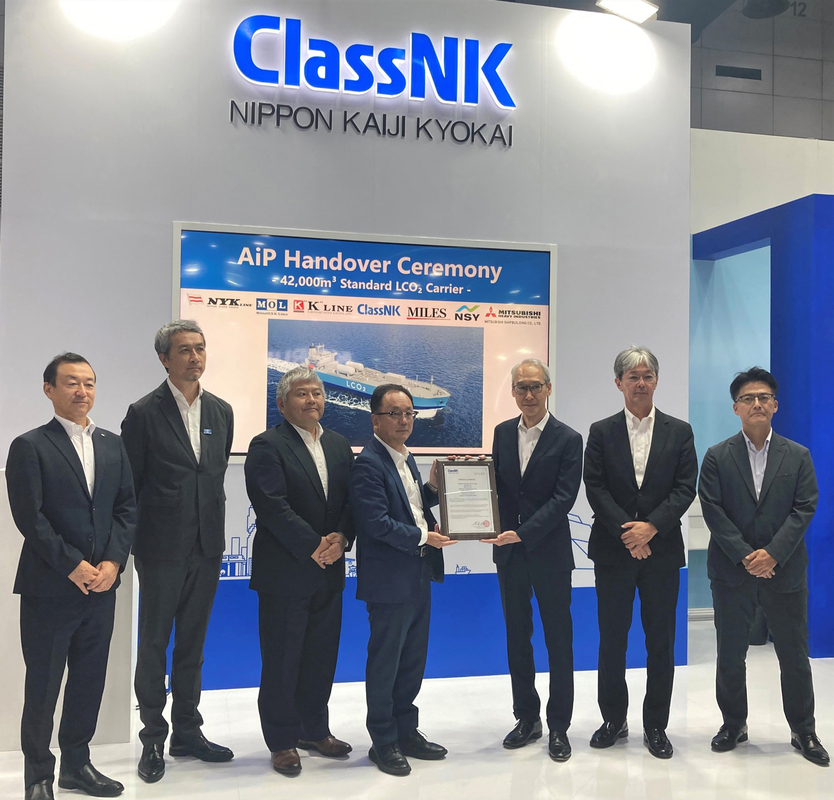
BANGKOK: ClassNK has issued an Approval in Principle (AiP) for the design concept of a 42,000 m³ liquefied CO₂ carrier jointly developed by Kawasaki Kisen Kaisha, Ltd. (“K” LINE), Mitsui O.S.K. Lines, Ltd. (MOL), Nihon Shipyard Co., Ltd. (NSY), Nippon Yusen Kabushiki Kaisha (NYK Line), MILES Co., Ltd., and Mitsubishi Shipbuilding Co., Ltd. A certificate handover ceremony was held at Gastech 2026 in Bangkok, Thailand.

While Carbon dioxide Capture and Storage (CCS)*1 projects are proceeding worldwide, demand for liquefied CO₂ carriers that transport CO₂ from the capture site to the storage site is expected to expand. This AiP is a step toward standardizing hull designs, which is necessary in order to realize a sufficient number of liquefied CO₂ carriers to meet such demand.

For this design concept, ClassNK carried out a design review based on Part N of its ‘Rules and Guidance for the Survey and Construction of Steel Ships’, which incorporates the IGC Code, an international code prescribing the safety requirements for the construction and equipment of ships carrying liquefied gases such as liquefied CO₂ and LNG in bulk, together with a risk assessment through HAZID. ClassNK issued the AiP after it was confirmed that the prescribed requirements were met.

ClassNK will continually strive to contribute to the development of new technologies and their social implementation through safety assessments and more.

*1 Carbon dioxide Capture and Storage (CCS)

Technology for separating and capturing CO2 contained in emissions and storing it in stable underground formations.

Approval in Principle (AiP):

At the initial stage of designing or before the specific target ship to be implemented is decided, the design is examined based on the existing regulations such as international conventions and ship classification rules, and an Approval in Principle (AiP) is issued as proof of conformity with requirements. It also prevents rework of regulatory aspects in the post-process, shortens the examination time at the time of class registration, and can be used as a technical basis for external appeal of the design status. For more information, visit our website.

Sarbananda Sonowal reviews key maritime reforms and flagship initiatives to accelerate India’s Maritime Transformation

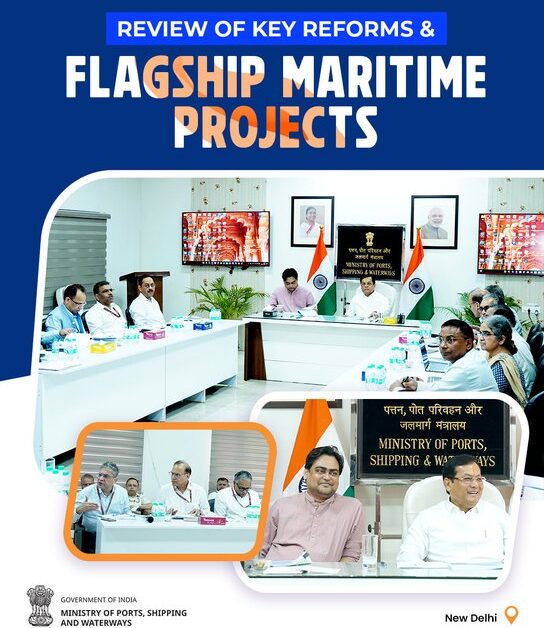
NEW DELHI : Hon’ble Union Minister for Ports, Shipping & Waterways Shri Sarbananda Sonowal, along with Hon’ble Union Minister of State Shri Shantanu Thakur, reviewed key reforms, flagship programmes and ongoing initiatives aimed at strengthening India’s maritime sector and accelerating its transformation into a globally competitive and future-ready ecosystem.

The review focused on advancing the Government’s priorities in indigenous shipbuilding, modern maritime infrastructure, enhanced port and shipping capabilities, global competitiveness and inclusive growth of coastal and riverine communities.

A major thrust of the review was on strengthening India’s domestic shipbuilding ecosystem and creating greater opportunities for Indian shipyards, maritime enterprises and allied industries. The Government’s focus on building a stronger indigenous maritime manufacturing base is aimed at enhancing India’s self-reliance while enabling the country to emerge as a competitive global shipbuilding and repair hub.

The discussions also emphasised the continued development and modernisation of ports, shipping infrastructure and multimodal maritime connectivity, with a focus on improving efficiency, capacity and the overall ease of doing business in the maritime sector.

The review comes against the backdrop of the Government’s broader efforts to position the maritime sector as a key driver of economic growth, trade competitiveness, employment generation and logistics efficiency. The Ministry’s ongoing reforms seek to strengthen the entire maritime value chain, from shipbuilding and shipping to ports, inland waterways and coastal logistics. The Ministry’s recent annual reporting also highlights continuing work on green hydrogen, maritime infrastructure and sectoral modernisation.

Shipping Ministry

Focus on Coastal and Riverine Communities
Particular emphasis was placed on ensuring that maritime development translates into greater economic opportunities for coastal and riverine communities. Initiatives aimed at improving livelihoods, skills, employment and participation in the maritime economy remain an important component of the Government’s inclusive maritime development agenda.

The review also underscored the importance of harnessing India’s extensive coastline and inland waterways to promote coastal shipping, inland water transport and more efficient movement of cargo, thereby supporting sustainable logistics and reducing pressure on conventional transportation networks.

Towards a Globally Competitive Maritime India
The leadership review reiterated the Government’s commitment to creating a strong, modern and globally integrated Indian maritime sector, supported by policy reforms, technology, infrastructure development, skilled human resources and greater private-sector participation.

The initiatives reviewed are aligned with the broader vision of Atmanirbhar Bharat and the Government’s objective of positioning India as a leading maritime nation, with greater domestic capabilities in shipbuilding and shipping and stronger integration with global maritime supply chains.

Under the leadership of Hon’ble Prime Minister Shri Narendra Modi, the Ministry of Ports, Shipping & Waterways continues to pursue an outcome-driven approach focused on measurable progress, institutional reforms and transformative growth across the maritime ecosystem.

The review reaffirmed the Government’s resolve to build a resilient, self-reliant, competitive, sustainable and future-ready maritime sector, while ensuring that the benefits of India’s maritime growth reach industries, workers, coastal communities and the wider economy.

Key Takeaways
Shri Sarbananda Sonowal and Shri Shantanu Thakur reviewed key maritime reforms and flagship initiatives.

Focus on indigenous shipbuilding and strengthening India’s domestic maritime manufacturing ecosystem.

Emphasis on modernising maritime infrastructure, ports and connectivity.

Measures aimed at enhancing India’s global maritime competitiveness.

Greater focus on coastal shipping and inland waterways.

Initiatives aimed at empowering coastal and riverine communities through skills, employment and economic opportunities.

Continued emphasis on self-reliance, technology, sustainability and private-sector participation.

Review reinforces the Government’s commitment to outcome-driven governance and transformative maritime growth.

India–Republic of Korea deepen port cooperation through expert workshop and bilateral maritime discussions

MoPSW Delegation Engages Stakeholders in Seoul and Busan to Advance Smart, Green and Future-Ready Port Development

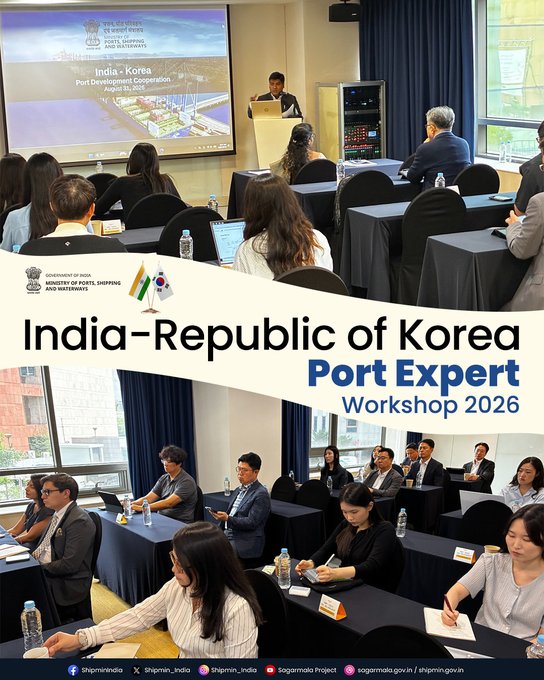
SEOUL/BUSAN : The Ministry of Ports, Shipping and Waterways (MoPSW), Government of India, participated in the India–Republic of Korea Port Expert Workshop 2026 and a series of bilateral discussions in Seoul and Busan from August 30 to September 4, 2026, strengthening cooperation between the two countries in port development and the wider maritime sector.

The engagements brought together around 70–80 stakeholders, providing a platform for Indian and Korean officials, maritime experts and industry representatives to exchange knowledge, share best practices and explore new opportunities for collaboration in the port and shipping ecosystem.

The Port Expert Workshop, organised under the broader framework of India–Republic of Korea maritime cooperation, focused on key areas including port development, smart port technologies, green and sustainable port operations, digitalisation, shipbuilding, capacity building and technology-led maritime development.

Discussions also examined opportunities to strengthen cooperation under the India–Republic of Korea Memorandum of Understanding on Cooperation in Port Related Industry, signed on 13 April 2016. The MoU provides an important framework for promoting collaboration in port-related activities between the two countries.

Shipping Ministry

Focus on Smart and Green Ports
A key theme of the workshop was the transition towards smart, technology-driven and environmentally sustainable ports. Participants exchanged perspectives on the adoption of modern port technologies, digital solutions and green practices that can improve operational efficiency while supporting the maritime sector’s decarbonisation objectives.

The discussions also highlighted the importance of capacity building and knowledge sharing, particularly as ports globally move towards greater automation, digital integration and cleaner technologies.

Exploring New Avenues for Bilateral and Industry Cooperation
The Seoul and Busan engagements provided opportunities to explore new avenues for government-to-government as well as industry-to-industry cooperation. The discussions covered potential collaboration in port infrastructure and development, technology deployment, shipbuilding capabilities, training and skill development, and other areas of mutual interest.

The participation of stakeholders from both countries also created a platform for greater interaction between maritime institutions and industry players, supporting the identification of practical opportunities for future cooperation.

The Republic of Korea is an important partner for India in the maritime sector, with existing bilateral arrangements covering port-related industry, maritime transport and logistics.

Shipping Ministry

The latest engagements in Seoul and Busan reaffirmed the shared commitment of India and the Republic of Korea towards building a sustainable, innovative, digitally enabled and future-ready maritime ecosystem.

The Port Expert Workshop 2026 further underlined the potential for both countries to leverage their respective expertise, technology and industry capabilities to support the next generation of efficient, resilient and environmentally responsible ports.

Key Takeaways
India–Republic of Korea Port Expert Workshop 2026 held as part of bilateral maritime cooperation.

MoPSW delegation participated in engagements across Seoul and Busan from August 30 to September 4, 2026.

Around 70–80 stakeholders participated in the discussions and knowledge-sharing sessions.

Key focus areas included smart ports, green technologies, port development, digitalisation and shipbuilding.

Discussions also covered capacity building, technology cooperation and industry collaboration.

Engagements supported implementation and advancement of cooperation under the India–Korea MoU on Port Related Industry.

Bilateral discussions explored opportunities for government-to-government and industry-to-industry cooperation.

The engagements reinforced the shared vision for a sustainable, innovative and future-ready maritime sector.

Sweden and DPA explore co-operation for green and future-ready maritime development

GANDHIDHAM : Focus on knowledge sharing, technology transfer, green technologies and collaborative research during meeting between Swedish Consul General Sven Östberg and DPA Chairman Shri Sushil Kumar Singh.

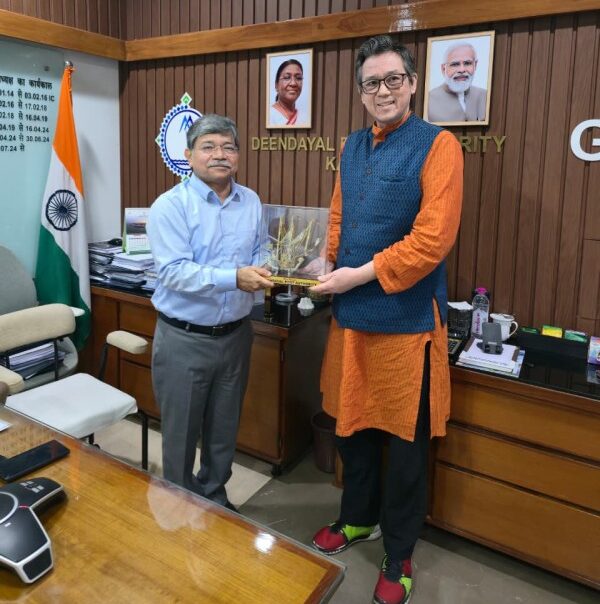
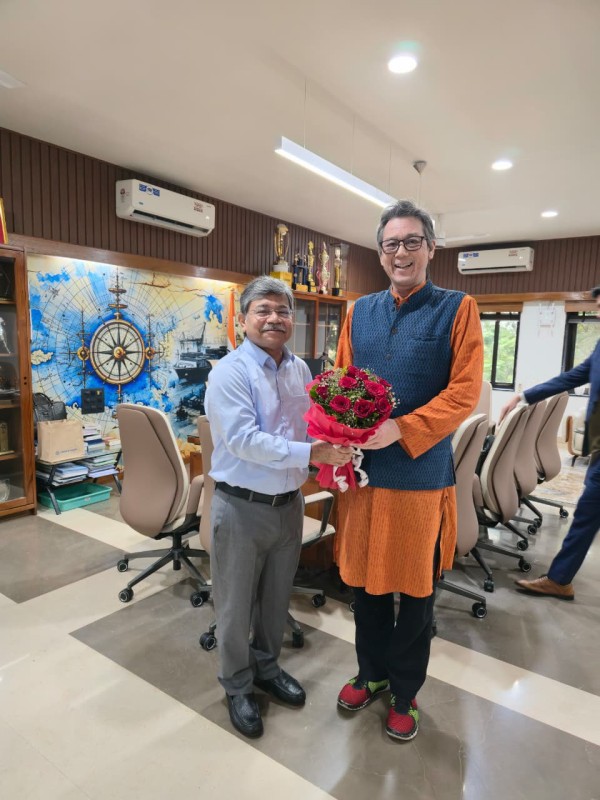
Deendayal Port Authority (DPA), Kandla, is exploring opportunities for greater international cooperation in sustainable maritime development following a meeting between Mr. Sven Östberg, Consul General of Sweden in Mumbai, and Shri Sushil Kumar Singh, IRSME, Chairman, Deendayal Port Authority.

SWEDEN DPA CHAIRMAN Sweden and DPA explore co-operation for green and future-ready maritime development

Mr. Sven Östberg visited Deendayal Port Authority, where he was warmly received by Chairman Shri Sushil Kumar Singh. The meeting provided an important platform for discussions on strengthening India-Sweden cooperation in the maritime and port sectors, with particular emphasis on developing greener, smarter and future-ready port infrastructure.

The discussions focused on knowledge sharing, technology transfer, collaborative research, adoption of green technologies and identification of new avenues for cooperation in sustainable port development.

The engagement assumes significance as ports globally are increasingly working towards reducing their environmental footprint, improving energy efficiency and adopting cleaner technologies across port operations. Cooperation with international partners can further facilitate the exchange of expertise, innovative solutions and best practices in these areas.

Focus on Green Maritime Technologies

The meeting also provided an opportunity to discuss potential collaboration in areas linked to green energy, clean maritime operations, sustainable infrastructure and technology-driven port development.

Deendayal Port Authority has been advancing several initiatives aimed at strengthening its green-port credentials. These include initiatives related to renewable energy, green cover, environmental monitoring and the development of green hydrogen capabilities. DPA has also been pursuing a 1 MW Green Hydrogen Technology Demonstration Plant at Kandla and establishing a Centre of Excellence to promote green hydrogen, innovation and international collaboration.

These initiatives align with India’s broader efforts to promote green shipping, clean energy adoption and sustainable port-led development, while supporting the transition towards a low-carbon maritime sector.

Strengthening India-Sweden Maritime Cooperation

The interaction with the Swedish Consul General is expected to contribute to greater engagement between Indian and Swedish stakeholders in areas where Sweden has significant experience in sustainable technologies, maritime innovation and environmentally responsible industrial development.

Potential cooperation in technology exchange, research and development, capacity building and deployment of green solutions could support the transformation of ports into more efficient and environmentally sustainable logistics hubs.

For DPA, such international engagements complement its ongoing efforts to modernise port infrastructure, enhance operational efficiency and integrate sustainability into future development plans.

The meeting reaffirmed the shared objective of promoting a greener, more innovative and resilient maritime ecosystem, while creating opportunities for India-Sweden cooperation in technologies and solutions that can shape the ports of the future.

The engagement reflects DPA’s continued commitment to building partnerships that combine global expertise with India’s growing maritime capabilities, supporting the development of sustainable and future-ready port infrastructure at Kandla.

V.O.C Port achieves historic milestone with berthing of longest-ever vessel

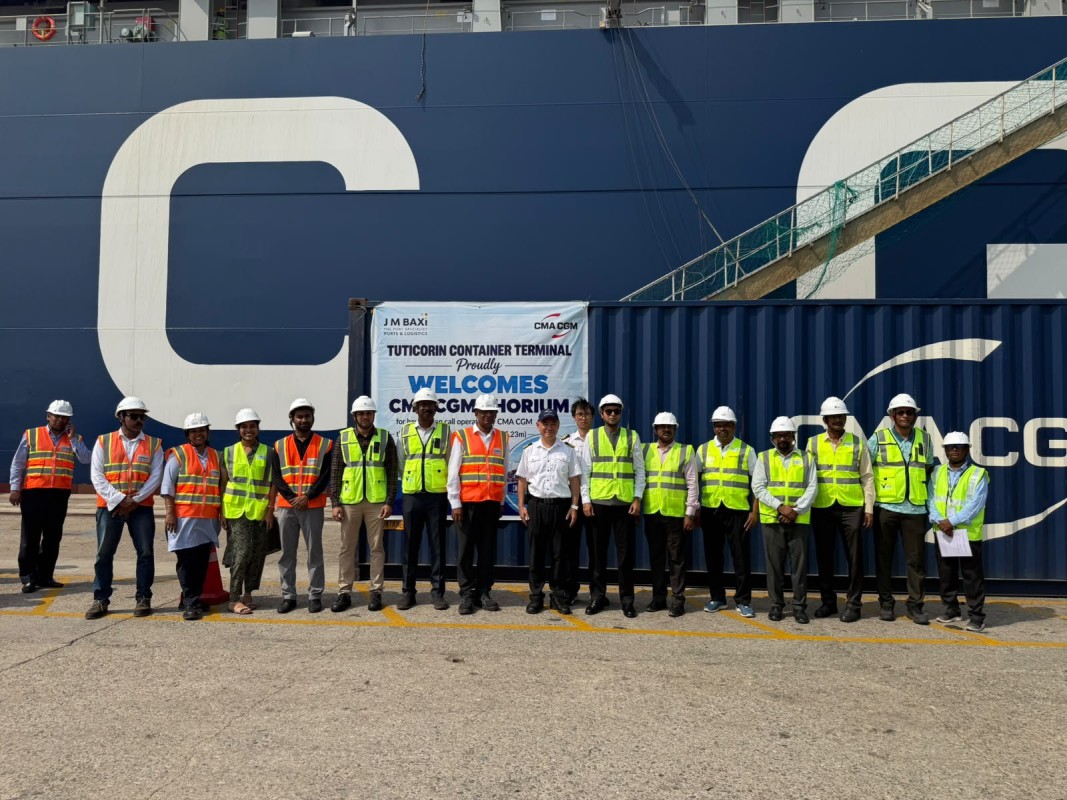
TUTICORIN : V.O. Chidambaranar Port Authority (VoCPA) has achieved a significant operational milestone with the successful berthing of CMA CGM THORIUM at the Tuticorin International Container Terminal (TICT), marking the handling of the longest vessel ever berthed at the Port to date.

With an overall length of 335.23 metres, the CMA CGM THORIUM represents a major achievement for V.O. Chidambaranar Port and underscores its growing capability to accommodate and efficiently handle larger container vessels.

The milestone was commemorated through a special onboard function organised in the presence of Shri Rajesh Soundararajan, IAS, Deputy Chairman, VoCPA; Shri Deep K. Reddy, Terminal Head, TICT; Shri Vijay, General Manager, CMA CGM; and Capt. Ai Junhui, Master of CMA CGM THORIUM.

The event featured a warm welcome and formal felicitation of the vessel’s Master, followed by a cake-cutting ceremony to mark the successful berthing. The occasion celebrated the coordinated efforts and close collaboration among the Port Authority, terminal operator, shipping line, vessel crew and other stakeholders involved in the operation.

The successful handling of CMA CGM THORIUM is a proud moment for V.O. Chidambaranar Port Authority and reflects the Port’s continued progress in strengthening its infrastructure, operational efficiency and readiness to serve the evolving requirements of the global container shipping industry.

The achievement further reinforces VoCPA’s commitment to operational excellence, safe vessel handling and enhancing its capability to handle larger ships, strengthening its position as an important maritime gateway on India’s southeastern coast.

Key Takeaways
CMA CGM THORIUM successfully berthed at TICT.

At 335.23 metres, it is the longest vessel ever handled at VoCPA.

The milestone demonstrates the Port’s enhanced capability to accommodate larger container vessels.

A commemorative onboard ceremony was held to mark the achievement.

The Master, Capt. Ai Junhui, was formally welcomed and felicitated.

The milestone highlights strong coordination among VoCPA, TICT, CMA CGM and other stakeholders.

Adani Logistics flags off Maersk’s first Multicarrier Import Block Train from Mundra to ICD Patli

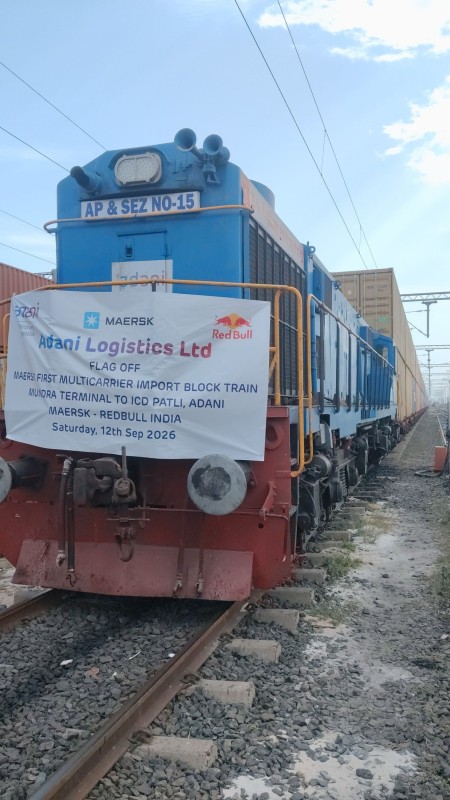
MUNDRA : Adani Logistics has achieved a significant milestone with the successful flag-off of Maersk’s first Multicarrier Import Block Train from Mundra Terminal to ICD Patli, Adani, carrying consignments for Red Bull India. Milestone movement carrying Red Bull India consignments highlights growing role of rail-led, integrated logistics in strengthening supply-chain connectivity.

The movement marks an important step in strengthening integrated logistics connectivity between the western coast and inland cargo destinations, while demonstrating the potential of rail-led transportation to support efficient and scalable supply chains.

Unlike a conventional single-customer movement, a multicarrier block train brings together cargo involving multiple stakeholders through a coordinated rail movement. The successful execution of the service reflects close collaboration among the logistics partners and their shared focus on ensuring seamless, reliable and efficient cargo transportation.

Strengthening Rail-Led Logistics

The movement from Mundra to ICD Patli highlights the growing importance of rail-based freight solutions in connecting ports with inland logistics hubs. Such integrated services can provide customers with greater supply-chain efficiency by linking port operations, inland terminals and rail transportation within a coordinated logistics network.

For Adani Logistics, the successful movement further demonstrates its capabilities in handling large-scale cargo flows and developing integrated logistics solutions that connect ports, terminals and inland markets.

The initiative also underlines the value of collaboration among stakeholders across the logistics chain, enabling cargo to move through an interconnected network with greater operational coordination and reliability.

Collaboration Driving Supply-Chain Efficiency

The successful flag-off of Maersk’s first multicarrier import block train represents more than a single rail movement. It demonstrates how collaboration, scale and integrated logistics infrastructure can contribute to building faster and more dependable supply chains.

By expanding rail-led freight solutions, logistics operators can help customers optimise cargo movement while supporting more efficient transportation networks. Rail connectivity also plays an important role in developing more sustainable freight systems by providing an alternative to road-intensive cargo movement.

The Mundra–ICD Patli movement therefore stands as an example of how coordinated multimodal logistics can create greater connectivity between gateways and inland markets.

The milestone reinforces Adani Logistics’ focus on scaling logistics capabilities, strengthening connections and delivering integrated supply-chain solutions, while supporting the evolving requirements of India’s growing trade and freight ecosystem.

US, India step up cooperation to build secure global undersea cable networks

NEW DELHI : The United States and India are strengthening cooperation to improve the security, resilience and diversification of global undersea cable networks. Washington has also highlighted India’s potential to emerge as a major global hub for subsea digital infrastructure, amid rising demand for cloud services and artificial intelligence infrastructure.

The US Embassy in India said the two countries brought together government and industry experts in September for an “Undersea Cables Workshop” focused on protecting critical communication infrastructure. The workshop forms part of wider efforts to strengthen the resilience of digital networks connecting global markets.

“Undersea cables are the backbone of global digital connectivity powering economies, cloud services, and the AI revolution,” the US Embassy said in a post on X. The embassy said subsea networks underpin global digital commerce, data centres, cloud platforms and the rapidly expanding AI economy.

The partnership is being pursued under the US-India TRUST (Transforming the Relationship Utilising Strategic Technologies) Initiative, which covers cooperation in critical and emerging technologies. The initiative provides a broader framework for the two countries to work together on technologies considered important to economic and national security.

India’s growing digital economy, rising demand for cloud and AI infrastructure and strategic location connecting major global markets could position it as a key global subsea cable hub, the US Embassy said. Stronger cable infrastructure could also support India’s expanding role in global digital connectivity and technology services.

Building Resilient Networks
The cooperation comes as both countries seek to build more resilient digital infrastructure and diversify technology and supply-chain networks. Secure undersea cables are increasingly important to maintaining reliable international connectivity as data traffic, cloud adoption and AI-related infrastructure continue to expand.

US Ambassador to India Sergio Gor said in May that the TRUST initiative was deepening cooperation in areas including AI, semiconductors, quantum computing, biotechnology, energy and space. He also highlighted India’s participation in the US-led Pax Silica initiative, a trusted technology and supply-chain network.

India’s one of those partners,”Gor said, referring to Washington’s focus on trusted collaborators in emerging technologies. He added that India’s early participation in Pax Silica reflected the level of trust between the two countries in technology, governance and broader strategic cooperation.

“The reason India was in the first top 10 countries around the world to join this is that we trust this place. We trust the people here, we trust the technology, we trust your government,” Gor said.

Expanding Technology Cooperation
The US-India TRUST initiative was launched during Prime Minister Narendra Modi’s visit to Washington in February last year to expand government, academic and private-sector cooperation in critical and emerging technologies. The initiative has since provided a platform for cooperation across several strategic technology sectors.

As part of the initiative, the two countries also committed to developing a US-India Roadmap on Accelerating AI Infrastructure. The roadmap is aimed at identifying barriers to financing, building, powering and connecting large-scale US-origin AI infrastructure in India.

The roadmap is also intended to support partnerships and investment in next-generation data centres, improve access to computing and processors for AI, and advance AI models and applications. It also seeks to address safeguards and regulatory barriers that could affect the development of AI infrastructure.

The latest undersea cable cooperation adds another layer to the broader US-India technology partnership. It links India’s ambitions in AI and digital infrastructure with the wider US effort to build secure, resilient and diversified global technology networks.

BTL launches ‘South India Service’ to strengthen Sri Lanka–South India connectivity

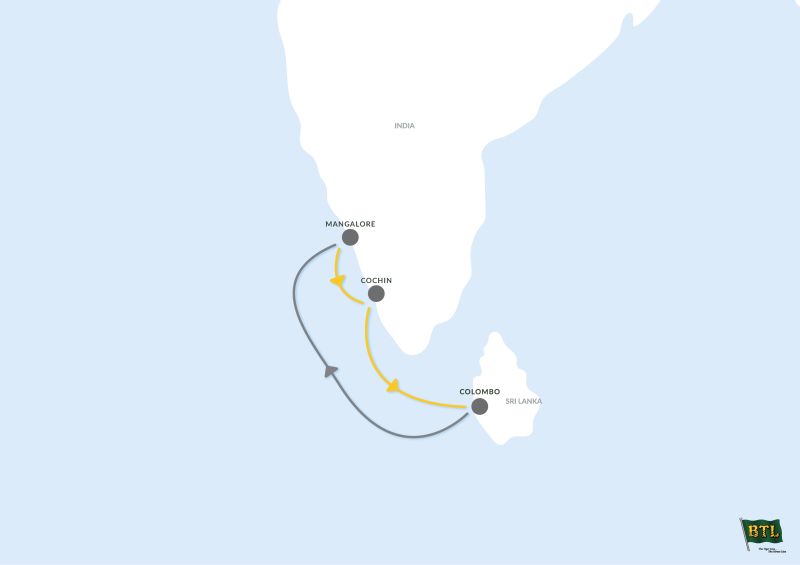
COLOMBO : Bengal Tiger Line (BTL) has launched its new South India Service (SIS), strengthening its regional shipping network and enhancing direct maritime connectivity between Sri Lanka and Southern India. Weekly service linking Colombo, New Mangalore and Cochin to provide direct and reliable regional shipping connectivity.

The new weekly service will operate on a fixed rotation of Colombo – New Mangalore – Cochin – Colombo, deploying a 1,100-TEU BTL-operated vessel to provide customers with a reliable and efficient regional shipping connection.

BTL.LINE BTL launches 'South India Service' to strengthen Sri Lanka–South India connectivity

The launch reinforces BTL’s strategy of expanding its intra-regional network through BTL-operated tonnage, while maintaining direct operational oversight and responding to growing demand for dependable and flexible shipping solutions across the Indian Subcontinent.

Direct Connectivity Between Sri Lanka and South India

The SIS service has been developed and deployed by BTL and is supported by the company’s established cargo base in the region. The dedicated service structure is designed to provide customers with greater schedule reliability, operational flexibility and direct market access.

By establishing a regular connection between Colombo and two major South Indian gateways, New Mangalore and Cochin, the service is expected to facilitate the movement of cargo between Sri Lanka and Southern India while supporting the growing trade flows between the two markets.

The fixed weekly rotation also provides greater predictability for shippers and cargo owners planning regional movements, strengthening the role of short-sea and intra-regional shipping in South Asian trade.

Strengthening Colombo’s Feeder Connectivity

Beyond direct Sri Lanka–South India trade, the new service is expected to enhance feeder connectivity through Colombo, enabling customers to access major international trade lanes and global shipping networks serving the Indian Subcontinent.

Colombo’s position as a major regional transshipment hub provides an important link between intra-regional services and long-haul international shipping routes. The SIS service will therefore offer customers an additional connection between South Indian markets and wider global trade networks.

BTL Expands Regional Vessel-Operated Network

The introduction of SIS forms part of BTL’s continued focus on strengthening its position as a dedicated vessel operator and regional carrier.

By deploying BTL-operated vessels on strategically selected regional routes, the company aims to maintain greater control over operations while delivering consistent schedules and flexible shipping solutions tailored to customer requirements.

The new service also reflects the increasing importance of efficient intra-regional maritime connectivity in supporting South Asia’s expanding trade and supply chains.

Service Details
Service: South India Service (SIS)
Rotation: Colombo → New Mangalore → Cochin → Colombo
Frequency: Weekly
Vessel Capacity: 1,100 TEU
Vessel Operator: Bengal Tiger Line

With the launch of SIS, BTL further strengthens its regional network and commitment to South Asian shipping, offering customers improved connectivity, operational reliability and access to international trade lanes through an integrated vessel-operated network.

The service marks another step in BTL’s efforts to build a more connected, efficient and sustainable regional maritime network linking key markets across the Indian Subcontinent.

Iranian strait authority issues updated list of sanctioned vessels

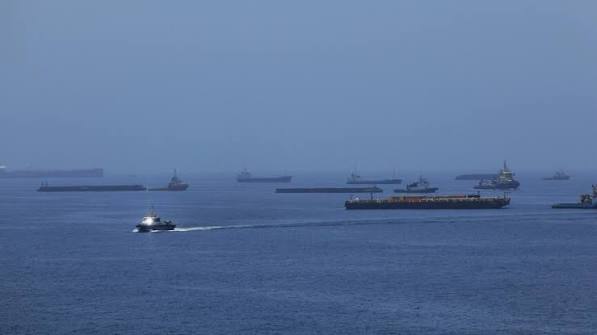
DUBAI : Iran’s Persian Gulf Strait Authority, set up by Iran ​to manage requests of passage in the Strait ‌of Hormuz, published on Monday an updated list of 77 vessels “violating Iranian protocols for the Strait of Hormuz”.
Concerns over ​global energy supply have deepened after the latest ​attacks around oil transit routes in the Strait ⁠of Hormuz and the Bab el-Mandeb Strait, with ​prospects for peace in the Middle East looking as ​bleak as ever.

Vessels listed will face restrictions on future passage including fines, detention or confiscation, said the body, adding that vessels ​cooperating with them will be added to the ​list. “Insurance companies, P&I clubs, and classification societies are warned to refrain ‌from ⁠providing services to these vessels to avoid consequences arising from dealing with them,” the authority posted on X.

P&I clubs are mutual insurance associations that provide ship ​owners and ​charterers with ⁠coverage for third-party maritime liabilities. Commodity vessel transits through the Strait of Hormuz fell to ​single-digit numbers per day at the weekend, ​preliminary ⁠ship-tracking data showed on Monday, well below the 10-day average of 14.

The figures exclude any vessels that might ⁠have ​crossed the strait with their ​Automatic Identification System transponders turned off to avoid detection.

Source : Reuters

Russia proposes 360 kmph Ivolga FG high-speed trains to be built in India

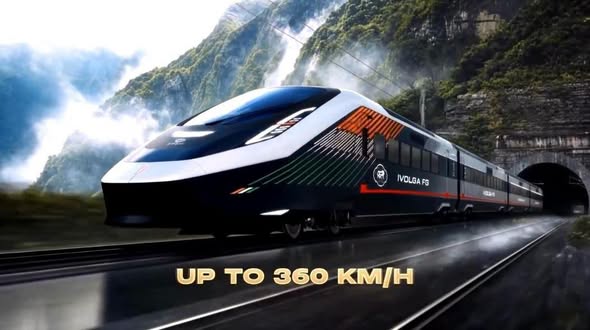
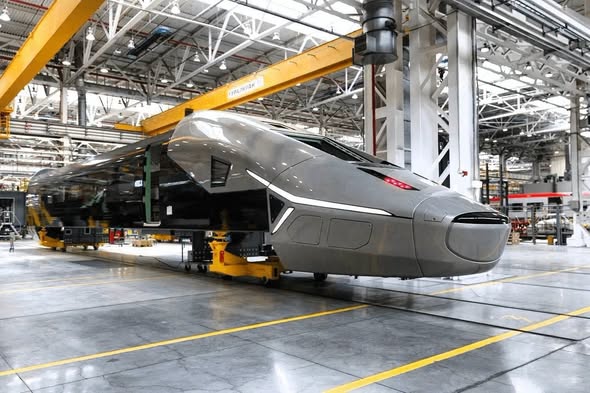
NEW DELHI : Russia has proposed its Ivolga FG high-speed train concept for India, with Russian rolling stock major TransMashHolding (TMH) offering to jointly develop and manufacture the trains in the country. The proposal was presented on the sidelines of the 18th BRICS Summit held in New Delhi, adding a new dimension to the expanding India-Russia cooperation in the railway sector.

Russia proposes 360 kmph Ivolga FG high speed trains Russia proposes 360 kmph Ivolga FG high-speed trains to be built in India

The Ivolga FG concept has a proposed design speed of 360 kmph and is being positioned by TMH as a potential high-speed rail solution for the Indian market. The Russian company has proposed joint research and development in high-speed railway technology, combining Russian engineering and scientific expertise with local manufacturing capabilities in India.

The proposal comes at a time when India is expanding its ambitions in high-speed and semi-high-speed rail infrastructure. The country’s railway modernisation programme has increasingly focused on faster passenger services, improved rolling stock and the development of domestic manufacturing capabilities.

TMH already has an established presence in India’s railway manufacturing ecosystem through Kinet Railway Solutions, a joint venture involving Transmashholding and Rail Vikas Nigam Limited (RVNL). The partnership provides an existing industrial platform through which the Russian company is participating in India’s passenger train manufacturing programme.

Under the existing project, the partnership is working on the manufacture and maintenance of 120 Vande Bharat sleeper trainsets for Indian Railways. Each trainset comprises 16 coaches, with production taking place at the Marathwada Rail Coach Factory in Latur, Maharashtra.

The proposed Ivolga FG programme would therefore build upon an existing India-Russia railway partnership rather than representing an entirely new industrial relationship. TMH’s proposal for joint development and production could potentially deepen cooperation by moving into higher-speed railway technology.

The Ivolga name is already associated with a family of modern electric multiple-unit passenger trains manufactured by Transmashholding at Tver Carriage Works in Russia. These trains have been developed primarily for high-capacity urban and suburban passenger services and are notably used on Moscow Central Diameters routes.

The Ivolga family has evolved through multiple generations, with newer variants incorporating features intended to improve passenger movement, comfort and operational efficiency. The Ivolga 4.0, for example, features three doors per intermediate car to accelerate passenger boarding and alighting.

Existing production versions of the Ivolga family generally operate at substantially lower speeds than the proposed Ivolga FG concept, with standard variants reaching maximum speeds in the range of 120 to 160 kmph. The proposed 360 kmph Ivolga FG should therefore be understood as a high-speed concept being offered to India rather than simply an existing Ivolga commuter train operating at 360 kmph.

The established Ivolga platform has nevertheless demonstrated a range of features relevant to modern passenger rail. These include wide doorways, open inter-car gangways, climate-control systems, adaptive lighting, USB charging facilities and dedicated spaces for bicycles, scooters and passengers with reduced mobility.

The newer generations of Ivolga trains are also reported to incorporate a high proportion of domestically sourced Russian components and parts. Such localisation reflects the same broader industrial principle that India is pursuing through its own railway manufacturing programmes—developing domestic supply chains and reducing dependence on imported systems.

For India, the most significant aspect of the Russian proposal could therefore extend beyond the headline speed of 360 kmph. TMH’s offer includes joint research and development and local production, potentially allowing Indian industry to participate in the development of high-speed rolling-stock technologies rather than simply importing finished trains.

Joint development could also create opportunities for technology cooperation, engineering expertise and the development of specialised manufacturing capabilities. If the proposal progresses, questions around technology transfer, localisation, lifecycle support, infrastructure compatibility and commercial viability would be central to any eventual decision.

The 360 kmph design speed places the proposed Ivolga FG in a different category from the conventional high-speed and semi-high-speed trains currently forming the backbone of India’s expanding passenger rail modernisation programme. Such speeds require not only suitable rolling stock but also dedicated infrastructure, advanced signalling, high-quality track systems, maintenance facilities and appropriate safety architecture.

The proposal therefore represents a potential long-term technology pathway rather than an immediate replacement for existing passenger train programmes. India’s requirements for high-speed rail will ultimately depend on infrastructure development, passenger demand, economics and compatibility with national railway standards.

The timing of the proposal is also significant. Presenting the Ivolga FG concept on the sidelines of the BRICS Summit provides the railway initiative with a wider strategic context. India and Russia have maintained extensive cooperation across several sectors, and transportation and industrial partnerships have become additional areas for economic and technological engagement.

For Russia, participation in India’s expanding railway market offers an opportunity to leverage its engineering and rolling-stock capabilities in one of the world’s largest rail networks. For India, cooperation with an established international rolling-stock manufacturer could potentially provide access to high-speed railway technologies while supporting domestic manufacturing.

The existing TMH-RVNL partnership could provide a foundation for such cooperation. The experience of manufacturing and maintaining Vande Bharat sleeper trainsets in India gives the Russian company an existing industrial relationship and familiarity with the country’s railway manufacturing environment.

At the same time, any transition towards 360 kmph operations would represent a substantial technological and infrastructure challenge. High-speed rolling stock must operate within an integrated ecosystem in which trains, tracks, signalling, power supply, communications and maintenance systems are designed to work together.

The Ivolga FG proposal consequently places emphasis not merely on the train itself but on the possibility of joint development of a broader high-speed railway technology capability. The proposed collaboration could become relevant to India’s long-term efforts to expand indigenous expertise in advanced railway engineering.

For Indian passengers, the prospect of trains capable of speeds approaching 360 kmph would represent a major evolution in inter-city connectivity. However, the eventual benefits would depend on the creation of infrastructure capable of supporting such speeds and on the economic viability of operating these services.

The proposal also illustrates the increasingly competitive international market for India’s railway modernisation programmes. With the country expanding domestic train manufacturing while seeking advanced technologies, international companies are looking for partnerships that combine foreign expertise with Indian production capabilities.

TMH’s offer of joint development and local manufacturing fits into this evolving model. Rather than simply supplying finished rolling stock, the company is proposing cooperation in research, technology development and production within India.

The Ivolga FG proposal, therefore, marks an interesting development in India-Russia railway cooperation. While the 360 kmph train remains a proposed concept for the Indian market, its presentation signals Moscow’s interest in participating in India’s future high-speed rail ambitions.

If pursued further, the initiative could potentially bring together Russian high-speed rail engineering expertise and India’s growing domestic railway manufacturing capabilities. The outcome will ultimately depend on technical evaluation, infrastructure requirements, commercial considerations and the terms of any future agreement.

For now, the proposal adds another potential option to India’s evolving high-speed rail landscape and highlights the broader shift towards technology collaboration and local production in the country’s railway sector.