Home Blog Page 110

ClassNK releases ‘Guidelines for Liquefied Hydrogen Carriers (Edition 3.1)’

TOKYO : ClassNK has released the ‘Guidelines for Liquefied Hydrogen Carriers (Edition 3.1)’. This revision incorporates the ‘Revised Interim Recommendations for Carriage of Liquefied Hydrogen in Bulk’*, adopted by the IMO in 2026, and updates the existing safety requirements, including guidance on the selection of materials and welding practices for hydrogen equipment. Through this revision, shipyards, designers, shipowners and other maritime stakeholders can gain a clear understanding of the safety requirements for liquefied hydrogen carriers and can proceed with their design studies and safety assessments more smoothly.

Background

Hydrogen is expected to play a key role as an energy carrier in realizing a decarbonized society, and the development of liquefied hydrogen carriers as a means of large-scale transportation is advancing worldwide. In recent years, the design of such vessels has become increasingly diverse, including the development of liquefied hydrogen carriers fitted with membrane-type cargo containment systems.

In response to recent developments in liquefied hydrogen carrier design, the Revised Interim Recommendations for Carriage of Liquefied Hydrogen in Bulk were adopted at the 111th session of the IMO Maritime Safety Committee (MSC 111), introducing additional safety requirements for cargo containment systems based on new design concepts.

The revised ClassNK Guidelines incorporate the provisions of these IMO Interim Recommendations while also reflecting the latest knowledge and experience gained through the construction and operation of demonstration vessels, as well as various research and development projects.

Main Revisions

Requirements for Membrane-Type Cargo Containment Systems:
Following the adoption of the IMO Interim Recommendations at MSC 111, requirements have been developed for liquefied hydrogen carriers fitted with membrane tanks using vacuum insulation. In addition to incorporating the content of the IMO Interim Recommendations, the design requirements relating to vacuum insulation systems, monitoring devices, pressure control equipment and emergency response have been clarified. This enables developers of newly designed liquefied hydrogen carriers fitted with membrane-type cargo containment systems to refer to internationally recognized safety requirements, and to proceed smoothly with studies toward Flag Administration approval and safety demonstration.

Improved guidance on materials and welding for hydrogen equipment:
Based on ClassNK’s experience in design reviews and technical assessments in actual projects, the verification procedures for the selection of metallic materials, testing and quality control have been updated. The revised guidance clarifies how to address material degradation that requires particular attention in the design of liquefied hydrogen carriers, such as low temperature embrittlement, hydrogen embrittlement and hydrogen attack, and is expected to reduce the risk of design changes and additional verification.

As a third-party certification body, ClassNK will continue to support the efforts of stakeholders to address environmental challenges through the development of standards, certification, and provision of technical information.

* IMO Resolution MSC.597(111) ‘Revised Interim Recommendations for Carriage of Liquefied Hydrogen in Bulk’

How to access guidelines

The guidelines are available to download via ‘Guidelines’ of My Page on ClassNK’s website after registration.

https://www.classnk.or.jp/account/en/Rules_Guidance/ssl/login.aspx?utm_source=pressrelease&utm_medium=email&utm_campaign=guidelines

Cabinet approves three multitracking projects covering 14 Districts increasing the existing network of Indian Railways by about 656 Kms

NEW DELHI : The Cabinet Committee on Economic Affairs, chaired by the Prime Minister Shri Narendra Modi, has approved 03 (Three) projects of Ministry of Railways with total cost of Rs. 10,783 crore. These projects include:

Kharagpur – Jharsuguda (Bagdehi) 4th Line
Katni – Pendra Road 4th Line
Bilaspur (Uslapur) – Pendra Road 3rd Line
The increased line capacity will significantly enhance mobility, resulting in improved operational efficiency and service reliability for Indian Railways. These multi-tracking proposals are poised to streamline operations and alleviate congestion. The projects are in line with the Prime Minister Shri Narendra Modi’s Vision of a New India which will make people of the region “Atmanirbhar” by way of comprehensive development in the area which will enhance their employment/ self-employment opportunities.

The projects are planned on PM-Gati Shakti National Master Plan with focus on enhancing multi-modal connectivity & logistic efficiency through integrated planning and stakeholder consultations. These projects will provide seamless connectivity for movement of people, goods, and services.

The Three projects covering 14 Districts across the states of West Bengal, Jharkhand, Odisha, Madhya Pradesh and Chhattisgarh, will increase the existing network of Indian Railways by about 656 Kms. The proposed multi-tracking projects will enhance connectivity to approx. 4,790 villages, which are having a population of about 56 lakhs.

The proposed capacity enhancement will improve rail connectivity to several prominent tourist destinations across the country, including Taratarini Temple, Shri Khetra Jagannath Temple (Ancient temple near Jharsuguda), Bandhavgarh Tiger Reserve, Virateshwar Temple, Amarkantak Temple, Jwaleshwar Dham, Achanakmar Tiger Reserve, Khutaghat Dam, Malhar Archaeological Site, Ratanpur Mahamaya Temple, etc.

The proposed projects are essential routes for transportation of commodities such as coal, cement, iron and steel, etc. The capacity augmentation works will result in additional freight traffic of magnitude 27 MTPA (Million Tonnes Per Annum). The Railways being environment friendly and energy efficient mode of transportation, will help both in achieving climate goals and minimizing logistics cost of the country, reduce oil import (~12 Crore Litres) and lower CO2 emissions (~62 Crore Kg) which is equivalent to plantation of 2.48 Crore trees.

India to work with BRICS partners to expand opportunities for women-led enterprises in global trade : Piyush Goyal

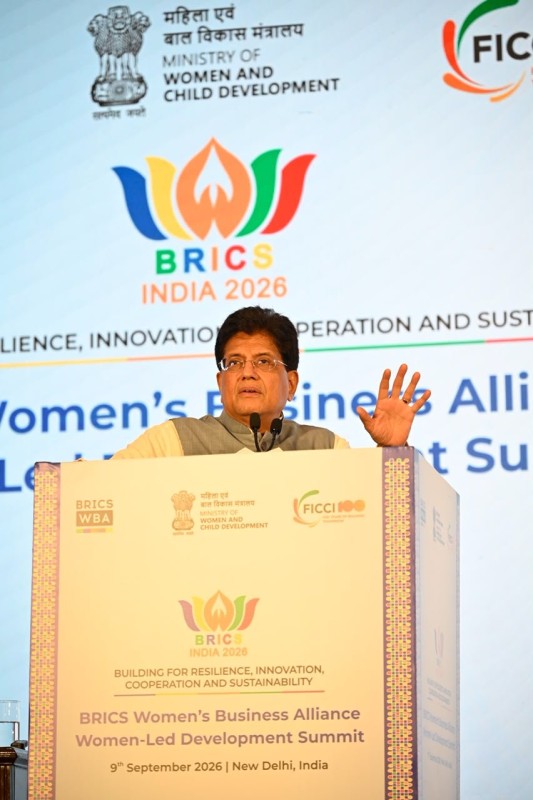
piyysh goyalbrics woman led 1 1 India to work with BRICS partners to expand opportunities for women-led enterprises in global trade : Piyush Goyal

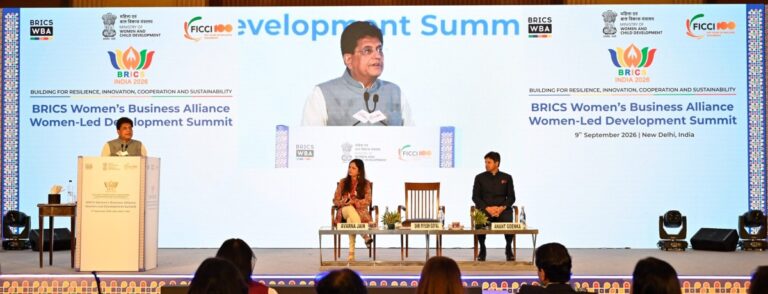
NEW DELHI : Union Minister of Commerce and Industry Shri Piyush Goyal Wednesday called upon BRICS countries to work together to expand opportunities for women entrepreneurs and women-led enterprises in international trade, stressing the need for easier access to credit, markets and predictable rules of business. Addressing the BRICS WBA Women-Led Development Conference in New Delhi as the Chief Guest, he said that an entrepreneur seeking to enter international business has to cross three key borders: access to credit, access to buyers and markets, and access to predictable rules that encourage free trade and open opportunities.

Shri Goyal said India would like to bring the lessons learnt from its experience in addressing the challenges faced by entrepreneurs, particularly women entrepreneurs, to the BRICS Women’s Business Alliance and the larger BRICS business engagement. He said India has focused on empowering women financially, socially and through education, skills and improved quality of life, with the objective of making women the drivers of the country’s growth.

Highlighting India’s experience in expanding financial inclusion among women, Shri Goyal said that around twelve years ago, most women, particularly in rural India, did not have bank accounts, assets in their own names or credit histories and were often not eligible for loans. He said India has since put houses in the names of women, opened nearly 300 million bank accounts for them and provided collateral-free loans to women seeking to start their own work, including those without a credit history.

He said around 100 million rural women are today members of nine million self-help groups, small cooperatives or groups of women working together on different ideas and enterprises. The number of women earning more than Rs. 1 lakh in personal income has crossed 30 million. These women are referred to as ‘Lakhpati Didis’, he said, adding that India hopes to continue expanding both their number and their income.

Shri Goyal said that India has provided around 560 million loans to small entrepreneurs, with more than 68 per cent of these loans going to women entrepreneurs. He said the objective is to ensure that women become economically independent and are not dependent on other family members. He added that when women stand on their own feet, they can become drivers of India’s growth engine.

He noted that India’s female workforce participation had been around 19 per cent until about a decade ago and expressed confidence that as income levels rise, education improves, skills develop and talent comes forward, the number will increase to 50 per cent or more. He said that in developed societies, the proportion of women in the formal workforce has crossed 50 per cent. Shri Goyal emphasised that India can achieve a significant delta in economic growth as more women enter the formal workforce.

He said the government’s effort is to ensure equal opportunity and availability of the tools required for a person to start a business or become an earning member of the family. This, he said, is the essence of women-led development, as distinct from merely women development.

Shri Goyal said that educating or skilling a woman supports the entire family, as she leads the family and helps provide children with a better future. He said that across various schemes and programmes focused on women’s development and women-led development, women should not be viewed merely as beneficiaries but as the architects of New India.

On expanding access to international markets, Shri Goyal referred to the meeting of BRICS Commerce and Industry Ministers held in Jaipur last month, where ministers agreed on voluntary principles for assessing small exporters. He said the assessment should not be based only on invoices and payments, but also on the entrepreneur’s ability and the change from the past to the present and the future.

He said foreign trade should not be viewed only as a collateralised business, but as an opportunity to integrate societies and businesses and provide opportunities to marginalised sections that may otherwise never imagine going overseas. He said BRICS countries had also agreed in the Jaipur Consensus to explore a common BRICS platform for international trade, which could help address the second challenge faced by entrepreneurs, namely access to markets and buyers.

Shri Goyal said that once such a platform is built, a product requirement in any one BRICS member country could be known to the other members, while invoices raised between participants could also be publicised and made known across the platform. He said a number of financial intermediaries could join the platform to support women entrepreneurs and small entrepreneurs as trade among BRICS countries expands.

Referring to the BRICS work plan on member countries’ shared understanding on global value chains, Shri Goyal urged governments to encourage women-owned enterprises to participate more actively in international expositions, conferences, seminars, exhibitions and business forums. He said this would enable engagement across multiple platforms.

He urged BRICS countries to consider more women-led business delegations on a sectoral basis. He suggested that BRICS countries could organise sector-specific women-led delegations, such as a fully women-led textile delegation travelling from one BRICS member country to another. He said such delegations could receive greater traction and help integrate value chains while creating opportunities for women entrepreneurs to engage with markets beyond BRICS as well.

On the third challenge of predictable rules for doing business, Shri Goyal said business cannot be conducted without sufficient predictability and certainty, open borders and an environment that encourages free trade. He said all BRICS members have committed to protecting and strengthening the multilateral trading system within WTO rules of trade, which would provide policy space for less developed and developing nations.

Shri Goyal said BRICS members should work towards a common platform enabling electronic trade documents, e-invoices, electronic bills of lading and e-customs declarations. He also referred to the voluntary principles agreed upon to facilitate the delivery of services online across borders, while respecting and protecting each country’s laws.

Calling for greater engagement among BRICS countries, Shri Goyal said dialogue and diplomacy are the way forward towards a more prosperous future for member countries, partner countries and the world. At a time when global trade is showing signs of strain and the world is facing significant challenges in a VUCA environment marked by volatility and uncertainty, with two wars currently underway, he stressed the importance of collective efforts to increase business among BRICS countries while continuing to engage with the rest of the world.

Shri Goyal said BRICS countries have worked towards global peace and bringing nations together around a common understanding to support international trade in both goods and services. He noted that services trade among BRICS members has not received sufficient attention. With global services trade at almost $10 trillion, he said the relatively low level of services trade among BRICS countries indicates significant potential for growth.

He said women can play an important role in areas such as mobility and different types of services, as well as in the rapidly growing digital economy. He emphasised the tremendous potential for BRICS countries to work together to improve service delivery and enable women entrepreneurs and MSMEs to participate in services and the digital economy.

Shri Goyal said BRICS Trade Ministers had also recommended the Strategy for BRICS Economic Partnership 2030 for endorsement by the leaders. He expressed hope that the BRICS Leaders’ Summit would result in more concrete agendas, action plans and outcomes, with 2030 serving as the first stepping stone towards a longer-term partnership in the years and decades ahead.

Shri Goyal put forward four concrete suggestions for consideration up to 2030. On access to credit, he called upon the BRICS Women’s Business Alliance, together with the BRICS Business Council headed by Anant Goenka and his colleagues, to ensure that the study on an invoice discounting platform reflects the actual needs of women exporters. He also urged governments, banks and Exim Banks to consider such invoices while taking lending decisions and called for the proposal for a Women’s Advancement Fund, emphasised in the Jaipur Consensus, to be turned into a concrete initiative.

On access to buyers, he called for women-owned enterprises from different BRICS member and partner countries to participate in more BRICS exhibitions, fairs and forums, along with buyer-seller meets. He suggested that progress should be reported annually, including what businesses have worked, what have not worked and which areas should receive greater focus. He said India is ready to share its experience on women-led initiatives aimed at promoting greater engagement among BRICS countries.

Shri Goyal also highlighted India’s experience in government procurement through the Government e-Marketplace, where central, state and local governments are encouraged to procure goods and services transparently and where procurement opportunities are available for people to see. He said special focus and encouragement is given to women-led enterprises to provide goods and services to the government at central and local levels, with women-led enterprises accounting for a very large share.

Giving an example of the growing reach of women entrepreneurs, Shri Goyal said that women entrepreneurs located around 2,500 kilometres away from New Delhi are now able to supply even small consignments, sometimes worth around $100, to the Commerce Ministry or the Prime Minister’s Office. He said this reflects the long way women entrepreneurs have come.

Highlighting India’s One District, One Product initiative, Shri Goyal said that India has around 780 districts and has identified one, two or three products in each district for promotion. He said the initiative is now also moving into services. He referred to Uttar Pradesh’s initiative to identify cuisines, noting that India experiences changes in cuisine and taste across relatively short distances, with different products, tastes, spices and combinations offering significant potential to become businesses in markets across the world.

He said products, services and cuisines identified in different districts are being promoted by state governments and local administrations with the objective of developing global markets and making districts export hubs.

Shri Goyal said the growing global demand for fresh Indian fruits and vegetables, particularly from the Gulf region where around 10 million Indians live, offers significant opportunities for small farmers and women entrepreneurs in quality packaging, designing and processing of food products for global markets. He said greater engagement among BRICS countries could help create more women’s collectives and women-led marketplaces to promote their products and services.

On rules and procedures, Shri Goyal urged participants to identify the documents, certificates, processes and procedures that prevent or hinder them from doing business or pursuing their work. He said practical data points based on their experience would help governments and policymakers right-size processes and procedures, reduce documentation and improve policies to make doing business easier.

He asked participants to communicate not only the problem statement but also the solution they would like to see, saying that a problem statement accompanied by a suggestion or call to action would help governments act on it. He expressed confidence that India’s trade in goods with its partners has tremendous potential for growth and that women-led exporters would expand their businesses many times over in the years ahead.

Calling upon entrepreneurs to turn challenges into opportunities, Shri Goyal said this was one of the key lessons India has learnt from Prime Minister Shri Narendra Modi. He said that despite global turmoil and the softening of international trade, India’s merchandise exports grew by more than 15 per cent during the first five months of the financial year, from April to August. He said India had not allowed global challenges to hold it back but had instead sought opportunities within them and had set aggressive targets for the current year despite the prevailing headwinds.

Shri Goyal also highlighted India’s economic growth, noting that the economy grew by 7.8 per cent at constant prices during the first quarter from April to June, describing it as the highest growth rate in the world. He said India is recognising its true potential and working with the world from a position of strength and confidence.

He said India is no longer afraid of engaging with the world and wants to open its doors wider to globalisation and international trade. He emphasised that India sees significant opportunities in a competitive global environment through honest business practices and high ethical standards in trade.

Shri Goyal said India has set a target of growing from a $4 trillion economy today to a $30 trillion economy by 2047, when the country celebrates 100 years of Independence. He said the target has been supported by a roadmap, with responsibilities assigned across every element, and described it as the collective commitment of 1.4 billion Indians. He said the country is committed to achieving this through women-led initiatives.

Quoting Prime Minister Shri Narendra Modi, Shri Goyal said, “When women prosper, the world prospers.” He said women are increasingly telling their own stories and expressed confidence that young women would shape the journey towards greater prosperity and a better future for citizens across the world.

India-US trade deal more or less finalised, to be signed at appropriate time: Commerce Secy

MUMBAI: The India-US trade deal has been “more or less” finalised and the two sides are working on a framework for preferential market access before signing it at an appropriate time, Commerce Secretary Shri Rajesh Agrawal said on Wednesday.

Speaking to the media on the sidelines of the Global Fintech Fest 2026, Agrawal said, “There are few things which both sides are discussing, but it will be signed at an appropriate time”.

He said India and the US need to ensure preferential access to each other’s markets under the agreement. While India operates on most-favoured-nation (MFN) tariffs, the US is working with executive tariffs, requiring an architecture that would create differentials and preferential market access for India, he said.

Agrawal said businesses on both sides were already engaging strongly and were satisfied with the overall understanding reached between the two governments.

On other trade negotiations, Agrawal said the India-Chile free trade agreement was at the final stage, with some areas still under discussion. “We look forward to next two, three months to be a time period in which we should find some headway,” he said.

He also said India was hoping to make the India-New Zealand FTA live “as soon as possible”, potentially in October.

On freight costs affecting exporters, Agrawal said the government was working with exporters to ensure access to ships and containers and minimise cargo delays and costs. He said exports had grown by more than 15 per cent in the first four months, indicating the impact of higher freight costs had not been as large as anticipated.

Addressing the summit, Agrawal also highlighted opportunities to expand India’s fintech services globally, particularly across the Global South, by building on India’s experience with digital payments, lending, insurance and trade finance.

He said reducing the average cost of remittances for Indian migrant workers from 5-6 per cent to 3 per cent could put an additional USD 5 billion in their hands, while a similar reduction globally could benefit the global migrant population by USD 30 billion.

On e-commerce exports, Agrawal said India currently accounts for about USD 5 billion compared with USD 1 trillion in global e-commerce trade.

He said India had signed nine trade agreements over the past five years covering economies with a combined GDP of USD 60 trillion, while 23 countries had signed MoUs with India for cooperation on digital public infrastructure.

“If we can partake even 10 per cent of the trade we are talking, a journey of USD 8 billion to maybe USD 60 to 80 billion,” Agrawal said, referring to the opportunity for India’s fintech services exports.

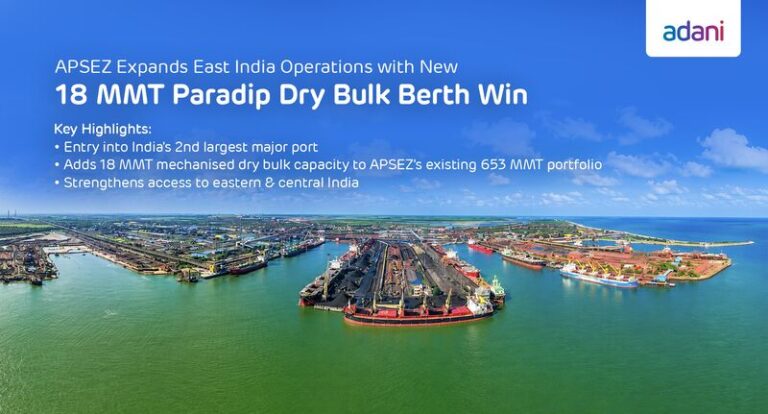
APSEZ expands East India operations with new 18 MMT Paradip dry bulk berth win

AHMEDABAD : Adani Ports and Special Economic Zone Limited (APSEZ) emerged as the highest bidder for Paradip port’s CQ-I and CQ-II berths. APSEZ’s strategic entry into India’s second-largest major port and a key bulk cargo gateway on the eastern seaboard complements existing 140 MMT capacity across Haldia, Dhamra, Gopalpur and Gangavaram ports.

The project offers a 30-year concession period and will add 18 MMT of mechanised dry bulk capacity on BOT basis to APSEZ’s existing 653 MMT domestic portfolio. The addition enhances APSEZ’s access to the mineral-rich hinterland of eastern and central India, supporting long-term cargo growth and network leadership.APSEZ, India’s largest and one of the world’s fastest-growing Integrated Transport Operator, has emerged as the highest bidder and received the Letter of Award (LoA) for the development and operation of two dry bulk berths at Paradip port in Odisha. The addition of 18 Million Metric Tonnes (MMT) of new capacity will take APSEZ’s total domestic portfolio to 671 MMT, advancing its target of reaching 1 billion tonnes of cargo throughput by 2030.

Under the 30-year concession project to be executed under the Public-Private Partnership model, APSEZ will develop CQ-I and CQ-II berths with state-of-the-art mechanized cargo handling systems, deep-draft berths and large-scale storage infrastructure.

“The Paradip concession will strengthen APSEZ’s presence on the East Coast and expand our access to one of India’s most important industrial and mineral-rich hinterlands. With Paradip, APSEZ’s network grows to 16 ports and terminals across India’s 11,000-km coastline, strengthening our ability to deliver integrated port, logistics and marine solutions through the country’s most comprehensive transport infrastructure platform,” said Mr. Ashwani Gupta, Whole-time Director and CEO, APSEZ.

Located in a mineral-rich hinterland amid major steel plants, Paradip is India’s second-largest major port and a vital bulk cargo gateway. The Paradip terminal will boost APSEZ’s capacity to handle rising volumes of coal, limestone, and other dry bulk commodities, while expanding its reach across core industrial and manufacturing clusters in eastern and central India.

This capacity addition addresses high utilisation across India’s East Coast ports amid growing cargo demand. Supported by hinterland steel expansions and government push for domestic coal, the project eases regional capacity bottlenecks to drive industrial growth.

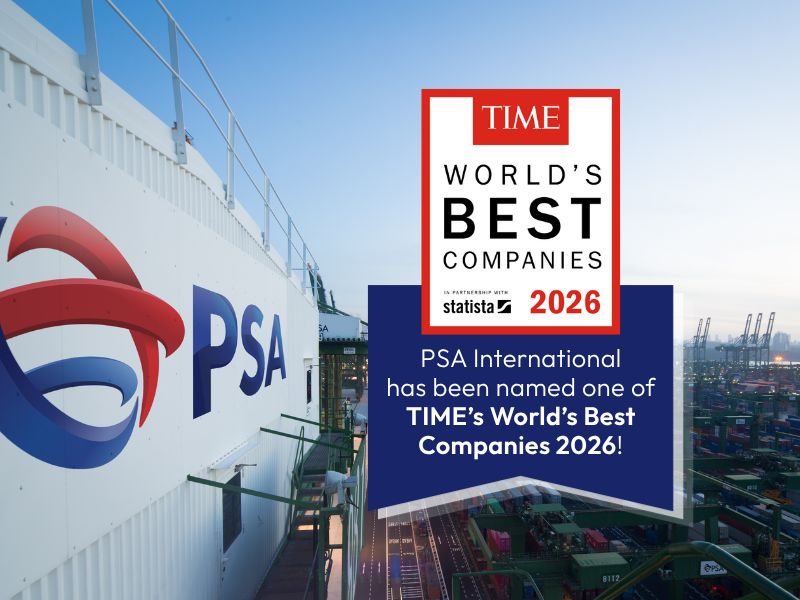
PSA International named among TIME’s World’s Best Companies 2026

SINGAPORE: PSA International has been named one of TIME’s World’s Best Companies 2026, in a global ranking researched in partnership with Statista, recognising organisations demonstrating strong performance across employee satisfaction, financial growth and sustainability transparency.

For PSA, the recognition comes at a significant time as the Singapore-headquartered global port operator continues to expand beyond traditional terminal operations to build an integrated network of ports, supply-chain solutions, marine services and digital capabilities.

The TIME–Statista ranking evaluates companies across three key dimensions — employee satisfaction, revenue growth and sustainability transparency. The 2026 study drew on survey responses from more than 200,000 employees worldwide, company financial data and ESG-related indicators. The three dimensions were combined on an equal-weighted basis to determine the final ranking, with the top 1,000 companies recognised as the World’s Best Companies 2026.

Recognition Reflects PSA’s Global Team Effort

Sharing the achievement, PSA Singapore said the honour reflects the collective efforts of Team PSA across its global network, anchored around three principles: Align with Purpose, Act with Perseverance and Achieve with Pride.

The company said these principles underpin its mission of powering global trade, orchestrating supply-chain ecosystems and creating sustainable value through responsible stewardship.

The recognition also highlights the growing importance of people, resilience and sustainability alongside financial and operational performance in the global logistics and maritime industry.

Record 105 Million TEUs Handled in 2025

PSA enters the 2026 recognition with strong operational momentum.

PSA International handled a record 105 million TEUs across its global ports and terminals in 2025, marking a 5% year-on-year increase and taking the group beyond the 100-million-TEU milestone achieved for the first time in 2024.

Its flagship Singapore operations handled 44.5 million TEUs, up 8.7% from the previous year, while terminals outside Singapore collectively handled 60.4 million TEUs, representing 2% growth.

The group’s financial performance also strengthened in 2025, with revenue increasing by 7% and operating profit rising 19%, according to PSA’s full-year results.

From Port Operator to Supply-Chain Orchestrator

PSA’s global footprint now extends well beyond container terminals. The group describes itself as a global port operator and orchestrator of supply-chain ecosystems, with an integrated network spanning deepsea, rail and inland terminals, marine services, supply-chain nodes and digital platforms.

Its portfolio covers 45 countries, while PSA Singapore operates the world’s largest container transhipment hub, with connections to around 600 ports globally.

This broader ecosystem approach has become increasingly important as global trade faces geopolitical uncertainty, shifting trade patterns, supply-chain disruptions and the accelerating transition towards more sustainable logistics.

Sustainability at the Centre of Future Growth

Sustainability is another increasingly important component of PSA’s strategy.

The company has stated that its climate-action agenda focuses on decarbonisation, energy savings, water conservation and waste reduction, while also working with partners to develop more sustainable and resilient trade flows.

PSA’s 2025 Annual and Sustainability Report also highlights its focus on building a future-ready workplace and notes that the group was recognised as one of the Best Companies Asia-Pacific 2026 by TIME and Statista.

The company has simultaneously continued investing in the future of port operations. In Singapore, the development of Tuas Port is central to PSA’s long-term strategy, with the facility recently reaching the milestone of 25 million TEUs as the operator advances its next generation of automated and digitally enabled port operations.

Strengthening the Networks That Keep Trade Moving

PSA said the TIME recognition belongs not only to its employees but also to its customers and partners who form part of the wider ecosystem supporting global trade.

The company expressed its appreciation to colleagues, customers and partners, while reaffirming its commitment to strengthening the nodes and networks that keep trade moving around the world.

The recognition by TIME and Statista therefore comes as more than an accolade for PSA’s scale as a port operator. It underscores the company’s evolving role in global logistics — where efficient terminals, resilient supply chains, digitalisation, sustainability and engaged people increasingly need to work together as one interconnected ecosystem.

As global trade continues to navigate a period of profound transformation, PSA’s latest recognition places the company among a select group of organisations being acknowledged internationally not only for business performance, but also for the way they engage their people and address long-term sustainability.

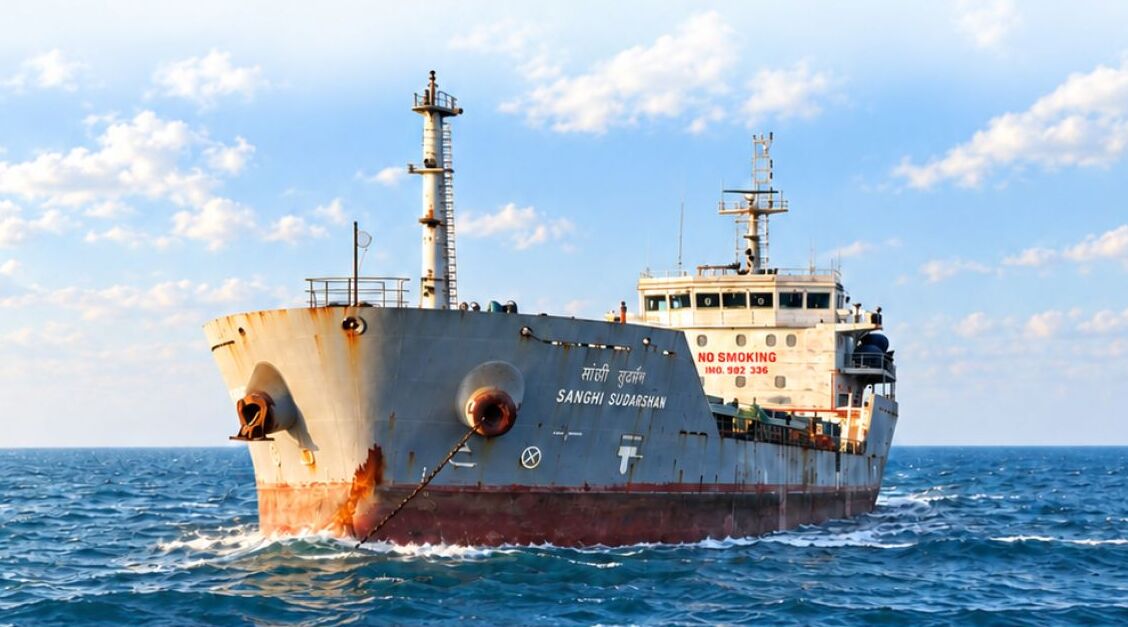
Shreeji Shipping Global strengthens Coastal Shipping footprint with Long-Term Charter of MV Sanghi Sudarshan by AMNS Shipping & Logistics

JAMNAGAR: Shreeji Shipping Global Ltd. has marked another significant milestone in its coastal shipping journey by entering into a long-term charter understanding with AMNS Shipping and Logistics Private Limited for the deployment of its vessel MV Sanghi Sudarshan for coastal cargo movement along the Indian coastline, according to a communique.

The agreement, entered into on September 7, 2026, further strengthens Shreeji Shipping Global’s coastal shipping capabilities and underlines the company’s growing focus on providing customised and efficient maritime logistics solutions for India’s industrial cargo sector.

The approximately 4,400 DWT all-weather vessel brings several operational advantages to coastal cargo transportation. With a draft of approximately 4.5 metres, MV Sanghi Sudarshan can access ports and cargo locations where draft restrictions could limit the deployment of larger vessels.

Vessel adapted for steel coil transportation

A key feature of the latest deployment is the transformation of MV Sanghi Sudarshan from its original clinker-carrying configuration into a vessel capable of transporting steel coils.

Shreeji Shipping Global said the vessel has been modified, strengthened and class-certified to meet customer-specific requirements for steel coil transportation.

The adaptation demonstrates Shreeji Shipping Global’s ability to tailor its vessel assets to the evolving requirements of cargo owners, while creating additional opportunities for coastal movement of industrial commodities.

VLSFO operation and ICV status offer greater flexibility

The vessel’s VLSFO (Very Low Sulphur Fuel Oil) operation provides a cost advantage, while its Indian Coastal Vessel (ICV) status offers greater flexibility on eligible routes.

These capabilities can support more efficient voyage planning and contribute to the optimisation of transportation costs—an increasingly important consideration for industries seeking reliable and competitive domestic cargo transportation solutions.

The vessel’s low-draft profile, combined with its coastal operating status, is particularly relevant in India’s diverse port ecosystem, where differences in navigational draft can influence vessel selection and cargo-routing decisions.

Another step in Shreeji Shipping Global’s coastal growth

The latest charter arrangement follows the deployment of MV SJ LILY, representing another step in Shreeji Shipping Global’s efforts to build and strengthen its coastal shipping capabilities.

The company is positioning its coastal shipping operations around customised, efficient and dependable maritime logistics solutions, with an emphasis on matching vessel capabilities to specific customer and cargo requirements.

For industrial cargo owners, the availability of specialised vessels capable of serving draft-constrained ports can create additional options for moving cargo along India’s coastline. Such flexibility can be particularly valuable for steel and other industrial commodities that require dependable transportation between production facilities, ports and domestic markets.

The deployment of MV Sanghi Sudarshan also comes against the backdrop of India’s continuing efforts to promote greater use of coastal shipping as part of a more efficient and integrated multimodal freight network.

By expanding the availability of specialised coastal tonnage, Shreeji Shipping Global is contributing to the development of maritime transportation solutions that can offer cargo owners greater flexibility in route planning, port selection and logistics management.

The long-term charter with AMNS Shipping & Logistics therefore represents an important addition to Shreeji Shipping Global’s coastal shipping portfolio and reinforces its commitment to delivering customer-focused, cost-efficient and dependable maritime logistics solutions along the Indian coastline.

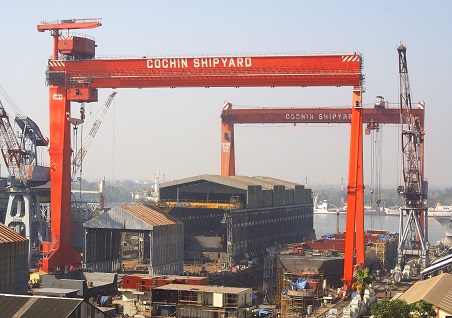
Cochin Shipyard approves 50:50 JV with DP World arm for ₹1,800 crore ship repair facility

KOCHI: Cochin Shipyard Ltd. on Wednesday, September 9, approved a proposal to form a 50:50 joint venture with Drydocks World – Dubai FZCO (DDW), a DP World company, to operate and manage its International Ship Repair Facility (ISRF) at Willingdon Island in Kochi.

Under the proposed transaction, the ISRF will be transferred to the joint venture company on a slump sale basis for a consideration of not less than ₹1,800 crore, according to the company’s exchange filing. Cochin Shipyard will receive 50% of the consideration in cash, with the remaining 50% paid through shares of the JV company.

The proposed JV will be incorporated as a private limited company under the Companies Act, 2013, with its registered office in Kochi. It will own, operate and manage the ISRF for dry-docking, maintenance, repair and overhaul of commercial and naval vessels of up to 130 metres in length and 6,000 tonnes in weight. The JV also plans to augment the facility by adding 10 workstations.

Cochin Shipyard-Drydocks World JV

The ISRF, spread across around 30 hectares at Willingdon Island, has been developed on land and water areas leased from the Cochin Port Authority for 60 years. The facility was constructed at a cost of ₹970 crore and has a 6,000-tonne ship lift and transfer system, six workstations and around 1,400 metres of berthing space.

The facility can handle up to six vessels simultaneously and has an annual throughput capacity of up to 82 ships. It was inaugurated in January 2024 and began commercial operations in August 2024.

For financial year 2026, the ISRF generated revenue of ₹207.33 crore, and accounted for around 4.81% of Cochin Shipyard’s total revenue from operations. Its value, based on third-party independent valuations, stands at ₹1,800 crore, equivalent to around 30.55% of Cochin Shipyard’s net worth as of March 31, 2026.
What will the JV entail?

Cochin Shipyard and DDW will each hold 50% of the JV’s share capital. However, DDW will have the right to nominate three of the five directors on the JV’s board, while Cochin Shipyard will nominate two directors. DDW will also be entitled to nominate senior management personnel, including the CEO, CFO and COO, as applicable.

Cochin Shipyard said the partnership will combine the companies’ expertise and capabilities in ship repair and is expected to facilitate the adoption of global best practices, advanced technologies and efficient processes.

The company expects the JV to improve the quality, efficiency and turnaround time of ship repair services, while augmenting India’s ship repair capacity and strengthening domestic infrastructure for complex and high-value ship repair projects.
Approvals, timeline

The transaction requires approvals from the Cochin Port Authority, the Ministry of Ports, Shipping and Waterways, the Department of Investment and Public Asset Management (DIPAM), and Cochin Shipyard shareholders. The company said it is in the process of approaching the relevant authorities.

Cochin Shipyard said the Joint Venture Agreement is proposed to be signed on September 11, 2026, while the other definitive agreements will be signed after incorporation of the JV company and receipt of the required approvals. The transaction is expected to be implemented before the end of the current financial year.

Drydocks World–Dubai is a DP World company and provides marine and offshore services across ship repair, vessel conversion and offshore energy projects. Its Dubai facility is the largest ship repair facility in the Middle East.

GRSE launches indigenous ocean research vessel ‘Sagar Manthan’

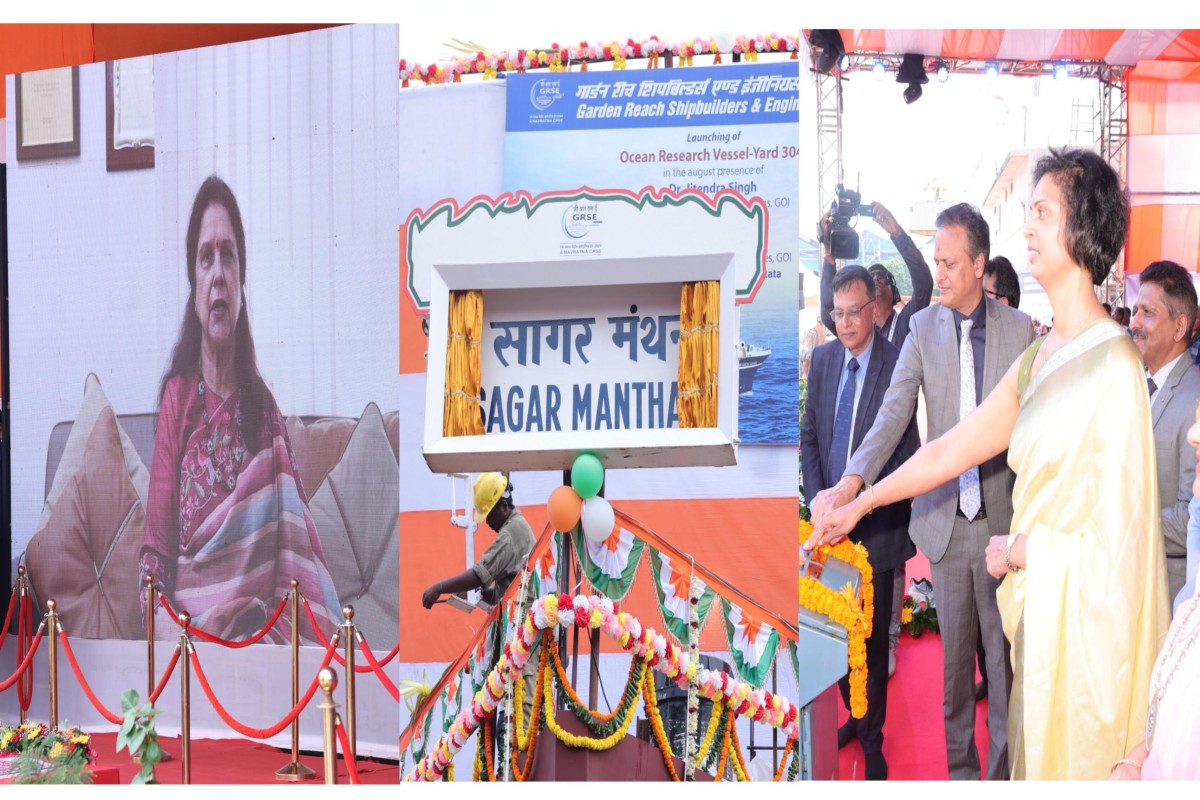
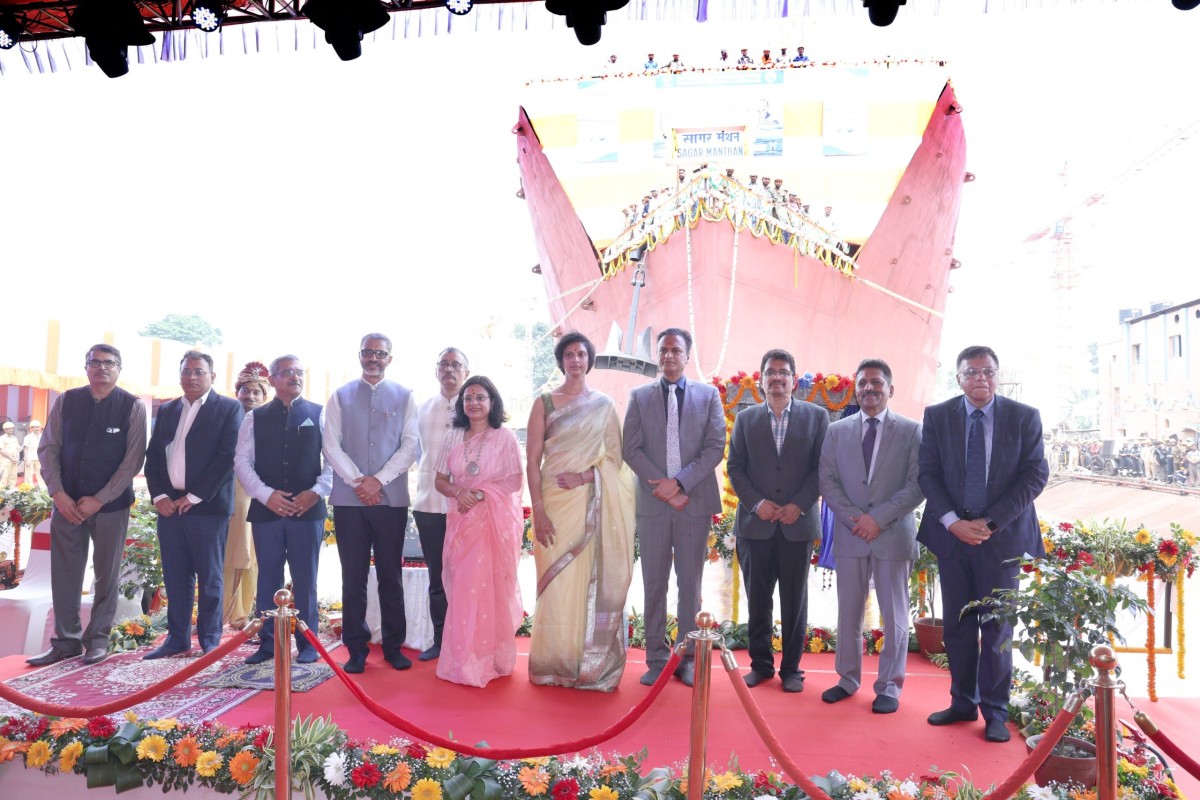
KOLKATA : GRSE on Wednesday (September 9, 2026) launched ‘Sagar Manthan‘, an indigenous ocean research vessel being built for the National Centre for Polar and Ocean Research (NCPOR), in a major boost to India’s capabilities in deep-sea exploration and scientific research. A top government official said the ₹840-crore research vessel is expected to be ready for use by early 2028.

Union Minister of State (Independent Charge) for Earth Sciences Shri Jitendra Singh congratulated Garden Reach Shipbuilders and Engineers (GRSE) and the Ministry of Earth Sciences on the launch and naming of the vessel and conveyed his wishes on the occasion.

grse sagar manthan 1 GRSE launches indigenous ocean research vessel 'Sagar Manthan'

Earth Sciences secretary Srinivasa Kumar Tummala, who was present at the launch event, said the vessel is being built as part of the government’s Deep Ocean Mission and will significantly enhance the country’s ability to undertake scientific research in the Indian Ocean region and beyond.

“This ship will enhance the capabilities of our scientific community to go out and conduct scientific research in the Indian Ocean region and wherever we have an interest in scientific research,” Mr. Tummala said.

“The vessel was launched at GRSE’s Rishi Bankim Shipyard, barely five months after its keel was laid, highlighting the shipyard’s ability to achieve construction milestones ahead of schedule,” GRSE Managing Director Cmde PR Hari, IN (Retd.) said.

The 89.5-metre-long and 18.8-metre-wide vessel has a gross tonnage of 5,900 tonnes and will have a speed of 14 knots at 90 per cent maximum continuous rating.

Mr. Tummala said the vessel would be equipped with advanced scientific systems that would give India an “unparalleled” capability to undertake oceanographic and geophysical research.

It will be capable of carrying out measurements and surveys using sub-bottom profilers, seismic equipment and advanced oceanographic instruments. It will also be equipped with an advanced Doppler weather radar for atmospheric observations.

“The vessel has been designed to operate in severe sea states and will be capable of undertaking research in the equatorial Indian Ocean, the Bay of Bengal and the Southern Ocean, including waters around Antarctica,” he said. “It has the capability to sail in very high sea states and can be taken to the Southern Ocean.”

The vessel will also be capable of launching and recovering autonomous underwater vehicles (AUVs) and remotely operated vehicles (ROVs) being developed by the National Institute of Ocean Technology under the Deep Ocean Mission.

The vessel has been designed to undertake a range of oceanographic and geophysical research activities in coastal seas and deep waters.

“’Sagar Manthan’ will be capable of conducting swath multibeam and geophysical seismic surveys at depths of up to 6 km. It will also undertake Conductivity, Temperature and Depth (CTD) profiling and water sampling, including biological sampling using vertical and horizontal nets,” GRSE said.

The vessel will be equipped for surface and deep-sea mooring and data buoy operations, seabed sampling using corers and grabs, and rock dredging.

It will also undertake atmospheric observations, surface meteorological and current measurements and collection of upper-air data.

“Scientists will be able to carry out analytical work and data processing onboard, while the vessel will also provide training and education facilities for scientists and technicians,” GRSE said.

Mr. Tummala said the vessel would also strengthen India’s efforts to explore marine mineral resources, including manganese nodules and polymetallic sulphides in the Indian Ocean region.

“The vessel will be coordinated by the NCPOR under the Ministry of Earth Sciences and will add significantly to the country’s research fleet and capabilities,” Mr. Tummala said.

The vessel is also expected to contribute to the government’s broader blue economy vision by supporting research relevant to marine resources, shipping, energy, logistics, tourism and other ocean-linked sectors.

“It will be a big feather in the research fleet of our ministry and add to the capability of the country,” Mr. Tummala added.

Ship recycling safety must start before the first cut

By Dr. Anand Hiremath, CEO, Sustainable Ship and Offshore Recycling Program (SSORP)

Ten workers lost their lives during a ship recycling operation in Chattogram on 14 August. Their deaths have understandably renewed questions about safety standards, certification and the progress made by the ship recycling industry.

Whatever the final findings on responsibility, an outcome of this scale is unacceptable. The immediate priority must be to understand how the accident occurred, identify what existing risk assessments may not have adequately considered and make sure the same sequence cannot be repeated.

The statutory investigations will establish the full circumstances and responsibilities. The observations here arise from a preliminary technical assessment and are not intended to pre-empt those findings. They do, however, point to a wider safety issue that deserves attention across the industry.

The maritime sector has spent decades developing strong controls for enclosed spaces. Before a person enters, the atmosphere is tested, ventilation is established, access is controlled and emergency arrangements are put in place. Those controls remain essential.

The recent accident raises a different, but related, question.

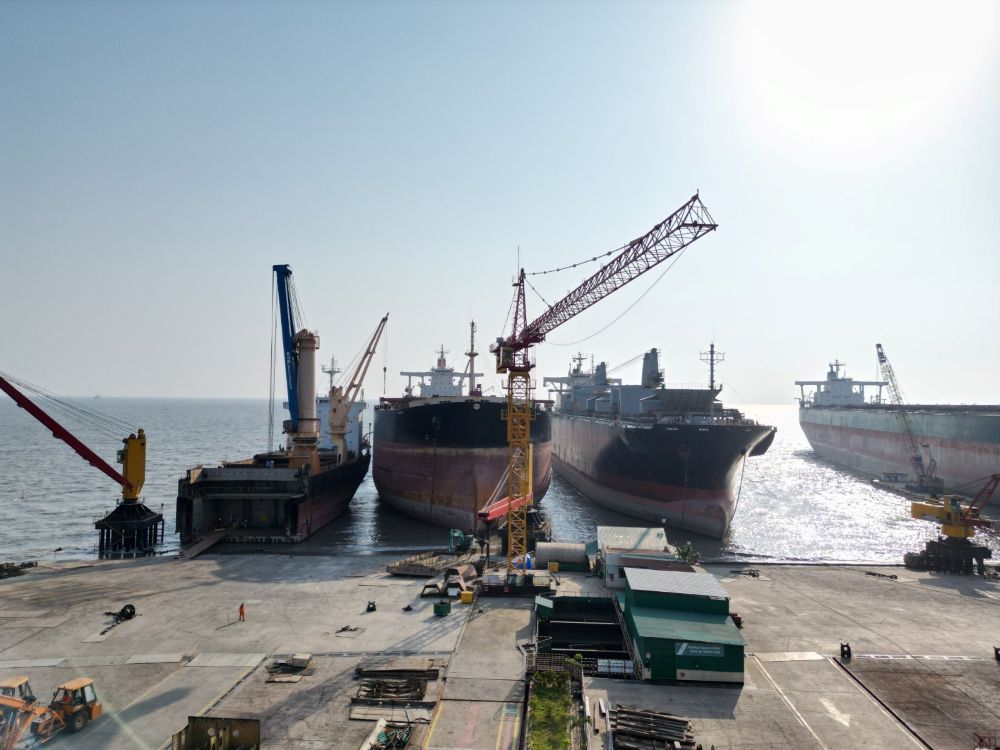
The workers involved in the initial exposure were in an open work area when the bottom of a double-bottom ballast tank was cut. They were not undertaking a conventional confined-space entry. The source of the hazard was unquestionably an enclosed space, but the exposure occurred outside it.

That distinction must not be used as a defence. It should instead prompt the industry to examine whether its safety controls begin early enough.

Hydrogen sulphide is heavier than air. If it is released suddenly from a low point, a dangerous cloud can form close to ground level even in an open atmosphere. The fact that workers are standing outside a tank therefore does not necessarily mean that natural ventilation will protect them from a large and rapid release.

This is an important part of understanding what happened. It avoids the false choice between describing the event as a conventional confined-space accident or treating the open work area as inherently safe. Neither description fully captures the hazard.

Our preliminary technical assessment suggests that prolonged biological activity inside a ballast tank may have played an important role. Biofilm can develop in ballast tanks and, where seawater remains in a closed environment for a prolonged period, oxygen depletion can create anoxic conditions. Over time, temperature, changes in pH and other conditions may contribute to the formation of hydrogen sulphide.

The condition of a ballast tank is therefore not necessarily static. A tank that appears to present one level of risk at an earlier stage of recycling may develop very different internal conditions after remaining closed for many additional months.

This is particularly relevant in a recycling process that extends over a prolonged period.

By the time of the accident, about 70% of the vessel had already been recycled. The engine room and accommodation had been dismantled safely, while two other ballast tanks had previously been dealt with using the same general method without the same outcome.

That fact should not be used to lessen the seriousness of the accident or to defend any participant. It illustrates a familiar problem in industrial safety.

When an operation has been completed successfully several times, confidence in the method naturally increases. A task gradually becomes routine. But previous success does not mean the conditions behind the next piece of steel will be identical.

The successful opening of one ballast tank cannot become the risk assessment for the next.

The broader certification context is relevant for the same reason. The recycling facility had been subject to review by recognised organisations and operated within the developing

Hong Kong Convention certification framework. That does not prove that every operational risk had been identified, nor does the accident make certification meaningless. It shows why any safety and certification system must be capable of evolving when operating experience reveals a hazard that has not been sufficiently considered.

The technical classification of the accident is therefore important.

It can be described as an uncontrolled release of stored hazardous liquid and its dissolved gas load from a residual enclosed space into an adjacent open work area, during the breaching of that space at its lowest point.

In that sense, this was a stored-energy event as much as a toxic-atmosphere event.

When a colleague collapses, the natural instinct is to rush forward and help. In a toxic-gas incident, that instinct can turn one casualty into several in a matter of moments.

Rescue therefore cannot depend on improvisation. Appropriate breathing apparatus must be immediately available where the risk assessment requires it, trained personnel must be capable of responding and access to a suspected gas-affected area must be controlled.

Regular, realistic rescue drills are equally important. A drill should test what actually happens when somebody collapses in a gas-affected work area. Who raises the alarm? Who prevents others from entering? How quickly can a properly protected rescue team respond? Is the equipment ready for immediate use?

Those are practical questions, not paperwork.

Responsibility for specific failures must be determined and acted upon through the official process. At the same time, it would be a mistake for the wider industry to treat this only as an issue concerning one yard, one vessel, one cash buyer, one owner or one certification body.

If a routine operation can produce a hazard that existing risk assessments did not sufficiently anticipate, the lesson belongs to the whole system.

The maritime industry already understands that entering an enclosed space demands strict controls. The lesson from this accident is that those controls may need to begin one step earlier.

Even in an open work area, the danger can come out of the tank.

Ship recycling safety must start before the first cut.


Author:

Dr. Anand Hiremath Ship recycling safety must start before the first cut

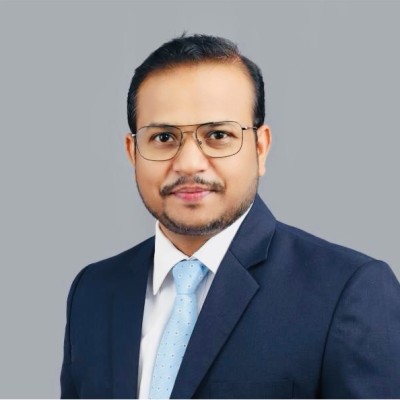
Dr. Anand Hiremath, CEO, Sustainable Ship and Offshore Recycling Program (SSORP)