Home Blog Page 113

India’s bullet train to begin testing by May-June 2027 : Ashwini Vaishnaw

VADODARA: India’s first indigenously manufactured bullet train is expected to hit the tracks for testing by May or June next year, Railway Minister Shri Ashwini Vaishnaw said on Tuesday, setting the stage for the country’s entry into high-speed rail operations.

Speaking at the ‘NaMo for Viksit Bharat’ event in Vadodara, Vaishnaw said the first body frame of the train had recently been completed and sent for a squeeze test.

“By May or June of next year, India’s own bullet train will be on the tracks for testing,” Vaishnaw said, adding that the testing phase would continue for two to four months before the train is inaugurated.

The minister said the bullet train would be inaugurated by Prime Minister Shri Narendra Modi following the completion of testing.

The project is part of the Mumbai-Ahmedabad High-Speed Rail corridor and is being developed with a focus on increasing domestic manufacturing capabilities under the government’s ‘Atmanirbhar Bharat’ initiative.

Vaishnaw said construction on the Surat-Vapi section of the corridor is expected to be completed by December this year. The Surat-Bilimora section is also targeted for commissioning in 2027.

The 508-km Mumbai-Ahmedabad corridor is designed for high-speed trains, with the full journey expected to take around two hours when operating with limited stops. The project includes major engineering works, including bridges, elevated viaducts and an undersea rail tunnel.

The minister also highlighted broader railway modernisation, saying the government was working on upgrading railway infrastructure, operating systems, reservation systems and freight services.

He said 280 railway stations had been redeveloped and 36,000 km of new railway tracks had been developed. He also cited major projects including the Chenab Bridge and the railway connection to Mizoram.

Vaishnaw said the changes underway in Indian Railways were aimed at creating infrastructure that would serve future generations.

The bullet train project has faced delays since its foundation stone was laid in 2017, with land acquisition and other construction-related challenges affecting its original timeline. The government is now targeting phased commissioning of the high-speed rail corridor from 2027.

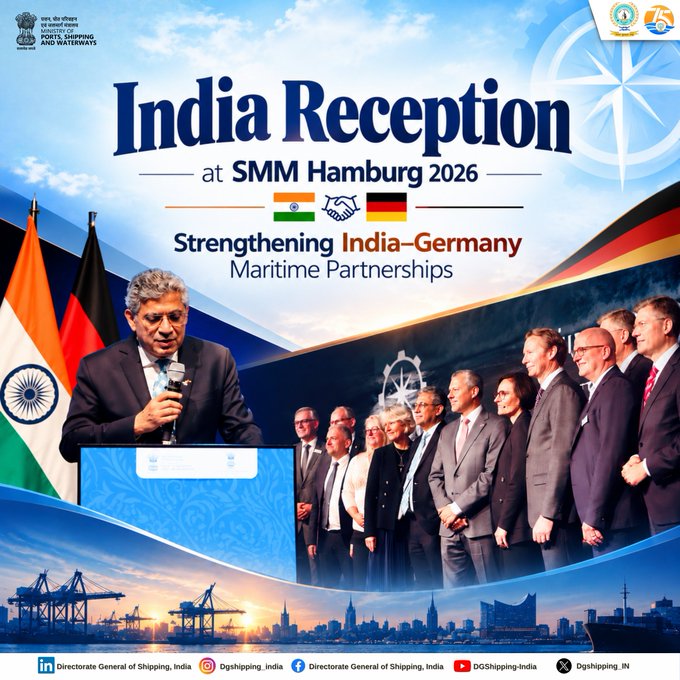
India and Germany deepen maritime co-operation at SMM Hamburg 2026

HAMBURG: India reaffirmed its commitment to strengthening maritime cooperation with Germany and the wider European maritime community during the India Reception held in Hamburg on the sidelines of SMM Hamburg 2026.

Hosted by the Consulate General of India, Hamburg, the reception brought together government representatives, industry leaders, maritime experts and other distinguished stakeholders from India, Germany and across Europe for discussions on strengthening collaboration and exploring new opportunities in the maritime sector.

Shri Vijay Kumar, Secretary, Ministry of Ports, Shipping and Waterways, along with representatives of the Directorate General of Maritime Administration (DGMA), joined dignitaries and industry leaders at the event, underscoring India’s growing engagement with the global maritime community.

The discussions focused on building a resilient, innovative and future-ready maritime ecosystem, with emphasis on enhanced international cooperation, technological advancement, sustainability and stronger institutional partnerships.

A major highlight of the evening was the signing and exchange of a Memorandum of Understanding (MoU) between the Indian Maritime Centre (IMC) and the German Maritime Centre (DMZ). The agreement marks an important step towards strengthening maritime collaboration between India and Germany and is expected to facilitate closer engagement between the two countries across key areas of the maritime sector.

The reception also witnessed the announcement of the Indian Register of Shipping’s (IRS) Hamburg Office, reflecting India’s expanding global maritime presence and strengthening institutional linkages between the major maritime hubs of Mumbai and Hamburg.

The establishment of the Hamburg office is expected to further enhance the Indian Register of Shipping’s engagement with international stakeholders and support closer cooperation with the European maritime industry.

The milestones achieved during the India Reception highlighted the growing strength of the India-Germany maritime partnership and reinforced the shared commitment of both countries towards building a more connected, sustainable and future-oriented maritime sector.

As SMM Hamburg 2026 continues to bring together global maritime leaders and industry stakeholders, India’s engagements in Germany are setting the stage for deeper partnerships, greater institutional cooperation and new opportunities across the international maritime ecosystem.

The India Reception in Hamburg marked another significant step in India’s expanding global maritime outreach, reaffirming the country’s commitment to innovation, collaboration and stronger international partnerships as it moves towards a resilient and future-ready maritime future.

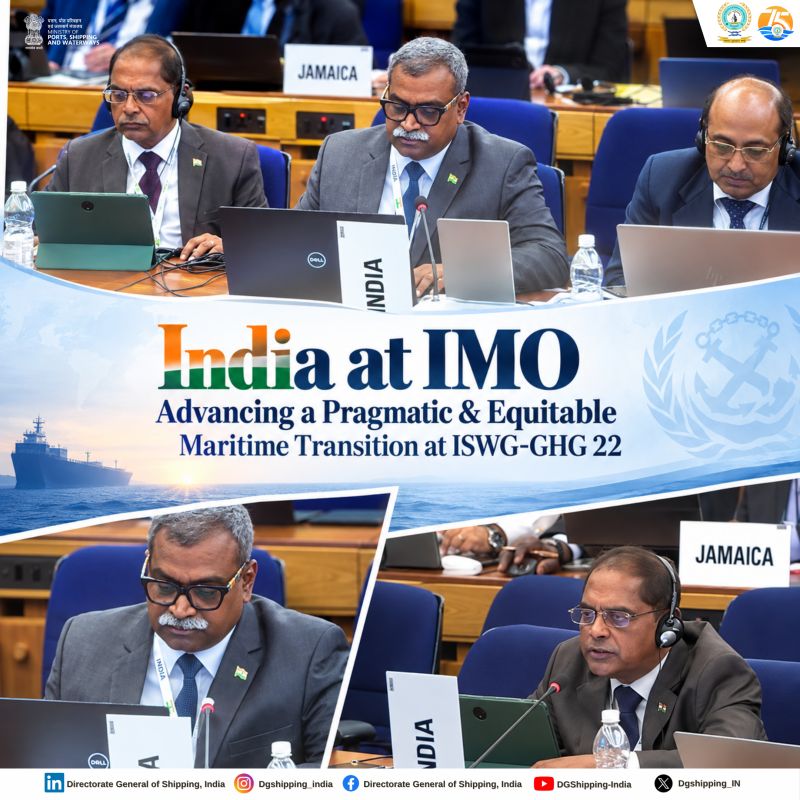
India advocates practical and equitable pathway for shipping decarbonisation at IMO ISWG-GHG 22

LONDON: India participated in the 22nd Session of the International Maritime Organization’s Intersessional Working Group on Greenhouse Gas Emissions (ISWG-GHG 22), held from 1–4 September 2026, contributing actively to key deliberations concerning the implementation of the IMO Net-Zero Framework and the future pathway for the decarbonisation of international shipping.

The Indian delegation was led by Shri Satish Devdas Kamath, Principal Officer, MMD Kandla, and included Shri C.P.K. Kashyap and Shri Mudit Mehrotra, representing India’s maritime interests during the discussions.

The session brought together IMO Member States to deliberate on critical issues related to the implementation of the IMO’s climate ambitions and the transition of international shipping towards lower and zero greenhouse gas emissions.

During the deliberations, India presented a balanced and pragmatic approach towards the implementation of the IMO Net-Zero Framework. India emphasised the importance of adopting a phased and practical transition that takes into account technological readiness, the availability and affordability of alternative fuels, infrastructure preparedness and the diverse circumstances of Member States.

India’s key interventions focused on the need for a preparatory phase to assess the readiness and practical feasibility of alternative fuels and emerging technologies before the implementation of major measures. Such a phase would help stakeholders better understand the operational, technological and economic challenges associated with the transition to cleaner fuels.

India also advocated for an experience-building phase before the introduction of significant measures. This approach would enable Member States and the shipping industry to gain practical experience, assess implementation challenges and develop informed solutions based on real-world operational experience.

On the issue of future economic measures, India emphasised that such measures should be evidence-based, practical and equitable, while recognising the varying national circumstances, developmental priorities and capacities of Member States. India underlined the importance of ensuring that the global transition towards low- and zero-emission shipping remains inclusive and does not disproportionately impact developing countries.

The session reflected broad support among Member States for the objectives of the 2023 IMO Greenhouse Gas Strategy. India’s constructive interventions and its call for preparatory and experience-building phases received encouraging support from several Member States.

India’s participation at ISWG-GHG 22 reaffirmed the country’s commitment to contributing actively and constructively to international efforts aimed at reducing greenhouse gas emissions from shipping.

As the global maritime industry moves towards a low-carbon future, India continues to advocate for a transition that is practical, inclusive, technologically feasible and equitable. The country remains committed to working closely with the International Maritime Organization and Member States to develop a balanced pathway for the decarbonisation of international shipping while safeguarding the interests and developmental needs of all nations.

India’s engagement at ISWG-GHG 22 highlights its continued commitment to shaping a sustainable and equitable future for global shipping, ensuring that the transition towards net-zero emissions is guided by practicality, collaboration and shared responsibility.

“Will hold bilateral talks with numerous leaders”: MEA on PM Modi’s upcoming BRICS engagements

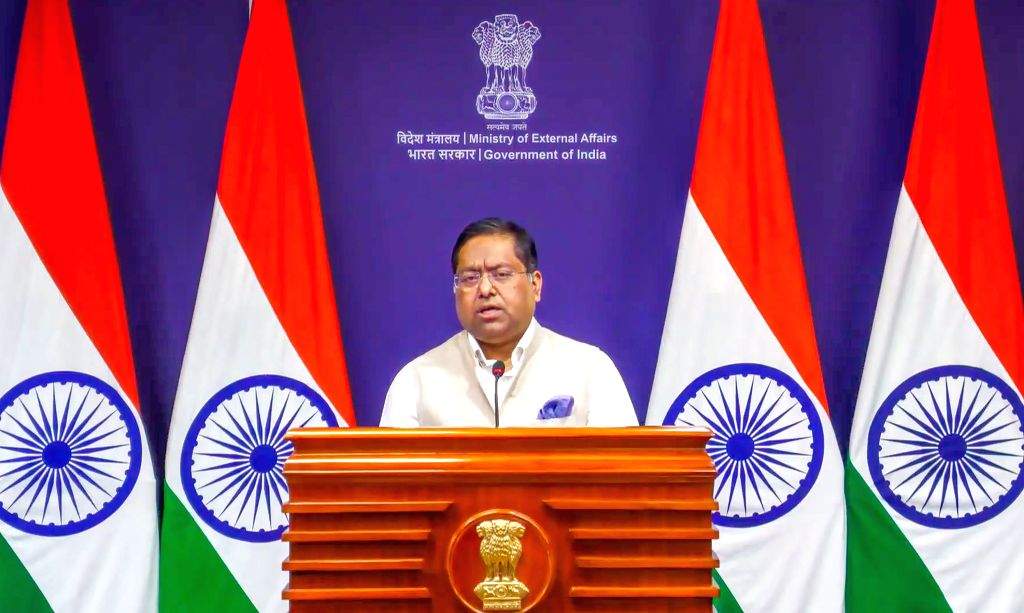
NEW DELHI: Prime Minister Shri Narendra Modi will hold bilateral talks with several leaders on the sidelines of the upcoming BRICS Summit 2026, the Ministry of External Affairs (MEA) said on Tuesday, while maintaining that the details of the participating leaders and the meetings will be shared separately.

Addressing a biweekly media briefing, MEA spokesperson Randhir Jaiswal said that the ongoing Russia-Ukraine conflict will be among the issues that could come up during the Prime Minister’s bilateral discussions.

“Our Prime Minister will hold bilateral talks with numerous leaders during the BRICS summit. Detailed information regarding the specific leaders and the timing of these meetings will be provided to you. As for the ongoing conflict between Russia and Ukraine–this is one of the many issues that will come up during the bilateral discussions,” Jaiswal said.

On the participation of heads of state and government in the upcoming BRICS Summit, Jaiswal said the Ministry would provide an update on the participation.

“We will update you on the participation. But at this point, I would say that please wait for an update from our side,” he said.

Asked specifically about Bangladesh Prime Minister Tarique Rahman‘s participation in the BRICS Summit, Jaiswal said he did not have any update. “I don’t have any update,” the MEA spokesperson said.

India is set to host the 18th BRICS Summit in New Delhi on September 12-13, 2026, marking a pivotal moment for the rapidly evolving intergovernmental forum of major emerging market economies and developing nations.

Initially established as the BRIC alliance comprising Brazil, Russia, India, and China, which convened its first Foreign Ministers’ meeting on the sidelines of the UN General Assembly in New York in 2006 and held its inaugural summit in Yekaterinburg, Russia, in 2009, the group expanded to BRICS following South Africa’s admission in 2011.

The grouping has since undergone a transformative expansion, welcoming Egypt, Ethiopia, Iran, Saudi Arabia, and the UAE as full members in January 2024, followed by Indonesia in January 2025. Today, featuring 11 full member states alongside an expanding array of partner nations, the alliance commands significant global economic and diplomatic influence.

Guided by India’s 2026 chairship theme, “Building for Resilience, Innovation, Cooperation and Sustainability,” New Delhi’s vision focuses on steering the agenda beyond routine political coordination towards tangible, practical cooperation across commerce, agriculture, healthcare, energy, digital technology, urban development, small enterprise empowerment, startups, climate action, and cultural exchanges.

India’s chairship framework is organised around four primary pillars, starting with Resilience, which aims to protect institutions, societies, and economies from supply-chain disruptions, health crises, geopolitical shocks, and climate risks.

Innovation forms the second pillar, concentrating on the deployment of artificial intelligence, financial technologies, digital public infrastructure, and data-driven systems.

The third pillar, Cooperation, focuses on broadening trade flows, institutional linkages, development financing, and economic policy alignment. The fourth pillar, Sustainability, seeks to promote global climate action, green finance, energy transitions, and sustainable development, ensuring that established mechanisms deliver enduring operational benefits beyond the summit.

In economic governance and trade, the alliance has advanced the Strategy for BRICS Economic Partnership 2030 while reaffirming support for a robust multilateral trading system with the WTO at its core. To fortify trade corridors, member states have adopted the BRICS Global Value Chains Action Plan 2026-2030, alongside guiding principles designed to assess export-oriented micro, small, and medium enterprises (MSMEs).

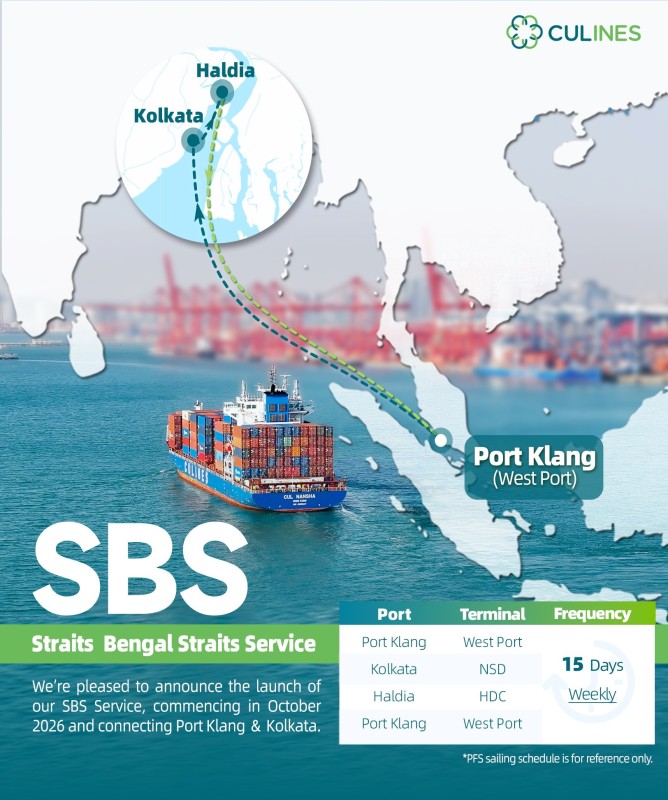
CULines launches new ‘SBS Service’ connecting Port Klang and Kolkata

KOLKATA: CULines has announced the launch of its new SBS Service, scheduled to commence operations in October 2026, connecting Port Klang and Kolkata and strengthening regional and international connectivity for customers across its expanding network.

New service to strengthen Kolkata’s connectivity with key markets across Asia, the Middle East and the Red Sea. The new service will leverage Port Klang as a key transshipment hub, enabling enhanced connectivity between Kolkata and CULines’ wider service network across Intra-Asia, the Middle East and the Red Sea.

The launch of the SBS Service is expected to provide customers with greater flexibility and access to key markets by creating more seamless cargo connections through Port Klang.

Under the new service arrangement, cargo originating from major ports across China, Japan, South Korea, Vietnam, Thailand and Indonesia will be able to connect efficiently to Kolkata through CULines’ existing regional network and transshipment connections at Port Klang.

The service will also strengthen westbound connectivity for Indian exporters. Export cargo from Kolkata can be transshipped through Port Klang and connected onwards to CULines’ services serving destinations across the Middle East and the Red Sea.

By bringing regional services closer together, the SBS Service is designed to offer customers more flexible and reliable routing options while improving access to a broader network of markets.

The introduction of the new service reflects CULines’ continued focus on strengthening its network connectivity and enhancing service options for customers across Asia and beyond.

With Kolkata serving as an important gateway to eastern and northeastern India, the new SBS Service is expected to support greater trade connectivity and provide exporters and importers with improved access to international markets.

The launch of the SBS Service marks another step in CULines’ efforts to create an increasingly interconnected shipping network, linking regional markets with key trade corridors and offering customers greater flexibility, connectivity and opportunities across its global service network.

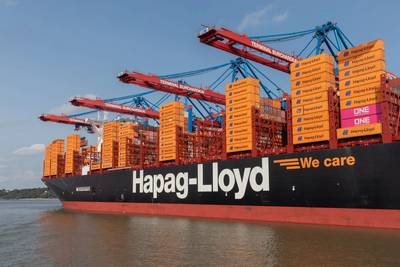
Hapag-Lloyd plans improvements to $4.2 billion bid for Israel’s ZIM

JERUSALEM : Hapag-Lloyd is working with the Israeli government on improvements to its proposed $4.2 billion cash purchase of ZIM Integrated Shipping Services the German shipping group said ​on Monday. The proposed deal has faced heavy opposition in Israel, including ZIM’s ‌workers, Defence Minister Israel Katz and other government officials, who argue that it undermines national security by transferring Israel’s shipping to a foreign company.

“We are now developing an improved proposal designed to ​further strengthen Israel’s maritime security and independence,” said Hapag-Lloyd CEO Rolf Habben Jansen. “The ​revised proposal will secure Israel’s access to key shipping routes, including routes ⁠from Asia,” Habben Jansen added in a statement.

Hapag-Lloyd, which aims to secure its ​position as the world’s fifth-largest shipping group, said that the deal would establish ZIM as ​a fully Israeli-controlled container shipping company owned by Israeli private equity fund FIMI.

In a related deal, FIMI plans to acquire a business with 16 vessels carved out from ZIM that secures direct global ​maritime connections for Israel through a new company called ZIM Israel.

Hapag-Lloyd said it had ​held a number of rounds of meetings with Israeli officials that included the economy, finance and defence ‌ministries “to ⁠revise structural elements of the proposed acquisition”, which is expected to be submitted to Israel’s cabinet later this month. Israel holds a “golden share”, which gives Israel special ownership rights in ZIM. “The agreement will also prevent any foreign interference in the transportation of Israel’s sensitive ​cargo, representing a significant ​improvement over the current ⁠arrangement,” Habben Jansen said.

Chairman of the ZIM Workers’ Committee, Oren Caspi, said he remained opposed to the proposed tie-up on the ​grounds that ZIM should not be handed over to “hostile parties”. Currently, up ​to 24% ⁠of ZIM’s shares can be sold to a single foreign investor without prior notice to Israel’s government. Hapag-Lloyd has proposed reducing the threshold to 10% to prevent foreign influence.

For its ⁠part, ​FIMI committed to not list ZIM Israel’s shares for ​trading outside of Israel’s stock market. Hapag-Lloyd said the parties involved had agreed to strengthen shipping connections between Israel ​and Asia at the request of Israeli authorities.

Iran strikes US base in Jordan in retaliation for attacks on oil tankers near Kharg Island and Jask Port

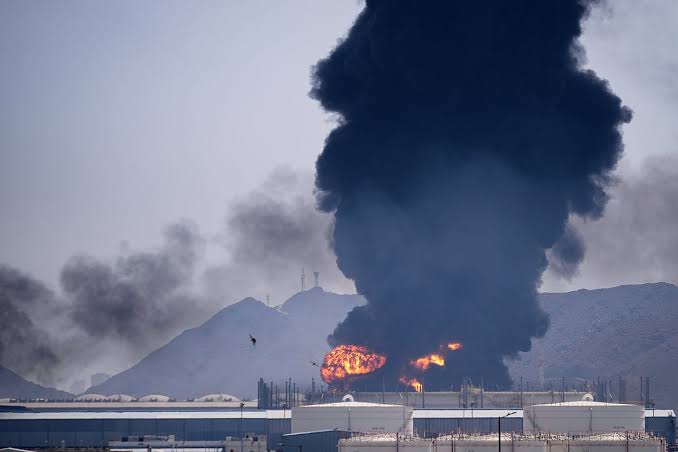
AMMAN (JORDAN): Iran has launched a barrage of missiles targeting US military positions in Jordan, in direct retaliation for attacks on Iranian oil tankers near Kharg Island and the Jask port.

The Islamic Republic of Iran Broadcasting (IRIB), citing Arab media, confirmed that a batch of Iranian missiles dived toward enemy targets, with Iranian missiles successfully striking a US base operating in Jordan.

The missile offensive follows a succession of US strikes on Iranian maritime assets in regional waters.

IRIB reported that an initial attack targeted an Iranian oil tanker near the Kharg Island anchorage, where crew members were safely evacuated. Moments later, US forces carried out a subsequent attack on a commercial vessel in the coastal waters off Jask County, alongside another explosion of unidentified origin reported in the area.

In response to the hostilities, the Islamic Revolutionary Guard Corps (IRGC) Navy issued an urgent evacuation warning, according to IRIB.

Addressing the crew of maritime vessels in neighbouring ports, the IRGC vowed to retaliate by targeting oil tankers near Bahraini and Kuwaiti ports.

“In light of the atrocities of the American terrorist army in targeting several tankers of the Islamic Republic of Iran, we warn all tanker crews in the Kuwaiti and Bahraini ports, which host these terrorists and are partners in their atrocities, to immediately leave their vessels, whether at anchor or at the ports, because they will be targeted,” the IRGC Navy declared according to IRIB.

Tensions across the strategic waterways and regional host nations remain at critical levels as both military forces continue exchanging strikes.

Earlier on Tuesday, Iran’s IRGC Navy claimed that its forces had captured a US unmanned submersible at the entrance of the Strait of Hormuz during a complex intelligence and operational operation.

According to IRIB, the IRGC Navy fighters “trapped one of the most modern, intelligent, unmanned submarines” belonging to the US military at dawn.

The IRGC Navy said the submersible is equipped with the latest technology in the underwater field and was delivered to the US fleet in 2025.

According to Iran’s state news agency IRNA, the vessel is equipped with the world’s most advanced underwater technology and has been seized as a “war trophy.”IRNA further reported that photographs of the captured submersible are expected to be released in the coming hours.

The development comes as US President Donald Trump claimed on Monday (local time) that oil prices will drop sharply once the United States achieves victory in its conflict with Iran, forecasting gas prices could fall below two dollars per gallon.

In a post on his Truth Social platform, Trump linked high energy costs directly to ongoing military operations in the Middle East, asserting that post-war markets would stabilise rapidly.

“Oil prices will drop precipitously, like everything else is dropping (but more!), when we WIN the war with Iran,” Trump wrote. “Three Dollars a gallon, but ultimately, below Two Dollars a gallon.”

Trump further reiterated his threat that the US will not let Iran have a nuclear weapon. “It will all happen quickly, and Iran will never have a Nuclear Weapon. MAGA!” he added.

Source: ANI

US strikes five more Iranian oil tankers as Strait of Hormuz crisis deepens

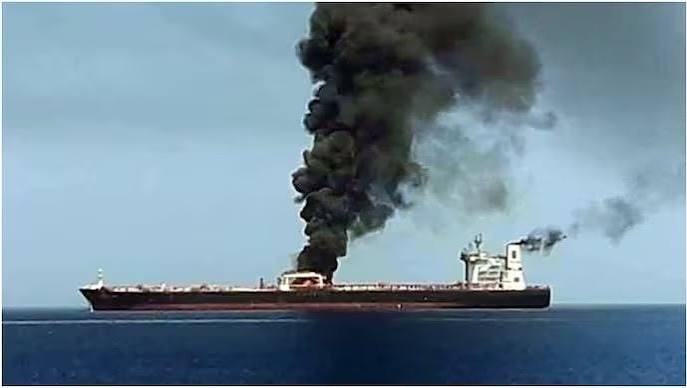
WASHINGTON/TEHRAN : The maritime confrontation between the United States and Iran escalated sharply on September 8, with U.S. Central Command (CENTCOM) announcing the destruction of five additional Iranian crude oil carriers in a second wave of strikes, days after three Iranian tankers were targeted in earlier U.S. operations.

According to CENTCOM, its forces destroyed five Iranian crude oil carriers after the Islamic Revolutionary Guard Corps (IRGC) targeted a U.S. Navy warship with ballistic missiles on two occasions over the preceding two days. CENTCOM said the American warship successfully evaded both attacks and continued its patrol, with no U.S. personnel injured.

The five vessels identified by CENTCOM were M/T Kaviz, M/T Charminar, M/T Horizon 1 and M/T Riesco, struck in the Gulf of Oman, and M/T Derya, located near Iran’s strategically important Kharg Island. CENTCOM said crews aboard the vessels were instructed to abandon ship before the strikes and that the vessels were subsequently rendered inoperable.

The latest action follows the September 5 U.S. strikes on three Iranian crude oil carriers — Downy, Stark I and Kylo/Noxen — after what CENTCOM described as failed IRGC attacks against U.S. naval vessels. Taken together, the two operations represent a significant expansion of the maritime dimension of the U.S.-Iran conflict, with commercial oil shipping increasingly becoming part of the military confrontation.

Kharg Island and Iran’s Oil Lifeline

The location of the latest strikes carries particular economic significance. Kharg Island is Iran’s principal oil-export hub, making any military activity around its anchorage and surrounding waters potentially consequential for the country’s ability to move crude to international markets.

CENTCOM has described the targeted vessels as part of an Iranian maritime “shadow network” that allegedly supports the IRGC and its regional proxies. The U.S. strategy therefore appears to combine military retaliation with economic pressure by targeting vessels associated with Iran’s oil-export infrastructure.

Iranian state media separately reported attacks on Iranian tankers near Kharg Island and Jask, with crews evacuated. Iranian reports described several vessels being hit but did not independently establish the full five-vessel figure cited by CENTCOM. The locations reported by Iranian media broadly correspond with the areas identified in the U.S. military account.

Strait of Hormuz Under Mounting Pressure

The confrontation is unfolding against an increasingly fragile maritime environment in the Strait of Hormuz, one of the world’s most important energy chokepoints.

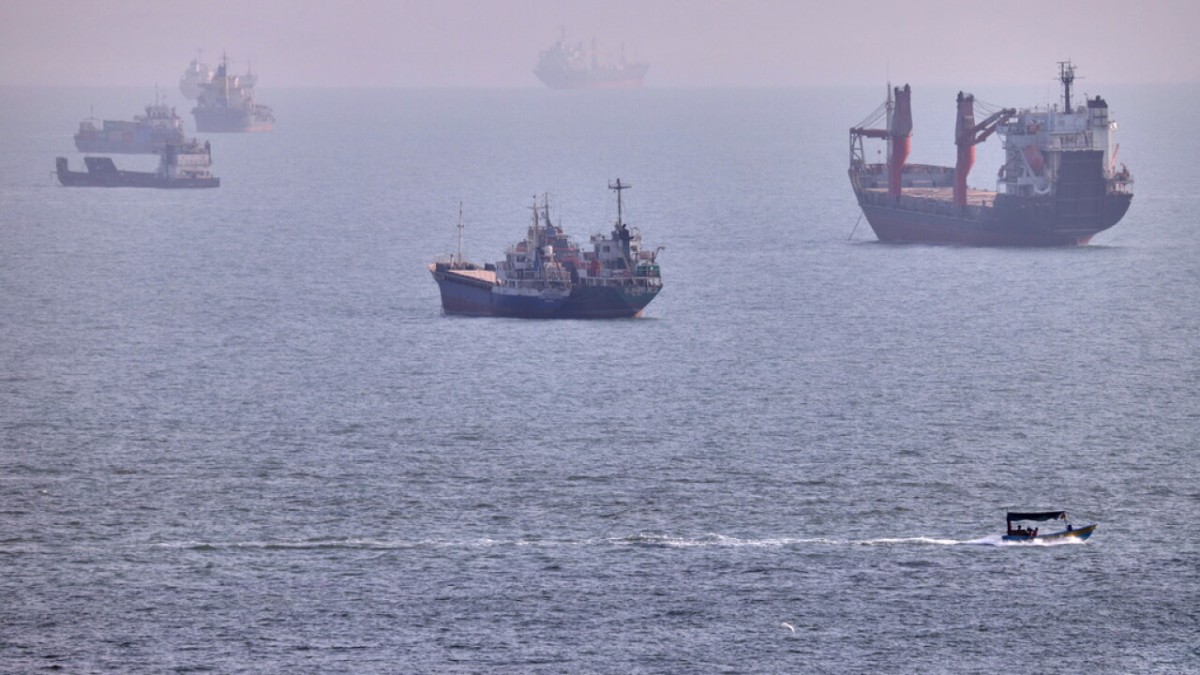
Shipping activity through the strait has already fallen dramatically. Kpler data cited by Reuters showed that an average of only about 10 commodity vessels per day transited the waterway over the preceding 10 days, the lowest level since May. At one point, only two vessels crossed the strait in a single day, highlighting the growing caution among shipowners, operators and crews.

Qatar has warned that continued disruption could result in an “industrial catastrophe”, underscoring the potential consequences for regional energy supplies and industries dependent on uninterrupted Gulf shipping.

The stakes extend far beyond Iran and the United States. The Strait of Hormuz is a critical route for global oil and energy shipments, meaning prolonged disruption could affect crude prices, marine insurance, vessel deployment, freight costs and refinery supply chains across Asia and other major consuming regions.

Iran Warns Tankers in Gulf Ports

Following the latest U.S. strikes, the IRGC Navy warned tanker crews operating near Kuwaiti and Bahraini ports to evacuate their vessels, threatening possible retaliation. Iran has accused those countries of hosting U.S. forces and supporting American military operations in the region.

The warning raises the possibility that the conflict could spread beyond Iranian-flagged or Iran-linked vessels to a much broader range of commercial shipping. Such a development would substantially increase risks for tanker operators, charterers, insurers and ports throughout the Gulf.

Iran has also threatened the establishment of an exclusion zone around the Strait of Hormuz, while the United States has maintained that it will continue to support maritime movement through the waterway. The competing positions further complicate efforts to restore predictable commercial navigation.

Oil Markets React to Escalation

The latest escalation is already being reflected in energy markets. Brent crude briefly approached $100 per barrel, with prices rising sharply as traders assessed the possibility of further disruptions to Gulf energy flows. The combination of tanker strikes, reduced Hormuz traffic and attacks involving regional energy infrastructure has intensified concerns about supply security.

The impact could extend into freight and logistics markets. Prolonged restrictions on tanker movements could increase voyage distances, waiting times, war-risk premiums and insurance costs, while disruptions to crude and refined-product flows could place additional pressure on Asian refineries and other major energy consumers.

A New Phase in Maritime Economic Warfare

The September 8 strikes underline a significant shift in the character of the conflict. What began primarily as a military confrontation involving naval vessels and missile attacks is increasingly affecting commercial tankers, oil exports and maritime trade routes.

The United States has demonstrated that attacks on its naval forces could be followed by direct action against Iranian oil assets, while Iran has shown its willingness to threaten commercial vessels and challenge the movement of shipping through Hormuz.

For the global maritime industry, the central concern is now whether the cycle of retaliation remains confined to Iranian-linked vessels or expands to neutral and third-country shipping.

The immediate facts remain subject to competing accounts from the parties to the conflict. CENTCOM’s specific claim that five Iranian crude carriers were destroyed, and its account of two missile attacks against a U.S. warship, should be treated as the U.S. military’s version of events. Iranian state media independently reported tanker strikes near Kharg Island and Jask and the evacuation of crews, providing corroboration for the occurrence of fresh tanker attacks without independently establishing every detail of the U.S. account.

With Hormuz traffic already at its lowest level in months, the next moves by Washington and Tehran could determine whether the current disruption remains a limited maritime confrontation or develops into a much wider threat to global energy and commercial shipping.

For the maritime sector, the message is increasingly clear: the Strait of Hormuz is no longer merely a geopolitical flashpoint — it has become the central arena where military pressure, energy security and commercial shipping are colliding.

Yemen’s Iran-backed Houthis have become an increasingly disruptive force in the Mid-East

ADEN: Yemen’s Houthi rebels, who launched a wave of attacks on Saudi oil facilities on Tuesday, have become an increasingly disruptive force in the Middle East in recent years, striking Israel, Saudi Arabia and a global shipping route in solidarity with Iran and allied armed groups.

They have been at war with Yemen’s internationally recognized government since 2014, when the rebels swept down from their mountainous heartland and seized much of northern and central Yemen. Saudi Arabia entered the war the following year on behalf of the government.

A ceasefire largely halted the fighting in 2022. The Houthis trained their fire on Israel and Red Sea shipping routes after Hamas’ Oct. 7, 2023, attack triggered the war in Gaza. Those attacks subsided after the U.S. carried out a wave of airstrikes on the Houthis in early 2025.

The Houthis kept to the sidelines during the initial, heavy phase of the Iran war, but in July they resumed attacks on Saudi Arabia and declared a blockade against the oil giant. The Houthis have their own reasons for fighting the Saudis, but it also serves Iran’s interests by ramping up pressure on an American-allied oil producer as Tehran seeks leverage against the United States.

The rebels have been at war with Saudi Arabia for more than a decade
The Houthis are members of Islam’s minority Shiite Zaydi sect, which ruled Yemen for 1,000 years until 1962. Their official slogan is “God is greatest; death to America; death to Israel; a curse on the Jews; victory for Islam.”

They battled Yemen’s central government for years before launching the 2014 offensive, which soon ground into a stalemate. The war has killed an estimated 150,000 people and at times pushed Yemen to the brink of famine. Even before the war, it was the poorest country in the Arab world.

A Saudi-led blockade has largely isolated Houthi-run areas of Yemen — including the capital, Sanaa — deepening the misery there. The Houthis have also faced growing discontent over their campaign of detaining U.N. employees and aid workers.

The 2022 truce largely held until July of this year, when the Houthis resumed their attacks on Saudi Arabia in response to an airstrike on Sanaa’s international airport that the rebels said prevented a flight from Iran from landing.

The Houthis also declared a blockade on Saudi shipping, threatening a major oil exporter at a time of soaring prices due to Iran’s disruption of the Strait of Hormuz. They threaten another key trade route, running through the Bab el-Mandeb and the Red Sea, that carries 12% of the world’s trade in peacetime.

Saudi Arabia has vowed to respond to such attacks, but seems keen to avoid a return to full-blown war. The Houthis are part of Iran’s so-called Axis of Resistance

The Houthis are a proud member of Iran’s so-called Axis of Resistance, an alliance of armed groups hostile to Israel that includes Hezbollah in Lebanon, Hamas in Gaza and Tehran-backed militias in Iraq.

Iran denies arming the Houthis — which would violate a U.N. embargo — but Iranian weapons have been seized from ships bound for Yemen on a number of occasions.

The Houthis’ profile rose after the outbreak of the Gaza war, when they began launching missile and drone attacks on Israel and targeting commercial ships in the Red Sea. The Houthis portrayed such attacks as a blockade on Israel, but most of the targeted ships had no known connection to Israel or the Gaza war.

Between November 2023 and December 2024, the Houthis targeted more than 100 merchant vessels with missiles and drones, sinking two and killing four sailors. Their campaign greatly reduced the flow of trade through the Red Sea corridor, which typically sees $1 trillion of goods move through it annually.

The U.S. and Israel eventually responded with waves of airstrikes in 2025, and the attacks largely ceased. Attacks have killed dozens and could reignite war with the Saudis.

The Houthis have resumed their attacks on Yemeni government forces, killing dozens of troops and civilians. They have also fired on several Saudi oil tankers, disrupting shipping in the Red Sea.

The Bab el-Mandeb has worked as a pressure release valve since the start of the Iran war as Saudi Arabia has piped oil across the Arabian Peninsula to the Red Sea to avoid the Strait of Hormuz. Iran’s effective closure of the strait has jolted the world economy, driving up the price of fuel and other goods far beyond the Mideast.

The Houthis say the attacks on Saudi tankers are aimed at lifting the Saudi-led blockade. But they also serve Iran’s interests by opening a new front in a regional war with no end in sight.

South Korea sends team to assess situation in Strait of Hormuz

SEOUL: South ​Korea has sent an inspection team to ‌assess the security situation in the Strait of Hormuz but no decision has been taken on sending troops, ​the defence ministry said on Tuesday. The announcement ​follows a decision by U.S. President Donald Trump ⁠in August to scale back U.S.-South Korea joint ​military exercises, in part because South Korea had declined ​to help Washington in the U.S.-Iran war.

The South Korean team departed for the United Arab Emirates over the weekend and ​is expected to return as early as this ​week, the Yonhap news agency reported, citing the defence ministry. The ‌presidential ⁠office said on Friday that Seoul was reviewing its options, including military measures, to support freedom of navigation in the Strait of Hormuz, a vital ​transit route for ​global oil ⁠supplies. It denied media reports that the government had already decided on ​a deployment.

Iran’s foreign ministry spokesperson said on ​X ⁠this week that any South Korean military presence or participation in operations in the Gulf and ⁠the Strait ​of Hormuz would be considered ​support for U.S. “aggression” and would have serious consequences.

Source: Reuters