Home Blog Page 119

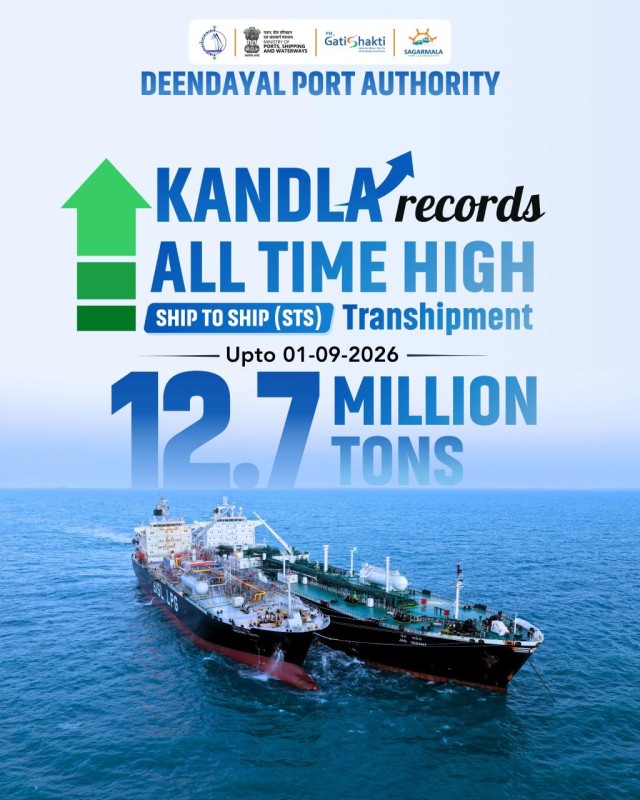
DPA Kandla achieves all-time high of 12.7 million tonnes in ship-to-ship transhipment

GANDHIDHAM: Deendayal Port Authority (DPA), Kandla, has achieved a significant operational milestone by recording an All-Time High of 12.7 million tonnes in transhipment through Ship-to-Ship (STS) operations, up to September 1, 2026.

The remarkable achievement reflects the port’s growing maritime capabilities, operational efficiency and continued focus on strengthening its position as a key facilitator of India’s maritime trade and logistics ecosystem.

Ship-to-Ship transhipment operations play an important role in ensuring efficient cargo movement and optimising maritime logistics. DPA Kandla’s latest milestone demonstrates its capability to handle large volumes of cargo through seamless marine operations and robust port infrastructure.

The achievement further reinforces DPA Kandla’s pivotal role in supporting India’s port-led development and logistics growth, in line with the national vision of enhancing maritime efficiency and strengthening the country’s position in global trade.

With sustained efforts towards operational excellence, infrastructure development and efficient cargo handling, Deendayal Port Authority continues to set new benchmarks in India’s maritime sector, contributing significantly to the nation’s growing logistics and shipping ecosystem.

Adani Vizhinjam sets new monthly throughput and vessel handling records in August 2026

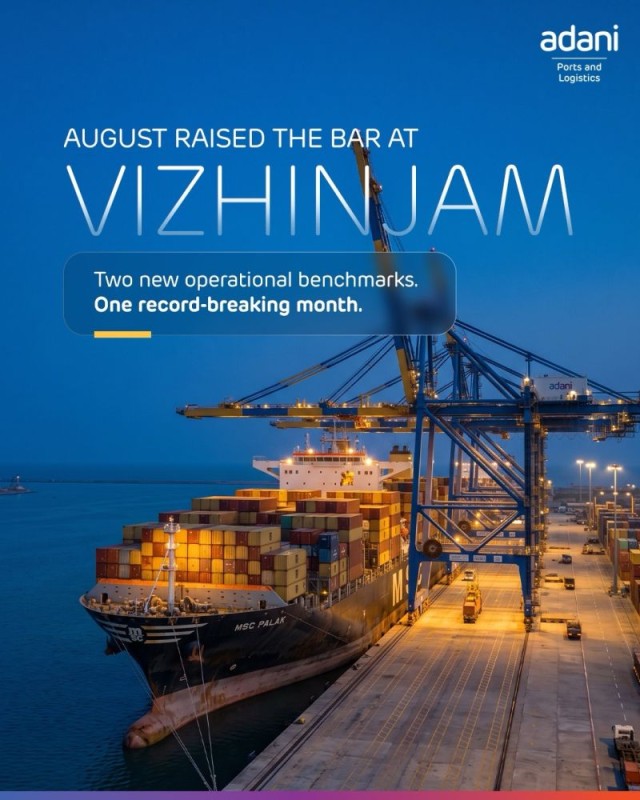
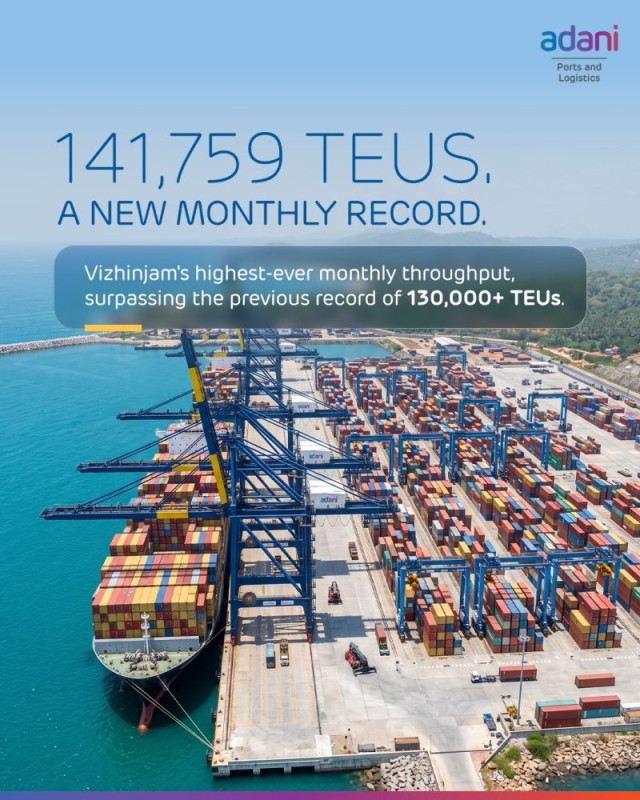
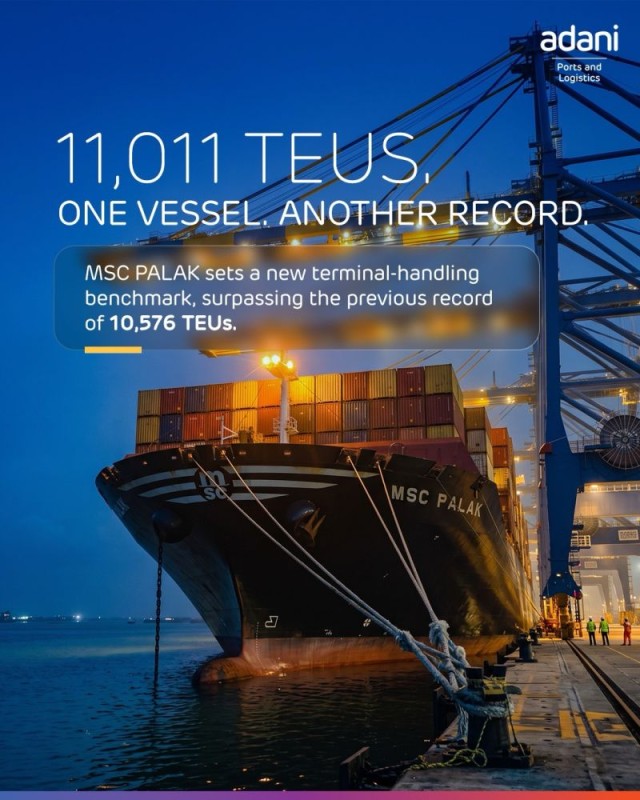
THIRUVANANTHAPURAM: Vizhinjam International Seaport has achieved a remarkable double milestone in August 2026, recording its highest-ever monthly container throughput of 141,759 TEUs and setting a new vessel handling record of 11,011 TEUs on board MSC PALAK.

With 51 vessels and 1,41,759 TEUs handled in a single month, Vizhinjam continues to build momentum and strengthen its role in global maritime trade. Over 25 months, the journey has reached 1,108 vessel calls and 2.34 Mn TEUs, reflecting consistent performance, growing capabilities, and the collective effort behind every milestone.

The record-breaking performance marks another significant step in Vizhinjam’s rapid operational growth and reflects the terminal’s increasing scale, efficiency and capability in handling high volumes of containerised cargo.

The achievement of 141,759 TEUs in a single month demonstrates the growing confidence of global shipping lines in Vizhinjam and its emergence as an increasingly important hub in the international container shipping network. The terminal’s strategic location near major East-West international shipping routes provides a strong advantage for transhipment operations and efficient vessel connectivity.

Adding to the milestone, the handling of 11,011 TEUs on MSC PALAK established a new benchmark for vessel operations at the port, highlighting the terminal’s ability to efficiently manage large container exchanges and deliver high levels of operational productivity.

These two achievements in a single month underline Vizhinjam’s growing operational momentum. With continued improvements in infrastructure, capacity utilisation and terminal efficiency, the port is steadily strengthening its position as a major transhipment gateway in the Indian Ocean region.

The August performance sends a clear signal of Vizhinjam’s expanding role in global maritime trade—combining strategic location, modern infrastructure and increasing operational efficiency to support India’s ambition of becoming a stronger global maritime and logistics hub.

Two milestones. One clear message: Vizhinjam is scaling up, moving faster and setting new benchmarks in container transhipment.

Sarjak Container Lines successfully handles challenging OOG cargo from Chennai to Ho Chi Minh City

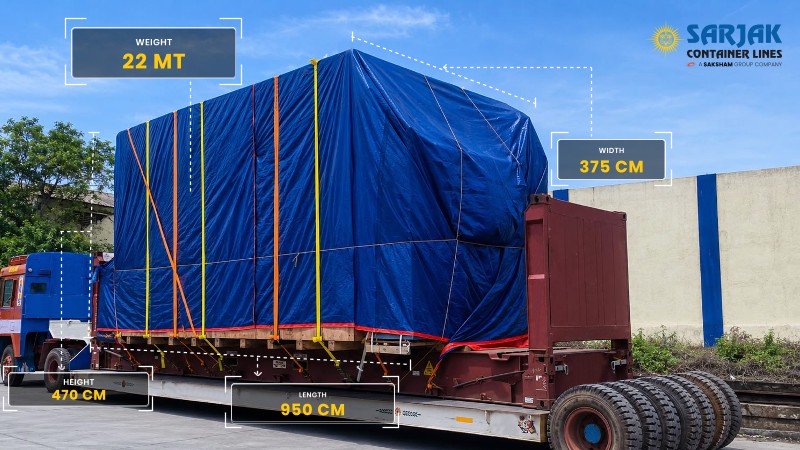
CHENNAI: Sarjak Container Lines has successfully executed the safe handling and vessel loading of a highly challenging Out-of-Gauge (OOG) cargo shipment from Chennai, India, to Ho Chi Minh City, Vietnam, demonstrating precision planning, specialised cargo handling capabilities and disciplined on-ground execution, according to a communique.

The oversized cargo measured an impressive 950 cm in length, 375 cm in width and 470 cm in height, with an additional over-height of 276 cm beyond the container projection, making it a complex logistics operation requiring meticulous planning and careful execution at every stage.

From cargo stuffing and securing to precise lashing and vessel loading, Sarjak Container Lines ensured that every aspect of the operation was carried out with the highest standards of safety and operational discipline.

The successful execution of the shipment involved detailed planning, specialised handling procedures and seamless coordination among the operational teams, enabling the oversized cargo to be safely loaded and dispatched without compromising on safety or efficiency.

The operation highlights the importance of expertise and precision in managing complex OOG cargo, where every dimension, securing arrangement and handling procedure must be carefully assessed before the cargo begins its journey.

Sarjak Container Lines continues to strengthen its capabilities in handling specialised and oversized cargo movements, providing customers with reliable logistics solutions for shipments that go beyond conventional dimensions.

With a commitment to safe handling, secure transportation and dependable delivery, the company remains focused on earning and maintaining the trust placed in it by customers.

Another giant cargo. Another successful execution. Sarjak Container Lines — Global Logistics. Beyond Dimensions.

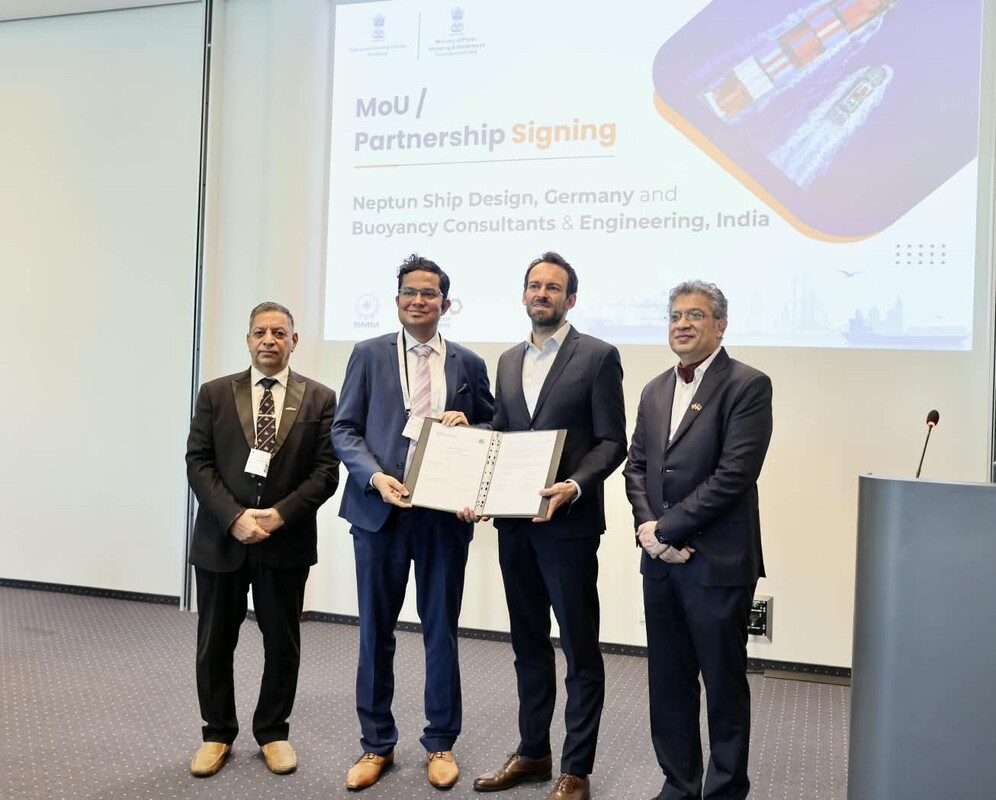
Buoyancy Consultants and Neptun Ship Design sign Letter of Intent (LoI) at the India Business Roundtable, at SMM Hamburg 2026

Partnership positions the two companies to support India’s fast-growing container shipbuilding ambitions, including the newly launched Bharat Container Shipping Line, by combining German design expertise with Indian engineering execution.

HAMBURG: Against the backdrop of growing India-Germany maritime cooperation, Buoyancy Consultants and Neptun Ship Design GmbH have signed a Letter of Intent (LoI) at SMM Hamburg 2026, one of the world’s leading maritime trade fairs.

The strategic collaboration brings together Germany’s largest independent ship design company, Neptun Ship Design, and one of India’s leading design organisations, Buoyancy Consultants, pairing Neptun’s globally recognised ship design expertise with Buoyancy’s engineering strength, market insight, and execution capabilities in India. Together, the companies will work on advanced vessel programmes including container vessels, passenger ships, research and science vessels, and other niche and complex maritime assets for both Indian and international markets.

The partnership is expected to accelerate access to internationally proven design solutions, strengthen engineering capabilities, promote knowledge transfer, and support the delivery of complex vessel projects. It will also serve as a gateway for greater India-Europe maritime cooperation, enabling Buoyancy to expand its reach across Germany and wider European markets, while supporting Neptun’s growth ambitions in India and across South Asia.

India’s Self-Reliant Shipbuilding Push Creates the Backdrop

The LoI arrives at a pivotal moment for Indian shipbuilding. India currently carries only a small fraction of its own export-import cargo on Indian-flagged vessels, with the remainder handled by foreign shipping lines at an annual freight outflow estimated at around USD 75 billion. To close this gap, the Government of India has moved decisively over 2026: in February, the Ministry of Ports, Shipping and Waterways signed the founding Memorandum of Understanding for the Bharat Container Shipping Line (BCSL) — a joint venture between the Shipping Corporation of India (SCI), Container Corporation of India (CONCOR), Jawaharlal Nehru Port Authority, V.O. Chidambaranar Port Authority, Chennai Port Authority, and Sagarmala Finance Corporation.

BCSL is envisaged as a fleet of 51 vessels, owned and chartered, within five years, backed by an estimated ₹59,000 crore (approximately USD 6.4-6.9 billion) in investment. Roughly 15 container ships are planned for order from domestic yards in the coming financial year alone. The initiative is anchored to the Container Manufacturing Assistance Scheme (CMAS) announced in the Union Budget 2026-27, and forms part of the government’s wider Atmanirbhar Bharat vision for a self-reliant national container ecosystem — spanning shipbuilding, port infrastructure, and domestic container manufacturing.

This scale of ambition brings with it an equally significant need: world-class ship design capability delivered at Indian cost structures and timelines. It is precisely this gap that the Buoyancy-Neptun partnership is designed to address.

Supporting India’s Domestic Container Shipbuilding Vision

As Indian yards prepare to build container vessels at a scale and pace the country has not previously attempted, the Buoyancy-Neptun collaboration is positioned to give Indian shipbuilders and stakeholders — including entities within the emerging BCSL ecosystem — direct access to Neptun’s internationally proven container vessel designs, engineering standards, and decades of European shipbuilding know-how. Combined with Buoyancy’s local execution capability, market insight, and on-ground engineering strength, the partnership offers a route for Indian programmes to move faster from concept to build, while meeting international classification, safety, and efficiency benchmarks from the outset.

For Neptun, the LoI offers a structured entry point into India’s rapidly expanding shipbuilding market at the moment it is scaling — supporting the company’s broader growth ambitions across India and South Asia. For Buoyancy, it strengthens the firm’s design pedigree and opens a channel into Germany and the wider European market, reinforcing India-Europe maritime cooperation at a time when both regions are looking to deepen collaboration in shipbuilding, defence, and maritime technology.

Paul Brzesina, Managing Director, Neptun Ship Design, said: “India is one of the most promising maritime markets in the world today. The country’s vision for strengthening domestic shipbuilding, investments in maritime infrastructure, and commitment to becoming a global manufacturing hub create tremendous opportunities for long-term growth. Through this partnership with Buoyancy, we see a unique opportunity to combine Neptun’s decades of international ship design experience with India’s exceptional engineering talent and growing industrial capabilities. Together, we aim to contribute to the development of advanced vessel solutions while supporting the evolution of a globally competitive Indian shipbuilding sector”

Prasad Sawant, CEO, Buoyancy Consultants, said: “This partnership represents much more than a business collaboration. It is a strategic step aligned with India’s maritime ambitions for 2030 and 2047. Over the years, Buoyancy has delivered ship design and engineering services to clients across the world, and this partnership with Neptun strengthens our ability to bring internationally proven ship design expertise closer to Indian shipyards. We strongly believe that the future of shipbuilding lies in effectively bridging global engineering excellence with India’s unmatched talent pool and execution capabilities. Together, we look forward to creating opportunities that benefit both the Indian and European maritime ecosystems.”

As India accelerates its journey toward becoming a leading global shipbuilding nation, the Neptun-Buoyancy partnership is expected to play a meaningful role in enabling access to advanced design capabilities, strengthening domestic engineering expertise, and fostering greater collaboration between two of the world’s most important maritime economies.

About Buoyancy Consultants

Buoyancy Consultants is a global marine engineering and design firm headquartered in Goa, India, with offices and strategic partnerships across the USA, Europe, Asia, and the Middle East. Backed by ISO 9001:2015 and ISO 27001:2022 certifications, our highly skilled team of naval architects and design engineers delivers end-to-end solutions for ships and offshore projects—from concept and basic design to retrofits and production support. Leveraging advanced software platforms and digital shipbuilding technologies, we combine precision engineering, sustainability, and global outreach to shape the future of maritime innovation.

Website – https://www.buoyancyconsultants.com/

About Neptun Ship Design

Neptun Ship Design GmbH, headquartered in Rostock, Germany, is an independent ship-design and marine-engineering company with more than 35 years of experience and a team of over 100 engineers, naval architects and other professionals. Founded in 1992, Neptun provides comprehensive ship-design, engineering and consultancy services to international clients. Its areas of expertise include the design and engineering of container ships, bulkers, research vessels, mega yachts, river cruise vessels and other specialized vessels.

Neptun’s technical legacy, international project experience and market presence provide a strong foundation for bringing advanced ship-design capabilities to the Indian shipbuilding sector.

Website: https://www.neptun-germany.com/home

GRSE partners with M/s Damen to advance India’s dredging and maritime infrastructure

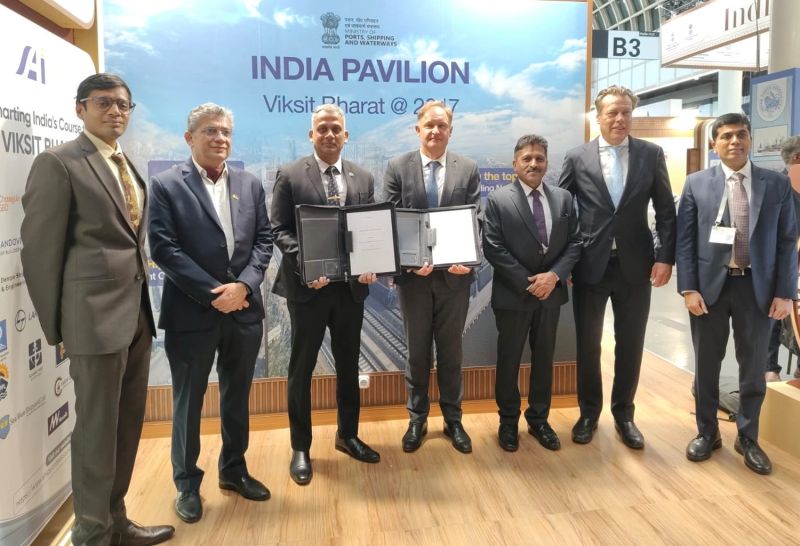
HAMBURG: At SMM Hamburg Maritime Trade Fair in Germany, Garden Reach Shipbuilders & Engineers (GRSE) Ltd., a Navratna Defence Public Sector Undertaking under the Ministry of Defence, Government of India, signed a Memorandum of Understanding (MoU) with global maritime organisation Damen Technical Cooperation B.V., Netherlands, to expand its technological frontier and global competitiveness on the international stage, on 02 Sep 26. The MoU intends to establish a technical and business collaboration framework to explore the design and construction of advanced dredgers in India.

The MoU combines GRSE’s shipbuilding capabilities with Damen’s globally proven expertise in Trailing Suction Hopper Dredgers (TSHD) and Water Injection Dredgers (WID).

The Key areas of cooperation include:

  • Advanced dredger design and technology
  • Technical know-how transfer
  • Joint design and construction proposals
  • Development of indigenous dredger-building capabilities
  • Long-term cooperation for future dredging requirements

The partnership builds on the existing collaboration between GRSE and Damen, including the 1,000 m³ dredger currently under construction for the Bangladesh Inland Water Transport Authority (BIWTA). The MoU will further strengthen GRSE’s position in the specialised dredger segment and support India’s growing requirements for modern dredging capabilities.

“Combining global design expertise with Indian shipbuilding strength to build the next generation of dredgers for India and beyond” said GRSE Ltd.

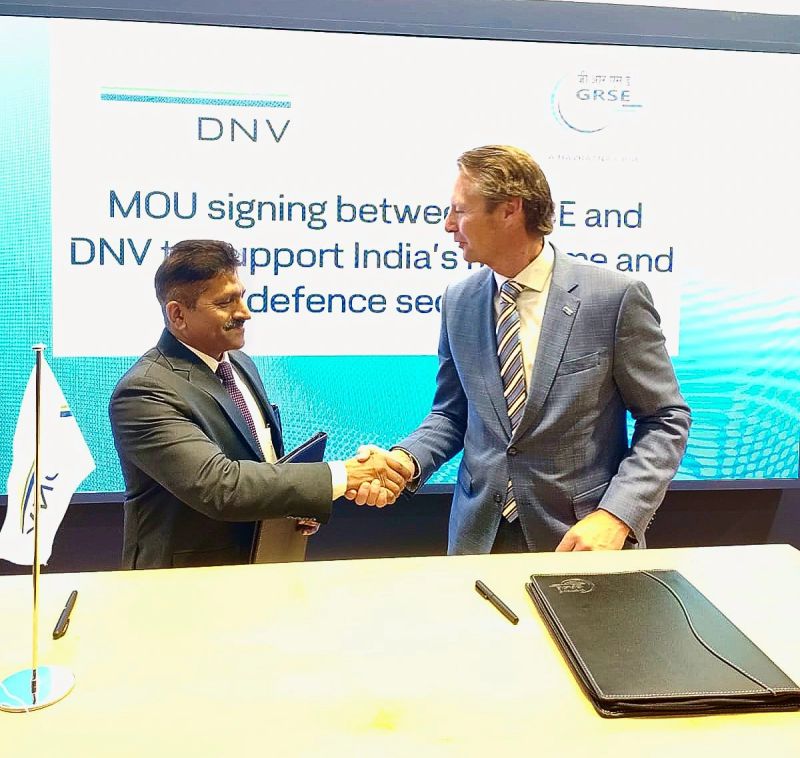
GRSE signs MoU with DNV – Strengthening India’s Maritime & Defence Shipbuilding Capabilities

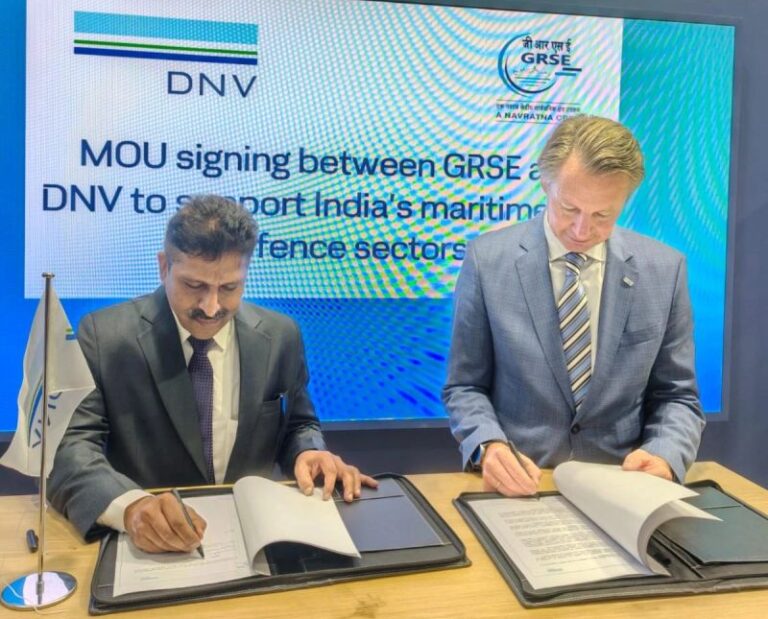
KOLKATA/HAMBURG: Expanding its technological frontier and global competitiveness on the international stage, Garden Reach Shipbuilders & Engineers (GRSE) Ltd., a Navratna Defence Public Sector Undertaking under the Ministry of Defence, Government of India, signed a Memorandum of Understanding (MoU) with global maritime organisation DNV (Det Norske Veritas), on 02 Sep 26 during the SMM Hamburg Maritime Trade Fair in Germany.

The MoU brings together GRSE’s established expertise in warship design, shipbuilding and marine engineering with DNV’s global capabilities in classification, certification, technical assurance, digitalisation, sustainability and maritime advisory services.

1788415178531 GRSE signs MoU with DNV - Strengthening India’s Maritime & Defence Shipbuilding Capabilities

The collaboration shall focus on key areas including:

  • Advanced warships and specialised vessels
  • Green shipping and sustainable technologies
  • Digital shipbuilding, AI and Industry 4.0
  • Skill development, training and knowledge exchange

The partnership is expected to further strengthen GRSE’s capabilities in digitalisation, green technologies and advanced shipbuilding practices, while contributing to India’s ability to undertake technologically sophisticated defence and commercial shipbuilding projects.

“A partnership focused on innovation, sustainability and global excellence — contributing to a stronger and more self-reliant Indian maritime and defence ecosystem.”

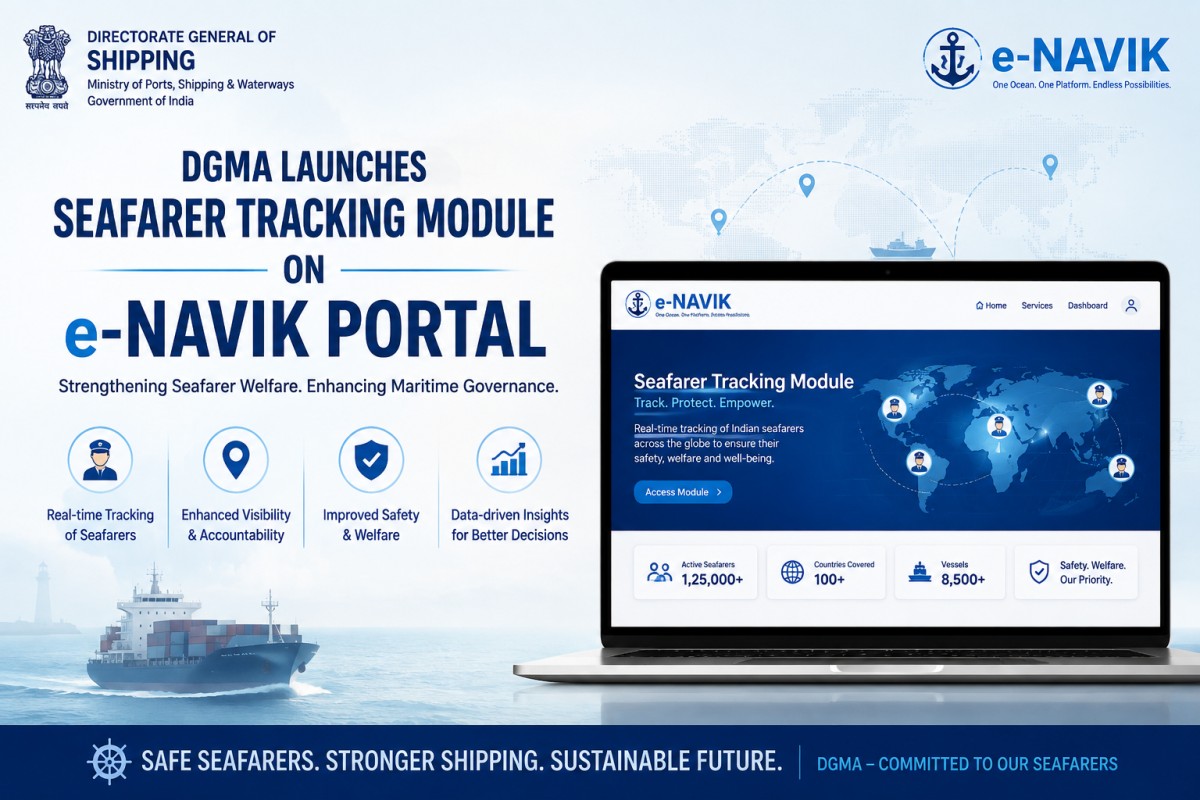
DGMA launches Seafarer Tracking Module on e-NAVIK Portal

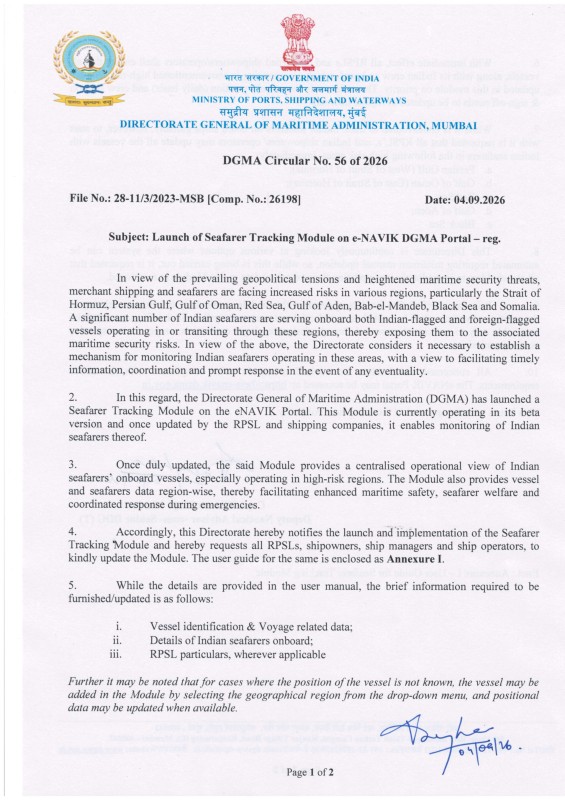
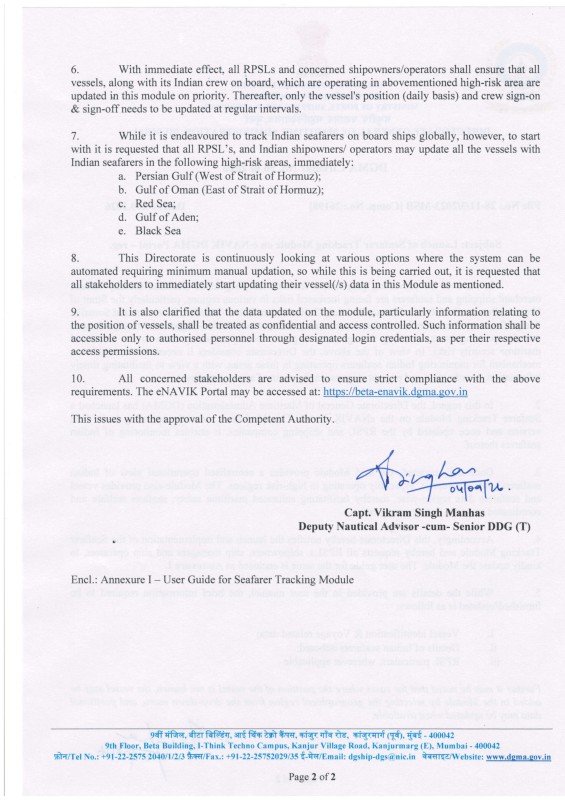
MUMBAI: The Directorate General of Maritime Administration (DGMA) has issued Circular No. 56 of 2026 regarding the Launch of Seafarer Tracking Module on e-NAVIK Portal, for enhanced monitoring of Indian seafarers serving onboard Indian-flagged and foreign-flagged vessels operating in high-risk areas. Strengthening Seafarer Competency & Professional Standards

The Circular provides aims to strengthen coordination and prompt response in the event of any maritime security incident or emergency, ensuring the safety and welfare of Indian seafarers.

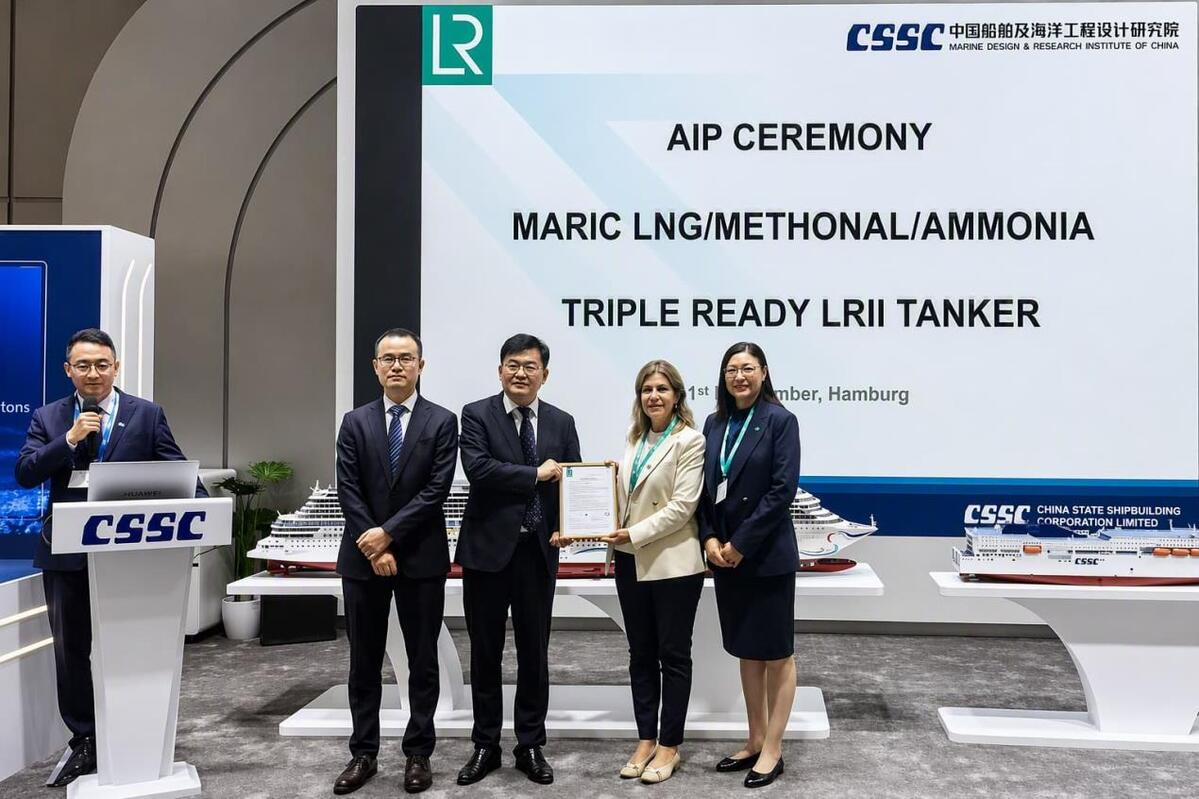
Lloyd’s Register and MARIC unveil tri-fuel-ready tanker concept designed to navigate fuel uncertainty

Approval in Principle advances LNG, methanol and ammonia-ready tanker design, giving owners the flexibility to leverage multiple fuel pathways.

HAMBURG: Lloyd’s Register (LR) and the Marine Design and Research Institute of China (MARIC) have secured Approval in Principle (AiP) for a new 114,000 DWT product and crude oil tanker designed to accommodate future conversion to LNG, methanol or ammonia.

Announced at SMM 2026, the concept addresses one of the biggest investment challenges facing shipping today: the need to develop vessels and capabilities that can support a range of alternative fuel options and pathways as technologies, infrastructure and regulations evolve.

While LNG is already a mature fuel pathway, methanol and ammonia remain at an earlier stage of development, with questions around global fuel availability, infrastructure development, economics and long-term adoption.

The 114,000 DWT tanker concept has been designed as a product and crude oil carrier that can accommodate future conversion to LNG, methanol or ammonia as technologies, regulations and fuel supply chains mature. By incorporating conversion readiness at the design stage, the concept aims to reduce future retrofit complexity and provide owners with greater confidence when planning long-term fleet investments.

The design concept was reviewed against LR’s July 2026 class rules and regulations, including requirements relating to ships using gases and other low-flashpoint fuels, alongside relevant IACS Common Structural Rules for oil tankers. Final classification and statutory approval remain subject to full compliance with all applicable rules and regulations.

Theo Kourmpelis, Global Business Director for Tankers, Lloyd’s Register, said: “Shipowners are being asked to make major investment decisions today despite continued uncertainty around which fuels will dominate in the decades ahead. Alternative fuel solutions each offer potential pathways to compliance, but fuel infrastructure, regulation and economics continue to evolve at different speeds around the world.

“Designs that preserve flexibility will be critical in helping owners manage risk while preparing for multiple future scenarios.”

Si Nan, Marine & Offshore Marketing Department Vice Director, MARIC, said: “As the industry explores different decarbonisation pathways, shipowners need vessel designs that can adapt alongside technological and regulatory developments. This concept was developed specifically to provide greater fuel flexibility and long-term resilience, allowing owners to respond to changing market requirements without being locked into a single fuel strategy.

“Receiving Approval in Principle from Lloyd’s Register is an important milestone that validates the design concept and supports its future development.”

South Korea preparing to deploy troops in Strait of Hormuz

SEOUL: South Korea is preparing to deploy military assets to support freedom of navigation in the Strait of Hormuz and aims to dispatch them before the end of the year, media reported late on Thursday, citing government and military sources.

The reports in several South Korean media outlets said the government was preparing procedures to seek parliamentary approval for the deployment, including submitting a consent motion to parliament this month after cabinet review.

The government was considering options including sending a maritime patrol aircraft, a logistics support vessel or a mine detection and clearance unit, and had been discussing the scale and nature of a potential contribution with countries including the United States, Britain and France, the reports said.

South Korea’s presidential Blue House said Seoul had been discussing practical ways to contribute to freedom of navigation in the strait, but reports that the government had settled on a deployment were “different from the facts”.

US President Donald Trump said in an August social media post that he had scaled back US-South Korea joint military exercises in part because South Korea had declined to help the US in the war against Iran.

Shipping’s Net-Zero Framework Sails On, Despite Headwinds from Detractors

LONDON: As a meeting on the climate impacts of global shipping closed on Friday at the International Maritime Organization (IMO), the Clean Shipping Coalition welcomed broad support by member states for the Net-Zero Framework (NZF) – the UN shipping body’s long negotiated compromise climate agreement, criticised attempts by a minority of states to undermine it with ‘alternative proposals’ and called for its adoption at December’s Marine Environment Protect Committee.

“The Net-Zero framework remains intact, despite pressure from a minority of detractors seeking to undermine climate action by the shipping sector, and must be adopted without further delay”, said Clean Shipping Coalition President Lukas Leppert. “Alternative proposals to the Net-Zero Framework are neither necessary nor useful – the IMO has already committed to a strategy, approved a regulatory framework that can deliver it, and scheduled its adoption for later in the year. While not entirely aligned with the levels of ambition in the IMO 2023 GHG Strategy, the NZF is a long-negotiated compromise that brings together a multitude of interests and positions and is supported by a broad majority. We consider the NZF an important step forward and one that can be built on to become more progressive in the future.”

“Many of the new proposals seem intent on unravelling this existing compromise, not to find a better agreement, but to appease a minority position by reducing ambition”, said Leppert. “None of the outstanding concerns are grave enough that they justify reworking the framework. The NZF ‘as is’ includes all the critically necessary elements required for the decarbonisation of the maritime sector in line with 2023 IMO GHG Strategy in a just and equitable manner. Open issues can and should be addressed solely within the implementing guidelines.”

“In order to fulfil the goals of the GHG Strategy and to protect our global climate, we urge the IMO and all its member states to stay true to their ambition and the compromise achieved and instead of reopening it, adopt the Net-Zero Framework ‘as is’ at MEPC 85 in December”, Leppert added.

The shipping sector makes up 2-3% of global greenhouse gas emissions – pumping 1 billion tonnes of GHGs into the atmosphere every year, comparable to the world’s fifth biggest emitting country, Japan. The IMO has committed to achieving its GHG Strategy goal, including its long-term goal of decarbonisation by 2050, its interim targets of a 30% reduction in absolute emissions by 2030 and 80% by 2040, and its commitment to a just and equitable transition. 

Approved during MEPC 83 in 2025, the NZF includes a “global fuel standard” (GFS), which requires ship operators to gradually decrease the amount of greenhouse gas emitted by shipping fuels – or pay penalties. The framework also introduces a mechanism that puts a price on a portion of greenhouse gases ships emit, giving the industry a clear financial incentive to reduce emissions in line with the global fuel standard. 

“The curve of increasingly stringent required annual reductions in the greenhouse gas intensity of shipping fuels is a critical component of the NZF and it is already insufficient to reach the reduction goals set in the 2023 GHG Strategy”,
said Delaine McCullough, Shipping Program Director at Ocean Conservancy. “Weaker short-term targets will favour short-term solutions, instead of setting the clear market signal that is needed to drive investments in zero- and near-zero fuels and technologies. That is why member states must hold the line on no weakening of this powerful component of the NZF.”

“The maritime sector requires a clear regulatory signal for the transition to allow a global level playing field as well as planning security for the ramp-up of sustainable solutions”, said Sönke Diesener, Senior Policy Officer Maritime Transport at NABU. “The industry has voiced their support for the IMO Net-Zero Framework in the past and should continue to . The NZF is set up to accommodate different levels of technical readiness and fuel availability to enable reliable investment signals for the industry.”

“This week’s meeting included submissions that advantage methane-based fuels such as LNG and biomethane, potentially locking in methane – a potent super pollutant – for many years to come and preventing the adoption of truly zero emissions fuels and a decarbonation pathway in line with the IMO’s own ambitions”, said Andrew Dumbrille, Co-Director, Equal Routes. “The IMO Life Cycle GHG Assessment guidelines must account for biodiversity and human rights impacts and avoid false accounting methods which would reward fuels for reductions that were never actually achieved.”

“A just transition cannot happen alone”,
said Anaïs Rios, Senior Shipping Policy Officer at Seas At Risk. “Many of the countries most exposed to the impacts of climate change are those with the least financial capacity to shoulder the costs of the transition. Without a central fund, the IMO has no credible way to ensure that they are not left behind. Member states agreed in 2023 that shipping’s transition must be just and equitable. Reopening the question of whether the finance to deliver the transition is needed risks unravelling the commitment. Countries should not waste precious negotiating time reopening questions that have already been answered. The task is now to make the transition work for everyone.”

“Financial rewards are also required to accelerate the uptake of true zero- and near-zero emission fuels and technologies”,
said Alex Springer, Interim Shipping Director at T&E. “This is even more pressing if aspects like the GFI trajectory are weakened. A direct contribution scheme would be a poor substitute for a well-organised and transparent fund, putting resources out of reach of the most vulnerable countries, and providing no certainty for first movers.”

Source: Clean Shipping Coalition