Home Blog Page 120

Panama Canal postpones Neopanamax Draft Adjustment

PANAMA CITY: The Panama Canal will maintain the current maximum authorized draft for vessels transiting the Neopanamax Locks which will allow customers to continue operating under the existing 14.63-meter (48.0-foot) Tropical Fresh Water (TFW) limit.

A previously announced reduction to 14.48 meters (47.5 feet) TFW, which was scheduled to take effect on October 1, 2026, has been postponed. The decision follows the Canal’s latest review of Gatun Lake levels and weather projections.

Keeping the current draft in place gives customers greater continuity for voyage planning and vessel deployment. It also reflects the Panama Canal’s focus on responding to changing conditions in a way that supports its customers while preserving safe and efficient operations.

The Canal will continue evaluating water conditions and will provide advance notice of any future changes that may affect vessel draft requirements. This ongoing monitoring is part of its broader commitment to offering customers a reliable, predictable, and efficient service.

DHL Group strengthens its Life Sciences and Healthcare capabilities in Singapore, reinforcing the nation’s position as Asia Pacific’s premier life sciences hub

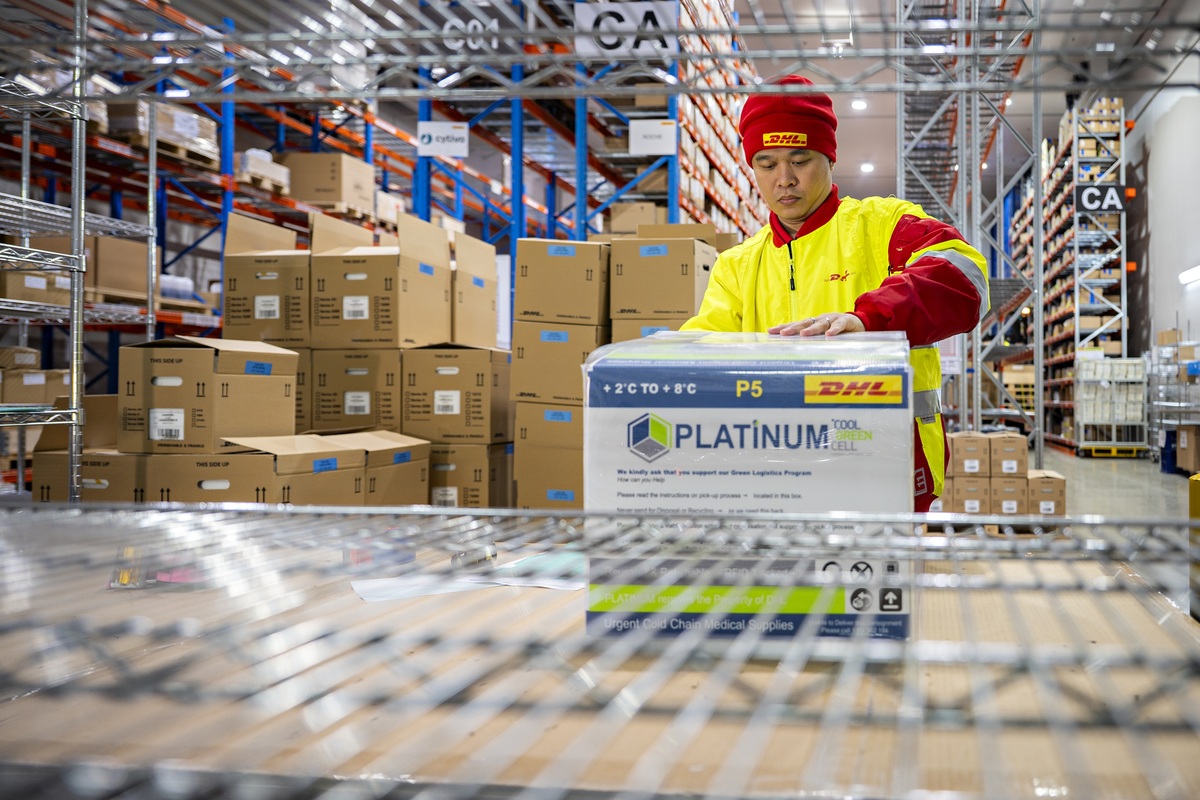
SINGAPORE: Following the opening of its Pharma Hub last year, DHL Group is further strengthening its Life Sciences and Healthcare (LSHC) capabilities in Singapore through a series of investments that enhance its DHL Health Logistics network and expand its capacity to transport, store and distribute pharmaceuticals, medical devices, clinical trial materials and other healthcare products across Asia Pacific. The investments focus on three pillars: infrastructure, specialist expertise, and strategic partnerships. Together, they help maintain product integrity throughout the healthcare supply chain.

Asia Pacific’s pharmaceutical logistics market is projected to grow from US$163 billion in 2025 to nearly US$239 billion by 2031, driven by rising demand for biologics, vaccines and other temperature-sensitive products that require specialized storage and transportation. As healthcare supply chains become increasingly complex, manufacturers are looking for logistics partners, who can protect product integrity and meet stringent regulatory requirements.

To accede to that demand, DHL is putting new infrastructure across its Express, Global Forwarding and Supply Chain businesses, while continuing to grow its healthcare expertise and build closer ties across the broader logistics ecosystem.

The investments also build on DHL Group’s broader commitment to LSHC and the continued expansion of DHL Health Logistics including the €500 million earmarked for Asia Pacific as part of €2 billion global investment in the sector announced in 2025. The program covers infrastructure and technology across storage, order fulfilment, distribution, global transportation and last-mile delivery.

Infrastructure: Singapore Coldchain Hub, Pharma Hub 2, and dedicated GDP-compliant space at South Asia Hub

DHL Global Forwarding is strengthening Singapore’s role in regional healthcare trade through the DHL Singapore Coldchain Hub, a dedicated healthcare logistics facility that will form part of DHL’s broader Health Logistics Air Freight Network connecting key pharmaceutical and life sciences markets worldwide. By combining global air connectivity with specialized healthcare handling capabilities, the network helps customers move sensitive pharmaceutical and life sciences shipments with greater reliability, visibility and temperature integrity across critical healthcare trade lanes. Together with a pharmaceutical corridor initiative being developed with ecosystem partners, the investment will help create more seamless, compliant and resilient healthcare supply chains across Asia Pacific and key healthcare trade lanes.

Located within Changi’s 24/7 Free Trade Zone at Changi Nexus One, the S$22 million (€15 million) facility will provide 3,047 sqm of GDP-aligned temperature-controlled infrastructure for high-value, time- and temperature-sensitive healthcare cargo, including pharmaceuticals, vaccines, and biologics. With dedicated 2°C to 8°C and 15°C to 25°C handling environments, the facility is designed to support an unbroken cold chain from aircraft to a DHL facility and onward to customers’ warehouses, minimizing temperature excursions and reducing the need for supplementary temperature-control measures and packaging while preserving product integrity throughout transit. The facility is slated for launch in late 2027.

“In healthcare logistics, precision is non-negotiable. A temperature excursion of just a few degrees can compromise the integrity of high-value medicines, biologics and other critical healthcare products. That is why building an end-to-end, unbroken cold chain is essential. Beyond protecting products, it gives healthcare companies the confidence that life-saving therapies can move safely, compliantly, and reliably across increasingly complex global supply chains. By combining specialized infrastructure, direct airside connectivity and dedicated temperature-controlled handling solutions, our new Singapore Coldchain Hub will help minimize product exposure throughout the shipment journey and give customers greater assurance that their products will arrive in the right condition, at the right time, to the patients who depend on them,” added Praveen Gregory, CEO, DHL Global Forwarding Singapore, Malaysia and Indonesia.

DHL Supply Chain is building on the success of the Pharma Hub first launched in Singapore last year with a second pharma hub to further expand its healthcare logistics footprint in the country. The new $S7 million (€5 million) facility will provide additional controlled ambient storage capacity for pharmaceutical and medical device customers, supporting services such as warehousing, distribution, kitting and value-added healthcare logistics operations.

Spanning over 8,000 sqm, the facility is designed as a 100 percent temperature-controlled ambient facility operating at temperatures between 15°C and 25°C with humidity control below 60 percent. The facility will accommodate approximately 7,680 pallet positions and incorporate GDP-compliant and GMP-aligned (Good Manufacturing Practice-aligned) infrastructure, including dedicated redressing rooms to support specialized healthcare logistics requirements. With both pharma hubs, DHL Supply Chain’s total pharmaceutical logistics footprint in Singapore will amount to approximately 16,000 sqm and accommodate around 12,000 pallet positions. It is expected to begin operations by the first half of 2027.

“Capacity on its own isn’t the goal. It’s what that capacity allows our customers to do,” said Eunis Hew, Managing Director, DHL Supply Chain Singapore. “Pharma Hub 2 builds on the strong foundation we have established with Pharma Hub, giving our customers additional room to grow while maintaining the quality and compliance standards their products require. As healthcare supply chains become more sophisticated, purpose-built infrastructure becomes increasingly important.”

DHL Express has installed a GDP-compliant handling and storage space of around 20 sqm at its South Asia Hub at Changi Airport. The controlled ambient room with a temperature range of 15°C to 25 °C allows temperature-sensitive pharmaceutical shipments to move securely through one of the region’s most important air logistics gateways. This also marks the first GDP-compliant healthcare logistics space within a DHL Express facility globally.

GDP-compliant processes help ensure that medicines are handled under appropriate conditions, remain traceable and maintain their quality throughout the distribution journey.

“When it comes to healthcare shipments, every handoff matters,” said Christopher Ong, Managing Director, DHL Express Singapore. “By expanding GDP-compliant handling and storage capabilities within our South Asia Hub, we’re helping customers reduce risk during transit and maintain the integrity of temperature-sensitive products throughout their journey. That reliability is critical especially when those shipments support clinical trials, hospital treatments and patient care.”

People: Building expertise in teams

Infrastructure is only one part of healthcare logistics. DHL is also investing in specialized healthcare logistics expertise across its operations to help ensure temperature-sensitive and regulated products are handled consistently at every stage of the journey. Teams across Express, Global Forwarding and Supply Chain receive ongoing training in areas such as temperature-controlled handling, GDP requirements, quality management and regulatory compliance, supported by DHL’s Certified Life Sciences Specialist program. These programs keep employees up to date with evolving industry standards and equip them with the knowledge needed to support increasingly complex healthcare supply chains.

The company is also growing its pool of healthcare logistics specialists, such as pharmacists, combining operational expertise and industry knowledge to support increasingly stringent supply chain requirements.

Ecosystem and partners: Building stronger healthcare supply chains

DHL is working closely with airlines, airport partners, healthcare manufacturers and logistics providers to strengthen the broader healthcare logistics ecosystem.

One example is DHL Express’ latest partnership with Life Science Incubator (LSI), a life sciences innovation ecosystem partner. Through the collaboration, DHL will give start-ups, SMEs, researchers and healthcare innovators access to specialized logistics capabilities at LSI’s incubator and conduct workshops and training programs covering international trade, supply chain management and cross-border regulatory requirements. By bringing logistics expertise closer to where innovation takes place, DHL aims to help emerging healthcare businesses scale more effectively and navigate global supply chains.

Together with Changi Airport Group (CAG), DHL Global Forwarding is enhancing healthcare trade lanes across Asia Pacific to support the safe and reliable movement of pharmaceuticals, vaccines and other temperature-sensitive products through Singapore. By combining Changi Airport’s extensive global connectivity and airside access with DHL’s global healthcare logistics expertise, dedicated cold-chain capabilities, and expanding Health Logistics network, the Singapore Coldchain Hub collaboration aims to give customers greater consistency, visibility, and confidence across their supply chains.

Collectively, these investments position Singapore as an increasingly important gateway for healthcare and life sciences supply chains in Asia Pacific. Leveraging its specialized infrastructure, skilled teams and strong industry partnerships, DHL is helping customers navigate growing supply chain complexity while maintaining the integrity of critical healthcare products.

KR issues Statement of Fact to ShipWatch for Vessel Performance Calculation Methodology

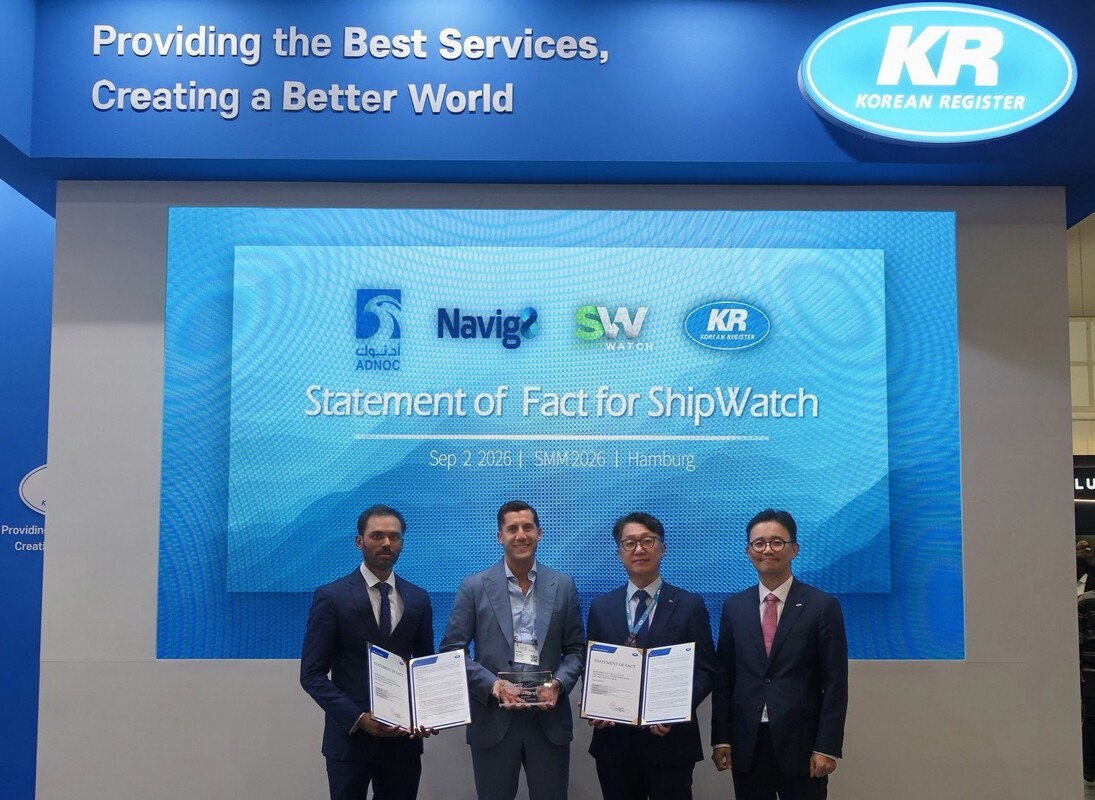
HAMBURG: KR (Korean Register) has issued a Statement of Fact for the Vessel Performance Calculation Methodology developed by ShipWatch, an affiliated company of Navig8 and ADNOC L&S. KR’s technical review confirmed that the methodology aligns with the principles and performance-monitoring sequences established in the international standards ISO 15016:2015 and ISO 19030:2016.

The Statement of Fact was formally presented to ShipWatch on September 2 during SMM 2026 in Hamburg, Germany.

​ShipWatch is a voyage execution and performance monitoring platform used across fleets operated by Navig8, ADNOC L&S, and other owners and charters across multiple vessel segments. The platform supports day-to-day operations, including real-time vessel tracking, data validation, charter party compliance monitoring, emissions reporting, and voyage optimization.

KR’s technical review focused on three primary areas of the ShipWatch methodology: environmental data correction, performance indicator calculation, and the evaluation of changes in vessel performance.

​The assessment verified that the software adheres to the core performance-monitoring sequences established in ISO 19030:2016. Furthermore, its correction algorithms for environmental factors, including wind, waves, and seawater properties, were also found to align with the principles of ISO 15016:2015. KR further reviewed the methodology used to derive key performance indicators (KPIs), such as power deviation and speed loss, as well as its application of uncertainty analysis to daily noon report data.

Daeheon Kim, Executive Vice President of KR’s R&D Division, said “As the maritime industry accelerates its decarbonization and digitalization efforts, reliable and standardized vessel performance data is becoming increasingly important. Through our technical review, KR has confirmed that ShipWatch’s methodology provides a consistent and reliable foundation for evaluating vessel performance in full alignment with international standards.”

He added, “KR remains committed to supporting maritime stakeholders and digital platforms like ShipWatch as they respond to evolving regulatory requirements and advance data-driven vessel operations.”

Wärtsilä Lifecycle Agreement to ensure reliable response capability for Mercy Ships hospital vessels

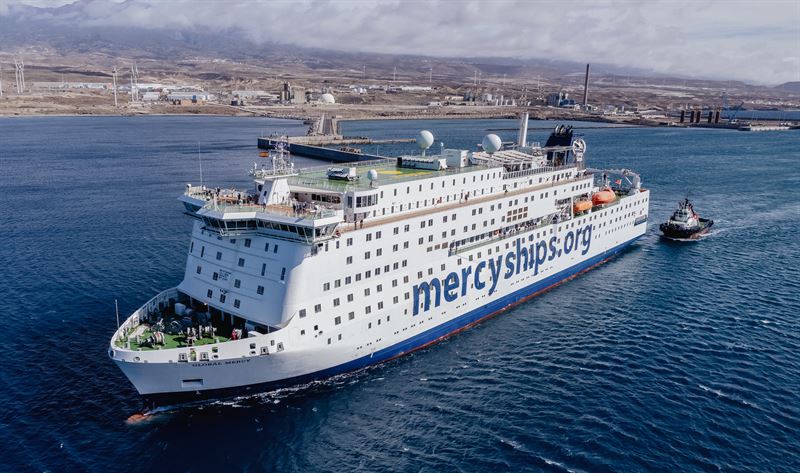
LONDON: Technology group Wärtsilä has signed a Lifecycle Agreement with charity organisation Mercy Ships International. The contract covers a 5-year renewal of an existing service agreement for the world’s largest purpose-built civilian hospital ship, the Global Mercy™, and a 3-year service agreement for the organisation’s latest newbuild vessel, the Africa Mercy II. Both ships are fitted with Wärtsilä engines. The order was booked by Wärtsilä in Q3 2026.

Mercy Ships provides free medical care, including surgeries and medical training, in regions with limited access to healthcare, primarily in underserved local communities across Africa. As these hospital ships deliver critical healthcare services, maintaining high levels of operational reliability and minimising unplanned downtime is essential.

“Our ability to provide medical care depends on the availability and reliability of our vessels. Wärtsilä’s support helps us plan maintenance more effectively and reduce the risk of unexpected disruptions, allowing us to focus on our mission. Based on the positive results of our existing agreement for Global Mercy, we are pleased to continue this collaboration and extend similar support to Africa Mercy II,” says Ciarán Holden, Director of Technical Operations – Mercy Ships International.

The scope of the agreements includes spare parts, field services, crew training, and Wärtsilä’s digital predictive maintenance service, Expert Insight. By combining advanced analytics, artificial intelligence and Wärtsilä expertise, the service helps identify potential issues before they develop into operational disruptions, supporting high vessel availability and more predictable maintenance planning.

“Mercy Ships performs extraordinary work in delivering healthcare where it is needed most. These agreements are designed to provide the operational reliability, maintenance predictability and technical support required to keep their vessels available for service,” explains Henrik Wilhelms, Director, Agreement Sales – Wärtsilä Marine. “We are proud to support an organisation whose mission has such a meaningful impact on communities around the world.”

The Global Mercy serves as both a floating hospital and medical training centre. Equipped with six operating rooms and extensive training facilities, the vessel is powered by four Wärtsilä 32 engines, each delivering 3,360 kW of power for propulsion and critical onboard hospital operations. Its sister vessel, the ‘Africa Mercy II’, is currently under construction and scheduled for delivery in 2028, further expanding Mercy Ships’ capacity to support underserved communities and strengthen healthcare systems across Africa.

Van Tiem Elektro selects EST-Floattech to supply Octopus High Energy battery systems for 15 new river cruise vessels

The 9.7 MWh order will power vessels for operators including AmaWaterways and Uniworld on the Danube and the Black Sea.

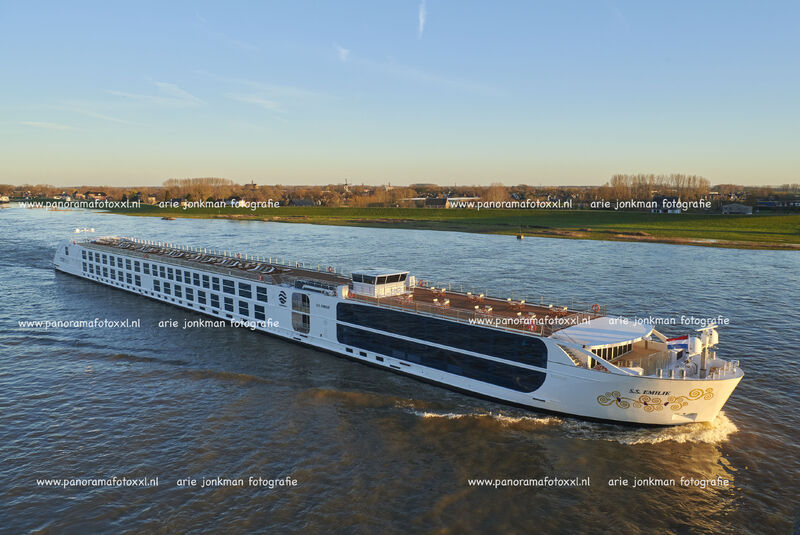
AMSTERDAM: EST-Floattech has been contracted by Dutch system integrator Van Tiem Elektro to supply its Octopus High Energy battery systems for a new series of 15 river cruise vessels. The vessels are being outfitted at De Gerlien van Tiem in Druten, and at Vahali Shipyards in Ghent, for a group of cruise operators, incl. AmaWaterways and Uniworld, sailing on the Danube and the Black Sea region. Each vessel will be equipped with 650 kWh of battery capacity, bringing the total order to 9.7 MWh, one of EST-Floattech’s largest river cruise contracts to date.

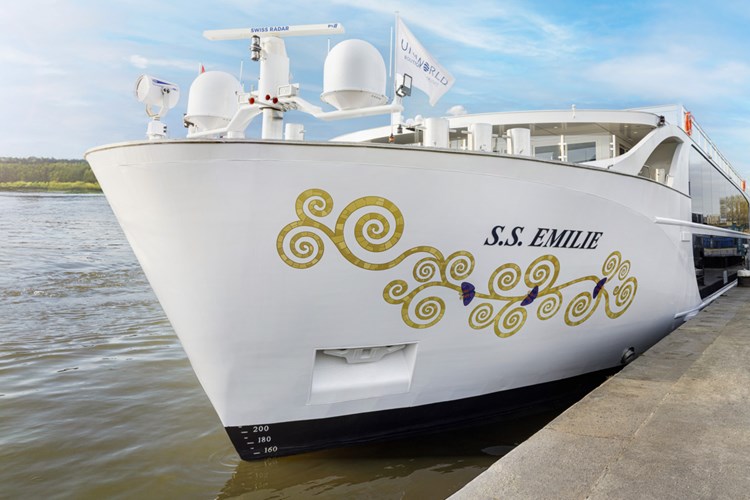
S.S. Emilie Van Tiem Elektro selects EST-Floattech to supply Octopus High Energy battery systems for 15 new river cruise vessels

The order builds on an existing relationship between EST-Floattech and Van Tiem Elektro, who have collaborated on previous maritime electrification projects. Wamel-based system integrator Van Tiem Elektro is already familiar with the Octopus platform from earlier tankers and river cruisers, including the Solara and the Astara.

Onboard, the Octopus HE systems will support partial electric sailing, hotel load and emergency back-up power. The platform combines EST-Floattech’s in-house developed cell and module technology with a String Controller for straightforward MODbus integration into a vessel’s existing systems. It holds Type Approval from DNV, Bureau Veritas, Lloyd’s Register, ABS, and RINA.

Marinus van der Putte, Sales Manager at EST-Floattech, says “This order is built on mutual trust. Van Tiem Elektro is always solution-oriented, which makes them a genuine pleasure to work with. We’ve worked together before, and that long-term relationship, combined with their knowledge of our Octopus platform and their expertise in system integration, made this a natural next step in the river cruise market for both companies.”

Continued cruise industry momentum

With outfitting yards across Europe fully booked, work on the first hulls in the series is underway now, with final deliveries scheduled through 2030. The order reflects continued momentum in the river cruise sector, where operators – predominantly Swiss and German, alongside one US-based operator and one Chinese operator – continue to invest in electrification to reduce emissions and meet onboard hotel-load demands.

Maarten Soetekouw, Co-Owner of Van Tiem Elektro, states “This is one of the largest electrification projects we’ve taken on: 9.7 MWh across 15 vessels is a real step forward for sustainable river cruising, and we’re proud to be delivering it. EST-Floattech’s Octopus platform is a system our engineers already know well, and that experience gives us real confidence on a project of this scale. Their pricing was competitive, but what matters just as much is how we work together: open, practical and focused on getting the job done. We’re looking forward to a long-term collaboration across this entire series.”

About EST-Floattech

EST-Floattech (2010) is specialized in developing, manufacturing and installing reliable, sustainable and safe battery systems for maritime applications. The in-house developed Battery Management System is integrated to ensure reliable operation of the Octopus Series battery system on board. In addition, EST-Floattech supports customers with BMS development and questions about charging infrastructures. The safety and reliability of EST-Floattech’s battery technology is demonstrated by more than 300 projects with the Green Orca and Octopus Series, including ships that are sailing with their batteries for over a decade.

ABB to power New Zealand’s new generation rail-enabled ferries for Cook Strait

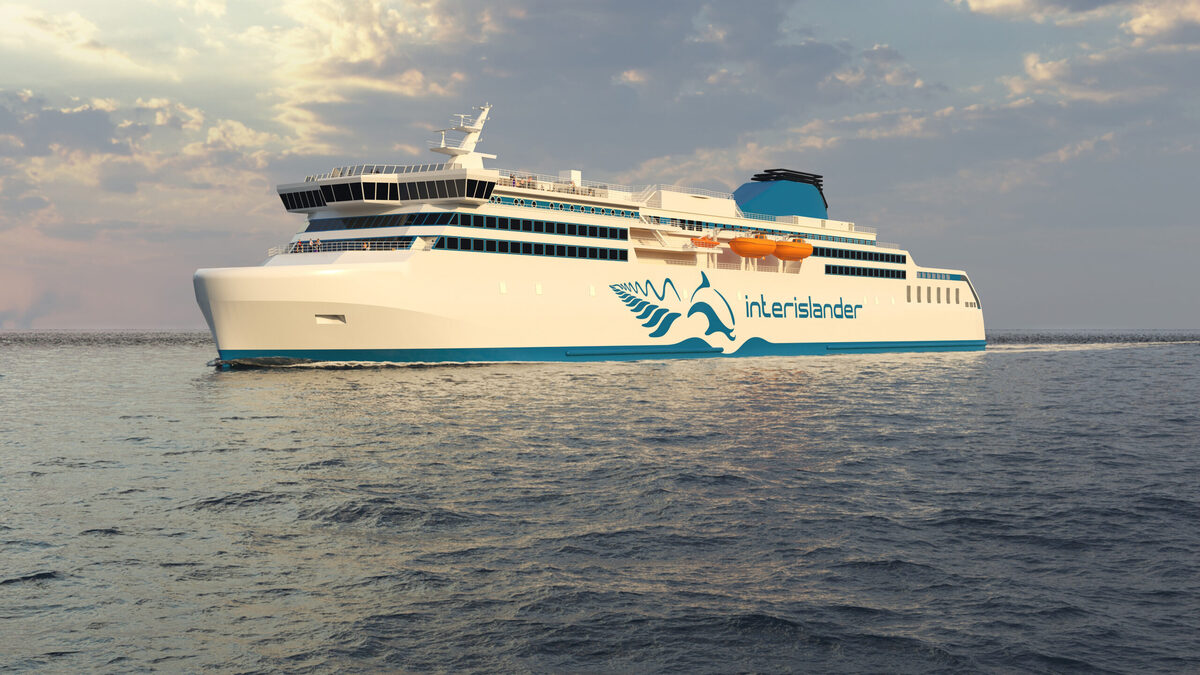
AUCKLAND: ABB has been selected as the power, propulsion and automation technology partner for two new Ro-Pax ferries, to be named Kupe and Cook, which form part of Cook Strait Ferry Replacement Programme, one of New Zealand’s most strategically important infrastructure investments1. ABB will supply the integrated systems required to ensure the reliability, efficiency and environmental performance of the two ferries. To be built by Guangzhou Shipyard International (GSI) shipyard, the ferries will be delivered to New Zealand Government entity Ferry Holdings Limited in 2029.

The 200-meter long, 28-meter-wide ferries will operate in the challenging conditions of the Cook Strait – Te Moana-o-Raukawa in Māori – at the junction of the Tasman Sea and the South Pacific Ocean, making the 92-kilometer Wellington-Picton crossing between the North and South Islands. They will offer capacity for 63 percent more passengers (1,530 persons) and 44 percent more freight (2,400 lane meters) than their predecessors. The ferries are rail-enabled, allowing rail freight to be loaded directly onto the vessels, eliminating multiple cargo handling steps during inter-island transfers.

Critical for the national economy, these vessels will also deliver high fuel efficiency, lower emissions and reduced underwater radiated noise (URN) that aligns with the most forward-looking ferry projects in the world. Reducing URN has been prioritized to help protect marine life in the Marlborough Sounds, acknowledged in the DNV SILENT-E class notation.

“These ferries represent a key investment in New Zealand’s transport infrastructure,” said Massimo Soprano, Ship Programme Director, Ferry Holdings Limited. “Selecting ABB gives us confidence that we will deliver vessels with world-class power, propulsion and automation technology. These systems are designed for the demanding conditions of Cook Strait and built to minimize environmental impact over their entire lifecycle.”

“Growing up on the shores of Lyall Bay in Wellington, I watched the ferries push out into Cook Strait in all conditions, wind, swell and everything in between. That image has stayed with me,” said Palemia Field, Global Segment Manager for Ferries, ABB’s Marine & Ports division. “That personal connection makes it even more meaningful to now be part of delivering vessels that will transform that crossing. They are quieter, cleaner, more reliable, and built for the next 30 years of New Zealand’s growth.”

Combining efficiency and environmental responsibility, ship specifications include a fuel agnostic hybrid-electric power and propulsion plant. The 8.2 MWh battery energy storage system installed will support near-zero-emission harbor operations or a spinning reserve for 10 minutes. The power architecture also allows for the Battery Energy Storage System (BESS) to scale up to 12.3 MWh with further potential capacity to align with shore charging technologies when available.

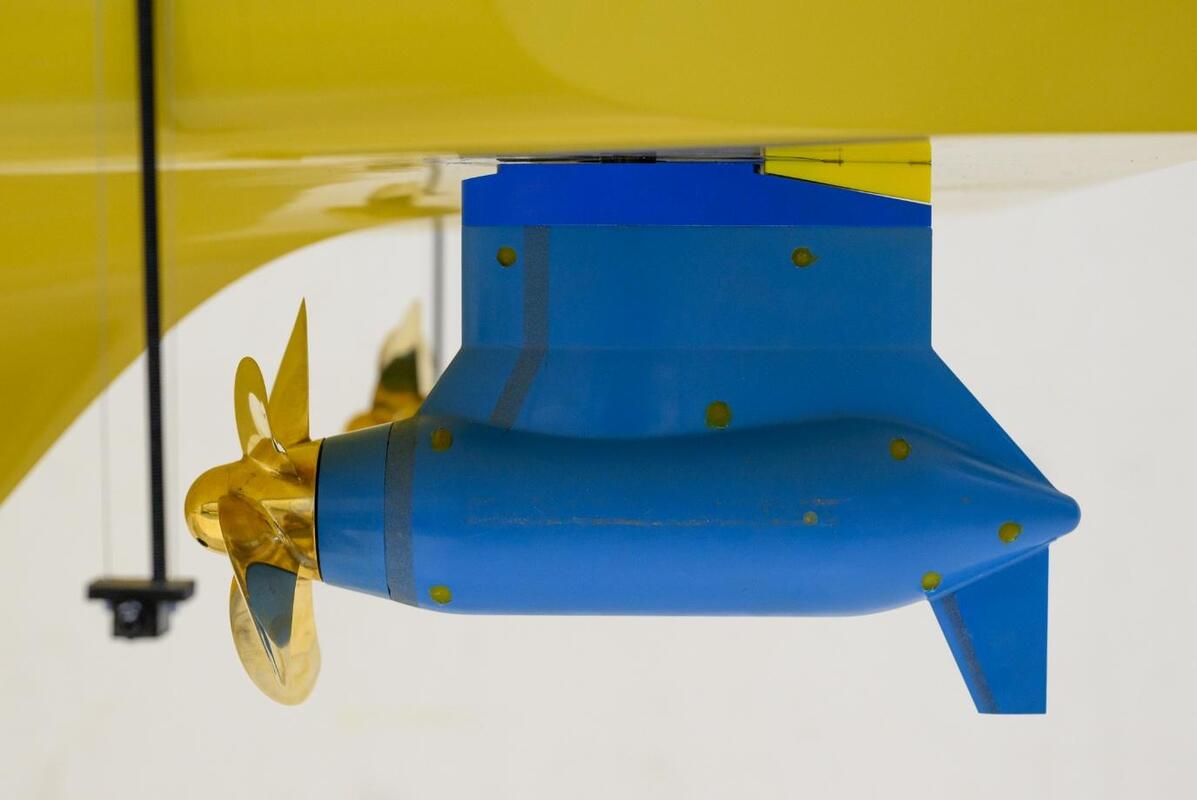
ABB’s scope of supply includes four main alternators, as well as motors and drives for the three bow thrusters. Two Azipod® propulsion units replace the predecessor ferries’ traditional propeller shafts, rudders and stern thrusters, delivering superior efficiency and a quieter, smoother ride. This is a meaningful improvement for passengers crossing the Cook Strait known for challenging and unpredictable conditions, strong tides and rough seas. The gearless, 360°-steerable Azipod® units also give the ships outstanding maneuverability. The ships will be able to crab2 at 1 knot of speed in 40 knots of wind from any direction, far exceeding what the current fleet can achieve during port entry and departures in Wellington and Picton.

ABB to power New Zealands new generation rail enabled ferries for Cook Strait 1 1 ABB to power New Zealand’s new generation rail-enabled ferries for Cook Strait

At the heart of the ships’ power architecture sits ABB’s PEMS™ Power & Energy Management System, the intelligent ‘brain’ that continuously balances energy across the vessels’ generators, battery energy storage system, propulsion and auxiliary loads. Rather than managing these as separate systems, PEMS™ treats them as one integrated whole: automatically optimizing fuel consumption, enabling harbor operations on battery power alone, and maintaining power continuity in the event of a fault. This level of integration and built-in resilience ensures unmatched operational reliability. PEMS™ has proven this capability across multiple ABB ferry projects worldwide.

The system will be complemented with the ABB Ability™ Remote Diagnostic System (RDS) for continuous 24/7 monitoring and access to ABB’s global network of experts. The digital solution enables predictive maintenance, faster troubleshooting, and real-time operational insights, helping operators enhance vessel availability, reduce lifecycle costs, and ensure safe and efficient operations.

For ferries at the heart of New Zealand’s freight and passenger network, where an unplanned outage would have direct consequences for schedules, impacting rail connections and thousands of travelers, the ability to detect and resolve issues remotely before they lead to failures is a genuine operational differentiator.

1https://www.ferryholdings.co.nz/wp-content/uploads/2026/07/FHL-17-July-2026-Media-Pack.pdf
2“Crabbing” refers to the ability of a vessel to move sideways – laterally across the water – without changing the direction the bow is pointing, in the same way a crab walks. This maneuver requires the ability to generate thrust in any direction simultaneously and is critical for safe docking in strong crosswinds and currents. It is made possible by Azipod® thrusters, which can rotate a full 360°, combined with bow thrusters at the forward end of the vessel.

About ABB

ABB is a global technology leader in electrification and automation, enabling a more sustainable and resource-efficient future. By connecting its engineering and digitalization expertise, ABB helps industries run at high performance, while becoming more efficient, productive and sustainable so they outperform. At ABB, we call this ‘Engineered to Outrun’. The company has over 140 years of history and around 110,000 employees worldwide. ABB’s shares are listed on the SIX Swiss Exchange (ABBN) and Nasdaq Stockholm (ABB).

ABB’s Automation business automates, electrifies and digitalizes industrial operations that address a wide range of essential needs – from supplying energy, water and materials, to producing goods and transporting them to market. With its ~26,000 employees, leading technology and service expertise, Automation helps process, hybrid and maritime industries outrun – leaner and cleaner

Adani Ports handles a record 50 MMT cargo in August 2026

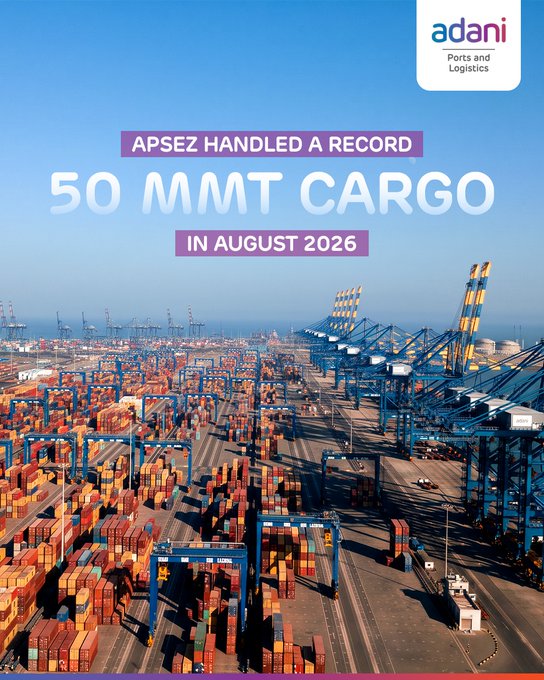
AHMEDABAD: Adani Ports and Special Economic Zone Ltd (APSEZ) handled a record 50 MMT cargo in August 2026, reflecting strong performance across its domestic and international port network and delivering 19% YoY growth.

Cargo handled by India’s largest port operator rose 19 per cent from 41.9 million tonnes a year earlier, according to the company. The increase comes as India’s economy continues to expand even as geopolitical tensions, shifting shipping routes and supply-chain realignments reshape global trade flows.

The growth was broad-based. Dry cargo volumes rose 25 per cent year-on-year in August, while container volumes increased 15 per cent. Shipments of commodities, including coal, iron ore, limestone and other minerals, also contributed to the increase.

International operations added to the gains, with North Queensland Export Terminal, or NQXT, in Queensland, Australia, contributing to volumes and Colombo West International Terminal, or CWIT, in Sri Lanka, continuing its ramp-up. Existing assets, including Mundra in Gujarat, Krishnapatnam in Andhra Pradesh and the port of Dar es Salaam in Tanzania, also recorded growth.

The August record caps a strong start to the financial year, according to APSEZ. APSEZ handled 43.1 million tonnes in April, 48.3 million tonnes in May, 46.8 million tonnes in June and 46.3 million tonnes in July before reaching 50 million tonnes in August.

Cumulative cargo handled during the first five months of FY27 reached 234.4 million tonnes, up 16 per cent from the same period a year earlier. Dry cargo increased 17 per cent, while container volumes rose 15 per cent.

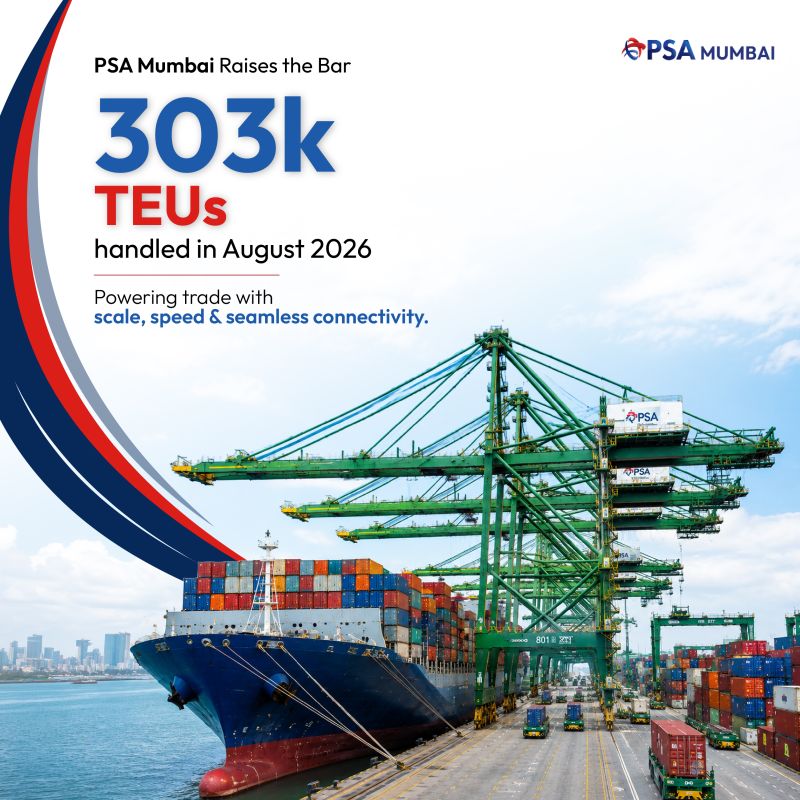
PSA Mumbai sets new monthly throughput milestone with handling of 303k TEUs in August 2026

MUMBAI: PSA Mumbai has achieved a significant operational milestone by handling 303,000 TEUs in August 2026, setting a new monthly throughput record at the Jawaharlal Nehru Port Authority (JNPA).

The achievement reflects the combined strength of people, partnerships and performance, supported by strong customer confidence, close collaboration across the logistics ecosystem and continued investment in efficient and future-ready infrastructure.

The record monthly throughput underscores PSA Mumbai’s growing role in facilitating seamless cargo movement and supporting India’s expanding trade requirements. Through coordinated terminal operations, strong engagement with shipping lines, customers, transport partners and other stakeholders, PSA Mumbai continues to enhance operational efficiency and service reliability.

The milestone also highlights the importance of collaboration across the entire maritime and logistics value chain. The collective efforts of PSA Mumbai’s workforce, customers, shipping partners, government authorities and the wider port community have contributed to achieving this new benchmark.

With a continued focus on productivity, resilience and sustainable growth, PSA Mumbai remains committed to delivering efficient terminal services and enabling faster, more reliable cargo movement for India’s importers and exporters.

As trade volumes continue to grow and supply chains become increasingly dynamic, PSA Mumbai is strengthening its capabilities to meet evolving customer requirements while supporting the development of efficient and resilient maritime logistics networks.

The August 2026 performance marks another important chapter in PSA Mumbai’s journey of operational excellence and reinforces its commitment to moving trade forward — reliably, sustainably and at scale.

A Milestone Powered by People, Partnerships and Performance

The achievement of 303,000 TEUs in a single month is more than a throughput record. It is a reflection of the dedication of PSA Mumbai’s people and the strength of partnerships across the port and logistics ecosystem.

With customer trust, ecosystem collaboration and future-ready infrastructure at its foundation, PSA Mumbai continues to create capacity, improve efficiency and strengthen the flow of trade through one of India’s most important maritime gateways.

Moving trade forward. Reliably. Sustainably. At scale.

NSFT records highest-ever monthly throughput in August 2026

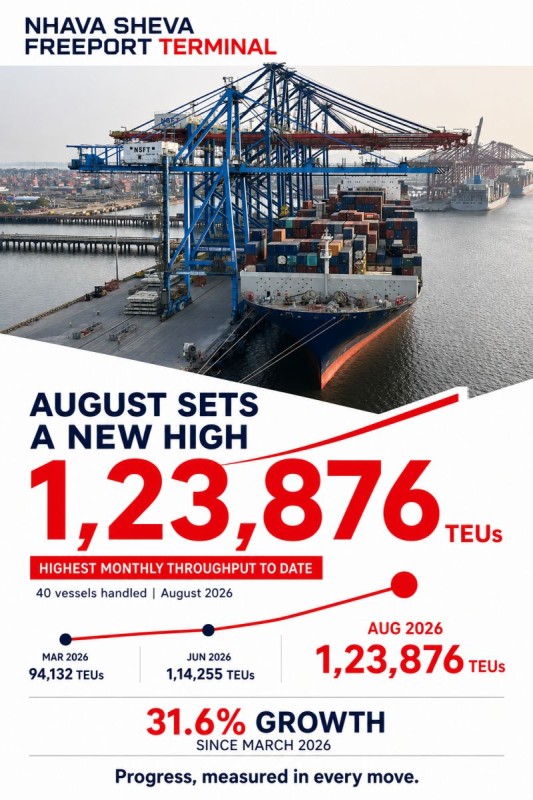
MUMBAI: August sets a new benchmark for Nhava Sheva Freeport Terminal (NSFT), as the terminal records its highest-ever monthly throughput since commencement of operations.

In August 2026, NSFT handled an impressive 1,23,876 TEUs across 40 vessels, marking the highest monthly container throughput achieved by the terminal to date.

The milestone reflects a strong and sustained growth trajectory in container handling performance. From 94,132 TEUs in March 2026 to 1,14,255 TEUs in June 2026, and now reaching 1,23,876 TEUs in August, NSFT has recorded a remarkable 31.6% growth in monthly throughput since March 2026.

The consistent rise in volumes highlights the terminal’s focus on operational efficiency, disciplined planning and seamless coordination across vessel operations, yard management, gate activities and cargo handling processes. The achievement has been supported by the collective efforts of terminal teams, shipping lines, customers, stakeholders and other partners working together to ensure smooth and efficient cargo movement.

Handling 40 vessels during the month while achieving its highest-ever monthly throughput demonstrates NSFT’s growing capability to manage increasing cargo volumes while maintaining a strong focus on productivity, service reliability and operational excellence.

The August performance adds another significant milestone to NSFT’s growth journey and reinforces its commitment to continuously enhancing terminal capabilities and delivering efficient, dependable and customer-focused services.

As container volumes continue to grow, NSFT remains focused on strengthening operational performance, optimising resources and creating greater value for the maritime and logistics ecosystem.

With every vessel call, every container move and every operational milestone, NSFT continues to move forward.

Progress, measured in every move.

GMU opens admissions for Ph.D. Programme 2026–27 in Law and Management

GMU invites aspiring researchers to pursue Advanced Research in Maritime Law and Management

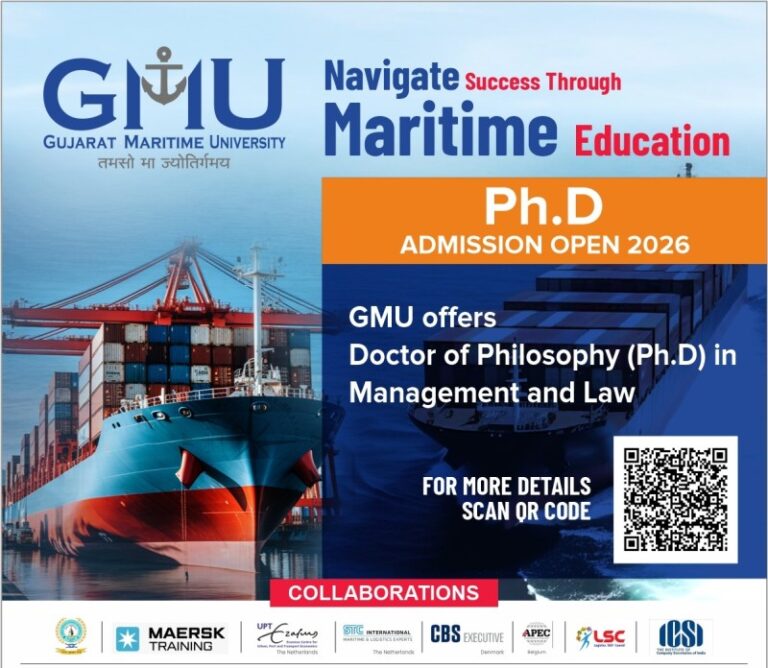
GANDHINAGAR: Gujarat Maritime University (GMU) has announced the opening of admissions for its Ph.D. Programme for the academic year 2026–27, inviting aspiring scholars and researchers to pursue doctoral studies in the fields of Law and Management.

The programme is designed to provide a strong, research-driven academic environment for scholars seeking to undertake advanced research and contribute to knowledge, policy and innovation in areas connected with the maritime sector and other emerging disciplines.

GMU is offering both Full-Time and Part-Time Ph.D. options, providing opportunities for researchers, academicians and working professionals to pursue doctoral research based on their academic and professional requirements.

A Platform for Research and Academic Excellence

Gujarat Maritime University continues to focus on strengthening research, academic excellence and industry engagement across the maritime and allied sectors.

The Ph.D. Programme aims to encourage scholars to explore contemporary challenges, emerging opportunities and evolving developments in law, management, trade, logistics, shipping and the broader maritime ecosystem.

Through its research-oriented academic environment, GMU provides aspiring scholars with an opportunity to develop meaningful research that can contribute to academic knowledge, industry practices and policy development.

Full-Time and Part-Time Ph.D. Opportunities

The Ph.D. Programme 2026–27 is open to eligible candidates interested in pursuing advanced research in:

Law Management

The availability of both Full-Time and Part-Time programmes enables candidates from diverse academic and professional backgrounds to pursue their research aspirations.

The programme is expected to support scholars in undertaking in-depth research while benefiting from GMU’s specialised academic environment and its growing engagement with the maritime industry and global academic ecosystem.

Collaboration and Global Academic Engagement

GMU’s academic ecosystem reflects its focus on collaboration and industry engagement. The University’s outreach and academic initiatives feature associations and engagements with leading organisations and institutions from the maritime, logistics, management and professional sectors.

The admission announcement highlights GMU’s wider collaborative ecosystem, including associations and engagements with organisations such as Maersk Training, STC International, CBS Executive, APEC, LSC – The Logistics Sector and other academic and industry partners.

These collaborations reflect the University’s efforts to connect academic research with industry knowledge, professional expertise and global developments.

Last Date to Apply: September 26, 2026

Candidates interested in joining the Ph.D. Programme 2026–27 are encouraged to submit their applications before the deadline.

Applicants can submit their applications directly through the University’s online admission portal:

Apply for GMU Ph.D. Programme 2026–27

Take the Next Step in Your Research Journey

The opening of admissions provides an opportunity for aspiring scholars to transform their research ideas into meaningful academic and professional contributions.

With a focus on research, innovation, academic excellence and industry relevance, Gujarat Maritime University continues to build a platform for the next generation of researchers and thought leaders.

Aspiring scholars are invited to take the next step in their research journey and contribute to creating meaningful impact through knowledge, innovation and research.

Ph.D. Admissions Open | Academic Year 2026–27

Programmes: Ph.D. in Law and Management
Mode: Full-Time & Part-Time
Last Date: 26 September 2026