Home Blog Page 161

MSC marks First Import Rail Milestone at Adani ICD Malur, Strengthening Bengaluru’s Gateway to Global Trade

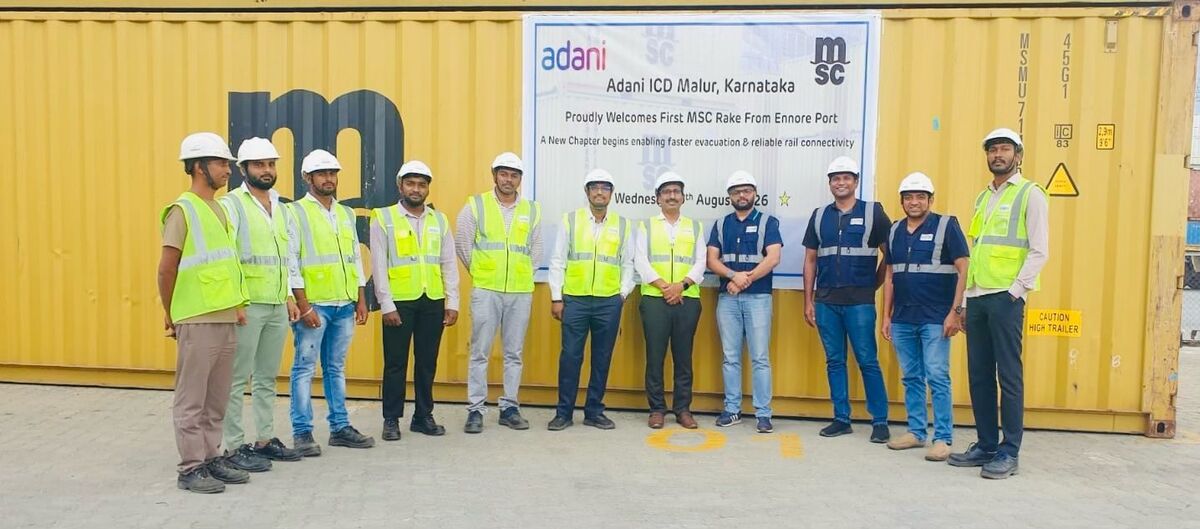
BENGALURU: A significant new chapter is unfolding in South India’s multimodal logistics landscape as MSC Mediterranean Shipping Company has flagged off its first import shipment through the newly launched Adani ICD Malur near Bengaluru, arriving as a full train rake of containers.

The landmark movement marks an important operational milestone for both MSC and Adani Logistics, signalling growing industry confidence in Malur as a strategic inland gateway for containerised EXIM cargo serving Bengaluru and the wider industrial belt of Karnataka and neighbouring states.

The successful movement comes at a time when South India is witnessing increasing demand for efficient rail-linked logistics infrastructure capable of connecting major manufacturing centres with international gateways. By moving the import containers as a complete train rake, the operation demonstrates the potential of rail-based inland transportation to provide a more streamlined and reliable alternative for long-distance cargo movement.

Malur Emerges as a New Inland Gateway

Located strategically along the Bengaluru–Chennai railway main line near Malur, the Adani ICD has been developed with its own rail siding and road connectivity through NE7 and NH44. The facility is positioned to serve the rapidly expanding industrial clusters of Karnataka while also providing connectivity to neighbouring Andhra Pradesh and Tamil Nadu.

The facility spans around 30 acres, with a further 21 acres earmarked for expansion. Its infrastructure includes terminal and gate operating systems, real-time control-tower capabilities, warehousing facilities and customs-related infrastructure, creating an integrated platform for container handling and inland cargo movement.

Adani Ports has also established Malur within its wider multimodal logistics network, with rail connectivity linking the facility to major gateways including Kattupalli, Ennore, Vizhinjam, Chennai and JNPT. The company has identified Malur as one of its locations for EXIM operations as part of its expanding logistics network.

MSC’s Move Adds Momentum

For MSC, the first import movement through Malur represents more than the arrival of another container train. It demonstrates the shipping line’s expanding inland logistics footprint in South India and its ability to connect international ocean freight with a strategically located inland terminal closer to cargo owners.

The full-rake movement can help consolidate container flows, improve rail utilisation and create greater predictability in inland transportation. For importers around Bengaluru, such connectivity has the potential to shorten the distance between port gateways and industrial destinations while reducing dependence on road-based long-haul movement.

The development also reinforces the importance of port-to-factory connectivity as India’s logistics ecosystem moves increasingly towards integrated multimodal supply chains.

Building a Rail-Driven Supply Chain

Adani ICD Malur had already demonstrated its potential earlier in 2026 when it handled an inaugural import block train carrying auto parts in a collaboration involving Maersk and Volvo Group, connecting Ennore Port with Malur. That movement was positioned as a step towards faster, more reliable and cost-effective supply chains across Karnataka, Andhra Pradesh and Tamil Nadu.

The latest MSC movement further broadens the significance of the facility by demonstrating that Malur is steadily developing into a shared logistics platform capable of supporting multiple global shipping lines and diverse cargo flows.

Adani Logistics currently operates a large multimodal network comprising logistics parks, container and bulk rail assets and warehousing infrastructure. Its container rail network connects gateway ports with inland logistics locations across India, including Malur.

A Strategic Boost for Bengaluru and South India

Bengaluru’s position as a major manufacturing, automotive, electronics, aerospace and technology hub creates substantial demand for dependable import and export logistics. A strategically positioned ICD with direct rail connectivity can bring international containerised cargo closer to these production and consumption centres.

The MSC–Adani Malur milestone therefore has significance beyond a single train movement. It reflects the gradual transformation of South India’s logistics architecture—from conventional port-centric cargo movement towards integrated port, rail, road and inland-terminal networks.

With shipping lines increasingly looking for efficient inland solutions and cargo owners seeking greater reliability, speed and supply-chain visibility, Malur could emerge as an important link between South India’s industrial heartland and global maritime trade.

Key Takeaways

• First MSC import movement: MSC has commenced its import operations through Adani ICD Malur with a full train rake of containers.

• Rail-first connectivity: The milestone highlights the growing role of rail-based container transportation in South India’s inland supply chains.

• Strategic Bengaluru location: Malur provides a direct logistics interface for Bengaluru and surrounding industrial clusters.

• Multistate hinterland reach: The facility is strategically positioned to serve cargo interests across Karnataka, Andhra Pradesh and Tamil Nadu.

• Port-to-factory integration: Connectivity with major ports strengthens the movement of international cargo deeper into the hinterland.

• Growing confidence in Malur: Following earlier block-train operations, the MSC movement reinforces Malur’s emergence as a new multimodal EXIM gateway for South India.

The Bigger Picture

The successful MSC import train is a strong indicator of how India’s inland logistics network is evolving. As containerised trade expands and manufacturers demand faster, predictable and increasingly sustainable supply chains, strategically located ICDs linked directly to the national rail network are becoming critical components of the country’s trade infrastructure.

For Bengaluru and the surrounding industrial corridor, Adani ICD Malur is increasingly positioned not merely as a container terminal, but as a critical bridge between India’s manufacturing hinterland and the global maritime supply chain.
Reliance books supertanker at record freight price to lift Iraqi crude

NEW DELHI: Reliance Industries, has paid a record $23 million to $25 million to charter ‌a supertanker to lift Iraqi crude, pointing to a limited pool of ships available in the Gulf and the soaring costs of every voyage, three shipping sources said.

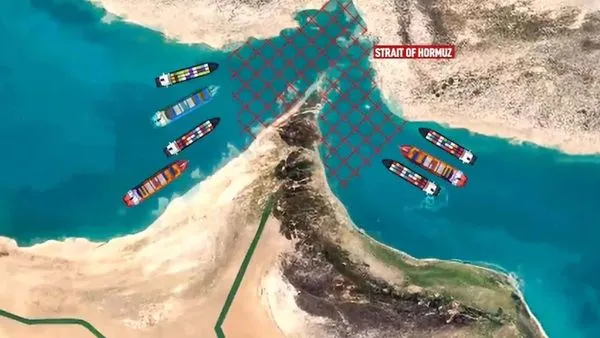
Shipping traffic via the Strait of Hormuz, through ​which Iraq’s seaborne oil must pass, is still well below the average of 125 ​to 140 vessels a day seen before the Iran war began at the end ⁠of February, putting further strain on buyers seeking to get cargoes out.

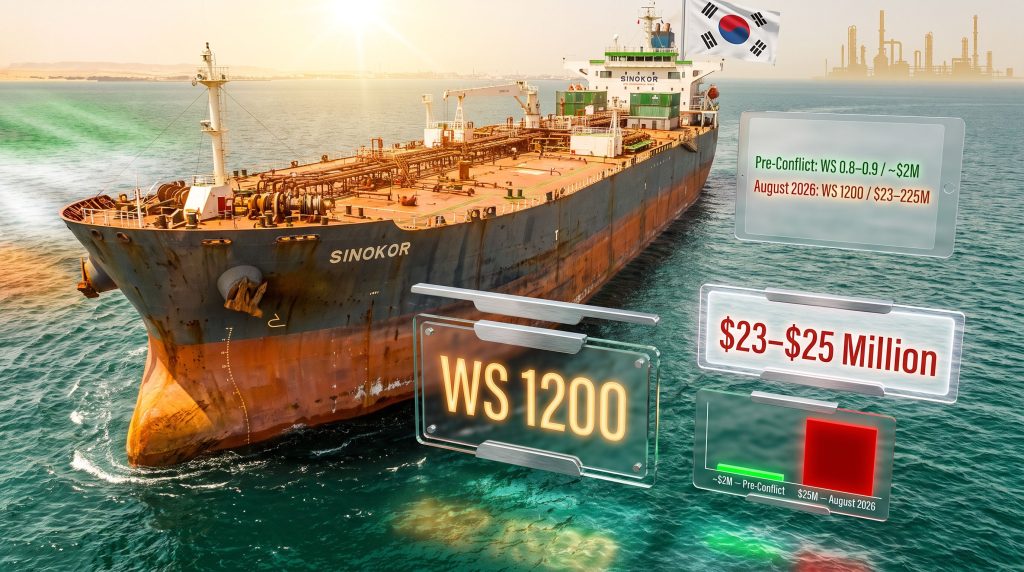
Reliance, the operator ​of the world’s biggest refining complex in India’s western state of Gujarat, booked the tanker to ​load 2 million barrels of oil at 1200 World Scale – a measure of freight costs, which was 12 times the benchmark freight rate, to lift Iraqi crude, the sources said.

That translated into a total cost of $23 ​million to $25 million for the charter hire – among the highest prices paid during the conflict, ​according to calculations by ship brokers.

Before the war, freight costs were 0.8 to 0.9 times the benchmark, working ‌out ⁠at about $2 million.

Despite paying the record freight rate, Reliance is still expected to save millions of dollars on the cargo because of steep discounts offered by Iraq’s state oil marketer SOMO, the sources said.

The vessel will be supplied by South Korea’s Sinokor, one of the few shipowners ​continuing to send tankers ​through the Strait of ⁠Hormuz as attacks on commercial vessels have increased the risks of navigating the waterway.

Reliance and Sinokor did not respond to emailed requests for ​comment.

Iraq is offering its crude at a discount of about $25 to $30 per ​barrel to ⁠Dubai benchmarks to entice buyers to lift cargoes from terminals inside the Strait of Hormuz, a document seen by Reuters this week showed.

Several Indian and Chinese refiners have sought vessels this week to enter ⁠the ​Strait and load crude at Iraq’s Basrah Oil Terminal, ​attracted by the steep discounts, other shipping sources said.

However, no vessels have been fixed so far as shipowners are wary ​of entering the waterway, they said.

Source: Reuters

Indian Register of Shipping hosts Meet with Marine Equipment Manufacturers to strengthen industry engagement

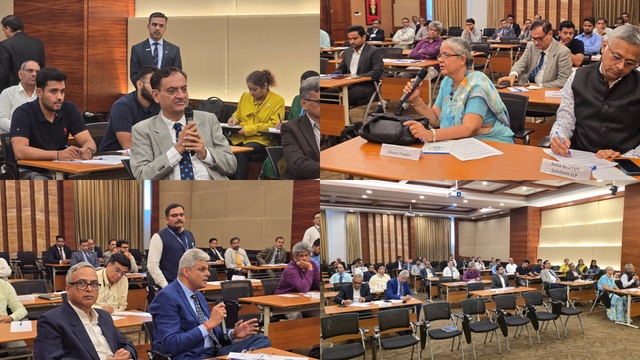
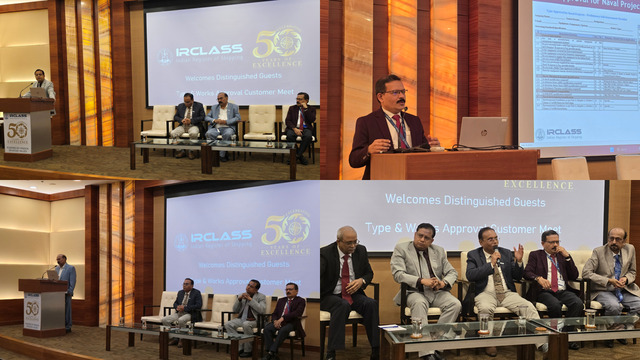
MUMBAI: Indian Register of Shipping (IRS) organised a customer interaction meet with manufacturers, technical consultants and other stakeholders from the marine equipment industry to strengthen collaboration, understand customer requirements and gather feedback on its Marine Component Certification and Type & Works Approval services.

The meeting brought together manufacturers representing diverse product segments including battery energy storage systems, navigation equipment, life-saving appliances, marine lighting, castings and other critical marine products.

Senior leadership from IRS highlighted the importance of indigenous manufacturing in supporting India’s growing maritime and shipbuilding ambitions. Participants were also briefed on recent Government initiatives, opportunities in commercial and naval shipbuilding, and the role of Type Approval in ensuring product quality, safety and regulatory compliance.

A key area of discussion was the growing potential of maritime electrification and battery energy storage systems as the industry moves towards cleaner and more sustainable technologies. IRS highlighted its technical capabilities and certification framework to support manufacturers developing next-generation marine products.

IRS Customer Meet.2jpeg Indian Register of Shipping hosts Meet with Marine Equipment Manufacturers to strengthen industry engagement

The interactive session provided an opportunity for participants to discuss technical, procedural and regulatory aspects of the Type Approval process. Discussions focused on enhancing the efficiency of the Type Approval process through better planning of certification activities, consideration of accredited laboratory test reports where applicable, and early engagement with classification societies during the product development cycle.

IRS reaffirmed its commitment to working closely with industry through regular stakeholder interactions, technical guidance and digital initiatives aimed at enhancing customer experience and supporting the growth of India’s marine manufacturing ecosystem.

Mr. T K Sahu, Joint MD of IRS said “Strong collaboration between classification societies and manufacturers is essential to building a globally competitive marine manufacturing ecosystem. Through regular stakeholder engagement and technical support, IRS remains committed to enabling innovation, strengthening indigenous capabilities and helping Indian manufacturers meet the highest international standards.”

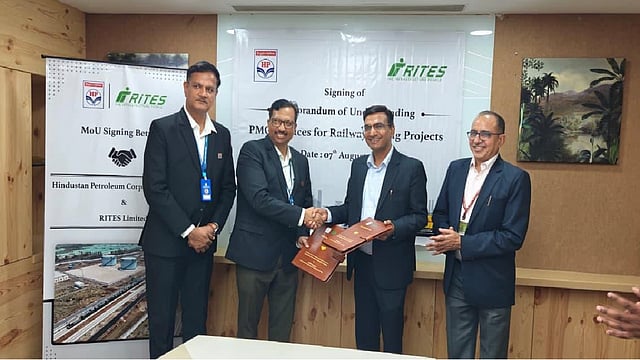
RITES, HPCL sign MoU for rail infrastructure consultancy across petroleum facilities

NEW DELHI:  State-owned transport infrastructure consultancy firm RITES Limited has signed a Memorandum of Understanding (MoU) with Hindustan Petroleum Corporation Limited (HPCL) to provide end-to-end consultancy services for the development of railway siding infrastructure across HPCL’s facilities, the company said on Friday.

Under the agreement, RITES will offer consultancy services covering the entire project lifecycle, from concept to commissioning, for railway siding projects. The scope of work includes feasibility studies, final location surveys, preparation of detailed project reports (DPRs), detailed engineering, project management consultancy, construction supervision, and coordination with Indian Railways for obtaining statutory approvals.

The collaboration aims to strengthen rail-based logistics infrastructure for the efficient transportation of petroleum products by supporting the development of new railway sidings, improving rail connectivity, and upgrading existing infrastructure across HPCL’s facilities.

According to the company, the partnership will leverage RITES’ expertise in railway infrastructure and project management to enhance logistics efficiency while supporting HPCL’s infrastructure expansion initiatives.

APEDA facilitates First-Ever Export of GI-tagged Mithila Makhana by Sea Route from Bihar to Australia

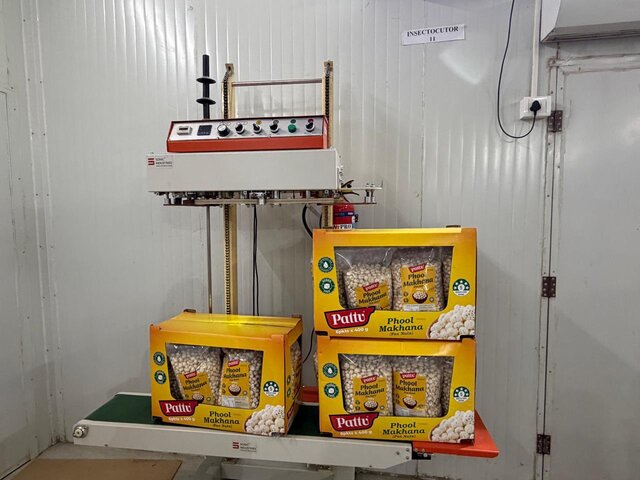
BIHTA (BIHAR): The Agricultural and Processed Food Products Export Development Authority (APEDA) facilitated first-ever commercial sea shipment of 18 Metric Tonnes of GI-tagged Mithila Makhana was exported from the BIADA Industrial Area, Bihta, Bihar, to Australia. The consignment, sourced from Makhana growers of Darbhanga district, is expected to strengthen the international presence of Bihar’s flagship GI product while creating enhanced income opportunities for farmers through export-led market access.

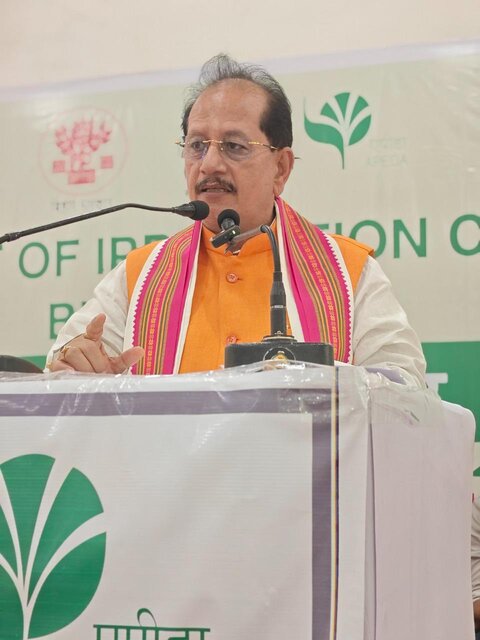
Agriculture Minister Government of Bihar Shri Vijay Kumar Sinha APEDA facilitates First-Ever Export of GI-tagged Mithila Makhana by Sea Route from Bihar to Australia

The export consignment was flagged off by the Agriculture Minister, Government of Bihar Shri Vijay Kumar Sinha. The ceremony was attended by the Director of Horticulture, Government of Bihar, officers of APEDA, representatives of the exporter, logistics partners and progressive Makhana growers from the region.

The initiative has enabled farmers to realise nearly 18 per cent higher returns than prevailing market rates, highlighting the benefits of export-oriented value chains and direct market linkages. The export is expected to strengthen the international presence of GI-tagged Mithila Makhana, create sustainable export opportunities for Bihar’s Makhana sector and contribute to higher farmer incomes.

The consignment was exported by NIAD Green, with logistics support from Jitban Supply Chain Pvt. Ltd., a startup supported under APEDA’s BHARATI (Bharat’s Hub for Agritech, Resilience, Advancement, and Incubation for Export Innovation). Comprising premium-quality raw GI-tagged Mithila Makhana, the consignment was sourced directly from farmers of Darbhanga district and packed at the BIADA Industrial Area, Bihta, Bihar.

Speaking on the occasion, Agriculture Minister, Government of Bihar, Shri Vijay Kumar Sinha, said that Makhana is the identity of Bihar and greater participation of Bihar-based exporters in international trade would enable farmers to secure better price realisation. He emphasised the importance of maintaining quality standards to meet global market requirements and stated that the Government of Bihar is continuously working to strengthen the Makhana value chain by supporting growers, processors and exporters. He further said that all necessary support would continue to be extended to the Phori community, whose traditional skills are integral to Makhana processing. He added that the first-ever sea shipment of GI-tagged Mithila Makhana to Australia reflects the growing global demand for Bihar’s agricultural products and opens new opportunities for farmers and exporters.

APEDA, under the Ministry of Commerce & Industry, Government of India, facilitated the export in association with the Department of Agriculture, Government of Bihar. APEDA has been consistently promoting Makhana exports through capacity building, market development initiatives, export facilitation and stakeholder engagement. The Authority also supported the exporter in market access facilitation and coordination, contributing to the seamless movement of the consignment to Australia.

Bihar accounts for nearly 85 per cent of India’s Makhana production. To further strengthen the sector, a separate HS Code for Makhana came into effect from July 2025 under the Finance Bill, 2025. During FY 2025–26, India exported more than 7,000 Metric Tonnes of Makhana and value-added Makhana products to over 20 international destinations, including the USA, the Middle East and Africa.

APEDA continues to work closely with State Governments, exporters, startups, Farmer Producer Organisations (FPOs), Farmer Producer Companies (FPCs) and other stakeholders to enhance the global competitiveness of India’s agricultural products while creating sustainable export-led growth opportunities for farmers across the country.

Govt signs strategic MoUs with key industry leaders and ecosystems to strengthen support to StartUps

NEW DELHI: The Department for Promotion of Industry and Internal Trade (DPIIT), Ministry of Commerce and Industry, has announced a series of strategic Memoranda of Understanding (MoUs) with key industry leaders and ecosystem enablers—Cashfree Payments, Darwin Dynamics, Vultr India, Cars24, and the Council for Startup India (CSI).

Enhancing Digital Payment Infrastructure and Fintech Capabilities with Cashfree Payments

DPIIT has signed a Memorandum of Understanding (MoU) with Cashfree Payments India Private Limited to strengthen support for DPIIT-recognised startups by enhancing access to digital payment infrastructure, financial technology solutions, and capacity-building initiatives. The collaboration seeks to combine DPIIT’s institutional reach with Cashfree Payments’ expertise in digital payments to enable startups to scale efficiently and contribute to India’s innovation-led growth.

Under the partnership, eligible startups will receive access to secure and scalable payment and payout solutions, identity verification and risk management services, along with preferential onboarding support and commercial benefits. The collaboration will also facilitate founder workshops, mentoring sessions, AI buildathons, hackathons, and knowledge-sharing programmes to build capabilities in areas such as digital payments, compliance, fraud prevention, KYC, cross-border transactions, and emerging technologies.

Expanding Inclusive Entrepreneurship and Deep-Tech Innovation with Darwin Dynamics

DPIIT has signed a Memorandum of Understanding (MoU) with Darwin Dynamics LLP to strengthen entrepreneurship development and foster a more inclusive, innovation-driven startup ecosystem in India. The partnership aims to expand the reach of the Startup India initiative by promoting entrepreneurship across Tier II, Tier III and rural regions, while enabling greater access to mentorship, institutional networks, market opportunities and capacity-building support for startups.

Under the collaboration, Darwin Dynamics will work to facilitate startup formalisation, strengthen entrepreneurship awareness, support capacity-building programmes, and promote innovation in strategic sectors including clean energy, green hydrogen, artificial intelligence, climate technologies and advanced manufacturing.

The organisation will also undertake structured initiatives including startup outreach and formalisation drives, entrepreneurship bootcamps, mentor network development, international market access programmes, investor connect initiatives, and policy research studies. The collaboration is expected to create new opportunities for startups, particularly youth, women entrepreneurs, first-generation founders and innovators from underserved regions, while contributing to India’s vision of becoming a globally competitive innovation-led economy.

Boosting Technology and Cloud Infrastructure Access with Vultr India

The collaboration with Vultr India Pvt Ltd focuses on  strengthening the technology infrastructure available to DPIIT-recognised startups. The collaboration aims to enhance startups’ access to cloud computing resources, technical capacity-building, and digital infrastructure, enabling them to build, scale and innovate more efficiently.

Under the partnership, eligible DPIIT-recognised startups will have access to cloud credits, preferential pricing, and technical support through Vultr’s startup programmes. The collaboration also includes structured training sessions and technical handholding on cloud infrastructure, covering areas such as cloud computing, storage, databases, Kubernetes, networking, and application deployment to strengthen startups’ technology capabilities.

The cloud computing company will also explore participation in Startup India and DPIIT-led events to further engage with the startup ecosystem and promote technology adoption. The partnership is expected to support startups in leveraging advanced cloud infrastructure, reducing technology adoption barriers, and accelerating the development of innovative, globally competitive digital solutions.

Driving Mobility, Auto-Tech, and AI Innovation with Cars24

DPIIT has partnered with Cars24 Services Private Limited to foster innovation, entrepreneurship and capacity building in India’s mobility and automotive technology ecosystem. The collaboration aims to strengthen the startup ecosystem by supporting AI-driven innovation, founder development, skilling, investment opportunities and road safety initiatives.

The auto-tech company aims to provide structured mentorship to startup founders, promote mobility and autotech skilling programmes, facilitate AI-focused technology enablement, and organise innovation challenges and hackathons to encourage startup-led solutions. The collaboration will also support promising startups through investment evaluation and ecosystem engagement, particularly in the areas of mobility and artificial intelligence.

The partnership is expected to strengthen India’s innovation ecosystem by enabling startups to develop cutting-edge mobility solutions, enhance execution capabilities, and contribute to the advancement of safe, sustainable and technology-driven transportation.

Accelerating Investment, Governance, and Global Scaling with Council for Startup India (CSI)

DPIIT has signed a Memorandum of Understanding (MoU) with the Council for Startup India (CSI) to strengthen support for DPIIT-recognised startups by facilitating access to investment, strategic partnerships, mentorship, leadership development and global markets. The collaboration aims to accelerate the growth of innovation-driven enterprises by enabling startups to scale sustainably and strengthen their global competitiveness.

As part of the MoU, CSI will support startups through dedicated programmes on investment readiness, corporate engagement, CFO matchmaking, global market access, and international innovation collaborations. It will also facilitate corporate partnerships, support founders in governance, financial readiness, compliance and international expansion, and strengthen linkages between startups, investors, industry and policy stakeholders.

The partnership is expected to enhance access to finance, mentorship and commercial opportunities for startups, while contributing to the growth of a robust, globally competitive and innovation-led startup ecosystem in India.

Iran’s Revolutionary Guard says re-opening Strait of Hormuz does not depend on talks with Oman

TEHRAN: Iran’s Revolutionary Guard said on Saturday that ​re-opening the Strait of ‌Hormuz is not related to Iran-Oman negotiations but conditional on ​the U.S. accepting ​Iran’s conditions.

A U.S. official on ⁠Friday reported progress between Iran ​and Oman that could ​soon reopen the Strait of Hormuz, potentially restoring oil exports that ​have been disrupted ​by the five-month-old U.S. war with ‌Iran.

“The ⁠reopening of the Strait of Hormuz is subject to the specific mechanisms and ​conditions ​of ⁠the Islamic Republic of Iran and is ​not related to ​the ⁠negotiations between Iran and Oman,” Iran’s Tasnim news agency ⁠cited ​Guard’s spokesperson ​Hossein Mohebbi as saying.

Source: Reuters

India stresses security of seafarers as “high priority” after Indian vessel sinks off Yemen; calls for safe, unimpeded passage

NEW DELHI: The Ministry of External Affairs (MEA) has underscored that the safety and security of Indian vessels and seafarers remain a matter of “high importance,” following the sinking of an Indian-flagged commercial vessel in the Red Sea off the coast of Yemen.

Addressing the media during a bi-weekly briefing in New Delhi on Friday, MEA Spokesperson Randhir Jaiswal detailed the government’s response to the incident involving the vessel MSV Faize Noore Oliya, which was targeted earlier in the week.

“This is a subject of high importance and we attach high priority to the issue. Our missions all across the Gulf region are in constant contact with shipping, as also with maritime authorities in those countries and other authorities as well,” Jaiswal stated, highlighting that Indian missions are operating 24/7 helplines to support affected individuals.

Jaiswal reiterated India’s call for safe, unimpeded navigation and the protection of global commerce.

“While we are coordinating with the Ministry of Shipping and local authorities in the West Asia and Gulf region, we continue to call for safe and unimpeded navigation and the free flow of commerce through international waterways. We also call upon all parties to refrain from targeting civilian infrastructure and civilians, especially commercial vessels and seafarers,” he added.

The MEA had previously condemned the attack on the vessel, confirming that all 13 Indian nationals onboard, part of a total crew of 14, were successfully rescued.

Union Minister of Ports, Shipping and Waterways Sarbananda Sonowal echoed these concerns, emphasising swift rescue coordination:
“India strongly condemns this unprovoked attack on the defenceless mechanised sailing vessel. The safety of our people is our supreme priority & I am relieved to inform that ALL 14 seafarers (including 13 Indians) have been safely rescued by the Yemeni Coast Guard and brought to the Port of Mokha.”

The Minister added that the Director General Maritime Administration (DGMA) has been instructed to coordinate across agencies to ensure ongoing security for Indian seafarers in the area.

The attack underscores renewed maritime security anxieties in the Red Sea and the Bab al-Mandab Strait, a vital chokepoint connecting the Red Sea to the Gulf of Aden and the Arabian Sea, where commercial shipping continues to face regional threats.

Kamarajar Port sets New Container Handling Record, Achieves Best-Ever Rail Performance in July 2026

67,561 TEUs handled in a single month; 31 rail rakes carrying 4,600 TEUs mark a new benchmark in multimodal logistics

CHENNAI: Kamarajar Port has achieved a significant new milestone in its operational performance, setting an all-time monthly record for container handling while simultaneously recording its best-ever rail performance during July 2026.

The Port’s Container Terminal handled an impressive 67,561 TEUs in July 2026, surpassing the previous monthly record of 66,470 TEUs, achieved in May 2026. The new benchmark reflects the Port’s growing operational capabilities and its increasing role in facilitating efficient and reliable containerised trade.

Adding another dimension to this achievement, Kamarajar Port also registered its highest-ever rail handling performance during the month. A total of 31 rakes were successfully handled through the KPL Railway Siding within the Port, transporting 2,650 units equivalent to 4,600 TEUs.

The simultaneous growth in container and rail operations highlights the Port’s continued focus on strengthening multimodal connectivity, improving cargo evacuation and providing seamless integration between maritime and rail logistics.

The record performance also demonstrates the effectiveness of Kamarajar Port’s infrastructure and operational systems in meeting the evolving requirements of India’s rapidly expanding trade and logistics ecosystem. Enhanced rail connectivity, in particular, can contribute to more efficient cargo movement while supporting greater integration between ports, industrial centres and inland markets.

With container volumes reaching a new monthly high and rail operations achieving an unprecedented milestone, Kamarajar Port continues to strengthen its position as a key gateway for India’s maritime trade and a critical link in the country’s multimodal logistics network.

The achievements of July 2026 underscore the Port’s commitment to operational excellence, efficiency, connectivity and customer-focused logistics, supporting India’s vision of a faster, smarter and more integrated transportation ecosystem.

Another record in containers. Another milestone on rail. Another step forward for Kamarajar Port and India’s logistics ambitions.

SMP Kolkata–Cochin Shipyard Partnership Strengthens India’s Ship Repair Ecosystem

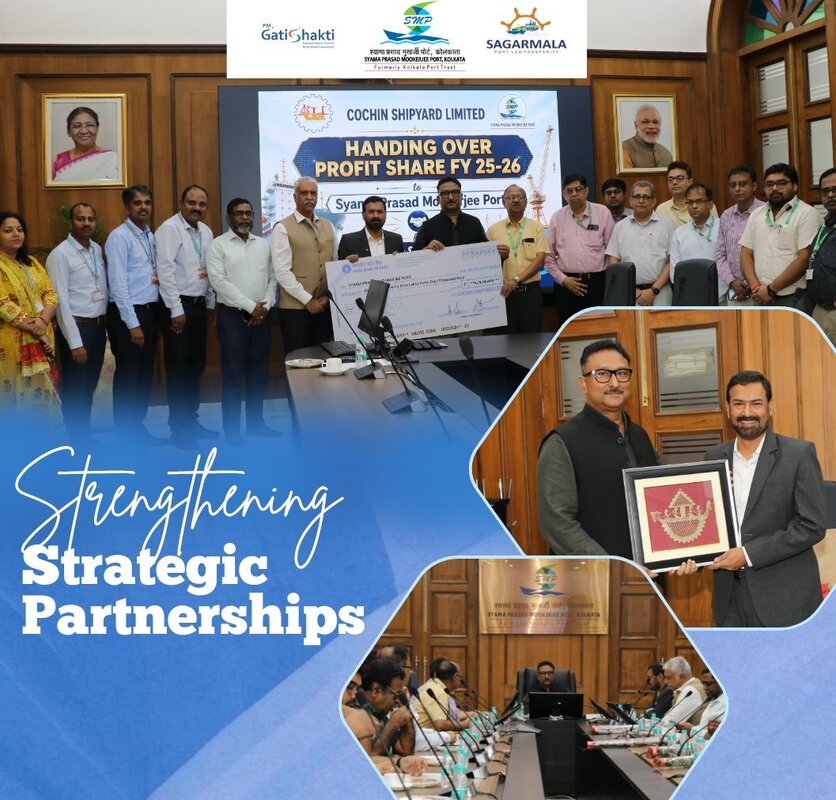
KOLKATA: Syama Prasad Mookerjee Port, Kolkata (SMPK) and Cochin Shipyard Limited (CSL) are strengthening India’s ship repair capabilities through their strategic collaboration under the CSL–Kolkata Ship Repair Unit (CKSRU).

The partnership, which combines the infrastructure and operational strengths of SMPK and CSL, has emerged as an important initiative in developing Kolkata as a strategic hub for ship repair and maritime services.

Since commencing operations in September 2019, the CKSRU has successfully undertaken repairs of 42 vessels, demonstrating the growing capabilities of the facility and the value of the long-term collaboration between the two organisations.

The initiative has also witnessed significant investment in strengthening and modernising the ship repair ecosystem. More than ₹50 crore has been invested towards upgrading infrastructure and enhancing the capabilities required to support efficient and quality ship repair services.

The partnership has generated positive financial outcomes as well. Over the past seven financial years, ₹23 crore has been shared in profits between the partners. For FY 2025–26 alone, the profit share stood at ₹8.79 crore, reflecting the continued growth and operational performance of the ship repair unit.

The CKSRU partnership represents a significant step towards expanding India’s domestic ship repair infrastructure and reducing dependence on overseas facilities. By leveraging the technical expertise of CSL and the strategic location and maritime infrastructure of SMPK, the initiative is contributing to the development of a stronger and more competitive ship repair ecosystem.

The continued progress of CKSRU underscores the importance of strategic partnerships in strengthening India’s maritime capabilities. With sustained investment in infrastructure, enhanced operational efficiency and growing vessel repair activity, the collaboration between SMPK and CSL is poised to play an increasingly important role in supporting India’s maritime ambitions and setting higher standards in ship repair and related services.