Home Blog Page 162

India successfully concludes the 16th BRICS Trade Ministers’ Meeting in Jaipur under its BRICS Chairship 2026

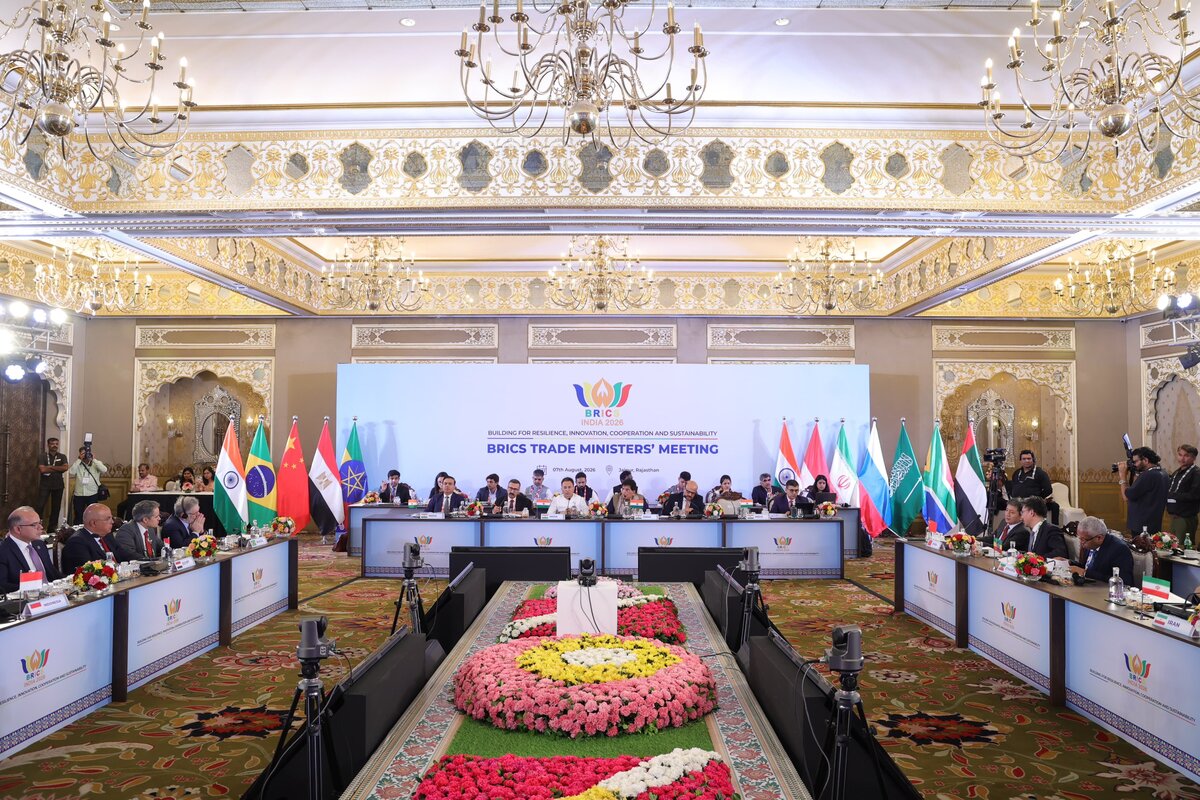
JAIPUR: The 16th BRICS Trade Ministers’ Meeting concluded successfully today at Jaipur, Rajasthan, under India’s BRICS Chairship, 2026. The Meeting was chaired by Shri Piyush Goyal, Union Minister of Commerce and Industry and was attended by Shri Jitin Prasada, Union Minister of State for Commerce and Industry and Shri Rajesh Agrawal, Commerce Secretary. Held under the overarching theme, “Building for Resilience, Innovation, Cooperation and Sustainability”, the meeting was preceded by the Third Meeting of the BRICS Contact Group on Economic and Trade Issues (CGETI), held on 3 and 4 August 2026 in New Delhi.

The Meeting brought together Trade Ministers, Vice Ministers, Heads of Delegation and officials from the BRICS member countries. The visiting dignitaries included H.E. Mr. Marcio Fernando Elias Rosa, Minister of State for Development, Industry, Commerce and Services of Brazil; H.E. Mr. Li Chenggang, China International Trade Representative and Vice Minister of Commerce of China; H.E. Dr. Mohamed Farid Saleh, Minister of Investment and Foreign Trade of Egypt; H.E. Mr. Molalign Asfaw Ayana, Ambassador of Ethiopia; H.E. Dr. Budi Santoso, Minister of Trade of Indonesia; H.E. Dr. Mohammad Sadegh Mofatteh, First Deputy Minister of Trade and Industry of Iran; H.E. Mr. Vladimir Evgenievich Ilichev, Deputy Minister of Economic Development of Russia; H.E. Mr. Parks Franklyn Mpho Tau, Minister of Trade, Industry and Competition of South Africa; and H.E. Dr. Thani bin Ahmed Al Zeyoudi, Minister of Foreign Trade of the United Arab Emirates.

Earlier in the day, the visiting Ministers and delegates undertook a walkthrough of the historic City Palace at Jaipur and appreciated India’s rich heritage and vibrant craft traditions of Rajasthan.
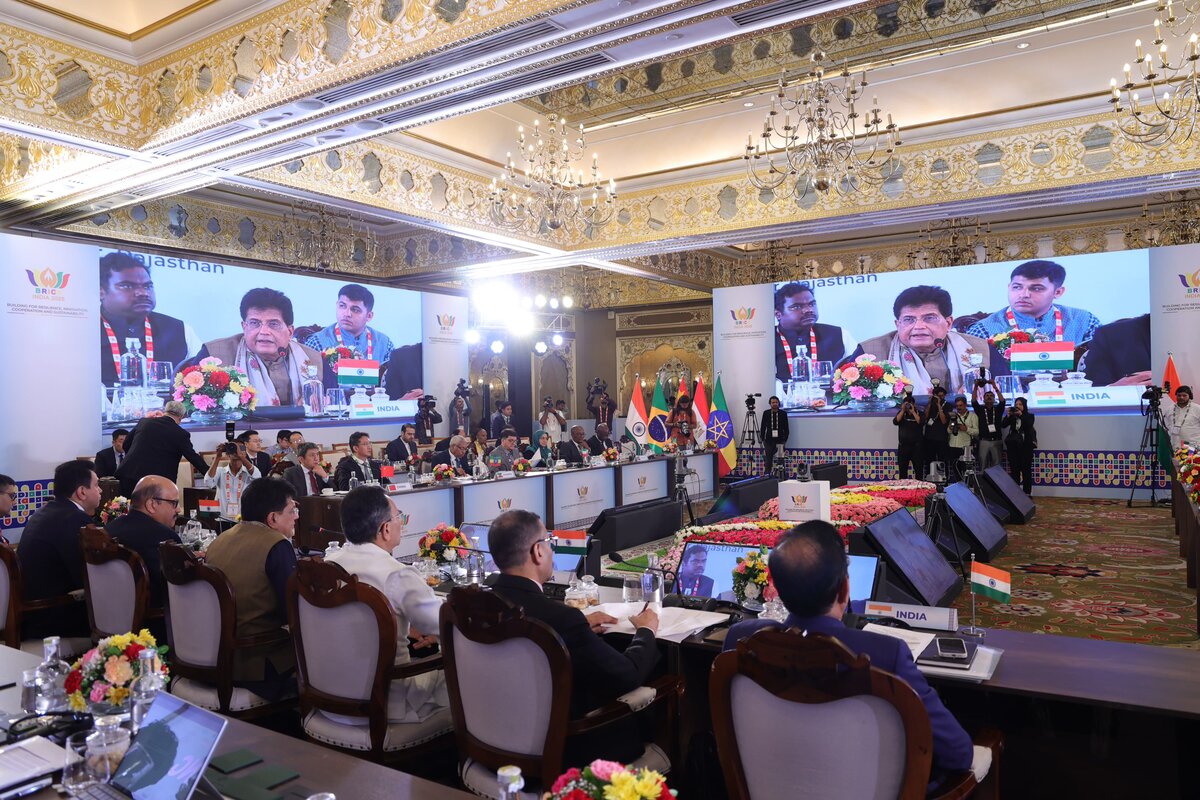
BRICS 1 India successfully concludes the 16th BRICS Trade Ministers' Meeting in Jaipur under its BRICS Chairship 2026

The Ministerial meeting started with opening remarks by the Commerce Secretary, followed by the welcome address of the Minister of State for Commerce and Industry and keynote address of the Union Minister of Commerce and Industry. Guided by Hon’ble Prime Minister of India Shri Narendra Modi’s vision, the Commerce and Industry Minister unequivocally pushed for safeguarding the interests of India’s farmers, securing food and livelihood security. He further stated that BRICS countries account for a rising share in the world economy and the Group stood for resilience, innovation, cooperation and sustainability. He reaffirmed India’s vision of a reformed, development-oriented, member-driven and consensus-based multilateral trading system, with the World Trade Organization at its core, preserving Special and Differential Treatment for developing countries and restoration of a fully functioning, two-tier and binding dispute settlement system. The Minister underlined that the most-favoured-nation principle, together with Special and Differential Treatment, remains the cornerstone of a fair, inclusive, non-discriminatory and rules-based order and that reform must strengthen this cornerstone, not dilute it. He set out India’s priorities for the Chairship: strengthening the multilateral trading system; building resilient and diversified global value chains; internationalisation of MSMEs and their access to trade finance; and seamless flow of digitally delivered services across borders.

Delivering the Welcome Address, the Minister of State for Commerce and Industry welcomed the Ministers and delegates to Jaipur in the spirit of Padharo Mhare Desh, and recalled that BRICS cooperation, guided by Prime Minister Shri Narendra Modi’s vision of Humanity First, places people at its centre. He affirmed that the true promise of intra-BRICS trade is focused on human welfare, lies in the fortunes of micro, small and medium enterprises, in women-led businesses and in the energy of the youth of developing economies.

Trade Ministers of the member countries shared their national perspectives and emphasized the greater role of BRICS in furthering global trade. The Meeting concluded with a summary by the Commerce Secretary on behalf of the Indian Chairship and the Concluding Remarks of the Union Minister of Commerce and Industry, with the Trade Ministers thanking India for its hospitality and its leadership of BRICS 2026.

The Annex-I affirms the multilateral trading system with the World Trade Organization at its core, with development at its centre, the preservation of Special and Differential Treatment, and the restoration of a fully functioning, two-tier and binding dispute settlement system, alongside the policy space for developing economies for their food and livelihood security.

The Meeting gave a decisive push for small business entrepreneurs. Ministers issued the Jaipur Consensus to study a BRICS Invoice Discounting Mechanism and adopted the Guiding Principles for Credit Assessment Frameworks for Export-Oriented MSMEs, so that a firm is judged by its cash flow and not by its assets and collateral. These instruments respond directly to the global trade finance gap of about USD 2.5 trillion which impacts smaller enterprises and therefore form part of the Workplan on the Internationalisation of MSMEs adopted as Annex-II.

Ministers also advanced the opening of markets and economic diversification among BRICS Members. The Workplan on the BRICS Shared Understanding on Global Value Chains, covered by Annex-III, carries the GVC Action Plan 2026-2030, including BRICS Technical Council, BRICS Connect, BRICS GVC Joint Study, the possibility of establishing strategic supply chain and investment promotion platform including in pharmaceutical sector as well as food security, among others.

The BRICS Principles to Facilitate Digitally Delivered Services Across Borders, adopted as the Annex-IV will help cooperation in safe and secure digitally delivered services. Together with the pursuit of balanced and expanding trade among members, these outcomes place services and value chains at the frontier of the next decade of BRICS cooperation.

Another outcome was the progress towards finalisation of the Strategy for BRICS Economic Partnership 2030, spanning the Multilateral Trading System, trade in services, the digital economy, industry, innovation and technology, trade and investment, financial cooperation and sustainable development. Ministers agreed to submit the Strategy, together with the priorities to the BRICS Leaders for endorsement.

The 16th BRICS Trade Ministers’ Meeting marks a significant milestone under India’s BRICS Chairship and reaffirms India’s commitment to an open, inclusive, transparent, equitable and rules-based multilateral trading system with the WTO at its core. The outcomes of the Meeting, anchored in the interests of farmers and small enterprises, would contribute to India’s vision of Viksit Bharat@2047 and to a future of shared prosperity among emerging economies.
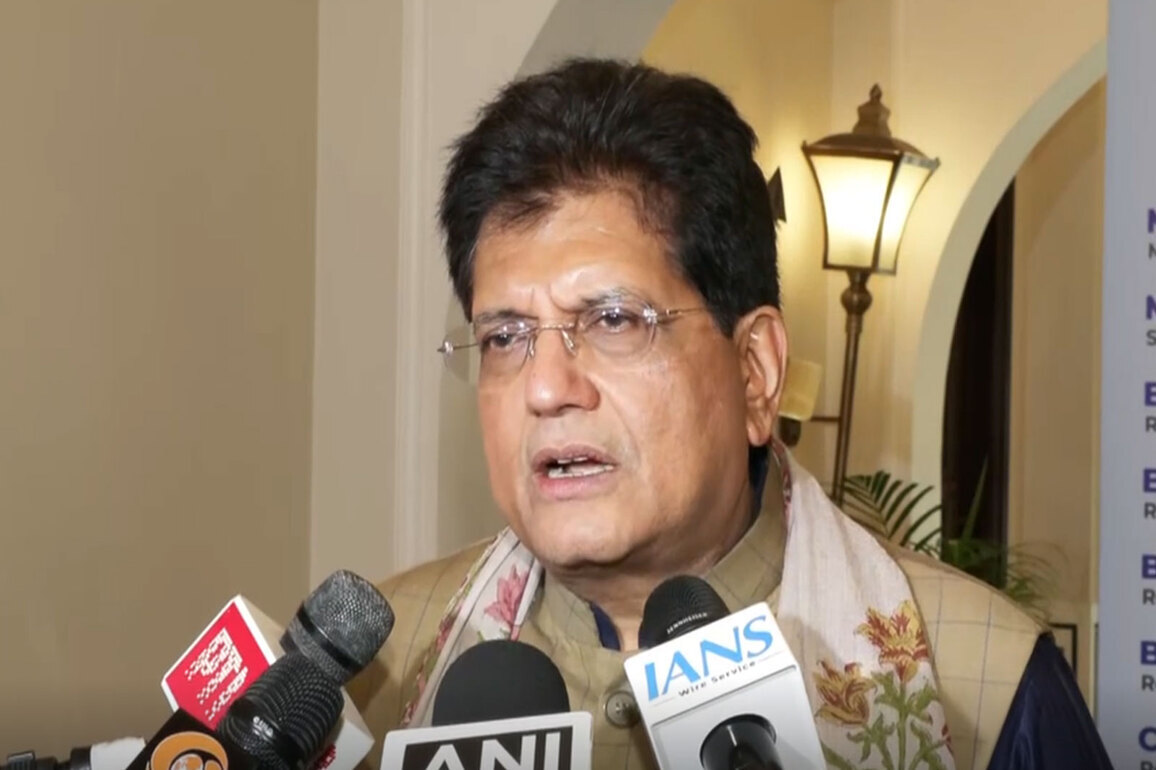
India amended FDI rules to boost e-commerce exports, open global markets for small businesses: Piyush Goyal

JAIPUR: India has recently amended its foreign direct investment (FDI) regulations to facilitate large-scale e-commerce trade and help small businesses, artisans, farmers and fishermen access wider markets, Union Commerce and Industry Minister Shri Piyush Goyal said on Friday.

Speaking to the media following the BRICS Trade and Industry Ministers’ Meeting in Jaipur, Goyal said the changes would facilitate e-commerce trade in products including handlooms, handicrafts, textiles, footwear and food products.

“We have recently amended FDI regulations to facilitate large-scale e-commerce trade for products such as handlooms, handicrafts, textiles, footwear, and various everyday items, including food products, that consumers typically purchase online. This will benefit our farmers and fishermen,” Goyal said.

His remarks came as BRICS ministers discussed ways to strengthen trade, investment, financing for micro, small and medium enterprises (MSMEs), digital commerce and industrial cooperation among member countries.

Shri Goyal said that India, which holds the BRICS presidency this year, hosted a meeting of industry ministers on Thursday, where discussions focused on increasing investment and creating employment opportunities through emerging technologies.

“There were extensive discussions on creating new jobs and opportunities through emerging technologies like artificial intelligence and quantum computing, and on how these technologies could accelerate economic and industrial progress across all BRICS nations,” he said, adding that “constructive decisions were reached”.

The Commerce Ministers’ meeting on Friday focused on trade flows among BRICS countries and improving access to finance and investment for smaller businesses.

“The agenda included coordinating our bilateral trade, specifically imports and exports, and ensuring adequate financing and investment for MSMEs through banks and other channels,” Goyal said.

He added that ministers also discussed making trade processes paperless and simplifying systems through greater use of digital technologies.

Shri Goyal said India wants to use e-commerce as a channel to connect products made by small businesses and artisans with significantly larger markets.

“India is keen to harness the power of e-commerce to connect small-scale products with vast markets. Many nations have already generated massive trade volumes through this channel, and India is now striving to ensure that our micro and small enterprises and traders gain similar opportunities,” he said.

Referring to National Handloom Day, observed on August 7, Goyal said the initiative could also support traditional and labour-intensive sectors.

“Today, as we observe National Handloom Day, we recognize that this initiative will also benefit the Khadi and cottage industries, the textile sector, and leather artisans,” he said.

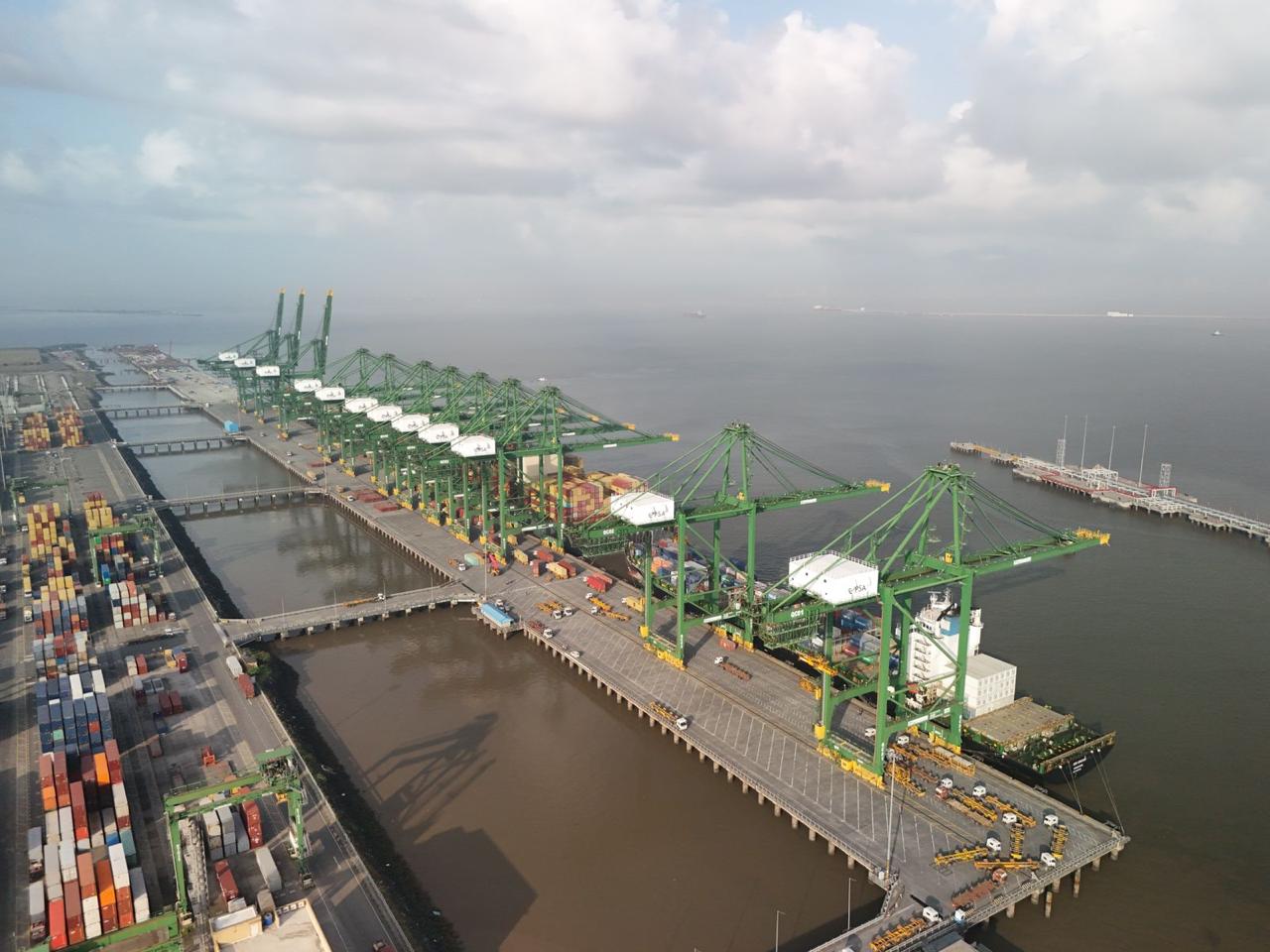
India strengthens Global Maritime Competitiveness with Improved Port Performance and Faster Turnaround

NEW DELHI: The average turnaround time of Major Ports improved from 52.87 hours in 2021–22 to 48.84 hours in 2025–26. The port-wise and year-wise details of turnaround time for the last five years are provided at Annexure I. The Container Port Performance Index (CPPI) published by the World Bank provides an objective and comparable assessment of container port performance based on the vessel’s time in port. As per the CPPI 2025, Jawaharlal Nehru Port is ranked 22nd, comparable with Singapore (21st), Shanghai (23rd) and higher than Rotterdam (333rd).

Annexure – I

AVERAGE TURN AROUND TIME OF MAJOR PORTS

(In Hours)

Ports2021-222022-232023-242024-252025-26
Deendayal Port60.9677.2854.2458.5657.86
Mumbai Port73.0067.4262.9765.7564.05
Jawaharlal Nehru Port28.0828.472626.3527.43
Mormugao Port71.7761.4765.6169.6866.25
New Mangalore Port45.9943.0940.4440.3743.23
Cochin Port34.6433.4133.432.4132.33
V.O. Chidambaranar Port48.4846.8051.3655.4458.80
Chennai Port53.1948.2244.9248.6944.72
Kamarajar Port46.3845.4044.3746.6643.27
Visakhapatnam Port73.8373.1965.8669.1965.32
Paradip Port53.1646.2741.6146.1646.07
Syama Prasad Mookerjee Port56.0856.0160.8557.3756.43
All Major Ports52.8752.948.0649.4748.84

To further improve port efficiency and reduce vessel turnaround time, the Government has taken several measures. These include the construction of new berths and terminals, mechanization, modernization, and optimization of existing berths, terminals, and yards, as well as the creation of supporting infrastructure such as central parking plazas. Additionally, the One Nation One Port Process (ONOP) has been implemented to standardize and simplify port procedures across all ports, thereby enhancing operational efficiency and reducing vessel turnaround times.

This information was given by the Union Minister of Ports, Shipping and Waterways, Sarbananda Sonowal, in a written reply to the Lok Sabha.

Government accelerates Inland Water Transport Development with Major Policy Reforms and Infrastructure push

NEW DELHI: The Government has implemented several policy and promotional initiatives for the development of Inland Water Transport (IWT) sector, including notification of the National Waterways (Construction of Jetties/ Terminals) Regulation, 2025, Jalvahak scheme and extension of Tonnage Tax benefits, besides development of Multi Modal Terminals (MMT)/ Inter Modal Terminal (IMT), jetties and fairway maintenance. The details of IWT/ new port infrastructure projects, including the projects of Uttar Pradesh implemented on National Waterway (NW)-1 (Haldia to Prayagraj) are attached as Annexure-I.

Annexure-I

Details of New Port Development Projects and IWT Infrastructure Projects.

A.National Waterway-1

Sl. No.StateDistrictProjectStatusCost (Rs. in crore)
1Uttar PradeshVaranasiMultimodal Terminal VaranasiCompleted182.33
2Uttar PradeshVaranasi/ Chandauli/ Ghazipur/Ballia15 Community JettiesCompleted14.23
3Uttar PradeshVaranasiShip Repair Facility VaranasiWork in Progress182.93
4Uttar PradeshVaranasi2 Nos. of River Cruise Terminals at VaranasiDPR in Progress200
5Uttar PradeshVaranasiRegional Centre of ExcellenceDPR in Progress250
6Uttar PradeshVaranasiDevelopment of Freight Village- MMLP VaranasiPPP Bidding ongoing.188
7Uttar PradeshFive LocationsQuick Pontoon Opening Mechanism1 Installed and 4 Under construction51.61
8Uttar PradeshVarious LocationFairway DevelopmentMajhauwa – GhazipurGhazipur to VaranasiOngoing221.51
9Uttar PradeshVaranasiLaunch of Hydrogen vessels at VaranasiCompleted24
10Uttar PradeshAyodhyaInstallation of Jetty and operationalization of hybrid electric vessels at Ayodhya on NW-40 is completedCompleted16
11Uttar PradeshMathura & VrindavanDevelopment of IWT Infrastructure & Fairway Maintenance on NW-110 along Mathura & Vrindavan stretchCompleted12
12Uttar PradeshVaranasi, Ayodhya & PrayagrajDevelopment of Water Metro project at Varanasi, Ayodhya and PraygrajOngoingFeasibility study completed.
13BiharFive LocationQuick Pontoon Opening Mechanism1 Installed and 4 Under construction55
14BiharPatnaShip Repair Facility PatnaWork in Progress210.56
15BiharPatnaRiver Cruise Terminals at PatnaDPR in Progress100
16BiharSaranIntermodal Terminal, KalughatCompleted87.13
17BiharPatnaUpgradation of NINI PatnaCompleted6.35
18BiharVarious LocationsFairway DevelopmentFarakka – KahalgaonSultanganj – BarhBarh – DighaDigha – MajhauwaOngoing377.56
19Bihar21 LocationsDevelopment of Community JettiesCompleted39.21
20JharkhandSahibganjMultimodal Terminal SahibganjCompleted278.44
21Jharkhand2 locationsDevelopment of Community JettiesCompleted2.60
22West BengalHaldiaMultimodal Terminal, HaldiaCompleted508.36
23West BengalBalagarhIntermodal Terminal, Balagarh, West BengalUnder Implementation27.41
24West BengalMurshidabadNew Navigational Lock at FarakkaCompleted369.53
25West BengalMurshidabadModernization of Existing Lock GateOngoing172.95
26West BengalVarious LocationFairway DevelopmentTribeni – KatwaKatwa – FarakkaHaldia Access ChannelOngoing175.84
27West Bengal22 LocationsDevelopment of Community JettiesCompleted39.21

B. New Port Infrastructure Projects

Sl. No.StateProjectCost (Rs. in crore)
1MaharashtraVadhavan Green Field Deep water Port76220

    
The details of major project undertaken and being undertaken to strengthen trade and connectivity through inland waterways in the North-Eastern Region on NW-2, NW-16 in Assam are attached as Annexure -II.

Annexure-II

A. MAJOR COMPLETED PROJECTS IN NER:

Sl. No.StateDistrictProjectStatusCost (Rs. crore)
1AssamKamrupConstruction of High Level Jetty at PanduCompleted43.89
2AssamDhubriConstruction of Jetty and allied works for Dhubri TerminalsCompleted47
3AssamBongaigaonDevelopment of IWT Terminal at MMLP JogighopaCompleted82.04
4AssamDibrugarhConstruction of Cargo-cum-Tourist Terminal at BogibeelCompleted101
5AssamDibrugarh, KamrupFloating Tourist Jetty at Bogibeel & PanduCompleted9.75
6AssamKarimganjRenovation of Existing Shore Facilities at Badarpur and Karimganj TerminalCompleted6.4
7TripuraSepahijalaConstruction & Development of IWT Terminal at Sonamura, TripuraCompleted6.91
8AssamDibrugarhCustoms & Immigration Building at BogibeelCompleted8.87
9AssamDibrugarhCustoms & Immigration Building at Dhubri & BogibeelCompleted9.31
10AssamBongaigaonConstruction of Boundary Wall at Jogighopa TerminalCompleted12.33
11AssamDibrugarhRenovation of Heritage Building at DibrugarhCompleted6
12AssamTinsukia, Dhemaji, Dibrugarh, Lakhimpur, Majuli, Jorhat, Sivasagar, Golaghat, Biswanath, Sonitpur, Nagaon, Morigaon, Kamrup (Metro), Kamrup, Nalbari, Barpeta, Goalpara, Bongaigaon, South Salmara–Mankachar, and DhubriOperational & Maintenance of other works including terminals and fairway development (2014–2026)Completed508.3
13AssamKamrupConstruction of Steel Gangway with Yoke System at PanduCompleted2.88
14AssamKamrupApproach Road to Pandu Jetty from NH-27Completed180

B. MAJOR ONGOING PROJECTS IN NER:

Sl. No.StateDistrictProjectStatusCost (₹ Cr.)
1AssamDhubri, South Salmara–Mankachar, Goalpara Bongaigaon (Jogighopa), Barpeta, KamrupFairway Development in NER through DCI for NW-2 (Bangladesh Border to Pandu)Work in progress
(Physical Progress: 67.70%)
143
2AssamKamrupShip Repair Facility at PanduWork in progress
[Physical Progress: 98.46 % for civil works and total project completion 68% (Civil, Mechanical and Electrical works)]
283.33
3AssamJorhatConstruction of Tourist Jetty at Bishwanath Ghat & Cargo-cum-Cruise Terminal at Neamati GhatWork awarded to IPRCL on Deposit Work basis. Tender under process.158
4AssamDibrugarhDevelopment of RCoE at DibrugarhWork awarded to IPRCL on Deposit Work basis.Tender under process.207.65
5AssamKamrupConstruction of Building for Regional Office, MSDC, Guest House and Office Space for ITAT at Fancy BazarWork awarded to IPRCL on Deposit Work basis. Tender under process.50
6AssamKamrupLink Road connecting Pandu Terminal with Ship Repair FacilityWork in progress
(Physical Progress: 30.00%)
55
7AssamKarimganjDevelopment & Maintenance of Fairway in Bhanga–Badarpur (10.5 km) stretch through DCIWork in progress
(Physical Progress: 67.70%)
41.67
8AssamKarimganjConstruction of Berthing Pontoon with Gangway at Badarpur TerminalWork in progress
(Physical Progress: 72.50%)
2.57
9AssamKarimganjConstruction of Crane Pontoon with Gangway at Karimganj TerminalWork in progress
(Physical Progress: 65.00%)
4.42
10AssamKarimganjProcurement of One Survey Vessel for NW-16Work in progress
(Physical Progress: 60.00%)
4.97
11AssamKarimganjProcurement of Three Amphibian Dredgers for NW-16 & IBP RouteUnder Tendering Stage30
12AssamDhubriProcurement of Two (25×6 m) Steel Pontoons for River Brahmaputra (NW-2)Work in progress
(Physical Progress: 90.00%)
3.4
13AssamKamrupProcurement of Two SDB Vessels for River Brahmaputra (NW-2)Work in progress
(Physical Progress: 55.00%)
2.88
14AssamSilcharProject for Providing 10 Nos. RPL Passenger Vessels for River BarakWork in progress
(Physical Progress: 55.00%)
13.02
15AssamDibrugarhConstruction of All-weather Approach Road from NH-15 to Bogibeel Terminal (DPR)Under DPR Stage0.43
16Assam, Meghalaya.Tinsukia, Dibrugarh, Sivasagar, Goalpara, Kamrup, Morigaon, Nagaon, Lakhimpur, Majuli,West Garo HillsDPR for Construction of Community Jetties on NW-30, NW-32, NW-50, NW-57 & NW-95Under Tendering Stage5.56

The details of projects on other waterways are attached at Annexure -III.

Annexure-III
 

A. COMPLETED TERMINALS ON OTHER NWs

Sl. No.StateDistrictProjectStatusCost (₹ Cr.)
1.Andhra PradeshNTR4 nos floating steel pontoon terminals on NW-4 (River Krishna)Completed5.84
2.Andhra PradeshNTRPermanent Ro-Ro terminalCompleted13.27
3.GoaNorth Goa4 nos floating concrete terminals on NW-68 (River Mandovi)Completed9.6

B. ONGOING TERMINALS ON OTHER NWs

Sl. No.StateDistrictDescriptionNational WaterwaysSize of Concrete PontoonsStatusTimeline
1GoaNorth Goa / South GoaDesign, Construction, Supply, Installation, Testing & Commissioning of 10 nos. Community Jetties.Cumbarjua Canal (NW-27); Mandovi River (NW-68); Zuari River (NW-111)10 nos. concrete jetties of size 24 m x 6 m.Casting completed. 3 of 10 sites finalized for installation.Dec-26
2GujaratNarmada / Chhota UdepurDesign, Construction, Supply, Installation, Testing & Commissioning of 2 nos. Concrete jetties.Narmada River (NW-73)1 jetty at Mokhdi village (36 m x 9 m) & 1 at Hafeswar Temple (24 m x 6 m).Casting completed. Installation after approaching the road.Dec-26
2GujaratSuratDesign, Construction, Supply, Installation, Testing & Commissioning of 2 nos. Concrete jetties.Tapi River (NW-100)1 jetty at Surat Castle (36 m x 9 m) & 1 at Dumas Beach (24 m x 6 m).Casting yet to start.Dec-26
3Jammu & KashmirSrinagar/Anantnag/Bandipora; Jammu/Reasi/KathuaDesign, Construction, Supply, Installation, Testing & Commissioning of 8 + 3 concrete jetties.Jhelum River (NW-49); Chenab River (NW-26); Ravi River (NW-84)8 jetties (30 m x 6 m) on Jhelum; 2 jetties (30 m x 6 m) at Akhnoor & Reasi; 1 jetty (24 m x 6 m) at Satwain.Casting in progress.Dec-26
4KarnatakaMysuru / Uttara KannadaDesign, Construction, Supply, Installation, Testing & Commissioning of 3 nos. Concrete jetties.Sharavati (NW-90); Kabini (NW-51)2 jetties (36 m x 9 m) at Beeramballi & Gerosuppa; 1 jetty (24 m x 6 m) at Honnavar.Casting yet to start.Dec-26
5OdishaKendraparaDesign, Construction, Supply, Installation, Testing & Commissioning of 3 nos. Concrete jetties.Mahanadi (NW-64); Baitarani (NW-14)2 jetties (36 m x 9 m) at Bahakuda & Musadia; 1 jetty (24 m x 6 m) at Gupti Ghat.Casting yet to start.Mar-27
6West BengalNorth 24 ParganasDesign & Inspection for 08 nos. HDPE Pontoons at Ichamati River.Ichamati River (NW-44)8 HDPE Pontoons at Harishpur, Bajitpur, Kathatala, Medey, Purna, Media, Kabilpur & Media Ferry Ghats.Fabrication yet to start.Mar-27
7KeralaKottayam / AlappuzhaDesign & Inspection for 04 nos. HDPE Pontoons.Kollam-Kottapuram & West Coast Canal (NW-3)04 HDPE Pontoons at Vaikkom, Cherthala (Thanneermukkom), Alappuzha & Kayamkulam.Fabrication yet to start.Mar-27

IWT projects for which approval have been given recently for implementation in Uttar Pradesh are given below:

S. No.ProjectsTimeline
1Development of Ship Repair Facility at VaranasiWork awarded on 29.04.2026Scheduled completion 2 years
2Development of Freight Village-Multimodal Logistics Park at VaranasiPPP bidding in progress.Letter of Award targeted October,2026

This information was given by the Union Minister of Ports, Shipping and Waterways, Sarbananda Sonowal, in a written reply to the Lok Sabha on Friday.

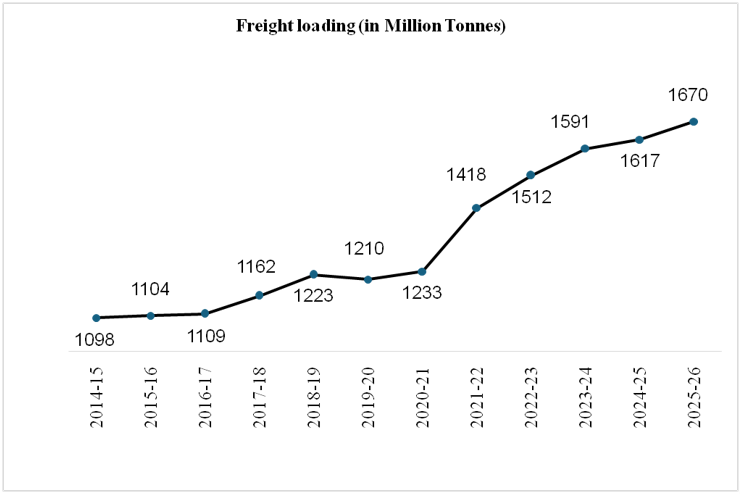
Full-Fledged DFC Operations and GCT Push accelerate Freight Growth; Loading Rises Consistently from 1,098 MT in 2014-15 to 1,670 MT in 2025-26

Indian Railways Strengthens Freight Ecosystem Through Terminal Development, Wagon Investment Schemes, Rapid Cargo Services and Improved First-and-Last-Mile Connectivity

NEW DELHI: For strengthening freight logistics, regional connectivity and to increase the freight movement share of Railways, Indian Railways has implemented a multi-pronged strategy to enhance freight efficiency, ensure seamless regional connectivity, and provide robust first-and-last-mile solutions. The key initiatives are categorized below –

(i) Terminal Development: To improve the efficiency of rail freight handling at the terminals, Indian Railway has adopted two-pronged approach: encouraging development of modern rail freight terminals under Gati Shakti Multi-Modal Cargo Terminal (GCT) policy and augmenting/ upgrading the infrastructure at railway owned goods sheds.

For encouraging setting up of cargo terminals through private investment, ‘Gati Shakti Multi-Modal Cargo Terminal (GCT)’ policy has been launched. Location of the GCTs is decided on the basis of demand from industry, potential of Cargo traffic, availability of railway infrastructure and overall logistics potential of the area. 

So far, 142 Gati Shakti Cargo Terminals (GCTs) have been commissioned with an estimated freight handling capacity of 224 million tonnes per annum (MTPA). The policy has mobilized private investment of approximately ₹10,000 crore through these GCTs. Freight handled at these GCTs during 2025-26 is 146 MT.

(ii) Wagon Investment Schemes:  Indian Railway has already implemented various schemes for private sector to invest in wagons including the commodity focused specialized wagons such as wagons for cement, oil, steel, fly-ash etc. So far, around 275 rakes of special purpose wagons and 397 rakes of general-purpose wagons are operational, which are expected to improve modal share in commodities like bulk cement, fly-ash, steel products, iron ores and coal etc.  Besides, there is a separate scheme for transportation of automobiles under which around 54 rakes owned by industry are operational.

(iii) Joint Parcel Product-Rapid Cargo Service (JPP-RCS) scheme: This scheme offers tailor–made logistics to meet specific needs of the customer and provide door-to-door parcel services. Under the scheme, provision has been made for online booking of parcel space in these services through Aggregators (in addition to India Post) on ‘Virtual Aggregation Platform (VAP)’.

(iv) CONCOR, a PSU under Ministry of Railways is also providing Door-to-Door parcel services by utilizing the JPP-RCS over Delhi-Kolkata and Mumbai-Kolkata sectors.  CONCOR is also providing Door-to-Door logistics under a pilot project at Sonik Goods shed.

Budget allocation and Network Expansion: Capacity enhancement of railway network has been taken up by Indian Railways in a big way during last 12 years. The details of commissioning / laying of new track across Indian Railways is given below: –

PeriodNew track CommissionedAverage commissioning of new tracks
2009-147,599 Km4.2 Km/day
2014-2636,429 Km8.32 Km/day (nearly 2 times)

As on 01.04.2026, across Indian Railways, 514 Railway infrastructure projects (169 New Line, 29 Gauge Conversion and 316 Doubling) of total length 40,000 Km, costing approx. Rs.8.31 lakh crore are sanctioned. The summary is as under: –

CategoryNo. of ProjectsTotal LengthNL/GC/DL (km)Length Commissioned tillMar’26 (km)Total Exp. upto Mar’26(Rs. in Crore)
New lines16916,6343,3611,57,572
Gauge conversion293,9873,04524,227
Doubling31619,3796,1771,23,454
Total51440,00012,5833,05,253

Dedicated Freight Corridors: Ministry of Railways had taken up construction of two Dedicated Freight Corridors (DFC) viz. Eastern Dedicated Freight Corridor (EDFC) from Ludhiana to Sonnagar (1337 Km) and Western Dedicated Freight Corridor (WDFC) from Dadri to Jawaharlal Nehru Port Terminal (JNPT) (1506 Km). Both the DFCs i.e. Eastern DFC (1337 Km) and Western DFC (1506 Km) have been commissioned.

On an average about 443 trains are operated per day on DFCs. The Dedicated Freight Corridors have demonstrated robust operational performance. Freight volumes have steadily increased, with higher average speeds, faster turnarounds, and enhanced reliability. DFC has contributed to creating additional paths on the conventional network by diverting freight traffic to EDFC and WDFC. As a result, Railways have been able to run additional goods and coaching services over its network.

Dedicated Freight Corridor (DFC) Project will have positive impact on transportation and logistics sector as it will enable enhanced movement of Double Stack Container (DSC) trains, higher axle load trains, faster access of northern hinterland by Western Ports and development of new terminals/linkages with industries along the DFC.

A new Dedicated Freight Corridor connecting Dankuni in East to Surat in West, has been announced in the Union Budget 2026. The work of preparation/updation of Detailed Project Report (DPR) for this corridor has been taken up.

The above initiatives have been helpful in increasing freight loading and revenue during the last few years. Freight loading since 2014 is as below:

YearFreight loading (in Million Tonnes)
2014-151098
2015-161104
2016-171109
2017-181162
2018-191223
2019-201210
2020-211233
2021-221418
2022-231512
2023-241591
2024-251617
2025-261670
Screenshot2026 08 07150415873W Full-Fledged DFC Operations and GCT Push accelerate Freight Growth; Loading Rises Consistently from 1,098 MT in 2014-15 to 1,670 MT in 2025-26

The freight loading of Indian Railways has increased to 1,670 MT in 2025-26 thus IR has become the second largest freight carrying Railways in the world.

This information was provided by the Union Minister for Railways, Information & Broadcasting and Electronics & Information Technology, Shri Ashwini Vaishnaw, in a reply to a question in Rajya Sabha on Friday.

The Micro, Small and Medium Enterprises Development (Amendment) Bill, 2026 passed by Parliament

The amendments in the MSMED Act to facilitate growth and development of MSME sector

NEW DELHI: The Micro, Small and Medium Enterprises Development (Amendment) Bill, 2026, was passed by the Lok Sabha on 7th August, 2026, subsequent to its passing by the Rajya Sabha on 3rd August, 2026. The Micro, Small and Medium Enterprises Development Act (MSMED Act) was notified in 2006 and has completed 20 years of its enactment. Over the years, the MSME landscape has witnessed rapid changes due to technological advancements, emergence of IT enabled systems and changing legal landscape, which required that the MSMED Act be amended to facilitate growth of MSMEs. The number of MSMEs registered on Udyam have increased from 1.65 crore as on 01.04.2023 to 9.16 crore now. MSME sector provides employment to over 40 crore people and is considered to be the backbone of Indian economy.

The amendments in the MSMED Act have been done to strengthen the legal framework governing the development of MSME sector, improving the ease of doing business, creating an enabling business environment through decriminalisation, providing institutional mechanisms for promotion of MSMEs and addressing delayed payment issues faced by the Micro and Small Enterprises.

The following are the salient features of the amendments done in the MSMED Act:

  1. To align the Act with changing MSME landscape: MSME classification based on twin criterion of “Investment in plant/machinery” and “Turnover” has been incorporated in the Act. The Bill provides permanence to the Udyam Registration Portal as a Digital, free, and voluntary registration platform for MSMEs. The registration for MSMEs is voluntary. 
  1. To strengthen the mechanism for addressing Delayed Payments and provide for enforcement of arbitral awards for the MSEs: The amendment provides for Online Dispute Resolution to ensure that MSEs are able to resolve their disputes in a timely and cost-effective manner. It mandates the courts to order for payment at least fifty per cent. of the awarded amount to the micro and small enterprises suppliers, if the application to set aside decree, award or order is pending for more than six months.
  1. To ensure faster adjudication of delayed payments disputes: The amendment introduces timelines to ensure faster adjudication of delayed payment disputes. Under the amended provisions, the MSEFCs or mediation service provider, as the case may be, is required to complete the mediation within a period of ninety days from the date fixed for first appearance. Thereafter, the MSEFCs are required to refer the matter for arbitration within a period of thirty days from the date of termination of mediation. Subsequently, the MSEFCs or any institution or centre providing alternative dispute resolution services, as the case may be, is required to make the award within a period of ninety days from the date of completion of pleadings.
  1. To strengthen recoveries of dues: Under the amended Act, any mediated settlement agreement or arbitral award made by the Facilitation Council, or through a mediation service provider or any alternative dispute resolution institution under Section 18, can be recovered as an ‘arrear of land revenue’ through the District Collector, Deputy Commissioner, or any notified authority in the jurisdiction where the buyer’s assets are located.
  1. To facilitate faster payments to MSMEs: All Central Public Sector Enterprises (CPSEs) to route the settlement of invoices through a Trade Receivables Discounting System Platform (TReDS) for procurement of goods and services from MSMEs. The amendment also provides an enabling mechanism for States to nudge their PSEs to avail invoice settlement through TReDS. It is pertinent to note that TReDS has emerged as an institutional platform to provide additional liquidity and ensuring timely payments to the MSMEs. The volume of invoice discounting on TReDS has increased from Rs. 40,000 crore in 2022-23 to Rs. 3.47 lakh crore in 2025-26. The compulsory routing of invoice settlements by CPSEs will further mitigate the payment issues of MSMEs.
  1. To introduce flexibility and create enabling provisions for States to decide composition of Micro and Small Enterprises Facilitation Council (MSEFC) thereby forming more MSEFCs: The composition of MSEFCs has been rationalized to enable State governments to establish multiple MSEFCs for faster disposal of disputes regarding payments due to MSEs. The amendment also empowers the State Governments to make rules for MSEFCs.

     
  2. To enhance the Ease of Doing Business and bring trust-based regulations in the MSME ecosystem: The amendment provides for decriminalisation and replaces conviction-based fines with graded civil penalties. Earlier, under the MSMED Act, non-filing of registration or non-supply of information was penalised with conviction and a fine. Now, under the amended provisions of the Act, the penal provisions have been decriminalised. In the instances of furnishing wrong information, a warning will be issued in the first instance, and a penalty will be levied in case of second and subsequent instances. The conviction and fine for non-disclosure of unpaid amounts with interest in annual accounts by buyers has been replaced with a warning on the first instance, a penalty for the second instance, and a fine for the third and subsequent instances. It promotes Ease of Doing Business and fosters a trust-based regulatory environment.

These amendments are in line with the Government’s commitment to the vision of Viksit Bharat @2047. A vibrant MSME sector is the key for achieving inclusive, sustainable and employment-intensive economic growth. The amendment of MSMED Act will boost formalisation of enterprises, provide pathway for scaling-up of MSMEs, enabling them to become Champions of growth. This will also augment Ease of Doing Business and promote compliance.

GeM Completes a Decade of Transforming Public Procurement with Cumulative GMV Exceeding ₹20 Lakh Crore

NEW DELHI: The Government e Marketplace (GeM) will complete ten years of operations on 9 August 2026. Marking a decade of transforming public procurement through technology, transparency, efficiency and good governance, the platform has facilitated a cumulative Gross Merchandise Value (GMV) of over ₹20 lakh crore through more than 3.78 crore orders, underscoring its growing role in India’s public procurement ecosystem.

The platform’s annual GMV has grown from ₹422 crore in FY 2016–17 to over ₹5 lakh crore in each of FY 2024–25 and FY 2025–26. In the first four months of FY 2026–27 alone, GeM recorded a GMV of ₹1,47,888 crore. While the platform took more than eight years to achieve its first ₹10 lakh crore in cumulative GMV, the next ₹10 lakh crore milestone was reached in less than two years, reflecting accelerated adoption and increasing participation across the public procurement ecosystem.

Participation on the platform has expanded significantly over the past decade. The number of profile-completed sellers has increased from 3,339 to 25.45 lakh, while primary buyer organisations have grown from 1,707 to 1.37 lakh. The number of Micro and Small Enterprises (MSEs) registered on the platform has increased from 2,424 to 12.25 lakh.

GeM has also played a significant role in promoting inclusive public procurement. MSEs have fulfilled orders worth more than ₹9.07 lakh crore, accounting for 45.6 per cent of the cumulative GMV. More than 2.24 lakh women-led MSEs have fulfilled over 50 lakh orders valued at more than ₹99,147 crore, while 42,242 startups have secured orders worth over ₹65,633 crore through the platform.

An IIT Delhi study covering FY 2023–24 to FY 2025–26 estimated a monetised benefit of ₹86,571.69 crore through price and process efficiencies, resulting in a net social saving of ₹1,76,411.46 crore. The study also found that, in a comparison of 101 items with other e-marketplaces, GeM offered lower prices for 74.3 per cent of the items, with a spend-weighted saving of 13.6 per cent. Earlier assessments in the Economic Survey 2021–22 had also recorded consistent procurement savings through the platform.

To further improve ease of doing business, GeM has introduced several seller-friendly measures. Transaction charges have been reduced from 0.50 per cent to 0.30 per cent, while orders up to ₹10 lakh have been exempted from transaction charges. As a result, 97 per cent of all orders now attract no transaction fee. The maximum transaction fee has been capped at ₹3 lakh, and vendor assessment fees have been reduced by up to 92 per cent.

According to the interim findings of an Axis My India survey, 92 per cent of the buyers surveyed expressed satisfaction with their overall experience on the platform. Among sellers, 67 per cent reported higher business volumes, while 78 per cent indicated their intention to continue using the platform.

GeM now digitises the entire public procurement lifecycle and deploys Artificial Intelligence (AI) and Machine Learning (ML) tools to identify suspected cartelisation, collusion and order splitting. As a fully digital platform, it also generates a rich transactional data trail that enables policymakers to monitor public procurement spending, identify inefficiencies and design evidence-based policy interventions.

Chief Executive Officer, GeM, Shri Mihir Kumar, said, “GeM has moved public procurement from opaque, fragmented processes to a single, transparent marketplace where capability determines success. The next decade will be defined by deeper use of AI for better value for the public and equal opportunity for every enterprise.”

Building on a decade of transformation, GeM will continue to strengthen the use of data-driven technologies to promote fair competition, enhance value for public expenditure and build a procurement ecosystem that is simpler, faster, more transparent and value-driven for buyers and sellers alike, in line with the vision of Viksit Bharat.

DGFT connects DPIIT-Recognised Startups to Global Trade Ecosystem via ‘Source from India’ Feature

NEW DELHI: In a major step towards promoting innovation-led exports and strengthening India’s global trade ecosystem, the Directorate General of Foreign Trade (DGFT), Department of Commerce, has expanded the eligibility criteria for the “Source from India” service on the Trade Connect ePlatform to include eligible DPIIT-recognised Start-ups.

The decision, notified through a Trade Notice no. 16 dated August 06, 2026 issued on Friday, aims to provide greater international visibility to India’s growing start-up ecosystem by enabling innovative exporters to showcase their products and capabilities on the Government’s official digital buyer discovery platform.

Trade Connect, launched by the Department of Commerce, serves as a one-stop digital interface connecting Indian exporters with trade-related services and institutional support. One of its flagship features, “Source from India,” enables eligible exporters to create dedicated digital microsites that allow international buyers to discover reliable Indian suppliers and connect with them directly.

Under the revised framework, with effect from August 06, 2026, DPIIT-recognised Start-ups meeting the existing eligibility criteria under “Source from India” will be able to create their microsites on the platform and will be identified through a unique Start-up Badge, making them easily discoverable by overseas buyers.

Further, to encourage early-stage exporters, a special onboarding provision has also been introduced. DPIIT-recognised Start-ups possessing an active Import Export Code (IEC) that is not in the Denied Entity List (DEL) will also be eligible to create their profiles on “Source from India”, even if they do not presently fulfil the standard export performance criteria. Their onboarding will be subject to verification through the DGFT IEC database.

The initiative is expected to significantly strengthen the participation of innovation-driven enterprises in international trade by providing them with enhanced visibility on an official Government platform. It is also expected to support export diversification, promote technology-led products and services, and reinforce India’s emergence as a global hub for innovation and entrepreneurship.

Start-up users already registered on Trade Connect whose accounts are linked to eligible IECs will automatically receive the option to create their “Source from India” microsites from their dashboard. A detailed user guide has also been issued to facilitate seamless registration and profile creation.

The revised framework builds upon the earlier expansion of “Source from India”, under which all valid IEC holders meeting the prescribed export realisation criteria became eligible to join the platform. By extending the initiative to India’s start-up ecosystem, the Government seeks to create new opportunities for innovative enterprises to access global markets while further strengthening India’s export competitiveness.

About Trade Connect ePlatform

Trade Connect is the Government of India’s integrated digital platform designed to provide exporters with access to trade-related information, services, market intelligence and institutional support through a single interface. Its flagship “Source from India” feature serves as an official digital marketplace where international buyers can identify verified Indian exporters, view their product offerings and business credentials, and establish direct business connections.

12th Session of India-Russia Working Group on Modernization & Industrial Cooperation held in New Delhi

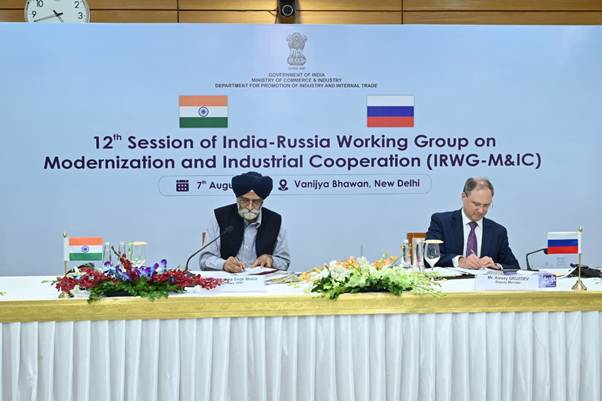
NEW DELHI: The 12th Session of the India-Russia Working Group on Modernization and Industrial Cooperation under the Intergovernmental Commission on Trade, Economic, Scientific, Technological and Cultural Cooperation was held on August 7, 2026, at Vanijya Bhawan, New Delhi.

Shri Amardeep Singh Bhatia, Secretary, DPIIT, Ministry of Commerce and Industry, co-chaired from the Indian side, while H.E. Mr. Alexey Gruzdev, Deputy Minister of Industry and Trade of Russia, co-chaired from the Russian side.

The meeting reviewed progress since the 11th session and discussed collaboration across the identified sub-groups on modernization, mining, fertilizers and railway transport. Key areas in the 12th Session included cooperation in the field of modern industrialisation, science and technology, aerospace, railway infrastructure, mineral fertilizers and chemicals, rare earths and critical minerals, exploration and  capacity building in REs,  power engineering, industrial infrastructure, mining equipments, aluminium sector and joint venture for urea production, etc.

New areas of cooperation in railway transport such as infrastructure facilities, Vande Bharat train project, and signalling equipment were welcomed. Moreover, cooperation in Unmanned Aerial systems (UAVs), 3-D printing, production of Russian regional aircraft SJ-100, and aero-engine were also discussed. Further, cooperation in carbon-fibre technologies and propulsion systems, DAP/NPK fertilizer supplies, automation, critical minerals, lithium mining and titanium technologies, along with enhanced collaboration in aluminium, mining equipments and exploration of rare earth elements were discussed during the session.

The Protocol of the 12th Session of the Working Group was signed by both the co-chairs reaffirming the strategic India-Russia partnership with the aim to deepen industrial and economic cooperation. The session was attended by around 60 delegates from both sides.

87 Proposals Received under BHAVYA Scheme during First Round of Phase-I

NEW DELHI: 87 proposals are received from various State and UT governments under the Bharat Audyogik Vikas Yojana (BHAVYA) Scheme, in round 1 of Phase-I, which was open for receiving applications till 31st July 2026. The state-wise break-up of proposals received is placed at Annexure-I. No proposal has been received from the State of West Bengal in the first round.

Applications received would be taken up for evaluation and scoring in accordance with the prescribed eligibility and evaluation criteria as per the Scheme guidelines. The selection of projects is based on Challenge mode with evaluation on parameters such as connectivity and site suitability, quality of core, value-added and social infrastructure in DPR, industrial ecosystem and policy enablers. The criteria is detailed at Annexure I of the Scheme guidelines that are available at www.dpiit.gov.in. The guidelines provide that the selection process for first phase will be completed within one year from the date of notification of the Scheme.

This information was given by Minister of State for Ministry of Commerce and Industry, Shri Jitin Prasada in a written reply in Rajya Sabha today.

ANNEXURE- I

The state-wise break-up of proposals received in first round, is as under: –

S. No.State/UTNo. of proposals
1.Andhra Pradesh6
2.Assam2
3.Bihar2
4.Chhattisgarh4
5.Gujarat6
6.Haryana1
7.Himachal Pradesh2
8.Jammu & Kashmir2
9.Karnataka3
10.Kerala1
11.Ladakh1
12.Madhya Pradesh11
13.Maharashtra14
14.Manipur1
15.Meghalaya1
16.Mizoram1
17.Odisha2
18.Punjab2
19.Rajasthan4
20.Tamil Nadu7
21.Telangana4
22.Tripura2
23.Uttar Pradesh7
24.Uttarakhand1
 Total87