Home Blog Page 17

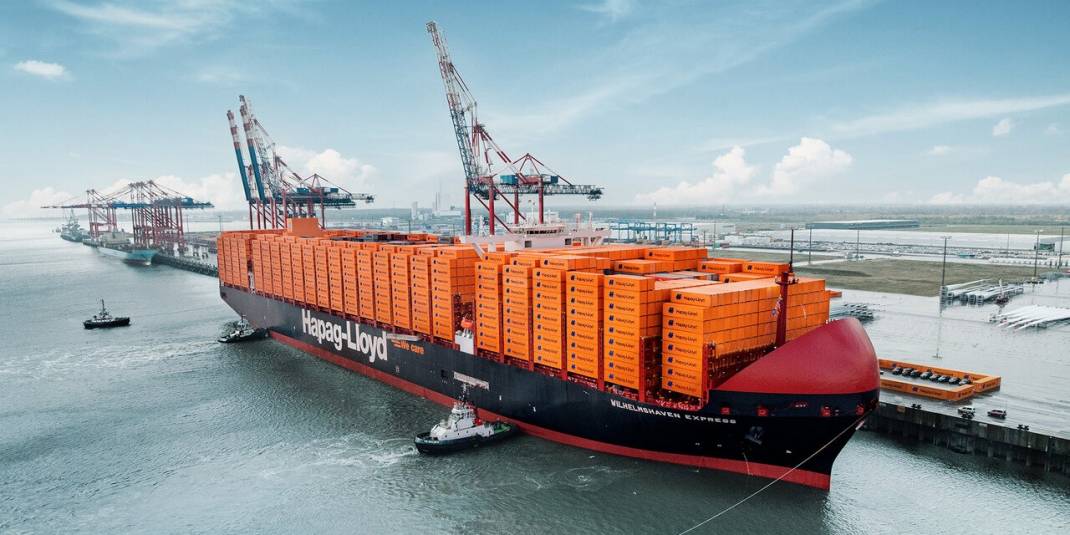
Hapag-Lloyd Reports a strong third quarter

HAMBURG: Hapag-Lloyd concluded the third quarter of 2026 with a significantly higher Group EBITDA of USD 1.7 billion (EUR 1.5 billion) compared to the same period of the previous year. Group EBIT climbed to USD 1.1 billion (EUR 0.9 billion) and Group profit to USD 1.0 billion (EUR 0.9 billion). The main drivers for this positive development were significantly higher freight rates, strong vessel utilization in the Liner Shipping business and dynamic growth in the Terminal & Infrastructure segment.

In the Liner Shipping segment, revenue increased to USD 6.7 billion (EUR 5.8 billion) in the third quarter of 2026, driven by a significantly higher average freight rate of USD 1,808 per TEU (Q3 2025: USD 1,413 per TEU). Transport volumes reached 3.4 million TEU, remaining in line with the prior-year quarter despite the conflict in the Middle East and weather-related operational disruptions, both of which also put pressure on unit costs. EBITDA increased to USD 1.7 billion (EUR 1.4 billion), while EBIT rose to USD 1.1 billion (EUR 0.9 billion).

The Terminal & Infrastructure segment continued to grow. Revenue increased to USD 197 million (EUR 171 million) in the third quarter of 2026, reflecting investments in new and existing terminal capacity and improved performance of Latin American terminals. EBITDA advanced to USD 56 million (EUR 49 million), while EBIT improved to USD 34 million (EUR 29 million).

“We delivered a strong third quarter, driven by significantly higher spot rates, robust demand and high capacity utilization. Both our Liner Shipping and Terminal & Infrastructure businesses performed well, supported by the continued expansion of our global terminal portfolio. At the same time, unit costs still remain under pressure due to geopolitical tensions and operational disruptions. Looking ahead, we are committed to continue delivering unparalleled quality to our customers, investing in continued growth and maintaining strict cost discipline to further strengthen our competitive position,” said Rolf Habben Jansen, CEO of Hapag-Lloyd.

Supported by continued robust spot freight rates, business performance in the fourth quarter is developing better than previously expected. The Executive Board of Hapag-Lloyd AG therefore decided on November 11 to raise its earnings outlook for the 2026 financial year once again. Group EBITDA is expected to be in the range of USD 4.6 billion to 5.0 billion (EUR 4.0 billion to 4.4 billion) and Group EBIT in the range of USD 2.0 billion to 2.4 billion (EUR 1.7 billion to 2.1 billion). Against the backdrop of volatile freight rates and persistent geopolitical challenges, the outlook is subject to a considerable degree of uncertainty.

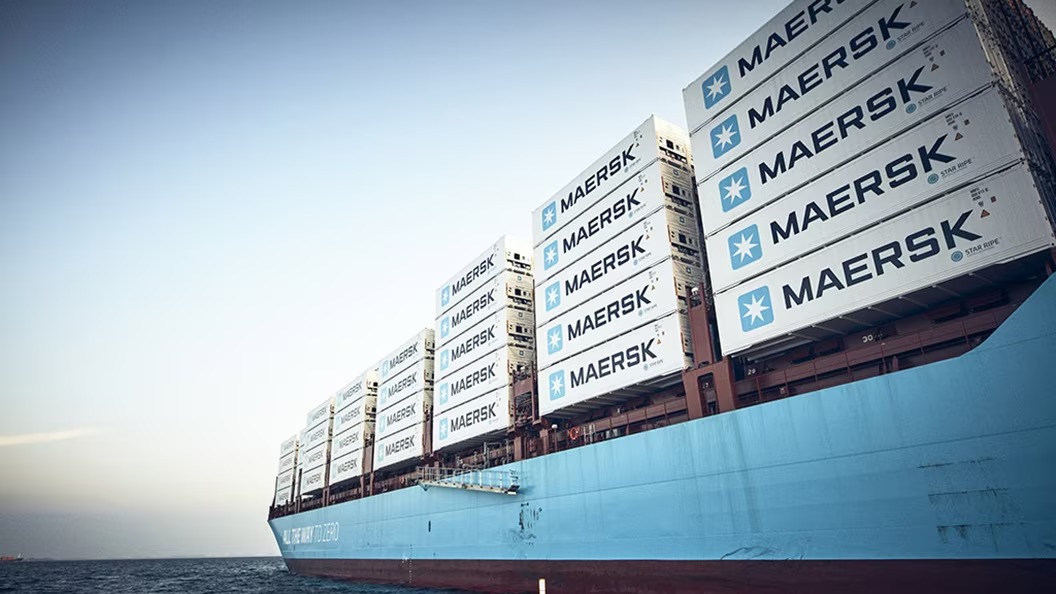
Maersk announces Peak Season Surcharge of Up to USD 1,000 for Far East Asia–North Europe Trade from December 1, 2026

Shipping Line Introduces PSS Across All Container Sizes and Equipment Types Amid Seasonal Demand on the Europe-Bound Trade Lane

COPENHAGEN: Global shipping major A.P. Moller–Maersk has announced the implementation of a Peak Season Surcharge (PSS) on cargo movements from Far East Asia to North Europe, effective December 1, 2026, based on the applicable Price Calculation Date (PCD).

Under the revised surcharge structure, Maersk will levy USD 500 per 20-foot container and USD 1,000 per 40-foot and 45-foot container. The surcharge will apply across the Far East Asia–North Europe trade scope and cover all eligible container equipment types.

According to the announcement issued to the trade, the revised charges will be applicable to all equipment categories, including standard dry, high dry, reefer, high-cube reefer, bulk, collapsible flat rack, flat rack, hive, pallet wide, open top, tank and twin-deck containers.

Revised PSS Tariff Structure

The surcharge applicable from December 1, 2026, is outlined below:

OriginDestinationContainer SizeEffective DateCurrencyRate
Far East AsiaNorth EuropeAll 20′01-Dec-26USD500
Far East AsiaNorth EuropeAll 40′ & 45′01-Dec-26USD1000

The surcharge covers shipments originating from Brunei, China, Hong Kong China, Indonesia, Japan, Cambodia, Mongolia, South Korea, Laos, Myanmar, Malaysia, the Philippines, Singapore, Taiwan China, Thailand and Vietnam, destined for the specified North European trade destinations.

Price Calculation Date and Payment Terms

Maersk has clarified that the applicable surcharge for non-SPOT bookings will be determined based on the Price Calculation Date (PCD).

For non-FMC-regulated trades, the PCD will be the scheduled departure date of the first water leg prevailing at the time of booking confirmation. For FMC-regulated trades, the PCD will be the last container gate-in date for non-SPOT bookings.

The company has further stated that the surcharge will be collected at the freight-paid location, in accordance with the applicable payment terms.

Additional Charges and Regulatory Provisions

Maersk has advised customers that the announced PSS rates will be subject to other applicable surcharges, including local charges and contingency-related charges. The revised rates are also independent of any tariffs notified, published or filed under applicable local regulatory requirements.

For trades governed by the US Shipping Act or China’s Maritime Regulations, Maersk clarified that quotations or surcharges differing from its published tariff will not be binding unless incorporated into a relevant service contract or amendment filed with the Federal Maritime Commission (FMC) or the Shanghai Shipping Exchange, as applicable.

The shipping line also indicated that it regularly reviews its surcharge structures and that customers can access the latest applicable rates and updates through its official tariff lookup and rate-announcement platforms.

Implications for Shippers and Freight Forwarders

The introduction of the new PSS structure will be an important cost consideration for exporters, importers, freight forwarders and logistics service providers moving cargo from Far East Asia to North Europe.

With the surcharge reaching USD 1,000 for 40-foot and 45-foot containers, shippers will need to factor the additional cost into their freight budgets, shipment planning and logistics procurement strategies for cargo movements falling under the revised effective-date provisions.

Customers are advised to verify the applicable surcharge based on their booking category, regulatory requirements and Price Calculation Date, and to coordinate with their respective Maersk representatives to understand the impact on upcoming shipments.

The latest tariff details are available through Maersk’s official Tariff Lookup portal: https://www.maersk.com/tariff-lookup/

The revised PSS will take effect from December 1, 2026.

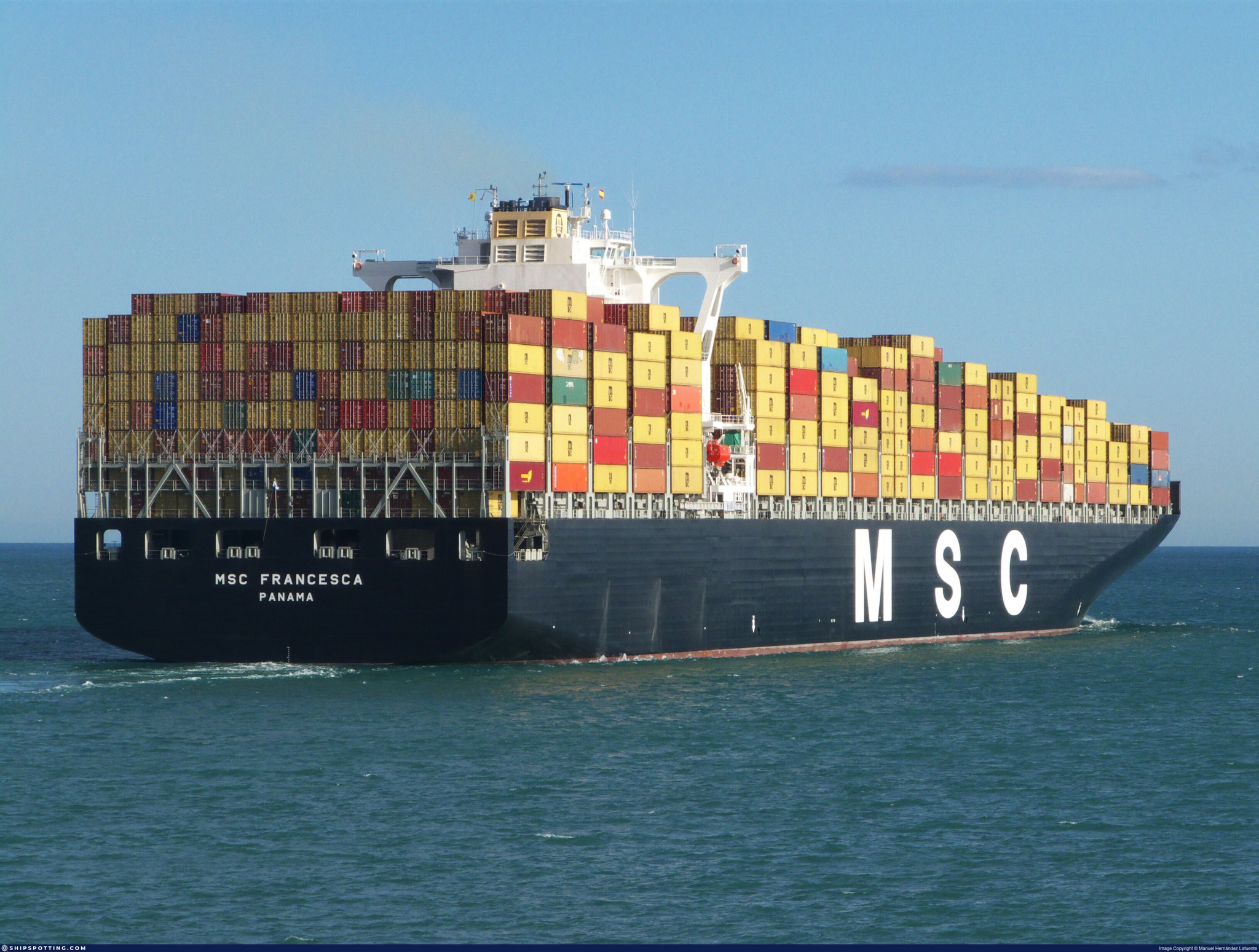
MSC announces Revised FAK Freight Rates from Far East to Europe, Mediterranean and Black Sea from December 1

New rate structure covers North Europe, West Med, East Med, Adriatic, North Africa and Black Sea destinations; applicable for a limited period until December 14, 2025

GENEVA: Mediterranean Shipping Company (MSC), one of the world’s leading container shipping lines, has announced a revised Freight All Kinds (FAK) rate structure for shipments originating from Far East ports and destined for North Europe, the Mediterranean region, North Africa and Black Sea markets.

According to the customer advisory issued by MSC, the new freight rates will take effect from December 1, 2025, and remain applicable until further notice, but not beyond December 14, 2025.

The revised pricing applies to cargo moving from all Far East ports, including, but not limited to, Japan, South Korea and Southeast Asian countries. The announcement covers shipments to North European destinations, West Mediterranean, East Mediterranean, Adriatic, North African ports and the Black Sea region.

Revised FAK Freight Rates

Under the newly announced tariff, MSC has established different freight rates depending on the destination and container size. The revised base port-to-base port rates, quoted in US dollars, are as follows:

Destination20 DV (USD)40 DV/HC (USD)
North Europe1,8603,100
West Mediterranean2,9753,950
Adriatic2,9753,950
East Mediterranean2,8003,800
Black Sea2,8503,900
Algeria4,1755,950
Libya3,8255,350
Morocco (Casablanca)3,6754,950
Tunisia3,9755,750

The rates are applicable for base port-to-base port movements, while shipments involving out-ports will be subject to the usual Transhipment at Origin (TAO) and Transhipment at Destination (TAD) charges, as applicable.

Applicable Surcharges and Other Charges

MSC has clarified that the announced rates include the ocean freight base rate along with specified surcharges, including the Global Fuel Surcharge (GFS) and Emission Control Area (ECA) charges.

The applicable GFS is set at USD 79 per TEU, valid for December 2025.

The ECA surcharge will be applicable at USD 15 per TEU for Mediterranean and North European destinations, covering Poland, Denmark, Sweden, Ireland, Belgium, Germany, the United Kingdom, the Netherlands and France. For other Nordic and Baltic countries, the ECA surcharge will be USD 52 per TEU.

Additionally, the following surcharges will apply, as specified in the advisory:

  • Carbon Limitation Surcharge (CLS): USD 20 per TEU.
  • Carbon Review Surcharge (CRS) – North Europe (NEUR): USD 57 per TEU.
  • Carbon Review Surcharge (CRS) – Mediterranean (MED): USD 85 per TEU.

These additional charges are subject to the applicable terms and conditions.

Exclusions and Other Conditions

MSC has specified that the announced FAK rates exclude all IMO Category commodities and high-value commodities. Terminal Handling Charges (THC) and any other applicable local or operational charges may also be levied separately.

Customers are advised to contact their respective MSC local agencies for detailed information regarding applicable charges, booking conditions and shipment-specific requirements.

The company’s standard agency terms and conditions, including MSC’s standard Bill of Lading provisions, will continue to govern the shipments.

Focus on Far East–Europe Trade

With this latest announcement, MSC has outlined its freight pricing for a broad range of trade destinations connecting the Far East with major European, Mediterranean, North African and Black Sea markets.

The revised FAK tariff provides exporters, importers, freight forwarders and logistics service providers with updated ocean freight benchmarks for planning their container shipments during the first half of December 2025.

Maersk mega vessel collides with Quay Crane at Yantian Port, disrupting terminal operations

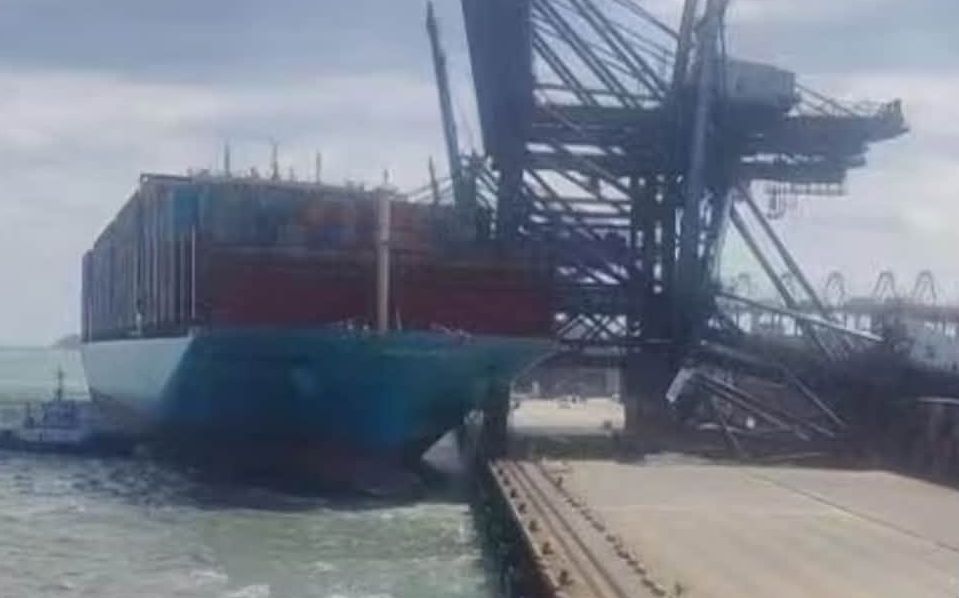
YANTIAN : Container vessel Maersk Cincinnati, operated by Maersk, was involved in a collision with a quay crane while berthing at Berth 12 of Yantian Port in Shenzhen, China, on November 9, resulting in the collapse of one quay crane and disruptions to terminal operations.

The incident occurred at approximately 12 noon when the Singapore-flagged vessel reportedly struck a quay crane during berthing. Following the collision, the crane collapsed and fell towards the adjoining container yard, raising concerns over operational safety and the impact on terminal activities.

Built in 2024, Maersk Cincinnati is a 15,516-TEU container vessel with a length overall (LOA) of 366 metres and a beam of 51 metres. The vessel, bearing IMO number 9936410, was operating on the Gemini Cooperation’s NE3 Asia–Europe service under Voyage 645W.

Strong Winds Suspected as Possible Cause

Initial reports suggest that sudden strong wind gusts may have contributed to the incident. However, the precise circumstances surrounding the collision have not yet been established, and the official investigation is awaited.

No casualties or cargo damage have been officially reported so far.

Berth 12 Operations Suspended

Following the incident, operations at Berth 12, which handles ultra-large container vessels, have been suspended. The disruption is expected to affect subsequent vessel calls on the NE3 service, potentially resulting in schedule delays for Asia–Europe cargo movements.

The incident has also affected several terminal activities, including container pick-up, empty container returns and yard-stacking operations. The timeline for restoring the damaged berth and resuming normal operations remains unconfirmed.

Alternative Routing Options Considered

With operations at the affected berth disrupted, shipping and logistics stakeholders are closely monitoring developments and assessing possible contingency arrangements to minimise supply chain disruptions.

Alternative cargo routing through nearby ports, including Shekou and Nansha, is being considered as a possible option to mitigate delays and maintain cargo movement.

Further updates are awaited regarding the investigation, crane recovery operations and the restoration of normal activities at Yantian Port.

Singapore-Registered Bulk Carrier ‘STRATEGIC ALLIANCE’ comes into Contact with Tacony-Palmyra Bridge in US; No injuries or Marine Pollution Reported

Vessel Safely Moored at Pennsylvania Terminal as MPA Singapore and US Authorities Investigate Incident; Bridge Reopens to Vehicular Traffic

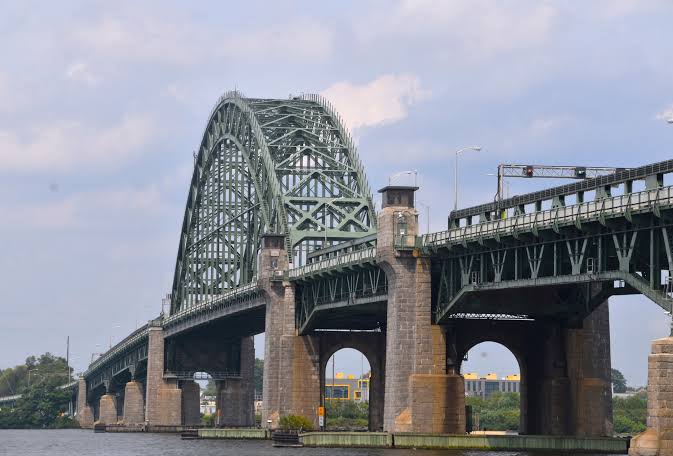
SINGAPORE/NEW JERSEY: A Singapore-registered bulk carrier, STRATEGIC ALLIANCE, came into contact with the Tacony-Palmyra Bridge spanning the Delaware River between New Jersey and Philadelphia, United States, on November 13, 2026, prompting an investigation by the relevant maritime authorities.

According to a release issued by the Maritime and Port Authority of Singapore (MPA), the incident occurred at approximately 2.15 a.m. Singapore Time on November 13. The authority confirmed that there were no reported injuries among the vessel’s crew or civilians, while the vessel itself did not sustain any major damage. No marine pollution has been reported in connection with the incident.

Following the occurrence, STRATEGIC ALLIANCE was safely moored at the Kinder Morgan terminal in Pennsylvania, where the vessel is currently stationed.

MPA in Contact with Vessel Management and US Authorities

The MPA has confirmed that it is in contact with the vessel’s management company and the relevant United States authorities to establish the circumstances surrounding the incident. The Singapore maritime regulator will also undertake an investigation to determine the factors that led to the vessel coming into contact with the bridge.

The authority has emphasised that the safety of the crew and the protection of the marine environment remain important considerations, with no injuries or pollution reported following the incident.

Bridge Reopens Following Temporary Closure

The incident also affected traffic movement across the Tacony-Palmyra Bridge, an important transportation link connecting Palmyra in New Jersey with the Tacony neighbourhood of Philadelphia.

According to reports from US media, the bridge was temporarily closed to vehicular and pedestrian traffic following the incident as authorities assessed the damage and carried out necessary inspections and repairs. The vessel reportedly came into contact with the bridge while its movable span was open to accommodate marine traffic on the Delaware River.

The bridge was subsequently reopened to vehicular traffic later on November 12 (US local time), although repair work and restrictions on certain sections continued following the initial reopening, according to local media reports.

Maritime Safety Under Investigation

While the immediate consequences of the incident appear to have been limited, the occurrence highlights the importance of navigational safety and coordination between commercial shipping operations and critical bridge infrastructure, particularly along busy waterways.

The investigation by the MPA, in coordination with the vessel’s management company and US authorities, is expected to establish the circumstances of the contact and provide greater clarity on the sequence of events.

With the vessel safely berthed, no injuries reported and no marine pollution identified, the focus now remains on determining the cause of the incident and assessing the relevant operational and navigational factors.

The MPA has stated that it will investigate the incident.

PM Modi to visit Karnataka & Gujarat on Nov 13-14 and unveil projects worth over Rs 15,600 crore in Bengaluru

NEW DELHI: Prime Minister Shri Narendra Modi will visit Karnataka and Gujarat on November 13 and 14, during which he will inaugurate and launch several development projects, participate in cultural and educational programmes and offer prayers at the Ambaji temple in Gujarat.

At around 12.45 pm on November 13, PM Modi will flag off the Bengaluru Metro’s Pink Line and undertake a metro ride from Tavarekere to IIM Bangalore metro station.

At around 1.15 pm, he will inaugurate, dedicate to the nation and lay the foundation stone for various development projects worth more than Rs 15,600 crore in Bengaluru.

The Prime Minister will subsequently travel to Mysuru, where he will participate in a tree plantation programme at Bharat Vann at around 3.30 pm. At around 4 pm, he will inaugurate the COSMOS-Mysuru Planetarium and address the gathering.

Development projects worth over Rs 15,600 crore

The projects to be inaugurated, dedicated to the nation or launched in Bengaluru span urban mobility, power transmission, renewable energy, petroleum infrastructure, waste management and railways.

Metro connectivity

PM Modi will inaugurate the Bengaluru Metro Pink Line stretch from Kalena Agrahara to Tavarekere, developed at an estimated cost of Rs 3,470 crore.

The new stretch is expected to improve urban connectivity, reduce commuting time and strengthen public transport infrastructure in the city.

Renewable energy and power transmission

The Prime Minister will inaugurate the Transmission Scheme for Integration of Renewable Energy Zones (Phase-II) at Koppal-II and Gadag-II, developed at an investment of around Rs 4,450 crore.

The transmission system will facilitate the evacuation of approximately 2 GW of renewable energy from the Koppal and Gadag regions of Karnataka for distribution across the national grid.

He will also inaugurate the Transmission Scheme for the Solar Energy Zone in Bidar, developed at an investment of around Rs 1,370 crore. The project includes the establishment of a Bidar Pooling Station and will facilitate the evacuation of 2.5 GW of solar power from the region.

The Prime Minister will lay the foundation stone for the Transmission Scheme for Integration of Davanagere-Chitradurga and Ballari Renewable Energy Zones, involving an investment of more than Rs 3,450 crore.

He will also lay the foundation stone for a transmission system strengthening project to integrate additional renewable energy potential in Davanagere and Ballari, at an estimated cost of over Rs 1,100 crore.

Petroleum infrastructure and waste management

PM Modi will dedicate to the nation India’s largest underground LPG storage cavern in Mangaluru, constructed at a cost of more than Rs 850 crore.

With a storage capacity of 80,000 metric tonnes, the facility is expected to strengthen the country’s LPG storage infrastructure. The project also includes a 9.4-km pipeline connecting New Mangalore Port to the main terminal to facilitate LPG transportation and storage.

He will also dedicate the Devangonthi Marketing Terminal of Mangalore Refinery and Petrochemicals Limited (MRPL) in Bengaluru. Built at an investment of Rs 330 crore, the facility is expected to strengthen petroleum product storage and distribution infrastructure in Karnataka.

The Prime Minister will also lay the foundation stone for GAIL’s Compressed Biogas (CBG) plant at Haralakunte in Bengaluru.

The proposed facility will process around 300 tonnes of municipal solid waste daily to produce 12.6 tonnes of compressed biogas. The project aims to promote scientific waste management, reduce dependence on conventional fuels and support environmental sustainability.

Railway infrastructure and connectivity

The Prime Minister will inaugurate four redeveloped railway stations under the Amrit Bharat Station Scheme — Chamarajanagar, Chikkamagaluru, Sakleshpur and Subrahmanya Road.

The upgraded stations will feature improved passenger amenities and are expected to support local commercial activities and tourism.

He will also dedicate to the nation the 45-km Bagalkot-Wandal railway line doubling section, which forms part of the 284-km Gadag-Hotgi Doubling Project.

The section is expected to improve passenger and freight movement, facilitate local trade and ensure coal transportation to the Kudgi NTPC plant.

PM Modi will also dedicate the electrification of the 55-km Sakleshpur-Subrahmanya Road Ghat railway section. The project, which passes through challenging terrain, marks a significant engineering achievement. With its completion, the entire Bengaluru-Mangaluru railway route has become fully electrified.

The Prime Minister will also flag off the Bengaluru-Mangaluru-Madgaon Vande Bharat Express, providing faster rail connectivity between Bengaluru, Coastal Karnataka and Goa.

The service will connect major destinations, including Hassan, Sakleshpur, Mangaluru, Udupi, Murdeshwar, Gokarna and Karwar, before reaching Madgaon. It is expected to benefit passengers and promote tourism across the region.

Andhra Pradesh eyes global maritime hub status with major push for ports and shipbuilding

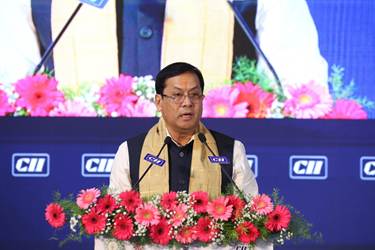
VISAKHAPATNAM: Andhra Pradesh is poised to emerge as a globally competitive maritime and logistics hub, with a major push towards port infrastructure, shipbuilding and ship repair, Union Minister for Ports, Shipping and Waterways Shri Sarbananda Sonowal said in Visakhapatnam at the 31st CII Partnership Summit held in the city .

Addressing at the summit, Sonowal highlighted the state’s strategic advantages, including its approximately 1,053-kilometre coastline along the Bay of Bengal, access to key international shipping routes and proximity to major Asian manufacturing and trading economies. He said these strengths position Andhra Pradesh to become India’s principal maritime gateway to ASEAN, East Asia and the wider Indo-Pacific.

Sonowal credited the dynamic leadership of Prime Minister Narendra Modi and the able support from Andhra Pradesh Chief Minister N. Chandrababu Naidu for creating the conditions to accelerate the state’s maritime ambitions. He said the Centre was committed to working closely with the state government, industry and global investors to unlock its potential.

“If Hyderabad became Cyberabad, Andhra Pradesh today has the opportunity to become India’s Maritime Gateway to the East,” Sarbananda Sonowal said, drawing a parallel between the state’s technology-led growth and the opportunities emerging in the maritime sector.

Sonowal also highlighted the foundation stone laid on Wednesday for projects worth more than ₹560 crore at Visakhapatnam Port. These projects are expected to build and augment capacity, enhance ease of doing business and create employment opportunities.

The state’s port infrastructure is set for further expansion with four major greenfield port projects under construction at Mulapeta, Machilipatnam, Ramayapatnam and Kakinada SEZ. These projects are expected to strengthen cargo-handling capacity and support industrial development.

Identifying shipbuilding and ship repair as major opportunities for Andhra Pradesh, Sonowal highlighted the proposed greenfield shipbuilding cluster at Dugarajapatnam. The project has received in-principle approval under the National Shipbuilding Mission and envisages an investment of approximately ₹30,000 crore, with a targeted annual capacity of 1.2 million gross tonnes.

A Centre-State special purpose vehicle (SPV) involving the Andhra Pradesh Maritime Board and Visakhapatnam Port Authority has been formed for the project. He invited global shipbuilders, technology companies, equipment manufacturers and maritime investors to explore Andhra Pradesh as a preferred investment destination.

Sarbananda Sonowal said, “Under the visionary leadership of Prime Minister Narendra Modi, India had set an ambitious objective of becoming one of the world’s top five shipbuilding nations. We have been taking major steps to develop the capacity, technology and industrial ecosystem required to achieve this goal. The Modi government has allocated ₹70,000 crore in financing support for shipbuilding and other maritime activities, creating opportunities for domestic and international investors.”

Sonowal said Andhra Pradesh’s maritime development was part of India’s wider transformation under Prime Minister Narendra Modi. Initiatives such as Sagarmala, Maritime India Vision 2030 and Maritime Amrit Kaal Vision 2047 are laying the foundations for a globally competitive maritime economy, with an envisaged investment of ₹80 lakh crore.

Sonowal also highlighted the ₹10,000-crore Container Manufacturing Scheme to promote indigenous container production and the proposed ₹10,000-crore Coastal Cargo Promotion Scheme to harness the potential of India’s 12,000-kilometre coastline. The ₹80,000-crore deep-draft, all-weather mega container port at Vadhavan in Maharashtra is another major initiative aimed at strengthening the country’s maritime infrastructure.

The four Global Maritime Investment Summits held under the leadership of Prime Minister Modi have attracted investments worth approximately ₹25 lakh crore in India’s maritime sector, he said.

Emphasising the role of technology in the next phase of maritime development, Sarbananda Sonowal said, “Smart ports powered by artificial intelligence, predictive analytics, automation and digital logistics platforms would be central to improving efficiency and competitiveness. Andhra Pradesh has the opportunity to take a leading role in this transformation.”

He called for a strong partnership between the Central and state governments, industry and global investors to accelerate port development, shipbuilding, ship repair, cruise tourism, coastal shipping and maritime industrialisation.

Sonowal outlined three key ambitions for Andhra Pradesh: becoming a leading destination for port-led development in the spirit of the prime minister’s Saptadhara roadmap for Viksit Bharat 2047; emerging as a globally competitive shipbuilding and ship repair hub; and positioning itself as India’s eastern maritime gateway to ASEAN, East Asia and the Indo-Pacific.

The state already has an established maritime presence through Visakhapatnam, Gangavaram and Krishnapatnam ports. Visakhapatnam Port handled a record 91.17 million tonnes of cargo in FY 2025-26, registering growth of approximately 10% over the previous year. It has maintained a continuous growth trajectory for four consecutive years since FY 2021-22.

The 31st CII Partnership Summit 2026 is being held in Visakhapatnam on Nov. 12-13 under the theme “Navigating the New World Order: Trade | Technology | Trust | Thought Leadership.” The summit brings together government leaders, industry representatives and international participants to explore opportunities in trade, investment, technology and global partnerships.

Saudi tanker with Indian seafarers attacked in Hormuz Strait

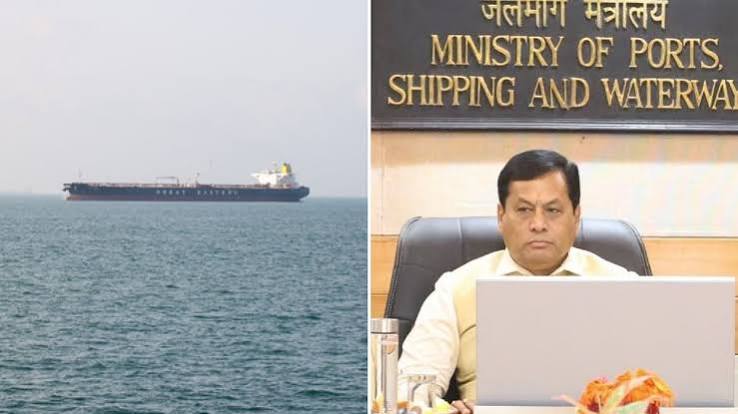
NEW DELHI: Shipping Minister Shri Sarbananda Sonowal on Wednesday informed that three Indian seafarers aboard a Saudi Arabia-flagged oil tanker are safe after a possible attack in the Strait of Hormuz, with continuous monitoring underway.

A Saudi Arabia-flagged oil tanker, with three Indian seafarers on board, was involved in a possible attack while transiting the Strait of Hormuz, Shipping Minister Sarbananda Sonowal said on Wednesday. Sonowal, in a social media post on X, said that all three Indian nationals, along with the entire crew, are safe.

“On Nov 11, Saudi Arabia-flagged oil tanker NCC FAJR, carrying 3 Indian seafarers, was involved in a possible attack while transiting the Strait of Hormuz,” he said.

“We are continuously monitoring the situation and remain in regular contact with the ship management company to ensure the ongoing security and well-being of our seafarers,” the minister added.

Piyush Goyal to inaugurate 45th India International Trade Fair today

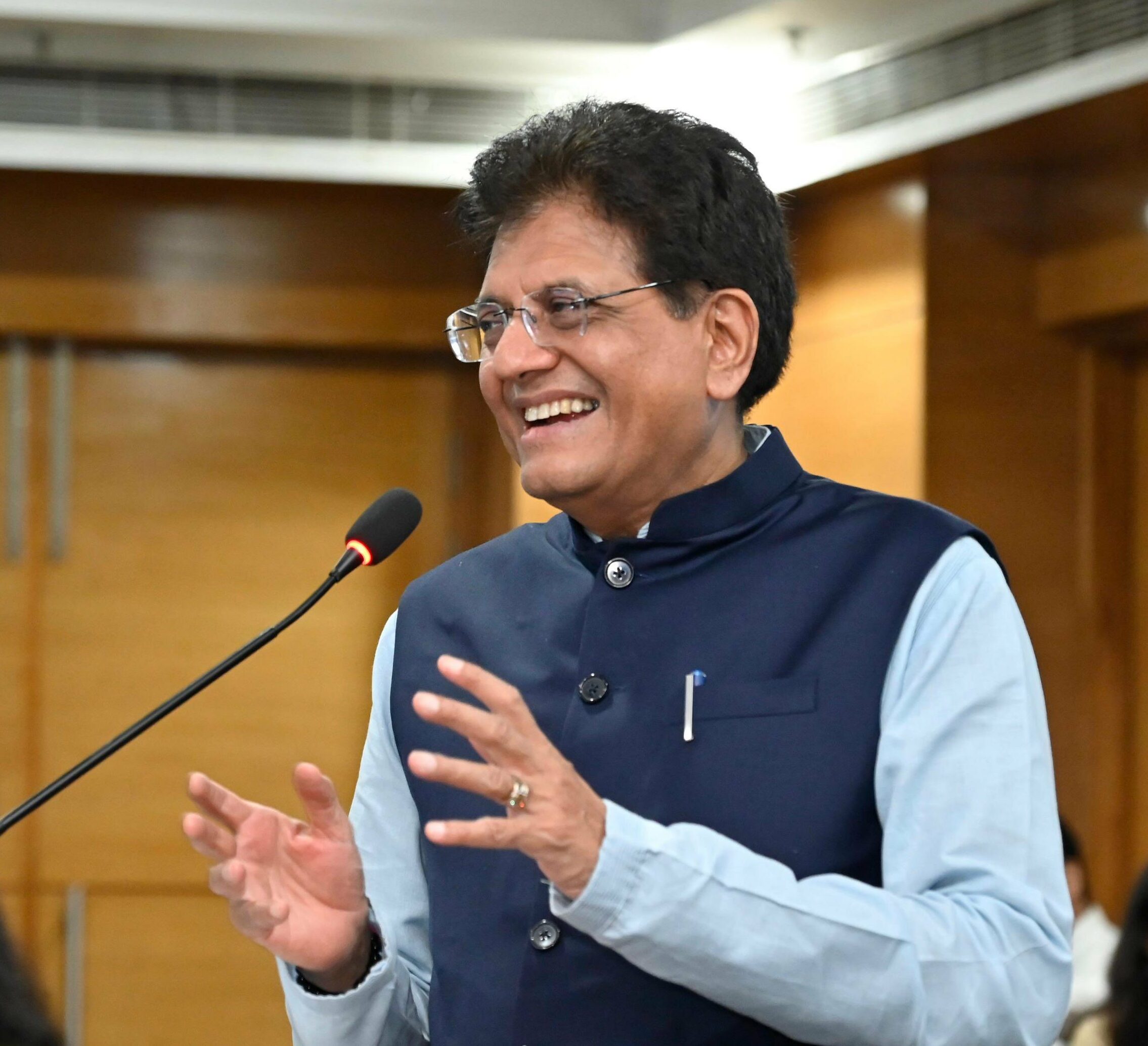
NEW DELHI : The 45th India International Trade Fair (IITF) 2026, organised by the India Trade Promotion Organisation (ITPO), will be held at Bharat Mandapam, New Delhi, from 14 to 27 November 2026. Union Minister of Commerce and Industry, Shri Piyush Goyal, will inaugurate the Fair as the Chief Guest on 13 November 2026. The inauguration ceremony will also feature an Odissi performance by Padma Shri awardee Guru Madhavi Mudgal and her group.

Themed ‘Vikas aur Virasat’, IITF 2026 will bring together more than 3,500 exhibitors from India and abroad across 17 halls, covering over 1,00,000 square metres of exhibition space. The Fair will witness participation from 32 States and Union Territories and 51 Central Ministries, Government Departments, PSUs and Public Sector Banks. Bihar, Maharashtra, Rajasthan and Uttar Pradesh are the Partner States, while Assam, Delhi, Jharkhand and West Bengal are the Focus States. The participating States and UTs will showcase their regional products, local industries, traditional crafts, culture, tourism potential and development initiatives.

International participation will include 11 countries, with pavilions featuring exhibitors from Thailand, Iran, Ghana, Nepal, Afghanistan, the UAE, Turkey, China, Sri Lanka and Bangladesh, providing opportunities for international business engagement and trade linkages.

Chairman, India Trade Promotion Organisation (ITPO), Shri Jawed Ashraf, said that IITF 2026 will celebrate India’s progress, diversity and heritage, with a special focus on youth through around 600 start-ups at the Hall of Inspiration and district-level crafts, cuisine and culture at the ODOP Pavilion.

Visitors will find country pavilions in Hall 1, Partner and Focus States, Central Ministries, PSUs and Public Sector Banks in Halls 2 to 5, and a wide range of consumer categories across Halls 8 to 14. These will include electronics, consumer durables, textiles, footwear, kitchen equipment, processed food, spices, agricultural produce, handicrafts, home furniture, cosmetics and jewellery.

IITF 2026 will introduce new experiences for businesses and visitors alike. The Hall of Inspiration in Hall 14 will showcase around 600 Indian start-ups across deep-tech, agri-tech, drones, space, healthcare and edtech, providing young enterprises with visibility and opportunities to connect with wider markets.

The One District One Product (ODOP) Pavilion will feature participation from 21 States and showcase signature crafts, cuisine, culture and products from districts across the country, highlighting local enterprise, traditional skills and the artisans behind them.

Playverse@Mandapam will offer an immersive and interactive digital experience combining entertainment and education, designed particularly to engage young visitors and families. Together, these initiatives reflect the spirit of ‘Vikas aur Virasat’, bringing India’s technological progress, entrepreneurship and traditional strengths onto one platform.

A world-class food court featuring more than 90 outlets will serve Indian and international cuisines, with an emphasis on food quality, hygiene, zero-waste practices and reduced plastic usage.

Beyond its role as a major trade exhibition, IITF continues to strengthen market access for Micro, Small and Medium Enterprises (MSMEs), start-ups and small traders by providing opportunities to showcase products, connect with potential buyers and explore new markets. ITPO is also facilitating the participation of Indian start-ups at international platforms such as VivaTech in Paris and the upcoming Singapore FinTech Festival, creating opportunities for global exposure and collaboration. The initiative aims to encourage entrepreneurship across the country, including the growing start-up ecosystem in Tier-2 and Tier-3 cities.

Reflecting the growing scale of Bharat Mandapam, the venue will feature LED mesh installations measuring approximately 1,000 square metres each at Hall 1 and Hall 14, alongside plans for around 100 LED screens across the complex, with more than 30 expected to be installed during the Fair. ITPO is also working towards developing Bharat Mandapam as a year-round destination for exhibitions, cultural programmes and public engagement, including a proposed cultural hub with a seating capacity of approximately 2,000.

To ensure a seamless and comfortable experience for visitors, exhibitors, delegates and media representatives, ITPO has put in place a range of dedicated support facilities across the venue. A dedicated Media Lounge will provide workspace for journalists, while a Protocol Lounge will facilitate hospitality for VIPs and dignitaries. Additional arrangements include internal mobility assistance, shuttle services, golf carts, designated cab and parking zones, B2B networking facilities, exhibitor assistance and lost-and-found services.

Food court operations will be subject to round-the-clock monitoring, with prescribed food safety, hygiene and food-handling standards applicable to all outlets, including State-operated stalls. Security arrangements, supported by Delhi Police and ITPO, particularly for the international pavilions in Hall 1, along with medical centres, first-aid facilities and emergency response services, will further strengthen visitor safety and convenience throughout the Fair.

Complementing the exhibition, 87 cultural performances, recitals and shows across seven venues will celebrate India’s diversity, spanning classical and folk traditions and featuring acclaimed masters alongside young and upcoming talent. Highlights include The Manganiyar Seduction, Tal Fry, Hariharan & Prithvi Gandharva, Shahzad Ali, Salim–Sulaiman and Ruhaniyat, featuring performers from Nigeria, with tickets available on BookMyShow. Other cultural performances from 19 States and organisations will be free with IITF entry.

The first five days, from 14 to 18 November, will be Business Days reserved for B2B visitors, and the Fair will open to the general public from 19 to 27 November. Fair timings will be from 10:00 AM to 7:30 PM, with general public entry until 5:30 PM. Entry tickets can be booked at booking.indiatradefair.com, through the official IITF 2026 mobile app, or offline at 55 DMRC Metro stations. Season tickets are available for both Business Days and General Days. Senior citizens and persons with disabilities can enter free on General Days with a valid government-issued ID. General visitors can enter through Gate Nos. 3 and 4 on Bhairon Road and Gate Nos. 6 and 10 on Mathura Road.

The IITF 2026 app, available on Google Play and the Apple App Store, offers ticket booking, registration, an interactive venue map with navigation and shuttle routes, a pavilion and exhibitor directory, the cultural events calendar and business networking facilities. ITPO has also coordinated with Delhi Metro and arranged visitor transportation facilities, including shuttle services, designated app-cab and auto pick-up points, parking, wheelchair assistance and visitor support services. The app also provides access to the ITPO helpdesk and one-tap SOS assistance.

The India International Trade Fair, organised annually by ITPO, is one of India’s leading multi-product trade exhibitions. It brings together government organisations, industries, businesses, start-ups, MSMEs and artisans from India and abroad, enabling B2B and B2C engagement, trade and investment promotion, and business networking.

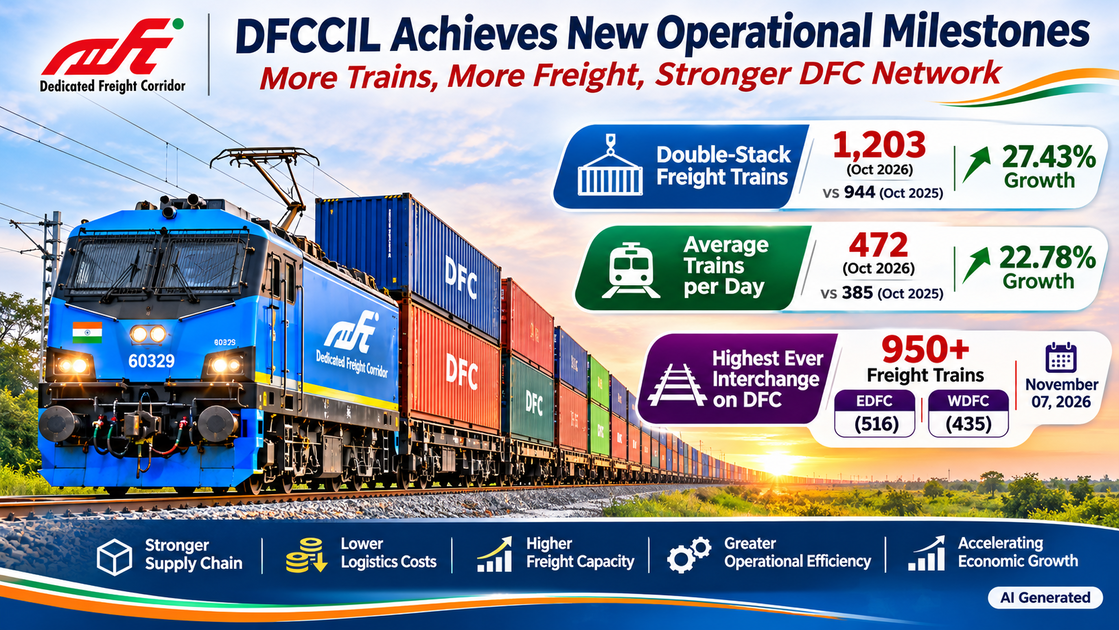
DFCCIL achieves record 950+ freight train interchanges; Double-Stack Operations Surge 27.43%

Double-stack train operations surge 27.43%; average daily train movement rises 22.78%, highlighting enhanced freight capacity and operational efficiency

NEW DELHI: India’s Dedicated Freight Corridor (DFC) network is registering significant growth in freight transportation, with the Dedicated Freight Corridor Corporation of India Limited (DFCCIL) achieving new operational milestones through increased train movements, higher double-stack train operations and record-breaking interchange performance.

The latest performance indicators released by DFCCIL reflect the growing capacity and efficiency of the dedicated freight rail infrastructure, which is playing an increasingly important role in strengthening India’s logistics ecosystem, improving supply chain connectivity and facilitating faster movement of goods across the country.

One of the notable achievements is the substantial increase in double-stack freight train operations. During October 2026, DFCCIL operated 1,203 double-stack trains, compared with 944 trains in October 2025, registering an impressive growth of 27.43% year-on-year. The increase demonstrates the expanding utilisation of dedicated freight infrastructure and the growing role of double-stack operations in enhancing freight-carrying capacity.

The organisation has also recorded a significant improvement in the average number of trains operated per day. The average daily train movement increased from 385 trains in October 2025 to 472 trains in October 2026, representing a growth of 22.78%. This increase underscores the enhanced operational capability of the DFC network and its ability to accommodate rising freight demand through improved infrastructure utilisation and efficient train management.

Adding another milestone to its achievements, DFCCIL recorded its highest-ever interchange of more than 950 freight trains on November 7, 2026, across the Eastern Dedicated Freight Corridor (EDFC) and Western Dedicated Freight Corridor (WDFC).

The record interchange comprised 516 trains on the EDFC (514+2) and 435 trains on the WDFC (434+1), taking the combined total to more than 950 freight trains. This achievement highlights the growing operational strength of both corridors and their increasing contribution to India’s freight transportation network.

The consistent rise in freight train operations and interchange volumes reflects the benefits of dedicated rail infrastructure, which enables freight trains to operate with improved efficiency, reduced congestion and better transit planning compared with conventional mixed-traffic railway routes.

Double-stack container transportation, in particular, offers significant advantages by enabling more cargo to be moved in a single train movement, improving asset utilisation and supporting more cost-efficient logistics operations.

The DFC network is emerging as a critical component of India’s multimodal logistics infrastructure, providing enhanced connectivity between industrial centres, logistics hubs, ports and consumption markets. Its growing operational capacity is expected to support EXIM trade, facilitate domestic cargo movement and improve the overall competitiveness of Indian industry.

These achievements reinforce DFCCIL’s commitment to developing a modern, efficient and high-capacity freight transportation system. With rising train volumes and improved operational performance, the Dedicated Freight Corridors are steadily transforming India’s freight logistics landscape, supporting faster cargo movement, stronger supply chains and the country’s broader economic growth objectives.

More trains, more freight and greater efficiency — India’s Dedicated Freight Corridor network is moving the nation towards a stronger and more competitive logistics future.