Home Blog Page 213

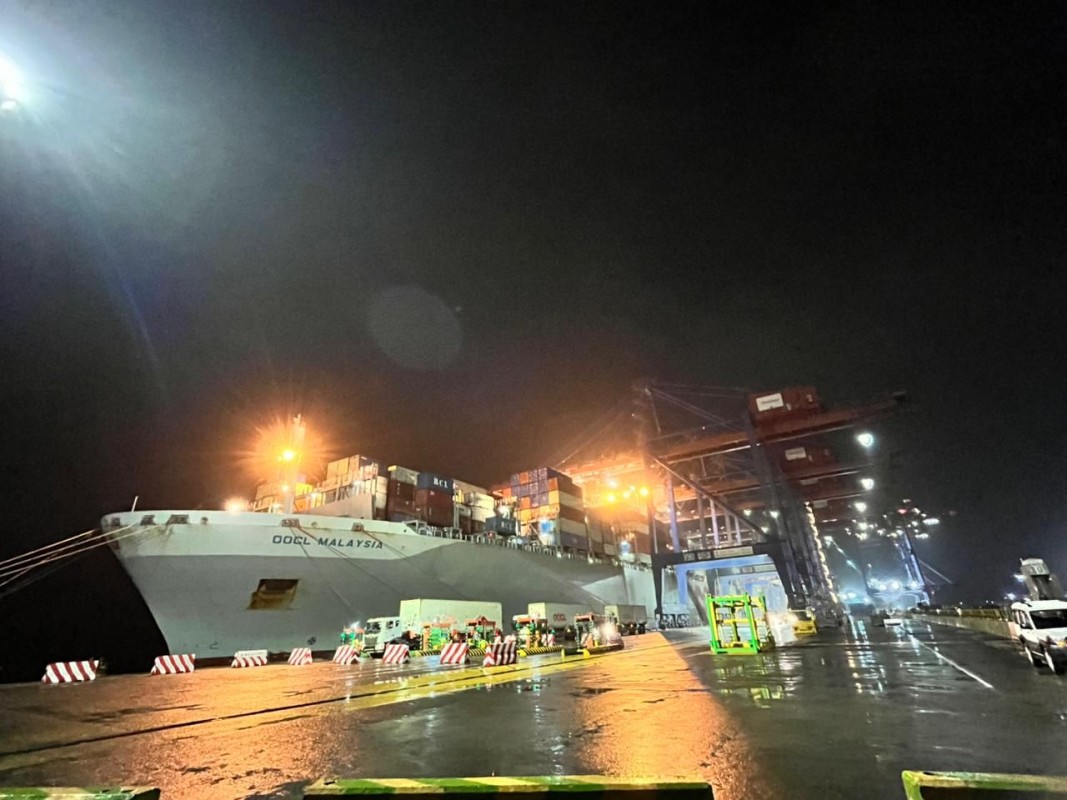
APM Terminals Pipavav welcomes longest-ever vessel call with 367-metre OOCL Malaysia

PIPAVAV : APM Terminals Pipavav has achieved a significant operational milestone with the successful maiden call of MV OOCL Malaysia, the longest container vessel ever to berth at Pipavav Port. Measuring 367 metres in length overall (LOA), the vessel’s arrival underscores the terminal’s capability to accommodate next-generation mega container ships while delivering safe and efficient port operations.

During the vessel call, the terminal successfully completed 1,756 container moves, with operations executed seamlessly through meticulous planning, close coordination and strict adherence to safety standards. The achievement reflects the terminal’s operational efficiency, advanced infrastructure and readiness to handle larger vessels serving India’s growing international trade.

The successful handling of MV OOCL Malaysia was made possible through the coordinated efforts of APM Terminals Pipavav’s Commercial, Marine, Planning, Operations, Engineering, Safety, Security and Support teams, which worked together to ensure smooth vessel turnaround and uninterrupted cargo handling.

APM Terminals Pipavav also expressed its appreciation to OOCL for selecting Pipavav Port for this landmark vessel call, highlighting the strong partnership between the shipping line and the terminal. The company reaffirmed its commitment to supporting future calls by large container vessels through reliable, safe and customer-focused terminal services.

As one of India’s leading private container ports, APM Terminals Pipavav continues to strengthen its position as a preferred gateway for global trade by investing in operational excellence, modern infrastructure and world-class maritime services. The successful handling of the port’s longest-ever vessel further reinforces its capability to support increasing cargo volumes and larger container ships as India’s maritime sector continues to expand.

JSW Infra to develop 52 mtpa captive jetty in Odisha at ₹2,100 crore

PARADIP : JSW Infrastructure Ltd, India’s second-largest private port operator, has formally taken over the development of the proposed 52 million tonnes per annum (mtpa) captive jetty in Odisha, a month after JSW Steel began construction of its mega steel plant in the state.

The jetty, to be developed at the Jatadhari river mouth in Jagatsinghpur district, will pave the way for dedicated maritime infrastructure to support JSW Steel’s upcoming 13.2 mtpa greenfield steel complex near Paradip.

According to a regulatory filing with the stock exchanges, JSW Jatadhar Marine Services Pvt Ltd, a wholly owned subsidiary of JSW Infrastructure, has executed a novation agreement with JSW Utkal Steel Ltd following the Odisha government’s approval, transferring the concession agreement for the project to the infrastructure arm of the JSW Group.

The jetty will be developed by JSW Jatadhar Marine under the build, own, operate, share and transfer (BOOST) model at a cost of more than ₹2,100 crore. The transfer effectively places the port infrastructure under the group’s specialised logistics company, allowing JSW Steel to focus on its manufacturing operations while ensuring seamless execution of the captive marine facility.

The company said the jetty is a critical component of the JSW Group’s ambitious plans in Odisha. It will serve the 13.2 mtpa integrated steel plant being developed by JSW Utkal with an estimated investment of around ₹1 trillion, one of the largest industrial investments currently under implementation in eastern India.

The dedicated marine facility is expected to handle imports of key raw materials while facilitating exports and domestic movement of finished steel products, substantially reducing logistics costs and turnaround time.

The jetty will add another strategic asset to JSW Infrastructure’s rapidly expanding portfolio on the eastern coast. The company currently operates ports and terminals across India’s west and east coasts and is simultaneously executing multiple greenfield and brownfield projects.

The project also complements the JSW Group’s broader investment plans in Odisha. The conglomerate has announced multiple investments across steel, cement, logistics and allied infrastructure in the state.

Besides the Paradip complex, the group has proposed two more steel facilities with a capacity of 6 mtpa each in Keonjhar and Dhenkanal districts, with an investment of ₹35,000 crore each. The Dhenkanal steel mill, however, will be set up by Saffron Resources Pvt Ltd, a wholly owned subsidiary of JSW Steel, in a 50:50 joint venture with South Korea’s POSCO Group.

Industry experts said integrating the captive jetty with the steel complex would provide the company with end-to-end control over its supply chain, reducing dependence on third-party port facilities and ensuring uninterrupted movement of bulk cargo.

The latest agreement marks another milestone in JSW Infrastructure’s aggressive expansion strategy. The company recently completed a ₹7,503-crore qualified institutional placement (QIP), which attracted bids worth more than ₹50,000 crore from leading global and domestic investors, including BlackRock, Capital Group, FMR, HDFC Mutual Fund and SBI Mutual Fund.

According to the company, the capital raised will primarily support its ₹39,000-crore multi-year capital expenditure programme, aimed at expanding its logistics network and increasing cargo-handling capacity to 400 mtpa over the next four to five years.

Rinkesh Roy, joint managing director and chief executive officer (CEO) of JSW Infrastructure, said the overwhelming investor response reflected confidence in India’s long-term infrastructure growth story and the company’s expansion strategy.

“With this capital, we are well-positioned to pursue our growth trajectory, including expansion of port capacities to 400 mtpa by FY30. It will strengthen our logistics network and reinforce our position as a leading ports and logistics solutions company,” he added.

Earlier, the Odisha government had signed the original concession agreement with JSW Utkal Steel for the development of the captive jetty, envisaging an investment of about ₹2,100 crore and direct as well as indirect employment opportunities for more than 3,000 people.

CONCOR strengthens Green Logistics strategy with sustainable and Low-Emission Freight Solutions

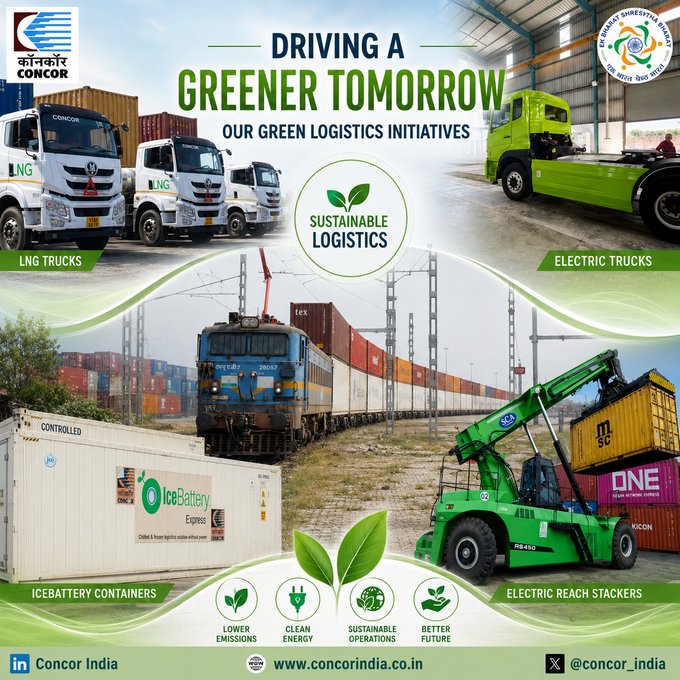
NEW DELHI : Container Corporation of India Ltd. (CONCOR) continues to reinforce its commitment to sustainable logistics by expanding the adoption of environmentally friendly technologies and low-carbon freight solutions across its nationwide multimodal network.

With over 95% of its cargo traffic transported by rail, CONCOR remains one of India’s largest contributors to reducing carbon emissions from freight movement. The extensive use of rail transport significantly lowers fuel consumption, eases congestion on highways and reduces the overall carbon footprint of the country’s logistics sector, supporting India’s transition towards a cleaner and more sustainable transportation ecosystem.

As part of its ongoing green logistics strategy, CONCOR has been investing in a range of advanced technologies and cleaner mobility solutions, Electric Trucks & Electric Reach Stackers designed to improve operational efficiency while minimising environmental impact. These initiatives include the deployment of 230 LNG-powered trucks, the induction of electric trucks and electric reach stackers at select terminals, and the introduction of IceBattery® technology-based hybrid reefer containers, which offer energy-efficient temperature-controlled transportation with substantially lower diesel consumption and emissions.

In addition to adopting cleaner equipment, CONCOR is progressively integrating energy-efficient infrastructure, optimising terminal operations through digital technologies, and promoting low-emission cargo handling practices across its inland container depots, logistics parks and terminals. These measures are aimed at improving resource efficiency, lowering energy consumption and enhancing the sustainability of end-to-end logistics services.

The company’s multimodal logistics model aligns with the Government of India’s vision of promoting green freight transportation through greater rail utilisation, cleaner fuels and innovative technologies. By combining rail-based cargo movement with sustainable first and last-mile connectivity solutions, CONCOR continues to play a vital role in building a resilient, efficient and environmentally responsible logistics ecosystem.

With sustained investments in green mobility, clean energy technologies and sustainable infrastructure, CONCOR is positioning itself at the forefront of India’s transition towards low-carbon logistics, supporting national goals of reducing emissions while delivering efficient and reliable freight transportation services.

Allcargo Logistics strengthens Sustainable and Efficient Supply Chains for India’s Manufacturing MSMEs

MUMBAI: Allcargo Logistics, an integrated logistics provider through its Domestic Supply Chain, Express Distribution and Consultative Logistics businesses, is supporting handicraft, leather and textile MSMEs across India’s traditional manufacturing clusters with reliable and technology-enabled logistics solutions. By enabling seamless connectivity between production centres and consumption markets, the company is helping businesses improve operational efficiency, expand market access and build more resilient supply chains.

India’s traditional manufacturing hubs, including Bhuj’s handicrafts ecosystem, Jodhpur’s furniture and artisanal products industry, Moradabad’s metal handicrafts sector, Tirupur’s knitwear manufacturing base and Surat’s textile industry, play an important role in supporting exports, entrepreneurship and regional economic development. MSMEs rely on efficient logistics to connect with suppliers, distributors, retailers and customers across the country. Therefore, as they scale their operations and cater to increasingly diverse markets, they require logistics partners that can provide agile, digitally enabled and scalable supply chains, offering greater visibility, reliability and market access while supporting efficient movement of goods across the value chain.

Handicraft, leather and textile businesses often operate through fragmented supply chains involving multiple sourcing locations, seasonal demand cycles and geographically dispersed markets. Allcargo Logistics addresses these challenges through its extensive network, multimodal transportation capabilities and technology-enabled shipment visibility solutions, helping MSMEs streamline cargo movement, improve planning and ensure reliable deliveries across markets.

Commenting on the importance of logistics in supporting India’s traditional manufacturing ecosystems, Mr. Ketan Kulkarni, Managing Director & CEO, Allcargo Logistics, said: “As MSMEs across India’s handicraft, leather and textile clusters seek to strengthen their market presence and remain competitive, organised logistics players have an increasingly important role to play in enabling access to efficient, technology-driven supply chains. Through digital tools, data-driven planning, enhanced shipment visibility and emerging AI-led capabilities, logistics providers are helping businesses make more informed decisions, improve operational efficiency and respond faster to changing market demands. As these businesses look to improve efficiency, expand their market reach and adopt more sustainable practices, reliable logistics becomes a critical growth enabler. Through our integrated logistics solutions and nationwide network, we are committed to helping MSMEs build resilient supply chains, improve customer service and unlock new growth opportunities.”

As sustainability becomes an increasingly important business priority, Allcargo Logistics is helping customers optimise transportation, improve load consolidation and enhance supply chain visibility. These capabilities help reduce avoidable inefficiencies across the value chain while enabling MSMEs to build more efficient and resilient supply chains.

To support businesses across manufacturing clusters, Allcargo Logistics has significantly strengthened its nationwide footprint through the expansion of its transshipment network from 21 to 71 centres and the launch of the Allcargo Extended Reach (AER) network, enabling coverage across 100 per cent of India’s available PIN codes. Mapped PIN codes have increased from 21,000 to over 32,000, while direct serviceable PIN codes have more than doubled from 4,900 to over 10,000 through Allcargo Distribution Centres. This expanded reach enables MSMEs to access new markets, improve service reliability and scale their operations with greater confidence.

Quality Council of India and NSIC sign MoU to strengthen quality, competitiveness and market access for MSMEs

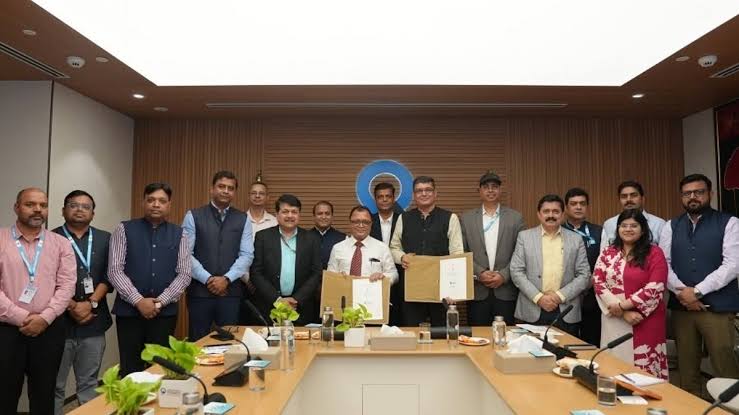
NEW DELHI : The Quality Council of India (QCI) and the National Small Industries Corporation Limited (NSIC) signed a Memorandum of Understanding (MoU) to establish a collaborative ecosystem aimed at strengthening quality, competitiveness and market access for Micro, Small and Medium Enterprises (MSMEs) across the country. The partnership brings together QCI’s expertise in quality, accreditation and certification with NSIC’s extensive MSME support ecosystem to accelerate the adoption of globally recognised quality standards and enhance the growth of Indian enterprises.

The collaboration seeks to integrate key national initiatives, including the MSME Sustainable (ZED) Certification Scheme, MSME Global Mart, the TEAM Initiative and the Single Point Registration Scheme (SPRS), to enable MSMEs to leverage the strengths of both organisations through a unified support framework. It will facilitate wider adoption of Zero Defect Zero Effect (ZED) Certification, improve digital market access, strengthen testing and accreditation infrastructure, and expand capacity-building opportunities for MSMEs and training institutions.

Under the partnership, ZED-certified MSMEs will receive enhanced opportunities for digital commerce through MSME Global Mart, onboarding on the Open Network for Digital Commerce (ONDC) under the TEAM Initiative, AI-enabled product cataloguing, and export promotion through dedicated digital platforms. The collaboration will also strengthen convergence between ZED Certification and NSIC’s Single Point Registration Scheme, support NABL accreditation for NSIC testing facilities, and enable NABET-led assessment, accreditation and customised capacity-building programmes for NSIC training centres and laboratories.

To ensure effective implementation of the partnership, QCI and NSIC will constitute a Joint Coordination Committee (JCC) comprising representatives from both organisations. The committee will meet every quarter to identify new areas of collaboration, monitor progress and guide the implementation of joint initiatives during the five-year tenure of the MoU.

The partnership reflects the shared commitment of QCI and NSIC to fostering a culture of quality, innovation and continuous improvement across India’s MSME sector. By strengthening quality infrastructure, improving market access and enhancing institutional capabilities, the collaboration aims to support the growth of globally competitive enterprises and contribute to the vision of Viksit Bharat 2047.

The MoU was signed at the QCI Office, World Trade Centre, New Delhi, in the presence of Chairman-cum-Managing Director, NSIC, Dr. Subhransu Sekhar Acharya; Senior Director and Head, National Division for Industry Excellence (NDIE), QCI, Dr. A. Raj; Chief Executive Officer, National Accreditation Board for Testing and Calibration Laboratories (NABL), Dr. Ramanand N. Shukla; Chief Executive Officer, National Accreditation Board for Education and Training (NABET), Dr. Varinder S. Kanwar; and senior officials from both organisations.

Chairman-cum-Managing Director, NSIC, Dr. Subhransu Sekhar Acharya said that MSMEs are central to India’s journey towards Viksit Bharat 2047. He said the partnership with QCI brings together quality, market access and institutional support to create greater opportunities for MSMEs to enhance their competitiveness, expand into new markets and achieve sustainable growth. He added that the collaboration would help build a stronger ecosystem that empowers enterprises to compete confidently in both domestic and global markets.

Senior Director and Head, National Division for Industry Excellence (NDIE), and Chief Executive Officer, National Board for Quality Promotion (NBQP), QCI, Dr. A. Raj said the collaboration harnesses the complementary strengths of QCI and NSIC to accelerate the adoption of quality across India’s MSME ecosystem. He said that by integrating ZED Certification with QCI’s quality infrastructure, including NABL, NABET and the National Accreditation Board for Certification Bodies (NABCB), while leveraging NSIC’s outreach and support mechanisms, the partnership would enhance MSME competitiveness, strengthen quality consciousness and further advance QCI’s National Quality Campaign.

DPIIT amends footwear quality control orders to enhance EoDB and strengthen domestic manufacturing

NEW DELHI : The Department for Promotion of Industry and Internal Trade (DPIIT) has introduced amendments to two Quality Control Orders (QCOs) relating to the footwear sector with the objective of facilitating ease of doing business and strengthening the domestic footwear manufacturing ecosystem. The amendments were notified on 12 June 2026 vide S.O. 3038(E) and S.O. 3037(E), respectively, pertaining to the Footwear made from Leather and other Materials (Quality Control) Order, 2024, and the Footwear made from All Rubber and all Polymeric Material and its Components (Quality Control) Order, 2024.

Under the amendments, the timeline for clearance of legacy stock has been extended from 31 July 2026 to 31 July 2027. As footwear products are largely seasonal and inventories often remain within the supply chain beyond a single selling cycle, the additional one-year period will provide manufacturers, distributors and retailers adequate time for the orderly liquidation of existing stock. The extension is expected to reduce the compliance burden, minimise disruption to trade and ensure that only BIS-certified footwear products are sold in the market thereafter.

The amendments also provide an exemption for the import of samples for Research & Development (R&D). Manufacturers of leather and footwear products may import up to 4,500 pairs of footwear annually for research and development and other non-commercial purposes. Such samples shall not be sold commercially, must be prominently marked and embossed with the words “NOT FOR SALE”, and shall be disposed of as scrap after use. Manufacturers will be required to maintain year-wise records of such imports and furnish the same to the Government as and when required.

The sample exemption has been introduced to enable manufacturers to evaluate product designs, assess whether documentation alone is sufficient for product assessment, and determine the quantity of samples genuinely required for research and development. Samples imported under this provision are intended exclusively for vendor presentations or for replication and subsequent manufacture within India and are expressly prohibited from commercial sale.

These amendments reflect DPIIT’s continued commitment to strengthening India’s quality ecosystem while promoting ease of doing business. The transitional provisions, including the extension of the legacy stock clearance deadline until 31 July 2027 and the annual import of up to 4,500 pairs of footwear samples for research and development, are intended to ease compliance, support product development and innovation, and facilitate industry operations without compromising quality standards. The measures are aligned with the Prime Minister’s vision of “Zero Defect, Zero Effect” manufacturing and are expected to advance the objectives of the Make in India initiative while strengthening India’s position as a global hub for quality manufacturing.

IMO Secretary-General condemns new attacks on ships in the Strait of Hormuz

Secretary-General calls for maximum restraint and de-escalation in the region

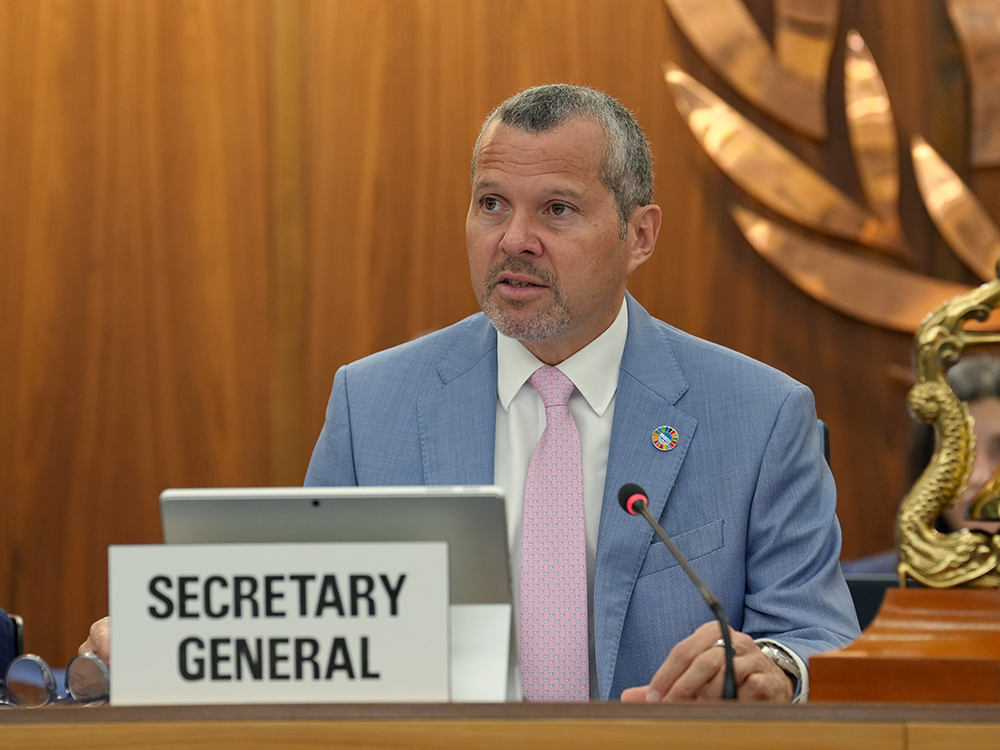
LONDON: IMO Secretary-General Arsenio Dominguez issued the following statement:  

“I regret that once again I am compelled to speak out following attacks  on commercial ships and innocent seafarers, due to geopolitical circumstances beyond their control. 

I condemn the attacks over the past two days against several ships transiting the Strait of Hormuz. 

These reckless attacks  have again placed innocent seafarers in grave danger. No seafarer should have to risk their life simply for doing their job. 

As long as the safety and security of crews cannot be assured, I urge flag States, shipowners, operators and all relevant authorities to avoid exposing seafarers to unnecessary danger by transiting the Strait. 

The situation in the region remains volatile. These attacks further intensify the fear, uncertainty and psychological strain already being endured by the nearly 6,000 seafarers who remain stranded on board vessels unable to depart the Persian Gulf safely. 

I call on all States concerned to exercise maximum restraint, de-escalate the situation without delay, and facilitate the safe departure of the ships still trapped in the Gulf since the crisis began.

The safety of seafarers must remain our foremost priority.”  

Hapag-Lloyd uses shore power in the Port of Hamburg

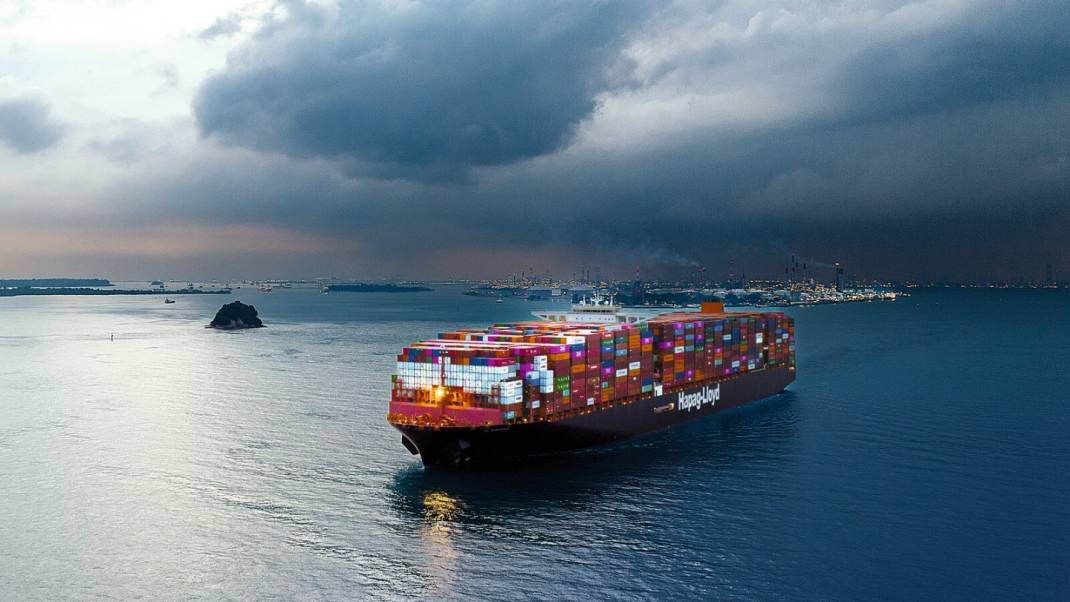
HAMBURG: Hapag-Lloyd, the world’s fifth-largest container shipping company, has signed an agreement with the Hamburg Port Authority (HPA) on the use of shore power in the Port of Hamburg. With this agreement, the company confirms that it will use the available infrastructure whenever possible and continue to integrate Onshore Power Supply (OPS) into operational vessel management. The agreement applies to shore power supply at all terminals.

In recent weeks, the vessels “Al Muraykh” and “Tihama” have already successfully used shore power during their port calls in Hamburg. Both vessels operate on the Asia-North Europe Service NE2.

“Shore power is an important element on our path toward lower-emission vessel operations in ports and towards our goal of achieving net-zero fleet emissions by 2045. All our newbuildings are already shore-power ready, and we are retrofitting suitable vessels in the existing fleet accordingly. Wherever the infrastructure is available and its use makes operational sense, we use shore power. Hamburg demonstrates how investments in lower-emission vessel operations can be put into practice,” says Rolf Habben Jansen, CEO of Hapag-Lloyd.

Shore power enables suitably equipped vessels to cover their electricity demand while berthed in port via the onshore grid. This can help reduce emissions in the port. Currently, around 35 percent of Hapag-Lloyd’s current fleet is fully equipped for shore power.

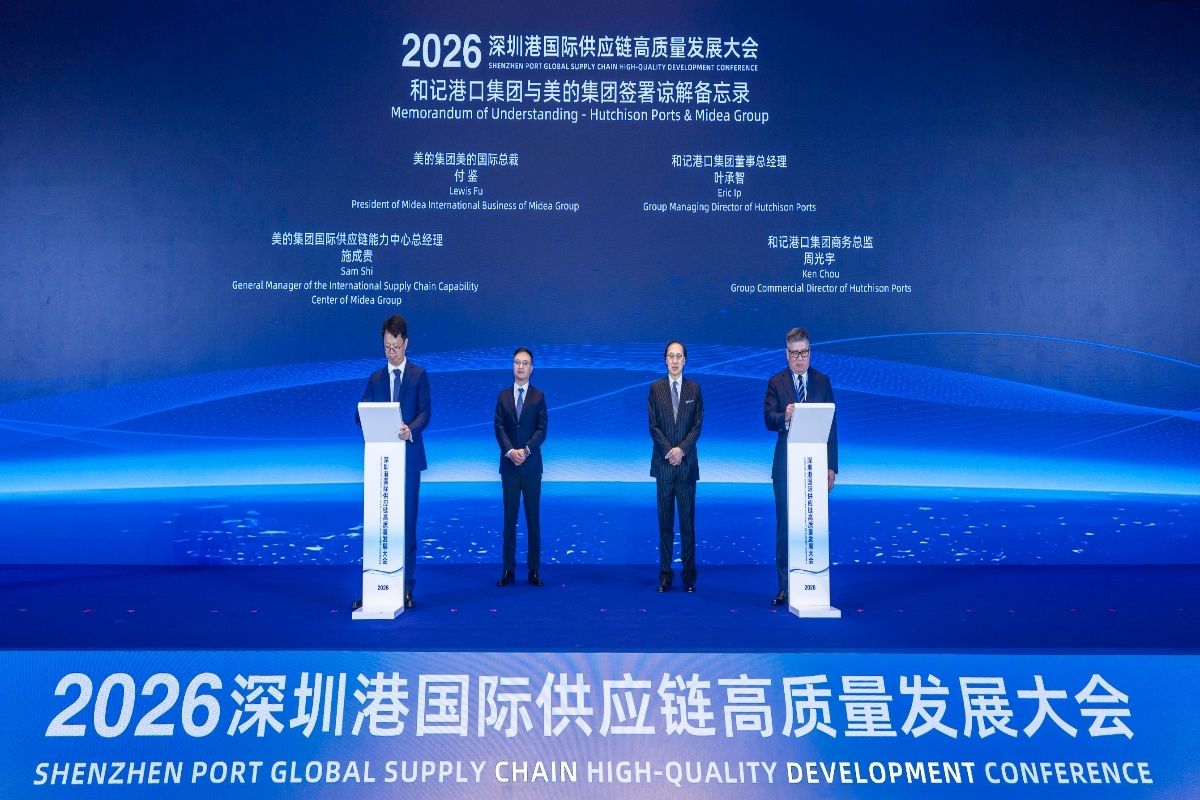
Midea Group and Hutchison Ports Sign MoU

HONG KONG: In response to the evolving global trade landscape, these two industry leaders are actively collaborating to bring together their strategic assets and global networks. Midea‘s expanding manufacturing footprint overseas seamlessly aligns with Hutchison Ports‘ extensive network of global port resources, establishing a perfect synergy particularly in key markets such as Thailand, Indonesia, Egypt, Vietnam and Mexico. As Midea accelerates its international expansion, its global logistics requirements are experiencing robust growth.

This partnership will secure global maritime logistics corridors for Midea, ensuring stable and efficient delivery. Concurrently, Midea’s continuously growing cargo volumes will significantly boost throughput across Hutchison Ports‘ terminals, in turn attracting more international shipping routes to call at its facilities.

Lewis Fu, President of Midea International, said “Under our globalisation strategy, securing reliable logistics services is fundamental to Midea’s sustained business growth. We are delighted to deepen our collaboration with Hutchison Ports. Through practical initiatives, such as data integration and priority lanes during peak seasons, we can further enhance supply chain synergy and operational efficiency. This gives us full confidence in steadily achieving our global shipping target of 1.5 million TEUs by 2027.”

Eric Ip, Group Managing Director of Hutchison Ports, said “As a world-leading technology enterprise, Midea Group is an incredibly valued strategic partner for Hutchison Ports. Midea’s massive and rapidly growing export volumes will inject strong momentum into our terminals. By leveraging our high-efficiency operational standards, advanced digital capabilities, and tailored service frameworks, we will provide reliable logistical support for Midea’s global expansion, establishing a new benchmark for industry collaboration.”

Under the MoU, this deepened collaboration will initially be launched using Hutchison Ports’ Yantian International Container Terminals (YANTIAN) as a key strategic anchor point, focusing on the following areas:

  • Green Logistics and Digitalization Construction: Both parties will actively explore sustainable transport solutions that comply with local regulations and authorities. By integrating Midea’s business system with YANTIAN’s terminal operating system, they will achieve real-time information sharing and seamless workflow connectivity, significantly enhancing cargo handling and transport efficiency.
  • Port Operation Support: Addressing industry choke points such as peak-season logistical delays and capacity constraints, Hutchison Ports will open priority lanes for Midea during peak seasons. This will expedite the pick-up, return, and reloading of Midea’s cargo, ensuring highly efficient dispatch operations and reinforcing the stability of Midea’s supply chain.
  • Port Extension Services and Multimodal Transportation: The partners will jointly develop rail freight solutions connecting inland Chinese ports to YANTIAN, alongside comprehensive terminal logistics support including container yards, warehousing, and other value-added services.

Looking ahead, Midea and Hutchison Ports aim to progressively scale up the successful collaboration model established at YANTIAN across Hutchison Ports’ vast global network. Both parties will continue to strengthen their strategic alignment on a global level, jointly exploring innovative green and digital logistics solutions to set a new benchmark for smarter, greener, and more resilient global supply chains.

About Midea Group
Midea Group is a global technology group integrating seven business segments: Smart Home, Industrial Technologies, Building Technologies, KUKA, New Energy, Midea Healthcare, and ANNTO Logistics, fostering the parallel development of ToC and ToB businesses. Every year, it delivers satisfactory products and services to more than 500 million users worldwide, as well as key customers and strategic partners across various sectors. Currently, Midea operates more than 600 subsidiaries, 43 R&D centers and 65 major manufacturing bases worldwide, with business covering more than 200 countries and regions, and strives to become a global leader in smart homes and an enabler of smart manufacturing.

About Hutchison Ports
Hutchison Ports is the ports and related services division of CK Hutchison Holdings Limited. Hutchison Ports is the world’s leading port investor, developer and operator with a network of port operations in 53 ports spanning 24 countries throughout Asia, the Middle East, Africa, Europe, the Americas and Australasia. Over the years, Hutchison Ports has expanded into other logistics and transportation-related businesses, including cruise ship terminals, distribution centres, rail services and ship repair facilities.

Ancient Port, New Voyages: Ningbo’s Smart Manufacturing expands Global Trade Footprint via Maritime Silk Road

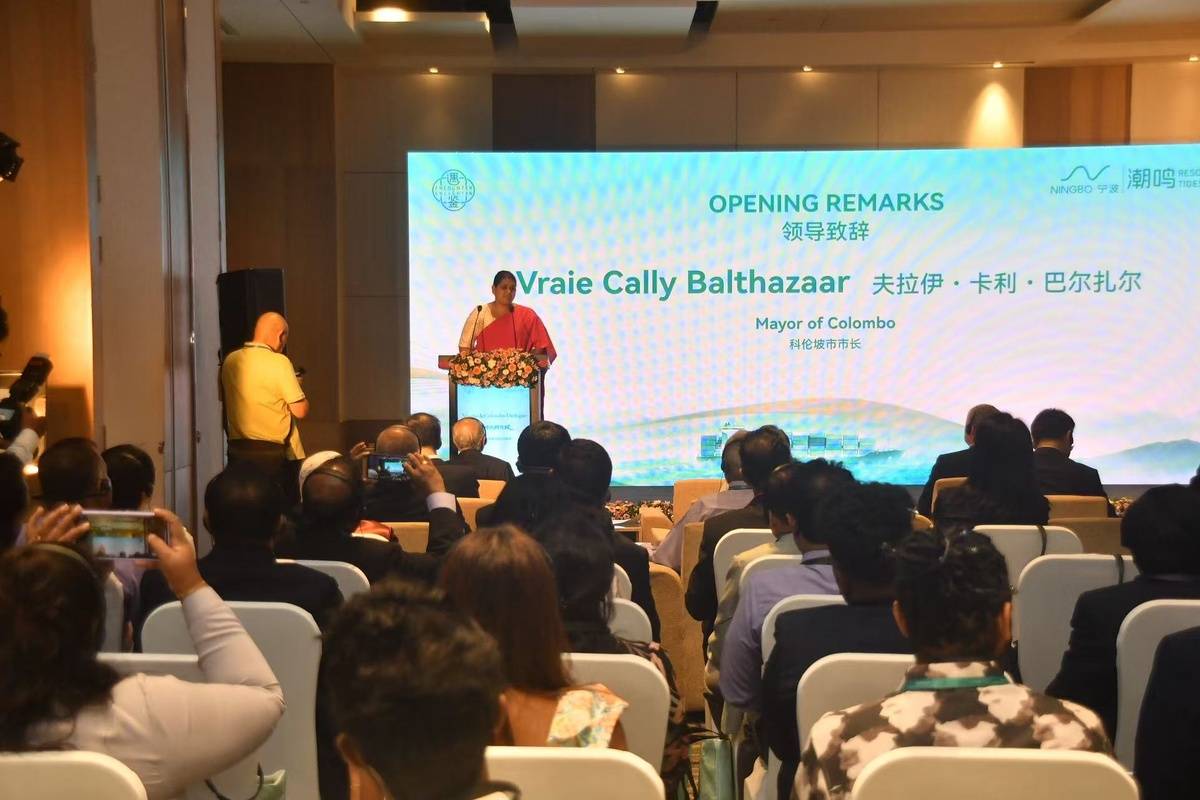
COLOMBO:  On July 4, 2026, the cultural exchange event Encounter & Insight: Dialogue Between Ningbo, China and Colombo, Sri Lanka took place in Colombo.

Separated by thousands of miles, the two millennia-old port cities reconnected, leveraging their ports as a bond and cultural exchanges as a cohesive force to hold in-depth talks on integrated port-city development and bilateral economic and trade connectivity.

This cross-Indian Ocean dialogue echoes the ancient Maritime Silk Road while charting a brand-new outbound development path. As a pivotal starting port of the ancient Maritime Silk Road, Ningbo is building a new global trade landscape powered by smart manufacturing.

A thousand years ago, merchant vessels from Mingzhou Port set sail southward loaded with Yue Kiln celadon porcelain, passing through Ceylon to deliver Oriental crafts across the Indian Ocean coasts. Precious gemstones and spices traveled the same sea route back to regions south of the Yangtze River, laying the groundwork for the earliest cultural exchange between the two ports through trade. Today, the cargo carried by giant cargo ships has undergone a dramatic transformation. Beyond traditional daily necessities, intelligent equipment, digital home appliances and industrial robots now dominate shipments.

Official statistics show that Ningbo’s exports of intelligent equipment, including mechanical arms and industrial robots, hit 440 million yuan in 2025, surging more than 40% year-on-year. From January to May this year, Ningbo’s exports of mechanical and electrical products maintained steady growth, reaching 247 billion yuan, a 4.1% year-on-year increase and accounting for 58.0% of the city’s total export volume. The new energy foreign trade sector saw explosive growth, with exports of new energy vehicles, lithium batteries, and photovoltaic products jumping 138.4% year-on-year, with electric vehicle exports skyrocketing 215.9%. Smart manufactured goods are continuously expanding the scope of Ningbo’s foreign trade.

Complementing the Colombo forum, an exhibition highlights Ningbo’s outstanding going-global enterprises and their products, vividly illustrating the profound shift in Ningbo’s trade structure.

Alongside time-honored Maritime Silk Road staples such as celadon porcelain and silk, Ningbo’s smart manufactured products—including AI translation glasses, intelligent outdoor gear and digital small home appliances—occupy prominent display spaces across the venue. In Sri Lanka, Ningbo smart water meters are widely adopted nationwide, while handheld cooling fans and intelligent kitchen appliances have entered ordinary households.

Leveraging Colombo Port’s transshipment advantages, massive volumes of Ningbo smart manufactured goods are distributed onward to Europe, the Middle East and beyond. What Ningbo exports Today is no longer mere commodities, but a complete outbound solution integrating technology, brand value and after-sales services.

Faced with mounting challenges including homogeneous global market competition and rising trade barriers, Ningbo’s manufacturing sector has abandoned the old model of low-cost OEM production, relying on intelligent transformation to consolidate its competitive edge in overseas markets.

Over more than a decade of digital transformation efforts, Ningbo has achieved full digital upgrading of all industrial enterprises above designated size. A large number of local factories have built unmanned black-light workshops and flexible production lines, escaping vicious price competition through continuous technological iteration. Represented by five specialized, sophisticated, distinctive and innovative enterprises dubbed Ningbo’s “Five Little Tigers”—famous for their core proprietary technologies, including highly sophisticated visual inspection equipment, heat-resistant materials, sun-proof coatings, puncture-proof materials and self-drilling fasteners—these niche manufacturers have developed differentiated technical routes and full-spectrum production capacity, cementing irreplaceable competitiveness for Ningbo smart manufacturing on global markets.

Beyond trade expansion, Ningbo has built a supporting cultural communication system to ensure “products go global, accompanied by local culture”.

The launch of Sri Lanka’s first “One-Meter Cultural Space” cultural station during the Colombo event marks a tangible milestone of Ningbo’s go-global initiative. Built on enterprises’ overseas outlets, these miniature cultural exhibition halls integrate intangible cultural heritage crafts, urban stories and smart products, enabling overseas clients to experience cutting-edge manufacturing while gaining insight into Ningbo’s profound cultural heritage.

During the twin-city story-sharing session, Ningbo entrepreneurs based in Sri Lanka and local designers blending Chinese and Sri Lankan aesthetics shared stories of bilateral exchanges. Economic and trade ties have evolved into a bond for people-to-people communication, bridging divides in cross-cultural trade.

From Tang-dynasty celadon porcelain sailing across the Indian Ocean to intelligent equipment shipping to every corner of the globe, Ningbo, the ancient Maritime Silk Road port, has preserved its enduring gene of openness. Where exchanges once relied purely on commodity trade, Today smart manufacturing underpins a stable, diversified and high-value-added global trade network.

The Ningbo-Colombo dialogue stands as a vivid microcosm of this transformation: the port still links lands and seas, yet the core of its trade has undergone a full intelligent upgrade.

Rooted in its historical legacy as a key Maritime Silk Road hub, Ningbo has consolidated its industrial foundation through a decade of digital development, expanded global market reach via worldwide port networks, and softened trade cooperation through cultural exchanges. This brand-new outbound shipping route forged by smart manufacturing has not only reshaped the city’s foreign trade landscape, but also delivered a replicable port-city development model for Chinese manufacturing to go global.