Home Blog Page 24

Oman, Iran seek “resuming navigation” through Hormuz “without obstacles” amid regional tensions

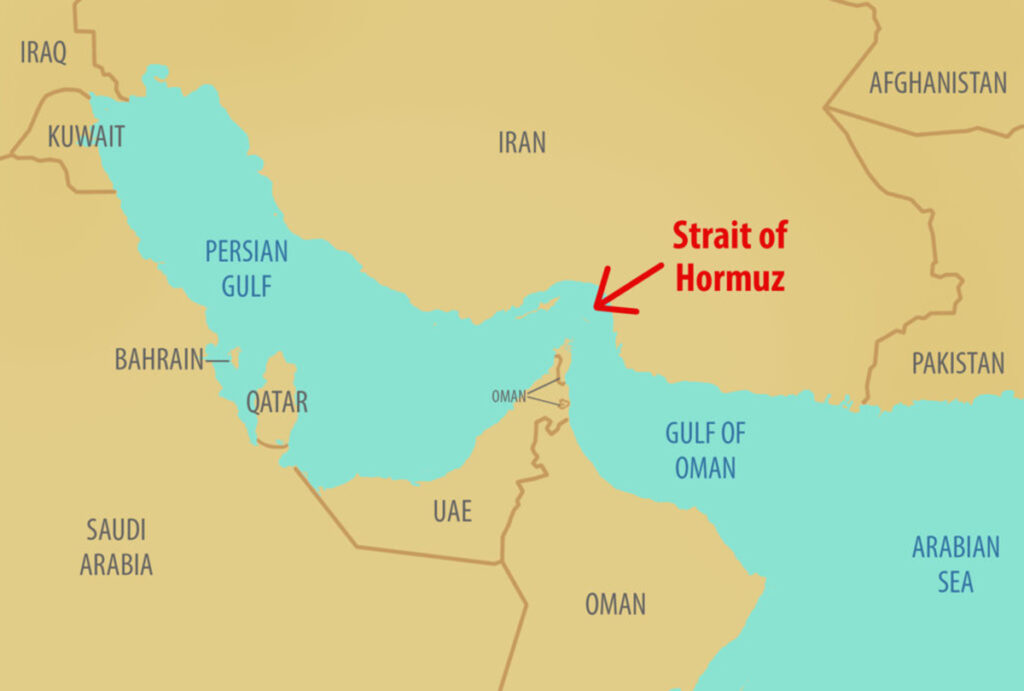
MUSCAT/OMAN: Oman and Iran discussed efforts to resume navigation through the Strait of Hormuz without obstacles during a telephone conversation between their Foreign Ministers on Thursday, with both sides emphasising the need for sustainable understandings to ensure maritime safety, facilitate international trade and energy flows, and prevent further confrontations in the region.

In a post on X, Oman’s Ministry of Foreign Affairs said that Omani Foreign Minister Badr bin Hamad bin Hamoud Al-Busaidi held a telephone conversation with Iranian Foreign Minister Abbas Araghchi.

“During the call, they reviewed the latest developments in communications and discussions aimed at reaching practical, political, and technical understandings that would lead to resuming navigation through the Strait of Hormuz without obstacles,” the ministry said.

The two Foreign Ministers “affirmed the importance of transitioning from a phase of de-escalating tensions to a phase of consolidating sustainable understandings,” based on practical arrangements to ensure the safety of maritime passages and shared technical mechanisms to secure the smooth flow of international trade and energy.

The ministry further stated that these understandings were aimed at “ending the state of war and preventing the resurgence of confrontations in the region.”

The two sides also emphasised that the proposed understandings must be grounded in respect for the sovereignty of states, consideration of the legitimate interests of all parties, and the creation of favourable conditions for resuming channels of dialogue and negotiations to address outstanding issues behind the escalation.

“The two sides agreed to continue consultation and coordination, and to support all diplomatic efforts aimed at entrenching regional security and stability,” the ministry added.

Meanwhile, according to Iranian state broadcaster IRIB, Araghchi held separate telephone conversations with Saudi Foreign Minister Faisal bin Farhan and Qatar’s Foreign Minister Mohammed bin Abdulrahman.

During the separate calls, Araghchi discussed regional developments and the latest diplomatic efforts aimed at establishing stability in the region, IRIB reported.

The diplomatic engagements came as Iran’s Navy reported that an oil tanker caught fire after hitting a naval mine in waters east of the Strait of Hormuz on Thursday morning.

According to IRIB, the Iranian Navy Public Relations Office said that an “offending oil tanker” travelling through what it termed an “unsafe area” east of the Strait of Hormuz caught fire and stopped after “hitting a naval mine”.

The Navy further claimed that the tanker, like other tankers that had hit naval mines and caught fire in recent days, had switched off its detection and navigation systems.

The Navy Public Relations Department said that the incident highlighted the risks of attempting to navigate through the area without coordination.

“The war with Iran will only result in defeat,” the department said, adding, “We are announcing to ship owners for the umpteenth time that the Strait of Hormuz is unsafe and closed to illegal vessels that intend to transit without coordination.”

Later in the afternoon, Iran’s Navy reported that two more oil tankers had caught fire after hitting naval mines in the unsafe area east of the Strait of Hormuz.

According to IRIB, the Army Navy Public Relations Department said, “This afternoon, two more offending oil tankers hit naval mines and caught fire in the unsafe area east of the Strait of Hormuz.”

It further claimed that ignoring maritime warnings and entering prohibited areas without coordination were among the causes of the fires on the two tankers.

The diplomatic contacts between Oman, Iran, Saudi Arabia and Qatar come amid continuing regional efforts to establish stability and address tensions surrounding the Strait of Hormuz.

Meanwhile, as Washington navigates the fallout from a sweeping Republican electoral defeat in the US midterms, Iran’s chief negotiator in talks with the US, pressure is also mounting rapidly on President Donald Trump to dismiss Secretary of War Pete Hegseth over the administration’s handling of the war in Iran.

Despite growing calls for Hegseth’s departure from both sides of the aisle, President Trump doubled down on his Secretary of War on Thursday, insisting he intends to keep him in office.

“I have every intention to keep him. I get these calls, you know, about him. I don’t understand why,” President Trump told ABC News, the outlet’s chief Washington correspondent Jonathan Karl wrote in a post on X.

The scrutiny of Hegseth coincided with stark admissions from within the White House regarding the political cost of the Iran war.
As per CBS, beyond cabinet-level evaluations, White House aides indicate that top senior military officials may also encounter mounting pressure following the election outcome. Sources noted that Adm. Brad Cooper, commander of US Central Command, and Gen. Dan Caine, Chairman of the Joint Chiefs of Staff, could face legislative and public oversight due to their advisory roles concerning the Iran war.
Iran says five tankers and tugboat caught fire in Hormuz

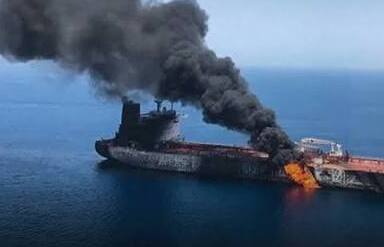
TEHRAN: Five oil tankers and a tugboat caught fire in the Strait of Hormuz, Iran’s Revolutionary Guards and army said in separate statements, according to local media on Thursday.

Since the outbreak of the Iran war in late February, Tehran has severely restricted traffic through the strategic waterway, which normally carries about one-fifth of global oil consumption.

It regularly attacks ships it accuses of transiting without its authorization.

The United States military has in response imposed a blockade on Iranian ports and helped tankers travel the strait.

“Last night… a large oil tanker attempting to pass through the illegal passageway south of the Strait of Hormuz suffered a fire after striking a mine and was brought to a halt,” the Guards told Fars news agency.

“Another supertanker was halted by a massive fire while exiting the eastern Strait of Hormuz. A tugboat that had approached the supertanker to extinguish the fire also caught fire,” the Guards said.

The Iranian army later said three more tankers were hit by naval mines.

“Early this morning, a violating oil tanker — navigating through an unsafe area east of the Strait of Hormuz — caught fire and came to a halt after striking a naval mine,” the army said, according to the official IRNA news agency.

“Today at around noon, two more oil tankers struck naval mines and caught fire in the unsafe waters east of the Strait of Hormuz,” said another army statement carried by IRNA.

There has been no confirmation of the incidents from maritime officials.

British monitor UKMTO reported a tanker being struck by “two unidentified projectiles” around 50 nautical miles (90 kilometers) off the north coast of Qatar, without providing details on any damage or casualties.

That area is around 500 kilometers west of Hormuz, in the center of the Gulf.

Fars also reported that the IRGC navy’s electronic warfare unit had taken control of two LUCAS drones, a US-developed model whose name is short for Low-cost Uncrewed Combat Attack System.

Last month, the US military said it had helped Gulf countries export 1.5 billion barrels of oil via Hormuz since the summer.
Source: AFP

IMO Council urges stronger protection of seafarers amid threats to global shipping

LONDON: The Council of the International Maritime Organization (IMO) has reaffirmed its commitment to protecting the safety, security, health and well-being of seafarers amid continuing threats to international shipping.

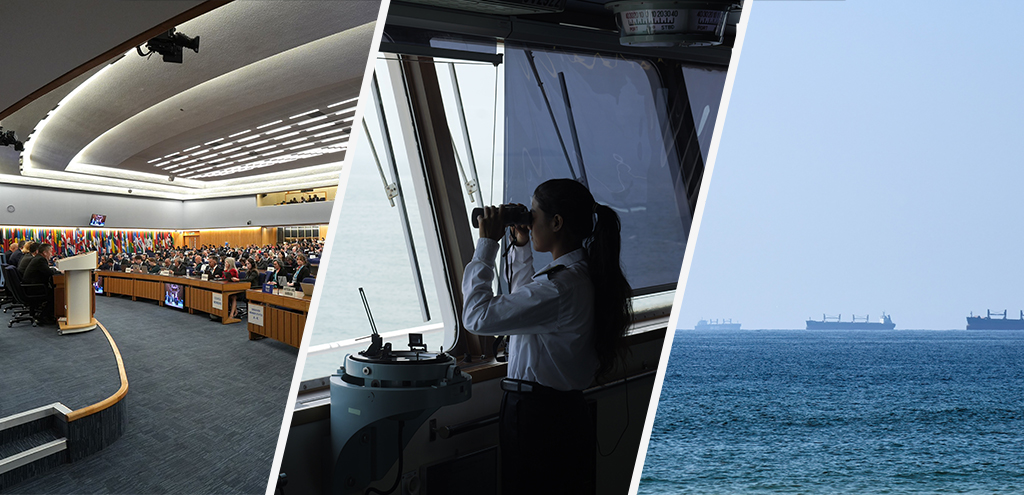
Meeting for its 138th session at IMO Headquarters in London (2–6 November 2026), the Council reiterated that vital shipping lanes should remain open, safe and secure. It underscored that seafarers must be protected wherever they are and whatever their nationality, including in geopolitical disputes over which they have no control.

Secretary-General Arsenio Dominguez emphasized: “Seafarers continue to lose their lives, suffer serious injuries, face abandonment, are denied repatriation and are deprived of basic human necessities, including water, food and medical care, resulting from the ongoing geopolitical conflicts.”

He highlighted the death of another seafarer this week, following an attack on the M/T VELOS SAPPHIRE in the Strait of Hormuz on 5 November, bringing the number of confirmed casualties to 25 since the conflict in the Middle East began. In total, at least 130 attacks against commercial vessels in the region have been verified by IMO, with thousands of seafarers at risk, including those on ships that have been unable to leave the Persian Gulf.

The Council called on Member States to refrain from unlawful measures that would jeopardize the safety of seafarers and international shipping. The Secretary-General further committed to finding additional concrete measures IMO can take to help prevent further loss of life and alleviate the human cost of the crisis.

Global maritime security challenges

The Council strongly condemned attacks carried out by the Houthis against merchant and commercial vessels and their crews in the Red Sea and Bab al-Mandab Strait, as well as attacks by the Russian Federation against merchant vessels, seafarers, port infrastructure, search and rescue assets and other maritime safety services supporting the operation of Ukraine’s special maritime corridor. It reiterated its commitment to the security and freedom of navigation in the Black Sea.

The Council noted the increase in piracy and armed robbery attacks in the Western Indian Ocean and Gulf of Aden region, including 17 instances of attempted and actual piracy and armed robbery at sea in this region alone since the start of the year. It noted the work underway to address these developments, within the framework of the Djibouti Code of Conduct and its Jeddah Amendment.

The Council requested the Secretary-General to continue monitoring maritime security developments in these various regions and to keep Member States informed.

Other key decisions

Renewal of the Secretary-General’s mandate
The Council decided to renew the mandate of IMO Secretary-General Arsenio Domínguez for another four-year term, concluding on 31 December 2031, and to make a recommendation to the 35th regular session of the IMO Assembly, in accordance with Article 22 of the IMO Convention. Read more

2027 IMO Gender Equality Award
The Council decided to award the 2027 IMO Gender Equality Award to Ms. Yu Jiajia, nominated by China, in recognition of her significant personal achievements in overcoming barriers to women’s participation in the maritime sector. The award will be presented to Ms. Yu on 18 May 2027 (Women in Maritime Day).

The Council also endorsed the recommendation to award a Letter of Commendation to Ms. Gemma Griffin, nominated by Denmark. Read more

Revised Rules of Procedure approved
The Council approved revised Rules of Procedure of the Council, related to suspension or adjournment of meetings, suspension and closure of debates, voting, and the concept of a point of order. It invited other IMO organs to consider the amendments with a view to harmonizing their respective Rules of Procedure with those of the Council.

Funding approved for IMO digital platforms
The Council approved the Secretary-General’s funding proposal to complete the upgrade of the IMO’s Global Integrated Shipping Information System (GISIS) and develop an e-Learning platform, in an initial amount of GBP 2 million. With respect to additional funding requirements, the Council requested the Secretary-General to present detailed cost estimates, implementation timelines and recurring expenses for both initiatives to a future session of the Council.

Member States contributions to the Organization
The Council noted the status of Member States’ contributions to the IMO’s General Fund and the Working Capital Fund, with a collection rate of 97.62%. The Council urged Member States with outstanding contributions to fulfil their financial obligations to the Organization in full and at the earliest possible opportunity.

Next Council session
The Council noted the proposed dates for its 139th regular session, to be held at IMO Headquarters in London from 19 to 23 July 2027.

Xeneta Summit: Analysts forecast ocean freight spot rates to fall 30% in 2027 as Red Sea return sees capacity flooding back

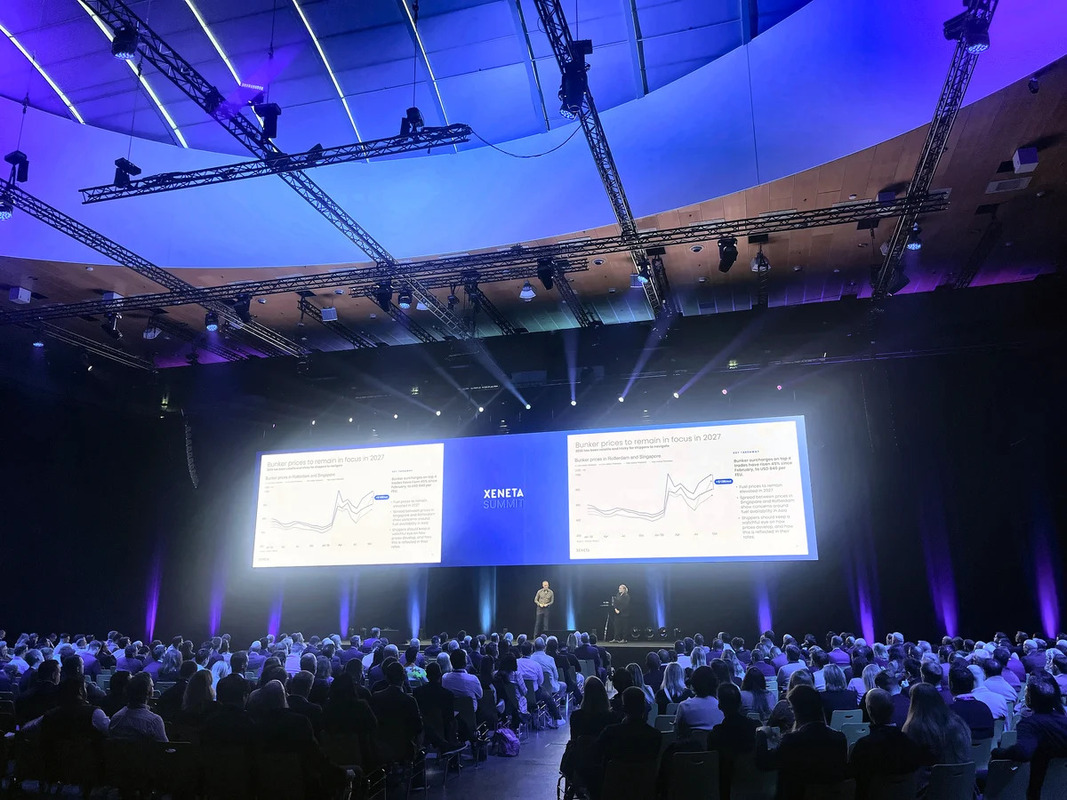
MUNICH: Global ocean container shipping spot rates are forecast to fall 30% in 2027, according to the Xeneta Ocean Outlook Report unveiled on Thursday by Chief Analyst Peter Sand to more than 600 industry leaders from the world’s largest shippers and logistics service providers gathered at the annual Xeneta Summit in Munich.

Xeneta – the leading neutral ocean and air freight rate intelligence solution – includes the following market fundamentals and forecasts in the Ocean Outlook 2027:

  • Global demand growth slowing to between 2.5% and 4%
  • Global fleet growth of 6.8% within a range of 5.4% to 8.3%
  • Global average spot rate to fall 30%
  • Global average long term rate to fall 5%

Both rate forecasts are full-year 2027 averages against a Q3 2026 baseline.

While Sand, pictured, told the Xeneta Summit the fundamentals point to softening rates in 2027, he warned it is not guaranteed.

He said: “Rates were expected to soften in each of the past three years before seismic shocks sent them spiralling in the opposite direction – the Red Sea Crisis in 2024, the US tariffs in 2025 and the Hormuz Crisis in 2026. Supply growth will outrun demand in 2027, but market fundamentals are easily overpowered by major supply chain shocks and it would be foolish to rule that out in 2027.

“The Transpacific trade to US West Coast spiked 343% between 28 February and 31 October this year, with triple-digit percentage increases seen across all Far East fronthauls. These are massive freight cost increases, but this is made even more extraordinary given the market fundamentals suggested an easier year for shippers heading into 2026.”

Red Sea return is pivotal to falling rates

The return of container shipping to the Red Sea and Suez Canal is central to the Xeneta forecast for 2027 following a significant ramping up of services transiting the region in recent months.

In October 2026, carriers committed 467,297 TEU of weekly capacity to the Red Sea. While this is 50% of the pre-crisis level in August 2023, it is roughly double the offered capacity compared to the end of August 2026.

The return of networks to the Suez Canal releases capacity absorbed by longer diversions around the Cape of Good Hope, with 599k TEU already released.

This is in addition to forecasted global fleet growth of 6.8% in 2027. Carriers are due to take delivery of 2.9m TEU of new capacity next year and demolish 0.5m TEU. This follows 4.9% fleet growth in 2026.

Sand said: “The Red Sea is pivotal to ocean container shipping in 2027 because it offers both sides of the coin. If there is a full return, freight rates could plummet. We could also be faced with the opposite extreme if a deterioration in the security situation in the Red Sea forces carriers to revert to Cape of Good Hope diversions. This would bring chaos to ocean networks and upward pressure on rates.

“The significant ramping up of Red Sea services in recent months should not distract from the fragility of the geo-political situation in the wider Middle East. It will not take much to ignite the situation again and then the house of cards comes falling down.

“This forecast should also be seen against the backdrop of appalling schedule reliability in 2026. Global on time arrivals were 27% in Q3 with Far East to Europe collapsing to just 4% in September. We may see a rebound in early 2027, but it is coming from a very low bar.”

Demand growth to slow in 2027 with weaker peak season

Global container shipping demand will grow between 2.5% and 4% in 2027, down from 4.7% in the first eight months of 2026. The demand growth in 2026 was built on frontloading as shippers looked to protect supply chains from the ripple effects of disruption in the Strait of Hormuz and rising fuel costs.

Xeneta expects a slower start to 2027 followed by a weaker peak season.

Sand said: “Supply chain shocks have distorted the rhythm of container shipping. Demand has been strong in 2026, but this growth will be difficult to sustain in 2027 as shippers draw down the inventories built up in 2026 against headwinds of more modest consumer appetite for containerized goods.”

Be prepared for the unknown

Sand reiterated the requirement for shippers to be ready for the unexpected in 2027, both in terms of supply chain resilience and freight budgets, with some threats already on the horizon.

He said: “Low water levels in the Panama Canal could see restrictions enforced and shippers forced to pay a premium to secure timely transits. With the Suez Canal – the world’s other critical artery for maritime trade – already compromised, there isn’t too much slack in the system to manage further supply chain shocks.”

IMO launches survey on Maritime Single Windows: BIMCO

LONDON: The IMO has launched a survey with the view to gathering information on the level of implementation and use of Maritime Single Window (MSW) systems to better understand the impact of MSW implementation on the administrative workload of maritime stakeholders and users. 

Maritime Single Windows (MSW) are a means of reducing a ship’s reporting burden by enabling information required for a port call to be exchanged once, digitally and efficiently, using harmonised data standards that allow different authorities and systems to interoperate. However, there is a need to test whether MSWs are actually delivering the benefits they were introduced to achieve.  

As such, the IMO has launched a survey with the view to gathering information on the level of implementation and use of MSW systems by the end of 2026. It is envisaged that a follow-up survey will be conducted in 2028 to assess developments since 2026 and to better understand the impact of MSW implementation on the administrative workload of maritime stakeholders and users. 

The survey is open to all interested stakeholders with experience in the implementation, operation or use of MSW systems. In order to ensure the accuracy and relevance of the analysis, certain questions are mandatory, including those relating to the country concerned and the respondent’s organisation type or stakeholder category. The information provided will enable the IMO Secretariat to analyse responses by country and stakeholder group and to identify common trends, challenges and good practices.  

The survey seeks to collect the views and experiences of all relevant stakeholders involved in the submission, processing and use of information through MSW systems, including public authorities and private-sector users. The information gathered will support the work of the IMO in identifying common challenges, good practices and opportunities to further improve the implementation and operation of MSW systems. 

BIMCO members are encouraged to submit their responses by 30 November 2026.

IAPH leads port efforts to ensure the ISPS Code is fit for the future

LONDON: The International Association of Ports and Harbors (IAPH) – a recognised NGO at the IMO and the global voice for world ports for more than 70 years – is leading port industry efforts to ensure the International Ship and Port Facility Security (ISPS) code remains fit for purpose, two decades after its introduction.

These efforts encompass a global survey of views on the ISPS Code in the port sector, detailed submissions to the IMO based on the subsequent findings, and high-level discussions at its international conference, attended by more than 700 delegates from 70 countries.

IAPH, which represents a 400-strong membership of ports and port-related businesses, believes there is a case for updated guidance that reflects modern port operations and strengthens cooperation among key stakeholders.

A global survey

Proposal for review of the Guide to Maritime Security and the ISPS Code to address emerging transnational organized crime (MSC 112/7/1) submitted by the United States at the 111th session of the Maritime Safety Committee (MSC 111) urged Member States and the IMO to consider developing additional maritime security measures within existing IMO instruments, namely the ISPS Code, to better address evolving security threats.

In response to the subsequent IMO invitation for international organizations to submit relevant proposals to a future session of MSC, IAPH established a dedicated working group under its Risk & Resilience Committee, focusing on the issue of whether the ISPS Code and/or supporting guidance should be revisited.

IAPH then undertook an industry-wide survey (August–September 2026) to gauge opinion on the possible future amendment, replacement and/or development of the ISPS Code.

The findings of this IAPH survey of the global port sector provide evidence of the need to review and update the existing maritime security framework.

The survey received 181 responses from organizations including port/harbour authorities, port facility operators, terminal operators, governments/designated authorities and other maritime stakeholders. Respondents represented a broad range of port types and operating contexts.

Gaps and weaknesses

Although there was considerable variation in respondents’ individual assessments, when asked to assess the effectiveness of the current ISPS framework, the industry representative average showed a collective view of below 50% effectiveness.

Identification of the most significant weaknesses or gaps in the current ISPS framework showed a particularly strong concentration around technology and the changing nature of port operations. Cybersecurity and digitalization was identified by 83% of respondents, making it by a substantial margin the most frequently selected weakness. Emerging technologies and automation were identified by 57%.

IAPH considers that the findings reinforce the case for updated, practical and forward-looking guidance that reflects the interconnected nature of modern port operations and strengthens cooperation between governments, competent authorities and private-sector stakeholders. The full results and analysis of the survey responses can be found here.

IAPH has made a submission covering this undertaking for consideration at MSC 112 (14–18 December): Results of an IAPH ports industry survey on the International Ship and Port Facility Security Code (submitted with ICHCA and IHMA).

IAPH also supports proposal MSC 112/14/11, submitted to the IMO by a number of countries, for a new output to amend the 2003 ILO/IMO Code of practice on security in ports (MSC 78/26) with a view to enhancing maritime security and supporting the implementation of the ISPS Code.

An international debate

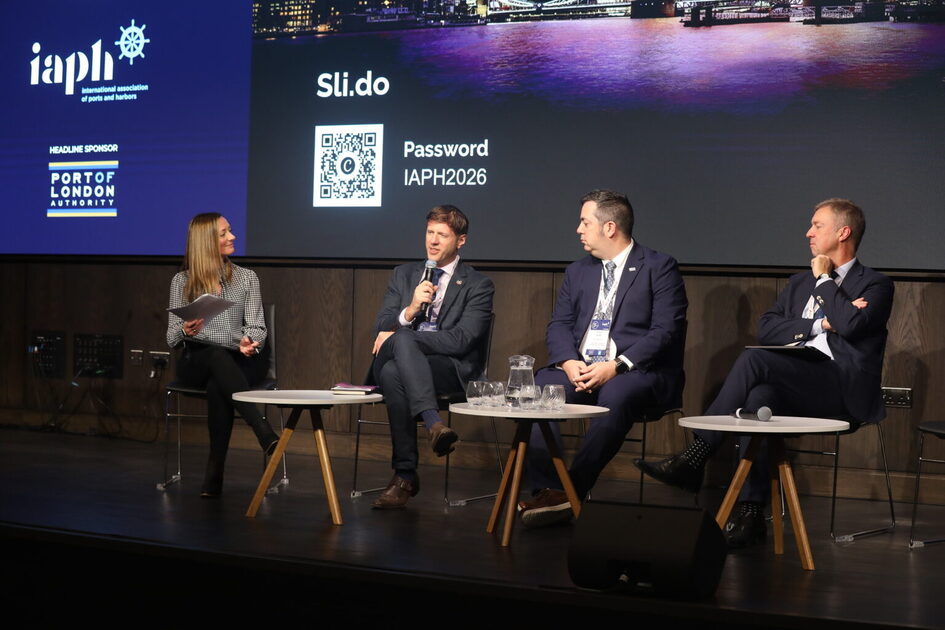
At the 2026 IAPH World Ports Conference held today, Thursday 5 November, IAPH Senior Manager: Data Collaboration, Risk & Resilience Chloe Rowland moderated a plenary discussion among industry experts entitled ‘Has the time come to review the ISPS Code?’

Among a diversity of perspectives during the discussion, the panel agreed that, while the ISPS Code remains an essential foundation for maritime security, the environment in which it operates has changed significantly, and that – given their critical role in supply chain security – ports should continue to play a key role in supporting assessment of the code at a regulatory level.

Chloe and was joined by expert panellists Jeremy Greenwood, Head of Maritime Security Section at the International Maritime Organization, Timothy Brown Chief, Office of Standards Evaluation and Development at the US Coast Guard, and Peter Van Parys, COO at North Sea Port and chair of the IAPH Risk & Resilience Committee.

Asian countries share experience on maritime digitalization

BUSAN: Seven Asian countries have stepped up efforts to advance maritime digitalization, exchanging practical experience and exploring technologies to support safer shipping and improve port efficiency. 

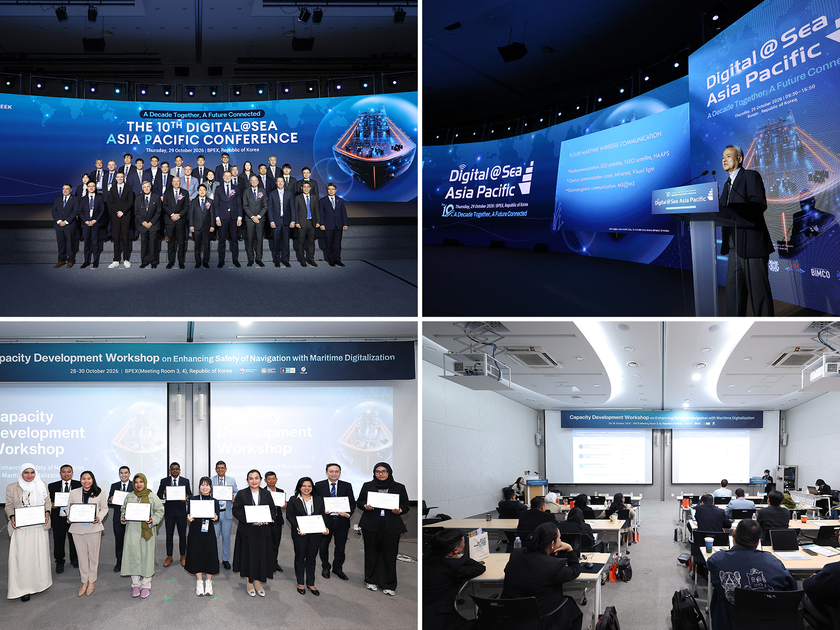
Invited by IMO, representatives from Bangladesh, Cambodia, Indonesia, Malaysia, the Philippines, Sri Lanka and Viet Nam met in Busan, Republic of Korea (28-30 October) to discuss key areas of maritime digitalization, including Maritime Single Window (MSW) implementation and e-navigation. 

The programme combined a capacity-development workshop with participation in the 10th Digital at Sea Asia-Pacific Conference, offering opportunities to examine emerging technologies, international standards and practical approaches to digital transformation across the maritime sector. 

Digital tools to strengthen safety at sea 

Participants took part in the Capacity Development Workshop on Enhancing Safety of Navigation with Maritime Digitalization at the Busan Port International Exhibition & Convention Center (BPEX), where they explored how digital technologies can support safer and more efficient shipping.  

Sessions covered next-generation electronic chart display and information systems, S-101 electronic navigational charts, autonomous navigation support systems, and information tools to support remote operators and decision-making in collision response.  

Participants also received updates from the International Hydrographic Organization (IHO) and the International Organization for Marine Aids to Navigation (IALA), alongside presentations on the Republic of Korea’s experience in maritime digitalization. 

Discussions on Maritime Single Window implementation examined the use of artificial intelligence and system design to support once-only reporting, enabling information to be submitted once and shared among relevant authorities. Delegates also exchanged national experiences and lessons learned. 

Learning from others  

Participants additionally attended the 10th Digital at Sea Asia-Pacific Conference, held during Korea Maritime Week under the theme “A Decade Together, A Future Connected.”  

The conference examined developments in maritime digitalization and connectivity, including digital service standards for vessel traffic services, S-100 implementation, electronic port call processes and the Maritime Connectivity Platform. 

Examples shared included trials of real-time S-124 services in Australia, Singapore’s maritime digital ecosystem, the Republic of Korea’s maritime Internet of Things network and Denmark’s maritime digitalization strategy. Discussions highlighted how these innovations can support the ongoing digital transformation of maritime administrations. 

Amazon to equip 5,000 delivery drivers with smart glasses, advancing technology-driven last-mile logistics

AI-Enabled Wearable Technology to Streamline Deliveries, Improve Operational Efficiency and Enhance Driver Safety

SEATTLE : Amazon is stepping up its technology-led transformation of last-mile logistics by planning to deploy 5,000 smart glasses for delivery drivers during 2026, with a significantly wider rollout planned for 2027. The e-commerce major aims to expand deployment to more than 20,000 units by the end of next year, strengthening its efforts to make delivery operations faster, smarter and more efficient.

The smart glasses are designed to provide drivers with essential delivery-related information directly within their field of vision, reducing the need to repeatedly check handheld devices while carrying packages. Once drivers park their delivery vehicles, the wearable technology displays navigation guidance, access codes, customer instructions and preferred package drop-off locations, helping them complete deliveries with greater convenience.

The technology supports drivers throughout the delivery process, beginning with package verification inside the van and continuing through navigation to the customer’s doorstep. It can also automatically capture proof of delivery, helping improve delivery accuracy and reduce manual tasks.

Technology Designed Around Drivers’ Needs

Amazon first introduced the smart glasses concept last year, and since then, hundreds of delivery drivers working with more than 300 Delivery Service Partners (DSPs) have participated in using and testing the technology.

Feedback from drivers has also influenced product improvements. In one significant design modification, Amazon relocated the computing hardware and battery into a compact controller integrated into the delivery vest, making the glasses lighter and more convenient to wear during delivery operations.

The system also incorporates features aimed at identifying potential delivery challenges. For instance, it can alert drivers to the possible presence of pets through a paw-print symbol accompanied by an audio notification. It can also flag situations where a package appears to have been placed at an incorrect address, helping minimise delivery errors and unsuccessful drop-offs.

Privacy and Data Protection Remain Key Priorities

Addressing potential concerns surrounding wearable cameras, Amazon has stated that privacy protection is an important part of the technology’s design. Images captured during delivery activities are automatically anonymised, with faces and vehicle registration plates blurred.

The company has also clarified that the glasses do not record video or audio. Captured images are encrypted, access is restricted to authorised personnel who require the information to improve delivery performance, and the data is automatically deleted after a short retention period. Participation in the programme is optional for delivery drivers.

Strengthening the Future of Last-Mile Delivery

The smart glasses initiative forms part of Amazon’s broader strategy to integrate advanced technologies across its extensive logistics and fulfilment network. The company is increasingly deploying robotics, artificial intelligence, predictive forecasting and intelligent delivery-mapping systems to improve warehouse productivity, optimise transportation and enhance the customer experience.

With the expansion of wearable technology into delivery operations, Amazon is exploring new ways to connect digital intelligence with physical logistics activities. The initiative highlights how technology can support frontline delivery personnel, improve operational accuracy and address the growing demands of modern e-commerce supply chains.

As the planned rollout gathers momentum through 2027, Amazon’s smart glasses programme could represent another significant step in the evolution of technology-enabled last-mile logistics.

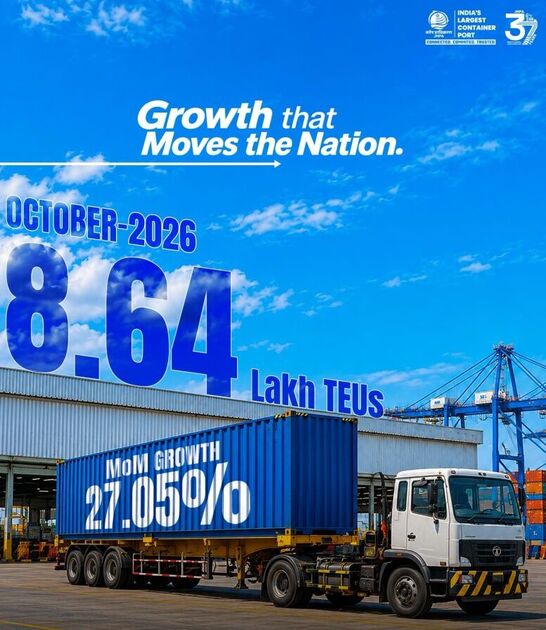
JNPA records robust growth in October 2026, handles 8.65 Lakh TEUs; Cargo throughput surges 27.05%

BMCTPL (PSA Mumbai) achieves its highest-ever monthly container throughput of 3,12,179 TEUs, setting a new operational benchmark

NAVI MUMBAI: Jawaharlal Nehru Port Authority (JNPA), India’s leading container port, continued its strong growth trajectory in October 2026, registering impressive increases in both container traffic and overall cargo handling compared to the corresponding month last year.

JNPA handled 8.65 lakh TEUs of container traffic and 10.12 million tonnes of total cargo during October 2026, registering year-on-year growth of 27.05% and 19.08%, respectively, compared to October 2025.

The port’s cumulative performance during the first seven months of FY 2026–27 was equally encouraging. From April to October 2026, JNPA handled 55.26 lakh TEUs of containers and 66.39 million tonnes of total cargo, reflecting growth of 18.99% in container traffic and 14.20% in overall cargo compared to the corresponding period of the previous financial year.

Adding another significant achievement to JNPA’s October performance, Bharat Mumbai Container Terminals Private Limited (BMCTPL), operated by PSA Mumbai, recorded its highest-ever monthly container throughput of 3,12,179 TEUs. The terminal surpassed its previous record of 3,03,032 TEUs, achieved in August 2026, setting a new benchmark in its operational performance.

The latest figures underline JNPA’s continued growth momentum and the increasing contribution of its container terminals towards strengthening India’s maritime trade and logistics infrastructure.

The record performance by BMCTPL also highlights the importance of terminal efficiency, operational excellence and capacity utilisation in supporting the country’s expanding international trade requirements.

With sustained growth in container and cargo volumes, JNPA continues to reinforce its position as a key gateway for India’s EXIM trade, contributing significantly to the nation’s port-led economic development.

The milestone achievements reflect the collective efforts of JNPA, its terminal operators and the wider port ecosystem in driving operational efficiency and strengthening India’s maritime logistics capabilities.

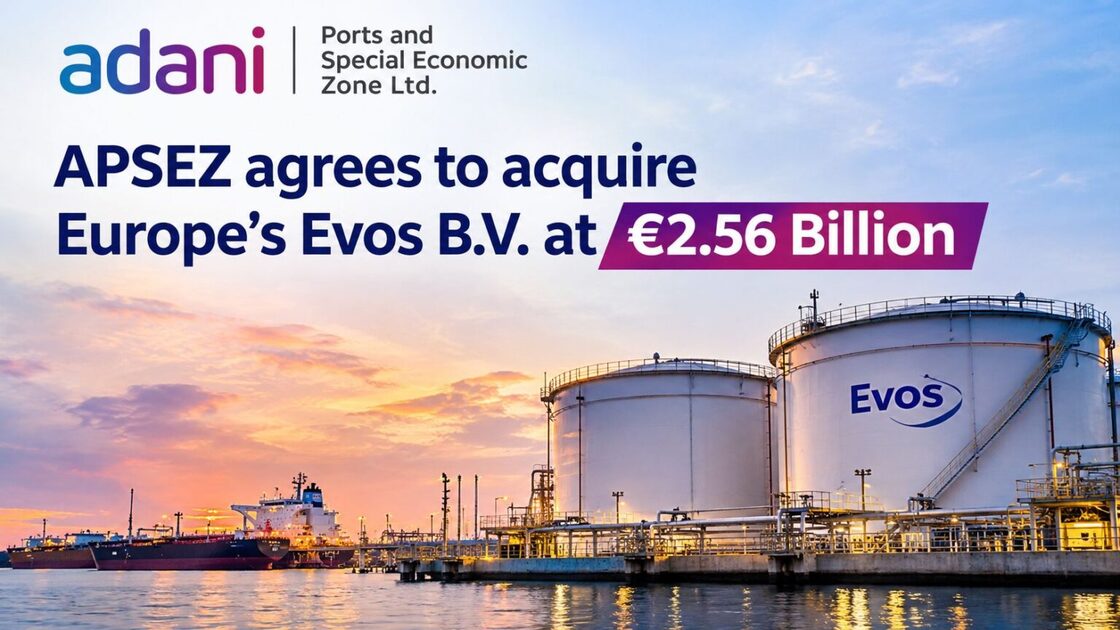
APSEZ agrees to acquire 100% of Evos B.V., Europe’s 2nd largest independent liquid storage operator, at an enterprise value of €2.56 bn

AHMEDABAD: Adani Ports and Special Economic Zone Limited (APSEZ), India’s largest and one of the world’s fastest growing Integrated Transport Operator, agrees to acquire 100% stake in Netherlands-headquartered Evos B.V. (Evos) from Igneo Infrastructure Partners. The proposed transaction is an all-cash deal at an enterprise value of €2.56 bn. The transaction values Evos at an equity value of €1.18 bn, implying an acquisition multiple of 11.7x CY25 EV/EBITDA. For CY25, Evos delivered revenue and EBITDA at €392 mn & €219 mn respectively (56% EBITDA margin). Pro forma net debt-to-EBITDA for the combined entity stands at 2.76x (based on APSEZ FY26 and Evos CY25 financials) and is expected to be around 2.5x by FY27. The transaction will be funded via debt and is subject to regulatory and other approvals and works council consultation.

“Evos marks an important milestone in APSEZ’s trajectory towards handling 1 billion tons of cargo and building a truly global, integrated transport platform. We are delighted to welcome Evos into our portfolio, giving us significant presence across key global liquid storage and energy hubs. We look forward to partnering with Europe, supporting its sustainable energy transition and creating enduring value while maintaining the financial prudence that underpins our growth,” said Mr. Karan Adani, Managing Director, APSEZ.

Evos is Europe’s second-largest independent liquid storage operator with 6.3 mn cubic meters of storage capacity at eight strategically located port-based terminals across the Netherlands, Germany, Spain, Belgium and Malta. Evos’ terminals are positioned in Europe’s most important energy and industrial hubs, including the Amsterdam-Rotterdam-Antwerp (ARA) region, Hamburg and the Mediterranean. The platform comprises 452 tanks, 63 vessels and barge berths, and has several integrated pipeline connectivities (including Schiphol airport and Central Europe Pipeline System). Evos handled 37 MMT of throughput in CY25. Evos operates a diversified liquids platform spanning both conventional and transition fuels. Its product mix includes gasoline, gasoil, marine fuels and jet fuel, alongside transition fuels such as sustainable aviation fuel (SAF), biofuels, methanol and bioethanol, positioning the business to participate in Europe’s evolving energy mix. Evos is an investment-grade rated issuer.

Evos has a diversified roster of Tier-1 customers, including global energy majors, leading industrial and chemical companies, and commodity traders. Its business model provides high revenue and cash flow visibility, underpinned by tenured customer relationships, average 99% commercial occupancy, and substantial part of revenue under take-or-pay contracts and CPI-linked contract base.

Evos is a strong strategic fit with APSEZ’s ambition to build a globally diversified integrated transport platform. The acquisition establishes a sizeable European foothold, materially scales and diversifies APSEZ’s liquids portfolio, and provides exposure to the long-term transition toward new-age fuels. Importantly, Evos adds high-margin, predictable hard-currency cash flows backed by high take-or-pay revenues and CPI-linked contract base, strengthening the quality, resilience and geographic diversification of APSEZ’s earnings. Evos’ 56% EBITDA margin is above APSEZ’s H1 FY27 International Ports margin of 44.8%, underscoring the margin-accretive nature of the business.

As of Q2 FY27, ended 30 September 2026, APSEZ had a cash balance of ₹12,502 Cr. APSEZ’s International Ports portfolio sustained its strong momentum, delivering record revenue and EBITDA of ₹3,586 Cr and ₹1,608 Cr respectively, with the EBITDA margin reaching a record 44.8% in H1FY27. Volumes increased to 47 MMT from 17 MMT in H1 FY26. The performance was led by the continued ramp-up of Colombo West International Terminal (CWIT) and Tanzania operations and contribution from NQXT Australia.

MUFG is the sole underwriter and has provided financing commitments for up to €2.8 billion for the proposed transaction. Linklaters and Cyril Amarchand Mangaldas have acted as international and domestic legal counsel for APSEZ.