Home Blog Page 246

Iran imposes mandatory insurance on ships transiting Strait of Hormuz, with fees likely to follow

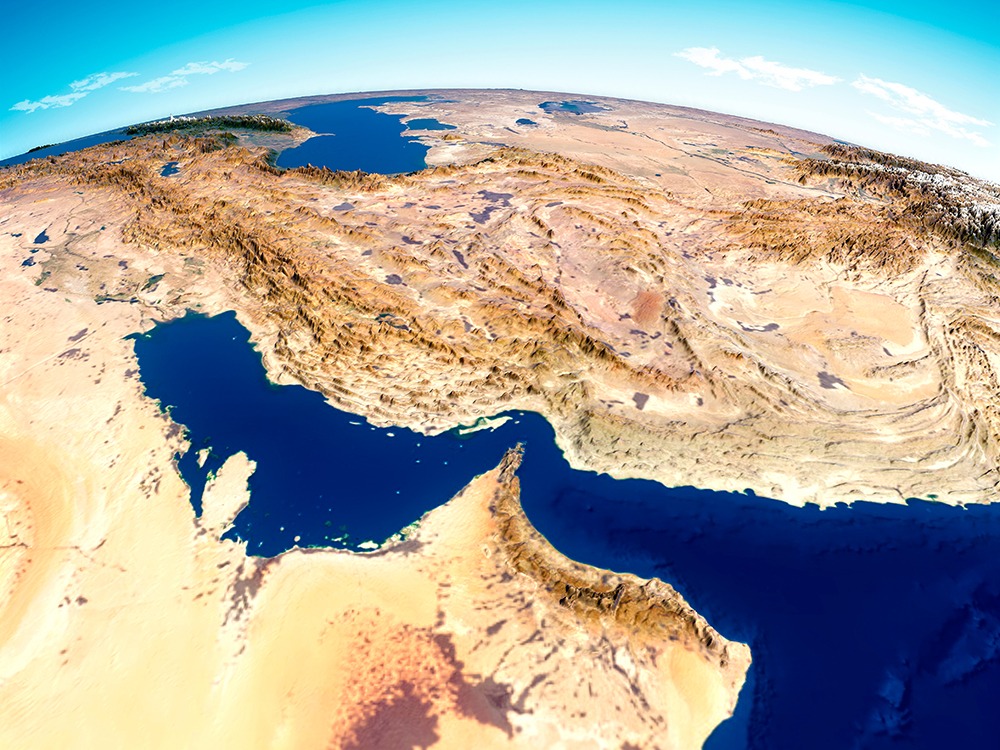
TEHRAN : IRAN has introduced mandatory insurance for all vessels transiting the Strait of Hormuz, requiring shipowners to obtain coverage approved — and initially provided free — by Tehran’s newly created Persian Gulf Strait Authority.

The move, detailed in a PGSA terms‑and‑conditions document seen by Lloyd’s List, effectively sidesteps a new US-Iran Memorandum of Understanding that guarantees “safe passage of commercial vessels with no charge” for 60 days.

Iran’s insurance requirement carries no fee during that period, but Tehran has confirmed that charges may be imposed once the 60‑day window closes.

“This insurance is provided free of charge to the vessel owner, with all expenses covered by the Islamic Republic of Iran,” the document states.

“The PGSA reserves the right to introduce insurance fees in the future… Owners will then be required to purchase and renew coverage accordingly.”

The terms, circulated across the industry on Friday and submitted to the International Maritime Organization, mark Iran’s clearest attempt yet to assert control over transit conditions in one of the world’s most critical chokepoints.

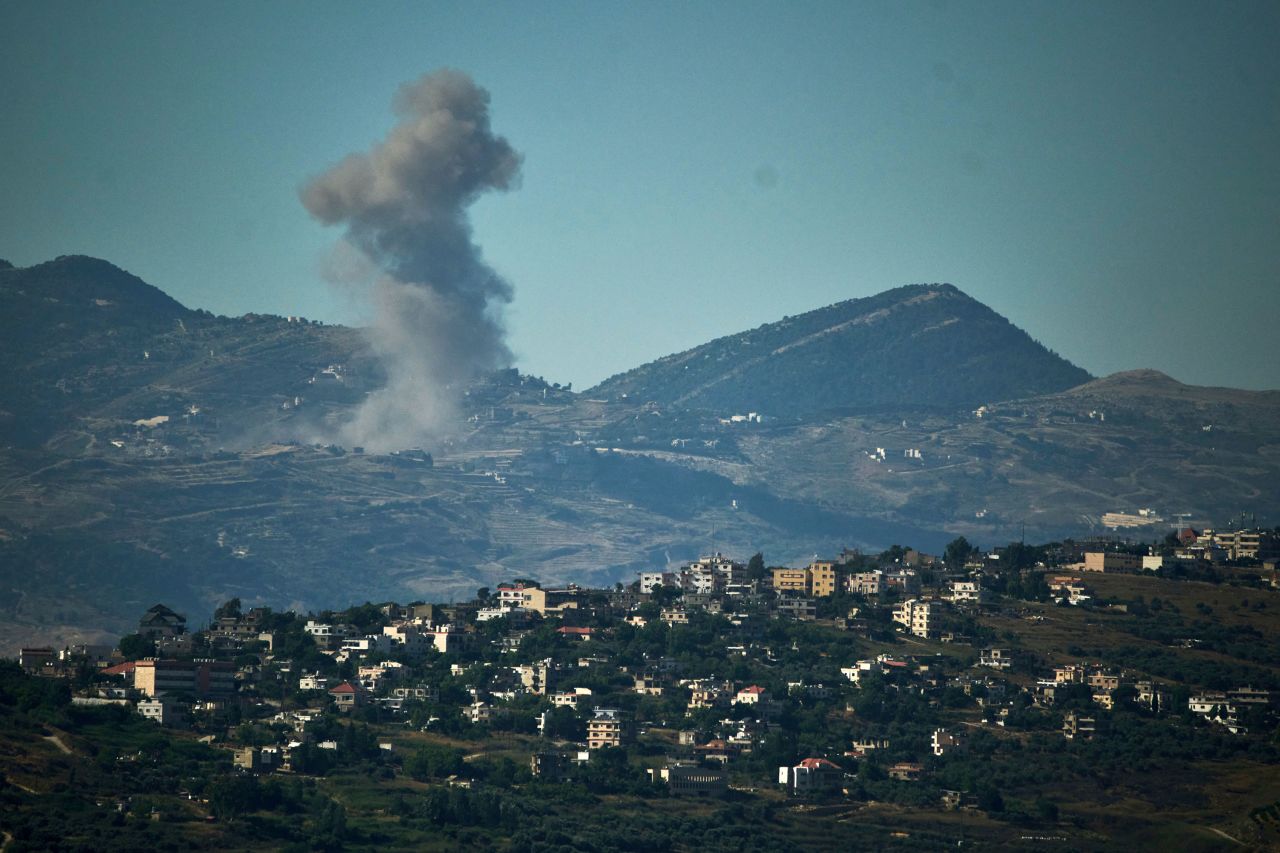
Despite a growing number of vessels now using a US‑protected southern corridor near the Oman coast, Iran insists that “passage is permitted only via the designated route near Larak Island”, referring to its preferred northern channel.

Enforce penalties for non‑compliance, “Any deviation… is strictly prohibited and will be treated as a violation,” the PGSA warns.

The authority says it is now the sole body responsible for processing transit applications and issuing permits, adding that it may “enforce penalties, revoke passage permissions, or take further legal action” for non‑compliance.

Lloyd’s List has requested comment from the PGSA. Initial responses from several tanker owners using the southern route suggest that few believe the Iranian terms will provide a sustainable framework for vessels transits.

“It’s madness. This whole situation is a mess,” said one major tanker owner with ships currently exiting the strait. The US-Iran MOU, signed Wednesday, guarantees toll‑free passage for 60 days and outlines a plan for Iran and Oman — in consultation with other Middle East Gulf states — to negotiate a longer‑term framework for administering the strait.

Shipping companies, MEG allies, and oil majors have repeatedly warned that any transit fees in the Strait of Hormuz are unacceptable. IMO secretary‑general Arsenio Dominguez, who is working with Iran and Oman on a mechanism consistent with international law, has cautioned that allowing such charges would set a dangerous precedent for other strategic waterways. He confirmed receipt of the PGSA document and said discussions are ongoing.

US President Donald Trump said Tuesday that Hormuz “will be toll free during the first 60 days and thereafter”. Asked Thursday whether Washington would intervene to prevent future fees, Vice-President JD Vance reiterated that the US believes “international waterways should be free of tolls”, but stressed that keeping the strait open is the overriding priority.

“The MOU contemplates that the Omanis, the Iranians, and the Gulf coast coalition together will figure out a proper security framework for the straits in the future,” Vance said, adding that the goal is to ensure the waterway is never again used as a chokepoint for the global economy.
Rising geopolitical tensions and the growing importance of marine war risk covers

It no longer takes a full scale war to disrupt global trade. A missile strike near a busy shipping lane, a drone spotted at sea or even talk of escalation can send shockwaves across markets. In recent years, maritime trade has repeatedly been exposed to geopolitical tensions. The Strait of Hormuz, the Red Sea, and Eastern Europe are just a few examples. In this environment, marine war risk insurance is no longer a niche add on. It has become a core part of managing risk.

Shipping has always carried uncertainty. What has changed is the nature of that uncertainty. Traditional risks like storms or mechanical failure are no longer the main concern. Today, disruptions are often man made. Sanctions, naval standoffs, piracy in new areas, and targeted attacks on vessels are becoming more common. This shift is changing how shipowners, cargo owners, and insurers think about protection.

The Strait of Hormuz is a clear example. Nearly a fifth of the world’s oil passes through it. For India, the route is critical as it depends heavily on crude imports from the Middle East. Even a small rise in tensions can create immediate concern. It affects both energy security and shipping operations. At times like these, war risk premiums can rise sharply.

War risk cover is very different from standard marine insurance. It is designed for extreme situations such as war, terrorism, mines, seizures, or politically driven violence. These are risks that are hard to predict and even harder to measure. Due to this, insurers tend to be cautious. Premiums can rise quickly and usually stay high until there is clear and lasting stability.

For Indian businesses, the impact is wide ranging. Importers of crude oil, LNG, fertilisers, and even edible oils feel it directly. Over 95% of India’s trade by volume and 70% by value travels via sea lanes. Higher premiums push up freight costs. These costs often reach the end consumer. In some cases, charterers ask for extra protection or special clauses. This adds another layer of complexity. Many companies now see insurance as a key factor in their overall cost structure.

The Red Sea situation over the past year has made this very clear. Some vessels have avoided the region entirely, choosing longer routes around the Cape of Good Hope. This adds time and fuel costs. Others continue through but under tighter controls and higher insurance charges. For Indian exporters, especially in sectors like engineering goods, textiles, and pharmaceuticals, this creates real pressure. Deliveries can be delayed, contracts may be renegotiated, and margins often shrink.

One of the biggest challenges with war risk insurance is how quickly pricing can change. Unlike annual policies, these premiums are often set per voyage or for short periods. They can shift overnight. Underwriters rely on real time inputs such as security alerts, naval updates, and political developments. Confidence builds slowly, but it can drop very quickly.

In India, there is a growing focus on managing these risks more actively. Sudden premium spikes and coverage cancellations by global underwriters directly threaten the country’s energy security and export competitiveness. Larger companies are working closely with brokers to plan routes, consider alternatives, and review how their insurance is structured. Some are exploring captive models or layered programmes to handle volatility. Public sector companies, especially in energy, have taken a more proactive approach due to the scale of their operations.Indian insurers and reinsurers are also adapting. While global markets still provide much of the war risk capacity, local expertise is slowly improving. There is more emphasis on understanding risks in an Indian context. This includes better assessment, closer coordination with global reinsurers, and quicker support for clients.

There is also a human side to this. Seafarers working in high risk areas face real stress. Safety concerns, uncertainty, and long periods at sea can take a toll. War risk cover extends to crew protection as well. It ensures compensation and support in extreme situations. This matters, especially since Indian seafarers form a significant part of the global maritime workforce.

Looking ahead, the need for marine war risk insurance is only likely to grow. Trade routes may shift and supply chains may adjust, but uncertainty will remain. For businesses, being prepared is more important than reacting late. Understanding risks, planning, and working closely with insurers can make a real difference.
The Government of India launched the Bharat Maritime Insurance Pool (BMIP). The pool is backed by a massive INR 12,980 crore (approx. USD 1.5billion) sovereign guarantee to absorb catastrophic claims. This provides seamless domestic underwriting across marine hull, machinery, cargo and specialised war risks. BMIP guarantees that India-linked vessels can maintain freight operations in high-risk corridors. What was once a routine checkbox is now a strategic decision. Marine war risk insurance sits at the heart of global trade today.
Author :

Rajesh Singh – Executive President and Head of Property & Risk Management, Howden India

Israel and Hezbollah agree to renew ceasefire after flareup of violence

TEL AVIV: Israel and Hezbollah agreed to renew a fragile ceasefire in Lebanon on Friday after 24 hours of intense violence that posed an early challenge to the new agreement between the US and Iran to end their conflict.

A meeting that was scheduled to take place on Friday between Washington and Tehran in Switzerland to discuss implementation of the new deal was cancelled when Hezbollah killed four Israeli soldiers and Israel carried out a wave of retaliatory airstrikes in southern Lebanon and the Bekaa valley that killed at least 47 people.

The talks were to have begun in the Swiss village of Obbürgen two days after the signing of a memorandum of understanding (MoU) that opened a 60-day window to negotiate a permanent understanding over Iran’s nuclear programme while getting oil traffic moving through the strait of Hormuz.

The MoU called for an end to hostilities on all fronts, including in Lebanon.Iran’s chief negotiator, Mohammad Bagher Ghalibaf, warned on Friday against any breach of the agreement, threatening a “decisive response … to the enemy”.

The flaring violence and diplomatic back-and-forth over the planned talks added to the uncertainty over ​whether a definitive end could be found to a regional war that has killed at least ‌7,000 people, sent energy prices soaring and threatened global economic chaos.

Donald Trump again defended the deal after criticism in Washington, including from some of his Republican allies in Congress who have questioned whether he conceded too much to end a war unpopular with most Americans before November’s midterm elections.

“The War has diminished Iran!” he wrote in social media posts on Friday. “We didn’t meet out of desperation, Iran did. They are FINISHED! We’ll play out the 60 days. They get no money, not ten cents!”

Lebanon has emerged as a flashpoint that could upend Trump’s efforts to extricate the US from the war, frustrating the president, who has lashed out at Israel and its Prime Minister, Benjamin Netanyahu.

The latest clashes between Israel and Hezbollah, which has close ties with Tehran, were the most violent since the ceasefire was established. Hezbollah targeted Israeli forces near the city of Nabatieh, in southern Lebanon, with several salvoes of rocket fire and drones overnight after intermittent Israeli shelling throughout Thursday.

Israel responded with a wave of airstrikes on the city and surrounding towns against what it said were Hezbollah targets, leaving at least 18 people dead and 33 wounded, according to Lebanon’s ministry of health.

By evening, the clashes appeared to have ended. “If Hezbollah does not attack us, then for us it is not a time of war,” an Israeli official said late on Friday. Two Hezbollah sources confirmed a new ceasefire to Reuters.

Many Israeli commentators believe Iran will be strengthened by the deal agreed by Trump earlier this week, and the killing of Israeli soldiers by Hezbollah prompted fury.

Netanyahu, who promised the joint US-Israeli war against Iran would lead to regime change in Tehran, has faced fierce domestic criticism this week. His office issued a statement saying Israel would not tolerate attacks on its soldiers or territory, and would “exact a very heavy price from Hezbollah for these attacks”.

“Israel will remain in the security zone in southern Lebanon for as long as necessary for the protection of the communities of the north,” the statement said.

Netanyahu faces elections within months and is under pressure from political rivals. Israel’s far-right national security minister, Itamar Ben-Gvir, said “all of Lebanon must burn”. “With all due respect to the Americans, Israel must make it clear to the entire world that the blood of our sons and the security of our citizens are not up for bargaining,” he said in a statement.

The cancellation of the talks between Iran and the US on Friday came so abruptly that the staff of the US vice-president, JD Vance, and a small pack of journalists had gathered at Joint Base Andrews outside Washington in anticipation of the trip. Dozens of White House officials, advance staffers and media were already in Switzerland to prepare for Vance’s arrival.

Iran’s supreme leader, Ayatollah Mojtaba Khamenei, said on Thursday that he had approved the MoU despite reservations, while the US officially lifted a blockade of Iranian ports.

Before the talks were cancelled, Iran’s semi-official Tasnim news agency said Iranian negotiators needed ⁠to see signs of implementation of the interim agreement from the US before the next rounds of peace talks could begin, and that there was no confirmation that Tehran’s delegation would travel to Geneva.

Israel, which was not included in the peace talks and has distanced itself from the US-Iran agreement, has accused Hezbollah of violating the ceasefire, an accusation the group has thrown back at Israel.

Fighting began in Lebanon on 2 March when Hezbollah launched rockets at Israel in what it said was revenge for the killing of Iran’s supreme leader by the US and Israel in the opening wave of attacks of the most recent war. The subsequent Israeli invasion of southern Lebanon and bombing campaign has left more than 3,900 people dead. Hezbollah has killed at least 32 Israeli soldiers in Lebanon and three Israeli civilians.

On Thursday, Israel announced a “security zone” in southern Lebanon, which comprises hundreds of square miles of territory. Lebanese officials have demanded a complete withdrawal of Israeli forces, something Iran said was required by the MoU.

Vance said Israel needed to respect the peace process.

US forces have lifted their naval blockade of Iranian ports that prevented ships from sailing to or from the country, the US military said on Thursday, noting that its warships would “remain in the general area”.

Activity remained muted in the strait of Hormuz, the strategic bottleneck for energy shipments that Iran blockaded during the conflict.

Goldman Sachs warns Strait of Hormuz traffic may recover to only 70% after war

BANDAR ABBAS : Oil flows going through the Strait of Hormuz may recover to only about 70 per cent of their pre-war level, according to Goldman Sachs Group Inc, which highlighted regional producers leaning on alternative routes.

“This normalisation in gulf exports to pre-war levels might be achieved with a 13-million-barrel-a-day increase in Hormuz flows from current levels,” analysts including Yulia Zhestkova Grigsby wrote in a June 17 note entitled “70 per cent of Pre-War Hormuz Flows Might Become the New 100 per cent.”

The expected pickup in shipments may be completed by the end of next month, with gulf production likely to recover by October, they said. Before the war, about 20 million barrels of oil and products used to flow through the strait every day, according to the International Energy Agency.

The global oil market is zeroed in on activity in the critical waterway — which links the Persian Gulf to global markets — after the US and Iran inked an interim deal to end their war and reopen Hormuz. During the conflict, crude shipments through the trade artery collapsed to a trickle as Tehran and Washington imposed a dual blockade, choking off almost all commercial traffic. That initially supercharged crude prices, although they have since retreated.

During the hostilities regional producers including Saudi Arabia, the United Arab Emirates and Iraq have made increased use of infrastructure that avoided the chokepoint, keeping up vital energy flows to global customers. Saudi Aramco boosted usage of a cross-country pipeline that routed crude to its Red Sea coast; the UAE tapped a pipeline to the port of Fujairah, which sits outside Hormuz; and Iraq sent oil to the Turkish port of Ceyhan.

At present, visible flows going through Hormuz were estimated at about 1.3 million barrels a day, with an additional 1.6 million from the Gulf of Oman, which could linked to so-called dark crossings, according to the Goldman analysts. At the same time, a total of 7.5 million barrels a day were going through the Red Sea port of Yanbu, as well as Fujairah and Ceyhan, they said.

The availability of ships is unlikely to be a constraint on the recovery in flows, with around 860 million barrels of empty tanker capacity positioned in the strait or within five days’ of navigation, the analysts said. However, some shipowners may still be averse to sending vessels through the strait, they added.

This month, the UAE said it was working on an ambitious plan to try to end its dependence on the chokepoint entirely, expanding its eastern ports of Dibba, Fujairah and Khor Fakkan — which sit outside the strait on the Gulf of Oman coast — and by building at least one new harbor on the same coastline.

“We’re moving toward having zero Hormuz dependency and that’s regardless of whether it’s open or not,” the UAE’s Minister of Foreign Trade Thani Al Zeyoudi said in an interview. “It’s going to open and we hope that will happen quickly, but we will not stop the new plan.”

Kuwait, meanwhile, has said it was seeking pipeline alternatives to export its crude. State producer Kuwait Petroleum Corp. is in talks with Saudi Arabia and UAE about expanding their pipeline systems to handle Kuwaiti barrels, Chief Executive Officer Sheikh Nawaf Al-Sabah told a conference.

Source : Bloomberg

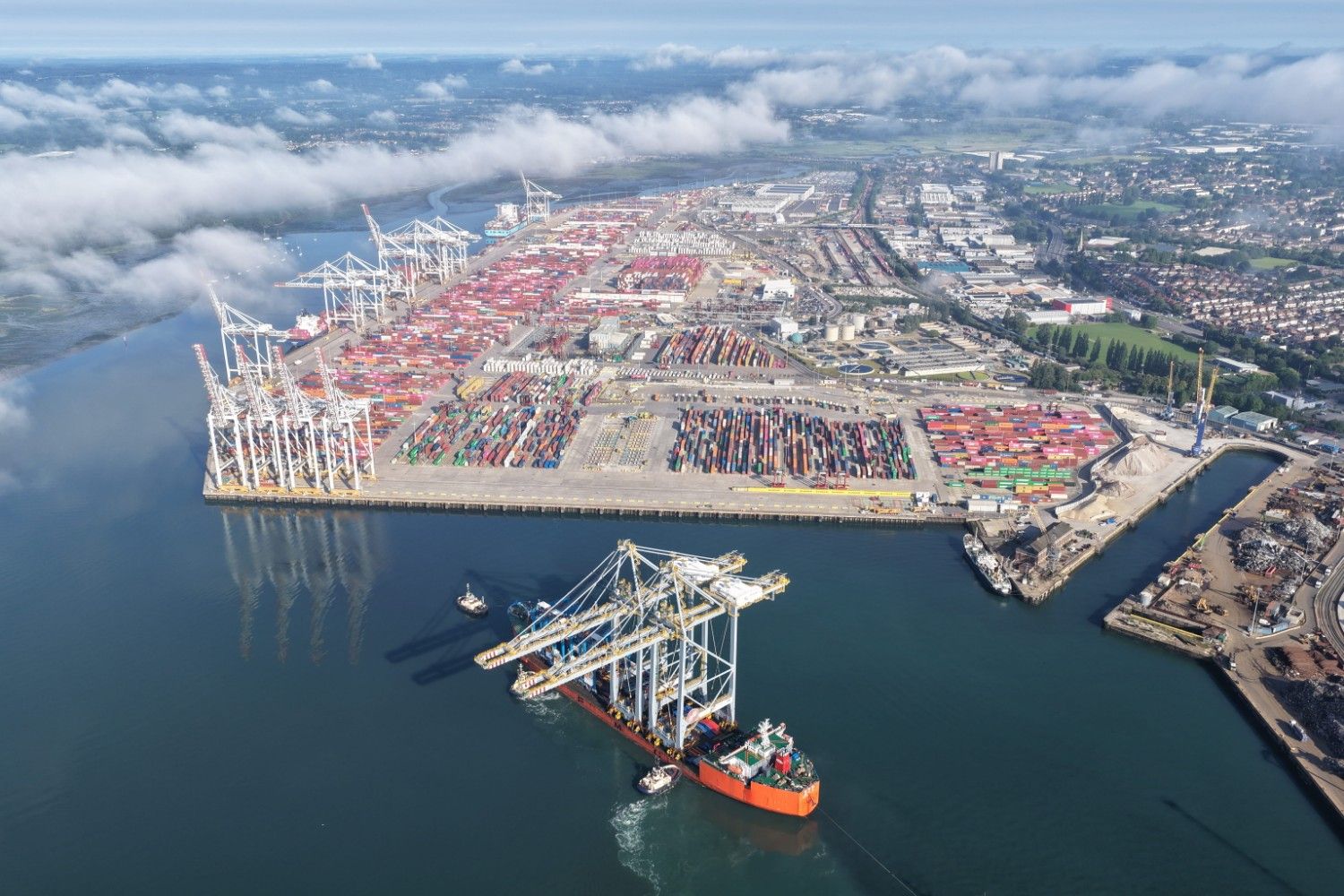
Europe’s largest Quay Cranes arrive at DP World Southampton

SOUTHAMPTON: DP World has welcomed two of Europe’s largest quay cranes to Southampton in its latest investment to ensure this major container terminal can meet growing demand from UK trade.

The quay cranes, weighing more than 2,000 tonnes each and standing nearly 150 metres high – more than 50 metres taller than Big Ben – arrived fully constructed by sea and will be offloaded directly onto the Southampton container terminal quayside early next week.

This is the first of two pairs of quay cranes set to arrive in Southampton in 2026, with a second pair due to arrive later this year, bringing the total number of cranes servicing the port to sixteen.

QuaycranesarriveatDPWorldSouthampton2 Europe's largest Quay Cranes arrive at DP World Southampton

The new cranes will boost handling capacity and volumes at DP World Southampton and are able to service the largest container ships currently in operation, including 24,000 TEU megaships, as well as future larger vessels not yet built.

Capable of consecutive ‘tandem lifts’ of two 40ft containers at once, the new quay cranes will support an increase in efficiency and productivity, improved reliability for customers, and help to futureproof operations at the terminal. The investment is also expected to support faster vessel turnaround times and enhance Southampton’s ability to accommodate growing trade volumes.

Kris Adams, DP World CEO UK Ports & Terminals, said: “Trade powers the UK’s growth and prosperity, and today’s arrival of two fantastic new quay cranes is a landmark moment for Southampton and for our long-standing operation in this vital port. DP World’s investment is equipping our terminal here in this major trading city for the future, ensuring we can handle the next generation of large container vessels, boosting our capacity and efficiency. Upgraded infrastructure at Southampton will allow us to better serve customers across the UK and strengthen our terminal’s contribution to the national economy.”

Satvir Kaur MP, Member of Parliament for Southampton Test, said: “Southampton has a proud maritime history, and our port continues to play a vital role in supporting local jobs, trade and economic growth across the city and beyond. This significant investment by DP World demonstrates confidence in the port’s future and will help strengthen Southampton’s position as one of the UK’s most important trading gateways.”

Southampton is the UK’s third-largest container port, and the investment forms a central part of DP World’s long-term strategy to enhance operational capability and strengthen its role as a key gateway for UK trade. With strong connections to Asia, the Middle East and the Americas, the terminal plays a critical role in connecting Britain to international shipping and trade.  

In 2025, DP World Southampton handled more than 2 million TEU, one of the highest annual throughput figures in the terminal’s history. This contributed to DP World’s UK container total of more than 5 million TEU in a national market handling over 9 million TEU.

From Klaipėda port to the world: First green hydrogen-powered waste collection vessel begins operations

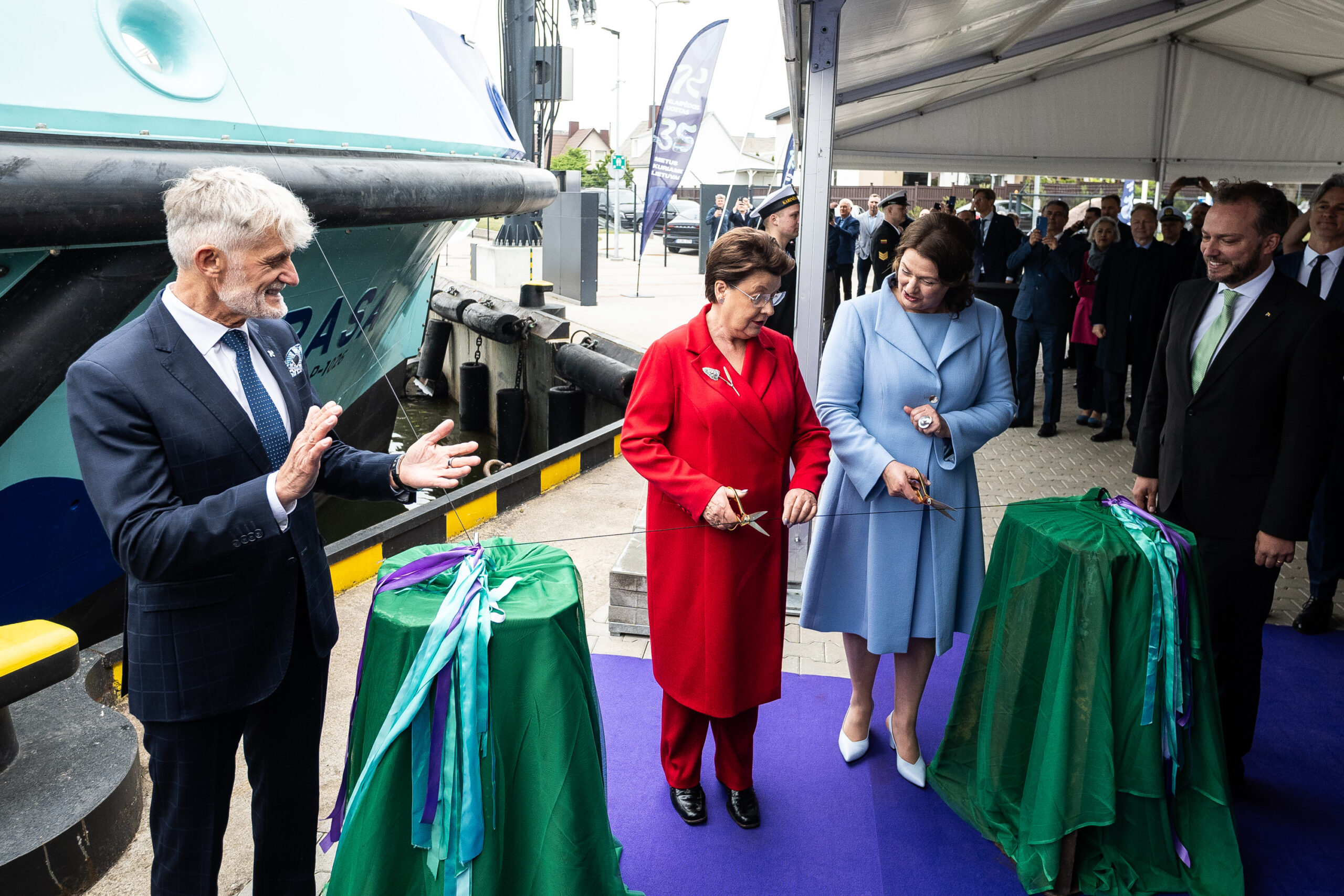
KLAIPEDA: A new chapter in the history of green shipping has begun in the Port of Klaipėda with the official naming ceremony of Rasa – first waste collection vessel powered by green hydrogen and electricity. This innovative project, which strengthens Klaipėda Port’s leadership in sustainable shipping and opens new opportunities for the entire Baltic Sea region, brought together the expertise of Lithuanian and Estonian shipbuilders and turned a bold idea into reality. The vessel was christened by its godmothers, Diana Nausėdienė, First Lady of Lithuania, and Sirje Karis, First Lady of Estonia.

“The journey of Rasa begins in a very harmonious way. In Lithuanian folklore and literature, dew symbolizes purity, life, health and cleanliness. The name Rasa perfectly reflects the vessel’s most important characteristic – leaving no carbon footprint – and its noble mission: to help clean the waters of the Port of Klaipėda while emitting only water vapour, contributing to a better environment for the people of Klaipėda. I congratulate the Port of Klaipėda on Rasa” said Diana Nausėdienė, First Lady of Lithuania.

The vessel has become not only a major technological achievement but also a symbol of cooperation between Lithuania and Estonia.

“This vessel is an excellent example of how Estonia and Lithuania can work together to create solutions that shape the future while strengthening the competitiveness and sustainability of the entire Baltic Sea region. Today, we are witnessing a new beginning. A beginning that will bind our countries even more closely together and that carries with it hope and renewal. Much like the morning dew – Rasa in Lithuanian – which is associated with purity, nature and new beginnings. In both Estonian and Lithuanian culture, nature has always held a special place. Water, springs, dew and the life they sustain have been important elements in the traditions of both Baltic and Finnic peoples. I hope that Rasa will carry these values forward: care for nature, faith in innovation, and the conviction that the most enduring solutions are developed through cooperation,” said Sirje Karis, First Lady of Estonia.

Lithuanian Minister of Transport and Communications Juras Taminskas also welcomed the Lithuanian-Estonian cooperation behind the first project of its kind in the Baltic States and highlighted the significance of this milestone.

“Today in Klaipėda we are christening more than just a vessel – we are marking the beginning of a new era in transport. This is proof that Lithuania can be among the countries that not only follow global transport trends but help shape them. We are launching one of the world’s first hydrogen-powered vessels, and just a few weeks ago we opened Lithuania’s first hydrogen production and refuelling station here in Klaipėda. Together, these developments turn a new page in Lithuania’s story as a maritime nation,” said Minister Juras Taminskas.

DJI 20260329092154 0036 D 1 From Klaipėda port to the world: First green hydrogen-powered waste collection vessel begins operations

Built to collect ship-generated waste, bilge water and sludge from vessels calling at Klaipėda Port, Rasa is more than a new addition to the port fleet. As first green hydrogen and electric-powered waste collection vessel, it represents a major step towards zero-emission port operations and reinforces Klaipėda Port’s position among Europe’s leading innovators in sustainable maritime transport.

“Rasa began as a bold vision to create cleaner shipping. This vessel is an inspiring story of how steel plates, innovative solutions and thousands of hours of work by professionals in Lithuania and Estonia turned an idea into reality – the world’s first tanker powered by green hydrogen and electricity. Rasa represents a significant shift in shipping, an investment in a cleaner future and a new approach to port operations, where cutting-edge technologies and environmental responsibility become part of everyday activities,” said Algis Latakas, Director General of the Klaipėda Port Authority.

This unique project united Lithuania and Estonia, bringing together the expertise of shipbuilders from both countries. The vessel’s hull and part of its equipment were built at Western Baltic Shipyard, located in the Port of Klaipėda.

“Rasa is much more than an addition to Klaipėda Port’s fleet. It is an innovative project that demonstrates the ability of our countries, the port, and the maritime engineering industries of Lithuania and Estonia to work together towards a common goal – creating an advanced, competitive and sustainable maritime future. As part of the largest maritime engineering group in Lithuania and a member of the international Estonian-owned BLRT Grupp, it was a great honour for us to contribute to a project of such strategic importance and uniqueness. It once again proves that by combining Lithuanian and Estonian engineering expertise, it is possible to develop solutions that meet the highest technological and environmental standards,” said Arnoldas Šileika, CEO of the Western Shipyard Group.

According to Mr. Šileika, projects of this kind also contribute to the development of the regional shipbuilding ecosystem and create opportunities for Lithuania to stand alongside countries capable of designing and building highly specialised vessels that meet evolving market needs.

The construction of Rasa continued in Estonia, where Baltic Workboats, the project’s main contractor and vessel designer, carried out the final outfitting, system integration and testing. This included the installation of the vessel’s advanced hydrogen fuel cell system, engine room equipment, electrical systems and electric propulsion units.

“For us, RASA is certainly a special vessel – she is the first tanker ever built by Baltic Workboats and represents both the largest integration of electrical and battery systems we have undertaken and the first-ever installation of a hydrogen power plant on board a vessel at our shipyard. As is often the case with new and innovative designs, the project brought its share of challenges, but the excellent cooperation with the customer, partners, equipment suppliers, and the classification society once again proved that Baltic Workboats is capable of executing demanding and technically challenging projects to the highest standards. RASA is also a prime example of how, together with our partners from the BLRT Group, we can take on projects and deliver vessels that we would not be able to achieve alone,” says Margus Vanaselja, CEO of the Baltic Workboats.

The vessel’s hydrogen power system – including fuel cells, storage tanks and software – was designed and supplied by project partner Genevos.

“Seeing Rasa come to life is a proud moment for Genevos and for everyone involved in this pioneering project. The vessel demonstrates that hydrogen power is ready to move beyond demonstration and into demanding maritime operations. We are proud to have supplied the hydrogen power system and to support Klaipėda State Seaport Authority in accelerating the transition towards zero-emission port operations. Rasa sets a powerful example for ports and vessel operators worldwide, showing how clean technologies can be deployed today to reduce emissions while maintaining the reliability and performance required at sea,” said Rebecca Sharp, CEO and Co-Founder of Genevos.

The 42-metre-long vessel is designed to receive bilge water, sludge and waste from vessels. It operates with zero emissions, making it completely environmentally friendly. The vessel is equipped with dedicated storage tanks and an advanced bilge water treatment system, allowing treated water to be safely transferred to municipal wastewater treatment facilities.

Powered by green hydrogen produced in Klaipėda Port, Rasa will become not only a symbol of clean shipping but also an important step towards developing Lithuania’s hydrogen economy and a more sustainable future for maritime transport.

The vessel represents an investment of EUR 12 million.

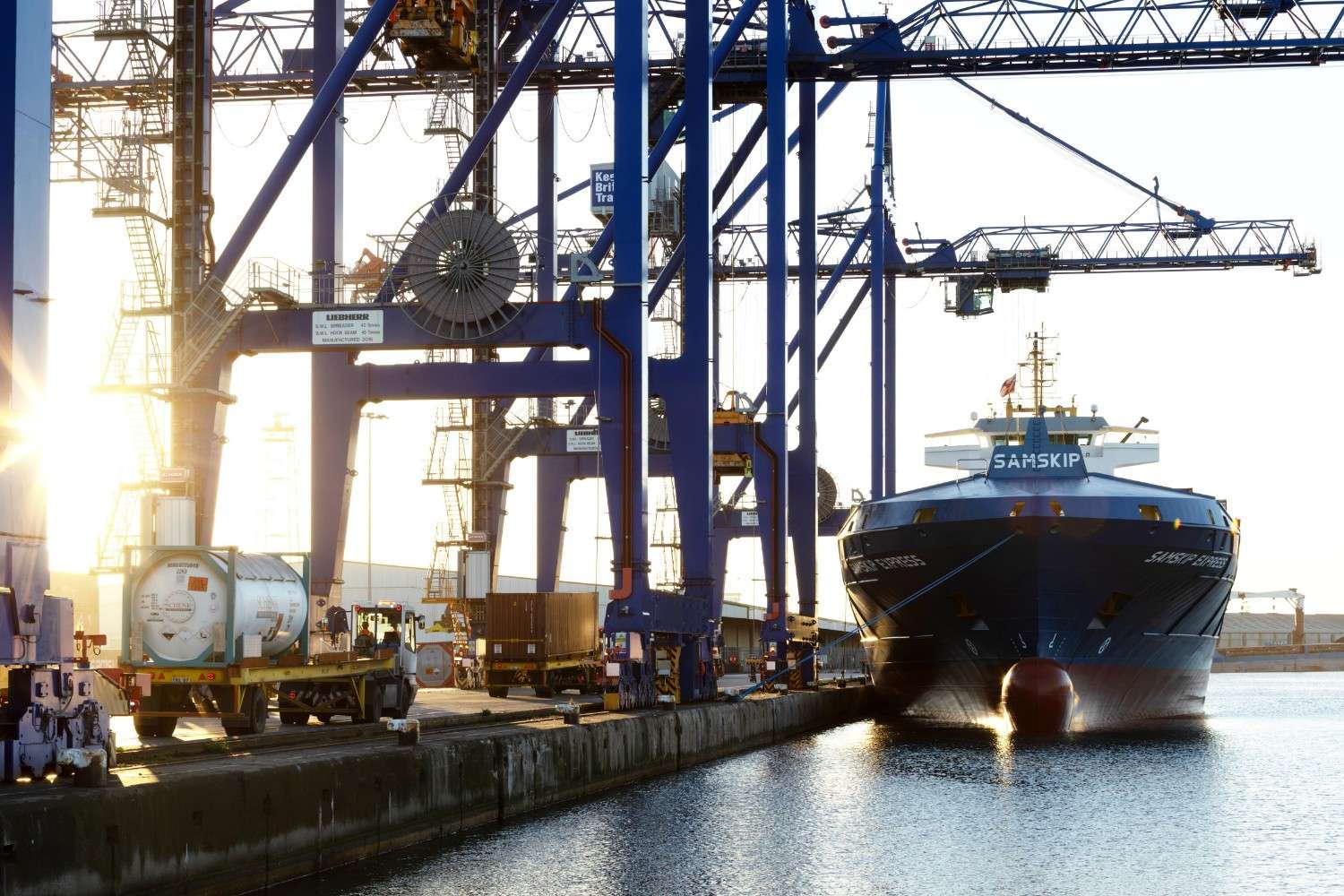
Samskip receives Approval for the Transfer of its Door-to-Door and Quay-to-Quay Services connecting Rotterdam with the UK and Ireland

ROTTERDAM: Samskip on Friday announces that it has received the required regulatory approvals for the previously announced transfer of its transport services between Rotterdam and the UK and Ireland to CLdN.

The operational transfer of these services is scheduled to take place on the 29th of June as part of the planned transition process. Until then, Samskip and CLdN will continue working closely together to ensure the transition is managed carefully and with minimal disruption for customers, suppliers, and all parties involved.

The transaction relates specifically to the services between Rotterdam and the UK and Ireland. Samskip continues to connect customers with direct services to and from the UK and Ireland through its wider multimodal and freight forwarding network, while maintaining a strong focus on regional products and logistics solutions across Europe and beyond. Services from and to the UK and Ireland will continue to be available from Morocco, Portugal, Spain, Iceland, Faroe Islands, Poland, Sweden Norway, Finland and The Baltics.

 As one of Europe’s pioneers in multimodal logistics, Samskip has continuously adapted to changing market conditions, customer expectations, and industry developments. The completion of this transaction allows the company to sharpen its focus and accelerate strategic initiatives aimed at delivering greater value to customers across its European network.

“Our industry continues to evolve rapidly, and successful organizations must evolve with it,” said Ólafur Orri Ólafsson, CEO of Samskip. “This milestone allows us to focus our efforts on what matters most to our customers: reliable services, strong regional expertise, and a seamless multimodal network that helps simplify increasingly complex supply chains.”

Looking ahead, Samskip will focus on three key priorities:

Customer Centricity

Further strengthening customer relationships through improved responsiveness, simplified processes, and improved flexibility.

Reliability

Continuing to enhance service consistency, operational performance, and supply chain predictability across the network.

Network Strength

Customers benefit from a stronger focus on regional expertise and local products across key markets, including the Nordics, Baltics, Southern Europe and Morocco. Combined with Samskip’s multimodal network and global freight forwarding, ensuring seamless connectivity, reliable transport solutions and access to leading logistics networks across Europe, the UK and beyond.

Samskip remains committed to its long-term vision of providing integrated logistics solutions that make supply chains simpler, more reliable and more connected. Combining its extensive multimodal network with growing global freight forwarding capabilities, the company continues to deliver seamless end-to-end transport and logistics services across Europe and beyond.

“Customers today are looking for logistics partners who are not only efficient and sustainable, but also flexible, reliable, and easy to do business with,” added Ólafur. “Everything we are doing is aimed at strengthening our ability to deliver on those expectations and support our customers’ future growth.”

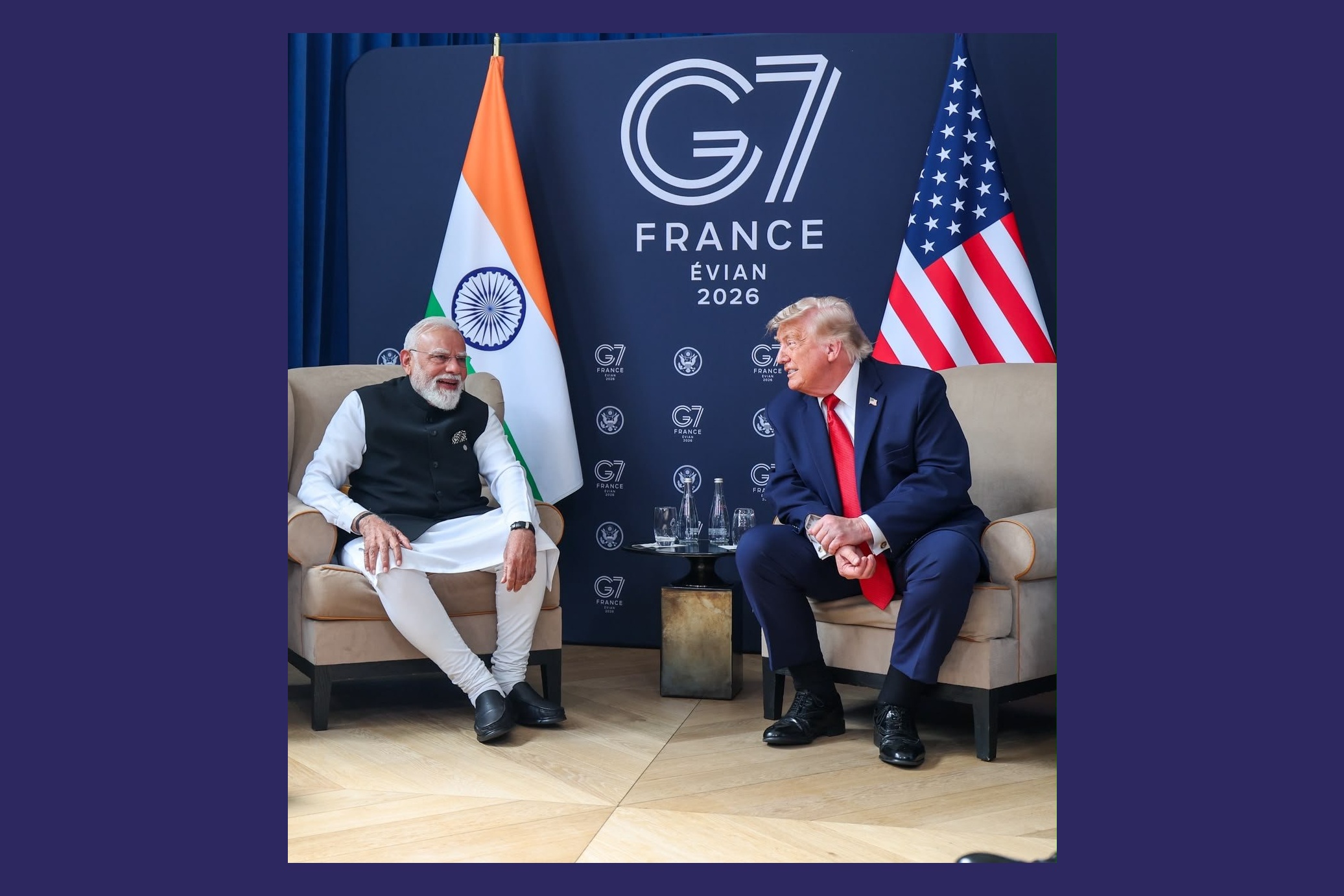
PM meets US President Trump on the sidelines of the G7 Summit in Evian

EVIAN: Prime Minister Shri Narendra Modi met the President of the United States of America, H.E. Mr. Donald J. Trump, on the margins of the G7 Summit in Evian, France, on 17 June 2026.

Prime Minister Modi commended President Trump for his efforts that had resulted in an understanding to end the ongoing conflict in West Asia and restore peace and stability across the broader region. He also underlined the importance of maintaining freedom of navigation and unimpeded commerce in the Strait of Hormuz and the need to ensure the safety of seafarers.

The two leaders reviewed the substantial progress achieved under the India–U.S. COMPACT (Catalyzing Opportunities for Military Partnership, Accelerated Commerce and Technology) since their meeting in Washington D.C. in February 2025. They welcomed key developments across the defence, strategic technologies, energy, and bilateral trade sectors.

The leaders noted with particular satisfaction the significant progress made in negotiations towards an interim Bilateral Trade Agreement and instructed their officials to work towards a balanced, mutually beneficial, and commercially meaningful agreement at the earliest. The US Trade Representative, Mr. Jamieson Greer, will be visiting India next week in this connection.

Prime Minister Modi and President Trump reaffirmed their commitment to further strengthening the India-U.S. Comprehensive Global Strategic Partnership and advancing cooperation across all domains for the mutual benefit of the two countries and their peoples.

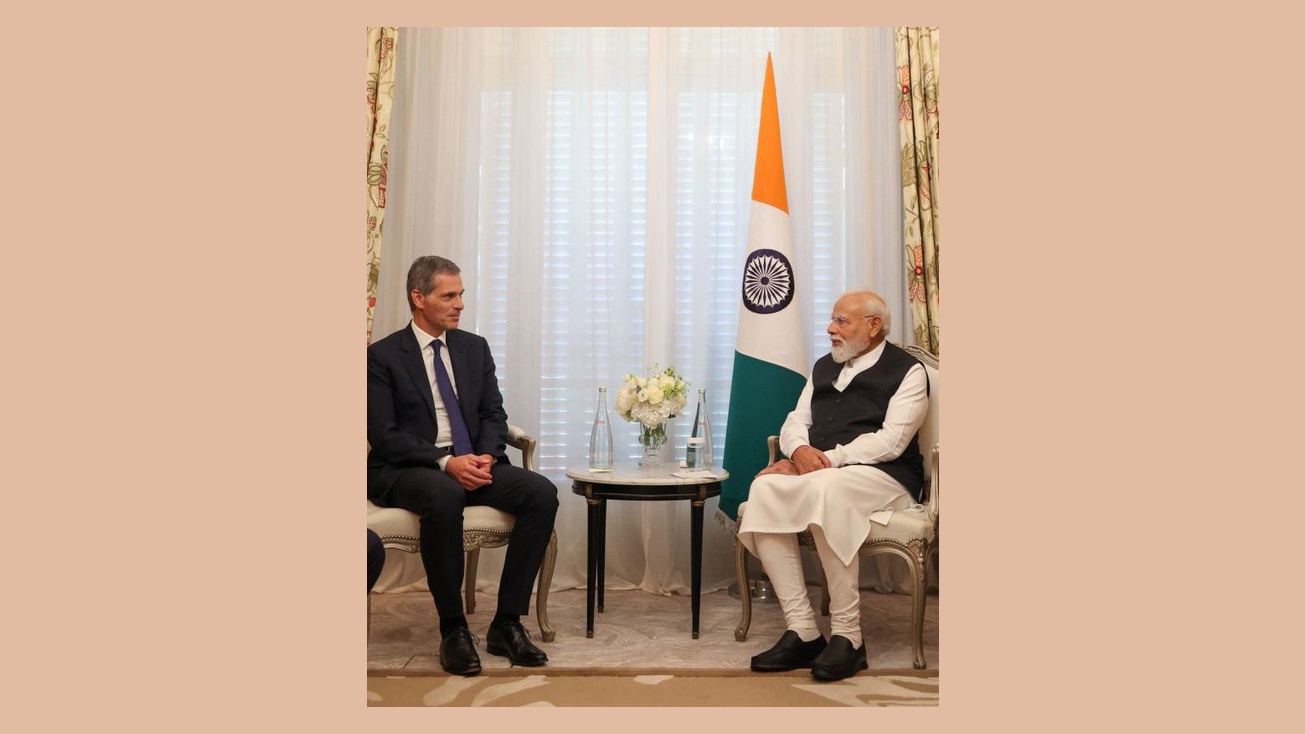
PM Modi discusses maritime connectivity and collaboration opportunities with CMA CGM Chairman and CEO Rodolphe Saadé

PARIS: The Prime Minister, Shri Narendra Modi, had a fruitful discussion with Mr. Rodolphe Saadé Chairman & CEO of CMA CGM on maritime connectivity, global shipping trends and emerging opportunities in India’s rapidly growing maritime sector.

The Prime Minister said that discussions were held on avenues for greater collaboration in shipbuilding, container manufacturing, digital maritime innovation, logistics and skill development.

Shri Modi noted that India’s expanding port infrastructure offers promising opportunities for global maritime leaders.

In a post on X, Shri Modi said;

“Had a fruitful discussion with Mr. Rodolphe Saadé of CMA CGM on maritime connectivity, global shipping trends and emerging opportunities in India’s rapidly growing maritime sector. Discussed avenues for greater collaboration in shipbuilding, container manufacturing, digital maritime innovation, logistics and skill development. India’s expanding port infrastructure offers promising opportunities for global maritime leaders.@cmacgm”

US lifts maritime blockade on Iranian ports after signing MoU, says CENTCOM

WASHINGTON DC: The US Central Command (CENTCOM) on Thursday (local time) announced that the United States has lifted its maritime blockade on all traffic entering and exiting Iranian ports and coastal areas, marking a major implementation step under the newly signed US-Iran agreement as the two sides begin a 60-day negotiation process toward a comprehensive deal.

In a post on X, CENTCOM said American forces had ceased all blockade enforcement operations in accordance with the direction of US President Donald Trump.

“Today, US forces lifted the blockade on all maritime traffic entering and exiting Iranian ports and coastal areas, in accordance with the President’s direction. American forces are not impeding the transit of vessels to or from Iranian ports. All US military blockade enforcement efforts have ceased,” CENTCOM stated.

The command added that US naval assets would continue to operate in the region to ensure compliance with the agreement.

“Our great Naval Ships will remain in the general area to make sure that all aspects of the agreement are adhered to, obeyed and in full force and effect,” the statement added.

The announcement comes as Washington and Tehran formally enter a 60-day period of negotiations following the signing of a memorandum of understanding aimed at ending hostilities, reopening maritime routes and laying the groundwork for a broader agreement covering sanctions, security and Iran’s future military capabilities.

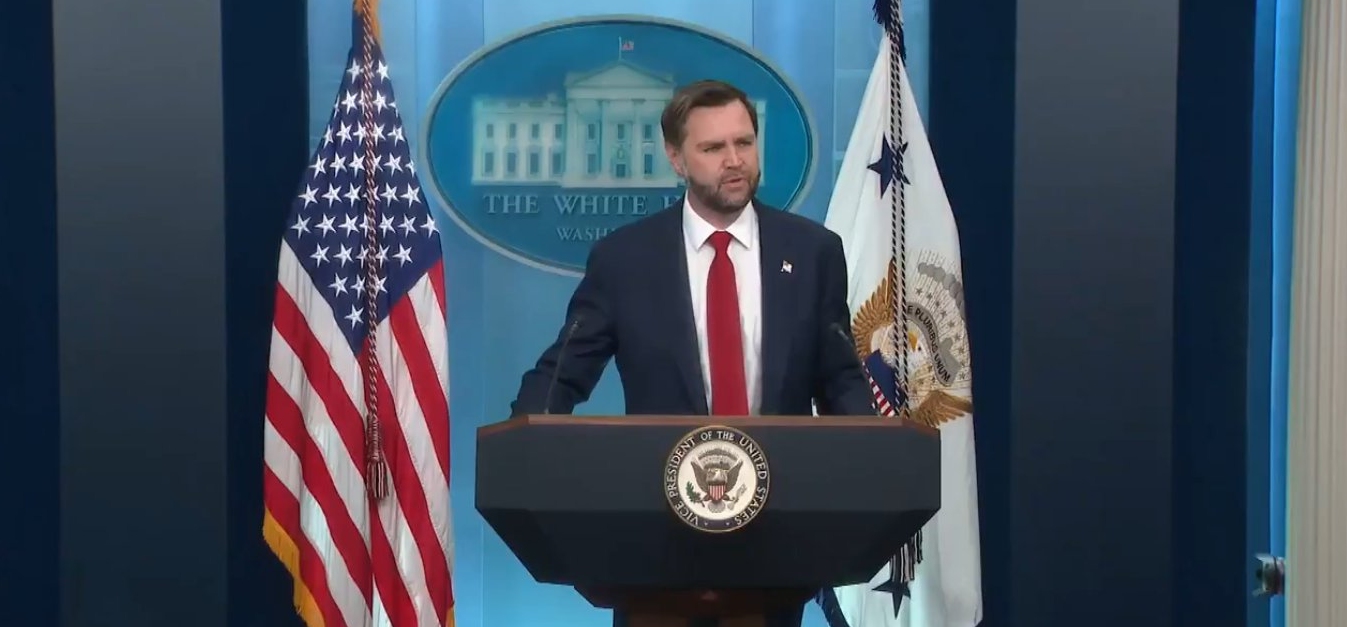
US Vice President JD Vance confirmed that the negotiating clock officially began on June 18, one day after the framework agreement was signed.

“I would say the 60-day period officially started today. So, yes, the deal started yesterday. We’re going to start the 60-day clock today,” Vance said while briefing reporters at the White House.

Defending the agreement, Vance said the administration’s strategy was already producing tangible results, particularly in restoring shipping activity through the Strait of Hormuz and easing pressure on global energy markets.

He noted that more than 12.5 million barrels of oil passed through the Strait of Hormuz overnight, the highest volume recorded since the conflict began.

“Last night, 12.5 million barrels of oil went through the Strait of Hormuz, which is a high since the beginning of the conflict,” Vance said.

The Vice President also highlighted declining fuel prices in the United States, arguing that the agreement was delivering immediate economic benefits.

“Oil prices are down nearly to their level from the pre-war conflict, gas prices dropped below USD 4 a gallon today for the first time since the conflict, and importantly, they’re going to keep falling further given how low oil prices are,” he said.