Home Blog Page 354

India hits record $860 bn exports in FY26 as petroleum, engineering goods power March surge

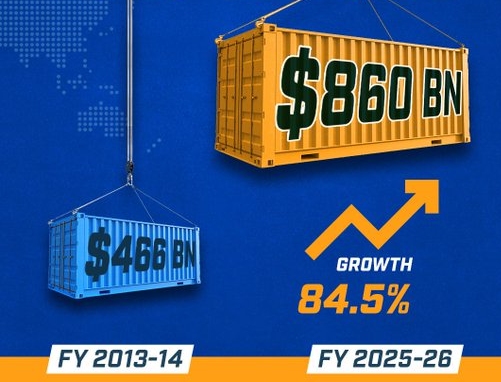
NEW DELHI: India’s exports scaled a fresh peak in FY 2025-26, with combined merchandise and services shipments crossing the $860 billion mark for the first time, underscoring sustained momentum and a stronger foothold in global trade.

According to the Ministry of Commerce and Industry‘s latest data, cumulative exports of merchandise and services stood at US$ 860.09 billion during April-March FY26, compared to US$ 825.26 billion in FY25, reflecting a 4.22% year-on-year increase and setting a new record.

Merchandise exports, while growing at a slower pace, still registered an uptick. Outbound shipments of goods reached US$ 441.78 billion in FY26, up from US$ 437.70 billion in the previous fiscal, marking a 0.93% rise. The fiscal year closed on a high, with March 2026 recording merchandise exports of US$ 38.92 billion, the highest monthly figure of the year.

The end-of-year acceleration was driven by a mix of core industrial sectors and resource-based exports. Petroleum products remained a key contributor, supported by steady global demand and India’s robust refining capacity. Engineering goods also played a crucial role, reflecting sustained demand for machinery, automobile components, and industrial equipment.

“Major drivers of merchandise export growth in March 2026 include Petroleum Products, Engineering Goods, Mica, Coal & Other Ores, Minerals including processed minerals, Other cereals and Handicrafts excl. handmade carpet,” the Ministry posted on X. These sectors “continue to contribute significantly to India’s export expansion and sectoral strength.”

Notably, the minerals segment posted strong gains. Exports of mica, coal, and other ores, along with processed minerals, rose 11.27% to US$ 0.58 billion in March 2026 from US$ 0.52 billion a year earlier, indicating continued traction and increased value addition within the sector.

In addition, exports of other cereals and handicrafts (excluding handmade carpets) contributed to the growth momentum, highlighting the resilience of agriculture-linked and artisanal segments alongside industrial exports.

While services exports were the primary driver behind the overall record, merchandise trade managed to sustain positive growth despite global uncertainties. The March surge signals improved supply chain activity and stronger order flows toward the close of the fiscal year, with petroleum and engineering goods providing scale, and minerals, cereals, and handicrafts adding diversification to India’s export basket.

Indian Exports rise 4.22% to $860.09 billion in FY26

NEW DELHI : India’s exports grew by 4.22 per cent to USD 860.09 billion in the financial year 2025–26, while imports rose at a faster pace of 6.47 per cent to around USD 970 billion, resulting in a widening of the overall trade deficit, according to data shared by Commerce Secretary Rajesh Agrawal.

The data shows that total exports increased from USD 825.26 billion in 2024–25 to USD 860.09 billion in 2025–26. Meanwhile, imports rose from USD 919.92 billion in the previous financial year to approximately USD 970 billion.

Consequently, the overall trade deficit (merchandise and services combined) widened to USD 119.30 billion in 2025–26, compared to USD 94.66 billion in 2024–25.

Merchandise exports recorded a modest increase to USD 441.78 billion from USD 437.70 billion in the previous year. However, merchandise imports rose more sharply to USD 774.98 billion from USD 721.20 billion, reflecting higher inbound shipments.

Services exports remained a strong pillar of India’s external trade, rising to USD 418.31 billion in 2025–26 from USD 387.55 billion in 2024–25. Services imports also increased slightly to USD 204.42 billion from USD 198.72 billion.

Trade excluding petroleum and gems and jewellery remained relatively balanced. Exports in this category rose to USD 777.98 billion from USD 732.05 billion, while imports increased to USD 702.98 billion from USD 653.31 billion. However, the trade surplus narrowed marginally by USD 3.74 billion to USD 75.00 billion from USD 78.74 billion.

Among key commodities, gold imports saw a rise in value despite a decline in quantity. The value of gold imports increased from USD 58.01 billion in 2024–25 to USD 71.98 billion in 2025–26, while the quantity fell from 757.09 tonnes to 721.03 tonnes. This indicates that the increase was largely driven by higher prices, with the unit value rising from USD 76,617.48 per kg to USD 99,825.38 per kg.

Silver imports, on the other hand, registered a sharp increase in both value and volume. The value surged from USD 4.83 billion to USD 12.05 billion, while the quantity rose from 5,164.37 tonnes to 7,334.96 tonnes. The unit value also increased significantly, from USD 934.72 per kg to USD 1,642.93 per kg.

India-UK FTA in May, US negotiations to resume this month, New Zealand, EU pact moves ahead: Commerce Secretary

NEW DELHI: The India Free Trade Agreement with the United Kingdom is set to become operational in May, marking a conclusion to the long-standing trade negotiations, said Commerce Secretary Shri Rajesh Agarwal.

“We expect the Free Trade Agreement related to the UK to come into operation in the month of May sometime,” the Commerce Secretary said.

The negotiations for the India-EU FTA is also set to conclude with the signing expected before the end of the current calendar year. The ministry aims to bring the pact into force within the current financial year.

“FTA with the EU is likely to be signed before the end of this calendar year, and try to get it into operation before the end of this financial year,” the Commerce Secretary stated.

He also shared that the negotiations for the India-United States Bilateral Trade Agreement (BTA) will also resume this month. An Indian delegation is set to visit the United States from April 20 to April 22 to take forward the discussions. This follows an interim trade deal announced on February 2, 2026, and a joint statement released on February 7.

India concluded negotiations for the India-New Zealand FTA, where domestic processes for signing and ratification now take place. Reviews for existing agreements continue, including the 11th round of negotiations for the India-Korea Comprehensive Economic Partnership Agreement (CEPA).

Negotiations continue with Australia for a Comprehensive Economic Cooperation Agreement (CECA) and with Sri Lanka for an Economic and Technology Cooperation Agreement (ETCA).

The Commerce Secretary highlighted other active discussions involving Peru, Chile, Israel, Canada, and the Eurasian Economic Union (EAEU). Terms of Reference are finalized for negotiations with the Philippines, Maldives, and the Gulf Cooperation Council (GCC).

Agarwal noted that the United States removed 25 per cent additional ad valorem tariffs on February 7. However, a US Supreme Court judgment on February 20 invalidated reciprocal tariffs while Section 232 tariffs and exemptions continue.

The U.S. government subsequently issued executive orders imposing 10 per cent tariffs under Section 122 of the Trade Act of 1974 on certain products, effective February 24.

“Meanwhile, two Investigations under section 301 of the Trade Act of 1974 initiated by US: Excess Capacity (Against 16 economies, including India), Forced labor (Against 60 economies, including India),” the Ministry said.

These trade developments occur as India’s cumulative exports reach a record high for the 2025-26 financial year. Merchandise and services exports reached an estimated 860.09 billion dollars, representing a 4.22 per cent growth from the 825.26 billion dollars recorded in the previous year.

Source: ANI

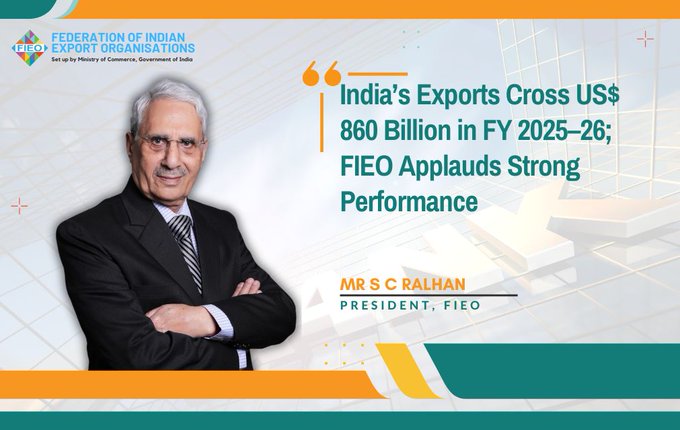
India’s exports cross US$ 860 Billion in FY 2025–26; FIEO applauds strong performance

NEW DELHI : The Federation of Indian Export Organisations (FIEO) has welcomed India’s robust foreign trade performance in FY 2025–26, with total exports (merchandise and services) crossing a significant milestone of US$ 860.09 billion, reflecting the resilience and competitiveness of the export sector.

Merchandise exports during the year stood at US$ 441.78 billion, while total exports in March 2026 alone reached US$ 74.11 billion. Overall imports for FY 2025–26 were recorded at US$ 979.40 billion, indicating strong domestic demand and industrial activity.

Commenting on the performance, Mr. S. C. Ralhan, President, FIEO, said: “Crossing US$ 860 billion in exports is a notable achievement, particularly amid global uncertainties, supply chain disruptions, and fluctuating demand. It highlights the adaptability and strength of Indian exporters.”

He noted that export growth was driven by a diversified basket, including engineering goods, petroleum products, electronics, pharmaceuticals, chemicals, textiles, gems & jewellery, rice, and marine products, strengthening India’s position in global value chains.

The US, UAE, China, Netherlands, and the UK remained key export destinations. FIEO emphasized the need to further diversify markets and effectively leverage Free Trade Agreements to expand India’s global footprint.

Mr. Ralhan underlined that improving logistics efficiency, reducing transaction costs, and ensuring affordable credit—especially for MSMEs—will be critical to sustaining export momentum.

“With continued policy support and trade facilitation, India is well poised to enhance its share in global trade and move towards becoming a leading export powerhouse under the vision of Viksit Bharat,” he added.

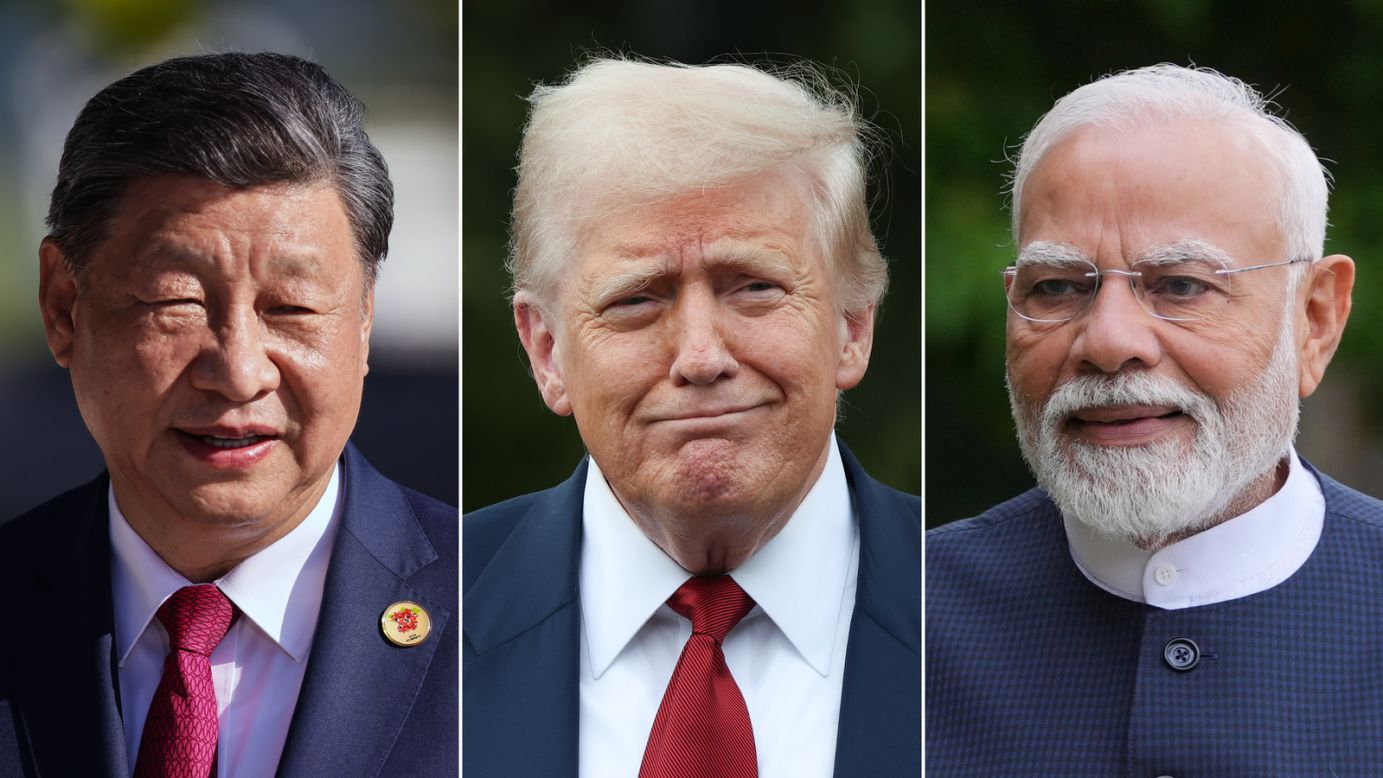
Trump’s Hormuz blockade puts China, India in crosshairs as U.S. pressure on Iran spills over

WASINGTON/BEIJING/NEW DELHI: The U.S. blockade of the Strait of Hormuz is not only squeezing Iran but also ratcheting up pressure on two of its most consequential relationships in Asia — India and China.

With roughly 98% of Iranian oil exports bound for China, and a summit between President Donald Trump and Chinese leader Xi Jinping weeks away, Washington’s maximum pressure campaign on Iran risks destabilizing the fragile detente that the administration has carefully cultivated with Beijing.

India, with its complicated ties with the U.S., is increasingly finding U.S. policy at odds with its economic interests — most acutely in the energy shock now rippling through its economy.

Trump is scheduled to visit China in mid-May, and the administration signaled repeatedly in recent weeks that it wants the bilateral relationship stable enough to keep the high-stakes meeting on track.

“The Iran conflict, particularly the blockade, may upend this effort,” said Wendy Cutler, vice president at the Asia Society Policy Institute and a former U.S. trade negotiator.

Signs of friction are already emerging. Beijing, which had kept its stance on Trump’s blockade largely restrained, appeared to harden its tone on Tuesday. Foreign Ministry spokesperson Guo Jiakun slammed the move as “dangerous and irresponsible,” and it will only “exacerbate tensions.”

More than a month into the war, Trump pulled a familiar playbook when he threatened to hit China with a 50% tariff if Beijing supplies weapons to Iran. Beijing pushed back, with Guo rejecting what he called “groundless smears and malicious linkage.”

“China will resolutely retaliate with countermeasures against any U.S. attempt to use weapons sales as a pretext for additional tariffs,” Guo said.

India, in the meantime, is facing a different type of pressure. Its heavy reliance on imported energy has left it increasingly exposed to the economic fallout from the conflict.

Earlier this month, India resumed purchases of Iranian oil and gas after a seven-year hiatus, having secured safe passage for its ships through the strait from Tehran, under a temporary U.S. waiver.

Indian Prime Minister Shri Narendra Modi, after a nearly 40-minute call with Trump on Tuesday, said the two leaders had a “useful exchange of views” on the Middle East conflict and that India “supports de-escalation and restoration of peace at the earliest.”

Even if Washington carves out special provisions for India, they are unlikely to cover the full scale of New Delhi’s gas needs, said Arpit Chaturvedi, South Asia geopolitical risk advisor at consultancy Teneo.

As the U.S. blockade takes hold, India will likely halt its crude imports from Iran, said Chaturvedi, otherwise “we will see the relationship between New Delhi and Washington deteriorate.”

For now, “there is no incentive for India to risk its relationship with Washington any further, and bring [it] close to a point of no return,” Chaturvedi added.

Weathering the storm
The impact of the energy shock, however, is hitting the two Asian economies differently.

China’s exposure to the energy shock remains more manageable than that of other major economies due to its massive oil stockpiles and diversified energy mix.

The scale of Iranian flows still reaching China also underscores how structurally intact Tehran’s oil trade remains. Maritime intelligence firm Windward estimates roughly 157.7 million barrels of Iranian crude were at sea as of Tuesday, with nearly 98% of them destined for China.

China’s strategic and commercial oil stocks, combined with barrels in transit, cover well over 120 days of net imports, said Dan Wang, China director at Eurasia Group. “If only Iranian barrels are lost, China can absorb the shock by diversifying to other sources and falling back more to coal,” she added.

U.S. Treasury Secretary Scott Bessent on Tuesday reportedly accused China of being an “unreliable global partner” during the conflict, criticizing Beijing for hoarding oil supplies instead of easing the global crunch.

India, by contrast, has no comparable buffer. As the world’s third-largest oil importer, India’s net inflows amount to 3.5% of GDP, leaving it among the most vulnerable economies to the blockade, said Sumedha Dasgupta, senior economist at the Economist Intelligence Unit.

With oil supplies covering less than 60 days, New Delhi faces a far harder landing if Middle East flows are disrupted further.

The situation is particularly acute for liquefied petroleum gas, a key cooking and heating fuel for households and commercial establishments. India holds no meaningful strategic LPG reserves and stockpiles held by refiners and distributors could cover only two to three weeks of demand if imports stall, Dasgupta said.

Nearly all of India’s LPG imports came mainly from the Middle East and accounted for about 66% of demand last year.

Risk of miscalculation
The odds for a sharp countermove from Beijing and New Delhi that could quickly sour their ties with the U.S. also remain low, analysts say.

The blockade — similar to the “Liberation Day” tariffs — is non-discriminatory and applies to all buyers of sanctioned Iranian crude, rather than singling out China, said Wang. “Beijing will protest at the diplomatic level, but is unlikely to overreact with major retaliation.”

India, meanwhile, is likely to shift energy imports away from Iran once Washington’s waiver expires, turning instead to Russia, the U.S., Australia, and other suppliers, Chaturvedi said.

“Modi is unlikely to cross any red lines drawn by Trump,” he added.

Still, any miscalculation or direct confrontation at sea could tip the diplomatic posturing into rapid deterioration and risk jeopardizing the fragile stability in the detente between Washington and Beijing.

“A U.S. interception of a Chinese vessel would likely become a major incident, [as] China will make a point of standing up to the U.S. in a situation like this,” said David Meale, head of China practice at Eurasia Group, leaving the relationship in a fundamentally different place than where they are now.

On Tuesday, a U.S.-sanctioned tanker linked to China sailed out of the Strait of Hormuz and into the Gulf of Oman, after Trump’s naval blockade came into effect.

Source: CNBC

Govt steps up diplomacy to secure key shipping routes, including Hormuz

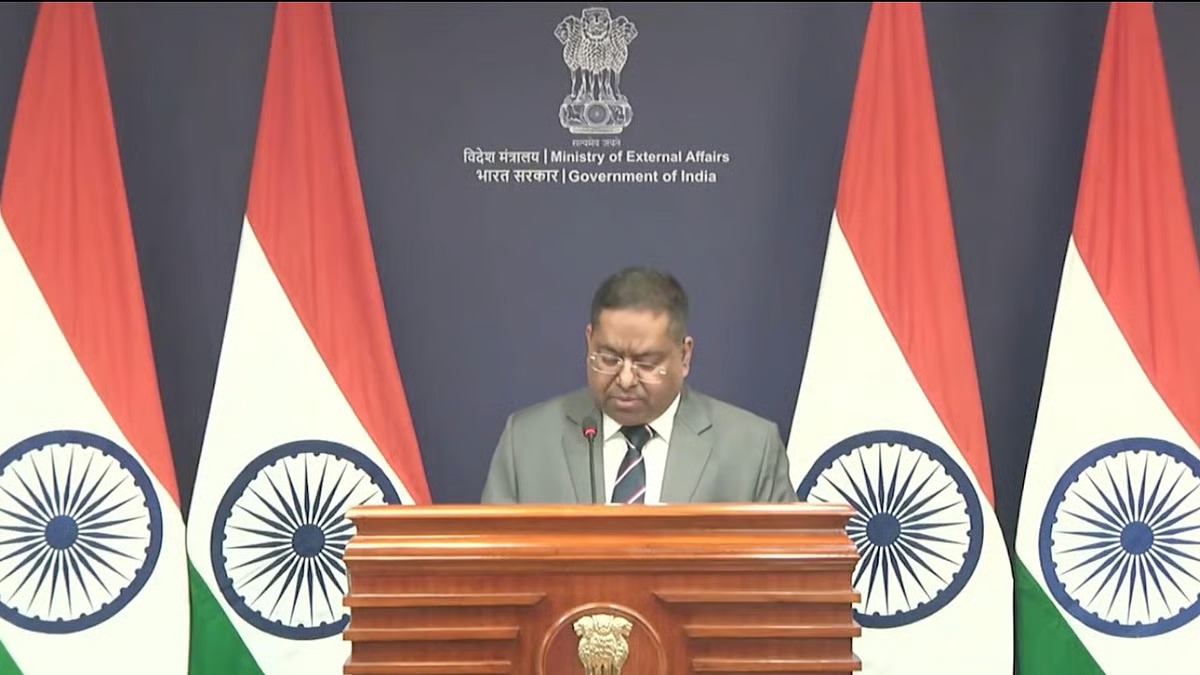
NEW DELHI : The Ministry of External Affairs (MEA) on Wednesday said the government has intensified high-level diplomatic engagement to safeguard India’s economic interests and ensure secure maritime trade, particularly along key global routes such as the Strait of Hormuz.

Speaking at an inter-ministerial briefing, MEA spokesperson Mr.Randhir Jaiswal highlighted Prime Minister Shri Narendra Modi’s recent conversation with U.S. President Donald Trump as an important step in this direction.

“Prime Minister Narendra Modi held a conversation with the President of the United States, focusing on strengthening strategic cooperation between the two countries, with both sides reiterating their commitment to ensuring stability and keeping critical global sea routes, including the Strait of Hormuz, open for safe maritime trade and energy flow,” said Jaiswal.

Focus on maritime safety and global trade
With tensions in West Asia impacting shipping lanes, the government is working with multiple countries to ensure the safe return of its vessels currently operating near the Strait of Hormuz. Jaiswal said, “We are in discussions with several countries regarding the Strait of Hormuz. We are trying to ensure that, firstly, our remaining ships there also return safely.”

India has been positioning itself as a stabilising player, balancing geopolitical risks with its growing economic and energy needs.

Expanding diplomatic and energy ties
External Affairs Minister S. Jaishankar has also held discussions with key global partners, including Israel and Australia, focusing on regional security and economic cooperation.

Jaiswal said, “During his conversation with the Israeli Foreign Minister, the two leaders exchanged views on the ongoing conflict situation in West Asia, regional security concerns, and efforts to maintain humanitarian access and stability in the region.”

Discussions with Australia focused on trade, defence, critical minerals, and strengthening supply chains under the Comprehensive Strategic Partnership.

India also took part in the Asia Zero Emission Community (AZEC) meeting hosted by Japan, where countries explored ways to boost clean energy cooperation and make supply chains more resilient.

“The External Affairs Minister participated in the AZEC (Asia Zero Emission Community) meeting convened by Japan, where member countries discussed enhancing clean energy cooperation, green transition pathways, and building more resilient and diversified global supply chains,” Jaiswal added.

Energy security remains key priority
On oil imports, the government reaffirmed its approach of buying crude from multiple sources to meet domestic demand amid uncertain global market conditions.

Jaiswal said, “We continue to buy oil from diversified sources, keeping in mind the energy security needs of 1.4 billion people, the current situation in the international market, and the global situation we have to deal with.”

The government is also coordinating closely with major Gulf producers such as the UAE and Qatar to ensure steady energy supplies.

Energy supply chain remained resilient despite disruptions
Sujata Sharma, Joint Secretary in the Petroleum Ministry, said India’s energy supply chain remained resilient despite disruptions. “While the West Asia crisis impacted energy flows, timely government intervention ensured uninterrupted domestic availability. Priority was given to PNG and LPG consumers, maintaining 100% supply continuity, while CNG supply for transport also remained stable,” she said.

To strengthen availability, domestic LPG production at refineries was ramped up, and booking intervals were revised to 25 days in urban areas and 45 days in rural regions. Commercial LPG supply has been restored to 70%, with priority extended to essential sectors such as healthcare, education, pharmaceuticals, steel, automobiles, seeds, and agriculture.

The government also doubled the availability of 5 kg cylinders and enabled access to alternative fuels such as kerosene and coal. Sharma added that domestic LPG supply remains stable with no distributor shortages, while online bookings remain robust at 98% and 93% of deliveries are completed through authentication-based systems.

Over 20 lakh MSMEs were registered on Udyam portal
Meanwhile, Dr Rajneesh, Additional Secretary and Development Commissioner at the Ministry of MSME, said strong momentum in the sector. Over 20 lakh MSMEs were registered on the Udyam portal during February–March, taking the total number of registered units to over 8 crore.

“Credit support remains robust, with outstanding lending to MSMEs exceeding ₹36.7 lakh crore and quarterly credit growth at 23.5%. The collateral-free lending limit has been doubled from ₹10 lakh to ₹20 lakh for micro and small enterprises from April 1,” he said while adding that credit guarantee support remained strong, with more than 5.27 lakh guarantees worth ₹92,000 crore issued during the two-month period. Liquidity support through the TReDS platform has also expanded significantly, with invoice discounting volumes rising from ₹4,300 crore in 2022 to over ₹7 lakh crore currently, including ₹85,000 crore in February–March.

Indian seafarers in the Gulf region are safe
On maritime operations, Mukesh Mangal, Additional Secretary at the Ministry of Ports, Shipping and Waterways, said all Indian seafarers in the Gulf region are safe. “No incident involving Indian-flagged vessels has been reported in the last 24 hours,” he said.

The DG Shipping control room has handled 6,449 calls and over 13,343 emails so far, including 157 calls and 215 emails in the past 24 hours. The government has also facilitated the safe repatriation of 2,337 Indian seafarers, including 75 in the last 24 hours, he added.

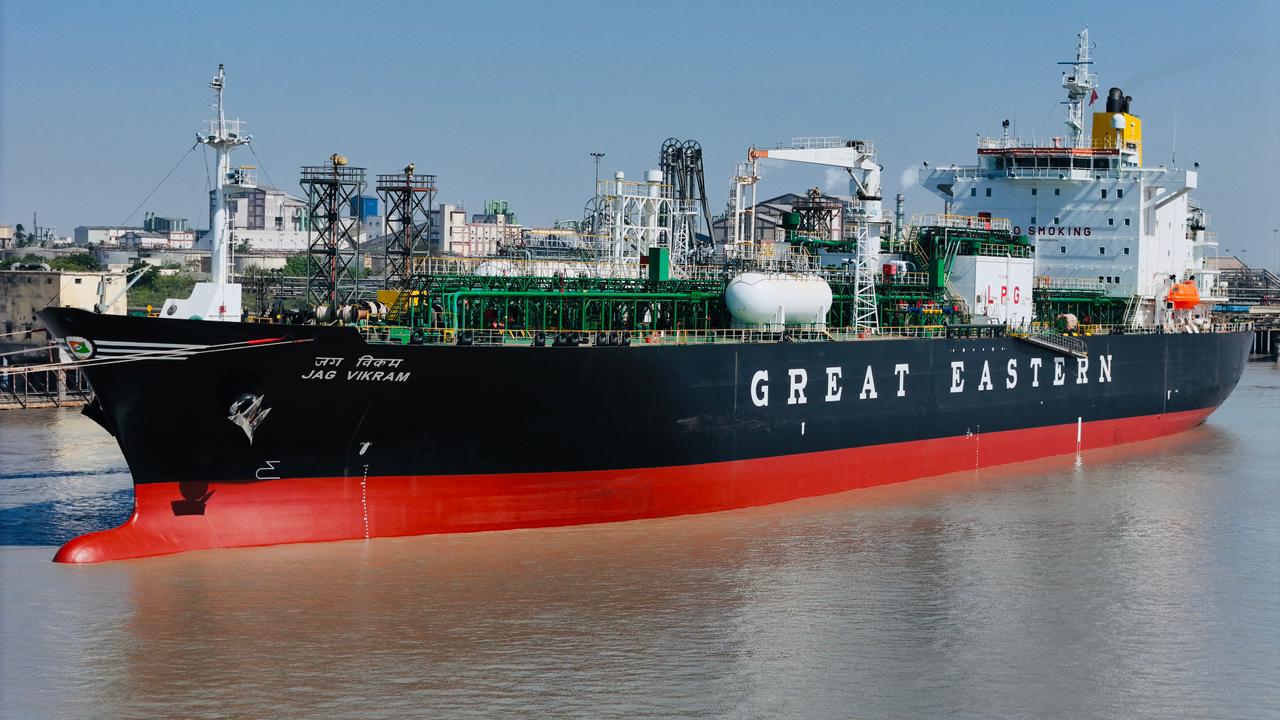
MV Jag Vikram successfully berthed at Oil Jetty–1, DPA Kandla, carrying 20,400 MT of LPG

GANDHIDHAM : Anchoring India’s energy lifelines with strength and precision. LPG Vessel MV Jag Vikram successfully berthed at Oil Jetty–1, Deendayal Port Authority Kandla, Kutch carrying 20,400 MT of LPG – ensuring uninterrupted energy supply for the nation.

Indian-flagged vessel ‘Jag Vikram’ carrying 20,400 metric tonnes (MT) of Liquefied Petroleum Gas (LPG) has arrived at DPA, Kandla in Gujarat amid the tensions in West Asia, officials said on Wednesday.

The ship crossed the Strait of Hormuz following the temporary two-week ceasefire between the US and Iran said a statement from the Deendayal Port Authority.

It was the ninth Indian vessel to exit the Persian Gulf since early March, while about 15 other Indian-flagged ships remain in the region, awaiting passage, government officials had said earlier.

The tanker crossed the Strait of Hormuz on April 11, marking the first such transit by an Indian vessel since the two-week ceasefire was announced.

Govt notifies SEZ for Tata Semiconductor Manufacturing at Dholera

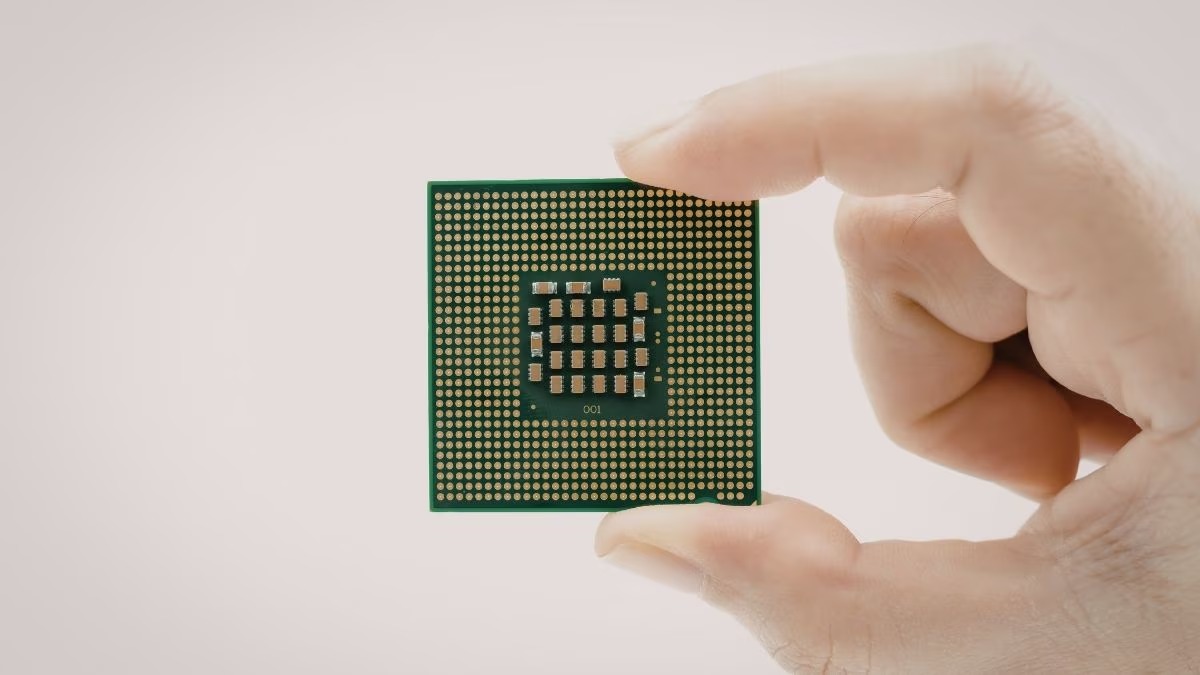
DHOLERA : The government on Wednesday said it has notified a special economic zone to be set up by Tata Semiconductor Manufacturing Pvt Ltd for electronic hardware and software, including IT/ITeS, at Dholera in Gujarat.

The company has proposed an investment of Rs 91,000 crore to set up India’s first chip fabrication unit. The proposal was approved by the board of approval, the highest body for SEZ related issues. It is chaired by the Commerce Secretary.

“The department of commerce on April 9 has notified a special economic zone to be set up by Tata Semiconductor Manufacturing Pvt Ltd exclusively for electronic hardware and software including IT/ITeS at Dholera, Gujarat,” Additional Secretary in the Commerce Ministry Ajay Bhadoo told reporters.

The SEZ will be set up on an area of 66.16 hectares. It is expected to generate 21,000 jobs. To promote the sector, he said, the government last year reduced the minimum contiguous land requirement from 50 hectares to 10 hectares for the semiconductor and electronics component sectors.

So far, five new SEZs for the sectors have been notified. It includes CG Semi (with proposed investment of Rs 2,150 crore), Kaynes Semicon (Rs 681 crore), Micron Semiconductor Technology India (Rs 13,000 crore), and Hubballi Durable Goods CLuster (Rs 100 crore).

CONCOR holds strategic ‘Chintan Shivir’ in Srinagar to chart future growth roadmap

NEW DELHI : Container Corporation of India (CONCOR) successfully आयोजित a high-level Chintan Shivir in Srinagar, bringing together the organisation’s apex leadership to deliberate on its long-term strategic direction and emerging opportunities in the logistics and supply chain sector.

The Shivir was led by Chairman & Managing Director Sanjay Swarup and witnessed the participation of Functional Directors, senior management, and key officers from across the country. The initiative reflects CONCOR’s continued emphasis on collaborative decision-making and forward-looking policy formulation in alignment with national priorities.

During the sessions, detailed deliberations were held on strengthening CONCOR’s core business segments, enhancing modal share of rail in freight transportation, and identifying new growth avenues in areas such as multimodal logistics, coastal shipping, and integrated supply chain solutions. A special focus was placed on aligning CONCOR’s strategies with the Government of India’s vision of Viksit Bharat, reinforcing its role as a key enabler in the nation’s logistics transformation.

The Shivir also explored the organisation’s planned foray into shipping services, diversification of service offerings, and expansion of its terminal network to cater to evolving customer needs. Discussions on leveraging advanced IT tools and digital platforms underscored the importance of technology-driven solutions in improving operational efficiency, real-time tracking, and overall customer satisfaction.

Participants engaged in intensive brainstorming sessions on enhancing asset utilization, improving turnaround times, and adopting global best practices in logistics management. Emphasis was also laid on sustainability initiatives, green logistics, and reducing carbon footprint through increased rail-based transportation.

In addition to strategic discussions, the Shivir featured interactive team-building exercises aimed at fostering stronger coordination, leadership alignment, and a unified organisational vision. Officers actively shared insights from their respective regions, contributing to a rich exchange of ideas and actionable strategies.

The Chintan Shivir concluded with a renewed commitment from all participants to drive innovation, operational excellence, and customer-centric growth, further strengthening CONCOR’s position as a leading logistics service provider in India.

Allcargo Logistics strengthens FMCG Supply Chains amid rising complexity and evolving consumer demand

MUMBAI:  Allcargo Logistics Limited, housing its Domestic Supply Chain business, Express Distribution and Consultative Logistics has announced its initiative to enable FMCG companies to navigate increasingly fragmented inventory flows through integrated, technology-driven logistics solutions.

The move comes at a time when India’s Fast-moving Consumer Goods (FMCG) sector is undergoing rapid transformation. As product portfolios expand and consumer preferences continue to evolve, supply chains are becoming more complex, making efficient inventory management and agile logistics capabilities critical for companies operating in the space.

The modern FMCG landscape is no longer defined by high-volume, uniform product movement. With companies expanding portfolios through new launches and startup acquisitions, demand patterns are becoming more segmented, leading to smaller shipment sizes and more frequent replenishment cycles. This shift is accelerating the adoption of Part Truck Load (PTL) logistics, replacing traditional reliance on Full Truck Load (FTL) models for several distribution requirements.

Historically, FMCG supply chains followed a linear model – moving goods from manufacturing units to depots, then onward to distributors and retailers. However, today’s reality involves multi-directional inventory movement across states, warehouses, and consumption centres, requiring significantly higher coordination and agility.

Allcargo Logistics is addressing these challenges by reimagining supply chain frameworks for FMCG players through a combination of network optimization, technology integration, and transportation planning.

Commenting on the development, Ketan Kulkarni, MD & CEO, Allcargo Logistics, said, “The FMCG sector is undergoing a structural shift, where supply chains need to be far more responsive, flexible, and data-driven than before. As product portfolios expand and demand becomes more fragmented, logistics is no longer just about movement – it is about intelligent execution. At Allcargo Logistics, we are focused on enabling this transformation through integrated solutions that enhance visibility, improve efficiency, and support business growth across markets.”

With an operational footprint spanning 32000+ pin codes across Bharat, Allcargo Logistics enables seamless interstate movement of more than 60,000+ packages monthly for India’s organizations across industries.

The company’s network design allows FMCG brands to dynamically route shipments based on demand patterns, warehouse inventory, and dispatch locations – ensuring efficient inventory balancing across regions. For interstate routes, this specifically refers to inter-depot transfers that help manage inventory during demand spikes in particular states. By enabling the movement of the right quantity of inventory between depots – without waiting to consolidate a full truck load, customers can respond to demand much faster. At the same time, this approach ensures more precise stock allocation across locations, reducing the risk of overstocking specific products or SKUs.

Additionally, the rise of startup backed FMCG brands catering to Gen Z and health-conscious consumers has led to a proliferation of SKUs, each with relatively lower volumes but higher frequency requirements. This evolution makes traditional FTL movement less viable.

Allcargo Logistics is partnering this transition by offering PTL services, enabling flexible, cost-efficient movement of smaller consignments. This approach improves truck utilization, reduces idle capacity, and ensures faster inventory rotation across markets. PTL logistics enables businesses to move mid-sized consignments that do not require a full truck while still ensuring faster transit and lower handling compared to traditional transport models. By consolidating shipments from multiple customers into a single vehicle, PTL improves asset utilisation, reduces transportation costs and enables more frequent and flexible dispatch cycles for FMCG companies.

In an environment where real-time decision-making is critical, Allcargo Logistics integrates technology into every stage of the supply chain. Advanced tracking systems provide end-to-end shipment visibility, allowing FMCG companies to monitor inventory movement, anticipate disruptions, and optimize replenishment cycles with greater accuracy.

Allcargo Logistics adheres to globally recognized standards including ISO 9000 for quality management, ISO 14000 for environmental responsibility, and ISO 45000 for occupational health and safety. These certifications underscore the company’s commitment to delivering reliable and compliant logistics solutions at scale.

As FMCG companies continue to expand their reach across India’s diverse consumption markets, the role of organized logistics partners is becoming increasingly critical. By combining scale, technology, and operational expertise, Allcargo Logistics is helping brands build resilient, future-ready supply chains that can adapt to the demands of a dynamic marketplace.